Sensorized Vascular High-Fidelity Physical Simulator for Robot-Assisted Surgery Training: A Multisite Pilot Evaluation

 , , ,
, , ,  ,
, 
Abstract
1. Introduction
2. Materials and Methods
- (i)
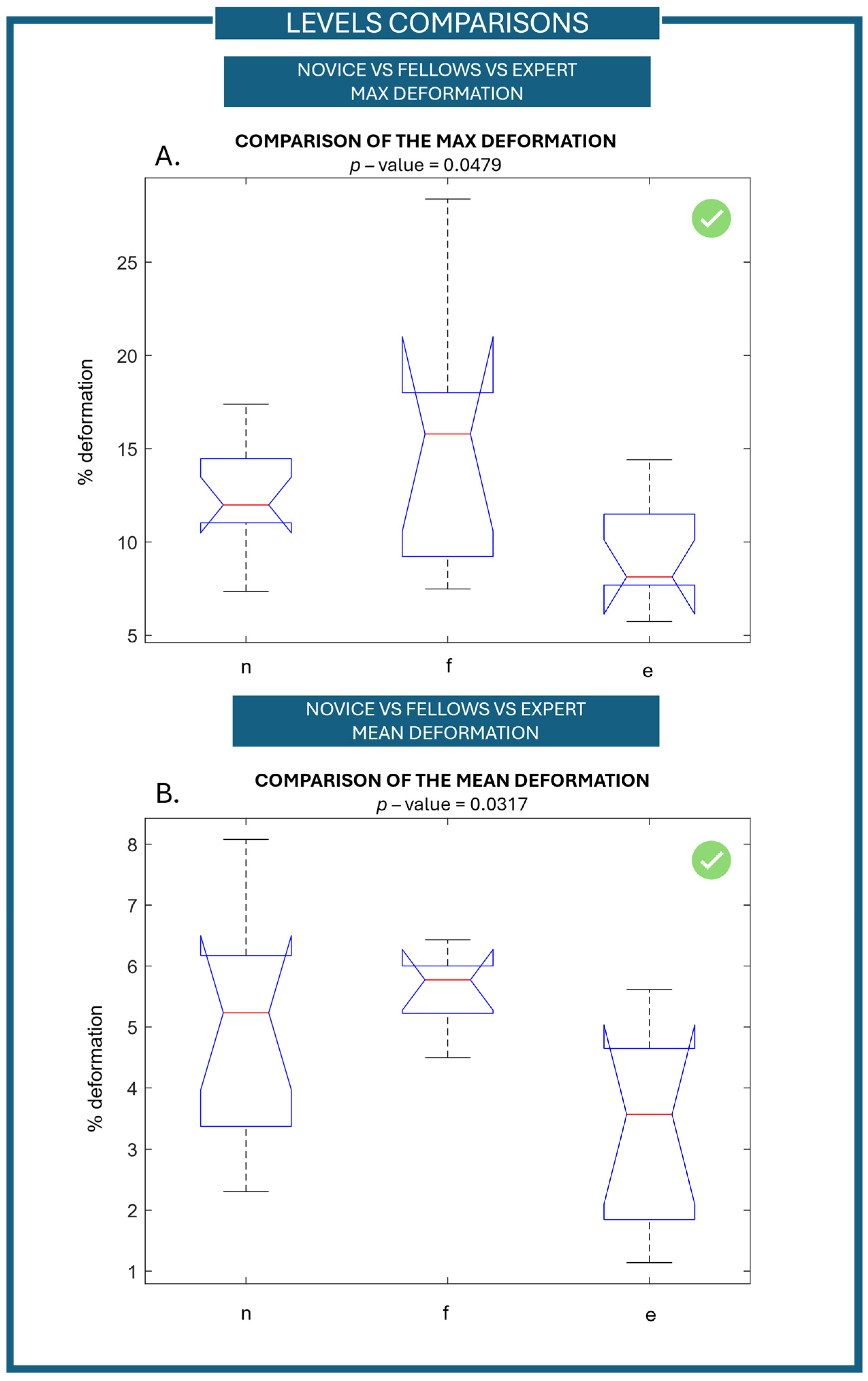
- the discriminant validity of the simulator—defined in our case as the ability to discriminate between different levels of expertise between novices, fellows, and expert surgeons [26];
- (ii)
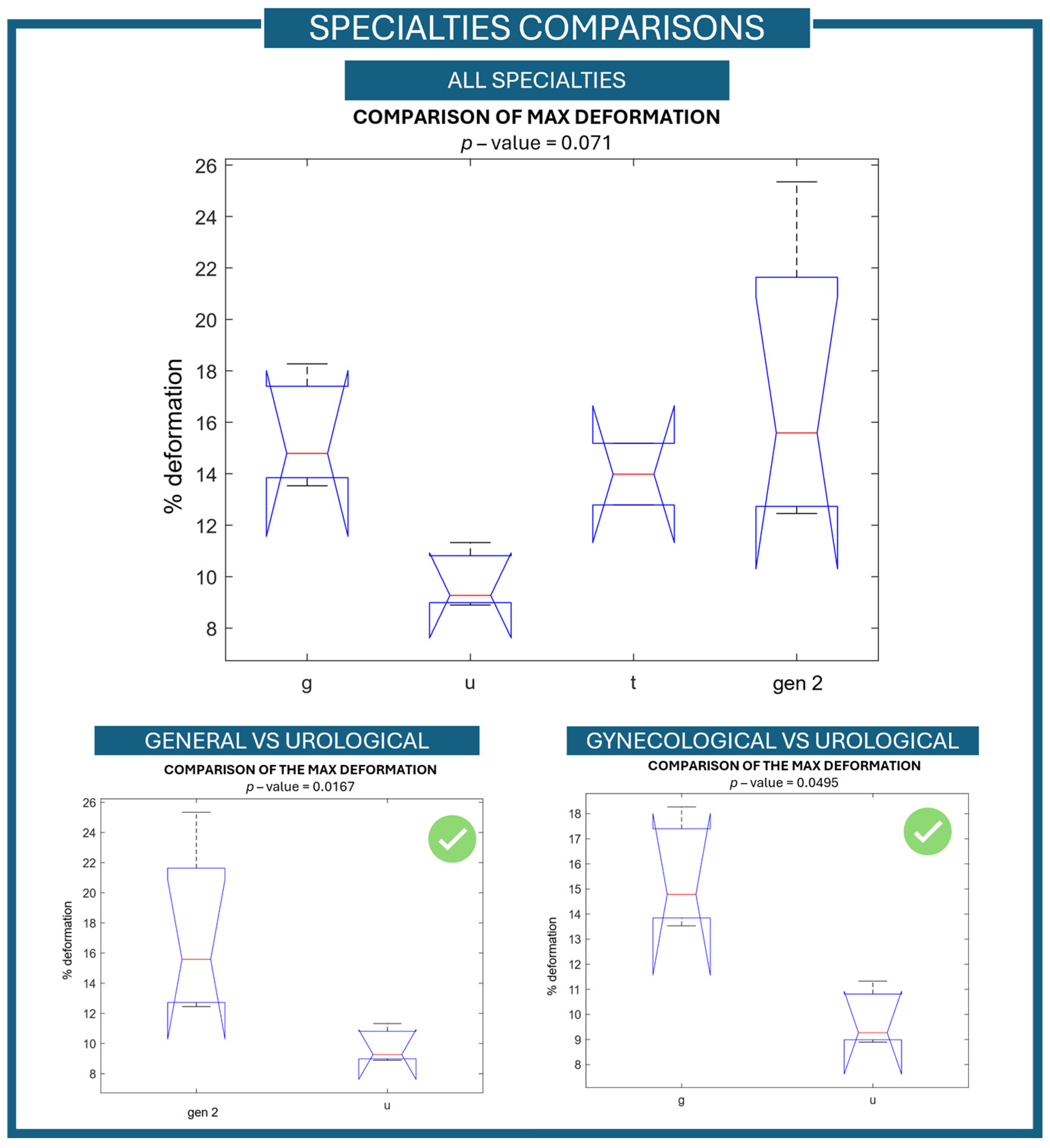
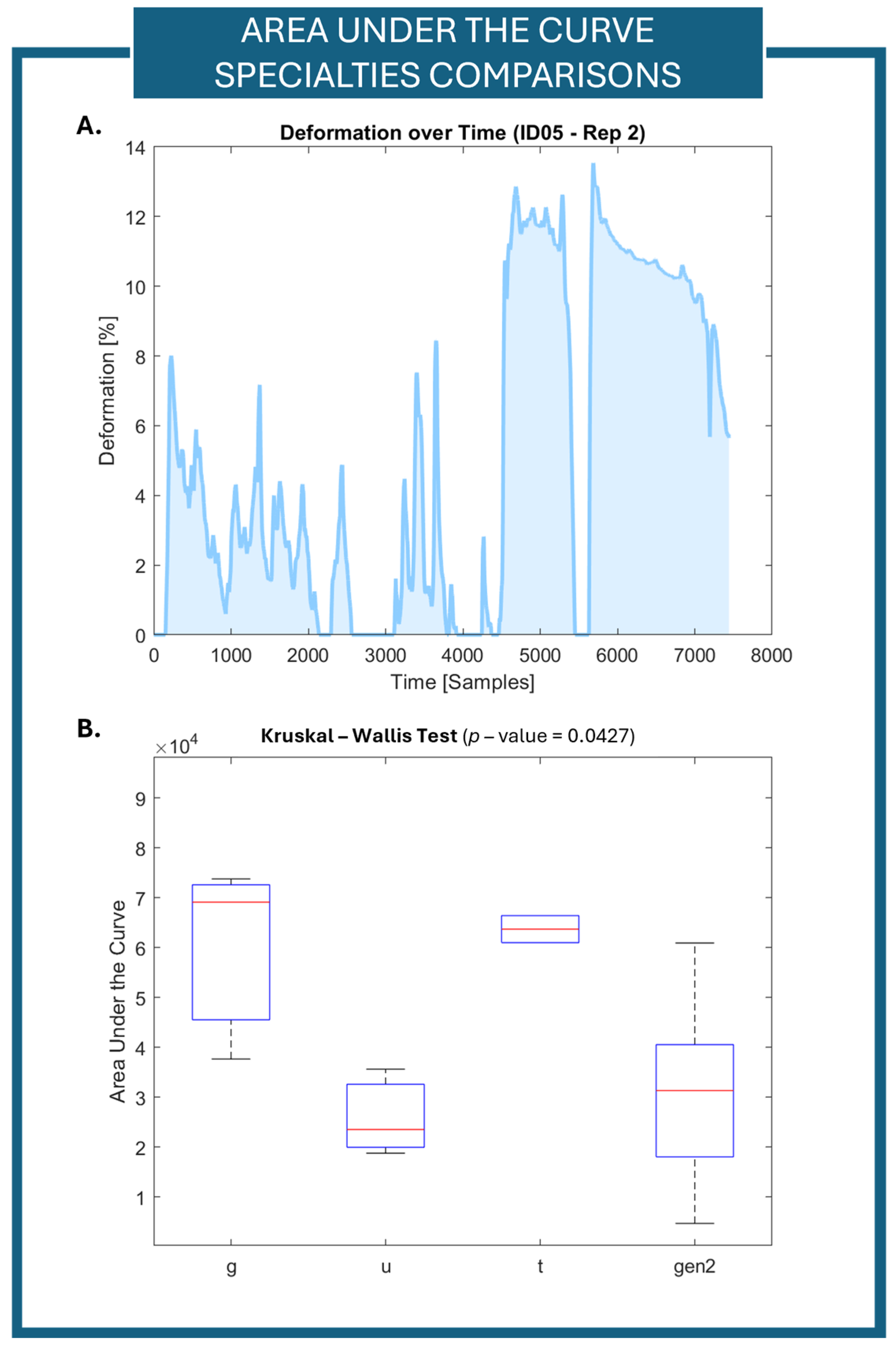
- the ability to explore, based on the tests results, the potential differences among the surgical specialties using a stratification of the sample.
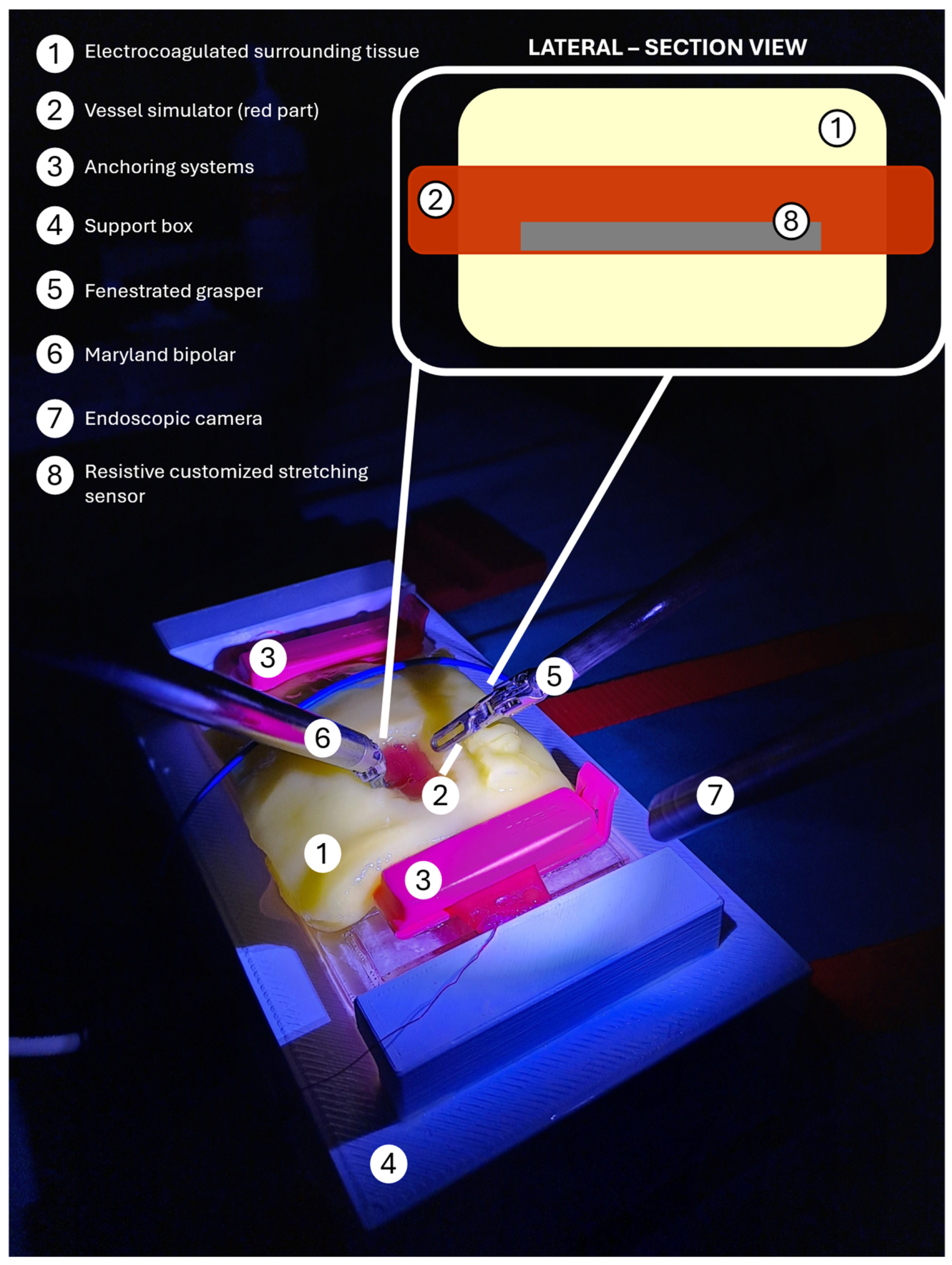
2.1. Description of the Technical Features of the Vascular Simulator
2.2. Population
- Effect size equal to 0.6,
- α = 0.05 (representing the significance level),
- Power equals 0.8,
- Number of groups equal to three.
- Novices: Junior residents with no RAS experience (0 years of RAS experience),
- Fellows: Senior residents and young surgeons with medium experience (1–2 years of experience in RAS),
- Experts: Surgeons with extensive RAS experience (at least 3 years of RAS experience).
2.3. Protocol
- Dissection and isolation of a target vessel.
- Passage of vessel loops under the vessel to pull it up.
- Insertion of a robotic stapler for vessel transection.
2.4. Statistical Analysis
2.4.1. Sensor Data Statistical Analysis
2.4.2. Questionnaire Data Statistical Analysis
- Calculation of the Content Validity Index (I-CVI) defined as the proportion of surgeons who rated an item as relevant.
- Negative items are considered as .
- Positive items are considered as .
3. Results
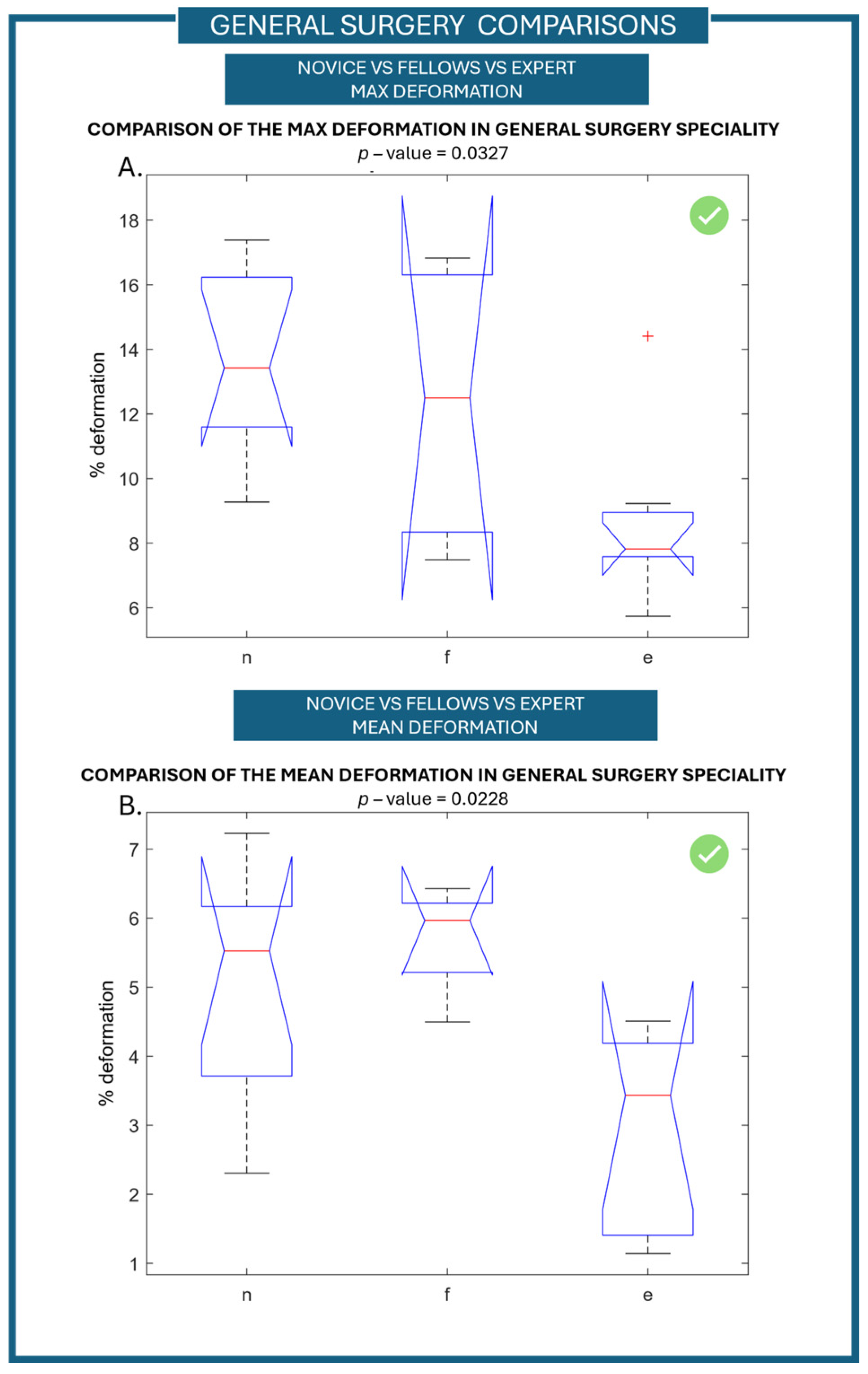
- General surgery vs. thoracic surgery;
- General surgery vs. gynecological surgery;
- Gynecological surgery vs. thoracic surgery;
- Gynecological surgery vs. urological surgery;
- General surgery vs. urological surgery;
- Urological surgery vs. thoracic surgery.
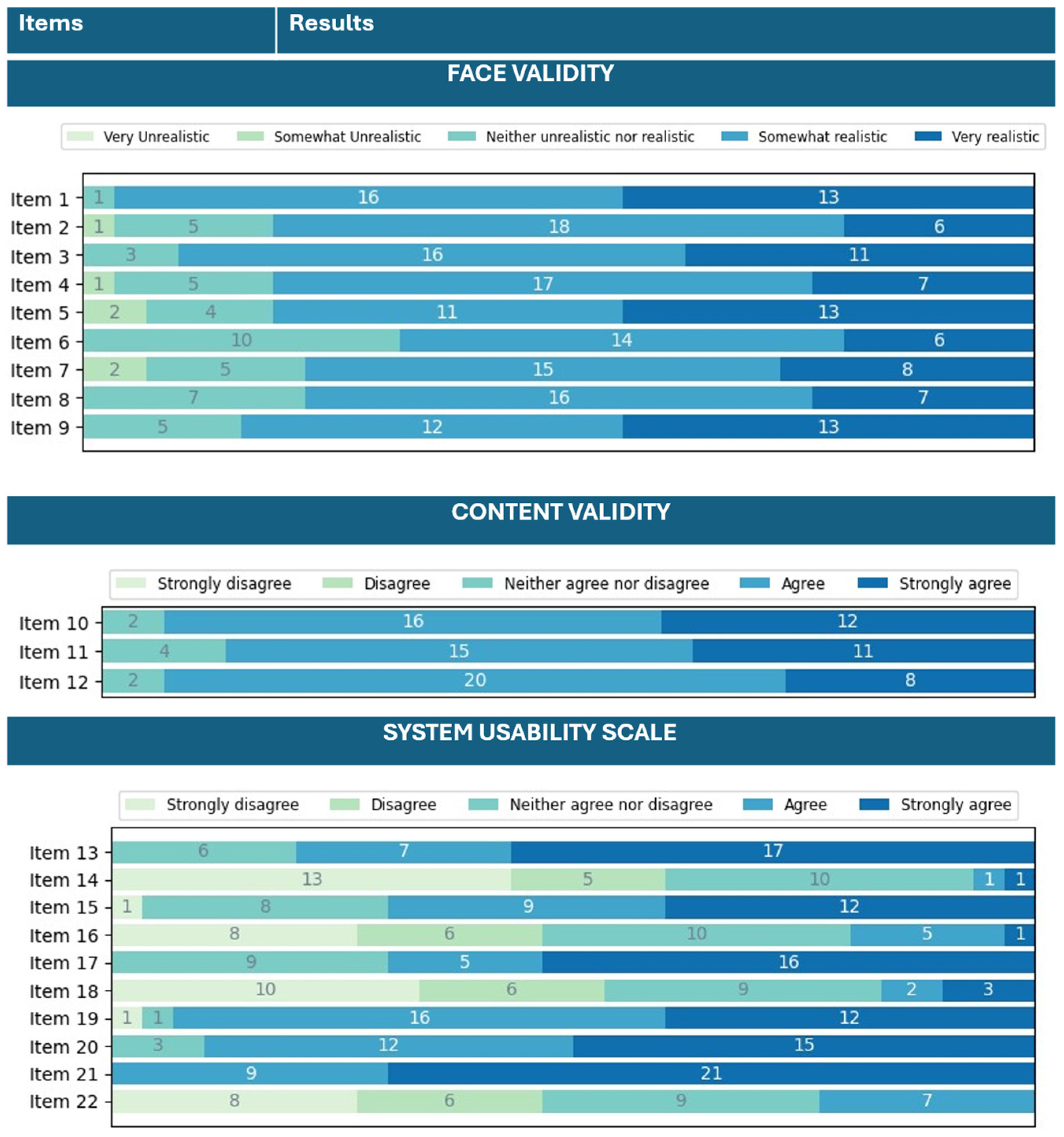
- Vascular structure isolation by 28 surgeons;
- The stapling of vascular structure by 26 surgeons;
- To minimize the forces applied to vascular structures by 28 surgeons.
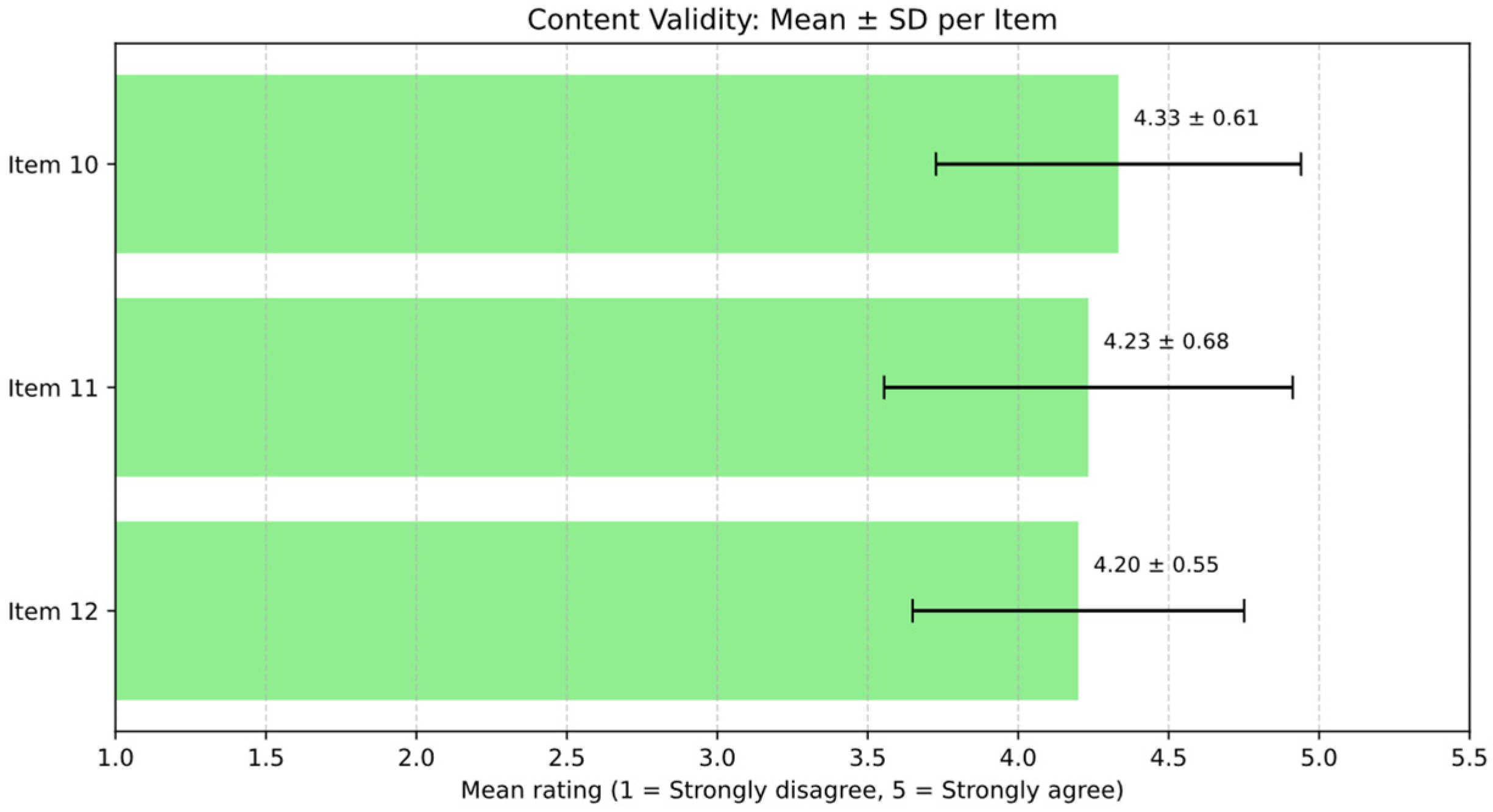
- I-CVI for item 10: 0.933.
- I-CVI for item 11: 0.867.
- I-CVI for item 12: 0.933.
4. Discussion
5. Conclusions
Author Contributions
Funding
Institutional Review Board Statement
Informed Consent Statement
Data Availability Statement
Acknowledgments
Conflicts of Interest
Appendix A


References
- Chen, I.-H.A.; Ghazi, A.; Sridhar, A.; Stoyanov, D.; Slack, M.; Kelly, J.D.; Collins, J.W. Evolving Robotic Surgery Training and Improving Patient Safety, with the Integration of Novel Technologies. World J. Urol. 2021, 39, 2883–2893. [Google Scholar] [CrossRef]
- Handa, A.; Gaidhane, A.; Choudhari, S.G. Role of Robotic-Assisted Surgery in Public Health: Its Advantages and Challenges. Cureus 2024, 16, e62958. [Google Scholar] [CrossRef] [PubMed]
- Wong, S.W.; Crowe, P. Factors Affecting the Learning Curve in Robotic Colorectal Surgery. J. Robot. Surg. 2022, 16, 1249–1256. [Google Scholar] [CrossRef] [PubMed]
- Colan, J.; Davila, A.; Hasegawa, Y. Tactile Feedback in Robot-Assisted Minimally Invasive Surgery: A Systematic Review. Robot. Comput. Surg. 2024, 20, e70019. [Google Scholar] [CrossRef] [PubMed]
- Alemzadeh, H.; Raman, J.; Leveson, N.; Kalbarczyk, Z.; Iyer, R.K. Adverse Events in Robotic Surgery: A Retrospective Study of 14 Years of FDA Data. PLoS ONE 2016, 11, e0151470. [Google Scholar] [CrossRef]
- Muaddi, H.; Stukel, T.A.; De Mestral, C.; Nathens, A.; Pautler, S.E.; Shayegan, B.; Hanna, W.C.; Schlachta, C.; Breau, R.H.; Hopkins, L.; et al. Adverse Events Following Robotic Surgery: Population-Based Analysis. Br. J. Surg. 2022, 109, 763–771. [Google Scholar] [CrossRef]
- Bergholz, M.; Ferle, M.; Weber, B.M. The Benefits of Haptic Feedback in Robot Assisted Surgery and Their Moderators: A Meta-Analysis. Sci. Rep. 2023, 13, 19215. [Google Scholar] [CrossRef]
- Schmelzle, M.; Malinka, T.; Bahra, M.; Pratschke, J. Teaching und Training in der robotergestützten Chirurgie. Zentralbl Chir 2020, 145, 271–277. [Google Scholar] [CrossRef]
- Rahimi, A.M.; Uluç, E.; Hardon, S.F.; Bonjer, H.J.; Van Der Peet, D.L.; Daams, F. Training in Robotic-Assisted Surgery: A Systematic Review of Training Modalities and Objective and Subjective Assessment Methods. Surg. Endosc. 2024, 38, 3547–3555. [Google Scholar] [CrossRef]
- Berry, M.F. Pulmonary Artery Bleeding During Video-Assisted Thoracoscopic Surgery. Thorac. Surg. Clin. 2015, 25, 239–247. [Google Scholar] [CrossRef]
- Awad, M.M.; Raynor, M.C.; Padmanabhan-Kabana, M.; Schumacher, L.Y.; Blatnik, J.A. Evaluation of Forces Applied to Tissues during Robotic-Assisted Surgical Tasks Using a Novel Force Feedback Technology. Surg. Endosc. 2024, 38, 6193–6202. [Google Scholar] [CrossRef]
- Uchida, S.; Matsunaga, T.; Tomita, H.; Fukui, M.; Hattori, A.; Takamochi, K.; Suzuki, K. Usefulness of Final Transection of the Proximal Pulmonary Artery in Robotic Left Upper Lobectomy. Interdiscip. Cardiovasc. Thorac. Surg. 2024, 38, ivae054. [Google Scholar] [CrossRef] [PubMed]
- Pagès, P.-B.; Gutierrez, I.; Baste, J.-M. Pulmonary Artery Repair during Robotic Lung Resection: Narrative Review and Management. J. Vis. Surg. 2022, 8, 3. [Google Scholar] [CrossRef]
- AlMasri, S.; Kraftician, J.; Zureikat, A.; Paniccia, A. Management of Intra-Operative Hemorrhage and Safe Venous Resection in Robotic-Assisted Pancreaticoduodenectomy: Techniques to Avoid Open Conversion. J. Gastrointest. Surg. 2023, 27, 1753–1756. [Google Scholar] [CrossRef] [PubMed]
- Gheza, F.; Esposito, S.; Gruessner, S.; Mangano, A.; Fernandes, E.; Giulianotti, P.C. Reasons for Open Conversion in Robotic Liver Surgery: A Systematic Review with Pooled Analysis of More than 1000 Patients. Robot. Comput. Surg. 2019, 15, e1976. [Google Scholar] [CrossRef]
- Pilz Da Cunha, G.; Sijberden, J.P.; Gobardhan, P.; Lips, D.J.; Terkivatan, T.; Marsman, H.A.; Patijn, G.A.; Leclercq, W.K.G.; Bosscha, K.; Mieog, J.S.D.; et al. Risk Factors and Outcomes of Conversions in Robotic and Laparoscopic Liver Resections: A Nationwide Analysis. Surgery 2025, 178, 108820. [Google Scholar] [CrossRef]
- Camara, M.; Mayer, E.; Darzi, A.; Pratt, P. Soft Tissue Deformation for Surgical Simulation: A Position-Based Dynamics Approach. Int. J. Comput. Assist. Radiol. Surg. 2016, 11, 919–928. [Google Scholar] [CrossRef]
- Witheford, M.; Borghese, O.; Mastracci, T.M.; Maurel, B. An Observational Assessment of Aortic Deformation during Infrarenal and Complex Endovascular Aortic Aneurysm Repair. J. Vasc. Surg. 2022, 76, 645–655.e3. [Google Scholar] [CrossRef]
- Sotelo, R.; Nunez Bragayrac, L.A.; Machuca, V.; Garza Cortes, R.; Azhar, R.A. Avoiding and Managing Vascular Injury during Robotic-Assisted Radical Prostatectomy. Ther. Adv. Urol. 2015, 7, 41–48. [Google Scholar] [CrossRef]
- Danjouma, C.H.; Arfanis, I.; Gronostayskiy, M. Preventing and Managing Intraoperative Catastrophic Bleeding in Robotic Lung Cancer Lobectomy: “LifeSaving Strategies”. J. Surg. 2023, 8, 1947. [Google Scholar] [CrossRef]
- Jourdes, F.; Valentin, B.; Allard, J.; Duriez, C.; Seeliger, B. Visual Haptic Feedback for Training of Robotic Suturing. Front. Robot. AI 2022, 9, 800232. [Google Scholar] [CrossRef] [PubMed]
- Vangone, I.; Caruso, R.; Magon, A.; Giamblanco, C.; Conte, G.; Baroni, I.; Russo, S.; Belloni, S.; Arrigoni, C. High-Fidelity Simulation and Its Impact on Non-Technical Skills Development among Healthcare Professionals: A Systematic Review and Meta-Analysis. Acta Biomed. Atenei Parm. 2024, 95, e2024095. [Google Scholar] [CrossRef]
- Porterfield, J.R.; Podolsky, D.; Ballecer, C.; Coker, A.M.; Kudsi, O.Y.; Duffy, A.J.; Meara, M.P.; Novitsky, Y.W. Structured Resident Training in Robotic Surgery: Recommendations of the Robotic Surgery Education Working Group. J. Surg. Educ. 2024, 81, 9–16. [Google Scholar] [CrossRef] [PubMed]
- Gamberini, G.; Maglio, S.; Mariani, A.; Mazzotta, A.D.; Forgione, A.; Marescaux, J.; Melfi, F.; Tognarelli, S.; Menciassi, A. Design and Preliminary Validation of a High-Fidelity Vascular Simulator for Robot-Assisted Manipulation. Sci. Rep. 2024, 14, 4779. [Google Scholar] [CrossRef]
- Kim, Y.-H.; Marom, E.M.; Herndon, J.E.; McAdams, H.P. Pulmonary Vein Diameter, Cross-Sectional Area, and Shape: CT Analysis. Radiology 2005, 235, 43–49. [Google Scholar] [CrossRef]
- Rönkkö, M.; Cho, E. An Updated Guideline for Assessing Discriminant Validity. Organ. Res. Methods 2022, 25, 6–14. [Google Scholar] [CrossRef]
- Sparks, J.L.; Vavalle, N.A.; Kasting, K.E.; Long, B.; Tanaka, M.L.; Sanger, P.A.; Schnell, K.; Conner-Kerr, T.A. Use of Silicone Materials to Simulate Tissue Biomechanics as Related to Deep Tissue Injury. Adv. Ski. Wound Care 2015, 28, 59–68. [Google Scholar] [CrossRef]
- Faul, F.; Erdfelder, E.; Buchner, A.; Lang, A.-G. Statistical Power Analyses Using G*Power 3.1: Tests for Correlation and Regression Analyses. Behav. Res. Methods 2009, 41, 1149–1160. [Google Scholar] [CrossRef]
- Dutt, D.D.; Hohnen, H.; Kulshrestha, S.; Razavi, H. Simulation Models in Direct Ophthalmoscopy Education: A Systematic Review. Can. Med. Educ. J. 2025, 16, 51–65. [Google Scholar] [CrossRef]
- Yusoff, M.S.B. ABC of Response Process Validation and Face Validity Index Calculation. Educ. Med. J. 2019, 11, 55–61. [Google Scholar] [CrossRef]
- Harris, D.J.; Bird, J.M.; Smart, P.A.; Wilson, M.R.; Vine, S.J. A Framework for the Testing and Validation of Simulated Environments in Experimentation and Training. Front. Psychol. 2020, 11, 605. [Google Scholar] [CrossRef] [PubMed]
- Yusoff, M.S.B. ABC of Content Validation and Content Validity Index Calculation. Educ. Med. J. 2019, 11, 49–54. [Google Scholar] [CrossRef]
- Alsalamah, A.; Campo, R.; Tanos, V.; Grimbizis, G.; Van Belle, Y.; Hood, K.; Pugh, N.; Amso, N. Face and Content Validity of the Virtual Reality Simulator ‘ScanTrainer®’. Gynecol. Surg. 2017, 14, 18. [Google Scholar] [CrossRef] [PubMed]
- Vlachogianni, P.; Tselios, N. Perceived Usability Evaluation of Educational Technology Using the System Usability Scale (SUS): A Systematic Review. J. Res. Technol. Educ. 2022, 54, 392–409. [Google Scholar] [CrossRef]
- Malkewitz, C.P.; Schwall, P.; Meesters, C.; Hardt, J. Estimating Reliability: A Comparison of Cronbach’s α, McDonald’s Ωt and the Greatest Lower Bound. Soc. Sci. Humanit. Open 2023, 7, 100368. [Google Scholar] [CrossRef]
- Ali, H.; Salleh, M.N.M.; Hussain, K.; Ahmad, A.; Ullah, A.; Muhammad, A.; Naseem, R.; Khan, M. A Review on Data Preprocessing Methods for Class Imbalance Problem. Int. J. Eng. Technol. 2019, 8, 390–397. [Google Scholar]
- Hornos, E.; Pleguezuelos, E.; Bala, L.; Collares, C.F.; Freeman, A.; Van Der Vleuten, C.; Murphy, K.G.; Sam, A.H. Reliability, Validity and Acceptability of an Online Clinical Reasoning Simulator for Medical Students: An International Pilot. Med. Teach. 2024, 46, 1220–1227. [Google Scholar] [CrossRef]
- Amirthalingam, P.; Pakkir Mohamed, S.H.; Veeramani, V.P.; Nagoor Thangam, M.M.; Alanazi, M.F.; Dhanasekaran, M.; Mani, V.; Ali, M.A.S. The Effectiveness of a Structured Validated Questionnaire to Assess Student Perception with Virtual Pharmacy Simulation in Pharmacy Practice Experiential Education. PLoS ONE 2024, 19, e0314117. [Google Scholar] [CrossRef]
- García-Álvarez, J.M.; García-Sánchez, A.; Molina-Rodríguez, A.; Suárez-Cortés, M.; Díaz-Agea, J.L. Validation of the Group Environment Questionnaire (GEQ) in a Simulated Learning Environment. Nurs. Rep. 2025, 15, 154. [Google Scholar] [CrossRef]
- Peres, S.C.; Pham, T.; Phillips, R. Validation of the System Usability Scale (SUS): SUS in the Wild. Proc. Hum. Factors Ergon. Soc. Annu. Meet. 2013, 57, 192–196. [Google Scholar] [CrossRef]
- Crocker, J.C.; Farrar, N.; Cook, J.A.; Treweek, S.; Woolfall, K.; Chant, A.; Bostock, J.; Locock, L.; Rees, S.; Olszowski, S.; et al. Recruitment and Retention of Participants in UK Surgical Trials: Survey of Key Issues Reported by Trial Staff. BJS Open 2020, 4, 1238–1245. [Google Scholar] [CrossRef] [PubMed]
- Williams, J.; Craig, T.J.; Robson, D. Barriers and Facilitators of Clinician and Researcher Collaborations: A Qualitative Study. BMC Health Serv. Res. 2020, 20, 1126. [Google Scholar] [CrossRef] [PubMed]
- Hughes, T.; Fennelly, J.T.; Patel, R.; Baxter, J. The Validation of Surgical Simulators: A Technical Report on Current Validation Terminology as a Reference for Future Research. Cureus 2022, 14, e31881. [Google Scholar] [CrossRef] [PubMed]
- Arcieri, M.; Cuman, M.; Restaino, S.; Tius, V.; Cianci, S.; Ronsini, C.; Martinelli, C.; Bordin, F.; Pregnolato, S.; Di Donato, V.; et al. Exploring Urinary Tract Injuries in Gynecological Surgery: Current Insights and Future Directions. Healthcare 2025, 13, 1780. [Google Scholar] [CrossRef]
- Golahmadi, A.K.; Khan, D.Z.; Mylonas, G.P.; Marcus, H.J. Tool-Tissue Forces in Surgery: A Systematic Review. Ann. Med. Surg. 2021, 65, 102268. [Google Scholar] [CrossRef]
- Cundy, T.P.; Thangaraj, E.; Rafii-Tari, H.; Payne, C.J.; Azzie, G.; Sodergren, M.H.; Yang, G.-Z.; Darzi, A. Force-Sensing Enhanced Simulation Environment (ForSense) for Laparoscopic Surgery Training and Assessment. Surgery 2015, 157, 723–731. [Google Scholar] [CrossRef]
- Bogar, P.Z.; Virag, M.; Bene, M.; Hardi, P.; Matuz, A.; Schlegl, A.T.; Toth, L.; Molnar, F.; Nagy, B.; Rendeki, S.; et al. Validation of a Novel, Low-Fidelity Virtual Reality Simulator and an Artificial Intelligence Assessment Approach for Peg Transfer Laparoscopic Training. Sci. Rep. 2024, 14, 16702. [Google Scholar] [CrossRef]
- Raghavan, N.; Patel, P.C.; Limon, D.; Morris, M.X.; Kempenich, J.W.; Rajesh, A. Artificial Intelligence in Surgical Education: A 2025 Update on Adaptive Training, Feedback, and Competency-Based Education. Am. Surg. 2025, 00031348251397597. [Google Scholar] [CrossRef]
- Varas, J.; Coronel, B.V.; Villagrán, I.; Escalona, G.; Hernandez, R.; Schuit, G.; Durán, V.; Lagos-Villaseca, A.; Jarry, C.; Neyem, A.; et al. Innovations in Surgical Training: Exploring the Role of Artificial Intelligence and Large Language Models (LLM). Rev. Colégio Bras. Cir. 2023, 50, e20233605. [Google Scholar] [CrossRef]
- Lee, F.; Wong, S.W. Surgical Education Reimagined: The Convergence of Learning Theories and Artificial Intelligence. BMC Med. Educ. 2025, 26, 38. [Google Scholar] [CrossRef]
- Kowalewski, K.-F.; Hendrie, J.D.; Schmidt, M.W.; Garrow, C.R.; Bruckner, T.; Proctor, T.; Paul, S.; Adigüzel, D.; Bodenstedt, S.; Erben, A.; et al. Development and Validation of a Sensor- and Expert Model-Based Training System for Laparoscopic Surgery: The iSurgeon. Surg. Endosc. 2017, 31, 2155–2165. [Google Scholar] [CrossRef]
- D’Angelo, A.-L.D.; Rutherford, D.N.; Ray, R.D.; Laufer, S.; Mason, A.; Pugh, C.M. Working Volume: Validity Evidence for a Motion-Based Metric of Surgical Efficiency. Am. J. Surg. 2016, 211, 445–450. [Google Scholar] [CrossRef][Green Version]



| Items | Question or Statement |
|---|---|
| FACE VALIDITY | |
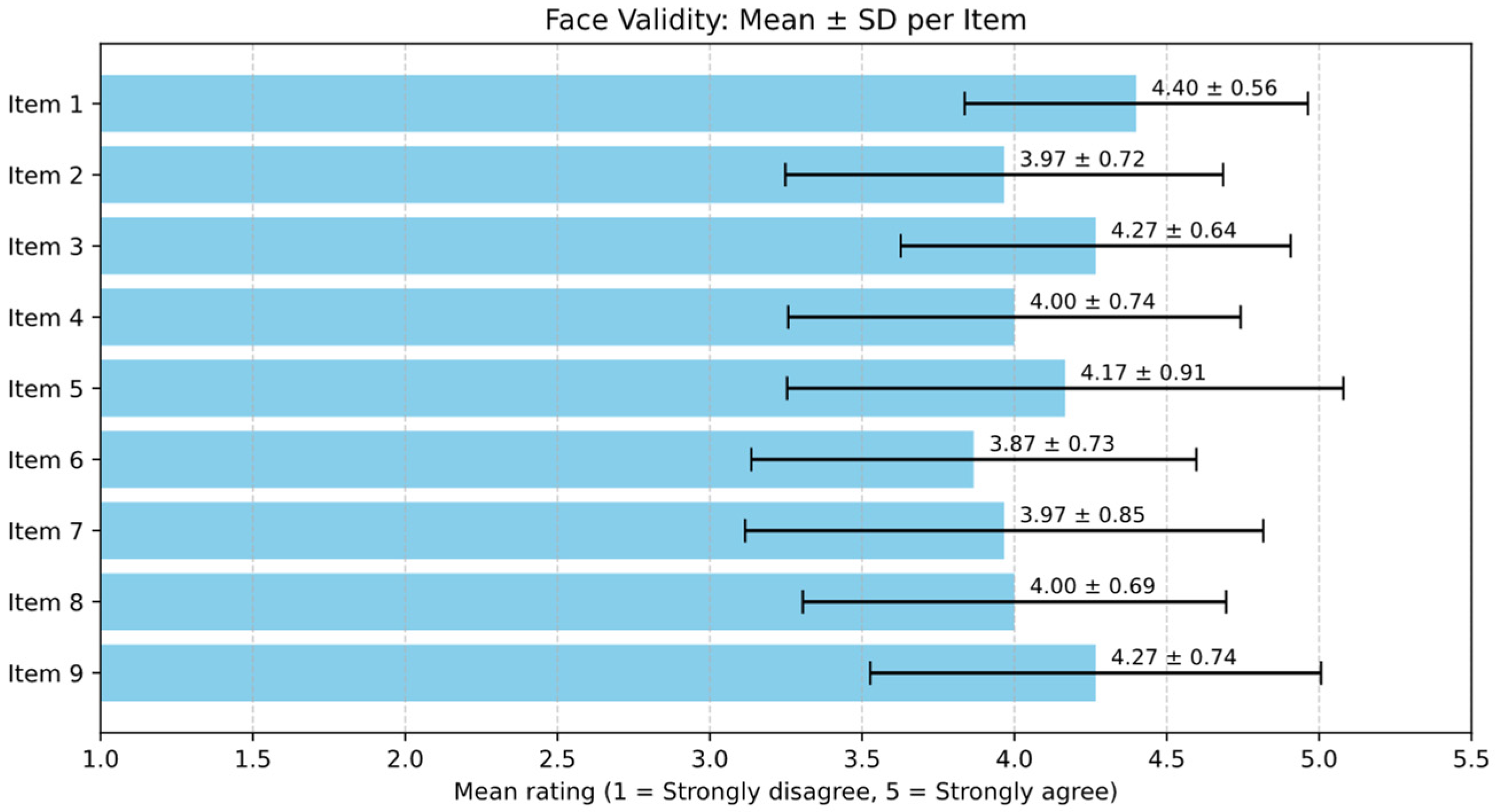
| Item 1 | Overall global impression of the simulator |
| Item 2 | Anatomical realism without cover with the adipose/connective tissue |
| Item 3 | Anatomical realism with cover with the adipose/connective tissue |
| Item 4 | Visual appearance of the vein |
| Item 5 | Visual appearance of the connective/adipose tissue |
| Item 6 | Haptic feedback of the vein |
| Item 7 | Haptic feedback of the connective/adipose tissue |
| Item 8 | Realism in instrument—vein interaction |
| Item 9 | Realism in instrument—tissue interaction |
| CONTENT VALIDITY | |
| Item 10 | The simulator is useful in teaching vascular-structure isolation |
| Item 11 | The simulator is useful in teaching the stapling of vascular structure |
| Item 12 | The simulator is useful in teaching to minimize the forces applied to vascular structures |
| SYSTEM USABILITY SCALE | |
| Item 13 | I think I would like to use this platform for training |
| Item 14 | I found the functioning of the simulator more complex than what I was thinking |
| Item 15 | I think the simulator is easy to use |
| Item 16 | I think I will need a technical person to support me to be able to use the simulator |
| Item 17 | I found the interface functionalities understandable and clear |
| Item 18 | I found difficulties in understanding the physical links to set up and use the simulator |
| Item 19 | I imagine that most of my colleagues will learn how to use the simulator very fast |
| Item 20 | I found the system intuitive and “plug and play” |
| Item 21 | I was comfortable with the use of the simulator |
| Item 22 | I think more time is needed to get familiar with the setup of the simulator |
| Novice (n = 13) | Fellow (n = 8) | Expert (n = 9) | |
|---|---|---|---|
| Age (years) | [29–51] | [26–55] | [26–64] |
| Sex M | 9 | 7 | 2 |
| Sex F | 4 | 1 | 7 |
| Right dominant hand | 13 | 7 | 9 |
| Specialty | 13 (100) | 8 (100) | 9 (100) |
| General surgery | 9 (69) | 5 (63) | 7 (77) |
| Thoracic surgery | 1 (50) | 1 (50) | 0 (0) |
| Gynecology | 1 (25) | 1 (25) | 2 (50) |
| Urology | 2 (66.6) | 1 (33.4) | 0 (0) |
| Simulation training | 9 (69) | 7 (88) | 9 (100) |
| VR simulation | 3 (33.3) | 3 (43) | 2 (22) |
| Physical simulation | 3 (33.3) | 1 (14) | 1 (11) |
| Both | 3 (33.3) | 3 (43) | 6 (67) |
| Item 1 | Item 2 | Item 3 | Item 4 | Item 5 | Item 6 | Item 7 | Item 8 | Item 9 | |
|---|---|---|---|---|---|---|---|---|---|
| Mean | 4.41 | 3.97 | 4.28 | 3.97 | 4.16 | 3.94 | 4.06 | 4.10 | 4.35 |
| SD | 0.56 | 0.69 | 0.63 | 0.74 | 0.92 | 0.73 | 0.85 | 0.66 | 0.71 |
| Item 10 | Item 11 | Item 12 | |
|---|---|---|---|
| Mean | 4.33 | 4.23 | 4.20 |
| SD | 0.61 | 0.68 | 0.55 |
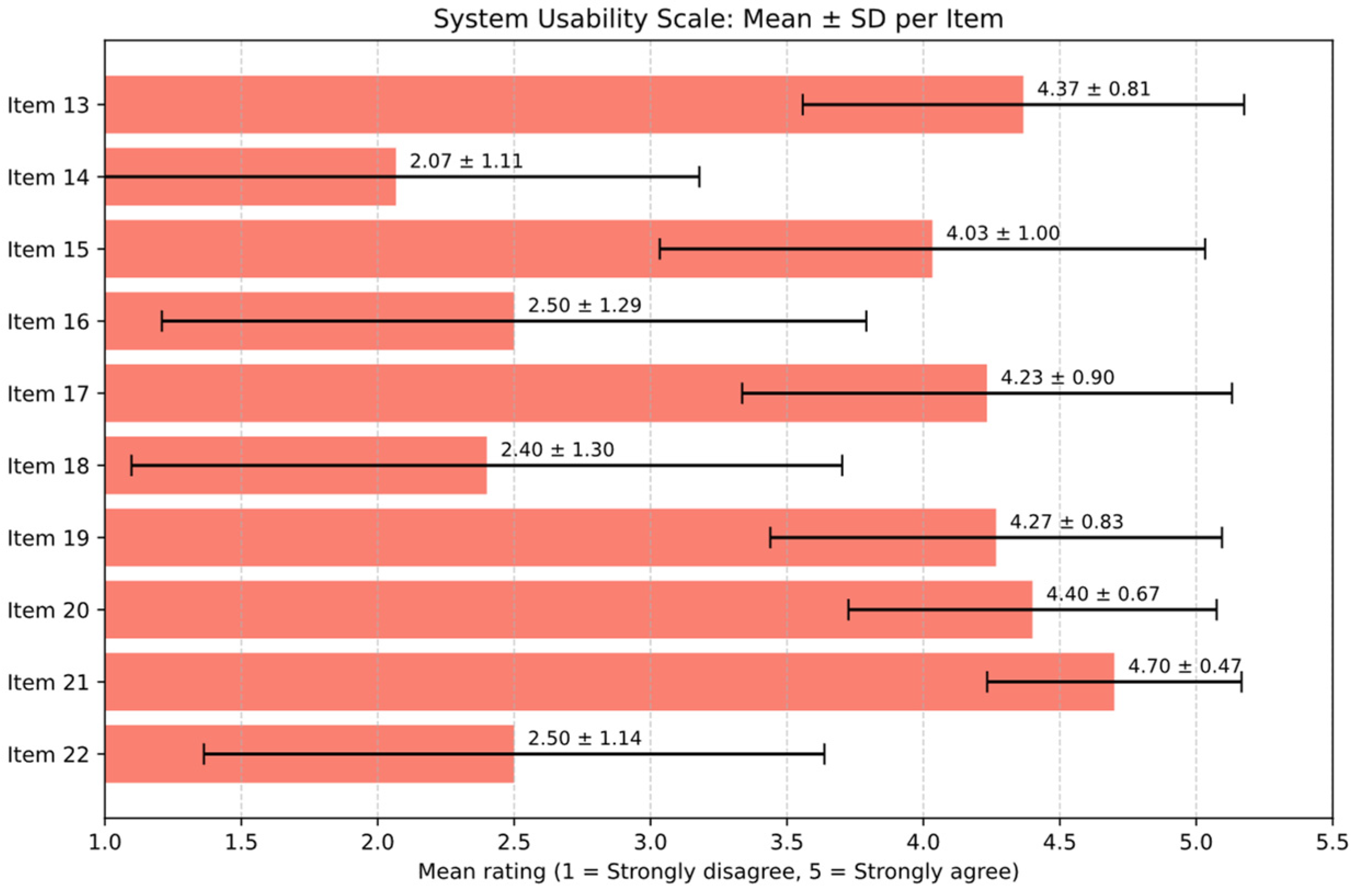
| Item 13 | Item 14 | Item 15 | Item 16 | Item 17 | Item 18 | Item 19 | Item 20 | Item 21 | Item 22 | |
|---|---|---|---|---|---|---|---|---|---|---|
| Mean | 4.37 | 2.07 | 4.03 | 2.50 | 4.23 | 2.40 | 4.27 | 4.40 | 4.70 | 2.50 |
| SD | 0.81 | 1.11 | 1.00 | 1.29 | 0.90 | 1.30 | 0.83 | 0.67 | 0.47 | 1.14 |
Disclaimer/Publisher’s Note: The statements, opinions and data contained in all publications are solely those of the individual author(s) and contributor(s) and not of MDPI and/or the editor(s). MDPI and/or the editor(s) disclaim responsibility for any injury to people or property resulting from any ideas, methods, instructions or products referred to in the content. |
© 2026 by the authors. Licensee MDPI, Basel, Switzerland. This article is an open access article distributed under the terms and conditions of the Creative Commons Attribution (CC BY) license.
Share and Cite
Gamberini, G.; Mazzotta, A.D.; Durante, A.; Tognarelli, S.; Petrucciani, N.; Mennini, G.; Silecchia, G.; Menciassi, A. Sensorized Vascular High-Fidelity Physical Simulator for Robot-Assisted Surgery Training: A Multisite Pilot Evaluation. J. Clin. Med. 2026, 15, 1054. https://doi.org/10.3390/jcm15031054
Gamberini G, Mazzotta AD, Durante A, Tognarelli S, Petrucciani N, Mennini G, Silecchia G, Menciassi A. Sensorized Vascular High-Fidelity Physical Simulator for Robot-Assisted Surgery Training: A Multisite Pilot Evaluation. Journal of Clinical Medicine. 2026; 15(3):1054. https://doi.org/10.3390/jcm15031054
Chicago/Turabian StyleGamberini, Giulia, Alessandro Dario Mazzotta, Angela Durante, Selene Tognarelli, Niccolò Petrucciani, Gianluca Mennini, Gianfranco Silecchia, and Arianna Menciassi. 2026. "Sensorized Vascular High-Fidelity Physical Simulator for Robot-Assisted Surgery Training: A Multisite Pilot Evaluation" Journal of Clinical Medicine 15, no. 3: 1054. https://doi.org/10.3390/jcm15031054
APA StyleGamberini, G., Mazzotta, A. D., Durante, A., Tognarelli, S., Petrucciani, N., Mennini, G., Silecchia, G., & Menciassi, A. (2026). Sensorized Vascular High-Fidelity Physical Simulator for Robot-Assisted Surgery Training: A Multisite Pilot Evaluation. Journal of Clinical Medicine, 15(3), 1054. https://doi.org/10.3390/jcm15031054