Article

Comparison of Epiretinal Membrane Detection Rates Between Optos® and Clarus Ultra-Widefield Fundus Imaging Systems

1
Department of Ophthalmology & Visual Science, Nagoya City University Graduate School of Medical Sciences, 1-Kawasumi, Mizuho-cho, Mizuho-ku, Nagoya 467-0001, Aichi, Japan
2
Department of Ophthalmology, Ogaki Tokushukai Hospital, Ogaki 503-0015, Gifu, Japan
3
Clinical Research Management Center, Nagoya City University Hospital, Nagoya 467-0001, Aichi, Japan
*
Author to whom correspondence should be addressed.
J. Clin. Med. 2026, 15(2), 883; https://doi.org/10.3390/jcm15020883
Submission received: 30 October 2025 / Revised: 13 January 2026 / Accepted: 16 January 2026 / Published: 21 January 2026
(This article belongs to the Section Ophthalmology)

Abstract

Background: Ultra-widefield (UWF) images are frequently used for fundus examinations during medical screening. Optos® generates pseudo-color images using only red and green lasers, which may reduce the visibility of retinal interface lesions. In contrast, Clarus™ incorporates blue light, suggesting potential superiority in epiretinal membrane (ERM) detection. Methods: This retrospective study included 233 patients (408 eyes; 816 UWF images per device) who underwent simultaneous Optos® and Clarus™ imaging plus optical coherence tomography (OCT) at our institution from March to April 2019. Ten blinded ophthalmologists assessed only the UWF images for ERM presence or absence. Diagnosis was confirmed by fundus examination and OCT. McNemar’s test compared detection accuracy. Results: Clarus™ consistently outperformed Optos®, with superior sensitivity [median 49% (range 42–70) vs. 14% (4–47); p = 0.002], correct judgment rate [85% (82–90) vs. 78% (44–88); p = 0.010], and lower unassessed rate [6% (2–13) vs. 13% (3–52); p = 0.002]. This superiority held across ERM stages, lens status, and ophthalmologist experience levels. Conclusions: This study demonstrated that Clarus™ significantly outperformed Optos® in ERM detection accuracy. These results suggest that true-color UWF systems like Clarus™ may be more useful for macular screening in routine practice and health examinations.

1. Introduction

A fundus camera is typically used for fundus examination during medical check-ups [1]. In recent years, an ultra-widefield (UWF) fundus camera was developed, which is particularly useful in routine clinical practice for the detection of abnormalities in peripheral regions [2,3]. This UWF technology is now being used in human medical check-ups. One widely used UWF imaging system is the Optos® camera (Optos PLC, Dunfermline, Scotland, UK), which captures a 200-degree field of the fundus in a single image, without requiring pupil dilation. However, the resulting images are pseudo-color images, generated from red and green lasers (lacking a blue channel), not true-color images.
In contrast, Zeiss Clarus (Carl Zeiss Meditec, Jena, Germany) is a newer scanning laser ophthalmoscope that uses red, green, and blue light-emitting diode lasers to produce true-color images and can capture a 133-degree view in a single shot without pupil dilation [3,4]. Although Clarus can also produce a 200-degree image like Optos®, it requires two shots to create a composite image. The advantage of Clarus over Optos® is that it reduces artifacts from lashes and eyelids [5]. In our previous study, Optos® was found to be superior to a conventional fundus camera with a view angle of approximately 45° in detecting peripheral retinal lesions such as detachment and breaks, but it was less effective in detecting macular diseases such as epiretinal membrane (ERM) (unpublished data). While some studies have compared Optos® and Clarus in diseases such as age-related macular degeneration (AMD) [5] and diabetic retinopathy (DR) [4,6], none have investigated their ability to detect ERM. Therefore, this study aimed to compare the diagnostic accuracy of ERM detection between the Optos® and Clarus UWF imaging systems by conducting fundus imaging on a group of patients.

2. Methods

2.1. Patients

This study was retrospective and observational, and was approved by the Institutional Review Board of Nagoya City University Graduate School of Medicine (No. 60-22-0021). Because the study was retrospective, written informed consent was not obtained from all patients. Instead, a website was created to provide information about the purpose of the study that the patients could read. The research methods and analyses adhered to the principles of the Declaration of Helsinki. The study included 233 patients who visited Nagoya City University Hospital between March 2019 and April 2019, comprising 408 eyes and 816 ultra-widefield fundus images (408 per device). Patients underwent fundus photography of the same eye using two different cameras, Optos® (Optos California, Optos PLC, Dunfermline, Scotland, UK) and Clarus 500 (Carl Zeiss Meditec, Jena, Germany), as well as optical coherence tomography (OCT) imaging. The patients also underwent ophthalmologic examinations, including measurement of best-corrected visual acuity, slit-lamp examination, indirect ophthalmoscopy, fundus photography, and OCT (Cirrus HD-OCT 6000; Carl Zeiss Meditec, Jena, Germany) imaging. The inclusion criteria for the study were patients who underwent fundus photography of the same eye with both Optos® and Clarus, while the exclusion criteria were patients who did not agree to participate in the study and/or those with poor imaging.

2.2. Assessments

A total of 816 Optos® and Clarus images of 408 eyes were assessed by ten ophthalmologists, including four 1st-year ophthalmologists (A.S., H.S., N.S., and K.Y.) and six ophthalmologists with ≥2 years of experience [S.K., Y.H., A.S., H.S., N.S., K.Y., T.Y. (Takaaki Yuguchi), R.K., A.T., and S.O.]; mean 9 years of experience, range 3–21 years.
The images were divided into three categories: eyes with ERM, eyes without ERM, or classified as unassessed. Fundus examination and/or OCT imaging were used to correctly determine the presence or absence of ERM. Furthermore, stage classification of ERM was performed according to a previous report [7], and the detection accuracy of ERM for each stage was compared between the two models. The sensitivity (positive predictive value), specificity (negative predictive value), false positives (wrongly judged as present), false negatives (wrongly judged as absent), correct judges (correctly judged as present or absent ERM), incorrect judges (wrongly judged as present or absent ERM), and unassessed were calculated for each reader, and the means for each value were also calculated.

2.3. Statistics

Statistical analysis was performed using Easy R software Ver. 1.70 (Jichi Medical University Saitama Medical Center, Saitama, Japan), which is a graphical user interface for R Ver. 4.20 (The R Foundation for Statistical Computing, Vienna, Austria). More precisely, it is a modified version of R commander designed to add statistical functions frequently used in biostatistics [8]. p < 0.05 was set as significantly different. All values are expressed as the mean ± standard deviation or median with range. The medians of sensitivity, specificity, false positives, false negatives, correct judges, wrong judges, and unassessed were compared between Optos® and Clarus images using Wilcoxon’s signed rank test after calculating the results on each imaging system for each reader. In addition, the ERM detection accuracy was compared between the two models by McNemar’s analysis, considering the presence or absence of ERM, the cause of ERM, lens status, and years of ophthalmologist experience.

3. Results

Table 1 shows the baseline characteristics of the patients in this study. A total of 233 patients, consisting of 119 men and 114 women, with 408 eyes (208 men and 200 women) and a mean age of 65 ± 14 years, were included. Of these, 53 eyes had ERM, of which stages 1, 2, 3, and 4 were present in 19, 22, 10, and 2 eyes, respectively, whereas 355 eyes did not have ERM. Among the eyes without ERM, 83 had no ocular diseases, 83 had DR, 52 had AMD, 40 had retinal vein occlusion, and 97 had other eye diseases.
The study assessed the sensitivity, specificity, false positives, false negatives, and accuracy of ERM detection by ten ophthalmologists, including four ophthalmologists in their first year of ophthalmology experience. Sensitivity (positive predictive value) was defined as correct identification of ERM, and specificity (negative predictive value) was defined as accurate identification of the absence of ERM. The median (with range) sensitivity in the Clarus group [49 (42–70)%] was higher than that in the Optos® group [14 (4–47)%] (p = 0.002) (Table 2), and the median number of correct judges (correctly judged as present or absent) was also higher in the Clarus group [85 (82–90)%] than in the Optos® group [78 (44–88)%] (p = 0.010) (Table 2), indicating better ERM detection accuracy for Clarus. There was no significant difference in the median specificity between the two groups (88 (48–97)% in the Optos® group and 89 (87–96)% in the Clarus group; p = 0.186) (Table 2). The median false positives were higher in the Clarus group (p = 0.002), while both mean false negatives and unassessed were higher for Optos® (p = 0.012 and p = 0.002, respectively) than for Clarus (Table 2). Subgroup analysis was performed for each rater owing to variations in experience among the 10 graders (Supplementary Table S1). A similar pattern was identified in the subgroup analysis for sensitivity, false positives, false negatives, correct judgments, and unassessed cases, highlighting significant disparities between the two models, as indicated in Table 2.
McNemar’s analysis was performed to assess the accuracy of detecting the presence or absence of ERM. Clarus had a significantly higher detection accuracy than Optos® in cases with and without ERM (Table 3). A comparison of the detection accuracies for each ERM stage of the two models is presented in Table 4. In all stages, Clarus had a significantly higher detection accuracy for ERM than Optos®. Clarus™ demonstrated superior detection rates across all stages: Stage 1 (approximately 27% vs. 5%), Stage 2 (69% vs. 25%), Stage 3 (54% vs. 34%), and Stage 4 (95% vs. 50%), all with p < 0.001 (McNemar’s test). Table 5 shows the differences in the detection rates of the ERM between the two models based on the lens status. In phakic eyes, Clarus had a significantly higher percentage of correct judgments than Optos®, regardless of the presence or absence of ERM (p < 0.001). In pseudophakic eyes, the rate of correct judgment was significantly higher for Clarus in eyes with ERM, but there was no significant difference in eyes without ERM. Neither group showed any correct judgment in aphakic eyes with ERM, and the p-value could not be measured. In aphakic eyes without ERM, there was a slightly significant difference, with Optos® showing a higher accuracy.
In terms of the percentage of correct judges for ERM detection based on years of ophthalmologist experience, both first-year and more experienced ophthalmologists had significantly higher rates of correct judges when using Clarus, regardless of the presence or absence of ERM (Table 6).

4. Representative Cases

4.1. Case 1

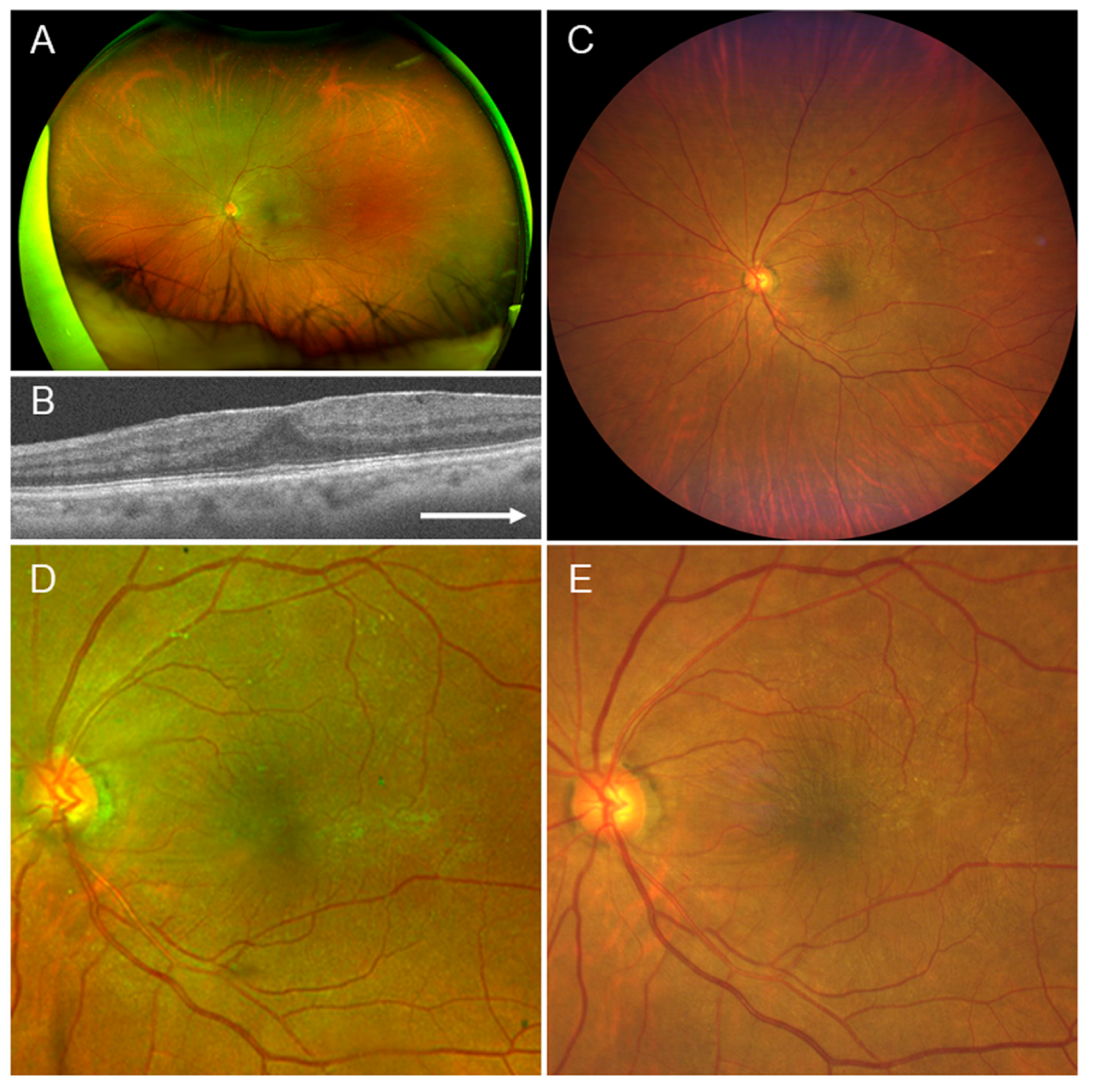
A 67-year-old female. The patient had mild cataracts, mild non-proliferative DR, and secondary ERM (Figure 1). In this case, ERM, reflection on the retinal surface, and wrinkling of the retina were clearly visible in both the Optos® and Clarus images, and all 10 readers confirmed the presence of ERM in both images (Table 7).

4.2. Case 2

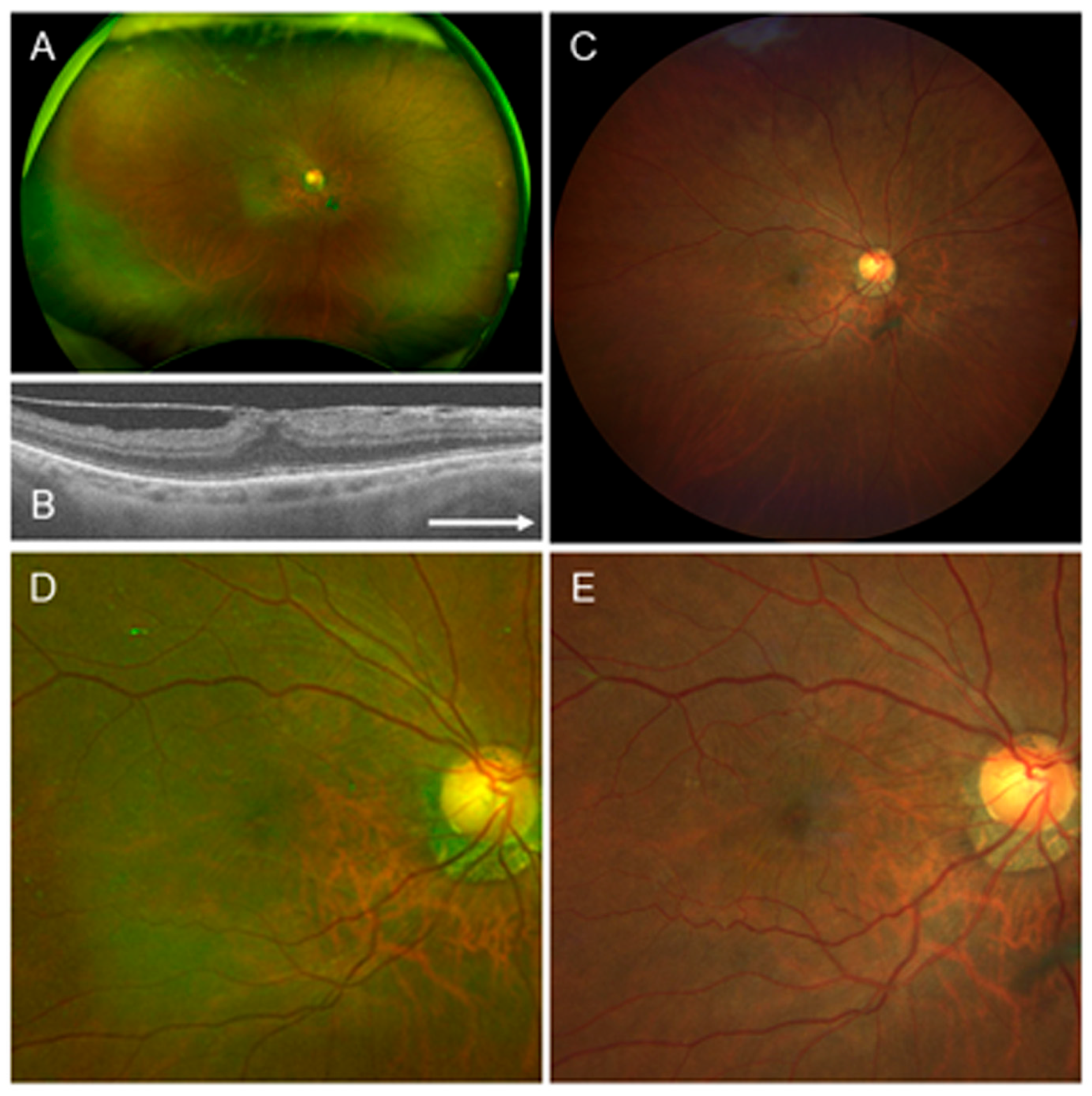
A 71-year-old female. The patient had a mild cataract and idiopathic ERM in the right eye (Figure 2). In this case, retinal wrinkling was clearly visible in the Clarus image, while the Optos® image was blurredly visible and ERM was not evident. Therefore, while all ten readers judged the presence of ERM in the Clarus image, only one reader judged the presence of ERM in the Optos® image (Table 7).

4.3. Case 3

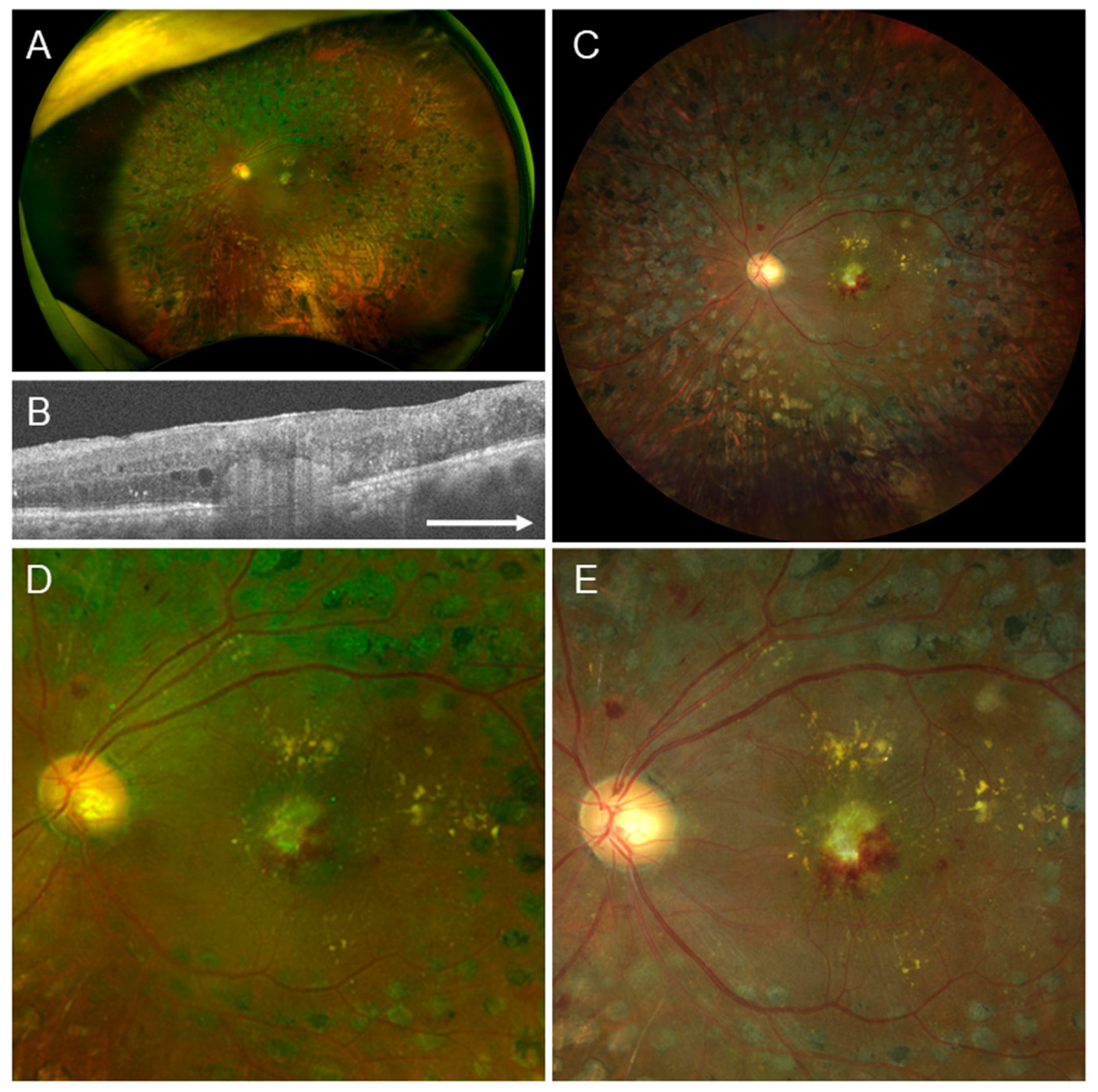
A 68-year-old male. The left eye had pseudophakia, moderate non-proliferative DR, exudative AMD, and secondary ERM (Figure 3). In this case, retinal wrinkling was visible in the Clarus image, and 9 of 10 readers confirmed the presence of ERM. However, in the Optos® image, it was difficult to observe retinal wrinkling, and all 10 readers reported the absence of ERM (Table 7).

4.4. Case 4

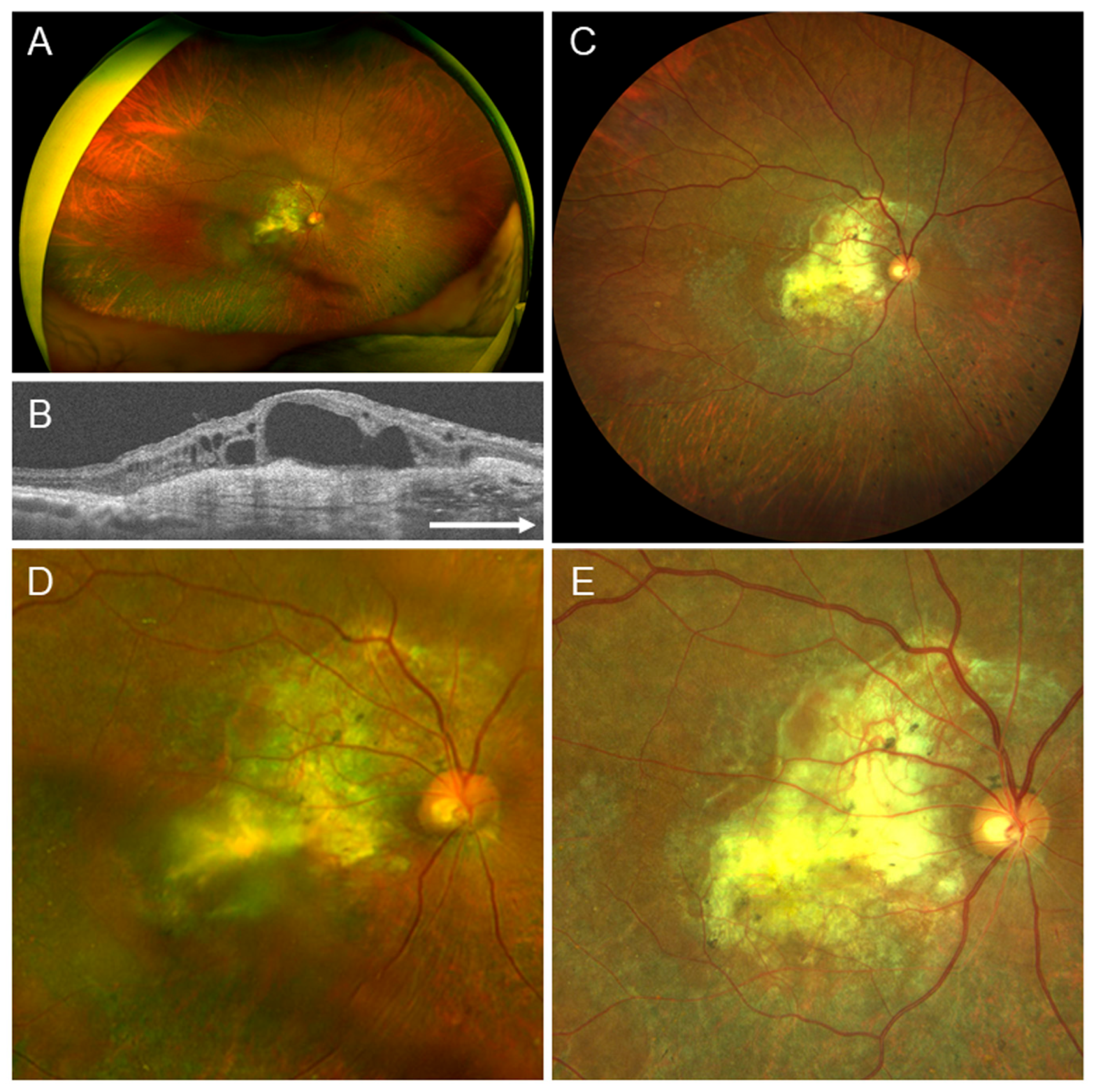
A 77-year-old male. The right eye had pseudophakia with advanced AMD and secondary ERM (Figure 4). In this case, the severity of accompanying findings, such as subretinal fibrosis and cystoid macular edema, made it difficult to distinguish the presence of ERM in both images (Table 7).

5. Discussion

We conducted this study to compare the rate of ERM detection between the Optos® and Clarus UWF imaging systems. In this study, Clarus demonstrated significantly higher rates of sensitivity (positive predictive value), correct judgment (correctly judged as present or absent ERM), and overall accuracy compared to Optos® (Table 2). Optos® produces pseudo-color images generated from red and green lasers (lacking a blue channel), whereas Clarus™ uses red, green, and blue light-emitting diode lasers to produce true-color images that closely resemble the actual color of the retina [3]. Green laser light reflects the retinal pigment epithelium, while red laser light reflects on the choroid, resulting in no reflection at the retinal surface [2]. Therefore, it may be difficult to depict the ERM, which is located on the retinal surface. In addition, Clarus has a higher resolution (7 µm) than Optos® (14 µm), which allows for more accurate determination of ERMs [5,9]. Taken together, it is assumed that Clarus had higher detection rates for ERM than Optos®. The blue channel’s role is supported by studies showing improved contrast for retinal interface lesions via short-wavelength light reflectance, which particularly enhances the visualization of surface abnormalities such as ERM and retinal nerve fiber layer defects [10,11]. Previous reports have compared Optos® and Clarus in detecting diseases such as DR and AMD [4,5,6]. Clarus was found to have the highest sensitivity for detecting neovascularization in AMD compared to Optos® and digital fundus cameras [5]. Additionally, reports indicate that Clarus is superior to Optos® in detecting lesions in the central macula for DR findings such as microaneurysms and retinal hemorrhages [6]. The superiority of Clarus™ was consistent across all ERM stages, with particularly pronounced differences in early stages (Stages 1 and 2), where subtle surface membranes are more challenging to detect with pseudo-color imaging. This finding aligns with Govetto’s optical coherence tomography-based staging scheme, in which early-stage ERM is characterized by thin, transparent membranes that benefit from the enhanced contrast provided by true-color imaging [7]. In contrast, Clarus had a higher rate of false positives (wrongly judged as present) (Table 2), possibly due to mistaking physiological macular reflexes for ERMs because of the higher resolution, but there were few cases available for the evaluation of false positives. In contrast, Optos® had higher rates of false negatives (wrongly judged as absent) and unassessed (Table 2), which may be due to resolution issues or the effects of artifacts, such as eyelashes [5,9].
According to McNemar’s analysis, Clarus demonstrated superior accuracy compared to Optos® in detecting ERMs across all categories, including the presence or absence of ERM (Table 3), ERM staging (Table 4), lens status (Table 5), and years of ophthalmologist experience (Table 6), indicating that it is effective in detecting ERM. Regarding secondary ERM, as demonstrated in Figure 3, when the findings of primary diseases were mild, Clarus had a higher rate of ERM detection. However, as shown in Figure 4, when the findings of the primary diseases were severe, both Clarus and Optos® had lower rates of ERM detection.
Regarding lens status, Clarus was also superior in phakic patients, suggesting that it was less affected by cataract artifacts (Table 5A,B). In patients with pseudophakic eyes and ERM, the diagnostic rate of ERM was similar to that of Clarus than Optos® (Table 5A). In contrast, there was no significant difference between Optos® and Clarus in the absence of ERM (Table 5B), but the reason for this was unclear. In eyes with aphakia and ERM, all readers judged the absence of ERM or unassessed, possibly due to the difficulty in distinguishing ERM in two cases of severe myopia. For aphakic patients without ERM, Optos® showed slightly better results (Table 5B); however, further research is needed because of the limited number of cases.
Regarding the years of ophthalmologist experience, ERM detection rates were better for Clarus than for Optos®, regardless of the presence or absence of ERM (Table 6A,B). Thus, although Optos® is inferior to Clarus in detecting ERM, one advantage is its wider range of view, which enables a higher detection rate of peripheral lesions [6,9,12] and allows for obtaining more information on the retina than Clarus, as reported in previous studies [12]. Therefore, it may be preferable to analyze the characteristics of both models and utilize each model based on the specific lesion being targeted.
Based on these findings, we found that Clarus generally exhibited a superior rate of ERM detection compared with Optos®. We believe that Clarus could be more valuable when assessing ERM detection in medical check-up screening.
The current study has several limitations that must be considered. Firstly, it was a retrospective study that only took place in one institution and only included Japanese patients. Additionally, background diseases such as diabetic retinopathy, age-related macular degeneration, and retinal vein occlusion may potentially interfere with ERM detection due to masking effects from hemorrhages or exudates. Although OCT confirmation mitigated diagnostic bias, subgroup analysis by underlying disease was not performed due to the retrospective design and sample constraints, representing a further limitation [13]. Additionally, the analysis was conducted using single-shot images obtained from both Optos® and Clarus, resulting in different fields of view. However, since ERM is primarily a macular lesion, detection relied on zoomed evaluation of the central field, minimizing peripheral influence. No significant differences were observed between right and left eyes, consistent with retinal symmetry. Moreover, this study did not establish specific criteria for important factors such as the size, extent, or thickness of the ERM, which may lead to differences in interpretation between thin and thick ERM cases. Reader- and analysis-related limitations include the absence of dedicated training protocols or formal inter-observer agreement assessments, potentially contributing to variability reflected in the wide metric ranges. Additionally, initial McNemar tables combined ‘no ERM’ and ‘unassessed’ categories (now separated in revisions), and small subgroups such as aphakic eyes limited robust interpretation, with minor counting discrepancies in pseudophakic data corrected.
Despite these limitations, the study found that Clarus was superior to Optos® in detecting ERM. Furthermore, this study was conducted using 2019 data with the Optos California device primarily in pseudo-color (red/green) mode. Subsequent advancements in Optos technology, including the introduction of ultra-widefield true-color RGB imaging modality in 2023 [14] (incorporating a blue laser for enhanced visualization of superficial retinal structures such as epiretinal membranes), may reduce the differences observed in ERM detection between the two systems.
In conclusion, future studies should aim to address these limitations by conducting prospective multicenter studies involving a large number of cases. This would provide more reliable and comprehensive data on the effectiveness of these devices for detecting ERM.

Supplementary Materials

The following supporting information can be downloaded at: https://www.mdpi.com/article/10.3390/jcm15020883/s1. Supplementary Table S1. Subgroup analysis for each rater.

Author Contributions

T.Y. (Takaaki Yuguchi) and R.K. collected data. S.K., Y.H., A.S., H.S., N.S., K.Y., T.Y. (Takaaki Yuguchi), R.K., A.T., and S.O. assessed the images to determine the presence or absence of ERM. S.K., Y.H., H.H., and T.Y. (Tsutomu Yasukawa) performed statistical analyses. S.K. and Y.H. wrote the main text of the manuscript. T.Y. (Tsutomu Yasukawa) supervised this study. All authors have read and agreed to the published version of the manuscript.

Funding

Y.H. was supported by a Grant-in-Aid for Scientific Research (C) 21K09678 from the Japan Society for the Promotion of Science and the Hori Sciences and Arts Foundation. S.O. was supported by a Grant-in-Aid for Early Career Scientists, 22K16977. T.Y. (Tsutomu Yasukawa) was supported by a Grant-in-Aid for Scientific Research (B) 22H03243. The other authors have no proprietary or financial interests to declare.

Institutional Review Board Statement

The study was conducted in accordance with the Declaration of Helsinki, and approved by the Institutional Review Board of Nagoya City University Graduate School of Medicine (protocol code 60-22-0021; date of approval: 24 June 2022).

Informed Consent Statement

Informed consent was obtained from all subjects involved in the study.

Data availability statement

All data generated or analyzed during this study are included in this article. Further inquiries can be directed at the corresponding authors.

Acknowledgments

The authors thank Fumie Shibuya, Yasuyo Matsuda, Sayaka Oshio, and Ayano Maruyama (Nagoya City University Graduate School of Medical Sciences) for their contributions to the data collection.

Conflicts of Interest

The authors declare no conflicts of interest.

References

  1. Flaxel, C.J.; Adelman, R.A.; Bailey, S.T.; Fawzi, A.; Lim, J.I.; Vemulakonda, G.A.; Ying, G.S. Diabetic Retinopathy Preferred Practice Pattern®. Ophthalmology 2020, 127, 66–145. [Google Scholar] [CrossRef] [PubMed]
  2. Nagiel, A.; Lalane, R.A.; Sadda, S.R.; Schwartz, S.D. Ultra-widefield fundus imaging: A review of clinical applications and future trends. Retina 2016, 36, 660–678. [Google Scholar] [CrossRef] [PubMed]
  3. Patel, S.N.; Shi, A.; Wibbelsman, T.D.; Klufas, M.A. Ultra-widefield retinal imaging: An update on recent advances. Ther. Adv. Ophthalmol. 2020, 12, 2515841419899495. [Google Scholar] [CrossRef] [PubMed]
  4. Hirano, T.; Imai, A.; Kasamatsu, H.; Kakihara, S.; Toriyama, Y.; Murata, T. Assessment of diabetic retinopathy using two ultra-wide-field fundus imaging systems, the Clarus® and Optos systems. BMC Ophthalmol. 2018, 18, 332. [Google Scholar] [CrossRef] [PubMed]
  5. Maruyama-Inoue, M.; Kitajima, Y.; Mohamed, S.; Inoue, T.; Sato, S.; Ito, A.; Yamane, S.; Kadonosono, K. Sensitivity and specificity of high-resolution wide field fundus imaging for detecting neovascular age-related macular degeneration. PLoS ONE 2020, 15, e0238072. [Google Scholar] [CrossRef] [PubMed]
  6. Khan, R.; Raman, S.; Karamcheti, S.K.M.; Srinivasan, S.; Sharma, A.; Surya, J.; Bhende, M.; Ramasamy, K.; Verma, A.; Raman, R. Comparison of two ultra-widefield cameras with high image resolution and wider view for identifying diabetic retinopathy lesions. Transl. Vis. Sci. Technol. 2021, 10, 9. [Google Scholar] [CrossRef] [PubMed]
  7. Govetto, A.; Lalane, R.A.; Sarraf, D.; Figueroa, M.S.; Hubschman, J.P. Insights into epiretinal membranes: Presence of ectopic inner foveal layers and a new optical coherence tomography staging scheme. Am. J. Ophthalmol. 2017, 175, 99–113. [Google Scholar] [CrossRef] [PubMed]
  8. Kanda, Y. Investigation of the freely available easy-to-use software ‘EZR’ for medical statistics. Bone Marrow Transpl. 2013, 48, 452–458. [Google Scholar] [CrossRef] [PubMed]
  9. Matsui, Y.; Ichio, A.; Sugawara, A.; Uchiyama, E.; Suimon, H.; Matsubara, H.; Sugimoto, M.; Ikesugi, K.; Kondo, M. Comparisons of effective fields of two ultra-widefield ophthalmoscopes, Optos 200Tx and Clarus 500. Biomed. Res. Int. 2019, 2019, 7436293. [Google Scholar] [CrossRef] [PubMed]
  10. Song, J.H.; Moon, K.Y.; Jang, S.; Moon, Y. Comparison of MultiColor fundus imaging and colour fundus photography in the evaluation of epiretinal membrane. Acta Ophthalmol. 2019, 97, e533–e539. [Google Scholar] [CrossRef] [PubMed]
  11. Terasaki, H.; Sonoda, S.; Shiihara, H.; Kakiuchi, N.; Funatsu, R.; Shirasawa, M.; Sakamoto, T. More effective screening for epiretinal membranes with multicolor scanning laser ophthalmoscope than with color fundus photographs. Retina 2020, 40, 1412–1418. [Google Scholar] [CrossRef] [PubMed]
  12. Chen, A.; Dang, S.; Chung, M.M.; Ramchandran, R.S.; Bessette, A.P.; DiLoreto, D.A.; Kleinman, D.M.; Sridhar, J.; Wykoff, C.C.; Kuriyan, A.E. Quantitative comparison of fundus images by two ultra-wide field fundus cameras. Ophthalmol. Retina 2021, 5, 450–457. [Google Scholar] [CrossRef] [PubMed]
  13. Stino, H.; Riessland, S.; Sedova, A.; Datlinger, F.; Sacu, S.; Schmidt-Erfurth, U.; Pollreisz, A. Comparison of two ultra-widefield color-fundus imaging devises for visualization of retinal periphery and microvascular lesions in patients with early diabetic retinopathy. Sci. Rep. 2022, 12, 17449. [Google Scholar] [CrossRef] [PubMed]
  14. Nagel, I.D.; Heinke, A.; Agnihotri, A.P.; Yassin, S.; Cheng, L.; Camp, A.S.; Scott, N.L.; Kalaw, F.G.P.; Borooah, S.; Bartsch, D.G.; et al. Comparison of a novel ultra-widefield three-color scanning laser ophthalmoscope to other retinal imaging modalities in chorioretinal lesion imaging. Transl. Vis. Sci. Technol. 2025, 14, 11. [Google Scholar] [CrossRef] [PubMed]
Figure 1. Findings in a 67-year-old female with mild cataract, non-proliferative diabetic retinopathy, and secondary epiretinal membrane (ERM) in the left eye. This is a case in which all 10 readers judged the presence of ERM in both the Clarus and Optos® image. (A) Optos® image with a 200-degree field. (B) Optical coherence tomography horizontal image, showing ERM. (C) Clarus image with a 130-degree field. (D) Optos® image with a 50-degree field, showing reflexes on the retinal surface and retinal wrinkling, indicating the presence of ERM. (E) Clarus image with a 50-degree field, also clearly showing ERM. Arrow: The arrow means that it is a horizontal image.
Jcm 15 00883 g001
Figure 2. Findings in a 71-year-old female with mild cataract and idiopathic epiretinal membrane (ERM) in the right eye. This is a case in which the rate of ERM diagnosis was much higher on the Clarus image than the Optos® image. (A) Optos® image with a 200-degree field. (B) Optical coherence tomography horizontal image, showing ERM. (C) Clarus image with a 130-degree field. (D) Optos® image with a 50-degree field, showing a slightly blurred retinal image that might be misdiagnosed as the absence of ERM. (E) Clarus image with a 50-degree field, showing ERM and distinct retinal wrinkling. Arrow: The arrow means that it is a horizontal image.
Jcm 15 00883 g002
Figure 3. Findings in a 68-year-old male, whose left eye had pseudophakia, non-proliferative diabetic retinopathy, exudative age-related macular degeneration, and secondary epiretinal membrane (ERM). This is another case in which the rate of ERM diagnosis was much higher on the Clarus image than the Optos® image. (A) Optos® image with a 200-degree field. (B) Optical coherence tomography horizontal image, showing ERM and hyperreflective material indicating active fibrosis and subretinal hemorrhages. (C) Clarus image with a 130-degree field. (D) Optos® image with a 50-degree field, clearly showing subretinal hemorrhages and subretinal fibrosis at the macula, but ERM is not evident. (E) Clarus image with a 50-degree field, showing retinal wrinkling indicating ERM, in addition to the hemorrhages and fibrosis. Arrow: The arrow means that it is a horizontal image.
Jcm 15 00883 g003
Figure 4. Findings in a 77-year-old male, whose right eye had pseudophakia, exudative age-related macular degeneration, and secondary epiretinal membrane (ERM). This case represents a low diagnostic rate of ERM in both the Optos® and Clarus image. (A) Optos® image with a 200-degree field is entirely blurred. (B) Optical coherence tomography horizontal image, showing thin ERM, cystoid macular edema, and subretinal fibrosis. (C) Clarus image with a 130-degree field. (D) Optos® image with a 50-degree field, which is blurred particularly in the inferior area, showing subretinal fibrosis, but ERM is not evident. (E) Clarus™ image with a 50-degree field, which is consistently clear, with subretinal fibrosis being prominently visible. However, the presence of ERM is not readily apparent. Arrow: The arrow means that it is a horizontal image.
Jcm 15 00883 g004
Table 1. Patient baseline characteristics.
Number of Patients233
Number of eyes408
Age (mean ± SD), years65 ± 14 (20–87)
Gender (male/female), n119/114
Lens status (phakia/pseudophakia/aphakia), n271/131/6
Eyes with ERM, n53
  Stage 1 ERM, n19
  Stage 2 ERM, n22
  Stage 3 ERM, n10
  Stage 4 ERM, n2
  Idiopathic ERM, n30
  Secondary ERM, n23
Eyes without ERM, n355
  Without any ocular diseases, n83
  DR, n83
  AMD, n52
  RVO, n40
  Others, n97
SD, standard deviation. n, number. ERM, epiretinal membrane. DR, diabetic retinopathy. AMD, age-related macular degeneration. RVO, retinal vein occlusion. Classification of idiopathic vs. secondary ERM was based on the absence or presence of underlying retinal diseases (e.g., RVO or diabetic retinopathy). Comorbidities were not excluded, as ERM diagnosis was confirmed by OCT.
Table 2. Comparison of ERM detection accuracy between two devices by 10 readers.
Rate (%)Optos®ClarusTMp Value (Wilcoxon’s Signed Rank Test)
Sensitivity14 (4–47)49 (42–70)0.002 **
False positives
(wrongly judged as present)
1 (0–5)3 (1–11)0.002 **
Specificity88 (48–97)89 (87–96)0.186
False negatives
(wrongly judged as absent)
53 (23–85)40 (28–49)0.012 *
Correct judges
(rightly judged as present or absent)
78 (44–88)85 (82–90)0.010 *
Wrong judges
(wrongly judged as present or absent)
9 (4–12)8 (6–13)0.846
Unassessed13 (3–52)6 (2–13)0.002 **
* p < 0.05; ** p < 0.01 (Wilcoxon’s signed rank test). ERM, epiretinal membrane. Data are presented as median (range).
Table 3. Comparison of detection accuracy with or without ERM between two devices.
Eyes with ERM (1)
(n = 53 × 10 Readers)
ClarusTM
Judged as Having ERM, nJudged as Having No ERM or Classified as Unassessed, nTotal, n
Optos®Judged as Having ERM, n9712109
Judged as Having No ERM or Classified as Unassessed, n178243421
Total, n275255530
Eyes without ERM (2)
(n = 355 × 10 Readers)
Judged as Having No ERM, nJudged as Having ERM or Classified as Unassessed, nTotal, n
Optos®Judged as Having no ERM, n27302122942
Judged as Having ERM or Classified as Unassessed, n474134608
Total, n32043463550
ERM, epiretinal membrane. N, number. (1,2) p < 0.001 (McNemar’s test). The category ‘judged as having no ERM or classified as unassessed’ combines ‘no ERM’ and ‘unassessed’ judgments for binary McNemar analysis. Unassessed judgments were more frequent with Optos® than Clarus™ (median per reader: 13 vs. 6; see Table 2), contributing to its lower detection accuracy. Exact distribution within the combined category is not separated into the original analysis, but the higher unassessed rate with Optos® is acknowledged.
Table 4. Comparison of ERM detection accuracy by ERM stage.
ERM Stage 1 (1)
(n = 19 × 10 Readers)
ClarusTM
Judged as Having ERM, nJudged as Having No ERM or Classified as Unassessed, nTotal, n
Optos®Judged as Having ERM, n10111
Judged as Having No ERM or Classified as Unassessed, n41138179
Total, n51139190
ERM Stage 2 (2)
(n = 22 × 10 Readers)
Judged as Having ERM, nJudged as Having No ERM or Classified as Unassessed, nTotal, n
Optos®Judged as Having ERM, n53154
Judged as Having No ERM or Classified as Unassessed, n9868166
Total, n15169220
ERM Stage 3 (3)
(n = 10 × 10 Readers)
Judged as Having ERM, nJudged as Having No ERM or Classified as Unassessed, nTotal, n
Optos®Judged as Having ERM, n241034
Judged as Having No ERM or Classified as Unassessed, n303666
Total, n5446100
ERM Stage 4 (4)
(n = 2 × 10 Readers)
Judged as Having ERM, nJudged as Having No ERM or Classified as Unassessed, nTotal, n
Optos®Judged as Having ERM, n10010
Judged as Having No ERM or Classified as Unassessed, n9110
Total, n19120
ERM, epiretinal membrane. N, number. (1–4) p < 0.001 (McNemar’s test). The category ‘judged as having no ERM or classified as unassessed’ combines ‘no ERM’ and ‘unassessed’ judgments for binary McNemar analysis. Unassessed judgments were more frequent with Optos® than Clarus™ (median per reader: 13 vs. 6; see Table 2), contributing to its lower detection accuracy. Exact distribution within the combined category is not separated into the original analysis, but the higher unassessed rate with Optos® is acknowledged.
Table 5. Comparison of ERM detection accuracy by lens status.
(A) Case with ERM.
Phakia (1)
(n = 27 × 10 Readers)
ClarusTM
Judged as Having ERM, nJudged as Having No ERM or Classified as Unassessed, nTotal, n
Optos®Judged as Having ERM, n60565
Judged as Having No ERM or Classified as Unassessed, n102103205
Total, n162108270
Pseudophakia (2)
(n = 26 × 10 Readers)
Judged as Having ERM, nJudged as Having No ERM or Classified as Unassessed, nTotal, n
Optos®Judged as Having ERM, n37744
Judged as Having No ERM or Classified as Unassessed, n76120196
Total, n113127240
Aphakia (3)
(n = 2 × 10 Readers)
Judged as Having ERM, nJudged as Having No ERM or Classified as Unassessed, nTotal, n
Optos®Judged as Having ERM, n000
Judged as Having No ERM or Classified as Unassessed, n02020
Total, n02020
(B) Case Without ERM.
Phakia (4)
(n = 244 × 10 Readers)
Judged as Having No ERM, nJudged as Having ERM or Classified as Unassessed, nTotal, n
Optos®Judged as Having No ERM, n1968952063
Judged as Having ERM or Classified as Unassessed, n33740377
Total, n23051352440
Pseudophakia (5)
(n = 107 × 10 Readers)
Judged as Having No ERM, nJudged as Having ERM or Classified as Unassessed, nTotal, n
Optos®Judged as Having No ERM, n737110847
Judged as Having ERM or Classified as Unassessed, n13786223
Total, n8741961070
Aphakia (6)
(n = 4 × 10 Readers)
Judged as Having No ERM, nJudged as Having ERM or Classified as Unassessed, nTotal, n
Optos®Judged as Having No ERM, n24832
Judged as Having ERM or Classified as Unassessed, n178
Total, n251540
ERM, epiretinal membrane. N, number. (1,2,4) p < 0.001, (3) P: unmeasurable, (5) p = 0.098, (6) p = 0.045 (McNemar’s test). The category ‘judged as having no ERM or classified as unassessed’ combines ‘no ERM’ and ‘unassessed’ judgments for binary McNemar analysis. Unassessed judgments were more frequent with Optos® than Clarus™ (median per reader: 13 vs. 6; see Table 2), contributing to its lower detection accuracy. Exact distribution within the combined category is not separated in the original analysis, but the higher unassessed rate with Optos® is acknowledged.
Table 6. Comparison of ERM detection accuracy by years of ophthalmologist’s experience.
(A) Case with ERM.
Ophthalmologists with 1 Year of Experience (1)
(n = 53 × 4 Readers)
ClarusTM
Judged as Having ERM, nJudged as Having No ERM or Classified as Unassessed, nTotal, n
Optos®Judged as Having ERM, n22123
Judged as Having No ERM or Classified as Unassessed, n82107189
Total, n104108212
Ophthalmologists with at Least 2 Years of Experience (2)
(n = 53 × 6 Readers)
Judged as Having ERM, nJudged as Having No ERM or Classified as Unassessed, nTotal, n
Optos®Judged as Having ERM, n751186
Judged as Having No ERM or Classified as Unassessed, n96136232
Total, n171147318
(B) Case Without ERM.
Ophthalmologists with 1 Year of Experience (3)
(n = 355 × 4 Readers)
Judged as Having No ERM, nJudged as Having ERM or Classified as Unassessed, nTotal, n
Optos®Judged as Having No ERM, n1151681219
Judged as Having ERM or Classified as Unassessed, n16635201
Total, n13171031420
Ophthalmologists with at Least 2 Years of Experience (4)
(n = 355 × 6 Readers)
Judged as Having No ERM, nJudged as Having ERM or Classified as Unassessed, nTotal, n
Optos®Judged as Having No ERM, n15791441723
Judged as Having ERM or Classified as Unassessed, n30899407
Total, n18872432130
ERM, epiretinal membrane. N, number. (1–4) p < 0.001 (McNemar’s test). The category ‘judged as having no ERM or classified as unassessed’ combines ‘no ERM’ and ‘unassessed’ judgments for binary McNemar analysis. Unassessed judgments were more frequent with Optos® than Clarus™ (median per reader: 13 vs. 6; see Table 2), contributing to its lower detection accuracy. Exact distribution within the combined category is not separated in the original analysis, but the higher unassessed rate with Optos® is acknowledged.
Table 7. Results of 10 readers’ judges to Figure 1, Figure 2, Figure 3 and Figure 4 images.
Reader12345678910
Figure 1Optos®YYYYYYYYYY
ClarusTMYYYYYYYYYY
Figure 2Optos®Y/NNNYNNNNNY/N
ClarusTMYYYYYYYYYY
Figure 3Optos®NNNNNNNNNN
ClarusTMYYYYYYYNYY
Figure 4Optos®Y/NY/NNNNNY/NNNN
ClarusTMNNNNNNNNY/NN
Y, yes (ERM present). N, no (ERM absent). Y/N, yes or no (unassessed).
Disclaimer/Publisher’s Note: The statements, opinions and data contained in all publications are solely those of the individual author(s) and contributor(s) and not of MDPI and/or the editor(s). MDPI and/or the editor(s) disclaim responsibility for any injury to people or property resulting from any ideas, methods, instructions or products referred to in the content.