Post-Surgical Gut Microbiota Alterations in Pediatric Patients with Intestinal Disorders
 , , ,
, , ,  ,
,  and
and
Abstract
1. Introduction
2. Methodology
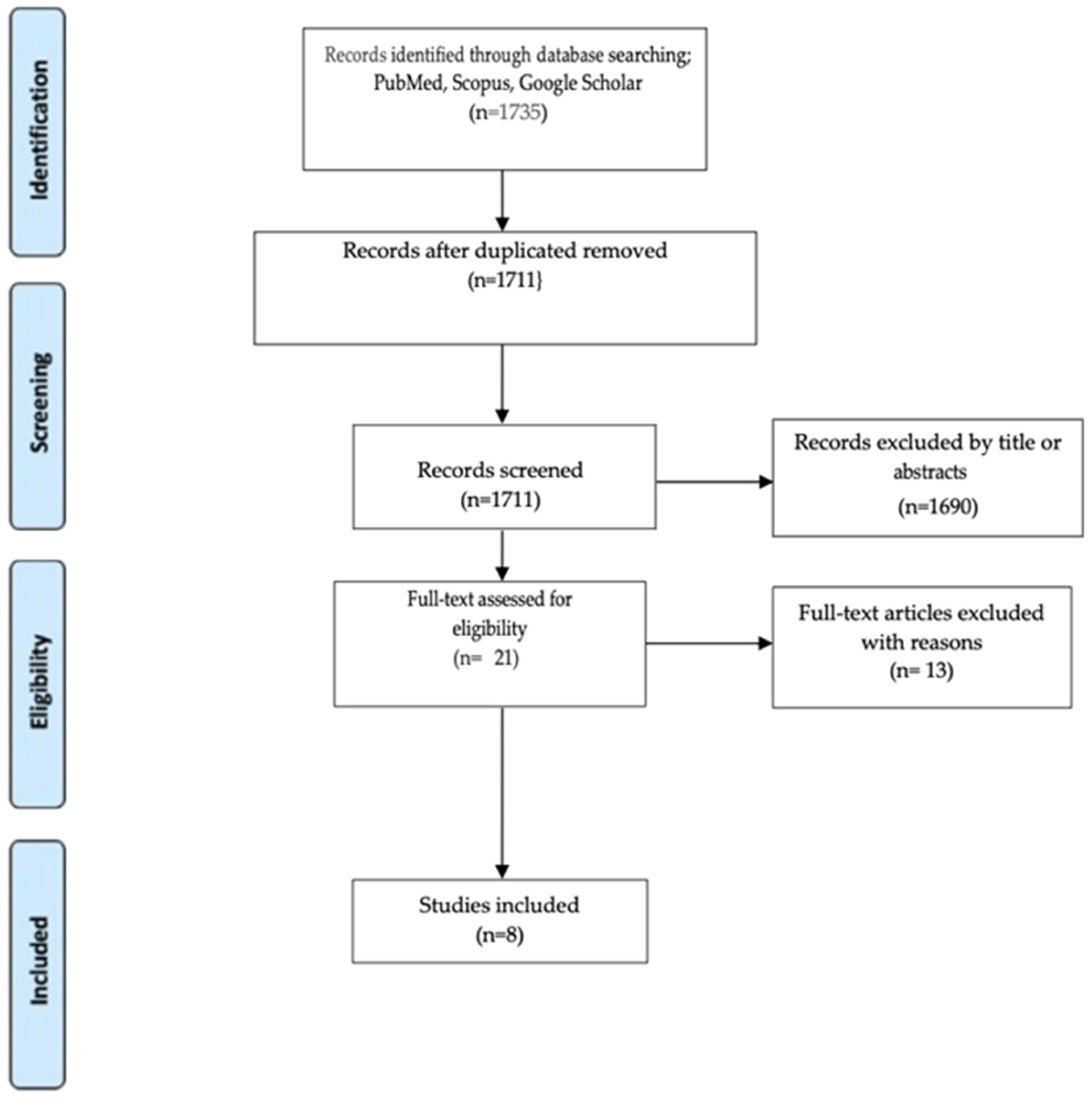
2.1. Study Design and Search Strategy
2.2. Inclusion and Exclusion Criteria
2.3. Process of Selecting the Studies
2.4. Data Extraction and Data Analysis
3. Physiology and Function of Gut Microbiota
4. Surgical Vulnerability of the Developing Gut Microbiota
5. Disruption of the Gut Microbiota in Intestinal Pediatric Surgical Diseases
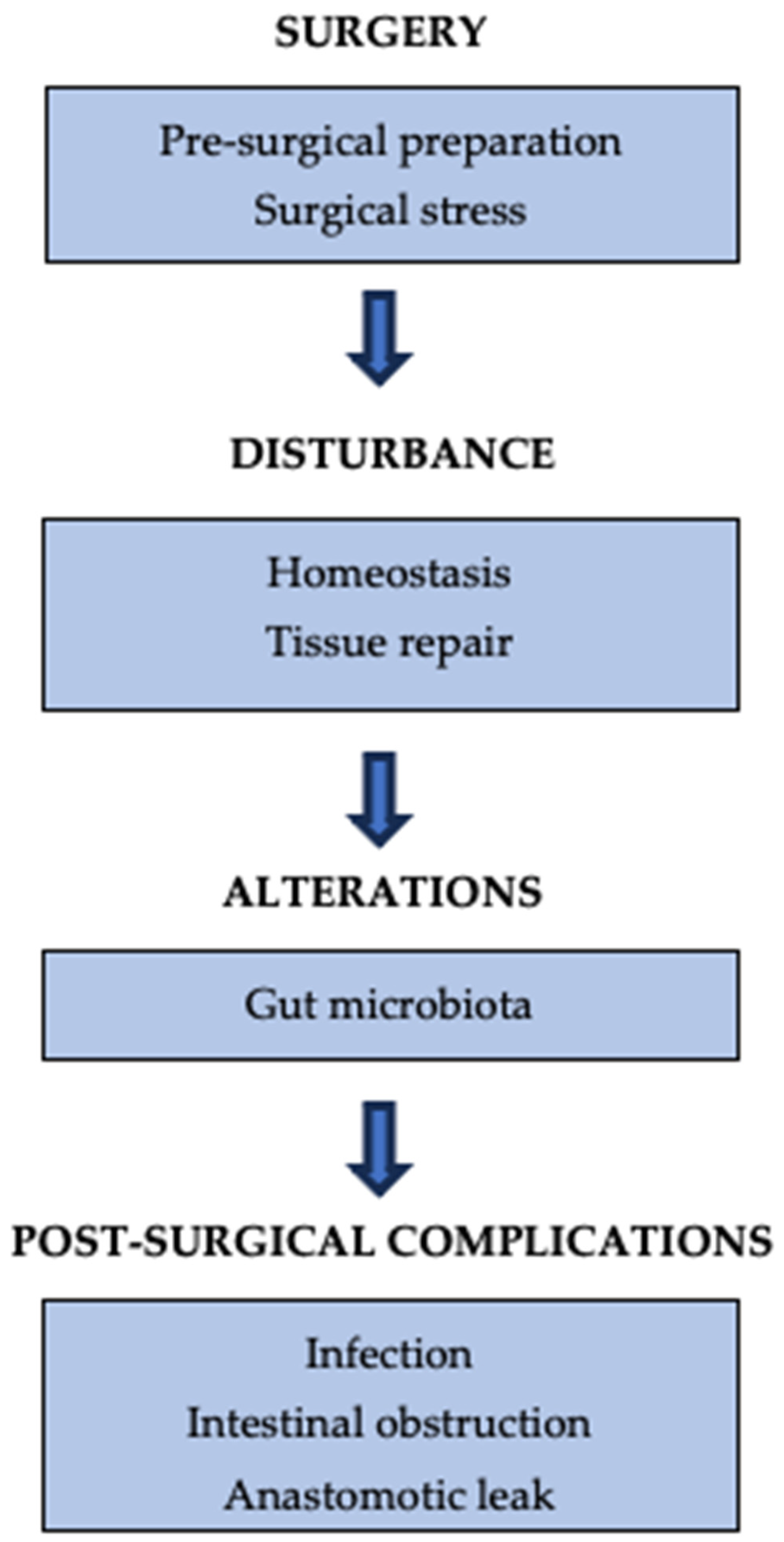
6. The Impact of Surgical Stress on Gut Microbiota in Pediatric Patients
7. Alterations in Gut Microbiota After Intestinal Surgery in Pediatric Diseases
7.1. Necrotizing Enterocolitis
7.2. Hirschsprung’s Disease and Hirschsprung’s-Associated Enterocolitis
7.3. Inflammatory Bowel Disease
7.4. Short Bowel Syndrome
8. GM-Related Post-Surgical Complications of Intestinal Surgery in Pediatric Patients
8.1. Infection
8.2. Intestinal Obstruction
8.3. Anastomotic Leak
9. Future Research
9.1. Establishing Causation: From Dysbiosis to Complication
9.2. Towards Personalized Surgical Prehabilitation
9.2.1. Dietary Prehabilitation
9.2.2. Precision Antimicrobials
9.2.3. Probiotic/Prebiotic Supplementation
9.2.4. Immunonutrition
9.3. Next-Generation Therapeutics: Precision Microbiota Engineering
10. Limitations
11. Conclusions
Author Contributions
Funding
Institutional Review Board Statement
Informed Consent Statement
Data Availability Statement
Conflicts of Interest
Abbreviations
| GM | Gut microbiota |
| NEC | Necrotizing enterocolitis |
| HD | Hirschsprung’s disease |
| IBD | Inflammatory bowel disease |
| SBS | Short bowel syndrome |
| HAEC | Hirschsprung’s-associated-enterocolitis |
| 16S rRNA | 16S ribosomal RNA |
| SCFAs | Short-chains fatty acids |
| CKD | Chronic kidney disease |
| CD | Chron’s disease |
| IO | Intestinal obstruction |
| AL | Anastomotic leak |
| MRSA | Methicillin-resistant Staphylococcus aureous |
References
- Takisha, T.; Fenero, C.I.M.; Câmara, N.O.S. Intestinal barrier and gut microbiota: Shaping our immune responses throughout life. Tissue Barriers 2017, 5, e1373208. [Google Scholar] [CrossRef] [PubMed]
- Bankole, T.; Li, Y. The early-life gut microbiome in common pediatric diseases: Roles and therapeutic implications. Front. Nutr. 2025, 12, 1597206. [Google Scholar] [CrossRef] [PubMed]
- Kamanga, N.H.B.; Thomas, R.; Thandrayen, K.; Velaphi, S.C. Risk factors and outcomes of infants with necrotizing enterocolitis: A case-control study. Front. Pediatr. 2025, 13, 1611111. [Google Scholar] [CrossRef] [PubMed]
- Pini Prato, A.; Rossi, V.; Avanzini, S.; Mattioli, G.; Disma, N.; Jasonni, V. Hirschsprung’s disease: What about mortality? Pediatr. Surg. Int. 2011, 27, 473–478. [Google Scholar] [CrossRef]
- Kolho, K.L.; Nikkonen, A.; Merras-Salmio, L.; Molander, P. The need for surgery in pediatric patients with inflammatory bowel disease treated with biologicals. Int. J. Color. Dis. 2024, 39, 58. [Google Scholar] [CrossRef]
- Wang, S.Z.; O’Daniel, E.L. Updates in intestinal failure management. J. Clin. Med. 2025, 14, 3031. [Google Scholar] [CrossRef]
- Decembrino, N.; Scuderi, M.G.; Betta, P.M.; Leonardi, R.; Bartolone, A.; Marsiglia, R.; Marangelo, C.; Pane, S.; De Rose, D.U.; Salvatori, G.; et al. Microbiota-Modulating Strategies in Neonates Undergoing Surgery for Congenital Gastrointestinal Conditions: A Narrative Review. Nutrients 2025, 17, 2234. [Google Scholar] [CrossRef]
- Gibiino, G.; Binda, C.; Cristofaro, L.; Sbrancia, M.; Coluccio, C.; Petraroli, C.; Jung, C.F.M.; Cucchetti, A.; Cavaliere, D.; Ercolani, G.; et al. Dysbiosis and Gastrointestinal Surgery: Current Insights and Future Research. Biomedicines 2022, 10, 2532. [Google Scholar] [CrossRef]
- Shi, Y.; Cui, H.; Wang, F.; Zhang, Y.; Xu, Q.; Liu, D.; Wang, K.; Hou, S. Role of gut microbiota in postoperative complications and prognosis of gastrointestinal surgery: A narrative review. Medicine 2022, 101, e29826. [Google Scholar] [CrossRef]
- Lin, H.; Xu, C.; Chen, J.; Ma, X.; Shi, L.; Shi, W.; Du, L.; Ni, Y. Alteration of the gut microbiota after surgery in preterm infants with necrotizing enterocolitis. Front. Pediatr. 2023, 11, 993759. [Google Scholar] [CrossRef]
- Neuvonen, M.I.; Korpela, K.; Kyrklund, K.; Salonen, A.; de Vos, W.; Rintala, R.J.; Pakarinen, M.P. Intestinal Microbiota in Hirschsprung Disease. J. Pediatr. Gastroenterol. Nutr. 2018, 67, 594–600. [Google Scholar] [CrossRef] [PubMed]
- Thänert, R.; Thänert, A.; Ou, J.; Bajinting, A.; Burnham, C.D.; Engelstad, H.J.; Tecos, M.E.; Ndao, I.M.; Hall-Moore, C.; Rouggly-Nickless, C.; et al. Antibiotic-driven intestinal dysbiosis in pediatric short bowel syndrome is associated with persistently altered microbiome functions and gut-derived bloodstream infections. Gut Microbes 2021, 13, 1940792. [Google Scholar] [CrossRef] [PubMed]
- Cleminson, J.S.; Thomas, J.; Stewart, C.J.; Campbell, D.; Gennery, A.; Embleton, N.D.; Köglmeier, J.; Wong, T.; Spruce, M.; Berrington, J.E. Gut microbiota and intestinal rehabilitation: A prospective childhood cohort longitudinal study of short bowel syndrome (the MIRACLS study): Study protocol. BMJ Open Gastroenterol. 2024, 11, e001450. [Google Scholar] [CrossRef] [PubMed]
- Packey, C.D.; Sartor, R.B. Commensal bacteria, traditional and opportunistic pathogens, dysbiosis and bacterial killing in inflammatory bowel diseases. Curr. Opin. Infect. Dis. 2009, 22, 292–301. [Google Scholar] [CrossRef]
- Mimura, T.; Rizzello, F.; Helwig, U.; Poggioli, G.; Schreiber, S.; Talbot, I.C.; Nicholls, R.J.; Gionchetti, P.; Campieri, M.; Kamm, M.A. Once daily high dose probiotic therapy (VSL#3) for maintaining remission in recurrent or refractory pouchitis. Gut 2004, 53, 108–114. [Google Scholar] [CrossRef]
- Wang, X.; Li, Z.; Xu, Z.; Wang, Z.; Feng, J. Probiotics prevent Hirschsprung’s disease-associated enterocolitis: A prospective multicenter randomized controlled trial. Int. J. Color. Dis. 2015, 30, 105–110. [Google Scholar] [CrossRef]
- D’Haens, G.R.; Vermeire, S.; Van Assche, G.; Noman, M.; Aerden, I.; Van Olmen, G.; Van Olmen, G.; Rutgeerts, P. Therapy of metronidazole with azathioprine to prevent postoperative recurrence of Crohn’s disease: A controlled randomized trial. Gastroenterology 2008, 135, 1123–1129. [Google Scholar] [CrossRef]
- Premkumar, M.H.; Soraisham, A.; Bagga, N.; Massieu, L.A.; Maheshwari, A. Nutritional Management of Short Bowel Syndrome. Clin. Perinatol. 2022, 49, 557–572. [Google Scholar] [CrossRef]
- Nishida, A.; Inoue, R.; Inatomi OBamba, S.; Naito, Y.; Andoh, A. Gut microbiota in the pathogenesis of inflammatory bowel disease. Clin. J. Gastroenterol. 2018, 11, 1–10. [Google Scholar] [CrossRef]
- Rinninella, E.; Raoul, P.; Cintoni, M.; Franceschi, F.; Miggiano, G.A.D.; Gasbarrini, A.; Mele, M.C. What is the Healthy Gut Microbiota Composition? A Changing Ecosystem across Age, Environment, Diet, and Diseases. Microorganisms 2019, 7, 14. [Google Scholar] [CrossRef]
- Laterza, L.; Rizzatti, G.; Gaetani, E.; Chiusolo, P.; Gasbarrini, A. The Gut Microbiota and Immune System Relationship in Human Graft-versus-Host Disease. Mediterr. J. Hematol. Infect. Dis. 2016, 8, e2016025. [Google Scholar] [CrossRef]
- Krautkramer, K.A.; Fan, J.; Bäckhed, F. Gut microbial metabolites as multi-kingdom intermediates. Nat. Rev. Microbiol. 2021, 19, 77–94. [Google Scholar] [CrossRef] [PubMed]
- Cummings, J.H.; Pomare, E.W.; Branch, W.J.; Naylor, C.P.; Macfarlane, G.T. Short chain fatty acids in human large intestine, portal, hepatic and venous blood. Gut 1987, 28, 1221–1227. [Google Scholar] [CrossRef] [PubMed]
- Wang, L.Y.; He, L.H.; Xu, L.J.; Li, S.B. Short-chain fatty acids: Bridges between diet, gut microbiota, and health. J. Gastroenterol. Hepatol. 2024, 39, 1728–1736. [Google Scholar] [CrossRef]
- Mansuy-Aubert, V.; Ravussin, Y. Short chain fatty acids: The messengers from down below. Front. Neurosci. 2023, 17, 1197759. [Google Scholar] [CrossRef] [PubMed]
- Liu, P.; Wang, Y.; Yang, G.; Zhang, Q.; Meng, L.; Xin, Y.; Jiang, X. The role of short-chain fatty acids in intestinal barrier function, inflammation, oxidative stress, and colonic carcinogenesis. Pharmacol. Res. 2021, 165, 105420. [Google Scholar] [CrossRef]
- Ma, Z.F.; Lee, Y.Y. The Role of the Gut Microbiota in Health, Diet, and Disease with a Focus on Obesity. Foods 2025, 14, 492. [Google Scholar] [CrossRef]
- Mariat, D.; Firmesse, O.; Levenez, F.; Guimarăes, V.; Sokol, H.; Doré, J.; Corthier, G.; Furet, J.P. The Firmicutes/Bacteroidetes ratio of the human microbiota changes with age. BMC Microbiol. 2009, 9, 123. [Google Scholar] [CrossRef]
- Barker-Tejeda, T.C.; Zubeldia-Varela, E.; Macías-Camero, A.; Alonso, L.; Martín-Antoniano, I.A.; Rey-Stolle, M.F.; Mera-Berriatua, L.; Bazire, R.; Cabrera-Freitag, P.; Shanmuganathan, M.; et al. Comparative characterization of the infant gut microbiome and their maternal lineage by a multi-omics approach. Nat. Commun. 2024, 15, 3004. [Google Scholar] [CrossRef]
- Yang, R.; Shi, Z.; Li, Y.; Huang, X.; Li, Y.; Li, X.; Chen, Q.; Hu, Y.; Li, X. Research focus and emerging trends of the gut microbiome and infant: A bibliometric analysis from 2004 to 2024. Front. Microbiol. 2024, 15, 1459867. [Google Scholar] [CrossRef]
- Stewart, C.J.; Ajami, N.J.; O’Brien, J.L.; Hutchinson, D.S.; Smith, D.P.; Wong, M.C.; Ross, M.C.; Lloyd, R.; Doddapaneni, H.; Metcalf, G.A.; et al. Temporal development of the gut microbiome in early childhood from the TEDDY study. Nature 2018, 562, 583–588. [Google Scholar] [CrossRef] [PubMed]
- Derrien, M.; Alvarez, A.S.; de Vos, W.M. The Gut Microbiota in the First Decade of Life. Trends Microbiol. 2019, 27, 997–1010. [Google Scholar] [CrossRef] [PubMed]
- Dominguez-Bello, M.G.; Costello, E.K.; Contreras, M.; Magris, M.; Hidalgo, G.; Fierer, N.; Knight, R. Delivery mode shapes the acquisition and structure of the initial microbiota across multiple body habitats in newborns. Proc. Natl. Acad. Sci. USA 2010, 107, 11971–11975. [Google Scholar] [CrossRef] [PubMed]
- Rozé, J.C.; Ancel, P.Y.; Marchand-Martin, L.; Rousseau, C.; Montassier, E.; Monot, C.; Le Roux, K.; Butin, M.; Resche-Rigon, M.; Aires, J.; et al. Assessment of Neonatal Intensive Care Unit Practices and Preterm Newborn Gut Microbiota and 2-Year Neurodevelopmental Outcomes. JAMA Netw. Open 2020, 3, E2018119. [Google Scholar] [CrossRef]
- Jia, J.; Xun, P.; Wang, X.; He, K.; Tang, Q.; Zhang, T.; Wang, Y.; Tang, W.; Lu, L.; Yan, W.; et al. Impact of Postnatal Antibiotics and Parenteral Nutrition on the Gut Microbiota in Preterm Infants During Early Life. JPEN J. Parenter. Enter. Nutr. 2020, 44, 639–654. [Google Scholar] [CrossRef]
- Hollister, E.B.; Riehle, K.; Luna, R.A.; Weidler, E.M.; Rubio-Gonzales, M.; Mistretta, T.A.; Raza, S.; Doddapaneni, H.V.; Metcalf, G.A.; Muzny, D.M.; et al. Structure and function of the healthy pre-adolescent pediatric gut microbiome. Microbiome 2015, 3, 36. [Google Scholar] [CrossRef]
- Penders, J.; Thijs, C.; Vink, C.; Stelma, F.F.; Snijders, B.; Kummeling, I.; van den Brandt, P.A.; Stobberingh, E.E. Factors influencing the composition of the intestinal microbiota in early infancy. Pediatrics 2006, 118, 511–521. [Google Scholar] [CrossRef]
- Li, F.; Hooi, S.L.; Choo, Y.M.; The, C.S.J.; Toh, K.Y.; Lim, L.W.Z.; Lee, Y.Q.; Chong, C.W.; Ahmad Kamar, A. Progression of gut microbiome in preterm infants during the first three months. Sci. Rep. 2025, 15, 12104. [Google Scholar] [CrossRef]
- Guyton, K.; Alverdy, J.C. The gut microbiota and gastrointestinal surgery. Nat. Rev. Gastroenterol. Hepatol. 2017, 14, 43–54. [Google Scholar] [CrossRef]
- Morowitz, M.J.; Babrowski, T.; Carlisle, E.M.; Olivas, A.; Romanowski, K.S.; Seal, J.B.; Liu, D.C.; Alverdy, J.C. The human microbiome and surgical disease. Ann. Surg. 2011, 253, 1094–1101. [Google Scholar] [CrossRef]
- Liu, L.; Fu, Q.; Li, T.; Shao, K.; Zhu, X.; Cong, Y.; Zhao, X. Gut microbiota and butyrate contribute to nonalcoholic fatty liver disease in premenopause due to estrogen deficiency. PLoS ONE 2022, 17, e0262855. [Google Scholar] [CrossRef]
- Alsharairi, N.A. Therapeutic Potential of Gut Microbiota and Its Metabolite Short-Chain Fatty Acids in Neonatal Necrotizing Enterocolitis. Life 2023, 13, 561. [Google Scholar] [CrossRef] [PubMed]
- Weaver, L.; Troester, A.; Jahansouz, C. The Impact of Surgical Bowel Preparation on the Microbiome in Colon and Rectal Surgery. Antibiotics 2024, 23(13), 580. [Google Scholar] [CrossRef]
- Nalluri, H.; Kizy, S.; Ewing, K.; Luthra, G.; Leslie, D.B.; Bernlohr, D.A.; Sadowsky, M.J.; Ikramuddin, S.; Khoruts, A.; Staley, C.; et al. Peri-operative antibiotics acutely and significantly impact intestinal microbiota following bariatric surgery. Sci. Rep. 2020, 10, 20340. [Google Scholar] [CrossRef]
- Zhang, R.; Li, L.; Yu, G.; Li, Y.; Wei, K.; Lin, L.; Ye, Y. Interaction between gut microbiota and anesthesia: Mechanism exploration and translation challenges focusing on the gut-brain-liver axis. Front. Cell. Infect. Microbiol. 2025, 15, 1626585. [Google Scholar] [CrossRef]
- Brenner, D.; Shorten, G.D.; O’Mahony, S.M. Postoperative pain and the gut microbiome. Neurobiol. Pain 2021, 10, 100070. [Google Scholar] [CrossRef]
- Ilhan, Z.E.; Di Baise, J.; Dautel, S.E.; Isern, N.G.; Kim, Y.M.; Hoyt, D.W.; Schepmoes, A.A.; Brewer, H.M.; Weitz, K.K.; Metz, T.O.; et al. Temporospatial shifts in the human gut microbiome and metabolome after gastric bypass surgery. NPJ Biofilms Microbiomes 2020, 6, 12. [Google Scholar] [CrossRef]
- Paine, H.; Jones, F.; Kinross, J. Preparing the Bowel (Microbiome) for Surgery: Surgical Bioresilience. Clin. Colon Rectal Surg. 2023, 36, 138–145. [Google Scholar] [CrossRef]
- Saeed, N.K.; Al-Beltagi, M.; Bediwy, A.S.; El-Sawaf, Y.; Toema, O. Gut microbiota in various childhood disorders: Implication and indications. World J. Gastroenterol. 2022, 28, 1875–1901. [Google Scholar] [CrossRef]
- Ihekweazu, F.D.; Versalovic, J. Development of the Pediatric Gut Microbiome: Impact on Health and Disease. Am. J. Med. Sci. 2018, 356, 413–423. [Google Scholar] [CrossRef]
- Wu, Y.; Li, S.; Liu, L.; Zhang, X.; Lv, J.; Li, Q.; Li, Y. Intestinal microecology in pediatric surgery-related diseases: Current insights and future perspectives. J. Pediatr. Surg. Open 2024, 6, 100134. [Google Scholar] [CrossRef]
- Rao, S.C.; Esvaran, M.; Patole, S.K.; Simmer, K.N.; Gollow, I.; Keil, A.; Wemheuer, B.; Chen, L.; Conway, P.L. Gut microbiota in neonates with congenital gastrointestinal surgical conditions: A prospective study. Pediatr. Res. 2020, 88, 878–886. [Google Scholar] [CrossRef] [PubMed]
- Zhu, L.; Chen, F.; Gao, T.; Liu, T.; Zhu, H.; Sheng, Q.; Liu, J.; Lu, L.; Lv, Z. Bacteroidetes/Firmicutes ratio as an early biomarker for NEC development in preterm infants. J. Pediatr. Surg. 2025, 60, 162606. [Google Scholar] [CrossRef] [PubMed]
- Salvi, P.S.; Cowles, R.A. Butyrate and the Intestinal Epithelium: Modulation of Proliferation and Inflammation in Homeostasis and Disease. Cells 2021, 10, 1775. [Google Scholar] [CrossRef]
- Huang, K.; Mukherjee, S.; DesMarais, V.; Albanese, J.M.; Rafti, E.; Draghi Ii, A.; Maher, L.A.; Khanna, K.M.; Mani, S.; Matson, A.P. Targeting the PXR-TLR4 signaling pathway to reduce intestinal inflammation in an experimental model of necrotizing enterocolitis. Pediatr. Res. 2018, 83, 1031–1040. [Google Scholar] [CrossRef]
- Yan, Z.; Poroyko, V.; Gu, S.; Zhang, Z.; Pan, L.; Wang, J.; Bao, N.; Hong, L. Characterization of the intestinal microbiome of Hirschsprung’s disease with and without enterocolitis. Biochem. Biophys. Res. Commun. 2014, 445, 269–274. [Google Scholar] [CrossRef]
- Budianto, I.R.; Kusmardi, K.; Maulana, A.M.; Arumugam, S.; Afrin, R.; Soetikno, V. Paneth-like cells disruption and intestinal dysbiosis in the development of enterocolitis in an iatrogenic rectosigmoid hypoganglionosis rat model. Front. Surg. 2024, 11, 1407948. [Google Scholar] [CrossRef]
- Arnaud, A.P.; Hascoet, J.; Berneau, P.; LeGouevec, F.; Georges, J.; Randuineau, G.; Formal, M.; Henno, S.; Boudry, G. A piglet model of iatrogenic rectosigmoid hypoganglionosis reveals the impact of the enteric nervous system on gut barrier function and microbiota postnatal development. J. Pediatr. Surg. 2021, 56, 337–345. [Google Scholar] [CrossRef]
- Liu, W.; Yan, H.; Jia, W.; Huang, J.; Fu, Z.; Xu, W.; Yu, H.; Yang, W.; Pan, W.; Zheng, B.; et al. Association between gut microbiota and Hirschsprung disease: A bidirectional two-sample Mendelian randomization study. Front. Microbiol. 2024, 15, 1366181. [Google Scholar] [CrossRef]
- Wang, Z.; Gao, B.; Liu, X.; Li, A. The mediating role of metabolites between gut microbiome and Hirschsprung disease: A bidirectional two-step Mendelian randomization study. Front. Pediatr. 2024, 12, 1371933. [Google Scholar] [CrossRef]
- Zhuang, X.; Liu, C.; Zhan, S.; Tian, Z.; Li, N.; Mao, R.; Zeng, Z.; Chen, M. Gut Microbiota Profile in Pediatric Patients with Inflammatory Bowel Disease: A Systematic Review. Front. Pediatr. 2021, 9, 626232. [Google Scholar] [CrossRef] [PubMed]
- Sondheimer, J.M.; Asturias, E.; Cadnapaphornchai, M. Infection and cholestasis in neonates with intestinal resection and long-term parenteral nutrition. J. Pediatr. Gastroenterol. Nutr. 1998, 27, 131–197. [Google Scholar] [CrossRef] [PubMed]
- Meehan, J.J.; Georgeson, K.E. Prevention of liver failure in parenteral nutrition-dependent children with short bowel syndrome. J. Pediatr. Surg. 1997, 32, 473–475. [Google Scholar] [CrossRef] [PubMed]
- Engstrand Lilja, H.; Wefer, H.; Nyström, N.; Finkel, Y.; Engstrand, L. Intestinal dysbiosis in children with short bowel syndrome is associated with impaired outcome. Microbiome 2015, 3, 18. [Google Scholar] [CrossRef]
- Piper, H.G.; Fan, D.; Coughlin, L.A.; Ho, E.X.; McDaniel, M.M.; Channabasappa, N.; Kim, J.; Kim, M.; Zhan, X.; Xie, Y.; et al. Severe Gut Microbiota Dysbiosis Is Associated with Poor Growth in Patients with Short Bowel Syndrome. JPEN J. Parenter. Enter. Nutr. 2017, 41, 1202–1212. [Google Scholar] [CrossRef]
- Davidovics, Z.H.; Carter, B.A.; Luna, R.A.; Hollister, E.B.; Shulman, R.J.; Versalovic, J. The Fecal Microbiome in Pediatric Patients with Short Bowel Syndrome. JPEN J. Parenter. Enter. Nutr. 2016, 40, 1106–1113. [Google Scholar] [CrossRef]
- Zeichner, S.; Mongodin, E.F.; Hittle, L.; Huang, S.H.; Torres, C. The bacterial communities of the small intestine and stool in children with short bowel syndrome. PLoS ONE 2019, 14, e0215351. [Google Scholar] [CrossRef]
- Phyo, L.Y.; Singkhamanan, K.; Laochareonsuk, W.; Surachat, K.; Phutong, N.; Boonsanit, K.; Chiengkriwate, P.; Sangkhathat, S. Fecal microbiome alterations in pediatric patients with short bowel syndrome receiving a rotating cycle of gastrointestinal prophylactic antibiotics. Pediatr. Surg. Int. 2021, 37, 1371–1381. [Google Scholar] [CrossRef]
- Barreiros Mota, I.; Marques, C.; Faria, A.; Neto, M.T.; Cordeiro-Ferreira, G.; Virella, D.; Pita, A.; Pereira-da-Silva, L.; Calhau, C. Colonisation of the proximal intestinal remnant in newborn infants with enterostomy: A longitudinal study protocol. BMJ Open 2019, 9, e028916. [Google Scholar] [CrossRef]
- Shogan, B.D.; Smith, D.P.; Christley, S.; Gilbert, J.A.; Zaborina, O.; Alverdy, J.C. Intestinal anastomotic injury alters spatially defined microbiome composition and function. Microbiome 2014, 2, 35. [Google Scholar] [CrossRef]
- Salomon, J.; Ericsson, A.; Price, A.; Manithody, C.; Murry, D.J.; Chhonker, Y.S.; Buchanan, P.; Lindsey, M.L.; Singh, A.B.; Jain, A.K. Dysbiosis and Intestinal Barrier Dysfunction in Pediatric Congenital Heart Disease Is Exacerbated Following Cardiopulmonary Bypass. JACC Basic Transl. Sci. 2021, 6, 311–327. [Google Scholar] [CrossRef] [PubMed]
- Derikx, J.P.; Luyer, M.D.; Heineman, E.; Buurman, W.A. Non-invasive markers of gut wall integrity in health and disease. World J. Gastroenterol. 2010, 16, 5272–5279. [Google Scholar] [CrossRef] [PubMed]
- Lu, Z.; Ding, L.; Lu, Q.; Chen, Y.H. Claudins in intestines: Distribution and functional significance in health and diseases. Tissue Barriers 2013, 1, E24978. [Google Scholar] [CrossRef] [PubMed]
- Rhoads, J.M.; Plunkett, E.; Galanko, J.; Lichtman, S.; Taylor, L.; Maynor, A.; Weiner, T.; Freeman, K.; Guarisco, J.L.; Wu, G.Y. Serum citrulline levels correlate with enteral tolerance and bowel length in infants with short bowel syndrome. J. Pediatr. 2005, 146, 542–547. [Google Scholar] [CrossRef]
- Yang, X.; Wu, Y.; Xu, X.; Gao, W.; Xie, J.; Li, Z.; Zhou, X.; Feng, X. Impact of Repeated Infantile Exposure to Surgery and Anesthesia on Gut Microbiota and Anxiety Behaviors at Age 6–9. J. Pers. Med. 2023, 13, 823. [Google Scholar] [CrossRef]
- Traini, I.; Chan, S.Y.; Menzies, J.; Hughes, J.; Coffey, M.J.; McKay, I.R.; Ooi, C.Y.; Leach, S.T.; Krishnan, U. Intestinal dysbiosis and inflammation in children with repaired esophageal atresia. J. Pediatr. Gastroenterol. Nutr. 2023, 78, 43–51. [Google Scholar] [CrossRef]
- Cheng, C.W.; Biton, M.; Haber, A.L.; Gunduz, N.; Eng, G.; Gaynor, L.T.; Tripathi, S.; Calibasi-Kocal, G.; Rickelt, S.; Butty, V.L.; et al. Ketone Body Signaling Mediates Intestinal Stem Cell Homeostasis and Adaptation to Diet. Cell 2019, 178, 1115–1131. [Google Scholar] [CrossRef]
- Carr, T.M.; Wheaton, J.D.; Houtz, G.M.; Ciofani, M. JunB promotes Th17 cell identity and restrains alternative CD4+ T-cell programs during inflammation. Nat. Commun. 2017, 8, 301. [Google Scholar] [CrossRef]
- Doğan, G.; İpek, H. The Development of Necrotizing Enterocolitis Publications: A Holistic Evolution of Global Literature with Bibliometric Analysis. Eur. J. Pediatr. Surg. 2020, 30, 293–303. [Google Scholar] [CrossRef]
- Obermayr, F.; Hotta, R.; Enomoto, H.; Young, H.M. Development and developmental disorders of the enteric nervous system. Nat. Rev. Gastroenterol. Hepatol. 2013, 10, 43–57. [Google Scholar] [CrossRef]
- Gosain, A. Established and emerging concepts in Hirschsprung’s-associated enterocolitis. Pediatr. Surg. Int. 2016, 32, 313–320. [Google Scholar] [CrossRef]
- Murphy, C.E.; Coffey, M.J.; Chen, Q.; Adams, S.; Ooi, C.Y.; van Dorst, J. Altered Development of Gut Microbiota and Gastrointestinal Inflammation in Children with Post-Operative Hirschsprung’s Disease. Int. J. Mol. Sci. 2025, 26, 10570. [Google Scholar] [CrossRef] [PubMed]
- Pini Prato, A.; Bartow-McKenney, C.; Hudspeth, K.; Mosconi, M.; Rossi, V.; Avanzini, S.; Faticato, M.G.; Ceccherini, I.; Lantieri, F.; Mattioli, G.; et al. A Metagenomics Study on Hirschsprung’s Disease Associated Enterocolitis: Biodiversity and Gut Microbial Homeostasis Depend on Resection Length and Patient’s Clinical History. Front. Pediatr. 2019, 7, 326. [Google Scholar] [CrossRef] [PubMed]
- Frykman, P.K.; Nordenskjöld, A.; Kawaguchi, A.; Hui, T.T.; Granström, A.L.; Cheng, Z.; Tang, J.; Underhill, D.M.; Iliev, I.; Funari, V.A.; et al. HAEC Collaborative Research Group (HCRG). Characterization of Bacterial and Fungal Microbiome in Children with Hirschsprung Disease with and without a History of Enterocolitis: A Multicenter Study. PLoS ONE 2015, 10, e0124172. [Google Scholar] [CrossRef] [PubMed]
- Plekhova, V.; De Paepe, E.; Van Renterghem, K.; Van Winckel, M.; Hemeryck, L.Y.; Vanhaecke, L. Disparities in the gut metabolome of post-operative Hirschsprung’s disease patients. Sci. Rep. 2021, 11, 16167. [Google Scholar] [CrossRef]
- Tang, W.; Su, Y.; Yuan, C.; Zhang, Y.; Zhou, L.; Peng, L.; Wang, P.; Chen, G.; Li, Y.; Li, H.; et al. Prospective study reveals a microbiome signature that predicts the occurrence of post-operative enterocolitis in Hirschsprung disease (HSCR) patients. Gut Microbes 2020, 11, 842–854. [Google Scholar] [CrossRef]
- Freeman, J.J.; Rabah, R.; Hirschl, R.B.; Maspons, A.; Meier, D.; Teitelbaum, D.H. Anti-TNF-α treatment for post-anastomotic ulcers and inflammatory bowel disease with Crohn’s-like pathologic changes following intestinal surgery in pediatric patients. Pediatr. Surg. Int. 2015, 31, 77–82. [Google Scholar] [CrossRef]
- Fang, X.; Vázquez-Baeza, Y.; Elijah, E.; Vargas, F.; Ackermann, G.; Humphrey, G.; Lau, R.; Weldon, K.C.; Sanders, J.G.; Panitchpakdi, M.; et al. Gastrointestinal Surgery for Inflammatory Bowel Disease Persistently Lowers Microbiome and Metabolome Diversity. Inflamm. Bowel Dis. 2021, 27, 603–616. [Google Scholar] [CrossRef]
- Mondot, S.; Lepage, P.; Seksik, P.; Allez, M.; Tréton, X.; Bouhnik, Y.; Colombel, J.F.; Leclerc, M.; Pochart, P.; Doré, J.; et al. GETAID. Structural robustness of the gut mucosal microbiota is associated with Crohn’s disease remission after surgery. Gut 2016, 65, 954–962. [Google Scholar] [CrossRef]
- Fitzgerald, R.S.; Sanderson, I.R.; Claesson, M.J. Paediatric Inflammatory Bowel Disease and its Relationship with the Microbiome. Microb. Ecol. 2021, 82, 833–844. [Google Scholar] [CrossRef]
- Kelay, A.; Tullie, L.; Stanton, M. Surgery and paediatric inflammatory bowel disease. Transl. Pediatr. 2019, 8, 436–448. [Google Scholar] [CrossRef]
- Cleminson, J.S.; Young, G.R.; Campbell, D.I.; Campbell, F.; Gennery, A.R.; Berrington, J.E.; Stewart, C.J. Gut microbiome in paediatric short bowel syndrome: A systematic review and sequencing re-analysis. Pediatr. Res. 2025, 98, 2082–2086. [Google Scholar] [CrossRef] [PubMed]
- Sommovilla, J.; Zhou, Y.; Sun, R.C.; Choi, P.M.; Diaz-Miron, J.; Shaikh, N.; Sodergren, E.; Warner, B.B.; Weinstock, G.M.; Tarr, P.I.; et al. Small bowel resection induces long-term changes in the enteric microbiota of mice. J. Gastrointest. Surg. 2015, 19, 56–64, discussion 64. [Google Scholar] [CrossRef] [PubMed]
- Goulet, O.; Abi Nader, E.; Pigneur, B.; Lambe, C. Short Bowel Syndrome as the Leading Cause of Intestinal Failure in Early Life: Some Insights into the Management. Pediatr. Gastroenterol. Hepatol. Nutr. 2019, 22, 303–329. [Google Scholar] [CrossRef] [PubMed]
- Massironi, S.; Cavalcoli, F.; Rausa, E.; Invernizzi, P.; Braga, M.; Vecchi, M. Understanding short bowel syndrome: Current status and future perspectives. Dig. Liver Dis. 2020, 52, 253–261. [Google Scholar] [CrossRef]
- Kastl, A.J., Jr.; Terry, N.A.; Wu, G.D.; Albenberg, L.G. The Structure and Function of the Human Small Intestinal Microbiota: Current Understanding and Future Directions. Cell. Mol. Gastroenterol. Hepatol. 2020, 9, 33–45. [Google Scholar] [CrossRef]
- van der Steeg, H.J.J.; Hageman, I.C.; Morandi, A.; Amerstorfer, E.E.; Sloots, C.E.J.; Jenetzky, E.; Stenström, P.; Samuk, I.; Fanjul, M.; Midrio, P.; et al. ARM-Net Consortium. Complications After Surgery for Anorectal Malformations: An ARM-Net consortium Registry Study. J. Pediatr. Surg. 2025, 60, 162403. [Google Scholar] [CrossRef]
- Al-Taweel, R.; Hammad, A.S.; Tajammul, A.; Crovella, S.; Al-Asmakh, M. Wounds and the Microbiota: The Healing Interplay Between Host and Microbial Communities. Int. J. Mol. Sci. 2025, 26, 11365. [Google Scholar] [CrossRef]
- Zheng, Z.; Hu, Y.; Tang, J.; Xu, W.; Zhu, W.; Zhang, W. The implication of gut microbiota in recovery from gastrointestinal surgery. Front. Cell. Infect. Microbiol. 2023, 13, 1110787. [Google Scholar] [CrossRef]
- Zaborin, A.; Smith, D.; Garfield, K.; Quensen, J.; Shakhsheer, B.; Kade, M.; Tirrell, M.; Tiedje, J.; Gilbert, J.A.; Zaborina, O.; et al. Membership and behavior of ultra-low-diversity pathogen communities present in the gut of humans during prolonged critical illness. MBio 2014, 5, e01361-14. [Google Scholar] [CrossRef]
- Agnes, A.; Puccioni, C.; D’Ugo, D.; Gasbarrini, A.; Biondi, A.; Persiani, R. The gut microbiota and colorectal surgery outcomes: Facts or hype? A narrative review. BMC Surg. 2021, 21, 83. [Google Scholar] [CrossRef]
- Tsigalou, C.; Paraschaki, A.; Bragazzi, N.L.; Aftzoglou, K.; Bezirtzoglou, E.; Tsakris, Z.; Vradelis, S.; Stavropoulou, E. Alterations of gut microbiome following gastrointestinal surgical procedures and their potential complications. Front. Cell. Infect. Microbiol. 2023, 13, 1191126, Erratum in Front. Cell. Infect. Microbiol. 2023, 13, 1281527. https://doi.org/10.3389/fcimb.2023.1281527. [Google Scholar] [CrossRef] [PubMed]
- Krezalek, M.A.; Hyoju, S.; Zaborin, A.; Okafor, E.; Chandrasekar, L.; Bindokas, V.; Guyton, K.; Montgomery, C.P.; Daum, R.S.; Zaborina, O.; et al. Can Methicillin-resistant Staphylococcus aureus Silently Travel from the Gut to the Wound and Cause Postoperative Infection? Modeling the “Trojan Horse Hypothesis”. Ann. Surg. 2018, 267, 749–758. [Google Scholar] [CrossRef] [PubMed]
- Donaldson, G.P.; Lee, S.M.; Mazmanian, S.K. Gut biogeography of the bacterial microbiota. Nat. Rev. Microbiol. 2016, 14, 20–32. [Google Scholar] [CrossRef] [PubMed]
- Krezalek, M.A.; DeFazio, J.; Zaborina, O.; Zaborin, A.; Alverdy, J.C. The Shift of an Intestinal “Microbiome” to a “Pathobiome” Governs the Course and Outcome of Sepsis Following Surgical Injury. Shock 2016, 45, 475–482. [Google Scholar] [CrossRef]
- Dickson, R.P. The microbiome and critical illness. Lancet Respir. Med. 2016, 4, 59–72. [Google Scholar] [CrossRef]
- Neogi, S.; Banerjee, A.; Panda, S.S.; Ratan, S.K.; Narang, R. Laparoscopic versus open appendicectomy for complicated appendicitis in children: A systematic review and meta-analysis. J. Pediatr. Surg. 2022, 57, 394–405. [Google Scholar] [CrossRef]
- Zhang, J.; Xu, X.; Wang, X.; Zhao, L.; Lv, Y.; Chen, K. Laparoscopic versus open repair of congenital duodenal obstruction: A systematic review and meta-analysis. Pediatr. Surg. Int. 2022, 38, 1507–1515. [Google Scholar] [CrossRef]
- Venara, A.; Neunlist, M.; Slim, K.; Barbieux, J.; Colas, P.A.; Hamy, A.; Meurette, G. Postoperative ileus: Pathophysiology, incidence, and prevention. J. Visc. Surg. 2016, 153, 439–446. [Google Scholar] [CrossRef]
- Alverdy, J.C.; Hyoju, S.K.; Weigerinck, M.; Gilbert, J.A. The gut microbiome and the mechanism of surgical infection. Br. J. Surg. 2017, 104, e14–e23. [Google Scholar] [CrossRef]
- Lehane, A.; Perez, M.; Smith, C.; Tian, Y.; Holl, J.L.; Raval, M.V. Slow Down Fluids to Speed Up the Intestine—Exploring Postoperative Ileus in Pediatric Gastrointestinal Surgery. J. Pediatr. Surg. 2025, 60, 162153. [Google Scholar] [CrossRef]
- Jin, Y.; Geng, R.; Liu, Y.; Liu, L.; Jin, X.; Zhao, F.; Feng, J.; Wei, Y. Prediction of Postoperative Ileus in Patients with Colorectal Cancer by Preoperative Gut Microbiota. Front. Oncol. 2020, 10, 526009. [Google Scholar] [CrossRef]
- Miquel, S.; Martín, R.; Bridonneau, C.; Robert, V.; Sokol, H.; Bermúdez-Humarán, L.G.; Thomas, M.; Langella, P. Ecology and metabolism of the beneficial intestinal commensal bacterium Faecalibacterium prausnitzii. Gut Microbes 2014, 5, 146–151. [Google Scholar] [CrossRef] [PubMed]
- Wrzosek, L.; Miquel, S.; Noordine, M.L.; Bouet, S.; Joncquel Chevalier-Curt, M.; Robert, V.; Philippe, C.; Bridonneau, C.; Cherbuy, C.; Robbe-Masselot, C.; et al. Bacteroides thetaiotaomicron and Faecalibacterium prausnitzii influence the production of mucus glycans and the development of goblet cells in the colonic epithelium of a gnotobiotic model rodent. BMC Biol. 2013, 11, 61. [Google Scholar] [CrossRef] [PubMed]
- Yeh, A.; Rogers, M.B.; Firek, B.; Neal, M.D.; Zuckerbraun, B.S.; Morowitz, M.J. Dysbiosis Across Multiple Body Sites in Critically Ill Adult Surgical Patients. Shock 2016, 46, 649–654. [Google Scholar] [CrossRef] [PubMed]
- Türler, A.; Schwarz, N.T.; Türler, E.; Kalff, J.C.; Bauer, A.J. MCP-1 causes leukocyte recruitment and subsequently endotoxemic ileus in rat. Am. J. Physiol. Gastrointest. Liver Physiol. 2002, 282, G145–G155. [Google Scholar] [CrossRef]
- Jørgensen, A.B.; Jonsson, I.; Friis-Hansen, L.; Brandstrup, B. Collagenase-producing bacteria are common in anastomotic leakage after colorectal surgery: A systematic review. Int. J. Color. Dis. 2023, 38, 275. [Google Scholar] [CrossRef]
- Gershuni, V.M.; Friedman, E.S. The Microbiome-Host Interaction as a Potential Driver of Anastomotic Leak. Curr. Gastroenterol. Rep. 2019, 21, 4. [Google Scholar] [CrossRef]
- Dias, V.E.; Castro, P.A.S.V.; Padilha, H.T.; Pillar, L.V.; Godinho, L.B.R.; Tinoco, A.C.A.; Amil, R.D.C.; Soares, A.N.; Cruz, G.M.G.D.; Bezerra, J.M.T.; et al. Preoperative risk factors associated with anastomotic leakage after colectomy for colorectal cancer: A systematic review and meta-analysis. Rev. Col. Bras. Cir. 2022, 49, e20223363. [Google Scholar] [CrossRef]
- Wang, H.; Gauda, E.B.; Chiu, P.P.L.; Moore, A.M. Risk factors for prolonged mechanical ventilation in neonates following gastrointestinal surgery. Transl. Pediatr. 2022, 11, 617–624. [Google Scholar] [CrossRef]
- Gonzalez, D.O.; Nwomeh, B.C. Complications in children with ulcerative colitis undergoing ileal pouch-anal anastomosis. Semin. Pediatr. Surg. 2017, 26, 384–390. [Google Scholar] [CrossRef] [PubMed]
- Liu, Y.; Li, B.; Wei, Y. New understanding of gut microbiota and colorectal anastomosis leak: A collaborative review of the current concepts. Front. Cell. Infect. Microbiol. 2022, 12, 1022603. [Google Scholar] [CrossRef] [PubMed]
- Okada, M.; Bothin, C.; Kanazawa, K.; Midtvedt, T. Experimental study of the influence of intestinal flora on the healing of intestinal anastomoses. Br. J. Surg. 1999, 86, 961–965. [Google Scholar] [CrossRef] [PubMed]
- Christley, S.; Shogan, B.; Levine, Z.; Koo, H.; Guyton, K.; Owens, S.; Gilbert, J.; Zaborina, O.; Alverdy, J.C. Comparative genetics of Enterococcus faecalis intestinal tissue isolates before and after surgery in a rat model of colon anastomosis. PLoS ONE 2020, 15, e0232165. [Google Scholar] [CrossRef]
- Zamorano, D.; Ivulic, D.; Viver, T.; Morales, F.; López-Kostner, F.; Vidal, R.M. Microbiota Phenotype Promotes Anastomotic Leakage in a Model of Rats with Ischemic Colon Resection. Microorganisms 2023, 11, 680. [Google Scholar] [CrossRef]
- van Praagh, J.B.; de Goffau, M.C.; Bakker, I.S.; van Goor, H.; Harmsen, H.J.M.; Olinga, P.; Havenga, K. Mucus Microbiome of Anastomotic Tissue During Surgery Has Predictive Value for Colorectal Anastomotic Leakage. Ann. Surg. 2019, 269, 911–916. [Google Scholar] [CrossRef]
- Lianos, G.D.; Frountzas, M.; Kyrochristou, I.D.; Sakarellos, P.; Tatsis, V.; Kyrochristou, G.D.; Bali, C.D.; Gazouli, M.; Mitsis, M.; Schizas, D. What Is the Role of the Gut Microbiota in Anastomotic Leakage After Colorectal Resection? A Scoping Review of Clinical and Experimental Studies. J. Clin. Med. 2024, 13, 6634. [Google Scholar] [CrossRef]
- Komen, N.; Slieker, J.; Willemsen, P.; Mannaerts, G.; Pattyn, P.; Karsten, T.; de Wilt, H.; van der Harst, E.; van Leeuwen, W.; Decaestecker, C.; et al. Polymerase chain reaction for Enterococcus faecalis in drain fluid: The first screening test for symptomatic colorectal anastomotic leakage. The Appeal-study: Analysis of parameters predictive for evident anastomotic leakage. Int. J. Color. Dis. 2014, 29, 15–21. [Google Scholar] [CrossRef]
- Palmisano, S.; Campisciano, G.; Iacuzzo, C.; Bonadio, L.; Zucca, A.; Cosola, D.; Comar, M.; de Manzini, N. Role of preoperative gut microbiota on colorectal anastomotic leakage: Preliminary results. Updates Surg. 2020, 72, 1013–1022. [Google Scholar] [CrossRef]
- Mima, K.; Sakamoto, Y.; Kosumi, K.; Ogata, Y.; Miyake, K.; Hiyoshi, Y.; Ishimoto, T.; Iwatsuki, M.; Baba, Y.; Iwagami, S.; et al. Mucosal cancer-associated microbes and anastomotic leakage after resection of colorectal carcinoma. Surg. Oncol. 2020, 32, 63–68. [Google Scholar] [CrossRef]
- Hajjar, R.; Gonzalez, E.; Fragoso, G.; Oliero, M.; Alaoui, A.A.; Calvé, A.; VenninRendos, H.; Djediai, S.; Cuisiniere, T.; Laplante, P.; et al. Gut microbiota influence anastomotic healing in colorectal cancer surgery through modulation of mucosal proinflammatory cytokines. Gut 2023, 72, 1143–1154. [Google Scholar] [CrossRef]
- Wiegerinck, M.; Hyoju, S.K.; Mao, J.; Zaborin, A.; Adriaansens, C.; Salzman, E.; Hyman, N.H.; Zaborina, O.; van Goor, H.; Alverdy, J.C. Novel de novo synthesized phosphate carrier compound ABA-PEG20k-Pi20 suppresses collagenase production in Enterococcus faecalis and prevents colonic anastomotic leak in an experimental model. Br. J. Surg. 2018, 105, 1368–1376. [Google Scholar] [CrossRef] [PubMed]
- Kuusela, P. Fibronectin binds to Staphylococcus aureus. Nature 1978, 276, 718–720. [Google Scholar] [CrossRef] [PubMed]
- Singh, B.; Fleury, C.; Jalalvand, F.; Riesbeck, K. Human pathogens utilize host extracellular matrix proteins laminin and collagen for adhesion and invasion of the host. FEMS Microbiol. Rev. 2012, 36, 1122–1180. [Google Scholar] [CrossRef] [PubMed]
- Wildeboer, A.C.L.; van Helsdingen, C.P.M.; Gallé, C.G.; de Vries, R.B.M.; Derikx, J.P.M.; Bouvy, N.D. Enhancing intestinal anastomotic healing using butyrate: Systematic review and meta-analysis of experimental animal studies. PLoS ONE 2023, 18, e0286716. [Google Scholar] [CrossRef]
- Aghighi, F.; Salami, M. What we need to know about the germ-free animal models. AIMS Microbiol. 2024, 10, 107–147. [Google Scholar] [CrossRef]
- Rigby, R.J.; Hunt, M.R.; Scull, B.P.; Simmons, J.G.; Speck, K.E.; Helmrath, M.A.; Lund, P.K. A new animal model of postsurgical bowel inflammation and fibrosis: The effect of commensal microflora. Gut 2009, 58, 1104–1112. [Google Scholar] [CrossRef]
- Hyoju, S.; Machutta, K.; Krezalek, M.A.; Alverdy, J.C. What Is the Role of the Gut in Wound Infections? Adv. Surg. 2023, 57, 31–46. [Google Scholar] [CrossRef]
- Włodarczyk, J.; Dziki, Ł.; Harmon, J.; Fichna, J. The role of short-chain fatty acids in the prehabilitation before colorectal surgery. Curr. Probl. Surg. 2025, 69, 101810. [Google Scholar] [CrossRef]
- Keskey, R.; Papazian, E.; Lam, A.; Toni, T.; Hyoju, S.; Thewissen, R.; Zaborin, A.; Zaborina, O.; Alverdy, J.C. Defining Microbiome Readiness for Surgery: Dietary Prehabilitation and Stool Biomarkers as Predictive Tools to Improve Outcome. Ann. Surg. 2022, 276, e361–e369. [Google Scholar] [CrossRef]
- Avis, T.; Wilson, F.X.; Khan, N.; Mason, C.S.; Powell, D.J. Targeted microbiome-sparing antibiotics. Drug Discov. Today 2021, 26, 2198–2203. [Google Scholar] [CrossRef] [PubMed]
- Muñoz, K.A.; Ulrich, R.J.; Vasan, A.K.; Sinclair, M.; Wen, P.C.; Holmes, J.R.; Lee, H.Y.; Hung, C.C.; Fields, C.J.; Tajkhorshid, E.; et al. A Gram-negative-selective antibiotic that spares the gut microbiome. Nature 2024, 630, 429–436. [Google Scholar] [CrossRef] [PubMed]
- Huang, F.; Li, S.; Chen, W.; Han, Y.; Yao, Y.; Yang, L. Postoperative Probiotics Administration Attenuates Gastrointestinal Complications and Gut Microbiota Dysbiosis Caused by Chemotherapy in Colorectal Cancer Patients. Nutrients 2023, 15, 356. [Google Scholar] [CrossRef] [PubMed]
- Kanamori, Y.; Sugiyama, M.; Hashizume, K.; Yuki, N.; Morotomi, M.; Tanaka, R. Experience of long-term synbiotic therapy in seven short bowel patients with refractory enterocolitis. J. Pediatr. Surg. 2004, 39, 1686–1692. [Google Scholar] [CrossRef]
- Uchida, K.; Takahashi, T.; Inoue, M.; Morotomi, M.; Otake, K.; Nakazawa, M.; Tsukamoto, Y.; Miki, C.; Kusunoki, M. Immunonutritional effects during synbiotics therapy in pediatric patients with short bowel syndrome. Pediatr. Surg. Int. 2007, 23, 243–248. [Google Scholar] [CrossRef]
- Rao, S.; Esvaran, M.; Chen, L.; Keil, A.D.; Gollow, I.; Simmer, K.; Wemheuer, B.; Conway, P.; Patole, S. Probiotic supplementation in neonates with congenital gastrointestinal surgical conditions: A pilot randomised controlled trial. Pediatr. Res. 2022, 92, 1122–1131. [Google Scholar] [CrossRef]
- Pan, L.L.; Sun, Y.; Dong, X.; Ren, Z.; Li, B.; Yang, P.; Zhang, L.; Sun, J. Infant feces-derived Lactobacillus gasseri FWJL-4 mitigates experimental necrotizing enterocolitis via acetate production. Gut Microbes 2024, 16, 2430541. [Google Scholar] [CrossRef]
- Matsui, R.; Sagawa, M.; Sano, A.; Sakai, M.; Hiraoka, S.I.; Tabei, I.; Imai, T.; Matsumoto, H.; Onogawa, S.; Sonoi, N.; et al. Impact of Perioperative Immunonutrition on Postoperative Outcomes for Patients Undergoing Head and Neck or Gastrointestinal Cancer Surgeries: A Systematic Review and Meta-analysis of Randomized Controlled Trials. Ann. Surg. 2024, 279, 419–428. [Google Scholar] [CrossRef]
- Sukhotnik, I.; Levi, R.; Moran-Lev, H. Impact of Dietary Protein on the Management of Pediatric Short Bowel Syndrome. Nutrients 2023, 15, 2826. [Google Scholar] [CrossRef]
- Mousa, W.K.; Al Ali, A. The Gut Microbiome Advances Precision Medicine and Diagnostics for Inflammatory Bowel Diseases. Int. J. Mol. Sci. 2024, 25, 11259. [Google Scholar] [CrossRef]
- Ma, T.; Gan, G.; Cheng, J.; Shen, Z.; Zhang, G.; Liu, S.; Hu, J. Engineered Probiotics Enable Targeted Gut Delivery of Dual Gasotransmitters for Inflammatory Bowel Disease Therapy. Angew. Chem. Int. Ed. Engl. 2025, 64, e202502588. [Google Scholar] [CrossRef]
- Wang, Y.; Yu, Y. Phage therapy as a revitalized weapon for treating clinical diseases. Microbiome Res. Rep. 2025, 4, 35. [Google Scholar] [CrossRef]



| Type of Study | Disease | Gut Alterations | Outcomes | Authors (Year) Reference |
|---|---|---|---|---|
| Prospective case–control | NEC | ↓ Alpha diversity after full enteral nutrition ↑ Methylobacterium, Clostridiumbutyricum, and Acidobacteria | Enriched Escherichia coli and Pseudomonas; depleted Bacteroidales and Ruminococcaceae | Lin et al. (2023) [10] |
| Prospective observational | HD | Enriched Escherichia coli and Pseudomonas; depleted Bacteroidales and Ruminococcaceae | Baseline dysbiosis persists post-surgery, defining a state of ecological failure | Neuvonen et al. (2018) [11] |
| Retrospective | HD | ↓ Alpha diversity and altered beta diversity in total colonic aganglionosis vs. rectosigmoid | The extent of aganglionosis directly shapes the GM ecosystem | Pini Prato et al. (2019) [83] |
| Cross-sectional | HAEC | Proteobacteria-dominated GM | Bacteroides-rich community in stable patients | Yan et al. (2014) [56] |
| Cross-sectional | HAEC | Separate fungal dysbiosis: loss of diversity and bloom of Candida | HAEC involves a disruption of both bacterial and fungal communities | Frykman et al. (2015) [84] |
| Prospective observational | HD | Absence of healthy developmental trajectory: no increase in alpha diversity with age vs. healthy controls ↑ Fusobacteria linked to inflammation | Disrupted GM maturation is linked to persistent GI inflammation and symptoms post-pull-through | Murphy et al. (2025) [82] |
| Prospective observational | SΒS | ↑ Escherichia coli/Shigella ↑ Streptococcus Relative abundance of Lactobacillus noted in patients with diarrhea | Associated with D-lactic acidosis due to high D-lactate production, leading to metabolic acidosis | Davidovics et al. (2016) [66] |
| Systematic review | SBS | Depletion of beneficial SCFA-producers: ↓ Dorea, ↓ Ruminococcus, ↓ Blautia (genera from Lachnospiraceae family) in children on TPN | Deficit of protective microbial metabolites, exacerbating mucosal inflammation, likely driven by antibiotics and bacterial overgrowth | Cleminson et al. (2025) [92] |
Disclaimer/Publisher’s Note: The statements, opinions and data contained in all publications are solely those of the individual author(s) and contributor(s) and not of MDPI and/or the editor(s). MDPI and/or the editor(s) disclaim responsibility for any injury to people or property resulting from any ideas, methods, instructions or products referred to in the content. |
© 2026 by the authors. Licensee MDPI, Basel, Switzerland. This article is an open access article distributed under the terms and conditions of the Creative Commons Attribution (CC BY) license.
Share and Cite
Vaou, N.; Zavras, N.; Saldari, C.; Voidarou, C.; Vrioni, G.; Tsakris, A.; Vaos, G.C. Post-Surgical Gut Microbiota Alterations in Pediatric Patients with Intestinal Disorders. J. Clin. Med. 2026, 15, 789. https://doi.org/10.3390/jcm15020789
Vaou N, Zavras N, Saldari C, Voidarou C, Vrioni G, Tsakris A, Vaos GC. Post-Surgical Gut Microbiota Alterations in Pediatric Patients with Intestinal Disorders. Journal of Clinical Medicine. 2026; 15(2):789. https://doi.org/10.3390/jcm15020789
Chicago/Turabian StyleVaou, Natalia, Nikolaos Zavras, Chrysa Saldari, Chrysoula (Chrysa) Voidarou, Georgia Vrioni, Athanasios Tsakris, and George C. Vaos. 2026. "Post-Surgical Gut Microbiota Alterations in Pediatric Patients with Intestinal Disorders" Journal of Clinical Medicine 15, no. 2: 789. https://doi.org/10.3390/jcm15020789
APA StyleVaou, N., Zavras, N., Saldari, C., Voidarou, C., Vrioni, G., Tsakris, A., & Vaos, G. C. (2026). Post-Surgical Gut Microbiota Alterations in Pediatric Patients with Intestinal Disorders. Journal of Clinical Medicine, 15(2), 789. https://doi.org/10.3390/jcm15020789