Article

Gene Expression as a Guide for the Development of Novel Therapies in Hypertensive and Diabetic Kidney Disease

1
Department of Internal Medicine, Alexandra Hospital, 115 28 Athens, Greece
2
Department of Nephrology, National and Kapodistrian University of Athens Medical School, Areteio Hospital, 115 28 Athens, Greece
3
Department of Nephrology, Limassol General Hospital, State Health Services Organization, Limassol 4131, Cyprus
4
Clinic of Nephrology and Renal Transplantation, National and Kapodistrian University of Athens Medical School, Laiko Hospital, 115 27 Athens, Greece
5
Department of Basic and Clinical Science, University of Nicosia Medical School, Nicosia 2408, Cyprus
*
Author to whom correspondence should be addressed.
J. Clin. Med. 2026, 15(2), 696; https://doi.org/10.3390/jcm15020696
Submission received: 23 November 2025 / Revised: 15 December 2025 / Accepted: 8 January 2026 / Published: 15 January 2026
(This article belongs to the Section Nephrology & Urology)

Abstract

Background/Objectives: Diabetes mellitus and hypertension are the first and second most common causes of chronic kidney disease, respectively. Despite improvements in elucidating the pathophysiology behind these diseases and the expansion of the therapeutic armamentarium, the knowledge about the implicated genes, epigenetics, and biological pathways is limited. Methods: We sought to define diabetic nephropathy-specific and hypertensive nephropathy-specific gene signatures in human glomeruli through computational systems biology approaches. Results: Gene expression data of human glomeruli from patients with diabetic kidney disease (DKD) and hypertensive nephropathy (HTN) were collected and compared to gene expression patterns from healthy kidneys. Pathways were identified with functional enrichment analysis of DEGs. Transcription factor enrichment analysis, protein–protein interaction network expansion, and kinase enrichment analysis were also performed. Finally, novel drugs and small-molecule compounds that may reverse the kidney-specific phenotype of these disorders have been identified. Conclusions: These data suggest putative expansion of the therapeutic armamentarium in DKD and HTN, underscoring that understanding the molecular mechanisms occurring within tissue in kidney diseases may guide personalized therapy.

1. Introduction

Diabetes mellitus and hypertension constitute the first and second leading causes of chronic kidney disease, respectively [1,2]. Forty percent of diabetic patients develop diabetic kidney disease (DKD), which is characterized by glomerulosclerosis, tubulointerstitial fibrosis, and inflammation [2], and persistent hypertension causes hypertensive nephropathy (HTN) via arteriolar damage, parenchymal injury, and tubulointerstitial fibrosis, accompanied by immune inflammation [3].
Although our understanding of the underlying pathophysiology of each disease has significantly advanced over the last few decades, and specific therapies, i.e., anti-diabetics against DM and anti-hypertensives against HTN, have been established, the molecular events at the glomerular and tubulointerstitial level characterizing these diseases remain elusive [4,5,6]. Current therapeutic options of DKD–including RAS inhibition, MRA, and SGLT2i–secondarily pose an anti-inflammatory action [7]. In a recent retrospective study, the triple therapy of RAS inhibitors, dapagliflozin, and finerenone was associated with a significant reduction in UPCR and UACR in patients with DKD and nephrotic-range proteinuria, which is linked to a faster decline in kidney function [8]. In addition, GLP-1R agonists may act as renal protectors, dampening DKD progression. Interestingly, targeting the inflammatory and fibrotic mediators of DKD, i.e., IL-1, MMP-9, TNF-a, and TGF-β1, may be a useful approach for reversing the progression of DKD [9]. Clinical trials studying specific molecules that target cytokines (i.e., TNF-a, IL-6, IL-1, and IL-18) or kinases (apoptosis signal-regulating kinase 1) are ongoing. Systems biology, including genomics, epigenomics, transcriptomics, and proteomics, guides the identification of novel mediators in human complex diseases, such as DKD and kidney fibrosis [7,10,11], while several compounds are studied in various kidney disease models [12]. The first-line therapeutic options for hypertension have been established for decades [11]. Preclinical studies focusing specifically on the reversal of hypertensive damage within the glomerulus [12] are evolving. Recently, it was found that trimetazidine (TMZ) improved hypertensive nephropathy and decreased kidney injury in mice via modulation of the PHD2/HIF-1α/HO-1 pathway [13], while Rehmannioside A (ReA) reduced fibrosis, inflammation, and subsequent kidney injury, which was associated with the inhibition of the AT1R/MAPK14/IL-17 pathway [14].
Gene expression illustrates the intermediate phenotype between DNA variation and disease phenotypic variation and may identify genetic and environmental effects on cells and tissues [6]. Recent advances in high-throughput genome-wide gene expression studies have contributed to understanding the molecular mechanisms underlying complex features, such as glomerular diseases. For example, in lupus nephritis, the comparison of gene expression variation in peripheral blood cells, synovium, kidneys, and bone marrow between distinct conditions illustrated differences at the transcriptional or post-transcriptional level, leading to distinct molecular pathways, which may be used as targeted therapies [15,16,17,18]. Accordingly, high-throughput genome-wide gene expression studies have characterized the transcriptome of the kidneys and peripheral blood from animal models and patients with glomerulopathies and revealed molecular pathways involved in their pathogenesis [19]. However, gene expression patterns within the glomerulus that are unique to DKD or HTN have not been defined.
Computational systems biology links knowledge-driven experimental data with simulation-based analyses to test biological hypotheses in silico [20]. This strategy constitutes a robust framework to elucidate complex biological mechanisms and identify novel drugs or drugs to be repurposed [6,21]. The Connectivity Map (CMap) project generated for the first time genome-wide gene expression responses from four human cell lines, which were exposed to 1309 FDA-approved drugs and small-molecule compounds across multiple concentrations [6,22]. The NIH Library of Integrated Network-based Cell-Signatures (LINCS) program expanded the CMap project to involve more than one million signatures using the L1000 high-throughput transcriptomic technology. Consequently, it recognized changes in gene expression (pre- and post-treatment) across over 60 human cell lines with more than 20,000 drugs/small-molecule compounds [6,23,24]. Using multivariate methods to compute signatures, the LINCS L1000 Characteristic Direction Signatures Search engine (L1000CDS2) evaluated and ranked numerous small-molecule signatures and their paired combinations, which may replicate or counteract the gene expression patterns linked to specific diseases or conditions [6,25].
In this study, using computational systems biology, we identified datasets describing kidney gene expression patterns from patients with DKD or HTN and healthy individuals. By analyzing the kidney gene expression patterns from the identified datasets, we characterized the distinct transcriptional profile associated with kidney disease resulting from diabetes mellitus or hypertension. Differentially expressed genes were functionally annotated using enrichment analysis, leading to the establishment of distinct biological processes and pathways implicated in these diseases. We also inferred networks of transcription factors, protein–protein interactions, and kinases predicted to regulate the expression of the recorded differentially expressed genes. Finally, we identified putative novel drugs or small-molecule compounds that may reverse each disease-specific phenotype, suggesting they should be further tested as potential targets in DKD or HTN.

2. Materials and Methods

We used the Nephroseq classic v4 web-based engine to collect gene expression data of human glomeruli from patients with DKD or HTN [20]. NephroSeq (University of Michigan, Ann Arbor, MI, USA) is a curated platform integrating multiple publicly available GEO datasets, and it provides harmonized, comparison-level results rather than raw, dataset-specific outputs [20]. We included datasets generated by Affymetrix Microarray Technology. The keywords “human”, “kidney”, “glomerulus”, “microarray”, and “affymetrix” were used to identify relevant gene expression patterns of diseases. Gene expression patterns from DKD and HTN were compared to those from healthy kidneys. Publicly available kidney gene expression datasets were retrieved from the NCBI Gene Expression Omnibus (GEO): GSE30122 (https://www.ncbi.nlm.nih.gov/geo/query/acc.cgi?acc=GSE30122), GSE69438 (https://www.ncbi.nlm.nih.gov/geo/query/acc.cgi?acc=GSE69438), and the ERCB/KFB cohort GSE47183 (https://www.ncbi.nlm.nih.gov/geo/query/acc.cgi?acc=GSE47183) and GSE47184 (https://www.ncbi.nlm.nih.gov/geo/query/acc.cgi?acc=GSE47184). Control samples were defined according to the original studies and GEO metadata and derived from biopsies of healthy living [26,27,28] or cadaveric [28] transplant donors or the unaffected portion of tumor nephrectomies [27] or biopsies from patients with minimal change disease [28], depending on the dataset. Age and sex were matched between patients and controls across the different studies [26,27,28]. To account for multiple hypothesis testing, false discovery rate (FDR) correction was applied, and statistical significance was defined using q-values, with a threshold of q-value < 0.05. Genes with a q-value < 0.05 were considered significantly differentially expressed, and further analysis was based on these genes [20]. Differential gene expression comparisons were performed with Venny2.1 [29] and InteractiVenn [30] (https://www.interactivenn.net/).
Enrichment analysis of DEGs was conducted using g:Profiler [31] (Institute of Computer Science, University of Tartu, Tartu, Estonia, https://biit.cs.ut.ee/gprofiler/gost, accessed on 25 April 2025). In g:Profiler, Benjamini–Hochberg FDR 0.05 was used as a significance threshold [31]. Transcription factor enrichment analysis, protein–protein interaction network expansion, and kinase enrichment analysis were conducted with the X2K Web engine [32] (Icahn School of Medicine at Mount Sinai/Ma’ayan Lab, New York, NY, USA, https://maayanlab.cloud/X2K/, accessed on 25 April 2025). The L1000CDS2 engine (Ma’ayan Laboratory, Icahn School of Medicine at Mount Sinai, New York, NY, USA, https://maayanlab.cloud/L1000CDS2/#/index, accessed on 25 April 2025) was employed to identify compounds capable of reversing the disease-specific gene expression signatures [25]. L1000CDS2 provides in silico results based on the LINCS L1000 dataset, which consists primarily of gene expression profiles from chemically/genetically perturbed human cell lines (in vitro). Therefore, our findings represent in vitro/in silico evidence and lack in vivo validation. L1000CDS2 engine does not publish conventional sensitivity, specificity, or confidence scores for its genome-wide matching results, like a ROC curve or p-value thresholding system. Moreover, there is an absence of a comprehensive study that compares L1000CDS2 outputs with datasets containing known positive and negative associations, in a way that generates ROC curves to assess the tool’s performance [25]. To investigate potential disease targets, mechanisms of action, adverse effects, and FDA approval status of the drugs or small molecules, we employed the Large-Scale Visualization of Drug-induced Transcriptomic signatures (L1000FWD) tool [33], the DrugBank resource [34,35] (https://go.drugbank.com/), and the FDA website [36] (https://www.fda.gov/).

3. Results

3.1. Computational Systems Biology Approaches Reveal Gene Signatures Specific for Diabetic and Hypertensive Kidney Disease

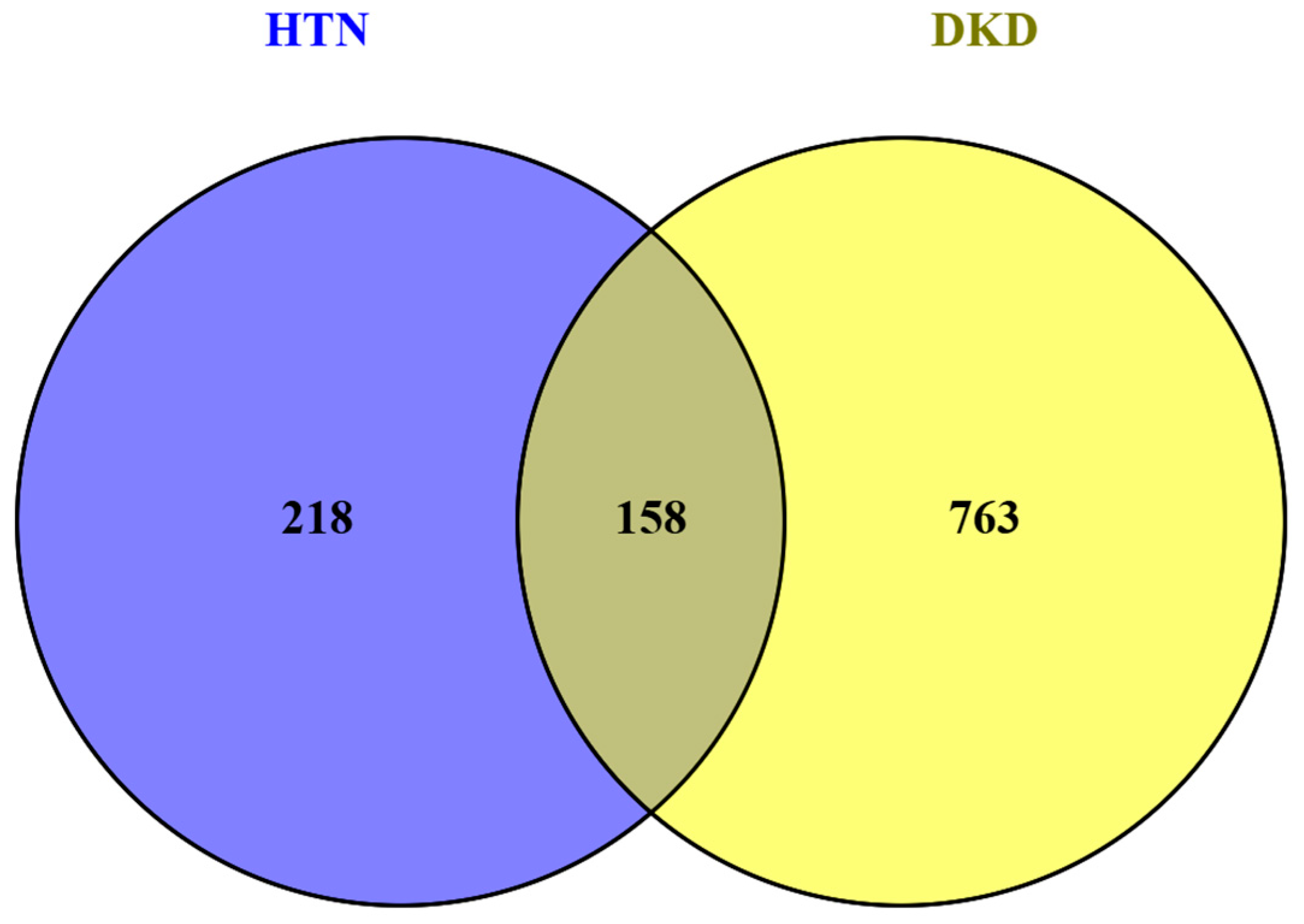
Datasets comparing kidney gene expression from patients with DKD (a total of 38 patients) [26,27,28] or HTN (20 patients) [26] vs. healthy individuals (a total of 50) were retrieved. To identify the unique transcriptional landscape of each nephropathy, gene expression patterns between the yielded datasets were compared. Differentially expressed genes (DEGs) uniquely detected in one disease, but not in the other, were used to define the disease-specific gene signature. A total of 921 DEGs were identified within kidneys from DKD versus healthy (434 in glomeruli, 525 in tubulointerstitium, 463 overexpressed, and 463 underexpressed), and 376 DEGs were identified within kidneys from HTN versus healthy (237 in glomeruli, 155 in tubulointerstitium, 151 overexpressed, and 225 underexpressed). Accordingly, 763 and 218 DEGs defined the DKD-specific and HTN-specific gene signatures, respectively, implying a distinct pathogenic intra-tissue involvement highly specific to the respective disease. A total of 158 DEGs were common between DKD and HTN (Figure 1). These data demonstrate that, in DKD and HTN, gene expression profiles within kidneys are deregulated in a disease-specific manner, whereas common DEGs can be found in both diseases. Further experimental validation is required to confirm differential transcripts and their functional roles in the kidneys.

3.2. Unique Biological Processes and Pathways Are Implicated in Diabetic and Hypertensive Glomerular Diseases

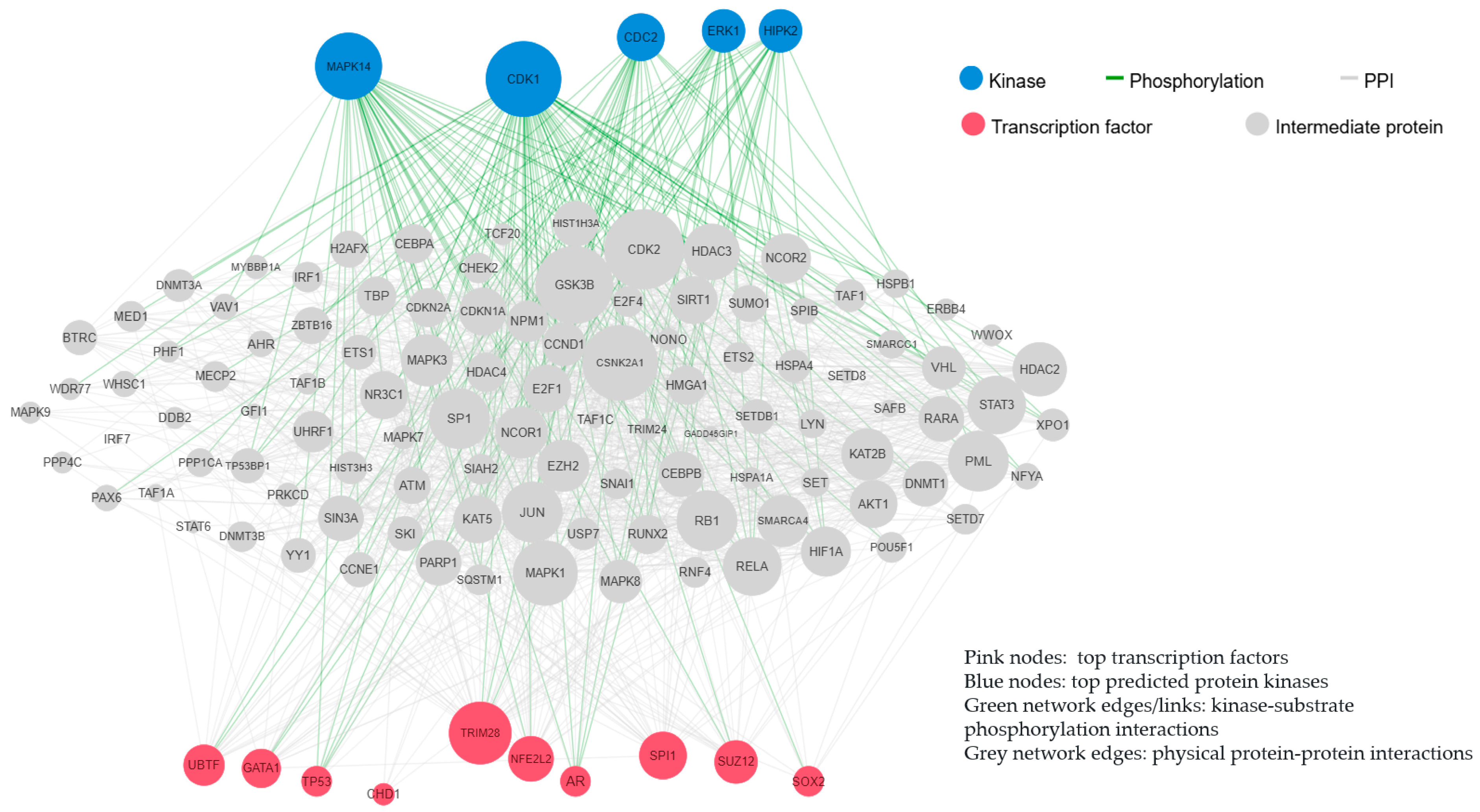
The DKD-specific gene signature was significantly enriched for GO biological processes linked to interleukin-4 and interleukin-13 signaling and interferon gamma signaling, and was regulated by the transcription factors TP53 and NFE2L2, which generated protein–protein interactions regulated by ERK1 and CDK1 kinases (Figure 2).
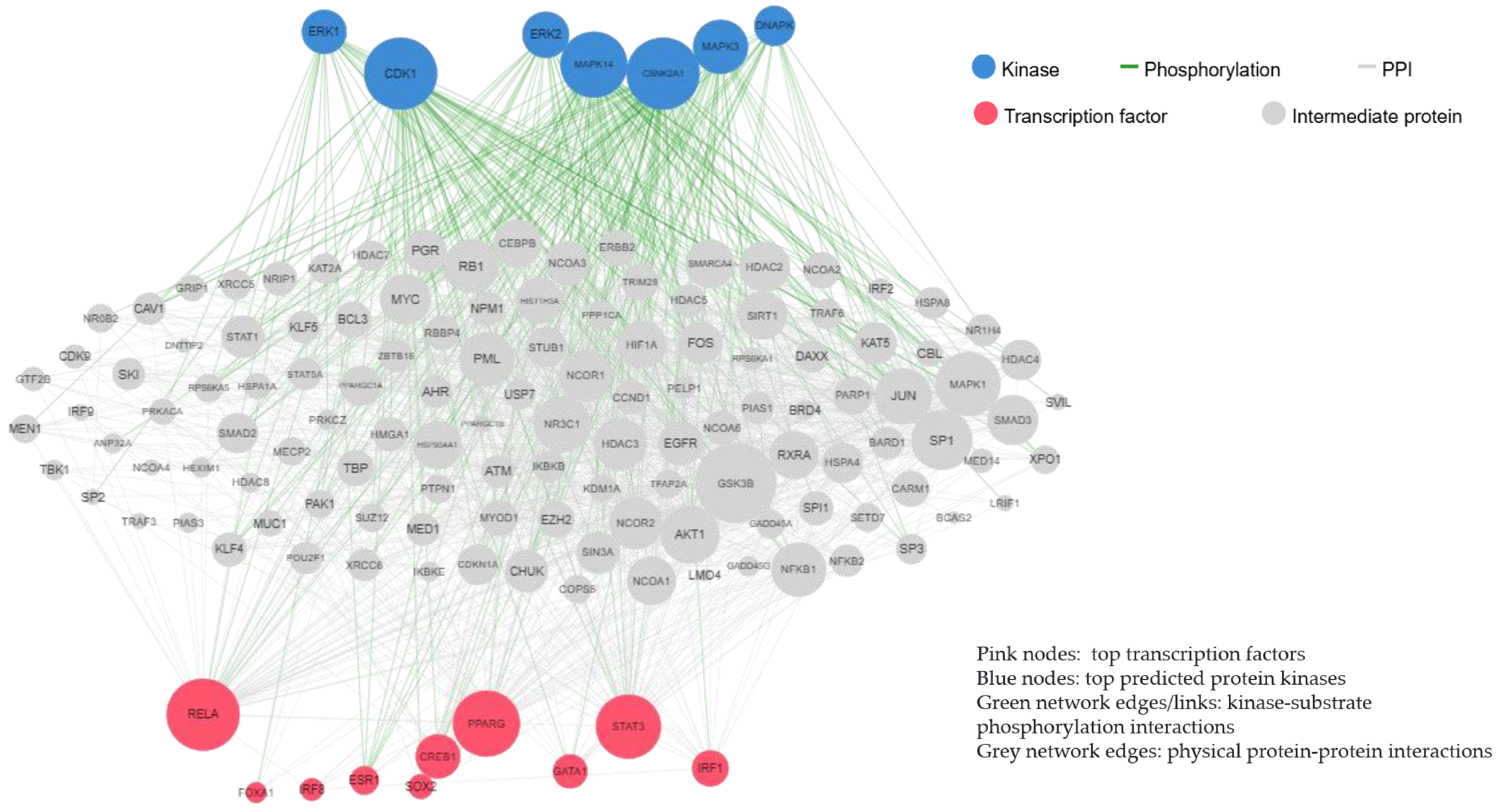
The HTN-specific gene signature showed significant enrichment in Gene Ontology (GO) biological processes linked to Th17 cell differentiation and Th1 and Th2 cell differentiation, which was regulated by the transcription factors PPARG and STAT3, which generated protein–protein interactions regulated by MAPK3 και CDK1 kinases (Figure 3).
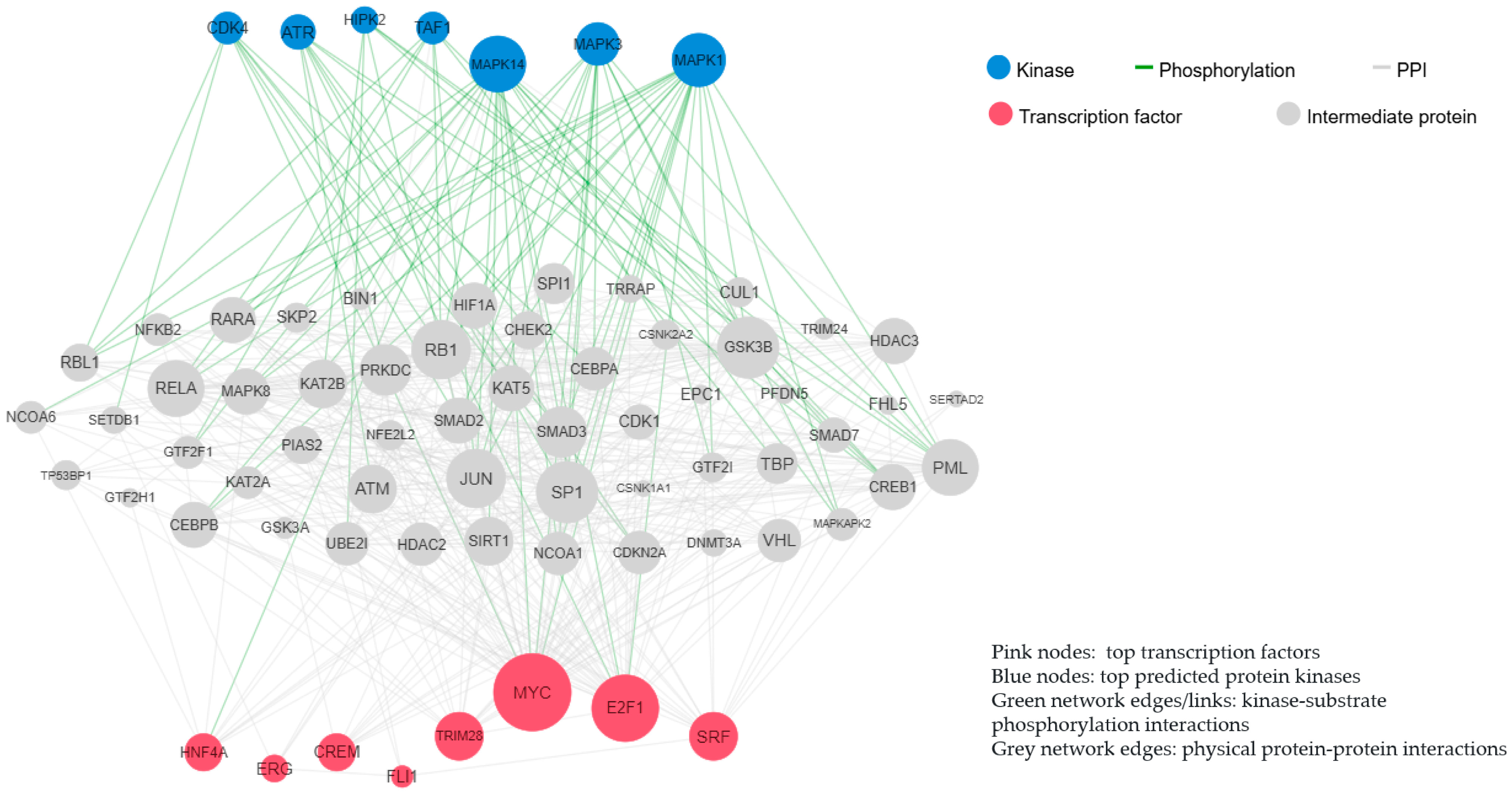
The common DEGs between DKD and HTN were enriched in the AGE-RAGE signaling pathway in diabetic complications and the PI3K-Akt signaling pathway, which were regulated by the transcription factors MYC and E2F1, which generated protein–protein interactions regulated by MAPK3 and MAPK14 kinases (Figure 4). Collectively, these data are demonstrated as followed.
The involvement of unique biological processes and pathways in distinct kidney diseases suggests that these processes and pathways may represent potential novel disease-specific therapeutic targets. Simultaneously, the common pathways highlight the possibility that new potential therapeutic targets may be effective against both DKD and HTN.

3.3. Novel Drugs or Small-Molecule Compounds That May Reverse Kidney-Specific Gene Signatures in Diabetic and Hypertensive Kidney Disease

To identify potential novel drugs or small-molecule compounds capable of reversing disease-specific kidney phenotypes, the L1000CDS2 platform was queried using upregulated and downregulated genes from each disease to prioritize inversely correlated transcriptional signatures. The top 50 compounds predicted to reverse each disease-associated signature were identified. To determine kidney disease-specific therapeutic candidates, the top-ranked drug signatures were compared between DKD and HTN. Compounds predicted to reverse only one disease-specific gene signature, but not the other, were defined as disease-specific drug candidates. Thus, 20 drugs/small-molecule compounds were predicted to reverse the DKD-specific gene signature, while 11 drugs/compounds were predicted to reverse the HTN-specific gene signature (Table 1).
In addition, 39 drugs were able to reverse both kidney diseases (Table 2).
The potential mechanism of action of identified drugs and small molecules, the disease they target, their possible side effects, and their FDA approval are described in Table 3.
Collectively, these data reveal novel, not previously described, drugs and small-molecule compounds that may reverse the phenotype of DKD and HTN in a disease-specific manner. The majority of them are investigational drugs and not FDA-approved. However, some of them are known nephrotoxic agents. For example, 5-azacytidine causes renal tubular dysfunction, which may be mitigated via adequate hydration and dose modification.
In the following section, we aim to highlight the need for a better understanding of the pathophysiology behind these diseases and the development of novel drugs, which specifically target the DEGs expressed in each nephropathy. However, further investigation is required to assess the therapeutic implications of our findings.

4. Discussion

Herein, we discovered gene expression datasets within kidneys from patients with diabetic (DKD) or hypertensive (HTN) kidney disease compared to healthy individuals using computational systems biology. This comparison was of gene expression patterns defined as DKD-specific and HTN-specific, as well as the common gene signatures. Functional enrichment analysis of differentially expressed genes identified distinct biological processes and pathways implicated in each kidney disease, as well as common pathways implicated in both kidney diseases. Moreover, we uncovered novel, not previously determined, drugs and small-molecule compounds that may reverse the phenotype of these kidney diseases in a kidney disease-specific and non-specific manner. The validation of putative targets is ongoing and was beyond the scope of this manuscript.
Inflammation and fibrosis play a key role in the pathogenesis of both DKD and HTN [3,37], a finding also confirmed by our study. Molecular alterations occur from the beginning of the disease, highlighting the importance of our findings in altering their natural course. Specific targeting of the implicated biologic pathways may provide a new strategy for managing these problems.
The already established therapeutic options for DKD include RAS inhibition, while sodium-glucose cotransporter-2 (SGLT2) inhibitors, GLP-1 receptor agonists, and finerenone constitute the newest drugs used in clinical practice for kidney protection [7]. The first-line therapeutic options for hypertension include thiazide-type diuretics, RAS inhibitors, and calcium channel blockers (CCBs) [11]. Preclinical studies have shown anti-inflammatory properties of RAS inhibitors, finerenone, SGLT2 inhibitors, and GLP1 receptor agonists in diabetic kidney disease [7]. However, improvement of inflammation may be a secondary result of the other beneficial outcomes, such as improvement in glomerular hyperfiltration and albuminuria [7]. Undoubtedly, the already established therapy is effective, as, for instance, SGLT2 inhibitors were associated with a reduced risk of major adverse cardiovascular events, hospitalization for heart failure, and kidney outcomes in patients with diabetes [38]. The limitations of current therapies lie in the adverse events, polypharmacy, or modest response, for instance, to antihypertensive drugs in patients with resistant hypertension. Moreover, SGLT2 and DPP-4 inhibitors leave a substantial risk for progression to end-stage kidney disease in patients with diabetes [39,40]. Further research is needed to fully elucidate which pathways participate in the development of DKD and HTN. Expanding our knowledge of these pathways will enhance the development of causal and targeted therapies, which specifically act on the glomerulus, reverse the implicated biological pathways, and facilitate the timely prevention of kidney injury. Nano-particle delivery systems could aid in the transport of these drugs to the kidney [41]. Safety requirements, including initial considerations of pharmacokinetics and toxicology, before progression to human studies, as well as discussion of which candidates are more likely to be translated based on existing experience or mechanistic alignment, are needed. It is important to note that this study does not aim to undermine established therapeutic strategies; rather, it seeks to broaden the spectrum of available treatment options for these kidney diseases.
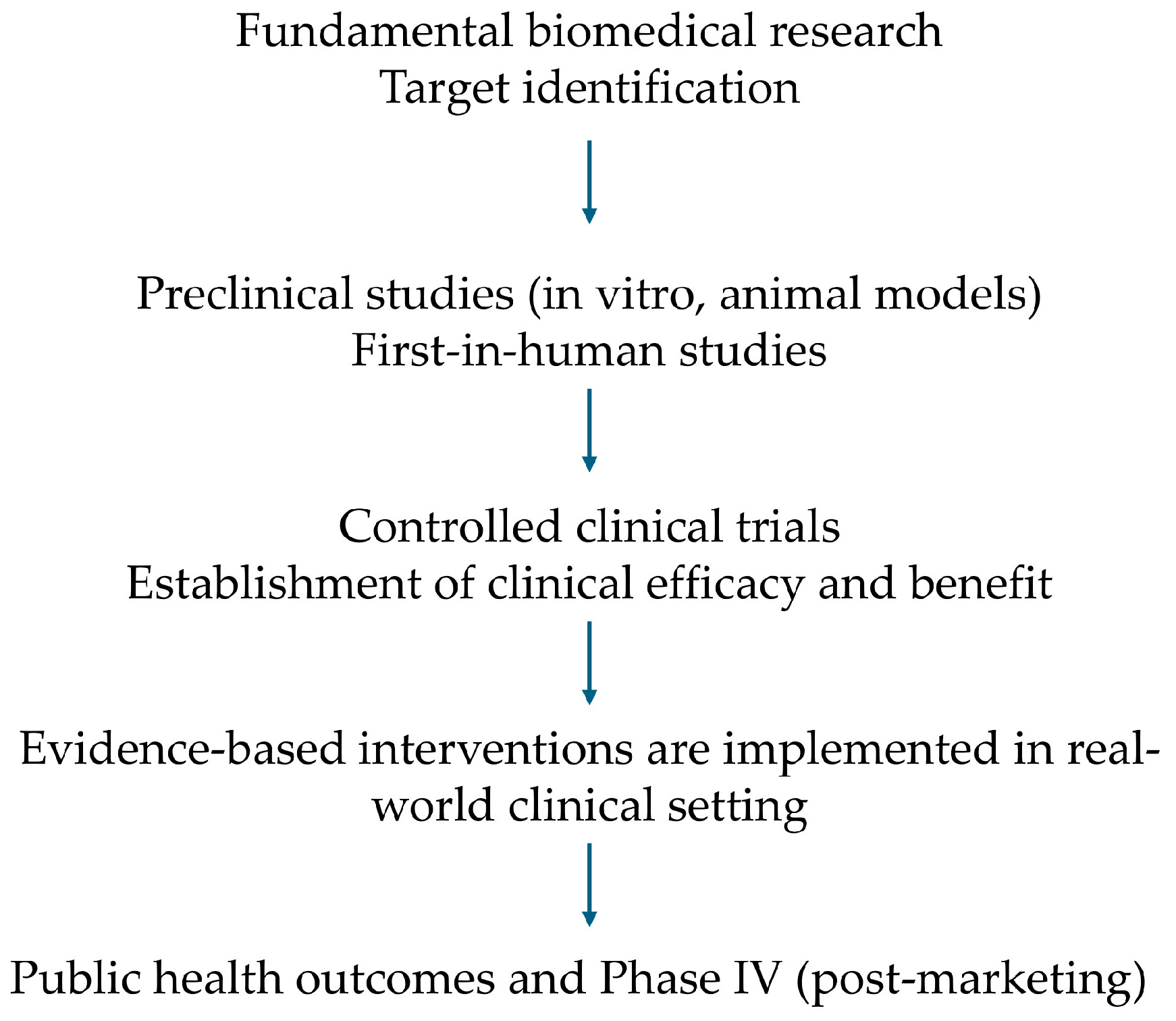
Using kidney disease-specific gene signatures, we discovered through computational systems biology approaches, novel agents or drugs to be repurposed in a manner specific to each disease. Specifically, we employed the L1000CDS2 engine [25] and prioritized the top 50 molecules predicted to reverse upregulated and downregulated DEGs of each kidney disease, as well as the common DEGs between DKD and HTN. Drug signatures of both diseases were compared, resulting in the identification of nephropathy-specific and non-specific drugs, uncovering underlying intra-tissue molecular mechanisms. Each drug was associated with the inhibition or modulation of a specific biological pathway or process, implying a possible role of the respective pathway in the pathogenesis of DKD and HTN. Previous trials targeting single cytokines, such as IL-6 or TNF-α, likely failed because these molecules are downstream markers in complex immune pathways and do not drive disease in all patients. Our analysis instead identifies broader pathway modules, such as IL-4/IL-13, which reflect upstream immune activation, organ damage, and patient-specific biology. This approach better reflects disease diversity and clarifies why single-target interventions were of limited success. A clinical translation framework is provided in Figure 5, maximizing the translational impact of our findings.
Among other drugs, parthenolide, an inhibitor of the proto-oncogene c-Rel, and vorinostat, an inhibitor of the enzymatic activity of histone deacetylases HDAC1, HDAC2, and HDAC3, reversed the common DEGs between DKD and HTN. TW 37 reversed the DEGs of HTN and is studied for its therapeutic potential in kidney diseases, as it inhibits KIM-1 (Kidney Injury Molecule-1)-mediated endocytosis, resulting in a reduction in NF-κB and IL-1β, inhibition of the NF-κB-NLRP3-IL-1β pathway, and a subsequent decrease in fibrosis and inflammation [42]. Geldanamycin, a heat shock protein HSP 90-alpha inhibitor and endoplasmin inhibitor, specifically reverses the diabetic nephropathy-specific gene signature and has been associated with the reversal of kidney function and improvement of the glomerular and tubular damage by a high-fat diet in db/db mice [43]. Through computational analysis, we prioritized drugs as disease-specific and non-specific agents for each kidney disease. Further investigation is required to unravel the therapeutic implications of our findings.
Collectively, we defined the diabetic nephropathy-specific and hypertensive nephropathy-specific gene signatures within human kidneys and identified distinct biological processes and pathways associated with each disease through computational systems biology approaches. We also discovered novel, not previously identified, drugs and small-molecule compounds that may reverse the phenotype of these kidney diseases in a kidney disease-specific and non-specific manner. However, experimental validation of the differential transcripts and their functionality is further required, in addition to future studies defining the pathogenic and therapeutic implications of our results.
A limitation of our study is the inability to perform batch effect assessment and correction using standard methods, as this study is based on integrated, publicly available transcriptomic data obtained from the NephroSeq platform. Albeit NephroSeq applies internal normalization procedures, access to raw expression data and complete sample-level metadata is limited. Moreover, detailed clinical information at the individual sample level, i.e., disease severity, medication use, comorbidities, and ethnicity, was not available, restricting the ability to evaluate potential confounding factors. For the same reason, a formal sensitivity analysis examining the stability of the identified DEGs and downstream drug predictions upon exclusion of individual datasets could not be conducted.
Another limitation is the inability to report detailed, dataset-specific information (e.g., individual GSE accession numbers, sample sizes, platforms, and ethical approvals), as such metadata that are not fully accessible within the NephroSeq framework.
Regarding external validation of the data from L1000CDS2, there is an absence of a comprehensive study that compares L1000CDS2 outputs with datasets containing known positive and negative associations, in a way that generates ROC curves to assess the performance of L1000CDS2.
These limitations should be considered when interpreting the results, and future studies using fully accessible raw data and comprehensive clinical annotation are necessary to validate the robustness of the findings.

5. Conclusions

In this study, we used an integrative computational systems biology framework to compare the molecular profiles of diabetic kidney disease (DKD) and hypertensive nephropathy (HTN). By integrating multiple independent transcriptomic datasets and stratifying gene expression changes across glomeruli and tubulointerstitium, we identified robust disease-specific and shared gene signatures that highlight distinct and common pathogenic mechanisms behind these diseases. This comparative strategy represents a key innovation of the study, enabling the molecular discrimination between two clinically related but mechanistically distinct nephropathies.
Beyond differential gene expression analysis, we integrated functional enrichment analysis, transcription factor regulation, and protein–protein interaction networks to construct multilevel regulatory maps for each disease. As a result, unique and convergent immune- and inflammation-related pathways in DKD and HTN were detected, providing a mechanistic insight that extends beyond single-gene observations. Importantly, we associated disease-specific gene signatures with large-scale perturbational transcriptomic data to predict candidate drugs and small-molecule compounds, which are able to reverse pathological gene expression patterns. This in silico drug repurposing strategy constitutes a major innovative contribution, as it bridges molecular disease signatures with actionable therapeutic hypotheses.
Collectively, our findings demonstrate that DKD and HTN are characterized by distinct and partially overlapping molecular pathways that can be systematically resolved using computational systems biology. These results also underscore the need for future studies to validate the predicted drug candidates experimentally and clinically, to incorporate additional multi-omics layers, and to assess disease heterogeneity across various patient populations. Such efforts will be essential to translate these molecular insights into effective, personalized therapeutic options. As a result, extending this framework through longitudinal data, functional validation, and clinical trials will be critical for advancing precision medicine approaches in kidney disease.

Author Contributions

M.Z. and E.F.; conceptualization, M.Z. and E.F.; methodology, M.Z. and E.F.; software, M.Z., E.F., G.Z., A.K., E.G. and S.M.; validation, M.Z. and E.F.; formal analysis, M.Z. and E.F.; data curation, M.Z. and E.F.; writing—original draft preparation, E.F., G.Z., A.K., E.G. and S.M.; writing—review and editing, M.Z. and E.F.; visualization, E.F.; supervision, E.F. All authors have read and agreed to the published version of the manuscript.

Funding

This research received no external funding.

Institutional Review Board Statement

The study was conducted according to the guidelines of the Declaration of Helsinki. Further approval was not required as the study was based on computational systems biology approaches.

Informed Consent Statement

Patient consent was waived as the methodology of the study was based on computational systems biology approaches.

Data Availability Statement

The original contributions presented in this study are included in the article. Further inquiries can be directed to the corresponding author.

Conflicts of Interest

The authors declare no conflicts of interest.

Abbreviations

The following abbreviations are used in this manuscript:
DKDDiabetic kidney disease
HTNHypertensive nephropathy
RASRenin–angiotensin system
MRAMineralocorticoid receptor antagonist
SGLT2-iSodium-glucose cotransporter 2-inhibition
DPP-4 Dipeptidyl peptidase-4

References

  1. Zhang, C.; Fang, X.; Zhang, H.; Gao, W.; Hsu, H.J.; Roman, R.J.; Fan, F. Genetic susceptibility of hypertension-induced kidney disease. Physiol. Rep. 2021, 9, e14688. [Google Scholar] [CrossRef]
  2. Alicic, R.Z.; Rooney, M.T.; Tuttle, K.R. Diabetic Kidney Disease: Challenges, Progress, and Possibilities. Clin. J. Am. Soc. Nephrol. 2017, 12, 2032–2045. [Google Scholar] [CrossRef] [PubMed]
  3. Hao, X.-M.; Liu, Y.; Hailaiti, D.; Gong, Y.; Zhang, X.-D.; Yue, B.-N.; Liu, J.-P.; Wu, X.-L.; Yang, K.-Z.; Wang, J.; et al. Mechanisms of inflammation modulation by different immune cells in hypertensive nephropathy. Front. Immunol. 2024, 15, 1333170. [Google Scholar] [CrossRef] [PubMed]
  4. Floege, J.; Barbour, S.J.; Cattran, D.C.; Hogan, J.J.; Nachman, P.H.; Tang, S.C.; Wetzels, J.F.; Cheung, M.; Wheeler, D.C.; Winkelmayer, W.C.; et al. Management and treatment of glomerular diseases (part 1): Conclusions from a Kidney Disease: Improving Global Outcomes (KDIGO) Controversies Conference. Kidney Int. 2019, 95, 268–280. [Google Scholar] [CrossRef]
  5. Rovin, B.H.; Caster, D.J.; Cattran, D.C.; Gibson, K.L.; Hogan, J.J.; Moeller, M.J.; Roccatello, D.; Cheung, M.; Wheeler, D.C.; Winkelmayer, W.C.; et al. Management and treatment of glomerular diseases (part 2): Conclusions from a Kidney Disease: Improving Global Outcomes (KDIGO) Controversies Conference. Kidney Int. 2019, 95, 281–295. [Google Scholar] [CrossRef]
  6. Garantziotis, P.; Doumas, S.A.P.; Boletis, I.; Frangou, E. Gene Expression as a Guide to the Development of Novel Therapies in Primary Glomerular Diseases. J. Clin. Med. 2021, 10, 2262. [Google Scholar] [CrossRef] [PubMed]
  7. Rayego-Mateos, S.; Rodrigues-Diez, R.R.; Fernandez-Fernandez, B.; Mora-Fernández, C.; Marchant, V.; Donate-Correa, J.; Navarro-González, J.F.; Ortiz, A.; Ruiz-Ortega, M. Targeting inflammation to treat diabetic kidney disease: The road to 2030. Kidney Int. 2023, 103, 282–296. [Google Scholar] [CrossRef]
  8. Gu, C.; Li, X.; Guo, X.; Zhou, J.; Kang, L.; Fang, M. Triple therapy of RAS inhibitors, dapagliflozin, and finerenone in diabetic kidney disease patients with nephrotic-range proteinuria: A real-world study. Sci. Rep. 2025, 15, 43315. [Google Scholar] [CrossRef]
  9. Wang, N.; Zhang, C. Recent Advances in the Management of Diabetic Kidney Disease: Slowing Progression. Int. J. Mol. Sci. 2024, 25, 3086. [Google Scholar] [CrossRef]
  10. Rizou, M.; Frangou, E.A.; Marineli, F.; Prakoura, N.; Zoidakis, J.; Gakiopoulou, H.; Liapis, G.; Kavvadas, P.; Chatziantoniou, C.; Makridakis, M.; et al. The family of 14-3-3 proteins and specifically 14-3-3σ are up-regulated during the development of renal pathologies. J. Cell Mol. Med. 2018, 22, 4139–4149. [Google Scholar] [CrossRef]
  11. Writing Committee Members; Jones, D.W.; Ferdinand, K.C.; Taler, S.J.; Johnson, H.M.; Shimbo, D.; Abdalla, M.; Altieri, M.M.; Bansal, N.; Bello, N.A.; et al. 2025 AHA/ACC/AANP/AAPA/ABC/ACCP/ACPM/AGS/AMA/ASPC/NMA/PCNA/SGIM Guideline for the Prevention, Detection, Evaluation and Management of High Blood Pressure in Adults: A Report of the American College of Cardiology/American Heart Association Joint Committee on Clinical Practice Guidelines. Circulation 2025, 152, e114–e218. [Google Scholar] [CrossRef]
  12. Zhang, Y.; Arzaghi, H.; Ma, Z.; Roye, Y.; Musah, S. Epigenetics of Hypertensive Nephropathy. Biomedicines 2024, 12, 2622. [Google Scholar] [CrossRef]
  13. Gu, D.; Chen, M.; Yang, Y.; Lu, C.; Li, C.; Lin, Y. Targeting the PHD2/HIF-1α/HO-1 pathway: A key role of trimetazidine in hypertensive nephropathy. Clin. Exp. Hypertens. 2025, 47, 2563033. [Google Scholar] [CrossRef]
  14. Liu, F.; Wang, J.; Sun, Z.; Yu, X. Rehmannioside A alleviates renal inflammation and fibrosis in hypertensive nephropathy via AT1R/MAPK14/IL-17 signaling pathway. Biochem. Biophys. Res. Commun. 2025, 776, 152237. [Google Scholar] [CrossRef]
  15. Frangou, E.A.; Bertsias, G.K.; Boumpas, D.T. Gene expression and regulation in systemic lupus erythematosus. Eur. J. Clin. Investig. 2013, 43, 1084–1096. [Google Scholar] [CrossRef]
  16. Garantziotis, P.; Nikolakis, D.; Doumas, S.; Frangou, E.; Sentis, G.; Filia, A.; Fanouriakis, A.; Bertsias, G.; Boumpas, D.T. Molecular Taxonomy of Systemic Lupus Erythematosus Through Data-Driven Patient Stratification: Molecular Endotypes and Cluster-Tailored Drugs. Front. Immunol. 2022, 13, 860726. [Google Scholar] [CrossRef]
  17. Frangou, E.; Garantziotis, P.; Grigoriou, M.; Banos, A.; Nikolopoulos, D.; Pieta, A.; Doumas, S.A.; Fanouriakis, A.; Hatzioannou, A.; Manolakou, T.; et al. Cross-species transcriptome analysis for early detection and specific therapeutic targeting of human lupus nephritis. Ann. Rheum. Dis. 2022, 81, 1409–1419. [Google Scholar] [CrossRef] [PubMed]
  18. Nikolakis, D.; Garantziotis, P.; Sentis, G.; Fanouriakis, A.; Bertsias, G.; Frangou, E.; Nikolopoulos, D.; Banos, A.; Boumpas, D.T. Restoration of aberrant gene expression of monocytes in systemic lupus erythematosus via a combined transcriptome-reversal and network-based drug repurposing strategy. BMC Genom. 2023, 24, 207. [Google Scholar] [CrossRef] [PubMed]
  19. Tryggvason, S.H.; Guo, J.; Nukui, M.; Norlin, J.; Haraldsson, B.; Jörnvall, H.; Tryggvason, K.; He, L. A meta-analysis of expression signatures in glomerular disease. Kidney Int. 2013, 84, 591–599. [Google Scholar] [CrossRef]
  20. Rowland, J.; Akbarov, A.; Eales, J.; Xu, X.; Dormer, J.P.; Guo, H.; Denniff, M.; Jiang, X.; Ranjzad, P.; Nazgiewicz, A.; et al. Uncovering genetic mechanisms of kidney aging through transcriptomics, genomics, and epigenomics. Kidney Int. 2019, 95, 624–635. [Google Scholar] [CrossRef] [PubMed]
  21. Kitano, H. Computational systems biology. Nature 2002, 420, 206–210. [Google Scholar] [CrossRef]
  22. Lamb, J.; Crawford, E.D.; Peck, D.; Modell, J.W.; Blat, I.C.; Wrobel, M.J.; Lerner, J.; Brunet, J.-P.; Subramanian, A.; Ross, K.N.; et al. The Connectivity Map: Using gene-expression signatures to connect small molecules, genes, and disease. Science 2006, 313, 1929–1935. [Google Scholar] [CrossRef] [PubMed]
  23. Keenan, A.B.; Jenkins, S.L.; Jagodnik, K.M.; Koplev, S.; He, E.; Torre, D.; Wang, Z.; Dohlman, A.B.; Silverstein, M.C.; Lachmann, A.; et al. The Library of Integrated Network-Based Cellular Signatures NIH Program: System-Level Cataloging of Human Cells Response to Perturbations. Cell Syst. 2018, 6, 13–24. [Google Scholar] [CrossRef]
  24. Peyvandipour, A.; Saberian, N.; Shafi, A.; Donato, M.; Draghici, S. A novel computational approach for drug repurposing using systems biology. Bioinformatics 2018, 34, 2817–2825. [Google Scholar] [CrossRef]
  25. Duan, Q.; Reid, S.P.; Clark, N.R.; Wang, Z.; Fernandez, N.F.; Rouillard, A.D.; Readhead, B.; Tritsch, S.R.; Hodos, R.; Hafner, M.; et al. L1000CDS2: LINCS L1000 characteristic direction signatures search engine. NPJ Syst. Biol. Appl. 2016, 2, 16015. [Google Scholar] [CrossRef]
  26. Ju, W.; Nair, V.; Smith, S.; Zhu, L.; Shedden, K.; Song, P.X.K.; Mariani, L.H.; Eichinger, F.H.; Berthier, C.C.; Randolph, A.; et al. Tissue transcriptome-driven identification of epidermal growth factor as a chronic kidney disease biomarker. Sci. Transl. Med. 2015, 7, 316ra193. [Google Scholar] [CrossRef]
  27. Woroniecka, K.I.; Park, A.S.D.; Mohtat, D.; Thomas, D.B.; Pullman, J.M.; Susztak, K. Transcriptome Analysis of Human Diabetic Kidney Disease. Diabetes 2011, 60, 2354–2369. [Google Scholar] [CrossRef] [PubMed]
  28. Schmid, H.; Boucherot, A.; Yasuda, Y.; Henger, A.; Brunner, B.; Eichinger, F.; Nitsche, A.; Kiss, E.; Bleich, M.; GrönE, H.-J.; et al. Modular activation of nuclear factor-kappaB transcriptional programs in human diabetic nephropathy. Diabetes 2006, 55, 2993–3003. [Google Scholar] [CrossRef] [PubMed]
  29. Oliveros, J.C. Venny. An Interactive Tool for Comparing Lists with Venn’s Diagrams. 2007–2015. Available online: https://bioinfogp.cnb.csic.es/tools/venny/index.html (accessed on 20 April 2025).
  30. Heberle, H.; Meirelles, G.V.; Da Silva, F.R.; Telles, G.P.; Minghim, R. InteractiVenn: A web-based tool for the analysis of sets through Venn diagrams. BMC Bioinform. 2015, 16, 169. [Google Scholar] [CrossRef]
  31. Raudvere, U.; Kolberg, L.; Kuzmin, I.; Arak, T.; Adler, P.; Peterson, H.; Vilo, J. g:Profiler: A web server for functional enrichment analysis and conversions of gene lists (2019 update). Nucleic Acids Res. 2019, 47, W191–W198. [Google Scholar] [CrossRef]
  32. Clarke, D.J.B.; Kuleshov, M.V.; Schilder, B.M.; Torre, D.; Duffy, M.E.; Keenan, A.B.; Lachmann, A.; Feldmann, A.S.; Gundersen, G.W.; Silverstein, M.C.; et al. eXpression2Kinases (X2K) Web: Linking expression signatures to upstream cell signaling networks. Nucleic Acids Res. 2018, 46, W171–W179. [Google Scholar] [CrossRef]
  33. Wang, Z.; Lachmann, A.; Keenan, A.B.; Ma’Ayan, A. L1000FWD: Fireworks visualization of drug-induced transcriptomic signatures. Bioinformatics 2018, 34, 2150–2152. [Google Scholar] [CrossRef] [PubMed]
  34. Knox, C.; Wilson, M.; Klinger, C.M.; Franklin, M.; Oler, E.; Wilson, A.; Pon, A.; Cox, J.; Chin, N.E.L.; Strawbridge, S.A.; et al. DrugBank 6.0: The DrugBank Knowledgebase for 2024. Nucleic Acids Res. 2024, 52, D1265–D1275. [Google Scholar] [CrossRef]
  35. Wishart, D.S.; Knox, C.; Guo, A.C.; Shrivastava, S.; Hassanali, M.; Stothard, P.; Chang, Z.; Woolsey, J. DrugBank: A comprehensive resource for in silico drug discovery and exploration. Nucleic Acids Res. 2006, 34, D668–D672. [Google Scholar] [CrossRef] [PubMed]
  36. U.S. Food and Drug Administration. FDA [Internet]. Available online: https://www.fda.gov/ (accessed on 28 April 2025).
  37. Tsalamandris, S.; Antonopoulos, A.S.; Oikonomou, E.; Papamikroulis, G.-A.; Vogiatzi, G.; Papaioannou, S.; Deftereos, S.; Tousoulis, D. The Role of Inflammation in Diabetes: Current Concepts and Future Perspectives. Eur. Cardiol. Rev. 2019, 14, 50–59. [Google Scholar] [CrossRef] [PubMed]
  38. McGuire, D.K.; Shih, W.J.; Cosentino, F.; Charbonnel, B.; Cherney, D.Z.I.; Dagogo-Jack, S.; Pratley, R.; Greenberg, M.; Wang, S.; Huyck, S.; et al. Association of SGLT2 Inhibitors With Cardiovascular and Kidney Outcomes in Patients With Type 2 Diabetes. JAMA Cardiol. 2021, 6, 148. [Google Scholar] [CrossRef]
  39. Xiao, X.; Ji, S.; Zheng, T.; Wang, T.; Jiang, D.; Liu, F. Kidney outcomes associated with SGLT2 inhibitors compared to other glucose-lowering drugs: A real-world study from China. Front. Pharmacol. 2024, 15, 1468435. [Google Scholar] [CrossRef]
  40. Bae, J.H.; Kim, S.; Park, E.-G.; Kim, S.G.; Hahn, S.; Kim, N.H. Effects of Dipeptidyl Peptidase-4 Inhibitors on Renal Outcomes in Patients with Type 2 Diabetes: A Systematic Review and Meta-Analysis. Endocrinol. Metab. 2019, 34, 80. [Google Scholar] [CrossRef]
  41. Mitchell, M.J.; Billingsley, M.M.; Haley, R.M.; Wechsler, M.E.; Peppas, N.A.; Langer, R. Engineering precision nanoparticles for drug delivery. Nat. Rev. Drug Discov. 2021, 20, 101–124. [Google Scholar] [CrossRef]
  42. Shindoh, R.; Mori, M.; Nakao, Y.; Sekiguchi, Y.; Mandai, S.; Kikuchi, H.; Ando, F.; Susa, K.; Mori, T.; Sohara, E.; et al. TW-37, an Inhibitor of KIM-1-Mediated Endocytosis, Inhibits Cellular Senescence and Related Phenomena. J. Am. Soc. Nephrol. 2025, 36, 10-1681. [Google Scholar] [CrossRef]
  43. Zhang, H.-M.; Dang, H.; Kamat, A.; Yeh, C.-K.; Zhang, B.-X. Geldanamycin Derivative Ameliorates High Fat Diet-Induced Renal Failure in Diabetes. PLoS ONE 2012, 7, e32746. [Google Scholar] [CrossRef] [PubMed]
Figure 1. DEGs in HTN, DKD, and common.
Jcm 15 00696 g001
Figure 2. Protein–protein interactions and kinase–substrate phosphorylation interactions in DKD.
Jcm 15 00696 g002
Figure 3. Protein–protein interactions and kinase–substrate phosphorylation interactions in HTN.
Jcm 15 00696 g003
Figure 4. Common protein–protein interactions and kinase–substrate phosphorylation interactions in DKD and HTN.
Jcm 15 00696 g004
Figure 5. Clinical translation framework.
Jcm 15 00696 g005
Table 1. Drugs/small-molecule compounds reversing DKD-specific and HTN-specific gene signatures.
RankScorePerturbationCell-LineDoseTime
Hypertensive Nephropathy
130.0728TW 37PC310.0 µm24.0 h
150.0728BRD-K25737009SW62040.0 µm6.0 h
160.0728BRD-K58306044A37510.0 µm6.0 h
180.0701BRD-A18763547A37510.0 µm24.0 h
270.0701BRD-A82371568A37510.0 µm6.0 h
290.0701withaferin-aBT203.33 µm24 h
360.0674perhexiline maleateHT11510.0 µm6.0 h
410.0674BRD-K56411643VCAP10.0 µm6.0 h
450.0674BRD-K19166598MCF710.0 µm24.0 h
460.0674BRD-K03109492A37510.0 µm6.0 h
Diabetic Nephropathy
220.0370triamcinolone acetonideA54910.0 µm6.0 h
330.0348BRD-K52075040A37544.4 µm24.0 h
340.0348BRD-K81709173A54910.0 µm6.0 h
400.0337BI 2536VCAP10.0 µm24.0 h
410.0337BI-2536A54910 µm24 h
420.0337pracinostatA54910 µm24 h
440.0325anisomycinHCC51510.0 µm24.0 h
450.0325curcubitacin IA37510.0 µm24.0 h
460.0325528116.cdxA3750.09 µm24.0 h
470.0325Chemistry 2804A37510.0 µm24.0 h
490.0325piperlongumine (HPLC)PC310.0 µm24.0 h
Table 2. Drugs/small-molecule compounds reversing both kidney diseases.
RankScorePerturbationCell-LineDoseTime
10.1274vorinostatPC310 µm24 h
20.1210cercosporinA37510.0 µm24.0 h
30.1210trichostatin APC310.0 µm24.0 h
40.1210dexamethasoneA54910.0 µm6.0 h
50.1210BRD-K60640630A54910.0 µm24.0 h
60.1146triamcinolone acetonideA54910.0 µm6.0 h
70.1146narciclasineA37510.0 µm24.0 h
80.1146niclosamideA37510.0 µm24.0 h
100.1146BRD-K99633092PC310.0 µm6.0 h
110.1146LDN-193189SKBR310 µm3 h
120.1146QL-XII-47MDAMB2313.33 µm3 h
150.1083manumycin APC310.0 µm24.0 h
160.108315-Deoxy-Δ12,14-prostaglandin J2A37510.0 µm24.0 h
170.1083Ro 28-1675 A549160.0 µm6.0 h
180.1083DG-041A54940.0 µm6.0 h
200.1083COT-10bHT11544.4 µm6.0 h
210.10835-azacytidineA37510.0 µm6.0 h
250.1019proscillaridin AHA1E10.0 µm6.0 h
270.1019cycloheximidePC310.0 µm24.0 h
280.1019L-690,330A54910.0 µm6.0 h
290.1019Akt inhibitor IVHT11510.0 µm6.0 h
300.1019YM-155MDST80.31 µm6.0 h
320.1019salermidePC3120.0 µm24.0 h
330.1019emetine hydrochlorideA54910.0 µm6.0 h
340.1019desoximetasoneHCC51510.0 µm6.0 h
350.1019BRD-K92317137HEPG210.0 µm6.0 h
360.1019V4877SKB10.0 µm24.0 h
370.1019BRD-A58564983A37510.0 µm6.0 h
380.1019BRD-A26095496A54910.0 µm24.0 h
390.1019BRD-A63894585A54910.0 µm24.0 h
450.0955clocortolone pivalateHCC51510.0 µm24.0 h
460.0955betamethasoneHCC51510.0 µm6.0 h
470.0955alclometazone dipropionateHCC51510.0 µm6.0 h
480.0955triamcinolone diacetateA54910.0 µm24.0 h
490.0955triamcinoloneA54910.0 µm24.0 h
40.0809BRD-K84203638A37510.0 µm24.0 h
320.0674HDAC6 inhibitor ISOXA37510.0 µm24.0 h
210.0701parthenolideA37510.0 µm24.0 h
80.0755BRD-K04853698MCF710.0 µm6.0 h
Table 3. Mechanism of action of identified drugs/small-molecule compounds, FDA approval, disease-of-target, and possible side effects.
DrugMechanism of ActionFDA
Approval
Disease TargetSide Effects
BRD-K19295594binding to Bcl-2 and Bcl-xLYESinfections in the ear canalreproductive system, heart, liver, membranes
TW 37inhibitor of Bcl-2NON/AN/A
Perhexiline
maleate
coronary vasodilatorNOsevere angina pectorisNeuropathy, hepatitis
Geldanamycinheat shock protein HSP
90-alpha inhibitor,
endoplasmin inhibitor
NOantimicrobial activity against many Gram-positive and some Gram-negative bacteria, antiviral activity, antineoplastic activity hepatotoxicity, gastrointestinal issues, fatigue, headache
BI-2536serine/threonine-protein
kinase PLK1 inhibitor
NOUnder
investigation for advanced or
metastatic non-small cell lung cancer
fatigue, leukopenia, nausea
PracinostatHDAC inhibitorNOhematological and solid tumorshematologic toxicities, fatigue, and gastrointestinal issues
Vorinostathistone deacetylase (HDAC) inhibitorYEScutaneous T- cell lymphoma (CTCL)Hepatotoxicity
Parthenolideproto-oncogene c-Rel
inhibitor, transcription
factor RelB inhibitor
NON/AGI symptoms, allergic contact dermatitis, withdrawal symptoms
Trichostatin Ahistone deacetylase inhibitorYEScutaneous T cell lymphoma (CTCL)acute toxicity, skin/eye/respiratory irritation
Dexamethasonedecreased vasodilation and permeability of capillaries,
decreased leukocyte
migration to sites of
inflammation
YESbronchial asthma, as well as endocrine and rheumatic
disorders
cataract, mood changes,
hypertension,
hyperlipidemia, peptic ulcer,
pancreatitis,
myopathy,
osteoporosis
BRD-K60640630inhibition of mast cells,
eosinophils, basophils, and lymphocytes, inhibition of histamine, leukotrienes, and cytokine
YESasthma, rhinitis, and certain skin conditionsHypercorticism, adrenal
suppression
NiclosamideDNA antagonistYEStapeworm
infections
nausea,
vomiting,
diarrhea and
abdominal
discomfort
Clocortolone pivalateinduction of phospholipase A2 inhibitory proteinsYESinflammatory and pruritic
scalp dermatoses
thinning of skin and suppression of adrenal cortex
Desoximetasoneinduction of phospholipase A2 inhibitory proteinsYESinflammatory and pruritic
corticosteroid-
responsive
dermatoses
Skin thinning and suppression of adrenal cortex
5-azacytidinepyrimidine nucleoside
analog
YEScertain subtypes of
myelodysplastic syndrome
diarrhea, nausea, and vomiting
Betamethasoneinhibition of neutrophil
apoptosis and
demargination,
NF-Kappa B,
phospholipase A2 and
promotion of
anti-inflammatory genes,
like interleukin-10
YESdisorders of skin, hormones,
digestive system
and blood
cataracts, hypertension, water retention, hyperlipidemia, peptic ulcer, myopathy, osteoporosis, mood changes, psychosis, dermal atrophy, allergy, acne
Triamcinoloneinhibition of phospholipase A2 on cell membranesYESallergic rhinitis, multiple sclerosis exacerbations,
osteoarthritic knee pain,
corticosteroid
responsive
dermatoses
Cushing’s
syndrome
Disclaimer/Publisher’s Note: The statements, opinions and data contained in all publications are solely those of the individual author(s) and contributor(s) and not of MDPI and/or the editor(s). MDPI and/or the editor(s) disclaim responsibility for any injury to people or property resulting from any ideas, methods, instructions or products referred to in the content.