Understanding the Inflammatory Aspect of Osteoarthritis: Lessons from Immune Checkpoint Inhibitors
 , , , ,
Abstract
1. Introduction
2. Immunology of Osteoarthritis: Evidence and Therapy
2.1. Traditional Understanding of Osteoarthritis
2.2. The Association of Existing OA with the Development Inflammatory Arthritis Induced by the Use of Immune Checkpoint Inhibitors in Cancer Treatment Suggests That Immune Mechanisms Mediate OA Flares
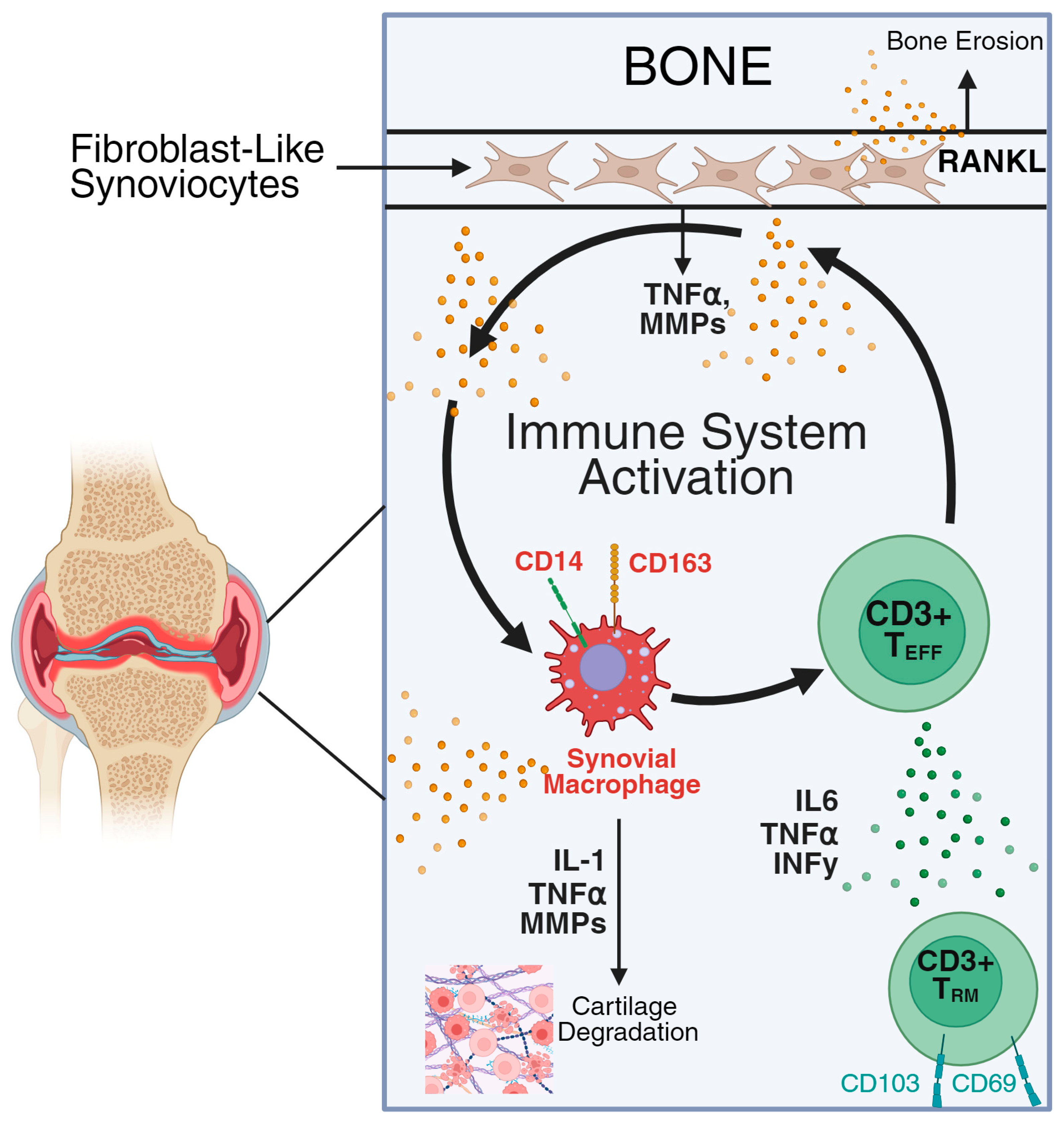
2.3. A Complex Interplay of Innate and Adaptive Immune Dysregulation Characterizes Osteoarthritis
2.4. Tissue-Resident Memory T Cells in the OA Synovium Provide a Mechanistic Link Between Pre-Existing OA and irAE-Arthritis
2.5. Using Immunosuppressive Therapies to Treat Osteoarthritis
3. Conclusions and Future Directions
Author Contributions
Funding
Institutional Review Board Statement
Informed Consent Statement
Data Availability Statement
Conflicts of Interest
References
- van Saase, J.L.; van Romunde, L.K.; Cats, A.; Vandenbroucke, J.P.; Valkenburg, H.A. Epidemiology of osteoarthritis: Zoetermeer survey. Comparison of radiological osteoarthritis in a Dutch population with that in 10 other populations. Ann. Rheum. Dis. 1989, 48, 271–280. [Google Scholar] [CrossRef] [PubMed]
- Hunter, D.J.; Schofield, D.; Callander, E. The individual and socioeconomic impact of osteoarthritis. Nat. Rev. Rheumatol. 2014, 10, 437–441. [Google Scholar] [CrossRef] [PubMed]
- Tang, S.; Zhang, C.; Oo, W.M.; Fu, K.; Risberg, M.A.; Bierma-Zeinstra, S.M.; Neogi, T.; Atukorala, I.; Malfait, A.-M.; Ding, C.; et al. Osteoarthritis. Nat. Rev. Dis. Primers 2025, 11, 10. [Google Scholar] [CrossRef] [PubMed]
- Danzeng, L.; Sun, Y.; He, Z.; Hou, X.; Li, L. Single-cell sequencing reveals the immune microenvironment in osteoarthritis: From heterogeneity to therapeutic targets. Int. Immunopharmacol. 2025, 165, 115521. [Google Scholar] [CrossRef]
- Murphy, L.A.; Scanzello, C.R. Cellular and molecular mechanisms underlying subchondral bone remodeling and associated pain in osteoarthritis. Connect. Tissue Res. 2025, 66, 435–441. [Google Scholar] [CrossRef]
- Felson, D.T.; Anderson, J.J.; Naimark, A.; Walker, A.M.; Meenan, R.F. Obesity and knee osteoarthritis. The Framingham Study. Ann. Intern. Med. 1988, 109, 18–24. [Google Scholar] [CrossRef]
- Spector, T.D.; MacGregor, A.J. Risk factors for osteoarthritis: Genetics. Osteoarthr. Cartil. 2004, 12, S39–S44. [Google Scholar] [CrossRef]
- Snoeker, B.; Turkiewicz, A.; Magnusson, K.; Frobell, R.; Yu, D.; Peat, G.; Englund, M. Risk of knee osteoarthritis after different types of knee injuries in young adults: A population-based cohort study. Br. J. Sports Med. 2020, 54, 725–730. [Google Scholar] [CrossRef]
- Kellgren, J.H. Arthritis in Populations. J. Coll. Gen. Pract. 1963, 6, 2–7. [Google Scholar]
- Ross, C. A comparison of osteoarthritis and rheumatoid arthritis: Diagnosis and treatment. Nurse Pract. 1997, 22, 20–41. [Google Scholar] [CrossRef]
- Katz, J.N.; Arant, K.R.; Loeser, R.F. Diagnosis and Treatment of Hip and Knee Osteoarthritis: A Review. JAMA 2021, 325, 568–578. [Google Scholar] [CrossRef] [PubMed]
- Richard, M.J.; Driban, J.B.; McAlindon, T.E. Pharmaceutical treatment of osteoarthritis. Osteoarthr. Cartil. 2023, 31, 458–466. [Google Scholar] [CrossRef]
- Paiola, M.; Portnoy, D.M.; Hao, L.Y.; Bukhari, S.; Winchester, R.J.; Henick, B.S.; Mor, A.; Gartshteyn, Y. Osteoarthritis increases the risk of inflammatory arthritis due to immune checkpoint inhibitors associated with tissue-resident memory T cells. J. Immunother. Cancer 2025, 13, e010758. [Google Scholar] [CrossRef]
- Canavan, M.; Floudas, A.; Veale, D.J.; Fearon, U. The PD-1:PD-L1 axis in Inflammatory Arthritis. BMC Rheumatol. 2021, 5, 1. [Google Scholar] [CrossRef]
- Dias, Y.; Silva, V.; de Carvalho, M.F.; Herchenhorn, R.; Herchenhorn, D. Safety and effectiveness of immune checkpoint inhibitors in patients with preexisting autoimmune diseases: A systematic review. Front. Immunol. 2025, 16, 1712632. [Google Scholar] [CrossRef]
- Turkiewicz, A.; Diaz, Y.; Duarte-Salles, T.; Prieto-Alhambra, D. Knee and hip osteoarthritis and risk of nine cancers in a large real-world matched cohort study. Rheumatology 2022, 61, 2325–2334. [Google Scholar] [CrossRef]
- Reid, P.; Liew, D.F.; Akruwala, R.; Bass, A.R.; Chan, K.K. Activated osteoarthritis following immune checkpoint inhibitor treatment: An observational study. J. Immunother. Cancer 2021, 9, e003260. [Google Scholar] [CrossRef]
- Berenbaum, F. Osteoarthritis as an inflammatory disease (osteoarthritis is not osteoarthrosis!). Osteoarthr. Cartil. 2013, 21, 16–21. [Google Scholar] [CrossRef] [PubMed]
- Mobasheri, A.; Batt, M. An update on the pathophysiology of osteoarthritis. Ann. Phys. Rehabil. Med. 2016, 59, 333–339. [Google Scholar] [CrossRef] [PubMed]
- Fernandez-Tajes, J.; Soto-Hermida, A.; Vazquez-Mosquera, M.E.; Cortes-Pereira, E.; Mosquera, A.; Fernandez-Moreno, M.; Oreiro, N.; Fernandez-Lopez, C.; Fernandez, J.L.; Rego-Perez, I.; et al. Genome-wide DNA methylation analysis of articular chondrocytes reveals a cluster of osteoarthritic patients. Ann. Rheum. Dis. 2014, 73, 668–677. [Google Scholar] [CrossRef]
- Steinberg, J.; Southam, L.; Fontalis, A.; Clark, M.J.; Jayasuriya, R.L.; Swift, D.; Shah, K.M.; Brooks, R.A.; McCaskie, A.W.; Wilkinson, J.M.; et al. Linking chondrocyte and synovial transcriptional profile to clinical phenotype in osteoarthritis. Ann. Rheum. Dis. 2021, 80, 1070–1074. [Google Scholar] [CrossRef] [PubMed]
- Kang, X.; Zhang, K.; Wang, Y.; Zhao, Y.; Lu, Y. Single-cell RNA sequencing analysis of human chondrocytes reveals cell-cell communication alterations mediated by interactive signaling pathways in osteoarthritis. Front. Cell Dev. Biol. 2023, 11, 1099287. [Google Scholar] [CrossRef]
- Knights, A.J.; Farrell, E.C.; Ellis, O.M.; Song, M.J.; Appleton, C.T.; Maerz, T. Synovial macrophage diversity and activation of M-CSF signaling in post-traumatic osteoarthritis. eLife 2025, 12, RP93283. [Google Scholar] [CrossRef]
- Fan, Y.; Bian, X.; Meng, X.; Li, L.; Fu, L.; Zhang, Y.; Wang, L.; Zhang, Y.; Gao, D.; Guo, X.; et al. Unveiling inflammatory and prehypertrophic cell populations as key contributors to knee cartilage degeneration in osteoarthritis using multi-omics data integration. Ann. Rheum. Dis. 2024, 83, 926–944. [Google Scholar] [CrossRef] [PubMed]
- Zhang, H.; Cai, D.; Bai, X. Macrophages regulate the progression of osteoarthritis. Osteoarthr. Cartil. 2020, 28, 555–561. [Google Scholar] [CrossRef]
- Lou, P.; Lu, X.; Li, M.; Yao, Y.; Shao, X.; Shou, D.; Fan, X.; Tong, P.; Zhang, Y. Single-cell sequencing reveals a senescent immune landscape in bone marrow lesions inducing articular cartilage damage in osteoarthritis. Bone Res. 2025, 13, 94. [Google Scholar] [CrossRef]
- Li, Y.S.; Luo, W.; Zhu, S.A.; Lei, G.H. T Cells in Osteoarthritis: Alterations and Beyond. Front. Immunol. 2017, 8, 356. [Google Scholar] [CrossRef]
- Sakkas, L.I.; Platsoucas, C.D. The role of T cells in the pathogenesis of osteoarthritis. Arthritis Rheum. 2007, 56, 409–424. [Google Scholar] [CrossRef]
- Huang, Z.Y.; Luo, Z.Y.; Cai, Y.R.; Chou, C.H.; Yao, M.L.; Pei, F.X.; Kraus, V.B.; Zhou, Z.K. Single cell transcriptomics in human osteoarthritis synovium and in silico deconvoluted bulk RNA sequencing. Osteoarthr. Cartil. 2022, 30, 475–480. [Google Scholar] [CrossRef]
- Maglaviceanu, A.; Wu, B.; Kapoor, M. Fibroblast-like synoviocytes: Role in synovial fibrosis associated with osteoarthritis. Wound Repair Regen. 2021, 29, 642–649. [Google Scholar] [CrossRef] [PubMed]
- Damerau, A.; Rosenow, E.; Alkhoury, D.; Buttgereit, F.; Gaber, T. Fibrotic pathways and fibroblast-like synoviocyte phenotypes in osteoarthritis. Front. Immunol. 2024, 15, 1385006. [Google Scholar] [CrossRef]
- Nanus, D.E.; Badoume, A.; Wijesinghe, S.N.; Halsey, A.M.; Hurley, P.; Ahmed, Z.; Botchu, R.; Davis, E.T.; Lindsay, M.A.; Jones, S.W. Synovial tissue from sites of joint pain in knee osteoarthritis patients exhibits a differential phenotype with distinct fibroblast subsets. EBioMedicine 2021, 72, 103618. [Google Scholar] [CrossRef]
- Miyahara, J.; Omata, Y.; Chijimatsu, R.; Okada, H.; Ishikura, H.; Higuchi, J.; Tachibana, N.; Nagata, K.; Tani, S.; Kono, K.; et al. CD34hi subset of synovial fibroblasts contributes to fibrotic phenotype of human knee osteoarthritis. JCI Insight 2025, 10, e183690. [Google Scholar] [CrossRef]
- Knights, A.J.; Farrell, E.C.; Ellis, O.M.; Lammlin, L.; Junginger, L.M.; Rzeczycki, P.M.; Bergman, R.F.; Pervez, R.; Cruz, M.; Knight, E.; et al. Synovial fibroblasts assume distinct functional identities and secrete R-spondin 2 in osteoarthritis. Ann. Rheum. Dis. 2023, 82, 272–282. [Google Scholar] [CrossRef]
- Zhang, F.; Wei, K.; Slowikowski, K.; Fonseka, C.Y.; Rao, D.A.; Kelly, S.; Goodman, S.M.; Tabechian, D.; Hughes, L.B.; Salomon-Escoto, K.; et al. Defining inflammatory cell states in rheumatoid arthritis joint synovial tissues by integrating single-cell transcriptomics and mass cytometry. Nat. Immunol. 2019, 20, 928–942. [Google Scholar] [CrossRef]
- Han, D.; Fang, Y.; Tan, X.; Jiang, H.; Gong, X.; Wang, X.; Hong, W.; Tu, J.; Wei, W. The emerging role of fibroblast-like synoviocytes-mediated synovitis in osteoarthritis: An update. J. Cell. Mol. Med. 2020, 24, 9518–9532. [Google Scholar] [CrossRef]
- Chen, X.; Gong, L.; Li, C.; Wang, S.; Wang, Z.; Chu, M.; Zhou, Y. Single-cell and bulk tissue sequencing unravels the heterogeneity of synovial microenvironment in arthrofibrosis. iScience 2023, 26, 107379. [Google Scholar] [CrossRef] [PubMed]
- Tang, S.; Yao, L.; Ruan, J.; Kang, J.; Cao, Y.; Nie, X.; Lan, W.; Zhu, Z.; Han, W.; Liu, Y.; et al. Single-cell atlas of human infrapatellar fat pad and synovium implicates APOE signaling in osteoarthritis pathology. Sci. Transl. Med. 2024, 16, eadf4590. [Google Scholar] [CrossRef] [PubMed]
- Pessler, F.; Chen, L.X.; Dai, L.; Gomez-Vaquero, C.; Diaz-Torne, C.; Paessler, M.E.; Scanzello, C.; Cakir, N.; Einhorn, E.; Schumacher, H.R. A histomorphometric analysis of synovial biopsies from individuals with Gulf War Veterans’ Illness and joint pain compared to normal and osteoarthritis synovium. Clin. Rheumatol. 2008, 27, 1127–1134. [Google Scholar] [CrossRef] [PubMed]
- Kraus, V.B.; McDaniel, G.; Huebner, J.L.; Stabler, T.V.; Pieper, C.F.; Shipes, S.W.; Petry, N.A.; Low, P.S.; Shen, J.; McNearney, T.A.; et al. Direct in vivo evidence of activated macrophages in human osteoarthritis. Osteoarthr. Cartil. 2016, 24, 1613–1621. [Google Scholar] [CrossRef]
- Zhang, H.; Lin, C.; Zeng, C.; Wang, Z.; Wang, H.; Lu, J.; Liu, X.; Shao, Y.; Zhao, C.; Pan, J.; et al. Synovial macrophage M1 polarisation exacerbates experimental osteoarthritis partially through R-spondin-2. Ann. Rheum. Dis. 2018, 77, 1524–1534. [Google Scholar] [CrossRef]
- Amos, N.; Lauder, S.; Evans, A.; Feldmann, M.; Bondeson, J. Adenoviral gene transfer into osteoarthritis synovial cells using the endogenous inhibitor IkappaBalpha reveals that most, but not all, inflammatory and destructive mediators are NFkappaB dependent. Rheumatology 2006, 45, 1201–1209. [Google Scholar] [CrossRef][Green Version]
- Wood, M.J.; Leckenby, A.; Reynolds, G.; Spiering, R.; Pratt, A.G.; Rankin, K.S.; Isaacs, J.D.; Haniffa, M.A.; Milling, S.; Hilkens, C.M. Macrophage proliferation distinguishes 2 subgroups of knee osteoarthritis patients. JCI Insight 2019, 4, e125325. [Google Scholar] [CrossRef] [PubMed]
- Alivernini, S.; MacDonald, L.; Elmesmari, A.; Finlay, S.; Tolusso, B.; Gigante, M.R.; Petricca, L.; Di Mario, C.; Bui, L.; Perniola, S.; et al. Distinct synovial tissue macrophage subsets regulate inflammation and remission in rheumatoid arthritis. Nat. Med. 2020, 26, 1295–1306. [Google Scholar] [CrossRef] [PubMed]
- Moulin, D.; Sellam, J.; Berenbaum, F.; Guicheux, J.; Boutet, M.A. The role of the immune system in osteoarthritis: Mechanisms, challenges and future directions. Nat. Rev. Rheumatol. 2025, 21, 221–236. [Google Scholar] [CrossRef] [PubMed]
- Wen, Z.; Qiu, L.; Ye, Z.; Tan, X.; Xu, X.; Lu, M.; Kuang, G. The role of Th/Treg immune cells in osteoarthritis. Front. Immunol. 2024, 15, 1393418. [Google Scholar] [CrossRef] [PubMed]
- Boutet, M.A.; Nerviani, A.; Fossati-Jimack, L.; Hands-Greenwood, R.; Ahmed, M.; Rivellese, F.; Pitzalis, C. Comparative analysis of late-stage rheumatoid arthritis and osteoarthritis reveals shared histopathological features. Osteoarthr. Cartil. 2024, 32, 166–176. [Google Scholar] [CrossRef]
- Ezawa, K.; Yamamura, M.; Matsui, H.; Ota, Z.; Makino, H. Comparative analysis of CD45RA- and CD45RO-positive CD4+T cells in peripheral blood, synovial fluid, and synovial tissue in patients with rheumatoid arthritis and osteoarthritis. Acta Med. Okayama 1997, 51, 25–31. [Google Scholar]
- Hor, J.L.; Schrom, E.C.; Wong-Rolle, A.; Vistain, L.; Shang, W.; Dong, Q.; Zhao, C.; Jin, C.; Germain, R.N. Inhibitory PD-1 axis maintains high-avidity stem-like CD8+ T cells. Nature 2026, 649, 194–204. [Google Scholar] [CrossRef]
- Sae-Jung, T.; Sengprasert, P.; Apinun, J.; Ngarmukos, S.; Yuktanandana, P.; Tanavalee, A.; Reantragoon, R. Functional and T Cell Receptor Repertoire Analyses of Peripheral Blood and Infrapatellar Fat Pad T Cells in Knee Osteoarthritis. J. Rheumatol. 2019, 46, 309–317. [Google Scholar] [CrossRef]
- Da, R.R.; Qin, Y.; Baeten, D.; Zhang, Y. B cell clonal expansion and somatic hypermutation of Ig variable heavy chain genes in the synovial membrane of patients with osteoarthritis. J. Immunol. 2007, 178, 557–565. [Google Scholar] [CrossRef] [PubMed]
- Okla, K.; Farber, D.L.; Zou, W. Tissue-resident memory T cells in tumor immunity and immunotherapy. J. Exp. Med. 2021, 218, e20201605. [Google Scholar] [CrossRef] [PubMed]
- Zhang, F.; Jonsson, A.H.; Nathan, A.; Millard, N.; Curtis, M.; Xiao, Q.; Gutierrez-Arcelus, M.; Apruzzese, W.; Watts, G.F.M.; Weisenfeld, D.; et al. Deconstruction of rheumatoid arthritis synovium defines inflammatory subtypes. Nature 2023, 623, 616–624. [Google Scholar] [CrossRef]
- Chang, M.H.; Levescot, A.; Nelson-Maney, N.; Blaustein, R.B.; Winden, K.D.; Morris, A.; Wactor, A.; Balu, S.; Grieshaber-Bouyer, R.; Wei, K.; et al. Arthritis flares mediated by tissue-resident memory T cells in the joint. Cell Rep. 2021, 37, 109902. [Google Scholar] [CrossRef]
- Suijkerbuijk, K.P.M.; van Eijs, M.J.M.; van Wijk, F.; Eggermont, A.M.M. Clinical and translational attributes of immune-related adverse events. Nat. Cancer 2024, 5, 557–571. [Google Scholar] [CrossRef]
- Rainey, M.A.; Allen, C.T.; Craveiro, M. Egress of resident memory T cells from tissue with neoadjuvant immunotherapy: Implications for systemic anti-tumor immunity. Oral Oncol. 2023, 146, 106570. [Google Scholar] [CrossRef] [PubMed]
- Xiong, H.; Shen, Z. Tissue-resident memory T cells in immunotherapy and immune-related adverse events by immune checkpoint inhibitor. Int. J. Cancer 2024, 155, 193–202. [Google Scholar] [CrossRef]
- Shenoy, A.T.; Lyon De Ana, C.; Arafa, E.I.; Salwig, I.; Barker, K.A.; Korkmaz, F.T.; Ramanujan, A.; Etesami, N.S.; Soucy, A.M.; Martin, I.M.C.; et al. Antigen presentation by lung epithelial cells directs CD4+ TRM cell function and regulates barrier immunity. Nat. Commun. 2021, 12, 5834. [Google Scholar] [CrossRef]
- Devi, K.S.P.; Wang, E.; Jaiswal, A.; Konieczny, P.; Kim, T.G.; Nirschl, C.J.; Verma, A.; Liu, Y.; Milczanowski, J.; Christo, S.N.; et al. PD-1 is requisite for skin TRM cell formation and specification by TGFbeta. Nat. Immunol. 2025, 26, 1339–1351. [Google Scholar] [CrossRef]
- Oja, A.E.; van Lier, R.A.W.; Hombrink, P. Two sides of the same coin: Protective versus pathogenic CD4+ resident memory T cells. Sci. Immunol. 2022, 7, eabf9393. [Google Scholar] [CrossRef]
- Christo, S.N.; Park, S.L.; Mueller, S.N.; Mackay, L.K. The Multifaceted Role of Tissue-Resident Memory T Cells. Annu. Rev. Immunol. 2024, 42, 317–345. [Google Scholar] [CrossRef]
- Durham, L.E.; Humby, F.C.; Ng, N.; Ryan, S.; Nuamah, R.; Fung, K.; Kallayil, A.M.; Dhami, P.; Kirkham, B.W.; Taams, L.S. Substantive Similarities Between Synovial Fluid and Synovial Tissue T cells in Inflammatory Arthritis Via Single-Cell RNA and T Cell Receptor Sequencing. Arthritis Rheumatol. 2024, 76, 1594–1601. [Google Scholar] [CrossRef] [PubMed]
- Liu, F.; Shi, H.; Turner, J.D.; Anscombe, R.; Li, J.; Sekine, T.; Hammitzsch, A.; Agarwal, D.; Mahony, C.; Chen, J.; et al. CD4+ tissue-resident memory Th17 cells are a major source of IL-17A in Spondyloarthritis synovial tissue. Ann. Rheum. Dis. 2025, 84, 1151–1163. [Google Scholar] [CrossRef] [PubMed]
- Lee, Y.; Baek, J.; Park, S.; Kim, Y.; Hwang, S.W.; Lee, J.L.; Park, S.H.; Kim, J.; Yang, S.K.; Han, B.; et al. Characterization of Th17 tissue-resident memory cells in non-inflamed intestinal tissue of Crohn’s disease patients. J. Autoimmun. 2024, 145, 103206. [Google Scholar] [CrossRef] [PubMed]
- Pignata, A.; Frieser, D.; Gonzalez-Fierro, C.; Hsiao, C.C.; Engelenburg, H.J.; Alis, M.; Fijalkow, I.; Cazaentre, V.; Nozeran, L.; Miranda-Capet, R.; et al. Tissue-resident memory CD4+ T cells infiltrate the CNS in progressive multiple sclerosis and contribute to chronic autoimmunity in mice. Sci. Transl. Med. 2025, 17, eadp8109. [Google Scholar] [CrossRef]
- Sakkas, L.I.; Scanzello, C.; Johanson, N.; Burkholder, J.; Mitra, A.; Salgame, P.; Katsetos, C.D.; Platsoucas, C.D. T cells and T-cell cytokine transcripts in the synovial membrane in patients with osteoarthritis. Clin. Diagn. Lab. Immunol. 1998, 5, 430–437. [Google Scholar] [CrossRef]
- Nees, T.A.; Rosshirt, N.; Zhang, J.A.; Platzer, H.; Sorbi, R.; Tripel, E.; Reiner, T.; Walker, T.; Schiltenwolf, M.; Lorenz, H.M.; et al. T Helper Cell Infiltration in Osteoarthritis-Related Knee Pain and Disability. J. Clin. Med. 2020, 9, 2423. [Google Scholar] [CrossRef]
- Wojdasiewicz, P.; Poniatowski, L.A.; Szukiewicz, D. The role of inflammatory and anti-inflammatory cytokines in the pathogenesis of osteoarthritis. Mediat. Inflamm. 2014, 2014, 561459. [Google Scholar] [CrossRef]
- Sun, W.; Li, X.; Zhang, L.; Zhang, Y.; Shi, Y.; Tao, H.; Zhou, J.; Hao, Y.; Chen, G.; Gu, C.; et al. IL-17A exacerbates synovial inflammation in osteoarthritis via activation of endoplasmic reticulum stress. Int. Immunopharmacol. 2025, 145, 113733. [Google Scholar] [CrossRef]
- Honorati, M.C.; Bovara, M.; Cattini, L.; Piacentini, A.; Facchini, A. Contribution of interleukin 17 to human cartilage degradation and synovial inflammation in osteoarthritis. Osteoarthr. Cartil. 2002, 10, 799–807. [Google Scholar] [CrossRef]
- Na, H.S.; Park, J.S.; Cho, K.H.; Kwon, J.Y.; Choi, J.; Jhun, J.; Kim, S.J.; Park, S.H.; Cho, M.L. Interleukin-1-Interleukin-17 Signaling Axis Induces Cartilage Destruction and Promotes Experimental Osteoarthritis. Front. Immunol. 2020, 11, 730. [Google Scholar]
- Platzer, H.; Nees, T.A.; Reiner, T.; Tripel, E.; Gantz, S.; Hagmann, S.; Moradi, B.; Rosshirt, N. Impact of Mononuclear Cell Infiltration on Chondrodestructive MMP/ADAMTS Production in Osteoarthritic Knee Joints—An Ex Vivo Study. J. Clin. Med. 2020, 9, 1279. [Google Scholar] [CrossRef]
- Monasterio, G.; Castillo, F.; Rojas, L.; Cafferata, E.A.; Alvarez, C.; Carvajal, P.; Nunez, C.; Flores, G.; Diaz, W.; Vernal, R. Th1/Th17/Th22 immune response and their association with joint pain, imagenological bone loss, RANKL expression and osteoclast activity in temporomandibular joint osteoarthritis: A preliminary report. J. Oral Rehabil. 2018, 45, 589–597. [Google Scholar] [CrossRef]
- Ishii, H.; Tanaka, H.; Katoh, K.; Nakamura, H.; Nagashima, M.; Yoshino, S. Characterization of infiltrating T cells and Th1/Th2-type cytokines in the synovium of patients with osteoarthritis. Osteoarthr. Cartil. 2002, 10, 277–281. [Google Scholar] [CrossRef]
- Kong, Y.Y.; Feige, U.; Sarosi, I.; Bolon, B.; Tafuri, A.; Morony, S.; Capparelli, C.; Li, J.; Elliott, R.; McCabe, S.; et al. Activated T cells regulate bone loss and joint destruction in adjuvant arthritis through osteoprotegerin ligand. Nature 1999, 402, 304–309. [Google Scholar] [CrossRef] [PubMed]
- Platzer, H.; Trauth, R.; Nees, T.A.; Tripel, E.; Gantz, S.; Schiltenwolf, M.; Moradi, B.; Rosshirt, N. CD8+ T Cells in OA Knee Joints Are Differentiated into Subsets Depending on OA Stage and Compartment. J. Clin. Med. 2022, 11, 2814. [Google Scholar] [CrossRef]
- Penatti, A.; Facciotti, F.; De Matteis, R.; Larghi, P.; Paroni, M.; Murgo, A.; De Lucia, O.; Pagani, M.; Pierannunzii, L.; Truzzi, M.; et al. Differences in serum and synovial CD4+ T cells and cytokine profiles to stratify patients with inflammatory osteoarthritis and rheumatoid arthritis. Arthritis Res. Ther. 2017, 19, 103. [Google Scholar] [CrossRef]
- Hsieh, J.L.; Shiau, A.L.; Lee, C.H.; Yang, S.J.; Lee, B.O.; Jou, I.M.; Wu, C.L.; Chen, S.H.; Shen, P.C. CD8+ T cell-induced expression of tissue inhibitor of metalloproteinses-1 exacerbated osteoarthritis. Int. J. Mol. Sci. 2013, 14, 19951–19970. [Google Scholar] [CrossRef]
- Rosshirt, N.; Trauth, R.; Platzer, H.; Tripel, E.; Nees, T.A.; Lorenz, H.M.; Tretter, T.; Moradi, B. Proinflammatory T cell polarization is already present in patients with early knee osteoarthritis. Arthritis Res. Ther. 2021, 23, 37. [Google Scholar] [CrossRef] [PubMed]
- Yusuf, E.; Nelissen, R.G.; Ioan-Facsinay, A.; Stojanovic-Susulic, V.; DeGroot, J.; van Osch, G.; Middeldorp, S.; Huizinga, T.W.; Kloppenburg, M. Association between weight or body mass index and hand osteoarthritis: A systematic review. Ann. Rheum. Dis. 2010, 69, 761–765. [Google Scholar] [CrossRef] [PubMed]
- Dumond, H.; Presle, N.; Terlain, B.; Mainard, D.; Loeuille, D.; Netter, P.; Pottie, P. Evidence for a key role of leptin in osteoarthritis. Arthritis Rheum. 2003, 48, 3118–3129. [Google Scholar] [CrossRef]
- Kyrkanides, S.; Tallents, R.H.; Miller, J.N.; Olschowka, M.E.; Johnson, R.; Yang, M.; Olschowka, J.A.; Brouxhon, S.M.; O’Banion, M.K. Osteoarthritis accelerates and exacerbates Alzheimer’s disease pathology in mice. J. Neuroinflamm. 2011, 8, 112. [Google Scholar] [CrossRef]
- Liu, Q.; Hebert, J.R.; Shivappa, N.; Guo, J.; Tao, K.; Zeng, C.; Lei, G.; Lin, J.; Zhang, Y. Inflammatory potential of diet and risk of incident knee osteoarthritis: A prospective cohort study. Arthritis Res. Ther. 2020, 22, 209. [Google Scholar] [CrossRef] [PubMed]
- Huang, C.; Zeng, B.; Zhou, B.; Chen, G.; Zhang, Q.; Hou, W.; Xiao, G.; Duan, L.; Hong, N.; Jin, W. Single-cell transcriptomic analysis of chondrocytes in cartilage and pathogenesis of osteoarthritis. Genes Dis. 2025, 12, 101241. [Google Scholar] [CrossRef] [PubMed]
- Ji, Q.; Zheng, Y.; Zhang, G.; Hu, Y.; Fan, X.; Hou, Y.; Wen, L.; Li, L.; Xu, Y.; Wang, Y.; et al. Single-cell RNA-seq analysis reveals the progression of human osteoarthritis. Ann. Rheum. Dis. 2019, 78, 100–110. [Google Scholar] [CrossRef]
- Chen, G.; Tai, K.; Dai, G. Lineage plasticity and signal dysregulation define the cellular trajectory of osteoarthritis progression. Clin. Exp. Med. 2025, 26, 41. [Google Scholar] [CrossRef]
- Kolasinski, S.L.; Neogi, T.; Hochberg, M.C.; Oatis, C.; Guyatt, G.; Block, J.; Callahan, L.; Copenhaver, C.; Dodge, C.; Felson, D.; et al. 2019 American College of Rheumatology/Arthritis Foundation Guideline for the Management of Osteoarthritis of the Hand, Hip, and Knee. Arthritis Rheumatol. 2020, 72, 220–233. [Google Scholar] [CrossRef]
- McCabe, P.S.; Maricar, N.; Parkes, M.J.; Felson, D.T.; O’Neill, T.W. The efficacy of intra-articular steroids in hip osteoarthritis: A systematic review. Osteoarthr. Cartil. 2016, 24, 1509–1517. [Google Scholar] [CrossRef] [PubMed]
- Arroll, B.; Goodyear-Smith, F. Corticosteroid injections for osteoarthritis of the knee: Meta-analysis. BMJ 2004, 328, 869. [Google Scholar] [CrossRef]
- Gibbs, A.J.; Gray, B.; Wallis, J.A.; Taylor, N.F.; Kemp, J.L.; Hunter, D.J.; Barton, C.J. Recommendations for the management of hip and knee osteoarthritis: A systematic review of clinical practice guidelines. Osteoarthr. Cartil. 2023, 31, 1280–1292. [Google Scholar] [CrossRef]
- Pye, C.; Bruniges, N.; Peffers, M.; Comerford, E. Advances in the pharmaceutical treatment options for canine osteoarthritis. J. Small Anim. Pract. 2022, 63, 721–738. [Google Scholar] [CrossRef]
- Mathieu, S.; Tournadre, A.; Soubrier, M.; Sellam, J. Effect of disease-modifying anti-rheumatic drugs in osteoarthritis: A meta-analysis. Jt. Bone Spine 2022, 89, 105444. [Google Scholar] [CrossRef]
- Lee, Y.H. Efficacy of hydroxychloroquine for knee osteoarthritis. Korean J. Intern. Med. 2022, 37, 51–52. [Google Scholar] [CrossRef]
- Singh, A.; Kotlo, A.; Wang, Z.; Dissanayaka, T.; Das, S.; Antony, B. Efficacy and safety of hydroxychloroquine in osteoarthritis: A systematic review and meta-analysis of randomized controlled trials. Korean J. Intern. Med. 2022, 37, 210–221. [Google Scholar] [CrossRef] [PubMed]
- Kingsbury, S.R.; Tharmanathan, P.; Keding, A.; Ronaldson, S.J.; Grainger, A.; Wakefield, R.J.; Arundel, C.; Birrell, F.; Doherty, M.; Vincent, T.; et al. Hydroxychloroquine Effectiveness in Reducing Symptoms of Hand Osteoarthritis: A Randomized Trial. Ann. Intern. Med. 2018, 168, 385–395. [Google Scholar] [CrossRef] [PubMed]
- Zhu, Z.; Yu, Q.; Leng, X.; Xu, J.; Ren, L.; Wang, K.; Huang, C.; Pan, Y.; Zhao, Y.; Li, T.; et al. Low-Dose Methotrexate for the Treatment of Inflammatory Knee Osteoarthritis: A Randomized Clinical Trial. JAMA Intern. Med. 2025, 185, 808–816. [Google Scholar] [CrossRef]
- Kingsbury, S.R.; Tharmanathan, P.; Keding, A.; Watt, F.E.; Scott, D.L.; Roddy, E.; Birrell, F.; Arden, N.K.; Bowes, M.; Arundel, C.; et al. Pain Reduction with Oral Methotrexate in Knee Osteoarthritis: A Randomized, Placebo-Controlled Clinical Trial. Ann. Intern. Med. 2024, 177, 1145–1156. [Google Scholar] [CrossRef]
- Wang, Y.; Jones, G.; Keen, H.I.; Hill, C.L.; Wluka, A.E.; Kasza, J.; Teichtahl, A.J.; Antony, B.; O’Sullivan, R.; Cicuttini, F.M. Methotrexate to treat hand osteoarthritis with synovitis (METHODS): An Australian, multisite, parallel-group, double-blind, randomised, placebo-controlled trial. Lancet 2023, 402, 1764–1772. [Google Scholar] [CrossRef]
- Ferrero, S.; Wittoek, R.; Allado, E.; Cruzel, C.; Fontas, E.; Breuil, V.; Ziegler, L.; Kremer, J.; Loeuille, D.; Roux, C.H. Methotrexate treatment in hand osteoarthritis refractory to usual treatments: A randomised, double-blind, placebo-controlled trial. Semin. Arthritis Rheum. 2021, 51, 831–838. [Google Scholar] [CrossRef]
- Kloppenburg, M.; Ramonda, R.; Bobacz, K.; Kwok, W.Y.; Elewaut, D.; Huizinga, T.W.J.; Kroon, F.P.B.; Punzi, L.; Smolen, J.S.; Vander Cruyssen, B.; et al. Etanercept in patients with inflammatory hand osteoarthritis (EHOA): A multicentre, randomised, double-blind, placebo-controlled trial. Ann. Rheum. Dis. 2018, 77, 1757–1764. [Google Scholar] [CrossRef] [PubMed]
- Ohtori, S.; Orita, S.; Yamauchi, K.; Eguchi, Y.; Ochiai, N.; Kishida, S.; Kuniyoshi, K.; Aoki, Y.; Nakamura, J.; Ishikawa, T.; et al. Efficacy of Direct Injection of Etanercept into Knee Joints for Pain in Moderate and Severe Knee Osteoarthritis. Yonsei Med. J. 2015, 56, 1379–1383. [Google Scholar] [CrossRef]
- Chevalier, X.; Ravaud, P.; Maheu, E.; Baron, G.; Rialland, A.; Vergnaud, P.; Roux, C.; Maugars, Y.; Mulleman, D.; Lukas, C.; et al. Adalimumab in patients with hand osteoarthritis refractory to analgesics and NSAIDs: A randomised, multicentre, double-blind, placebo-controlled trial. Ann. Rheum. Dis. 2015, 74, 1697–1705. [Google Scholar] [CrossRef] [PubMed]
- Aitken, D.; Laslett, L.L.; Pan, F.; Haugen, I.K.; Otahal, P.; Bellamy, N.; Bird, P.; Jones, G. A randomised double-blind placebo-controlled crossover trial of HUMira (adalimumab) for erosive hand OsteoaRthritis—The HUMOR trial. Osteoarthr. Cartil. 2018, 26, 880–887. [Google Scholar] [CrossRef]
- Wang, J. Efficacy and safety of adalimumab by intra-articular injection for moderate to severe knee osteoarthritis: An open-label randomized controlled trial. J. Int. Med. Res. 2018, 46, 326–334. [Google Scholar] [CrossRef]
- Fioravanti, A.; Fabbroni, M.; Cerase, A.; Galeazzi, M. Treatment of erosive osteoarthritis of the hands by intra-articular infliximab injections: A pilot study. Rheumatol. Int. 2009, 29, 961–965. [Google Scholar] [CrossRef]
- Chevalier, X.; Goupille, P.; Beaulieu, A.D.; Burch, F.X.; Bensen, W.G.; Conrozier, T.; Loeuille, D.; Kivitz, A.J.; Silver, D.; Appleton, B.E. Intraarticular injection of anakinra in osteoarthritis of the knee: A multicenter, randomized, double-blind, placebo-controlled study. Arthritis Rheum. 2009, 61, 344–352. [Google Scholar] [CrossRef]
- Fleischmann, R.M.; Bliddal, H.; Blanco, F.J.; Schnitzer, T.J.; Peterfy, C.; Chen, S.; Wang, L.; Feng, S.; Conaghan, P.G.; Berenbaum, F.; et al. A Phase II Trial of Lutikizumab, an Anti-Interleukin-1alpha/beta Dual Variable Domain Immunoglobulin, in Knee Osteoarthritis Patients with Synovitis. Arthritis Rheumatol. 2019, 71, 1056–1069. [Google Scholar] [CrossRef] [PubMed]
- Kloppenburg, M.; Peterfy, C.; Haugen, I.K.; Kroon, F.; Chen, S.; Wang, L.; Liu, W.; Levy, G.; Fleischmann, R.M.; Berenbaum, F.; et al. Phase IIa, placebo-controlled, randomised study of lutikizumab, an anti-interleukin-1alpha and anti-interleukin-1beta dual variable domain immunoglobulin, in patients with erosive hand osteoarthritis. Ann. Rheum. Dis. 2019, 78, 413–420. [Google Scholar] [CrossRef] [PubMed]
- Richette, P.; Latourte, A.; Sellam, J.; Wendling, D.; Piperno, M.; Goupille, P.; Pers, Y.M.; Eymard, F.; Ottaviani, S.; Ornetti, P.; et al. Efficacy of tocilizumab in patients with hand osteoarthritis: Double blind, randomised, placebo-controlled, multicentre trial. Ann. Rheum. Dis. 2021, 80, 349–355. [Google Scholar] [CrossRef]
- Wittoek, R.; Verbruggen, G.; Vanhaverbeke, T.; Colman, R.; Elewaut, D. RANKL blockade for erosive hand osteoarthritis: A randomized placebo-controlled phase 2a trial. Nat. Med. 2024, 30, 829–836. [Google Scholar] [CrossRef]
- Bliddal, H.; Bays, H.; Czernichow, S.; Udden Hemmingsson, J.; Hjelmesaeth, J.; Hoffmann Morville, T.; Koroleva, A.; Skov Neergaard, J.; Velez Sanchez, P.; Wharton, S.; et al. Once-Weekly Semaglutide in Persons with Obesity and Knee Osteoarthritis. N. Engl. J. Med. 2024, 391, 1573–1583. [Google Scholar] [CrossRef]
- Queiroz, I.; Pimentel, T.; Gallo Ruelas, M.; Tavares, A.H.; Barbosa, L.M.; Defante, M.L.R.; Leandro, G.N.; Monteiro, A.R.; Pimentel, F.N. Methotrexate for osteoarthritis: A systematic review meta-analysis of randomized controlled trials. Inflammopharmacology 2025, 33, 135–144. [Google Scholar] [CrossRef]
- Kapoor, M.; Martel-Pelletier, J.; Lajeunesse, D.; Pelletier, J.P.; Fahmi, H. Role of proinflammatory cytokines in the pathophysiology of osteoarthritis. Nat. Rev. Rheumatol. 2011, 7, 33–42. [Google Scholar] [CrossRef]
- Li, Y.; Mai, Y.; Cao, P.; Wen, X.; Fan, T.; Wang, X.; Ruan, G.; Tang, S.; Ding, C.; Zhu, Z. Relative Efficacy and Safety of Anti-Inflammatory Biologic Agents for Osteoarthritis: A Conventional and Network Meta-Analysis. J. Clin. Med. 2022, 11, 3958. [Google Scholar] [CrossRef] [PubMed]
- McAllister, M.J.; Chemaly, M.; Eakin, A.J.; Gibson, D.S.; McGilligan, V.E. NLRP3 as a potentially novel biomarker for the management of osteoarthritis. Osteoarthr. Cartil. 2018, 26, 612–619. [Google Scholar] [CrossRef]
- Cao, Z.; Li, Y.; Wang, W.; Jie, S.; Hu, X.; Zhou, J.; Wu, T.; Aili, D.; Long, Z.; Li, Y.; et al. Is Lutikizumab, an Anti-Interleukin-1alpha/beta Dual Variable Domain Immunoglobulin, efficacious for Osteoarthritis? Results from a bayesian network meta-analysis. Biomed. Res. Int. 2020, 2020, 9013283. [Google Scholar] [CrossRef] [PubMed]
- Pacifici, M. Osteoarthritis and chronic pain: Interleukin-6 as a common denominator and therapeutic target. Sci. Signal. 2022, 15, eadd3702. [Google Scholar] [CrossRef]
- Hanley, D.A.; Adachi, J.D.; Bell, A.; Brown, V. Denosumab: Mechanism of action and clinical outcomes. Int. J. Clin. Pract. 2012, 66, 1139–1146. [Google Scholar] [CrossRef] [PubMed]
- Cheng, J.; Solomon, T.; Estee, M.; Cicuttini, F.M.; Lim, Y.Z. Effect of glucagon-like peptide-1 receptor agonists in osteoarthritis: A systematic review of pre-clinical and human studies. Osteoarthr. Cartil. Open 2025, 7, 100567. [Google Scholar] [CrossRef]
- Bilgin, E.; Venerito, V.; Bogdanos, D.P. Glucagon-Like Peptide-1 (GLP-1) receptor agonists in rheumatology: A review of current evidence and future directions. Autoimmun. Rev. 2025, 24, 103864. [Google Scholar] [CrossRef]
- Meurot, C.; Jacques, C.; Martin, C.; Sudre, L.; Breton, J.; Rattenbach, R.; Bismuth, K.; Berenbaum, F. Targeting the GLP-1/GLP-1R axis to treat osteoarthritis: A new opportunity? J. Orthop. Transl. 2022, 32, 121–129. [Google Scholar] [CrossRef] [PubMed]
- Bukhari, S.; Henick, B.S.; Winchester, R.J.; Lerrer, S.; Adam, K.; Gartshteyn, Y.; Maniar, R.; Lin, Z.; Khodadadi-Jamayran, A.; Tsirigos, A.; et al. Single-cell RNA sequencing reveals distinct T cell populations in immune-related adverse events of checkpoint inhibitors. Cell Rep. Med. 2023, 4, 100868. [Google Scholar] [CrossRef] [PubMed]
- Li, B.; Yang, Z.; Li, Y.; Zhang, J.; Li, C.; Lv, N. Exploration beyond osteoarthritis: The association and mechanism of its related comorbidities. Front. Endocrinol. 2024, 15, 1352671. [Google Scholar] [CrossRef] [PubMed]


| Study | Intervention | Mechanism | Indication | Dosage | Frequency Interval | Duration Used | Route | N | Outcome | Limitations |
|---|---|---|---|---|---|---|---|---|---|---|
| Zhu et al. [96], 2025 | MTX | Anti-metabolite | Knee | 15 mg | Once weekly | 12 months | Oral | 215 | Compared to placebo, oral MTX use did not reduce pain scores or radiographic effusion/synovitis findings on MRI. | More than 40% of the enrolled patients had severe OA (defined by the Kellgren-Lawrence score of 4), possibly indicating end-stage disease. |
| Kingsbury et al. [97], 2024 | MTX | Anti-metabolite | Knee | 6-week escalation 10 mg to 25 mg | Once weekly | 12 months | Oral | 155 | Oral MTX added to usual medications demonstrated statistically significant reduction in knee OA pain, stiffness, and function at 6 months. | Benefits of MTX at 6 months did not sustain at 12 months; trial allowed patients to remain on their pre-existing analgesic regimen, which introduces potential confounders for MTX effect. |
| Wang et al. [98], 2023 | MTX | Anti-metabolite | Hand | 20 mg | Once weekly | 6 months | Oral | 97 | Treatment of hand osteoarthritis and synovitis with 20 mg MTX for 6 months had a moderate but potentially clinically meaningful effect on reducing pain. | Study was initially designed to last 2 years, but it was cut short by the COVID-19 pandemic; swollen joint counts could not be assessed virtually during lockdowns as well. |
| Ferrero et al. [99], 2021 | MTX | Anti-metabolite | Hand | 10 mg | Once weekly | 12 months | Oral | 64 | No statistically significant differences were observed between the MTX and placebo groups in terms of function. | The dose of methotrexate was low and potentially subtherapeutic. |
| Kloppenburg et al. [100], 2018 | Etanercept | Anti-TNF | Hand | 50 mg for 24 weeks, then 25 mg | Once weekly | 1 year | SQ | 90 | Anti-TNF did not relieve pain effectively after 24 weeks. | Lowering the dose to 25 mg/wk may have reduced the efficacy of the drug. |
| Ohtori et al. [101], 2015 | Etanercept | Anti-TNF | Knee | 10 mg | Once | 4 weeks | SQ | 39 | Direct injection of etanercept into OA knee joints was an effective treatment for pain in moderate and severe OA patients. | Small number of patients recruited. Outcome assessment was at 1 month after the injection with no long-term follow-up. |
| Chevalier et al. [102], 2015 | Adalimumab | Anti-TNF | Hand | 40 mg | 2 injections at a 15-day interval | 6 months | SQ | 78 | Adalimumab was not superior to placebo in alleviating pain in patients with hand OA not responding to analgesics and NSAIDs. | Two injections may not be sufficient to invoke any clinical benefits. |
| Aitken et al. [103], 2018 | Adalimumab | Anti-TNF | Hand | 40 mg | Biweekly | 12 weeks | SQ | 43 | Adalimumab did not show any effect on pain, synovitis or bone marrow lesions in patients with erosive hand OA with MRI-detected synovitis as compared to placebo after 12 weeks. | Baseline synovitis was moderate, so inflammation may have been too low to detect meaningful change; X-rays were not scored for disease severity; small sample size. |
| Wang [104], 2018 | Adalimumab | Anti-TNF | Knee | 10 mg | Once | 4 weeks | IA | 56 | Adalimumab by intra-articular injection was effective and tolerated for moderate to severe knee osteoarthritis. | Relatively small sample size; adalimumab and hyaluronic acid were only administered once at baseline; influence of adalimumab treatment dose was not evaluated. |
| Fioravanti et al. [105], 2009 | Infliximab | Anti-TNF | Hand | 0.2 mL (0.1 mg/mL) | Monthly | 12 months | IA | 10 | At 6 months all the patients experienced relief from spontaneous pain and pain on lateral pressure in the hand treated with infliximab and these findings became statistically significant after 1 year. | Very small sample size |
| Chevalier et al. [106], 2009 | Anakinra | IL-1 Receptor Agonist | Knee | 50 mg or 150 mg | Once | 12 weeks | IA | 170 | Anakinra was well tolerated as a single 50-mg or 150-mg intraarticular injection in patients with OA of the knee. However, anakinra was not associated with improvements in OA symptoms compared with placebo. | Anakinra has a short half-life, so the potential benefit may have been missed at later timepoints; potential benefit 4 days after administration was seen. |
| Fleischmann et al. [107], 2019 | Lutikizumab | Anti-IL-1α & IL-1β | Knee | 25, 100, & 200 mg | Biweekly | 50 weeks | SQ | 350 | The WOMAC pain score at week 16 had improved significantly versus placebo with lutikizumab 100 mg but not with the 25 mg or 200 mg doses. Beyond week 16, the WOMAC pain score was reduced in all groups but was not significantly different between lutikizumab-treated and placebo-treated patients. | Discrepancy between ultrasound and MRI grading of synovitis; approximately two-thirds of patients had relatively mild radiographic changes and none had severe disease, thus limiting the likelihood of lutikizuumab demonstrating significant improvements in pain. |
| Kloppenburg et al. [108], 2019 | Lutikizumab | Anti-IL-1α & IL-1β | Hand | 200 mg | Biweekly | 24 weeks | SQ | 132 | Despite adequate blockade of IL-1, lutikizumab did not improve pain or imaging outcomes in erosive hand OA compared with placebo. | More time may have been needed to observe a radiographic effect of lutikizumab. |
| Richette et al. [109], 2021 | Tocilizumab | Anti-IL-6 | Hand | 8 mg/kg | 2 infusions 4 weeks apart | 12 weeks | IV | 91 | Tocilizumab was no more effective than placebo for pain relief in patients with hand osteoarthritis. | Study design was underpowered to detect smaller effect sizes; 2 infusions may be insufficient to inhibit IL-6R. |
| Wittoek et al. [110], 2024 | Denosumab | Anti-RANKL | Hand | 60 mg | Every 3 months | 48 weeks | SQ | 100 | Denosumab reduced radiographic erosive progression in erosive hand OA versus placebo without increased toxicity. Also, fewer erosive joints developed through week 48 in the denosumab group and led to significant improvement in pain and disability levels in the extension phase through week 96 | Single center study; needs to be replicated. |
| Bliddal et al. [111], 2024 | Semaglutide | GLP-1 Agonist | Knee | 2.4 mg | Once weekly | 68 weeks | SQ | 407 | Among participants with obesity and knee osteoarthritis with moderate-to-severe pain, treatment with once-weekly injectable semaglutide resulted in significantly greater reductions in body weight and pain related to knee osteoarthritis than placebo. | Lack of imaging and assessment of metabolic and inflammatory markers at follow-up, so the effect of semaglutide on OA pathophysiology could not be determined; changes in outcome not assessed after the end of the treatment period. |
Disclaimer/Publisher’s Note: The statements, opinions and data contained in all publications are solely those of the individual author(s) and contributor(s) and not of MDPI and/or the editor(s). MDPI and/or the editor(s) disclaim responsibility for any injury to people or property resulting from any ideas, methods, instructions or products referred to in the content. |
© 2026 by the authors. Licensee MDPI, Basel, Switzerland. This article is an open access article distributed under the terms and conditions of the Creative Commons Attribution (CC BY) license.
Share and Cite
Portnoy, D.M.; Paiola, M.; Tymm, C.; Winchester, R.; Mor, A.; Gartshteyn, Y. Understanding the Inflammatory Aspect of Osteoarthritis: Lessons from Immune Checkpoint Inhibitors. J. Clin. Med. 2026, 15, 658. https://doi.org/10.3390/jcm15020658
Portnoy DM, Paiola M, Tymm C, Winchester R, Mor A, Gartshteyn Y. Understanding the Inflammatory Aspect of Osteoarthritis: Lessons from Immune Checkpoint Inhibitors. Journal of Clinical Medicine. 2026; 15(2):658. https://doi.org/10.3390/jcm15020658
Chicago/Turabian StylePortnoy, Daniel M., Matthieu Paiola, Carly Tymm, Robert Winchester, Adam Mor, and Yevgeniya Gartshteyn. 2026. "Understanding the Inflammatory Aspect of Osteoarthritis: Lessons from Immune Checkpoint Inhibitors" Journal of Clinical Medicine 15, no. 2: 658. https://doi.org/10.3390/jcm15020658
APA StylePortnoy, D. M., Paiola, M., Tymm, C., Winchester, R., Mor, A., & Gartshteyn, Y. (2026). Understanding the Inflammatory Aspect of Osteoarthritis: Lessons from Immune Checkpoint Inhibitors. Journal of Clinical Medicine, 15(2), 658. https://doi.org/10.3390/jcm15020658