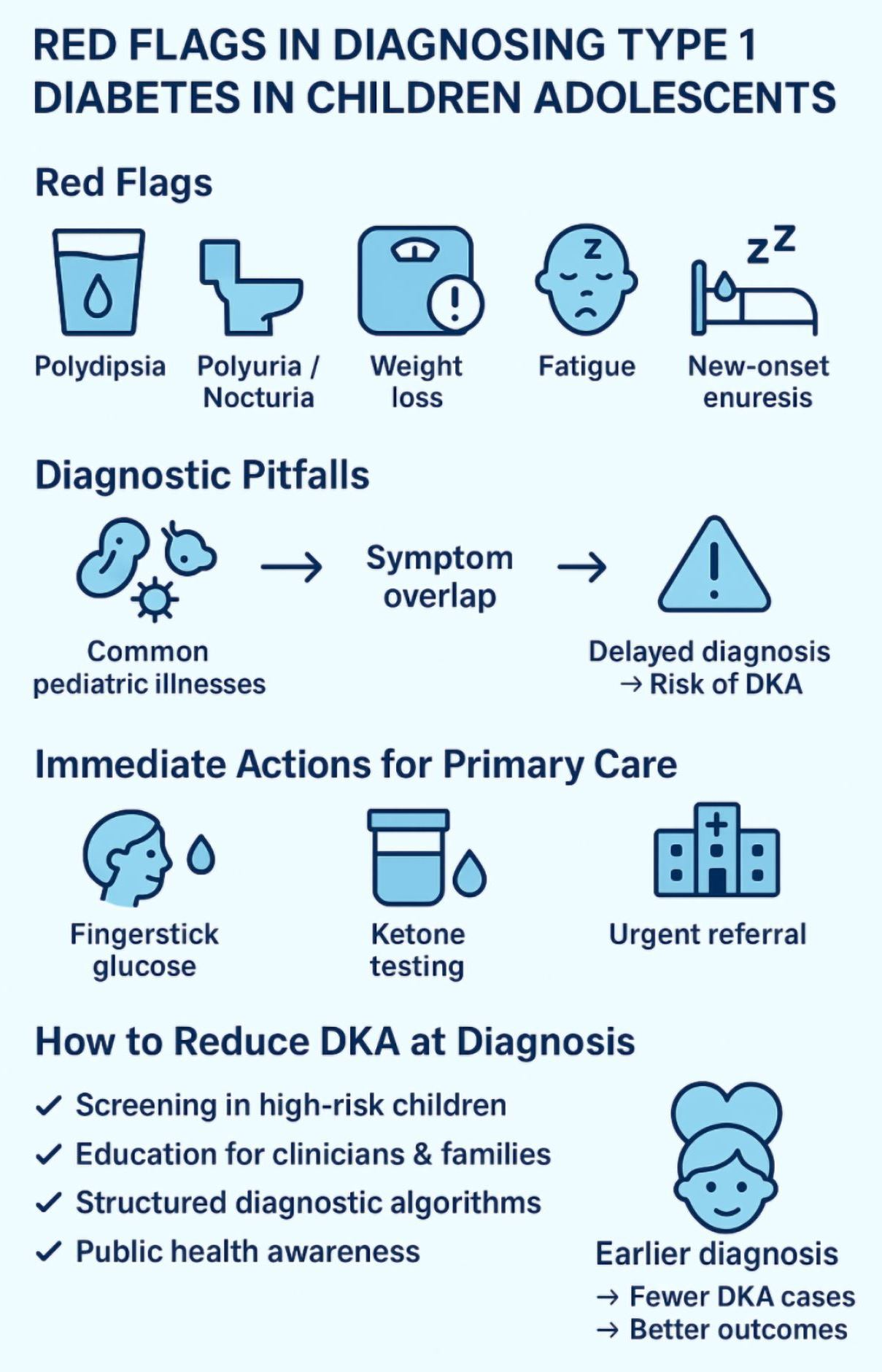
Enhancing Primary Care Recognition of Type 1 Diabetes in Children: Diagnostic Challenges and Strategies to Prevent Diabetic Ketoacidosis


Abstract
1. Introduction
2. Materials and Methods
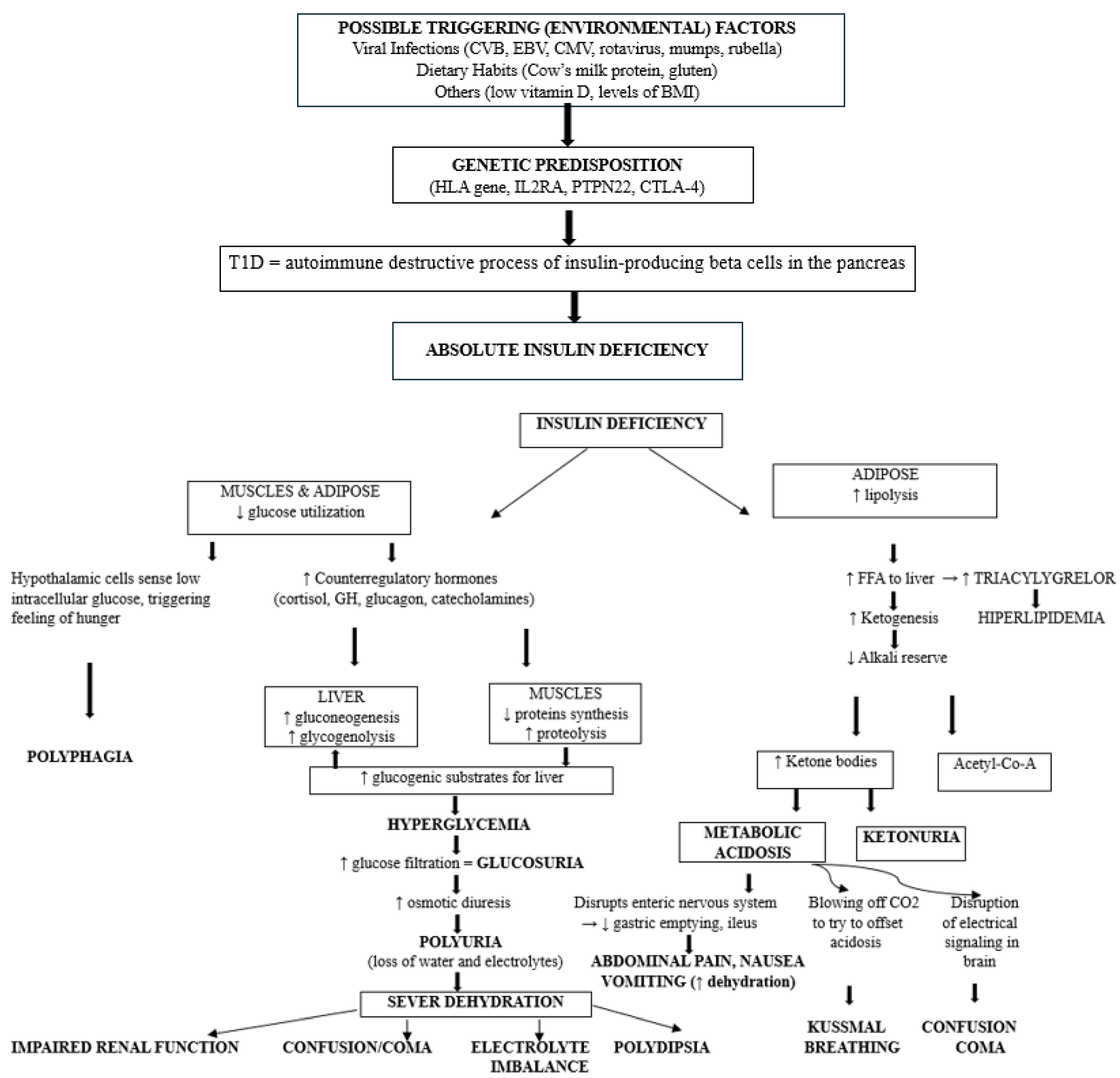
3. Symptomatology and Clinical Onset
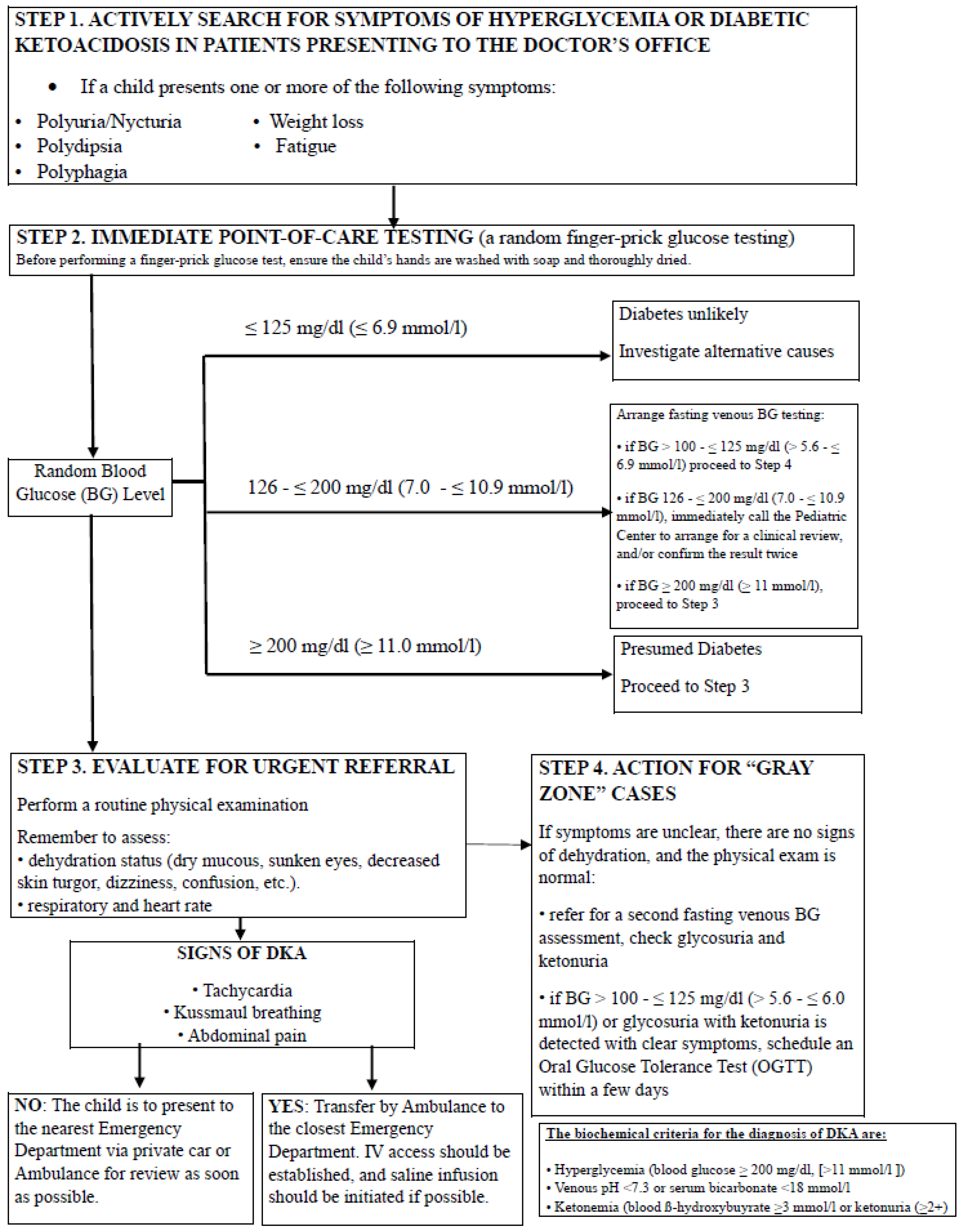
4. Evaluation and Treatment of Hyperglycemia in Children and Adolescents: A Guide for Clinicians
5. Initial Diagnostic Tests and Further Referral
6. Emergency and Ambulance Management Steps
7. The Strengths and Limitations of the Review
8. Clinical Implications
9. Initiatives to Reduce DKA at T1D Onset, Screening Programs to Lower DKA Incidence, and Future Directions
10. Summary
Author Contributions
Funding
Data Availability Statement
Acknowledgments
Conflicts of Interest
Abbreviations
| T1D | Type 1 diabetes |
| DKA | Diabetic ketoacidosis |
| BMI | Body mass index |
| SDS | Standard deviation score |
| T2D | Type 2 diabetes |
| HbA1c | Glycated hemoglobin |
| OGTT | Oral glucose tolerance test |
| ED | Emergency department |
| CBC | Complete blood count |
| BUN | Blood urea nitrogen |
| IV | Intravenous |
| GP | General practitioner |
| TEDDY | The Environmental Determinants of Diabetes in the Young |
| GADA | Glutamic acid decarboxylase |
| IA-2A | Insulinoma-associated protein 2 |
| IAA | Insulin autoantibodies |
| ICA | Islet-cell antibodies |
| ZnT8 | Zinc transporter 8 antibodies |
| ISPAD | International Society for Pediatric and Adolescent Diabetes |
| ADA | American Diabetes Association |
| AAP | American Academy of Pediatrics |
| PTD | Polish Diabetes Association |
| CVB | Coxsackievirus B |
| EBV | Epstein–Barr Virus |
| CMV | Cytomegalovirus |
| HLA | Human Leukocyte Antigen |
| IL2RA | Interleukin-2 Receptor Alpha |
| PTPN22 | Protein Tyrosine Phosphatase Non-Receptor Type 22 |
| CTLA-4 | Cytotoxic T-Lymphocyte Antigen 4 |
| FFA | Free fatty acid |
| Acetyl-CoA | Acetyl coenzyme A |
| WHO | World Health Organization |
| NICE | National Institute for Health and Care Excellence |
References
- Gepts, W. Pathologic Anatomy of the Pancreas in Juvenile Diabetes Mellitus. Diabetes 1965, 14, 619–633. [Google Scholar] [CrossRef] [PubMed]
- Eisenbarth, G.S. Type I Diabetes Mellitus. N. Engl. J. Med. 1986, 314, 1360–1368. [Google Scholar] [CrossRef] [PubMed]
- Atkinson, M.A.; Eisenbarth, G.S.; Michels, A.W. Type 1 Diabetes. Lancet 2014, 383, 69–82. [Google Scholar] [CrossRef] [PubMed]
- International Diabetes Federation. IDF Diabetes Atlas, 11th ed.; IDF: Brussels, Belgium, 2025; Available online: https://diabetesatlas.org (accessed on 1 January 2026).
- Kitabchi, A.; Umpierrez, G.; Murphy, M.; Barrett, E.; Kreisberg, R.; Malone, J.; Wall, B.M. Hyperglycemic Crises in Diabetes. Diabetes Care 2004, 27, S94–S102. [Google Scholar] [CrossRef]
- Savage, M.W.; Dhatariya, K.K.; Kilvert, A.; Rayman, G.; Rees, J.A.E.; Courtney, C.H.; Hilton, L.; Dyer, P.H.; Hamersley, M.S. Joint British Diabetes Societies Guideline for the Management of Diabetic Ketoacidosis. Diabet. Med. 2011, 28, 508. [Google Scholar] [CrossRef]
- Araszkiewicz, A.; Borys, S.; Broncel, M.; Budzyński, A.; Cyganek, K.; Cypryk, K.; Cyranka, K.; Czupryniak, L.; Dąbrowski, M.; Dzida, G.; et al. Standards of Care in Diabetes. The Position of Diabetes Poland—2025. Curr. Top. Diabetes 2025, 5, 1–158. [Google Scholar] [CrossRef]
- Glaser, N.; Fritsch, M.; Priyambada, L.; Rewers, A.; Cherubini, V.; Estrada, S.; Wolfsdorf, J.I.; Codner, E. ISPAD Clinical Practice Consensus Guidelines 2022: Diabetic Ketoacidosis and Hyperglycemic Hyperosmolar State. Pediatr. Diabetes 2022, 23, 835–856. [Google Scholar] [CrossRef]
- Kitabchi, A.E.; Umpierrez, G.E.; Miles, J.M.; Fisher, J.N. Hyperglycemic Crises in Adult Patients with Diabetes. Diabetes Care 2009, 32, 1335. [Google Scholar] [CrossRef]
- Dunger, D.B.; Sperling, M.A.; Acerini, C.L.; Bohn, D.J.; Daneman, D.; Danne, T.P.A.; Glaser, N.S.; Hanas, R.; Hintz, R.L.; Levitsky, L.L.; et al. ESPE/LWPES Consensus Statement on Diabetic Ketoacidosis in Children and Adolescents. Pediatrics 2004, 113, e133–e140. [Google Scholar] [CrossRef]
- Wolfsdorf, J.; Glaser, N.; Sperling, M.A. Diabetic Ketoacidosis in Infants, Children, and Adolescents: A Consensus Statement from the American Diabetes Association. Diabetes Care 2006, 29, 1150–1159. [Google Scholar] [CrossRef]
- Chiasson, J.-L.; Aris-Jilwan, N.; Bélanger, R.; Bertrand, S.; Beauregard, H.; Ekoé, J.-M.; Fournier, H.; Havrankova, J. Diagnosis and Treatment of Diabetic Ketoacidosis and the Hyperglycemic Hyperosmolar State. CMAJ 2003, 168, 859–866. [Google Scholar]
- Pawłowicz, M.; Birkholz, D.; Niedźwiecki, M.; Balcerska, A. Difficulties or Mistakes in Diagnosing Type 1 Diabetes in Children?—Demographic Factors Influencing Delayed Diagnosis. Pediatr. Diabetes 2009, 10, 542–549. [Google Scholar] [CrossRef] [PubMed]
- Hammersen, J.; Tittel, S.R.; Kamrath, C.; Warncke, K.; Galler, A.; Menzel, U.; Hess, M.; Meißner, T.; Karges, B.; Holl, R.W. Clinical Outcomes in Pediatric Patients with Type 1 Diabetes with Early Versus Late Diagnosis: Analysis from the DPV Registry. Diabetes Care 2024, 47, 1808–1817. [Google Scholar] [CrossRef] [PubMed]
- Große, J.; Hornstein, H.; Manuwald, U.; Kugler, J.; Glauche, I.; Rothe, U. Incidence of Diabetic Ketoacidosis of New-Onset Type 1 Diabetes in Children and Adolescents in Different Countries Correlates with Human Development Index (HDI): An Updated Systematic Review, Meta-Analysis, and Meta-Regression. Horm. Metab. Res. 2018, 50, 209–222. [Google Scholar] [CrossRef]
- Raghupathy, P. Diabetic Ketoacidosis in Children and Adolescents. Indian J. Endocrinol. Metab. 2015, 19, S55–S57. [Google Scholar] [CrossRef] [PubMed]
- Onyiriuka, A.N.; Ifebi, E. Ketoacidosis at Diagnosis of Type 1 Diabetes in Children and Adolescents: Frequency and Clinical Characteristics. J. Diabetes Metab. Disord. 2013, 12, 47. [Google Scholar] [CrossRef]
- Dabelea, D.; Mayer-Davis, E.J.; Saydah, S.; Imperatore, G.; Linder, B.; Divers, J.; Bell, R.; Badaru, A.; Talton, J.W.; Crume, T.; et al. Prevalence of Type 1 and Type 2 Diabetes Among U.S. Youth, 2001–2009. JAMA 2014, 311, 1778–1786. [Google Scholar] [CrossRef]
- Jefferies, C.; Cutfield, S.W.; Derraik, J.G.B.; Bhagvandas, J.; Albert, B.B.; Hofman, P.L.; Gunn, A.J.; Cutfield, W.S. 15-Year Incidence of Diabetic Ketoacidosis at Onset of Type 1 Diabetes in Children from a Regional Setting (Auckland, New Zealand). Sci. Rep. 2015, 5, 10358. [Google Scholar] [CrossRef]
- Mallare, J.T.; Cordice, C.C.; Ryan, B.A.; Carey, D.E.; Kreitzer, P.M.; Frank, G.R. Identifying Risk Factors for the Development of Diabetic Ketoacidosis in New Onset Type 1 Diabetes Mellitus. Clin. Pediatr. 2003, 42, 591–597. [Google Scholar] [CrossRef]
- Bell, K.J.; Lain, S.J.; Stevens, L.; Craig, M.E.; Donaghue, K.C.; Nassar, N. Eighteen-Year Incidence, Health Outcomes and Costs Associated With Diabetic Ketoacidosis at Diagnosis of Type 1 Diabetes in Children in NSW, Australia. Pediatr. Diabetes 2025, 2025, 2550952. [Google Scholar] [CrossRef]
- Saydah, S.H.; Shrestha, S.S.; Zhang, P.; Zhou, X.; Imperatore, G. Medical Costs Among Youth Younger Than 20 Years of Age with and Without Diabetic Ketoacidosis at the Time of Diabetes Diagnosis. Diabetes Care 2019, 42, 2256–2261. [Google Scholar] [CrossRef]
- Pietrzak, I.; Michalak, A.; Seget, S.; Bednarska, M.; Beń-Skowronek, I.; Bossowski, A.; Chobot, A.; Dżygało, K.; Głowińska-Olszewska, B.; Górnicka, M.; et al. DKA Incidence Among Children with New-Onset Type 1 Diabetes in Poland and Its Association with COVID-19. Pediatr. Diabetes 2022, 23, 944–955. [Google Scholar] [CrossRef] [PubMed]
- Niechciał, E.; Skowrońska, B.; Michalak, M.; Fichna, P. Ketoacidosis at Diagnosis of Type 1 Diabetes in Children and Adolescents from Wielkopolska Province in Poland: Prevalence, Risk Factors and Clinical Presentation. Clin. Diabetol. 2018, 7, 272–278. [Google Scholar] [CrossRef]
- Rugg-Gunn, C.E.M.; Dixon, E.; Jorgensen, A.L.; Usher-Smith, J.A.; Marcovecchio, M.L.; Deakin, M.; Hawcutt, D.B. Factors Associated with Diabetic Ketoacidosis at Onset of Type 1 Diabetes Among Pediatric Patients: A Systematic Review. JAMA Pediatr. 2022, 176, 1248–1259. [Google Scholar] [CrossRef] [PubMed]
- Wersäll, J.H.; Adolfsson, P.; Forsander, G.; Ricksten, S.E.; Hanas, R. Delayed Referral Is Common Even When New-Onset Diabetes Is Suspected in Children. A Swedish Prospective Observational Study of Diabetic Ketoacidosis at Onset of Type 1 Diabetes. Pediatr. Diabetes 2021, 22, 900–908. [Google Scholar] [CrossRef]
- Smith-Jackson, T.S.; Brown, M.V.; Flint, M.; Larsen, M. A Mixed Method Approach to Understanding the Factors Surrounding Delayed Diagnosis of Type One Diabetes. J. Diabetes Complications 2018, 32, 1051–1055. [Google Scholar] [CrossRef]
- Edge, J.A.; Ford-Adams, M.E.; Dunger, D.B. Causes of Death in Children with Insulin Dependent Diabetes 1990–96. Arch. Dis. Child. 1999, 81, 318–323. [Google Scholar] [CrossRef]
- Mencher, S.R.; Frank, G.; Fishbein, J. Diabetic Ketoacidosis at Onset of Type 1 Diabetes: Rates and Risk Factors Today to 15 Years Ago. Glob. Pediatr. Health 2019, 6, 2333794X19870394. [Google Scholar] [CrossRef]
- Castellanos, L.; Tuffaha, M.; Koren, D.; Levitsky, L.L. Management of Diabetic Ketoacidosis in Children and Adolescents with Type 1 Diabetes Mellitus. Pediatr. Drugs 2020, 22, 357–367. [Google Scholar] [CrossRef]
- Lan, Y.-Y.; Kovinthapillai, R.; Kędzia, A.; Niechciał, E. Age-Based Challenges to Type 1 Diabetes Management in the Pediatric Population. Front. Pediatr. 2024, 12, 1434276. [Google Scholar] [CrossRef]
- Usher-Smith, J.A.; Thompson, M.; Ercole, A.; Walter, F.M. Variation between Countries in the Frequency of Diabetic Ketoacidosis at First Presentation of Type 1 Diabetes in Children: A Systematic Review. Diabetologia 2012, 55, 2878–2894. [Google Scholar] [CrossRef] [PubMed]
- Lee, H.J.; Yu, H.W.; Jung, H.W.; Lee, Y.A.; Kim, J.H.; Chung, H.R.; Yoo, J.; Kim, E.; Yu, J.; Shin, C.H.; et al. Factors Associated with the Presence and Severity of Diabetic Ketoacidosis at Diagnosis of Type 1 Diabetes in Korean Children and Adolescents. J. Korean Med. Sci. 2016, 32, 303–309. [Google Scholar] [CrossRef] [PubMed]
- Neu, A.; Willasch, A.; Ehehalt, S.; Hub, R.; Ranke, M.B.; Becker, S.A.; Berg, V.; Dürr, R.; Eberle-Kuntz, R.; Ertelt, W.K.; et al. Ketoacidosis at Onset of Type 1 Diabetes Mellitus in Children: Frequency and Clinical Presentation. Pediatr. Diabetes 2003, 4, 77–81. [Google Scholar] [CrossRef] [PubMed]
- Cebeci, A.N.; Guven, A.; Kirmizibekmez, H.; Yildiz, M.; Dursun, F. Clinical Features and Management of Diabetic Ketoacidosis in Different Age Groups of Children: Children Less than 5 Years of Age Are at Higher Risk of Metabolic Decompensation. J. Pediatr. Endocrinol. Metab. 2012, 25, 917–925. [Google Scholar] [CrossRef]
- De Vries, L.; Oren, L.; Lazar, L.; Lebenthal, Y.; Shalitin, S.; Phillip, M. Factors Associated with Diabetic Ketoacidosis at Onset of Type 1 Diabetes in Children and Adolescents. Diabet. Med. 2013, 30, 1360–1366. [Google Scholar] [CrossRef]
- Nguyen, K.T.; Xu, N.Y.; Zhang, J.Y.; Shang, T.; Basu, A.; Bergenstal, R.M.; Castorino, K.; Chen, K.Y.; Kerr, D.; Koliwad, S.K.; et al. Continuous Ketone Monitoring Consensus Report 2021. J. Diabetes Sci. Technol. 2022, 16, 689–715. [Google Scholar] [CrossRef]
- Benouda, S.; Ziani, I.; Assarrar, I.; Rouf, S.; Latrech, H. Predictive Factors of Diabetic Ketoacidosis in Patients with Newly Onset Type 1 Diabetes: A Single Center Study. Diabetes Epidemiol. Manag. 2024, 16, 100231. [Google Scholar] [CrossRef]
- Mirsadraee, R.; Khajedaluee, M.; Vakili, R.; Hasanabade, A.; Saeedrezaee, Z. Factors Associated with Newly Diagnosed Children with Diabetic Ketoacidosis. J. Pediatr. Rev. 2017, 5, 65–71. [Google Scholar] [CrossRef]
- Yang, Z.; Zhou, F.; Dorman, J.; Wang, H.; Zu, X.; Mazumdar, S.; LaPorte, R.E. Association between Infectious Diseases and Type 1 Diabetes: A Case-Crossover Study. Pediatr. Diabetes 2006, 7, 146–152. [Google Scholar] [CrossRef]
- Rayfield, E.J.; Ault, M.J.; Keusch, G.T.; Brothers, M.J.; Nechemias, C.; Smith, H. Infection and Diabetes: The Case for Glucose Control. Am. J. Med. 1982, 72, 439–450. [Google Scholar] [CrossRef]
- Cangelosi, A.M.; Bonacini, I.; Pia Serra, R.; Di Mauro, D.; Iovane, B.; Fainardi, V.; Mastrorilli, C.; Vanelli, M. Spontaneous Dissemination of DKA Prevention Campaign Successfully Launched in Nineties in Parma’s Province. Acta Bio. Medica. Atenei. Parm. 2017, 88, 151. [Google Scholar] [CrossRef]
- Hedlund, E.; Tojjar, J.; Lilja, L.; Elding Larsson, H.; Forsander, G.; Ludvigsson, J.; Marcus, C.; Norström, F.; Persson, M.; Carlsson, A. Family History of Diabetes and Clinical Characteristics in Children at Diagnosis of Type 1 Diabetes—A Swedish Population-Based Study. Diabetes Care 2024, 47, 2012–2016. [Google Scholar] [CrossRef] [PubMed]
- Libman, I.; Haynes, A.; Lyons, S.; Pradeep, P.; Rwagasor, E.; Tung, J.Y.-L.; Jefferies, C.A.; Oram, R.A.; Dabelea, D.; Craig, M.E.; et al. ISPAD Guidelines 2022: Definition, Epidemiology and Classification of Diabetes in Children. Pediatr. Diabetes 2022, 23, 1160–1174. [Google Scholar] [CrossRef] [PubMed]
- ElSayed, N.A.; McCoy, R.G.; Aleppo, G.; Balapattabi, K.; Beverly, E.A.; Briggs Early, K.; Bruemmer, D.; Echouffo-Tcheugui, J.B.; Ekhlaspour, L.; Gaglia, J.L.; et al. Diagnosis and Classification of Diabetes: Standards of Care in Diabetes—2025. Diabetes Care 2025, 48, S27–S43. [Google Scholar] [CrossRef]
- World Health Organization. Classification of Diabetes Mellitus. 2019. Available online: https://iris.who.int/server/api/core/bitstreams/2cb3ab68-a52a-402e-ad47-8bc5a4edc834/content (accessed on 27 December 2025).
- National Institute for Health and Care Excellence. Overview|Diabetes (Type 1 and Type 2) in Children and Young People: Diagnosis and Management|Guidance|NICE. Available online: https://www.nice.org.uk/guidance/ng18 (accessed on 27 December 2025).
- Nathan, D.M. Diabetes: Advances in Diagnosis and Treatment. JAMA 2015, 314, 1052–1062. [Google Scholar] [CrossRef]
- Carr, A.L.J.; Inshaw, J.R.J.; Flaxman, C.S.; Leete, P.; Wyatt, R.C.; Russell, L.A.; Palmer, M.; Prasolov, D.; Worthington, T.; Hull, B.; et al. Circulating C-Peptide Levels and β-Cell Loss Across T1D Duration. Diabetes 2022, 71, 1591–1596. [Google Scholar] [CrossRef]
- Lopes, C.L.S.; Pinheiro, P.P.; Barberena, L.S.; Eckert, G.U. Diabetic Ketoacidosis in a Pediatric Intensive Care Unit. J. Pediatr. Rio. J. 2017, 93, 179–184. [Google Scholar] [CrossRef]
- Veauthier, B.; Levy-Grau, B. Diabetic Ketoacidosis: Evaluation and Treatment. Am. Fam. Physician 2024, 110, 476–486. [Google Scholar]
- Prothero, L.S.; Strudwick, T.; Foster, T.; Lake, A.K.; Boyle, A.; Clark, A.; Williams, J.; Rayman, G.; Dhatariya, K. Ambulance Clinician Use of Capillary Blood Ketone Meters to Improve Emergency Hyperglycaemia Care: A Stepped-Wedged Controlled, Mixed-Methods Feasibility Study. Diabet. Med. 2024, 41, e15372. [Google Scholar] [CrossRef]
- American Diabetes Association Professional Practice Committee; ElSayed, N.A.; McCoy, R.G.; Aleppo, G.; Balapattabi, K.; Beverly, E.A.; Briggs Early, K.; Bruemmer, D.; Echouffo-Tcheugui, J.B.; Ekhlaspour, L.; et al. Glycemic Goals and Hypoglycemia: Standards of Care in Diabetes—2025. Diabetes Care 2025, 48, S128–S145. [Google Scholar] [CrossRef]
- Chiarelli, F.; Rewers, M.; Phillip, M. Screening of Islet Autoantibodies for Children in the General Population: A Position Statement Endorsed by the European Society for Paediatric Endocrinology. Horm. Res. Paediatr. 2022, 95, 393–396. [Google Scholar] [CrossRef]
- Bell, K.J.; Brodie, S.; Couper, J.J.; Colman, P.; Davis, E.; Deed, G.; Hagopian, W.; Haynes, A.; Hendrieckx, C.; Henry, A.; et al. Protocol for the Australian Type 1 Diabetes National Screening Pilot. Diabet. Med. 2024, 41, e15419. [Google Scholar] [CrossRef]
- Rewers, M. Health Economic Considerations of Screening for Early Type 1 Diabetes. Diabetes Obes. Metab. 2025, 27, 69–77. [Google Scholar] [CrossRef]
- McQueen, R.B.; Rasmussen, C.G.; Waugh, K.; Frohnert, B.I.; Steck, A.K.; Yu, L.; Baxter, J.; Rewers, M. Cost and Cost-Effectiveness of Large-Scale Screening for Type 1 Diabetes in Colorado. Diabetes Care 2020, 43, 1496–1503. [Google Scholar] [CrossRef]
- Quinn, L.M.; Narendran, P.; Randell, M.J.; Bhavra, K.; Boardman, F.; Greenfield, S.M.; Litchfield, I. General Population Screening for Paediatric Type 1 Diabetes—A Qualitative Study of UK Professional Stakeholders. Diabet. Med. 2023, 40, e15131. [Google Scholar] [CrossRef]
- Besser, R.E.J.; Campbell, F.; Damazer, K.; Elleri, D.; Gillespie, K.M.; Hambling, C.; Martin, R.; Mehta, F.; Millar, S.; Sachdev, P.; et al. UK Best Practice Recommendations for Children with Pre-Stage 3 Type 1 Diabetes. Diabet. Med. 2025, 42, e70117. [Google Scholar] [CrossRef] [PubMed]
- Holder, M.; Ehehalt, S. Significant Reduction of Ketoacidosis at Diabetes Onset in Children and Adolescents with Type 1 Diabetes—The Stuttgart Diabetes Awareness Campaign, Germany. Pediatr. Diabetes 2020, 21, 1227–1231. [Google Scholar] [CrossRef] [PubMed]
- Vanelli, M.; Costi, G.; Chiari, G.; Giacalone, T.; Ghizzoni, L.; Chiarelli, F. Effectiveness of a Prevention Program for Diabetic Ketoacidosis in Children. An 8-Year Study in Schools and Private Practices. Diabetes Care 1999, 22, 7–9. [Google Scholar] [CrossRef] [PubMed]
- King, B.R.; Howard, N.J.; Verge, C.F.; Jack, M.M.; Govind, N.; Jameson, K.; Middlehurst, A.; Jackson, L.; Morrison, M.; Bandara, D.W.S. A Diabetes Awareness Campaign Prevents Diabetic Ketoacidosis in Children at Their Initial Presentation with Type 1 Diabetes. Pediatr. Diabetes 2012, 13, 647–651. [Google Scholar] [CrossRef]
- Patwardhan, R.; Gorton, S.; Vangaveti, V.N.; Yates, J. Diabetic Ketoacidosis Incidence in Children at First Presentation of Type 1 Diabetes at an Australian Regional Hospital: The Effect of Health Professional Education. Pediatr. Diabetes 2018, 19, 993–999. [Google Scholar] [CrossRef]
- Uçar, A.; Saka, N.; Bas, F.; Sukur, M.; Poyrazoglu, S.; Darendeliler, F.; Bundak, R. Frequency and Severity of Ketoacidosis at Onset of Autoimmune Type 1 Diabetes over the Past Decade in Children Referred to a Tertiary Paediatric Care Centre: Potential Impact of a National Programme Highlighted. J. Pediatr. Endocrinol. Metab. 2013, 26, 1059–1065. [Google Scholar] [CrossRef] [PubMed]
- Ahmed, A.M.; Al-Maghamsi, M.; Al-Harbi, A.M.; Eid, I.M.; Baghdadi, H.H.; Habeb, A.M. Reduced Frequency and Severity of Ketoacidosis at Diagnosis of Childhood Type 1 Diabetes in Northwest Saudi Arabia. J. Pediatr. Endocrinol. Metab. 2016, 29, 259–264. [Google Scholar] [CrossRef] [PubMed]
- Darmonkow, G.; Chafe, R.; Aslanova, R.; Hagerty, D.; Twells, L.; Barter, O.J.; Allwood Newhook, L.A. A Multi-Intervention Campaign Lowers Pediatric and Young Adult Diabetic Ketoacidosis Hospitalizations in a Canadian Province. Can. J. Diabetes 2021, 45, 792–797. [Google Scholar] [CrossRef] [PubMed]
- Derraik, J.G.B.; Cutfield, W.S.; Maessen, S.E.; Hofman, P.L.; Kenealy, T.; Gunn, A.J.; Jefferies, C.A. A Brief Campaign to Prevent Diabetic Ketoacidosis in Children Newly Diagnosed with Type 1 Diabetes Mellitus: The NO-DKA Study. Pediatr. Diabetes 2018, 19, 1257–1262. [Google Scholar] [CrossRef]
- Fritsch, M.; Schober, E.; Rami-Merhar, B.; Hofer, S.; Fröhlich-Reiterer, E.; Waldhoer, T. Diabetic Ketoacidosis at Diagnosis in Austrian Children: A Population-Based Analysis, 1989–2011. J. Pediatr. 2013, 163, 1484–1488.e1. [Google Scholar] [CrossRef]
- Lansdown, A.J.; Barton, J.; Warner, J.; Williams, D.; Gregory, J.W.; Harvey, J.N.; Lowes, L. Prevalence of Ketoacidosis at Diagnosis of Childhood Onset Type 1 Diabetes in Wales from 1991 to 2009 and Effect of a Publicity Campaign. Diabet. Med. 2012, 29, 1506–1509. [Google Scholar] [CrossRef]
- Rabbone, I.; Maltoni, G.; Tinti, D.; Zucchini, S.; Cherubini, V.; Bonfanti, R.; Scaramuzza, A. DKA at Onset During a National Awareness Campaign: A 2-Year Observational Study. Arch. Dis. Child. 2020, 105, 363–366. [Google Scholar] [CrossRef]
- Cherubini, V.; Marino, M.; Carle, F.; Zagaroli, L.; Bowers, R.; Gesuita, R. Effectiveness of Ketoacidosis Prevention Campaigns at Diagnosis of Type 1 Diabetes in Children: A Systematic Review and Meta-Analysis. Diabetes Res. Clin. Pract. 2021, 175, 108838. [Google Scholar] [CrossRef]
- Tas, E.; Wooley, K.; Tas, V.; Wang, Y.C.A. Delayed Management of Insulin-Dependent Diabetes Mellitus in Children. J. Pediatr. Health Care 2023, 37, 56–62. [Google Scholar] [CrossRef]
- Peamyao, W.; Lokeskrawee, T.; Lawanaskol, S.; Patumanond, J.; Chanlaor, S.; Bumrungpagdee, W.; Lakdee, C. Predictive Factors for Diagnosing Diabetic Ketoacidosis or Simple Hyperglycemia in Adults with High Blood Glucose: The “1-DKA Alert” Study. J. Clin. Med. Res. 2025, 17, 164. [Google Scholar] [CrossRef]
- Bhutta, Z.A.; Salam, R.A.; Gomber, A.; Lewis-Watts, L.; Narang, T.; Mbanya, J.C.; Alleyne, G. A Century Past the Discovery of Insulin: Global Progress and Challenges for Type 1 Diabetes among Children and Adolescents in Low-Income and Middle-Income Countries. Lancet 2021, 398, 1837–1850. [Google Scholar] [CrossRef] [PubMed]
- Elding Larsson, H.; Vehik, K.; Gesualdo, P.; Akolkar, B.; Hagopian, W.; Krischer, J.; Lernmark, Å.; Rewers, M.; Simell, O.; She, J.X.; et al. Children in the TEDDY Study Are Diagnosed with T1D at an Early Stage. Pediatr. Diabetes 2014, 15, 118–126. [Google Scholar] [CrossRef] [PubMed]
- Krischer, J.P.; Liu, X.; Lernmark, Å.; Hagopian, W.A.; Rewers, M.J.; She, J.X.; Toppari, J.; Ziegler, A.G.; Akolkar, B. Characteristics of Children Diagnosed with Type 1 Diabetes before vs after 6 Years of Age in the TEDDY Cohort Study. Diabetologia 2021, 64, 2247–2257. [Google Scholar] [CrossRef] [PubMed]
- Hummel, S.; Carl, J.; Friedl, N.; Winkler, C.; Kick, K.; Stock, J.; Reinmüller, F.; Ramminger, C.; Schmidt, J.; Lwowsky, D.; et al. Children Diagnosed with Presymptomatic T1D Through Public Health Screening Have Milder Diabetes. Diabetologia 2023, 66, 1633–1642. [Google Scholar] [CrossRef]
- Weiss, A.; Zapardiel-Gonzalo, J.; Voss, F.; Jolink, M.; Stock, J.; Haupt, F.; Kick, K.; Welzhofer, T.; Heublein, A.; Winkler, C.; et al. Progression Likelihood Score Identifies Substages of Presymptomatic T1D in Childhood Screening. Diabetologia 2022, 65, 2121–2131. [Google Scholar] [CrossRef]
- Velluzzi, F.; Secci, G.; Sepe, V.; Klersy, C.; Shattock, M.; Foxon, R.; Songini, M.; Mariotti, S.; Locatelli, M.; Bottazzo, G.F.; et al. Prediction of T1D in Sardinian Schoolchildren Using Islet Cell Autoantibodies: 10-Year Follow-Up. Acta Diabetol. 2016, 53, 73–79. [Google Scholar] [CrossRef]
- Krischer, J.P.; Liu, X.; Vehik, K.; Akolkar, B.; Hagopian, W.A.; Rewers, M.J.; She, J.X.; Toppari, J.; Ziegler, A.G.; Lernmark, Å.; et al. Predicting Islet Autoimmunity and T1D: An 8-Year TEDDY Progress Report. Diabetes Care 2019, 42, 1051–1060. [Google Scholar] [CrossRef]
- Vehik, K.; Bonifacio, E.; Lernmark, Å.; Yu, L.; Williams, A.; Schatz, D.; Rewers, M.; She, J.X.; Toppari, J.; Hagopian, W.; et al. Hierarchical Order of Distinct Autoantibody Spreading and Progression to Type 1 Diabetes in the TEDDY Study. Diabetes Care 2020, 43, 2066–2073. [Google Scholar] [CrossRef]



| Classic Hyperglycemia Symptoms | Excessive Thirst and Dry Mouth (Polydipsia) |
| Frequent Urination (Polyuria) | |
| Unintentional Weight Loss | |
| Increased Hunger (Polyphagia) | |
| General and constitutional symptoms | Fatigue and weakness |
| Blurred vision | |
| Gastrointestinal manifestations | Nausea and vomiting |
| Abdominal pain | |
| Respiratory and metabolic signs | Sweet or fruity-smelling breath (acetone smell) |
| Rapid breathing or shortness of breath | |
| Neurological symptoms | Confusion or altered mental state |
| Lethargy or unresponsiveness | |
| Signs of dehydration | Skin changes: dry, flushed skin |
| Dry mucous membranes, sunken eyes |
| Symptom/Characteristic Feature | Reason for Late Diagnosis |
|---|---|
| Young age | Children under 4 years of age may present symptoms typical of hyperglycemia, but parents may not recognize them unless actively questioned. Additionally, obtaining a medical history from a child can be challenging, as it requires doctors to rely heavily on parental observations. These factors may lead to a late diagnosis. |
| The hyperventilation of DKA | It may be misdiagnosed as asthma exacerbations or pneumonia/bronchiolitis (cough and breathlessness distinguish these diseases from DKA), which are, in fact, Kussmaul respirations. Commonly, antibiotics or GKS are initiated, especially GKS, which can exacerbate the severity of hyperglycemia. |
| Vomiting without diarrhea | Typically, a child presenting with vomiting is inappropriately diagnosed with viral gastroenteritis. |
| Abdominal pain | It is related to DKA, and it may simulate an acute abdomen, such as appendicitis, which can result in a referral to a surgeon. |
| New bedwetting | Nocturia and bedwetting in a previously potty-trained child are often assumed to be psychogenic. These symptoms are flashing warning signs to investigate further before classifying them as psychogenic. |
| Polyuria | In most cases, children with polyuria and enuresis are misdiagnosed with UTI because of increased frequency of urination. Sometimes, antibiotics are started without performing a urine analysis. |
| Polydipsia | Although this is the most obvious sign of diabetes, increased thirst can easily be blamed on hot weather (especially in summer months), or it can also be considered psychogenic. |
| Weight loss | Another typical symptom, however, some pediatricians related it to growth spurts, increased activity with a new sport, or an intentional lifestyle change. |
| Organization | Differences/Emphasis |
|---|---|
| ISPAD | Pediatric-specific; recommends autoantibodies and C-peptide for classification; HbA1c is not the sole criterion in acute onset. |
| ADA | Uses standard thresholds; emphasizes prompt treatment in symptomatic children; recommends autoantibody testing. |
| PTD (Poland) | Adopts WHO/ISPAD thresholds; stresses early diagnosis and use of classification tools (autoantibodies, C-peptide). |
| WHO | Global standards highlight the limitations of HbA1c in the context of anemia, hemoglobinopathies, and acute illness. |
| NICE (UK) | Prioritizes clinical presentation: glucose ≥ 200 mg/dL with symptoms is sufficient; recommends immediate referral and initiation of insulin. |
| Outcome | Key Points |
|---|---|
| Successful | Public Education Programs and Media Campaigns: Utilize posters, leaflets, toll-free hotlines, and digital platforms to target the general public, families, and healthcare professionals. Significant reductions in DKA rates, e.g., 65% in regions like Germany, Italy, and Saudi Arabia, have been demonstrated [42,60,61,64]. Healthcare Provider Training: Targeted programs for clinicians improved early T1D diagnosis through tools like glucose meters and ketone tests. Focus on continuous professional development [62,65]. Future Strategies: Integrating digital tools, mobile apps, and local campaigns targeting high-risk groups (children, rural populations). Emphasis on sustained education and follow-up interventions [42,64,66]. |
| Mixed | Public Education Programs and Media Campaigns: The Italian national campaign (2015–2017) utilized posters, newsletters, a bimonthly magazine, social media, and a commercial featuring famous comedians, addressing family pediatricians, families, and schools. It had inconsistent reach and effects on different cohorts. Healthcare Provider Training: Advertising posters and a monthly newsletter were sent via email to family pediatricians, who were the primary target of the awareness campaign. A survey of pediatric centers showed mixed results; DKA rates decreased in preschool children but increased in older age groups. Future Strategies: Emphasis on multi-pronged approaches that combine localized efforts, digital media campaigns, and innovative communication tools to sustain impact and ensure equitable access. Collaboration with family pediatricians, GPs, scientific societies, and national health systems is essential for reinforcing awareness campaigns and implementing effective nationwide DKA prevention initiatives [67]. |
| Failed | Public Education Programs and Media Campaigns: Limited effectiveness in New Zealand and Austria, where campaigns relied primarily on posters and pamphlets, with low recall and unchanged DKA rates [68,69]. Healthcare Provider Training: Austria’s lack of specialized training in pediatric diabetes care for healthcare providers, primarily family doctors or GPs, hindered the campaign’s success, while Wales’s lack of follow-up contributed to its failure [69,70]. Future Strategies: There is a need for comprehensive, sustained outreach combining diverse media with professional education and regular reinforcement. Culturally sensitive, localized campaigns with follow-up interventions to maintain awareness and improve outcomes [69,70]. |
Disclaimer/Publisher’s Note: The statements, opinions and data contained in all publications are solely those of the individual author(s) and contributor(s) and not of MDPI and/or the editor(s). MDPI and/or the editor(s) disclaim responsibility for any injury to people or property resulting from any ideas, methods, instructions or products referred to in the content. |
© 2026 by the authors. Licensee MDPI, Basel, Switzerland. This article is an open access article distributed under the terms and conditions of the Creative Commons Attribution (CC BY) license.
Share and Cite
Lan, Y.-Y.; Kovinthapillai, R.; Kędzia, A.; Niechciał, E. Enhancing Primary Care Recognition of Type 1 Diabetes in Children: Diagnostic Challenges and Strategies to Prevent Diabetic Ketoacidosis. J. Clin. Med. 2026, 15, 533. https://doi.org/10.3390/jcm15020533
Lan Y-Y, Kovinthapillai R, Kędzia A, Niechciał E. Enhancing Primary Care Recognition of Type 1 Diabetes in Children: Diagnostic Challenges and Strategies to Prevent Diabetic Ketoacidosis. Journal of Clinical Medicine. 2026; 15(2):533. https://doi.org/10.3390/jcm15020533
Chicago/Turabian StyleLan, Yung-Yi, Rujith Kovinthapillai, Andrzej Kędzia, and Elżbieta Niechciał. 2026. "Enhancing Primary Care Recognition of Type 1 Diabetes in Children: Diagnostic Challenges and Strategies to Prevent Diabetic Ketoacidosis" Journal of Clinical Medicine 15, no. 2: 533. https://doi.org/10.3390/jcm15020533
APA StyleLan, Y.-Y., Kovinthapillai, R., Kędzia, A., & Niechciał, E. (2026). Enhancing Primary Care Recognition of Type 1 Diabetes in Children: Diagnostic Challenges and Strategies to Prevent Diabetic Ketoacidosis. Journal of Clinical Medicine, 15(2), 533. https://doi.org/10.3390/jcm15020533