Next Article in Journal
Venous Thromboembolism Associated with Uterine Fibroids: A Review of Reported Cases
Previous Article in Journal
Mastectomy Reconstruction Techniques for Gender Diverse Breast Cancer and High Risk Patients: A Case Series and Literature Overview
Previous Article in Special Issue
Screening and Procedural Guidance for Mitral Transcatheter Edge-to-Edge Repair (M-TEER)
error_outline You can access the new MDPI.com website here. Explore and share your feedback with us.
 
 
Review

Tricuspid Transcatheter Edge-to-Edge Repair at a Crossroads: Prognosis-Shaping Intervention or High-Tech Palliation?


by
Andreas Mitsis
1,*,
Marios Ioannides
1,
Christis Rotos
1,
Nikolaos P. E. Kadoglou
2 and
Christos Eftychiou
1
1
Cardiology Department, General Hospital of Nicosia, Limassol Old Road No. 215, 2029 Nicosia, Cyprus
2
Medical School, University of Cyprus, 2029 Nicosia, Cyprus
*
Author to whom correspondence should be addressed.
J. Clin. Med. 2026, 15(2), 443; https://doi.org/10.3390/jcm15020443
Submission received: 16 December 2025 / Revised: 3 January 2026 / Accepted: 4 January 2026 / Published: 6 January 2026
(This article belongs to the Special Issue Advances in Structural Heart Diseases)

Abstract

Tricuspid regurgitation (TR) has historically been undertreated despite its strong association with morbidity and mortality. Surgical correction of isolated TR is not routinely performed and has shown limited survival benefit, leaving a substantial unmet need for minimally invasive therapies. Transcatheter edge-to-edge repair (T-TEER) has emerged as a promising therapeutic option for patients with symptomatic severe or greater (≥severe) TR who are unsuitable for surgery. Recent randomized trials, including the TRILUMINATE Pivotal and the Tri-FR study, and real-world registries consistently demonstrate significant improvements in TR severity, functional status, and quality of life following T-TEER. Although benefits in hard clinical endpoints such as mortality or heart failure hospitalizations remain less conclusive, growing evidence suggests potential prognostic advantage in selected patients, particularly those with preserved or mid-range right ventricular function. Anatomical suitability, RV performance, and optimized patient selection are crucial determinants of success. As ongoing large-scale trials continue to evaluate long-term outcomes, T-TEER currently occupies a therapeutic space between palliative intervention and disease-modifying therapy, providing substantial symptom relief with the potential for broader clinical benefit. This review summarizes current evidence, patient selection strategies, and perspectives on the evolving role of T-TEER in the management of severe TR.

1. Introduction

Tricuspid regurgitation (TR) has traditionally been referred to as the “forgotten valve disease”, receiving far less attention and treatment consideration than left-sided valvular conditions despite its significant clinical impact [1]. Contemporary imaging and epidemiologic research demonstrate that severe TR leads to progressive right ventricular (RV) dysfunction, systemic venous congestion, impaired functional capacity, and increased mortality [2]. Medical therapy alone provides symptomatic relief but does not modify disease progression, and isolated surgical repair remains infrequent due to high procedural risk and lack of proven long-term benefit [3,4]. This therapeutic gap has seemed to be filled by the development of transcatheter tricuspid valve interventions (TTVI), particularly transcatheter edge-to-edge repair (T-TEER), which has rapidly evolved into the leading percutaneous option for severe symptomatic TR. Throughout this review, TR severity is discussed in accordance with contemporary expanded grading schemes, and the presented evidence primarily applies to patients with severe or greater (≥severe) TR, including massive and torrential regurgitation where specified [5,6].
Despite the rapid expansion of TTVI and the growing adoption of T-TEER, important uncertainties remain regarding its role beyond symptomatic relief. While randomized trials and real-world registries consistently demonstrate improvements in tricuspid regurgitation severity, functional status, and quality of life, evidence supporting a definitive prognostic benefit remains inconclusive. In particular, the optimal timing of intervention, the identification of patient subgroups most likely to derive prognostic benefit, and the influence of right ventricular function and disease stage on outcomes are not fully established. This review aims to address these knowledge gaps by integrating data from randomized controlled trials, large observational registries, and disease-stage and right ventricular function–stratified analyses. By synthesizing contemporary evidence across these complementary sources, we seek to provide a unified interpretive framework to clarify when T-TEER should be viewed as a predominantly palliative intervention and when it may exert disease-modifying effects in carefully selected patients.

2. Pathophysiology and Clinical Burden of Severe TR

Functional tricuspid regurgitation (FTR) most commonly develops because of right-sided cardiac remodeling rather than primary valvular pathology. The initiating mechanism typically involves annular dilation and leaflet tethering, which comes secondary to a variety of conditions that impose chronic volume or pressure overload on the right heart [7]. Among these, atrial fibrillation, right atrial enlargement, pulmonary hypertension, and left-sided heart disease such as heart failure with preserved or reduced ejection fraction and severe mitral valve disease, play central roles in changing tricuspid valve geometry [8].
Two major phenotypes of FTR have been increasingly recognized. Atrial Functional TR (AFTR), driven primarily by isolated right atrial dilation and remodeling in the setting of long-standing atrial fibrillation. In this phenotype, the tricuspid leaflets are structurally normal, but significant annular dilation prevents adequate leaflet coaptation [9]. Ventricular Functional TR (VFTR), in which elevated pulmonary pressures and chronic right ventricular (RV) afterload led to RV dilation, papillary muscle displacement, and leaflet tethering. This mechanism is prevalent in pulmonary hypertension and left-sided heart disease [10]. Of note, patients with AFTR had significantly better survival as compared with patients with VFTR independently of other clinical and echocardiographic characteristics [11].
In addition, TR related to intracardiac RV leads represents a distinct and increasingly prevalent mechanism of functional TR. Trans-tricuspid pacing or defibrillator leads may interfere with leaflet motion, cause leaflet impingement or perforation, and exacerbate annular dilatation, ultimately leading to significant regurgitation [12]. Lead-related TR frequently coexists with atrial or ventricular functional mechanisms and is associated with worse clinical outcomes, underscoring the importance of careful anatomical assessment and mechanism-specific decision-making when considering transcatheter therapies [13].
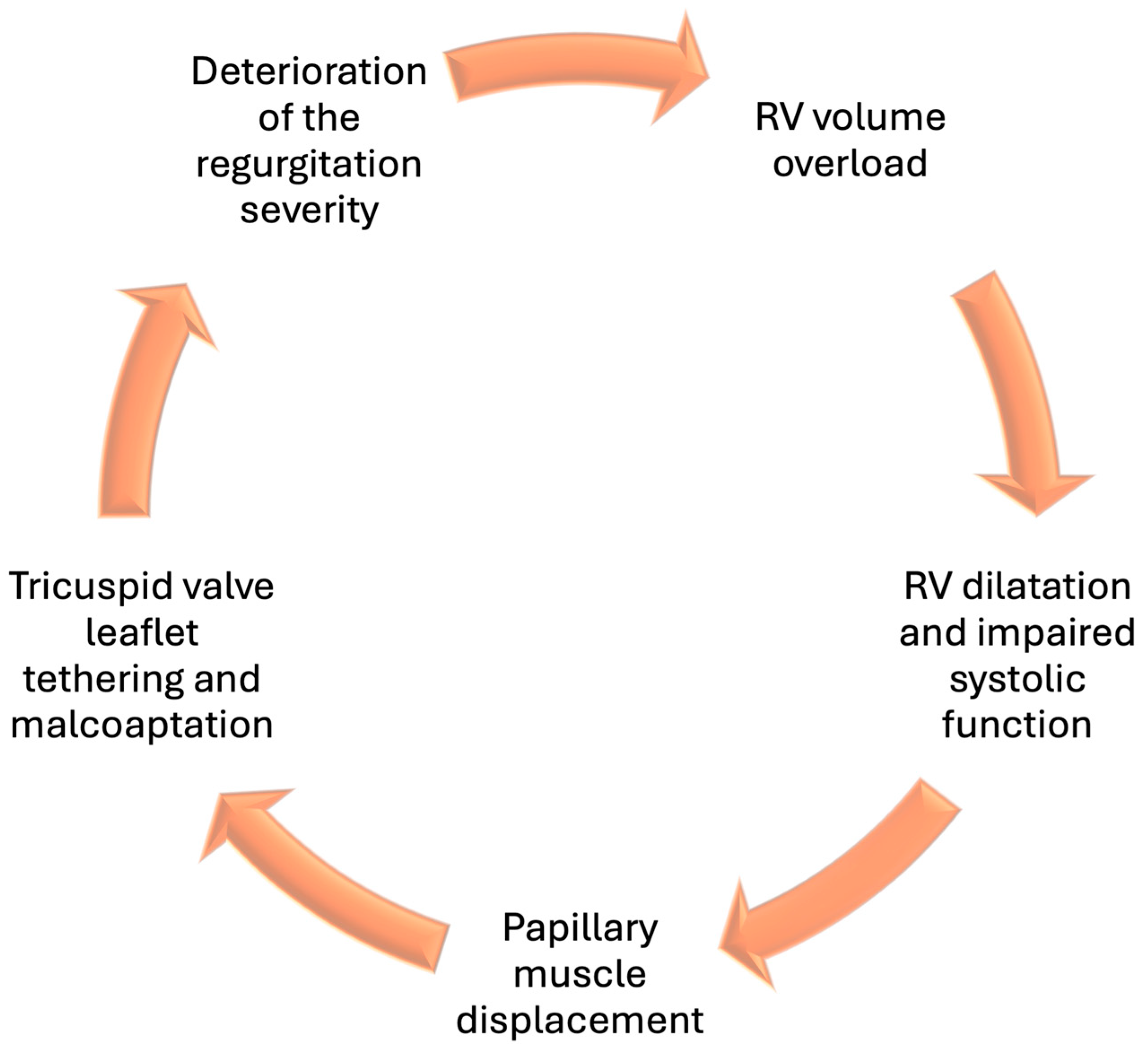
Regardless of the initiating cause, progressive RV volume overload serves as the trigger for disease progression. As regurgitant volume increases, the RV undergoes abnormal remodeling characterized by dilation and gradual impairment of systolic function [Figure 1]. This worsens leaflet malcoaptation, further deterioration of the regurgitation severity in a vicious cycle that ultimately terminates in right-sided heart failure [14]. Clinically, patients present with excessive signs of systemic venous congestion including elevated jugular venous pressure, peripheral edema, ascites, and easy fatigue [15]. In advanced stages, patients may develop cardiorenal syndrome and refractory right-sided heart failure, both of which significantly complicate management.
Observational studies reveal that medically managed severe TR is associated with poor survival, underscoring the inadequacy of conservative therapy in modifying disease’s course [16]. Notably, even moderate TR has been shown to predict worse outcomes in heart failure and pulmonary hypertension cohorts [17]. These findings highlight the inadequacy of conservative therapy and the fact that diuretics may provide symptomatic relief but do not reverse underlying structural remodeling. As a result, growing emphasis has been placed on timely interventional strategies to modify the disease course before irreversible RV dysfunction develops.

3. Limitations of Surgical Management and the Rise of Transcatheter Therapies

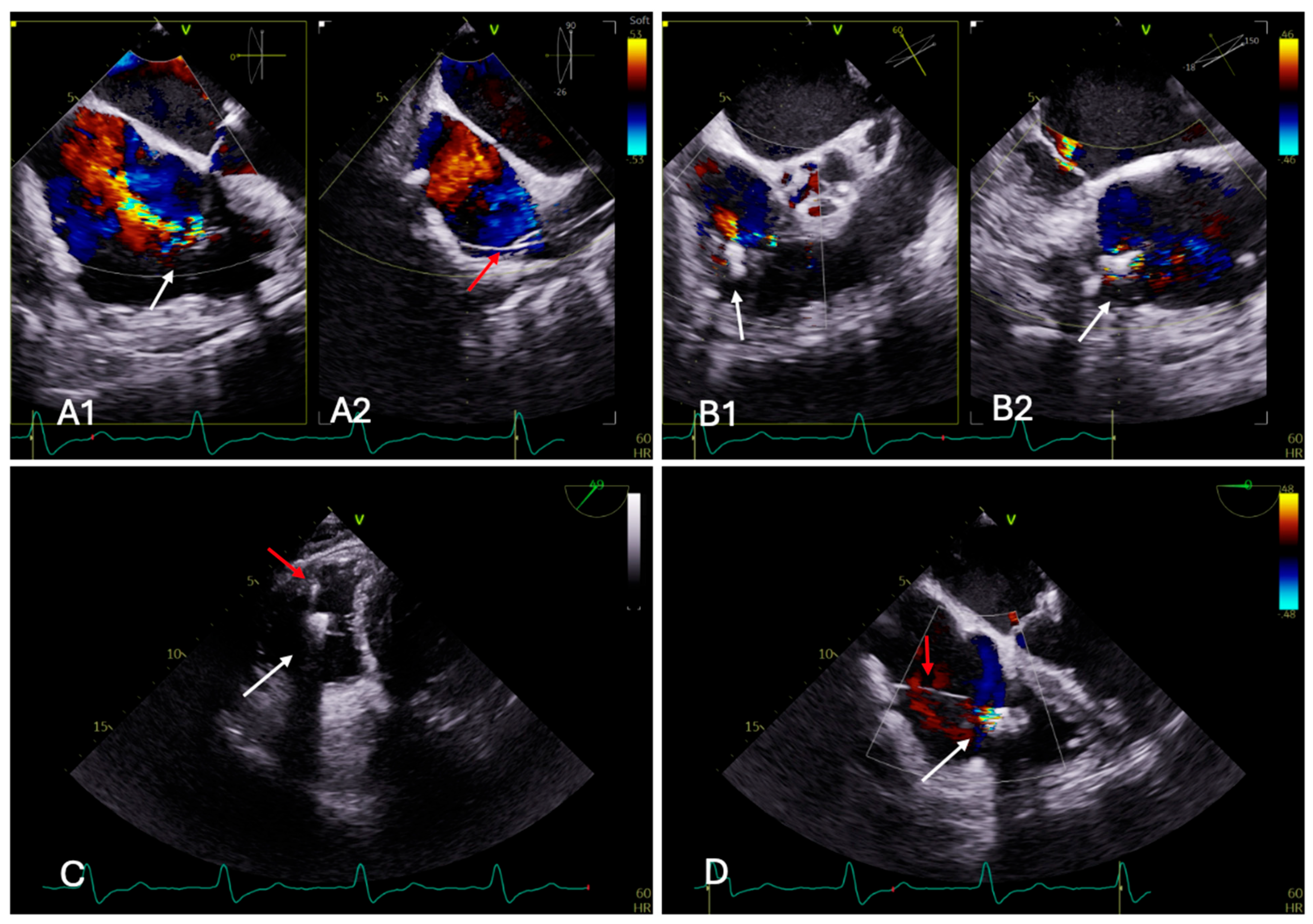
Isolated tricuspid valve surgery is not routinely practiced and has not demonstrated survival benefit in contemporary series, largely due to late referral and advanced RV dysfunction at presentation [18]. Of note, data from observational studies have shown an in-hospital mortality that reaches almost 10% after isolated TR surgery [19,20]. Interestingly, the isolated TV surgery was associated with high mortality and morbidity predicted by the severity of the presentation and not necessary by TR mechanism [20]. Consequently, most patients with significant TR remain undertreated. Transcatheter technologies, led by T-TEER, have emerged as a less invasive and more accessible alternative for high-risk individuals [Figure 2]. Until now, two primary commercial systems are available; Abbott’s TriClip (now TriClip G4/G5) and Edwards Lifesciences’ PASCAL system, with TriClip being the first FDA-approved for this purpose in the US [21], while PASCAL is also widely used and approved in other regions like Europe. Early feasibility studies have demonstrated procedural safety, high technical success, and promising short and long term clinical outcomes, prompting randomized evaluation [22,23,24,25,26].

4. Evidence Base for T-TEER: Clinical Trials and Real-World Data

4.1. Randomized Controlled Trials

a.
TRILUMINATE Pivotal Trial
The TRILUMINATE Pivotal study was the first randomized controlled trial comparing T-TEER with guideline-directed medical therapy using the TriClip device [27]. The trial demonstrated significant improvements in quality of life as Kansas City Cardiomyopathy Questionnaire (KCCQ) quality-of-life score changed by a mean (±SD) of 12.3 ± 1.8 points in the TEER group, as compared with 0.6 ± 1.8 points in the control group (p < 0.001). Furthermore, at 30 days, 87.0% of the patients in the TEER group and 4.8% of those in the control group had TR of no greater than moderate severity (p < 0.001). Although mortality (9.4% in the TEER group vs. 10.6% in the control group) and annualized heart-failure hospitalization rates (0.21 events per patient-year in the TEER group vs. 0.17 events per patient-year in the control group) did not differ significantly between treatment arms, the magnitude of symptomatic improvement supports T-TEER as an effective therapy for symptom relief.
The two-year results of the study confirmed durable TR reduction, sustained gains in functional capacity, and stable safety profile [28]. Freedom from all-cause mortality, tricuspid valve surgery, and tricuspid valve intervention through 2 years was significantly higher with T-TEER compared with control (77.6% versus 29.3%; p < 0.0001), driven by more tricuspid valve intervention in control patients who crossed over to device treatment (3.8% versus 61.5%). Rates of all-cause mortality (17.9% versus 17.1%) and tricuspid valve surgery (2.3% versus 4.3%) were similar between groups. Moderate or less TR was present in 84% at 2 years in the device group. These findings support T-TEER as an effective therapy for symptom relief, while potential prognostic implications remain uncertain and require further investigation.
b.
Tri.Fr Trial
The Tri.Fr randomized trial confirmed the symptomatic superiority of T-TEER over medical therapy, with significantly more patients achieving improvement in composite clinical outcomes at one year [29]. The trial demonstrated that adding T-TEER to optimal medical therapy (OMT) effectively reduced TR severity and led to meaningful clinical benefits, primarily reflected by improvements in patient-reported outcomes such as New York Heart Association (NYHA) functional class and the Patient Global Assessment (PGA). A favorable clinical composite response was observed in 74.1% of patients treated with T-TEER  +  OMT, compared with 40.6% of those receiving OMT alone. Rates of death (0.1% in the OMT-alone group vs. 0.03%, in the T-TEER  +  OMT group) or heart failure hospitalization (13.5% in the OMT-alone group vs. 15%, in the T-TEER  +  OMT group) were not significantly different between groups, although the absolute event numbers trended toward benefit with the T-TEER strategy. Quality-of-life gains were durable at 1 year and consistently observed across multiple measures, including NYHA class, PGA, and the KCCQ, underscoring that T-TEER  +  OMT yields a substantial and sustained improvement in health status for patients with severe, symptomatic TR. The procedure demonstrated a favorable safety profile, with a low intrahospital adverse event rate of 8.0%, including a 5.2% incidence of single-leaflet device attachment (Table 1).

4.2. Real-World Evidence

a.
Transatlantic TRILUMINATE Registry
The Transatlantic TRILUMINATE Registry is a large, real-world, multicenter registry collecting outcomes of patients undergoing T-TEER with the TriClip system across Europe and the United States. The registry complements the RCT by offering broader, non-randomized outcomes that support and contextualize the trial’s findings. Expanded evaluation of the cohort revealed that approximately 60% of patients achieved sustained TR of no more than moderate severity at two years. RV and annular reverse remodeling improved six-minute walk distance, and reduced annualized heart-failure hospitalizations suggest possible structural and functional benefits that go beyond symptom relief. The study showed low rates of cardiovascular mortality (15.3%) and all-cause mortality (18.7%) at 2 years, while all-cause hospitalization rate decreased from 1.30 events per patient-year 1 year before device implantation to 0.66 events per patient-year 2 years after the TriClip procedure, representing a reduction of 49% (p < 0.0001) [30].
b.
The bRIGHT Registry
In one of the largest registries to date, the bRIGHT (Observational Real-World Study Evaluating Severe Tricuspid Regurgitation Patients With the Abbott TriClip Device) study reported a 99% procedural success rate, robust TR reduction, and dramatic improvements in NYHA class and quality of life even in elderly patients with torrential TR. These findings confirm the strong translational applicability of T-TEER [31]. One-year findings from the bRIGHT study further reinforce the safety and durable effectiveness of the T-TEER in reducing TR severity among real-world patients with symptomatic TR. The study demonstrates a significant and persistent reduction in TR at 1 year, accompanied by continued low rates of adverse events and sustained improvements in quality of life, as reflected by gains in KCCQ scores (19 ± 26-point improvement, p < 0.00) across a broad, heterogeneous population and among centers with varying procedural experience. Notably, this analysis provides the first evidence that effective TR reduction with T-TEER attenuates the mortality risk traditionally associated with baseline TR severity. All-cause mortality per Kaplan–Meier analysis was 15.1% at 1 year for the full bRIGHT cohort. Instead, mortality correlated with the presence of greater-than-moderate residual TR. Survival was significantly lower at 1 year in subjects with TR severe or higher at 30 days (70.6%; p < 0.0001 overall) compared with subjects with moderate (91.9%; p < 0.0001), mild (88.2%, p = 0.0003), or trace TR (84.8%, p = 0.03). These findings suggest an association between successful TR reduction after T-TEER and improved survival, without establishing causality [32].
c.
TriValve Registry
The TriValve registry was established to evaluate the distribution of various TTVIs including T-TEER, annuloplasty devices, leaflet and coaptation devices and valve replacement, both in the heterotopic and the orthotropic positions. The purpose of the registry was to investigate patient characteristics and initial clinical results [33]. Propensity-matched comparisons of the T-TEER population from the TriValve registry indicate lower mortality and fewer heart-failure hospitalizations in TTVI-treated patients compared with medical therapy. 1-year mortality was 23% in the TTVI group vs. 36% in the control group (p = 0.001) and heart failure rehospitalization was 26% in the TTVI group vs. 47% in the control group (p < 0.0001). Procedural success defined by achieving TR < 3+, was strongly associated with survival, highlighting the importance of anatomical suitability and technical performance and this benefit persisted after multivariable adjustment (HR ≈ 0.35–0.39) [34].

5. Role of RV Function and Comorbidities in Predicting Outcomes

Several observational studies underline the importance of RV performance in determining the clinical impact of T-TEER. Schlotter et al. demonstrated that patients with mid-range RV function (defined as TAPSE 13–17 mm) derive the most consistent survival benefit, whereas those with severely impaired RV function primarily achieve symptomatic relief without clear prognostic advantage [35]. Overall, 1-year mortality was 13.1% in T-TEER group vs. 25.8% in the control group (p = 0.031). Only patients with mid-range RV function appear to be more likely to experience favorable survival outcomes following T-TEER (p log-rank 0.004). More recently, the EuroTR Investigators analyzed 1885 patients with significant TR, including 585 conservatively treated individuals and 1300 patients who received T-TEER. Patients were stratified into early, intermediate, or advanced disease stages. Staging was determined using a composite assessment of left and right ventricular function, renal function, and natriuretic peptide concentrations, and the classification was subsequently validated in an external cohort. Of the 1885 patients included, 395 (21%) were classified as early stage, 1173 (62%) as intermediate stage, and 317 (17%) as advanced stage. Among those in the early and advanced stages, mortality did not differ between patients treated interventional and those managed conservatively (early stage: HR 0.78; 95% CI 0.34–1.80; p = 0.54; advanced stage: HR 1.06; 95% CI 0.71–1.60; p = 0.78). In contrast, percutaneous treatment was associated with lower mortality in patients with intermediate-stage disease (HR 0.73; 95% CI 0.52–0.99; p = 0.03) [36]. Apart from the RV status, the degree of systolic function of the left ventricle seems equally important. Kresoja et al. showed that patients with heart failure with preserved ejection fraction (HFpEF) appear to benefit more than those with HF with reduced EF (HFrEF) in terms of hospitalization and mortality reduction [37]. Procedural success was 86% in patient with HFpEF vs. 78% in patients with HFrEF. The primary endpoint occurred in 30% of HFpEF group vs. 50% of HFrEF group (p = 0.016) with no significant survival benefit (HR 0.53, p = 0.27) in HFrEF group. These findings support early tricuspid intervention before irreversible LV dysfunction occurs.

6. Anatomical Predictors and Patient Selection

Taking all the above into consideration, effective patient selection is essential for maximizing T-TEER outcomes (Table 2). Apart from clinical characteristics and the status of left and right ventricle, favorable anatomical characteristics are paramount in the prediction of the optimal result. Among them, smaller right atrial volumes, the presence of pacemaker lead in non-commissural position, limited leaflet tethering, and adequate coaptation tissue are the most important [38]. A recent study showed that a large coaptation gap (>7–10 mm) and non-anteroseptal location of the TR jet have been associated with procedural failure. According to the same study, T-TEER procedural success was associated with longer freedom from death and heart failure hospitalization (hazard ratio: 0.20 [95% confidence interval: 0.08 to 0.48]; p < 0.01), irrespective of concomitant mitral regurgitation [39].
In view of the ideal patient selection to achieve optimal survival benefit, it has been proposed that there might be limited generalizability of TRILUMINATE inclusion and exclusion criteria to real-world conditions. Stolz et al. studied the profile of large cohort of patients who underwent T-TEER at five European centers between 2016 and 2022. Patients were evaluated with respect to baseline clinical characteristics, survival, heart failure hospitalizations (HFH), and symptomatic improvement, assessed through NYHA functional class, a quality-of-life questionnaire, and 6 min walk distance. Among the 962 patients treated, 54.8% met TRILUMINATE eligibility criteria, exhibiting better left ventricular function and fewer comorbid conditions compared with ineligible patients. Both eligible and ineligible groups demonstrated similar reductions in TR, as well as comparable improvements in NYHA class, quality of life, and exercise capacity. However, significant differences emerged in 1-year outcomes patients meeting eligibility criteria showed higher survival (85% vs. 75%) and lower HFH rates (14% vs. 22%), despite similar rates of achieving TR ≤ 2+ at discharge (82% vs. 85%) [40].
As part of efforts to define the optimal candidates for tricuspid intervention, the TRI-SCORE offers a validated framework for assessing operative risk and pinpointing patients who are most likely to benefit from transcatheter therapies. In 466 patients, eight readily assessable clinical parameters formed a 0–12-point score, showing strong discriminatory ability (AUC 0.75–0.81) and outperforming EuroSCORE systems [41]. A total of 2413 patients with severe isolated functional TR were enrolled in TRIGISTRY (1217 conservatively managed, 551 isolated tricuspid valve surgery, and 645 transcatheter valve repair). Across the cohort, TRI-SCORE values were low in 32%, intermediate in 33%, and high in 35%; successful correction occurred in 97% of surgical and 65% of transcatheter cases. Survival declined progressively with increasing TRI-SCORE (p < 0.0001). In the low-risk group, both surgery and transcatheter treatment outperformed conservative care (93% and 87% vs. 79%). In intermediate-risk patients, overall survival did not differ, but successful correction conferred a significant advantage over conservative management. In high-risk patients, surgery or transcatheter therapy offered no survival benefit, indicating that early and successful intervention aids outcomes mainly in low- and selectively in intermediate-risk groups [41] (Table 3).

7. Current Guidelines and Future Directions

The more recent European Society of Cardiology (ESC) guidelines increasingly recognize T-TEER as an important therapeutic option for high-risk symptomatic patients. The 2025 ESC guidelines recommend T-TEER primarily for symptomatic, severe or greater (≥severe) secondary TR in patients deemed inoperable or high-risk for surgery by a Heart Team, often after OMT fails. While surgery is the preferred option for suitable candidates, T-TEER offers significant symptom and quality-of-life improvement, reducing heart failure hospitalizations, and is considered a key part of the management strategy alongside surgery for certain patients, especially those with concomitant left-sided valve disease [42].
Ongoing randomized trials will help determine whether T-TEER can achieve mortality or hospitalization reductions comparable to established left-sided transcatheter therapies. Large-scale studies such as CLASP II TR (NCT04097145) and TRICI-HF (NCT04634266) [43] will provide pivotal evidence on how T-TEER compares with OMT in diverse patient populations, focusing not only on survival and heart failure events but also on patient-centered quality-of-life outcomes. Parallel efforts, including TRACE-NL (NL81645.100.22), will refine patient selection criteria and validate procedural benefits across different European healthcare settings. These trials collectively aim to establish the first robust, randomized data foundation capable of informing guidelines and standardizing care pathways for symptomatic TR.
In addition to device-specific evaluations, broader registries and mechanistic studies are expanding the scientific understanding of T-TEER beyond valve-level outcomes. The European T-TEER Registry (NCT06307262) is expected to generate real-world insights into safety, durability, anatomical predictors of success, and long-term clinical trajectories in heterogeneous patient populations. Meanwhile, the Impact of TR Correction on the Gut–Liver Axis trial (NCT06902922) explores the systemic consequences of TR reduction, acknowledging the complex interplay between right-sided congestion and multi-organ function. Together, these initiatives signal a shift toward precision therapy, where optimal timing, tailored device selection, and improved comprehension of cardio-hepatic and cardiorenal relationships will shape the next generation of TR management (Table 4).
Ultimately, advances in imaging, procedural planning, and device technology such as transcatheter tricuspid valve replacement may further expand treatment options and refine patient selection [44]. In parallel with the rapid evolution of TTVI therapies in Western countries, several innovative devices developed in China have entered early clinical evaluation in recent years, reflecting growing global diversification in T-TEER technology. The Neoblazar™ system (Dawneo Medical Technology, Hangzhou, China) is a domestically designed TEER device. First-in-human experience with the Neoblazar™ system has demonstrated high procedural success and has supported the feasibility and safety of this novel platform in patients with severe TR [45] and further clinical evidence is anticipated from the ongoing NoTR study (NCT05497141). In addition, the DragonFly-T™ tricuspid repair system (Valgen Medical, Hong Kong, China) is currently undergoing clinical investigation in prospective studies (NCT05556460 and NCT05671640), aiming to evaluate its safety and efficacy in patients with significant TR. Collectively, these developments highlight the rapid technological progress in the field and support the shift toward a more, device-tailored approach to transcatheter tricuspid valve intervention.
Although this review focuses primarily on TEER, other TTVIs rapidly evolving and deserve consideration. These include transcatheter annuloplasty systems [46,47], orthotopic [48,49] and heterotopic transcatheter tricuspid valve replacement platforms [50,51], and coaptation devices [52]. Early clinical experience suggests that these modalities may offer complementary solutions for patients with unfavorable anatomy for T-TEER or advanced disease stages, further expanding the therapeutic options for significant TR.

8. Conclusions

T-TEER represents a major advance in the treatment of severe or greater (≥severe) symptomatic TR, consistently delivering substantial and durable improvements in quality of life, TR severity, and functional capacity. While definitive prognostic benefit has not been established, growing data suggest that selected patients, particularly those treated before severe RV dysfunction, may experience meaningful prognostic advantages. At present, T-TEER occupies a therapeutic role between palliative and disease-modifying intervention, with ongoing studies likely to clarify its long-term impact. As clinical experience expands, early diagnosis, optimal patient selection, and timely referral will be essential in maximizing the transformative potential of this emerging therapy.

Author Contributions

Conceptualization, A.M.; methodology, A.M. and N.P.E.K.; writing—original draft preparation, A.M., C.R., M.I., C.E. and N.P.E.K.; writing—review and editing, A.M., C.R., M.I., C.E. and N.P.E.K.; supervision, A.M. All authors have read and agreed to the published version of the manuscript.

Funding

This research received no external funding.

Institutional Review Board Statement

Not applicable.

Informed Consent Statement

Not applicable.

Data Availability Statement

All data supporting this article are available upon reasonable request.

Conflicts of Interest

The authors declare that they have no conflicts of interest.

References

  1. Wang, N.; Fulcher, J.; Abeysuriya, N.; McGrady, M.; Wilcox, I.; Celermajer, D.; Lal, S. Tricuspid Regurgitation Is Associated with Increased Mortality Independent of Pulmonary Pressures and Right Heart Failure: A Systematic Review and Meta-Analysis. Eur. Heart J. 2019, 40, 476–484. [Google Scholar] [CrossRef] [PubMed]
  2. Topilsky, Y.; Maltais, S.; Medina Inojosa, J.; Oguz, D.; Michelena, H.; Maalouf, J.; Mahoney, D.W.; Enriquez-Sarano, M. Burden of Tricuspid Regurgitation in Patients Diagnosed in the Community Setting. JACC Cardiovasc. Imaging 2019, 12, 433–442. [Google Scholar] [CrossRef] [PubMed]
  3. Enriquez-Sarano, M.; Messika-Zeitoun, D.; Topilsky, Y.; Tribouilloy, C.; Benfari, G.; Michelena, H. Tricuspid Regurgitation Is a Public Health Crisis. Prog. Cardiovasc. Dis. 2019, 62, 447–451. [Google Scholar] [CrossRef] [PubMed]
  4. Topilsky, Y.; Nkomo, V.T.; Vatury, O.; Michelena, H.I.; Letourneau, T.; Suri, R.M.; Pislaru, S.; Park, S.; Mahoney, D.W.; Biner, S.; et al. Clinical Outcome of Isolated Tricuspid Regurgitation. JACC Cardiovasc. Imaging 2014, 7, 1185–1194. [Google Scholar] [CrossRef]
  5. Hahn, R.T.; Zamorano, J.L. The Need for a New Tricuspid Regurgitation Grading Scheme. Eur. Heart J. Cardiovasc. Imaging 2017, 18, 1342–1343. [Google Scholar] [CrossRef]
  6. Hahn, R.T.; Badano, L.P.; Bartko, P.E.; Muraru, D.; Maisano, F.; Zamorano, J.L.; Donal, E. Tricuspid Regurgitation: Recent Advances in Understanding Pathophysiology, Severity Grading and Outcome. Eur. Heart J. Cardiovasc. Imaging 2022, 23, 913–929. [Google Scholar] [CrossRef]
  7. Badano, L.P.; Muraru, D.; Enriquez-Sarano, M. Assessment of Functional Tricuspid Regurgitation. Eur. Heart J. 2013, 34, 1875–1885. [Google Scholar] [CrossRef]
  8. Watt, T.M.F.; Brescia, A.A.; Williams, A.M.; Bolling, S.F. Functional Tricuspid Regurgitation: Indications, Techniques, and Outcomes. Indian J. Thorac. Cardiovasc. Surg. 2020, 36, 131–139. [Google Scholar] [CrossRef]
  9. Schlotter, F.; Dietz, M.F.; Stolz, L.; Kresoja, K.-P.; Besler, C.; Sannino, A.; Rommel, K.-P.; Unterhuber, M.; von Roeder, M.; Delgado, V.; et al. Atrial Functional Tricuspid Regurgitation: Novel Definition and Impact on Prognosis. Circ. Cardiovasc. Interv. 2022, 15, e011958. [Google Scholar] [CrossRef]
  10. Yang, Y.; Chen, H.; Dong, Q.; Liao, K.; Huang, W. Severity of Functional Tricuspid Regurgitation Is Associated with Mortality in Patients with Pulmonary Hypertension in Long-Term Follow-Up. Pulm. Circ. 2023, 13, e12222. [Google Scholar] [CrossRef]
  11. Galloo, X.; Dietz, M.F.; Fortuni, F.; Prihadi, E.A.; Cosyns, B.; Delgado, V.; Bax, J.J.; Ajmone Marsan, N. Prognostic Implications of Atrial vs. Ventricular Functional Tricuspid Regurgitation. Eur. Heart J. Cardiovasc. Imaging 2023, 24, 733–741. [Google Scholar] [CrossRef] [PubMed]
  12. Iliescu, Ș.; Voroneanu, L.; Covic, A.M.; Scripcariu, D.V.; Stătescu, C.; Covic, A.C. Tricuspid Regurgitation Associated with Implantable Cardiac Devices: A Double-Edged Sword. J. Clin. Med. 2024, 13, 5543. [Google Scholar] [CrossRef] [PubMed]
  13. Wrobel, J.M.; Kirchner, J.; Friedrichs, K.; Gietzen, T.; Althoff, J.; Hasse, C.; von Stein, P.; Wörmann, J.; von Stein, J.; Curio, J.; et al. Cardiac Implantable Electronic Device Carriers Undergoing Transcatheter Tricuspid Valve Annuloplasty: Real-World Insights. Clin. Res. Cardiol. 2025, 114, 878–891. [Google Scholar] [CrossRef] [PubMed]
  14. Wanner, P.M.; Filipovic, M. The Right Ventricle-You May Forget It, but It Will Not Forget You. J. Clin. Med. 2020, 9, 432. [Google Scholar] [CrossRef]
  15. Haddad, F.; Doyle, R.; Murphy, D.J.; Hunt, S.A. Right Ventricular Function in Cardiovascular Disease, Part II: Pathophysiology, Clinical Importance, and Management of Right Ventricular Failure. Circulation 2008, 117, 1717–1731. [Google Scholar] [CrossRef]
  16. Suc, G.; Mesnier, J.; Cailliau, A.; Habib, M.; Delhomme, C.; Arangalage, D.; Himbert, D.; Ducrocq, G.; Brochet, E.; Vahanian, A.; et al. Survival Outcomes in Isolated Severe Tricuspid Regurgitation According to Therapeutic Modalities: A Systematic Review and Meta-Analysis. Open Heart 2025, 12, e002986. [Google Scholar] [CrossRef]
  17. Barbato, R.; Loreni, F.; Ferrisi, C.; Mastroianni, C.; D’Ascoli, R.; Nenna, A.; Bergonzini, M.; Jawabra, M.; Strumia, A.; Carassiti, M.; et al. Isolated Tricuspid Regurgitation: When Is Surgery Appropriate? A State-of-the-Art Narrative Review. J. Clin. Med. 2025, 14, 5063. [Google Scholar] [CrossRef]
  18. Axtell, A.L.; Bhambhani, V.; Moonsamy, P.; Healy, E.W.; Picard, M.H.; Sundt, T.M.; Wasfy, J.H. Surgery Does Not Improve Survival in Patients With Isolated Severe Tricuspid Regurgitation. J. Am. Coll. Cardiol. 2019, 74, 715–725. [Google Scholar] [CrossRef]
  19. Zack, C.J.; Fender, E.A.; Chandrashekar, P.; Reddy, Y.N.V.; Bennett, C.E.; Stulak, J.M.; Miller, V.M.; Nishimura, R.A. National Trends and Outcomes in Isolated Tricuspid Valve Surgery. J. Am. Coll. Cardiol. 2017, 70, 2953–2960. [Google Scholar] [CrossRef]
  20. Dreyfus, J.; Flagiello, M.; Bazire, B.; Eggenspieler, F.; Viau, F.; Riant, E.; Mbaki, Y.; Bohbot, Y.; Eyharts, D.; Senage, T.; et al. Isolated Tricuspid Valve Surgery: Impact of Aetiology and Clinical Presentation on Outcomes. Eur. Heart J. 2020, 41, 4304–4317. [Google Scholar] [CrossRef]
  21. Abbott Receives FDA Approval for TriClip™, First-of-Its-Kind Device to Repair Leaky Tricuspid Heart Valve. Available online: https://abbott.mediaroom.com/2024-04-02-Abbott-Receives-FDA-Approval-for-TriClip-TM-,-First-of-Its-Kind-Device-to-Repair-Leaky-Tricuspid-Heart-Valve (accessed on 14 December 2025).
  22. Nickenig, G.; Kowalski, M.; Hausleiter, J.; Braun, D.; Schofer, J.; Yzeiraj, E.; Rudolph, V.; Friedrichs, K.; Maisano, F.; Taramasso, M.; et al. Transcatheter Treatment of Severe Tricuspid Regurgitation With the Edge-to-Edge MitraClip Technique. Circulation 2017, 135, 1802–1814. [Google Scholar] [CrossRef] [PubMed]
  23. Nickenig, G.; Weber, M.; Lurz, P.; von Bardeleben, R.S.; Sitges, M.; Sorajja, P.; Hausleiter, J.; Denti, P.; Trochu, J.-N.; Näbauer, M.; et al. Transcatheter Edge-to-Edge Repair for Reduction of Tricuspid Regurgitation: 6-Month Outcomes of the TRILUMINATE Single-Arm Study. Lancet 2019, 394, 2002–2011. [Google Scholar] [CrossRef] [PubMed]
  24. Kodali, S.; Hahn, R.T.; Eleid, M.F.; Kipperman, R.; Smith, R.; Lim, D.S.; Gray, W.A.; Narang, A.; Pislaru, S.V.; Koulogiannis, K.; et al. Feasibility Study of the Transcatheter Valve Repair System for Severe Tricuspid Regurgitation. J. Am. Coll. Cardiol. 2021, 77, 345–356. [Google Scholar] [CrossRef] [PubMed]
  25. Lurz, P.; Stephan von Bardeleben, R.; Weber, M.; Sitges, M.; Sorajja, P.; Hausleiter, J.; Denti, P.; Trochu, J.-N.; Nabauer, M.; Tang, G.H.L.; et al. Transcatheter Edge-to-Edge Repair for Treatment of Tricuspid Regurgitation. J. Am. Coll. Cardiol. 2021, 77, 229–239. [Google Scholar] [CrossRef]
  26. Kodali, S.K.; Hahn, R.T.; Davidson, C.J.; Narang, A.; Greenbaum, A.; Gleason, P.; Kapadia, S.; Miyasaka, R.; Zahr, F.; Chadderdon, S.; et al. 1-Year Outcomes of Transcatheter Tricuspid Valve Repair. J. Am. Coll. Cardiol. 2023, 81, 1766–1776. [Google Scholar] [CrossRef]
  27. Sorajja, P.; Whisenant, B.; Hamid, N.; Naik, H.; Makkar, R.; Tadros, P.; Price, M.J.; Singh, G.; Fam, N.; Kar, S.; et al. Transcatheter Repair for Patients with Tricuspid Regurgitation. N. Engl. J. Med. 2023, 388, 1833–1842. [Google Scholar] [CrossRef]
  28. Kar, S.; Makkar, R.R.; Whisenant, B.K.; Hamid, N.; Naik, H.; Tadros, P.; Price, M.J.; Singh, G.; Schwartz, J.G.; Kapadia, S.; et al. Two-Year Outcomes of Transcatheter Edge-to-Edge Repair for Severe Tricuspid Regurgitation: The TRILUMINATE Pivotal Randomized Controlled Trial. Circulation 2025, 151, 1630–1638. [Google Scholar] [CrossRef]
  29. Donal, E.; Dreyfus, J.; Leurent, G.; Coisne, A.; Leroux, P.-Y.; Ganivet, A.; Sportouch, C.; Lavie-Badie, Y.; Guerin, P.; Rouleau, F.; et al. Transcatheter Edge-to-Edge Repair for Severe Isolated Tricuspid Regurgitation: The Tri.Fr Randomized Clinical Trial. JAMA 2025, 333, 124–132. [Google Scholar] [CrossRef]
  30. von Bardeleben, R.S.; Lurz, P.; Sorajja, P.; Ruf, T.; Hausleiter, J.; Sitges, M.; Da Rocha e Silva, J.; Näbauer, M.; Weber, M.; Tang, G.H.L.; et al. Two-Year Outcomes for Tricuspid Repair With a Transcatheter Edge-to-Edge Valve Repair From the Transatlantic TRILUMINATE Trial. Circ. Cardiovasc. Interv. 2023, 16, e012888. [Google Scholar] [CrossRef]
  31. Lurz, P.; Besler, C.; Schmitz, T.; Bekeredjian, R.; Nickenig, G.; Möllmann, H.; von Bardeleben, R.S.; Schmeisser, A.; Atmowihardjo, I.; Estevez-Loureiro, R.; et al. Short-Term Outcomes of Tricuspid Edge-to-Edge Repair in Clinical Practice. J. Am. Coll. Cardiol. 2023, 82, 281–291. [Google Scholar] [CrossRef]
  32. Lurz, P.; Rommel, K.-P.; Schmitz, T.; Bekeredjian, R.; Nickenig, G.; Möllmann, H.; von Bardeleben, R.S.; Schmeisser, A.; Atmowihardjo, I.; Estevez-Loureiro, R.; et al. Real-World 1-Year Results of Tricuspid Edge-to-Edge Repair From the bRIGHT Study. J. Am. Coll. Cardiol. 2024, 84, 607–616. [Google Scholar] [CrossRef] [PubMed]
  33. Taramasso, M.; Hahn, R.T.; Alessandrini, H.; Latib, A.; Attinger-Toller, A.; Braun, D.; Brochet, E.; Connelly, K.A.; Denti, P.; Deuschl, F.; et al. The International Multicenter TriValve Registry: Which Patients Are Undergoing Transcatheter Tricuspid Repair? JACC Cardiovasc. Interv. 2017, 10, 1982–1990. [Google Scholar] [CrossRef] [PubMed]
  34. Taramasso, M.; Alessandrini, H.; Latib, A.; Asami, M.; Attinger-Toller, A.; Biasco, L.; Braun, D.; Brochet, E.; Connelly, K.A.; Denti, P.; et al. Outcomes After Current Transcatheter Tricuspid Valve Intervention: Mid-Term Results From the International TriValve Registry. JACC Cardiovasc. Interv. 2019, 12, 155–165. [Google Scholar] [CrossRef] [PubMed]
  35. Schlotter, F.; Miura, M.; Kresoja, K.-P.; Alushi, B.; Alessandrini, H.; Attinger-Toller, A.; Besler, C.; Biasco, L.; Braun, D.; Brochet, E.; et al. Outcomes of Transcatheter Tricuspid Valve Intervention by Right Ventricular Function: A Multicentre Propensity-Matched Analysis. EuroIntervention 2021, 17, e343–e352. [Google Scholar] [CrossRef]
  36. Schlotter, F.; Stolz, L.; Kresoja, K.-P.; von Stein, J.; Fortmeier, V.; Koell, B.; Rottbauer, W.; Kassar, M.; Schöber, A.; Goebel, B.; et al. Tricuspid Regurgitation Disease Stages and Treatment Outcomes After Transcatheter Tricuspid Valve Repair. JACC Cardiovasc. Interv. 2025, 18, 339–348. [Google Scholar] [CrossRef]
  37. Kresoja, K.-P.; Lauten, A.; Orban, M.; Rommel, K.-P.; Alushi, B.; Besler, C.; Braun, D.; Unterhuber, M.; Stangl, K.; Landmesser, U.; et al. Transcatheter Tricuspid Valve Repair in the Setting of Heart Failure with Preserved or Reduced Left Ventricular Ejection Fraction. Eur. J. Heart Fail. 2020, 22, 1817–1825. [Google Scholar] [CrossRef]
  38. Tanaka, T.; Vogelhuber, J.; Öztürk, C.; Silaschi, M.; Bakhtiary, F.; Zimmer, S.; Nickenig, G.; Weber, M.; Sugiura, A. Eligibility for Transcatheter Tricuspid Valve Interventions in Patients With Tricuspid Regurgitation. JACC Cardiovasc. Interv. 2024, 17, 2732–2744. [Google Scholar] [CrossRef]
  39. Besler, C.; Orban, M.; Rommel, K.-P.; Braun, D.; Patel, M.; Hagl, C.; Borger, M.; Nabauer, M.; Massberg, S.; Thiele, H.; et al. Predictors of Procedural and Clinical Outcomes in Patients With Symptomatic Tricuspid Regurgitation Undergoing Transcatheter Edge-to-Edge Repair. JACC Cardiovasc. Interv. 2018, 11, 1119–1128. [Google Scholar] [CrossRef]
  40. Stolz, L.; Doldi, P.M.; Kresoja, K.-P.; Bombace, S.; Koell, B.; Kassar, M.; Kirchner, J.; Weckbach, L.T.; Ludwig, S.; Stocker, T.J.; et al. Applying the TRILUMINATE Eligibility Criteria to Real-World Patients Receiving Tricuspid Valve Transcatheter Edge-to-Edge Repair. JACC Cardiovasc. Interv. 2024, 17, 535–548. [Google Scholar] [CrossRef]
  41. Dreyfus, J.; Audureau, E.; Bohbot, Y.; Coisne, A.; Lavie-Badie, Y.; Bouchery, M.; Flagiello, M.; Bazire, B.; Eggenspieler, F.; Viau, F.; et al. TRI-SCORE: A New Risk Score for in-Hospital Mortality Prediction after Isolated Tricuspid Valve Surgery. Eur. Heart J. 2022, 43, 654–662. [Google Scholar] [CrossRef]
  42. Praz, F.; Borger, M.A.; Lanz, J.; Marin-Cuartas, M.; Abreu, A.; Adamo, M.; Ajmone Marsan, N.; Barili, F.; Bonaros, N.; Cosyns, B.; et al. 2025 ESC/EACTS Guidelines for the Management of Valvular Heart Disease. Eur. Heart J. 2025, 46, 4635–4736. [Google Scholar] [CrossRef] [PubMed]
  43. Stocker, T.J.; Geisler, T.; Rottbauer, W.; Lubos, E.; Frerker, C.; Schofer, N.; Frank, J.; von Bardeleben, R.S.; Kister, T.; Osteresch, R.; et al. Rationale and Design of the TRIC-I-HF-DZHK24 (TRICuspid Intervention in Heart Failure) Trial. Eur. J. Heart Fail. 2025, 27, 1895–1904. [Google Scholar] [CrossRef] [PubMed]
  44. Hahn, R.T.; Makkar, R.; Thourani, V.H.; Makar, M.; Sharma, R.P.; Haeffele, C.; Davidson, C.J.; Narang, A.; O’Neill, B.; Lee, J.; et al. Transcatheter Valve Replacement in Severe Tricuspid Regurgitation. N. Engl. J. Med. 2025, 392, 115–126. [Google Scholar] [CrossRef] [PubMed]
  45. Chen, X.; Zhu, D.; Su, M.; Chen, X.; Yan, P.; Wen, H.; Wang, B.; Dong, N.; Pan, X.; Wang, Y. First-in-Man Experience of a New Transcatheter Edge-to-Edge Repair System Neoblazar in Patients With Severe Tricuspid Regurgitation. Cardiol. Discov. 2024, 4, 160–166. [Google Scholar] [CrossRef]
  46. Asmarats, L.; Perlman, G.; Praz, F.; Hensey, M.; Chrissoheris, M.P.; Philippon, F.; Ofek, H.; Ye, J.; Puri, R.; Pibarot, P.; et al. Long-Term Outcomes of the FORMA Transcatheter Tricuspid Valve Repair System for the Treatment of Severe Tricuspid Regurgitation: Insights From the First-in-Human Experience. JACC Cardiovasc. Interv. 2019, 12, 1438–1447. [Google Scholar] [CrossRef]
  47. Xu, H.; Chen, M.; Wang, Z.; Huo, J.; Li, J.; He, F.; Husanova, F.; Li, H.; Zhou, D.; Zhang, X.; et al. Mid-Term Outcomes of K-Clip Transcatheter Tricuspid Annuloplasty System in Patients With Severe Functional Tricuspid Regurgitation. JACC Cardiovasc. Interv. 2024, 17, 2796–2807. [Google Scholar] [CrossRef]
  48. Kodali, S.; Hahn, R.T.; Makkar, R.; Makar, M.; Davidson, C.J.; Puthumana, J.J.; Zahr, F.; Chadderdon, S.; Fam, N.; Ong, G.; et al. Transfemoral Tricuspid Valve Replacement and One-Year Outcomes: The TRISCEND Study. Eur. Heart J. 2023, 44, 4862–4873. [Google Scholar] [CrossRef]
  49. Zhang, Y.; Lu, F.; Li, W.; Chen, S.; Li, M.; Zhang, X.; Pan, C.; Qiao, F.; Zhou, D.; Pan, W.; et al. A First-in-Human Study of Transjugular Transcatheter Tricuspid Valve Replacement with the LuX-Valve Plus System. EuroIntervention 2023, 18, e1088–e1089. [Google Scholar] [CrossRef]
  50. Estévez-Loureiro, R.; Sánchez-Recalde, A.; Amat-Santos, I.J.; Cruz-González, I.; Baz, J.A.; Pascual, I.; Mascherbauer, J.; Abdul-Jawad Altisent, O.; Nombela-Franco, L.; Pan, M.; et al. 6-Month Outcomes of the TricValve System in Patients With Tricuspid Regurgitation: The TRICUS EURO Study. JACC Cardiovasc. Interv. 2022, 15, 1366–1377. [Google Scholar] [CrossRef]
  51. Cruz-González, I.; Martín-Moreiras, J.; López-Tejero, S. Trillium: A New Treatment for Severe Tricuspid Regurgitation. Rev. Esp. Cardiol (Engl. Ed.) 2023, 76, 750. [Google Scholar] [CrossRef]
  52. Planer, D.; Beeri, R.; Danenberg, H.D. First-in-Human Transcatheter Tricuspid Valve Repair: 30-Day Follow-Up Experience With the Mistral Device. JACC Cardiovasc. Interv. 2020, 13, 2091–2096. [Google Scholar] [CrossRef]
Figure 1. The Vicious Cycle of Functional Tricuspid Regurgitation. Functional tricuspid regurgitation progresses through a vicious cycle in which annular dilatation, leaflet tethering, and increased regurgitation promote RV dilatation, leading to RV dysfunction and worsening right-sided heart failure and congestion, which in turn further aggravate the upstream mechanisms.
Jcm 15 00443 g001
Figure 2. Transesophageal echocardiographic assessment of the tricuspid valve during T-TEER with a PASCAL device. These images are provided for illustrative purposes only and do not represent comparative outcome data. Panels (A1,A2). The mid-esophageal (ME) TV 4-chamber view is obtained at 0° (A1) and 90° (A2) demonstrates severe tricuspid regurgitation (TR) with a broad central jet (white arrows) (A1). A pacemaker lead traversing the tricuspid valve is clearly visualized (red arrow) (A2). Panels (B1,B2). ME RV inflow-outflow views in 60° (B1) and 150° (B2) views highlight the interaction between the trans-tricuspid pacemaker lead and the tricuspid leaflets, with focal regurgitant jets adjacent to the lead (B1) during the PASCAL device implantation (white arrows). Panel (C). Transgastric short-axis two-dimensional echocardiographic images illustrates the spatial relationship between the deployed PASCAL device (white arrow), which bridges the tricuspid leaflets, and the pacemaker lead (red arrow), coursing through the valve apparatus in the anterior–posterior commissural position without interfering with device stability or leaflet capture. Panel (D). Final color Doppler assessment in ME 4-chamber view confirms sustained TR reduction following TEER, with the PASCAL device (white arrow) maintaining effective leaflet coaptation despite the presence of the pacemaker lead (red arrow).
Jcm 15 00443 g002
Table 1. Key Clinical Studies of Tricuspid TEER.
StudyDesign/NDeviceKey Outcomes
TRILUMINATE Pivotal RCT [27]RCT (TEER vs. OMT)/n = 350TriClip87% achieved TR ≤ moderate at 30 days; significant QoL improvement (KCCQ + 12.3); no difference in mortality or HFH
TRILUMINATE Pivotal—2-year [28]RCT follow-up/n = 285TriClipDurable TR reduction (84% ≤ moderate); sustained functional benefit; similar mortality between groups
Tri.Fr Trial [29]RCT (T-TEER + OMT vs. OMT)/n = 404TEER (TriClip/PASCAL)Higher clinical composite response (74.1% vs. 40.6%); significant symptom and QoL improvement; no mortality difference
Transatlantic TRILUMINATE Registry [30]Prospective registry/n = 85TriClip~60% TR ≤ moderate at 2 years; improved functional capacity; 49% reduction in HF hospitalizations
bRIGHT Registry [31,32]Real-world registry/n = 511TriClip99% procedural success; marked NYHA and QoL improvement; 1-year mortality 15.1%, driven by residual TR
TriValve Registry [33,34]International registry/n ≈ 470Mixed: mainly TEERProcedural success associated with improved survival and fewer HF hospitalizations
Schlotter et al. [35]Multicenter propensity-matched cohort/n = 684TEER devicesSurvival benefit limited to mid-range RV function (TAPSE 13–17 mm)
EuroTR Investigators [36]Large multinational registry/n = 1885TEER vs. conservativeMortality benefit confined to intermediate disease stage (HR 0.73)
Kresoja et al. [37]Cohort study/n = 111TEERGreater benefit in HFpEF; no survival benefit in HFrEF
HF: Heart Failure; HFrEF: Heart Failure with Reduced Ejection Fraction; HFpEF: Heart Failure with Preserved Ejection Fraction; HFH: Heart Failure Hospitalization; KCCQ: Kansas City Cardiomyopathy Questionnaire; N: number; OMT: Optimal Medical Therapy; RCT: Randomized Controlled Trial; RV: Right Ventricle; TAPSE: Tricuspid Annular Plane Systolic Excursion; TEER: Transcatheter Edge-to-Edge Repair; TR: Tricuspid Regurgitation.
Table 2. Determinants of T-TEER Success and Failure.
DomainPredictorEffect on Outcomes
Right Ventricular Function
[35]
Mid-range RV function (TAPSE 13–17 mm)Greatest survival benefit after TEER
Severe RV dysfunctionSymptomatic benefit only; little prognostic gain
Disease Stage (EuroTR)
[36]
Intermediate stageSignificant survival benefit (HR 0.73)
Early or advanced stagesNo survival advantage vs. conservative management
Left Ventricular Function
[37]
HFpEFBetter clinical outcomes & HFH reduction
HFrEFLess benefit; no clear survival impact
Anatomy
[38]
Small RA volumeFavorable
Limited leaflet tetheringHigher procedural success
Coaptation gap >7–10 mmStrong predictor of failure
TR jet non-anteroseptalLower success likelihood
Leads
[38]
Pacing lead in non-commissural positionFavors TEER feasibility
Procedural Success
[40]
Achieving TR ≤ moderateStrongly predicts survival (HR~0.20)
Risk Scores
[41]
Low/intermediate TRI-SCOREBenefit from TEER or surgery
High TRI-SCORENo benefit vs. conservative therapy
HFH: Heart Failure Hospitalization; HFpEF: Heart Failure with Preserved Ejection Fraction; HFrEF: Heart Failure with Reduced Ejection Fraction; HR: Hazard Ratio; RA: Right Atrium; RV: Right Ventricle; TAPSE: Tricuspid Annular Plane Systolic Excursion; TEER: Transcatheter Edge-to-Edge Repair; TR: Tricuspid Regurgitation.
Table 3. Clinical Benefits vs. Palliative Effects of T-TEER.
DomainWhat T-TEER Improves (Evidence)What Remains Limited
SymptomsLarge, consistent improvements in NYHA class, PGA, QoL [27,28,29]Not curative in advanced RV failure
Quality of LifeTRILUMINATE: KCCQ + 12.3 points; bRIGHT: +19 points [27,28]Benefit declines with severe RV dysfunction
Functional Capacity↑ 6MWD; improved exercise tolerance [27,28,29]Less improvement in late-stage TR
TR SeverityRobust reduction (≥80% achieve ≤moderate TR in trials) [27,28,29]Recurrence more common with large coaptation gaps
Heart Failure HospitalizationsTransatlantic TRILUMINATE: almost 49%
[30]
RCTs show no significant reduction vs. OMT yet
MortalitySignal of benefit in intermediate RV disease & mid-range TAPSE [35,36]No proven mortality reduction in RCTs
Organ Congestion (renal/hepatic)Some reverse remodeling reported
[30,31,32]
Persistent congestion in advanced disease
Overall CategorizationDisease-modifying signals in selected patients’ subgroups [35,36,37]Primarily palliative in late-stage TR
KCCQ: Kansas City Cardiomyopathy Questionnaire; NYHA: New York Heart Association (functional class); OMT: Optimal Medical Therapy; RV: Right Ventricle; TEER: Transcatheter Edge-to-Edge Repair; TR: Tricuspid Regurgitation; ↑: increase.
Table 4. Ongoing Clinical Studies of Tricuspid TEER.
StudyIdentifierDesign/PopulationPurpose
CLASP II TRNCT04097145Randomized (PASCAL vs. OMT)Evaluate impact on mortality & HF hospitalizations
TRICI-HF (DZHK-24)NCT04634266RCT in HF populationAssess TEER in HF with significant TR
TRACE-NLNL81645.100.22National trialRefine patient selection and real-world outcomes
European T-TEER RegistryNCT06307262Multinational prospective registryLong-term durability, safety, anatomical predictors
Impact of TR Correction on Gut–Liver AxisNCT06902922Mechanistic clinical studyEvaluate systemic organ effects of TR reduction
HF: Heart Failure; NCT: National Clinical Trial (identifier); OMT: Optimal Medical Therapy; RCT: Randomized Controlled Trial; TEER: Transcatheter Edge-to-Edge Repair; TR: Tricuspid Regurgitation.
Disclaimer/Publisher’s Note: The statements, opinions and data contained in all publications are solely those of the individual author(s) and contributor(s) and not of MDPI and/or the editor(s). MDPI and/or the editor(s) disclaim responsibility for any injury to people or property resulting from any ideas, methods, instructions or products referred to in the content.