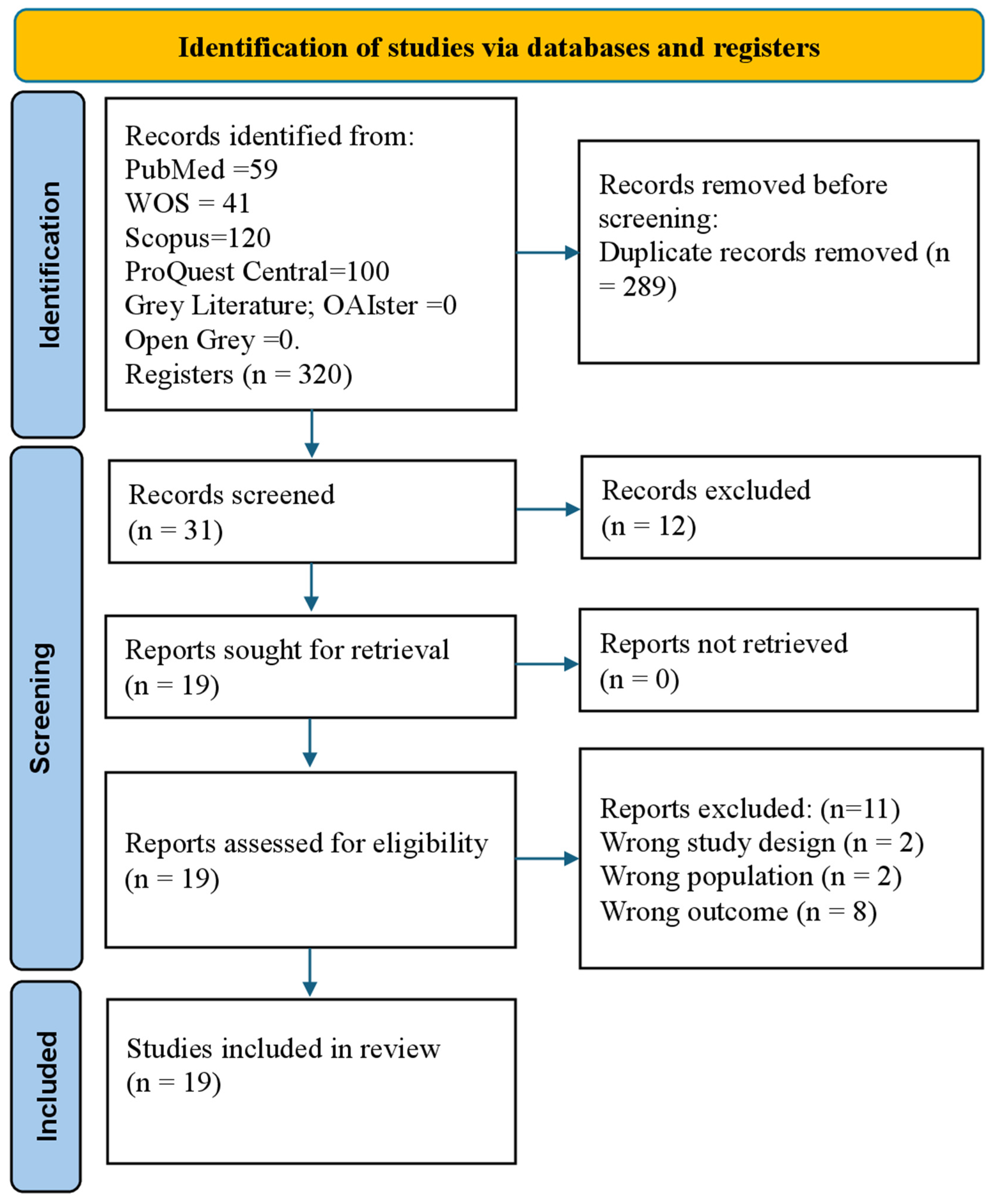
Self-Care Experiences of Individuals with Heart Failure: A Systematic Review and Metasynthesis



Abstract
1. Introduction
2. Methods
2.1. Design
2.2. Literature Search
2.3. Study Selection
2.4. Population and Context
2.5. Study Inclusion and Exclusion
2.6. Critical Appraisal
2.7. Data Extraction and Charting
2.8. Analysis and Synthesis
3. Findings
3.1. Study Characteristics
Themes
3.2. Analytical Theme 1: Adaptive and Technology-Supported Self-Management in Daily Life
3.3. Recognizing and Responding to Symptoms
3.4. Activity, Environment, and Routine Modification
3.5. Monitoring and Adjusting Behavior
3.6. Technology as a Self-Care Facilitator
3.7. Barriers to Technology Use
3.8. Emotional Impact of Symptoms
3.9. Identity and Role Changes
3.10. Analytical Theme 3: Social, Cultural, and Environmental Influences on Self-Care
3.11. Support and Guidance from Healthcare Providers
3.12. Social Support and Companionship
3.13. Cultural Contexts in Self-Care
3.14. Motivation Through Emotional and Cultural Connections
4. Discussion
4.1. Implications and Future Directions
4.2. Strengths and Limitations
5. Conclusions
Supplementary Materials
Author Contributions
Funding
Institutional Review Board Statement
Informed Consent Statement
Data Availability Statement
Conflicts of Interest
Abbreviations
| HF | Heart Failure |
| CHF | Chronic Heart Failure |
| SCHFI | Self-Care of Heart Failure Index |
| CASP | Critical Appraisal Skills Program |
References
- Aghajanloo, A.; Negarandeh, R.; Janani, L.; Tanha, K.; Hoseini-Esfidarjani, S. Self-care status in patients with heart failure: Systematic review and meta-analysis. Nurs. Open 2021, 8, 2235–2248. [Google Scholar] [CrossRef] [Scilit]
- Seid, S.S.; Amendoeira, J.; Ferreira, M.R. Self-care and quality of life among adult patients with heart failure: Scoping review. SAGE Open Nurs. 2023, 9, 23779608231193719. [Google Scholar] [CrossRef] [Scilit]
- Da Costa Ferreira Oberfrank, N.; D’Agostino, F.; Watkinson, E.; Takao Lopes, C.; D’Angelo, D.; Sanson, G. Effectiveness of Interventions to Improve Heart Failure Self-care: An Umbrella Review of Systematic Reviews. J. Cardiovasc. Nurs. 2025, 25, E133–E177. [Google Scholar] [CrossRef] [Scilit]
- Kleman, C.; Turrise, S.; Winslow, H.; Alzaghari, O.; Lutz, B.J. Individual and systems-related factors associated with heart failure self-care: A systematic review. BMC Nurs. 2024, 23, 110. [Google Scholar] [CrossRef] [Scilit]
- Harkness, K.; Spaling, M.A.; Currie, K.; Strachan, P.H.; Clark, A.M. A Systematic Review of Patient Heart Failure Self-care Strategies. J. Cardiovasc. Nurs. 2015, 30, 121–135. [Google Scholar] [CrossRef] [Scilit]
- Lovell, J.; Pham, T.; Noaman, S.Q.; Davis, M.C.; Johnson, M.; Ibrahim, J.E. Self-management of heart failure in dementia and cognitive impairment: A systematic review. BMC Cardiovasc. Disord. 2019, 19, 99. [Google Scholar] [CrossRef] [Scilit]
- Spaling, M.A.; Currie, K.; Strachan, P.H.; Harkness, K.; Clark, A.M. Improving support for heart failure patients: A systematic review to understand patients’ perspectives on self-care. J. Adv. Nurs. 2015, 71, 2478–2489. [Google Scholar] [CrossRef] [Scilit]
- Liu, S.; Li, J.; Wan Dyuan Li, R.; Qu, Z.; Hu, Y.; Liu, J. Effectiveness of eHealth Self-management Interventions in Patients With Heart Failure: Systematic Review and Meta-analysis. J. Med. Internet Res. 2022, 24, e38697. [Google Scholar] [CrossRef] [Scilit]
- Olofsson, S.; Josephsson, H.; Lundvall, M.; Lundgren, P.; Wireklint Sundström, B. Patient participation in self-monitoring regarding healthcare of heart failure: An integrated systematic review. BMC Prim. Care 2025, 26, 60. [Google Scholar] [CrossRef] [Scilit]
- Umeh, C.A.; Torbela, A.; Saigal, S.; Kaur, H.; Kazourra, S.; Gupta, R.; Shah, S. Telemonitoring in heart failure patients: Systematic review and meta-analysis of randomized controlled trials. World J. Cardiol. 2022, 14, 640. [Google Scholar] [CrossRef] [Scilit]
- Wang, C. Role of Telemedicine Intervention in the Treatment of Patients with Chronic Heart Failure: A Systematic Review and Meta-analysis. Anatol. J. Cardiol. 2024, 28, 177–186. [Google Scholar] [CrossRef] [Scilit]
- Bekele, F.; Tafese, L.; Demsash, A.W.; Tesfaye, H.; Labata, B.G.; Fekadu, G. Adherence to self-care practices and associated factors among heart failure patients in Ethiopia: A systematic review and meta-analysis. PLoS ONE 2023, 18, e0288824. [Google Scholar] [CrossRef] [Scilit]
- Bahrodi, P.S.; Safa, A.; Ajorpaz, N.M.; Avanji, F.S.I. Heart failure patients’ experiences of self-care neglect: A content analysis. BMC Cardiovasc. Disord. 2024, 24, 736. [Google Scholar] [CrossRef] [Scilit]
- Longhini, J.; Gauthier, K.; Konradsen, H.; Palese, A.; Kabir, Z.N.; Waldréus, N. The effectiveness of nursing interventions to improve self-care for patients with heart failure at home: A systematic review and meta-analysis. BMC Nurs. 2025, 24, 286. [Google Scholar] [CrossRef] [Scilit]
- Kyriakou, M.; Samara, A.; Philippou, K.; Lakatamitou, I.; Lambrinou, E. A qualitative meta-synthesis of patients with heart failure perceived needs. Rev. Cardiovasc. Med. 2021, 22, 853. [Google Scholar] [CrossRef] [Scilit]
- Li, Y.; Xiong, X.; Wang, H.; Chen, L.; Wu, R.; Zhang, M.; Xiang, Q.; Liu, S.; Chen, H.; Xiao, D.; et al. Positive psychological experiences in chronic heart failure: A qualitative meta-synthesis. J. Adv. Nurs. 2025, 81, 8564–8578. [Google Scholar] [CrossRef] [Scilit]
- Sandelowski, M.; Docherty, S.; Emden, C. Focus on qualitative methods. Qualitative metasynthesis: Issues and techniques. Res. Nurs. Health 1997, 20, 365–371. [Google Scholar] [CrossRef] [PubMed]
- Thorne, S.; Jensen, L.; Kearney, M.H.; Noblit, G.; Sandelowski, M. Qualitative metasynthesis: Reflections on methodological orientation and ideological agenda. Qual. Health Res. 2004, 14, 1342–1365. [Google Scholar] [CrossRef] [Scilit] [PubMed]
- Finfgeld-Connett, D.; Johnson, E.D. Literature search strategies for conducting knowledge-building and theory-generating qualitative systematic reviews. J. Adv. Nurs. 2013, 69, 194–204. [Google Scholar] [CrossRef] [Scilit] [PubMed] [PubMed Central]
- Lachal, J.; Revah-Levy, A.; Orri, M.; Moro, M.R. Metasynthesis: An Original Method to Synthesize Qualitative Literature in Psychiatry. Front. Psychiatry 2017, 8, 269. [Google Scholar] [CrossRef] [Scilit]
- Thorne, S. Metasynthetic Madness: What Kind of Monster Have We Created? Qual. Health Res. 2017, 27, 3–12. [Google Scholar] [CrossRef] [Scilit]
- Sim, J.; Mengshoel, A.M. Metasynthesis: Issues of empirical and theoretical context. Qual. Quant. 2023, 57, 3339–3361. [Google Scholar] [CrossRef] [Scilit]
- Page, M.J.; McKenzie, J.E.; Bossuyt, P.M.; Boutron, I.; Hoffmann, T.C.; Mulrow, C.D.; Shamseer, L.; Tetzlaff, J.M.; Akl, E.A.; Brennan, S.E.; et al. The PRISMA 2020 statement: An updated guideline for reporting systematic reviews. BMJ 2021, 372, n71. [Google Scholar] [CrossRef] [Scilit]
- Rossi, L.P.; Granger, B.B.; Bruckel, J.T.; Crabbe, D.L.; Graven, L.J.; Newlin, K.S.; Streur, M.M.; Vadiveloo, M.K.; Walton-Moss, B.J.; Warden, B.A.; et al. Person-centered models for cardiovascular care: A review of the evidence: A scientific statement from the American Heart Association. Circulation 2023, 148, 512–542. [Google Scholar] [CrossRef] [Scilit]
- Goldfarb, M.J.; Saylor, M.A.; Bozkurt, B.; Code, J.; Di Palo, K.E.; Durante, A.; Flanary, K.; Masterson Creber, R.; Ogunniyi, M.O.; Rodriguez, F.; et al. Patient-centered adult cardiovascular care: A scientific statement from the American Heart Association. Circulation 2024, 149, e1176-88. [Google Scholar] [CrossRef] [Scilit]
- Gusenbauer, M.; Gauster, S.P. How to search for literature in systematic reviews and meta-analyses: A comprehensive step-by-step guide. Technol. Forecast. Soc. Change 2025, 212, 123833. [Google Scholar] [CrossRef] [Scilit]
- Aloudah, N.M. Qualitative research in the Arabic language. When should translations to English occur? A literature review. Explor. Res. Clin. Soc. Pharm. 2022, 6, 100153. [Google Scholar] [CrossRef] [Scilit]
- Neimann Rasmussen, L.; Montgomery, P. The prevalence of and factors associated with inclusion of non-English language studies in Campbell systematic reviews: A survey and meta-epidemiological study. Syst. Rev. 2018, 7, 129. [Google Scholar] [CrossRef] [Scilit]
- Morrison, A.; Polisena, J.; Husereau, D.; Moulton, K.; Clark, M.; Fiander, M.; Mierzwinski-Urban, M.; Clifford, T.; Hutton, B.; Rabb, D. The effect of English-language restriction on systematic review-based meta-analyses: A systematic review of empirical studies. Int. J. Technol. Assess. Health Care 2012, 28, 138–144. [Google Scholar] [CrossRef] [Scilit]
- Amano, T.; Berdejo-Espinola, V. Language barriers in conservation: Consequences and solutions. Trends Ecol. Evol. 2025, 40, 273–285. [Google Scholar] [CrossRef] [Scilit]
- Dobrescu, A.I.; Nussbaumer-Streit, B.; Klerings, I.; Wagner, G.; Persad, E.; Sommer, I.; Herkner, H.; Gartlehner, G. Restricting evidence syntheses of interventions to English-language publications is a viable methodological shortcut for most medical topics: A systematic review. J. Clin. Epidemiol. 2021, 137, 209–217. [Google Scholar] [CrossRef] [Scilit]
- Helbach, J.; Pieper, D.; Mathes, T.; Rombey, T.; Zeeb, H.; Allers, K.; Hoffmann, F. Restrictions and their reporting in systematic reviews of effectiveness: An observational study. BMC Med. Res. Methodol. 2022, 22, 230. [Google Scholar] [CrossRef] [Scilit]
- Meline, T. Selecting Studies for Systemic Review: Inclusion and Exclusion Criteria. Contemp. Issues Commun. Sci. Disord. 2006, 33, 21–27. [Google Scholar] [CrossRef] [Scilit]
- Hannah, A.L.; David, P.F.; Joanna, M.B. Optimising-the-value-of-the-critical-appraisal-skills-programme-casp-tool-for-quality-appraisal-in.pdf. Res. Methods Med. Health Sci. 2020, 1, 31–42. [Google Scholar]
- Walthall, H.; Jenkinson, C.; Boulton, M. Living with breathlessness in chronic heart failure: A qualitative study. J. Clin. Nurs. 2017, 26, 2036–2044. [Google Scholar] [CrossRef] [Scilit] [PubMed]
- Chew, H.S.J.; Sim, K.L.D.; Cao, X.; Chair, S.Y. Motivation, Challenges and Self-Regulation in Heart Failure Self-Care: A Theory-Driven Qualitative Study. Int. J. Behav. Med. 2019, 26, 474–485. [Google Scholar] [CrossRef] [Scilit] [PubMed]
- Amirova, A.; Lucas, R.; Cowie, M.R.; Haddad, M. Perceived barriers and enablers influencing physical activity in heart failure: A qualitative one-to-one interview study. PLoS ONE 2022, 17, e0271743. [Google Scholar] [CrossRef] [Scilit] [PubMed]
- Ivynian, S.E.; Ferguson, C.; Newton, P.J.; DiGiacomo, M. Factors influencing care-seeking delay or avoidance of heart failure management: A mixed-methods study. Int. J. Nurs. Stud. 2020, 108, 103603. [Google Scholar] [CrossRef] [Scilit] [PubMed]
- Koontalay, A.; Botti, M.; Hutchinson, A. Illness perceptions of people living with chronic heart failure and limited community disease management. J. Clin. Nurs. 2024, 33, 4100–4111. [Google Scholar] [CrossRef] [Scilit] [PubMed]
- Neumann, A.; Steiner, B.; Verket, M.; Kanna, N.D.; Hill, L.; McNulty, A.; Boyne, J.J.; Murphy, M.; Maaser, Y.; Fitzsimons, D.; et al. Patients’ expectations and experiences with the usage of a self-care application for heart failure: A qualitative interview study. Digit. Health 2024, 10, 20552076241299649. [Google Scholar] [CrossRef] [Scilit]
- Chai, P.R.; Kaithamattam, J.J.; Chung, M.; Tom, J.J.; Goodman, G.R.; Hasdianda, M.A.; Carnes, T.C.; Vaduganathan, M.; Scirica, B.M.; Schnipper, J.L. Formative perceptions of a digital pill system to measure adherence to heart failure pharmacotherapy: Mixed methods study. JMIR Cardio 2024, 8, e48971. [Google Scholar] [CrossRef] [Scilit]
- Dickens, C.; Dickson, V.V.; Piano, M.R. Perceived stress among patients with heart failure who have low socioeconomic status: A mixed-methods study. J. Cardiovasc. Nurs. 2019, 34, E1–E8. [Google Scholar] [CrossRef] [Scilit] [PubMed]
- Son, Y.J.; Oh, S.; Kim, E.Y. Patients’ needs and perspectives for using mobile phone interventions to improve heart failure self-care: A qualitative study. J. Adv. Nurs. 2020, 76, 2380–2390. [Google Scholar] [CrossRef] [PubMed]
- Trenta, A.M.; Luciani, M.; Moro, M.; Patella, S.; Di Mauro, S.; Vellone, E.; Ausili, D. Self-care in adults with a retro-auricular left ventricular assist device: An interpretive description. Clin. Nurs. Res. 2022, 31, 553–562. [Google Scholar] [CrossRef] [Scilit]
- Johnston, W.; Keogh, A.; Dickson, J.; Leslie, S.J.; Megyesi, P.; Connolly, R.; Burke, D.; Caulfield, B. Human-Centred Design Of A Digital Health Tool To Promote Effective Self-Care In Heart Failure Patients: Mixed Methods Study. JMIR Form. Res. 2022, 6, e34257. [Google Scholar] [CrossRef] [Scilit]
- Myers, S.L.; Siegel, E.O.; Hyson, D.A.; Bidwell, J.T. A qualitative study exploring the perceptions and motivations of patients with heart failure who transitioned from non-adherence to adherence. Heart Lung 2020, 49, 817–823. [Google Scholar] [CrossRef] [Scilit] [PubMed]
- Surikova, J.; Payne, A.; Miller, K.L.; Ravaei, A.; Nolan, R.P. A cultural and gender-based approach to understanding patient adjustment to chronic heart failure. Health Qual. Life Outcomes 2020, 18, 238. [Google Scholar] [CrossRef] [Scilit]
- Guidotti, E.; Pennucci, F.; Valleggi, A.; De Rosis, S.; Passino, C. A longitudinal assessment of chronic care pathways in real-life: Self-care and outcomes of chronic heart failure patients in Tuscany. BMC Health Serv. Res. 2022, 22, 1146. [Google Scholar] [CrossRef] [Scilit] [PubMed]
- Seckin, M.; Petrie, M.C.; Stewart, S.; Johnston, B.M. Descriptive qualitative study of breathlessness and its management of Turkish individuals with self-reported heart failure. BMJ Open 2024, 14, e088335. [Google Scholar] [CrossRef] [Scilit]
- Radhakrishnan, K.; Baranowski, T.; O’Hair, M.; Fournier, C.A.; Spranger, C.B.; Kim, M.T. Personalizing sensor-controlled digital gaming to self-management needs of older adults with heart failure: A qualitative study. Games Health J. 2020, 9, 304–310. [Google Scholar] [CrossRef] [Scilit] [PubMed]
- Celano, C.M.; Beale, E.E.; Freedman, M.E.; Mastromauro, C.A.; Feig, E.H.; Park, E.R.; Huffman, J.C. Positive psychological constructs and health behavior adherence in heart failure: A qualitative research study. Nurs. Health Sci. 2020, 22, 620–628. [Google Scholar] [CrossRef] [Scilit]
- Hall, A.K.; Dodd, V.; Harris, A.; McArthur, K.; Dacso, C.; Colton, L.M. Heart failure patients’ perceptions and use of technology to manage disease symptoms. Telemed. e-Health 2014, 20, 324–331. [Google Scholar] [CrossRef] [Scilit] [PubMed]
- Carroll, A.J.; Hahn, E.A.; Grady, K.L. Research engagement and experiences of patients pre- and post-implant of a left ventricular assist device from the mechanical circulatory support measures of adjustment and quality of life (MCS A-QOL) study. Qual. Life Res. 2022, 31, 2457–2470. [Google Scholar] [CrossRef] [Scilit] [PubMed]
- Younas, A.; Ali, P. Five tips for developing useful literature summary tables for writing review articles. Evid.-Based Nurs. 2021, 24, 32–34. [Google Scholar] [CrossRef] [Scilit] [PubMed]
- Thomas, J.; Harden, A. Methods for the thematic synthesis of qualitative research in systematic reviews. BMC Med. Res. Methodol. 2008, 8, 45. [Google Scholar] [CrossRef] [Scilit] [PubMed]
- Aimo, A.; Teresi, L.; Castiglione, V.; Picerni, A.L.; Niccolai, M.; Severino, S.; Agazio, A.; Carnevale Baraglia, A.; Obici, L.; Palladini, G.; et al. Patient-reported outcome measures for transthyretin cardiac amyloidosis: The ITALY study. Amyloid 2024, 31, 52–61. [Google Scholar] [CrossRef] [Scilit]


| Was There a Clear Statement of the Aims of the Research? | Is a Qualitative Methodology Appropriate? | Was the Research Design Appropriate to Address the Aims of the Research? | Was the Recruitment Strategy Appropriate to the Aims of the Research? | Was the Data Collected in a Way that Addressed the Research Issue? | Has the Relationship Between Researcher and Participants been Adequately Considered? | Have Ethical Issues been Taken into Consideration? | Was the Data Analysis Sufficiently Rigorous? | Is there a Clear Statement of Findings? | How Valuable Is the Research? | Total | |
|---|---|---|---|---|---|---|---|---|---|---|---|
| [35] (Walthall, Jenkinson, & Boulton, 2017) | Y | Y | Y | Y | Y | N | Y | C | Y | Y | High Quality |
| [36] (Chew, Sim, Cao, & Chair, 2019) | Y | Y | Y | Y | Y | Y | Y | C | Y | Y | High Quality |
| [37] (Amirova et al., 2022) | Y | Y | N | Y | Y | Y | Y | Y | Y | Y | High Quality |
| [38] (Ivynian et al., 2020) | Y | Y | Y | C | C | Y | Y | C | Y | Y | High Quality |
| [39] (Koontalay, Botti, & Hutchinson, 2024) | Y | Y | Y | C | Y | C | Y | Y | Y | Y | High Quality |
| [40] (Neumann et al., 2024) | Y | Y | N | Y | Y | Y | Y | Y | Y | Y | High Quality |
| [41] (Chai et al., 2024) | Y | C | N | Y | Y | N | Y | C | Y | Y | Low Quality |
| [42] (Dickens, Dickson, & Piano, 2019) | Y | C | C | Y | Y | Y | Y | N | Y | Y | Low Quality |
| [43] (Son, Oh, & Kim, 2020) | Y | Y | C | Y | Y | Y | Y | Y | Y | Y | High Quality |
| [44] (Trenta et al., 2022) | Y | Y | Y | Y | Y | Y | Y | Y | Y | Y | High Quality |
| [45] (Johnston et al., 2022) | Y | Y | C | C | Y | C | Y | Y | Y | Y | High Quality |
| [46] (Myers et al., 2020) | Y | Y | Y | Y | Y | Y | Y | Y | Y | Y | High Quality |
| [47] (Surikova et al., 2020) | Y | C | C | Y | Y | C | Y | Y | Y | Y | Low Quality |
| [48] (Guidotti et al., 2022) | Y | C | C | Y | Y | C | Y | C | Y | Y | Low Quality |
| [49] (Seckin et al., 2024) | Y | Y | Y | Y | Y | Y | Y | Y | Y | Y | High Quality |
| [50] (Radhakrishnan et al., 2020) | Y | C | Y | C | Y | C | Y | C | Y | Y | Low Quality |
| [51] (Celano et al., 2020) | Y | Y | Y | C | Y | C | Y | C | Y | Y | Low Quality |
| [52] (Hall et al., 2014) | Y | N | C | C | C | N | Y | N | Y | Y | Low Quality |
| [53] (Carroll, Hahn, & Grady, 2022) | Y | C | C | Y | Y | Y | C | C | Y | Y | Low Quality |
| Authors/Year/Country | Purpose | Reported Definitions in the Reviewed Literature | Methods |
|---|---|---|---|
| [35] (Walthall, Jenkinson, & Boulton, 2017) United Kingdom | To explore how patients with CHF describe their experiences of breathlessness, its pattern, impact on daily life, and self-management strategies. | Dyspnea, breathlessness | Design: Descriptive qualitative Sample: Patients with heart failure with reduced ejection fraction (HF-REF), mean age 72.7, 60% male. Sample Size: 25 Sampling Technique: Purposive Data Collection: Semi-structured interviews at participants’ homes (45–90 min) Data Analysis: Braun & Clarke’s 6-step thematic analysis |
| [36] (Chew, Sim, Cao, & Chair, 2019) Singapore | This study aimed to adopt the TST as a guiding framework to explore the underlying mechanism by which HF self-care behavior improves. | Self-care | Design: Descriptive qualitative Sample: Patients with heart failure, mean age 56.1, 76.5% male. Sample size: 17 Sampling Technique: Purposive Data Collection: Unstructured interviews conducted in a hospital setting (15–42 min) Data Analysis: Braun & Clarke’s 6-step thematic analysis |
| [37] (Amirova et al., 2022) United Kingdom | To expand the understanding of the barriers and enablers to physical activity in older adults (≥70 years old) living with HF. And to explore perceived clinical, environmental, and psychosocial barriers and enablers in older adults living with HF. | Not provided | Design: Descriptive qualitative design with phenomenological–hermeneutic approach Sample: 16 participants with a mean age of 79.19 (SD = 5.15), four of whom were women, and 12 were men. Sample Size: 16 Sampling Technique: Purposive Data Collection: One-to-one interviews were conducted face-to-face in a research room available at RBHT (n = 6), a vacant consultancy room (n = 6) and via phone (n = 4). All interviews were audio-recorded and transcribed verbatim. Interview durations ranged between 15 and 85 min. Data Analysis: Five steps of Theoretical Domains Framework-based interviews. |
| [38] (Ivynian et al., 2020) Australia | To assess patient-related factors thought to impact care-seeking, and examine the role of previous healthcare experiences in decisions to seek or avoid professional care. | Care-seeking | Design: Exploratory sequential mixed methods, with qualitative phenomenological emphasis. Sample: Patients diagnosed with heart failure. 72 participants were recruited (Refer to Table 1). The mean age was 61 ± 15 years (range 21–91 years). Most participants were male (68%) and Caucasian (71%). Participants (n = 15) who completed interviews were mostly male (n = 10), and the mean age was slightly younger than the entire cohort (58 ± 10 vs. 61 ± 15 years). Sample Size: 72(quantitative),15(qualitative) Sampling Technique: Purposive Data Collection: 1. Participants completed a series of self-report questionnaires. 2. Semi-structured, in-depth interviews were conducted to elicit information about previous care-seeking experiences and factors contributing to decisions to seek or avoid professional care. Interviews lasted 31–95 min in duration, were audio-recorded, and transcribed verbatim. Data Analysis: Qualitative data were analyzed using interpretative phenomenological analysis and interpreted in the context of quantitative findings. |
| [39] (Koontalay, Botti, & Hutchinson, 2024) Thailand | To explore the cognitive representations and emotional responses to living with chronic heart failure of people receiving limited community disease management. | Not provided | Design: Descriptive qualitative Sample: 20 hospitalized adults with CHF (16 men, 4 women; aged 42–78 years; duration of CHF: 1–30 years) in Thailand. Sample Size: 20 Sampling Technique: Purposive Data Collection: Semi-structured face-to-face interviews (30–45 min), conducted in Thai, audio-recorded, and translated to English. Data Analysis: Thematic content analysis (aligned with Leventhal’s model), reflexive thematic analysis for emotional responses. |
| [40] (Neumann et al., 2024) Germany, Ireland, The Netherlands, United Kingdom | To explore HF patients’ expectations, experiences, and usage behaviors regarding a self-care app (DoctorME), evaluating its role as a digital health tool in chronic HF management. | Not provided | Design: Longitudinal qualitative Sample: 83 HF patients (initial: 38; post: 45; male: initial 84%/post 78%; aged 60–69; NYHA Class I predominant). Sample Size: 83 Sampling Technique: Purposive maximum variation (age, gender, HF severity). Data Collection: Semi-structured interviews (mean duration: initial 33 min/post 23 min; face-to-face/phone/virtual; multilingual transcription). Data Analysis: Qualitative content analysis (Mayring’s approach), deductive-inductive coding (MAXQDA); inter-coder agreement. |
| [41] (Chai et al., 2024) USA | To explore the facilitators and barriers to using DPS technology to monitor pharmacotherapy adherence among patients with HF. | Not provided | Design: Mixed methods study (qualitative interviews + quantitative assessments). Qualitative design not stated. Sample: 20 HF patients (11 female, 9 males; mean age 68 years) Sample Size: 20 Sampling Technique: Convenience Data collection: Audio-recorded interviews (23–64 min) and Quantitative surveys. Data Analysis: Thematic analysis |
| [42] (Dickens, Dickson, & Piano, 2019) USA | To describe the influence of stress and social determinants of health on self-care in patients with HF who have low SES. | Social determinants of health | Design: Mixed-methods (concurrent embedded design); qualitative design not stated Sample: 35 adults (17 women, 18 men; 91.4% African American; age 36–89; low SES/homeless) Sample Size: 35 Sampling Technique: Purposive Data Collection: 1. Participants completed a series of self-report questionnaires. 2. Semi-structured face-to-face interviews (~90 min) Data Analysis: Content analysis (inductive + deductive). |
| [43] (Son, Oh, & Kim, 2020) South Korea | To explore heart failure patients’ needs and perspectives for using mobile health technology at home before developing a mobile phone-based heart failure self-care intervention | Mobile health | Design: Descriptive qualitative Sample: 20 adults (8 women, 12 men; age 30–80+) with chronic HF (NYHA Class I–II). Sample Size: 20 Sampling Technique: Purposive Data Collection: Semi-structured face-to-face interviews (average 100 min) in patients’ homes/outpatient clinics. Data Analysis: Content analysis |
| [44] (Trenta et al., 2021) Italy | To explore and describe the experience of self-care in adults with a retro-auricular left ventricular assist device (LVAD). | Self-care, self-care self-efficacy | Design: Interpretive description Sample: 9 men, 1 woman (ages 54–79; predominantly older Italian men with retro-auricular LVADs) Sample Size: 10 Sampling technique: Purposive Data Collection: Face-to-face semi-structured interviews and field notes Data Analysis: Interpretive Description |
| [45] (Johnston et al., 2022) Irealand | To design and evaluate a digital health tool (DHT) using human-centered design (HCD) to promote effective self-care in heart failure (HF) patients. | Not provided | Design: Mixed methods (HCD framework: empathize, ideate, design, develop, test). Qualitative design not stated. Sample: 19 patients, 6 women and 13 men, age range: 36–84 (study 1: interviews); 9 patients, 4 women and 5 men, age range: 54–91 (study 2: testing) Sample Size: 19 (qualitative), 9 (pilot) Sampling Technique: Purposeful (study 1), convenience (study 2) Data Collection: Semi-structured interviews, Fitbit activity trackers, smart scales, mobile app usage data Data Analysis: Thematic analysis (Braun & Clarke), quantitative adherence metrics (SUS, WTMS, CRS scores). |
| [46] (Myers et al., 2020) USA | To explore perceptions and motivations of HF patients who transitioned from non-adherence to adherence in self-care behaviors. | Perception, motivation | Design: Qualitative descriptive Sample: 8 HF patients (7 men, 1 woman; age 60–90; 5 Caucasian, 3 other ethnicities; 7 with HFrEF, all NYHA Class III) Sample Size: 8 Sampling Technique: Purposive Data collection: Semi-structured interviews (60 min, audio-recorded) Data Analysis: Braun & Clarke’s 6-step thematic analysis |
| [47] (Surikova et al., 2020) Canada | To identify cultural and gender considerations that might present intervention opportunities in order to improve self-care adherence and quality of life among chronic heart failure (CHF) patients. | Chronic heart failure | Design: Qualitative descriptive Sample: 30 CHF patients (67% male; 8 Black, 9 Chinese, 6 South Asian, 7 Caucasian). Sample Size: 30 Sampling Technique: Purposive Data Collection: Semi-structured interviews (60 min) on CHF experiences, lifestyle impact, and QoL Data Analysis: Thematic content analysis using NVivo 11. |
| [48] (Guidotti et al., 2022) Italy | To explore whether chronic heart failure (CHF) patients’ adherence to pharmaceutical therapies and self-care behavior recommendations changes across their care pathway and time, using Patient-Reported Outcome Measures (PROMs). | Adherence to long-term therapy | Design: Longitudinal mixed-methods (quantitative PROMs + qualitative open-text responses). Qualitative design not stated. Sample: CHF patients (75.86% male, mean age 71 ± 11 years, 64.94% retired) Sample Size: Baseline: 174; Follow-ups: 151 (1 month), 130 (7 months), 122 (12 months). Sampling Technique: Purposive Data Collection: Digital surveys at baseline and 1/7/12 months post-discharge. 1. Quantitative: SCHFI, KCCQ-12 (health status), PREMs (experience). 2. Qualitative: Open-ended questions on care experiences. Data Analysis: 1. Quantitative: Chi-Square, t-tests, multivariate regression (STATA15). 2. Qualitative: Thematic analysis (NVivo10®), word frequency coding. |
| [49] (Seckin et al., 2024) Turkey | To explore the experiences of Turkish individuals with heart failure, focusing on breathlessness symptoms, self-management strategies, and socio-cultural-behavioral contexts. | Not provided | Design: Qualitative descriptive Sample: 20 Turkish adults with self-reported heart failure and breathlessness (11 women, 9 men; mean age 55.5 ± 16.2 years). Sample Size: 20 Sampling Technique: Purposive, snowball Data Collection: Semi-structured interviews (11 face-to-face, 6 telephone, 3 email, 21–65 min). Audio-recorded, transcribed, and translated (Turkish to English) Data Analysis: Braun & Clarke’s 6-step thematic analysis |
| [50] (Radhakrishnan et al., 2020) USA | To explore perceptions and expectations of older adults with heart failure (HF) regarding sensor-controlled digital games (SCDGs) for HF self-management, focusing on personalization, usability, and motivational features. | Not provided | Design: Qualitative descriptive Sample: 15 patients with HF (53% women; age range, 53–90 years; 60% white). Sample Size: 15 Sampling Technique: Purposive Data Collection: Semi-structured interviews (30–45 min) in clinic or participant’s home. Data Analysis: Thematic analysis: inductive coding (Microsoft Word/Excel). |
| [51] (Celano et al., 2020) USA | To explore positive psychological constructs in heart failure (HF) patients and their perceived links to health behavior adherence | Not provided | Design: Qualitative descriptive Sample: 30 patients with HF (23 women, 7 men; Mean age: 67 years (SD 13.1)). Sample Size: 30 participants (baseline); 25 completed 3-month follow-up. Sampling Technique: Purposive Data Collection: 1. Baseline: Semi-structured interviews (20 in-person, 10 via phone). 2. Follow-up: Phone interviews at 3 months. Audio-recorded, transcribed, field notes. Data Analysis: Directed content analysis |
| [52] (Hall et al., 2014) USA | To explore heart failure (HF) patients’ perceptions and current use of technology for managing HF symptoms, and identify barriers/facilitators to technology adoption. | Not provided | Design: Descriptive qualitative Sample: 15 adults with an age range of 45–82 years; mean:64.43 years (SD 10.28). Sample Size: 15 Sampling Technique: Convenience Data Collection: Semi-structured interviews (10–30 min). Audio-recorded, transcribed verbatim. Data Analysis: Constant comparative method |
| [53] (Carroll, Hahn, & Grady, 2022) USA | To evaluate research engagement and experiences of adults with mechanical circulatory support (MCS) pre- and post-LVAD implant, focusing on health-related quality of life (HRQOL) assessments. | Not provided | Design: Mixed-methods (quantitative structured interviews + qualitative open-ended responses). Qualitative design not stated. Sample: Patients with advanced heart failure receiving or awaiting LVAD implantation (78% male, mean age ~60) Sample Size: 687 Sampling Technique: Convenience Data Collection: 1. Quantitative: Debrief interview with structured items (e.g., Likert scales on difficulty and experience) 2. Qualitative: Open-ended questions on questionnaire experiences and suggestions Data Analysis: 1. Quantitative: Descriptive stats, chi-square, t-tests. 2. Qualitative: Thematic analysis with coding agreement (kappa > 0.70) |
| Analytical Theme | Supporting Studies | Descriptive Theme | Codes |
|---|---|---|---|
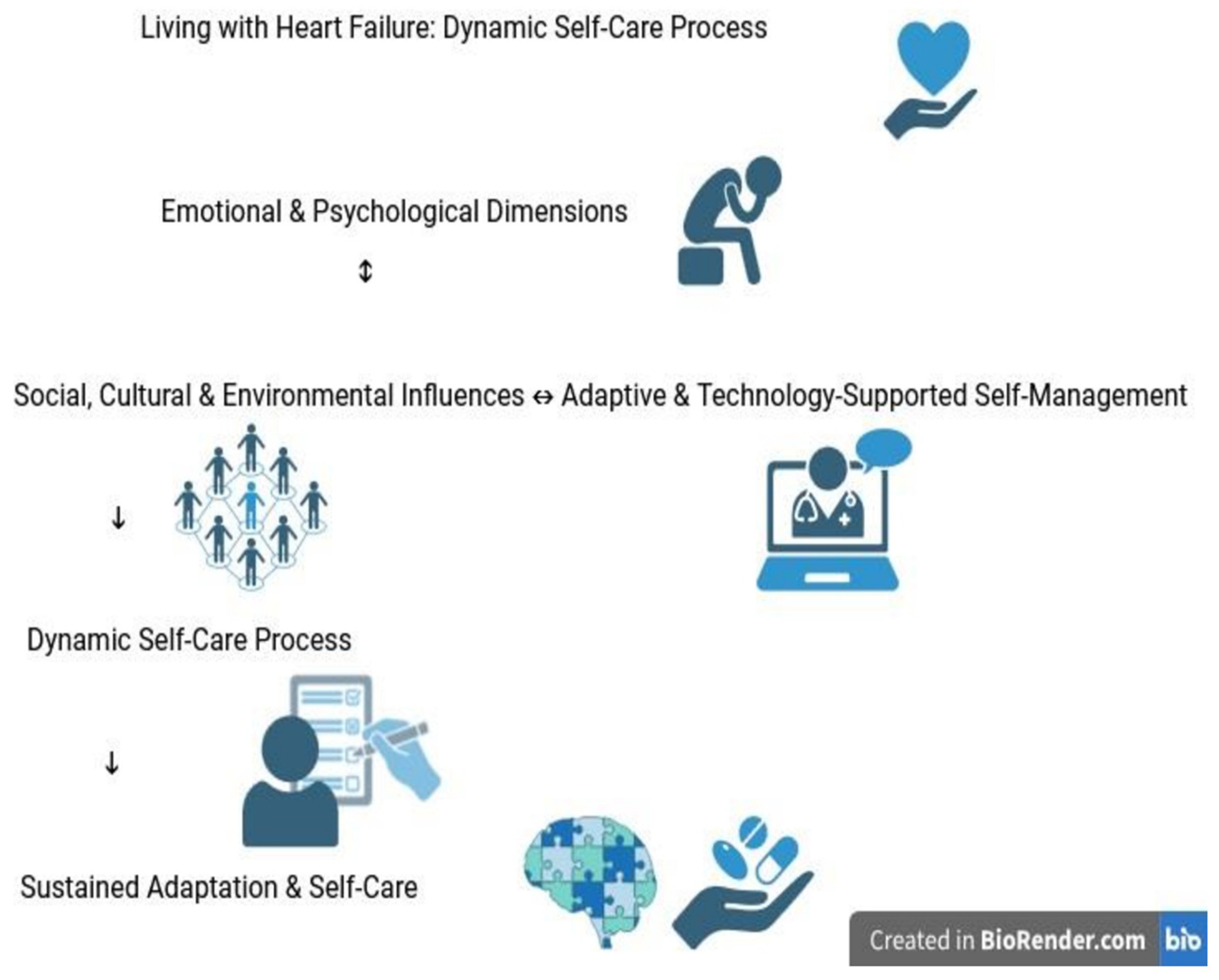
| 1. Adaptive and Technology-Supported Self-Management in Daily Life | [35,36,37,38,40,43,44,45,47,48,49,50,51,52] | Recognizing and Responding to Symptoms | Developing Symptom Awareness Anticipating and Preparing for Symptoms Cultural Framing of Symptom Interpretation |
| Activity, Environment, and Routine Modification | Strategically Conserving Energy for Daily Functioning Modifying the Physical Environment to Reduce Strain Integrating Culturally Meaningful Activities into Routines | ||
| Monitoring and Adjusting Behavior | Employing Self-Monitoring Tools to Track Health Status Modifying Daily Activities in Response to Monitoring Data Building Confidence and Acceptance in Technology Use | ||
| Coping with Challenges and Temptations | Actively Avoiding Foods that Exacerbate Symptoms Replacing Risky Choices with Health-Supportive Alternatives Balancing Occasional Indulgence with Corrective Self-Management | ||
| Technology as a Self-Care Facilitator | Leveraging Digital Reminders to Support Adherence Utilizing Digital Platforms for Tracking and Achieving Health Goals Adapting Technology to Align with Cultural Values and Practices | ||
| Barriers to Technology Use | Limited Digital Literacy Restricting Effective Technology Use Reliance on In-Person Communication over Digital Alternatives Skepticism Toward the Usefulness and Reliability of Technology | ||
| 2. Emotional and Psychological Dimensions of Self-Care | [35,36,37,38,39,41,42,47,49] | Emotional Impact of Symptoms | Fear of Health Deterioration and Mortality Anxiety Driven by the Unpredictability of Symptoms Cultural and Spiritual Interpretations Shaping Emotional Responses |
| Identity and Role Changes | Emotional Distress from Reduced Autonomy Emotional Impact of Being Unable to Fulfill Culturally Significant Roles Perceived Burden and Declining Sense of Social Value | ||
| 3. Social, Cultural, and Environmental Influences on Self-Care | [37,38,39,40,41,43,44,45,46,48,49,50,53] | Support and Guidance from Healthcare Providers | Motivation through Trusted Professional Support Building Confidence through Professional Reassurance Enhancing Self-Care through Culturally Sensitive Guidance |
| Social Support and Companionship | Strengthening Motivation through Shared Physical Activity Emotional and Practical Reinforcement from Social Networks Restrictive Effects of Overprotective Caregiving | ||
| Cultural Contexts in Self-Care | Dietary Choices Shaped by Social Expectations and Obligations Managing Self-Care Amid Festive and Seasonal Food Traditions Respect for Elders and Traditional Practices Guiding Dietary Behaviors | ||
| Motivation through Emotional and Cultural Connections | Family Care as a Source of Motivation for Self-Care Safeguarding Children’s Well-Being as a Driver of Self-Care Self-Care as Fulfillment of Cultural and Familial Responsibilities |
Disclaimer/Publisher’s Note: The statements, opinions and data contained in all publications are solely those of the individual author(s) and contributor(s) and not of MDPI and/or the editor(s). MDPI and/or the editor(s) disclaim responsibility for any injury to people or property resulting from any ideas, methods, instructions or products referred to in the content. |
© 2026 by the authors. Licensee MDPI, Basel, Switzerland. This article is an open access article distributed under the terms and conditions of the Creative Commons Attribution (CC BY) license.
Share and Cite
Ahmad, I.; Bielecka-Dabrowa, A.; Subashi, B.; Chen, Y. Self-Care Experiences of Individuals with Heart Failure: A Systematic Review and Metasynthesis. J. Clin. Med. 2026, 15, 6723. https://doi.org/10.3390/jcm15176723
Ahmad I, Bielecka-Dabrowa A, Subashi B, Chen Y. Self-Care Experiences of Individuals with Heart Failure: A Systematic Review and Metasynthesis. Journal of Clinical Medicine. 2026; 15(17):6723. https://doi.org/10.3390/jcm15176723
Chicago/Turabian StyleAhmad, Israr, Agata Bielecka-Dabrowa, Brunilda Subashi, and Yi Chen. 2026. "Self-Care Experiences of Individuals with Heart Failure: A Systematic Review and Metasynthesis" Journal of Clinical Medicine 15, no. 17: 6723. https://doi.org/10.3390/jcm15176723
APA StyleAhmad, I., Bielecka-Dabrowa, A., Subashi, B., & Chen, Y. (2026). Self-Care Experiences of Individuals with Heart Failure: A Systematic Review and Metasynthesis. Journal of Clinical Medicine, 15(17), 6723. https://doi.org/10.3390/jcm15176723