Development of a Multidomain Conceptual Framework for Frozen Shoulder: A Systematic Review Integrating Clinical, Biological, Psychological and Lifestyle-Related Contributors

 ,
,  , , and
Abstract
1. Introduction
2. Methods
2.1. Study Design and Reporting Framework
2.2. Search Strategy and Source Selection
2.3. Study Selection and Eligibility Criteria
2.4. Analytic Classification
2.5. Domain Definition and Predictor Reassignment
2.6. Data Extraction
2.7. Risk of Bias and Methodological Quality
2.8. Evidence Synthesis and Weighting Procedure
2.9. Prototype Operational Scoring Model
2.10. Handling of Missing Data and Sensitivity Specification
2.11. Worked Example
3. Results
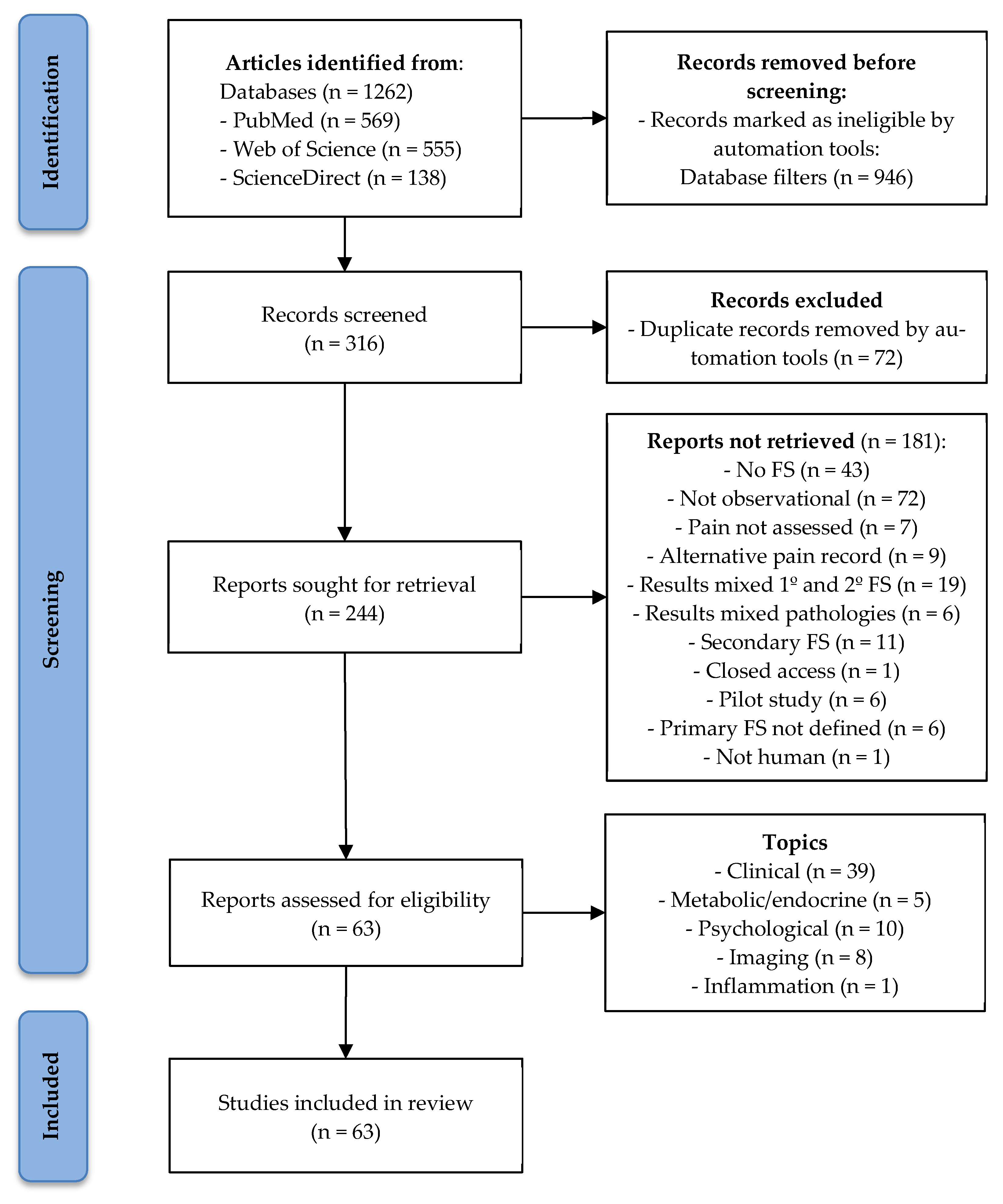
3.1. Search and Study Selection
3.2. Study Characteristics
3.3. Risk of Bias and Methodological Quality
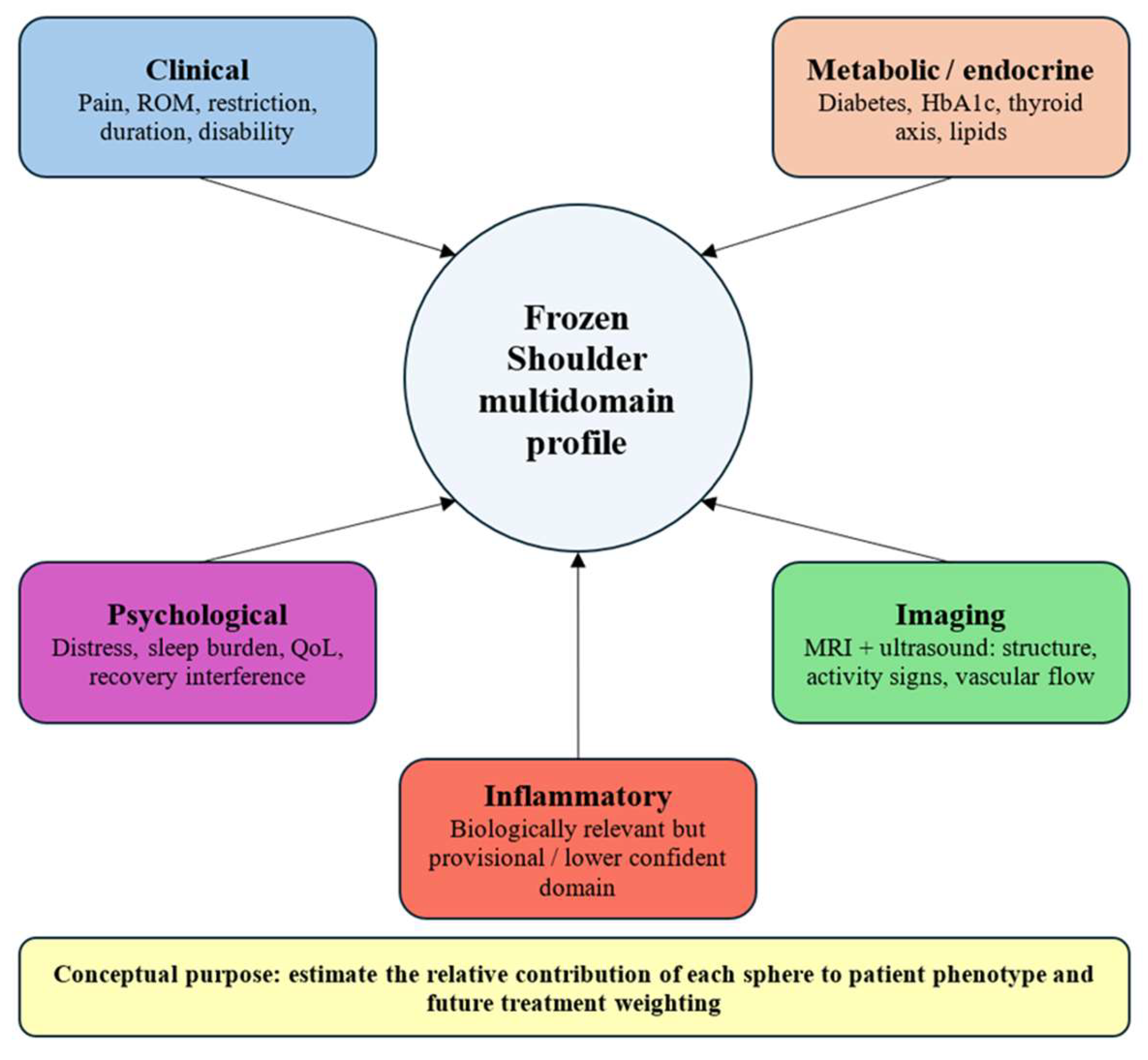
3.4. Final Multidomain Architecture
3.5. Domain-Level Evidence Synthesis
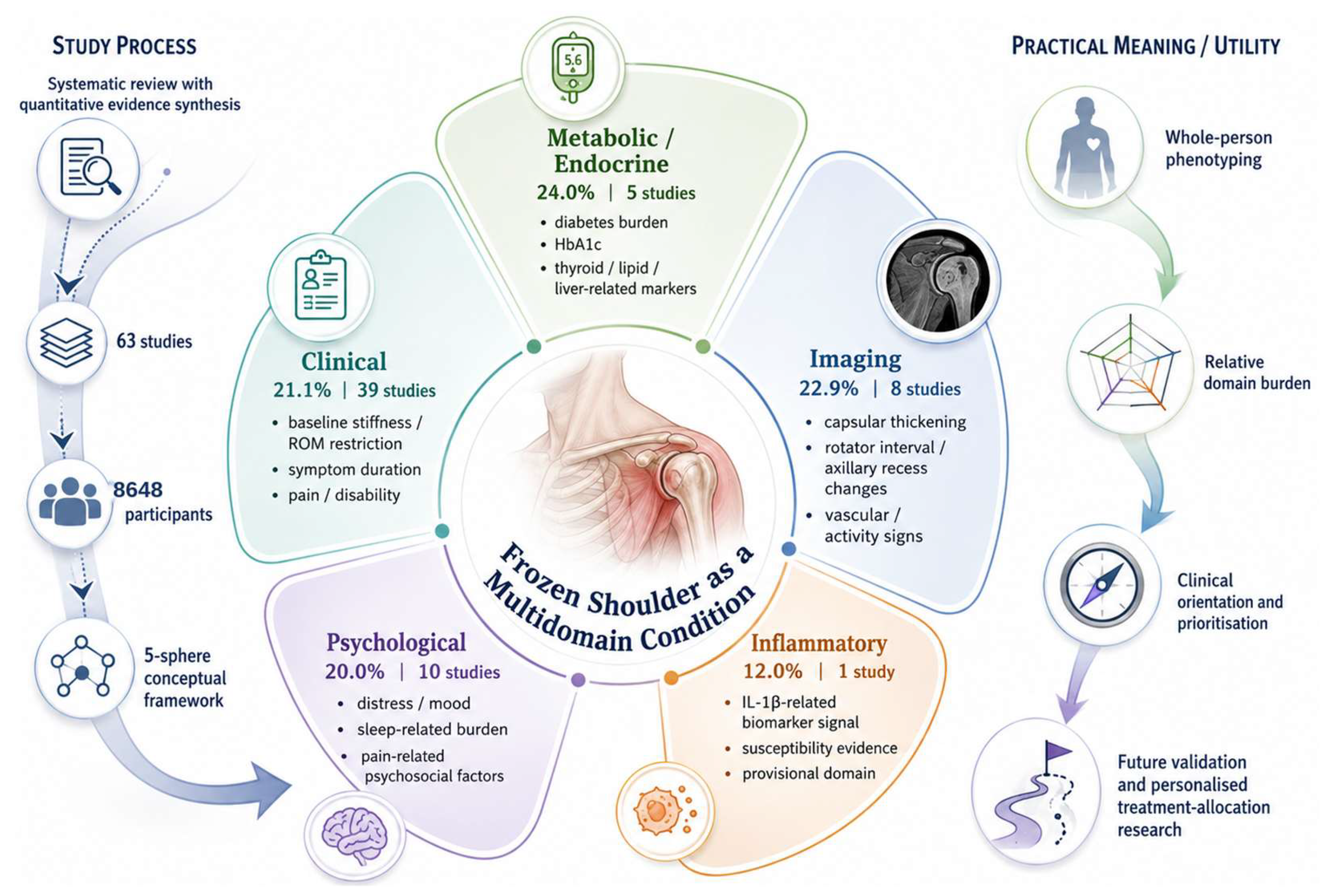
3.6. Provisional Cross-Domain Weighting
3.7. Sensitivity Specification Excluding the Inflammatory Domain
3.8. Prototype Operationalisation
3.9. Worked Example of Prototype Application
4. Discussion
5. Conclusions
Supplementary Materials
Author Contributions
Funding
Institutional Review Board Statement
Informed Consent Statement
Data Availability Statement
Acknowledgments
Conflicts of Interest
References
- Abrassart, S.; Kolo, F.; Piotton, S.; Chih-Hao, C.J.; Stirling, P.; Hoffmeyer, P.; Lädermann, A. ‘Frozen shoulder’ is ill-defined. How can it be described better? EFORT Open Rev. 2020, 5, 273–279. [Google Scholar] [CrossRef] [Scilit]
- Brindisino, F.; Turgut, E.; Struyf, F. Frozen shoulder: Exploration of terminology and classification. Front. Rehabil. Sci. 2024, 5, 1498263. [Google Scholar] [CrossRef] [Scilit]
- de la Serna, D.; Navarro-Ledesma, S.; Alayón, F.; López, E.; Pruimboom, L. A Comprehensive View of Frozen Shoulder: A Mystery Syndrome. Front. Med. 2021, 8, 663703. [Google Scholar] [CrossRef] [Scilit]
- Brindisino, F.; Mertens, M.G.; Salamh, P.; Navarro, L.S.; Hamed, D.H.; Struyf, F.; Vanhoenacker, F.; Policastro, P.O.; Camargo, P.R.; Rossettini, G. Beyond the capsule: An integrated perspective on the wide world of frozen shoulder. A collaborative viewpoint. Pain Manag. 2026, 16, 487–506. [Google Scholar] [CrossRef] [Scilit]
- Date, A.; Rahman, L. Frozen Shoulder: Overview of Clinical Presentation and Review of the Current Evidence Base for Management Strategies. Future Sci. OA 2020, 6, FSO647. [Google Scholar] [CrossRef] [Scilit]
- Cucchi, D.; Marmotti, A.; De Giorgi, S.; Costa, A.; D’Apolito, R.; Conca, M.; Russo, A.; Saccomanno, M.F.; de Girolamo, L.; SIGASCOT Research Committee. Risk Factors for Shoulder Stiffness: Current Concepts. Joints 2017, 5, 217–223. [Google Scholar] [CrossRef] [Scilit]
- Sun, G.; Li, Q.; Yin, Y.; Fu, W.; He, K.; Pen, X. Risk factors and predictive models for frozen shoulder. Sci. Rep. 2024, 14, 15261. [Google Scholar] [CrossRef] [Scilit]
- Jacob, L.; Gyasi, R.M.; Koyanagi, A.; Haro, J.M.; Smith, L.; Kostev, K. Prevalence of and Risk Factors for Adhesive Capsulitis of the Shoulder in Older Adults from Germany. J. Clin. Med. 2023, 12, 669. [Google Scholar] [CrossRef] [Scilit]
- Chen, M.H.; Chen, W.S. A Narrative Review of Adhesive Capsulitis with Diabetes. J. Clin. Med. 2024, 13, 5696. [Google Scholar] [CrossRef] [Scilit]
- Struyf, F.; Mertens, M.; Navarro-Ledesma, S. Causes of Shoulder Dysfunction in Diabetic Patients: A Review of Literature. Int. J. Environ. Res. Public Health 2022, 19, 6228. [Google Scholar] [CrossRef] [Scilit]
- Le, H.V.; Lee, S.J.; Nazarian, A.; Rodriguez, E.K. Adhesive capsulitis of the shoulder: Review of pathophysiology and current clinical treatments. Shoulder Elb. 2017, 9, 75–84. [Google Scholar] [CrossRef] [Scilit]
- Struyf, F.; Schmitz, M.; Brindisino, F.; Pérez-Montilla, J.J.; Hamed-Hamed, D.; Navarro-Ledesma, S. Ultrasound Imaging and Frozen Shoulder: Unlocking the Benefits, Navigating the Risks. J. Clin. Ultrasound 2026, 54, 943–953. [Google Scholar] [CrossRef] [Scilit]
- Ryan, V.; Brown, H.; Minns Lowe, C.J.; Lewis, J.S. The pathophysiology associated with primary (idiopathic) frozen shoulder: A systematic review. BMC Musculoskelet. Disord. 2016, 17, 340. [Google Scholar] [CrossRef] [Scilit]
- Navarro-Ledesma, S. Frozen Shoulder as a Metabolic and Immune Disorder: Potential Roles of Leptin Resistance, JAK-STAT Dysregulation, and Fibrosis. J. Clin. Med. 2025, 14, 1780. [Google Scholar] [CrossRef] [Scilit]
- Navarro-Ledesma, S. Frozen Shoulder as a Systemic Immunometabolic Disorder: The Roles of Estrogen, Thyroid Dysfunction, Endothelial Health, Lifestyle, and Clinical Implications. J. Clin. Med. 2025, 14, 7315. [Google Scholar] [CrossRef] [Scilit]
- Salamh, P.; Stoner, B.; Ruley, N.; Zhu, H.; Bateman, M.; Chester, R.; Da Baets, L.; Gibson, J.; Hollmann, L.; Kelley, M.; et al. An international consensus on the etiology, risk factors, diagnosis and Management for individuals with Frozen Shoulder: A Delphi study. J. Man. Manip. Ther. 2025, 33, 309–320. [Google Scholar] [CrossRef] [Scilit]
- Wu, W.T.; Chang, K.V.; Mezian, K.; Ricci, V.; Gonzalez-Suarez, C.B.; Özçakar, L. Ultrasound in Adhesive Capsulitis: A Narrative Exploration from Static Imaging to Contrast-Enhanced, Dynamic and Sonoelastographic Insights. Diagnostics 2025, 15, 1924. [Google Scholar] [CrossRef] [Scilit]
- Brindisino, F.; Varriano, G.; Pulina, F.; Lisai, A.; Bruno, V.; Liccardi, A.; Garofalo, R.; Santone, A.; Guerra, G. Formal methods for early prediction of frozen shoulder severity and recovery: A multicentre prospective study. Comput. Methods Programs Biomed. Update 2026, 9, 100243. [Google Scholar] [CrossRef] [Scilit]
- Brindisino, F.; Minnucci, S.; Sergi, G.; Lorusso, M.; Struyf, F.; Innocenti, T. Does the psychological profile of a patient with frozen shoulder predict future outcome? A systematic review. Physiother. Res. Int. 2024, 29, e2056. [Google Scholar] [CrossRef] [Scilit]
- Brindisino, F.; Silvestri, E.; Gallo, C.; Venturin, D.; Di Giacomo, G.; Peebles, A.M.; Provencher, M.T.; Innocenti, T. Depression and Anxiety Are Associated With Worse Subjective and Functional Baseline Scores in Patients With Frozen Shoulder Contracture Syndrome: A Systematic Review. Arthrosc. Sports Med. Rehabil. 2022, 4, e1219–e1234. [Google Scholar] [CrossRef] [Scilit]
- Fonseca, R.N.S.; Policastro, P.O.; Medeiros Filho, J.F.; Lucena, E.M.F.; Kamonseki, D.H.; Barbosa, G.M. Association of psychological factors and sleep quality with activity-related pain and disability in individuals with frozen shoulder. Musculoskelet. Sci. Pract. 2025, 78, 103366. [Google Scholar] [CrossRef] [Scilit]
- Tamai, K.; Hamada, J.; Nagase, Y.; Morishige, M.; Naito, M.; Asai, H.; Tanaka, S. Frozen shoulder. An overview of pathology and biology with hopes to novel drug therapies. Mod. Rheumatol. 2024, 34, 439–443. [Google Scholar] [CrossRef] [Scilit]
- Navarro-Ledesma, S.; Hamed-Hamed, D.; Pruimboom, L. A new perspective of frozen shoulder pathology; the interplay between the brain and the immune system. Front. Physiol. 2024, 15, 1248612. [Google Scholar] [CrossRef] [Scilit]
- Page, M.J.; McKenzie, J.E.; Bossuyt, P.M.; Boutron, I.; Hoffmann, T.C.; Mulrow, C.D.; Shamseer, L.; Tetzlaff, J.M.; Akl, E.A.; Brennan, S.E.; et al. The PRISMA 2020 statement: An updated guideline for reporting systematic reviews. BMJ 2021, 372, n71. [Google Scholar] [CrossRef] [Scilit]
- Lychagin, A.V.; Bogatov, V.B.; Tselishcheva, E.Y.; Muzychenkov, A.V. Results of Shoulder Adhesive Capsulitis Treatment With the Use of Platelet Rich Plasma and Nucleotide Drugs: A Comparative Study. Travmatol. Ortop. Ross. 2022, 28, 126–135. [Google Scholar] [CrossRef] [Scilit]
- Jain, A.; Nagar, M.; Jain, S.; Barasker, S.K. Suprascapular nerve block is faster and as effective as hydrodistension in relieving frozen shoulder-associated pain and disability: A prospective, single-blind observational study with a follow-up of 24 weeks. J. Anaesthesiol. Clin. Pharmacol. 2023, 39, 45–50. [Google Scholar] [CrossRef] [Scilit] [PubMed]
- Barman, A.; Mukherjee, S.; Sinha, M.K.; Sahoo, J.; Viswanath, A. The benefit of platelet-rich plasma injection over institution-based physical therapy program in adhesive capsulitis patients with diabetes mellitus: Prospective observational cohort study. Clin. Shoulder Elb. 2021, 24, 215–223. [Google Scholar] [CrossRef] [Scilit]
- Lee, C.W.; Kim, I.S.; Kim, J.G.; Hwang, H.; Jung, I.Y.; Lee, S.U.; Seo, K.S. Injection and Biomechanical Properties in Patients With Adhesive Capsulitis After Breast Cancer Surgery. Ann. Rehabil. Med. 2022, 46, 192–201. [Google Scholar] [CrossRef] [Scilit]
- Song, C.; Song, C.; Li, C. Outcome of manipulation under anesthesia with or without intra-articular steroid injection for treating frozen shoulder: A retrospective cohort study. Medicine 2021, 100, E23893. [Google Scholar] [CrossRef] [Scilit] [PubMed]
- Li, D.-M.; Zhang, C.; Xiang, X.X.; Cheng, Y.F.; Zhang, L.F.; Ma, K. The Effect of Arthroscopic Extra-Articular Entire Coracohumeral Ligament Release for Patients with Recalcitrant Frozen Shoulder. Orthop. Surg. 2023, 15, 1975–1982. [Google Scholar] [CrossRef] [Scilit] [PubMed]
- Inglese, F.; Montemagno, M.; Brigo, A.; Nigro, M.; Giorgini, A.; Micheloni, G.M.; Porcellini, G. High satisfaction rate and range of motion can be expected in frozen shoulder after awake manipulation with brachial plexus block. J. Orthop. Traumatol. 2024, 25, 3. [Google Scholar] [CrossRef] [Scilit] [PubMed]
- Yildiz, F.; Sari, A.; Pulatkan, A.; Ucan, V.; Kochai, A.; Bilsel, K. Effect of nonoperative concomitant intraarticular pathologies on the outcome of arthroscopic capsular release for adhesive capsulitis of the shoulder. Acta Orthop. Traumatol. Turc. 2018, 52, 245–248. [Google Scholar] [CrossRef] [Scilit] [PubMed]
- Martens, G.; Fontaine, R.; Goffin, P.; Raaf, M.; Tasset, H.; Lecoq, J.-P.; Benmouna, K.; Kaux, J.-F.; Forthomme, B. Continuous suprascapular nerve blockade to potentiate intensive rehabilitation for refractory adhesive shoulder capsulitis: A cohort study. Int. Orthop. 2024, 48, 495–503. [Google Scholar] [CrossRef] [Scilit] [PubMed]
- Bongiorno, G.; Bednarova, R.; Biancuzzi, H.; Dal Mas, F.; Rizzardo, A.; Tomasi, A.; Vigni, G.E.; Miceli, L. Pulsed Radiofrequency as a Standalone Treatment for Adhesive Capsulitis. Surgeries 2023, 4, 335–341. [Google Scholar] [CrossRef] [Scilit]
- Zhou, H.; Cheng, L. Clinical efficacy of manipulation under brachial plexus block anesthesia for primary adhesive capsulitis of shoulder: A retrospective cohort study. Front. Surg. 2025, 12, 1670743. [Google Scholar] [CrossRef] [Scilit]
- Vastamäki, H.; Ristolainen, L.; Vastamäki, M. Range of motion of diabetic frozen shoulder recovers to the contralateral level. J. Int. Med. Res. 2016, 44, 1191–1199. [Google Scholar] [CrossRef] [Scilit] [PubMed]
- Liu, H.; Cai, H.; Xu, J.; Jiang, Y.; Wang, C.; Huang, Z.; Ouyang, H.; Zhao, J.; Shen, W. Releasing Forces in Adhesive Capsulitis Are Important Indicators of Shoulder Stiffness and Postoperative Function. Clin. Orthop. Relat. Res. 2025, 483, 1033–1046. [Google Scholar] [CrossRef] [Scilit] [PubMed]
- Pasqualini, I.; Rossi, L.A.; Oyem, P.C.; Tanoira, I.; Hurley, E.T.; Ranalletta, M. Time Required to Achieve Clinically Significant Outcomes After Anteroinferior Arthroscopic Capsular Release for Shoulder Adhesive Capsulitis. Orthop. J. Sports Med. 2024, 12, 1–9. [Google Scholar] [CrossRef] [Scilit]
- Luo, J.L.; Huang, Y.B.; Deng, X.H.; Wang, J.S.; Li, Y.H.; Li, W.P.; Jiang, C.; Zhang, Z.Z.; Chen, Z. The Long Head of Biceps Tendon Tenotomy in Idiopathic Glenohumeral Adhesive Capsulitis Surgery Improves Early Rehabilitation Outcomes. Orthop. Surg. 2025, 17, 2331–2341. [Google Scholar] [CrossRef] [Scilit] [PubMed]
- Kumar, K.; Thomas, A.; Tetsworth, K.; Hohmann, E. Is there a short-term benefit from an intra-articular steroid injection in female patients with adhesive capsulitis of the shoulder treated with physiotherapy? J. Orthop. Surg. 2017, 25, 1–6. [Google Scholar] [CrossRef] [Scilit] [PubMed]
- Dakkak, M.; Genin, J.; Wichman, L.; Zhang, C.; Patel, V. A team approach to adhesive capsulitis with ultrasound guided hydrodilatation: A retrospective study. Pain Manag. 2024, 14, 633–640. [Google Scholar] [CrossRef] [Scilit] [PubMed]
- Mertens, M.G.C.A.M.; Meeus, M.; Noten, S.; Verborgt, O.; Fransen, E.; Lluch Girbés, E.; Aguilar Rodríguez, M.; Navarro-Ledesma, S.; Fernandez-Sanchez, M.; Luque-Suarez, A.; et al. Understanding the clinical profile of patients with frozen shoulder: A longitudinal multicentre observational study. BMJ Open 2022, 12, 1–11. [Google Scholar] [CrossRef] [Scilit] [PubMed]
- Lesevic, M.; Awowale, J.T.; Moran, T.E.; Diduch, D.R.; Brockmeier, S.F.; Werner, B.C. Immediate Pain Relief at Time of Corticosteroid Injection for Idiopathic Adhesive Capsulitis as a Predictor of Eventual Outcomes. Orthop. J. Sports Med. 2021, 9, 1–8. [Google Scholar] [CrossRef] [Scilit]
- Li, M.; Xu, Z.; Shi, J.; Zhang, M.; Qiang, K.; Lv, K.; Wu, Q.; Pang, X.; Zhao, Y.; Xu, J. A retrospective comparative study on the effectiveness of multisite injection versus arthroscopic capsular release for idiopathic frozen shoulder. Sci. Rep. 2024, 14, 1–7. [Google Scholar] [CrossRef] [Scilit] [PubMed]
- Kim, M.; Kim, K.Y.; Huh, Y.G.; Ma, S.H.; Jeong, K.Y.; Yoon, S.H. Functional improvement of bilateral frozen shoulder by unilateral intra-articular corticosteroid injection: A retrospective study. J. Int. Med. Res. 2021, 49, 03000605211050535. [Google Scholar] [CrossRef] [Scilit] [PubMed]
- Mardani-Kivi, M.; Hashemi-Motlagh, K.; Darabipour, Z. Arthroscopic release in adhesive capsulitis of the shoulder: A retrospective study with 2 to 6 years of follow-up. Clin. Shoulder Elb. 2021, 24, 172–177. [Google Scholar] [CrossRef] [Scilit]
- Mert, M.; Ince, A.Y.; Caglar, S. Manipulation under anaesthesia versus ultrasound-guided neuronal block for primary frozen shoulder: Short-term outcomes and comparative analysis. J. Pak. Med. Assoc. 2025, 75, 1923–1927. [Google Scholar] [CrossRef] [Scilit]
- Xu, Q.; Zheng, X.; Hu, L.; Zheng, J. Impact of transdermal buprenorphine patch combined with celecoxib on improving shoulder pain and function of patients with primary adhesive shoulder capsulitis. BMC Musculoskelet. Disord. 2024, 25, 953. [Google Scholar] [CrossRef] [Scilit] [PubMed]
- Albana, R.; Prasetia, R.; Primadhi, A.; Rahim, A.H.; Ismiarto, Y.D.; Rasyid, H.N. The role of suprascapular nerve block in hydrodilatation for frozen shoulder. SICOT-J 2022, 8, 4–9. [Google Scholar] [CrossRef] [Scilit]
- Menekse, S.; Karatas, Ö.; Zora, H. Impact of open bursectomy and biceps tendon release with closed manipulation in frozen shoulder. Medicine 2024, 103, E37499. [Google Scholar] [CrossRef] [Scilit] [PubMed]
- Sıvacıoğlu, S.; Tunalı, O.; Çetin, O.; Atalar, A.C. Simultaneous arthroscopic treatment of adhesive capsulitis and rotator cuff tear: A retrospective analysis of clinical outcomes. Acta Orthop. Traumatol. Turc. 2025, 59, 265–267. [Google Scholar] [CrossRef] [Scilit] [PubMed]
- Haider, S.I.; Awais, M.Z.; Iqbal, M.T. Role of Platelet-Rich Plasma in the Treatment of Adhesive Capsulitis: A Prospective Cohort Study. Cureus 2022, 14, e30542. [Google Scholar] [CrossRef] [Scilit]
- Jung, T.W.; Lee, S.Y.; Min, S.K.; Lee, S.M.; Yoo, J.C. Does Combining a Suprascapular Nerve Block With an Intra-articular Corticosteroid Injection Have an Additive Effect in the Treatment of Adhesive Capsulitis? A Comparison of Functional Outcomes After Short-term and Minimum 1-Year Follow-up. Orthop. J. Sports Med. 2019, 7, 1–9. [Google Scholar] [CrossRef] [Scilit]
- Atici, T.; Ermutlu, C.; Akesen, S.; Özyalçin, A. High-dose short-course oral corticosteroid protocol for treatment of primary frozen shoulder: A retrospective cohort study. J. Int. Med. Res. 2021, 49, 03000605211024875. [Google Scholar] [CrossRef] [Scilit] [PubMed]
- Saito, T.; Sasanuma, H.; Iijima, Y.; Takeshita, K. Prognostic factors of shoulder manipulation under ultrasound-guided cervical nerve root block for frozen shoulder for patient with diabetes mellitus: A retrospective cohort study. Int. J. Surg. Case Rep. 2021, 87, 106480. [Google Scholar] [CrossRef] [Scilit]
- Saito, T.; Hamada, J.; Sasanuma, H.; Iijima, Y.; Saitsu, A.; Minagawa, H.; Kurashina, W.; Takeshita, K. Clinical outcomes and cost-effectiveness of manipulation under brachial plexus block versus physiotherapy for refractory frozen shoulder: A prospective observational study. JSES Int. 2023, 7, 2410–2419. [Google Scholar] [CrossRef] [Scilit]
- Wang, W.H.; Chen, P.; Lu, L.Y.; Yang, C.P.; Chiu, J.C.H. Patients with Frozen-Phase Frozen Shoulder Demonstrated Improvement of Pain and Mobility of Forward Elevation and Internal Rotation After a Single Glenohumeral Injection of Corticosteroids. Arthrosc. Sports Med. Rehabil. 2025, 7, 101025. [Google Scholar] [CrossRef] [Scilit]
- Satora, W.; Brzóska, R.; Prill, R.; Reichert, P.; Oleksy, Ł.; Mika, A.; Królikowska, A. Surgical versus nonsurgical multimodality treatment in an idiopathic frozen shoulder: A retrospective study of clinical and functional outcomes. J. Clin. Med. 2021, 10, 5185. [Google Scholar] [CrossRef] [Scilit]
- Shang, X.; Luan, G.-R.; Meng, D.-H.; Song, Y.-C.; Zhang, F.; Wu, S.-B.; Geng, K.; Fang, H.-S.; Wei, W.; Ma, R.-R. Ultrasound-guided hydrodilatation of the glenohumeral joint combined with acupotomy release improves shoulder function in patients with frozen shoulder: A multicenter retrospective study. Asian J. Surg. 2025, 49, 2585–2593. [Google Scholar] [CrossRef] [Scilit]
- Yuan, X.; Zhou, F.; Zhang, L.; Zhang, Z.; Li, J. Analgesic Effect of Extracorporeal Shock Wave Treatment Combined with Fascial Manipulation Theory for Adhesive Capsulitis of the Shoulder: A Retrospective Study. BioMed Res. Int. 2018, 2018, 3450940. [Google Scholar] [CrossRef] [Scilit] [PubMed]
- Bai, X.; Bai, F.; Wang, Z.; Zhang, Y.; Liu, F.; Wang, Q. Clinical efficacy of intra-articular infusion of cocktail combined with tranexamic acid in the treatment of middle-age and older patients with frozen shoulder following arthroscopic capsular release. Front. Surg. 2023, 10, 1035054. [Google Scholar] [CrossRef] [Scilit]
- Kim, Y.W.; Shin, S.; Chang, W.H.; Lee, S.C. Hydraulic distension with pumping technique for treating frozen shoulder: A casecontrolled, retrospective, comparative study with 6-month follow-up. Pain Physician 2019, 22, E563–E572. [Google Scholar] [CrossRef] [Scilit] [PubMed]
- Wu, Y.; Huang, J.; Zhang, W.; Tian, S.; Chen, G. Comparison of combined suprascapular and axillary nerve pulsed radiofrequency and nerve block for the treatment of primary frozen shoulder: A prospective cohort study. Ann. Med. 2025, 57, 2456692. [Google Scholar] [CrossRef] [Scilit] [PubMed]
- Kim, D.H.; Choi, Y.H.; Oh, S.; Kim, H.J.; Chai, J.W. Ultrasound Microflow Imaging Technology for Diagnosis of Adhesive Capsulitis of the Shoulder. J. Ultrasound Med. 2020, 39, 967–976. [Google Scholar] [CrossRef] [Scilit] [PubMed]
- Kim, D.H.; Cho, C.H.; Sung, D.H. Ultrasound measurements of axillary recess capsule thickness in unilateral frozen shoulder: Study of correlation with MRI measurements. Skelet. Radiol. 2018, 47, 1491–1497. [Google Scholar] [CrossRef] [Scilit] [PubMed]
- Stella, S.M.; Gualtierotti, R.; Ciampi, B.; Trentanni, C.; Sconfienza, L.M.; Del Chiaro, A.; Pacini, P.; Miccoli, M.; Galletti, S. Ultrasound Features of Adhesive Capsulitis. Rheumatol. Ther. 2022, 9, 481–495. [Google Scholar] [CrossRef] [Scilit]
- Park, S.; Lee, D.H.; Yoon, S.H.; Lee, H.Y.; Kwack, K.S. Evaluation of adhesive capsulitis of the shoulder with fat-suppressed T2-weighted MRI: Association between clinical features and MRI findings. Am. J. Roentgenol. 2016, 207, 135–141. [Google Scholar] [CrossRef] [Scilit] [PubMed]
- Tang, A.C.W.; Huang, S.T.; Wu, S.Y.; Tang, S.F.T. The Clinical and Sonographic Features of Cervical Muscle Involvement in Patients with Frozen Shoulder: A Retrospective Study. Biomedicines 2024, 12, 2395. [Google Scholar] [CrossRef] [Scilit]
- Liang, K.W.; Lin, H.Y.; Hsu, K.L.; Kuan, F.C.; Gean, C.Y.; Wang, C.K.; Su, W.R.; Wang, B. Clinical and Radiological Outcomes of Transarterial Embolization for Adhesive Capsulitis. Korean J. Radiol. 2025, 26, 230. [Google Scholar] [CrossRef] [Scilit]
- Gillet, R.; Zhu, F.; Padoin, P.; Rauch, A.; Hossu, G.; Teixeira, P.A.G.; Blum, A. MR Imaging Biomarkers for Clinical Impairment and Disease Progression in Patients with Shoulder Adhesive Capsulitis: A Prospective Study. J. Clin. Med. 2021, 10, 3882. [Google Scholar] [CrossRef] [Scilit]
- Choi, Y.H.; Kim, D.H. Correlations between clinical features and MRI findings in early adhesive capsulitis of the shoulder: A retrospective observational study. BMC Musculoskelet. Disord. 2020, 21, 542. [Google Scholar] [CrossRef] [Scilit] [PubMed]
- Chen, W.; Meng, J.; Qian, H.; Deng, Z.; Chen, S.; Xu, H.; Sun, W.; Wang, Y.; Zhao, J.; Bao, N. A Study of IL-1 β, MMP-3, TGF- β 1, and GDF5 Polymorphisms and Their Association with Primary Frozen Shoulder in a Chinese Han Population. BioMed Res. Int. 2017, 2017, 1–7. [Google Scholar] [CrossRef] [Scilit]
- Hamed Hamed, D.; Rodríguez-Pérez, C.; Pruimboom, L.; Navarro-Ledesma, S. Relationship Between Metabolic Profile, Pain, and Functionality in Patients with Frozen Shoulder: A Cross-Sectional Study. Healthcare 2024, 12, 2444. [Google Scholar] [CrossRef] [Scilit]
- Takahashi, R.; Kajita, Y.; Fujii, S.; Harada, Y. Risk factors for recurrence of frozen shoulder after shoulder manipulation under ultrasound-guided cervical nerve root block. JSES Int. 2024, 8, 90–94. [Google Scholar] [CrossRef] [Scilit]
- Takahashi, R.; Sagami, R.; Harada, Y.; Kajita, Y. Older age and diabetes mellitus are negative prognostic factors for shoulder manipulation under ultrasound-guided cervical nerve root block for frozen shoulder: A retrospective cohort study. JSES Int. 2025, 9, 672–677. [Google Scholar] [CrossRef] [Scilit]
- Dimitri-Pinheiro, S.; Klontzas, M.E.; Vassalou, E.E.; Pimenta, M.; Soares, R.; Karantanas, A.H. Long-Term Outcomes of Ultrasound-Guided Hydrodistension for Adhesive Capsulitis: A Prospective Observational Study. Tomography 2023, 9, 1857–1867. [Google Scholar] [CrossRef] [Scilit]
- Dimitri-Pinheiro, S.; Pinto, B.S.; Pimenta, M.; Neves, J.S.; Carvalho, D. Influence of diabetes on response to ultrasound guided hydrodistension treatment of adhesive capsulitis: A retrospective study. BMC Endocr. Disord. 2022, 22, 227. [Google Scholar] [CrossRef] [Scilit]
- Mulligan, E.P.; Brunette, M.; Shirley, Z.; Khazzam, M. Sleep quality and nocturnal pain in patients with shoulder disorders. J. Shoulder Elbow. Surg. 2015, 24, 1452–1457. [Google Scholar] [CrossRef] [Scilit]
- Khan, H.Y.; Khan, S.; Lakshmi; Haroon, I.; Ali, I.; Ahmed, S.; Saleem, I.; Zeeshan, M. Sleep Quality and Its Association with Level of Irritability in Patients with Frozen Shoulder in Peshawar. Indus J. Biosci. Res. 2025, 3, 129–134. [Google Scholar] [CrossRef] [Scilit]
- Toprak, M.; Erden, M. Sleep quality, pain, anxiety, depression and quality of life in patients with frozen shoulder 1. J. Back Musculoskelet. Rehabil. 2019, 32, 287–291. [Google Scholar] [CrossRef] [Scilit]
- Bhagade, R.R.; Sreeraj, S. Correlation between pain, functional disability and quality of life with sleep disturbance in patients with adhesive capsulitis. Int. J. Health Sci. Res. (IJHSR) 2018, 8, 116–123. [Google Scholar]
- Tache-Codreanu, D.-L.; David, I.; Butum-Cristea, M.-A.; Tache-Codreanu, A.-M.; Burcea, C.-C.; Rusu, E.; Tache-Codreanu, A.; Olteanu, R.; Poteca, T.D.; Sporea, C. The Role of Body Mass Index in Outcomes of Radial Shock Wave Therapy for Adhesive Capsulitis. Biomedicines 2025, 13, 2117. [Google Scholar] [CrossRef] [Scilit]
- Fernandes, M.R.; Barbosa, M.A.; Faria, R.M. Quality of life and functional capacity of patients with adhesive capsulitis: Identifying risk factors associated to better outcomes after treatment with nerve blocking. Rev. Bras. Reumatol. (Engl. Ed.) 2017, 57, 445–451. [Google Scholar] [CrossRef] [Scilit]
- Galasso, O.; Mercurio, M.; Luciano, F.; Mancuso, C.; Gasparini, G.; De Benedetto, M.; Orlando, N.; Castricini, R. Arthroscopic capsular release for frozen shoulder: When etiology matters. Knee Surg. Sports Traumatol. Arthrosc. 2023, 31, 5248–5254. [Google Scholar] [CrossRef] [Scilit]
- Romeo, P.V.; Papalia, A.G.; Alben, M.G.; Gambhir, N.; Shankar, D.; Bi, A.S.; Zuckerman, J.D.; Virk, M.S. Prognostic factors associated with improvements in patient-reported outcomes in idiopathic adhesive capsulitis. JSES Int. 2023, 7, 336–341. [Google Scholar] [CrossRef] [Scilit]
- Haroun, Y.; Younis, A.S.; Ebied, W.F.; Hemida, M.A.; Khater, A.H. Impacts of preoperative anxiety and depression on pain and range of motion after arthroscopic frozen shoulder release: A cohort study. Int. Orthop. 2024, 48, 2113–2119. [Google Scholar] [CrossRef] [Scilit]
- Hamed-Hamed, D.; Rodríguez-Pérez, C.; Pruimboom, L.; Navarro-Ledesma, S. Influence of the metabolic and inflammatory profile in patients with frozen shoulder—systematic review and meta-analysis. BMC Musculoskelet. Disord. 2025, 26, 475. [Google Scholar] [CrossRef] [Scilit]
- Brindisino, F.; Silvestri, E.; Fioretti, A.; Pulina, F.; Conteduca, J.; Ledesma, S.N.; Barbosa, G.M.; Struyf, F. Psychological Factors, Central Sensitization, and Insomnia as Potential Prognostic Factors for Short-Term Pain and Disability in Patients With Frozen Shoulder: A Multicentric Prospective Single-Cohort Study. Pain Res. Manag. 2026, 2026, 6298409. [Google Scholar] [CrossRef] [Scilit]
- Brindisino, F.; Girardi, G.; Pulina, F.; Salamh, P.; Ledesma, S.N.; Mertens, M.G.C.M.; Crestani, M.; Chianetta, I.; Guerra, G.; Feller, D. Prognostic factors for upper limb and shoulder-specific disability and quality of life in participants suffering from frozen shoulder. A multicentric prospective single-cohort study. Musculoskelet. Sci. Pract. 2025, 80, 103417. [Google Scholar] [CrossRef] [Scilit]
- Torres, D.B.P.; Alfonso, V.L.R.; Andres, C.L.C.; Genoveva, T.D.S.; Peñaherrera, C.C.P.; Francisco, E.U.; Katherine, G.; Patricio, M.C.D. The role of emotional disorders in frozen shoulder: Results of a binational study. JSES Rev. Rep. Tech. 2026, 6, 100623. [Google Scholar] [CrossRef] [Scilit]
- Crestani, M.; Cook, C.; Leuci, C.; Carletto, L.; Garzonio, F.; Palese, A.; Chester, R.; De Baets, L.; Gandolfi, M.; Rossettini, G.; et al. “I Cannot Recognize My Body”: Experiences and Perceptions of Patients Living With Frozen Shoulder: A Qualitative Systematic Review With Meta-synthesis and Meta-summary. J. Orthop. Sports Phys. Ther. 2025, 55, 580–595. [Google Scholar] [CrossRef] [Scilit]
- Guzmán-García, R.; Pérez-Montalbán, M.; Pruimboom, L.; Navarro-Ledesma, S. Impact of a Multimodal Intervention Combining Manual Therapy, Exercise, Reduced Methylxanthine Intake, and Nocturnal Light Avoidance on Inflammatory and Metabolic Profiles, Pain, Functionality, and Sleep Quality in Patients with Frozen Shoulder: A Single-Blind Randomized Controlled Trial. J. Clin. Med. 2025, 14, 4539. [Google Scholar] [CrossRef] [Scilit]
- Mertens, M.G.; Meeus, M.; Ingwersen, K.G.; Christiansen, D.H.; Struyf, F. The role of systemic and nervous system factors in patients with shoulder pain: A perspective review. Postgrad. Med. 2025, 137, 566–577. [Google Scholar] [CrossRef] [Scilit]
- Hamed-Hamed, D.; Pérez-Montilla, J.J.; Brindisino, F.; Struyf, F.; Navarro-Ledesma, S. Rehabilitation of Frozen Shoulder: A Systematic Review and Meta-Analysis of Multifactorial Interventions. Pain Res. Manag. 2026, 2026, e3820129. [Google Scholar] [CrossRef] [Scilit]



| Database | Search Strategy | Filters |
|---|---|---|
| PubMed | ((“adhesive capsulitis”[Title/Abstract] OR “frozen shoulder”[Title/Abstract]) AND (cohort[Title/Abstract] OR longitudinal[Title/Abstract] OR “follow-up”[Title/Abstract] OR prospective[Title/Abstract] OR retrospective[Title/Abstract])) AND (SPADI[Title/Abstract] OR “Shoulder Pain and Disability Index”[Title/Abstract] OR VAS[Title/Abstract] OR “visual analog*”[Title/Abstract] OR DASH[Title/Abstract] OR “range of motion”[Title/Abstract] OR ROM[Title/Abstract] OR “external rotation”[Title/Abstract] OR flexion[Title/Abstract] OR abduction[Title/Abstract]) | Humans; Adults; English Language; Free full text; last 10 years |
| Web of Science | ((TS = (“adhesive capsulitis” OR “frozen shoulder”)) AND TS = (cohort OR longitudinal OR “follow-up” OR prospective OR retrospective)) AND TS = (SPADI OR VAS OR DASH OR “range of motion” OR ROM) | Document Types = Article; English language; Open access; last 10 years |
| ScienceDirect | Title, abstract or author-specified keywords (“adhesive capsulitis” OR “frozen shoulder”) (cohort OR longitudinal OR prospective OR retrospective) (SPADI OR VAS OR DASH OR “range of motion” OR ROM) | Article Types = research articles; English language; Open access; last 10 years |
| Study | Study Design | Population | Sample Size | Groups | Intervention Type | Intervention Details | Follow-Up | Outcomes |
|---|---|---|---|---|---|---|---|---|
| Lychagin et al. 2022 [25] | Prospective cohort comparative study | Patients aged 47–60 years with FS; disease duration 3 months–5 years; stage I or II FS. | n = 42 | AC1/stage I = 24; AC2/stage II = 18; each stage allocated to PRP or PN subgroup. | Intra-articular biological injection therapy | PRP vs. PN intra-articular ultrasound-guided injections. | 1 week, 1 month, 3 months | Pain VAS, DASH, SST, shoulder ROM, quality of life/function |
| Jain et al. 2023 [26] | Prospective single-blind observational comparative study | Adults with idiopathic FS (stage I–II), shoulder pain > 3 months | n = 65 | SSNB group (n = 32) vs. HD group (n = 33) | Ultrasound-guided suprascapular nerve block vs. HD | SSNB: triamcinolone + bupivacaine injected into suprascapular notch under US guidance. HD: fluoroscopy-guided capsular distension with saline, contrast, lignocaine, triamcinolone, and bupivacaine | 2, 6, 12, and 24 weeks | SPADI (pain/disability), active ROM (abduction, flexion, internal rotation), pain during procedure, functional recovery |
| Barman et al. 2021 [27] | Prospective observational cohort study | Patients with diabetes mellitus and FS for <6 months | n = 70 | PRP group: n = 35; PT group: n = 35 | PRP vs. PT | PRP: single 4 mL ultrasound-guided intra-articular PRP injection into the glenohumeral joint. PT: 10 sessions over 2 weeks including TENS, ultrasound therapy, and passive joint mobilisation; both groups received home exercise advice | 3, 6, and 12 weeks | VAS pain, SPADI, active and passive ROM, acetaminophen use, adverse events |
| Lee et al. 2022 [28] | Comparative observational study: prospective breast cancer surgery cohort + retrospective idiopathic AC control group | Patients with FS after breast cancer surgery and patients with idiopathic adhesive capsulitis | n = 67 | BC surgery group: n = 23; idiopathic FS control group: n = 44 | Hydrodilatation with corticosteroid injection | Ultrasound-guided intra-articular hydrodilatation using 50 mL injectate: triamcinolone, lidocaine, and saline; both groups received home exercise education | BC group assessed at baseline, 2 weeks, and 4 weeks; CON group assessed at baseline for biomechanical comparison | Shoulder ROM, SPADI pain and disability scores, capsular capacity, maximal pressure, capsular stiffness |
| Song et al. 2021 [29] | Retrospective cohort study with propensity score matching | Patients with primary FS refractory to ≥1 month of conservative treatment | n = 141 | MUA only: n = 60; MUA + ISI: n = 81. After matching: 44 per group | Manipulation under anaesthesia with or without intra-articular steroid injection | MUA performed after cervical nerve root block. ISI group received triamcinolone acetonide + lidocaine immediately after MUA. Repeat MUA was offered at 1 week if response was insufficient | 1, 2, and 4 weeks; phone follow-up at 3 and 6 months | SPADI pain, disability and total score; passive ROM; global impression of change; need for additional treatment; adverse events |
| Li et al. 2022 [30] | Comparative observational study: prospective breast cancer surgery cohort + retrospective idiopathic AC control group | Patients with FS after bc surgery and patients with idiopathic FS. | n = 67 | BC surgery group: n = 23; idiopathic FS control group: n = 44 | Hydrodilatation with corticosteroid injection | Ultrasound-guided intra-articular hydrodilatation using 50 mL injectate: triamcinolone, lidocaine, and saline; both groups received home exercise education | BC group assessed at baseline, 2 weeks, and 4 weeks; CON group assessed at baseline for biomechanical comparison | Shoulder ROM, SPADI pain and disability scores, capsular capacity, maximal pressure, capsular stiffness |
| Inglese et al. 2024 [31] | Retrospective cohort study | Patients < 55 years with phase III FS and severe ROM limitation | n = 110 | Single treatment cohort | Awake shoulder manipulation under brachial plexus block | Ultrasound-guided interscalene brachial plexus block followed by standardised passive shoulder manipulation and complementary rehabilitation programme | 4 months and 1 year eligibility follow-up | NPRS pain, Simple Shoulder Test, shoulder ROM, patient satisfaction, complications |
| Yildiz et al. 2018 [32] | Retrospective comparative cohort study | Retrospective comparative cohort study | n = 72 | Group I: no concomitant intra-articular pathology, n = 46; Group II: concomitant intra-articular lesions, n = 262 | Arthroscopic capsular release | Arthroscopic 360° capsular release. Concomitant non-repaired lesions included SLAP lesions, partial rotator cuff tears, impingement; some received debridement, biceps tenotomy, subacromial decompression or acromioplasty as appropriate | Minimum 12 months; mean 26 months in Group I and 15 months in Group II | ROM, Constant score, VAS pain, complications |
| Martens et al. 2024 [33] | Retrospective cohort study | Patients with refractory FS for >6 months, unresponsive to conventional treatment | n = 32 | Single treatment cohort | Continuous SSNB + intensive multidisciplinary rehabilitation | Ultrasound-guided continuous suprascapular nerve blockade with ropivacaine for 10 days, combined with daily physiotherapy and occupational therapy during hospitalisation, followed by outpatient rehabilitation 3 times/week | Baseline, days 3, 6, 10, 30, 90, and 180 | Active and passive ROM, VAS pain, DASH score, adverse events |
| Bongiorno et al. 2023 [34] | Case report | 51-year-old woman with diabetes and adhesive capsulitis of the left shoulder for ~6 months; steroid injection contraindicated | 1 | Single patient | Pulsed radiofrequency of the suprascapular nerve | Single ultrasound-guided pulsed radiofrequency treatment of the left suprascapular nerve; no physiotherapy during the first 3 weeks | 3 weeks; tele-visit at 12 weeks | NRS pain, SPADI, ROM, kinematic analysis, Jerk index, surface electromyography |
| Zhou & Cheng 2025 [35] | Retrospective comparative cohort study | Patients with primary adhesive capsulitis of the shoulder; symptoms ≥ 3 months; exclusion of secondary causes and major structural pathology | n = 72 | MUA group: 36; Conservative treatment group: 36 | Manipulation under anaesthesia vs. conservative treatment | MUA under ultrasound-guided interscalene brachial plexus block followed by structured 3-month rehabilitation; control group received standardised conservative treatment | 1, 3, 6, and 12 months | ROM, Constant–Murley score, VAS pain, patient satisfaction, return-to-work time, complications |
| Vastamäki et al. 2016 [36] | Retrospective cohort study | Patients with idiopathic FS, comparing those with and without diabetes | n = 178 | Diabetes: n = 27, without diabetes: n = 151 | Conservative treatment or manipulation under anaesthesia | 88 shoulders received conservative treatment/observation and 110 underwent MUA | Mean 9.7 years | ROM, pain VAS, Constan–-Murley score, Simple Shoulder Test, comparison with contralateral shoulder, insulin dependency |
| Liu et al. 2025 [37] | Prospective cohort study | Patients with primary unilateral FS refractory to ≥3 months of conservative treatment | n = 156 | FS stages by symptom duration: Stage 2: 95, Stage 3: 31, Stage 4: 30 | Manipulation under anaesthesia with objective force measurement | MUA performed after failed nonsurgical treatment; releasing force measured using handheld dynamometer during forward flexion, external rotation and internal rotation | 1, 3 and 6 months | Releasing force, tear value, peak value, ROM, VAS, Oxford Shoulder Score |
| Pasqualini et al. 2024 [38] | Prospective case series | Patients with idiopathic FS refractory to physiotherapy and corticosteroid injection | n = 73 | Single group | Arthroscopic capsular release | Anteroinferior arthroscopic capsular release with postoperative rehabilitation | 1, 2, 4, 6 and 12 months | VAS, ASES, SANE, Constant score, MCID, PASS, ROM |
| Luo et al. 2025 [39] | Retrospective comparative study | Patients with idiopathic FS undergoing arthroscopic release | n = 73 | LHBT tenotomy: n = 41; LHBT left in situ: n = 32 | Arthroscopic capsular release with or without long head of biceps tendon tenotomy | All underwent capsular release, coracohumeral ligament release and subacromial decompression; tenotomy performed when LHBT inflammation was present | 1, 3, 6, 12, 24 months and final follow-up | Both groups improved long term. LHBT tenotomy showed better early pain reduction at 1 and 3 months and better external rotation from 1 to 12 months. No significant final follow-up difference between groups. |
| Kumar et al. 2017 [40] | Retrospective comparative study | Female patients aged 40–60 years with idiopathic FS treated with physiotherapy | n = 41 | PT only: 20; PT + injection: 21 | Physiotherapy ± intra-articular corticosteroid injection | PT programme alone versus single intra-articular injection of 40 mg methylprednisolone followed by physiotherapy | 12 weeks | VAS pain score and shoulder ROM: flexion, abduction, internal rotation, external rotation |
| Dakkak et al. 2024 [41] | Retrospective cohort study | Patients aged 30–75 years with FS, included diabetic and non-diabetic patients | n = 150 | Diabetic: n = 25; non-diabetic: n = 125 | Multimodal non-surgical intervention | Ultrasound-guided suprascapular nerve block + ultrasound-guided glenohumeral hydrodilatation with corticosteroid/local anaesthetic + immediate manual physical therapy, followed by PT | 3 months | VAS pain score, active forward flexion ROM, active external rotation ROM, safety/complications |
| Mertens et al. 2022 [42] | Longitudinal multicentre observational study | Patients with frozen shoulder stage 1 or 2 | n = 49 | Single cohort | Prognostic/clinical profile assessment | ROM limitation, diabetes mellitus, thyroid disorder, autonomic symptoms, pain sensitivity/central pain processing | 9 months | SPADI, SF-36 quality of life, ROM, quantitative sensory testing |
| Lesevic et al. 2021 [43] | Case–control/retrospective cohort | Idiopathic FS treated with fluoroscopic glenohumeral corticosteroid injection | n = 728 | Patients requiring vs. not requiring LOA/MUA or repeat injection | Fluoroscopic intra-articular corticosteroid + anaesthetic injection | Immediate VAS pain reduction after injection, pre/post-injection VAS, need for LOA/MUA, repeat injection | ≥1 year | Immediate pain relief did not predict MUA or repeat injection; MUA rate was low: 5.1% |
| Li et al. 2024 [44] | Retrospective comparative study | Idiopathic unilateral FS refractory to conservative treatment | n = 80 | Multisite injection vs. arthroscopic capsular release | MI: lidocaine + triamcinolone at biceps long head, posteroinferior capsule, coracohumeral ligament ± trigger points; ACR: arthroscopic capsular release | VAS, ROM, OSS, DASH, diabetes subgroup, complications | 1, 3, 6 months | Both treatments significantly improved pain, ROM and function. ACR had better IR/ER at 1 month, but no differences at 6 months. Diabetes did not worsen outcomes. MI was considered simpler, safe, lower-cost, and a potential first option before ACR. |
| Kim et al. 2021 [45] | Retrospective study | Patients with bilateral primary FS | n = 165 | Injected shoulder vs. non-injected shoulder (within-patient comparison) | Unilateral ultrasound-guided intra-articular corticosteroid injection (triamcinolone acetonide + lidocaine) in the more painful shoulder | Pain (NRS), passive ROM (abduction, external rotation, flexion, hyperextension, internal rotation), diabetes subgroup analysis | Mean 6.7 weeks | Significant improvement in pain and passive ROM in both injected and non-injected shoulders, although greater improvement in the injected shoulder. Response was less pronounced in diabetic patients. Authors suggest initial unilateral injection with observation rather than simultaneous bilateral injections. |
| Mardani-Kivi et al. 2021 [46] | Retrospective study | Patients with unilateral FS refractory to ≥6 months of conservative treatment | n = 51 | Aetiology subgroups: idiopathic/post-surgical/post-traumatic | Arthroscopic capsular release (global release + postoperative physiotherapy) | Pain (VAS), shoulder function (Constant Score), satisfaction (Simple Shoulder Test), ROM (forward flexion, abduction, internal/external rotation), effect of age, sex, diabetes, aetiology | Mean 49.3 months (range 2–6 years) | Significant improvement in pain, function, satisfaction, and ROM at 6 months and maintained at long-term follow-up. Age, sex, and diabetes did not significantly affect outcomes. Patients with post-surgical adhesive capsulitis had consistently worse recovery than idiopathic or post-traumatic cases. Arthroscopic release was effective with very low complication rates. |
| Mert et al. 2025 [47] | Retrospective single-centre comparative study | Patients with primary FS refractory to conservative treatment | n = 54 | MUA under general anaesthesia/MUA under ultrasound-guided neuronal block/control exercise group | Manipulation under anaesthesia vs. ultrasound-guided interscalene neuronal block vs. self-directed rehabilitation | ROM: abduction, flexion, external rotation; pain by VAS; complications | Immediate and 1 week after intervention; control at 4 and 6 weeks | Both intervention groups improved significantly versus baseline and control. General anaesthesia showed better immediate flexion improvement, while ultrasound-guided neuronal block showed better abduction, external rotation, and pain relief at 1 week. No major complications were reported. |
| Xu et al. 2024 [48] | Retrospective observational study | Patients with FS in painful/freezing stage | n = 198 | Celecoxib/transdermal buprenorphine patch/buprenorphine patch + celecoxib | Pharmacological analgesic treatment | Pain by VAS at rest and movement; shoulder function by Constant–Murley Score; satisfaction; adverse reactions | 1, 4, 8 and 12 weeks | All groups improved, but the combined buprenorphine patch + celecoxib group had the lowest VAS scores, highest CMS scores, and greatest satisfaction. Adverse reactions did not differ significantly between groups. |
| Albana et al. 2022 [49] | Retrospective comparative study | Patients aged 40–60 years with FS | n = 31 | Hydrodilatation alone/hydrodilatation + suprascapular nerve block | Hydrodilatation with corticosteroid, with or without SSNB | Pain by VAS; and DASH | During intervention, 1 month and 6 months | Adding SSNB reduced pain during the procedure and at 1 month, and improved short-term function. At 6 months, differences between groups were no longer significant. |
| Menekse et al. 2024 [50] | Retrospective observational study | Patients with frozen shoulder | n = 50 | MUA alone/MUA + open bursectomy + biceps tendon capsule release | Surgical treatment comparison | Pain by VAS; ROM; quality of life by SPADI | Postoperative follow-up, duration not clearly specified | Both groups improved, but the combined approach showed greater pain reduction, better ROM and better SPADI scores than closed manipulation alone. |
| Sıvacıoğlu et al. 2025 [51] | Retrospective analysis | Patients with FS and concomitant rotator cuff tear | n = 29 | Single group | Simultaneous arthroscopic global capsular release + rotator cuff repair | ROM; VAS pain; Constant score; complications; re-tear | Mean 14 months | Significant improvement in ROM, pain and function. VAS decreased from 7.1 to 1.2 and Constant score improved from 37.5 to 72.3. No re-tears were reported; 2 diabetic patients had persistent ROM limitation. |
| Haider et al. 2022 [52] | Prospective cohort study | Patients with FS | n = 305 | Single group | Platelet-rich plasma injection | Pain by VAS; percentage pain reduction; adverse effects | 6 weeks | VAS improved from 6.56 to 2.42. Pain reduction was 64.6% on average; 87.5% achieved ≥50% pain improvement. No complications were reported. |
| Jung et al. 2019 [53] | Retrospective cohort study | Patients with FS | n = 102 | SSNB + IAI vs. IAI alone | Suprascapular nerve block plus intra-articular corticosteroid injection vs. corticosteroid injection alone | ROM, pain/function VAS, ASES, KSS, Constant, SST, SPADI | 2 weeks, 2 months, minimum 1 year | Both groups improved, but SSNB + IAI showed greater improvement in function, ASES, SST, SPADI, forward flexion and abduction at 2 months. At ≥1 year, FVAS and ASES remained better in the combined group. |
| Atici et al. 2021 [54] | Retrospective cohort study | Patients with FS | n = 18 | Single treatment cohort | High-dose oral prednisolone, starting at 1 mg/kg/day with gradual tapering | ROM, VAS pain, DASH, Constant–Murley, ASES, adverse effects | 4 weeks and 6 months. | Rapid improvement in shoulder motion and pain at 4 weeks, maintained at 6 months. DASH and ASES improved significantly later, at 6 months. No major adverse effects or need for surgery were reported. |
| Saito et al. 2021 [55] | Retrospective cohort study | Patients with FS treated with MUC | n = 70 | Good clinical result: ASES ≥80; poor clinical result: ASES <80 | Shoulder manipulation under ultrasound-guided cervical nerve root block | Outpatient MUC under C5–C6 cervical nerve root block; patients had failed ≥3 months of conservative treatment | 1 year | Pain, ROM and ASES improved significantly. Diabetes mellitus was the only independent negative prognostic factor for poor outcome after MUC: OR 51.0, 95% CI 10.9–237, p = 0.01. |
| Saito et al. 2023 [56] | Retrospective cohort study | Patients with FS treated with manipulation under ultrasound-guided cervical nerve root block | n = 70 | Good result: ASES ≥ 80; Poor result: ASES < 80 | Manipulation under ultrasound-guided cervical nerve root block; prognostic factor analysis | Diabetes mellitus, age, sex, symptom duration, baseline pain, ROM, ASES score | 1 year | Pain, ROM and ASES improved significantly after treatment. Diabetes mellitus was the only independent risk factor for poor outcome, with OR 51.0. |
| Wang et al. 2025 [57] | Retrospective cohort study | Patients with FS | n = 130 | Single cohort | Two ultrasound-guided intra-articular corticosteroid injections, 6 weeks apart | Pain, forward elevation, external rotation, internal rotation | Baseline, 6 weeks, 12 weeks | Pain, forward elevation and internal rotation improved after the first injection. External rotation improved significantly only after the second injection. |
| Satora et al. 2021 [58] | Retrospective comparative study | Patients with FS ≤ 6 months | n = 59 | Surgical group n = 30; nonsurgical group n = 29 | Arthroscopic capsular release + corticosteroid injection + physiotherapy vs. corticosteroid injection + physiotherapy | ROM, pain, DASH function | 3, 6 and 12 months | Surgery produced faster improvement in ROM and function at 3 and 6 months. At 12 months, both groups had similar clinical results. Pain improved similarly in both groups. |
| Shang et al. 2025 [59] | Multicenter retrospective study | Patients with FS | n = 258 | HAG n = 123; HG n = 135 | Ultrasound-guided glenohumeral hydrodilatation + acupotomy release vs. hydrodilatation alone | PROM, Constant–Murley Score, VAS, SPADI, adverse events | 3, 6 and 12 weeks | Both groups improved, but combined hydrodilatation + acupotomy showed better mid-term ROM, function and SPADI outcomes. Pain improvement was superior at 3 and 6 weeks, but similar by 12 weeks. No serious adverse events were reported. |
| Yuan et al. 2018 [60] | Retrospective study | Patients with FS | n = 134 | Single Cohort | Two ultrasound-guided intra-articular corticosteroid injections, 6 weeks apart | Pain, forward elevation, external rotation, internal rotation | Baseline, 6 weeks, 12 weeks | Pain, forward elevation and internal rotation improved after the first injection. External rotation improved significantly only after the second injection. |
| Bai et al. 2023 [61] | Retrospective study | Middle-aged and older patients with FS after arthroscopic capsular release | n = 85 | TXA n = 28; cocktail n = 26; cocktail + TXA n = 31 | Postoperative intra-articular infusion of TXA, analgesic cocktail, or cocktail + TXA | Drainage, hospital stay, pain, Neer score, ASES, ROM, complications | 1 day, 1 week, 1 month, 3 months | Cocktail + TXA reduced pain and bleeding, shortened early recovery, and produced better early shoulder function than TXA alone or cocktail alone. All groups improved by 3 months, but recovery was greatest with cocktail + TXA. |
| Kim et al. 2019 [62] | Retrospective case-controlled comparative study | Patients with idiopathic FS treated with hydraulic distension | n = 47 | Pumping n = 24; non-pumping n = 23 | US-guided capsule-preserving hydraulic distension, with or without “pumping technique” | ROM, VAS, SPADI, complications | 6 months | Both groups improved pain, ROM and SPADI after the second injection. Pumping produced better ROM and SPADI disability improvement, but pain reduction was similar. No serious complications. |
| Wu et al. 2025 [63] | Prospective cohort study | Patients with FS | n = 60 | PRF n = 30; nerve block n = 30 | Combined suprascapular and axillary nerve pulsed radiofrequency vs. nerve block | NRS pain, SPADI, PROM, adverse events | 6 months | Both treatments improved pain, function and PROM. PRF produced greater improvement in activity/night pain, SPADI and most ROM measures at 3–6 months. No serious complications. |
| Hyun Kim et al. 2020 [64] | Retrospective diagnostic accuracy study | Patients with FS vs. healthy controls | n = 74 (39 FS, 35 controls) | SMI vs. conventional US and PDUS | SMI vascular area, PDUS vascular area, CHL thickness, rotator interval echogenicity, ROM, pain, symptom duration | Cross-sectional diagnostic assessment | SMI vascular area was higher in adhesive capsulitis and had the best diagnostic performance (AUC 0.90). SMI was superior to PDUS for detecting vascular flow. Greater SMI vascular flow correlated with worse external rotation and forward flexion. | |
| Hwan Kim et a. 2018 [65] | Diagnostic correlation study | Patients with FS | n = 44 | Affected shoulder vs. unaffected shoulder | Ultrasound measurement of axillary recess capsule thickness, compared with MRI | Axillary recess capsule thickness, ROM limitation, VAS, ASES, SSV | Cross-sectional imaging assessment | Ultrasound showed greater capsule thickness in affected shoulders than unaffected shoulders: 4.4 vs. 2.2 mm. Ultrasound thickness strongly correlated with MRI thickness, r = 0.83. A cutoff of 3.2 mm showed good diagnostic accuracy. Capsule thickness did not correlate with specific ROM limitation patterns. |
| Stella et al. 2022 [66] | Cross-sectional diagnostic study | Adults with shoulder pain and stiffness evaluated for FS. | n = 1486 | FS patients vs. healthy controls; affected vs. contralateral shoulder | Ultrasound diagnostic assessment | Axillary pouch, CHL/SGHL thickness, LHBT sheath effusion, infraspinatus tendon sliding during passive external rotation | Cross-sectional | Typical US findings were axillary pouch thickening in 100%, LHBT sheath effusion in 71%, CHL/SGHL thickening in 88%, and reduced infraspinatus sliding in 73%. AP thickening had high diagnostic accuracy, supporting ultrasound as useful to confirm clinical FS. |
| Park et al. 2016 [67] | Retrospective imaging-clinical correlation study | Patients with FS assessed by shoulder MRI | n = 103 | Clinical stages 1–4 | Fat-suppressed T2-weighted MRI evaluation | Axillary recess capsule edoema/thickness, extracapsular edoema, subcoracoid fat obliteration, biceps sheath effusion, pain, ROM, clinical stage | Cross-sectional MRI-clinical assessment | Anterior extracapsular edoema correlated with limitation in external rotation and abduction. Humeral axillary recess edoema correlated with external rotation limitation and was more common in early stages. Humeral capsule thickness correlated with pain and was greater in stage 1. MRI may help assess clinical impairment and disease stage. |
| Tang et al. 2024 [68] | Retrospective study | Patients with unilateral FS | n = 362 | 4 groups: no cervical muscle involvement, scalene involvement, levator scapulae involvement, both muscles involved | Sonographic evaluation of cervical muscle involvement | Shoulder ROM, scalene complex and levator scapulae thickening/hypoechoic changes, clinical risk factors | Retrospective clinical record review | Patients with scalene or levator scapulae involvement had significantly greater shoulder flexion, abduction, external rotation, and total ROM than those without involvement. Ultrasound showed thickening and hypoechoic changes in these muscles. Authors suggest these muscles may compensate for restricted shoulder motion. |
| Liang et al. 2025 [69] | Retrospective study | Patients with FS to conservative treatment | n = 25 | Single group | Transarterial embolization using imipenem/cilastatin | Pain, DASH, ROM, MRI inflammation findings | 1, 3, and 6 months; MRI at 3 months | TAE significantly reduced pain, improved Quick DASH and ROM, and decreased MRI signs of inflammation in the axillary recess and rotator interval. Clinical success was 88%, with no severe adverse events. |
| Guillet et al. 2021 [70] | Prospective monocentric study | Adults with clinically diagnosed FS confirmed by MRI | n = 132 | No intervention groups; observational comparison based on MRI findings (high vs. low IGHL signal intensity, ligament thickness categories) | Diagnostic/prognostic imaging assessment | Shoulder MRI evaluation assessing IGHL signal intensity and thickness, coracohumeral ligament thickness, correlated with Constant–Murley Score, pain duration, ROM, and symptom characteristics | Approximately 1 year (9–13 months in follow-up subgroup) | High IGHL T2 signal was associated with shorter pain duration, nocturnal pain, and lower mobility, suggesting early inflammatory disease stage. Greater IGHL thickness (>4 mm) was associated with better clinical improvement at follow-up, whereas thinner ligaments (≤3 mm) were associated with worse prognosis. |
| Choi & Kim 2020 [71] | Retrospective observational study | Patients with FS of the shoulder (symptom duration ≤ 9 months, restricted passive ROM, no other shoulder pathology) | n = 29 | No intervention groups; correlation analysis between MRI findings and clinical features | Diagnostic imaging assessment | Standardised 3T shoulder MRI evaluating capsular thickness (humeral, glenoid, maximal axillary, anterior capsule), coracohumeral ligament thickness, capsular hyperintensity, rotator interval abnormalities, and obliteration of subcoracoid fat triangle; correlated with ROM, pain (VAS), and symptom duration | Cross-sectional (mean MRI performed 16 days after clinical assessment; no longitudinal follow-up) | Maximal axillary capsular thickness and humeral capsular thickness were associated with worse internal rotation. Capsular hyperintensity in the axillary recess correlated with reduced abduction and forward flexion. Humeral capsular hyperintensity correlated with shorter symptom duration (suggesting early inflammatory stage). No MRI findings correlated with pain severity. CHL thickening and fat triangle obliteration were diagnostically present but not linked to symptom severity. |
| Chen et al. 2017 [72] | Case–control genetic association study | Chinese Han patients with FS in the freezing stage, compared with healthy controls | n = 92 (42 FS, 50 controls) | PFS group vs. healthy control group | Observational biomarker/genetic study | Genotyping of SNP polymorphisms in IL-1β (rs1143627), MMP-3 (rs650108), TGF-β1 (rs1800469), and GDF5 (rs143383) using MassARRAY; serum IL-1β measured by ELISA | Cross-sectional (single assessment) | IL-1β rs1143627 CC genotype was associated with reduced risk of PFS compared with TT genotype. Serum IL-1β levels were significantly higher in PFS patients. No significant association was found for MMP-3, TGF-β1, or GDF5 polymorphisms. Findings support a possible inflammatory genetic susceptibility mechanism in PFS. |
| Hamed et al. 2024 [73] | Cross-sectional observational study | Adults with FS | n = 32 | No treatment groups; gender-based subgroup analysis | Observational metabolic biomarker study | Blood biomarkers: AST, ALT, GGT, TSH, lipids, glucose-related markers, inflammatory markers, vitamin D, etc. Pain assessed with NRS; disability/function with SPADI | Single baseline assessment | Lower AST, ALT, GGT and TSH were associated with higher pain. TSH also correlated with worse SPADI. Regression showed GGT and TSH were the strongest predictors of pain. Suggests metabolic/liver–thyroid axis may contribute to pain and disability in frozen shoulder. |
| Takahashi et al. 2024 [74] | Retrospective case–control prognostic study | Patients with FS treated with MUC | n = 135 shoulders in 121 patients | Success group: 126 shoulders; recurrence group: 9 shoulders | Manipulation under ultrasound-guided cervical nerve root block | C5–C6 ultrasound-guided nerve root block with lidocaine, followed by shoulder manipulation and rehabilitation | 3 months | Recurrence rate was 7.4%. Lower pre-MUC Constant Shoulder score was an independent risk factor for recurrence. Recurrence patients had lower ER, higher pain scores, and tended to have poorer glycaemic control. |
| Takahashi et al. 2025B [75] | Retrospective cohort study | Patients with FS treated with manipulation under ultrasound-guided cervical nerve root block | n = 126 | Success group: 112 shoulders; refractory group: 14 shoulders | Manipulation under ultrasound-guided cervical nerve root block | C5–C6 nerve root block with lidocaine, followed by shoulder manipulation and post-procedure rehabilitation | 12 months | ROM and functional scores improved in both groups. Refractory patients had worse outcomes at 12 months. Older age and diabetes mellitus were independent negative prognostic factors. Age cutoff for refractory outcome was 56 years. |
| Dimitri-Pinheiro et al. 2023 [76] | Prospective observational study | Patients FS | n = 202 | Diabetic vs. nondiabetic patients | Ultrasound-guided hydrodistension | US-guided glenohumeral hydrodistension with 30–50 mL solution: saline, lidocaine, bupivacaine, and 40 mg triamcinolone; followed by immediate exercises | 2 years | VAS and DASH improved significantly at 2 years. Recurrence occurred in 28/202 patients. Diabetes was significantly associated with higher recurrence and shorter time to recurrence. No adverse effects reported. |
| Dimitri-Pinheiro et al. 2022B [77] | Retrospective longitudinal observational study | Patients with FS with ultrasound-guided hydrodistension | n = 120 | Patients with T2D vs. without diabetes | Ultrasound-guided hydrodistension | Injection under ultrasound guidance of corticosteroid + saline solution into the glenohumeral capsule | 6–12 months | Baseline FS severity was similar between groups. Patients with T2D had more relapse/reintervention, worse post-treatment pain, and worse DASH score. No significant worsening in HbA1c, fasting glucose, weight, or lipid profile after treatment. |
| Mulligan et al. 2015 [78] | Cross-sectional epidemiological study | Adults with shoulder disorders | n = 343 | SAIS, rotator cuff tear, glenohumeral osteoarthritis, FS | No intervention | Clinical assessment + questionnaires: PSQI, ASES, SANE, VAS pain | Single assessment | Sleep quality was poor across all shoulder disorders, but worst in FS, which had significantly poorer PSQI scores, especially sleep quality, duration, and habitual sleep efficiency. Pain scores were not significantly different between groups. |
| Khan et al. 2025 [79] | Analytical cross-sectional study | Patients with FS | n = 111 | Sleep quality categories; irritability levels | No intervention | PSQI for sleep quality; DASH-based assessment for disability/irritability | Single assessment | 71.2% had significant sleep disturbance and 25.2% severe sleep difficulty. Moderate irritability was present in 56.8%, high irritability in 29.7%. Frozen shoulder irritability showed a significant association with sleep disturbance. |
| Toprak & Erden 2019 [80] | Prospective case–control study | Patients with FS and healthy controls | n = 148 | 76 FS patients; 72 healthy controls | No intervention | Assessment with VAS, BAI, BDI, PSQI and WHOQoL-BREF | Single assessment | FS patients had higher pain and anxiety, poorer sleep quality, and lower physical, psychological and environmental QoL. Depression was not significantly different. Sleep disturbance and habitual sleep efficiency were significantly worse in FS. |
| Fonseca et al. 2025 [21] | Cross-sectional study | Individuals with FS | n = 96 | Primary FS and secondary intrinsic FS | No intervention | Psychological factors and sleep quality assessed using HADS, PSEQ-10, TSK-11, PCS, PSQI; pain/disability assessed with SPADI | Baseline only | Pain self-efficacy, kinesiophobia and BMI explained 22.3% of disability variance. Pain self-efficacy and anxiety explained 21.2% of activity-related pain variance. Sleep quality, depression and catastrophizing were not significantly associated in final models. |
| Bhagade & Sreeraj 2018 [81] | Explorative cross-sectional correlation study | Patients with FS and sleep disturbance, without psychological problems | n = 60 | Single FS group | No intervention | Assessment with SPADI, PSQI and SF-36 | Single assessment. | Sleep disturbance showed moderate positive correlation with pain and disability, strong correlation with total SPADI, and negative correlations with several QoL domains, especially general health. |
| Tache-Codreanu et al. 2025 [82] | Retrospective observational study | Patients with FS treated with RSWT | n = 40 | BMI groups: normal weight, overweight, obese | Radial shock wave therapy + conventional physiotherapy | 10-day physiotherapy protocol plus 5 weekly RSWT sessions; outcomes measured with VAS, SPADI, ROM and PGIC | Immediate post-treatment and 1 month | Pain, disability and ROM improved significantly. Higher BMI correlated with greater improvements in SPADI, VAS, extension and internal rotation. Most changes exceeded MCID thresholds. |
| Fernandes et al. 2017 [83] | Prospective cohort study | Patients with FS confirmed clinically and by imaging | n = 43 | No comparison group; outcomes analysed by age, education, severity and number of nerve blocks | SSNB | Weekly SSNB using bupivacaine, continued until Constant–Murley score ≥55 | From start to end of treatment | QoL and function improved significantly. Better outcomes were associated with older age, higher education, lower disease severity and fewer nerve blocks. |
| Galasso et al. 2023 [84] | Retrospective study with prospective data collection | Patients with FS resistant to conservative treatment | n = 78 | Idiopathic, postoperative and posttraumatic FS | Arthroscopic capsular release | Patient-tailored arthroscopic release of contracted capsule/rotator interval; postoperative ROM and strengthening programme | Mean 54.2 months | Significant ROM and CMS improvement. High satisfaction. All patients returned to work/sport. Idiopathic aetiology predicted better postoperative CMS. |
| Romeo et al. 2023 [85] | Retrospective multivariable prognostic study | Patients with FS treated conservatively | n = 56 | No formal treatment groups; analysed prognostic factors | Conservative treatment | Oral anti-inflammatory medication, home exercise or supervised physical therapy, and optional intra-articular steroid injection | ≥1 year | PROMIS-UE, PROMIS Pain Interference, PROMIS Pain Intensity and VAS improved significantly. Anxiety, hyperlipidemia, higher BMI and Hispanic ethnicity were associated with less improvement. Female sex, manual labour and hypothyroidism were associated with better PROM changes. |
| Haroun et al. 2024 [86] | Prospective cohort study | Patients with FS > 3 months and failed conservative treatment | n = 57 | Group 1: normal psychological status; Group 2: psychological distress by HADS ≥ 8 | Arthroscopic capsular release | 360° arthroscopic release + biceps tenotomy + postoperative rehabilitation | 12 months | ROM and VAS pain improved significantly in all patients. Patients with anxiety/depression had higher pain preoperatively and at 12 months, but the magnitude of pain improvement was similar between groups. |
Disclaimer/Publisher’s Note: The statements, opinions and data contained in all publications are solely those of the individual author(s) and contributor(s) and not of MDPI and/or the editor(s). MDPI and/or the editor(s) disclaim responsibility for any injury to people or property resulting from any ideas, methods, instructions or products referred to in the content. |
© 2026 by the authors. Licensee MDPI, Basel, Switzerland. This article is an open access article distributed under the terms and conditions of the Creative Commons Attribution (CC BY) license.
Share and Cite
Navarro-Ledesma, S.; Pérez-Montilla, J.J.; Hamed-Hamed, D.; Brindisino, F.; Struyf, F. Development of a Multidomain Conceptual Framework for Frozen Shoulder: A Systematic Review Integrating Clinical, Biological, Psychological and Lifestyle-Related Contributors. J. Clin. Med. 2026, 15, 6684. https://doi.org/10.3390/jcm15176684
Navarro-Ledesma S, Pérez-Montilla JJ, Hamed-Hamed D, Brindisino F, Struyf F. Development of a Multidomain Conceptual Framework for Frozen Shoulder: A Systematic Review Integrating Clinical, Biological, Psychological and Lifestyle-Related Contributors. Journal of Clinical Medicine. 2026; 15(17):6684. https://doi.org/10.3390/jcm15176684
Chicago/Turabian StyleNavarro-Ledesma, Santiago, José Javier Pérez-Montilla, Dina Hamed-Hamed, Fabrizio Brindisino, and Filip Struyf. 2026. "Development of a Multidomain Conceptual Framework for Frozen Shoulder: A Systematic Review Integrating Clinical, Biological, Psychological and Lifestyle-Related Contributors" Journal of Clinical Medicine 15, no. 17: 6684. https://doi.org/10.3390/jcm15176684
APA StyleNavarro-Ledesma, S., Pérez-Montilla, J. J., Hamed-Hamed, D., Brindisino, F., & Struyf, F. (2026). Development of a Multidomain Conceptual Framework for Frozen Shoulder: A Systematic Review Integrating Clinical, Biological, Psychological and Lifestyle-Related Contributors. Journal of Clinical Medicine, 15(17), 6684. https://doi.org/10.3390/jcm15176684