Hypoglossal Nerve Stimulation for Obstructive Sleep Apnea: A Systematic Review and Meta-Analysis on Responder-Based Outcomes and Between-Study Heterogeneity
 , and
, and
Abstract
1. Introduction
2. Materials and Methods
- Study design and reporting
- Literature search and study selection
- Eligibility criteria
- Data extraction and harmonization
- Outcomes
- Statistical analysis
3. Results
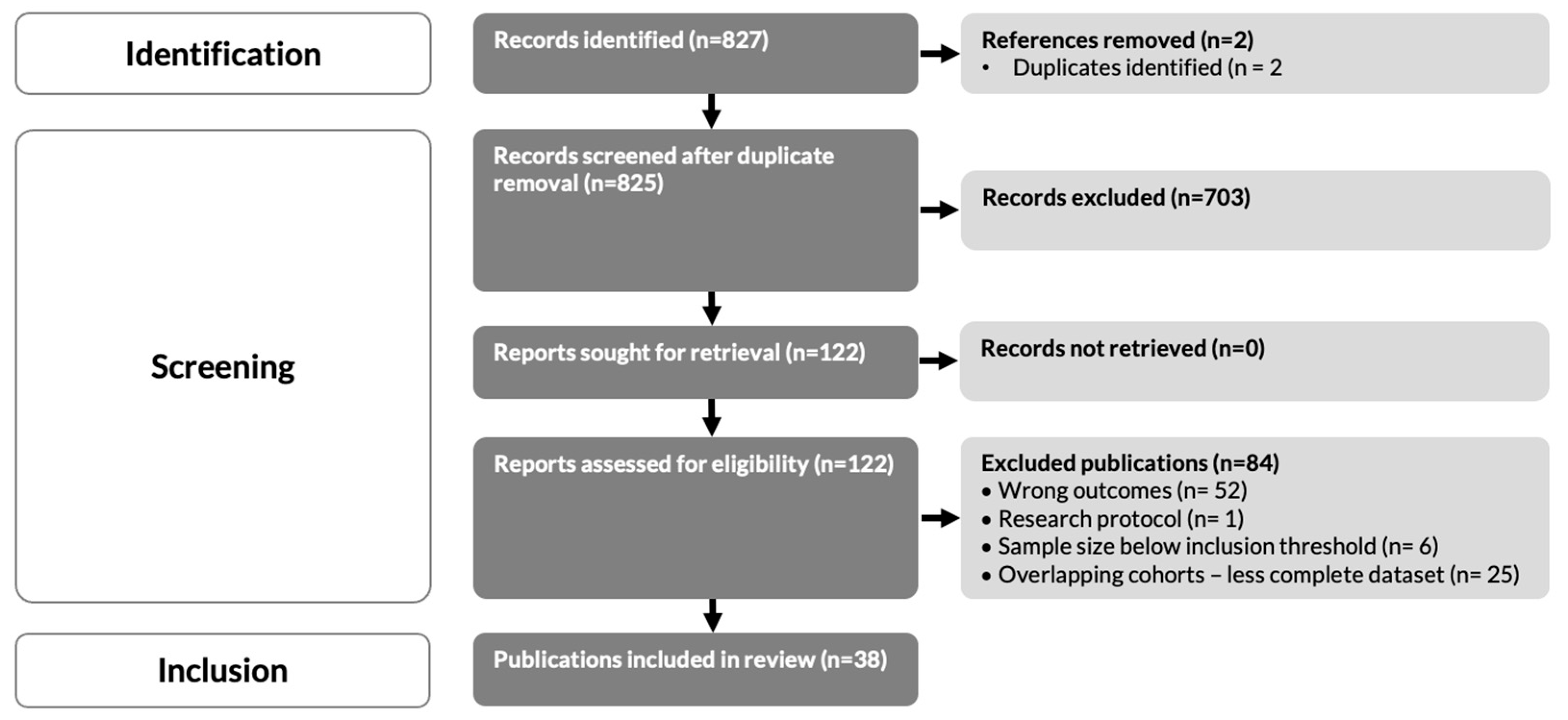
- Study selection and characteristics
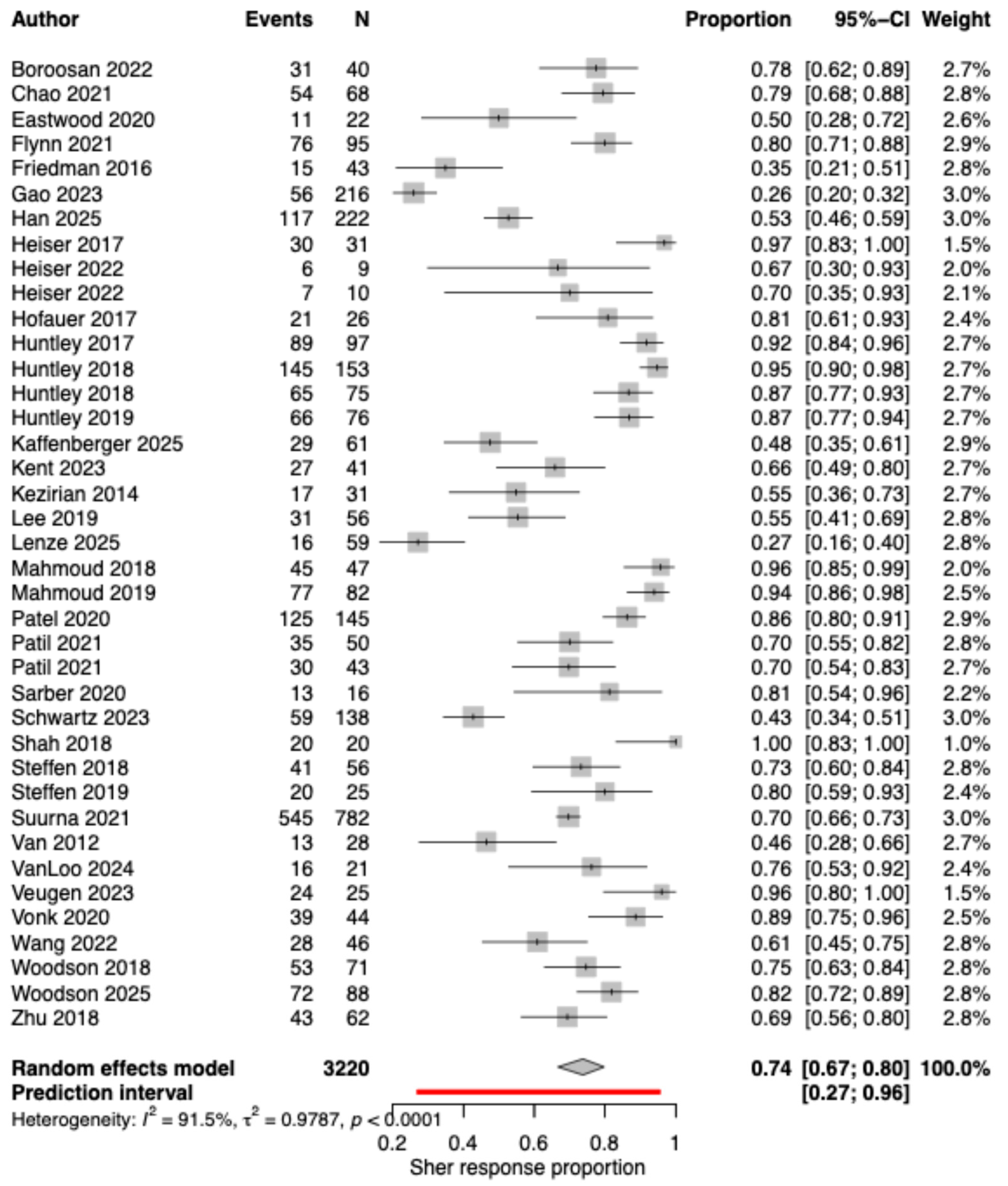
- Primary outcome: Sher response
- Continuous outcomes
- Safety outcomes
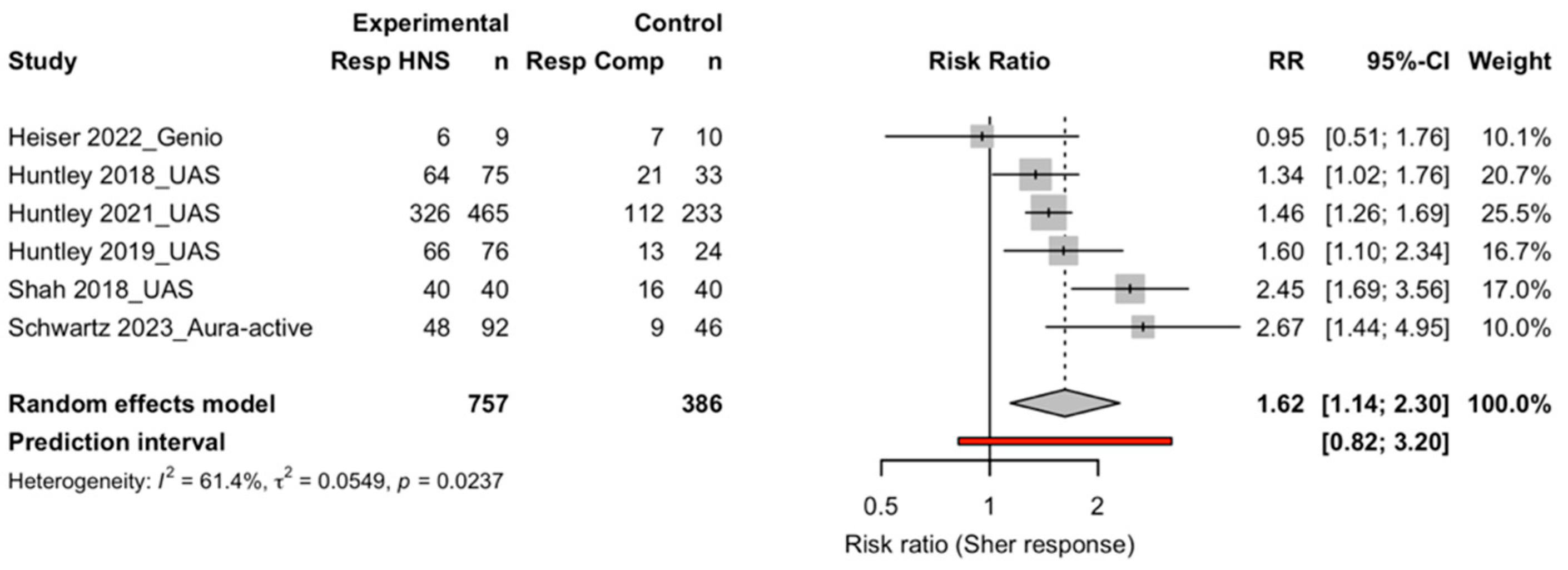
- Comparative effectiveness
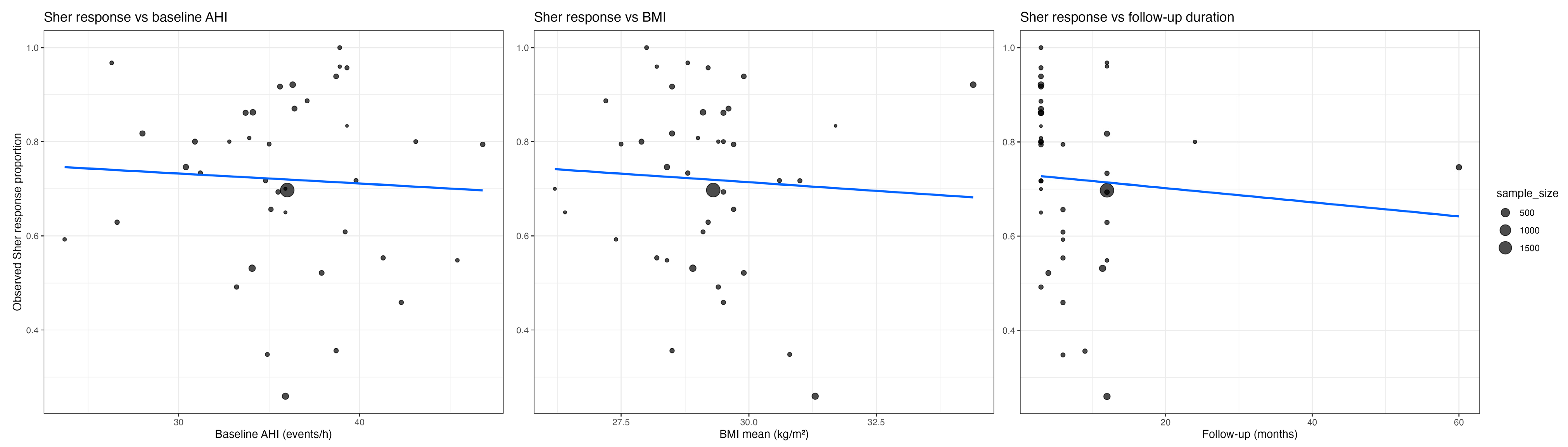
- Heterogeneity and moderator analyses
- Sensitivity analyses and publication bias
4. Discussion
5. Conclusions
Supplementary Materials
Author Contributions
Funding
Institutional Review Board Statement
Informed Consent Statement
Data Availability Statement
Conflicts of Interest
Abbreviations
| AHI | Apnea–Hypopnea Index |
| BMI | Body Mass Index |
| CI | Confidence Interval |
| CPAP | Continuous Positive Airway Pressure |
| ESS | Epworth Sleepiness Scale |
| HNS | Hypoglossal Nerve Stimulation |
| HST | Home Sleep Test |
| I2 | I-squared (measure of heterogeneity) |
| ODI | Oxygen Desaturation Index |
| OSA | Obstructive Sleep Apnea |
| PAP | Positive Airway Pressure |
| PICOTS | Population, Intervention, Comparator, Outcome, Technology, Study design |
| PRISMA | Preferred Reporting Items for Systematic Reviews and Meta-Analyses |
| PSG | Polysomnography |
| QE | Cochran’s Q statistic for heterogeneity |
| QM | Test statistic for moderators in meta-regression |
| REML | Restricted Maximum Likelihood |
| RR | Risk Ratio |
| τ2 | Between-study variance |
References
- Dempsey, J.A.; Veasey, S.C.; Morgan, B.J.; O’Donnell, C.P. Pathophysiology of sleep apnea. Physiol. Physiol. Rev. 2010, 90, 47–112. [Google Scholar] [CrossRef] [PubMed]
- Peppard, P.E.; Young, T.; Barnet, J.H.; Palta, M.; Hagen, E.W.; Hla, K.M. Increased Prevalence of Sleep-Disordered Breathing in Adults. Am. J. Epidemiol. 2013, 177, 1006–1014. [Google Scholar] [CrossRef] [PubMed]
- Pépin, J.-L.; Bailly, S.; Rinder, P.; Adler, D.; Szeftel, D.; Malhotra, A.; Cistulli, P.A.; Benjafield, A.; Lavergne, F.; Josseran, A.; et al. CPAP Therapy Termination Rates by OSA Phenotype: A French Nationwide Database Analysis. J. Clin. Med. 2021, 10, 936. [Google Scholar] [CrossRef] [PubMed]
- Sher, A.E.; Schechtman, K.B.; Piccirillo, J.F. The efficacy of surgical modifications of the upper airway in adults with obstructive sleep apnea syndrome. Sleep 1996, 19, 156–177. [Google Scholar] [CrossRef] [PubMed]
- Kim, D.H.; Kim, S.W.; Han, J.S.; Kim, G.-J.; Park, J.H.; Basurrah, M.A.; Kim, S.H.; Hwang, S.H. Comparative effectiveness of hypoglossal nerve stimulation and alternative treatments for obstructive sleep apnea: A systematic review and meta-analysis. J. Sleep Res. 2023, 33, e14017. [Google Scholar] [CrossRef] [PubMed]
- Woodson, B.T.; Strohl, K.P.; Soose, R.J.; Gillespie, M.B.; Maurer, J.T.; de Vries, N.; Padhya, T.A.; Badr, M.S.; Lin, H.; Vanderveken, O.M.; et al. Upper Airway Stimulation for Obstructive Sleep Apnea: 5-Year Outcomes. Otolaryngol.–Head Neck Surg. 2018, 159, 194–202. [Google Scholar] [CrossRef] [PubMed]
- Costantino, A.; Rinaldi, V.; Moffa, A.; Luccarelli, V.; Bressi, F.; Cassano, M.; Casale, M.; Baptista, P. Hypoglossal nerve stimulation long-term clinical outcomes: A systematic review and meta-analysis. Sleep Breath. 2019, 24, 399–411. [Google Scholar] [CrossRef] [PubMed]
- Braun, M.; Stoerzel, M.; Wollny, M.; Schoebel, C.; Ulrich Sommer, J.; Heiser, C. Patient-reported outcomes with hypoglossal nerve stimulation for treatment of obstructive sleep apnea: A systematic review and meta-analysis. Eur. Arch. Oto-Rhino-Laryngol. 2023, 280, 4627–4639. [Google Scholar] [CrossRef] [PubMed]
- Suurna, M.V.; Steffen, A.; Boon, M.; Chio, E.; Copper, M.; Patil, R.D.; Green, K.; Hanson, R.; Heiser, C.; Huntley, C.; et al. Impact of Body Mass Index and Discomfort on Upper Airway Stimulation: ADHERE Registry 2020 Update. Laryngoscope 2021, 131, 2616–2624. [Google Scholar] [CrossRef] [PubMed]
- Steffen, A.; Sommer, J.U.; Hofauer, B.; Maurer, J.T.; Hasselbacher, K.; Heiser, C. Outcome after one year of upper airway stimulation for obstructive sleep apnea in a multicenter German post-market study. Laryngoscope 2017, 128, 509–515. [Google Scholar] [CrossRef] [PubMed]
- Woodson, B.T.; Kent, D.T.; Huntley, C.; Hancock, M.K.; Van Daele, D.J.; Boon, M.S.; Huntley, T.C.; Mickelson, S.; Gillespie, M.B.; Suurna, M.V.; et al. Bilateral hypoglossal nerve stimulation for obstructive sleep apnea: A nonrandomized clinical trial. J. Clin. Sleep Med. 2025, 21, 1883–1891. [Google Scholar] [CrossRef] [PubMed]
- Eastwood, P.R.; Barnes, M.; MacKay, S.G.; Wheatley, J.R.; Hillman, D.R.; Nguyen, X.-L.; Lewis, R.; Campbell, M.C.; Petelle, B.; Walsh, J.H.; et al. Bilateral Hypoglossal Nerve Stimulation for Treatment of Adult Obstructive Sleep Apnea. Eur. Respir. J. 2019, 55, 1901320. [Google Scholar] [CrossRef] [PubMed]
- Schwartz, A.R.; Jacobowitz, O.; Eisele, D.W.; Mickelson, S.A.; Miller, M.B.; Oliven, A.; Certal, V.; Hopp, M.L.; Winslow, D.H.; Huntley, T.C.; et al. Targeted Hypoglossal Nerve Stimulation for Patients with Obstructive Sleep Apnea: A Randomized Clinical Trial. JAMA Otolaryngol.–Head Neck Surg. 2023, 149, 512–520. [Google Scholar] [CrossRef] [PubMed]
- Luo, D.; Wan, X.; Liu, J.; Tong, T. Optimally estimating the sample mean from the sample size, median, mid-range, and/or mid-quartile range. Stat. Methods Med. Res. 2018, 27, 1785–1805. [Google Scholar] [CrossRef] [PubMed]
- Alrubasy, W.A.; Abuawwad, M.T.; Taha, M.J.; Khurais, M.; Sayed, M.S.; Dahik, A.M.; Keshk, N.; Abdelhadi, S.; Serhan, H.A. Hypoglossal nerve stimulation for obstructive sleep apnea in adults: An updated systematic review and meta-analysis. Respir. Med. 2024, 234, 107826. [Google Scholar] [CrossRef] [PubMed]
- Steffen, A.; Sommer, U.J.; Maurer, J.T.; Abrams, N.; Hofauer, B.; Heiser, C. Long-term follow-up of the German post-market study for upper airway stimulation for obstructive sleep apnea. Sleep Breath. 2019, 24, 979–984. [Google Scholar] [CrossRef] [PubMed]
- Heiser, C.; Edenharter, G.; Bas, M.; Wirth, M.; Hofauer, B. Palatoglossus coupling in selective upper airway stimulation. Laryngoscope 2017, 127, E378–E383. [Google Scholar] [CrossRef] [PubMed]
- Ong, A.A.; Murphey, A.W.; Nguyen, S.A.; Soose, R.J.; Woodson, B.T.; Vanderveken, O.M.; De Vries, N.; Gillespie, M.B. Efficacy of Upper Airway Stimulation on Collapse Patterns Observed during Drug-Induced Sedation Endoscopy. Otolaryngol.—Head Neck Surg. 2016, 154, 970–977. [Google Scholar] [CrossRef] [PubMed]
- Huyett, P.; Kent, D.T.; D’Agostino, M.A.; Green, K.K.; Soose, R.J.; Kaffenberger, T.M.; Woodson, B.T.; Huntley, C.; Boon, M.S.; Heiser, C.; et al. Drug-Induced Sleep Endoscopy and Hypoglossal Nerve Stimulation Outcomes: A Multicenter Cohort Study. Laryngoscope 2021, 131, 1676–1682. [Google Scholar] [CrossRef] [PubMed]
- Kent, D.; Huyett, P.; Yu, P.; Roy, A.; Mehra, R.; Rundo, J.V.; Stahl, S.; Manchanda, S. Comparison of clinical pathways for hypoglossal nerve stimulation management: In-laboratory titration polysomnography versus home-based efficacy sleep testing. J. Clin. Sleep Med. 2023, 19, 1905–1912. [Google Scholar] [CrossRef] [PubMed]
- Hinder, D.; Schams, S.C.; Knaus, C.; Tschopp, K. Home sleep apnea testing with peripheral arterial tonometry to assess outcome in upper airway stimulation. J. Clin. Sleep Med. 2022, 18, 2197–2205. [Google Scholar] [CrossRef] [PubMed]
- Mehra, R.; Steffen, A.; Heiser, C.; Hofauer, B.; Withrow, K.; Doghramji, K.; Boon, M.; Huntley, C.; Soose, R.J.; Stevens, S.; et al. Upper Airway Stimulation versus Untreated Comparators in Positive Airway Pressure Treatment Refractory Obstructive Sleep Apnea. Ann. Am. Thorac. Soc. 2020, 17, 1610–1619. [Google Scholar] [CrossRef] [PubMed]
- Heiser, C.; Steffen, A.; Strollo, P.J.; Giaie-Miniet, C.; Vanderveken, O.M.; Hofauer, B. Hypoglossal nerve stimulation versus positive airway pressure therapy for obstructive sleep apnea. Sleep Breath. 2022, 27, 693–701. [Google Scholar] [CrossRef] [PubMed]
- Heiser, C.; Sommer, J.U.; Hofauer, B.; De Vries, N.; Ravesloot, M.J.; Vanderveken, O.M.; Jira, D. Bilateral vs Unilateral Hypoglossal Nerve Stimulation in Patients with Obstructive Sleep Apnea. OTO Open 2022, 6, 2473974X221109794. [Google Scholar] [CrossRef] [PubMed]
- Wollny, M.; Heiser, C.; Sommer, U.; Schöbel, C.; Braun, M. Adverse Events with Hypoglossal Nerve Stimulation in the Treatment of Obstructive Sleep Apnea—A Systematic Review of Clinical Trials and Real-World Data. J. Clin. Med. 2024, 13, 15. [Google Scholar] [CrossRef] [PubMed]
- Kompelli, A.R.; Ni, J.S.; Nguyen, S.A.; Lentsch, E.J.; Neskey, D.M.; Meyer, T.A. The outcomes of hypoglossal nerve stimulation in the management of OSA: A systematic review and meta-analysis. World J. Otorhinolaryngol.—Head Neck Surg. 2019, 5, 41–48. [Google Scholar] [CrossRef] [PubMed]
- Boroosan, A.; Salapatas, A.M.; Friedman, M. Clinical Predictors of OSA Treatment Success Following Implantation of a Hypoglossal Nerve Stimulation Device. Otolaryngol. Neck Surg. 2022, 167, 891–895. [Google Scholar] [CrossRef] [PubMed]
- Chao, T.N.; Thaler, E.R. Predictors of success in hypoglossal nerve stimulator implantation for obstructive sleep apnea. World J. Otorhinolaryngol.—Head Neck Surg. 2021, 7, 40–44. [Google Scholar] [CrossRef] [PubMed]
- Flynn, J.; Boyd, C.; Yalamanchali, S.; Rouse, D.; Goodwin, S.; Penn, J.; Larsen, C. The Effect of Lateral Pharyngeal Collapse Patterns on Therapy Response in Upper Airway Stimulation Surgery. Ann. Otol. Rhinol. Laryngol. 2021, 130, 985–989. [Google Scholar] [CrossRef] [PubMed]
- Friedman, M.; Jacobowitz, O.; Hwang, M.S.; Bergler, W.; Fietze, I.; Rombaux, P.; Mwenge, G.B.; Yalamanchali, S.; Campana, J.; Maurer, J.T. Targeted hypoglossal nerve stimulation for the treatment of obstructive sleep apnea: Six-month results. Laryngoscope 2016, 126, 2618–2623. [Google Scholar] [CrossRef] [PubMed]
- Gao, T.Z.; Ma, J.; Hall, D.; Pan, X.; Rings, V.K.; Zia, A.; Harris, M.K.; Chio, E.G. Hypoglossal Nerve Stimulation Therapy Outcomes in Apnea-Versus Hypopnea-Predominant Patients. Otolaryngol. Neck Surg. 2023, 169, 1674–1682. [Google Scholar] [CrossRef] [PubMed]
- Han, C.J.; Kaki, P.C.; Goldfarb, J.A.; Kaffenberger, T.M.; Molin, N.L.; Matzke, A.; Boon, M.S.; Huntley, C.T. Impact of Postoperative Weight Changes on Hypoglossal Nerve Stimulation Success for Obstructive Sleep Apnea. Otolaryngol.—Head Neck Surg. 2025, 173, 761–768. [Google Scholar] [CrossRef] [PubMed]
- Heiser, C.; Knopf, A.; Bas, M.; Gahleitner, C.; Hofauer, B. Selective upper airway stimulation for obstructive sleep apnea: A single center clinical experience. Eur. Arch. Oto-Rhino-Laryngol. 2017, 274, 1727–1734. [Google Scholar] [CrossRef] [PubMed]
- Hofauer, B.; Philip, P.; Wirth, M.; Knopf, A.; Heiser, C. Effects of upper-airway stimulation on sleep architecture in patients with obstructive sleep apnea. Sleep Breath. 2017, 21, 901–908. [Google Scholar] [CrossRef] [PubMed]
- Huntley, C.; Kaffenberger, T.; Doghramji, K.; Soose, R.; Boon, M. Upper Airway Stimulation for Treatment of Obstructive Sleep Apnea: An Evaluation and Comparison of Outcomes at Two Academic Centers. J. Clin. Sleep Med. 2017, 13, 1075–1079. [Google Scholar] [CrossRef] [PubMed][Green Version]
- Huntley, C.; Steffen, A.; Doghramji, K.; Hofauer, B.; Heiser, C.; Boon, M. Upper Airway Stimulation in Patients with Obstructive Sleep Apnea and an Elevated Body Mass Index: A Multi-institutional Review: Impact of BMI on Upper Airway Stimulation. Laryngoscope 2018, 128, 2425–2428. [Google Scholar] [CrossRef] [PubMed]
- Huntley, C.; Chou, D.W.; Doghramji, K.; Boon, M. Comparing Upper Airway Stimulation to Expansion Sphincter Pharyngoplasty: A Single University Experience. Ann. Otol. Rhinol. Laryngol. 2018, 127, 379–383. [Google Scholar] [CrossRef] [PubMed]
- Huntley, C.; Topf, M.C.; Christopher, V.; Doghramji, K.; Curry, J.; Boon, M. Comparing Upper Airway Stimulation to Transoral Robotic Base of Tongue Resection for Treatment of Obstructive Sleep Apnea. Laryngoscope 2019, 129, 1010–1013. [Google Scholar] [CrossRef] [PubMed]
- Kaffenberger, T.M.; Sina, E.M.; Hambach, B.; Kaki, P.; Fuleihan, A.; Boon, M.; Huntley, C. How we measure hypoglossal nerve stimulator outcome matters: Titration vs single amplitude efficacy sleep studies. J. Clin. Sleep Med. 2025, 21, 47–53. [Google Scholar] [CrossRef] [PubMed]
- Kezirian, E.J.; Goding, G.S., Jr.; Malhotra, A.; O’donoghue, F.J.; Zammit, G.; Wheatley, J.R.; Catcheside, P.G.; Smith, P.L.; Schwartz, A.R.; Walsh, J.H.; et al. Hypoglossal nerve stimulation improves obstructive sleep apnea: 12-month outcomes. J. Sleep Res. 2014, 23, 77–83. [Google Scholar] [CrossRef] [PubMed]
- Lee, C.H.; Seay, E.G.; Walters, B.K.; Scalzitti, N.J.; Dedhia, R.C. Therapeutic Positive Airway Pressure Level Predicts Response to Hypoglossal Nerve Stimulation for Obstructive Sleep Apnea. J. Clin. Sleep Med. 2019, 15, 1165–1172. [Google Scholar] [CrossRef] [PubMed]
- Lenze, N.R.; Alazawi, D.; Dailey, M.; Brown, C.; Hoff, P.T.; Goldstein, C.A. Evaluating changes in hypoglossal nerve stimulator use over time and long-term adherence. Sleep Breath. 2025, 29, 249. [Google Scholar] [CrossRef] [PubMed]
- Mahmoud, A.F.; Thaler, E.R. Upper airway stimulation therapy and prior airway surgery for obstructive sleep apnea. Laryngoscope 2017, 128, 1486–1489. [Google Scholar] [CrossRef] [PubMed]
- Mahmoud, A.F.; Thaler, E.R. Outcomes of Hypoglossal Nerve Upper Airway Stimulation among Patients with Isolated Retropalatal Collapse. Otolaryngol.—Head Neck Surg. 2019, 160, 1124–1129. [Google Scholar] [CrossRef] [PubMed]
- Patel, J.; Daniels, K.; Bogdan, L.; Huntley, C.; Boon, M. Effect of Gender, Age, and Profound Disease on Upper Airway Stimulation Outcomes. Ann. Otol. Rhinol. Laryngol. 2020, 129, 772–780. [Google Scholar] [CrossRef] [PubMed]
- Patil, R.D.; Hong, M.P.; Ishman, S.L. Hypoglossal Nerve Stimulation in Veterans with Comorbid Insomnia and Sleep Apnea. Otolaryngol.—Head Neck Surg. 2021, 164, 1345–1353. [Google Scholar] [CrossRef] [PubMed]
- Dhanda Patil, R.; Sarber, K.M.; Epperson, M.V.; Tabangin, M.; Altaye, M.; Mesa, F.; Ishman, S.L. Hypoglossal Nerve Stimulation: Outcomes in Veterans with Obstructive Sleep Apnea and Common Comorbid Post-traumatic Stress Disorder. Laryngoscope 2021, 131, S1–S11. [Google Scholar] [CrossRef] [PubMed]
- Sarber, K.M.; Chang, K.W.; Ishman, S.L.; Epperson, M.V.; Patil, R.D. Hypoglossal Nerve Stimulator Outcomes for Patients Outside the U.S. FDA Recommendations. Laryngoscope 2020, 130, 866–872. [Google Scholar] [CrossRef] [PubMed]
- Shah, J.; Russell, J.O.; Waters, T.; Kominsky, A.H.; Trask, D. Uvulopalatopharyngoplasty vs CN XII stimulation for treatment of obstructive sleep apnea: A single institution experience. Am. J. Otolaryngol. 2018, 39, 266–270. [Google Scholar] [CrossRef] [PubMed]
- Steffen, A.; Abrams, N.; Suurna, M.V.; Wollenberg, B.; Hasselbacher, K. Upper-Airway Stimulation Before, After, or Without Uvulopalatopharyngoplasty: A Two-Year Perspective. Laryngoscope 2019, 129, 514–518. [Google Scholar] [CrossRef] [PubMed]
- Van de Heyning, P.H.; Badr, M.S.; Baskin, J.Z.; Cramer Bornemann, M.A.; De Backer, W.A.; Dotan, Y.; Hohenhorst, W.; Knaack, L.; Lin, H.S.; Maurer, J.T.; et al. Implanted upper airway stimulation device for obstructive sleep apnea. Laryngoscope 2012, 122, 1626–1633. [Google Scholar] [CrossRef] [PubMed]
- Van Loo, D.; Dieltjens, M.; Engelen, S.; Verbraecken, J.; Vanderveken, O.M. Hypoglossal Nerve Stimulation Therapy in a Belgian Cohort of Obstructive Sleep Apnea Patients. Life 2024, 14, 788. [Google Scholar] [CrossRef] [PubMed]
- Veugen, C.C.A.F.M.; Dieleman, E.; Hardeman, J.A.; Stokroos, R.J.; Copper, M.P. Upper Airway Stimulation in Patients with Obstructive Sleep Apnea: Long-Term Surgical Success, Respiratory Outcomes, and Patient Experience. Int. Arch. Otorhinolaryngol. 2023, 27, e43–e49. [Google Scholar] [CrossRef] [PubMed]
- Vonk, P.E.; Ravesloot, M.J.L.; van Maanen, J.P.; de Vries, N. Short-term results of upper airway stimulation in obstructive sleep apnoea patients: The Amsterdam experience. J. Laryngol. Otol. 2020, 134, 447–452. [Google Scholar] [CrossRef] [PubMed]
- Wang, D.; Modik, O.; Sturm, J.J.; Metkus, J.; Oaks-Leaf, R.; Kaplan, A.; Ni, Q.; Suurna, M. Neurophysiological profiles of responders and nonresponders to hypoglossal nerve stimulation: A single-institution study. J. Clin. Sleep Med. 2022, 18, 1327–1333. [Google Scholar] [CrossRef] [PubMed]
- Zhu, Z.; Hofauer, B.; Wirth, M.; Frohnhofen, H.; Heiser, C. Selective upper airway stimulation in older patients. Respir. Med. 2018, 140, 77–81. [Google Scholar] [CrossRef] [PubMed]
- Huntley, C.; Boon, M.; Tschopp, S.; Tschopp, K.; Jenks, C.M.; Thaler, E.; Baptista Jardin, P.; Shah, J.; Kominsky, A.; Kezirian, E.J.; et al. Comparison of Traditional Upper Airway Surgery and Upper Airway Stimulation for Obstructive Sleep Apnea. Ann. Otol. Rhinol. Laryngol. 2020, 130, 370–376. [Google Scholar] [CrossRef] [PubMed]



| Outcome | Pooled Estimate (95% CI Lower Bound, 95% CI Upper Bound) | Prediction Interval (Lower Bound, Upper Bound) | I2 | Tau2 |
|---|---|---|---|---|
| AHI | −23.3 (−25.7, −21.1) | −37.2, −9.6 | 96.8 | 48.4 |
| ODI | −14.5 (−16.7, −12.1) | −23.3, −5.5 | 84.2 | 19.3 |
| ESS | −4.5 (−5.0, −4.1) | −6.7, −2.3 | 86.4 | 1.2 |
| Moderator | Effect Estimate (β) | 95% CI | p-Value |
|---|---|---|---|
| Baseline AHI | −0.011 | −0.082 to 0.060 | 0.761 |
| BMI | −0.025 | −0.215 to 0.264 | 0.840 |
| Follow-up (months) | −0.009 | −0.044 to 0.025 | 0.602 |
| (A) | |||||||
| Cohort | Title | Study Design | Study Type | Device | Laterality | Stimulation Modality | Implant Configuration |
| Boroosan 2022 [27] | Clinical Predictors of OSA Treatment Success Following Implantation of a Hypoglossal Nerve Stimulation Device. | Retrospective cohort study | Single-center | Inspire UAS (Inspire Medical Systems, Golden Valley, MN, USA) | Unilateral | Breathing-synchronized | Fully implantable |
| Chao 2020 [28] | Predictors of success in hypoglossal nerve stimulator implantation for obstructive sleep apnea. | Retrospective cohort study | Single-center | Inspire UAS | Unilateral | Breathing-synchronized | Fully implantable |
| Eastwood 2020 [12] | Bilateral hypoglossal nerve stimulation for treatment of adult obstructive sleep apnoea. | Prospective cohort study | Multi-center | Nyxoah Genio (Nyxoah SA, Mont-Saint-Guibert, Belgium) | Bilateral | Phasic | Partial implantable |
| Flynn 2021 [29] | The Effect of Lateral Pharyngeal Collapse Patterns on Therapy Response in Upper Airway Stimulation Surgery. | Retrospective cohort study | Single-center | Inspire UAS | Unilateral | Breathing-synchronized | Fully implantable |
| Friedman 2016 [30] | Targeted hypoglossal nerve stimulation for the treatment of obstructive sleep apnea: Six-month results. | Prospective cohort study | Multi-center | LivaNova aura6000 (LivaNova, London, United Kingdom) | Unilateral | Continuous | Fully implantable |
| Gao 2023 [31] | Hypoglossal Nerve Stimulation Therapy Outcomes in Apnea—Versus Hypopnea-Predominant Patients. | Retrospective cohort study | Single-center | Inspire UAS | Unilateral | Breathing-synchronized | Fully implantable |
| Han 2025 [32] | Impact of Postoperative Weight Changes on Hypoglossal Nerve Stimulation Success for Obstructive Sleep Apnea. | Retrospective cohort study | Single-center | Inspire UAS | Unilateral | Breathing-synchronized | Fully implantable |
| Heiser 2017 [33] | Selective upper airway stimulation for obstructive sleep apnea: a single center clinical experience. | Prospective cohort study | Single-center | Inspire UAS | Unilateral | Breathing-synchronized | Fully implantable |
| Heiser 2022_Genio [24] | Bilateral vs. Unilateral Hypoglossal Nerve Stimulation in Patients with Obstructive Sleep Apnea. | Prospective cohort study | Single-center | Nyxoah Genio | Bilateral | Phasic | Partially implantable |
| Heiser 2022_UAS [24] | Bilateral vs. Unilateral Hypoglossal Nerve Stimulation in Patients with Obstructive Sleep Apnea. | Prospective cohort study | Single-center | Inspire UAS | Unilateral | Breathing-synchronized | Fully implantable |
| Hofauer 2017 [34] | Effects of upper airway stimulation on sleep architecture in patients with obstructive sleep apnea. | Retrospective cohort study | Single-center | Inspire UAS | Unilateral | Breathing-synchronized | Fully implantable |
| Huntley 2017 [35] | Upper Airway Stimulation for Treatment of Obstructive Sleep Apnea: An Evaluation and Comparison of Outcomes at Two Academic Centers. | Retrospective cohort study | Multi-center | Inspire UAS | Unilateral | Breathing-synchronized | Fully implantable |
| Huntley 2018_study1 [36] | Upper Airway Stimulation in Patients with Obstructive Sleep Apnea and an Elevated Body Mass Index: A Multi-institutional Review. | Retrospective cohort study | Multi-center | Inspire UAS | Unilateral | Breathing-synchronized | Fully implantable |
| Huntley 2018_study2 [37] | Comparing Upper Airway Stimulation to Expansion Sphincter Pharyngoplasty: A Single University Experience. | Retrospective cohort study | Single-center | Inspire UAS | Unilateral | Breathing-synchronized | Fully implantable |
| Huntley 2019 [38] | Comparing Upper Airway Stimulation to Transoral Robotic Base of Tongue Resection for Treatment of Obstructive Sleep Apnea. | Retrospective cohort study | Single-center | Inspire UAS | Unilateral | Breathing-synchronized | Fully implantable |
| Kaffenberger 2025 [39] | How we measure hypoglossal nerve stimulator outcome matters: titration vs. single amplitude efficacy sleep studies. | Retrospective cohort study | Multi-center | Inspire UAS | Unilateral | Breathing-synchronized | Fully implantable |
| Kent 2023 [20] | Comparison of clinical pathways for hypoglossal nerve stimulation management: in-laboratory titration polysomnography vs. home-based efficacy sleep testing. | Randomized controlled trial | Multi-center | Inspire UAS | Unilateral | Breathing-synchronized | Fully implantable |
| Kezirian 2014 [40] | Hypoglossal nerve stimulation improves obstructive sleep apnea: 12-month outcomes. | Prospective cohort study | Multi-center | Apnex HGNS (Apnex Medical, St. Paul, MN, United States) | Unilateral | Breathing-synchronized | Fully implantable |
| Lee 2019 [41] | Therapeutic Positive Airway Pressure Level Predicts Response to Hypoglossal Nerve Stimulation for Obstructive Sleep Apnea. | Retrospective cohort study | Multi-center | Inspire UAS | Unilateral | Breathing-synchronized | Fully implantable |
| Lenze 2025 [42] | Evaluating changes in hypoglossal nerve stimulator use over time and long-term adherence. | Retrospective cohort study | Single-center | Inspire UAS | Unilateral | Breathing-synchronized | Fully implantable |
| Mahmoud 2017 [43] | Upper airway stimulation therapy and prior airway surgery for obstructive sleep apnea. | Retrospective cohort study | Single-center | Inspire UAS | Unilateral | Breathing-synchronized | Fully implantable |
| Mahmoud 2019 [44] | Outcomes of Hypoglossal Nerve Upper Airway Stimulation among Patients with Isolated Retropalatal Collapse. | Retrospective cohort study | Single-center | Inspire UAS | Unilateral | Breathing-synchronized | Fully implantable |
| Patel 2020 [45] | Effect of Gender. Age. and Profound Disease on Upper Airway Stimulation Outcomes. | Retrospective cohort study | Single-center | Inspire UAS | Unilateral | Breathing-synchronized | Fully implantable |
| Patil 2021_study1 [46] | Hypoglossal Nerve Stimulation in Veterans with Comorbid Insomnia and Sleep Apnea. | Retrospective cohort study | Single-center | Inspire UAS | Unilateral | Breathing-synchronized | Fully implantable |
| Patil 2021_study2 [47] | Hypoglossal Nerve Stimulation: Outcomes in Veterans with Obstructive Sleep Apnea and Common Comorbid Post-traumatic Stress Disorder. | Retrospective cohort study | Single-center | Inspire UAS | Unilateral | Breathing-synchronized | Fully implantable |
| Sarber 2020 [48] | Hypoglossal Nerve Stimulator Outcomes for Patients Outside the U.S. FDA Recommendations. | Retrospective cohort study | Single-center | Inspire UAS | Unilateral | Breathing-synchronized | Fully implantable |
| Schwartz 2023 [13] | Targeted Hypoglossal Nerve Stimulation for Patients with Obstructive Sleep Apnea: A Randomized Clinical Trial. | Randomized controlled trial | Multi-center | LivaNova aura6000 | Unilateral | Continuous | Fully implantable |
| Shah 2018 [49] | Uvulopalatopharyngoplasty vs. CN XII stimulation for treatment of obstructive sleep apnea: A single institution experience. | Retrospective cohort study | Single-center | Inspire UAS | Unilateral | Breathing-synchronized | Fully implantable |
| Steffen 2018 [10] | Outcome after one year of upper airway stimulation for obstructive sleep apnea in a multi-center German post-market study. | Prospective cohort study | Multi-center | Inspire UAS | Unilateral | Breathing-synchronized | Fully implantable |
| Steffen 2019 [50] | Upper Airway Stimulation Before. After. or Without Uvulopalatopharyngoplasty: A Two-Year Perspective. | Retrospective cohort study | Single-center | Inspire UAS | Unilateral | Breathing-synchronized | Fully implantable |
| Suurna 2021 [9] | Impact of Body Mass Index and Discomfort on Upper Airway Stimulation: ADHERE Registry 2020 Update. | Retrospective cohort study | Multi-center | Inspire UAS | Unilateral | Breathing-synchronized | Fully implantable |
| Van de Heyning 2012 [51] | Implanted upper airway stimulation device for obstructive sleep apnea. | Prospective cohort study | Single-center | Inspire UAS | Unilateral | Breathing-synchronized | Fully implantable |
| Van Loo 2024 [52] | Hypoglossal Nerve Stimulation Therapy in a Belgian Cohort of Obstructive Sleep Apnea Patients. | Prospective cohort study | Single-center | Inspire UAS | Unilateral | Breathing-synchronized | Fully implantable |
| Veugen 2023 [53] | Upper Airway Stimulation in Patients with Obstructive Sleep Apnea: Long-Term Surgical Success. Respiratory Outcomes. and Patient Experience. | Retrospective cohort study | Single-center | Inspire UAS | Unilateral | Breathing-synchronized | Fully implantable |
| Vonk 2020 [54] | Short-term results of upper airway stimulation in obstructive sleep apnoea patients: the Amsterdam experience. | Retrospective cohort study | Single-center | Inspire UAS | Unilateral | Breathing-synchronized | Fully implantable |
| Wang 2022 [55] | Neurophysiological profiles of responders and non-responders to hypoglossal nerve stimulation: a single-institution study. | Retrospective cohort study | Single-center | Inspire UAS | Unilateral | Breathing-synchronized | Fully implantable |
| Woodson 2018 [6] | Upper Airway Stimulation for Obstructive Sleep Apnea: 5-Year Outcomes. | Prospective cohort study | Multi-center | Inspire UAS | Unilateral | Breathing-synchronized | Fully implantable |
| Woodson 2025 [11] | Bilateral hypoglossal nerve stimulation for obstructive sleep apnea: a non-randomized clinical trial. | Prospective cohort study | Multi-center | Nyxoah Genio | Bilateral | Phasic | Partially implantable |
| Zhu 2018 [56] | Selective upper airway stimulation in older patients. | Retrospective cohort study | Single-center | Inspire UAS | Unilateral | Breathing-synchronized | Fully implantable |
| (B) | |||||||
| Cohort | Title | Study Design | Study Arm | Device | Laterality | Stimulation Modality | Implant Configuration |
| Heiser 2022_Genio [24] | Bilateral vs. Unilateral Hypoglossal Nerve Stimulation in Patients with Obstructive Sleep Apnea. | Prospective comparative cohort study | HNS | Nyxoah Genio | Nyxoah Genio | Bilateral | Phasic |
| Heiser 2022_UAS [24] | Bilateral vs. Unilateral Hypoglossal Nerve Stimulation in Patients with Obstructive Sleep Apnea. | Prospective comparative cohort study | Comparator | Inspire UAS | Inspire UAS | Unilateral | Breathing-synchronized |
| Huntley 2018_UAS [37] | Comparing Upper Airway Stimulation to Expansion Sphincter Pharyngoplasty: A Single University Experience. | Retrospective matched-cohort study | HNS | Inspire UAS | Inspire UAS | Unilateral | Breathing-synchronized |
| Huntley 2018_ESP [37] | Comparing Upper Airway Stimulation to Expansion Sphincter Pharyngoplasty: A Single University Experience. | Retrospective matched-cohort study | Comparator | Surgery ESP | n/a | n/a | n/a |
| Huntley 2019_UAS [38] | Comparing Upper Airway Stimulation to Transoral Robotic Base of Tongue Resection for Treatment of Obstructive Sleep Apnea. | Retrospective matched-cohort study | HNS | Inspire UAS | Inspire UAS | Unilateral | Breathing-synchronized |
| Huntley 2019_TORS [38] | Comparing Upper Airway Stimulation to Transoral Robotic Base of Tongue Resection for Treatment of Obstructive Sleep Apnea. | Retrospective matched-cohort study | Comparator | Surgery (TORS) | n/a | n/a | n/a |
| Huntley 2021_UAS [57] | Comparison of Traditional Upper Airway Surgery and Upper Airway Stimulation for Obstructive Sleep Apnea. | Retrospective matched-cohort study | HNS | Inspire UAS | Inspire UAS | Unilateral | Breathing-synchronized |
| Huntley 2021_UA-Sx [57] | Comparison of Traditional Upper Airway Surgery and Upper Airway Stimulation for Obstructive Sleep Apnea. | Retrospective matched-cohort study | Comparator | Surgery (diverse) | n/a | n/a | n/a |
| Schwartz 2023_Aura-active [13] | Targeted Hypoglossal Nerve Stimulation for Patients with Obstructive Sleep Apnea: A Randomized Clinical Trial. | Randomized controlled trial | HNS | Active stimulation | LivaNova aura6000 | Unilateral | Continuous |
| Schwartz 2023_Aura-control [13] | Targeted Hypoglossal Nerve Stimulation for Patients with Obstructive Sleep Apnea: A Randomized Clinical Trial. | Randomized controlled trial | Comparator | Control (Stimulation not active) | LivaNova aura6000 | Unilateral | Continuous |
| Shah 2018_UAS [49] | Uvulopalatopharyngoplasty vs. CN XII stimulation for treatment of obstructive sleep apnea: A single institution experience. | Retrospective matched-cohort study | HNS | Inspire UAS | Inspire UAS | Unilateral | Breathing-synchronized |
| Shah 2018_UPPP [49] | Uvulopalatopharyngoplasty vs. CN XII stimulation for treatment of obstructive sleep apnea: A single institution experience. | Retrospective cohort study | Comparator | Surgery (UPPP) | n/a | n/a | n/a |
Disclaimer/Publisher’s Note: The statements, opinions and data contained in all publications are solely those of the individual author(s) and contributor(s) and not of MDPI and/or the editor(s). MDPI and/or the editor(s) disclaim responsibility for any injury to people or property resulting from any ideas, methods, instructions or products referred to in the content. |
© 2026 by the authors. Licensee MDPI, Basel, Switzerland. This article is an open access article distributed under the terms and conditions of the Creative Commons Attribution (CC BY) license.
Share and Cite
Heiser, C.; Braun, M.; Huntley, C.; Hutz, M.; Kaffenberger, T.M.; Boon, M. Hypoglossal Nerve Stimulation for Obstructive Sleep Apnea: A Systematic Review and Meta-Analysis on Responder-Based Outcomes and Between-Study Heterogeneity. J. Clin. Med. 2026, 15, 5180. https://doi.org/10.3390/jcm15135180
Heiser C, Braun M, Huntley C, Hutz M, Kaffenberger TM, Boon M. Hypoglossal Nerve Stimulation for Obstructive Sleep Apnea: A Systematic Review and Meta-Analysis on Responder-Based Outcomes and Between-Study Heterogeneity. Journal of Clinical Medicine. 2026; 15(13):5180. https://doi.org/10.3390/jcm15135180
Chicago/Turabian StyleHeiser, Clemens, Marcel Braun, Colin Huntley, Michael Hutz, Thomas Michael Kaffenberger, and Maurits Boon. 2026. "Hypoglossal Nerve Stimulation for Obstructive Sleep Apnea: A Systematic Review and Meta-Analysis on Responder-Based Outcomes and Between-Study Heterogeneity" Journal of Clinical Medicine 15, no. 13: 5180. https://doi.org/10.3390/jcm15135180
APA StyleHeiser, C., Braun, M., Huntley, C., Hutz, M., Kaffenberger, T. M., & Boon, M. (2026). Hypoglossal Nerve Stimulation for Obstructive Sleep Apnea: A Systematic Review and Meta-Analysis on Responder-Based Outcomes and Between-Study Heterogeneity. Journal of Clinical Medicine, 15(13), 5180. https://doi.org/10.3390/jcm15135180