Systematic Review

Clinical Outcomes of Early Administration of Proprotein Convertase Subtilisin/Kexin Type 9 Inhibitors in East Asian Patients with Acute Ischemic Stroke: A Systematic Review and Meta-Analysis

1
College of Medicine, King Saud Bin Abdulaziz University for Health Sciences, Jeddah 21423, Saudi Arabia
2
Ministry of National Guard–Health Affairs, Jeddah 11426, Saudi Arabia
3
Neuroscience Center of Excellence, King Faisal Specialist Hospital and Research Center, Riyadh 11211, Saudi Arabia
4
College of Medicine, Ibn Sina National College for Medical Studies, Jeddah 22421, Saudi Arabia
*
Author to whom correspondence should be addressed.
J. Clin. Med. 2026, 15(13), 5169; https://doi.org/10.3390/jcm15135169
Submission received: 23 May 2026 / Revised: 22 June 2026 / Accepted: 24 June 2026 / Published: 2 July 2026

Abstract

Background: Dyslipidemia is a modifiable risk factor and predictive biomarker for acute ischemic stroke (AIS) that necessitates early, aggressive lipid-lowering therapy to achieve target low-density lipoprotein cholesterol (LDL-C) levels for primary and secondary prevention. In certain patients, this can be difficult to achieve with statins alone. Proprotein convertase subtilisin/kexin type 9 inhibitor (PCSK9i) lipid-lowering agents may improve outcomes when introduced early. This review assessed whether early PCSK9i administration (within 3 weeks of AIS) reduced early neurological deterioration (END), recurrent stroke/transient ischemic attack (TIA), poor functional outcomes, and mortality. Methods: This systematic review and meta-analysis included randomized clinical trials (RCTs) and observational studies. Random-effects meta-analysis and subgroup and sensitivity analyses were used to assess whether effects differed by treatment timing (≤72 vs. >72 h) and study design. Results: Eight studies (three randomized clinical trials) in East Asian cohorts were included. Early PCSK9i initiation significantly reduced END compared with usual care (odds ratio [OR]: 0.39; 95% confidence interval [CI]: 0.26–0.57). Stroke/TIA recurrence and all-cause mortality within 6 months of stroke were also significantly reduced in the PCSK9i group (OR: 0.47; 95% CI: 0.28–0.77 and OR: 0.33; 95% CI: 0.15–0.72, respectively), and early initiation was associated with a greater likelihood of good functional outcomes at 90 days (OR: 2.28; 95% CI: 1.48–3.51). Sensitivity analyses yielded consistent results. Conclusions: Early PCSK9i initiation within 3 weeks of AIS onset was associated with lower rates of END, recurrent stroke/TIA, and mortality, although the certainty of evidence was limited by the small number of included studies and the predominantly observational data. Outcomes did not differ significantly by initiation timing within this period. Large-scale trials in diverse populations are needed to define the optimal initiation window and long-term clinical effects.

1. Introduction

Acute ischemic stroke (AIS) is defined as a sudden onset of neurological deficits resulting from focal cerebral, spinal, or retinal infarction [1]. Dyslipidemia, particularly elevated low-density lipoprotein cholesterol (LDL-C), is a major risk factor for AIS and is commonly used as a predictive biomarker for stroke risk [2]. Consequently, clinical guidelines endorse a “lower-is-better” strategy for LDL-C levels for primary and secondary stroke prevention [3]. This is typically achieved through early initiation of treatment with statins [4]; however, attaining target LDL-C levels can be difficult in some patients, as the maximum required dose to achieve optimal reduction may be intolerable due to adverse effects [3]. In such cases, combining non-statin lipid-lowering agents, such as proprotein convertase subtilisin/kexin type 9 inhibitors (PCSK9is), with statins can produce synergistic effects and mitigate statin-related adverse effects [5]. Moreover, early addition of PCSK9i to statin therapy reduces early neurological deterioration (END) [6,7] and stroke recurrence [8,9] and improves functional outcomes following AIS [10].
Existing studies have largely addressed PCSK9i use in chronic atherosclerotic disease or acute coronary syndrome (ACS); however, no comprehensive review has examined the effects of early PCSK9i initiation in AIS, in which the ischemic penumbra is most vulnerable to early deterioration. Therefore, in this systematic review and meta-analysis, we aimed to evaluate the effect of early PCSK9i administration (within 3 weeks of AIS onset) on END, recurrent stroke and/or transient ischemic attack (TIA), functional outcomes, and mortality in AIS.

2. Methods

This study adhered to the Preferred Reporting Items for Systematic Reviews and Meta-Analyses (PRISMA) guidelines. The PRISMA checklist is presented in Supplementary Tables S3 and S4. The study was conducted according to a pre-specified protocol registered in the International Prospective Register of Systematic Reviews (Registration: https://www.crd.york.ac.uk/prospero/ (accessed on 24 February 2026); ID: CRD420251000814).

2.1. Search Strategy and Selection Criteria

Databases (Medline/PubMed, Web of Science, Ovid-Embase, Cochrane Library, Scopus, Google Scholar, and the Virtual Health Library) were systematically searched from their inception to 14 March 2025. The search strategy (Table S1) combined keywords and Medical Subject Headings terms related to ischemic stroke and PCSK9is, including alirocumab and evolocumab. Prior reviews and bibliographies were manually screened to identify additional eligible articles. No restrictions on language or publication date were applied to maximize the inclusion of all relevant data. Only peer-reviewed articles were included. Two non-English studies were translated into English by the medical library at our institution to minimize language bias.
Clinical trials and observational studies were included if they met the following criteria: (1) patients aged ≥18 years diagnosed with AIS of atherosclerotic or cardioembolic origin; (2) early administration of PCSK9is (within 3 weeks of AIS onset); (3) presence or absence of a control group receiving placebo or standard of care (SOC) treatment; and (4) evaluation of END, recurrent stroke and/or TIA, functional outcomes, mortality, or changes in lipid profile following intervention. The exclusion criteria were as follows: (1) case reports, case series, animal studies, or literature reviews; (2) unclear timing of stroke onset or PCSK9i administration or if treatment was initiated beyond 3 weeks; and (3) conference abstracts or ongoing trials without a published full-text article.

2.2. Study Selection and Data Extraction

After removing duplicate records, titles and abstracts were independently manually screened by two reviewers selected from the author group (H.A., M.A., A.B., Sh.A., and N.A.) to identify eligible articles. Any discrepancies were resolved by consultation with a third reviewer. The same procedure was applied during full-text screening. Two reviewers then independently manually extracted data from the included studies, and any disagreements were resolved through discussion. Extracted data included study characteristics, patient demographics, intervention details and associated adverse events (AEs), and changes in clinical and laboratory outcomes following treatment.

2.3. Study Outcomes

Primary outcomes included all-cause mortality, stroke/TIA recurrence within 6 months, and incidence of END (a ≥2-point increase on the National Institutes of Health Stroke Scale [NIHSS] or 1-point increase in motor function within 7 days of AIS onset). Secondary outcomes included changes in 90-day modified Rankin scale (mRS) scores, with a good functional outcome defined as mRS 0–2 at 90 days, LDL-C levels from baseline, and AEs.

2.4. Risk-of-Bias and Quality Assessment

The quality of the included randomized controlled trials (RCTs) was assessed using the revised Cochrane Risk of Bias tool for randomized trials. Ratings in its five domains were used to classify each trial as low risk, some concerns, or high risk [11]. The Newcastle–Ottawa scale was used to evaluate the quality of observational studies. Each study was assigned a score ranging from 0 to 9 based on selection, comparability, and outcome/exposure domains. A total score ≥7 indicated good quality; 5–6, fair quality; and <5, poor quality [12]. Two authors independently evaluated the risk of bias for each study, and a third author was consulted to resolve any disagreements.

2.5. Statistical Analysis

Statistical analyses were conducted using Review Manager (RevMan) version 9.4.2 [13]. Most studies reported outcomes as means and standard deviations. For studies presenting LDL-C levels as medians and interquartile ranges, corresponding means and standard deviations were estimated using the method proposed by Wan et al. [14]. In addition, LDL-C values reported in mg/dL were converted to mmol/L (÷38.67). Continuous variables were expressed as mean differences (MDs), whereas dichotomous outcomes were analyzed as odds ratios (ORs) with 95% confidence intervals (CIs) based on event counts or total participants in each group. Random-effects meta-analysis with inverse-variance weighting was utilized for all outcomes to account for potential heterogeneity.
Heterogeneity was assessed using the I2 statistic (proportion of total variability between studies due to heterogeneity) and the Cochran Q test. An I2 ≥ 50% or p < 0.05 was considered to indicate significant heterogeneity. Because of the limited number of studies included in each analysis, publication bias was not assessed. Subgroup and sensitivity analyses were conducted to investigate the effects of treatment timing (≤72 vs. >72 h) on all-cause mortality and recurrent stroke/TIA and study design (RCT vs. observational study) on END, all-cause mortality, and recurrent stroke/TIA. Additionally, a subgroup analysis excluding studies with converted LDL-C levels was performed.

3. Results

3.1. Study Selection

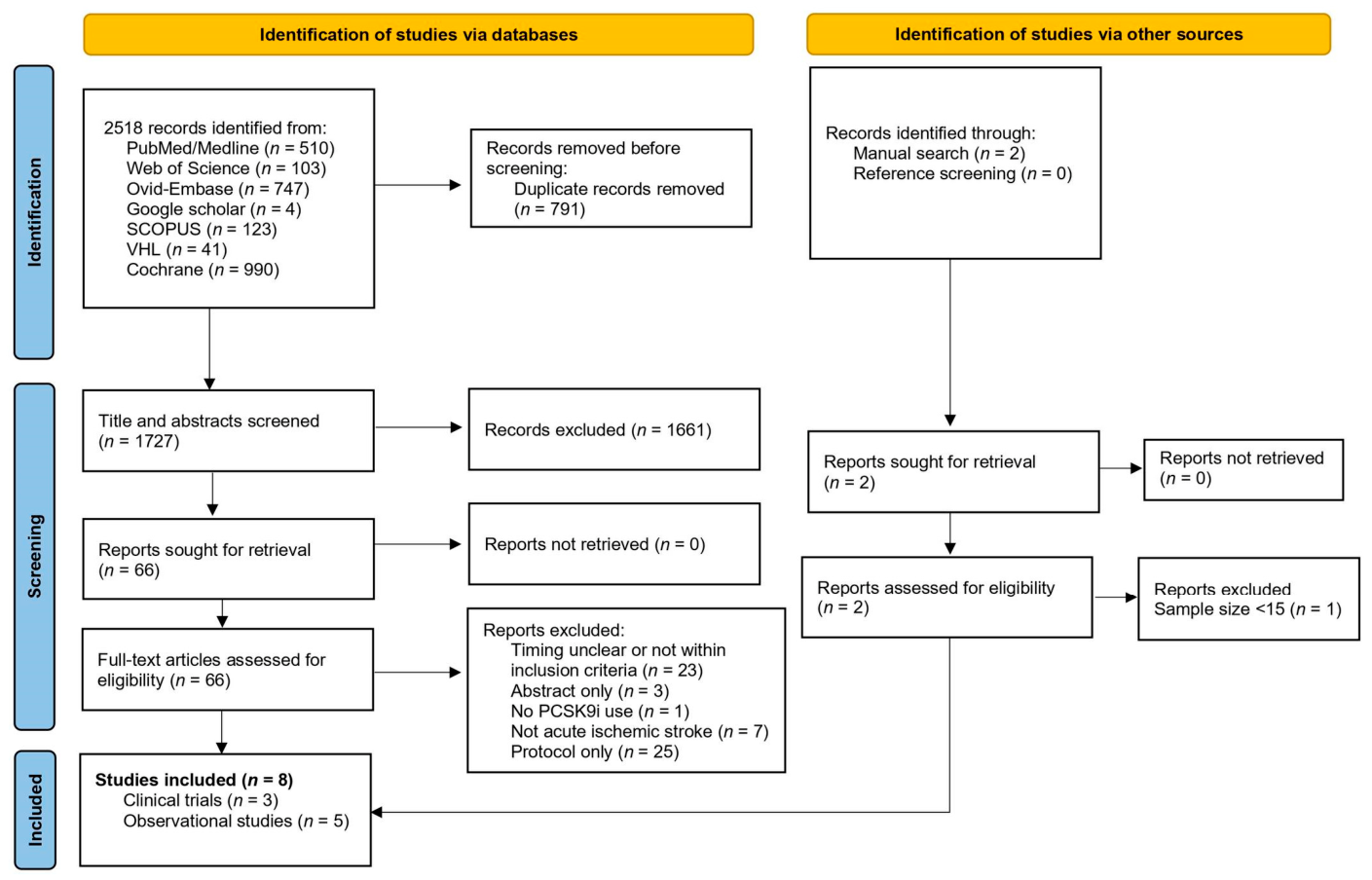
Overall, 2518 records were identified; 1 additional study was obtained through manual screening. After removing 791 duplicates, 1727 records were screened by title and abstract. Sixty-six articles underwent full-text review; 59 were excluded because of the following reasons: unclear or delayed medication timing beyond 3 weeks after stroke onset (n = 23), abstract only (n = 3), non-acute AIS populations (n = 7), absence of PCSK9i use (n = 1), and study protocol only (n = 25). Eight studies met the inclusion criteria and were included in the final synthesis (Figure 1).

3.2. Study Characteristics

Table 1 summarizes the characteristics of the eight included studies. Among these, four were retrospective studies, three were RCTs, and one was a prospective study. The number of patients per study varied significantly (120–661). The proportions of male patients were 22.4–72%, with mean/median ages ranging from 60 to 69 years. Most studies (n = 6) primarily involved patients with large artery atherosclerosis and those within 24–72 h of stroke onset.

3.3. Patients’ Baseline Characteristics

Among the vascular risk factors, hypertension yielded the highest prevalence (60.8–83.3%), followed by diabetes mellitus (18.7–45.8%), coronary artery disease (6.67–41.6%), and previous ischemic stroke (9.0–37.6%). The mean or median baseline LDL-C levels ranged from 2.46 to 3.55 mmol/L (Table 2).

3.4. Intervention Details

All included studies investigated PCSK9i as an add-on therapy to the standard lipid-lowering agents: statins and/or ezetimibe. Evolocumab was typically administered at 240 mg monthly or 140 mg every 2 weeks; alirocumab was given either as a single dose or at 75 mg every 2 weeks. Most control groups received high-intensity statin treatment with or without ezetimibe. Timing of treatment initiation varied from 24 h to 14 days following AIS onset. Outcome measures primarily assessed lipid profiles, stroke/TIA recurrence, END, and functional outcomes (90-day mRS score). These outcomes were reported at different timepoints (Table 3).

3.5. Quality Assessment

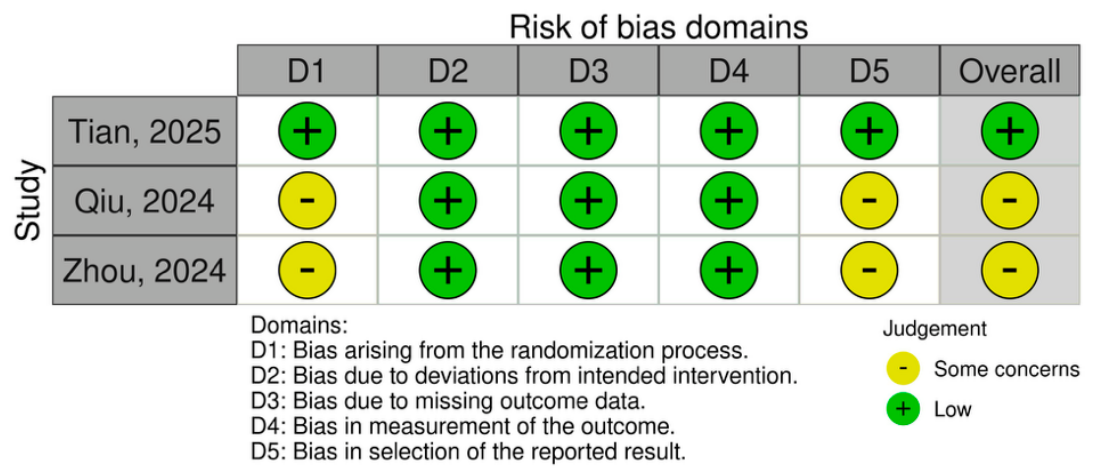
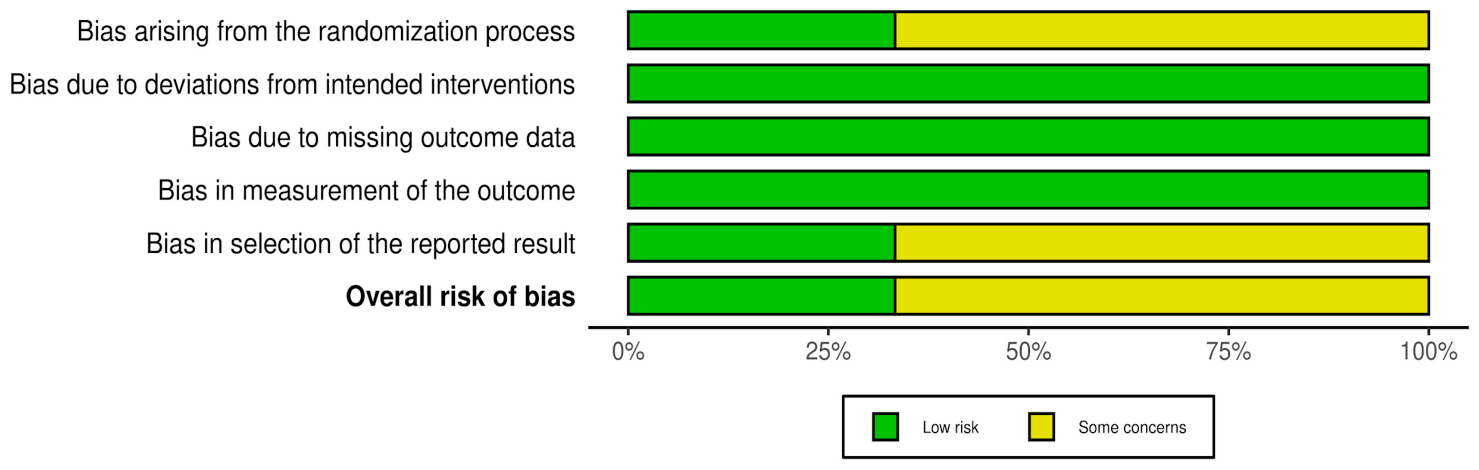
Only one RCT was rated as having a low risk of bias [7], whereas the other two showed some concern due to randomization processes and potential selective reporting [15,16]. All five observational studies were deemed to be of good quality (Figure 2 and Figure 3, Table 4).

3.6. Primary Outcomes: Incidence of END, All-Cause Mortality, and Recurrence of Stroke or TIA

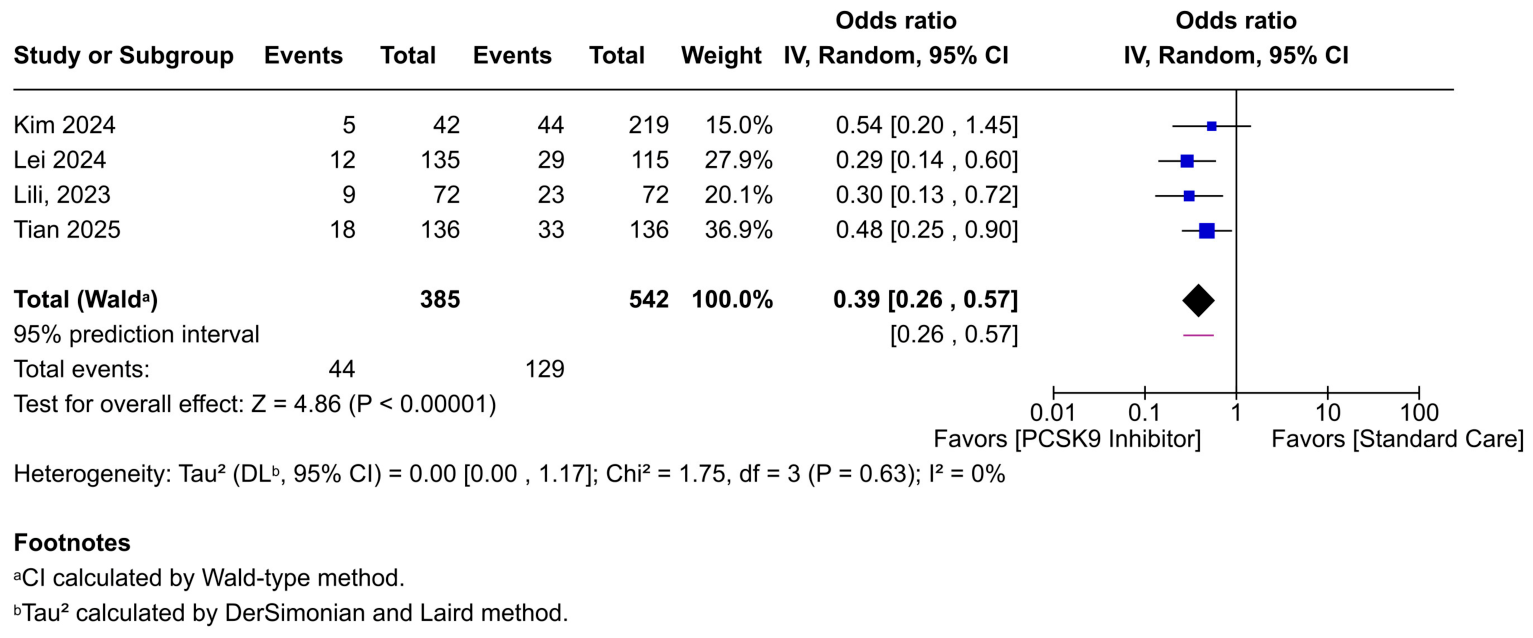
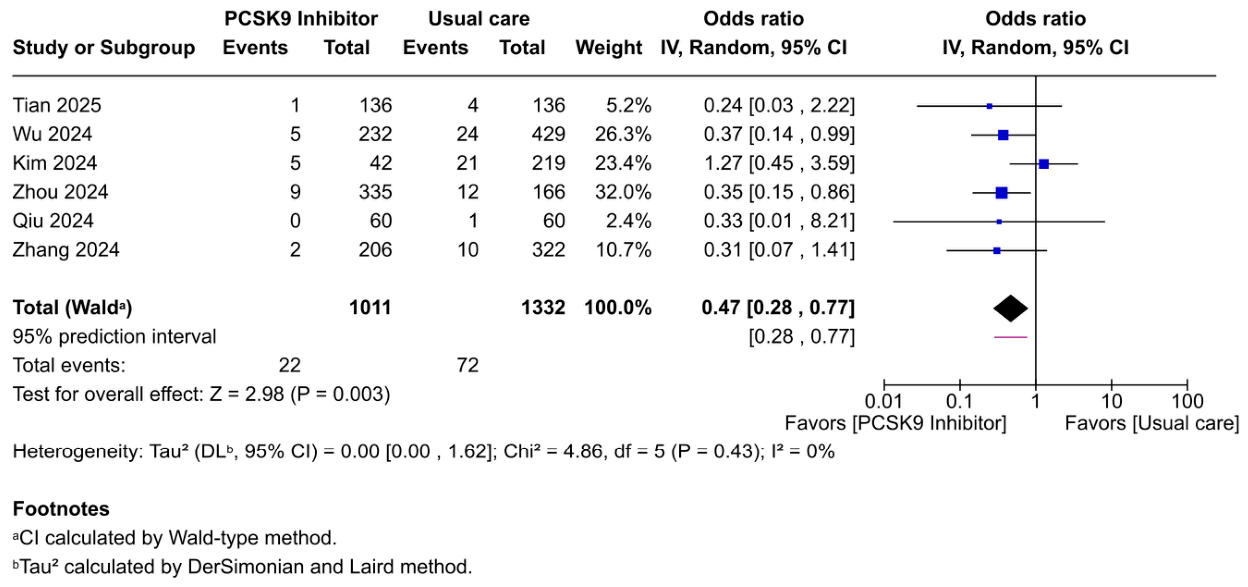
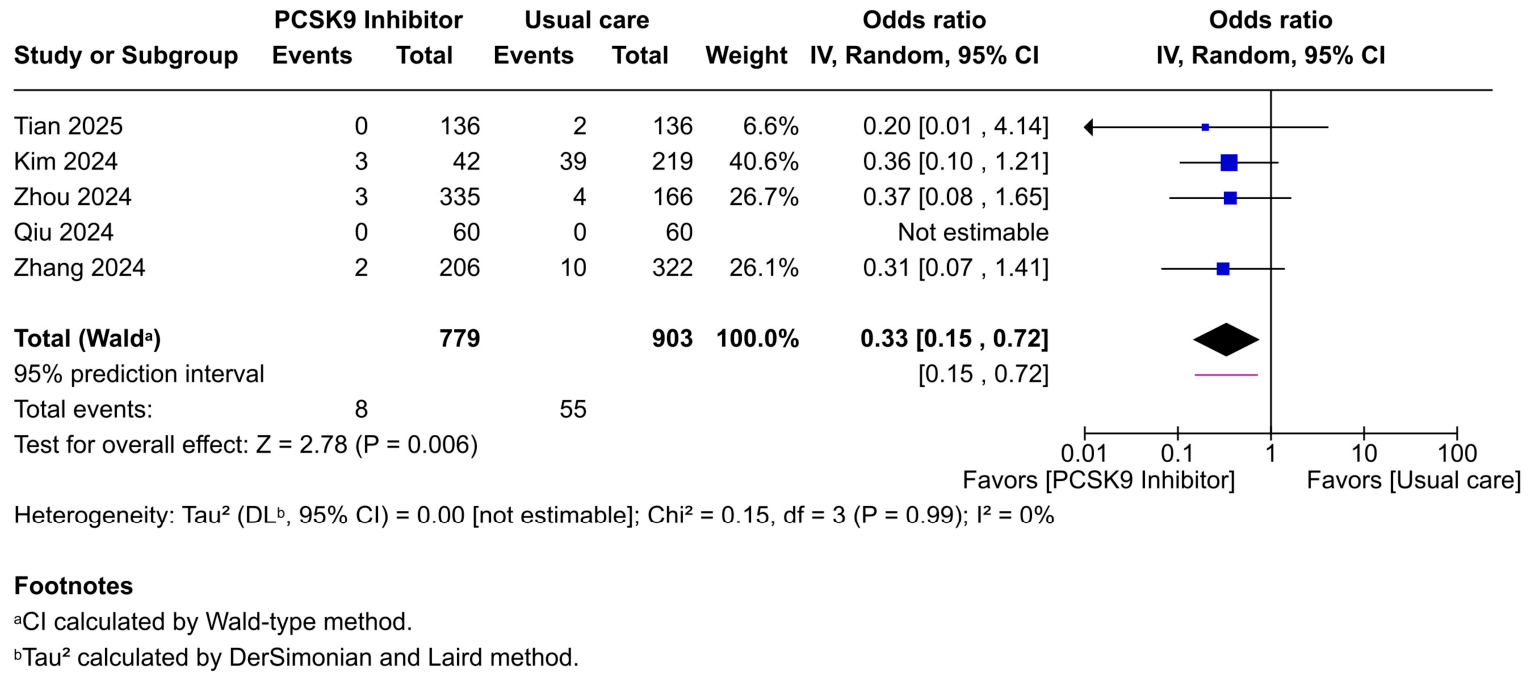
The pooled analysis demonstrated a significant reduction in END with early administration of PCSK9is compared with SOC (OR: 0.39; 95% CI: 0.26–0.57, p < 0.00001; I2 = 0%; Figure 4). Stroke and/or TIA recurrence and all-cause mortality within 6 months of stroke onset (assessed at study-specific timepoints; Table 3) were also significantly reduced in the PCSK9i group (OR: 0.47; 95% CI: 0.28–0.77, p = 0.003; I2 = 0% and OR: 0.33; 95% CI: 0.15–0.72, p = 0.006; I2 = 0%, respectively; Figure 5 and Figure 6).

3.7. Secondary Outcomes

3.7.1. Changes in mRS Score

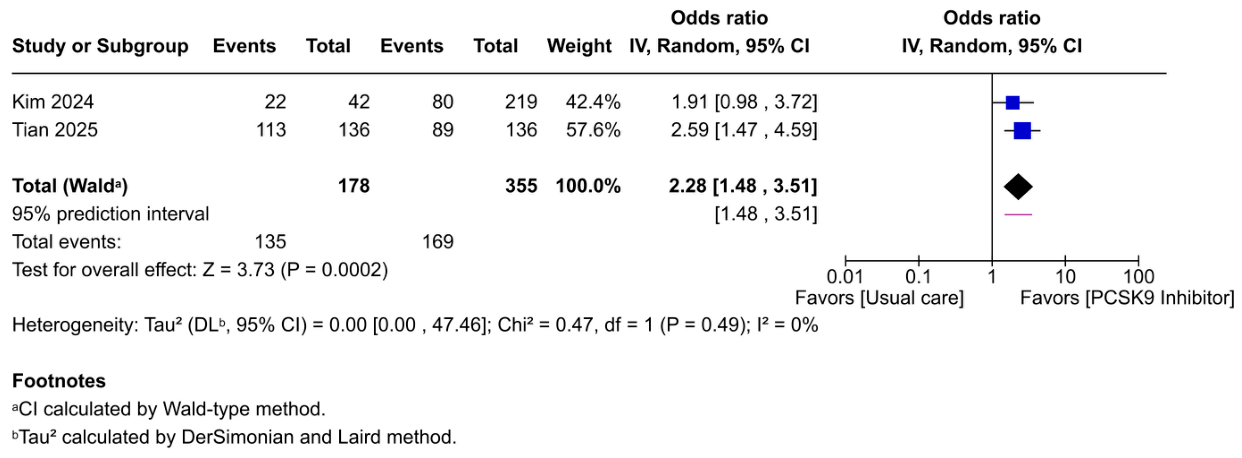
Rates of good functional outcomes at day 90 were significantly higher among patients receiving early PCSK9is versus those receiving SOC (OR: 2.28; 95% CI: 1.48–3.51, p = 0.0002; I2 = 0%; Figure 7).

3.7.2. Changes in LDL-C Levels

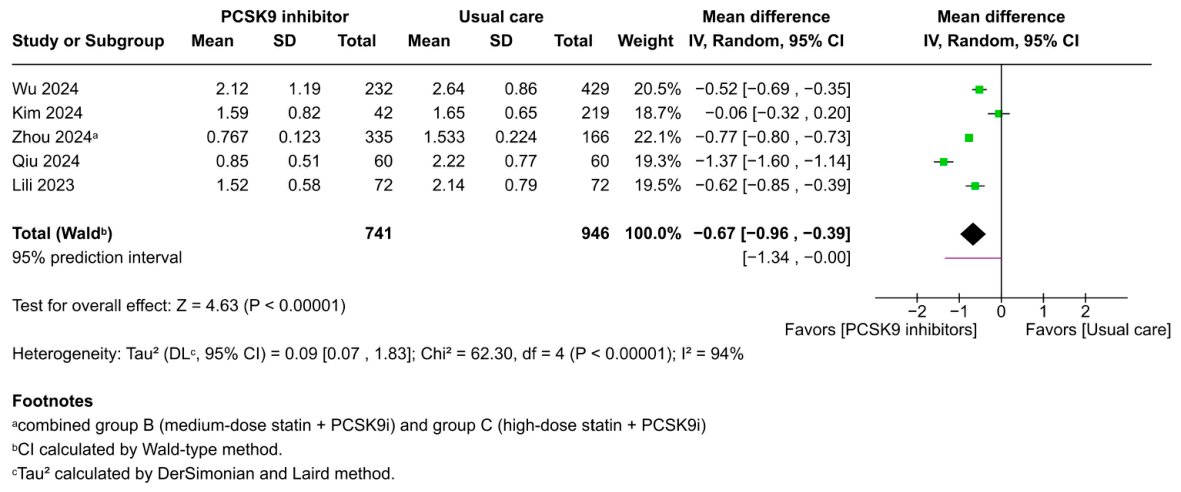
PCSK9i use was associated with significantly lower LDL-C levels than SOC was, although with high heterogeneity (MD −0.67 mmol/L; 95% CI −0.96 to −0.39; I2 = 94%; Figure 8). For the three-arm study (Zhou et al. [16]), the two PCSK9i arms were combined into a single intervention group, compared against the shared control.

3.7.3. Sensitivity Analysis

Sensitivity analyses based on study design and treatment initiation timing did not alter the statistical significance of the pooled estimates for END (Figure S1), all-cause mortality (Figure S2a,b), or stroke recurrence (Figure S3a,b). Additionally, sensitivity analysis excluding converted LDL-C values in Zhou et al. [16] yielded consistent results (Figure S4).

3.7.4. AEs

Several AEs were reported across five studies (Table 5). Notably, the overall incidence and type of AEs observed with PCSK9i use were comparable to or lower than those with statin monotherapy. This suggests an acceptable short-term tolerability profile for early PCSK9i added to standard lipid-lowering therapy; however, because AEs were secondary outcomes reported over relatively short follow-up in studies not designed to evaluate safety, the certainty of these findings is limited.

4. Discussion

Initiating PCSK9i therapy within 3 weeks of AIS onset was associated with reduced rates of END and improved functional outcomes across studies [6,7,18]. Early treatment showed an acceptable short-term tolerability, with most AEs being mild and transient, mainly liver enzyme elevations and injection-site reactions, whereas serious AEs were infrequent and comparable with those observed in control groups [7,15,16].
Combination therapy of PCSK9is and statins has demonstrated favorable clinical outcomes in high-risk populations, irrespective of the initiation timing [19,20,21]. In the ODYSSEY OUTCOMES trial, alirocumab combined with intensive statin therapy after ACS reduced subsequent stroke risk [21]. Similarly, in the FOURIER trial, evolocumab significantly reduced stroke risk, both as an individual event and as part of composite cardiovascular outcomes, although it did not significantly affect all-cause mortality. Only 19.4% of patients had a history of non-hemorrhagic stroke in the FOURIER trial, with a median time of 3.3 years from the most recent event, reflecting a population with predominantly stable and chronic atherosclerosis. Conversely, our study focused on treatment initiation during the acute phase of stroke, which may have contributed to the differences in all-cause mortality between our findings and those reported in the trial [19,20]. Addition of evolocumab as a primary prevention in high-risk patients without known significant atherosclerosis also reduces the risk of major cardiovascular events, including ischemic stroke, over 5 years when compared with placebo [22].
Regarding early administration strategies, a meta-analysis by Hosseini et al. [23] in patients with ACS demonstrated that PCSK9i use reduced major adverse clinical events among patients at cardiovascular risk, although the trends toward reduced stroke/TIA and all-cause mortality were non-significant. The absence of significance might be attributable to the relatively short follow-up duration of 6–18 months [23]. In contrast, the present review showed a significant reduction in early recurrent stroke/TIA [7,9,10,15,16,17] and all-cause mortality within 6 months of PCSK9i therapy [7,10,15,16,17]. This discrepancy could be explained by differences in study populations.
PCSK9 inhibition prevents hepatic LDL-C receptor degradation, resulting in an approximate 50–70% reduction in LDL-C levels [20,24]. A Cochrane review involving more than 67,000 participants similarly reported an average LDL-C reduction of ~55% [20,25]. Consistent with these findings [20,24,25], the present meta-analysis also demonstrated a significant LDL-C reduction, though accompanied by significant heterogeneity.
END affects 5–40% of patients and is associated with poorer functional outcomes and higher mortality [7]. Numerous independent risk factors for END have been identified, including elevated LDL-C levels. Although the pathophysiological mechanisms underlying END remain intricate and not well-understood, unstable atherosclerotic plaque and post-ischemic inflammatory responses are thought to significantly contribute to the occurrence of END [6,7,18]. The role of PCSK9is extends beyond lipid regulation and might be attributed indirectly to their pleiotropic effects, including plaque stabilization, anti-inflammatory properties, and enhancement of endothelial cell function, which address key pathological processes involved in cerebral ischemia development [20,26,27]. These mechanisms may explain the observed improvements in functional outcomes [7,10] and prevention of END in our study [6,7,10,18].
The ischemic penumbra, representing salvageable brain tissue surrounding the infarct core, is particularly vulnerable in the early phase after stroke. Early intervention is therefore critical before progression to the chronic stage, when glial scarring and structural remodeling predominate [28,29]. Within a few hours of a cardiovascular event, PCSK9 levels rise rapidly, contributing to atherosclerotic plaque destabilization [7]. Consequently, early implementation of PCSK9i therapy in patients with ACS has been recognized as beneficial for achieving plaque stabilization and regression [7,23,30]. Similarly, preclinical studies have demonstrated that PCSK9 upregulation in ischemic brain tissue is associated with increased neuronal apoptosis and worse histological outcomes [31]. In AIS, particularly when caused by large artery atherosclerosis, unstable plaques and a high lipid burden pose significant risks for recurrence [9]. As AIS and ACS share similar underlying vascular mechanisms, insights into early treatment may help guide decisions on optimal treatment windows for patients with AIS [7].

4.1. Impact of PCSK9i on Intracranial Atherosclerotic Disease

Although the present study focused primarily on clinical outcomes following early administration of PCSK9is, their potential efficacy on intracranial atherosclerotic disease (ICAD) merits specific consideration [32]. ICAD is one of the most common causes of ischemic stroke, with a high risk of recurrence estimated at 10–24% annually [27,33,34].
The effects of PCSK9i use on ICAD were shown by Wu et al. [35], where 49 participants in the PCSK9i group showed improvements on high-resolution magnetic resonance imaging (MRI), including in the degree of stenosis (65.6% vs. 74.2%) and normalized wall index (0.83 vs. 0.86). Moreover, Xiao et al. [27] showed reductions in LDL-C levels at a 6-month follow-up, with a 64% improvement from baseline in the PCSK9i add-on group compared with a statin-only group. Similar to the study by Wu et al. [35], PCSK9i use significantly reduced the degree of stenosis (−11.7) and the plaque enhancement ratio (−13.7) observed on high-resolution MRI [27]. A secondary analysis of the SAMMPRIS trial showed that a 10-mg/dL reduction in LDL-C equaled a 9% lower chance of recurrent stroke or myocardial infarction. Presuming that half of the SAMMPRIS trial population was included and surmising an average projected effect of PCSK9i, there was a 33.2% reduction in the recurrence of stroke or myocardial infarction [32]. There are many ongoing clinical trials researching the efficacy and safety of PCSK9is in AIS and ICAD, demonstrating their potential benefits [36,37,38].

4.2. Limitations

This review has certain limitations that should be considered when interpreting the results. Given the observational design of most included studies, the findings may be prone to bias and may limit the depth of analysis. The lack of individual patient data precluded detailed subgroup analyses based on stroke subtype, baseline severity, and lipid levels. Although most included patients had large-artery atherosclerotic stroke, a minority had cardioembolic or other stroke subtypes, and the patient-level data available were insufficient to conduct sensitivity analyses by etiology. The findings, therefore, should be applied primarily to atherosclerotic strokes.
Furthermore, in all included studies, PCSK9is were administered as an adjunct to background statin and/or ezetimibe therapy, and the timing of their initiation was not uniformly reported, so the pooled estimates cannot reliably isolate the independent effect of PCSK9is on the observed outcomes. Most of the included studies excluded patients who had used PCSK9i before the index stroke. Some defined a washout period [7,9], while others excluded any earlier use without specifying a timeframe [10,15,17]. Treatment in these cohorts was therefore initiated de novo, and the pooled population was largely PCSK9i-naïve. Three studies, Lei et al. [6], Lili et al. [18], and Zhou et al. [16], did not report this criterion, so a degree of uncertainty about prior exposure remains for those cohorts.
Although most outcomes had low statistical heterogeneity, baseline characteristics, such as stroke mechanism, baseline NIHSS score, use of reperfusion therapy, and follow-up duration, varied considerably. Additionally, studies assessed outcomes at different timepoints, which may have introduced further heterogeneity into the pooled estimates. PCSK9i therapy lasted only one to three months in some studies. The pooled recurrence and mortality estimates therefore reflect events reported up to each study’s own ascertainment point, not a sustained drug effect maintained throughout a full six-month period. Changes in LDL-C levels showed significant heterogeneity, which could be attributed to different dosing strategies and background lipid-lowering therapies.
The analysis included a relatively limited number of studies and total events for several outcomes, and the corresponding Grading of Recommendations, Assessment, Development, and Evaluations (GRADE) certainty ranged from low to moderate for most outcomes (Table S2). This limitation may have affected the robustness of the analyses and restricted the assessment of publication bias. Moreover, although all studies defined early administration of PCSK9is as occurring within 3 weeks of stroke onset, there was considerable variation in the specific timing of initiation, and the optimal timing remains undefined. The relatively short follow-up duration in most studies further limits the ability to determine the long-term efficacy and safety of early PCSK9i initiation.
Finally, all included studies were conducted in Asian (predominantly Chinese) populations, potentially limiting the generalizability of the findings to other populations and healthcare settings. The economic implications of early PCSK9i use should also be considered. PCSK9is are more costly than statins, and acquisition costs are considerably higher in many countries than in Asian countries, where most included studies were conducted. Therefore, the cost-effectiveness of PCSK9is in the acute stroke setting may need to be analyzed separately for different healthcare systems.

5. Conclusions

In patients with predominantly atherosclerotic AIS, initiating PCSK9i therapy within 21 days of stroke onset was associated with reduced risk of END, recurrent stroke/TIA, and mortality, with an acceptable short-term tolerability. Further large-scale trials are needed in diverse populations, including non-Asian populations, to clearly establish the optimal timing of administration and to assess long-term efficacy, safety, and cost-effectiveness.

Supplementary Materials

The following supporting information can be downloaded at: https://www.mdpi.com/article/10.3390/jcm15135169/s1, Table S1: Search strategy; Figure S1: Subgroup analysis of END based on study design; Figure S2a: Subgroup analysis of all-cause mortality ≤6 months based on timing; Figure S2b: Subgroup analysis of all-cause mortality ≤6 months based on study design; Figure S3a: Subgroup analysis of recurrent stroke/TIA ≤6 months based on timing; Figure S3b: Subgroup analysis of recurrent stroke/TIA ≤6 months based on study design; Figure S4: Subgroup analysis of LDL-C level changes, excluding converted data; Table S2: Certainty (GRADE) Assessment; Table S3: PRISMA 2020 Checklist [39]; Table S4: PRISMA 2020 for Abstracts Checklist [39].

Author Contributions

Conceptualization, S.A. (Sarah Alqhtani); methodology, S.A. (Sarah Alqhtani) and F.A.; software, S.A. (Sarah Alqhtani); validation, S.A. (Sarah Alqhtani), M.A., A.B. and S.A. (Shatha Alqurashi); formal analysis, S.A. (Sarah Alqhtani), A.A. (Ahmed Alkhiri) and K.B.S.; investigation, S.A. (Sarah Alqhtani), H.A., M.A., A.B., S.A. (Shatha Alqurashi), N.A. and G.S.; data curation, S.A. (Sarah Alqhtani), H.A., M.A., A.B., S.A. (Shatha Alqurashi) and N.A.; writing—original draft preparation, S.A. (Sarah Alqhtani), H.A., M.A., A.B., S.A. (Shatha Alqurashi), N.A. and G.S.; writing—review and editing, S.A. (Sarah Alqhtani), A.A. (Ahmed Alkhiri), K.B.S., F.A. and A.A. (Adel Alhazzani); supervision, A.A. (Adel Alhazzani); project administration, S.A. (Sarah Alqhtani). All authors have read and agreed to the published version of the manuscript.

Funding

This research received no external funding.

Institutional Review Board Statement

Not applicable.

Informed Consent Statement

Not applicable.

Data Availability Statement

The data will be made available upon reasonable request from the corresponding author.

Conflicts of Interest

The authors declare no conflicts of interest.

Abbreviations

The following abbreviations are used in this manuscript:
ACSacute coronary syndrome
AEadverse event
AISacute ischemic stroke
ALTalanine aminotransferase
ASTaspartate aminotransferase
CADcoronary artery disease
CIconfidence interval
CNScentral nervous system
DMdiabetes mellitus
ENDearly neurological deterioration
EVTendovascular therapy
GRADEGrading of Recommendations, Assessment, Development, and Evaluations
HTNHypertension
ICADintracranial atherosclerotic disease
IQRinterquartile range
IVTintravenous thrombolysis
LAAlarge artery atherosclerosis
LDL-Clow-density lipoprotein cholesterol
Lp(a)lipoprotein(a)
MDmean difference
MRImagnetic resonance imaging
mRSmodified Rankin Scale
NIHSSNational Institutes of Health Stroke Scale
ORodds ratio
PCSK9proprotein convertase subtilisin/kexin type 9
PCSK9iproprotein convertase subtilisin/kexin type 9 inhibitor
PRISMAPreferred Reporting Items for Systematic Reviews and Meta-Analyses
Q2Wevery 2 weeks
Q4Wevery 4 weeks
RCTrandomized controlled trial
RevManReview Manager
RoBrisk of bias
SDstandard deviation
SOCstandard of care
SOEstroke of other etiology
SUEstroke of undetermined etiology
SVOsmall-vessel occlusion
TIAtransient ischemic attack
ULNupper limit of normal

References

  1. Sacco, R.L.; Kasner, S.E.; Broderick, J.P.; Caplan, L.R.; Connors, J.J.; Culebras, A.; Elkind, M.S.V.; George, M.G.; Hamdan, A.D.; Higashida, R.T.; et al. An updated definition of stroke for the 21st century: A statement for healthcare professionals from the American Heart Association/American Stroke Association. Stroke 2013, 44, 2064–2089. [Google Scholar] [CrossRef]
  2. Zhou, L.; Zhang, H.; Wang, S.; Zhao, H.; Li, Y.; Han, J.; Zhang, H.; Li, X.; Qu, Z. PCSK-9 inhibitors: A new direction for the future treatment of ischemic stroke. Front. Pharmacol. 2024, 14, 1327185. [Google Scholar] [CrossRef] [PubMed]
  3. Ha, S.H.; Kim, B.J. Dyslipidemia treatment and cerebrovascular disease: Evidence regarding the mechanism of stroke. J. Lipid Atheroscler. 2024, 13, 139–154. [Google Scholar] [CrossRef] [PubMed]
  4. Yaghi, S.; Elkind, M.S. Lipids and cerebrovascular disease: Research and practice. Stroke 2015, 46, 3322–3328. [Google Scholar] [CrossRef] [PubMed]
  5. Schonck, W.A.; Stroes, E.S.; Hovingh, G.K.; Reeskamp, L.F. Long-term efficacy and tolerability of PCSK9 targeted therapy: A review of the literature. Drugs 2024, 84, 165–178. [Google Scholar] [CrossRef] [PubMed]
  6. Lei, J.; Fan, Q.; Chen, X.; Li, W.; Peng, Y.; Cai, Y.; Liu, X.; Liu, C.; Zhang, L. Effects of PCSK9 inhibitors on early neurologic deterioration in patients with acute non-cardioembolism without hemorrhagic transformation after intravenous thrombolysis. Curr. Neurovasc. Res. 2024, 21, 310–319. [Google Scholar] [CrossRef] [PubMed]
  7. Tian, W.; Cao, H.; Li, X.; Gong, X.; Yu, X.; Li, D.; Xie, J.; Bai, Y.; Zhang, D.; Li, X.; et al. Adjunctive PCSK9 inhibitor evolocumab in the prevention of early neurological deterioration in non-cardiogenic acute ischemic stroke: A multicenter, prospective, randomized, open-label clinical trial. CNS Drugs 2025, 39, 197–208. [Google Scholar] [PubMed]
  8. Li, Z.; Zhu, L.; Xu, Y.; Zhang, Y.; Liu, Y.; Sun, H.; Li, S.; Wang, M.; Jiang, T.; Zhou, J.; et al. Pleiotropic effects of PCSK9 inhibitors on cardio-cerebrovascular diseases. Biomedicines 2024, 12, 2729. [Google Scholar] [CrossRef] [PubMed]
  9. Wu, L.; Zhang, B.; Li, C.; Zhuang, Z.; Liu, K.; Chen, H.; Zhu, S.; Zhu, J.; Dai, Z.; Huang, H.; et al. PCSK9 inhibitors reduced early recurrent stroke in patients with symptomatic intracranial atherosclerotic stenosis. J. Neurol. Neurosurg. Psychiatry 2024, 95, 529–535. [Google Scholar] [CrossRef] [PubMed]
  10. Kim, J.; Hong, U.; Yoon, C.W.; Bae, J.W.; Rha, J.-H.; Park, H.-K. PCSK9 inhibitor in acute ischemic stroke patient receiving mechanical thrombectomy: Early outcomes and safety. Front. Neurol. 2024, 15, 1375609. [Google Scholar] [CrossRef] [PubMed]
  11. Sterne, J.A.C.; Savović, J.; Page, M.J.; Elbers, R.G.; Blencowe, N.S.; Boutron, I.; Cates, C.J.; Cheng, H.Y.; Corbett, M.S.; Eldridge, S.M.; et al. RoB 2: A revised tool for assessing risk of bias in randomised trials. BMJ 2019, 366, l4898. [Google Scholar] [CrossRef] [PubMed]
  12. Lo, C.K.; Mertz, D.; Loeb, M. Newcastle-Ottawa Scale: Comparing reviewers’ to authors’ assessments. BMC Med. Res. Methodol. 2014, 14, 45. [Google Scholar] [CrossRef] [PubMed]
  13. Review Manager (RevMan) [Computer Program], version 9.4.2; The Cochrane Collaboration: Copenhagen, Denmark, 2024; Available online: https://revman.cochrane.org (accessed on 20 May 2026).
  14. Wan, X.; Wang, W.; Liu, J.; Tong, T. Estimating the sample mean and standard deviation from the sample size, median, range and/or interquartile range. BMC Med. Res. Methodol. 2014, 14, 135. [Google Scholar] [CrossRef] [PubMed]
  15. Qiu, X.; Liang, Y.; Wei, Y.; Lu, M.; Mei, Y.; Tang, S.; Tang, J.; Liang, J.; Liang, J. Evolocumab for early reduction of LDL-C levels in patients with acute ischemic stroke: A randomized controlled trial. Front. Neurol. 2024, 15, 1454608. [Google Scholar] [CrossRef] [PubMed]
  16. Zhou, X.; Chen, G.; Zhang, W.; Ni, H.; Liu, W.; Xu, H.; Wang, C.; Chen, Y.; Wang, J. Effect of proprotein convertase subtilisin/kexin type 9 inhibitor combined with rosuvastatin on lipid levels and short-term prognosis in patients with acute ischemic stroke. Chin. J. Neurol. 2024, 57, 625–633. [Google Scholar]
  17. Zhang, T.; Zhang, Y.; Yang, Y.; Liao, H.; Li, X.; Liu, R.; Liu, X.; Yang, L.; Yue, W. Real-world effectiveness and safety of evolocumab in very high-risk atherosclerotic cardiovascular disease patients with acute ischemic stroke. J. Thromb. Thrombolysis 2024, 57, 302–311. [Google Scholar] [PubMed]
  18. Zhu, L.L.; Fu, S.; Qin, H.; Yu, M.; Li, H.R.; Liu, H.T.; Song, L. Effect of PCSK9 inhibitors on early neurological deterioration in patients with branch atheromatous disease. Chin. Med. J. (Engl.) 2023, 103, 2940–2946. [Google Scholar]
  19. Sabatine, M.S.; Giugliano, R.P.; Keech, A.C.; Honarpour, N.; Wiviott, S.D.; Murphy, S.A.; Kuder, J.F.; Wang, H.; Liu, T.; Wasserman, S.M.; et al. Evolocumab and clinical outcomes in patients with cardiovascular disease. N. Engl. J. Med. 2017, 376, 1713–1722. [Google Scholar] [CrossRef] [PubMed]
  20. Moustafa, B.; Testai, F.D. Efficacy and safety of PCSK9 inhibitors in stroke prevention. J. Stroke Cerebrovasc. Dis. 2021, 30, 106057. [Google Scholar] [CrossRef] [PubMed]
  21. Jukema, J.W.; Zijlstra, L.E.; Bhatt, D.L.; Bittner, V.A.; Diaz, R.; Drexel, H.; Goodman, S.G.; Kim, Y.-U.; Pordy, R.; Reiner, Ž.; et al. Effect of alirocumab on stroke in ODYSSEY OUTCOMES. Circulation 2019, 140, 2054–2062. [Google Scholar] [CrossRef] [PubMed]
  22. Marston, N.A.; Bohula, E.A.; Bhatia, A.K.; De Ferrari, G.M.; Leiter, L.A.; Nicolau, J.C.; Park, J.G.; Murphy, S.A.; Walsh, E.; Liu, L.; et al. Evolocumab to reduce first major cardiovascular events in patients without known significant atherosclerosis and with diabetes: Results from the VESALIUS-CV trial. JAMA 2026, 335, 1400–1407. [Google Scholar] [CrossRef] [PubMed]
  23. Hosseini, K.; Soleimani, H.; Maleki, S.; Nasrollahizadeh, A.; Tayebi, S.; Nelson, J.; Heffron, S.P. Early administration of proprotein convertase subtilisin/kexin type 9 (PCSK9) inhibitors in patients with acute coronary syndrome: A systematic review and meta-analysis. BMC Cardiovasc. Disord. 2024, 24, 395. [Google Scholar] [CrossRef] [PubMed]
  24. Alali, R.A. A short review of proprotein convertase subtilisin/kexin type 9 inhibitors. Rev. Cardiovasc. Med. 2019, 20, 1–8. [Google Scholar] [CrossRef] [PubMed]
  25. Schmidt, A.F.; Pearce, L.S.; Wilkins, J.T.; Overington, J.P.; Hingorani, A.D.; Casas, J.P. PCSK9 monoclonal antibodies for the primary and secondary prevention of cardiovascular disease. Cochrane Database Syst. Rev. 2017, 4, CD011748. [Google Scholar] [CrossRef] [PubMed]
  26. Cesaro, A.; Acerbo, V.; Raucci, G.; Calabrò, P. Reduction of cerebrovascular and peripheral events with PCSK9 inhibitors: Does it just depend on the lowering of the low-density lipoprotein? Eur. Heart J. Suppl. 2022, 24, I134–I137. [Google Scholar] [CrossRef]
  27. Xiao, J.; Zhang, S.Q.; Shu, H.G.; Chen, X.; Zhou, L.Q.; Shang, K.; Qin, C.; Xu, W.H.; Tian, D.S. PCSK9 inhibition reduces low-density lipoprotein cholesterol and stabilizes the plaque in ischemic stroke patients with severe intracranial atherosclerotic stenosis. Res. Sq. 2023. [Google Scholar] [CrossRef] [PubMed]
  28. Dirnagl, U.; Iadecola, C.; Moskowitz, M.A. Pathobiology of ischaemic stroke: An integrated view. Trends Neurosci. 1999, 22, 391–397. [Google Scholar] [CrossRef] [PubMed]
  29. Moskowitz, M.A.; Lo, E.H.; Iadecola, C. The science of stroke: Mechanisms in search of treatments. Neuron 2010, 67, 181–198. [Google Scholar] [CrossRef] [PubMed]
  30. Zeng, W.; Zhou, F.; Zhao, H.; Wang, Y.; Chen, J.; Lu, J.; Zheng, D.; Kuang, J.; Yuan, D.; Zhou, J.; et al. Evaluation of intensive statins and proprotein convertase subtilisin/kexin type 9 inhibitors on intracranial artery plaque stability: A prospective single-arm study. J. Am. Heart Assoc. 2025, 14, e035651. [Google Scholar] [PubMed]
  31. Wang, L.; Wang, Z.; Shi, J.; Jiang, Q.; Wang, H.; Li, X.; Hao, D. Inhibition of proprotein convertase subtilisin/kexin type 9 attenuates neuronal apoptosis following focal cerebral ischemia via apolipoprotein E receptor 2 downregulation in hyperlipidemic mice. Int. J. Mol. Med. 2018, 42, 2098–2106. [Google Scholar] [CrossRef] [PubMed]
  32. Siegler, J.E.; Badillo Goicoechea, E.; Yaghi, S.; Morsi, R.Z.; Arevalo, A.; Smith, M.M.; Kothari, S.; Desai, H.; Sehgal, N.; Rana, R.; et al. Estimated theoretical benefit of aggressive LDL lowering in patients with symptomatic intracranial atherosclerosis. Neurology 2025, 105, e213768. [Google Scholar] [CrossRef] [PubMed]
  33. Henkes, H.; Bäzner, H.; Nelson, P.K. Comment on: Stenting versus aggressive medical therapy for intracranial arterial stenosis. Clin. Neuroradiol. 2011, 21, 257–259. [Google Scholar] [CrossRef] [PubMed]
  34. Mazighi, M.; Tanasescu, R.; Ducrocq, X.; Vicaut, E.; Bracard, S.; Houdart, E.; Woimant, F. Prospective study of symptomatic atherothrombotic intracranial stenoses: The GESICA study. Neurology 2006, 66, 1187–1191. [Google Scholar] [CrossRef] [PubMed]
  35. Wu, L.; Kong, Q.; Huang, H.; Xu, S.; Qu, W.; Zhang, P.; Yu, Z.; Luo, X. Effect of PCSK9 inhibition in combination with statin therapy on intracranial atherosclerotic stenosis: A high-resolution MRI study. Front. Aging Neurosci. 2023, 15, 1127534. [Google Scholar] [CrossRef] [PubMed]
  36. ClinicalTrials.gov. Trial of PCSK9 Inhibition in Patients with Acute Stroke and Symptomatic Intracranial Atherosclerosis (TOPICAL-MRI). Identifier: NCT05001984. Available online: https://clinicaltrials.gov/study/NCT05001984 (accessed on 20 May 2026).
  37. ClinicalTrials.gov. The Effect of Intensive Statin in Ischemic Stroke with Intracranial Atherosclerotic Plaques (INSIST-HRMRI). Identifier: NCT03753555. Available online: https://clinicaltrials.gov/study/NCT03753555 (accessed on 20 May 2026).
  38. ClinicalTrials.gov. Improving Blood Lipid Management in Symptomatic Intracranial Atherosclerotic Stenosis on Clinical Outcome (sICASBLM). Identifier: NCT05397405. Available online: https://clinicaltrials.gov/study/NCT05397405 (accessed on 20 May 2026).
  39. Page, M.J.; McKenzie, J.E.; Bossuyt, P.M.; Boutron, I.; Hoffmann, T.C.; Mulrow, C.D.; Shamseer, L.; Tetzlaff, J.M.; Akl, E.A.; Brennan, S.E.; et al. The PRISMA 2020 statement: An updated guideline for reporting systematic reviews. BMJ 2021, 372, n71. [Google Scholar] [CrossRef] [PubMed]
Figure 1. Preferred Reporting Items for Systematic Reviews and Meta-Analyses flow diagram of study selection. VHL, Virtual Health Library; PCSK9i, proprotein convertase subtilisin/kexin type 9 inhibitor.
Jcm 15 05169 g001
Figure 2. Risk-of-bias summary of included randomized controlled trials assessed using the Cochrane Risk of Bias 2 tool. “Overall” indicates the overall risk-of-bias judgment for each included study [7,15,16].
Jcm 15 05169 g002
Figure 3. Risk of bias of randomized controlled trials assessed using the Cochrane Risk of Bias 2 tool.
Jcm 15 05169 g003
Figure 4. Forest plot of early neurological deterioration within 7 days. Random-effects meta-analysis comparing administration of PCSK9is versus usual care for the prevention of early neurological deterioration within 7 days after acute ischemic stroke. PCSK9i, proprotein convertase subtilisin/kexin type 9 inhibitor; CI, confidence interval [6,7,10,18].
Jcm 15 05169 g004
Figure 5. Forest plot of recurrent stroke or transient ischemic attack within 6 months. Random-effects meta-analysis evaluating the effect of early PCSK9i initiation on the recurrence of stroke or transient ischemic attack within 6 months following acute ischemic stroke. PCSK9i, proprotein convertase subtilisin/kexin type 9 inhibitor; CI, confidence interval [7,9,10,15,16,17].
Jcm 15 05169 g005
Figure 6. Forest plot of all-cause mortality within 6 months. Random-effects meta-analysis comparing early PCSK9i therapy with usual care for the outcome of all-cause mortality within 6 months after acute ischemic stroke. PCSK9i, proprotein convertase subtilisin/kexin type 9 inhibitor; CI, confidence interval [7,10,15,16,17].
Jcm 15 05169 g006
Figure 7. Forest plot of good functional outcomes (modified Rankin Scale [mRS] score of 0–2) at 90 days. Random-effects meta-analysis assessing the likelihood of achieving good functional outcomes, defined as an mRS score of 0–2 at 90 days, among patients receiving early PCSK9i therapy compared with usual care. PCSK9i, proprotein convertase subtilisin/kexin type 9 inhibitor; CI, confidence interval [7,10].
Jcm 15 05169 g007
Figure 8. Forest plot of changes in low-density lipoprotein cholesterol (LDL-C) levels. Random-effects meta-analysis showing the effect of early PCSK9i therapy on changes in LDL-C levels compared with usual care. PCSK9i, proprotein convertase subtilisin/kexin type 9 inhibitor; SD, standard deviation; CI, confidence interval [9,10,15,16,18].
Jcm 15 05169 g008
Table 1. Characteristics of the included studies.
StudyCountryStudy DesignAge (y), Mean ± SD/Median (Range)Number of PatientsMale, n (%)Type of StrokeStroke Onset
Tian et al. [7] ChinaRCTPCSK9i: 63.61 ± 10.08, Control: 65.87 ± 8.88272196 (72.06%)Atherosclerotic origin (LAA and SVO)≤24 h
Qiu et al. [15]ChinaRCTPCSK9i: 60.97 ± 7.17, Control: 62.88 ± 9.1312084 (70%)Atherosclerotic origin (unspecified)≤24 h
Zhou et al. [16]ChinaRCTMedium-dose statin + PCSK9i: 65.6 ± 11.3
High-dose statin + PCSK9i: 64.9 ± 11.7
Control: 65.2 ± 12.6
501305 (60.9%)Atherosclerotic origin (unspecified)≤72 h
Wu et al. [9]ChinaProspective cohort66.26 ± 12.20661414 (62.63%)Atherosclerotic origin (LAA)≤1 wk
Lei et al. [6]ChinaRetrospective case–control63.344 ± 12.90125056 (22.4%)Atherosclerotic origin (LAA, SVO, SOE, SUE)≤72 h
Kim et al. [10]South KoreaRetrospective cohort69.2 ± 11.7261112 (42.9%)Atherosclerotic (LAA and others) and cardioembolic origin≤24 h
Zhang et al. [17]ChinaRetrospective PCSK9i: 63 (56.0–70.0)
Control: 64.5 (57.0–71.0)
528374 (70.83%)Atherosclerotic origin (LAA, SVO, undetermined)≤14 d
Lili et al. [18]ChinaRetrospective cohort61.2 ± 9.614490 (62.5%)Atherosclerotic origin (LAA)≤72 h
Abbreviations: RCT, randomized controlled trial; PCSK9i, proprotein convertase subtilisin/kexin type 9 inhibitor; LAA, large artery atherosclerosis; SVO, small-vessel occlusion; SOE, stroke of other etiology; SUE, stroke of undetermined etiology; SD, standard deviation.
Table 2. Patient baseline characteristics.
StudyArmsHTNDMCADPrior Ischemic StrokeLDL-C Baseline Level (mmol/L) aLp(a) Baseline Level (mmol/L) aBaseline mRS ScoreBaseline NIHSS Score,
Mean ± SD/Median (Range/IQR/Q1, Q3) a
Tian et al. [7]Statins89 (65.4%)47 (34.6%)18 (13.2%)30 (22.1%)2.83 ± 0.69N/A≤13 (1, 4)
NIHSS score ≤ 4: 103 (75.7%)
NIHSS score > 4: 33 (24.3%)
Evolocumab + Statins97 (71.3%)58 (42.6%)18 (13.2%)30 (22.1%)2.76 ± 0.82N/A≤13 (1, 5)
NIHSS score ≤ 4: 96 (70.6%)
NIHSS score > 4: 40 (29.4%)
Qiu et al. [15]SOC40 (66.67%)22 (36.67%)6 (10.0%)19 (31.67%)3.17 ± 0.8372.93 ± 96.86≤22.25 ± 1.51
Evolocumab47 (78.33%)21 (35.0%)4 (6.67%)21 (35%)3.15 ± 0.9688.40 ± 117.30≤23.28 ± 3.07
Zhou et al. [16]Statin101 (60.8%)31 (18.7%)13 (7.8%)26 (15.7%)3.1 (2.7, 3.4)185.5 (97.7, 358.0)<13 (1, 5)
Statins 10 mg + Alirocumab107 (64.1%)41 (24.6%)22 (13.2%)15 (9.0%)2.9 (2.8,3.4)136 (69.0, 319.0)<12 (0, 5)
Statins 20 mg + Alirocumab109 (64.9%)40 (23.8%)19 (11.3%)20 (11.9%)2.9 (2.7,3.4)161.0 (69.5, 336.5)<13 (0, 6)
Wu et al. [9]Control321 (74.83%)176 (41.03%)43 (10.02%)103 (24.01%)2.91 ± 1.05298.96 ± 280.190–2: 101 (23.54%)3.40 ± 4.59
PCSK9is159 (68.53%)82 (35.34%)21 (9.05%)70 (30.17%)3.06 ± 1.16283.44 ± 303.520–2: 51 (21.98%)3.03 ± 2.94
Lei et al. [6]PCSK9is169 (67.6%)74 (29.60%)44 (17.60%)81 (32.40%)2.760 (2.070, 3.400)N/AN/A3(1–7)
Kim et al. [10]Control134 (61.2%)63 (28.8%)N/A34 (15.5%)2.46 ± 0.98N/A0: 185 (84.5%), 1: 16 (7.3%), 2: 18 (8.2%)16 (11, 19)
Evolocumab28 (66.7%)11 (26.2%)N/A7 (16.7%)2.61 ± 1.02N/A0: 36 (85.7%), 1: 4 (9.5%), 2: 2 (4.8%)14 (10.25, 18.75)
Zhang et al. [17]SOC237 (73.6%)109 (33.9%)86 (26.7%)121 (37.6%)2.696 (2.48–3.14)N/AN/ANIHSS score ≤ 8: 253 (78.6%) NIHSS score 9– ≤ 15: 58 (18%)
NIHSS score ≥16: 11 (3.4%)
Evolocumab148 (71.8%)77 (37.4%)51 (24.8%)70 (34%)3.55 (2.94–4.34)N/AN/ANIHSS score ≤ 8: 150 (72.8%) NIHSS score 9–15: 40 (19.4%)
NIHSS score ≥ 16: 16 (7.8%)
Lili et al. [18]Alirocumab48 (66.7%)32 (44.4%)N/AN/A3.00 ± 0.82 283 ± 54 mg/LN/A3 (1, 4)
Statins53 (73.6%)33 (45.8%)N/AN/A3.12 ± 0.91286 ± 45 mg/LN/A3 (1, 4)
Abbreviations: HTN, hypertension; DM, diabetes mellitus; CAD, coronary artery disease; LDL-C, low-density lipoprotein cholesterol; Lp(a), lipoprotein A; mRS, modified Rankin scale; NIHSS, National Institutes of Health Stroke Scale; N/A, not available; SOC, standard of care; PCSK9is, proprotein convertase subtilisin/kexin type 9 inhibitor. a Data are presented as mean ± SD or median (interquartile range).
Table 3. Intervention characteristics of the included studies.
StudyIntervention (Dose, Frequency)Adjunctive Lipid-Lowering TreatmentDuration of TreatmentControl (Dose)IVT or EVTOutcome Measures (Timepoints)
Tian et al. [7]Evolocumab (140 mg, Q2W)Atorvastatin90 dAtorvastatin (40 mg)None- END (≤24 h–7 days)
- LDL-C (d 7)
- Mortality (≤7 d)
- mRS score ≤2 (d 90)
- Stroke recurrence (≤90 d)
- AEs (baseline, d 7, and d 30)
Qiu et al. [15]Evolocumab (240 mg, Q4W)Atorvastatin and ezetimibe8 wkAtorvastatin and Ezetimibe (40 mg and 10 mg)None- LDL-C (wk 8)
- Stroke recurrence (wk 8)
- Mortality (wk 8)
- AEs (baseline to wk 8)
Zhou et al. [16]Alirocumab (75 mg, Q2W)Rosuvastatin90 dRosuvastatin (20 mg)None- LDL-C (d 90)
- Stroke recurrence (≤90 d)
- mRS score ≤2 (d 90)
- Liver dysfunction (≤90 d)
- Mortality (≤90 d)
- AEs (90 d)
Wu et al. [9]Alirocumab (75 mg, Q2W) or evolocumab (140 mg or 420 mg, Q2W)Statins and/or ezetimibe30 dStatins and/or ezetimibe (10–20 mg)None- LDL-C (baseline and d 30)
- Stroke recurrence (≤30 d)
Lei et al. [6]PCSK9is (unspecified)NoneN/AN/AIVT- END (≤7 d)
Kim et al. [10]Evolocumab (140 mg)NoneN/AN/AEVT- END (≤7 d)
- Mortality (≤90 d)
- mRS score ≤2 (d 90)
- Stroke recurrence (≤90 d)
- LDL-C (baseline and d 90)
- AEs (N/A)
Zhang et al. [17]Evolocumab (140 mg, Q2W)Statins or SOC12 monthsN/ANone- Lipid profile (baseline and mo 12)
- Stroke recurrence (6 mo)
- Mortality (6 mo)
- AEs (N/A)
Lili et al. [18]Alirocumab (75 mg, single dose)StatinN/AN/ANone- LDL-C level (baseline and d 3)
- END (≤72 h)
Abbreviations: IVT, intravenous thrombolysis; EVT, endovascular therapy; END, early neurological deterioration; LDL-C, low-density lipoprotein cholesterol; mRS, modified Rankin scale; AEs, adverse events; PCSK9is, proprotein convertase subtilisin/kexin type 9 inhibitor; N/A, not available; SOC, standard of care.
Table 4. Quality assessment of observational studies.
Cohort Studies
StudySelectionComparabilityOutcomeTotal Score
Representativeness of the Exposed CohortSelection of the Non-Exposed CohortAscertainment of ExposureDemonstration That Outcome of Interest Was Not Present at Start of StudyComparability of Cohorts on the Basis of the Design or AnalysisAssessment of OutcomeWas the Follow-Up Long Enough for Outcomes to Occur?Adequacy of Follow-Up of Cohorts
Wu et al. [9]********8/9 (good)
Kim et al. [10]******** 8/9 (good)
Zhang et al. [17] ********8/9 (good)
Lili et al. [18]******** 8/9 (good)
Case Control Studies
StudySelectionComparabilityExposureTotal score
Is the case definition adequate?Representativeness of the casesSelection of controlsDefinition of controlsComparability of cases and controls on the basis of the design or analysis controlled for confoundersAscertainment of exposureSame method of ascertainment for cases and controlsNon-response rate
Lei et al. [6]********8/9 (good)
* Indicates one star awarded according to the Newcastle–Ottawa Scale (NOS). ** Indicates two stars awarded for the comparability domain (maximum possible score for this domain).
Table 5. Adverse events.
StudyAdverse EventPCSK9i n/N (%)Control n/N (%)
Tian et al. [7]Mild liver or kidney laboratory abnormalities15/136 (11%)22/136 (16.2%)
Bleeding00
Infection00
Injection-site reaction00
Treatment discontinuation due to AE00
Qiu et al. [15]Any adverse event5/60 (8.3%)6/60 (10%)
Elevated liver enzymes (ALT/AST > 3 × ULN)2/60 (3.3%)2/60 (3.3%)
Injection-site reaction2/60 (3.3%)0/60 (0%)
Neurocognitive events1/60 (1.7%)1/60 (1.7%)
Cerebral hemorrhage0/60 (0%)1/60 (1.7%)
Zhou et al. [16]Hepatic insufficiency (transaminase elevation ≥ 3 × normal)Low dose: 1/167 (0.6%); High dose: 9/168 (5.4%)10/166 (6%)
Kim et al. [10]Hemorrhagic events7/42 (16.7%)74/219 (33.8%)
Symptomatic intracerebral hemorrhage1/42 (2.4%)19/219 (8.7%)
Zhang et al. [17]Allergic reactions8/206 (3.9%)8/322 (2.5%)
Injection-site reactions3/206 (1.5%)0
Neurocognitive events3/206 (1.5%)4/322 (1.2%)
Musculoskeletal pain4/206 (1.9%)6/322 (1.8%)
New-onset diabetes7/206 (3.4%)6/322 (1.8%)
PCSK9i, proprotein convertase subtilisin/kexin type 9 inhibitor; AE, adverse event; ALT, alanine transaminase; AST, aspartate transaminase; ULN, upper limit of normal.
Disclaimer/Publisher’s Note: The statements, opinions and data contained in all publications are solely those of the individual author(s) and contributor(s) and not of MDPI and/or the editor(s). MDPI and/or the editor(s) disclaim responsibility for any injury to people or property resulting from any ideas, methods, instructions or products referred to in the content.