Systematic Review

COACH Study: COVID-19 Influence on Cardiorespiratory Fitness in Athletes—A Systematic Review and Meta-Analysis


by
Przemysław Kasiak
1,*,† and
Grzegorz Procyk
2,†
1
3rd Department of Internal Medicine and Cardiology, Medical University of Warsaw, Żwirki i Wigury 61 Street, 02-091 Warsaw, Poland
2
First Department of Cardiology, Medical University of Warsaw, Banacha 1A Street, 02-097 Warsaw, Poland
*
Author to whom correspondence should be addressed.
These authors contributed equally to this work.
J. Clin. Med. 2026, 15(13), 5133; https://doi.org/10.3390/jcm15135133
Submission received: 7 May 2026 / Revised: 26 June 2026 / Accepted: 27 June 2026 / Published: 1 July 2026
(This article belongs to the Special Issue Insights and Innovations in Sports Cardiology)

Abstract

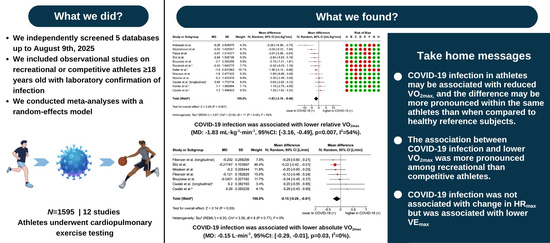
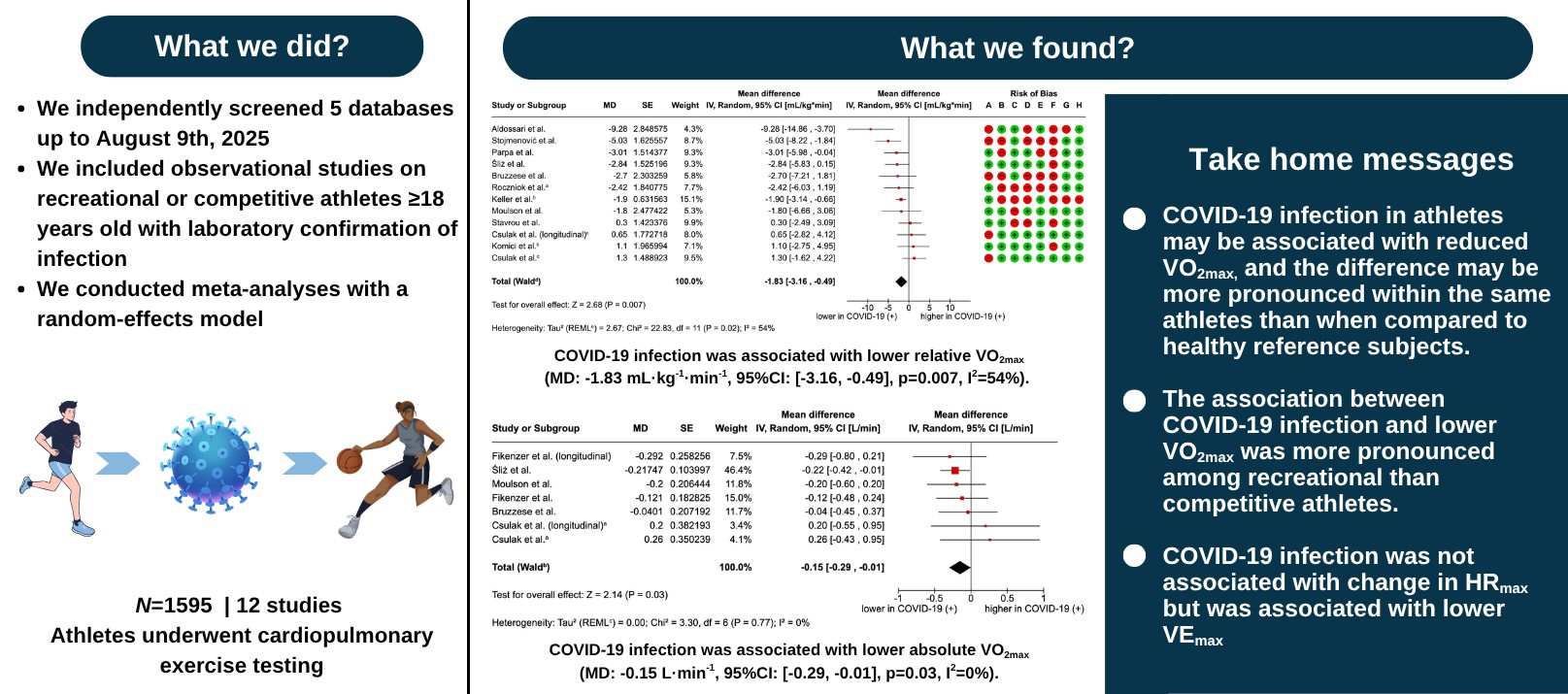
Objectives: We aimed to systematically review and meta-analyze the impact of COVID-19 infection on cardiorespiratory fitness (CRF): (1) within-athlete (the same participants before and after infection), and (2) between-athlete (infected vs. healthy reference participants). Methods: In this systematic review (PROSPERO Registry: CRD42024540430) we included observational studies enrolling recreational or competitive athletes ≥18 years old with laboratory confirmation of SARS-CoV-2 infection. The primary outcome was change in relative maximal oxygen uptake (VO2max). Secondary outcomes included changes in absolute VO2max, maximal ventilation (VEmax), and maximal heart rate (HRmax). We searched Embase, PubMed, Medline, Scopus, and Web of Science up to August 9th, 2025. Risk of bias was assessed with the JBI critical appraisal tool. Meta-analyses were performed with a random-effects model. Results: Twelve studies enrolling a total of 1595 participants met the eligibility criteria. COVID-19 infection was associated with lower relative VO2max (MD = −1.83 mL·kg−1·min−1; 95%CI [−3.16, −0.49]; p = 0.007; I2 = 54%) and absolute VO2max (MD = −0.15 L·min−1; 95%CI [−0.29, −0.01]; p = 0.03; I2 = 0%). COVID-19 infection was associated with lower VEmax (MD = −7.99 L·min−1; 95%CI [−12.94, −3.04]; p = 0.002; I2 = 0%) but not with HRmax (MD = −0.34 bpm; 95%CI [−1.54, 0.86]; p = 0.58; I2 = 0%). High heterogeneity of included studies was addressed with subgroup analyses. The risk of bias in most studies was high. The certainty of evidence was very low for each outcome. Conclusions: COVID-19 infection in athletes was associated with reduced VO2max and VEmax. The relationships were highly dependent on the quality of the studies. CRF and athlete profile should be considered when making shared decisions regarding safe return to sport after infection.

Graphical Abstract

1. Introduction

Coronavirus disease 2019 (COVID-19) posed a challenge for the athletic community, with public restrictions leading to the suspension of sports competitions and the disturbance of regular training practice [1]. Despite athletes’ infections usually having a mild course, they still aggravate performance and COVID-19-associated sequelae occur [2,3]. About 1.5% of athletes could suffer from persistent symptoms lasting >3 weeks, and ~0.1% could have prolonged symptoms for >12 weeks. It should be underscored that exertional cardiopulmonary symptoms are more frequent, although still rare, and typically observed in 4.0% of athletes. Cardiovascular complications might be diagnosed in 1 of 11 athletes (~8.8%), and of athletes with chest pain who underwent cardiac magnetic resonance imaging during recovery from infection, one in five (~20.8%) had cardiac involvement (probable or confirmed) [3].
Cardiorespiratory fitness (CRF) depends on an individual’s endurance capacity and health state [2,4]. Maximal oxygen uptake (VO2max) is a gold-standard measure of cardiorespiratory fitness (CRF) [5,6]. In sports diagnostics, VO2max is a strong predictor of athletic performance [5,7]. In clinical settings, VO2max can be used to stratify risk and evaluate cardiovascular and respiratory system impairments [5,6]. Maximal heart rate (HRmax) is also one of the most important variables used in clinical medicine and physiology [8]. Past COVID-19 infection can affect the heart [4,9]. Measured HRmax compared to age-predicted HRmax is the criterion used to assess whether the cardiopulmonary exercise test (CPET) outcome is maximal [10]. Maximal exercise ventilation (VEmax) is the most important contributor to VO2max and could be a limiting factor in CRF [11].
COVID-19 impairs lung function and respiratory muscle strength and promotes endothelial dysfunction, systemic inflammation, cytokine-mediated injury, myocardial injury, and immune-mediated effects [12,13,14,15,16]. Moreover, hypertension could aggravate the course of COVID-19 [17]. All of the factors described above lead to cardiovascular, respiratory, and vascular complications and, ultimately, aggravate CRF. Therefore, it remains crucial to assess changes in VO2max, HRmax, and VEmax during infection [18], additionally to other markers such as cardiovascular calcifications [17]. Negative changes have been noted even after a mild course, typical for athletes [2,19]. Higher CRF is inversely linked with the risk of hospitalization due to severe COVID-19 in athletes [18]. Grading the impairment in CRF due to infection is crucial for targeting treatment, adjusting safe exercise intensity, and developing a return-to-sport strategy [20].
Assessing changes in CRF before and after COVID-19 and comparing them to a reference population of healthy individuals is problematic [21]. There are noticeable limitations in recruiting athletes who have retrospective access to CPET data and reliable confirmation of COVID-19 infection [22]. Furthermore, it is difficult to recruit large samples and keep within the restricted timeframe between pre-COVID-19 and post-COVID-19 CPET to minimize the impact of detraining and focus on the impact of infection [3].
The degree of aggravation in CRF due to infection with COVID-19 is still controversial. Therefore, in this systematic review, we performed a meta-analysis of cross-sectional and longitudinal studies comparing VO2max, HRmax, and VEmax within the same athletes before and after COVID-19 infection, as well as between healthy, uninfected athletes and athletes who suffered from COVID-19. We aimed to assess how having had COVID-19 infection impacts CRF in athletes and what is the degree of such an impairment.

2. Materials and Methods

2.1. Eligibility Criteria

We performed this systematic review and meta-analysis according to the PRISMA 2020 Statement [23] (Supplementary Material S1, Table S1 and Supplementary Material S2, Table S2). We included observational studies and case series with at least 5 participants who were athletes at various competitive levels. We considered only papers that reported the VO2max (either absolute or relative value) of both participants previously infected with COVID-19 and those not infected (or if pre-infection VO2max values were reported). We considered only VO2max (alternatively named as peak VO2) values obtained from the CPET. Other forms of testing, such as submaximal VO2, or VO2max estimates, were not considered. We considered only studies including athletes aged 18 or older, of both sexes. An athlete was defined according to the Bethesda Conference guidelines as “one who participates in an organized team or individual sport that requires regular competition against others as a central component, places a high premium on excellence and achievement, and requires some form of systematic (and usually intense) training”. We excluded case reports, commentaries, conference abstracts, editorials, guidelines (also statements, consensuses, and position papers), letters to editors, protocols, and reviews (systematic reviews, narrative reviews, and meta-analyses). We excluded studies not written in English and studies in which COVID-19 infection was self-reported by participants (not confirmed by PCR, antigen test, or other reliable method).

2.2. Information Sources

We searched five databases: Embase, Medline Ultimate, PubMed, Scopus, and Web of Science. Each database was searched from inception to 9 August 2025. Gray literature searches, citation tracking or manual bibliography reviews were not performed.

2.3. Search Strategy

For each database, we used the following search strategy: “(COVID-19 or coronavirus or SARS-CoV-2 or SARSCoV2 or SARSCoV-2 or SARS-CoV2) and (VO2max or VO2 max or V02max or V02 max or maximal oxygen consumption or maximal oxygen uptake or maximal aerobic capacity or cardiopulmonary exercise test or CPET or cardiorespiratory fitness) and (athlete or athletes or player or sportsmen or sportswomen)”. We did not use any filters.

2.4. Selection Process

We used the EndNote (version 20.6) automation tool to identify duplicates. Afterwards, GP and PK screened all the records independently to identify the remaining duplicates. Next, GP and PK screened independently and excluded records based on article type. Then, the remaining articles were screened independently by GP and PK by title and abstract for meeting the eligibility criteria. Eventually, GP and PK assessed full-text articles for inclusion. At each step, all the discrepancies between GP and PK were identified and discussed until consensus was reached.

2.5. Data Collection Process

Working together, GP and PK extracted data from each eligible study and entered it into the data extraction form using Cochrane RevMan Version 9.8.2.

2.6. Data Items

We collected all available data for the post-COVID and control groups (either the same athletes before COVID-19 infection or non-infected healthy controls) for the following outcomes: relative VO2max [mL·kg−1·min−1], absolute VO2max [L·min−1], HRmax [bpm], and VEmax [L·min−1]. For each variable, we collected the mean values, standard deviation, and the number of participants in each group. In the same manner, for each group we also collected data regarding body mass index (BMI) [kg·m−2] and age [years].
If available, we also extracted the following covariates for each group in all studies: competition level (recreational, competitive, or mixed), CPET modality (cycle ergometer, treadmill, other, mixed), sex distribution (only male, mixed, not reported), comparison type (post-COVID athletes vs. healthy reference athletes, post-COVID athletes vs. the same athletes before infection), symptoms in athletes during COVID-19 infection (only symptomatic athletes, only asymptomatic athletes, mixed, not reported), time from COVID-19 infection to CPET (up to 1 month after infection, more than 1 month after infection, and not reported). “Healthy reference athlete” was defined as an individual who was not infected/diagnosed with COVID-19 in the original study. The non-COVID group was defined by collective comparisons to healthy reference athletes and pre-COVID values in infected athletes.

2.7. Endpoint Definition

The primary outcome was the mean difference [MD] in relative VO2max between post-COVID athletes and the non-COVID group (collective comparisons to healthy reference and pre-COVID values in the same infected athletes). The secondary outcomes included the following, all compared between the groups as per the primary outcome: (1) mean difference in absolute VO2max, (2) mean difference in HRmax, and (3) mean difference in VEmax.

2.8. Study Risk of Bias Assessment

The risk of bias for the primary outcome was assessed by GP and PK working together with the use of JBI’s critical appraisal tool for analytical cross-sectional studies. Risk of bias was assessed in the following domains: (1) eligibility and sampling, (2) population and setting reporting, (3) exposure ascertainment, (4) outcome definition (VO2max), (5) confounders—identification, (6) confounders—control/adjustment, (7) outcome measurement validity/reliability (CPET description), and (8) statistical methods appropriateness. The assessment can be found in all forest plots regarding relative VO2max and in Supplementary Material S3, Figure S13.

2.9. Effect Measures

We compared all continuous variables (relative VO2max, absolute VO2max, HRmax, VEmax, age, and BMI) by calculating the mean differences with 95% CI.

2.10. Synthesis Report

At the stage of the synthesis process, we considered all eligible studies that reported the outcome of interest. If the number of participants (e.g., symptomatic) was not given, we calculated it based on percentages and sample size, if possible. Since not all studies reported continuous variables as means and standard deviations, we made an assumption that the median is equal to the mean, and the standard deviation was calculated by dividing by 1.35 the difference between the upper and lower limits of the interquartile range. In those cases, we have unequivocally made a footnote remark on each relevant figure presenting this data.
For each data synthesis, we used forest plots to present the data from individual studies and syntheses. Next to each eligible study, we made a visual presentation of the risk of bias assessment for the primary outcome. Studies were sorted by the size of the study effect within each plot.
Meta-analyses were performed using Cochrane RevMan Version 9.8.2. We used a random effects model for each analysis. The inverse variance method was used to calculate the overall effect, and the between-study variance was estimated with the Restricted Maximum Likelihood method. Heterogeneity was formally assessed with the chi-square test, and I2 statistics were used to quantify it.
We performed subgroup analyses for relative VO2max, absolute VO2max, HRmax, and VEmax to explore possible causes of the heterogeneity. We analyzed subgroups for the following covariates: competition level, CPET modality, sex distribution, comparison type, symptoms in athletes during COVID-19 infection, and time from COVID-19 infection to CPET.
For relative VO2max, to perform a sensitivity analysis, we sequentially excluded each study and assessed its influence on the overall effect. We also performed sensitivity analysis for relative VO2max by excluding studies with a high risk of bias in 4 or more domains.

2.11. Reporting Bias Assessment

For relative VO2max, absolute VO2max, HRmax, and VEmax, we generated funnel plots and assessed them visually to evaluate the potential publication bias.

2.12. Certainty Assessment

The certainty of evidence was assessed for relative VO2max, absolute VO2max, HRmax, and VEmax using five GRADE considerations: risk of bias, inconsistency, indirectness, imprecision, and publication bias. The certainty of evidence was assessed as high, moderate, low, or very low. The summary of findings table was prepared with GRADEpro GDT software [24].

3. Results

3.1. Study Selection

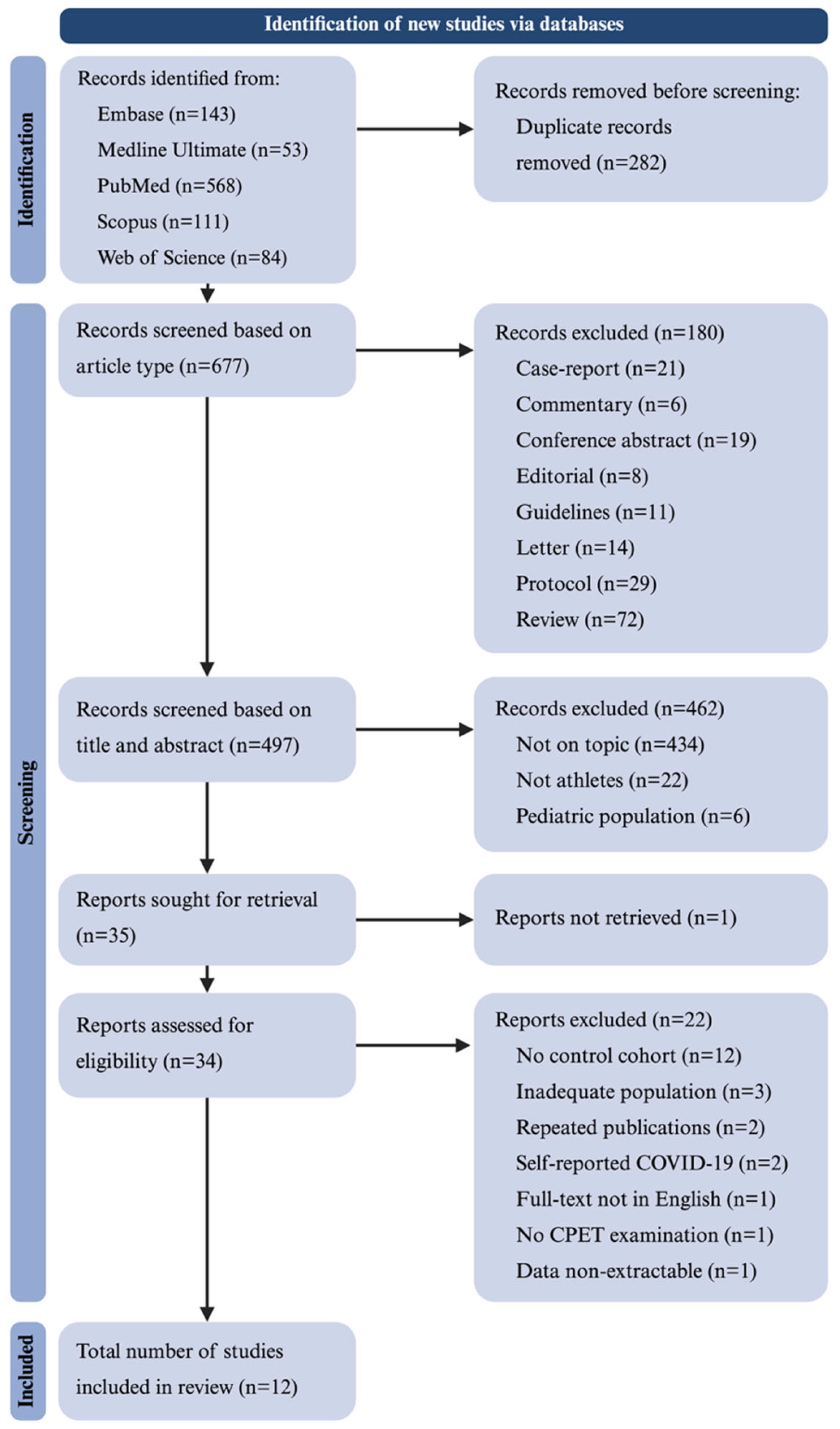
The initial search yielded a total of 959 records. After we removed 282 duplicates, we screened the remaining 677 records by article type. We excluded 180 records based on article type. The remaining 497 records entered the screening stage based on title and abstract. It yielded 35 articles that were acknowledged as appropriate and were chosen for full-text search. One study was not retrieved in complete form. We assessed the complete data reports for the remaining 34 articles and we evaluated them for eligibility, excluding 22 studies due to (1) no control group for outcome comparison [2,3,25,26,27,28,29,30,31,32,33,34], (2) inadequate population [35,36,37], (3) repeated publications [38,39], (4) self-reported COVID-19 infection [40,41], (5) full-text not in English [42], (6) no CPET examination [43], and (7) data non-extractable [44]. Eventually, twelve studies were included [21,45,46,47,48,49,50,51,52,53,54,55] (Figure 1).

3.2. Study Characteristics

The characteristics of each included study are reported in Table 1. There was no association between having had COVID-19 infection and age (MD: 0.60 years, 95%CI: [−0.32, 1.51], p = 0.20, I2 = 19%, Supplementary Material S3, Figure S1) or body mass index (MD: 0.19 kg·m−2, 95%CI: [−0.53, 0.91], p = 0.60, I2 = 64%, Supplementary Material S3, Figure S2).

3.3. Relative VO2max

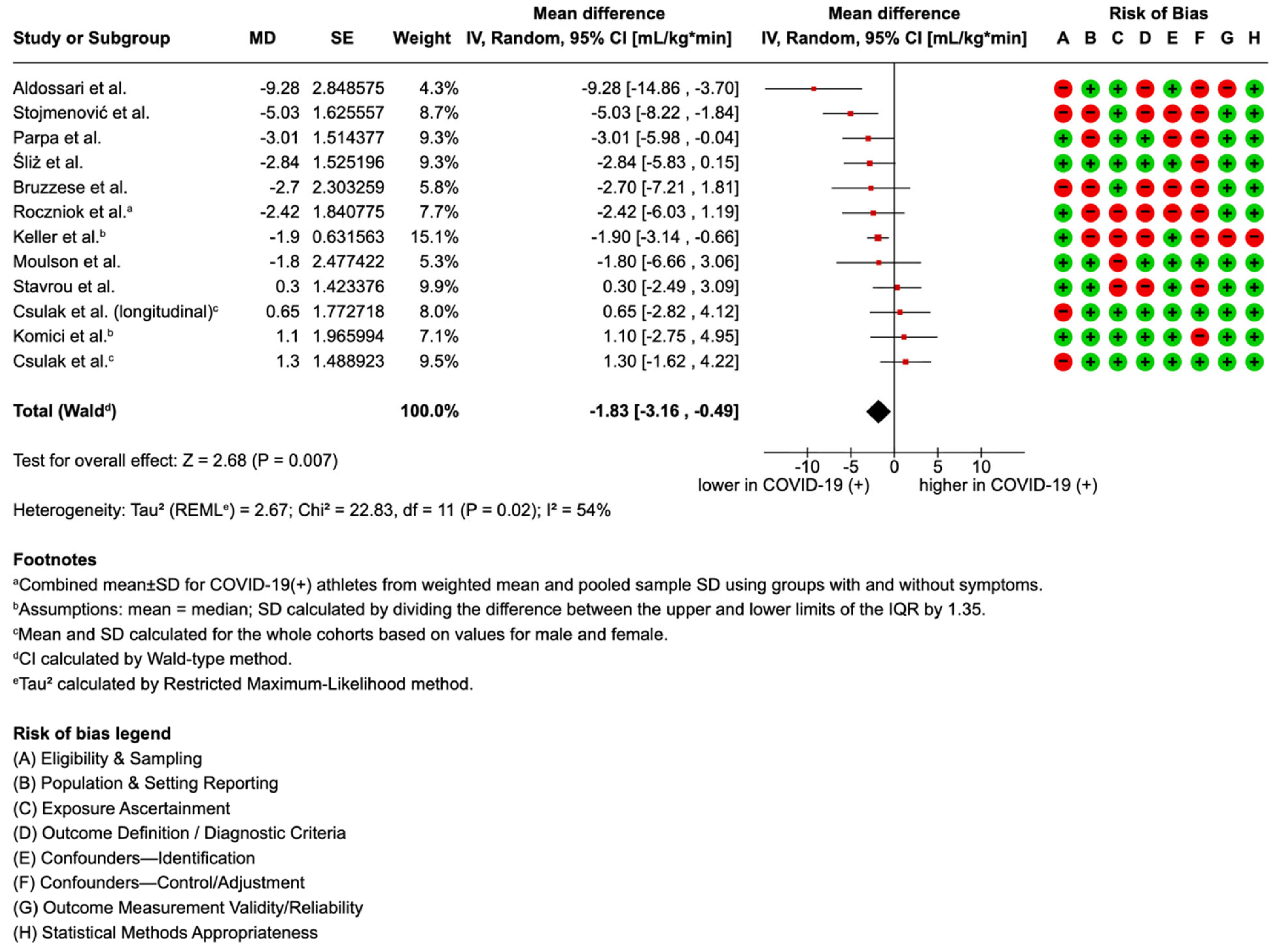
Eleven studies (one study with two different comparisons), including a total of 1583 athletes, reported relative VO2max. Having had COVID-19 infection was associated with lower relative VO2max (MD: −1.83 mL·kg−1·min−1, 95%CI: [−3.16, −0.49], p = 0.007, I2 = 54%, Figure 2).
The complete subgroup analysis can be found in Supplementary Material S3, Figure S3A–F. In the subgroup of studies including only competitive athletes, there was no association between relative VO2max and COVID-19 infection (MD: −1.32 mL·kg−1·min−1, 95%CI: [−2.70, 0.05], p = 0.06, I2 = 50%), while in the subgroups of studies including only recreational athletes (MD: −9.28 mL·kg−1·min−1, 95%CI: [−14.86, −3.70], p = 0.001, I2 not applicable—only one study) or mixed athletes (MD: −2.55 mL·kg−1·min−1, 95%CI: [−5.10, −0.01], p = 0.05, I2 = 0%) COVID-19 infection was associated with lower relative VO2max (Supplementary Material S3, Figure S3A). The overall effect remained significant in the comparison between athletes who had COVID-19 infections and the same athletes before infection (MD: −2.67 mL·kg−1·min−1, 95%CI: [−4.46, −0.88], p = 0.003, I2 = 30%), while it was insignificant in the comparison between athletes who had COVID-19 infections and healthy reference athletes (MD: −1.29 mL·kg−1·min−1, 95%CI: [−3.20, 0.61], p = 0.18, I2 = 62%, Supplementary Material S3, Figure S3D). The association with relative VO2max was also significant in the subgroup of studies including only symptomatic athletes during COVID-19 infection (MD: −2.68 mL·kg−1·min−1, 95%CI: [−5.21, −0.15], p = 0.04, I2 = 0%) while it was insignificant in the subgroup of studies including both symptomatic and asymptomatic athletes during COVID-19 (MD: −0.81 mL·kg−1·min−1, 95%CI: [−2.29, 0.66], p = 0.28, I2 = 35%, Supplementary Material S3, Figure S3E). Finally, the observed association with relative VO2max remained significant in the subgroup of studies in which CPET was performed more than 1 month after COVID-19 infection (MD: −3.24 mL·kg−1·min−1, 95%CI: [−4.87, −1.61], p < 0.0001, I2 = 0%), while it was insignificant in the subgroup of studies in which CPET was performed up to 1 month after COVID-19 infection (MD: −0.65 mL·kg−1·min−1, 95%CI: [−2.75, 1.44], p = 0.54, I2 = 57%, Supplementary Material S3, Figure S3F). Nevertheless, the significant subgroup interaction was observed only for analysis based on competition level (p = 0.02).
The sensitivity analysis revealed no influence of the removal of any single study (Supplementary Material S3, Figure S4A–L); however, the removal of studies with high risk of bias in four or more domains influenced the overall effect, making it insignificant (MD: −0.62 mL·kg−1·min−1, 95%CI: [−2.11, 0.88], p = 0.42, I2 = 31%, Supplementary Material S3, Figure S5).
Funnel plot was slightly asymmetric on visual inspection (Supplementary Material S3, Figure S9). The certainty of evidence was assessed as very low (Supplementary Material S3, Table S3).

3.4. Absolute VO2max

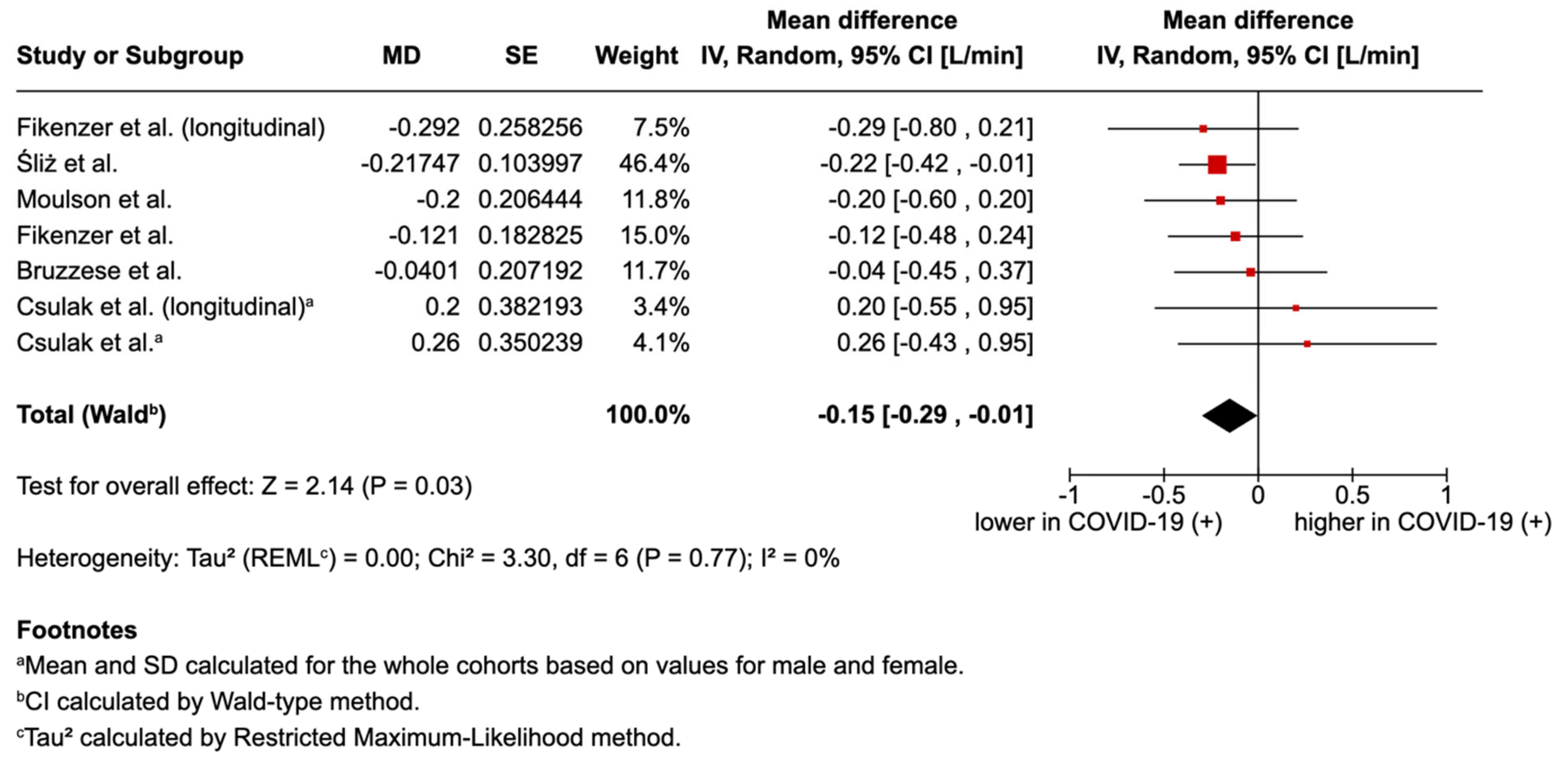
Five studies (two studies with two different comparisons), including a total of 180 athletes, reported absolute VO2max. Having had COVID-19 infection was associated with lower absolute VO2max (MD: −0.15 L·min−1, 95%CI: [−0.29, −0.01], p = 0.03, I2 = 0%, Figure 3).
The complete subgroup analysis is presented in Supplementary Material S3, Figure S6A–F. In the subgroup of studies including only competitive athletes, there was no association between COVID-19 and absolute VO2max (MD: −0.07 L·min−1, 95%CI: [−0.28, 0.15], p = 0.55, I2 = 0%), while in the subgroup of studies including both recreational and competitive athletes, COVID-19 was associated with lower absolute VO2max (MD: −0.21 L·min−1, 95%CI: [−0.40, −0.03], p = 0.02, I2 = 0%) (Supplementary Material S3, Figure S6A). The association between COVID-19 and absolute VO2max remained significant in the comparison between athletes who had COVID-19 infection and the same athletes before infection (MD: −0.17 L·min−1, 95%CI: [−0.34, −0.01], p = 0.04, I2 = 0%), while it was insignificant in the comparison between athletes who had COVID-19 infection and healthy reference athletes (MD: −0.10 L·min−1, 95%CI: [−0.35, 0.15], p = 0.43, I2 = 0%, Supplementary Material S3, Figure S6D). Last, the observed association between COVID-19 and absolute VO2max remained significant in the subgroup of studies in which CPET was performed more than 1 month after COVID-19 infection (MD: −0.21 L·min−1, 95%CI: [−0.40, −0.03], p = 0.02, I2 = 0%), while it was insignificant in the subgroup of studies in which CPET was performed up to 1 month after COVID-19 infection (MD: −0.07 L·min−1, 95%CI: [−0.28, 0.15], p = 0.55, I2 = 0%, Supplementary Material S3, Figure S6F). However, none of these subgroup interactions reached statistical significance.
The funnel plot was slightly asymmetric on visual inspection (Supplementary Material S3, Figure S10); however, in our assessment, adjusting for this publication bias effect might even increase the magnitude of the overall effect. The certainty of evidence was assessed as very low (Supplementary Material S3, Table S3).

3.5. HRmax

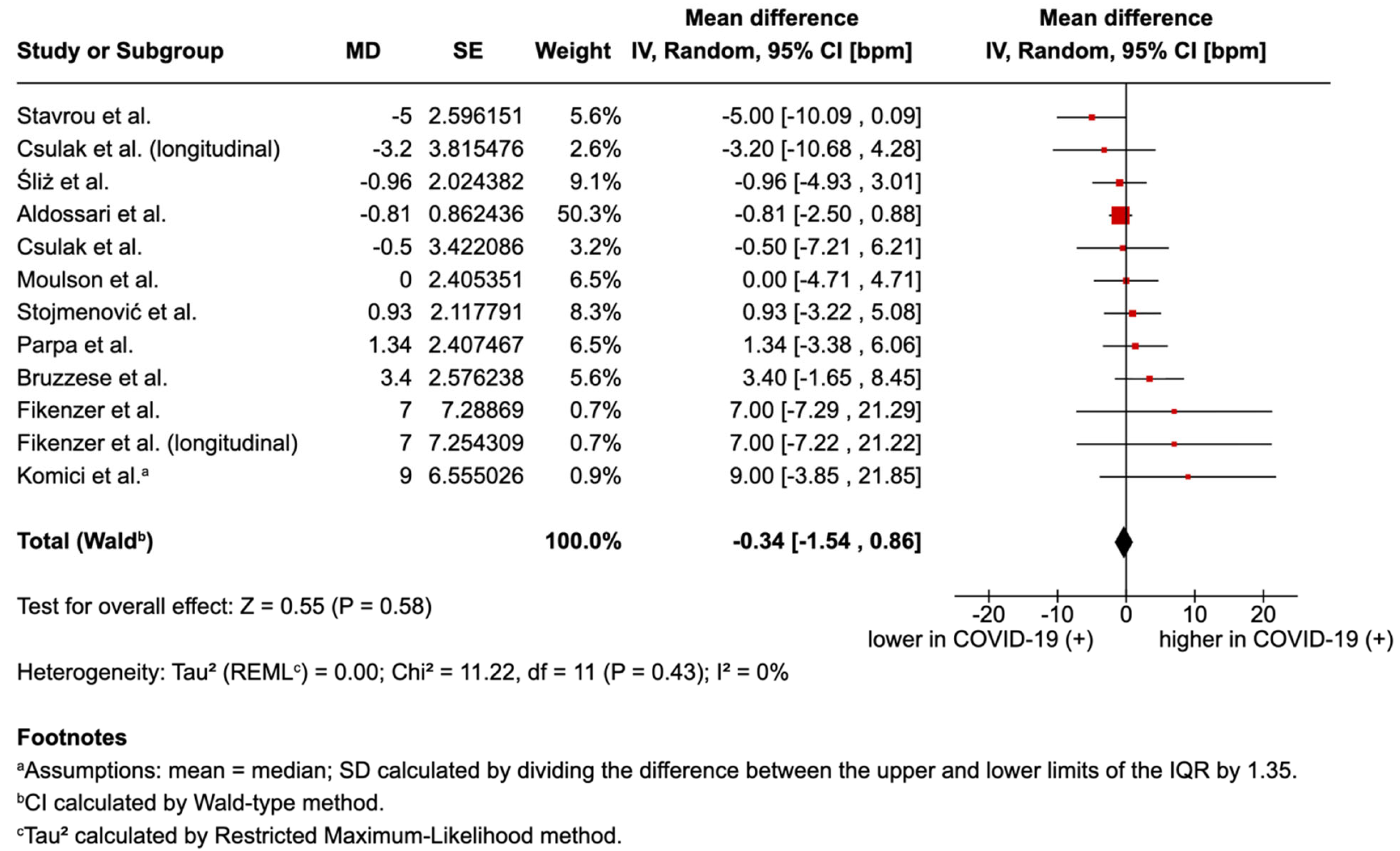
Ten studies (two studies with two different comparisons), including a total of 345 athletes, reported HRmax. Having had COVID-19 was not associated with a difference in HRmax (MD: −0.34 bpm, 95%CI: [−1.54, 0.86], p = 0.58, I2 = 0%, Figure 4).
The complete subgroup analysis can be found in Supplementary Material S3, Figure S7A–F. It did not reveal any findings regarding the mean difference in HRmax within the predefined subgroups.
The funnel plot was slightly asymmetric on visual inspection (Supplementary Material S3, Figure S11). The certainty of evidence was assessed as very low (Supplementary Material S3, Table S3).

3.6. VEmax

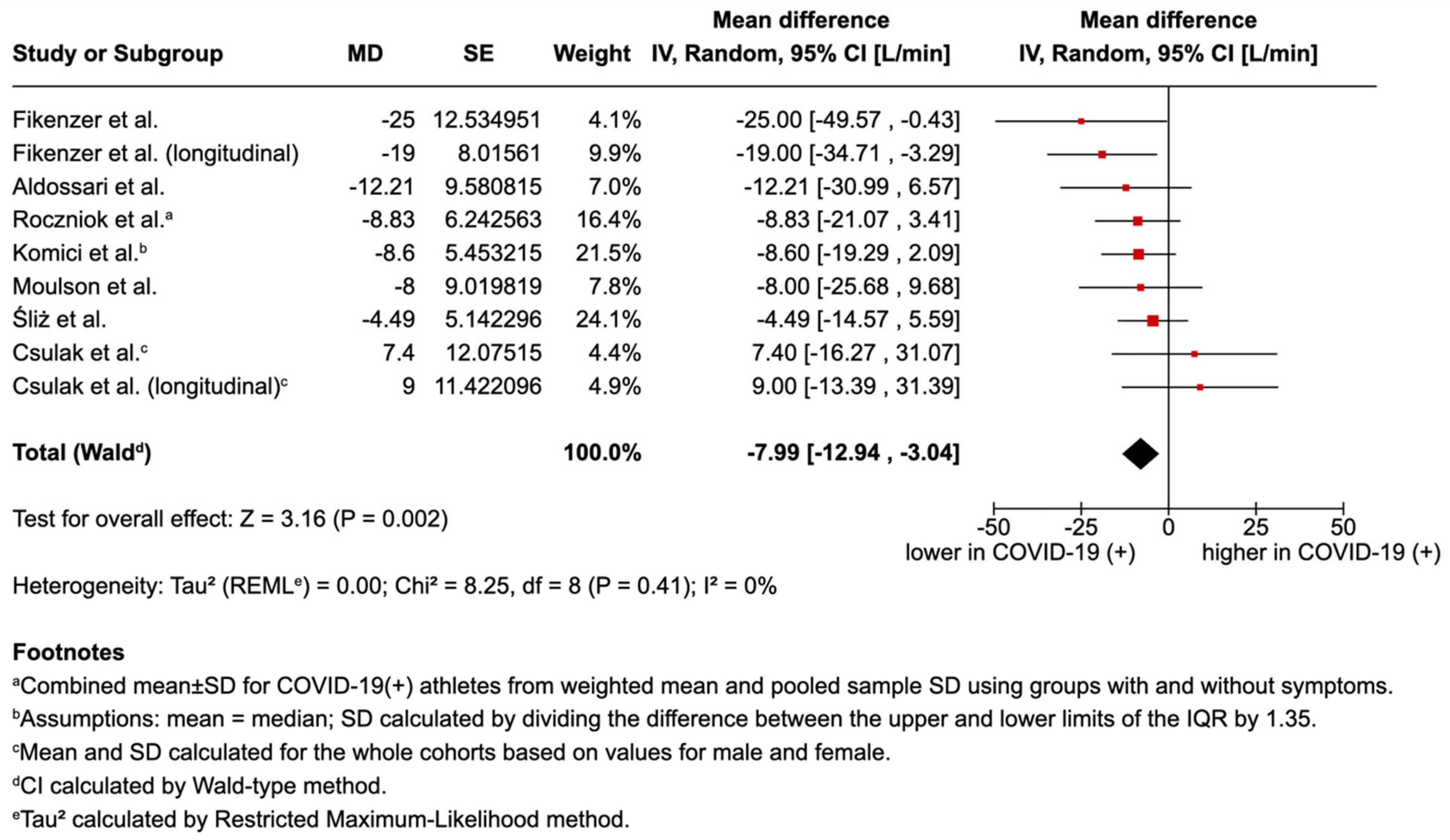
Seven studies (two studies with two different comparisons), including a total of 297 athletes, reported VEmax. Having had COVID-19 was associated with lower VEmax (MD: −7.99 L·min−1, 95%CI: [−12.94, −3.04], p = 0.002, I2 = 0%, Figure 5).
The complete subgroup analysis is presented in Supplementary Material S3, Figure S8A–F. In the subgroup of studies including only competitive athletes, the association between COVID-19 and VEmax remained significant (MD: −8.89 L·min−1, 95%CI: [−15.22, −2.55], p = 0.006, I2 = 0%), while in the subgroups of studies including only recreational athletes (MD: −12.21 L·min−1, 95%CI: [−30.99, 6.57], p = 0.20, I2 not applicable—only one study) or mixed athletes (MD: −5.35 L·min−1, 95%CI: [−14.11, 3.40], p = 0.23, I2 = 0%) there was no association between COVID-19 and VEmax (Supplementary Material S3, Figure S8A). The association with VEmax was significant in the studies including only male athletes (MD: −20.74 L·min−1, 95%CI: [−33.98, −7.51], p = 0.002, I2 = 0%), while insignificant in studies including participants of both sexes (MD: −3.73 L·min−1, 95%CI: [−10.86, 3.41], p = 0.31, I2 = 0%, Supplementary Material S3, Figure S8C). The association with VEmax remained significant in the comparison between athletes who underwent COVID-19 infection and healthy reference athletes (MD: −8.94 L·min−1, 95%CI: [−15.28, −2.60], p = 0.006, I2 = 0%), while it was insignificant in the comparison between athletes who underwent COVID-19 infection and the same athletes before infection (MD: −6.24 L·min−1, 95%CI: [−19.59, 7.12], p = 0.36, I2 = 56%, Supplementary Material S3, Figure S8D). The association with VEmax was insignificant in the subgroup of studies including only symptomatic athletes during COVID-19 infection (MD: −8.00 L·min−1, 95%CI: [−25.68, 9.68], p = 0.38, I2 not applicable—only one study), while it was significant in the subgroup of studies including both symptomatic and asymptomatic athletes during COVID-19 (MD: −8.89 L·min−1, 95%CI: [−15.22, −2.55], p = 0.006, I2 = 0%, Supplementary Material S3, Figure S8E). Finally, the overall effect regarding VEmax remained significant in the subgroup of studies in which CPET was performed more than 1 month after COVID-19 infection (MD: −7.24 L·min−1, 95%CI: [−13.90, −0.59], p = 0.03, I2 = 0%) while it was insignificant in the subgroup of studies in which CPET was performed up to 1 month after COVID-19 infection (MD: −8.21 L·min−1, 95%CI: [−19.28, 2.87], p = 0.15, I2 = 46%, Supplementary Material S3, Figure S8F). However, none of these subgroup interactions reached statistical significance.
The funnel plot was symmetric on visual inspection (Supplementary Material S3, Figure S12). The certainty of evidence was assessed as very low (Supplementary Material S3, Table S3).

4. Discussion

The main findings of our study are: (i) COVID-19 infection in athletes may be associated with reduced VO2max, and the difference may be more pronounced within the same athletes than when compared to healthy reference subjects; (ii) the association between COVID-19 infection and lower VO2max was more pronounced among recreational than competitive athletes; and (iii) COVID-19 infection was not associated with changes in HRmax, but was associated with lower VEmax.
No meta-analysis has investigated the decline in VO2max, HRmax, and VEmax due to COVID-19 in athletes, considering within-subject and between-population analyses. To date, meta-analyses have evaluated the impact of COVID-19 on VO2max but have focused on untrained subjects often described as ‘survivors’ [56,57]. Their results should not be extrapolated to the athletic population, as athletes rarely experience severe symptoms and require hospitalization [3]. Some meta-analyses included only data from the very early stages and omitted studies published after 2023 [57,58]. Other researchers have investigated populations of athletes, but they only screened one database, which posed the risk of omission [58]. A recent systematic review summarized the population of athletes, but did not perform a meta-analysis and focused only on football players [59]. Finally, there were studies assessing the impact of lockdown and imposed restrictions, but not direct infection, which might be the strongest harmful factor [60,61]. To the best of our knowledge, this is the first such meta-analysis of changes in CRF in athletes due to infection with COVID-19 including within-athlete and between-athlete comparisons.

4.1. Interpretation

It should be underscored that the certainty of evidence was very low, both for primary and secondary outcomes, mainly due to the high risk of bias and observational design of studies. The primary outcome, VO2max, was sensitive to study quality, and the association became statistically nonsignificant after excluding low-quality studies. While the exploratory subgroup analyses in Supplementary Material S3 emerged as clinically interesting, the overall interpretation is impacted by the small and low-powered sample sizes. Therefore, they should be treated as exploratory and hypothesis generating.
The included studies rarely controlled for confounders, such as the effects of detraining or limited physical activity during recovery from infection. It is well known that exercise induces cardiac adaptations that are visible not only in echocardiography or ECG, but in CPET too [62]. However, exercise-induced cardiac adaptations could mirror certain cardiovascular diseases (e.g., hypertrophic cardiomyopathy vs. athlete’s heart) in training populations [63]. Periods of detraining are not rare among athletes, who often undergo them during infections, musculoskeletal disorders, or scheduled deloads [64]. During training abstinence, the reverse adaptations occurred [65]. Lack of physical activity leads to reduced dimensions of right and left ventricles, which translates into reduced sports performance, especially in endurance-based disciplines (running, cycling, soccer, etc.). CRF also decreases during detraining in parallel to infection-related aggravation [66]. Therefore, the reduction in CRF could be mediated in part by the infection itself and in part by detraining [64]. Differentiation between detraining changes and infection-related changes is still ambiguous and largely based on consensus statements, with a knowledge gap for further studies [20]. Ultimately, despite statistical significance, the clinical impact of the reduction in VO2max is also low (−1.83 mL·kg−1·min−1) especially among elite athletes, and day-to-day and diurnal performance could impact CPET results to a similar extent [67].

4.2. Impact of COVID-19 Infection on VO2max

The associations between COVID-19 and VO2max that we observed are consistent with those in untrained populations in some areas. We noted a significant reduction in VO2max when the infection was symptomatic, similar to Chuatrakoon et al. and Gomes-Neto et al. [56,57]. However, among athletes, the decrease in VO2max was not significant compared to their healthy counterparts, which is in contrast to untrained populations. Although Lopes et al. only included studies from PubMed up to 2023, they also observed a reduction in aerobic fitness [58]. Hasler et al. reported lower VO2max in squad members than in non-squad members. To some extent, this mirrors our results among competitive and recreational athletes [44].
Both relative and absolute VO2max were consistently associated with having had a COVID-19 infection in the athletic population. Studies included in our meta-analysis investigated endurance and team-sport athletes. The observed relationship is understandable, as in those disciplines athletes typically have a healthy weight and normal BMI [68]. The relationship could be different among strength athletes, where an elevated BMI is sometimes desirable and VO2max is lower and its impact on performance is less important [69]. Notably, the association between infection and VO2max was strongly dependent on the quality of the included studies. The sensitivity analysis, which excluded all the high-risk studies, changed the reduction in VO2max to insignificant (p = 0.42).

4.3. Impact of COVID-19 Infection on HRmax and VEmax

Although cardiac involvement, including myocarditis, may occur during COVID-19 infection, we did not observe a significant association with a change in HRmax [70,71]. Hasler et al. underscored that HRmax rose during both maximal and submaximal exertion [44]. Therefore, the assessment of the circulatory system in athletes after an infection should not be neglected based only on a possible lack of change in HRmax, and this is in accordance with current recommendations [22].
It can be assumed that the imposed restrictions and detraining also affected the CRF of healthy athletes who were unable to train, even if they had not been infected [60,64]. Given that significant reductions occurred for both VO2max and VEmax, but not HRmax, it can be hypothesized that COVID-19 affects the respiratory system more than the circulatory system among athletes. However, this should be interpreted with caution, and the low quality of studies reporting HRmax must be considered.

4.4. Perspectives and Directions for Future Studies

A follow-up of the athletes with the most severe COVID-19 cardiopulmonary complications should assess their current CRF status and whether the past cardiac involvement has healed completely. It would also be interesting to compare the consequences of COVID-19 in athletes with flu, cold, pneumonia, etc., which are much more common in athletes and typically occur in the autumn/winter season [72]. In recent years, stress echocardiography has gained attention in athlete care studies [66]. We focused only on raw CPET as a major diagnostic tool. Therefore, more robust studies pairing CPET and stress echocardiography and other diagnostic methods would be warranted. The included studies recruited athletes of moderate age and omitted pediatric athletes [73,74]. Normative data for CPET varied throughout the lifespan and depend on the age of the participants [75,76]. Ultimately, future studies should check whether COVID-19-related impairment from moderate-age athletes also translates to pediatric and master’s athletes.

4.5. Limitations

Our meta-analysis has several limitations. First, Csulak et al. and Fikenzer et al. compared athletes both before and after COVID-19 infection and athletes after COVID-19 infection to a healthy reference group [47,48]. We included both parts of those studies, as cross-sectional (for comparison between post-COVID-19 and healthy athletes) and longitudinal (for comparison before and after COVID-19). Therefore, these studies were listed twice in different categories, which led to a slight cohort overlap and data duplication related to one arm of the comparisons. Nevertheless, given the weights assigned to these studies and the direction of effect, this should not materially affect the overall conclusions. Second, there was high heterogeneity of included studies, which limits the generalizability of conclusions. This was especially visible in terms of the interval between infection and CPET, where high variability from 10 days to 12 months emerged. This posed a risk of ambiguity as to whether the consequences resulted directly from infection or detraining and interruption of physical activity. We did not extend our study with meta-regression analysis to check where the CRF impairment results came from. Two studies did not even report the interval. Third, several of the included studies were of low quality, while six of them poorly defined primary (VO2max) and secondary (HRmax and VEmax) outcomes. Fourth, we focused on VO2max, HRmax, and VEmax, and did not sub-analyze lung function or respiratory muscle strength. Fifth, participants achieved their CRF variables via different protocols and measuring methods. Sixth, the study population consisted predominantly of males, and females were underrepresented. This problem has already been noted, and there have been recommendations to include a larger percentage of females in future research [77]. Seventh, the majority of studies included limited samples of up to 100 subjects. Only Keller et al. have more than 1000 participants [49]. Smaller studies tend to report stronger effects, and one large study could dominate with a consolidated outcome. Eighth, the risk of bias was not assessed independently, which may introduce reviewer bias. Ninth, the certainty of evidence was very low and some funnel plots were suggestive of possible publication bias. The listed limitations suggest caution in interpreting the results and the need for further research with more transparent methodology.

5. Conclusions

In conclusion, there was a significant association between COVID-19 and reduced VO2max and VEmax, but not HRmax. A more pronounced decline in VO2max was observed in recreational athletes than in competitive athletes. Both lower relative and lower absolute VO2max were associated with COVID-19 infection within the same athletes, but not when compared to healthy reference athletes. The impairment in CRF should be considered during clinical decision-making in order to inform adjustments to training schedules and intensity. Clinicians should account for possible CRF impairment due to COVID-19 infection when making shared decisions regarding allowing athletes to return to training or competition.

Supplementary Materials

The following supporting information can be downloaded at https://www.mdpi.com/article/10.3390/jcm15135133/s1, Supplementary Material S1. Table S1: PRISMA abstract checklist; Supplementary Material S2: Table S2: PRISMA checklist; Supplementary Material S3: Figure S1: Forest plot comparing age between post-COVID athletes and a non-COVID group; Figure S2: Forest plot comparing BMI between post-COVID athletes and a non-COVID group; Figure S3. A: Forest plot presenting the relative VO2max subgroup analysis based on competition level; B: Forest plot presenting the relative VO2max subgroup analysis based on CPET modality; C: Forest plot presenting the relative VO2max subgroup analysis based on sex distribution; D: Forest plot presenting the relative VO2max subgroup analysis based on comparison type; E: Forest plot presenting the relative VO2max subgroup analysis based on the presence of symptoms in athletes during COVID-19 infection; F: Forest plot presenting the relative VO2max subgroup analysis based on time elapsed from COVID-19 infection to CPET; Figure S4. A–L: Forest plots presenting the sensitivity analyses regarding relative VO2max performed by removing every single study consecutively; Figure S5: Forest plot presenting the sensitivity analysis regarding VO2max performed by removing studies with a high risk of bias in 4 or more domains; Figure S6. A: Forest plot presenting the absolute VO2max subgroup analysis based on competition level; B: Forest plot presenting the absolute VO2max subgroup analysis based on CPET modality; C: Forest plot presenting the absolute VO2max subgroup analysis based on sex distribution; D: Forest plot presenting the absolute VO2max subgroup analysis based on comparison type; E: Forest plot presenting the absolute VO2max subgroup analysis based on the presence of symptoms in athletes during COVID-19 infection; F: Forest plot presenting the absolute VO2max subgroup analysis based on time elapsed from COVID-19 infection to CPET; Figure S7. A: Forest plot presenting the HRmax subgroup analysis based on competition level; B: Forest plot presenting the HRmax subgroup analysis based on CPET modality; C: Forest plot presenting the HRmax subgroup analysis based on sex distribution; D: Forest plot presenting the HRmax subgroup analysis based on comparison type; E: Forest plot presenting the HRmax subgroup analysis based on the presence of symptoms in athletes during COVID-19 infection; F: Forest plot presenting the HRmax subgroup analysis based on time elapsed from COVID-19 infection to CPET; Figure S8. A: Forest plot presenting the VEmax subgroup analysis based on competition level; B: Forest plot presenting the VEmax subgroup analysis based on CPET modality; C: Forest plot presenting the VEmax subgroup analysis based on sex distribution; D: Forest plot presenting the VEmax subgroup analysis based on comparison type; E: Forest plot presenting the VEmax subgroup analysis based on the presence of symptoms in athletes during COVID-19 infection; F: Forest plot presenting the VEmax subgroup analysis based on time elapsed from COVID-19 infection to CPET; Figure S9: Funnel plot assessing the publication bias for relative VO2max; Figure S10: Funnel plot assessing the publication bias for absolute VO2max; Figure S11: Funnel plot assessing the publication bias for HRmax; Figure S12: Funnel plot assessing the publication bias for VEmax; Figure S13: Risk of bias assessment of included studies; Table S3: The summary of findings in terms of the certainty of evidence regarding relative VO2max, absolute VO2max, HRmax, and VEmax.

Author Contributions

All authors participated in the research and preparation of the manuscript. Conceptualization, G.P. and P.K.; writing—original draft preparation, G.P. and P.K.; writing—review and editing, G.P. and P.K.; visualization, G.P.; funding acquisition, G.P. All authors have read and agreed to the published version of the manuscript.

Funding

This research received no external funding.

Institutional Review Board Statement

Not applicable.

Informed Consent Statement

Not applicable.

Data Availability Statement

The raw data supporting the conclusions will be made available on reasonable request to the corresponding author.

Acknowledgments

Figure 1 was created with BioRender.com (licensed version by G.P.), and the graphical abstract was created with Canva. Grammarly Version 1.171.1.0 was used for language editing and clarity. P.K. has been supported by the START Scholarship from the Foundation for Polish Science for outstanding young researchers under 30 years old. This systematic review has been registered in the International Prospective Register of Systematic Reviews (PROSPERO) under CRD42024540430. We did not prepare the protocol other than the PROSPERO registry record.

Conflicts of Interest

The authors declare no conflicts of interest.

References

  1. Washif, J.A.; Farooq, A.; Krug, I.; Pyne, D.B.; Verhagen, E.; Taylor, L.; Wong, D.P.; Mujika, I.; Cortis, C.; Haddad, M.; et al. Training During the COVID-19 Lockdown: Knowledge, Beliefs, and Practices of 12,526 Athletes from 142 Countries and Six Continents. Sports Med. 2022, 52, 933–948. [Google Scholar] [CrossRef] [PubMed]
  2. Milovancev, A.; Avakumovic, J.; Lakicevic, N.; Stajer, V.; Korovljev, D.; Todorovic, N.; Bianco, A.; Maksimovic, N.; Ostojic, S.; Drid, P. Cardiorespiratory fitness in volleyball athletes following a COVID-19 infection: A cross-sectional study. Int. J. Environ. Res. Public Health 2021, 18, 4059. [Google Scholar] [CrossRef] [PubMed]
  3. Petek, B.J.; Moulson, N.; Baggish, A.L.; Kliethermes, S.A.; Patel, M.R.; Churchill, T.W.; Harmon, K.G.; Drezner, J.A.; Investigators, O. Prevalence and clinical implications of persistent or exertional cardiopulmonary symptoms following SARS-CoV-2 infection in 3597 collegiate athletes: A study from the Outcomes Registry for Cardiac Conditions in Athletes (ORCCA). Br. J. Sports Med. 2022, 56, 913–918. [Google Scholar] [CrossRef] [PubMed]
  4. Korpelainen, R.; Lamsa, J.; Kaikkonen, K.M.; Korpelainen, J.; Laukkanen, J.; Palatsi, I.; Takala, T.E.; Ikaheimo, T.M.; Hautala, A.J. Exercise capacity and mortality—A follow-up study of 3033 subjects referred to clinical exercise testing. Ann. Med. 2016, 48, 359–366. [Google Scholar] [CrossRef] [PubMed]
  5. Bassett, D.R.; Howley, E.T. Limiting factors for maximum oxygen uptake and determinants of endurance performance. Med. Sci. Sports Exerc. 2000, 32, 70–84. [Google Scholar] [CrossRef] [PubMed]
  6. Wasserman, K. The Dickinson W. Richards lecture. New concepts in assessing cardiovascular function. Circulation 1988, 78, 1060–1071. [Google Scholar] [CrossRef] [PubMed]
  7. Kaminsky, L.A.; Arena, R.; Myers, J. Reference Standards for Cardiorespiratory Fitness Measured With Cardiopulmonary Exercise Testing: Data From the Fitness Registry and the Importance of Exercise National Database. Mayo Clin. Proc. 2015, 90, 1515–1523. [Google Scholar] [CrossRef] [PubMed]
  8. Tanaka, H.; Monahan, K.D.; Seals, D.R. Age-predicted maximal heart rate revisited. J. Am. Coll. Cardiol. 2001, 37, 153–156. [Google Scholar] [CrossRef] [PubMed]
  9. Khan, H.; Kunutsor, S.; Rauramaa, R.; Savonen, K.; Kalogeropoulos, A.P.; Georgiopoulou, V.V.; Butler, J.; Laukkanen, J.A. Cardiorespiratory fitness and risk of heart failure: A population-based follow-up study. Eur. J. Heart Fail. 2014, 16, 180–188. [Google Scholar] [CrossRef] [PubMed]
  10. Brosnahan, S.B.; Jonkman, A.H.; Kugler, M.C.; Munger, J.S.; Kaufman, D.A. COVID-19 and Respiratory System Disorders: Current Knowledge, Future Clinical and Translational Research Questions. Arter. Thromb. Vasc. Biol. 2020, 40, 2586–2597. [Google Scholar] [CrossRef] [PubMed]
  11. Kaminsky, L.A.; Harber, M.P.; Imboden, M.T.; Arena, R.; Myers, J. Peak Ventilation Reference Standards from Exercise Testing: From the FRIEND Registry. Med. Sci. Sports Exerc. 2018, 50, 2603–2608. [Google Scholar] [CrossRef] [PubMed]
  12. Ceasovschih, A.; Sorodoc, V.; Shor, A.; Haliga, R.E.; Roth, L.; Lionte, C.; Onofrei Aursulesei, V.; Sirbu, O.; Culis, N.; Shapieva, A.; et al. Distinct Features of Vascular Diseases in COVID-19. J. Inflamm. Res. 2023, 16, 2783–2800. [Google Scholar] [CrossRef] [PubMed]
  13. Yugar-Toledo, J.C.; Yugar, L.B.T.; Sedenho-Prado, L.G.; Schreiber, R.; Moreno, H. Pathophysiological effects of SARS-CoV-2 infection on the cardiovascular system and its clinical manifestations—A mini review. Front. Cardiovasc. Med. 2023, 10, 1162837. [Google Scholar] [CrossRef] [PubMed]
  14. Bostanci, O.; Karaduman, E.; Colak, Y.; Yilmaz, A.K.; Kabadayi, M.; Bilgic, S. Respiratory muscle strength and pulmonary function in unvaccinated athletes before and after COVID-19 infection: A prospective cohort study. Respir. Physiol. Neurobiol. 2023, 308, 103983. [Google Scholar] [CrossRef] [PubMed]
  15. Bostanci, O.; Karaduman, E.; Yilmaz, A.K.; Kabadayi, M.; Bilgic, S. Midterm Effects of SARS-CoV-2 on Respiratory Function in Judokas With and Without Exercise-Induced Bronchoconstriction: A Retrospective Study. Clin. J. Sport Med. 2025, 35, 162–168. [Google Scholar] [CrossRef] [PubMed]
  16. Karaduman, E.; Bostanci, O.; Bilgic, S. A follow-up study on respiratory outcomes, quality of life and performance perception of SARS-CoV-2 primary and reinfection in elite athletes: A 9-month prospective study. Eur. J. Sport Sci. 2024, 24, 964–974. [Google Scholar] [CrossRef] [PubMed]
  17. Cereda, A.; Toselli, M.; Palmisano, A.; Vignale, D.; Khokhar, A.; Campo, G.; Bertini, M.; Loffi, M.; Andreini, D.; Pontone, G.; et al. Coronary calcium score as a predictor of outcomes in the hypertensive COVID-19 population: Results from the Italian (S) Core-COVID-19 Registry. Hypertens. Res. 2022, 45, 333–343. [Google Scholar] [CrossRef] [PubMed]
  18. Brawner, C.A.; Ehrman, J.K.; Bole, S.; Kerrigan, D.J.; Parikh, S.S.; Lewis, B.K.; Gindi, R.M.; Keteyian, C.; Abdul-Nour, K.; Keteyian, S.J. Inverse Relationship of Maximal Exercise Capacity to Hospitalization Secondary to Coronavirus Disease 2019. Mayo Clin. Proc. 2021, 96, 32–39. [Google Scholar] [CrossRef] [PubMed]
  19. Meyer, T.; Mack, D.; Donde, K.; Harzer, O.; Krutsch, W.; Rossler, A.; Kimpel, J.; von Laer, D.; Gartner, B.C. Successful return to professional men’s football (soccer) competition after the COVID-19 shutdown: A cohort study in the German Bundesliga. Br. J. Sports Med. 2021, 55, 62–66. [Google Scholar] [CrossRef] [PubMed]
  20. Phelan, D.; Kim, J.H.; Chung, E.H. A Game Plan for the Resumption of Sport and Exercise After Coronavirus Disease 2019 (COVID-19) Infection. JAMA Cardiol. 2020, 5, 1085–1086. [Google Scholar] [CrossRef] [PubMed]
  21. Moulson, N.; Gustus, S.K.; Scirica, C.; Petek, B.J.; Vanatta, C.; Churchill, T.W.; Guseh, J.S.; Baggish, A.; Wasfy, M.M. Diagnostic evaluation and cardiopulmonary exercise test findings in young athletes with persistent symptoms following COVID-19. Br. J. Sports Med. 2022, 56, 927–932. [Google Scholar] [CrossRef] [PubMed]
  22. Phelan, D.; Kim, J.H.; Elliott, M.D.; Wasfy, M.M.; Cremer, P.; Johri, A.M.; Emery, M.S.; Sengupta, P.P.; Sharma, S.; Martinez, M.W.; et al. Screening of Potential Cardiac Involvement in Competitive Athletes Recovering From COVID-19: An Expert Consensus Statement. JACC Cardiovasc. Imaging 2020, 13, 2635–2652. [Google Scholar] [CrossRef] [PubMed]
  23. Page, M.J.; McKenzie, J.E.; Bossuyt, P.M.; Boutron, I.; Hoffmann, T.C.; Mulrow, C.D.; Shamseer, L.; Tetzlaff, J.M.; Akl, E.A.; Brennan, S.E. The PRISMA 2020 statement: An updated guideline for reporting systematic reviews. BMJ 2021, 372, 71. [Google Scholar] [CrossRef]
  24. GRADEpro GDT: GRADEpro Guideline Development Tool [Software]. McMaster University and Evidence Prime, 2023. Available online: https://www.gradepro.org/ (accessed on 26 June 2026).
  25. Gattoni, C.; Conti, E.; Casolo, A.; Nuccio, S.; Baglieri, C.; Capelli, C.; Girardi, M. COVID-19 disease in professional football players: Symptoms and impact on pulmonary function and metabolic power during matches. Physiol. Rep. 2022, 10, e15337. [Google Scholar] [CrossRef] [PubMed]
  26. Komici, K.; Bencivenga, L.; Rengo, G.; Bianco, A.; Guerra, G. Ventilatory efficiency in post-COVID-19 athletes. Physiol. Rep. 2023, 11, e15795. [Google Scholar] [CrossRef] [PubMed]
  27. Maestrini, V.; Filomena, D.; Birtolo, L.I.; Serdoz, A.; Fiore, R.; Tatangelo, M.; Lemme, E.; Squeo, M.R.; Mango, R.; Di Gioia, G.; et al. Systematic Cardiovascular Screening in Olympic Athletes before and after SARS-CoV-2 Infection. J. Clin. Med. 2022, 11, 3499. [Google Scholar] [CrossRef] [PubMed]
  28. Mitrani, R.D.; Alfadhli, J.; Lowery, M.H.; Best, T.M.; Hare, J.M.; Fishman, J.; Dong, C.; Siegel, Y.; Scavo, V.; Basham, G.J.; et al. Utility of exercise testing to assess athletes for post COVID-19 myocarditis. Am. Heart J. Plus Cardiol. Res. Pract. 2022, 14, 100125. [Google Scholar] [CrossRef] [PubMed]
  29. Rasmusen, H.K.; Aaroe, M.; Madsen, C.V.; Gudmundsdottir, H.L.; Mertz, K.H.; Mikkelsen, A.D.; Dall, C.H.; Brushoj, C.; Andersen, J.L.; Vall-Lamora, M.H.D.; et al. The COVID-19 in athletes (COVA) study: A national study on cardio-pulmonary involvement of SARS-CoV-2 infection among elite athletes. Eur. Clin. Respir. J. 2023, 10, 2149919. [Google Scholar] [CrossRef] [PubMed]
  30. Schellenberg, J.; Matits, L.; Bizjak, D.A.; Kersten, J.; Kirsten, J.; Vollrath, S.; Steinacker, J.M. Assessment of myocardial function and cardiac performance using left ventricular global longitudinal strain in athletes after COVID-19: A follow-up study. Front. Cardiovasc. Med. 2023, 10, 1240278. [Google Scholar] [CrossRef] [PubMed]
  31. Squeo, M.R.; Monosilio, S.; Gismondi, A.; Perrone, M.; Gregorace, E.; Lemme, E.; Gioia, G.D.; Mango, R.; Prosperi, S.; Spataro, A.; et al. Periodic health evaluation in athletes competing in Tokyo 2020: From SARSCoV-2 to Olympic medals. BMJ Open Sport Exerc. Med. 2023, 9, e001610. [Google Scholar] [CrossRef] [PubMed]
  32. Stojmenovic, D.; Stojmenovic, T.; Andjelkovic, M.; Trunic, N.; Dikic, N.; Kilibarda, N.; Nikolic, I.; Nedeljkovic, I.; Ostojic, M.; Purkovic, M.; et al. The Influence of Different SARS-CoV-2 Strains on Changes in Maximal Oxygen Consumption, Ventilatory Efficiency and Oxygen Pulse of Elite Athletes. Diagnostics 2023, 13, 1574. [Google Scholar] [CrossRef] [PubMed]
  33. Vollrath, S.; Bizjak, D.A.; Zorn, J.; Matits, L.; Jerg, A.; Munk, M.; Schulz, S.V.W.; Kirsten, J.; Schellenberg, J.; Steinacker, J.M. Recovery of performance and persistent symptoms in athletes after COVID-19. PLoS ONE 2022, 17, e0277984. [Google Scholar] [CrossRef] [PubMed]
  34. Wernhart, S.; Weihe, E.; Totzeck, M.; Balcer, B.; Rassaf, T.; Luedike, P. Cardiopulmonary Profiling of Athletes with Post-Exertional Malaise after COVID-19 Infection—A Single-Center Experience. J. Clin. Med. 2023, 12, 4348. [Google Scholar] [CrossRef] [PubMed]
  35. Deng, S.; Yin, M.; Chen, Z.; Deng, J.; Wang, Z.; Li, Y.; Lyu, M.; Zhang, B.; Zhu, S.; Hu, S.; et al. SARS-CoV-2 infection decreases cardiorespiratory fitness and time-trial performance even two months after returning to regular training—Insights from a longitudinal case series of well-trained kayak athletes. J. Exerc. Sci. Fit. 2024, 22, 350–358. [Google Scholar] [CrossRef] [PubMed]
  36. Maestrini, V.; Penza, M.; Filomena, D.; Birtolo, L.I.; Monosilio, S.; Lemme, E.; Squeo, M.R.; Mango, R.; Di Gioia, G.; Serdoz, A.; et al. Low prevalence of cardiac abnormalities in competitive athletes at return-to-play after COVID-19. J. Sci. Med. Sport 2023, 26, 8–13. [Google Scholar] [CrossRef] [PubMed]
  37. Ucar, E.Y.; Araz, O.; Ozmen, K.; Kerget, B.; Akgun, M.; Saglam, L. Evaluation of the Effect of COVID-19 Lung Involvement on Cardiorespiratory Fitness at 3 and 6 months. J. Cardiopulm. Rehabil. Prev. 2023, 43, 391–393. [Google Scholar] [CrossRef] [PubMed]
  38. Śliż, D.; Wiecha, S.; Gąsior, J.S.; Kasiak, P.S.; Ulaszewska, K.; Lewandowski, M.; Barylski, M.; Mamcarz, A. Impact of COVID-19 Infection on Cardiorespiratory Fitness, Sleep, and Psychology of Endurance Athletes—CAESAR Study. J. Clin. Med. 2023, 12, 3002. [Google Scholar] [CrossRef] [PubMed]
  39. Śliż, D.; Wiecha, S.; Gąsior, J.S.; Kasiak, P.S.; Ulaszewska, K.; Postuła, M.; Małek, Ł.A.; Mamcarz, A. The Influence of Nutrition and Physical Activity on Exercise Performance after Mild COVID-19 Infection in Endurance Athletes-CESAR Study. Nutrients 2022, 14, 5381. [Google Scholar] [CrossRef] [PubMed]
  40. Grün, V.; Komzák, M. The First Season After the COVID-19 Pandemic: Cardiorespiratory and Statistics’ Performance in Czech Ice Hockey Players. Stud. Sport. 2023, 17, 100–107. [Google Scholar] [CrossRef]
  41. Haley, C.A.; Torres, G.; Olivier, B.; Van Aswegen, H. Cardiorespiratory fitness response to endurance training in athletes post-COVID-19 compared to unaffected athletes. S. Afr. J. Sports Med. 2024, 36, v36i31a18872. [Google Scholar] [CrossRef] [PubMed]
  42. Costa, J.; Rodrigues, V.; Faro, H. Physical performance of football athlete’s post-infection by coronavirus: A case study. Rev. Bras. Futsal Futeb. 2021, 13, 745–752. [Google Scholar]
  43. Hédon, C.; Schnell, F.; Sosner, P.; Chagué, F.; Schuster, I.; Julia, M.; Duparc, A.; Guy, J.M.; Molinari, N.; Michaux, L.; et al. Cardiac screening before returning to elite sport after SARS-CoV-2 infection. Arch. Cardiovasc. Dis. 2022, 115, 562–570. [Google Scholar] [CrossRef] [PubMed]
  44. Hasler, E.; Widmann, M.; Haller, B.; Gaidai, R.; Venhorst, A.; Meyer, T.; Reinsberger, C.; Nieß, A.M.; Roecker, K.; Cosmo-S Research, G. COVID-19′s Impact on Athletes: Reduced Cardiorespiratory Fitness after a SARS-CoV-2 Infection. Med. Sci. Sports Exerc. 2025, 57, 267–279. [Google Scholar] [CrossRef] [PubMed]
  45. Aldossari, H.A.; Alsubaiei, M.E.; Al Humoud, S.Y.; Aldossari, H.A.; Shanb, A.A. Impact of COVID-19 on maximal oxygen uptake, physical activity, and fatigue in Saudi recreational athletes: A cross-sectional study. Acta Biomed. 2025, 96, 17107. [Google Scholar] [CrossRef]
  46. Bruzzese, M.F.; Bazán, N.E.; Echandía, N.A.; Garcia, G.C. Evaluation of maximum oxygen consumption pre and post COVID-19 in elite soccer player from Argentina. Arch. Med. Deporte 2023, 40, 217–221. [Google Scholar] [CrossRef]
  47. Csulak, E.; Petrov, Á.; Kováts, T.; Tokodi, M.; Lakatos, B.; Kovács, A.; Staub, L.; Suhai, F.I.; Szabó, E.L.; Dohy, Z.; et al. The impact of COVID-19 on the preparation for the tokyo olympics: A comprehensive performance assessment of top swimmers. Int. J. Environ. Res. Public Health 2021, 18, 9770. [Google Scholar] [CrossRef] [PubMed]
  48. Fikenzer, S.; Kogel, A.; Pietsch, C.; Lavall, D.; Stöbe, S.; Rudolph, U.; Laufs, U.; Hepp, P.; Hagendorff, A. SARS-CoV2 infection: Functional and morphological cardiopulmonary changes in elite handball players. Sci. Rep. 2021, 11, 17798. [Google Scholar] [CrossRef] [PubMed]
  49. Keller, K.; Friedrich, O.; Treiber, J.; Quermann, A.; Friedmann-Bette, B. Former SARS-CoV-2 Infection Was Related to Decreased VO2 Peak and Exercise Hypertension in Athletes. Diagnostics 2023, 13, 1792. [Google Scholar] [CrossRef] [PubMed]
  50. Komici, K.; Bianco, A.; Perrotta, F.; Dello Iacono, A.; Bencivenga, L.; D’Agnano, V.; Rocca, A.; Bianco, A.; Rengo, G.; Guerra, G. Clinical Characteristics, Exercise Capacity and Pulmonary Function in Post-COVID-19 Competitive Athletes. J. Clin. Med. 2021, 10, 3053. [Google Scholar] [CrossRef] [PubMed]
  51. Parpa, K.; Michaelides, M. Aerobic capacity of professional soccer players before and after COVID-19 infection. Sci. Rep. 2022, 12, 11850. [Google Scholar] [CrossRef] [PubMed]
  52. Roczniok, R.; Terbalyan, A.; Pietraszewski, P.; Mikrut, G.; Zielonka, H.; Stastny, P.; Swinarew, A.; Manilewska, D.; Ornowski, K.; Jabłoński, T.; et al. Impact of SARS-CoV-2 on Aerobic and Anaerobic Capacity in Professional Ice Hockey Players. J. Clin. Med. 2025, 14, 3478. [Google Scholar] [CrossRef] [PubMed]
  53. Śliż, D.; Wiecha, S.; Ulaszewska, K.; Gąsior, J.S.; Lewandowski, M.; Kasiak, P.S.; Mamcarz, A. COVID-19 and athletes: Endurance sport and activity resilience study—CAESAR study. Front. Physiol. 2022, 13, 1078763. [Google Scholar] [CrossRef] [PubMed]
  54. Stavrou, V.T.; Kyriaki, A.; Vavougios, G.D.; Fatouros, I.G.; Metsios, G.S.; Kalabakas, K.; Karagiannis, D.; Daniil, Z.; Gourgoulianis, K.I.; Βasdekis, G. Athletes with mild post-COVID-19 symptoms experience increased respiratory and metabolic demands: A cross-sectional study. Sports Med. Health Sci. 2023, 5, 106–111. [Google Scholar] [CrossRef] [PubMed]
  55. Stojmenović, T.; Marković, S. Impaired Cardiorespiratory Fitness of Elite Athletes after Asymptomatic or Mild SARS-CoV-2 Infection. Medicina 2024, 60, 786. [Google Scholar] [CrossRef] [PubMed]
  56. Chuatrakoon, B.; Konghakote, S.; Sa-Nguanmoo, P.; Nantakool, S. Long-term impact of SARS-CoV-2 infection on cardiorespiratory fitness: A meta-analysis. Front. Public Health 2023, 11, 1215486. [Google Scholar] [CrossRef] [PubMed]
  57. Gomes-Neto, M.; Almeida, K.O.; Correia, H.F.; Santos, J.C.; Gomes, V.A.; Serra, J.P.C.; Duraes, A.R.; Carvalho, V.O. Determinants of cardiorespiratory fitness measured by cardiopulmonary exercise testing in COVID-19 survivors: A systematic review with meta-analysis and meta-regression. Braz. J. Phys. Ther. 2024, 28, 101089. [Google Scholar] [CrossRef] [PubMed]
  58. Lopes, L.R.; Medeiros, R.; Tavares, V.; Dias, F.; Amaral, M.V.G.; Goes, R.A.; Matheus Guimaraes, J.A.; Perini, J.A. A Systematic Review and Meta-Analysis on Aerobic Fitness Dynamics in Post-COVID-19 Athletes: Implications in the Return-to-Play Performance. Sports 2025, 13, 40. [Google Scholar] [CrossRef] [PubMed]
  59. Parpa, K.; Michaelides, M.A.; Paludo, A.C.; Govindasamy, K.; Intziegianni, K. Impact of COVID-19 infection on physical performance of soccer players: A systematic review. Int. J. Sports Med. 2025, 46, 1037–1048. [Google Scholar] [CrossRef] [PubMed]
  60. Rosa, B.V.; Maldonado, A.J.; de Araujo, A.O.; Neves, L.M.; Rossi, F.E. Impact of the COVID-19 Lockdown on the Body Composition and Physical Performance of Athletes: A Systematic Review with Meta-Analysis and Meta-Regression. Healthcare 2023, 11, 2319. [Google Scholar] [CrossRef] [PubMed]
  61. Meyerowitz-Katz, G.; Bhatt, S.; Ratmann, O.; Brauner, J.M.; Flaxman, S.; Mishra, S.; Sharma, M.; Mindermann, S.; Bradley, V.; Vollmer, M.; et al. Is the cure really worse than the disease? The health impacts of lockdowns during COVID-19. BMJ Glob. Health 2021, 6, e006653. [Google Scholar] [CrossRef] [PubMed]
  62. Finocchiaro, G.; Zorzi, A.; Abela, M.; Baggish, A.; Castelletti, S.; Cavarretta, E.; Claessen, G.; Corrado, D.; Sanz de la Garza, M.; Gati, S.; et al. Abnormal electrocardiogram findings in athletes. Eur. Heart J. 2025, 47, 152–169. [Google Scholar] [CrossRef] [PubMed]
  63. Hsieh, P.N.; Shen, S.; Chukwurah, M.I.; Churchill, T.W.; Stewart, K.M.; Chung, E.H.; Weiner, R.B.; Li, H.; Guseh, J.S. Athlete’s Heart Revisited: Historical, Clinical, and Molecular Perspectives. Circ. Res. 2025, 137, 231–254. [Google Scholar] [CrossRef] [PubMed]
  64. Petek, B.J.; Groezinger, E.Y.; Pedlar, C.R.; Baggish, A.L. Cardiac effects of detraining in athletes: A narrative review. Ann. Phys. Rehabil. Med. 2022, 65, 101581. [Google Scholar] [CrossRef] [PubMed]
  65. D’Ascenzi, F.; Pelliccia, A.; Cameli, M.; Lisi, M.; Natali, B.M.; Focardi, M.; Giorgi, A.; D’Urbano, G.; Causarano, A.; Bonifazi, M.; et al. Dynamic changes in left ventricular mass and in fat-free mass in top-level athletes during the competitive season. Eur. J. Prev. Cardiol. 2015, 22, 127–134. [Google Scholar] [CrossRef] [PubMed]
  66. Kasiak, P. Role of Cardiopulmonary Exercise Testing in the Monitoring of Cardiovascular Risk Factors in Athletes-State-of-the-Art Review. Vasc. Health Risk Manag. 2026, 22, 575333. [Google Scholar] [CrossRef] [PubMed]
  67. Knaier, R.; Infanger, D.; Niemeyer, M.; Cajochen, C.; Schmidt-Trucksass, A. In Athletes, the Diurnal Variations in Maximum Oxygen Uptake Are More Than Twice as Large as the Day-to-Day Variations. Front. Physiol. 2019, 10, 219. [Google Scholar] [CrossRef] [PubMed]
  68. Mathisen, T.F.; Ackland, T.; Burke, L.M.; Constantini, N.; Haudum, J.; Macnaughton, L.S.; Meyer, N.L.; Mountjoy, M.; Slater, G.; Sundgot-Borgen, J. Best practice recommendations for body composition considerations in sport to reduce health and performance risks: A critical review, original survey and expert opinion by a subgroup of the IOC consensus on Relative Energy Deficiency in Sport (REDs). Br. J. Sports Med. 2023, 57, 1148–1158. [Google Scholar] [CrossRef] [PubMed]
  69. Ferland, P.M.; Charron, J.; Brisebois-Boies, M.; Miron, F.S.; Comtois, A.S. Body Composition and Maximal Strength of Powerlifters: A Descriptive Quantitative and Longitudinal Study. Int. J. Exerc. Sci. 2023, 16, 828–845. [Google Scholar] [CrossRef] [PubMed]
  70. Moulson, N.; Petek, B.J.; Drezner, J.A.; Harmon, K.G.; Kliethermes, S.A.; Patel, M.R.; Baggish, A.L.; Outcomes Registry for Cardiac Conditions in Athletes, I. SARS-CoV-2 Cardiac Involvement in Young Competitive Athletes. Circulation 2021, 144, 256–266. [Google Scholar] [CrossRef] [PubMed]
  71. Malek, L.A.; Marczak, M.; Milosz-Wieczorek, B.; Konopka, M.; Braksator, W.; Drygas, W.; Krzywanski, J. Cardiac involvement in consecutive elite athletes recovered from COVID-19: A magnetic resonance study. J. Magn. Reson. Imaging 2021, 53, 1723–1729. [Google Scholar] [CrossRef] [PubMed]
  72. Roberts, J.A. Viral illnesses and sports performance. Sports Med. 1986, 3, 298–303. [Google Scholar] [CrossRef] [PubMed]
  73. Kasiak, P.; Kowalski, T.; Zanini, M.; Ozemek, C.; Faiss, R.; Debevec, T.; Mamcarz, A.; Sliz, D.; Chomiuk, T.; Ragazzoni, G.L.; et al. Normative values for cardiopulmonary exercise testing in the pediatric population—An updated systematic review. Eur. J. Prev. Cardiol. 2026. [Google Scholar] [CrossRef] [PubMed]
  74. Tanaka, H.; Seals, D.R. Endurance exercise performance in Masters athletes: Age-associated changes and underlying physiological mechanisms. J. Physiol. 2008, 586, 55–63. [Google Scholar] [CrossRef] [PubMed]
  75. Dean, P.N.; Brothers, J.A.; Burns, K.; Edelson, J.B.; Etheridge, S.; Phelan, D.M.; Shafer, K.; Snyder, C.; Molossi, S.; Danielian, A.; et al. The Cardiovascular Care of the Pediatric Athlete. J. Am. Coll. Cardiol. 2025, 85, 1434–1454. [Google Scholar] [CrossRef] [PubMed]
  76. Eijsvogels, T.M.H.; Kim, J.H.; Aengevaeren, V.L.; D’Ascenzi, F.; Churchill, T.W.; Dineen, E.H.; Sanz-de la Garza, M.; Gati, S.; Halasz, G.; Haugaa, K.; et al. Masters Athletes With Abnormal Cardiovascular Findings: A Clinical Consensus Statement of the European Association of Preventive Cardiology of the ESC and the American College of Cardiology. J. Am. Coll. Cardiol. 2026. [Google Scholar] [CrossRef] [PubMed]
  77. Anderson, N.; Robinson, D.G.; Verhagen, E.; Fagher, K.; Edouard, P.; Rojas-Valverde, D.; Ahmed, O.H.; Jederstrom, M.; Usacka, L.; Benoit-Piau, J.; et al. Under-representation of women is alive and well in sport and exercise medicine: What it looks like and what we can do about it. BMJ Open Sport Exerc. Med. 2023, 9, e001606. [Google Scholar] [CrossRef] [PubMed]
Figure 1. The flowchart for the selection process. Abbreviations: COVID-19—coronavirus disease 2019; CPET—cardiopulmonary exercise test; n—number of studies.
Jcm 15 05133 g001
Figure 2. Forest plot comparing relative VO2max between post-COVID and non-COVID groups. COVID-19 infection was associated with lower relative VO2max (MD: −1.83 mL·kg−1·min−1, 95%CI: [−3.16, −0.49], p = 0.007, I2 = 54%). A red circle means high risk of bias, while a green circle means low risk of bias [21,45,46,47,49,50,51,52,53,54,55].
Jcm 15 05133 g002
Figure 3. Forest plot comparing absolute VO2max between post-COVID and non-COVID groups. COVID-19 infection was associated with lower absolute VO2max (MD: −0.15 L·min−1, 95%CI: [−0.29, −0.01], p = 0.03, I2 = 0%) [21,46,47,48,53].
Jcm 15 05133 g003
Figure 4. Forest plot comparing HRmax between post-COVID and non-COVID groups. There was no association between COVID-19 infection and HRmax (MD: −0.34 bpm, 95%CI: [−1.54, 0.86], p = 0.58, I2 = 0%) [21,45,46,47,48,50,51,53,54,55].
Jcm 15 05133 g004
Figure 5. Forest plot comparing VEmax between post-COVID and non-COVID groups. COVID-19 infection was associated with lower VEmax (MD: −7.99 L·min−1, 95%CI: [−12.94, −3.04], p = 0.002, I2 = 0%) [21,45,47,48,50,52,53].
Jcm 15 05133 g005
Table 1. Baseline characteristics of included studies.
Ref.PopulationCompetition LevelTime from COVID-19 Infection to CPETCPET ModalitySex Distribution
(Female)
Symptomatic
[45]42 athletesRecreational≥12 monthsTreadmillCOVID(+): 4/21
COVID(−): 3/21
n/d
[46]10 football playersCompetitive10 daysTreadmilln/d 15/10
[47]46 swimmersCompetitive10–14 daysTreadmillCOVID(+): 7/14
COVID(−): 14/32
12/14
[48]12 handball playersCompetitive19 ± 7 daysCycle ergometryCOVID(+): 0/8
COVID(−): 0/4
7/8
[49]1200 athletesCompetitiven/dTreadmill and cycle ergometryCOVID(+): 35/157
COVID(−): 376/1043
141/157
[50]35 soccer playersCompetitive≤30 days 2Treadmilln/d 122/24
[21]63 athletesCompetitive and recreational3.0 ± 2.1 monthsTreadmill and cycle ergometryCOVID(+): 9/21
COVID(−): 18/42
21/21 3
[51]21 soccer playersCompetitive60 daysTreadmilln/d 121/21
[52]50 ice hockey playersCompetitiven/dCycle ergometryn/d 19/37
[53]49 endurance athletesCompetitive and recreational155.27 ± 82.52 daysTreadmill and cycle ergometry6/49n/d
[54]40 soccer playersCompetitive30 days 2TreadmillCOVID(+): 0/20
COVID(−): 0/20
n/d
[55]27 basketball playersCompetitive2 weeksTreadmill0/27n/d
Abbreviations: COVID—coronavirus disease; CPET—cardiopulmonary exercise test; n/d—no data. 1 Most likely only male, but not unequivocally stated. 2 Not unequivocally stated. 3 All symptomatic also during CPET.
Disclaimer/Publisher’s Note: The statements, opinions and data contained in all publications are solely those of the individual author(s) and contributor(s) and not of MDPI and/or the editor(s). MDPI and/or the editor(s) disclaim responsibility for any injury to people or property resulting from any ideas, methods, instructions or products referred to in the content.