Article

Association Between Endogenous Ketosis and Risk of Atrial Fibrillation in Intensive Care Versus General Ward Patients: A Retrospective Cohort Study

State Key Laboratory for Innovation and Transformation of Luobing Theory, Key Laboratory of Cardiovascular Remodeling and Function Research of Chinese Ministry of Education, Chinese National Health Commission, Chinese Academy of Medical Sciences and Shandong Province, Department of Cardiology, Qilu Hospital of Shandong University, Jinan, Department of Cardiology, Qilu Hospital of Shandong University (Qingdao), Qingdao 266035, China
*
Author to whom correspondence should be addressed.
J. Clin. Med. 2026, 15(13), 4966; https://doi.org/10.3390/jcm15134966 (registering DOI)
Submission received: 18 May 2026 / Revised: 17 June 2026 / Accepted: 22 June 2026 / Published: 25 June 2026
(This article belongs to the Section Cardiology)

Abstract

Background: Metabolic reprogramming in critical illness and the physiological stress of general hospitalization represent fundamentally different states, yet it remains unknown if ketosis acts as a protective shield or a maladaptive metabolic response in the development of atrial fibrillation (AF) across these contexts. We examined urine and serum β-hydroxybutyrate measurements to understand the metabolic association among intensive care unit (ICU) and general hospital populations. Methods: This retrospective cohort study utilized the MIMIC-IV v3.1 database. Patients with preexisting AF or flutter were excluded. Ketosis was defined as urine ketone positivity (≥20 mg/dL) or serum β-hydroxybutyrate (≥1.0 mmol/L). The final analytic cohort included a general ward cohort (n = 13,641) and an ICU cohort (n = 10,251). Multivariable logistic regression, propensity score matching and subgroup analyses were performed. Results: In the ICU cohort, urine ketone positivity and elevated serum β-hydroxybutyrate were associated with lower incidence of AF (5.2% vs. 6.8%, p = 0.001; 3.1% vs. 9.4%, p = 0.034). After adjustment, urine ketone positivity remained independently associated with reduced odds of incident AF (adjusted OR 0.79, 95% CI 0.64–0.98, p = 0.032). Propensity-matched analyses demonstrated protective associations for urine ketones (OR 0.68, 95% CI 0.52–0.88, p = 0.004) and β-hydroxybutyrate (OR 0.24, 95% CI 0.08–0.70, p = 0.003). In contrast, urine ketone positivity in the general ward cohort was associated with higher incident AF (0.9% vs. 0.5%, p = 0.019) and increased adjusted odds (OR 2.62, 95% CI 1.03–6.66, p = 0.044). Urinary ketosis was associated with lower mortality and reduced inflammatory marker profiles across both the ICU and general ward cohorts. Subgroup analyses revealed directionally consistent ketone-AF associations across biological sex with no significant interaction effects. Conclusions: Endogenous ketones demonstrated a context-dependent association with incident AF across clinical acuity levels. These findings highlight ketone metabolism as a potential target for both arrhythmia monitoring and prevention.

1. Introduction

Atrial fibrillation (AF) is the most common arrhythmia encountered in clinical practice, affecting approximately 5% to 10% of patients in general hospital wards, while its incidence escalates significantly to 15% to 45% among critically ill patients in the intensive care unit (ICU) [1,2]. It is associated with increased risks of hemodynamic instability, thromboembolic events, prolonged hospitalization, and mortality [3,4,5]. In a stressed myocardium, the landscape is characterized by an energy deficit, where the heart’s traditional reliance on fatty acid oxidation becomes less efficient due to the high oxygen demand and mitochondrial inefficiency [6]. Ketone bodies, specifically serum β-hydroxybutyrate (β-OHB), have emerged as an oxygen-efficient alternative for adenosine triphosphate (ATP) production [7].
However, the role of ketones in cardiovascular health remains a subject of diverging hypotheses. Nielsen et al. and Yurista et al. have put forward the perspective that elevated ketones are a protective adaptive response that enhances myocardial resilience [8,9]. Conversely, Umpierrez and Korytkowski report that increased ketones in acute illness may simply be a maladaptive byproduct of metabolic failure [10]. This controversy is compounded as metabolic stress responses differ substantially between the ICU and general wards [11,12]. Such variations are consequential, as altered metabolism influences atrial electrophysiology through oxidative stress, mitochondrial redox balance, and ion channel stability [13,14].
The pathophysiological link connecting ketogenesis to atrial arrhythmogenesis suggests that ketone bodies may influence several pathways implicated in AF development. Increasing evidence indicates that metabolic remodeling plays a central role in the development of AF [15]. Mitochondrial dysfunction, oxidative stress, inflammation, and impaired myocardial energetics contribute to both atrial structural remodeling and electrophysiological instability [16,17,18]. Ketone bodies occupy a unique position within this framework, serving not only as alternative metabolic substrates but also as signaling molecules capable of influencing several pathways implicated in arrhythmogenesis [19].
In particular, β-hydroxybutyrate has been shown to modulate inflammatory signaling, reduce oxidative stress, and improve mitochondrial efficiency [20,21]. Experimental studies suggest that ketone metabolism may affect ion channel activity, myocardial substrate utilization, and electrophysiological homeostasis, potentially enhancing electrical stability during periods of metabolic stress [22,23]. Despite growing mechanistic evidence, the clinical relationship between endogenous ketosis and incident AF remains poorly understood, particularly across patient populations with differing levels of illness severity.
Ketone testing is not routinely integrated into standard clinical protocols and contributes a significant data gap in our understanding of how endogenous ketosis influences atrial arrhythmogenesis across different levels of illness acuity [24]. Moreover, the physiological divergence between circulating β-hydroxybutyrate and general ketonuria warrants careful consideration. Whereas ketonuria serves as a proxy for renal acetoacetate excretion, serum β-hydroxybutyrate functions as the metabolic driver of myocardial energetics [25,26]. Therefore, relying solely on urinary markers may mask the true relationship between circulating fuel availability and atrial stability [27,28].
In this study, we hypothesized that the metabolic impact of endogenous ketosis on atrial arrhythmogenesis is directed by patient acuity. The primary aim of this work is to understand the association between serum β-OHB, ketonuria, and incident AF across a diverse inpatient population. This investigation represents the first to quantify the effect of circulating β-hydroxybutyrate in the ICU setting. We further examined the direction and magnitude of this association using multivariable regression and propensity score–matched analyses between critically ill and non-critically ill populations.

2. Materials and Methods

2.1. Data Source

This study was conducted using data from the Medical Information Mart for Intensive Care IV (MIMIC-IV, version 3.1) database [29], a publicly available repository containing de-identified clinical information from patients admitted to the intensive care units of Beth Israel Deaconess Medical Center between 2008 and 2019. Access to the database was obtained after completion of the required Collaborative Institutional Training Initiative (CITI) certification (author credential ID: 15036091). In accordance with the Health Insurance Portability and Accountability Act (HIPAA) Safe Harbor provision, the dataset is fully de-identified; therefore, informed consent was not required for this study.

2.2. Study Population

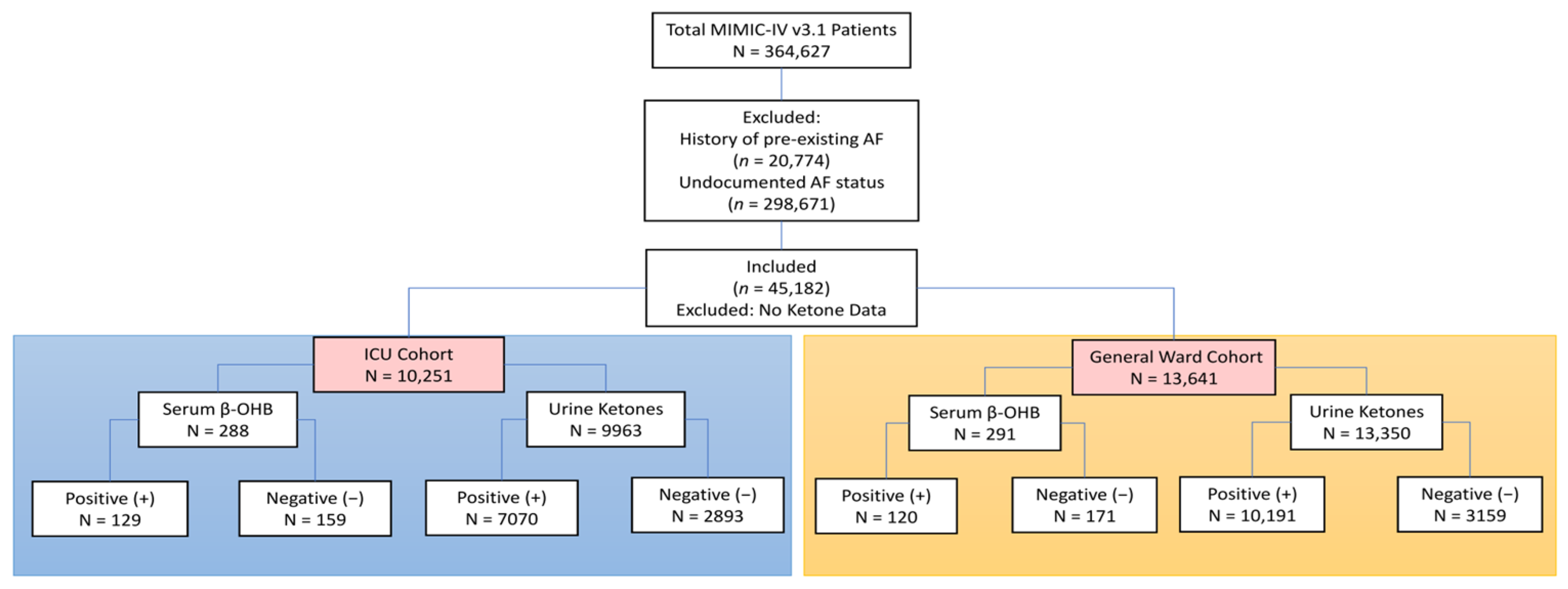
The initial screening identified 364,627 unique patients. Individuals with permanent or pre-existing AF or atrial flutter prior to admission were excluded. Patients without documented rhythm status during hospitalization were also excluded. Eligible participants were adults (age ≥18 years) who underwent ketone testing (urine ketones or serum β-hydroxybutyrate). Ketosis was defined as urine ketone positivity (≥20 mg/dL) or serum β-hydroxybutyrate (≥1.0 mmol/L) (Table 1). After applying these criteria, the final study population was two mutually exclusive cohorts based on level of care during hospitalization: a general ward cohort (n = 13,641) and an ICU cohort (n = 10,251). Patients were categorized according to urine ketone status and serum β-hydroxybutyrate levels recorded after admission and prior to the development of incident AF. Detailed cohort derivation and inclusion criteria are illustrated in Figure 1 in accordance with STROBE reporting guidelines.

2.3. Clinical Variables

All study variables were extracted using structured query language (SQL) in Google BigQuery (Google LLC, Mountain View, CA, USA; https://cloud.google.com/bigquery; accessed on 15 May 2026). For patients with multiple hospital admissions, only the index hospitalization (the first recorded admission within the database) for either the general ward or the ICU was included in the analysis to ensure independence of observations. Baseline ketone exposure was determined using the earliest available urine ketone or serum β-hydroxybutyrate measurement recorded after admission. To preserve temporal validity, only ketone measurements obtained prior to the occurrence of AF were included as exposure variables. The primary outcome of interest was the occurrence of incident AF during hospitalization. Baseline characteristics included demographic variables (age and biological sex), pre-existing comorbidities (hypertension, diabetes mellitus, heart failure, prior myocardial infarction, chronic obstructive pulmonary disease, stroke, obstructive sleep apnea syndrome, renal insufficiency, oncology, sepsis, and diabetic ketoacidosis), and medication exposure (insulin therapy, β-blocker use, and antiarrhythmic drug use). Clinical risk burden was evaluated using the Charlson Comorbidity Index (CCI) and CHA2DS2-VASc score. Vital signs included mean heart rate, mean arterial pressure, peripheral oxygen saturation (SpO2), and respiratory rate. Laboratory measurements included metabolic markers (glucose, lactate, uric acid, and phosphate), inflammatory indices (white blood cell count, neutrophil-to-lymphocyte ratio [NLR], red cell distribution width [RDW], and C-reactive protein), renal and organ-function markers (creatinine, blood urea nitrogen [BUN], BUN-to-creatinine ratio, lactate dehydrogenase, albumin, B-type natriuretic peptide, and troponin-T), electrolyte parameters (bicarbonate, potassium, and calcium), and hematologic variables (platelet count, hemoglobin, and hematocrit).

2.4. Statistical Analysis

Continuous variables are presented as median with interquartile range (IQR) to ensure consistency across study cohorts, whereas categorical variables are reported as frequencies and percentages. Cohort comparisons were performed using the independent samples t-test for normally distributed variables or the Mann–Whitney U test for non-normally distributed variables and the χ2 test or Fisher’s exact test for categorical variables, as appropriate. The association between ketone status and AF was evaluated using univariable and multivariable logistic regression analyses, with results reported as odds ratios (ORs) and 95% confidence intervals (CIs). Sequential adjustment models were constructed to assess the robustness of associations, including Model 1 (unadjusted), Model 2 (adjusted for age and biological sex), Model 3 (Model 2 plus comorbidities and medication exposure, including hypertension, diabetes mellitus, heart failure, prior myocardial infarction, stroke, chronic obstructive pulmonary disease, renal insufficiency, malignancy, insulin use, β-blocker use, and anti-arrhythmic medication use), and Model 4 (Model 3 plus adjustment for systemic inflammatory status using neutrophil-to-lymphocyte ratio [NLR]). High inflammatory burden was defined using a NLR dichotomized at the cohort median (5.85). To further reduce confounding, propensity score matching analyses and time-dependent Cox proportional hazards analysis were performed using the same covariates included in the multivariable regression models, and effects were estimated using corresponding odds ratios and hazard ratios (HRs), respectively. Subgroup analyses were conducted stratified by demographic and clinical characteristics, including age group, heart failure status, renal insufficiency status, and inflammatory burden, with interaction testing performed to evaluate potential effect modifications. All statistical tests were two-sided, and a p-value < 0.05 was considered statistically significant. Statistical analyses were performed using R (version 4.3.2; R Foundation for Statistical Computing, Vienna, Austria).

3. Results

3.1. Patient Demographics & Baseline Characteristics

A total of 10,251 ICU admissions and 13,641 general ward admissions were identified in the study cohort. Urine ketone measurements were available for 9963 ICU admissions and 13,350 general ward admissions and serum β-hydroxybutyrate measurements were available for 288 ICU patients and 291 general ward patients.
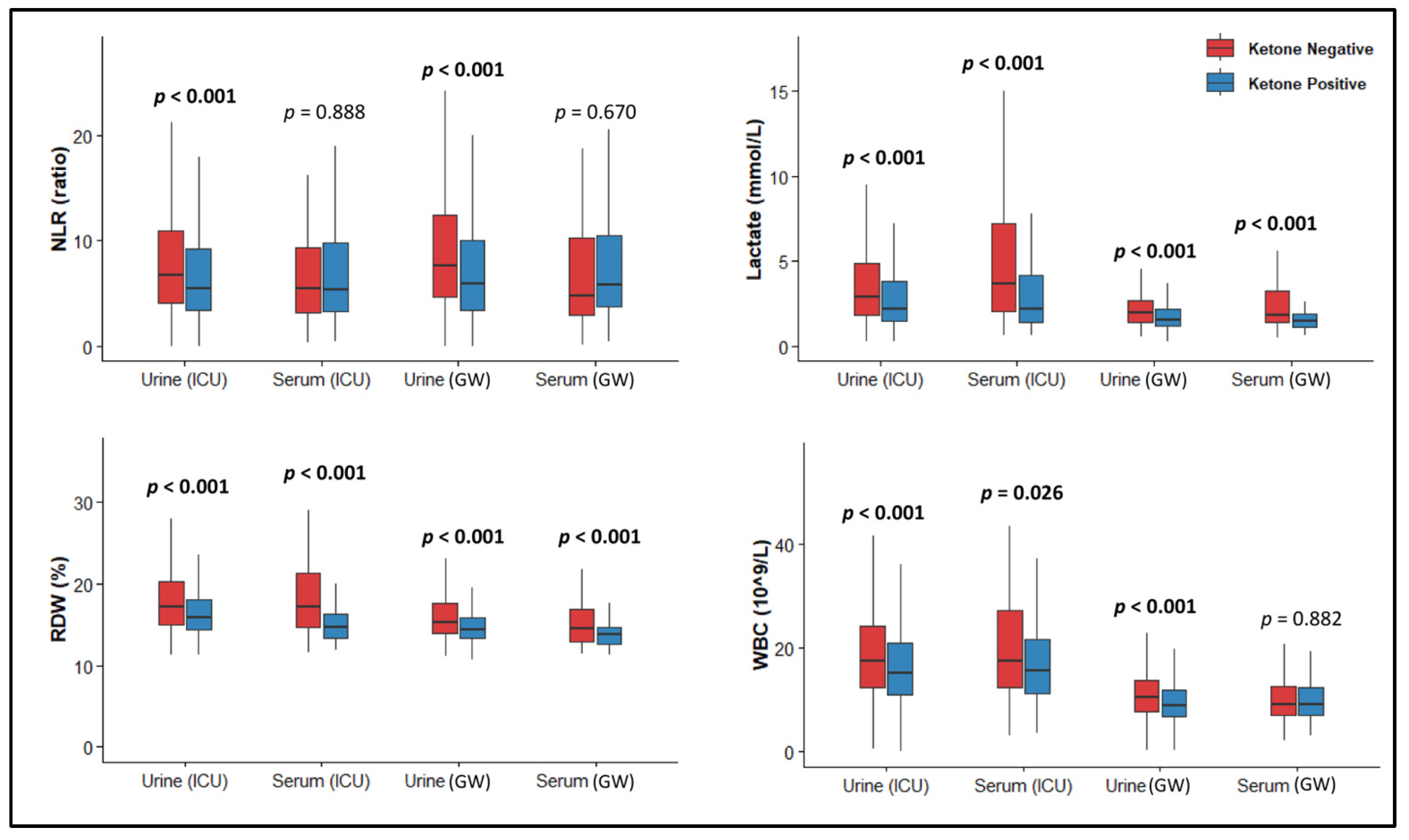
Participants with positive urine ketones were older than those without ketonuria in both the ICU cohort (63 vs. 62 years, p = 0.014) and the general ward cohort (64 vs. 62 years, p < 0.001). Biological sex distribution was similar between ketone groups in the ICU cohort (p = 0.231), whereas a higher proportion of males was observed among ketone-positive patients in the general ward cohort (p < 0.001). Differences in comorbidities, metabolic indices, inflammatory markers, organ function parameters, and medication exposure between ketone groups are summarized in Table 2 and Table 3. Distributions of key inflammatory and metabolic biomarkers, including NLR, WBC, RDW, and lactate, are illustrated in Figure 2.

3.2. Incidence of AF and Mortality

Overall, de novo AF occurred in 582 patients (5.7%), and all-cause mortality occurred in 1814 patients (17.7%) in the ICU cohort. In the general ward cohort, de novo AF occurred in 113 patients (0.8%) and all-cause mortality occurred in 1243 patients (9.1%) (Table 4). The direction of association between urine ketone positivity and AF differed between ICU and general ward cohorts. In the ICU cohort, urine ketone positivity was associated with a significantly lower incidence of AF compared with urine ketone negativity (5.2% vs. 6.8%, p = 0.001). Similarly, higher serum β-OHB concentrations were associated with a lower incidence of AF (3.1% vs. 9.4%, p = 0.034). In contrast, within the general ward cohort, urine ketone positivity was associated with a higher incidence of AF (0.9% vs. 0.5%, p = 0.019), whereas no significant difference in AF incidence was observed between serum β-OHB groups (0.0% vs. 0.6%, p = 0.401). Mortality was significantly lower among urine ketone–positive patients in both ICU (13.9% vs. 27.3%, p < 0.001) and general ward cohorts (6.7% vs. 16.8%, p < 0.001). Similarly, higher serum β-OHB concentrations were associated with reduced mortality in both ICU (10.1% vs. 18.9%, p = 0.037) and general ward cohorts (5.0% vs. 13.5%, p = 0.018) (Table 5).

3.3. Multivariable Logistic Regression Analysis

In multivariable logistic regression models adjusting for demographics, comorbidities, medications, and inflammatory status, urine ketone positivity remained independently associated with reduced odds of AF in the ICU cohort (adjusted OR 0.79, 95% CI 0.64–0.98, p = 0.032). Elevated serum β-hydroxybutyrate demonstrated a trend toward reduced odds of AF in the ICU cohort (adjusted OR 0.25, 95% CI 0.06–1.02, p = 0.053). In contrast, urine ketone positivity in the general ward cohort was associated with increased odds of AF after adjustment (adjusted OR 2.62, 95% CI 1.03–6.66, p = 0.044). The direction and magnitude of associations remained consistent across sequential adjustment models (Table 6). In fully adjusted models, urine ketones remained independently associated with reduced mortality in both ICU (OR 0.44, 95% CI 0.39–0.50) and general ward cohorts (OR 0.41, 95% CI 0.35–0.47). The association for serum β-OHB was attenuated after adjustment (Table 7).

3.4. Propensity Score Matched Analysis

Propensity score matched analyses supported the protective association between ketone positivity and AF in the ICU cohort. After matching for demographic characteristics, comorbidities, medication exposure, and NLR, urine ketone positivity remained associated with reduced odds of AF (OR 0.68, 95% CI 0.52–0.88, p = 0.004). Similarly, elevated serum β-hydroxybutyrate concentrations were strongly associated with reduced AF incidence (OR 0.24, 95% CI 0.08–0.70, p = 0.003). The association between urine ketone positivity and AF in the general ward cohort was attenuated with a directional trend toward increased AF risk (Table 8). Findings were consistent for mortality, with urine ketone positivity associated with significantly lower mortality in both ICU and general ward cohorts, whereas associations for serum β-hydroxybutyrate were attenuated after adjustment (Table 9).

3.5. Subgroup Analyses

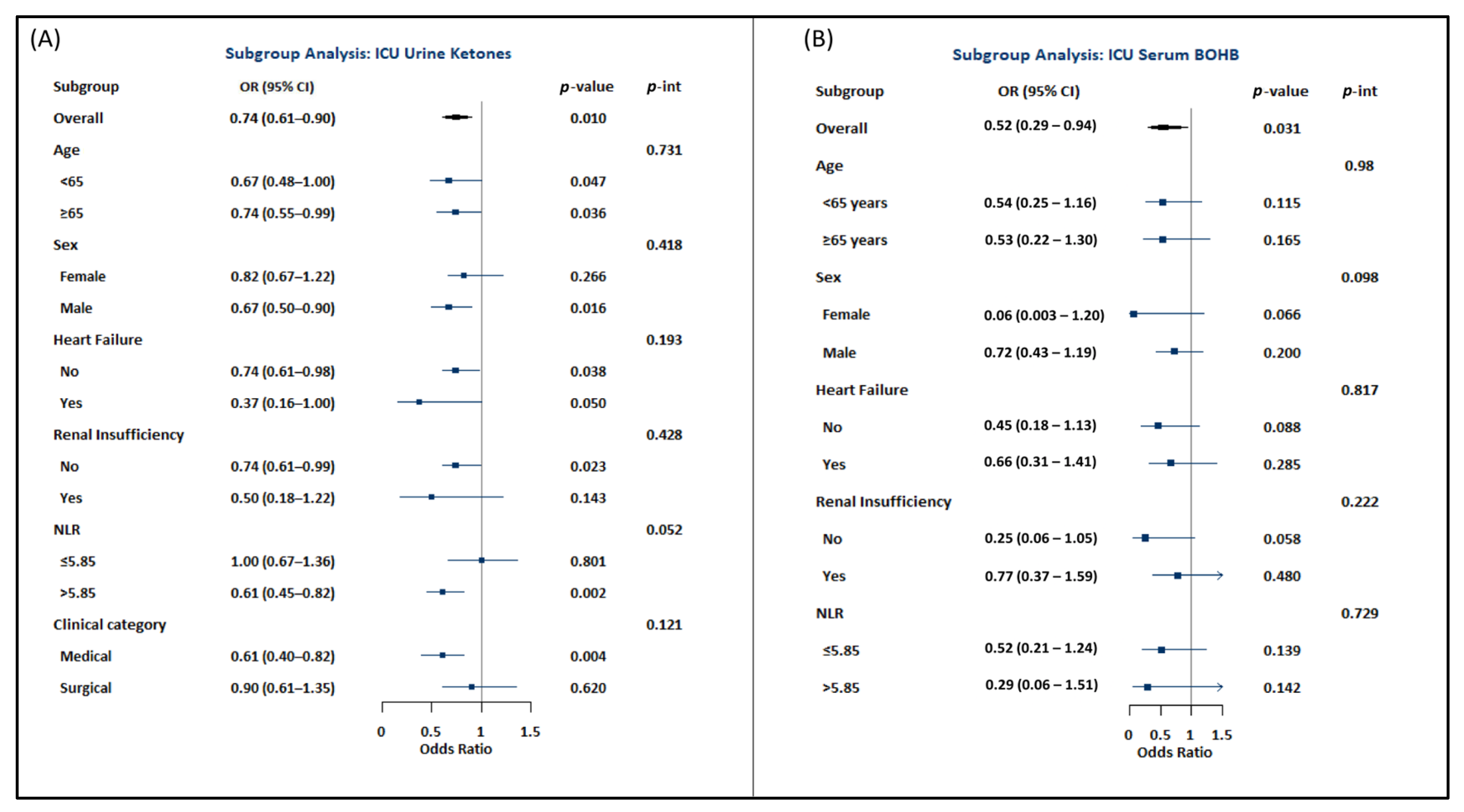
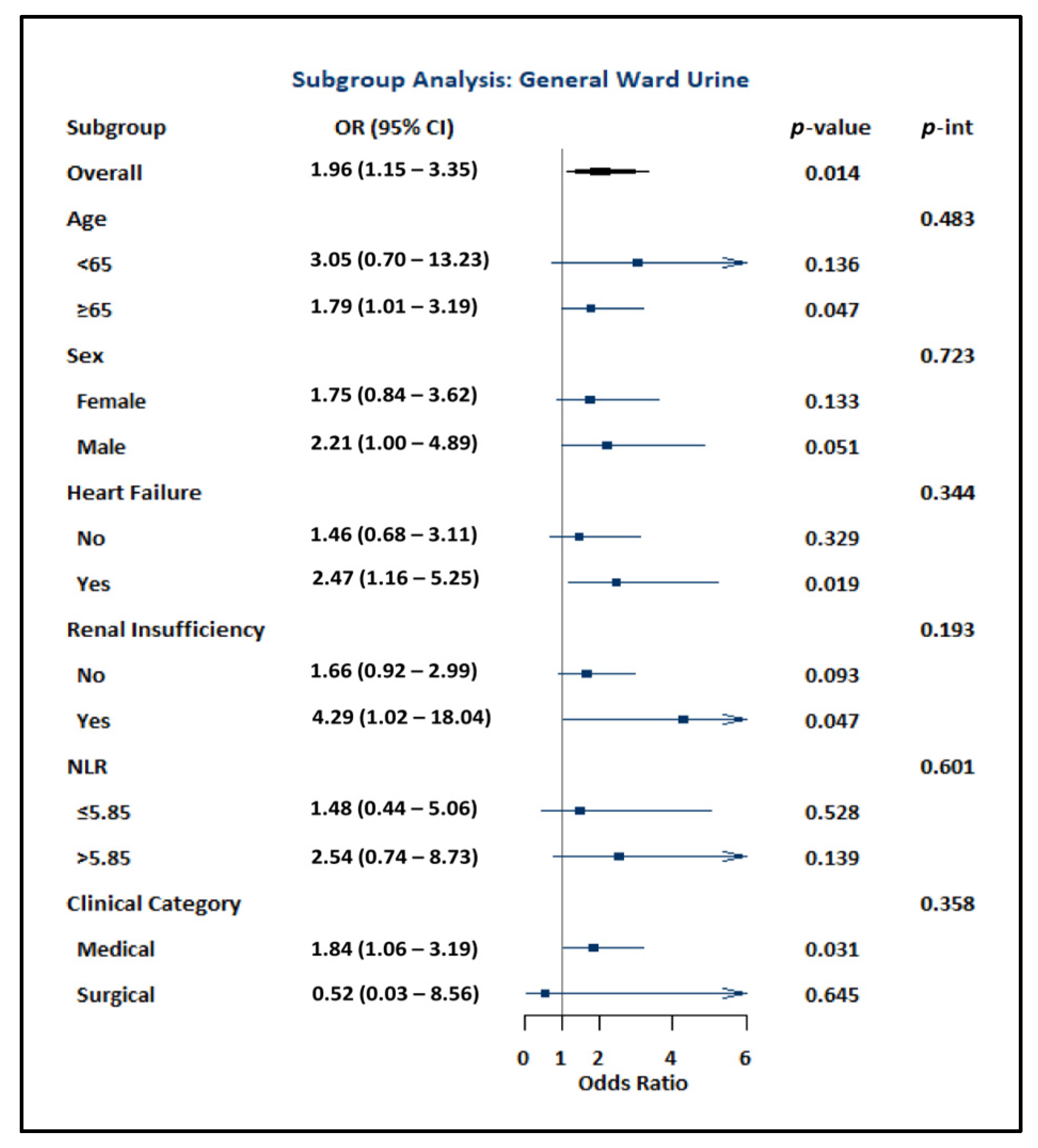
Subgroup analyses demonstrated a consistent protective association between urine ketone levels and incident AF in the ICU cohort overall (OR 0.74, 95% CI 0.61–0.90, p = 0.01), with similar effects observed across age groups, male patients, individuals without heart failure or renal insufficiency, and those with elevated inflammatory burden (NLR > 5.85). No significant interaction effects were detected between urine ketone levels and subgroup variables. Serum β-OHB levels were likewise associated with reduced odds of AF overall (OR 0.52, 95% CI 0.29–0.94, p = 0.031). The general ward cohort analyses showed a positive association between urine ketone positivity and AF risk overall (OR 1.96, 95% CI 1.15–3.35, p = 0.014), with statistically significant associations observed in older patients and in those with heart failure or renal insufficiency. However, no significant interaction effects were identified across subgroup strata (Figure 3 and Figure 4).

3.6. Cox Proportional Hazards Regression Analysis

To address the potential temporal bias, we utilized a time-dependent Cox proportional hazards model. This approach accounts for the interval between admission and the first ketone measurement, ensuring that only patients at risk at the time of measurement were included. In fully adjusted models, urine ketone positivity in the ICU cohort remained independently associated with a reduced hazard of new-onset AF (HR 0.80, 95% CI 0.66–0.97, p = 0.023). Elevated serum β-hydroxybutyrate was likewise associated with a lower hazard of AF, although this association did not reach statistical significance (HR 0.39, 95% CI 0.10–1.49, p = 0.168), likely reflecting the limited sample size of the serum β-hydroxybutyrate cohort. In contrast, urine ketone positivity in the general ward cohort remained associated with an increased hazard of AF (HR 2.63, 95% CI 1.08–6.37, p = 0.032) (Table 10).

4. Discussion

Despite growing interest in ketone metabolism, the transition from a maladaptive metabolic byproduct to a cardioprotective substrate remains poorly understood. This study identified endogenous ketosis functions as a protective adaptive mechanism during acute illness while being associated with increased AF risk in lower-acuity general ward populations. In the ICU, ketone positivity was associated with a significant reduction in AF. In the serum β-hydroxybutyrate cohort, the multivariable model showed a trend toward a protective association (p = 0.053). After propensity score matching, elevated serum β-hydroxybutyrate concentrations were associated with approximately a 76% reduction in the odds of AF. Conversely, multivariable regression analyses demonstrated that ketone positivity was associated with a two-fold increase in AF risk in the general hospital ward. Subgroup analyses verified consistent directionality. Furthermore, urine ketone positivity was associated with lower mortality in both ICU and general ward cohorts, supporting the interpretation that endogenous ketosis reflects a metabolically adaptive phenotype rather than a marker of physiological deterioration. In contrast to AF outcomes, the association between serum β-OHB and mortality was attenuated after multivariable adjustment, suggesting that the mortality relationship may be more susceptible to confounding by illness severity and comorbidity burden. This divergence may also indicate a more direct mechanistic link between ketone metabolism and reduced arrhythmic susceptibility.
The observation of a protective association, despite a higher baseline comorbidity burden in ketone-positive patients, suggests that ketosis functions as an adaptive metabolic response to acute stress. Across both ICU and general ward cohorts, ketone positivity was associated with lower lactate concentrations, suggesting more efficient oxidative substrate utilization during acute illness. This metabolic profile was accompanied by reductions in systemic inflammatory indices, including white blood cell count, neutrophil-to-lymphocyte ratio, and red cell distribution width. Notably, insulin use was considerably more common than documented diabetes mellitus across both cohorts, suggestive of stress-induced hyperglycemia during acute illness. This physiological stress response promotes hepatic glucose production and peripheral insulin resistance, often necessitating exogenous insulin despite adequate endogenous insulin production. These findings suggest endogenous ketosis may reflect an adaptive metabolic response to critical illness, rather than solely diabetes-related dysfunctions. The observed association between ketosis and lower sepsis prevalence was consistent with a systemic protective metabolic profile. Stubbs et al. characterized β-hydroxybutyrate as an immunometabolic countermeasure that prevents maladaptive inflammatory responses without compromising immune integrity [30]. Given the central role of inflammation in atrial structural remodeling and electrophysiological instability during critical illness [31], attenuation of inflammatory signaling may represent an important link between endogenous ketosis and reduced atrial arrhythmogenic susceptibility during critical illness. This effect may be driven by β-hydroxybutyrylation of key signaling proteins, such as STAT1, which inhibits pro-inflammatory macrophage polarization [32].
Several biological factors may explain the observed association between ketone status and AF. The adult myocardium is characterized by high metabolic flexibility, primarily relying on fatty acid oxidation for ATP production [33]. However, in states of acute hemodynamic stress or critical illness, the failing heart undergoes a metabolic fuel shift [24]. Ketone bodies, specifically β-hydroxybutyrate, require less oxygen per mole of ATP produced compared to fatty acids [34]. By bypassing the complex β-oxidation pathway and entering the tricarboxylic acid (TCA) cycle directly via succinyl-CoA:3-oxoacid CoA-transferase (SCOT), ketones provide a more efficient energy source that may preserve myocardial electrophysiological stability during states of energy starvation and hypoxia.
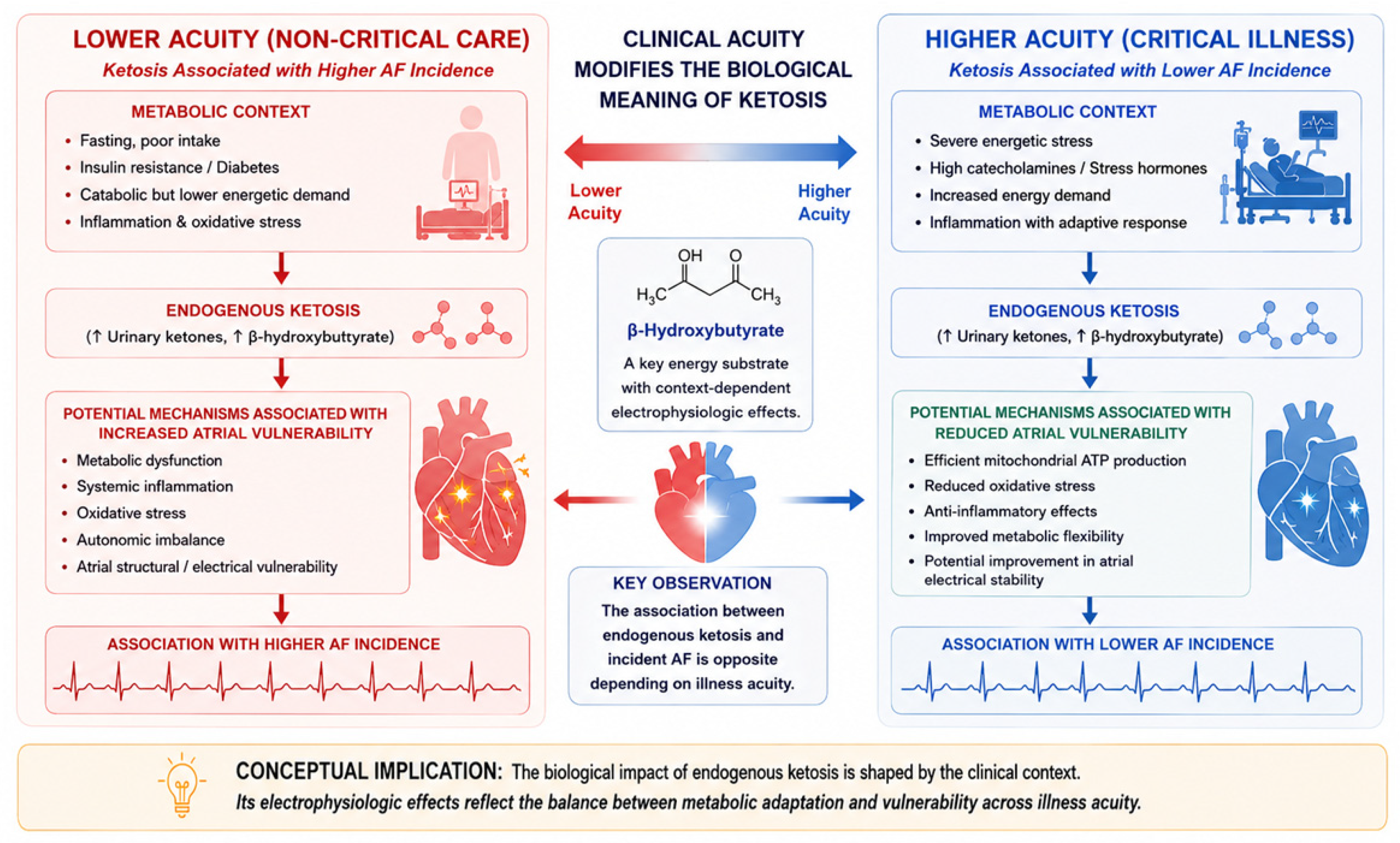
β-hydroxybutyrate has been shown to influence class I histone deacetylase activity and intracellular redox balance [35], suggesting that circulating ketone concentrations may directly influence atrial substrate vulnerability during acute illness. Furthermore, ketone metabolism actively enhances myocardial resilience through a process of mitohormesis [36], wherein nutritional ketosis has been reported to trigger adaptive mitochondrial signaling that bolsters antioxidant defenses and metabolic efficiency. Such enhancements are critical in the context of the stressed heart, where mitochondrial failure leads to the electrical instability and ion channel remodeling that underpin atrial arrhythmias [37]. Beyond energetic efficiency, ketones may directly modulate atrial electrophysiology. In experimental models of cardiac preservation, Seefeldt et al. suggest that β-hydroxybutyrate may stabilize the sarcolemma membrane by modulating ATP-sensitive potassium channels (KATP), reducing oxidative stress-induced mitochondrial permeability transition pore opening [38]. By preserving mitochondrial integrity and reducing the production of reactive oxygen species, endogenous ketosis may reduce oxidative triggering of atrial premature beats that initiate AF (Figure 5).
The findings of the present study should be interpreted in light of several limitations. First, while the use of MIMIC-IV v3.1 provides a high-resolution clinical dataset, the retrospective observational design precludes the establishment of definitive causal inferences. Second, urinary measurements are semi-quantitative, and may not correspond with the total bioavailable ketone pool. Third, serum β-hydroxybutyrate measurements were available only in a subset of patients, which reduced statistical power and limited evaluation of potential dose–response relationships. Similarly, in both the multivariable model and the time-dependent Cox proportional hazards model, elevated serum β-hydroxybutyrate was associated with a low risk of AF; however, these associations did not reach statistical significance (Cox model: p = 0.168). Accordingly, the findings of this limited size cohort should be interpreted as an associative trend that require validation in future prospective studies. Fourth, differences between ICU and general ward populations may reflect underlying heterogeneity in illness acuity and metabolic state that cannot be fully accounted for in retrospective analyses. Fifth, while we utilized incident AF as a primary endpoint, the intermittent nature of paroxysmal AF in a hospital setting may lead to an underestimation of the true arrhythmic burden if episodes occurred between scheduled ECG monitoring or nursing assessments. Sixth, the time-dependent Cox proportional hazard model was utilized to mitigate temporal bias; however, residual confounding and unmeasured factors inherent to the retrospective study type may persist. Lastly, ketone measurements were not obtained routinely and were performed at the discretion of treating clinicians. Consequently, the study population was limited to patients who underwent urinary ketone or serum β-hydroxybutyrate assessment, which may limit the generalizability of the findings. Despite these limitations, this study represents one of the first large-scale analyses to compare urinary ketone status and circulating β-hydroxybutyrate concentrations across ICU and non-ICU cohorts.
Endogenous ketosis represents a marker of metabolic resilience in critically ill patients and a potential target for arrhythmia prevention. Since ketone metabolism can be modulated through dietary intervention, pharmacologic therapy, or exogenous ketone supplementation, the observed associations raise the possibility of a novel strategy for reducing AF in high-risk populations. The transition from observational association to therapeutic application is already underway. Ongoing trials, such as the KETO-AHF (NCT06653725) [39], are currently investigating the use of exogenous ketone esters and 1,3-butanediol to improve hemodynamic stability and reduce natriuretic peptides in acute heart failure patients. Ultimately, metabolic modulation via SGLT2 inhibitors or ketone supplementation may provide a ‘non-ion-channel’ dependent approach to rhythm management in the ICU.
Our findings align with a shifting paradigm in critical care nutrition and metabolic support. Current 2025 ELSO and ESICM guidelines emphasize metabolic flexibility and phase-specific nutritional strategies that avoid early overfeeding, which can suppress endogenous ketogenesis [40,41]. However, ketosis is still viewed through the lens of pathology (e.g., DKA), missing its potential role as an adaptive resilience marker in non-diabetic critical illness. Whereas diabetic ketoacidosis is characterized by uncontrolled hyperglycaemia, severe metabolic acidosis, and insulin deficiency; moderate elevations in circulating ketone bodies during critical illness often may reflect a compensatory shift toward more oxygen-efficient substrate utilization. Importantly, careful patient selection remains essential, particularly among individuals with diabetes mellitus or impaired insulin reserve, in whom the boundary between adaptive ketosis and ketoacidosis may be narrower.


5. Conclusions

This study shows that the association between endogenous ketosis and AF is modified by clinical acuity. In the ICU, elevated serum β-hydroxybutyrate demonstrated a trend toward reduced AF risk, while urine ketone positivity remained independently associated with a lower incidence of AF and lower mortality. These findings highlight ketone metabolism as a candidate mechanistic pathway in arrhythmia modulation and support the need for prospective studies to evaluate targeted metabolic interventions in high-acuity settings.

Author Contributions

K.M. contributed to conceptualization, methodology, validation, formal analysis, investigation, resources, data curation, visualization, and drafting of the original manuscript. J.Z. contributed to manuscript review and editing, validation, supervision, project administration, and funding acquisition. All authors have read and agreed to the published version of the manuscript.

Funding

The study was supported by the National Natural Science Foundation of China (82270331) and Qingdao Key Clinical Specialty Elite Discipline (QDZDZK-2022008), which were obtained by J.Z.

Institutional Review Board Statement

The MIMIC-IV database comprises fully deidentified health-related data, the requirement for Institutional Review Board approval and informed consent was waived.

Informed Consent Statement

Patient consent was waived due to the retrospective nature of the study and use of a publicly available de-identified dataset.

Data Availability Statement

All data analyzed in this study are available through the MIMIC-IV database.

Conflicts of Interest

The authors declare no conflicts of interest.

Abbreviations

The following abbreviations are used in this manuscript:
AFAtrial fibrillation
ATETAverage treatment effect on the treated
ATPAdenosine triphosphate
β-OHBβ-Hydroxybutyrate
BNPB-type natriuretic peptide
BUNBlood urea nitrogen
CCICharlson Comorbidity Index
CHA2DS2-VAScCongestive heart failure, Hypertension, Age ≥75 years, Diabetes mellitus, Stroke/TIA/thromboembolism, Vascular disease, Age 65–74 years, Sex category
CIConfidence interval
CITICollaborative Institutional Training Initiative
COPDChronic obstructive pulmonary disease
CRPC-reactive protein
DKADiabetic ketoacidosis
ECGElectrocardiogram
ELSOExtracorporeal Life Support Organization
ESICMEuropean Society of Intensive Care Medicine
HDACHistone deacetylase
HIPAAHealth Insurance Portability and Accountability Act
ICUIntensive care unit
IQRInterquartile range
LDHLactate dehydrogenase
MAPMean arterial pressure
MIMIC-IVMedical Information Mart for Intensive Care IV
mPTPMitochondrial permeability transition pore
NLRNeutrophil-to-lymphocyte ratio
OROdds ratio
RDWRed cell distribution width
ROSReactive oxygen species
SCOTSuccinyl-CoA:3-oxoacid CoA-transferase
SpO2Peripheral oxygen saturation
SQLStructured query language
STAT1Signal transducer and activator of transcription 1
STROBEStrengthening the Reporting of Observational Studies in Epidemiology
TCATricarboxylic acid cycle

References

  1. Bosch, N.A.; Cimini, J.; Walkey, A.J. Atrial Fibrillation in the ICU. Chest 2018, 154, 1424–1434. [Google Scholar] [CrossRef] [PubMed]
  2. Corica, B.; Tartaglia, F.; Oliva, A.; Raparelli, V.; Cangemi, R.; Basili, S.; Lip, G.Y.H.; Proietti, M.; Romiti, G.F. Prevalence of New-Onset Atrial Fibrillation in Hospitalized Patients with Community-Acquired Pneumonia: A Systematic Review and Meta-Analysis. Intern. Emerg. Med. 2023, 18, 127–135. [Google Scholar] [CrossRef] [PubMed]
  3. Bedford, J.P.; Ferrando-Vivas, P.; Redfern, O.; Rajappan, K.; Harrison, D.A.; Watkinson, P.J.; Doidge, J.C. New-Onset Atrial Fibrillation in Intensive Care: Epidemiology and Outcomes. Eur. Heart J. Acute Cardiovasc. Care 2022, 11, 620–628. [Google Scholar] [CrossRef] [PubMed]
  4. Wetterslev, M.; Haase, N.; Hassager, C.; Belley-Cote, E.P.; Mcintyre, W.F.; An, Y.; Shen, J.; Cavalcanti, A.B.; Zampieri, F.G.; Guimaraes, H.P.; et al. New-Onset Atrial Fibrillation in Adult Critically Ill Patients: A Scoping Review. Intensive Care Med. 2019, 45, 928–938. [Google Scholar] [CrossRef] [PubMed]
  5. Walkey, A.J.; Hammill, B.G.; Curtis, L.H.; Benjamin, E.J. Long-Term Outcomes Following Development of New-Onset Atrial Fibrillation during Sepsis. Chest 2014, 146, 1187–1195. [Google Scholar] [CrossRef] [PubMed]
  6. Lopaschuk, G.D.; Karwi, Q.G.; Tian, R.; Wende, A.R.; Abel, E.D. Cardiac Energy Metabolism in Heart Failure. Circ. Res. 2021, 128, 1487–1513. [Google Scholar] [CrossRef] [PubMed]
  7. Wang, L.; Chen, P.; Xiao, W. β-Hydroxybutyrate as an Anti-Aging Metabolite. Nutrients 2021, 13, 3420. [Google Scholar] [CrossRef] [PubMed]
  8. Nielsen, R.; Møller, N.; Gormsen, L.C.; Tolbod, L.P.; Hansson, N.H.; Sorensen, J.; Harms, H.J.; Frøkiær, J.; Eiskjaer, H.; Jespersen, N.R.; et al. Cardiovascular Effects of Treatment With the Ketone Body 3-Hydroxybutyrate in Chronic Heart Failure Patients. Circulation 2019, 139, 2129–2141. [Google Scholar] [CrossRef] [PubMed]
  9. Yurista, S.R.; Nguyen, C.T.; Rosenzweig, A.; de Boer, R.A.; Westenbrink, B.D. Ketone Bodies for the Failing Heart: Fuels That Can Fix the Engine? Trends Endocrinol. Metab. 2021, 32, 814–826. [Google Scholar] [CrossRef] [PubMed]
  10. Umpierrez, G.; Korytkowski, M. Diabetic Emergencies—Ketoacidosis, Hyperglycaemic Hyperosmolar State and Hypoglycaemia. Nat. Rev. Endocrinol. 2016, 12, 222–232. [Google Scholar] [CrossRef] [PubMed]
  11. Preiser, J.-C.; Ichai, C.; Orban, J.-C.; Groeneveld, A.B.J. Metabolic Response to the Stress of Critical Illness. Br. J. Anaesth. 2014, 113, 945–954. [Google Scholar] [CrossRef] [PubMed]
  12. Singer, P.; Blaser, A.R.; Berger, M.M.; Calder, P.C.; Casaer, M.; Hiesmayr, M.; Mayer, K.; Montejo-Gonzalez, J.C.; Pichard, C.; Preiser, J.-C.; et al. ESPEN Practical and Partially Revised Guideline: Clinical Nutrition in the Intensive Care Unit. Clin. Nutr. 2023, 42, 1671–1689. [Google Scholar] [CrossRef] [PubMed]
  13. Glatz, J.F.C.; Nabben, M.; Young, M.E.; Schulze, P.C.; Taegtmeyer, H.; Luiken, J.J.F.P. Re-Balancing Cellular Energy Substrate Metabolism to Mend the Failing Heart. Biochim. Biophys. Acta (BBA) Mol. Basis Dis. 2020, 1866, 165579. [Google Scholar] [CrossRef] [PubMed]
  14. Grigoriou, K.; Karakasis, P.; Theofilis, P.; Vlachakis, P.K.; Milaras, N.; Patoulias, D.; Antoniadis, A.P.; Fragakis, N. Metabolic Remodeling and Mitochondrial Stress in Atrial Fibrillation: Mechanisms and Translational Targets. Rev. Cardiovasc. Med. 2025, 26, 44688. [Google Scholar] [CrossRef] [PubMed]
  15. Bode, D.; Pronto, J.R.D.; Schiattarella, G.G.; Voigt, N. Metabolic Remodelling in Atrial Fibrillation: Manifestations, Mechanisms and Clinical Implications. Nat. Rev. Cardiol. 2024, 21, 682–700. [Google Scholar] [CrossRef] [PubMed]
  16. Balan, A.I.; Halațiu, V.B.; Scridon, A. Oxidative Stress, Inflammation, and Mitochondrial Dysfunction: A Link between Obesity and Atrial Fibrillation. Antioxidants 2024, 13, 117. [Google Scholar] [CrossRef] [PubMed]
  17. Pfenniger, A.; Yoo, S.; Arora, R. Oxidative Stress and Atrial Fibrillation. J. Mol. Cell. Cardiol. 2024, 196, 141–151. [Google Scholar] [CrossRef] [PubMed]
  18. Attia, A.; Muthukumarasamy, K.M.; Al-U’Datt, D.G.F.; Hiram, R. Relevance of Targeting Oxidative Stress, Inflammatory, and Pro-Resolution Mechanisms in the Prevention and Management of Postoperative Atrial Fibrillation. Antioxidants 2025, 14, 414. [Google Scholar] [CrossRef] [PubMed]
  19. Manolis, A.S.; Manolis, T.A.; Manolis, A.A. Ketone Bodies and Cardiovascular Disease: An Alternate Fuel Source to the Rescue. Int. J. Mol. Sci. 2023, 24, 534. [Google Scholar] [CrossRef] [PubMed]
  20. Chu, Y.; Zhang, C.; Xie, M. Beta-Hydroxybutyrate, Friend or Foe for Stressed Hearts. Front. Aging 2021, 2, 681513. [Google Scholar] [CrossRef] [PubMed]
  21. Tang, M.; Tu, Y.; Gong, Y.; Yang, Q.; Wang, J.; Zhang, Z.; Qin, J.; Niu, S.; Yi, J.; Shang, Z.; et al. β-Hydroxybutyrate Facilitates Mitochondrial-Derived Vesicle Biogenesis and Improves Mitochondrial Functions. Mol. Cell 2025, 85, 1395–1410.e5. [Google Scholar] [CrossRef] [PubMed]
  22. Lee, T.-I.; Trang, N.N.; Lee, T.-W.; Higa, S.; Kao, Y.-H.; Chen, Y.-C.; Chen, Y.-J. Ketogenic Diet Regulates Cardiac Remodeling and Calcium Homeostasis in Diabetic Rat Cardiomyopathy. Int. J. Mol. Sci. 2023, 24, 6142. [Google Scholar] [CrossRef] [PubMed]
  23. Matsuura, T.R.; Puchalska, P.; Crawford, P.A.; Kelly, D.P. Ketones and the Heart: Metabolic Principles and Therapeutic Implications. Circ. Res. 2023, 132, 882–898. [Google Scholar] [CrossRef] [PubMed]
  24. Aubert, G.; Martin, O.J.; Horton, J.L.; Lai, L.; Vega, R.B.; Leone, T.C.; Koves, T.; Gardell, S.J.; Krüger, M.; Hoppel, C.L.; et al. The Failing Heart Relies on Ketone Bodies as a Fuel. Circulation 2016, 133, 698–705. [Google Scholar] [CrossRef] [PubMed]
  25. St-Pierre, V.; Richard, G.; Croteau, E.; Fortier, M.; Vandenberghe, C.; Carpentier, A.C.; Cuenoud, B.; Cunnane, S.C. Cardiorenal Ketone Metabolism in Healthy Humans Assessed by (11)C-Acetoacetate PET: Effect of D-β-Hydroxybutyrate, a Meal, and Age. Front. Physiol. 2024, 15, 1443781. [Google Scholar] [CrossRef] [PubMed]
  26. Yoo, B.M.; Kim, S.R.; Lee, B.-W. Ketone Body Induction: Insights into Metabolic Disease Management. Biomedicines 2025, 13, 1484. [Google Scholar] [CrossRef] [PubMed]
  27. Wei, S.; Binbin, L.; Yuan, W.; Zhong, Z.; Donghai, L.; Caihua, H. β-Hydroxybutyrate in Cardiovascular Diseases: A Minor Metabolite of Great Expectations. Front. Mol. Biosci. 2022, 9, 823602. [Google Scholar] [CrossRef] [PubMed]
  28. Chevli, P.A.; Mirzai, S.; Kazibwe, R.; Kingsley, J.; Wood, A.C.; Yeboah, J.; Slipczuk, L.; Mehta, A.; Bhatia, H.S.; Pandey, A.; et al. Circulating Ketone Bodies and Incident Cardiovascular Outcomes and Mortality: Insights From the UK Biobank. J. Am. Heart Assoc. 2026, 15, e042582. [Google Scholar] [CrossRef] [PubMed]
  29. Johnson, A.E.W.; Bulgarelli, L.; Shen, L.; Gayles, A.; Shammout, A.; Horng, S.; Pollard, T.J.; Hao, S.; Moody, B.; Gow, B.; et al. MIMIC-IV, a Freely Accessible Electronic Health Record Dataset. Sci. Data 2023, 10, 1. [Google Scholar] [CrossRef] [PubMed]
  30. Stubbs, B.J.; Koutnik, A.P.; Goldberg, E.L.; Upadhyay, V.; Turnbaugh, P.J.; Verdin, E.; Newman, J.C. Investigating Ketone Bodies as Immunometabolic Countermeasures against Respiratory Viral Infections. Med 2020, 1, 43–65. [Google Scholar] [CrossRef] [PubMed]
  31. Scott, L.J.; Li, N.; Dobrev, D. Role of Inflammatory Signaling in Atrial Fibrillation. Int. J. Cardiol. 2019, 287, 195–200. [Google Scholar] [CrossRef] [PubMed]
  32. Bai, Y.-P.; Xing, Y.-J.; Ma, T.; Li, K.; Zhang, T.; Wang, D.-G.; Wan, S.-J.; Zhang, C.-W.; Sun, Y.; Wang, M.-Y.; et al. β-Hydroxybutyrate Suppresses M1 Macrophage Polarization through β-Hydroxybutyrylation of the STAT1 Protein. Cell Death Dis. 2024, 15, 874. [Google Scholar] [CrossRef] [PubMed]
  33. Actis Dato, V.; Lange, S.; Cho, Y. Metabolic Flexibility of the Heart: The Role of Fatty Acid Metabolism in Health, Heart Failure, and Cardiometabolic Diseases. Int. J. Mol. Sci. 2024, 25, 1211. [Google Scholar] [CrossRef] [PubMed]
  34. Papazafiropoulou, A.K.; Georgopoulos, M.M.; Katsilambros, N.L. Ketone Bodies and the Heart. Arch. Med. Sci. Atheroscler. Dis. 2021, 6, e209–e214. [Google Scholar] [CrossRef] [PubMed]
  35. Pali, D.V.; Kim, S.; Mantik, K.E.K.; Lee, J.-B.; So, C.-Y.; Moon, S.; Park, D.-H.; Kwak, H.-B.; Kang, J.-H. Unraveling the Translational Relevance of β-Hydroxybutyrate as an Intermediate Metabolite and Signaling Molecule. Int. J. Mol. Sci. 2025, 26, 7362. [Google Scholar] [CrossRef] [PubMed]
  36. Miller, V.J.; Villamena, F.A.; Volek, J.S. Nutritional Ketosis and Mitohormesis: Potential Implications for Mitochondrial Function and Human Health. J. Nutr. Metab. 2018, 2018, 5157645. [Google Scholar] [CrossRef] [PubMed]
  37. Wang, X.; Yu, Q.; Liao, X.; Fan, M.; Liu, X.; Liu, Q.; Wang, M.; Wu, X.; Huang, C.-K.; Tan, R.; et al. Mitochondrial Dysfunction in Arrhythmia and Cardiac Hypertrophy. Rev. Cardiovasc. Med. 2023, 24, 364. [Google Scholar] [CrossRef] [PubMed]
  38. Seefeldt, J.M.; Libai, Y.; Berg, K.; Jespersen, N.R.; Lassen, T.R.; Dalsgaard, F.F.; Ryhammer, P.; Pedersen, M.; Ilkjaer, L.B.; Hu, M.A.; et al. Effects of Ketone Body 3-Hydroxybutyrate on Cardiac and Mitochondrial Function during Donation after Circulatory Death Heart Transplantation. Sci. Rep. 2024, 14, 757. [Google Scholar] [CrossRef] [PubMed]
  39. Berg-Hansen, K.; Tinggaard, A.B.; Nielsen, R.; Jensen, T.H.; Gopalasingam, N.; Larsen, A.H.; Møller, N.; Böttcher, M.; Hollingdal, M.; Poulsen, M.K.; et al. Should Exogenous Ketone Body Supplementation Be Considered in Patients Hospitalized for Acute Heart Failure? Rationale and Design of the KETO-AHF Trial. J. Card. Fail. 2025, 32, 1050–1058. [Google Scholar] [CrossRef] [PubMed]
  40. Bear, D.E.; Ridley, E.J.; Daly, K.; De Waele, E.; Al Dabbous, T.; Karpasiti, T.; Stoppe, C.; Barrett, N.A. 2025 ELSO Consensus Statement for the Provision and Management of Nutrition Therapy in Critically Ill Adult Patients Requiring Extracorporeal Membrane Oxygenation. ASAIO J. 2026, 72, 99–110. [Google Scholar] [CrossRef] [PubMed]
  41. Monnet, X.; Messina, A.; Greco, M.; Bakker, J.; Aissaoui, N.; Cecconi, M.; Coppalini, G.; De Backer, D.; Edul, V.K.; Evans, L.; et al. ESICM Guidelines on Circulatory Shock and Hemodynamic Monitoring 2025. Intensive Care Med. 2025, 51, 1971–2012. [Google Scholar] [CrossRef] [PubMed]
Figure 1. Study flowchart. The blue shaded area denotes the ICU cohort, and the orange shaded area denotes the General Ward cohort.
Jcm 15 04966 g001
Figure 2. Boxplots comparing neutrophil-to-lymphocyte ratio (NLR), lactate, red blood cell distribution width (RDW), and white blood cell count (WBC) between ketone-positive and ketone-negative patients in the ICU and general ward (GW) cohorts, stratified according to urine ketone status and serum β-hydroxybutyrate levels.
Jcm 15 04966 g002
Figure 3. Forest plot of subgroup analyses evaluating the association between ketone status and incident AF in the ICU. Arrows indicate confidence intervals extending beyond the limits of the x-axis. (A) Urine ketone levels and incident AF in the ICU cohort. (B) Serum β-hydroxybutyrate and incident AF in the ICU cohort.
Jcm 15 04966 g003
Figure 4. Forest plot of subgroup analyses evaluating the association between ketone status and incident AF in the general ward cohort. Arrows indicate confidence intervals extending beyond the limits of the x-axis.
Jcm 15 04966 g004
Figure 5. Proposed conceptual model of illness acuity-dependent associations between endogenous ketosis and atrial fibrillation. Red indicates a lower acuity (non-critical) clinical setting. Blue indicates a higher acuity (critical) clinical setting. Arrows illustrate the relationship between metabolic context, endogenous ketosis, and AF risk across different levels of illness acuity. Anatomical icons and ECG traces represent electric instability and AF incidence.
Jcm 15 04966 g005
Table 1. Definition of Ketosis Categories Based on Urine Ketone and Serum β-Hydroxybutyrate Measurements.
Metabolic StateUrine Ketones Serum β-OHB (mmol/L)Clinical Interpretation
No ketosisNegative (<5 mg/dL)<0.5Predominant glucose utilization
Mild ketosisTrace (5–20 mg/dL)0.5–1.0Early physiological ketosis (fasting or stress response)
Moderate ketosisSmall–moderate (20–40 mg/dL)1.0–3.0Nutritional or adaptive metabolic ketosis
Marked ketosisModerate–large (40–80 mg/dL)3.0–5.0Sustained ketone utilization during prolonged fasting or illness
HyperketonemiaLarge (>80 mg/dL)>5.0May indicate metabolic decompensation depending on glucose and acid–base status
Table 2. Patient Demographics and Baseline Characteristics for the ICU Cohort.
CategoryVariableUrine Ketones [−] [n = 2893]Urine Ketones [+] [n = 7070]p-ValueSerum β-OHB < 1.0 [n = 159]Serum β-OHB ≥ 1.0 [n = 129]p-Value
I. Patient DemographicsAge, years62 [52–73]63 [52–75]0.01459 [50–68]60 [47–69]0.747
Body Mass Index28.72 [24.57–34.16]27.38 [23.47–32.26]0.27827.82 [23.23–36.04]29.30 [24.11–35.57]0.998
Biological sex 0.231 0.469
Female1334 (46.1%)3167 (44.8%) 77 (48.4%)68 (52.7%)
Male1559 (53.9%)3903 (55.2%) 82 (51.6%)61 (47.3%)
II. Comorbidities, n (%)Hypertension516 (17.8%)1307 (18.5%)0.45850 (31.4%)47 (36.4%)0.383
Diabetes Mellitus413 (14.3%)1019 (14.4%)0.87596 (60.4%)103 (79.8%)<0.001
Heart Failure292 (10.1%)629 (8.9%)0.06034 (21.4%)20 (15.5%)0.204
Prior MI182 (6.3%)480 (6.8%)0.37632 (20.1%)23 (17.8%)0.622
COPD164 (5.7%)377 (5.3%)0.49816 (10.1%)10 (7.8%)0.541
Stroke72 (2.5%)229 (3.2%)0.0538 (5.0%)7(5.4%)>0.999
OSAS135 (4.7%)323 (4.6%)0.82916 (10.1%)14 (10.8%)0.848
Renal Insufficiency275 (9.5%)741 (10.5%)0.14650 (31.4%)31 (24.0%)0.164
Oncology380 (13.1%)758 (10.7%)<0.00121 (13.2%)19 (14.7%)0.734
Sepsis983 (34.0%)1729 (24.5%)<0.00157 (35.8%)30 (23.3%)0.021
DKA37 (1.3%)155 (2.2%)0.00327 (17.0%)71 (55.0%)<0.001
III. Clinical IndicesCharlson Comorbidity Index *1.84 ± 1.421.78 ± 1.540.0862.23 ± 1.412.09 ± 1.430.407
CHA2DS2–VASc *2.22 ± 1.572.35 ± 1.58<0.0012.33 ± 1.392.60 ± 1.330.102
IV. MedicationsInsulin Use1860 (64.3%)4566 (64.6%)0.784137 (86.2%)118 (91.5%)0.160
Beta–Blocker Use1046 (36.2%)2762 (39.1%)0.00738 (23.9%)32 (24.8%)0.858
Anti–arrhythmic use142 (4.9%)267 (3.8%)0.0108 (5.0%)1 (0.8%)0.039
V. VitalsMean HR, bpm87.07 [77.19–97.71]84.99 [75.23–94.92]<0.00186.12 [78.14–98.36]89.40 [77.47–96.89]0.545
Mean BP, mmHg77.73 [71.12–85.50]81.87 [74.94–90.65]<0.00177.16 [71.45–86.18]80.20 [74.54–87.48]0.257
SpO2, %96.52 [95.24–97.65]96.78 [95.54–97.90]<0.00197.02 [95.67–97.98]96.80 [95.86–98.03]0.612
RR Variability9.66 [6.80–12.95]9.53 [7.01–12.77]0.9399.73 [7.03–13.29]8.95 [6.61–13.34]0.392
VI. MetabolicGlucose, mmol/L10.30 [8.90–11.80]10.70 [9.20–12.30]0.04110.05 [8.60–11.30]11.40 [8.30–13.40]0.180
Lactate, mmol/L2.90 [1.80–4.90]2.20 [1.50–3.80]<0.0013.65 [2.00–7.30]2.20 [1.40–4.20]<0.001
Uric Acid, mg/dL7.50 [4.80–10.00]5.90 [3.80–8.70]<0.0017.05 [5.45–9.65]9.50 [5.30–13.50]0.355
Phosphate, mg/dL5.10 [4.20–6.60]4.70 [4.00–5.80]<0.0015.60 [4.50–7.70]4.55 [3.80–5.80]<0.001
VII. InflammatoryWBC, ×109/L17.50 [12.50–24.20]15.10 [10.90–21.00]<0.00117.60 [12.20–27.30]15.75 [11.15–21.85]0.026
NLR6.73 [4.14–11.00]5.52 [3.45–9.23]<0.0015.52 [3.12–9.37]5.37 [3.29–10.05]0.888
RDW, %17.10 [15.00–20.20]15.80 [14.30–18.00]<0.00117.20 [14.60–21.40]14.60 [13.40–16.25]<0.001
CRP, mg/L90.10 [46.40–184.60]95.15 [32.70–174.40]0.187114.55 [47.15–174.90]94.10 [15.10–142.30]0.379
VIII. Organ FunctionCreatinine, mg/dL1.90 [1.20–3.20]1.60 [1.00–2.80]<0.0012.30 [1.30–4.40]1.40 [1.00–2.50]<0.001
BUN, mg/dL47.00 [27.00–76.00]34.00 [21.00–60.00]<0.00148.00 [26.00–94.00]30.00 [17.00–64.00]<0.001
BUN/Cr Ratio22.86 [16.67–30.83]20.63 [15.45–27.78]<0.00119.14 [13.70–26.74]18.57 [13.54–24.17]0.298
LDH, U/L365.00 [259.00–619.00]333.00 [233.00–549.00]<0.001424.00 [263.50–739.50]330.00 [230.00–601.00]0.065
Albumin, g/dL3.30 [2.80–3.80]3.30 [2.90–3.70]0.8773.40 [2.90–4.00]3.50 [3.00–3.90]0.636
BNP, pg/mL2740.00 [847.00–9351.00]2249.50 [646.00–8023.00]0.0032184.00 [703.00–4031.00]3030.00 [885.00–8696.00]0.257
Troponin–T, ng/mL0.09 [0.04–0.44]0.10 [0.04–0.40]0.0350.11 [0.04–0.44]0.16 [0.04–0.64]0.372
IX. ElectrolytesHCO3, mEq/L19.00 [16.00–22.00]18.00 [16.00–21.00]<0.00121.00 [17.00–26.00]23.00 [20.00–27.00]0.015
Potassium, mEq/L5.00 [4.60–5.70]4.90 [4.50–5.50]<0.0015.20 [4.70–6.20]5.10 [4.70–5.90]0.500
Calcium, mg/dL9.10 [8.60–9.70]9.20 [8.70–9.70]0.5159.50 [9.00–10.20]9.20 [8.80–9.70]0.001
X. HaematologyPlatelets, ×103/μL270.00 [168.00–397.00]302.00 [214.00–434.00]<0.001285.00 [204.00–412.00]281.00 [224.50–412.00]0.488
Hemoglobin, g/dL9.30 [8.40–10.60]9.70 [8.60–11.10]<0.0019.10 [7.90–10.90]10.70 [9.10–12.05]<0.001
Hematocrit, %28.40 [25.70–32.30]29.40 [26.50–33.70]<0.00128.50 [25.20–34.10]32.95 [28.30–36.50]<0.001
XI. Clinical Management & InterventionsMechanical Ventilation1265 (43.7%)2797 (39.6%)<0.00128 (17.6%)15 (11.6%)0.157
Vasopressor Support1090 (37.7%)2127 (30.1%)<0.00131 (19.5%)11 (8.5%)0.009
Renal Replacement Therapy272 (9.4%)453 (6.4%)<0.00127 (17.0%)7 (5.4%)0.003
Total Parenteral Nutrition124 (4.3%)226 (3.2%)0.0072 (1.3%)0 (0.0%)0.201
Enteral Nutrition Status45 (1.6%)60 (0.9%)0.0020 (0.0%)0 (0.0%)N/A
XII. Clinical Service CategoryMedical1887 (73.6%)3985 (67.2%)<0.001118 (85.5%)95 (81.9%)0.436
Surgical677 (26.4%)1942 (32.8%) 20 (14.5%)21 (18.1%)
* Reported as Mean ± SD to illustrate directional trends in score distribution; all other continuous variables are reported as Median [IQR]. Continuous variables were compared using independent t tests or Mann–Whitney U tests as appropriate, and categorical variables using χ2 or Fisher’s exact tests. N/A, not applicable; due to insufficient data for statistical comparison. Abbreviations: β-OHB, β-hydroxybutyrate; BNP, B type natriuretic peptide; BP, blood pressure; bpm, beats per minute; BUN, blood urea nitrogen; CHA2DS2–VASc, congestive heart failure, hypertension, age ≥75 years, diabetes mellitus, stroke, vascular disease, age 65–74 years, sex category; COPD, chronic obstructive pulmonary disease; CRP, C reactive protein; Cr, creatinine; DKA, diabetic ketoacidosis; HR, heart rate; LDH, lactate dehydrogenase; MI, myocardial infarction; NLR, neutrophil to lymphocyte ratio; OSAS, obstructive sleep apnea syndrome; RDW, red cell distribution width; RR variability, respiratory rate variability; SpO2, peripheral oxygen saturation; WBC, white blood cell count.
Table 3. Patient Demographics and Baseline Characteristics for the General Ward Cohort.
CategoryVariableUrine Ketones [−] [n = 3159]Urine Ketones [+] [n = 10,191]p-ValueSerum β-OHB < 1.0 [n = 171]Serum β-OHB ≥ 1.0 [n = 120]p-Value
I. Patient DemographicsAge, years62 [51–73]64 [52–76]<0.00160 [44–70]56 [36–65]0.027
Body Mass Index 29.03 [24.85–34.49]27.40 [23.55–32.27]0.30627.45 [22.01–35.81]28.62 [22.17–32.90]0.483
Biological sex <0.001 0.436
Female1550 (49.1%)4594 (45.1%) 79 (46.2%)61 (50.8%)
Male1609 (50.9%)5597 (54.9%) 92 (53.8%)59 (49.2%)
II. Comorbidities, n (%)Hypertension1251 (39.6%)4129 (40.5%)0.36553 (31.0%)42 (35.0%)0.473
Diabetes Mellitus766 (24.3%)2937 (28.8%)<0.00182 (48.0%)58 (48.3%)0.949
Heart Failure558 (17.7%)1527 (15.0%)<0.00129 (17.0%)14 (11.7%)0.210
Prior MI312 (9.9%)987 (9.7%)0.74824 (14.0%)14 (11.7%)0.555
COPD297 (9.4%)903 (8.9%)0.35113 (7.6%)8 (6.7%)0.761
Stroke90 (2.9%)391 (3.8%)0.0279 (5.3%)6 (5.0%)>0.999
OSAS201 (6.4%)621 (6.1%)0.58013 (7.6%)8 (6.7%)0.761
Renal Insufficiency524 (16.6%)2546 (25.0%)<0.00147 (27.5%)23 (19.2%)0.102
Oncology725 (22.9%)2286 (22.4%)0.53826 (15.2%)15 (12.5%)0.514
Sepsis345 (10.9%)700 (6.9%)<0.00146 (26.9%)16 (13.3%)0.005
DKA24 (0.8%)120 (1.2%)0.04719 (11.1%)59 (49.2%)<0.001
III. Clinical IndicesCharlson Comorbidity Index *2.72 ± 2.123.03 ± 2.22<0.0012.95 ± 2.162.37 ± 2.110.021
CHA2DS2–VASc *2.07 ± 1.482.18 ± 1.47<0.0012.09 ± 1.461.94 ± 1.370.366
IV. MedicationsInsulin Use1557 (49.3%)5097 (50.0%)0.475124 (72.5%)98 (81.7%)0.071
Beta–Blocker Use1005 (31.8%)3633 (35.6%)<0.00144 (25.7%)28 (23.3%)0.641
Anti–arrhythmic use92 (2.9%)186 (1.8%)<0.0016 (3.5%)1 (0.8%)0.143
V. VitalsMean HR, bpm86.96 [77.60–96.65]85.19 [75.64–94.70]<0.00185.66 [79.09–97.02]88.80 [79.65–96.85]0.433
Mean BP, mmHg76.90 [70.69–84.35]81.73 [74.84–89.90]<0.00182.11 [74.32–89.43]85.04 [80.72–91.73]0.014
SpO2, %96.51 [95.26–97.58]96.84 [95.66–97.92]<0.00196.98 [95.84–97.94]96.85 [95.93–97.95]0.776
RR Variability10.31 [7.42–13.40]10.04 [7.50–13.21]0.45312.07 [8.32–14.09]10.25 [6.65–13.24]0.054
VI. MetabolicGlucose, mmol/L9.25 [8.30–10.99]9.91 [8.67–11.50]<0.00110.63 [8.25– 11.95]12.00 [10.58– 12.10]0.151
Lactate, mmol/L1.86 [1.35–2.58]1.55 [1.15–2.15]<0.0011.90 [1.47–2.90]1.60 [1.10–2.05]<0.001
Uric Acid, mg/dL5.74 [4.00–8.40]4.90 [3.37–7.20]<0.0015.17 [4.35–7.03]6.72 [5.30–11.60]0.154
Phosphate, mg/dL3.38 [2.94–3.95]3.41 [2.98–3.93]0.2343.59 [3.02–4.31]3.08 [2.69–3.59]<0.001
VII. InflammatoryWBC, ×109/L10.54 [7.65–13.78]9.02 [6.72–11.97]<0.0019.21 [7.10–12.70]9.20 [7.10–12.42]0.882
NLR7.59 [4.49–12.32]5.73 [3.29–9.78]<0.0015.84 [3.44–11.32]5.76 [3.74–10.51]0.670
RDW, %15.07 [13.77–17.18]14.35 [13.37–15.76]<0.00114.79 [13.20–17.67]13.82 [12.68–14.74]<0.001
CRP, mg/L80.00 [33.80–141.30]62.13 [18.80–123.10]0.00568.50 [24.66–160.00]62.05 [21.70–115.27]0.595
VIII. Organ FunctionCreatinine, mg/dL1.13 [0.77–1.72]1.14 [0.76–1.71]<0.0011.17 [0.75–2.23]0.88 [0.66–1.43]<0.001
BUN, mg/dL23.50 [14.57–40.29]20.50 [13.20–34.25]<0.00122.47 [14.27–44.24]16.81 [10.40–30.34]<0.001
BUN/Cr Ratio20.12 [15.17–26.97]17.92 [13.60–23.33]<0.00118.18 [13.17–25.35]15.81 [12.66–21.13]0.027
LDH, U/L283.00 [209.00–417.00]258.05 [197.00–374.50]<0.001337.00 [214.00–526.68]320.00 [223.50–430.50]0.336
Albumin, g/dL2.98 [2.57–3.40]3.17 [2.73–3.60]<0.0013.15 [2.64–3.70]3.40 [2.85–3.80]0.026
BNP, pg/mL2062 [600–6558]1782 [494.5–5471.5]0.2142622 [703–7900]2236 [602–11,332]0.775
Troponin–T, ng/mL0.09 [0.03–0.42]0.09 [0.03–0.35]0.0160.12 [0.04–0.61]0.16 [0.04–0.64]0.758
IX. ElectrolytesHCO3, mEq/L24 [21.65–26.24]24.25 [22.06–26.40]<0.00121.49 [19.13–24.27]20.56 [18.29–23.00]0.007
Potassium, mEq/L4.07 [3.82– 4.35]4.09 [3.83–4.39]0.0124.11 [3.90–4.45]4.05 [3.78–4.32]0.051
Calcium, mg/dL8.45 [8.06–8.88]8.60 [8.20–8.99]<0.0018.73 [8.18–9.12]8.70 [8.32–8.99]0.644
X. HaematologyPlatelets, ×103/μL206 [125.13–290.55]228 [166.75–302.33]<0.001221.75 [157.64–279.12]227.00 [178.00–291.00]0.207
Hemoglobin, g/dL9.80 [8.60–11.30]10.40 [9.00–11.80]<0.00110.60 [8.90–12.45]11.15 [10.00–12.30]0.070
Hematocrit, %29.60 [26.30–33.90]31.20 [27.50–35.40]<0.00132.95 [27.45–37.75]33.50 [30.90–37.35]0.127
XI. Clinical Management & InterventionsRenal Replacement Therapy14 (0.4%)72 (0.7%)0.1076 (4.8%)3 (2.7%)0.409
Total Parenteral Nutrition81 (2.6%)175 (1.7%)0.0021 (0.8%)0 (0.0%)0.347
Enteral Nutrition Status36 (1.1%)44 (0.4%)<0.0010 (0.0%)0 (0.0%)N/A
XII. Clinical Service CategoryMedical 2276 (72.0%)8050 (79.0%)<0.001137 (80.1%)93 (77.5%)0.589
Surgical 883 (28.0%)2141 (21.0%) 34 (19.9%)27 (22.5%)
* Reported as Mean ± SD to illustrate directional trends in score distribution; all other continuous variables are reported as Median [IQR]. Continuous variables were compared using independent t tests or Mann–Whitney U tests as appropriate, and categorical variables using χ2 or Fisher’s exact tests. N/A, not applicable; due to insufficient data for statistical comparison. Abbreviations: β-OHB, β-hydroxybutyrate; BNP, B type natriuretic peptide; BP, blood pressure; bpm, beats per minute; BUN, blood urea nitrogen; CHA2DS2–VASc, congestive heart failure, hypertension, age ≥75 years, diabetes mellitus, stroke, vascular disease, age 65–74 years, sex category; COPD, chronic obstructive pulmonary disease; CRP, C reactive protein; Cr, creatinine; DKA, diabetic ketoacidosis; HR, heart rate; LDH, lactate dehydrogenase; MI, myocardial infarction; NLR, neutrophil to lymphocyte ratio; OSAS, obstructive sleep apnea syndrome; RDW, red cell distribution width; RR variability, respiratory rate variability; SpO2, peripheral oxygen saturation; WBC, white blood cell count.
Table 4. Overall Incidence of AF and All-Cause Mortality.
CohortnAF n [%]All-Cause Mortality n [%]
ICU10,251582 (5.7%)1814 (17.7%)
General ward13,641113 (0.8%)1243 (9.1%)
Data are presented as n (%). Abbreviations: AF, Atrial Fibrillation; ICU, intensive care unit.
Table 5. Incidence of AF and Mortality by Ketone Status.
CohortKetone MarkerGroupnAF n [%]p-ValueAll-Cause Mortality n [%]p-Value
ICUUrine ketonesNegative2893198 [6.8%] 790 [27.3%]
Positive7070365 [5.2%]0.001981 [13.9%]<0.001
Serum β-OHBLow [<1.0 mmol/L]15915 [9.4%] 30 [18.9%]
High [≥1.0 mmol/L]1294 [3.1%]0.03413 [10.1%]0.037
General wardUrine ketonesNegative315916 [0.5%] 530 [16.8%]
Positive10,19196 [0.9%]0.019684 [6.7%]<0.001
Serum β-OHBLow [<1.0 mmol/L]1711 [0.6%] 23 [13.5%]
High [≥1.0 mmol/L]1200 [0.0%]0.4016 [5.0%]0.018
Data are presented as n (%). Abbreviations: AF, Atrial Fibrillation; β-OHB, β-hydroxybutyrate; ICU, intensive care unit.
Table 6. Multivariable Logistic Regression Models Evaluating the Association Between Ketone Status and AF in ICU and General ward Cohorts.
CohortKetone MarkerAdjustment ModelVariables IncludedOdds Ratio [95% CI]p-Value
ICUUrine KetonesModel 1Unadjusted0.74 [0.62–0.89]0.001
Model 2Age, sex0.70 [0.59–0.84] <0.001
Model 3Model 2 + comorbidities and medications0.71 [0.59–0.85] <0.001
Model 4Model 3 + inflammatory status0.79 [0.64–0.98] 0.032
ICUSerum Β-OHBModel 1Unadjusted0.31 [0.10–0.95]0.040
Model 2Age, sex0.31 [0.10–0.98] 0.045
Model 3Model 2 + comorbidities and medications0.35 [0.11–1.13] 0.079
Model 4Model 3 + inflammatory status0.25 [0.06–1.02] 0.053
General wardUrine KetonesModel 1Unadjusted1.87 [1.10–3.18]0.021
Model 2Age, sex1.70 [1.00–2.90] 0.051
Model 3Model 2 + comorbidities 2.55 [1.41–4.61] 0.002
Model 4Model 3 + inflammatory status2.62 [1.03–6.66] 0.044
Model 1: Unadjusted. Model 2: Adjusted for age and biological sex. Model 3: Adjusted for age and biological sex, hypertension, diabetes mellitus, heart failure, prior MI, stroke, COPD, renal insufficiency, oncology, exogenous insulin, beta-blocker use and anti-arrhythmic use. Model 4: Adjusted for age and biological sex, hypertension, diabetes mellitus, heart failure, prior MI, stroke, COPD, renal insufficiency, oncology, exogenous insulin, beta-blocker use, anti-arrhythmic use and NLR.
Table 7. Multivariable Logistic Regression Models Evaluating the Association Between Ketone Status and All-Cause Mortality in ICU and General ward Cohorts.
CohortKetone MarkerAdjustment ModelVariables IncludedOdds Ratio [95% CI]p-Value
ICUUrine KetonesModel 1Unadjusted0.43 [0.39–0.48] <0.001
Model 2Age, sex0.42 [0.38–0.47] <0.001
Model 3Model 2 + comorbidities and medications0.43 [0.39–0.48] <0.001
Model 4Model 3 + inflammatory status0.44 [0.39–0.50] <0.001
ICUSerum β-OHBModel 1Unadjusted0.48 [0.24–0.97] 0.040
Model 2Age, sex0.48 [0.24–0.98] 0.043
Model 3Model 2 + comorbidities and medications0.54 [0.24–1.20] 0.130
Model 4Model 3 + inflammatory status0.62 [0.25–1.54] 0.306
General wardUrine KetonesModel 1Unadjusted0.36 [0.32–0.40] <0.001
Model 2Age, sex0.35 [0.31–0.40] <0.001
Model 3Model 2 + comorbidities 0.36 [0.32–0.41] <0.001
Model 4Model 3 + inflammatory status0.41 [0.35–0.47] <0.001
General wardSerum β-OHBModel 1Unadjusted0.34 [0.13–0.86] 0.023
Model 2Age, sex0.39 [0.15–1.00] 0.049
Model 3Model 2 + comorbidities 0.44 [0.16–1.19] 0.105
Model 4Model 3 + inflammatory status0.47 [0.14–1.65] 0.242
Model 1: Unadjusted. Model 2: Adjusted for age and biological sex. Model 3: Adjusted for age and biological sex, hypertension, diabetes mellitus, heart failure, prior MI, stroke, COPD, renal insufficiency, oncology, exogenous insulin, beta-blocker use and anti-arrhythmic use. Model 4: Adjusted for age and biological sex, hypertension, diabetes mellitus, heart failure, prior MI, stroke, COPD, renal insufficiency, oncology, exogenous insulin, beta-blocker use, anti-arrhythmic use and NLR.
Table 8. Propensity Score–Matched Estimates of the Association Between Ketone Status and AF in ICU and General ward Cohorts.
CohortKetoneOdds Ratio [95% CI]p-Value
ICUUrine0.68 [0.52–0.88]0.004
ICUSerum β-OHB *0.24 [0.08–0.70]0.003
General wardUrine2.88 [0.89–9.29]0.077
Propensity scores were estimated using a logistic regression model including age, sex, comorbidities, medications, and NLR. * Anti-arrhythmic medication use was not included in serum β-hydroxybutyrate models due to limited event counts.
Table 9. Propensity Score–Matched Estimates of the Association Between Ketone Status and All-Cause Mortality in ICU and General ward Cohorts.
CohortKetoneOdds Ratio [95% CI]p-Value
ICUUrine0.53 [0.42–0.65]<0.001
Serum β-OHB *0.79 [0.26–2.44]0.687
General wardUrine0.38 [0.34–0.42]<0.001
Serum β-OHB *0.64 [0.13–3.24]0.590
Propensity scores were estimated using a logistic regression model including age, sex, comorbidities, medications, and NLR. * Anti-arrhythmic medication use was not included in serum β-hydroxybutyrate models due to limited event counts.
Table 10. Time-Dependent Cox Proportional Hazards Analysis.
CohortKetoneAdjusted HR [95% CI]p-Value
ICUUrine0.80 [0.66–0.97]0.023
Serum β-OHB *0.39 [0.10–1.49]0.168
General wardUrine2.63 [1.08–6.37]0.032
Adjusted for age, sex, hypertension, diabetes mellitus, heart failure, prior myocardial infarction, stroke, COPD, renal insufficiency, oncology, insulin use, beta-blocker use, anti-arrhythmic use, and NLR. * Anti-arrhythmic medication use was not included in serum β-hydroxybutyrate models due to limited event counts.
Disclaimer/Publisher’s Note: The statements, opinions and data contained in all publications are solely those of the individual author(s) and contributor(s) and not of MDPI and/or the editor(s). MDPI and/or the editor(s) disclaim responsibility for any injury to people or property resulting from any ideas, methods, instructions or products referred to in the content.