1. Introduction
Atrial fibrillation (AF) is the most common arrhythmia encountered in clinical practice, affecting approximately 5% to 10% of patients in general hospital wards, while its incidence escalates significantly to 15% to 45% among critically ill patients in the intensive care unit (ICU) [
1,
2]. It is associated with increased risks of hemodynamic instability, thromboembolic events, prolonged hospitalization, and mortality [
3,
4,
5]. In a stressed myocardium, the landscape is characterized by an energy deficit, where the heart’s traditional reliance on fatty acid oxidation becomes less efficient due to the high oxygen demand and mitochondrial inefficiency [
6]. Ketone bodies, specifically serum β-hydroxybutyrate (β-OHB), have emerged as an oxygen-efficient alternative for adenosine triphosphate (ATP) production [
7].
However, the role of ketones in cardiovascular health remains a subject of diverging hypotheses. Nielsen et al. and Yurista et al. have put forward the perspective that elevated ketones are a protective adaptive response that enhances myocardial resilience [
8,
9]. Conversely, Umpierrez and Korytkowski report that increased ketones in acute illness may simply be a maladaptive byproduct of metabolic failure [
10]. This controversy is compounded as metabolic stress responses differ substantially between the ICU and general wards [
11,
12]. Such variations are consequential, as altered metabolism influences atrial electrophysiology through oxidative stress, mitochondrial redox balance, and ion channel stability [
13,
14].
The pathophysiological link connecting ketogenesis to atrial arrhythmogenesis suggests that ketone bodies may influence several pathways implicated in AF development. Increasing evidence indicates that metabolic remodeling plays a central role in the development of AF [
15]. Mitochondrial dysfunction, oxidative stress, inflammation, and impaired myocardial energetics contribute to both atrial structural remodeling and electrophysiological instability [
16,
17,
18]. Ketone bodies occupy a unique position within this framework, serving not only as alternative metabolic substrates but also as signaling molecules capable of influencing several pathways implicated in arrhythmogenesis [
19].
In particular, β-hydroxybutyrate has been shown to modulate inflammatory signaling, reduce oxidative stress, and improve mitochondrial efficiency [
20,
21]. Experimental studies suggest that ketone metabolism may affect ion channel activity, myocardial substrate utilization, and electrophysiological homeostasis, potentially enhancing electrical stability during periods of metabolic stress [
22,
23]. Despite growing mechanistic evidence, the clinical relationship between endogenous ketosis and incident AF remains poorly understood, particularly across patient populations with differing levels of illness severity.
Ketone testing is not routinely integrated into standard clinical protocols and contributes a significant data gap in our understanding of how endogenous ketosis influences atrial arrhythmogenesis across different levels of illness acuity [
24]. Moreover, the physiological divergence between circulating β-hydroxybutyrate and general ketonuria warrants careful consideration. Whereas ketonuria serves as a proxy for renal acetoacetate excretion, serum β-hydroxybutyrate functions as the metabolic driver of myocardial energetics [
25,
26]. Therefore, relying solely on urinary markers may mask the true relationship between circulating fuel availability and atrial stability [
27,
28].
In this study, we hypothesized that the metabolic impact of endogenous ketosis on atrial arrhythmogenesis is directed by patient acuity. The primary aim of this work is to understand the association between serum β-OHB, ketonuria, and incident AF across a diverse inpatient population. This investigation represents the first to quantify the effect of circulating β-hydroxybutyrate in the ICU setting. We further examined the direction and magnitude of this association using multivariable regression and propensity score–matched analyses between critically ill and non-critically ill populations.
4. Discussion
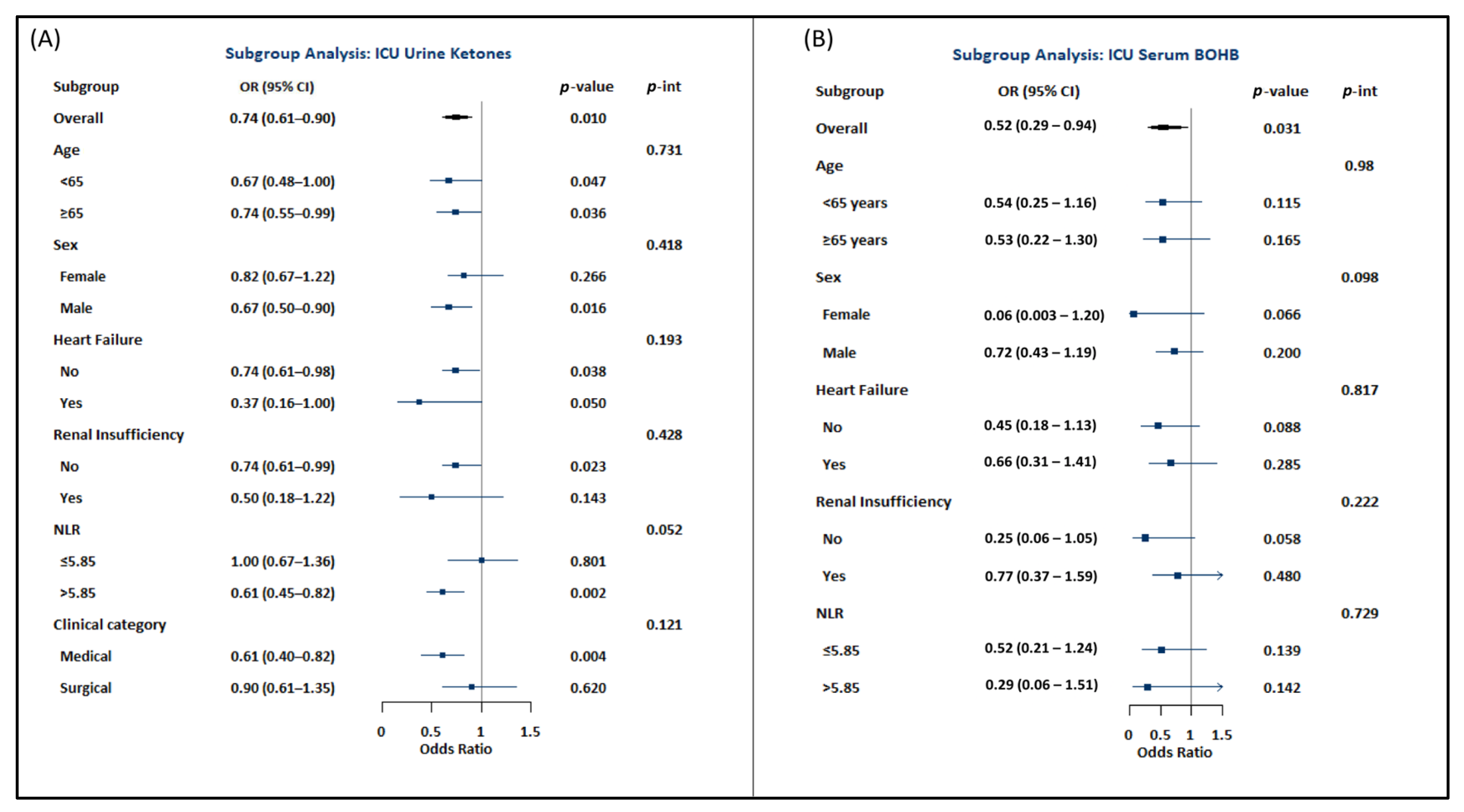
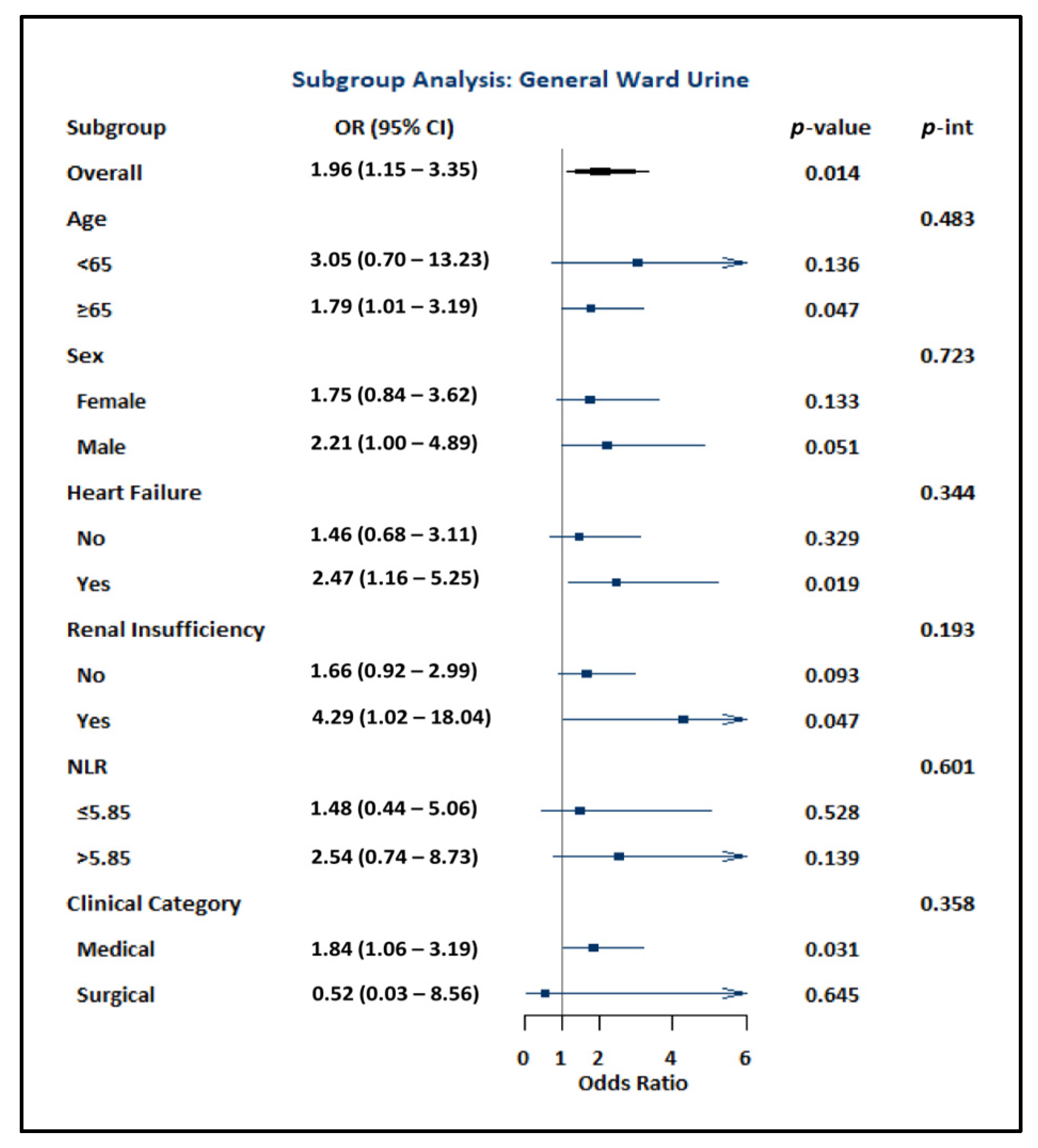
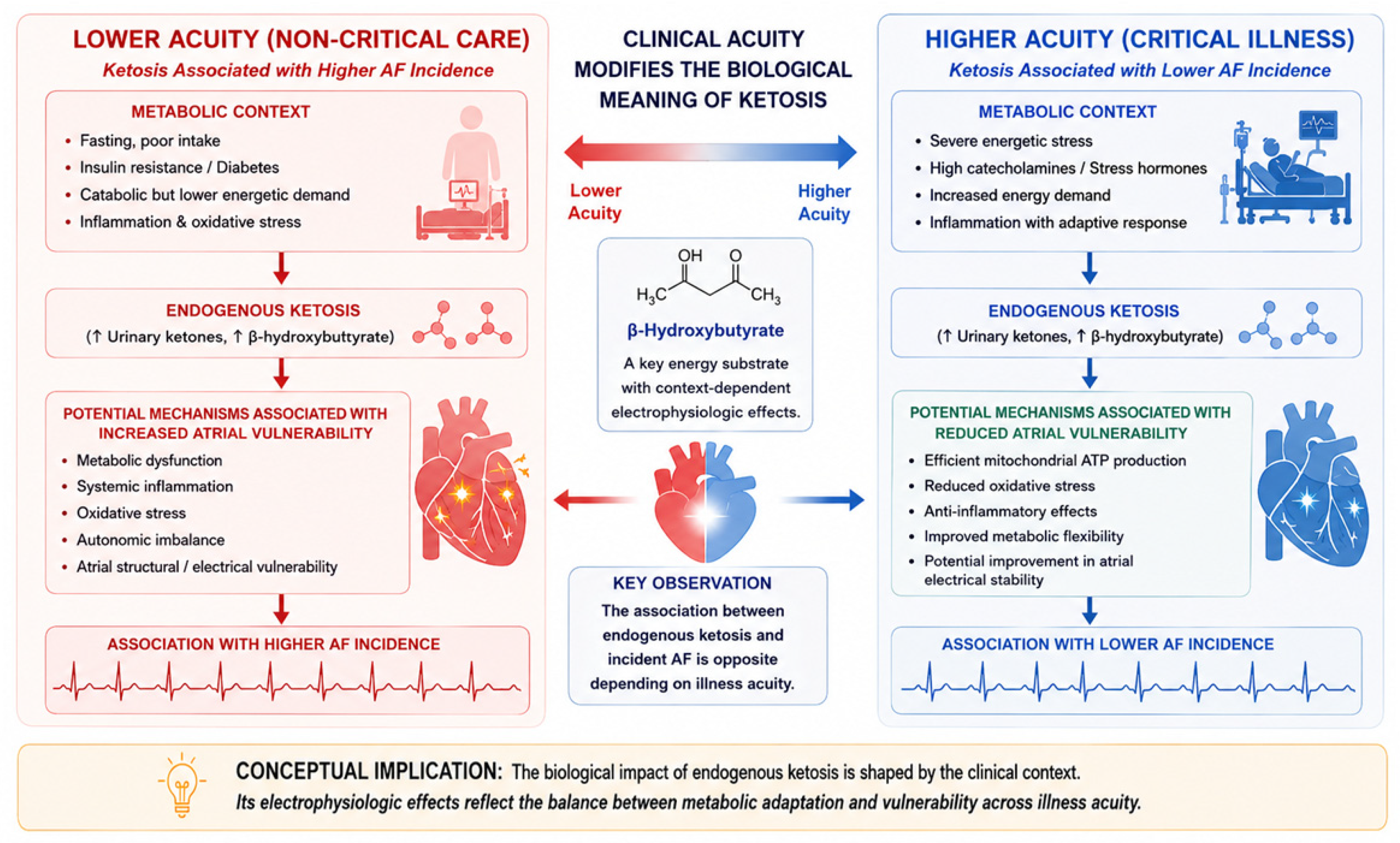
Despite growing interest in ketone metabolism, the transition from a maladaptive metabolic byproduct to a cardioprotective substrate remains poorly understood. This study identified endogenous ketosis functions as a protective adaptive mechanism during acute illness while being associated with increased AF risk in lower-acuity general ward populations. In the ICU, ketone positivity was associated with a significant reduction in AF. In the serum β-hydroxybutyrate cohort, the multivariable model showed a trend toward a protective association (p = 0.053). After propensity score matching, elevated serum β-hydroxybutyrate concentrations were associated with approximately a 76% reduction in the odds of AF. Conversely, multivariable regression analyses demonstrated that ketone positivity was associated with a two-fold increase in AF risk in the general hospital ward. Subgroup analyses verified consistent directionality. Furthermore, urine ketone positivity was associated with lower mortality in both ICU and general ward cohorts, supporting the interpretation that endogenous ketosis reflects a metabolically adaptive phenotype rather than a marker of physiological deterioration. In contrast to AF outcomes, the association between serum β-OHB and mortality was attenuated after multivariable adjustment, suggesting that the mortality relationship may be more susceptible to confounding by illness severity and comorbidity burden. This divergence may also indicate a more direct mechanistic link between ketone metabolism and reduced arrhythmic susceptibility.
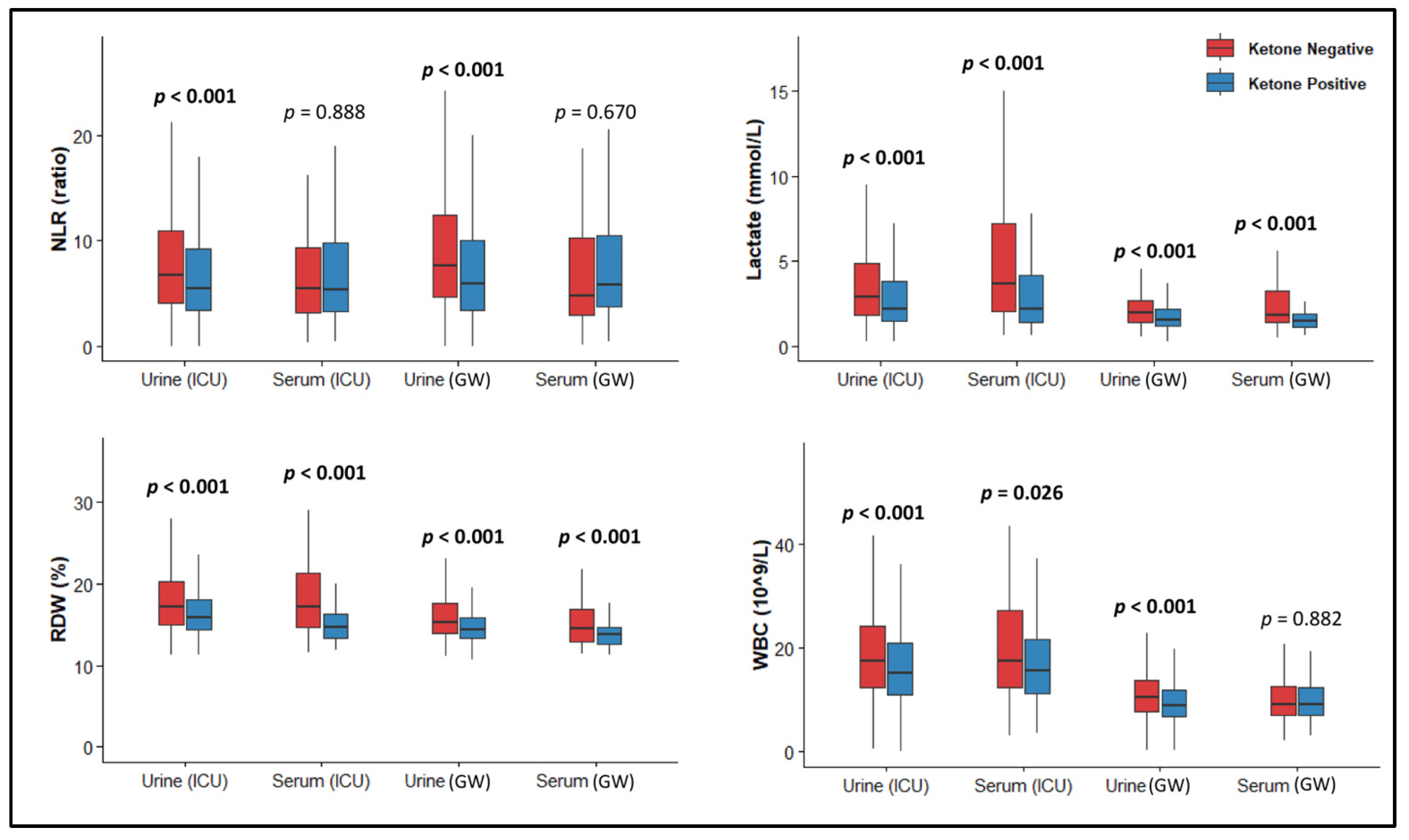
The observation of a protective association, despite a higher baseline comorbidity burden in ketone-positive patients, suggests that ketosis functions as an adaptive metabolic response to acute stress. Across both ICU and general ward cohorts, ketone positivity was associated with lower lactate concentrations, suggesting more efficient oxidative substrate utilization during acute illness. This metabolic profile was accompanied by reductions in systemic inflammatory indices, including white blood cell count, neutrophil-to-lymphocyte ratio, and red cell distribution width. Notably, insulin use was considerably more common than documented diabetes mellitus across both cohorts, suggestive of stress-induced hyperglycemia during acute illness. This physiological stress response promotes hepatic glucose production and peripheral insulin resistance, often necessitating exogenous insulin despite adequate endogenous insulin production. These findings suggest endogenous ketosis may reflect an adaptive metabolic response to critical illness, rather than solely diabetes-related dysfunctions. The observed association between ketosis and lower sepsis prevalence was consistent with a systemic protective metabolic profile. Stubbs et al. characterized β-hydroxybutyrate as an immunometabolic countermeasure that prevents maladaptive inflammatory responses without compromising immune integrity [
30]. Given the central role of inflammation in atrial structural remodeling and electrophysiological instability during critical illness [
31], attenuation of inflammatory signaling may represent an important link between endogenous ketosis and reduced atrial arrhythmogenic susceptibility during critical illness. This effect may be driven by β-hydroxybutyrylation of key signaling proteins, such as STAT1, which inhibits pro-inflammatory macrophage polarization [
32].
Several biological factors may explain the observed association between ketone status and AF. The adult myocardium is characterized by high metabolic flexibility, primarily relying on fatty acid oxidation for ATP production [
33]. However, in states of acute hemodynamic stress or critical illness, the failing heart undergoes a metabolic fuel shift [
24]. Ketone bodies, specifically β-hydroxybutyrate, require less oxygen per mole of ATP produced compared to fatty acids [
34]. By bypassing the complex β-oxidation pathway and entering the tricarboxylic acid (TCA) cycle directly via succinyl-CoA:3-oxoacid CoA-transferase (SCOT), ketones provide a more efficient energy source that may preserve myocardial electrophysiological stability during states of energy starvation and hypoxia.
β-hydroxybutyrate has been shown to influence class I histone deacetylase activity and intracellular redox balance [
35], suggesting that circulating ketone concentrations may directly influence atrial substrate vulnerability during acute illness. Furthermore, ketone metabolism actively enhances myocardial resilience through a process of mitohormesis [
36], wherein nutritional ketosis has been reported to trigger adaptive mitochondrial signaling that bolsters antioxidant defenses and metabolic efficiency. Such enhancements are critical in the context of the stressed heart, where mitochondrial failure leads to the electrical instability and ion channel remodeling that underpin atrial arrhythmias [
37]. Beyond energetic efficiency, ketones may directly modulate atrial electrophysiology. In experimental models of cardiac preservation, Seefeldt et al. suggest that β-hydroxybutyrate may stabilize the sarcolemma membrane by modulating ATP-sensitive potassium channels (K
ATP), reducing oxidative stress-induced mitochondrial permeability transition pore opening [
38]. By preserving mitochondrial integrity and reducing the production of reactive oxygen species, endogenous ketosis may reduce oxidative triggering of atrial premature beats that initiate AF (
Figure 5).
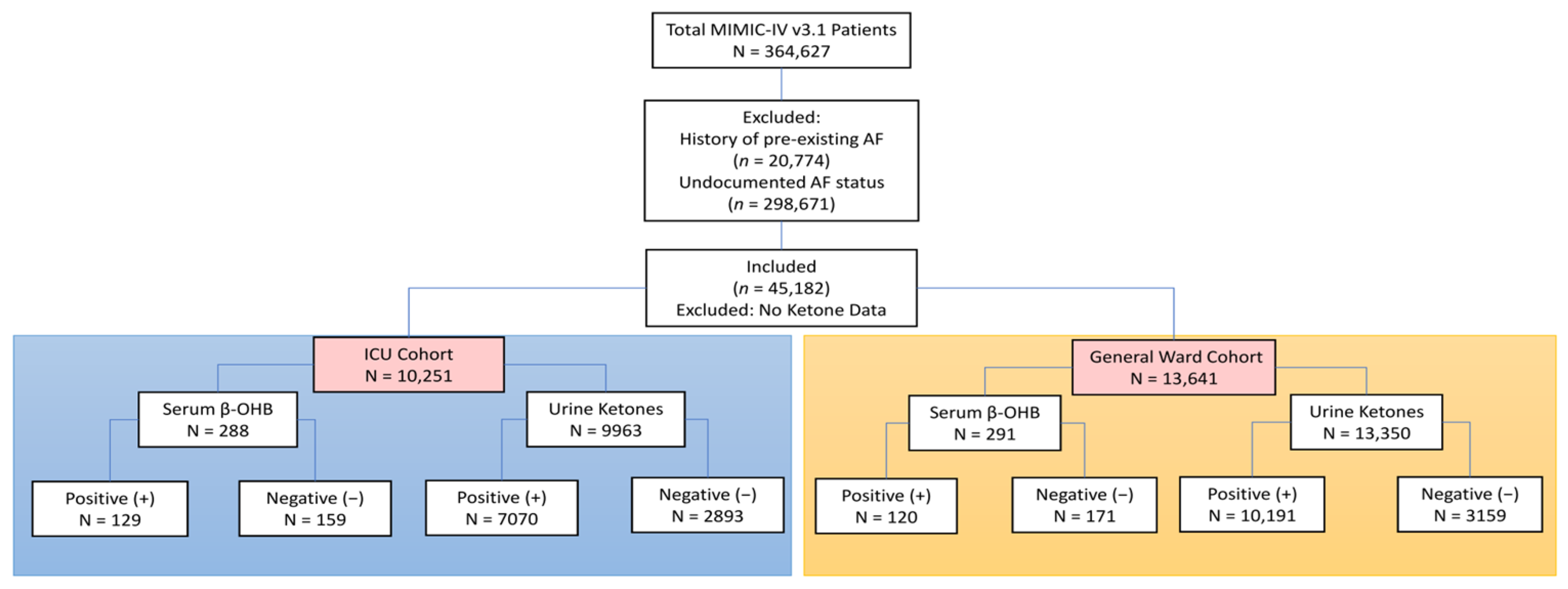
The findings of the present study should be interpreted in light of several limitations. First, while the use of MIMIC-IV v3.1 provides a high-resolution clinical dataset, the retrospective observational design precludes the establishment of definitive causal inferences. Second, urinary measurements are semi-quantitative, and may not correspond with the total bioavailable ketone pool. Third, serum β-hydroxybutyrate measurements were available only in a subset of patients, which reduced statistical power and limited evaluation of potential dose–response relationships. Similarly, in both the multivariable model and the time-dependent Cox proportional hazards model, elevated serum β-hydroxybutyrate was associated with a low risk of AF; however, these associations did not reach statistical significance (Cox model: p = 0.168). Accordingly, the findings of this limited size cohort should be interpreted as an associative trend that require validation in future prospective studies. Fourth, differences between ICU and general ward populations may reflect underlying heterogeneity in illness acuity and metabolic state that cannot be fully accounted for in retrospective analyses. Fifth, while we utilized incident AF as a primary endpoint, the intermittent nature of paroxysmal AF in a hospital setting may lead to an underestimation of the true arrhythmic burden if episodes occurred between scheduled ECG monitoring or nursing assessments. Sixth, the time-dependent Cox proportional hazard model was utilized to mitigate temporal bias; however, residual confounding and unmeasured factors inherent to the retrospective study type may persist. Lastly, ketone measurements were not obtained routinely and were performed at the discretion of treating clinicians. Consequently, the study population was limited to patients who underwent urinary ketone or serum β-hydroxybutyrate assessment, which may limit the generalizability of the findings. Despite these limitations, this study represents one of the first large-scale analyses to compare urinary ketone status and circulating β-hydroxybutyrate concentrations across ICU and non-ICU cohorts.
Endogenous ketosis represents a marker of metabolic resilience in critically ill patients and a potential target for arrhythmia prevention. Since ketone metabolism can be modulated through dietary intervention, pharmacologic therapy, or exogenous ketone supplementation, the observed associations raise the possibility of a novel strategy for reducing AF in high-risk populations. The transition from observational association to therapeutic application is already underway. Ongoing trials, such as the KETO-AHF (NCT06653725) [
39], are currently investigating the use of exogenous ketone esters and 1,3-butanediol to improve hemodynamic stability and reduce natriuretic peptides in acute heart failure patients. Ultimately, metabolic modulation via SGLT2 inhibitors or ketone supplementation may provide a ‘non-ion-channel’ dependent approach to rhythm management in the ICU.
Our findings align with a shifting paradigm in critical care nutrition and metabolic support. Current 2025 ELSO and ESICM guidelines emphasize metabolic flexibility and phase-specific nutritional strategies that avoid early overfeeding, which can suppress endogenous ketogenesis [
40,
41]. However, ketosis is still viewed through the lens of pathology (e.g., DKA), missing its potential role as an adaptive resilience marker in non-diabetic critical illness. Whereas diabetic ketoacidosis is characterized by uncontrolled hyperglycaemia, severe metabolic acidosis, and insulin deficiency; moderate elevations in circulating ketone bodies during critical illness often may reflect a compensatory shift toward more oxygen-efficient substrate utilization. Importantly, careful patient selection remains essential, particularly among individuals with diabetes mellitus or impaired insulin reserve, in whom the boundary between adaptive ketosis and ketoacidosis may be narrower.