Article

Health-Related Quality of Life, Anxiety, and Stress in Women with Uterine Fibroids: A Cross-Sectional Analysis


by
Agnieszka Lach
1,*,
Wiktoria Jędrzejak
2,
Patrycja Loba
2,
Maria Depczyńska
2,
Zuzanna Radziszewska
2,
Dobrochna Stachecka
2,
Maciej Wilczak
1 and
Karolina Chmaj-Wierzchowska
1,3,*
1
Department of Maternal and Child Health and Minimally Invasive Gynecologic Surgery, Poznan University of Medical Sciences, 60-701 Poznan, Poland
2
Faculty of Medicine, Poznan University of Medical Sciences, 60-701 Poznan, Poland
3
Laboratory of Advanced Interventional Therapies in Gynecology and Urogynecology, Poznan University of Medical Sciences, 60-701 Poznan, Poland
*
Authors to whom correspondence should be addressed.
J. Clin. Med. 2026, 15(12), 4777; https://doi.org/10.3390/jcm15124777 (registering DOI)
Submission received: 24 May 2026 / Revised: 14 June 2026 / Accepted: 16 June 2026 / Published: 19 June 2026
(This article belongs to the Section Obstetrics & Gynecology)

Abstract

Background: Uterine fibroids are among the most common benign tumors affecting women of reproductive age and may substantially impair health-related quality of life (HRQL). Although anxiety and stress are frequently reported by affected women, their contribution to HRQL remains unclear. This study aimed to evaluate the relationships between symptom severity, anxiety, stress, and HRQL in women with uterine fibroids. Methods: A cross-sectional study was conducted among 107 women hospitalized for uterine fibroid treatment. Symptom severity and HRQL were assessed using the Uterine Fibroid Symptom and Quality of Life (UFS-QoL) questionnaire. Anxiety and information needs were evaluated using the Amsterdam Preoperative Anxiety and Information Scale (APAIS), while subjective anxiety and stress levels were measured with the Visual Analog Scale (VAS). Associations between variables were analyzed using non-parametric tests, Spearman’s correlations, and multiple regression analysis. Results: Clinically significant anxiety was observed in 41.1% of participants. The mean HRQL score was 57.4 ± 22.3 points. In multivariate analysis, symptom severity was the only independent predictor of HRQL (β = −0.67, p < 0.001), explaining approximately 45% of its variance. Anxiety, stress, and sociodemographic factors were not independently associated with overall HRQL. However, higher levels of anxiety and stress were significantly associated with poorer sexual functioning. Women living in rural areas and those with higher body weight reported poorer outcomes in selected quality-of-life domains. Conclusions: Symptom severity is the primary determinant of HRQL in women with uterine fibroids. Although anxiety and stress do not independently predict overall quality of life, they may adversely affect sexual functioning. These findings support a comprehensive management approach that combines symptom-oriented treatment with psychological and educational support.

1. Introduction

Uterine fibroids (leiomyomas) are among the most common benign tumors affecting women of reproductive age and constitute a major public health concern [1,2]. In addition to causing physical symptoms, uterine fibroids substantially impair health-related quality of life (HRQL) and daily functioning [1,3]. Their clinical presentation is heterogeneous and most commonly includes heavy menstrual bleeding, chronic pelvic pain, and pressure-related symptoms [4,5]. These manifestations may reduce physical activity, decrease work productivity, and negatively affect social and sexual functioning. As a result, uterine fibroids may significantly impair emotional well-being, self-esteem, and interpersonal relationships, making HRQL an important outcome measure in gynecological care [1,3]. Beyond the somatic burden of the disease, increasing attention has been directed toward its psychological consequences. Women with uterine fibroids frequently report elevated levels of anxiety and stress, particularly in the preoperative period [6]. Anxiety associated with planned surgical treatment may arise from concerns regarding anesthesia, the procedure itself, potential complications, and the impact of treatment on bodily integrity and reproductive health [6,7]. Importantly, previous studies suggest that preoperative anxiety does not necessarily correspond to the clinical severity of symptoms [7]. Psychological distress may also be intensified by uncertainty and insufficient medical information.
Although patient-reported outcomes are increasingly recognized as important clinical indicators, the relationships between symptom severity, preoperative anxiety, stress, and health-related quality of life (HRQL) in women with uterine fibroids remain insufficiently understood. In particular, it is unclear whether impaired quality of life is primarily driven by the severity of fibroid-related symptoms or by the psychological burden associated with awaiting surgical treatment. Therefore, the present study aimed to evaluate symptom severity, HRQL, preoperative anxiety, stress, and information needs among women hospitalized for planned surgical treatment of uterine fibroids. Using standardized assessment tools, including the UFS-QoL questionnaire, the Amsterdam Preoperative Anxiety and Information Scale (APAIS), and the Visual Analog Scale (VAS), we investigated the relationships between clinical symptoms, psychological factors, and quality of life. We also examined whether psychological factors were associated with reduced quality of life in specific functional domains and whether symptom severity predicted anxiety levels. We hypothesized that both symptom severity and psychological burden would contribute to reduced HRQL in women with uterine fibroids.

2. Materials and Methods

This cross-sectional survey study included 107 women diagnosed with uterine fibroids who were hospitalized for planned surgical treatment at the Department of Maternal and Child Health and Minimally Invasive Gynecologic Surgery, Heliodor Święcicki Clinical Hospital of the Poznan University of Medical Sciences, between October 2025 and March 2026. Eligibility criteria included age ≥ 18 years, a confirmed diagnosis of uterine fibroids based on clinical and/or imaging findings, qualification for surgical treatment, and the provision of written informed consent. Women with incomplete questionnaire data or those who declined participation were excluded from the study. Because all participants were awaiting planned surgical treatment, preoperative anxiety and information needs were assessed using the Amsterdam Preoperative Anxiety and Information Scale (APAIS) [6]. Patients’ perceived psychological burden. The study questionnaire consists of six items rated on a 5-point Likert scale (1 = not at all to 5 = extremely). Four items assess anxiety related to anesthesia and the planned surgical procedure, whereas two items evaluate the patient’s need for medical information. The total anxiety score ranges from 4 to 20 points, with scores ≥11 indicating clinically significant preoperative anxiety. Higher scores reflect greater levels of anxiety and informational needs. The APAIS is widely used for the assessment of preoperative psychological status and has demonstrated good validity and reliability in surgical populations. In addition, the Visual Analog Scale (VAS) enables the assessment of subjective anxiety and stress levels, providing complementary information regarding patients’ emotional status [6,7]. Participants were asked to rate their current level of anxiety and stress on separate 10-point scales, where 0 indicated no anxiety/stress, and 10 indicated the highest imaginable level of anxiety/stress. The VAS is a simple and widely used instrument for the assessment of subjective emotional states and provides complementary information regarding patients’ perceived psychological burden. The study questionnaire consisted of sociodemographic and clinical sections as well as standardized assessment instruments. Symptom severity and health-related quality of life (HRQL) were assessed using the Uterine Fibroid Symptom and Quality of Life (UFS-QoL) questionnaire, which evaluates six domains of quality of life: concern, activities, mood and energy, control, self-consciousness, and sexual functioning [8,9,10].
According to Polish regulations, this questionnaire-based observational study did not constitute a medical experiment and therefore did not require formal ethical approval. The study protocol was reviewed by the Bioethics Committee of Poznan University of Medical Sciences, which confirmed that the project was not a medical experiment and issued a positive opinion (No. 278/25, 23 April 2025). The study was conducted in accordance with the principles of the Declaration of Helsinki and Good Clinical Practice (GCP). All participants provided informed consent prior to participation.

Data Analysis

For comparative analyses, selected categorical variables were recategorized into broader groups to ensure adequate subgroup sizes and improve statistical interpretability.
Statistical analyses were performed using Statistica version 14 (Cloud Software Group, Inc., Palo Alto, CA, USA), Jamovi version 2.3, and Microsoft Excel (Microsoft Office 2019, version 2205).
The distribution of variables was assessed using the Shapiro–Wilk test. Comparative analyses were performed using the Mann–Whitney U test, with effect sizes estimated using the rank-biserial correlation coefficient. Associations between categorical variables were analyzed using Pearson’s chi-square test or Fisher’s exact test, as appropriate.
For bivariate analyses, odds ratios (ORs) with 95% confidence intervals (CIs) were calculated, and the strength of associations was evaluated using the φ coefficient and Cramér’s V. Correlations between anxiety, stress, symptom severity, and quality of life were assessed using Spearman’s rank correlation coefficient (ρ).
Multivariate analysis was performed using a general linear model (GLM). Multicollinearity was evaluated using variance inflation factors (VIFs), and residual distributions were examined to verify model assumptions. Effect sizes were expressed using partial eta-squared (η2). A p-value < 0.05 was considered statistically significant.

3. Results

3.1. Characteristics of the Study Group

The mean age of the respondents was 44.88 ± 5.98 years (range: 29–61 years), with a median age of 45 years. The mean body weight was 68.59 ± 10.94 kg, and the mean body mass index (BMI) was 24 ± 3.55, indicating that most participants had a normal body weight. Table 1 shows the anthropometric measurements of the respondents.
The study group predominantly included married women (66.36%) and those with higher education (60.75%). Most participants lived in urban areas, and the most frequently reported type of occupation was non-manual work (73.83%). Regarding nutritional status, 66.36% of women reported normal body weight, 27.10% were overweight, 5.61% were obese, and 0.93% were underweight. Table 2 shows the characteristics of the study group.
Nearly half of the women in the study had not given birth (47.66%), and most of them had not experienced miscarriages (86.92%) or had undergone gynecological surgery (76.70%). Table 3 shows the characteristics of the study group in terms of obstetric history.
The mean duration of menstruation was 5.65 ± 1.42 days (range: 4–14 days). Menstrual blood loss was rated at a mean of 4.93 ± 2.2 points on a 0–10 scale. The most frequently reported clinical symptoms were dysmenorrhea (30.84%), dyspareunia (17.76%), and pain during defecation (18.69%). Daily pain complaints were reported by 14.02% of the respondents, while pain during urination occurred sporadically (0.93%). Table 4 shows the additional clinical symptoms of the study participants.

3.2. Anxiety, Stress, and Need for Information–APAIS

Based on the APAIS questionnaire, the total anxiety score ranged from 5 to 20 points, with a mean value of 9.67 ± 2.98 (95% CI: 9.10–10.24). Clinically significant anxiety was identified in 44 participants (41.12%), whereas 63 women (58.88%) had anxiety levels within the normal range.
The mean anxiety score related to anesthesia was 4.57 ± 1.64, while anxiety related to the planned surgical procedure reached 5.10 ± 1.62. The mean information-need score was 6.01 ± 1.96 (95% CI: 5.63–6.39). Detailed APAIS results are presented in Table 5 and Table 6.

3.3. Anxiety and Stress—VAS Self-Assessment

Self-assessed anxiety measured using the VAS ranged from 0 to 10 points, with a mean score of 4.66 ± 2.22 (95% CI: 4.24–5.09). Self-assessed stress also ranged from 0 to 10 points, with a mean value of 4.82 ± 2.19 (95% CI: 4.40–5.24). Overall, participants reported moderate levels of anxiety and stress.
The study did not reveal significant associations between place of residence and levels of anxiety, stress, or information needs assessed using VAS (Table 7).
Urban residents tended to report higher anxiety levels, particularly anxiety related to anesthesia; however, these differences did not reach statistical significance (Table 8).
No significant associations were observed between patients’ age, education, marital status, body weight, or history of childbirth and levels of anxiety, stress, and need for information (APAIS I–IV) as well as self-assessed anxiety and stress (VAS V–VI). Furthermore, no associations were found between anxiety assessment (APAIS I–III) and age, education, place of residence, marital status, body weight, or history of childbirth among the participants (Table 9).
No significant associations were observed between the level of information need assessed (Table 10) using the APAIS scale and the analyzed sociodemographic factors, including age, education, place of residence, marital status, body weight status, and history of childbirth (p > 0.05).

3.4. Comparative Analysis

Symptom severity ranged from 0% to 84.38% of the total score, with a mean value of 48.60 ± 20.97 points (95% CI: 44.58–52.62). Descriptive statistics are presented in Table 11.
Quality-of-life scores across individual UFS-QoL domains are summarized in Table 12. The highest mean scores were observed for mood/energy (60.35 ± 22.44) and sense of control (59.95 ± 23.25), whereas the lowest scores were reported for concerns (51.92 ± 29.67) and sexual functioning (51.52 ± 28.30).
Overall HRQL scores ranged from 6.03% to 100%, with a mean value of 57.41 ± 22.30 (95% CI: 53.14–61.69). Descriptive statistics for HRQL are presented in Table 13.
Correlation analysis revealed no significant associations between anxiety, stress, information needs, symptom severity, and overall HRQL (Table 14). The only significant findings concerned the sexual functioning domain, which was negatively correlated with self-reported anxiety and stress.
No significant associations were observed between age and symptom severity or quality of life (Table 15).
Women with higher education demonstrated significantly better quality of life in the sexual functioning domain than women with lower educational attainment (Table 16). A similar trend was observed in the activities domain, although the difference did not reach statistical significance.
Place of residence was significantly associated with symptom severity and several HRQL domains (Table 17). Women living in rural areas reported greater symptom severity and lower quality of life compared with urban residents. The only exception was the self-awareness domain, which showed a non-significant trend toward poorer outcomes among rural residents.
No significant associations were found between marital status and symptom severity or quality of life (Table 18).
Participants with normal body weight demonstrated significantly better outcomes in the domains of concerns and sexual functioning than overweight participants (Table 19). Similar trends were observed for activities and self-awareness, although these differences did not reach statistical significance.
Likewise, childbirth history was not associated with symptom severity, HRQL, or any of the analyzed quality-of-life domains (Table 20).

3.5. Regression Model

To identify the independent determinants of HRQL, we conducted a multiple regression analysis using a GLM. The model included clinical variables (symptom severity, anxiety level, self-assessed stress, and need for information) and sociodemographic variables (age, education, place of residence, marital status, history of childbirth, and BMI). While a comprehensive range of factors was examined from a substantive perspective, their number was intentionally limited to prevent the artificial inflation of standard errors, thereby preserving the statistical power of the tests. The final model structure, comprising 10 predictors with a sample size of 107 participants, was selected to maintain statistical rigor while adequately addressing the key theoretical determinants of the studied phenomenon.
Before interpreting the results, the assumptions of the analysis were verified. The distribution of residuals showed conformity with normal distribution, and analysis of the scatterplot of residuals versus predicted values confirmed homoscedasticity (constant error variance; MSresidual = 0.026). The absence of outliers and the analysis of predictor multicollinearity confirmed model stability. VIF values ranged from 1.12 to 2.38, indicating the absence of multicollinearity issues and enabling a reliable assessment of the unique contribution of each variable. VIF values above 2 for two predictors (anxiety and stress) were considered acceptable, given the strong theoretical justification for including both variables in the model and the absence of signs of estimator instability.
The constructed model showed a high statistical significance (F (10,96) = 10.58; p < 0.001), demonstrating a strong relationship between the set of predictors and the dependent variable (R = 0.72). The coefficient of determination (R2) was 0.52, indicating that the model explains 52% of the total variance in patients’ quality of life. After adjusting for the number of variables and sample size, the adjusted coefficient of determination was Radj2 = 0.4748, indicating a very high predictive ability of the model in the context of medical research. Table 21 shows the results of the model.
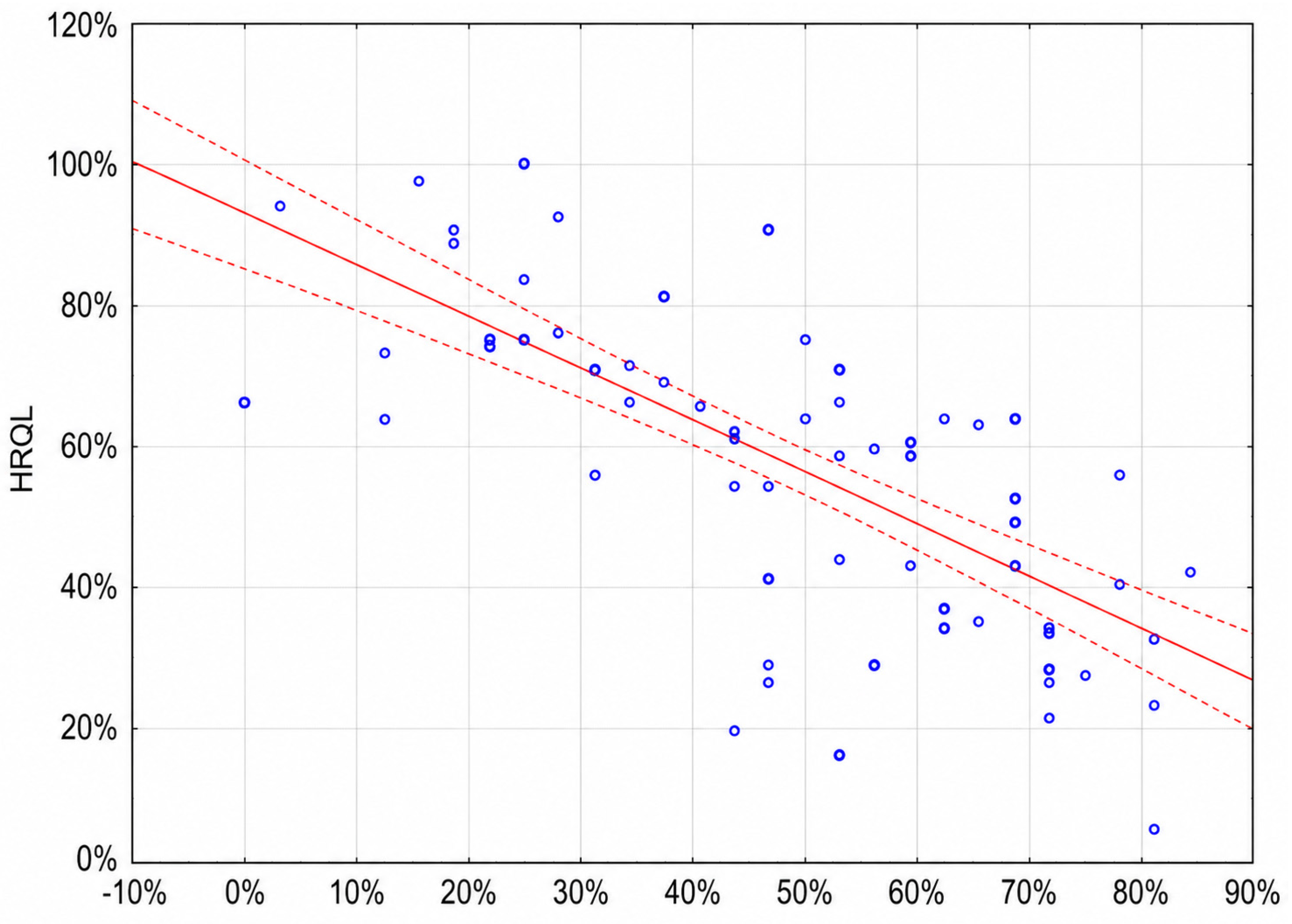
The analysis of model parameters revealed a significant predictor of HRQL. Symptom severity was identified as a significant determinant of quality of life (β = −0.667; p < 0.001), which showed the strongest effect size (η2 = 0.45) and maximal statistical power (1.00). The value of the unstandardized coefficient (B = −0.71; 95% CI: −0.82 to −0.52) indicated that each one-unit increase in symptom severity was associated with an average decrease in HRQL of 0.71 points, assuming that all other variables remained constant. This implies that this variable alone accounts for approximately 45% of the unique variance in quality of life (Figure 1).
The remaining variables (age, education, place of residence, marital status, body weight, history of childbirth, anxiety, stress, and BMI) did not reach statistical significance, and their effects were small (η2 < 0.03), suggesting their limited impact on HRQL in the presence of clinical factors.

4. Discussion

The present study demonstrated that symptom severity is the primary determinant of health-related quality of life (HRQL) in women with uterine fibroids. In the multivariate analysis, symptom severity was the only independent predictor of HRQL, whereas anxiety, stress, and most sociodemographic variables were not independently associated with overall quality of life. These findings are consistent with previous reports indicating that the physical burden of uterine fibroids has the greatest impact on daily functioning and well-being [1,2,3,5]. Participants reported moderate impairment in HRQL, with the greatest burden observed in the domains of concerns and sexual functioning. Symptoms such as heavy menstrual bleeding, pelvic pain, and pressure-related complaints may adversely affect not only physical functioning but also emotional and social well-being. Similar relationships between symptom burden and reduced HRQL have been reported in studies using the UFS-QoL questionnaire and other patient-reported outcome measures [7,8,9,10]. Collectively, these findings reinforce symptom control as the primary therapeutic goal in the management of uterine fibroids.
These results highlight the importance of assessing sexual functioning as a distinct component of patient well-being, particularly among women awaiting surgical treatment.
Interestingly, symptom severity was not significantly associated with anxiety levels. This observation suggests that preoperative anxiety may be driven less by the severity of fibroid-related symptoms and more by concerns related to surgery, hospitalization, anesthesia, fertility, body image, and future health. Previous studies have similarly demonstrated that anxiety associated with planned surgical treatment may occur independently of disease severity [10,11,12,13]. An important finding of the present study was the high prevalence of preoperative anxiety, with more than 40% of participants meeting the threshold for clinically significant anxiety. Despite this, anxiety and stress were not independently associated with overall HRQL. However, both factors were significantly related to poorer sexual functioning, suggesting that the intimate dimension of quality of life may be particularly sensitive to emotional distress. Comparable findings have been reported in women with other gynecological conditions, including endometriosis and chronic pelvic pain disorders [14,15,16]. The substantial need for medical information observed in our study further supports the notion that uncertainty and perceived lack of control may contribute to psychological distress. Therefore, structured preoperative counseling and effective physician–patient communication may represent important components of comprehensive care.
Most sociodemographic factors, including age, marital status, education, and parity, were not significantly associated with HRQL. Nevertheless, women living in rural areas reported greater symptom severity and poorer quality of life than women residing in urban settings. These findings may reflect disparities in healthcare accessibility, delayed diagnosis, or reduced availability of specialist gynecological services in non-urban regions [17,18]. In addition, overweight participants reported poorer outcomes in selected domains, particularly concerns and sexual functioning, suggesting that metabolic and lifestyle-related factors may further influence subjective well-being [19].
Beyond their impact on physical and emotional well-being, uterine fibroids may substantially affect everyday functioning, work productivity, and social participation [20,21,22]. Previous studies have shown that women with symptomatic fibroids frequently report limitations in occupational performance, absenteeism, reduced work efficiency, and restrictions in daily activities, particularly when symptoms such as heavy menstrual bleeding and chronic pelvic pain are present [23,24]. Although work productivity was not directly assessed in the present study, the observed association between symptom burden and reduced HRQL supports the notion that the consequences of uterine fibroids extend beyond clinical symptoms alone. Future studies should investigate the impact of symptom severity on occupational functioning and socioeconomic outcomes to better characterize the overall burden of the disease. The increasing emphasis on patient-centered care has led to greater recognition of HRQL as a key outcome measure in uterine fibroid management. Recent guidelines and expert opinions suggest that treatment decisions should not be based solely on objective clinical parameters, such as fibroid size or number, but should also consider the patient’s symptoms, functional limitations, reproductive goals, and perceived quality of life [25]. The present findings support this approach by demonstrating that symptom burden, rather than demographic characteristics or psychological factors alone, is the principal determinant of HRQL.
From a clinical perspective, the present findings emphasize the need for a comprehensive and patient-centered approach to uterine fibroid management. Although effective reduction in symptom burden should remain the primary treatment objective, psychological well-being should also be routinely considered. While anxiety and stress did not independently predict overall HRQL, their association with impaired sexual functioning and their high prevalence among women awaiting surgery suggest that psychological support may improve important aspects of patient functioning and treatment experience. Integrating patient-reported outcomes with systematic assessment of emotional well-being may therefore contribute to more holistic and effective gynecological care.

4.1. Strengths and Limitations

Several limitations should be acknowledged. The relatively small sample size may have limited the power to detect weaker associations. In addition, the cross-sectional design precludes causal inference and does not allow changes in anxiety, stress, or quality of life to be assessed over time. The use of self-reported instruments may also have introduced response bias, particularly in sensitive areas such as sexual functioning. Finally, objective clinical variables such as fibroid size, location, and laboratory findings were not included in the analysis. Despite these limitations, the study was based on validated instruments and offers a comprehensive assessment of both somatic and psychological determinants of HRQL in women with uterine fibroids.
Another limitation is the lack of assessment of depressive symptoms. Since depression frequently coexists with anxiety and may influence health-related quality of life, future studies should include validated measures of depression to provide a more comprehensive evaluation of psychological well-being in women with uterine fibroids.

4.2. Practical Conclusions

The findings of this study underscore the central role of symptom burden in shaping quality of life among women with uterine fibroids and support symptom reduction as the primary aim of treatment. At the same time, the results draw attention to the importance of addressing psychological well-being, particularly in relation to sexual functioning. Integrating psychological support, clear medical communication, and patient education into routine care may contribute to better therapeutic outcomes and improved patient satisfaction.

5. Conclusions

Symptom severity was the main determinant of HRQL in women with uterine fibroids. Anxiety and stress were associated with poorer sexual functioning but not with symptom severity, suggesting that psychological burden may be related more to the diagnosis and planned surgery than to disease intensity. High informational needs across educational levels emphasize the importance of structured preoperative counseling and effective physician–patient communication. Rural residence and higher body weight were associated with poorer quality-of-life outcomes. Optimal care should integrate symptom-oriented treatment with psychological and educational support.

Author Contributions

Conceptualization, K.C.-W., W.J., P.L., M.D., Z.R., and D.S.; methodology, K.C.-W. and A.L.; software, K.C.-W. and A.L.; validation, K.C.-W., A.L., and M.W.; formal analysis, K.C.-W. and A.L.; investigation, K.C.-W., W.J., P.L., M.D., Z.R., D.S., and A.L.; resources, K.C.-W., W.J., P.L., M.D., Z.R., D.S., and A.L.; data curation, K.C.-W., W.J., P.L., M.D., Z.R., D.S., and A.L.; writing—original draft preparation, K.C.-W., W.J., P.L., M.D., Z.R., D.S., and A.L.; writing—review and editing, K.C.-W. and A.L.; visualization, K.C.-W., A.L., and M.W.; supervision, K.C.-W., A.L. and M.W.; project administration, K.C.-W., A.L. and M.W.; funding acquisition, K.C.-W., A.L., and M.W. All authors have read and agreed to the published version of the manuscript.

Funding

This research received no external funding.

Institutional Review Board Statement

According to Polish regulations, this questionnaire-based observational study did not constitute a medical experiment and therefore did not require formal ethical approval. The study protocol was reviewed by the Bioethics Committee of Poznan University of Medical Sciences, which confirmed that the project was not a medical experiment and issued a positive opinion (No. 278/25, 23 April 2025). The study was conducted in accordance with the principles of the Declaration of Helsinki and Good Clinical Practice (GCP). All participants provided informed consent prior to participation.

Informed Consent Statement

Informed consent was obtained from all subjects involved in the study.

Data Availability Statement

The data presented in this study are available on request from the corresponding author.

Acknowledgments

During the preparation of this manuscript/study, the authors used [ChatGPT (OpenAI, GPT-5.3, accessed April 2026)] for the purposes of language editing and improvement of readability, paraphrasing and refining the wording of the manuscript, generating a figure based on the authors’ input and specifications. The authors have reviewed and edited the output and take full responsibility for the content of this publication.

Conflicts of Interest

The authors declare no conflicts of interest.

References

  1. Fortin, C.; Flyckt, R.; Falcone, T. Alternatives to hysterectomy: The burden of fibroids and the quality of life. Best Pract. Res. Clin. Obstet. Gynaecol. 2018, 46, 31–42. [Google Scholar] [CrossRef] [PubMed]
  2. Stewart, E.A.; Nicholson, W.K.; Bradley, L.; Borah, B.J. The burden of uterine fibroids for African-American women: Results of a national survey. J. Women’s Health 2013, 22, 807–816. [Google Scholar] [CrossRef] [PubMed] [PubMed Central]
  3. Borah, B.J.; Nicholson, W.K.; Bradley, L.; Stewart, E.A. The impact of uterine leiomyomas: A national survey of affected women. Am. J. Obstet. Gynecol. 2013, 209, 319.e1–319.e20. [Google Scholar] [CrossRef] [PubMed] [PubMed Central]
  4. Uimari, O.; Subramaniam, K.S.; Vollenhoven, B.; Tapmeier, T.T. Uterine Fibroids (Leiomyomata) and Heavy Menstrual Bleeding. Front. Reprod. Health 2022, 4, 818243. [Google Scholar] [CrossRef] [PubMed] [PubMed Central]
  5. Stewart, E.A.; Laughlin-Tommaso, S.K.; Catherino, W.H.; Lalitkumar, S.; Gupta, D.; Vollenhoven, B. Uterine fibroids. Nat. Rev. Dis. Primers 2016, 2, 16043. [Google Scholar] [CrossRef] [PubMed]
  6. Aust, H.; Eberhart, L.; Sturm, T.; Schuster, M.; Nestoriuc, Y.; Brehm, F.; Rüsch, D. A cross-sectional study on preoperative anxiety in adults. J. Psychosom. Res. 2018, 111, 133–139. [Google Scholar] [CrossRef] [PubMed]
  7. Spies, J.B.; Coyne, K.; Guaou Guaou, N.; Boyle, D.; Skyrnarz-Murphy, K.; Gonzalves, S.M. The UFS-QOL, a new disease-specific symptom and health-related quality of life questionnaire for leiomyomata. Obstet. Gynecol. 2002, 99, 290–300. [Google Scholar] [CrossRef] [PubMed]
  8. Coyne, K.S.; Margolis, M.K.; Bradley, L.D.; Guido, R.; Maxwell, G.L.; Spies, J.B. Further validation of the UFS-QoL. Am. J. Obstet. Gynecol. 2003, 189, S21–S29. [Google Scholar]
  9. Harding, G.; Coyne, K.S.; Thompson, C.L.; Spies, J.B. The responsiveness of the uterine fibroid symptom and health-related quality of life questionnaire (UFS-QOL). Health Qual. Life Outcomes 2008, 6, 99. [Google Scholar] [CrossRef] [PubMed] [PubMed Central]
  10. Moerman, N.; van Dam, F.S.; Muller, M.J.; Oosting, H. The Amsterdam Preoperative Anxiety and Information Scale (APAIS). Anesth. Analg. 1996, 82, 445–451. [Google Scholar] [CrossRef] [PubMed]
  11. Caumo, W.; Schmidt, A.P.; Schneider, C.N.; Bergmann, J.; Iwamoto, C.W.; Bandeira, D.; Ferreira, M.B. Risk factors for preoperative anxiety in adults. Acta Anaesthesiol. Scand. 2001, 45, 298–307. [Google Scholar] [CrossRef] [PubMed]
  12. Mitchell, M. Patients’ perceptions of pre-operative preparation for day surgery. J. Adv. Nurs. 1997, 26, 356–363. [Google Scholar] [CrossRef] [PubMed]
  13. Aust, H.; Rüsch, D.; Schuster, M.; Sturm, T.; Brehm, F.; Nestoriuc, Y. Coping strategies in anxious surgical patients. BMC Health Serv. Res. 2016, 16, 250. [Google Scholar] [CrossRef] [PubMed] [PubMed Central]
  14. De Graaff, A.A.; D’Hooghe, T.M.; Dunselman, G.A.; Dirksen, C.D.; Hummelshoj, L.; WERF EndoCost Consortium; Simoens, S. The significant effect of endometriosis on physical, mental and social wellbeing: Results from an international cross-sectional survey. Hum. Reprod. 2013, 28, 2677–2685. [Google Scholar] [CrossRef] [PubMed]
  15. Nnoaham, K.E.; Hummelshoj, L.; Webster, P.; d’Hooghe, T.; de Cicco Nardone, F.; de Cicco Nardone, C.; Jenkinson, C.; Kennedy, S.H.; Zondervan, K.T.; World Endometriosis Research Foundation Global Study of Women’s Health Consortium. Impact of endometriosis on quality of life and work productivity: A multicenter study across ten countries. Fertil. Steril. 2011, 96, 366–373.e8. [Google Scholar] [CrossRef] [PubMed] [PubMed Central]
  16. Sepulcri Rde, P.; do Amaral, V.F. Depressive symptoms, anxiety, and quality of life in women with pelvic endometriosis. Eur. J. Obstet. Gynecol. Reprod. Biol. 2009, 142, 53–56. [Google Scholar] [CrossRef] [PubMed]
  17. InformedHealth.org. Uterine Fibroids: Overview; Institute for Quality and Efficiency in Health Care (IQWiG): Cologne, Germany, 2020. [Google Scholar]
  18. Laughlin-Tommaso, S.K.; Stewart, E.A. Moving Toward Individualized Medicine for Uterine Leiomyomas. Obstet. Gynecol. 2018, 132, 961–971. [Google Scholar] [CrossRef] [PubMed] [PubMed Central]
  19. Kolotkin, R.L.; Meter, K.; Williams, G.R. Quality of life and obesity. Obes. Rev. 2001, 2, 219–229. [Google Scholar] [CrossRef] [PubMed]
  20. Donnez, J.; Dolmans, M.M. Uterine fibroid management: From the present to the future. Hum. Reprod. Update 2016, 22, 665–686. [Google Scholar] [CrossRef] [PubMed] [PubMed Central]
  21. Stewart, E.A. Clinical practice. Uterine fibroids. N. Engl. J. Med. 2015, 372, 1646–1655. [Google Scholar] [CrossRef] [PubMed]
  22. Munro, M.G.; Critchley, H.O.; Broder, M.S.; Fraser, I.S.; FIGO Working Group on Menstrual Disorders. FIGO classification system (PALM-COEIN) for causes of abnormal uterine bleeding in nongravid women of reproductive age. Int. J. Gynaecol. Obstet. 2011, 113, 3–13. [Google Scholar] [CrossRef] [PubMed]
  23. Cardozo, E.R.; Clark, A.D.; Banks, N.K.; Henne, M.B.; Stegmann, B.J.; Segars, J.H. The estimated annual cost of uterine leiomyomata in the United States. Am. J. Obstet. Gynecol. 2012, 206, 211.e1–211.e9. [Google Scholar] [CrossRef] [PubMed]
  24. Soliman, A.M.; Yang, H.; Du, E.X.; Kelley, C.; Winkel, C. The direct and indirect costs associated with uterine fibroids: A systematic review of the literature. Am. J. Obstet. Gynecol. 2015, 213, 141–160. [Google Scholar] [CrossRef] [PubMed]
  25. Stewart, E.A.; Cookson, C.L.; Gandolfo, R.A.; Schulze-Rath, R. Epidemiology of uterine fibroids: A systematic review. BJOG: Int. J. Obstet. Gynaecol. 2017, 124, 1501–1512. [Google Scholar] [CrossRef] [PubMed]
Figure 1. Scatterplot of HRQL versus symptom severity (%). The solid line represents the fitted regression line, and the dashed lines indicate the 95% confidence interval. The results clearly indicate that clinical factors are the primary determinants of quality of life in the studied group, with sociodemographic variables playing a secondary role.
Jcm 15 04777 g001
Table 1. Anthropometric measurements of the respondents.
M ± SDMin–MaxMe [Q1–Q3]95% CI
Height169.06 ± 7.18153–190168 [165–173]167.68–170.43
Body weight68.59 ± 10.9446–10068 [60–74]66.49–70.69
BMI24 ± 3.5517.75–31.6423.74 [21.22–26.78]23.32–24.68
Table 2. Characteristics of the study group.
n%
Age<45 years5046.73%
>45 years5753.27%
EducationVocational87.48%
Secondary1816.82%
Bachelor’s degree1614.95%
Master’s degree6560.75%
Place of residenceRural area3532.71%
Town (<50,000 inhabitants)3734.58%
City (50,000–200,000 inhabitants)109.35%
City (200,000–500,000 inhabitants)76.54%
City > (500,000 inhabitants)1816.82%
Marital statusSingle2927.10%
Married7166.36%
Divorced43.74%
Widowed32.80%
Type of residenceLiving independently76.54%
Living with others10093.46%
Occupational statusManual work1514.02%
Non-manual work7973.83%
Sick leave10.93%
Disability pension109.35%
Retirement21.87%
Body weight statusUnderweight10.93%
Normal7166.36%
Overweight2927.10%
Obese65.61%
Table 3. Obstetric history of the study participants.
n%
Number of deliveries05147.66%
12422.43%
22624.30%
354.67%
410.93%
Number of miscarriages09386.92%
154.67%
254.67%
343.74%
Vaginal delivery07166.36%
11312.15%
22018.69%
332.80%
Cesarean section08579.44%
11715.89%
254.67%
Gynecological surgeriesYes2423.30%
No7976.70%
Non-gynecological surgeriesYes2423.30%
No7976.70%
Table 4. Additional clinical symptoms of the study participants.
n%
DyspareuniaYes1917.76%
No8882.24%
Pain during defecationYes2018.69%
No8781.31%
Pain during urinationYes10.93%
No10699.07%
Daily pain occurrenceYes1514.02%
No9285.98%
DysmenorrheaYes3330.84%
No7469.16%
Table 5. Assessment of anxiety and information needs using the APAIS questionnaire.
nM ± SDMin–MaxMe [Q1–Q3]95% CI
Anxiety related to anesthesia1074.57 ± 1.642–104 [3–6]4.26–4.89
Anxiety related to the procedure1075.1 ± 1.623–105 [4–6]4.79–5.41
Table 6. Distribution of anxiety levels and information needs according to the APAIS questionnaire.
VariableCategoryn%
APAIS AnxietyNormal6358.88
APAIS AnxietyClinically significant4441.12
Information NeedLow3128.97
Information NeedModerate3835.51
Information NeedHigh3835.51
Table 7. Descriptive statistics for VAS anxiety and stress.
VariablenMean ± SDMin–Max95% CI
VAS Anxiety1074.66 ± 2.220–104.24–5.09
VAS Stress1074.82 ± 2.190–104.40–5.24
Table 8. Place of residence in relation to anxiety, stress, and need for information.
Place of ResidenceUpRs
Rural AreaCity/Town
M ± SDMin–MaxMe
[Q1–Q3]
M ± SDMin–MaxMe
[Q1–Q3]
I4.14 ± 1.382–84 [3–5]4.78 ± 1.732–105 [3–6]9870.06−0.22
II4.94 ± 1.833–94 [4–6]5.18 ± 1.523–105 [4–6]10690.19−0.15
III9.09 ± 2.965–168 [7–10]9.96 ± 2.976–209 [8–11.5]9760.06−0.23
IV6.4 ± 1.564–96 [5–8]5.82 ± 2.122–106 [4–7]10190.100.19
V5.14 ± 2.162–85 [3–7]4.43 ± 2.230–105 [3–6]10270.120.19
VI5.34 ± 1.892–95 [4–7]4.57 ± 2.290–104.5 [3–6]9970.080.21
I. Anxiety related to anesthesia; II. Anxiety related to the procedure; III. Anxiety; IV. Need for information; V. VAS Anxiety; VI. VAS Stress.
Table 9. Anxiety assessment.
Anxiety AssessmentFisher’s Exact Test (p)ϕ
Normal RangeClinically Significant
Age<45 years33 (66%)17 (34%)0.170.14
>45 years30 (52.63%)27 (47.37%)
EducationHigher46 (56.79%)35 (43.21%)0.5−0.07
Other17 (65.38%)9 (34.62%)
Place of residenceRural area25 (71.43%)10 (28.57%)0.090.18
City/town38 (52.78%)34 (47.22%)
Marital statusMarried45 (63.38%)26 (36.62%)0.220.13
Unmarried18 (50%)18 (50%)
Body weight statusNormal44 (61.97%)27 (38.03%)0.400.10
Overweight18 (51.43%)17 (48.57%)
ChildbirthYes32 (57.14%)24 (42.86%)0.84−0.04
No31 (60.78%)20 (39.22%)
Table 10. Assessment of information need.
Assessment of Information Needχ2pV
LowModerateHigh
Age<45 years13 (26%)19 (38%)18 (36%)0.460.800.07
>45 years18 (31.58%)19 (33.33%)20 (35.09%)
EducationHigher25 (30.86%)26 (32.1%)30 (37.04%)1.720.420.13
Other6 (23.08%)12 (46.15%)8 (30.77%)
Place of residenceRural area6 (17.14%)14 (40%)15 (42.86%)3.600.170.18
City/town25 (34.72%)24 (33.33%)23 (31.94%)
Marital statusMarried22 (30.99%)27 (38.03%)22 (30.99%)1.890.390.13
Unmarried9 (25%)11 (30.56%)16 (44.44%)
Body weight statusNormal25 (35.21%)24 (33.8%)22 (30.99%)3.810.150.19
Overweight6 (17.14%)14 (40%)15 (42.86%)
ChildbirthYes20 (35.71%)17 (30.36%)19 (33.93%)2.810.250.16
No11 (21.57%)21 (41.18%)19 (37.25%)
Table 11. Descriptive statistics for symptom severity.
VariablenMean ± SDMin–Max95% CI
Symptom severity (%)10748.60 ± 20.970–84.3844.58–52.62
Table 12. Assessment of quality of life across different domains.
M ± SDMin–MaxMe [Q1–Q3]95% CI
Concerns51.92 ± 29.670–10050 [25–80]46.23–57.6
Activities57.84 ± 24.783.57–10064.29 [35.71–75]53.1–62.59
Mood/Energy60.35 ± 22.440–10060.71 [46.43–78.57]56.05–64.65
Sense of control59.95 ± 23.255–10065 [40–80]55.5–64.41
Self-awareness58.41 ± 288.33–10058.33 [41.67–83.33]53.04–63.78
Sexual functioning51.52 ± 28.30–10050 [25–75]46.09–56.94
Table 13. Descriptive statistics for overall HRQL.
VariablenMean ± SDMin–Max95% CI
HRQL (%)10757.41 ± 22.306.03–10053.14–61.69
Table 14. Correlation coefficients between anxiety, stress, and need for information and quality of life and symptom severity.
Anxiety Related to the ProcedureAnxiety Related to AnesthesiaAnxietyNeed for InformationVAS AnxietyVAS Stress
Symptom severity0.120.020.100.130.050.01
Concerns0.03−0.04−0.02−0.09−0.03−0.01
Activities0.040.010.02−0.120.070.03
Mood/Energy0.060.070.06−0.040.130.14
Sense of control0.060.020.04−0.080.010.02
Self-awareness−0.09−0.02−0.07−0.16−0.04−0.05
Sexual functioning−0.140.07−0.04−0.08−0.28 **−0.28 **
HRQL0.010.020.01−0.120.010.01
** p < 0.01.
Table 15. Association between age and symptom severity and quality of life.
AgeUpRs
<45 Years>45 Years
M ± SDMin–MaxMe
[Q1–Q3]
M ± SDMin–MaxMe
[Q1–Q3]
I50.75 ± 19.5618.75–81.2557.81
[31.25–68.75]
46.71 ± 22.140–84.3850
[37.5–68.75]
12710.34−0.11
II51.8 ± 30.980–10047.5
[25–80]
52.02 ± 28.740–10050
[30–80]
14010.880.02
III56.57 ± 26.453.57–10060.71
[35.71–75]
58.96 ± 23.3921.43–10064.29
[35.71–75]
13520.650.05
IV59.71 ± 21.30–10060.71
[46.43–75]
60.9 ± 23.5717.86–96.4357.14
[42.86–85.71]
14040.900.02
V59.9 ± 24.655–10065
[40–80]
60 ± 22.1615–10065
[45–75]
14160.96−0.01
VI55.83 ± 29.088.33–10058.33
[33.33–75]
60.67 ± 27.088.33–10058.33
[50–83.33]
13050.450.08
VII53.75 ± 32.460–10050
[25–87.5]
49.56 ± 24.20–10050
[25–62.5]
13380.58−0.06
VIII56.81 ± 23.226.03–10059.91
[35.34–71.55]
57.94 ± 21.6616.38–97.4162.93
[41.38–74.14]
13630.700.04
I. Symptom severity; II. Concerns; III. Activities; IV. Mood/Energy; V. Sense of control; VI. Self-awareness; VII. Sexual functioning; VIII. HRQL.
Table 16. Association between education and symptom severity and quality of life.
EducationUpRs
HigherOther
M ± SDMin–MaxMe
[Q1–Q3]
M ± SDMin–MaxMe
[Q1–Q3]
I47.3 ± 21.920–84.3853.13
[28.13–68.75]
52.64 ± 17.4521.88–81.2554.69
[43.75–62.5]
9210.34−0.13
II52.96 ± 30.250–10055
[30–80]
48.65 ± 28.0915–9545
[20–80]
9360.400.11
III59.7 ± 24.793.57–10064.29
[35.71–78.57]
52.06 ± 24.2914.29–96.4353.57
[25–64.29]
8240.100.22
IV59.52 ± 22.820–10060.71
[42.86–75]
62.91 ± 21.4314.29–92.8658.93
[46.43–78.57]
9880.64−0.06
V61.36 ± 23.775–10065
[45–80]
55.58 ± 21.3720–8555
[30–75]
8650.170.18
VI60.39 ± 26.928.33–10058.33
[50–83.33]
52.24 ± 30.878.33–10054.17
[16.67–75]
8750.190.17
VII54.94 ± 270–10050
[37.5–75]
40.87 ± 30.120–10037.5
[12.5–62.5]
7740.040.27
VIII58.52 ± 22.716.03–10063.79
[42.24–75]
53.95 ± 21.0323.28–90.5257.76
[37.07–74.14]
9050.280.14
I. Symptom severity; II. Concerns; III. Activities; IV. Mood/Energy; V. Sense of control; VI. Self-awareness; VII. Sexual functioning; VIII. HRQL.
Table 17. Association between place of residence and symptom severity and quality of life.
Place of ResidenceUpRs
Rural AreaCity/Town
M ± SDMin–MaxMe
[Q1–Q3]
M ± SDMin–MaxMe
[Q1–Q3]
I53.84 ± 21.680–78.1356.25
[50–68.75]
46.05 ± 20.293.13–84.3846.88
[26.56–62.5]
9230.030.27
II41.29 ± 23.710–10050
[20–55]
57.08 ± 31.010–10055
[35–85]
9140.02−0.28
III49.39 ± 23.863.57–10053.57
[32.14–71.43]
61.95 ± 24.323.57–10064.29
[46.43–78.57]
9090.02−0.28
IV53.06 ± 21.4517.86–96.4353.57
[35.71–71.43]
63.89 ± 22.190–10060.71
[50–80.36]
8730.01−0.31
V52.43 ± 24.8610–10065
[30–70]
63.61 ± 21.665–10065
[55–80]
9590.045−0.24
VI50.95 ± 28.858.33–10050
[16.67–75]
62.04 ± 27.048.33–10066.67
[41.67–83.33]
9960.08−0.21
VII43.57 ± 22.150–10050
[25–50]
55.38 ± 30.240–10050
[25–81.25]
9480.04−0.25
VIII49.16 ± 20.6816.38–97.4152.59
[29.31–66.38]
61.42 ± 22.096.03–10062.07
[42.67–75]
8540.01−0.32
I. Symptom severity; II. Concerns; III. Activities; IV. Mood/Energy; V. Sense of control; VI. Self-awareness; VII. Sexual functioning; VIII. HRQL.
Table 18. Association of marital status with symptom severity and quality of life.
Marital StatusUpRs
MarriedUnmarried
M ± SDMin–MaxMe
[Q1–Q3]
M ± SDMin–MaxMe
[Q1–Q3]
I47.89 ± 21.280–84.3850
[31.25–68.75]
50 ± 20.583.13–81.2559.38
[32.81–62.5]
12040.630.06
II51.9 ± 30.060–10055
[25–85]
51.94 ± 29.285–10045
[25–80]
12330.77−0.04
III57.19 ± 25.693.57–10064.29
[32.14–75]
59.13 ± 23.1714.29–96.4353.57
[42.86–80.36]
12480.850.02
IV58.25 ± 23.030–10057.14
[42.86–75]
64.48 ± 20.9114.29–96.4360.71
[46.43–78.57]
10740.180.16
V57.82 ± 24.35–10065
[40–75]
64.17 ± 20.6820–9075
[52.5–80]
10850.200.15
VI57.04 ± 27.558.33–10058.33
[41.67–75]
61.11 ± 29.078.33–10066.67
[37.5–83.33]
11800.520.08
VII52.29 ± 25.030–10050
[37.5–75]
50 ± 34.20–10050
[25–87.5]
11890.55−0.07
VIII56.29 ± 22.926.03–10062.07
[34.48–71.55]
59.63 ± 21.1723.28–93.9759.05
[41.38–81.03]
11960.590.06
I. Symptom severity; II. Concerns; III. Activities; IV. Mood/Energy; V. Sense of control; VI. Self-awareness; VII. Sexual functioning; VIII. HRQL.
Table 19. Association between body weight status and symptom severity and quality of life.
Body Weight StatusUpRs
NormalOverweight
M ± SDMin–MaxMe
[Q1–Q3]
M ± SDMin–MaxMe
[Q1–Q3]
I49.82 ± 19.923.13–84.3853.13
[34.38–68.75]
45.89 ± 23.280–81.2546.88
[25–68.75]
11500.530.07
II55.7 ± 28.830–10055
[35–80]
43.43 ± 30.090–10040
[20–60]
9470.0470.24
III60.51 ± 24.543.57–10064.29
[35.71–78.57]
52.14 ± 24.943.57–10053.57
[28.57–67.86]
9720.070.22
IV60.06 ± 21.3914.29–96.4360.71
[42.86–75]
61.43 ± 24.850–10057.14
[50–85.71]
11970.76−0.04
V60.42 ± 22.3410–10065
[40–80]
59.14 ± 25.65–10060
[35–80]
11770.660.05
VI61.5 ± 29.158.33–10066.67
[50–83.33]
51.67 ± 24.916.67–10050
[33.33–66.67]
9650.060.22
VII55.63 ± 25.160–10050
[37.5–75]
43.93 ± 32.840–10025
[25–75]
9530.0490.23
VIII59.32 ± 22.2916.38–97.4163.79
[37.07–75]
53.47 ± 22.456.03–10054.31
[29.31–66.38]
10070.110.19
I. Symptom severity; II. Concerns; III. Activities; IV. Mood/Energy; V. Sense of control; VI. Self-awareness; VII. Sexual functioning; VIII. HRQL.
Table 20. Association between patients’ history of childbirth and symptom severity and quality of life.
ChildbirthUpRs
YesNo
M ± SDMin–MaxMe
[Q1–Q3]
M ± SDMin–MaxMe
[Q1–Q3]
I48.1 ± 21.630–81.2548.44
[35.94–68.75]
49.14 ± 20.430–84.3853.13
[28.13–62.5]
14020.87−0.02
II53.3 ± 27.955–10055
[30–80]
50.39 ± 31.650–10045
[25–80]
13260.530.07
III59.25 ± 25.327.14–10067.86
[32.14–78.57]
56.3 ± 24.323.57–10053.57
[42.86–67.86]
12750.340.11
IV59.57 ± 21.0114.29–96.4357.14
[44.64–76.79]
61.2 ± 24.090–10060.71
[46.43–78.57]
13320.55−0.07
V61.07 ± 21.6115–10065
[45–80]
58.73 ± 25.085–10060
[35–80]
13500.630.05
VI59.97 ± 27.516.67–10066.67
[41.67–83.33]
56.7 ± 28.728.33–10058.33
[33.33–75]
13040.440.09
VII51.12 ± 24.340–10050
[37.5–68.75]
51.96 ± 32.340–10050
[25–87.5]
14120.920.01
VIII58.13 ± 21.1319.83–97.4163.79
[40.95–75]
56.63 ± 23.716.03–10058.62
[37.07–71.55]
13290.540.07
I. Symptom severity; II. Concerns; III. Activities; IV. Mood/Energy; V. Sense of control; VI. Self-awareness; VII. Sexual functioning; VIII. HRQL.
Table 21. Results of multiple regression analysis for the dependent variable HRQL.
PredictorBSEtpβη2Moc
Intercept (constant term)1.040.195.59<0.001 0.251.00
Age0.000.000.310.760.020.000.06
BMI−0.010.00−1.830.07−0.140.030.44
Need for information0.000.010.011.000.000.000.05
Anxiety0.000.010.560.570.060.000.09
VAS Stress0.000.01−0.140.89−0.020.000.05
Symptom severity−0.710.08−8.89<0.001−0.670.451.00
Education0.010.020.280.780.020.000.06
Place of residence−0.030.02−1.380.17−0.130.020.28
Marital status−0.010.02−0.600.55−0.050.000.09
Childbirth0.010.020.490.620.040.000.08
B: unstandardized coefficient; SE: standard error; β: standardized coefficient; η2: partial eta squared. Model statistics: n = 107; R2 = 0.524; adjusted R2 = 0.475; F (10,96) = 10.58; p < 0.001.
Disclaimer/Publisher’s Note: The statements, opinions and data contained in all publications are solely those of the individual author(s) and contributor(s) and not of MDPI and/or the editor(s). MDPI and/or the editor(s) disclaim responsibility for any injury to people or property resulting from any ideas, methods, instructions or products referred to in the content.