


The Living Lab Concept in the Detection, Prevention and Monitoring of Geriatric Syndromes in Elderly Patients with Cardiovascular Disease—A Narrative Review
 , and
, and
Abstract
1. Introduction
2. Materials and Methods
3. Results
3.1. Technology in the Management of Physical Frailty in Older Adults with Cardiovascular Disease
- Walking a distance of 4.57 m at their own pace.
- Walking a distance of 10 m as quickly as possible [20]. The results were consistent with previous studies, suggesting that the proportion of time spent walking and standing, the maximum number of steps in a single testing session, and walking speed may represent potential predictors of frailty classification [21].
3.2. Technology in the Management of Cognitive Frailty in Older Adults with Cardiovascular Disease
3.3. Technology in the Management of Psycho-Emotional Frailty in Older Adults with Cardiovascular Disease
3.4. Technology in the Management of Social Frailty in Older Adults with Cardiovascular Disease
3.5. The Conceptual Framework of Living Labs for Ageing and Older Adults
4. Discussion
5. Future Directions
6. Limitations
7. Conclusions
Author Contributions
Funding
Institutional Review Board Statement
Informed Consent Statement
Data Availability Statement
Acknowledgments
Conflicts of Interest
References
- Dey, A.B. World Report on Ageing and Health. Indian J. Med. Res. 2017, 145, 150–151. [Google Scholar] [CrossRef]
- Dlima, S.D.; Hall, A.; Aminu, A.Q.; Akpan, A.; Todd, C.; Vardy, E.R.L.C. Frailty: A Global Health Challenge in Need of Local Action. BMJ Glob. Health 2024, 9, e015173. [Google Scholar] [CrossRef] [PubMed]
- Pridham, G.; Rockwood, K.; Rutenberg, A. Aging Health Dynamics Cross a Tipping Point near Age 75. arXiv 2025, arXiv:2412.07795. [Google Scholar]
- Management of Frailty: Opportunities, Challenges, and Future Directions—ClinicalKey. Available online: https://www-clinicalkey-com.dbproxy.umfiasi.ro/#!/content/playContent/1-s2.0-S0140673619317854?returnurl=https:%2F%2Flinkinghub.elsevier.com%2Fretrieve%2Fpii%2FS0140673619317854%3Fshowall%3Dtrue&referrer=https:%2F%2Fdbproxy.umfiasi.ro%2F (accessed on 4 June 2026).
- Zhang, X.-M.; Cao, S.; Gao, M.; Xiao, S.; Xie, X.; Wu, X. The Prevalence of Social Frailty Among Older Adults: A Systematic Review and Meta-Analysis. J. Am. Med. Dir. Assoc. 2023, 24, 29–37.e9. [Google Scholar] [CrossRef] [PubMed]
- Muscedere, J.; Bagshaw, S.M.; Kho, M.; Mehta, S.; Cook, D.J.; Boyd, J.G.; Sibley, S.; Wang, H.T.; Archambault, P.M.; Albert, M.; et al. Frailty, Outcomes, Recovery and Care Steps of Critically Ill Patients (FORECAST): A Prospective, Multi-Centre, Cohort Study. Intensive Care Med. 2024, 50, 1064–1074. [Google Scholar] [CrossRef] [PubMed]
- Boreskie, K.F.; Hay, J.L.; Boreskie, P.E.; Arora, R.C.; Duhamel, T.A. Frailty-Aware Care: Giving Value to Frailty Assessment across Different Healthcare Settings. BMC Geriatr. 2022, 22, 13. [Google Scholar] [CrossRef] [PubMed]
- Kolle, A.T.; Lewis, K.B.; Lalonde, M.; Backman, C. Reversing Frailty in Older Adults: A Scoping Review. BMC Geriatr. 2023, 23, 751. [Google Scholar] [CrossRef] [PubMed]
- Yuan, Y.; Peng, C.; Burr, J.A.; Lapane, K.L. Frailty, Cognitive Impairment, and Depressive Symptoms in Chinese Older Adults: An Eight-Year Multi-Trajectory Analysis. BMC Geriatr. 2023, 23, 843. [Google Scholar] [CrossRef] [PubMed]
- Talha, K.M.; Pandey, A.; Fudim, M.; Butler, J.; Anker, S.D.; Khan, M.S. Frailty and Heart Failure: State-of-the-Art Review. J. Cachexia Sarcopenia Muscle 2023, 14, 1959–1972. [Google Scholar] [CrossRef] [PubMed]
- James, K.; Jamil, Y.; Kumar, M.; Kwak, M.J.; Nanna, M.G.; Qazi, S.; Troy, A.L.; Butt, J.H.; Damluji, A.A.; Forman, D.E.; et al. Frailty and Cardiovascular Health. J. Am. Heart Assoc. 2024, 13, e031736. [Google Scholar] [CrossRef] [PubMed]
- Sengers, F.; Peine, A. Innovation Pathways for Age-Friendly Homes in Europe. Int. J. Environ. Res. Public Health 2021, 18, 1139. [Google Scholar] [CrossRef] [PubMed]
- Knight-Davidson, P.; Lane, P.; McVicar, A. Methods for Co-Creating with Older Adults in Living Laboratories: A Scoping Review. Health Technol. 2020, 10, 997–1009. [Google Scholar] [CrossRef]
- Watanabe, D.; Yoshida, T.; Watanabe, Y.; Yokoyama, K.; Yamada, Y.; Kikutani, T.; Yoshida, M.; Miyachi, M.; Kimura, M. Oral Frailty Is Associated with Mortality Independently of Physical and Psychological Frailty among Older Adults. Exp. Gerontol. 2024, 191, 112446. [Google Scholar] [CrossRef] [PubMed]
- Herghelegiu, A.; Prada, G.; Nacu, R.M.; Kozma, A.; Alexa, I. Statins Use and Risk of Sarcopenia in Community Dwelling Older Adults. Farmacia 2018, 66, 702–707. [Google Scholar] [CrossRef]
- Alexa, O.; Veliceasa, B.; Malancea, R.; Alexa, I. Postoperative Cognitive Disorder Has to Be Included within Informed Consent of Elderly Patients Undergoing Total Hip Replacement. Rev. Românǎ Bioeticǎ 2013, 11, 38–47. [Google Scholar]
- Sun, X.; Liu, W.; Gao, Y.; Qin, L.; Feng, H.; Tan, H.; Chen, Q.; Peng, L.; Wu, I.X.Y. Comparative Effectiveness of Non-Pharmacological Interventions for Frailty: A Systematic Review and Network Meta-Analysis. Age Ageing 2023, 52, afad004. [Google Scholar] [CrossRef] [PubMed]
- Theou, O.; Haviva, C.; Wallace, L.; Searle, S.D.; Rockwood, K. How to Construct a Frailty Index from an Existing Dataset in 10 Steps. Age Ageing 2023, 52, afad221. [Google Scholar] [CrossRef] [PubMed]
- Parvaneh, S.; Mohler, J.; Toosizadeh, N.; Grewal, G.S.; Najafi, B. Postural Transitions during Activities of Daily Living Could Identify Frailty Status—Application of Wearable Technology to Identify Frailty during Unsupervised Condition. Gerontology 2017, 63, 479–487. [Google Scholar] [CrossRef] [PubMed]
- Jansen, C.-P.; Toosizadeh, N.; Mohler, M.J.; Najafi, B.; Wendel, C.; Schwenk, M. The Association between Motor Capacity and Mobility Performance: Frailty as a Moderator. Eur. Rev. Aging Phys. Act. Off. J. Eur. Group Res. Elder. Phys. Act. 2019, 16, 16. [Google Scholar] [CrossRef] [PubMed]
- Apsega, A.; Petrauskas, L.; Alekna, V.; Daunoraviciene, K.; Sevcenko, V.; Mastaviciute, A.; Vitkus, D.; Tamulaitiene, M.; Griskevicius, J. Wearable Sensors Technology as a Tool for Discriminating Frailty Levels During Instrumented Gait Analysis. Appl. Sci. 2020, 10, 8451. [Google Scholar] [CrossRef]
- Kwan, R.Y.C.; Yeung, J.W.Y.; Lee, J.L.C.; Lou, V.W.Q. The Association of Technology Acceptance and Physical Activity on Frailty in Older Adults during the COVID-19 Pandemic Period. Eur. Rev. Aging Phys. Act. Off. J. Eur. Group Res. Elder. Phys. Act. 2023, 20, 24. [Google Scholar] [CrossRef] [PubMed]
- Lee, H.; Choi, J.-Y.; Kim, S.-W.; Ko, K.-P.; Park, Y.S.; Kim, K.J.; Shin, J.; Kim, C.O.; Ko, M.J.; Kang, S.-J.; et al. Digital Health Technology Use Among Older Adults: Exploring the Impact of Frailty on Utilization, Purpose, and Satisfaction in Korea. J. Korean Med. Sci. 2024, 39, e7. [Google Scholar] [CrossRef] [PubMed]
- Testa, C.; Salvi, M.; Zucchini, I.; Cattabiani, C.; Giallauria, F.; Petraglia, L.; Leosco, D.; Lauretani, F.; Maggio, M. Atrial Fibrillation as a Geriatric Syndrome: Why Are Frailty and Disability Often Confused? A Geriatric Perspective from the New Guidelines. Int. J. Environ. Res. Public Health 2025, 22, 179. [Google Scholar] [CrossRef] [PubMed]
- Ijaz, N.; Jamil, Y.; Brown, C.H.; Krishnaswami, A.; Orkaby, A.; Stimmel, M.B.; Gerstenblith, G.; Nanna, M.G.; Damluji, A.A. Role of Cognitive Frailty in Older Adults with Cardiovascular Disease. J. Am. Heart Assoc. 2024, 13, e033594. [Google Scholar] [CrossRef] [PubMed]
- Morley, J.E.; Haren, M.T.; Rolland, Y.; Kim, M.J. Frailty. Med. Clin. North Am. 2006, 90, 837–847. [Google Scholar] [CrossRef] [PubMed]
- Almeida-Meza, P.; Steptoe, A.; Cadar, D. Is Engagement in Intellectual and Social Leisure Activities Protective Against Dementia Risk? Evidence from the English Longitudinal Study of Ageing. J. Alzheimers Dis. JAD 2021, 80, 555–565. [Google Scholar] [CrossRef] [PubMed]
- Ghaiumy Anaraky, R.; Schuster, A.M.; Cotten, S.R. Can Changes in Older Adults’ Technology Use Patterns Be Used to Detect Cognitive Decline? Gerontologist 2024, 64, gnad158. [Google Scholar] [CrossRef] [PubMed]
- Stern, Y.; Arenaza-Urquijo, E.M.; Bartrés-Faz, D.; Belleville, S.; Cantilon, M.; Chetelat, G.; Ewers, M.; Franzmeier, N.; Kempermann, G.; Kremen, W.S.; et al. Whitepaper: Defining and Investigating Cognitive Reserve, Brain Reserve, and Brain Maintenance. Alzheimers Dement. J. Alzheimers Assoc. 2020, 16, 1305–1311. [Google Scholar] [CrossRef] [PubMed]
- Sommerlad, A.; Sabia, S.; Livingston, G.; Kivimäki, M.; Lewis, G.; Singh-Manoux, A. Leisure Activity Participation and Risk of Dementia: An 18-Year Follow-up of the Whitehall II Study. Neurology 2020, 95, e2803–e2815. [Google Scholar] [CrossRef] [PubMed]
- Lu, Y.; An, Y.; Guo, J.; Zhang, X.; Wang, H.; Rong, H.; Xiao, R. Dietary Intake of Nutrients and Lifestyle Affect the Risk of Mild Cognitive Impairment in the Chinese Elderly Population: A Cross-Sectional Study. Front. Behav. Neurosci. 2016, 10, 229. [Google Scholar] [CrossRef] [PubMed]
- Kamin, S.T.; Seifert, A.; Lang, F.R. Participation in Activities Mediates the Effect of Internet Use on Cognitive Functioning in Old Age. Int. Psychogeriatr. 2021, 33, 83–88. [Google Scholar] [CrossRef] [PubMed]
- Kesse-Guyot, E.; Charreire, H.; Andreeva, V.A.; Touvier, M.; Hercberg, S.; Galan, P.; Oppert, J.-M. Cross-Sectional and Longitudinal Associations of Different Sedentary Behaviors with Cognitive Performance in Older Adults. PLoS ONE 2012, 7, e47831. [Google Scholar] [CrossRef] [PubMed]
- Qi, S.; Sun, Y.; Yin, P.; Zhang, H.; Wang, Z. Mobile Phone Use and Cognitive Impairment among Elderly Chinese: A National Cross-Sectional Survey Study. Int. J. Environ. Res. Public Health 2021, 18, 5695. [Google Scholar] [CrossRef] [PubMed]
- Su, N.; Li, W.; Li, X.; Wang, T.; Zhu, M.; Liu, Y.; Shi, Y.; Xiao, S. The Relationship between the Lifestyle of the Elderly in Shanghai Communities and Mild Cognitive Impairment. Shanghai Arch. Psychiatry 2017, 29, 352–357. [Google Scholar] [CrossRef] [PubMed]
- Hartanto, A.; Yong, J.C.; Toh, W.X.; Lee, S.T.H.; Tng, G.Y.Q.; Tov, W. Cognitive, Social, Emotional, and Subjective Health Benefits of Computer Use in Adults: A 9-Year Longitudinal Study from the Midlife in the United States (MIDUS). Comput. Hum. Behav. 2020, 104, 106179. [Google Scholar] [CrossRef]
- Krakovska, O.; Christie, G.J.; Farzan, F.; Sixsmith, A.; Ester, M.; Moreno, S. Healthy Memory Aging—The Benefits of Regular Daily Activities Increase with Age. Aging 2021, 13, 25643–25652. [Google Scholar] [CrossRef] [PubMed]
- Krell-Roesch, J.; Vemuri, P.; Pink, A.; Roberts, R.O.; Stokin, G.B.; Mielke, M.M.; Christianson, T.J.H.; Knopman, D.S.; Petersen, R.C.; Kremers, W.K.; et al. Association Between Mentally Stimulating Activities in Late Life and the Outcome of Incident Mild Cognitive Impairment, with an Analysis of the APOE Ε4 Genotype. JAMA Neurol. 2017, 74, 332–338. [Google Scholar] [CrossRef] [PubMed]
- Ling, L.; Tsuji, T.; Nagamine, Y.; Miyaguni, Y.; Kondo, K. [Types and number of hobbies and incidence of dementia among older adults: A six-year longitudinal study from the Japan Gerontological Evaluation Study (JAGES)]. Nihon Koshu Eisei Zasshi Jpn. J. Public Health 2020, 67, 800–810. [Google Scholar] [CrossRef]
- Roberts, R.O.; Cha, R.H.; Mielke, M.M.; Geda, Y.E.; Boeve, B.F.; Machulda, M.M.; Knopman, D.S.; Petersen, R.C. Risk and Protective Factors for Cognitive Impairment in Persons Aged 85 Years and Older. Neurology 2015, 84, 1854–1861. [Google Scholar] [CrossRef] [PubMed]
- Shin, S.H.; Park, S.; Wright, C.; D’astous, V.A.; Kim, G. The Role of Polygenic Score and Cognitive Activity in Cognitive Functioning Among Older Adults. Gerontologist 2021, 61, 319–329. [Google Scholar] [CrossRef] [PubMed]
- Wang, T.; Xiao, S.; Chen, K.; Yang, C.; Dong, S.; Cheng, Y.; Li, X.; Wang, J.; Zhu, M.; Yang, F.; et al. Prevalence, Incidence, Risk and Protective Factors of Amnestic Mild Cognitive Impairment in the Elderly in Shanghai. Curr. Alzheimer Res. 2017, 14, 460–466. [Google Scholar] [CrossRef] [PubMed]
- Williams, B.D.; Pendleton, N.; Chandola, T. Cognitively Stimulating Activities and Risk of Probable Dementia or Cognitive Impairment in the English Longitudinal Study of Ageing. SSM Popul. Health 2020, 12, 100656. [Google Scholar] [CrossRef] [PubMed]
- Wu, Z.; Pandigama, D.H.; Wrigglesworth, J.; Owen, A.; Woods, R.L.; Chong, T.T.-J.; Orchard, S.G.; Shah, R.C.; Sheets, K.M.; McNeil, J.J.; et al. Lifestyle Enrichment in Later Life and Its Association with Dementia Risk. JAMA Netw. Open 2023, 6, e2323690. [Google Scholar] [CrossRef] [PubMed]
- Hamer, M.; Stamatakis, E. Prospective Study of Sedentary Behavior, Risk of Depression, and Cognitive Impairment. Med. Sci. Sports Exerc. 2014, 46, 718–723. [Google Scholar] [CrossRef] [PubMed]
- Ivleva, V.; Kairys, A.; Jurkuvėnas, V. Internet Use, Leisure Activities, and Memory Performance Among 65+ Residents of Baltic States. Soc. Teor. Emp. Polit. Ir. Prakt. 2023, 27, 84–99. [Google Scholar] [CrossRef]
- Katayama, O.; Lee, S.; Bae, S.; Makino, K.; Chiba, I.; Harada, K.; Morikawa, M.; Tomida, K.; Shimada, H. Differences in Subjective and Objective Cognitive Decline Outcomes Are Associated with Modifiable Protective Factors: A 4-Year Longitudinal Study. J. Clin. Med. 2022, 11, 7441. [Google Scholar] [CrossRef] [PubMed]
- Park, S.; Choi, B.; Choi, C.; Kang, J.M.; Lee, J.-Y. Relationship between Education, Leisure Activities, and Cognitive Functions in Older Adults. Aging Ment. Health 2019, 23, 1651–1660. [Google Scholar] [CrossRef] [PubMed]
- Sun, Y.; Wang, Z.; Sun, S.; Cui, L.; Zhu, X.; Ho, S.Y.; Qi, S. Cognitive Activities, Lifestyle Factors, and Risk of Cognitive Impairment, with an Analysis of the Apolipoprotein Epsilon 4 Genotype. Gerontology 2023, 69, 1137–1146. [Google Scholar] [CrossRef] [PubMed]
- Small, G.W.; Moody, T.D.; Siddarth, P.; Bookheimer, S.Y. Your Brain on Google: Patterns of Cerebral Activation during Internet Searching. Am. J. Geriatr. Psychiatry Off. J. Am. Assoc. Geriatr. Psychiatry 2009, 17, 116–126. [Google Scholar] [CrossRef] [PubMed]
- Yoshida, D.; Shimada, H.; Makizako, H.; Doi, T.; Ito, K.; Kato, T.; Shimokata, H.; Washimi, Y.; Endo, H.; Suzuki, T. The Relationship between Atrophy of the Medial Temporal Area and Daily Activities in Older Adults with Mild Cognitive Impairment. Aging Clin. Exp. Res. 2012, 24, 423–429. [Google Scholar] [CrossRef]
- Rolls, E.T.; Feng, R.; Feng, J. Lifestyle Risks Associated with Brain Functional Connectivity and Structure. Hum. Brain Mapp. 2023, 44, 2479–2492. [Google Scholar] [CrossRef] [PubMed]
- Chan, M.Y.; Haber, S.; Drew, L.M.; Park, D.C. Training Older Adults to Use Tablet Computers: Does It Enhance Cognitive Function? Gerontol. 2016, 56, 475–484. [Google Scholar] [CrossRef]
- Givon Schaham, N.; Buckman, Z.; Rand, D. TECH Preserves Global Cognition of Older Adults with MCI Compared with a Control Group: A Randomized Controlled Trial. Aging Clin. Exp. Res. 2024, 36, 1. [Google Scholar] [CrossRef] [PubMed]
- Myhre, J.W.; Mehl, M.R.; Glisky, E.L. Cognitive Benefits of Online Social Networking for Healthy Older Adults. J. Gerontol. B. Psychol. Sci. Soc. Sci. 2017, 72, 752–760. [Google Scholar] [CrossRef] [PubMed]
- Zhang, S.; Boot, W.R.; Charness, N. Does Computer Use Improve Older Adults’ Cognitive Functioning? Evidence From the Personal Reminder Information and Social Management Trial. Gerontol. 2022, 62, 1063–1070. [Google Scholar] [CrossRef]
- Slegers, K.; van Boxtel, M.P.J.; Jolles, J. Effects of Computer Training and Internet Usage on the Well-Being and Quality of Life of Older Adults: A Randomized, Controlled Study. J. Gerontol. B. Psychol. Sci. Soc. Sci. 2008, 63, P176–P184. [Google Scholar] [CrossRef] [PubMed]
- Vaccaro, R.; Abbondanza, S.; Rolandi, E.; Casanova, G.; Pettinato, L.; Colombo, M.; Guaita, A. Effect of a Social Networking Site Training on Cognitive Performance in Healthy Older People and Role of Personality Traits. Results from the Randomized Controlled Trial Ageing in a Networked Society-Social Experiment (ANS-SE) Study. Exp. Aging Res. 2022, 48, 311–327. [Google Scholar] [CrossRef] [PubMed]
- Djabelkhir, L.; Wu, Y.-H.; Vidal, J.-S.; Cristancho-Lacroix, V.; Marlats, F.; Lenoir, H.; Carno, A.; Rigaud, A.-S. Computerized Cognitive Stimulation and Engagement Programs in Older Adults with Mild Cognitive Impairment: Comparing Feasibility, Acceptability, and Cognitive and Psychosocial Effects. Clin. Interv. Aging 2017, 12, 1967–1975. [Google Scholar] [CrossRef] [PubMed]
- Ferguson, L.; Kürüm, E.; Rodriguez, T.M.; Nguyen, A.; Lopes de Queiroz, I.F.; Lee, J.; Wu, R. Impact of Community-Based Technology Training with Low-Income Older Adults. Aging Ment. Health 2024, 28, 638–645. [Google Scholar] [CrossRef] [PubMed]
- Sachdev, P.S. Social Health, Social Reserve and Dementia. Curr. Opin. Psychiatry 2022, 35, 111–117. [Google Scholar] [CrossRef] [PubMed]
- Wolff, J.L.; Benge, J.F.; Cassel, C.K.; Monin, J.K.; Reuben, D.B. Emerging Topics in Dementia Care and Services. J. Am. Geriatr. Soc. 2021, 69, 1763–1773. [Google Scholar] [CrossRef] [PubMed]
- Denny, K.G.; Chan, M.L.; Gravano, J.; Harvey, D.; Meyer, O.L.; Huss, O.; Farias, S.T. A Randomized Control Trial of a Behavioral Intervention for Older Adults with Subjective Cognitive Complaints That Combines Cognitive Rehabilitation Strategies and Lifestyle Modifications. Neuropsychol. Dev. Cogn. B Aging Neuropsychol. Cogn. 2023, 30, 78–93. [Google Scholar] [CrossRef] [PubMed]
- Tomaszewski Farias, S.; Gravano, J.; Weakley, A.; Schmitter-Edgecombe, M.; Harvey, D.; Mungas, D.; Chan, M.; Giovannetti, T. The Everyday Compensation (EComp) Questionnaire: Construct Validity and Associations with Diagnosis and Longitudinal Change in Cognition and Everyday Function in Older Adults. J. Int. Neuropsychol. Soc. 2020, 26, 303–313. [Google Scholar] [CrossRef] [PubMed]
- Benge, J.F.; Aguirre, A.; Scullin, M.K.; Kiselica, A.; Hilsabeck, R.C.; Paydarfar, D.; Thomaz, E.; Douglas, M. Digital Methods for Performing Daily Tasks Among Older Adults: An Initial Report of Frequency of Use and Perceived Utility. Exp. Aging Res. 2024, 50, 133–154. [Google Scholar] [CrossRef] [PubMed]
- Scullin, M.K.; Jones, W.E.; Phenis, R.; Beevers, S.; Rosen, S.; Dinh, K.; Kiselica, A.; Keefe, F.J.; Benge, J.F. Using Smartphone Technology to Improve Prospective Memory Functioning: A Randomized Controlled Trial. J. Am. Geriatr. Soc. 2022, 70, 459–469. [Google Scholar] [CrossRef] [PubMed]
- Moyle, W. The Promise of Technology in the Future of Dementia Care. Nat. Rev. Neurol. 2019, 15, 353–359. [Google Scholar] [CrossRef] [PubMed]
- Wilson, S.A.; Byrne, P.; Rodgers, S.E.; Maden, M. A Systematic Review of Smartphone and Tablet Use by Older Adults with and Without Cognitive Impairment. Innov. Aging 2022, 6, igac002. [Google Scholar] [CrossRef] [PubMed]
- Kiselica, A.M.; Hermann, G.E.; Scullin, M.K.; Benge, J.F. Technology That CARES: Enhancing Dementia Care through Everyday Technologies. Alzheimers Dement. J. Alzheimers Assoc. 2024, 20, 8969–8978. [Google Scholar] [CrossRef] [PubMed]
- Tran Van Hoi, E.; De Glas, N.A.; Portielje, J.E.A.; Van Heemst, D.; Van Den Bos, F.; Jochems, S.P.; Mooijaart, S.P. Biomarkers of the Ageing Immune System and Their Association with Frailty—A Systematic Review. Exp. Gerontol. 2023, 176, 112163. [Google Scholar] [CrossRef] [PubMed]
- Deng, M.-G.; Liu, F.; Liang, Y.; Wang, K.; Nie, J.-Q.; Liu, J. Association between Frailty and Depression: A Bidirectional Mendelian Randomization Study. Sci. Adv. 2023, 9, eadi3902. [Google Scholar] [CrossRef] [PubMed]
- Zenebe, Y.; Akele, B.; Mulugeta, W.S.; Necho, M. Prevalence and Determinants of Depression among Old Age: A Systematic Review and Meta-Analysis. Ann. Gen. Psychiatry 2021, 20, 55. [Google Scholar] [CrossRef] [PubMed]
- Kamath, J.; Leon Barriera, R.; Jain, N.; Keisari, E.; Wang, B. Digital Phenotyping in Depression Diagnostics: Integrating Psychiatric and Engineering Perspectives. World J. Psychiatry 2022, 12, 393–409. [Google Scholar] [CrossRef] [PubMed]
- Sano, A.; Taylor, S.; McHill, A.W.; Phillips, A.J.; Barger, L.K.; Klerman, E.; Picard, R. Identifying Objective Physiological Markers and Modifiable Behaviors for Self-Reported Stress and Mental Health Status Using Wearable Sensors and Mobile Phones: Observational Study. J. Med. Internet Res. 2018, 20, e210. [Google Scholar] [CrossRef] [PubMed]
- Onnela, J.-P.; Rauch, S.L. Harnessing Smartphone-Based Digital Phenotyping to Enhance Behavioral and Mental Health. Neuropsychopharmacol. Off. Publ. Am. Coll. Neuropsychopharmacol. 2016, 41, 1691–1696. [Google Scholar] [CrossRef] [PubMed]
- BinDhim, N.F.; Shaman, A.M.; Trevena, L.; Basyouni, M.H.; Pont, L.G.; Alhawassi, T.M. Depression Screening via a Smartphone App: Cross-Country User Characteristics and Feasibility. J. Am. Med. Inform. Assoc. JAMIA 2015, 22, 29–34. [Google Scholar] [CrossRef] [PubMed]
- Difrancesco, S.; Lamers, F.; Riese, H.; Merikangas, K.R.; Beekman, A.T.F.; van Hemert, A.M.; Schoevers, R.A.; Penninx, B.W.J.H. Sleep, Circadian Rhythm, and Physical Activity Patterns in Depressive and Anxiety Disorders: A 2-Week Ambulatory Assessment Study. Depress. Anxiety 2019, 36, 975–986. [Google Scholar] [CrossRef] [PubMed]
- Sorri, K.; Mustafee, N.; Seppänen, M. Revisiting IoT Definitions: A Framework towards Comprehensive Use. Technol. Forecast. Soc. Change 2022, 179, 121623. [Google Scholar] [CrossRef]
- Fortuna, K.L.; Torous, J.; Depp, C.A.; Jimenez, D.E.; Areán, P.A.; Walker, R.; Ajilore, O.; Goldstein, C.M.; Cosco, T.D.; Brooks, J.M.; et al. A Future Research Agenda for Digital Geriatric Mental Healthcare. Am. J. Geriatr. Psychiatry Off. J. Am. Assoc. Geriatr. Psychiatry 2019, 27, 1277–1285. [Google Scholar] [CrossRef] [PubMed]
- Wildenbos, G.A.; Peute, L.; Jaspers, M. Aging Barriers Influencing Mobile Health Usability for Older Adults: A Literature Based Framework (MOLD-US). Int. J. Med. Inf. 2018, 114, 66–75. [Google Scholar] [CrossRef] [PubMed]
- Xie, B.; Charness, N.; Fingerman, K.; Kaye, J.; Kim, M.T.; Khurshid, A. When Going Digital Becomes a Necessity: Ensuring Older Adults’ Needs for Information, Services, and Social Inclusion During COVID-19. J. Aging Soc. Policy 2020, 32, 460–470. [Google Scholar] [CrossRef] [PubMed]
- Chen, K.; Chan, A.H.S. Gerontechnology Acceptance by Elderly Hong Kong Chinese: A Senior Technology Acceptance Model (STAM). Ergonomics 2014, 57, 635–652. [Google Scholar] [CrossRef] [PubMed]
- Willems, S.H.; Rao, J.; Bhambere, S.; Patel, D.; Biggins, Y.; Guite, J.W. Digital Solutions to Alleviate the Burden on Health Systems During a Public Health Care Crisis: COVID-19 as an Opportunity. JMIR mHealth uHealth 2021, 9, e25021. [Google Scholar] [CrossRef] [PubMed]
- Chen, C.; Ding, S.; Wang, J. Digital Health for Aging Populations. Nat. Med. 2023, 29, 1623–1630. [Google Scholar] [CrossRef] [PubMed]
- Delello, J.A.; McWhorter, R.R. Reducing the Digital Divide: Connecting Older Adults to iPad Technology. J. Appl. Gerontol. Off. J. South. Gerontol. Soc. 2017, 36, 3–28. [Google Scholar] [CrossRef]
- Hanlon, P.; Wightman, H.; Politis, M.; Kirkpatrick, S.; Jones, C.; Andrew, M.K.; Vetrano, D.L.; Dent, E.; Hoogendijk, E.O. The Relationship between Frailty and Social Vulnerability: A Systematic Review. Lancet Healthy Longev. 2024, 5, e214–e226. [Google Scholar] [CrossRef] [PubMed]
- Deng, Y.; Yamauchi, K.; Song, P.; Karako, T. Frailty in Older Adults: A Systematic Review of Risk Factors and Early Intervention Pathways. Intractable Rare Dis. Res. 2025, 14, 93–108. [Google Scholar] [CrossRef] [PubMed]
- Bessa, B.; Coelho, T.; Ribeiro, Ó. Social Frailty Dimensions and Frailty Models over Time. Arch. Gerontol. Geriatr. 2021, 97, 104515. [Google Scholar] [CrossRef] [PubMed]
- Sato, K.; Ishii, S.; Moriyama, M.; Zhang, J.; Kazawa, K. Development of a Predictive Model Using the Kihon Checklist for Older Adults at Risk of Needing Long-Term Care Based on Cohort Data of 19 Months. Geriatr. Gerontol. Int. 2022, 22, 797–802. [Google Scholar] [CrossRef] [PubMed]
- Kouroubali, A.; Kondylakis, H.; Logothetidis, F.; Katehakis, D.G. Developing an AI-Enabled Integrated Care Platform for Frailty. Healthcare 2022, 10, 443. [Google Scholar] [CrossRef] [PubMed]
- Figueiredo, T.; Midão, L.; Carrilho, J.; Videira Henriques, D.; Alves, S.; Duarte, N.; Bessa, M.J.; Fidalgo, J.M.; García, M.; Facal, D.; et al. A Comprehensive Analysis of Digital Health-Focused Living Labs: Innovative Approaches to Dementia. Front. Med. 2024, 11, 1418612. [Google Scholar] [CrossRef] [PubMed]
- Jin, Y.; Jing, M.; Ma, X. Effects of Digital Device Ownership on Cognitive Decline in a Middle-Aged and Elderly Population: Longitudinal Observational Study. J. Med. Internet Res. 2019, 21, e14210. [Google Scholar] [CrossRef] [PubMed]
- Pressler, S.J.; Jung, M.; Haedtke, C. Interventions Transformed through Technology to Improve Cognitive Function in Heart Failure. J. Cardiovasc. Nurs. 2019, 34, 430–432. [Google Scholar] [CrossRef] [PubMed]
- Isaradech, N.; Sirikul, W. Digital Health Tools Applications in Frail Older Adults—A Review Article. Front. Digit. Health 2025, 7, 1495135. [Google Scholar] [CrossRef] [PubMed]
- Verbeek, H.; Zwakhalen, S.M.G.; Schols, J.M.G.A.; Kempen, G.I.J.M.; Hamers, J.P.H. The Living Lab in Ageing and Long-Term Care: A Sustainable Model for Translational Research Improving Quality of Life, Quality of Care and Quality of Work. J. Nutr. Health Aging 2020, 24, 43–47. [Google Scholar] [CrossRef] [PubMed]
- Home. Available online: https://sage.digital-innovation.zone/ (accessed on 17 May 2026).
- Living Lab. Available online: https://livinglabsocial.com/en/proyectos-en.html (accessed on 17 May 2026).
- Subramaniam, S.; Faisal, A.I.; Deen, M.J. Wearable Sensor Systems for Fall Risk Assessment: A Review. Front. Digit. Health 2022, 4, 921506. [Google Scholar] [CrossRef] [PubMed]
- European Parliament; Council of the European Union. Regulation (EU) 2024/1689 of the European Parliament and of the Council of 13 June 2024 Laying Down Harmonised Rules on Artificial Intelligence and Amending Regulations (EC) No 300/2008, (EU) No 167/2013, (EU) No 168/2013, (EU) 2018/858, (EU) 2018/1139 and (EU) 2019/2144 and Directives 2014/90/EU, (EU) 2016/797 and (EU) 2020/1828 (Artificial Intelligence Act). Off. J. Eur. Union 2024, L, 2024/1689. Available online: https://eur-lex.europa.eu/eli/reg/2024/1689/oj/eng (accessed on 18 May 2026).
- Verloo, H.; Lorette, A.; Rosselet Amoussou, J.; Gillès de Pélichy, E.; Matos Queirós, A.; von Gunten, A.; Perruchoud, E. Using Living Labs to Explore Needs and Solutions for Older Adults with Dementia: Scoping Review. JMIR Aging 2021, 4, e29031. [Google Scholar] [CrossRef] [PubMed]
- Korman, M.; Weiss, P.L.; Kizony, R. Living Labs: Overview of Ecological Approaches for Health Promotion and Rehabilitation. Disabil. Rehabil. 2016, 38, 613–619. [Google Scholar] [CrossRef] [PubMed]
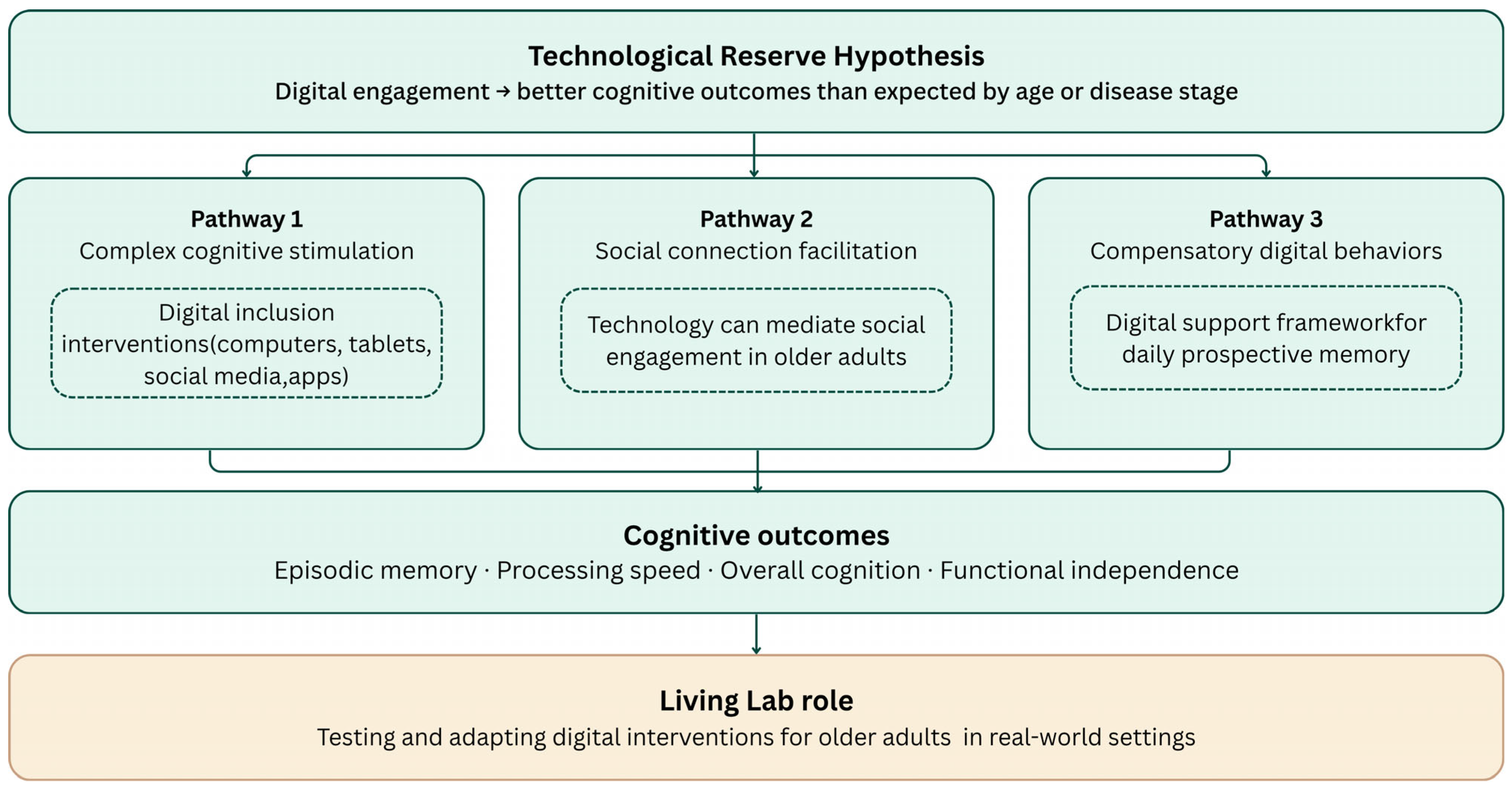
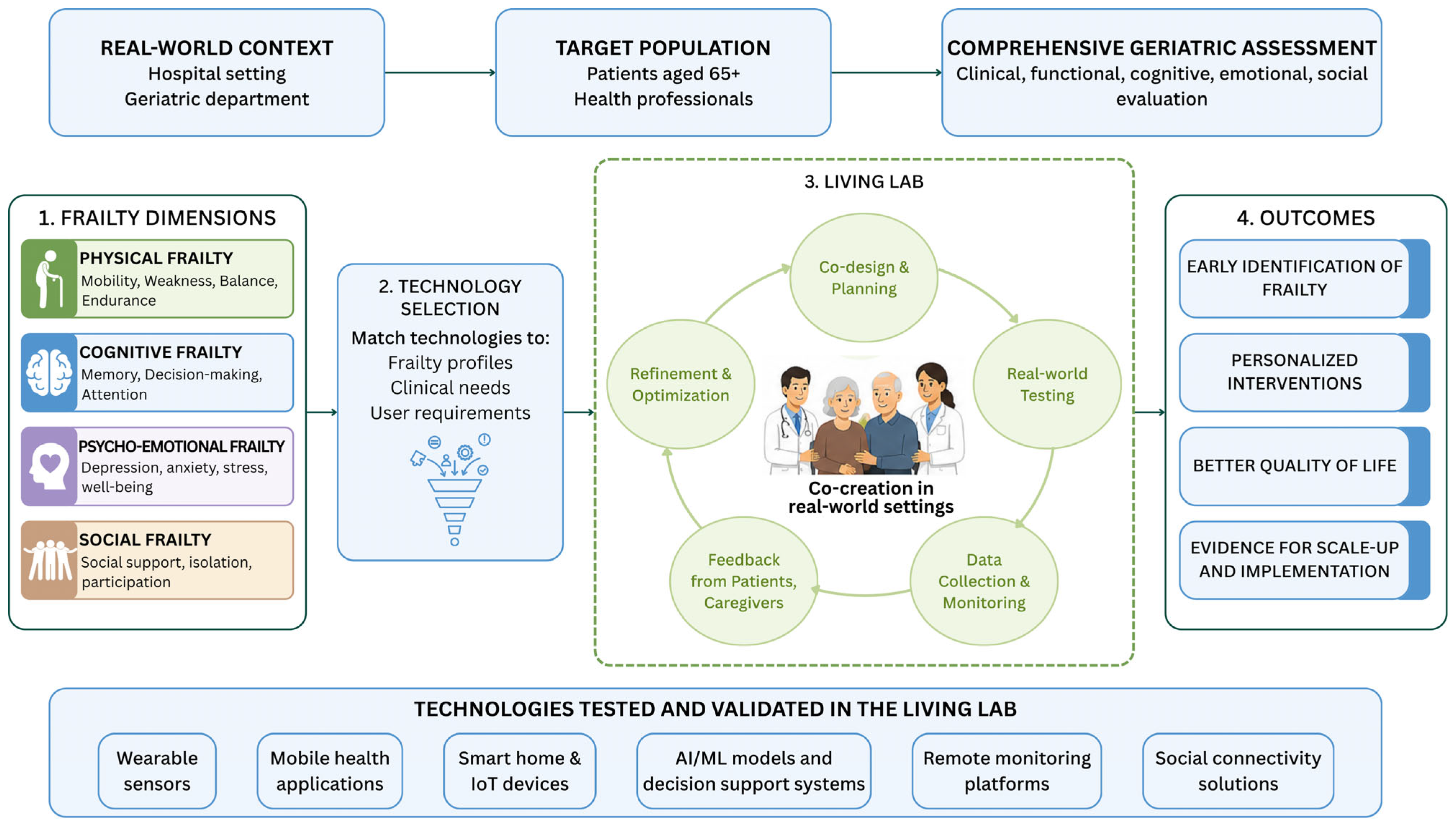

| Frailty Domain | Author (Year) | Study Type | No. Participants | Technology Used | Main Finding |
|---|---|---|---|---|---|
| Cognitive frailty | Benge & Scullin (2025) | Meta-analysis | 411,430 (across 57 meta-analysed studies); | Digital technologies including computers, internet, smartphones, and social media platforms [65,66]. | Greater use of everyday digital technologies was associated with reduced odds for cognitive decline, operationalized as lower cognitive test scores and reduced mild cognitive impairment or dementia diagnoses [65,66]. |
| Cognitive frailty | Jin et al. (2019) | Longitudinal observational study | 13,457 | Desktop computer with internet connection at home; mobile/cellphone [92]. | Findings from this study underscored the importance of digital devices as a platform for cognitively stimulating activities to delay cognitive decline [92]. |
| Cognitive frailty | Pressler et al. (2019) | Narrative review | Not applicable—design study | BrainHQ program, developed by PositScience, delivered by computer, home-based [93]. | Preliminary studies using BrainHQ demonstrated improvements in memory and working memory, and increased serum BDNF levels over 12 weeks in two small samples of patients diagnosed with heart failure. Viewing nature images on a laptop improved attention in both heart failure patients and healthy control participants [93]. |
| Cognitive frailty | Figueiredo et al. (2024) | Narrative review | Not applicable—design study | Assistive technologies, remote monitoring systems, smart home appliances, health monitoring apps, wearables, sensors, robots, digital diagnostics, digital therapeutics [91]. | 15 digital health Living Labs focused on dementia were identified and analysed; key challenges include limited scalability, lack of systematic evaluation, and poor healthcare system integration; guidelines were proposed emphasizing user-centric co-creation, interdisciplinary collaboration, regulatory compliance, transparent innovation, sustainability planning, and financial management to enhance Living Lab effectiveness in dementia care [91]. |
| Cognitive frailty | Knight-Davidson et al. (2020) | Scoping review | Not applicable—design study | ICT (mobile apps, smartphones, tablets), assistive living technologies telehealth/personal health systems, wearable alarms, sensor technology, VR/3D simulation, smart TV platforms [13]. | Inclusive, user-centred methods with high active user involvement are most effective for needs-finding and co-creation with older adults; a flexible repertoire of methods is recommended, as no single approach suits all contexts, particularly given heterogeneity among older adults (e.g., cognitive decline, trust barriers) [13]. |
| Physical frailty | Isaradech & Sirikul (2025) | Narrative review | Individual studies range from N = 23 to N = 718 | Combination of wearable inertial sensors, Android mobile applications, machine learning models, active gaming platforms for rehabilitation, home telemonitoring systems [94]. | Digital health tools improve early frailty detection through sensor-derived physical metrics, while exergaming and home-based programs significantly enhance physical and cognitive functions. Although technology acceptance remains a challenge for older adults, future success depends on developing user-friendly, integrated platforms that combine frailty screening with personalized preventive care [94]. |
| Physical frailty | Shin et al. (2021) | Integrative review | Not applicable—design study | mHealth, eHealth self-management platforms, (SMS) message banks, ICT robotics, Embodied Conversational Agents, web-based exercise programs, digital talking books, cloud servers and smart assistive mobility devices [41]. | Living labs demonstrated feasibility and effectiveness in geriatric community care; co-creation methodologies were successfully applied across 27 studies to develop health solutions for older adults, with most adhering to the five living lab principles [41]. |
| Social frailty | Kouroubali et al. (2022) | Methodological Study | Not applicable—design study | An AI-enabled integrated platform (Elder Care Platform) incorporating mobile and web applications, smartwatch and biometric sensors, electronic health records (EHR), machine learning-based frailty risk models [90]. | Digital solutions support integrated care, early frailty detection, and the prevention of disability and hospital admissions. Platforms must be holistic, addressing both physical condition and psychosocial factors like loneliness and isolation. User-centred, tailored digital interventions enhance self-management, education, and user empowerment. Collected data can be anonymized and used for research to create an evidence-based roadmap for frailty [90]. |
| Social frailty | Sato et al. (2022) | Retrospective cohort study | 26,357 | Kihon Checklist (KCL)—25-item self-administered questionnaire [89]. | The Kihon Checklist, particularly its IADL, locomotor, and cognitive function domains, significantly predicts transition to severe long-term care dependency among community-dwelling older adults, supporting its use as a practical screening tool for early identification of high-risk individuals in community health settings [89]. |
| Social frailty | Bessa et al. (2021) | Longitudinal prospective cohort study | 180 | Not specified in article [88]. | Social criteria used in the study act as both predictors and criteria of frailty. Lack of perceived social support, loneliness, and decreased social activities longitudinally predict frailty. Lack of social relations and living alone did not predict frailty; their inclusion requires further research [88]. |
| Social frailty | Sengers & Peine (2021) | Embedded multiple-case study | Not applicable—design study | Smart home devices, sensors, fall detectors, telecare systems, interactive ICT devices, robots, smart rollators, smart beds [12]. | Most innovations tested across 53 European age-friendly home experiments are primarily social or conceptual rather than technological in character; seven innovation pathways were identified, with social innovations (e.g., intergenerational co-housing, home sharing, community-based models) appearing more transformative than technology-focused approaches for enabling older adults to age in place independently [12]. |
| Dimension | Main Pattern in the Literature | Implication for a Future Romanian Adapted Model |
|---|---|---|
| Conceptual basis | Living Labs are defined by co-creation, user involvement, open innovation, and participatory research, and older adults may be involved across a continuum from observation and feedback to active design participation (Sengers & Peine, 2021) (Figueiredo et al., 2024) (Knight-Davidson et al., 2020) [12,13,91]. | Living Labs should be framed as a participatory process, not merely as a physical setting; the model must allow staged, iterative engagement rather than assuming one fixed form of participation. |
| Typology and governance | Living Lab configurations vary by setting, governance, stakeholder composition, intervention stage, and participation intensity (Knight-Davidson et al., 2020) (Sengers & Peine, 2021) [12,13]. The Maastricht Living Lab in Ageing and Long-Term Care is a long-term translational model built on interdisciplinary collaboration, linking pins, and embedded research-practice integration (Verbeek et al., 2020) [95]. | The Romanian model should be framed as a locally adapted governance architecture rather than a direct transfer of Maastricht; Maastricht is best used as a benchmark for institutional continuity, role clarity, and translational embedding. |
| Expected advantages | The strongest gerontological Living Labs combine co-design, real-life settings, and multi-stakeholder participation (Sengers & Peine, 2021) [12]. Across the literature, active and iterative participation is associated with greater relevance, acceptability, feasibility, and empowerment (Knight-Davidson et al., 2020) [13]. | The principal value of the model lies in improved fit between innovation and lived need; in gerontology, this is especially important because frailty, multimorbidity, and variable digital literacy make standardized top-down solutions less effective. |
| Limitations and risks | Reported limitations include recruitment bias, representativeness problems, sustainability challenges, power imbalance, resource intensity, evaluation difficulty, and transferability constraints (Knight-Davidson et al., 2020) [13]. Co-research with older adults is also methodologically demanding and labour-intensive (James & Buffel, 2022), (Sengers & Peine, 2021) [11,12]. | Credible implementation requires methodological and governance safeguards: transparent recruitment, balanced participation, explicit role definition, and predefined evaluation criteria that can support transfer beyond a single pilot site. |
| Operational priorities | Digital health-focused Living Labs require user engagement, interdisciplinary collaboration, infrastructure, compliance, impact measurement, dissemination, and financial sustainability ((Figueiredo et al., 2024), (Shin et al. 2021)) further show that the most effective configuration for older adults’ health is co-design embedded in real-life settings with multi-stakeholder participation [41,91]. | Scaling depends on system-level support, not on technology alone; the Romanian partnership should therefore function as an implementation system with governance, compliance, adoption support, and sustainability planning built in from the outset. |
Disclaimer/Publisher’s Note: The statements, opinions and data contained in all publications are solely those of the individual author(s) and contributor(s) and not of MDPI and/or the editor(s). MDPI and/or the editor(s) disclaim responsibility for any injury to people or property resulting from any ideas, methods, instructions or products referred to in the content. |
© 2026 by the authors. Licensee MDPI, Basel, Switzerland. This article is an open access article distributed under the terms and conditions of the Creative Commons Attribution (CC BY) license.
Share and Cite
Pîslaru, A.-I.; Ștefăniu, R.; , M.-C.P.; Istrate, M.; Albișteanu, S.-M.; Brumă, B.-C.; Turcu, A.-M.; Lungu, I.-D.; Ilie, A.-C.; Nistor, I. The Living Lab Concept in the Detection, Prevention and Monitoring of Geriatric Syndromes in Elderly Patients with Cardiovascular Disease—A Narrative Review. J. Clin. Med. 2026, 15, 4745. https://doi.org/10.3390/jcm15124745
Pîslaru A-I, Ștefăniu R, M-CP, Istrate M, Albișteanu S-M, Brumă B-C, Turcu A-M, Lungu I-D, Ilie A-C, Nistor I. The Living Lab Concept in the Detection, Prevention and Monitoring of Geriatric Syndromes in Elderly Patients with Cardiovascular Disease—A Narrative Review. Journal of Clinical Medicine. 2026; 15(12):4745. https://doi.org/10.3390/jcm15124745
Chicago/Turabian StylePîslaru, Anca-Iuliana, Ramona Ștefăniu, Mihaela-Cristina Panait (Baghiu), Mădălina Istrate, Sabinne-Marie Albișteanu, Bogdan-Cristian Brumă, Ana-Maria Turcu, Iulia-Daniela Lungu, Adina-Carmen Ilie, and Ionuț Nistor. 2026. "The Living Lab Concept in the Detection, Prevention and Monitoring of Geriatric Syndromes in Elderly Patients with Cardiovascular Disease—A Narrative Review" Journal of Clinical Medicine 15, no. 12: 4745. https://doi.org/10.3390/jcm15124745
APA StylePîslaru, A.-I., Ștefăniu, R., , M.-C. P., Istrate, M., Albișteanu, S.-M., Brumă, B.-C., Turcu, A.-M., Lungu, I.-D., Ilie, A.-C., & Nistor, I. (2026). The Living Lab Concept in the Detection, Prevention and Monitoring of Geriatric Syndromes in Elderly Patients with Cardiovascular Disease—A Narrative Review. Journal of Clinical Medicine, 15(12), 4745. https://doi.org/10.3390/jcm15124745

