Prognostic Value of Cerebrovascular Reactivity (PRx) Versus Intracranial Pressure (ICP) Monitoring in Traumatic Brain Injury: Systematic Review
 ,
,  ,
,  ,
,
Abstract
1. Introduction
2. Materials and Methods
2.1. Study Design and Registration
2.2. Search Strategy and Data Sources
2.3. Study Selection and Eligibility Criteria
2.4. Data Extraction
2.5. Quality Assessment
2.6. Data Synthesis
2.7. Certainty of Evidence
2.8. AI Statement
3. Results
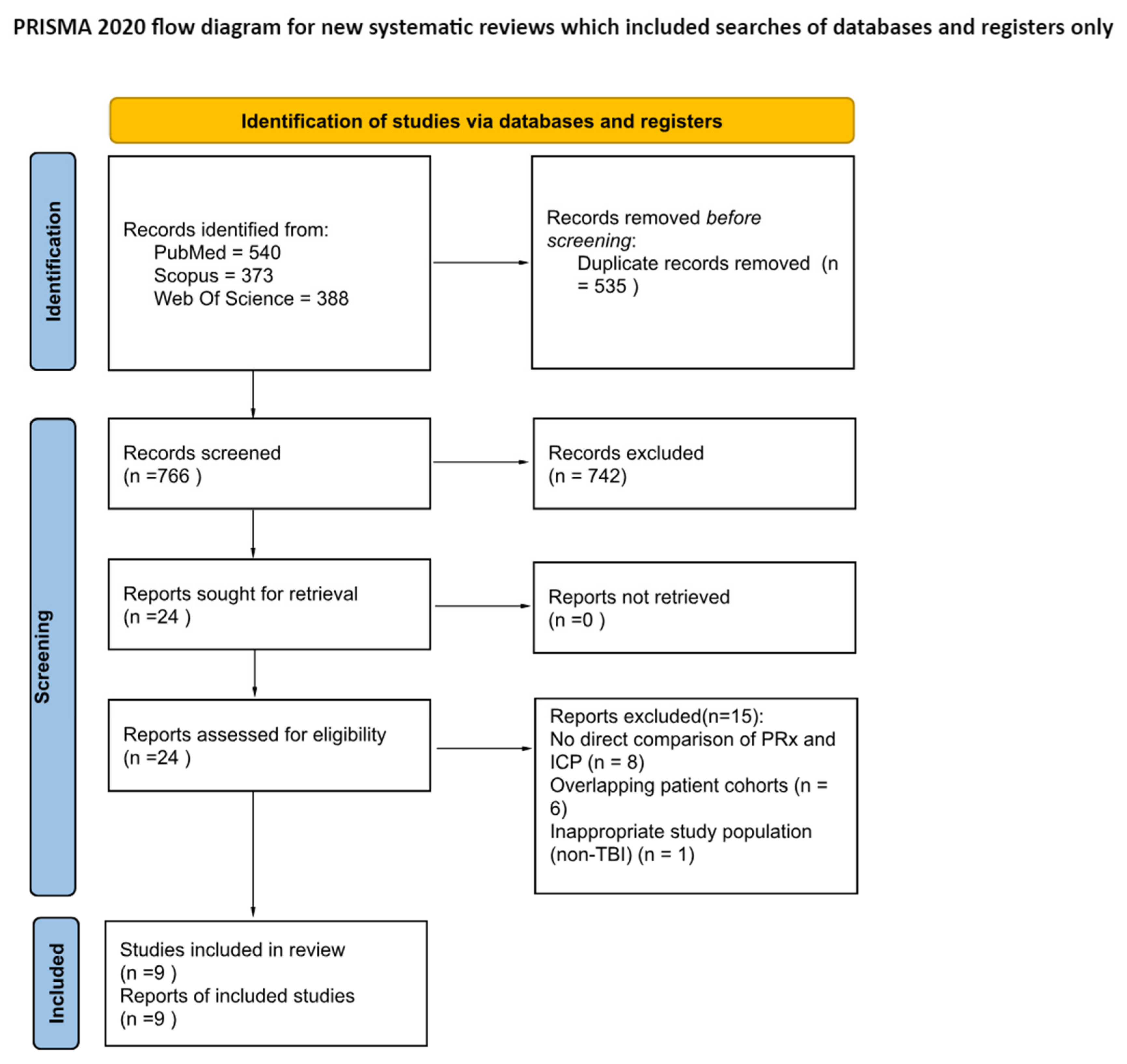
3.1. Study Selection
3.2. Characteristics of Included Studies
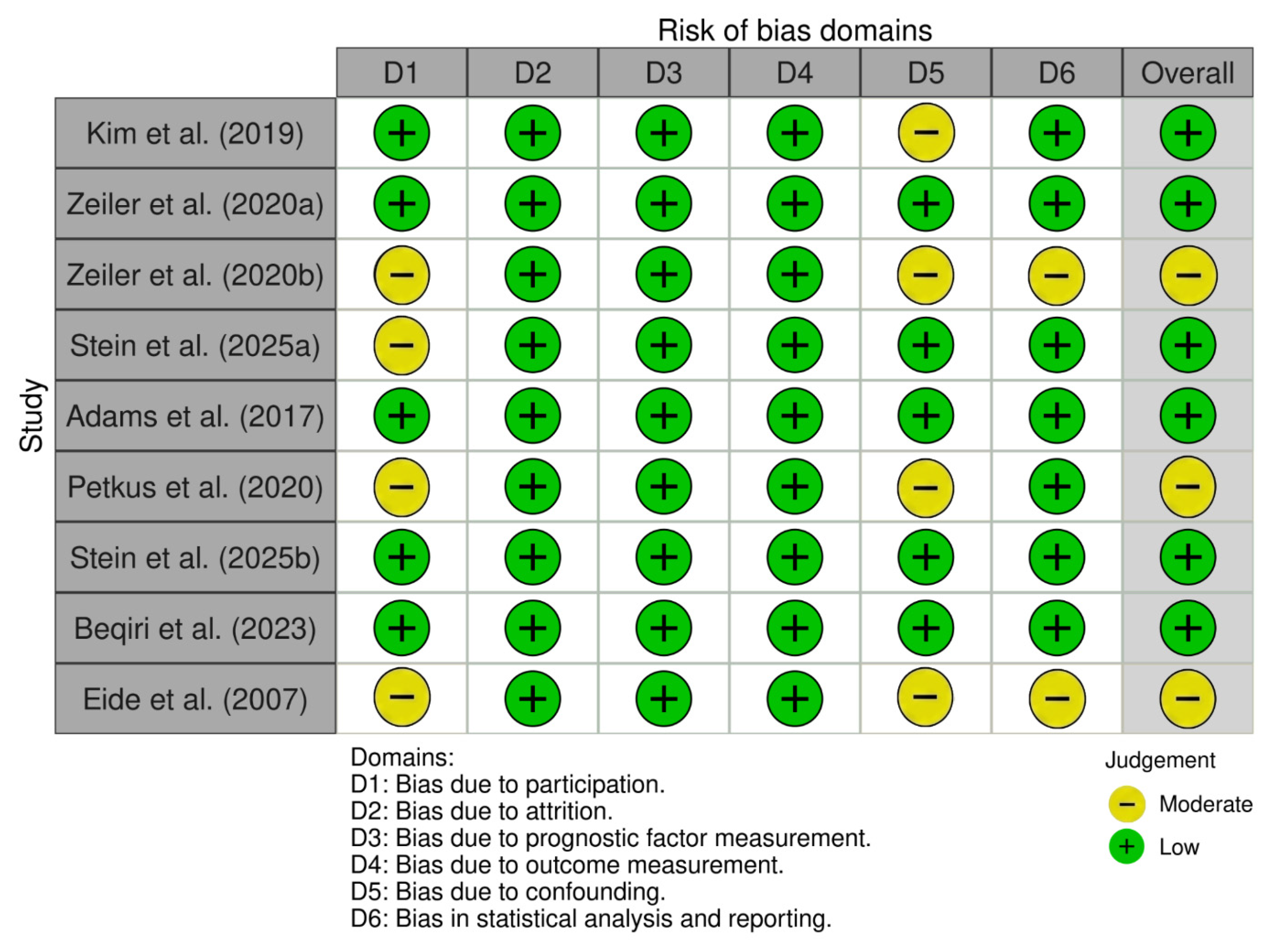
3.3. Summary of Risk of Bias Assessment
3.4. Summary of Evidence Certainty
3.5. Predictive Performance for Mortality
3.6. Predictive Performance for Functional Outcome
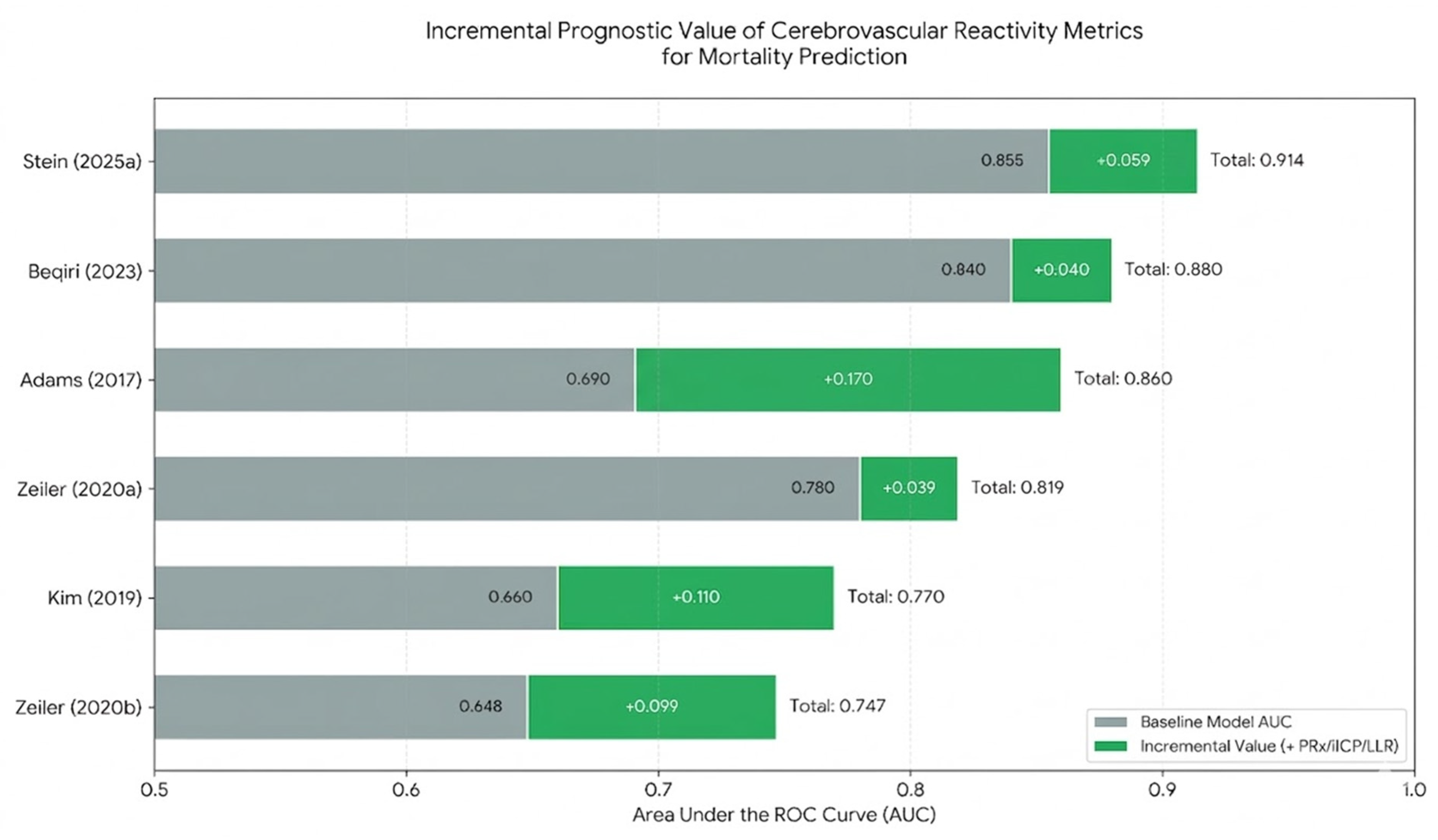
3.7. Incremental Prognostic Value of PRx-Derived Metrics Added to Predictive Models
3.8. Sensitivity Analysis
4. Discussion
4.1. Pathophysiological Rationale: The Shift from Static ICP to Dynamic Autoregulation
4.2. Additive Value of PRx-Derived Metrics in Prognostication
4.3. Clinical Implications: Moving Toward Personalized Neurocritical Care
4.4. Limitations
5. Conclusions
Supplementary Materials
Author Contributions
Funding
Institutional Review Board Statement
Informed Consent Statement
Data Availability Statement
Acknowledgments
Conflicts of Interest
Abbreviations
| ABP | Arterial Blood Pressure |
| CPPopt | Optimal Cerebral Perfusion Pressure |
| LLR | Lower Limit of Reactivity |
| iICP | Individualized ICP threshold |
| PRx | Pressure Reactivity Index |
| GOS | Glasgow Outcome Scale |
| CPP | Cerebral Perfusion Pressure |
| LCAI | Longest Continuous Duration of Autoregulatory Impairment |
| MAP | Mean Arterial Pressure |
| TBI | Traumatic Brain Injury |
| AUC | Area Under the Receiver Operating Characteristic Curve |
| GCS | Glasgow Coma Scale |
| ICP | Intracranial Pressure |
| IMPACT | International Mission for Prognosis and Analysis of Clinical Trials in TBI |
References
- Dewan, M.C.; Rattani, A.; Gupta, S.; Baticulon, R.E.; Hung, Y.-C.; Punchak, M.; Agrawal, A.; Adeleye, A.O.; Shrime, M.G.; Rubiano, A.M.; et al. Estimating the global incidence of traumatic brain injury. J. Neurosurg. 2018, 130, 1080–1097. [Google Scholar] [CrossRef]
- Steyerberg, E.W.; Mushkudiani, N.; Perel, P.; Butcher, I.; Lu, J.; McHugh, G.S.; Murray, G.D.; Marmarou, A.; Roberts, I.; Habbema, J.D.F.; et al. Predicting outcome after traumatic brain injury: Development and international validation of prognostic scores based on admission characteristics. PLoS Med. 2008, 5, e165. [Google Scholar] [CrossRef] [PubMed]
- Maas, A.I.R.; Menon, D.K.; Adelson, P.D.; Andelic, N.; Bell, M.J.; Belli, A.; Bragge, P.; Brazinova, A.; Büki, A.; Chesnut, R.M.; et al. Traumatic brain injury: Integrated approaches to improve prevention, clinical care, and research. Lancet Neurol. 2017, 16, 987–1048. [Google Scholar] [CrossRef]
- Roozenbeek, B.; Maas, A.I.; Menon, D.K. Changing patterns in the epidemiology of traumatic brain injury. Nat. Rev. Neurol. 2013, 9, 231–236. [Google Scholar] [CrossRef] [PubMed]
- Padayachy, L.C.; Figaji, A.A.; Bullock, M.R. Intracranial pressure monitoring for traumatic brain injury in the modern era. Childs Nerv. Syst. 2010, 26, 441–452. [Google Scholar] [CrossRef]
- Lundberg, N. Continuous Recording and Control of Ventricular Fluid Pressure in Neurosurgical Practice. Acta Psychiatr. Neurol. Scand. 1960, 36, 1–193. [Google Scholar]
- Carney, N.; Totten, A.M.; O’Reilly, C.; Ullman, J.S.; Hawryluk, G.W.; Bell, M.J.; Bratton, S.L.; Chesnut, R.; Harris, O.A.; Kissoon, N.; et al. Guidelines for the Management of Severe Traumatic Brain Injury, Fourth Edition. Neurosurgery 2017, 80, 6–15. [Google Scholar] [CrossRef]
- Czosnyka, M.; Smielewski, P.; Kirkpatrick, P.; Menon, D.K.; Pickard, J.D. Monitoring of cerebral autoregulation in head-injured patients. Stroke 1996, 27, 1829–1834. [Google Scholar] [CrossRef]
- Monten, K.; Hon, K.; Scoville, E.; Ohnuma, T.; Vavilala, M.S.; Miller, J.B.; Krishnamoorthy, V. Early Autonomic Dysfunction Following Severe TBI and Impact on Cerebral Hemodynamics: A Narrative Review. J. Clin. Med. 2026, 15, 847. [Google Scholar] [CrossRef]
- Gritti, P.; Bonfanti, M.; Zangari, R.; Bonanomi, E.; Farina, A.; Pezzetti, G.; Pelliccioli, I.; Longhi, L.; Di Matteo, M.; Viscone, A.; et al. Cerebral autoregulation in traumatic brain injury: Ultra-low-frequency pressure reactivity index and intracranial pressure across age groups. Crit. Care 2024, 28, 33. [Google Scholar] [CrossRef] [PubMed]
- Czosnyka, M.; Smielewski, P.; Kirkpatrick, P.; Laing, R.J.; Menon, D.; Pickard, J.D. Continuous assessment of the cerebral vasomotor reactivity in head injury. Neurosurgery 1997, 41, 11–17. [Google Scholar] [CrossRef]
- Czosnyka, M.; Miller, C. Monitoring of Cerebral Autoregulation. Neurocrit. Care 2014, 21, 95–102. [Google Scholar] [CrossRef]
- Steiner, L.A.; Czosnyka, M.; Piechnik, S.K.; Smielewski, P.; Chatfield, D.; Menon, D.K.; Pickard, J.D. Continuous monitoring of cerebrovascular pressure reactivity allows determination of optimal cerebral perfusion pressure in patients with traumatic brain injury. Crit. Care Med. 2002, 30, 733–738. [Google Scholar] [CrossRef]
- Froese, L.; Gomez, A.; Sainbhi, A.S.; Vakitbilir, N.; Marquez, I.; Amenta, F.; Park, K.; Stein, K.Y.; Thelin, E.P.; Zeiler, F.A. Cerebrovascular Reactivity Is Not Associated With Therapeutic Intensity in Adult Traumatic Brain Injury: A Validation Study. Neurotrauma Rep. 2023, 4, 307–317. [Google Scholar] [CrossRef]
- Vik, A.; Nag, T.; Fredriksli, O.A.; Skandsen, T.; Moen, K.G.; Schirmer-Mikalsen, K.; Manley, G.T. Relationship of “dose” of intracranial hypertension to outcome in severe traumatic brain injury. J. Neurosurg. 2008, 109, 678–684. [Google Scholar] [CrossRef] [PubMed]
- Zeiler, F.A.; Donnelly, J.; Calviello, L.; Smielewski, P.; Menon, D.K.; Czosnyka, M. Pressure autoregulation measurement techniques in adult traumatic brain injury, part II: A scoping review of continuous methods. J. Neurotrauma 2017, 34, 3224–3237. [Google Scholar] [CrossRef]
- Needham, E.; McFadyen, C.; Newcombe, V.; Synnot, A.J.; Czosnyka, M.; Menon, D. Cerebral perfusion pressure targets individualized to pressure-reactivity index in moderate to severe traumatic brain injury: A systematic review. J. Neurotrauma 2017, 34, 963–970. [Google Scholar] [CrossRef]
- Rivera-Lara, L.; Zorrilla-Vaca, A.; Geocadin, R.; Ziai, W.; Healy, R.; Thompson, R.; Smielewski, P.; Czosnyka, M.; Hogue, C.W. Predictors of Outcome With Cerebral Autoregulation Monitoring: A Systematic Review and Meta-Analysis. Crit. Care Med. 2017, 45, 695–704. [Google Scholar] [CrossRef]
- Page, M.J.; McKenzie, J.E.; Bossuyt, P.M.; Boutron, I.; Hoffmann, T.C.; Mulrow, C.D.; Shamseer, L.; Tetzlaff, J.M.; Akl, E.A.; Brennan, S.E.; et al. The PRISMA 2020 statement: An updated guideline for reporting systematic reviews. BMJ 2021, 372, n71. [Google Scholar] [CrossRef] [PubMed]
- Hayden, J.A.; van der Windt, D.A.; Cartwright, J.L.; Cote, P.; Bombardier, C. Assessing bias in studies of prognostic factors. Ann. Intern. Med. 2013, 158, 280–286. [Google Scholar] [CrossRef] [PubMed]
- Van Rossum, G.; Drake, F.L. Python 3 Reference Manual; CreateSpace: Scotts Valley, CA, USA, 2009. [Google Scholar]
- Guyatt, G.H.; Oxman, A.D.; Vist, G.E.; Kunz, R.; Falck-Ytter, Y.; Alonso-Coello, P.; Schünemann, H.J. GRADE: An emerging consensus on rating quality of evidence and strength of recommendations. BMJ 2008, 336, 924–926. [Google Scholar] [CrossRef]
- Kim, H.; Lee, H.J.; Kim, Y.T.; Son, Y.; Smielewski, P.; Czosnyka, M.; Kim, D.-J. Novel index for predicting mortality during the first 24 hours after traumatic brain injury. J. Neurosurg. 2019, 131, 1887–1895. [Google Scholar] [CrossRef]
- Zeiler, F.A.; Ercole, A.; Beqiri, E.; Cabeleira, M.; Thelin, E.P.; Stocchetti, N.; Steyerberg, E.W.; Maas, A.I.; Menon, D.K.; Czosnyka, M.; et al. Association between cerebrovascular reactivity monitoring and mortality is preserved when adjusting for baseline admission characteristics in adult traumatic brain injury: A CENTER-TBI study. J. Neurotrauma 2020, 37, 1233–1241. [Google Scholar] [CrossRef] [PubMed]
- Zeiler, F.A.; Beqiri, E.; Cabeleira, M.; Hutchinson, P.J.; Stocchetti, N.; Menon, D.; Czosnyka, M.; Smieleweski, P.; Ercole, A. Brain tissue oxygen and cerebrovascular reactivity in traumatic brain injury: A CENTER-TBI exploratory analysis of insult burden. J. Neurotrauma 2020, 37, 1854–1863. [Google Scholar] [CrossRef] [PubMed]
- Stein, K.Y.; Froese, L.; Gomez, A.; Sainbhi, A.S.; Vakitbilir, N.; Islam, A.; Bergmann, T.; Zeiler, F.A. Leveraging function intersectionality and multi-modal cerebrovascular reactivity measures for the derivation of individualized intracranial pressure thresholds in acute traumatic neural injury. Bioengineering 2025, 12, 485. [Google Scholar] [CrossRef]
- Adams, H.; Donnelly, J.; Czosnyka, M.; Kolias, A.G.; Helmy, A.; Menon, D.K.; Smielewski, P.; Hutchinson, P.J. Temporal profile of intracranial pressure and cerebrovascular reactivity in severe traumatic brain injury and association with fatal outcome: An observational study. PLoS Med. 2017, 14, e1002353. [Google Scholar] [CrossRef]
- Petkus, V.; Preiksaitis, A.; Chaleckas, E.; Chomskis, R.; Zubaviciute, E.; Vosylius, S.; Rocka, S.; Rastenyte, D.; Aries, M.J.; Ragauskas, A.; et al. Optimal cerebral perfusion pressure: Targeted treatment for severe traumatic brain injury. J. Neurotrauma 2020, 37, 389–396. [Google Scholar] [CrossRef]
- Stein, K.Y.; Griesdale, D.; Sekhon, M.; Bernard, F.; Gallagher, C.; Thelin, E.P.; Raj, R.; Aries, M.; Froese, L.; Kramer, A.H.; et al. Optimal cerebrovascular reactivity thresholds for the determination of individualized intracranial pressure thresholds in traumatic brain injury: A CAHR-TBI cohort study. Crit. Care 2025, 29, 420. [Google Scholar] [CrossRef]
- Beqiri, E.; Zeiler, F.A.; Ercole, A.; Placek, M.M.; Tas, J.; Donnelly, J.; Aries, M.J.H.; Hutchinson, P.J.; Menon, D.; Stocchetti, N.; et al. The lower limit of reactivity as a potential individualised cerebral perfusion pressure target in traumatic brain injury: A CENTER-TBI high-resolution sub-study analysis. Crit. Care 2023, 27, 194. [Google Scholar] [CrossRef] [PubMed]
- Eide, P.K.; Czosnyka, M.; Sorteberg, W.; Pickard, J.D.; Smielewski, P. Association between intracranial, arterial pulse pressure amplitudes and cerebral autoregulation in head injury patients. Neurol. Res. 2007, 29, 578–582. [Google Scholar] [CrossRef]
- Zeiler, F.A.; Aries, M.; Czosnyka, M.; Smielewski, P. Cerebral autoregulation monitoring in traumatic brain injury: An overview of recent advances in personalized medicine. J. Neurotrauma 2022, 39, 1477–1494. [Google Scholar] [CrossRef] [PubMed]
- Donnelly, J.; Aries, M.J.; Czosnyka, M. Further understanding of cerebral autoregulation at the bedside: Possible implications for future therapy. Expert Rev. Neurother. 2015, 15, 169–185. [Google Scholar] [CrossRef]
- Donnelly, J.; Czosnyka, M.; Adams, H.; Robba, C.; Steiner, L.A.; Cardim, D.M.; Cabella, B.; Liu, X.M.; Ercole, A.P.; Hutchinson, P.J.F.S.; et al. Individualizing thresholds of cerebral perfusion pressure using estimated limits of autoregulation. Crit. Care Med. 2017, 45, 1464–1471. [Google Scholar] [CrossRef]
- Czosnyka, M.; Brady, K.; Reinhard, M.; Smielewski, P.; Steiner, L.A. Monitoring of cerebrovascular autoregulation: Facts, myths, and missing links. Neurocrit. Care 2009, 10, 373–386. [Google Scholar] [CrossRef] [PubMed]
- Sorrentino, E.; Diedler, J.; Kasprowicz, M.; Budohoski, K.P.; Haubrich, C.; Smielewski, P.; Outtrim, J.G.; Manktelow, A.; Hutchinson, P.J.; Pickard, J.D.; et al. Critical thresholds for cerebrovascular reactivity after traumatic brain injury. Neurocrit. Care 2012, 16, 258–266. [Google Scholar] [CrossRef]
- Aries, M.J.; Czosnyka, M.; Budohoski, K.P.; Steiner, L.A.; Lavinio, A.; Kolias, A.G.M.; Hutchinson, P.J.P.; Brady, K.M.; Menon, D.K.; Pickard, J.D.F.; et al. Continuous determination of optimal cerebral perfusion pressure in traumatic brain injury. Crit. Care Med. 2012, 40, 2456–2463. [Google Scholar] [CrossRef]
- Maas, A.I.; Hukkelhoven, C.W.; Marshall, L.F.; Steyerberg, E.W. Prediction of outcome in traumatic brain injury with computed tomographic characteristics: A comparison between the CT classification and combinations of CT predictors. Neurosurgery 2005, 57, 1173–1182. [Google Scholar] [CrossRef]
- Czosnyka, M.; Pickard, J.D. Monitoring and interpretation of intracranial pressure. J. Neurol. Neurosurg. Psychiatry 2004, 75, 813–821. [Google Scholar] [CrossRef]
- Hlatky, R.; Valadka, A.B.; Robertson, C.S. Intracranial hypertension and cerebral ischemia after severe traumatic brain injury. Neurosurg. Focus 2003, 14, e2. [Google Scholar] [CrossRef]
- Ponsford, J.; Draper, K.; Schönberger, M. Functional outcome 10 years after traumatic brain injury: Its relationship with demographic, injury severity, and cognitive and emotional status. J. Int. Neuropsychol. Soc. 2008, 14, 233–242. [Google Scholar] [CrossRef] [PubMed]
- Dikmen, S.S.; Machamer, J.E.; Powell, J.M.; Temkin, N.R. Outcome 3 to 5 years after moderate to severe traumatic brain injury. Arch. Phys. Med. Rehabil. 2003, 84, 1449–1457. [Google Scholar] [CrossRef]
- Hawryluk, G.W.J.; Aguilera, S.; Buki, A.; Bulger, E.; Citerio, G.; Cooper, D.J.; Arrastia, R.D.; Diringer, M.; Figaji, A.; Gao, G.; et al. A management algorithm for patients with intracranial pressure monitoring: The Seattle International Severe Traumatic Brain Injury Consensus Conference (SIBICC). Intensive Care Med. 2019, 45, 1783–1794. [Google Scholar] [CrossRef] [PubMed]
- Güiza, F.; Depreitere, B.; Piper, I.; Citerio, G.; Chambers, I.; Jones, P.A.; Lo, T.-Y.M.; Enblad, P.; Nillson, P.; Feyen, B.; et al. Visualizing the pressure and time burden of intracranial hypertension in adult and paediatric traumatic brain injury. Intensive Care Med. 2015, 41, 1067–1076. [Google Scholar] [CrossRef]
- Le Roux, P.; Menon, D.K.; Citerio, G.; Vespa, P.; Bader, M.K.; Brophy, G.M.; Diringer, M.N.; Stocchetti, N.; Videtta, W.; Armonda, R.; et al. Consensus summary statement of the International Multidisciplinary Consensus Conference on Multimodality Monitoring in Neurocritical Care. Intensive Care Med. 2014, 40, 1189–1209. [Google Scholar] [CrossRef] [PubMed]
- Meyfroidt, G.; Bouzat, P.; Casaer, M.P.; Chesnut, R.; Hamada, S.R.; Helbok, R.; Hutchinson, P.; Maas, A.I.R.; Manley, G.; Menon, D.K.; et al. Management of moderate to severe traumatic brain injury: An update for the intensivist. Intensive Care Med. 2022, 48, 649–666. [Google Scholar] [CrossRef] [PubMed]



| Author (Year) | Study Design | Data Source and Sample Size (n) | Median Age and Admission GCS | Main Monitoring Metrics | Key Statistical Findings (PRx vs. ICP) | QUIPS Overall |
|---|---|---|---|---|---|---|
| Kim et al. (2019) [23] | Retrospective | Cambridge, UK, (n = 295) | Age: 36 GCS: 6 | ICP, PRx | Mortality: Mean ICP and mean PRx were not statistically significant predictors (p > 0.05). However, cumulative duration of impaired autoregulation (PRx > 0.20) was significantly associated with mortality (AUC 0.64, p < 0.001). Incremental Value: In patients with intracranial hypertension (>22 mmHg), mean ICP yielded an AUC of 0.66. The duration of PRx > 0.20 showed higher discrimination (AUC 0.77), representing an AUC increase of +0.11 compared to ICP alone. | Low |
| Zeiler et al. (2020a) [24] | Prospective | CENTER-TBI, Europe, (n = 193) | Age: 51, GCS: 6 | ICP, PRx | Incremental Value: Adding %Time PRx > 0.25 to the IMPACT Core + Mean ICP model increased AUC from 0.780 to 0.819 (p < 0.0001). The model explained an additional 10.4% of outcome variance (ΔPseudo-R2). Functional Outcome (GOSE): Adding PRx-derived metrics to baseline models did not significantly improve discrimination (p > 0.05). | Low |
| Zeiler et al. (2020b) [25] | Prospective | CENTER-TBI, Europe, (n = 43) | Age: 46, GCS: NR | ICP, PRx | Mortality: PRx > 0.25 was a stronger predictor of death (AUC 0.747, p = 0.002) compared to ICP > 20 mmHg (AUC 0.648, p = 0.006). Functional Outcome (GOSE): PRx > 0.25 was the only significant univariate physiological predictor (AUC 0.679, p = 0.034), whereas ICP > 20 mmHg was not statistically significant (p > 0.05). | Moderate |
| Stein et al. (2025a) [26] | Retrospective | Winnipeg, Canada, (n = 124) | Age: 42, GCS: 6.5 | ICP, iICP | Mortality: PRx-based (iICP) predicted mortality better (AUC 0.660, p = 0.029) than standard ICP > 20 mmHg (AUC 0.614, p = 0.021). Incremental Value: Adding PRx-derived (iICP) into the IMPACT Core model increased AUC from 0.793 to 0.914 and provided greater additional variance (ΔR2 = 0.263) compared to standard ICP (AUC 0.855, ΔR2 = 0.156). | Low |
| Adams et al. (2017) [27] | Retrospective | Cambridge, UK, (n = 601) | Age: 39, GCS: NR | ICP, PRx | Mortality: The PRx-based model predicted fatal outcome best in the early phase (0–48 h: AUC 0.86) compared to the ICP-based model (AUC 0.80). The predictive power of the PRx model significantly decreased over time (AUC dropped to 0.74 at 240 h, p < 0.05). Incremental Value: Adding PRx to the static clinical model (baseline AUC approx. 0.69) significantly improved prediction accuracy in the first 48 h (AUC increased to 0.86). In the model, PRx remained an independent predictor (OR 11.43, p = 0.001) alongside ICP. | Low |
| Petkus et al. (2020) [28] | Retrospective | Vilnius, Lithuania (n = 81) | Age: 40, GCS: 5 | ICP, LCAI | Mortality: Younger patients (<45 y) tolerated higher failure (LCAI > 100 min, p = 0.043; mean PRx > 0.36). Elderly patients (>45 y) had significantly lower tolerance: mortality occurred at LCAI > 61 min (p = 0.0196) and mean PRx > 0.26. Incremental Value: LCAI was a strong independent predictor of outcome (OR 29.62; 95% CI 2.09–419.07, p = 0.012) in a multi-factorial model achieving 88.6% accuracy. Standard ICP/CPP parameters did not improve this model’s accuracy further. | Moderate |
| Stein et al. (2025b) [29] | Retrospective | CAHR-TBI, Canada (n = 365) | Age: 38, GCS: 6 | ICP, PRx, iICP | Mortality & Functional Outcome: Optimization analysis identified PRx > +0.05 as the superior threshold for deriving individualized ICP targets (iICP). This specific iICP yielded the highest discrimination for both mortality (χ2 = 5.48) and favorable outcome (χ2 = 7.79). Incremental Value: The PRx-derived iICP target offered superior physiological sensitivity, demonstrating a threefold stronger correlation with autoregulatory failure burden (r = 0.49) compared to the standard ICP > 20 mmHg limit (r = 0.14). | Low |
| Beqiri et al. (2023) [30] | Retrospective | CENTER-TBI, Europe, (n = 171) | Age: 53, GCS: NR | ICP, PRx, LLR | Mortality: Non-survivors spent significantly more time with CPP < LLR (Lower Limit of Reactivity) (p < 0.001, AUC 0.73). High ICP (>20 mmHg) was most lethal when coincident with CPP < LLR. Incremental Value: Adding PRx-based LLR to the IMPACT Core model significantly improved predictive performance (AUC 0.84 to 0.88; Adj. R2 0.49 to 0.57; p < 0.001), outperforming models based on ICP alone. | Low |
| Eide et al. (2007) [31] | Retrospective | Cambridge, UK, (n = 76) | Age: 34, GCS: 7 | ICP, PRx | Functional Outcome: PRx levels successfully discriminated between patient groups, being significantly higher in unfavorable outcome (0.20) vs. favorable (0.03, p < 0.01). Mean ICP also showed significant discrimination (22.8 vs. 16.2 mmHg, p < 0.01). Incremental Value: Multiple regression analysis confirmed that PRx acts as a significant independent predictor of outcome (p = 0.03) alongside Mean ICP (p = 0.04), indicating additive prognostic utility beyond pressure monitoring alone | Moderate |
Disclaimer/Publisher’s Note: The statements, opinions and data contained in all publications are solely those of the individual author(s) and contributor(s) and not of MDPI and/or the editor(s). MDPI and/or the editor(s) disclaim responsibility for any injury to people or property resulting from any ideas, methods, instructions or products referred to in the content. |
© 2026 by the authors. Licensee MDPI, Basel, Switzerland. This article is an open access article distributed under the terms and conditions of the Creative Commons Attribution (CC BY) license.
Share and Cite
Rodziewicz, B.; Kacperski, M.; Fercho, J.M.; Chasles, O.G.; Szypenbejl, J.; Siemiński, M. Prognostic Value of Cerebrovascular Reactivity (PRx) Versus Intracranial Pressure (ICP) Monitoring in Traumatic Brain Injury: Systematic Review. J. Clin. Med. 2026, 15, 4611. https://doi.org/10.3390/jcm15124611
Rodziewicz B, Kacperski M, Fercho JM, Chasles OG, Szypenbejl J, Siemiński M. Prognostic Value of Cerebrovascular Reactivity (PRx) Versus Intracranial Pressure (ICP) Monitoring in Traumatic Brain Injury: Systematic Review. Journal of Clinical Medicine. 2026; 15(12):4611. https://doi.org/10.3390/jcm15124611
Chicago/Turabian StyleRodziewicz, Bartosz, Mikołaj Kacperski, Justyna Małgorzata Fercho, Oskar G. Chasles, Jacek Szypenbejl, and Mariusz Siemiński. 2026. "Prognostic Value of Cerebrovascular Reactivity (PRx) Versus Intracranial Pressure (ICP) Monitoring in Traumatic Brain Injury: Systematic Review" Journal of Clinical Medicine 15, no. 12: 4611. https://doi.org/10.3390/jcm15124611
APA StyleRodziewicz, B., Kacperski, M., Fercho, J. M., Chasles, O. G., Szypenbejl, J., & Siemiński, M. (2026). Prognostic Value of Cerebrovascular Reactivity (PRx) Versus Intracranial Pressure (ICP) Monitoring in Traumatic Brain Injury: Systematic Review. Journal of Clinical Medicine, 15(12), 4611. https://doi.org/10.3390/jcm15124611