Efficacy of the Tibial Transverse Bone Transport Technique in the Management of Thromboangiitis Obliterans: A Systematic Review


Abstract
1. Introduction
2. Materials and Methods
2.1. Search Strategy
2.2. Study Selection
2.3. Data Extraction
2.4. Quality Assessment and Statistical Analysis
2.5. Statistical Analysis
3. Results
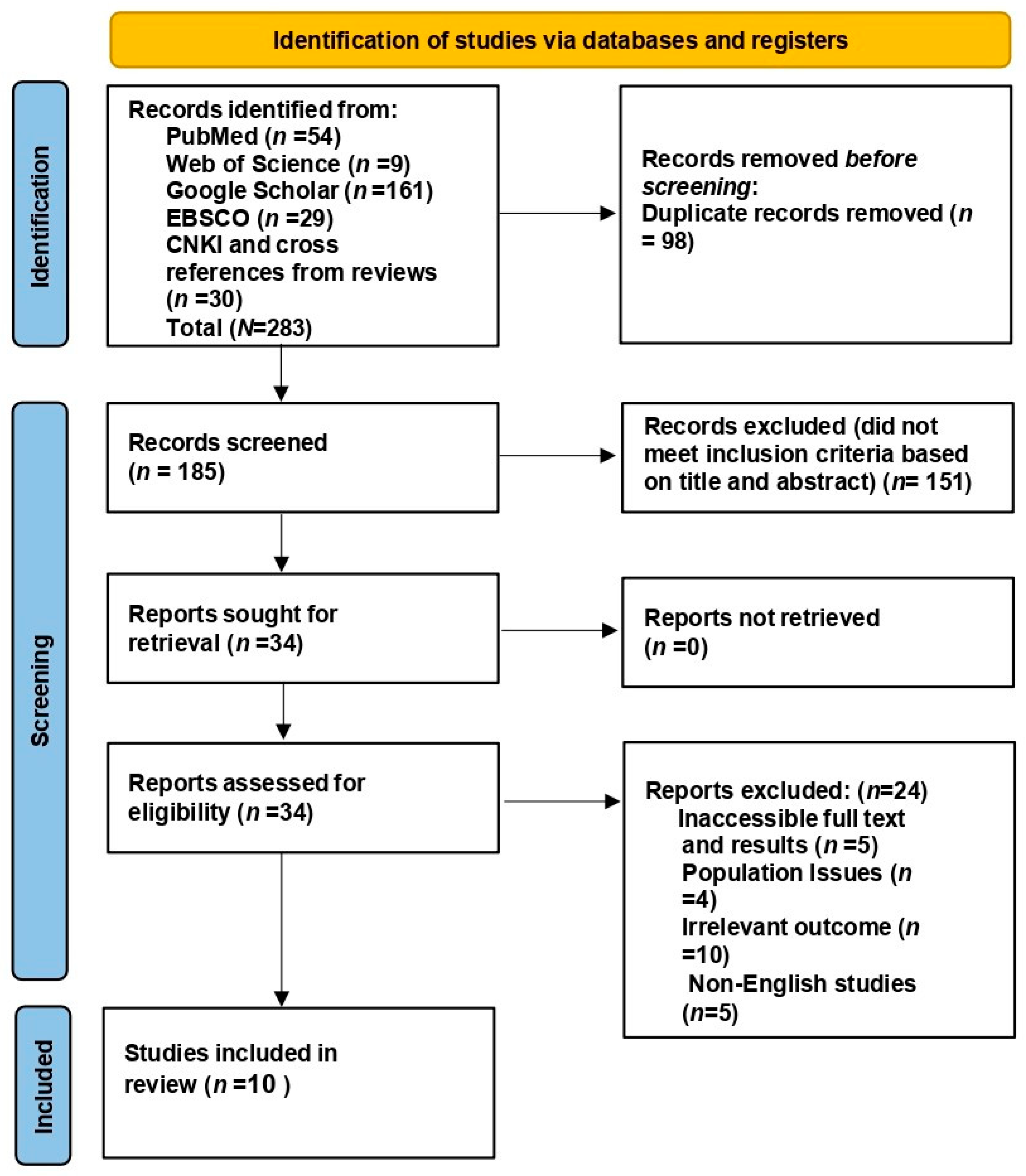
3.1. Study Selection
3.2. Study Characteristics
3.3. Surgical Technique and Procedural Characteristics
3.4. Clinical Outcomes
3.4.1. Pain Relief
3.4.2. Claudication Distance and Functional Recovery
3.4.3. Hemodynamic and Angiographic Outcomes
3.4.4. Ulcer Healing and Tissue Recovery
3.5. Overall Clinical Success
3.6. Limb Salvage and Amputation
3.7. Complications
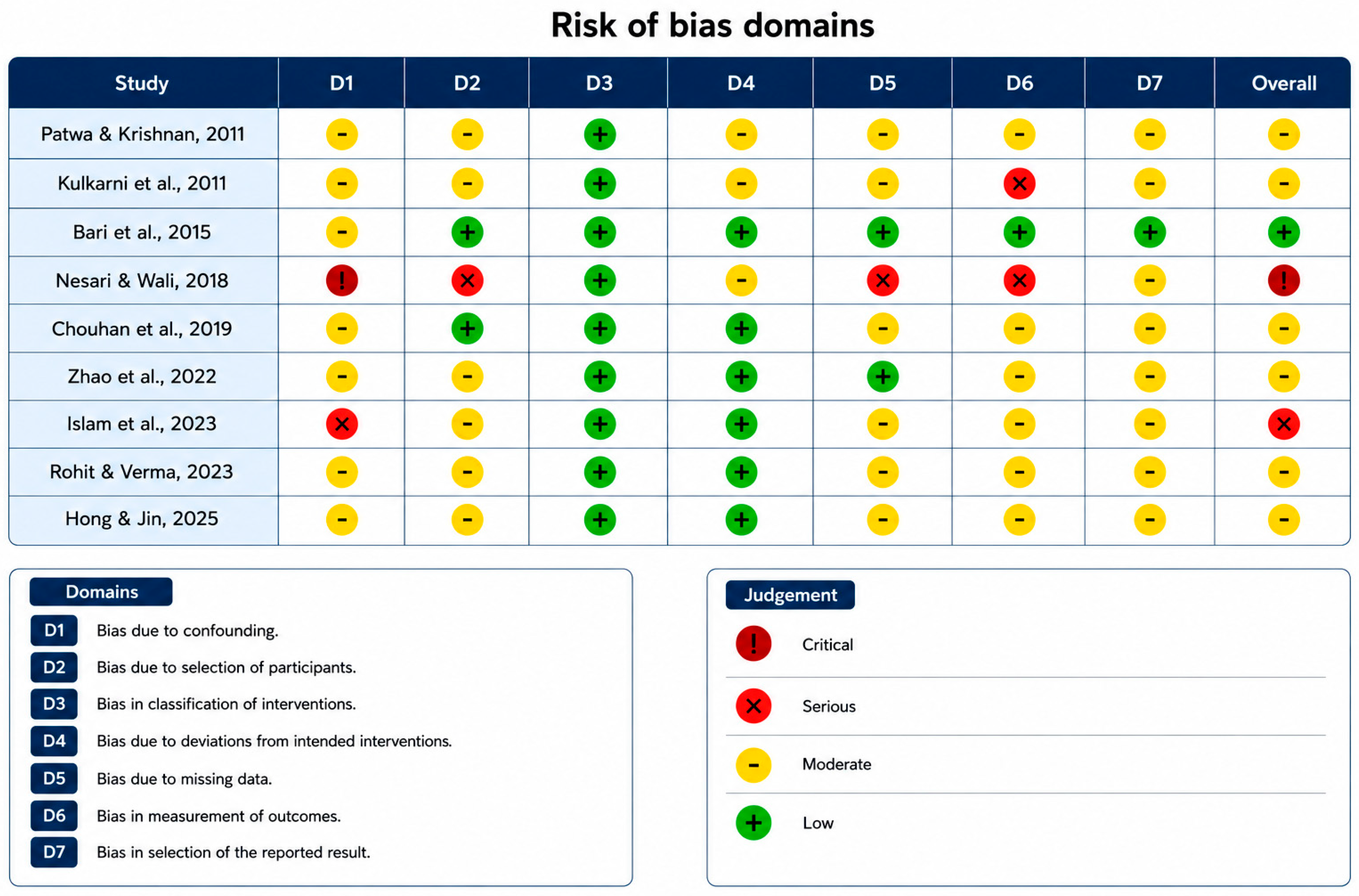
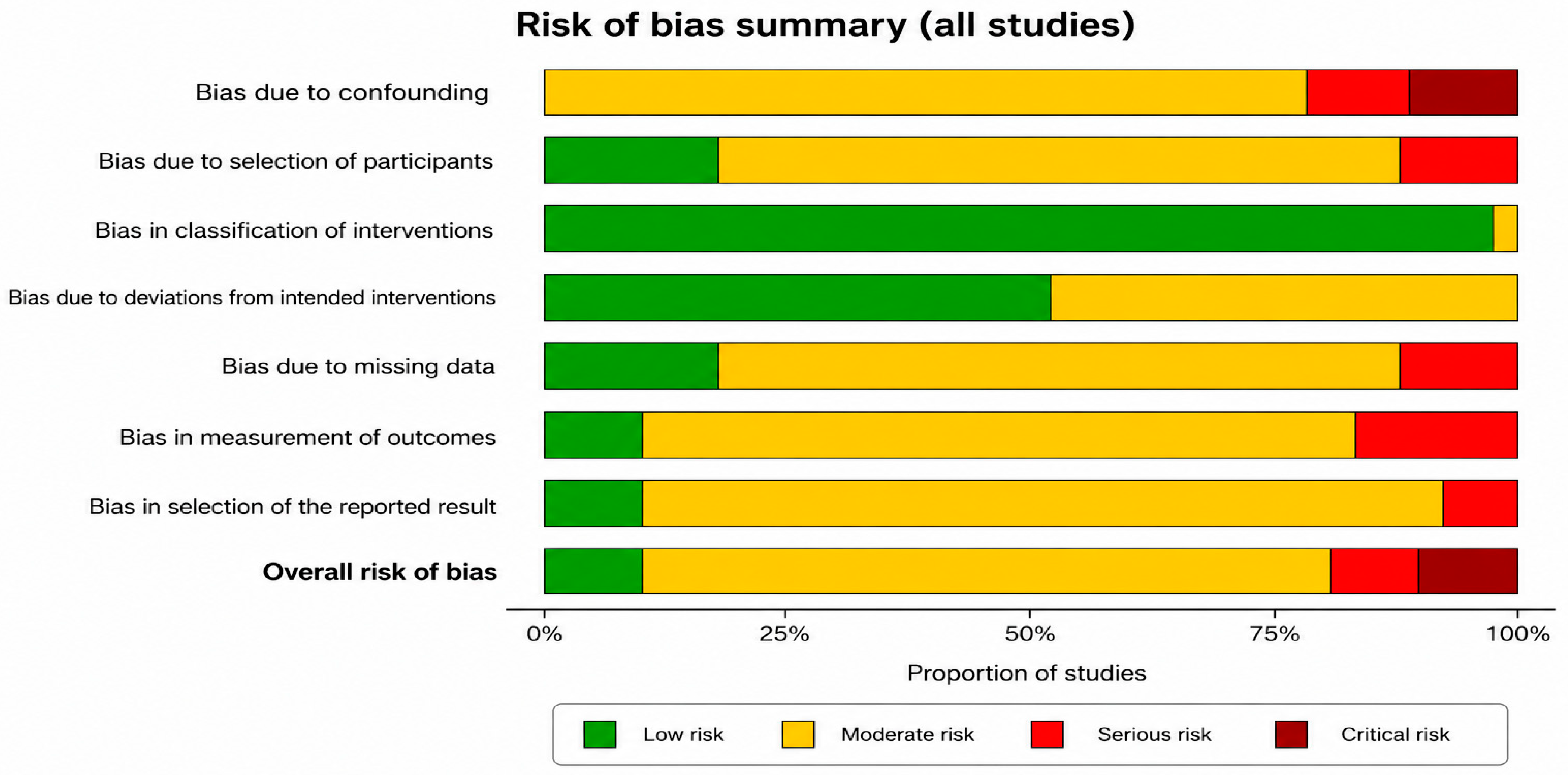
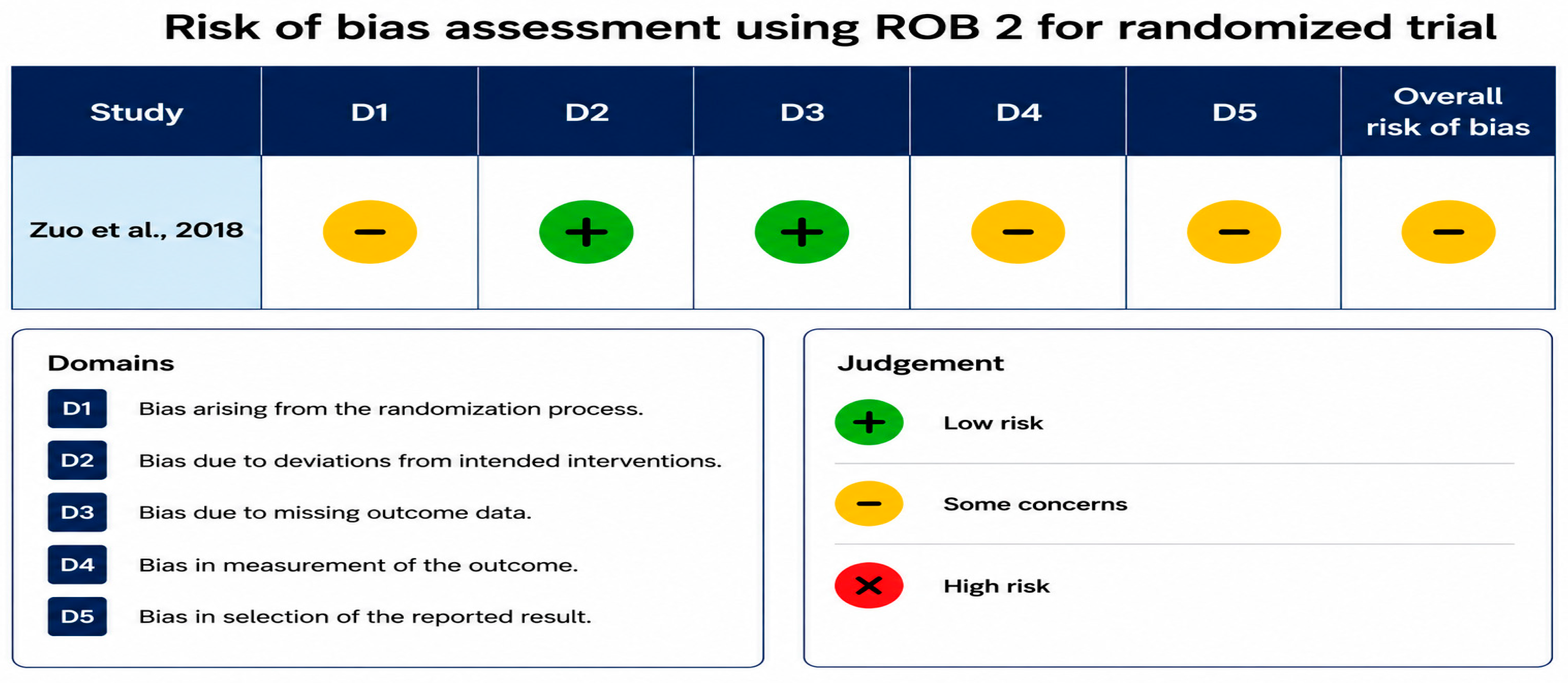
3.8. Quality Assessment
4. Discussion
5. Conclusions
Supplementary Materials
Author Contributions
Funding
Institutional Review Board Statement
Informed Consent Statement
Data Availability Statement
Conflicts of Interest
References
- Olin, J.W.; Shih, A. Thromboangiitis Obliterans (Buerger’s Disease). Curr. Opin. Rheumatol. 2006, 18, 18–24. [Google Scholar] [CrossRef]
- Fiessinger, J.-N.; Frank, M. Thromboangiitis Obliterans (Buerger’s Disease). Rev. Prat. 2015, 65, 1079–1083. [Google Scholar]
- Vijayakumar, A.; Tiwari, R.; Kumar Prabhuswamy, V. Thromboangiitis Obliterans (Buerger’s Disease)—Current Practices. Int. J. Inflamm. 2013, 2013, 156905. [Google Scholar] [CrossRef]
- Arkkila, P.E. Thromboangiitis Obliterans (Buerger’s Disease). Orphanet J. Rare Dis. 2006, 1, 14. [Google Scholar] [CrossRef] [PubMed]
- Piazza, G.; Creager, M.A. Thromboangiitis Obliterans. Circulation 2010, 121, 1858–1861. [Google Scholar] [CrossRef]
- Winiwarter, F. On a Peculiar Form of Endarteritis and Endophlebitis with Gangrene of the Foot. Arch. Klin. Chir. 1879, 23, 202–226. [Google Scholar]
- Herrington, J.L.; Grossman, L.A. Surgical Lesions of the Small and Large Intestine Resulting from Buerger’s Disease. Ann. Surg. 1968, 168, 1079–1087. [Google Scholar] [CrossRef]
- Buerger, L. Thrombo-Angitis Obliterans; a Study of the Vascular Lesions Leading to Presenile Spontaneous Gangrene. Am. J. Med. 1952, 13, 526–532. [Google Scholar] [CrossRef] [PubMed]
- Rivera-Chavarría, I.J.; Brenes-Gutiérrez, J.D. Thromboangiitis Obliterans (Buerger’s Disease). Ann. Med. Surg. 2016, 7, 79–82. [Google Scholar] [CrossRef]
- Klein-Weigel, P.F.; Richter, J.G. Thromboangiitis Obliterans (Buerger’s Disease). VASA Z. Gefasskrankh. 2014, 43, 337–346. [Google Scholar] [CrossRef] [PubMed]
- Qaja, E.; Muco, E.; Hashmi, M.F. Buerger Disease. In StatPearls; StatPearls Publishing: Treasure Island, FL, USA, 2026. [Google Scholar]
- Gundogmus, C.A.; Samadli, V.; Sorkun, M.; Oguzkurt, L. The Effect of Smoking Cessation on the Technical Success of Endovascular Treatment for Thromboangiitis Obliterans. J. Vasc. Interv. Radiol. JVIR 2023, 34, 1038–1044. [Google Scholar] [CrossRef] [PubMed]
- Zheng, G.; Xie, H.; Lai, M.; Liu, X. Short-Term Efficacy of Endovascular Procedures for Lower Extremity Thromboangiitis Obliterans (Buerger’s Disease). Postgrad. Med. 2024, 136, 577–583. [Google Scholar] [CrossRef]
- Salimi, J.; Cheraghali, R.; Omrani, Z.; Farshidmehr, P.; Afghani, R. Surgical Treatment Options for Buerger’s Disease (Experience with 315 Cases in Iran). Med. J. Islam. Repub. Iran 2022, 36, 134. [Google Scholar] [CrossRef] [PubMed]
- Shekouhi, R.; Mumtaz, M.; Naqvi, H.; Azizi, A.; Crawford, K.M.; Jacobs, B.N.; Chim, H. Treatment Options for Buerger Disease: A Systematic Review and Meta-Analysis of Outcomes. J. Surg. Res. 2025, 306, 371–381. [Google Scholar] [CrossRef] [PubMed]
- Cacione, D.G.; Macedo, C.R.; do Carmo Novaes, F.; Baptista-Silva, J.C. Pharmacological Treatment for Buerger’s Disease. Cochrane Database Syst. Rev. 2020, 2020, CD011033. [Google Scholar] [CrossRef]
- Bozkurt, A.K.; Cengiz, K.; Arslan, C.; Mine, D.Y.; Oner, S.; Deniz, D.B.; Ufuk, D. A Stable Prostacyclin Analogue (Iloprost) in the Treatment of Buerger’s Disease: A Prospective Analysis of 150 Patients. Ann. Thorac. Cardiovasc. Surg. Off. J. Assoc. Thorac. Cardiovasc. Surg. Asia 2013, 19, 120–125. [Google Scholar] [CrossRef]
- Saha, K.; Chabra, N.; Gulati, S.M. Treatment of Patients with Thromboangiitis Obliterans with Cyclophosphamide. Angiology 2001, 52, 399–407. [Google Scholar] [CrossRef]
- Cacione, D.G.; do Carmo Novaes, F.; Moreno, D.H. Stem Cell Therapy for Treatment of Thromboangiitis Obliterans (Buerger’s Disease). Cochrane Database Syst. Rev. 2018, 10, CD012794. [Google Scholar] [CrossRef]
- Fabregat, G.; Villanueva, V.L.; Asensio, J.M.; De Andrés, J.; López, D. Spinal Cord Stimulation for the Treatment of Buerger Disease: A Report on 3 Cases. Clin. J. Pain 2011, 27, 819–823. [Google Scholar] [CrossRef]
- Barć, P.; Lubieniecki, P.; Antkiewicz, M.; Kupczyńska, D.; Barć, J.; Frączkowska-Sioma, K.; Dawiskiba, T.; Dorobisz, T.; Sekula, W.; Czuwara, B.; et al. Gene Therapy of Thromboangiitis Obliterans with Growth Factor Plasmid (VEGF165) and Autologous Bone Marrow Cells. Biomedicines 2024, 12, 1506. [Google Scholar] [CrossRef]
- Saito, S.; Nishikawa, K.; Obata, H.; Goto, F. Autologous Bone Marrow Transplantation and Hyperbaric Oxygen Therapy for Patients with Thromboangiitis Obliterans. Angiology 2007, 58, 429–434. [Google Scholar] [CrossRef]
- Donas, K.P.; Schulte, S.; Ktenidis, K.; Horsch, S. The Role of Epidural Spinal Cord Stimulation in the Treatment of Buerger’s Disease. J. Vasc. Surg. 2005, 41, 830–836. [Google Scholar] [CrossRef] [PubMed]
- Liu, G.; Li, S.; Kuang, X.; Zhou, J.; Zhong, Z.; Ding, Y.; Lu, W.; Zhao, J.; Chen, Y.; Hua, Q. The Emerging Role of Tibial Cortex Transverse Transport in the Treatment of Chronic Limb Ischemic Diseases. J. Orthop. Transl. 2020, 25, 17–24. [Google Scholar] [CrossRef]
- Zhao, L.; Lei, Y.; Pang, M.; Wei, Z. An Improved Bone Transport Surgical Method for Treating Chronic Ischemic Ulcers (Thromboangiitis Obliterans). Front. Surg. 2022, 9, 859201. [Google Scholar] [CrossRef] [PubMed]
- Rohit, K.; Verma, V. Management of Buerger’s Disease (Thromboangiitis Obliterans) of the Lower Limb by Horizontal Distraction and Corticotomy by Ilizarov’s Technique. J. Orthop. Dis. Traumatol. 2023, 6, 164. [Google Scholar] [CrossRef]
- Ilizarov, G.A. The Tension-Stress Effect on the Genesis and Growth of Tissues. Part I. The Influence of Stability of Fixation and Soft-Tissue Preservation. Clin. Orthop. 1989, 238, 249–281. [Google Scholar] [CrossRef]
- Liu, Z.; Xu, C.; Yu, Y.-K.; Tu, D.-P.; Peng, Y.; Zhang, B. Twenty Years Development of Tibial Cortex Transverse Transport Surgery in PR China. Orthop. Surg. 2022, 14, 1034–1048. [Google Scholar] [CrossRef]
- Tian, W.; Zhang, L.; Wang, Y.; Lin, L.; Jiang, W.; Dai, G.; Feng, B. Tibial Transverse Transport Promotes Wound Healing in Diabetic Foot Ulcers by Stimulating Endothelial Progenitor Cell Mobilization and Homing Mediated Neovascularization. Ann. Med. 2024, 56, 2404186. [Google Scholar] [CrossRef]
- Qin, W.; Liu, K.; Su, H.; Hou, J.; Yang, S.; Pan, K.; Yang, S.; Liu, J.; Zhou, P.; Lin, Z.; et al. Tibial Cortex Transverse Transport Promotes Ischemic Diabetic Foot Ulcer Healing via Enhanced Angiogenesis and Inflammation Modulation in a Novel Rat Model. Eur. J. Med. Res. 2024, 29, 155. [Google Scholar] [CrossRef]
- Yang, Y.; Li, Y.; Pan, Q.; Bai, S.; Wang, H.; Pan, X.; Ling, K.-K.; Li, G. Tibial Cortex Transverse Transport Accelerates Wound Healing via Enhanced Angiogenesis and Immunomodulation. Bone Jt. Res. 2022, 11, 189–199. [Google Scholar] [CrossRef]
- Nie, X.; Kuang, X.; Liu, G.; Zhong, Z.; Ding, Y.; Yu, J.; Liu, J.; Li, S.; He, L.; Su, H.; et al. Tibial Cortex Transverse Transport Facilitating Healing in Patients with Recalcitrant Non-Diabetic Leg Ulcers. J. Orthop. Transl. 2020, 27, 1–7. [Google Scholar] [CrossRef]
- Page, M.J.; McKenzie, J.E.; Bossuyt, P.M.; Boutron, I.; Hoffmann, T.C.; Mulrow, C.D.; Shamseer, L.; Tetzlaff, J.M.; Akl, E.A.; Brennan, S.E.; et al. The PRISMA 2020 Statement: An Updated Guideline for Reporting Systematic Reviews. BMJ 2021, 372, n71. [Google Scholar] [CrossRef]
- Sterne, J.A.; Hernán, M.A.; Reeves, B.C.; Savović, J.; Berkman, N.D.; Viswanathan, M.; Henry, D.; Altman, D.G.; Ansari, M.T.; Boutron, I.; et al. ROBINS-I: A Tool for Assessing Risk of Bias in Non-Randomised Studies of Interventions. BMJ 2016, 355, i4919. [Google Scholar] [CrossRef] [PubMed]
- Zuo, Q.; Gao, F.; Song, H.; Zhou, J. Application of Ilizarov Transverse Tibial Bone Transport and Microcirculation Reconstruction in the Treatment of Chronic Ischemic Diseases in Lower Limbs. Exp. Ther. Med. 2018, 16, 1355–1359. [Google Scholar] [CrossRef]
- Sterne, J.A.C.; Savović, J.; Page, M.J.; Elbers, R.G.; Blencowe, N.S.; Boutron, I.; Cates, C.J.; Cheng, H.-Y.; Corbett, M.S.; Eldridge, S.M.; et al. RoB 2: A Revised Tool for Assessing Risk of Bias in Randomised Trials. BMJ 2019, 366, l4898. [Google Scholar] [CrossRef]
- McGuinness, L.A.; Higgins, J.P.T. Risk-of-Bias VISualization (Robvis): An R Package and Shiny Web App for Visualizing Risk-of-Bias Assessments. Res. Synth. Methods 2021, 12, 55–61. [Google Scholar] [CrossRef] [PubMed]
- Patwa, J.J.; Krishnan, A. Buerger’s Disease (Thromboangiitis Obliterans)-Management by Ilizarov’s Technique of Horizontal Distraction. A Retrospective Study of 60 Cases. Indian J. Surg. 2011, 73, 40–47. [Google Scholar] [CrossRef][Green Version]
- Kulkarni, S.; Kulkarni, G.; Shyam, A.K.; Kulkarni, M.; Kulkarni, R.; Kulkarni, V. Management of Thromboangiitis Obliterans Using Distraction Osteogenesis: A Retrospective Study. Indian J. Orthop. 2011, 45, 459–464. [Google Scholar] [CrossRef]
- Chouhan, A.; Meena, D.S.; Meena, U.K.; Behera, P.; Yadav, L.; Gupta, V. Limb Salvage in Buerger’s Disease by Distraction Histogenesis: A Prospective Study with Literature Review. J. Clin. Orthop. Trauma 2019, 10, 981–985. [Google Scholar] [CrossRef] [PubMed]
- Nesari, S.S.; Wali, P.C. Management of Thromboangitis Obliterans by Ilizarov Technique. MedPulse Int. J. Orthop. 2018, 6, 40–44. [Google Scholar] [CrossRef]
- Hong, M.; Jin, Q. Therapeutic Effects of Transverse Tibial Bone Transport in Lower Limb Thromboangiitis Obliterans. Am. J. Transl. Res. 2025, 17, 4331–4340. [Google Scholar] [CrossRef]
- Bari, M.M.; Shahidul, I.; Rouf, A.H. Management of Buerger’s Disease (TAO) With Ilizarov (A Retrospective Study of 18 Cases). MOJ Orthop. Rheumatol. 2015, 3, 00099. [Google Scholar] [CrossRef]
- Islam, D.K.; Chowdhury, S.; Forhad, S.; Siddiqui, E.H.; Majid, M.A.; Rahman, M.M. Buerger’s Disease (Thromboangiitis Obliterans)-Management by Ilizarov’s Technique of Horizontal Distraction—A Prospective Interventional Study; GSAR Publishers: Hojai, India, 2023. [Google Scholar]
- Schroeder, Q.M.; Paredes, D.U.; Montion, M.; Powell, E.R.; Topp, D.R.C.; Golshteyn, G.; Oji, E.; Wilkinson, K.A.; Tran, D.V.; Smith, K.M. Tibial Cortex Transverse Transport: Historical Evolution, Clinical Applications, and Future Directions. Foot Ankle Surg. Tech. Rep. Cases 2025, 5, 100513. [Google Scholar] [CrossRef]
- Liao, M.-M.; Zhang, F.; Wang, Y.-K.; Wang, M.-W.; Cao, J.-R.; Jin, Z.-H.; Ren, Y.-J.; Chen, S. Transverse Tibial Bone Transport Promotes Distraction Osteogenesis and Improves Blood Flow in the Management of Diabetic Foot. World J. Diabetes 2026, 17, 111847. [Google Scholar] [CrossRef]
- Qin, Q.; Liu, Y.; Yang, Z.; Aimaijiang, M.; Ma, R.; Yang, Y.; Zhang, Y.; Zhou, Y. Hypoxia-Inducible Factors Signaling in Osteogenesis and Skeletal Repair. Int. J. Mol. Sci. 2022, 23, 11201. [Google Scholar] [CrossRef]
- Wan, C.; Gilbert, S.R.; Wang, Y.; Cao, X.; Shen, X.; Ramaswamy, G.; Jacobsen, K.A.; Alaql, Z.S.; Eberhardt, A.W.; Gerstenfeld, L.C.; et al. Activation of the Hypoxia-Inducible Factor-1α Pathway Accelerates Bone Regeneration. Proc. Natl. Acad. Sci. USA 2008, 105, 686–691. [Google Scholar] [CrossRef]
- Ou, S.; Xu, C.; Li, G.; Sun, H.; Yang, Y.; Lu, H.; Li, W.; Qi, Y. Effect of transverse tibial bone transport on expression of serum angiogenesis-related growth factors. Zhongguo Xiu Fu Chong Jian Wai Ke Za Zhi Zhongguo Xiufu Chongjian Waike Zazhi Chin. J. Reparative Reconstr. Surg. 2020, 34, 98–101. [Google Scholar] [CrossRef]
- Ou, S.; Xu, C.; Yang, Y.; Chen, Y.; Li, W.; Lu, H.; Li, G.; Sun, H.; Qi, Y. Transverse Tibial Bone Transport Enhances Distraction Osteogenesis and Vascularization in the Treatment of Diabetic Foot. Orthop. Surg. 2022, 14, 2170–2179. [Google Scholar] [CrossRef] [PubMed]
- Fokin, A.A.; Fokin, A.A.; Verbovetskiĭ, L.P. Short and long-term results of non-standard revascularization of the lower extremities. Grud. Serdechnososudistaia Khir. 1993, 23–28. [Google Scholar]
- Fokin, A.A.; Verbovetskiĭ, L.P.; Fokin, A.A.; Kulak, A.N. The effectiveness of G. A. Ilizarov’s method in treating patients with III- and IV-stage chronic ischemia of the lower extremities. Vestn. Khir. Im. II Grek. 1990, 145, 15–20. [Google Scholar] [PubMed]
- Fokin, A.A.; Kulak, A.N.; Fokin, A.A.; Verbovetskiĭ, L.P. Treatment of occlusive diseases of the arteries of the lower extremities by Ilizarov’s method. Khirurgiia 1988, 82–85. [Google Scholar]
- Shevtsov, V.I.; Larionov, A.A.; Pepeliaev, A.G.; Petrovskaia, N.V. Distraction osteosynthesis in occlusive diseases of the limb arteries. Khirurgiia 1998, 17–21. [Google Scholar]
- Shevtsov, V.I.; Shurova, E.N.; Shurov, V.A. Functional outcomes of legs obliterative endarteritis treatment by Ilizarov’s method. Khirurgiia 1997, 47–50. [Google Scholar]
- Chen, Y.; Ding, X.; Zhu, Y.; Jia, Z.; Qi, Y.; Chen, M.; Lu, J.; Kuang, X.; Zhou, J.; Su, Y.; et al. Effect of Tibial Cortex Transverse Transport in Patients with Recalcitrant Diabetic Foot Ulcers: A Prospective Multicenter Cohort Study. J. Orthop. Transl. 2022, 36, 194–204. [Google Scholar] [CrossRef] [PubMed]
- Hu, X.-X.; Xiu, Z.-Z.; Li, G.-C.; Zhang, J.-Y.; Shu, L.-J.; Chen, Z.; Li, H.; Zou, Q.-F.; Zhou, Q. Effectiveness of Transverse Tibial Bone Transport in Treatment of Diabetic Foot Ulcer: A Systematic Review and Meta-Analysis. Front. Endocrinol. 2022, 13, 1095361. [Google Scholar] [CrossRef] [PubMed]
- Luxon, A.; Syziu, A.; Harrison, W.D.; Islam, A.; Mason, L. A Systematic Review on Tibial Cortex Transverse Transport in the Treatment of Ischemic Ulcers of the Lower Limb. Foot Ankle Int. 2025, 46, 914–924. [Google Scholar] [CrossRef]
- Chang, S.; Chen, W.; Song, H.; Zhang, F.; Prà, I.D.; Armato, U.; Zhou, J.; Nie, K.; Yin, M.; Chiarini, A.; et al. Iliac Crest Bone Distraction Surgery for the Treatment of Thromboangiitis Obliterans of Lower Limbs: A Cohort-Prospective Preliminary Study. 2024. [CrossRef]
- Mo, X.; He, C.; Zhou, J.; Chen, W.; Nie, K.; Wei, Z.; Chang, S. Preliminary Application of Ulnar Cortex Transverse Transport Technique in Treatment of Upper Extremity Thromboangiitis Obliterans. Zhongguo Xiu Fu Chong Jian Wai Ke Za Zhi 2024, 38, 1242–1248. [Google Scholar] [CrossRef]



| Author (Year) | Country | Study Type | Number of Cases | Mean Age in Years | Fixator Type | Osteotomy Site | Osteotomy Size | Distraction Duration (Latency + Distraction Time) |
|---|---|---|---|---|---|---|---|---|
| Patwa et al. [38] | India | Retrospective | 60 | 43.22 ± 5 | Ring EF | Anterolateral Middle 1/3 of tibia | NR | 7 days latency + 20 days distraction (0.25 mm every 6 h → 2 cm) |
| Kulkarni et al. [39] | India | Retrospective | 30 | 35 (25–50) | Ring EF | Anterolateral Middle 1/3 of tibia | 12 × 3 cm | 10 days latency + 20 days distraction (1 mm/day → 2 cm) |
| Chouhan et al. [40] | India | Prospective | 50 | 44 (35–55) | Ring EF | Anterolateral Middle 1/3 of tibia | NR | 10 days latency + 6 weeks distraction (0.5 mm/day) |
| Rohit Verma et al. [26] | India | Case series | 10 | 42 (34–70) | Ring EF | Anterolateral Middle 1/3 of tibia | 12 cm | 10 days latency + 25 days distraction (0.25 mm × 4/day → 2.5 cm) |
| Islam et al. [44] | Bangladesh | Prospective | 60 | 39 | Ring EF | Anterolateral Middle 1/3 of tibia | NR | 7 days latency + 20 days distraction (0.25 mm every 6 h → 2 cm) |
| Bari [43] | Bangladesh | Retrospective | 18 | NR | Ring EF | Anterolateral Middle 1/3 of tibia | 12 × 2 cm | Latency NR + 3 weeks distraction (1 mm/day × 3 weeks) |
| Nesari & Wali [41] | India | Case series | 5 | 43 | Ring EF | Anteromedial Middle 1/3 of tibia | 12–15 cm | 7 days latency + distraction (0.25 mm every 6 h → 2–2.5 cm) |
| Zhao et al. [25] | China | Case series | 26 | 40 | monolateral EF | Anterolateral Middle 1/3 of tibia | 10 × 2 cm | One treatment cycle = 20 days |
| Zuo et al. [35] | China | Randomized study (TTT vs. PTBA) | n = 90 (45/45) | 53.2 | Ring EF | Anterolateral Middle 1/3 of tibia | 10–12 cm × 1.5–2 cm | NR |
| Hong et al. [42] | China | Retrospective comparative cohort | n = 119 (TTT = 64; control = 55) | 49.3 | monolateral EF | Anteromedial Middle 1/3 of tibia | 10 × 2 cm | 6 days latency + 0.33 mm/8 h (1 mm/day) for 2 weeks |
| Author (Year) | Follow Up | Notable Outcomes | Efficacy (%) | Complications (n, %) | Author Conclusion |
|---|---|---|---|---|---|
| Patwa et al. [38] | 5.4 years | 96% had disappearance of rest pain + improved warmth/color + wound/ulcer healing | Early excellent-good: 93.3%; late excellent-good: 80% | BKA: 2/60 (3.3%); protruded bone block needing removal: 4/60 (6.7%); fracture: 2/60 (3.3%); Pin tract infection 18/60 (30%); stich necrosis 10/60 (16.6%) | Low-cost, technically simple; “excellent results” in grade III–IV |
| Kulkarni et al. [39] | 4.5 years | Pain-free: 25/30; partial relief: 1/30; ulcers started healing by 4–6 weeks | Excellent-good: 83.3% | BKA: 4/30 (13.3%) osteomyelitis: 2/30 (6.7%) | TTT can be used for TAO with acceptable complication rate |
| Chouhan et al. [40] | 12.5 months | VAS improved markedly; rest pain/claudication distance improved over follow-up | Excellent-good: 88% | Pin-tract infection: 8/50 (16%); fracture: 4/50 (8%); BKA: 6 (12%) | TTT is a reliable, cost-effective limb salvage option for TAO patients who fail other treatments Smoking cessation is critical for success |
| Rohit Verma et al. [26] | 12 months | Claudication distance improved over follow-up; 8/10 pain-free | Excellent-good: 80% | Pin-site infection: 3/10 (30%); delayed consolidation: 1/10 (10%); BKA: 1/10 (10%) | TTT is a reliable, cost-effective option to improve limb ischemia and help limb salvage in TAO |
| Islam et al. [44] | 5.4 years | Rest pain disappeared within 2–4 weeks in most; analgesia reduced within 2 days; improved warmth/color by ~10 days; healing signs by ~2 weeks | Early excellent-good: 90.3%; late excellent-good: 80% | BKA: 2/60 (3.3%) | TTT is effective and cost-efficient for TAO; emphasizes smoking cessation and long-term follow-up |
| Bari [43] | 5 years | Clinical improvement within weeks; arteriogram improved at 2 months | Excellent-good: 83.3% | BKA: 2/18 (11.1%) | TTT is an effective limb-salvage technique in TAO that may prevent amputation. |
| Nesari & Wali [41] | 33 months | Pain reduced; dramatic improvement in claudication; skin ischemic changes improved; SpO2 > 95% at removal; walking > 1.5 km | Clinical improvement: 100% | NR | TTT is a good, cost-effective alternative that may avoid higher-level amputations when combined with tobacco cessation |
| Zhao et al. [25] | 14.2 months | 24/26 limbs successfully treated; rest pain and ischemia improved; wounds healed within 1–2 “cycles” | Limb salvage 92.3% | BKA: 2/26 (7.7%) | TTT is worth considering for TAO-related refractory ulcers |
| Zuo et al. [35] | 1 months | Faster wound healing and pain disappearance vs. PTBA; improved claudication/rest pain/ulcer-gangrene improvement counts reported | Claudication: 86.7%; rest pain: 97.8%; ulcer/gangrene improvement: 84.4% | NR | TTT achieves better outcomes than PTBA for chronic lower limb ischemic disease |
| Hong et al. [42] | 6 months | Significant improvement in ABI, walking distance, pain, hemorheology, and QoL compared to the control. | TTT: 89.06% vs. Control: 70.91% | NR | TTT provides superior therapeutic benefits and is an effective treatment for TAO |
Disclaimer/Publisher’s Note: The statements, opinions and data contained in all publications are solely those of the individual author(s) and contributor(s) and not of MDPI and/or the editor(s). MDPI and/or the editor(s) disclaim responsibility for any injury to people or property resulting from any ideas, methods, instructions or products referred to in the content. |
© 2026 by the authors. Licensee MDPI, Basel, Switzerland. This article is an open access article distributed under the terms and conditions of the Creative Commons Attribution (CC BY) license.
Share and Cite
Samargandi, R.; Algethami, M.R. Efficacy of the Tibial Transverse Bone Transport Technique in the Management of Thromboangiitis Obliterans: A Systematic Review. J. Clin. Med. 2026, 15, 4521. https://doi.org/10.3390/jcm15124521
Samargandi R, Algethami MR. Efficacy of the Tibial Transverse Bone Transport Technique in the Management of Thromboangiitis Obliterans: A Systematic Review. Journal of Clinical Medicine. 2026; 15(12):4521. https://doi.org/10.3390/jcm15124521
Chicago/Turabian StyleSamargandi, Ramy, and Mohammed R. Algethami. 2026. "Efficacy of the Tibial Transverse Bone Transport Technique in the Management of Thromboangiitis Obliterans: A Systematic Review" Journal of Clinical Medicine 15, no. 12: 4521. https://doi.org/10.3390/jcm15124521
APA StyleSamargandi, R., & Algethami, M. R. (2026). Efficacy of the Tibial Transverse Bone Transport Technique in the Management of Thromboangiitis Obliterans: A Systematic Review. Journal of Clinical Medicine, 15(12), 4521. https://doi.org/10.3390/jcm15124521