Impact of Percutaneous Endoscopic Decompression Versus Open Laminectomy on Postoperative Acute Urinary Retention: A Large-Scale Real-World Data Analysis
 ,
,
Abstract
1. Introduction
2. Materials and Methods
2.1. Data Source and Study Design
2.2. Study Population
- Initial Database Screening: Adult patients (aged >18 years) who underwent lumbar spine decompression procedures between 1 January 2015 and 31 December 2024 were initially pulled from the global network. Because this study utilized a pre-existing federated database, the sample size was determined by the total available patient cohort that met our strict eligibility criteria within the network, rather than an a priori power calculation.
- Exclusion of Pre-existing Urologic Conditions: To prevent the confounding influence of chronic lower urinary tract symptoms (LUTS) or preexisting bladder failure on our primary outcome, we systematically excluded any patient with a documented historical diagnosis of neurogenic bladder, baseline preoperative urinary retention, or chronic indwelling catheterization documented prior to or on the index date.
- Exclusion of Malignancies (Neoplasms): To eliminate mechanical or functional bladder outlet obstruction secondary to oncological processes or pelvic radiation, all patients with a pre-existing history of any neoplasm were strictly excluded from the study population.
- Requirement for Follow-up Completeness: Patients who lacked at least 30 days of continuous post-operative health record data within the federated network were excluded to minimize attrition bias and preserve longitudinal data integrity.
2.3. Exposure Definitions and Stratification
- Traditional Open Surgery Cohort: Patients were identified via standard 5-digit AMA CPT codes for open lumbar decompression aggregated under the TriNetX hierarchical master parent node (Concept ID: 1009381; Posterior Extradural Laminotomy or Laminectomy for Exploration/Decompression of Neural Elements or Excision of Herniated Intervertebral Disks Procedures). To ensure an exhaustive capture of open posterior decompression, this master node encompassed all primary, multi-level, and re-exploration standard codes, specifically: CPT 63001, 63003, 63005, 63011, 63012, 63015, 63016, 63017, 63020, 63030, 63035, 63040, 63042, 63043, 63044, 63045, 63046, 63047, 63048, 63050, 63051, 63052, and 63053.
- Percutaneous Endoscopic Lumbar Surgery (PELS) Cohort: Patients were identified exclusively using the multiaxial ICD-10-PCS code 00NY4ZZ (Release Lumbar Spinal Cord, Percutaneous Endoscopic Approach).
- Urologic Status: Patients were divided into a BPH group and a non-BPH group (males only) based on preoperative diagnosis codes.
- Age: Patients were stratified into those aged < 70 years and those aged ≥ 70 years.
- Sex: A dedicated female cohort was analyzed separately to isolate gender-specific anatomical risks.
2.4. Primary Outcome
2.5. Statistical Analysis
3. Results
3.1. Patient Characteristics and Propensity Score Matching
- Non-BPH Male Cohort: The matched analysis included approximately 2398 patients per group, with a mean age of 61.0 years.
- BPH Male Cohort: This high-risk subgroup (approx. N = 232 per group) was notably older, with a mean age of 71.6 years, and exhibited a higher burden of age-related comorbidities.
- Female Cohort: The matched female population (approx. N = 2144 per group) had a mean age of 64.7 years.
- Age-Stratified Cohorts: The younger cohort (<70 years) had a mean age of 52.9 years, while the elderly cohort (≥70 years) had a mean age of 73.3 years.
3.2. Incidence of Acute Urinary Retention and Subgroup Analysis
3.2.1. Urologic Stratification
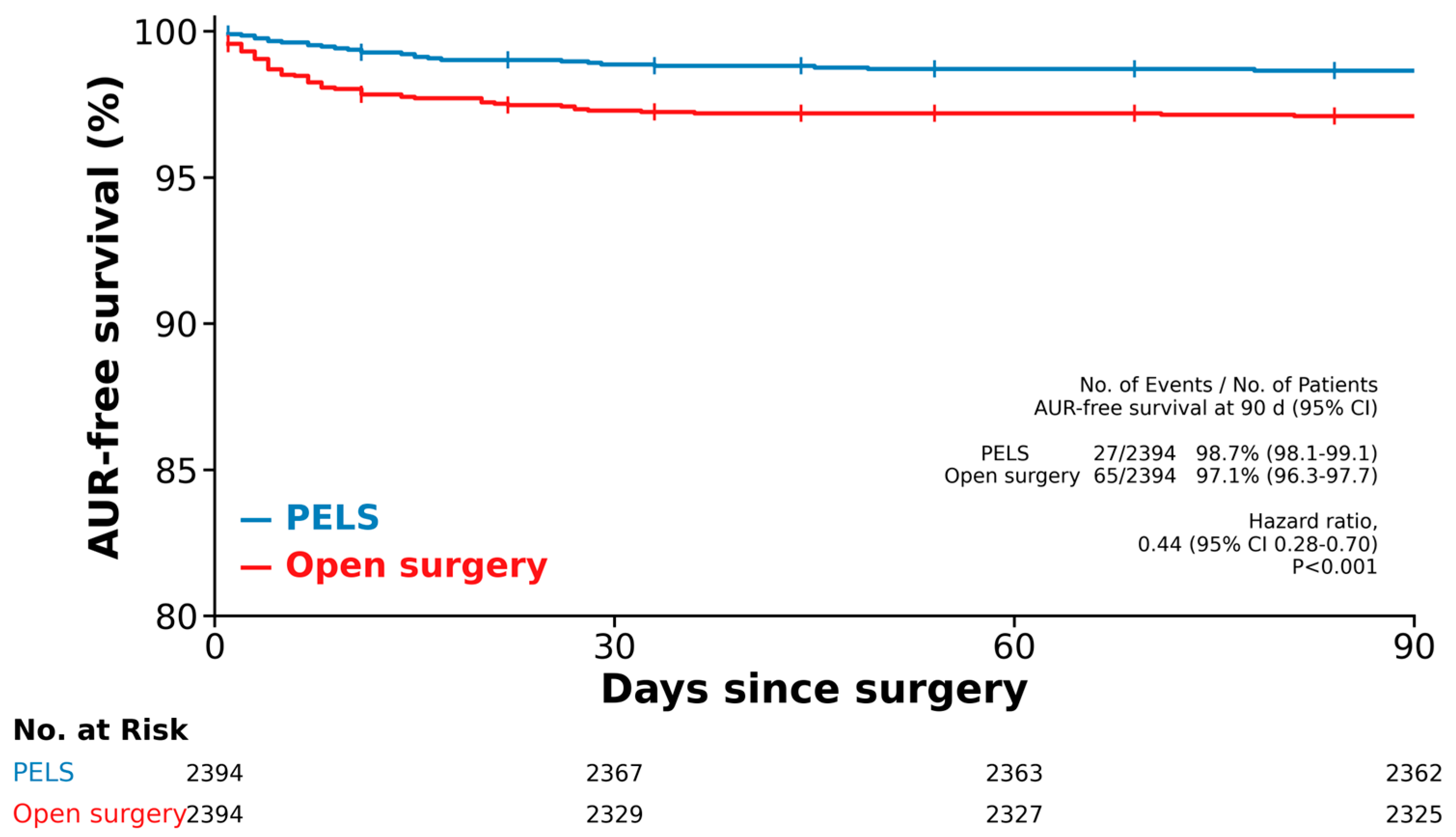
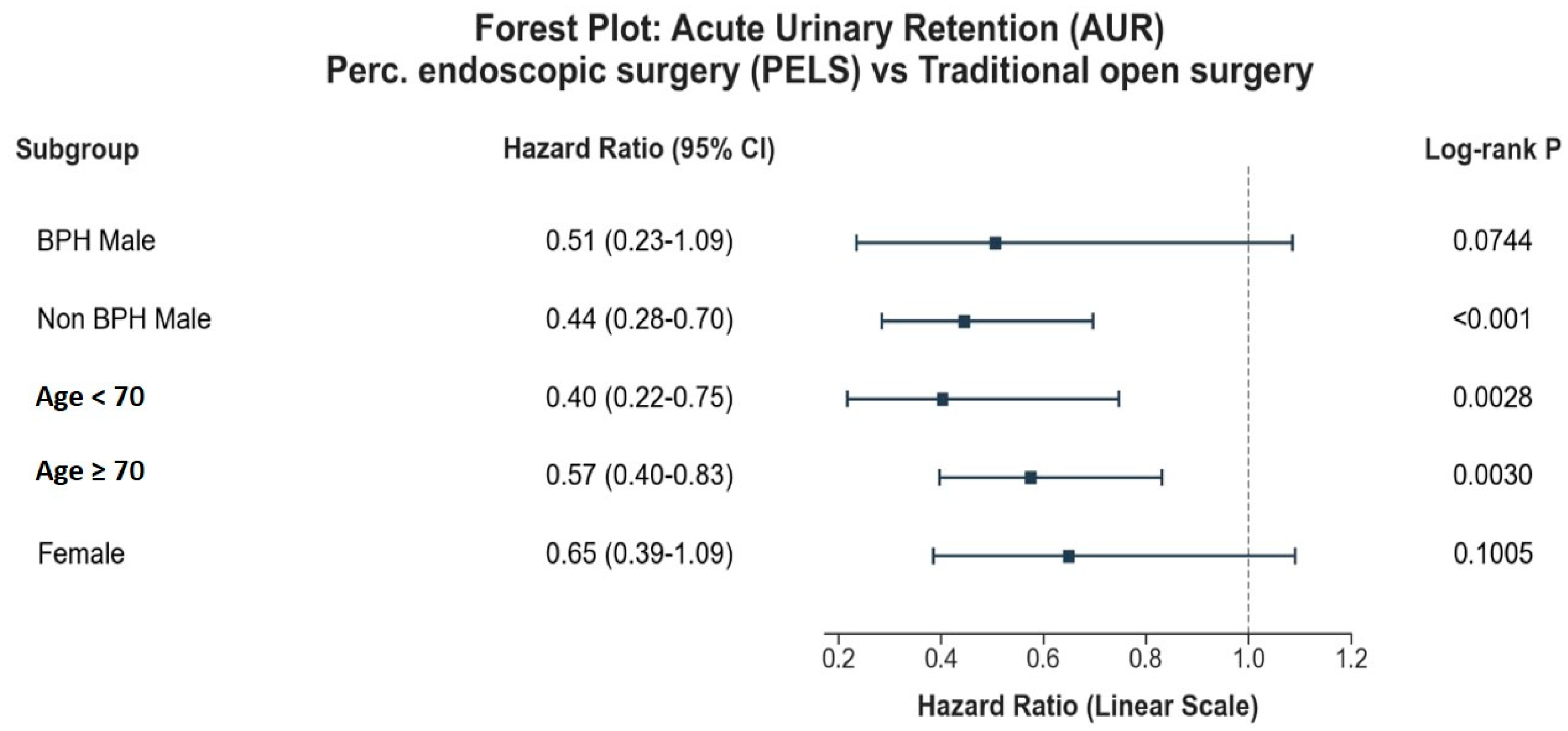
- Non-BPH Males: In the comparative analysis of 4788 patients, the PELS cohort demonstrated a significantly lower incidence of AUR compared to the Traditional open surgery cohort, with absolute risks of 1.128% and 2.715%, respectively (Risk Difference: −1.587%; p < 0.0001). Patients in the PELS group experienced an approximately 59% reduction in the odds of AUR (OR: 0.409; 95% CI: 0.26–0.643) and a 55.5% lower instantaneous hazard (HR: 0.445; 95% CI: 0.284–0.697) compared to the Traditional open surgery cohort. Sensitivity analysis to quantify the potential for unmeasured confounding in this primary cohort yielded an E-value of 3.92 for the point estimate and 2.22 for the upper confidence limit. This suggests that an unmeasured confounder would need to be associated with both the selection of PELS and the incidence of AUR by a risk ratio of 3.92 each to fully negate the observed risk reduction, indicating that this association is robust against moderate hidden bias. Kaplan–Meier survival analysis confirmed superior event-free outcomes for the PELS approach (Log-Rank p = 0.0003), with end-of-window survival probabilities of 98.662% for PELS and 97.101% for the Traditional open surgery cohort, though a significant proportionality test (p = 0.0317) suggests the relative risk between these procedures may fluctuate over the post-operative period (Figure 1).Figure 1. Survival curve of the non-BPH male cohort.


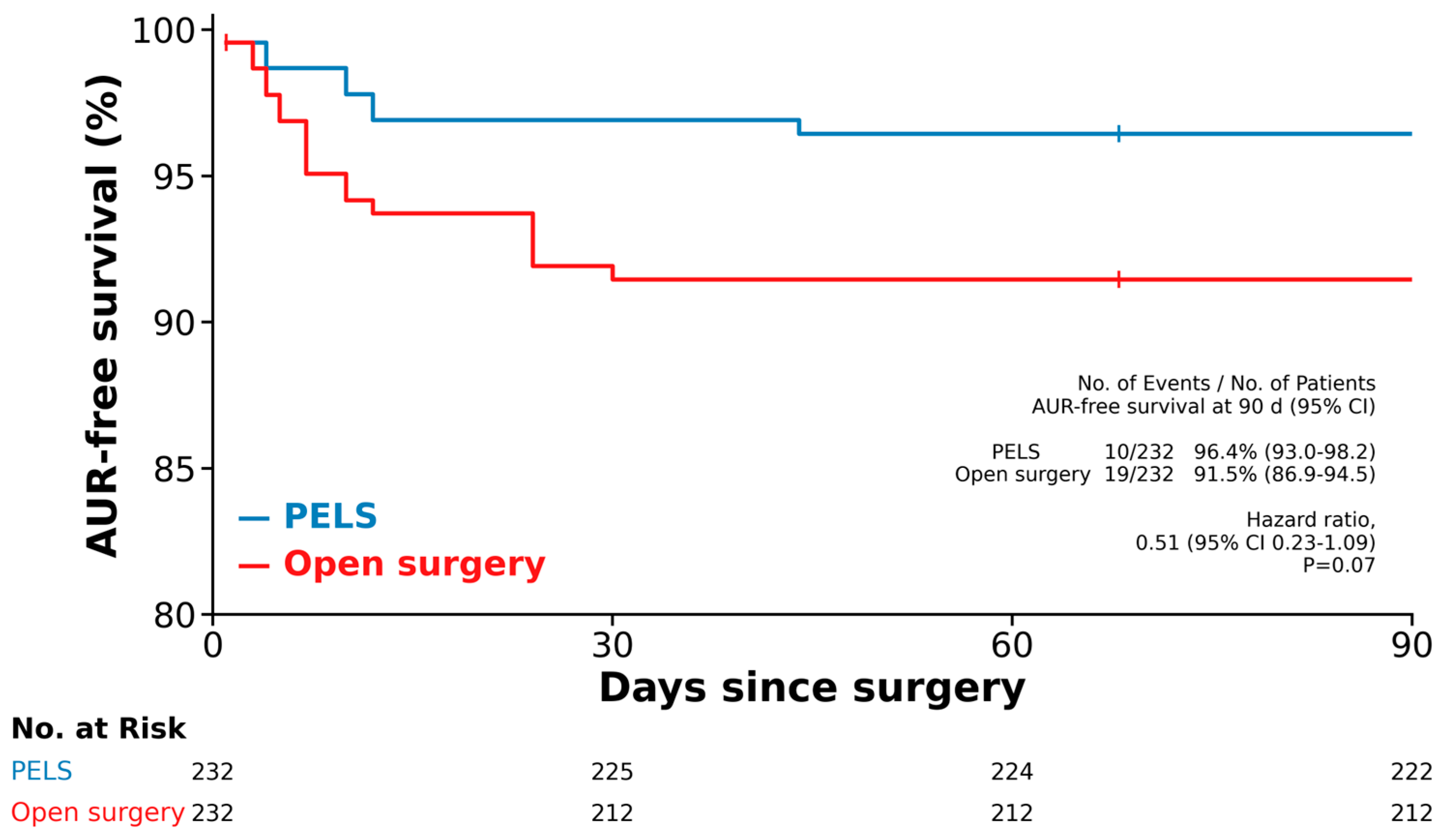
- BPH Patients: The PELS cohort (N = 232) showed a lower absolute risk of acute urinary retention (AUR) compared to the Traditional open surgery cohort (N = 232), with rates of 4.31% and 8.19%, respectively. Although the PELS cohort was associated with a nearly 50% reduction in the odds of AUR (OR: 0.505; 95% CI: 0.23–1.111) and a lower instantaneous hazard (HR: 0.505; 95% CI: 0.235–1.086), these findings did not reach statistical significance (p = 0.0843 for risk difference; p = 0.0744 for log-rank test). Kaplan–Meier analysis estimated event-free survival probabilities at the end of the time window to be 95.502% for the PELS group and 91.468% for the Traditional open surgery group. The proportionality test for this subgroup was non-significant (p = 0.2493), indicating that the hazard rates remained relatively constant over time, though the overall smaller sample size and privacy-related data rounding likely limited the statistical power to detect a definitive difference (Figure 2).Figure 2. Survival curve of the BPH male cohort.


3.2.2. Age-Stratified Analysis
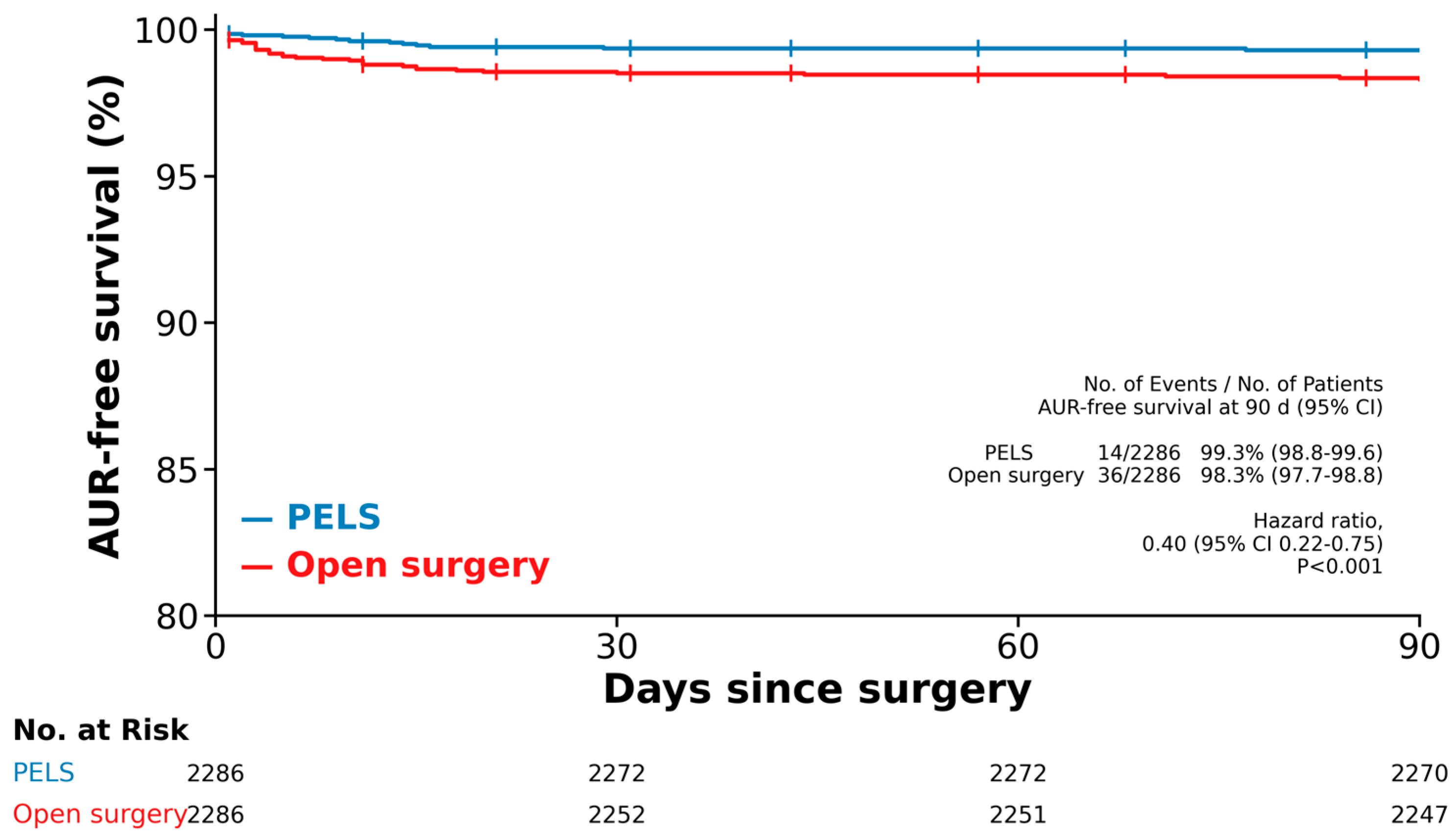
- Age < 70 years: In the subgroup of patients under 70 years of age (N = 4572), the PELS group was associated with a statistically significantly lower AUR risk, with a rate of 0.612% compared to 1.575% in the Traditional open surgery cohort (Risk Difference: −0.962%; p = 0.0018). This younger cohort undergoing PELS experienced a 61.5% reduction in the odds of AUR (OR: 0.385; 95% CI: 0.207–0.716) and a significantly lower hazard (HR: 0.403; p = 0.0028). Notably, the proportionality test for the under-70 cohort was non-significant (p = 0.7299), indicating a stable treatment effect over time (Figure 3).Figure 3. Survival curve of patients in the Age < 70 years cohort.


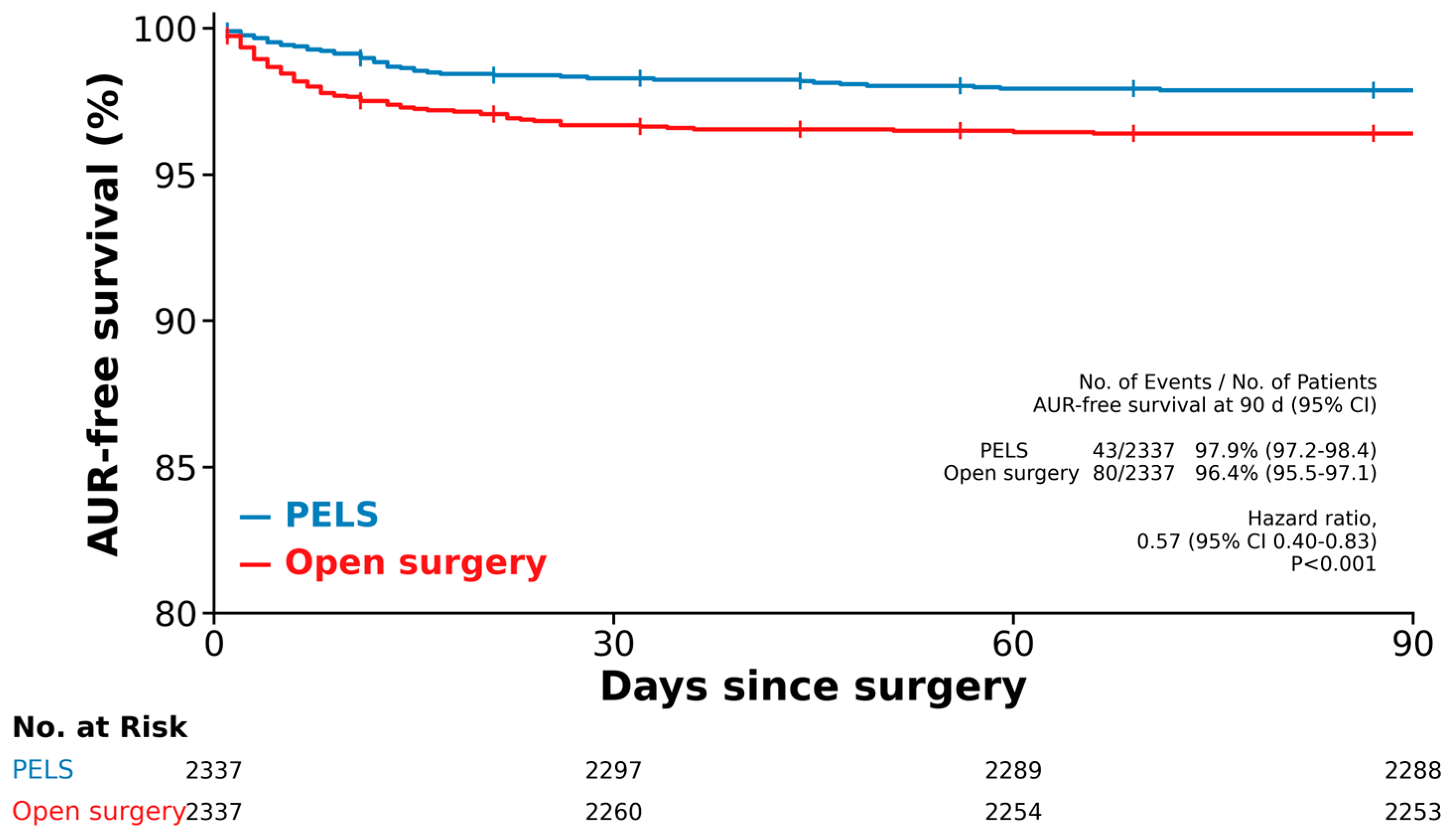
- Age ≥ 70 years: For the cohort of patients aged 70 years and older (N = 4674), the PELS group was associated with a significantly lower risk of AUR compared to the Traditional open surgery cohort. The absolute risk in the PELS group was 1.84% (43 events) versus 3.423% (80 events) in the Traditional open surgery group, resulting in a significant absolute risk reduction of 1.583% (p = 0.0007). Relative measures further confirmed this benefit, with an Odds Ratio of 0.529 (95% CI: 0.363–0.77) and a Hazard Ratio of 0.574 (95% CI: 0.396–0.832; p = 0.0030), indicating that older patients undergoing percutaneous procedures had a 42.6% lower hazard of AUR. While the Log-Rank test confirmed superior event-free survival for the PELS group (p = 0.0030), a significant proportionality test (p = 0.0270) suggests that the protective effect of the PELS approach compared to traditional open surgery may vary in magnitude over the post-operative course in this older demographic (Figure 4).Figure 4. Survival curve of patients in the Age ≥ 70 years cohort.


3.2.3. Female Group
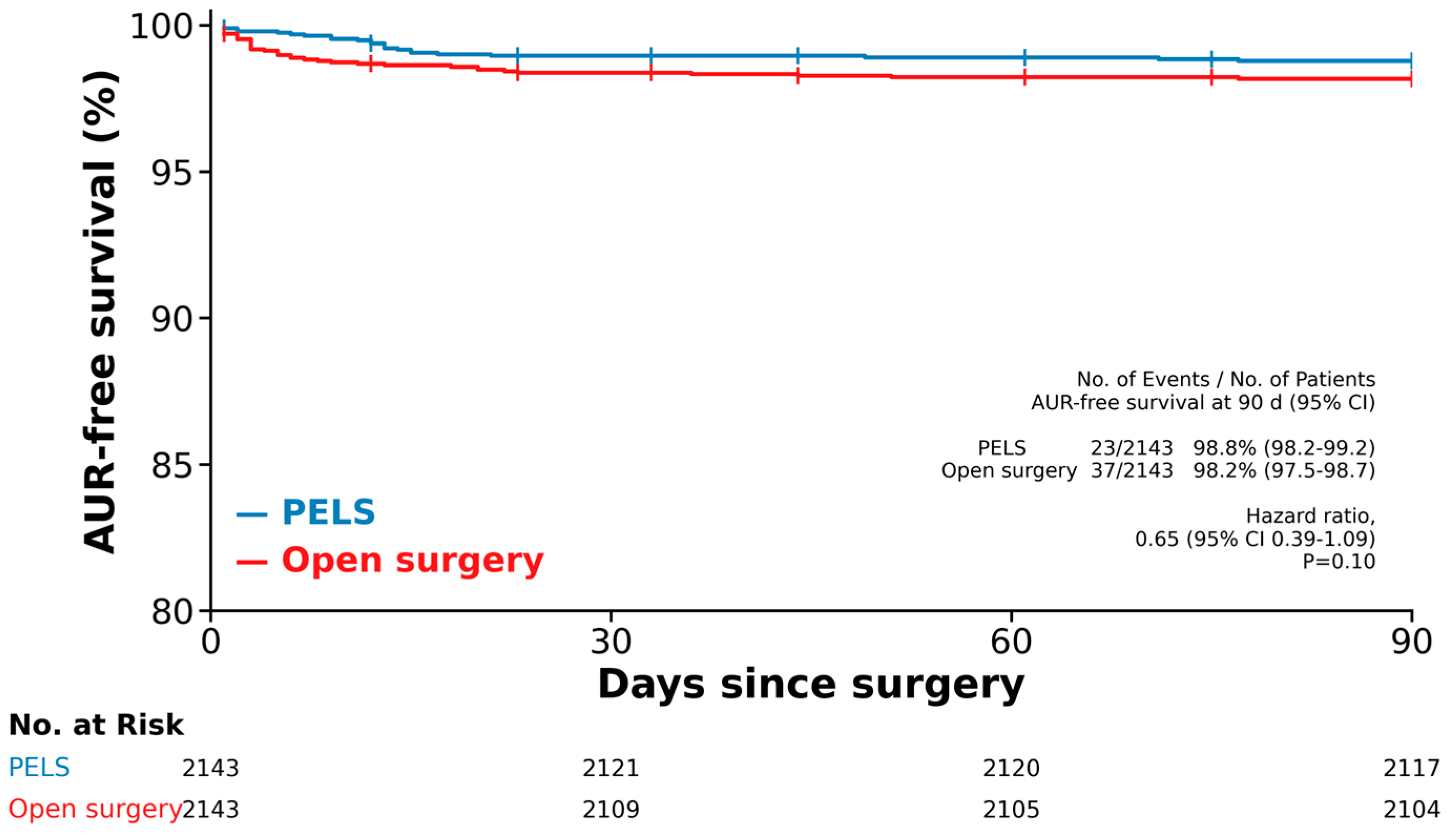
- In the analysis of female patients (N = 4286), the PELS approach demonstrated a trend toward lower AUR rates, though it did not reach statistical significance. The absolute risk was 1.073% (23 events) in the PELS cohort compared to 1.727% (37 events) in the traditional open surgery cohort (Risk Difference: −0.653%; p = 0.0687). The relative risk reduction followed a similar pattern, with an Odds Ratio of 0.618 (95% CI: 0.366–1.043) and a Hazard Ratio of 0.649 (95% CI: 0.386–1.092). Kaplan–Meier survival analysis yielded a Log-Rank p-value of 0.1005, indicating that the difference in time-to-event outcomes between the two surgical groups was not statistically significant for women. The proportionality test for this subgroup was also non-significant (p = 0.0630), suggesting a relatively constant, albeit statistically non-significant, risk profile throughout the observation window (Figure 5).Figure 5. Survival curve of the Female patient cohort.


4. Discussion
4.1. Principal Findings and Methodological Strengths
4.2. Age-Related Nuances and the “Fragile Bladder”
4.3. BPH and Sex-Specific Trends
4.4. Clinical Implications: A Risk-Stratified Approach
- Lower-Baseline Risk Cohorts (Younger Males): Utilizing PELS may represent a useful strategy to minimize surgical stress and narcotic use in this population, as this group consistently maintained the lowest hazard ratio within our data structure (HR = 0.403).
- Higher-Baseline Risk Cohorts (BPH/Elderly): Given that the relative surgical advantage appeared attenuated by physiological aging (HR = 0.574) or outpaced by baseline pathology, proactive clinical monitoring or the consideration of medical prophylaxis—such as perioperative alpha-blockers—warrants further investigation as a strategy to mitigate baseline hazards, irrespective of the surgical approach selected [22]. Furthermore, the implementation of standardized, evidence-based clinical practice guidelines for perioperative urologic care, including structured voiding trials and early mobilization, is critical to optimize recovery in these vulnerable cohorts [23].
5. Conclusions
6. Limitations
- Unmeasured Perioperative Confounders: Longer surgical times are directly linked to prolonged exposure to anesthetic agents and increased fluid volumes. Granular data regarding operative duration, specific anesthesia subtypes (general vs. spinal), exact dosing of intraoperative long-acting opioids, IV fluid volumes, and mobilization times could not be mapped.
- Catheterization Protocols: Variations in institutional preferences regarding routine, proactive intraoperative indwelling catheter placement versus “void-on-demand” workflows could not be standardized.
- Disease Severity and Surgeon Factors: The exact number of surgical levels, radiographic stenosis severity, baseline neurological deficits, distinction between primary versus revision surgery, and individual surgeon volume were unavailable.
- Urologic Granularity: Our urologic stratification was based purely on diagnostic codes. Granular clinical metrics—including prostate volume, International Prostate Symptom Scores (IPSS), postvoid residuals, uroflowmetry, alpha-blocker use history, and urodynamic evidence of detrusor underactivity—were unavailable.
- Outcome Validation: While ICD-10 R33 and Foley insertion codes are standard proxies for retention, we do not possess a formally validated Positive Predictive Value (PPV) specifically for this TriNetX spine cohort.
- Baseline Imbalances and Hospital Clustering: Before matching, extreme baseline disparities were noted (e.g., race/ethnicity distributions). Because TriNetX aggregates data globally, these imbalances likely reflect geographic triage patterns or hospital-level coding biases. Furthermore, due to the privacy-preserving nature of the database, specific Healthcare Organization identifiers are blinded, preventing us from utilizing mixed-effects models to adjust for hospital-level clustering.
Supplementary Materials
Author Contributions
Funding
Institutional Review Board Statement
Informed Consent Statement
Data Availability Statement
Acknowledgments
Conflicts of Interest
Abbreviations
| AUR | Acute urinary retention |
| BPH | Benign prostatic hyperplasia |
| CI | Confidence intervals |
| ERAS | Enhanced Recovery After Surgery |
| HR | Hazard Ratio |
| IPSS | International Prostate Symptom Scores |
| MIS | Minimally invasive surgery |
| ODI | Oswestry Disability Index |
| OR | Odds Ratio |
| PELS | Percutaneous endoscopic lumbar surgery |
| PSM | Propensity score matching |
| RR | Risk Ratio |
| SMD | Standardized mean differences |
| VAS | Visual Analog Scale |
References
- Chang, Y.; Chi, K.Y.; Tai, T.W.; Cheng, Y.S.; Lee, P.H.; Huang, C.C.; Lee, J.S. Risk factors for postoperative urinary retention following elective spine surgery: A meta-analysis. Spine J. 2021, 21, 1802–1811. [Google Scholar] [CrossRef] [PubMed]
- Ropper, A.E.; Ropper, A.H. Acute spinal cord compression. N. Engl. J. Med. 2017, 376, 1358–1369. [Google Scholar] [CrossRef] [PubMed]
- Nerland, U.S.; Jakola, A.S.; Solheim, O.; Weber, C.; Rao, V.; Lønne, G.; Solberg, T.K.; Salvesen, Ø.; Carlsen, S.M.; Nygaard, Ø.P. Minimally invasive decompression versus open laminectomy for central stenosis of the lumbar spine: Pragmatic comparative effectiveness study. BMJ 2015, 350, h1603. [Google Scholar] [CrossRef] [PubMed]
- Ruetten, S.; Komp, M.; Merk, H.; Godolias, G. Full-endoscopic interlaminar and transforaminal lumbar discectomy versus conventional microsurgical technique: A prospective, randomized, controlled study. Spine 2008, 33, 931–939. [Google Scholar] [CrossRef]
- Topaloglu, U.; Palchuk, M.B. Using a federated network of real-world data for clinical research: The TriNetX experience. J. Med. Syst. 2018, 42, 180. [Google Scholar]
- Ghali, A.; Lawand, J.; Singh, A.; Mihas, A.; Jami, M.; Farhat, A.; Deveza, L. Prior antidepressant prescription is associated with greater opioid prescriptions and complications in cervical spine surgery. Clin. Spine Surg. 2024, 37, E112–E118. [Google Scholar] [CrossRef]
- Austin, P.C. An introduction to propensity score methods for reducing the effects of confounding in observational studies. Multivar. Behav. Res. 2011, 46, 399–424. [Google Scholar] [CrossRef]
- Rosenbaum, P.R.; Rubin, D.B. The central role of the propensity score in observational studies for causal effects. Biometrika 1983, 70, 41–55. [Google Scholar] [CrossRef]
- Choi, K.C.; Kim, J.S.; Ryu, K.S.; Kang, B.U.; Ahn, Y.; Lee, S.H. Percutaneous endoscopic lumbar discectomy for L5-S1 disc herniation: Transforaminal versus interlaminar approach. Pain Physician 2013, 16, 547–556. [Google Scholar]
- Baldini, G.; Bagry, H.; Aprikian, A.; Carli, F. Postoperative urinary retention: Anesthetic and perioperative considerations. Anesthesiology 2009, 110, 1139–1157. [Google Scholar] [CrossRef]
- Singh, R.; Asthana, V.; Sharma, J.P.; Lal, S. Effect of irrigation fluid temperature on core temperature and hemodynamic changes in transurethral resection of prostate under spinal anesthesia. Anesth. Essays Res. 2014, 8, 209–215. [Google Scholar]
- Ju, C.I.; Lee, S.M. Complications and management of endoscopic spinal surgery. Neurospine 2023, 20, 56–77. [Google Scholar] [CrossRef]
- Ameda, K.; Sullivan, M.P.; Bae, R.J.; Yalla, S.V. Urodynamic characterization of nonobstructive voiding dysfunction in symptomatic elderly men. J. Urol. 1999, 162, 142–146. [Google Scholar] [CrossRef]
- Gao, B.; Zhang, D.; Wang, Y.; Wang, Z.; Wang, Z. The effect of tamsulosin in postoperative urinary retention: A meta-analysis of randomized controlled trials. Naunyn Schmiedebergs Arch. Pharmacol. 2023, 396, 441–451. [Google Scholar] [CrossRef]
- Lepor, H. Pathophysiology of lower urinary tract symptoms in the aging male. Rev. Urol. 2006, 8, S3–S10. [Google Scholar] [PubMed]
- Gill, B.C.; Shoskes, D.A. Postoperative Urinary Retention. In StatPearls; StatPearls Publishing: Treasure Island, FL, USA, 2024. [Google Scholar]
- Zhang, B.Y.; Wong, J.M.H.; Koenig, N.A.; Lee, T.; Geoffrion, R. Risk factors for urinary retention after urogynecologic surgery: A retrospective cohort study and prediction model. Neurourol. Urodyn. 2021, 40, 1182–1191. [Google Scholar] [CrossRef] [PubMed]
- Cheng, T.Y.; Lin, T.F.; Tsai, C.C.; Chen, H.W.; Tseng, J.S.; Chiu, A. Risk factors for urinary retention following laparoscopic total extraperitoneal inguinal hernia repair in adult males. Urol. Sci. 2025, 36, 95–99. [Google Scholar] [CrossRef]
- Tammela, T.; Kontturi, M.; Lukkarinen, O. Postoperative urinary retention. I. Incidence and predisposing factors. Scand. J. Urol. Nephrol. 1986, 20, 197–201. [Google Scholar] [CrossRef] [PubMed]
- Toyonaga, T.; Matsushima, M.; Sogawa, N.; Moosazadeh, M.; Godazandeh, F.; Shafizad, M.; Kargar-Soleimanabad, S.; Gharanjik, B.; Ehteshami, S. Postoperative urinary retention after surgery for benign anorectal disease: Potential risk factors and strategy for prevention. Int. J. Color. Dis. 2006, 21, 676–682. [Google Scholar] [CrossRef]
- Debono, B.; Wainwright, T.W.; Wang, M.Y.; Sigmundsson, F.G.; Yang, M.M.H.; Smid-Nanninga, H.; Bonnal, A.; Le Huec, J.-C.; Fawcett, W.J.; Ljungqvis, O. Consensus statement for perioperative care in lumbar spinal fusion: Enhanced Recovery After Surgery (ERAS®) Society recommendations. Spine J. 2021, 21, 729–752. [Google Scholar] [CrossRef]
- Haddadi, K.; Ahmadi, M.; Feizzadeh Kerigh, B.; Moosazadeh, M.; Godazandeh, F.; Shafizad, M.; Kargar-Soleimanabad, S.; Gharanjik, B.; Ehteshami, S. Preoperative tamsulosin effect on postoperative urinary retention following spinal surgery: A randomized controlled trial. Int. J. Surg. Open 2023, 61, 100715. [Google Scholar] [CrossRef]
- Tan, C.M.P.; Kaliya-Perumal, A.K.; Ho, G.W.K.; Oh, J.Y. Postoperative urinary retention following thoracolumbosacral spinal fusion: Prevalence, risk factors, and outcomes. J. Clin. Med. 2021, 13, e19724. [Google Scholar] [CrossRef]


| Characteristic | PELS (Before) | Open Surgery (Before) | p-Value (Before) | Std. Diff. (Before) | PELS (After) | Open Surgery (After) | p-Value (After) | Std. Diff. (After) |
|---|---|---|---|---|---|---|---|---|
| Age at Index | 62.8 ± 12.9 | 59.3 ± 14.3 | <0.001 | 0.263 | 61.0 ± 13.2 | 61.0 ± 14.3 | 0.997 | <0.001 |
| White | 427 (12.6%) | 42,393 (80.4%) | <0.001 | 1.850 | 427 (17.8%) | 427 (17.8%) | 1.000 | <0.001 |
| Black or African American | 38 (1.1%) | 4195 (8.0%) | <0.001 | 0.333 | 38 (1.6%) | 37 (1.5%) | 0.907 | 0.003 |
| Asian | 741 (21.9%) | 1360 (2.6%) | <0.001 | 0.618 | 673 (28.1%) | 644 (26.9%) | 0.348 | 0.027 |
| Not Hispanic or Latino | 1090 (32.3%) | 41,970 (79.6%) | <0.001 | 1.083 | 1023 (42.7%) | 982 (41.0%) | 0.230 | 0.035 |
| Unknown Ethnicity | 2267 (67.1%) | 7580 (14.4%) | <0.001 | 1.273 | 1351 (56.4%) | 1393 (58.2%) | 0.220 | 0.035 |
| Cerebrovascular diseases | 143 (4.2%) | 2549 (4.8%) | 0.115 | 0.029 | 100 (4.2%) | 73 (3.0%) | 0.037 | 0.060 |
| Chronic rheumatic heart diseases | 14 (0.4%) | 725 (1.4%) | <0.001 | 0.102 | 11 (0.5%) | 10 (0.4%) | 0.827 | 0.006 |
| Diabetes mellitus | 585 (17.3%) | 9083 (17.2%) | 0.879 | 0.003 | 406 (17.0%) | 353 (14.7%) | 0.036 | 0.061 |
| Diseases of the nervous system | 686 (20.3%) | 26,982 (51.2%) | <0.001 | 0.680 | 639 (26.7%) | 615 (25.7%) | 0.430 | 0.023 |
| Diseases of the respiratory system | 458 (13.6%) | 12,628 (23.9%) | <0.001 | 0.268 | 354 (14.8%) | 327 (13.7%) | 0.264 | 0.032 |
| Hypertensive diseases | 1103 (32.7%) | 22,244 (42.2%) | <0.001 | 0.198 | 782 (32.7%) | 736 (30.7%) | 0.153 | 0.041 |
| Ischemic heart diseases | 284 (8.4%) | 7095 (13.5%) | <0.001 | 0.162 | 225 (9.4%) | 217 (9.1%) | 0.690 | 0.012 |
| Metabolic disorders | 521 (15.4%) | 18,559 (35.2%) | <0.001 | 0.467 | 470 (19.6%) | 489 (20.4%) | 0.493 | 0.020 |
| Overweight, obesity and other hyperalimentation | 71 (2.1%) | 9188 (17.4%) | <0.001 | 0.534 | 71 (3.0%) | 73 (3.0%) | 0.866 | 0.005 |
| Tobacco use | 11 (0.3%) | 2230 (4.2%) | <0.001 | 0.264 | 11 (0.5%) | 12 (0.5%) | 0.834 | 0.006 |
| Characteristic | PELS (Before) | Open Surgery (Before) | p-Value (Before) | Std. Diff. (Before) | PELS (After) | Open Surgery (After) | p-Value (After) | Std. Diff. (After) |
|---|---|---|---|---|---|---|---|---|
| Age at Index | 71.1 ± 8.4 | 69.9 ± 9.0 | 0.006 | 0.140 | 71.6 ± 8.1 | 71.6 ± 9.8 | 0.971 | 0.003 |
| White | 32 (7.4%) | 5871 (81.3%) | <0.001 | 2.224 | 32 (13.8%) | 35 (15.1%) | 0.692 | 0.037 |
| Black or African American | 10 (2.3%) | 662 (9.2%) | <0.001 | 0.297 | 10 (4.3%) | 10 (4.3%) | 1.000 | <0.001 |
| Asian | 151 (35.1%) | 254 (3.5%) | <0.001 | 0.873 | 97 (41.8%) | 101 (43.5%) | 0.707 | 0.035 |
| Not Hispanic or Latino | 184 (42.8%) | 5961 (82.6%) | <0.001 | 0.902 | 130 (56.0%) | 132 (56.9%) | 0.851 | 0.017 |
| Unknown Ethnicity | 243 (56.5%) | 909 (12.6%) | <0.001 | 1.041 | 99 (42.7%) | 100 (43.1%) | 0.925 | 0.009 |
| Cerebrovascular diseases | 60 (14.0%) | 1108 (15.3%) | 0.435 | 0.039 | 36 (15.5%) | 27 (11.6%) | 0.223 | 0.113 |
| Chronic rheumatic heart diseases | 10 (2.3%) | 373 (5.2%) | 0.009 | 0.150 | 10 (4.3%) | 10 (4.3%) | 1.000 | <0.001 |
| Diabetes mellitus | 155 (36.0%) | 2555 (35.4%) | 0.783 | 0.014 | 90 (38.8%) | 82 (35.3%) | 0.442 | 0.071 |
| Diseases of the nervous system | 198 (46.0%) | 5671 (78.6%) | <0.001 | 0.712 | 140 (60.3%) | 134 (57.8%) | 0.571 | 0.053 |
| Diseases of the respiratory system | 162 (37.7%) | 3624 (50.2%) | <0.001 | 0.254 | 100 (43.1%) | 100 (43.1%) | 1.000 | <0.001 |
| Hypertensive diseases | 288 (67.0%) | 5767 (79.9%) | <0.001 | 0.295 | 169 (72.8%) | 163 (70.3%) | 0.537 | 0.057 |
| Ischemic heart diseases | 81 (18.8%) | 2670 (37.0%) | <0.001 | 0.413 | 65 (28.0%) | 61 (26.3%) | 0.676 | 0.039 |
| Metabolic disorders | 149 (34.7%) | 5642 (78.2%) | <0.001 | 0.976 | 137 (59.1%) | 130 (56.0%) | 0.511 | 0.061 |
| Overweight, obesity and other hyperalimentation | 12 (2.8%) | 2357 (32.6%) | <0.001 | 0.850 | 12 (5.2%) | 12 (5.2%) | 1.000 | <0.001 |
| Tobacco use | 10 (2.3%) | 433 (6.0%) | 0.002 | 0.185 | 10 (4.3%) | 10 (4.3%) | 1.000 | <0.001 |
| Characteristic | PELS (Before) | Open Surgery (Before) | p-Value (Before) | Std. Diff. (Before) | PELS (After) | Open Surgery (After) | p-Value (After) | Std. Diff. (After) |
|---|---|---|---|---|---|---|---|---|
| Age at Index | 54.4 ± 9.7 | 51.4 ± 11.5 | <0.001 | 0.286 | 52.9 ± 10.4 | 52.2 ± 11.1 | 0.046 | 0.059 |
| Male | 1836 (55.5%) | 34,164 (57.6%) | 0.017 | 0.042 | 1325 (58.0%) | 1358 (59.4%) | 0.322 | 0.029 |
| White | 302 (9.1%) | 46,101 (77.7%) | <0.001 | 1.917 | 302 (13.2%) | 312 (13.6%) | 0.664 | 0.013 |
| Black or African American | 38 (1.1%) | 6232 (10.5%) | <0.001 | 0.408 | 38 (1.7%) | 37 (1.6%) | 0.907 | 0.003 |
| Asian | 864 (26.1%) | 1290 (2.2%) | <0.001 | 0.732 | 659 (28.8%) | 650 (28.4%) | 0.768 | 0.009 |
| Not Hispanic or Latino | 1096 (33.1%) | 46,136 (77.8%) | <0.001 | 1.006 | 894 (39.1%) | 848 (37.1%) | 0.161 | 0.041 |
| Unknown Ethnicity | 2189 (66.2%) | 9026 (15.2%) | <0.001 | 1.213 | 1369 (59.9%) | 1413 (61.8%) | 0.182 | 0.039 |
| Benign prostatic hyperplasia | 113 (3.4%) | 2065 (3.5%) | 0.841 | 0.004 | 68 (3.0%) | 61 (2.7%) | 0.532 | 0.018 |
| Cerebrovascular diseases | 103 (3.1%) | 2187 (3.7%) | 0.087 | 0.032 | 68 (3.0%) | 55 (2.4%) | 0.235 | 0.035 |
| Chronic rheumatic heart diseases | 10 (0.3%) | 689 (1.2%) | <0.001 | 0.101 | 10 (0.4%) | 10 (0.4%) | 1.000 | <0.001 |
| Diabetes mellitus | 536 (16.2%) | 9360 (15.8%) | 0.518 | 0.011 | 352 (15.4%) | 276 (12.1%) | 0.001 | 0.097 |
| Diseases of the nervous system | 814 (24.6%) | 34,026 (57.4%) | <0.001 | 0.707 | 732 (32.0%) | 680 (29.7%) | 0.096 | 0.049 |
| Diseases of the respiratory system | 542 (16.4%) | 18,847 (31.8%) | <0.001 | 0.366 | 408 (17.8%) | 367 (16.1%) | 0.106 | 0.048 |
| Hypertensive diseases | 974 (29.4%) | 22,833 (38.5%) | <0.001 | 0.192 | 634 (27.7%) | 578 (25.3%) | 0.061 | 0.056 |
| Ischemic heart diseases | 194 (5.9%) | 4969 (8.4%) | <0.001 | 0.098 | 144 (6.3%) | 128 (5.6%) | 0.317 | 0.030 |
| Metabolic disorders | 447 (13.5%) | 20,227 (34.1%) | <0.001 | 0.498 | 404 (17.7%) | 383 (16.8%) | 0.411 | 0.024 |
| Overweight, obesity and other hyperalimentation | 102 (3.1%) | 14,217 (24.0%) | <0.001 | 0.641 | 102 (4.5%) | 99 (4.3%) | 0.829 | 0.006 |
| Tobacco use | 14 (0.4%) | 3633 (6.1%) | <0.001 | 0.325 | 14 (0.6%) | 16 (0.7%) | 0.714 | 0.011 |
| Characteristic | PELS (Before) | Open Surgery (Before) | p-Value (Before) | Std. Diff. (Before) | PELS (After) | Open Surgery (After) | p-Value (After) | Std. Diff. (After) |
|---|---|---|---|---|---|---|---|---|
| Age at Index | 73.5 ± 6.4 | 73.1 ± 5.9 | <0.001 | 0.061 | 73.3 ± 6.5 | 73.2 ± 6.1 | 0.635 | 0.014 |
| Male | 1943 (43.2%) | 24,613 (53.7%) | <0.001 | 0.211 | 1146 (49.0%) | 1192 (51.0%) | 0.178 | 0.039 |
| White | 514 (11.4%) | 38,281 (83.6%) | <0.001 | 2.088 | 514 (22.0%) | 527 (22.6%) | 0.648 | 0.013 |
| Black or African American | 36 (0.8%) | 2981 (6.5%) | <0.001 | 0.308 | 36 (1.5%) | 29 (1.2%) | 0.382 | 0.026 |
| Asian | 967 (21.5%) | 1493 (3.3%) | <0.001 | 0.577 | 792 (33.9%) | 751 (32.1%) | 0.202 | 0.037 |
| Not Hispanic or Latino | 1413 (31.4%) | 37,910 (82.7%) | <0.001 | 1.212 | 1239 (53.0%) | 1187 (50.8%) | 0.128 | 0.045 |
| Unknown Ethnicity | 3065 (68.2%) | 6077 (13.3%) | <0.001 | 1.349 | 1083 (46.3%) | 1137 (48.7%) | 0.114 | 0.046 |
| Benign prostatic hyperplasia | 347 (7.7%) | 4367 (9.5%) | <0.001 | 0.064 | 179 (7.7%) | 184 (7.9%) | 0.785 | 0.008 |
| Cerebrovascular diseases | 319 (7.1%) | 4070 (8.9%) | <0.001 | 0.066 | 164 (7.0%) | 138 (5.9%) | 0.122 | 0.045 |
| Chronic rheumatic heart diseases | 22 (0.5%) | 1344 (2.9%) | <0.001 | 0.189 | 21 (0.9%) | 11 (0.5%) | 0.076 | 0.052 |
| Diabetes mellitus | 980 (21.8%) | 10,293 (22.5%) | 0.314 | 0.016 | 492 (21.1%) | 473 (20.2%) | 0.492 | 0.020 |
| Diseases of the nervous system | 1156 (25.7%) | 24,495 (53.5%) | <0.001 | 0.591 | 791 (33.8%) | 732 (31.3%) | 0.066 | 0.054 |
| Diseases of the respiratory system | 777 (17.3%) | 12,980 (28.3%) | <0.001 | 0.265 | 478 (20.5%) | 453 (19.4%) | 0.360 | 0.027 |
| Hypertensive diseases | 1998 (44.5%) | 24,972 (54.5%) | <0.001 | 0.202 | 1034 (44.2%) | 1002 (42.9%) | 0.345 | 0.028 |
| Ischemic heart diseases | 433 (9.6%) | 8974 (19.6%) | <0.001 | 0.285 | 289 (12.4%) | 267 (11.4%) | 0.320 | 0.029 |
| Metabolic disorders | 925 (20.6%) | 21,533 (47.0%) | <0.001 | 0.582 | 698 (29.9%) | 716 (30.6%) | 0.567 | 0.017 |
| Overweight, obesity and other hyperalimentation | 75 (1.7%) | 7886 (17.2%) | <0.001 | 0.551 | 74 (3.2%) | 97 (4.2%) | 0.073 | 0.052 |
| Tobacco use | 10 (0.2%) | 910 (2.0%) | <0.001 | 0.169 | 10 (0.4%) | 11 (0.5%) | 0.827 | 0.006 |
| Characteristic | PELS (Before) | Open Surgery (Before) | p-Value (Before) | Std. Diff. (Before) | PELS (After) | Open Surgery (After) | p-Value (After) | Std. Diff. (After) |
|---|---|---|---|---|---|---|---|---|
| Age at Index | 67.0 ± 11.7 | 61.5 ± 14.5 | <0.001 | 0.417 | 64.7 ± 12.7 | 64.2 ± 14.5 | 0.184 | 0.041 |
| White | 360 (9.0%) | 37,062 (80.0%) | <0.001 | 2.045 | 360 (16.8%) | 368 (17.2%) | 0.745 | 0.010 |
| Black or African American | 33 (0.8%) | 4465 (9.6%) | <0.001 | 0.404 | 33 (1.5%) | 32 (1.5%) | 0.901 | 0.004 |
| Asian | 947 (23.5%) | 1215 (2.6%) | <0.001 | 0.653 | 742 (34.6%) | 743 (34.7%) | 0.974 | <0.001 |
| Not Hispanic or Latino | 1246 (31.0%) | 37,098 (80.1%) | <0.001 | 1.137 | 1042 (48.6%) | 1016 (47.4%) | 0.427 | 0.024 |
| Unknown Ethnicity | 2760 (68.6%) | 6731 (14.5%) | <0.001 | 1.313 | 1085 (50.6%) | 1113 (51.9%) | 0.392 | 0.026 |
| Cerebrovascular diseases | 225 (5.6%) | 2827 (6.1%) | 0.195 | 0.022 | 120 (5.6%) | 88 (4.1%) | 0.023 | 0.070 |
| Chronic rheumatic heart diseases | 15 (0.4%) | 1024 (2.2%) | <0.001 | 0.163 | 14 (0.7%) | 10 (0.5%) | 0.413 | 0.025 |
| Diabetes mellitus | 787 (19.6%) | 8510 (18.4%) | 0.061 | 0.031 | 365 (17.0%) | 343 (16.0%) | 0.366 | 0.028 |
| Diseases of the nervous system | 1103 (27.4%) | 26,901 (58.1%) | <0.001 | 0.652 | 786 (36.7%) | 737 (34.4%) | 0.118 | 0.048 |
| Diseases of the respiratory system | 711 (17.7%) | 16,255 (35.1%) | <0.001 | 0.403 | 461 (21.5%) | 418 (19.5%) | 0.104 | 0.050 |
| Hypertensive diseases | 1601 (39.8%) | 20,800 (44.9%) | <0.001 | 0.103 | 777 (36.3%) | 761 (35.5%) | 0.610 | 0.016 |
| Ischemic heart diseases | 269 (6.7%) | 4686 (10.1%) | <0.001 | 0.124 | 163 (7.6%) | 142 (6.6%) | 0.212 | 0.038 |
| Metabolic disorders | 715 (17.8%) | 18,531 (40.0%) | <0.001 | 0.506 | 540 (25.2%) | 548 (25.6%) | 0.779 | 0.009 |
| Overweight, obesity and other hyperalimentation | 96 (2.4%) | 11,008 (23.8%) | <0.001 | 0.669 | 93 (4.3%) | 94 (4.4%) | 0.940 | 0.002 |
| Tobacco use | 11 (0.3%) | 1963 (4.2%) | <0.001 | 0.269 | 11 (0.5%) | 19 (0.9%) | 0.143 | 0.045 |
| Figure | Subgroup | PELS Events/N | PELS AUR-Free Survival at 90 d, % (95% CI) | Open Surgery Events/N | Open Surgery AUR-Free Survival at 90 d, % (95% CI) | HR (95% CI) | Log-Rank p |
|---|---|---|---|---|---|---|---|
| 1 | Non-BPH male | 27/2394 | 98.7 (98.1–99.1) | 65/2394 | 97.1 (96.3–97.7) | 0.44 (0.28–0.70) | <0.001 |
| 2 | BPH male | 10/232 | 96.4 (93.0–98.2) | 19/232 | 91.5 (86.9–94.5) | 0.51 (0.23–1.09) | 0.07 |
| 3 | Age < 70 years | 14/2286 | 99.3 (98.8–99.6) | 36/2286 | 98.3 (97.7–98.8) | 0.40 (0.22–0.75) | <0.001 |
| 4 | Age ≥ 70 years | 43/2337 | 97.9 (97.2–98.4) | 80/2337 | 96.4 (95.5–97.1) | 0.57 (0.40–0.83) | <0.001 |
| 5 | Female | 23/2143 | 98.8 (98.2–99.2) | 37/2143 | 98.2 (97.5–98.7) | 0.65 (0.39–1.09) | 0.10 |
Disclaimer/Publisher’s Note: The statements, opinions and data contained in all publications are solely those of the individual author(s) and contributor(s) and not of MDPI and/or the editor(s). MDPI and/or the editor(s) disclaim responsibility for any injury to people or property resulting from any ideas, methods, instructions or products referred to in the content. |
© 2026 by the authors. Licensee MDPI, Basel, Switzerland. This article is an open access article distributed under the terms and conditions of the Creative Commons Attribution (CC BY) license.
Share and Cite
Lee, S.-E.; Li, J.-R.; Lee, C.-Y.; Tsou, H.-K.; Chou, C.-T.; Kao, T.-H. Impact of Percutaneous Endoscopic Decompression Versus Open Laminectomy on Postoperative Acute Urinary Retention: A Large-Scale Real-World Data Analysis. J. Clin. Med. 2026, 15, 4519. https://doi.org/10.3390/jcm15124519
Lee S-E, Li J-R, Lee C-Y, Tsou H-K, Chou C-T, Kao T-H. Impact of Percutaneous Endoscopic Decompression Versus Open Laminectomy on Postoperative Acute Urinary Retention: A Large-Scale Real-World Data Analysis. Journal of Clinical Medicine. 2026; 15(12):4519. https://doi.org/10.3390/jcm15124519
Chicago/Turabian StyleLee, Sz-En, Jian-Ri Li, Cheng-Ying Lee, Hsi-Kai Tsou, Cheng-Ta Chou, and Ting-Hsien Kao. 2026. "Impact of Percutaneous Endoscopic Decompression Versus Open Laminectomy on Postoperative Acute Urinary Retention: A Large-Scale Real-World Data Analysis" Journal of Clinical Medicine 15, no. 12: 4519. https://doi.org/10.3390/jcm15124519
APA StyleLee, S.-E., Li, J.-R., Lee, C.-Y., Tsou, H.-K., Chou, C.-T., & Kao, T.-H. (2026). Impact of Percutaneous Endoscopic Decompression Versus Open Laminectomy on Postoperative Acute Urinary Retention: A Large-Scale Real-World Data Analysis. Journal of Clinical Medicine, 15(12), 4519. https://doi.org/10.3390/jcm15124519