Review

The Role of Cytoreductive Surgery Plus Hyperthermic Intraperitoneal Chemotherapy (HIPEC) in Peritoneal Metastases from Breast Cancer: A Comprehensive Review and Pooled Individual-Patient Analysis

by
Dimitrios Papageorgiou
1,*,†,
Vasileios Kalles
2,†,
Vasilios Pergialiotis
3,
Ioannis K. Papapanagiotou
4,
Nikolaos Tasis
2,
Savvas Petrogiannis
1,
Katerina Papakonstantinou
1 and
Ioakeim Sapantzoglou
3
1
Department of Gynecology, Athens Naval and Veterans Hospital, 11521 Athens, Greece
2
Department of Surgery, Athens Naval and Veterans Hospital, 11521 Athens, Greece
3
1st Department of Obstetrics and Gynecology, National and Kapodistrian University of Athens, 10679 Athens, Greece
4
Laboratory of Anatomy, Faculty of Nursing, National and Kapodistrian University of Athens, 11527 Athens, Greece
*
Author to whom correspondence should be addressed.
These authors contributed equally to this work.
J. Clin. Med. 2026, 15(12), 4511; https://doi.org/10.3390/jcm15124511
Submission received: 5 May 2026 / Revised: 8 June 2026 / Accepted: 9 June 2026 / Published: 11 June 2026

Abstract

Background/Objectives: Peritoneal metastases from breast cancer (PMBC) are rare, aggressive, and lack standardized management. Cytoreductive surgery (CRS) combined with hyperthermic intraperitoneal chemotherapy (HIPEC) has emerged as a potential locoregional strategy for highly selected patients. This PRISMA-informed narrative review used a structured and reproducible search and study-selection process, SWiM-guided narrative synthesis, and descriptive pooled individual-patient data (IPD) analysis to evaluate the feasibility, safety, and reported oncologic outcomes of CRS plus HIPEC in PMBC. Methods: The English-language literature was searched in PubMed/MEDLINE, Embase, and Google Scholar up to 31 December 2025. Eligible peer-reviewed full-text articles reported PMBC patients treated with CRS plus HIPEC and at least one perioperative or oncologic outcome. Patient-level data were extracted when explicitly reported and were summarized descriptively; no inferential survival analysis was performed. Risk of bias was assessed using JBI checklists for case reports/series and ROBINS-I for the multicenter cohort. Results: Six peer-reviewed studies were included (66 PMBC patients); 30 patients underwent CRS plus HIPEC. Five studies provided sufficient patient-level data for descriptive pooled IPD analysis (n = 17). Median age at CRS/HIPEC was 56 years (n = 13 with reported age), and the median interval between breast cancer diagnosis and PMBC was 12 years (range 0–30 years; available-case analysis). Median PCI was 21.5 (n = 16), and complete cytoreduction (CC-0) was achieved in 9 of 17 patients. Major postoperative morbidity occurred in 17.6%, while no in-hospital or 30-day mortality was reported. Reported disease-control and survival outcomes were heterogeneous and are therefore summarized only descriptively. In the multicenter cohort, curative-intent CRS with or without HIPEC was associated with a median overall survival of 61.5 months measured from diagnosis of peritoneal metastases; however, HIPEC-specific baseline characteristics and oncologic outcomes were not separately stratified. Conclusions: CRS plus HIPEC appears feasible in highly selected PMBC patients and may be associated with favorable outcomes when complete cytoreduction is achievable. However, the evidence is sparse, heterogeneous, and highly prone to selection and publication bias. Therefore, no causal inference regarding the independent benefit of HIPEC can be drawn, and this approach should be considered investigational pending prospective multicenter registries.

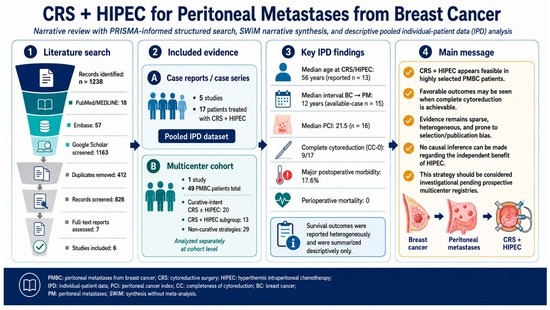
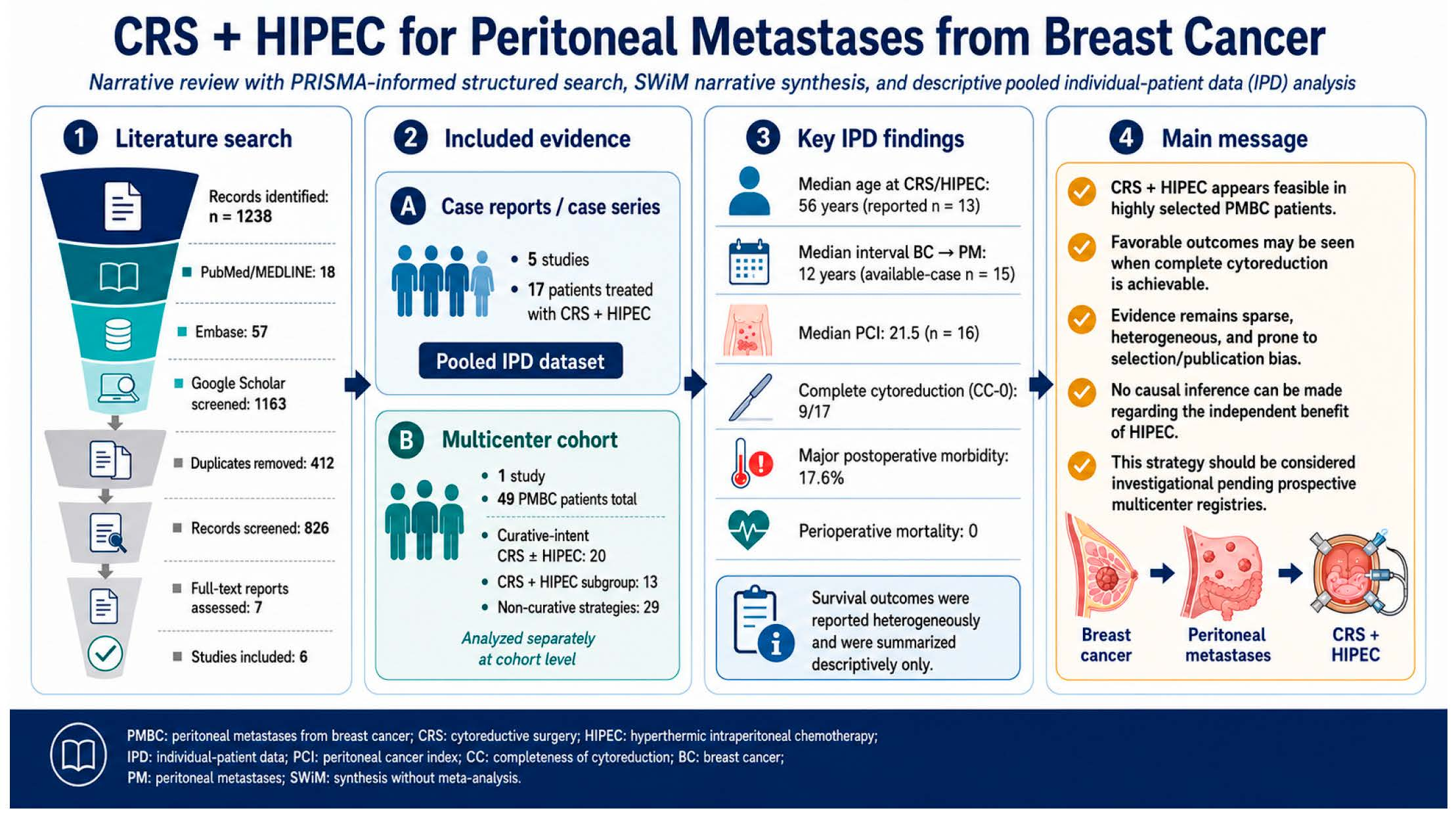
Graphical Abstract

1. Introduction

Although breast cancer survival rates are among the highest of all cancer types [1], metastatic breast cancer remains a challenging clinical scenario with poor long-term outcomes [2,3]. Peritoneal metastases from breast cancer (PMBC) represent an uncommon and clinically challenging pattern of spread. Available retrospective series of peritoneal disease from breast cancer managed with systemic therapy and/or palliative interventions have reported very poor outcomes; for example, Tuthill et al. described a median survival of 1.5 months in a heavily symptomatic cohort, highlighting the need for focused clinical research in this population [4]. These estimates likely reflect selected palliative populations and should be interpreted in context of disease burden, histology, and treatment era [3,4].
Recently, in an effort to integrate local and regional treatments, the combination of surgical cytoreduction with the administration of intraperitoneal chemotherapy has emerged as a novel method to resect all visible disease as well as treat microscopic residual disease [5]. Cytoreductive surgery (CRS) demands the removal of considerable areas of visceral organs in order to achieve optimal tumor reduction status. Towards this end and with the aim of achieving complete cytoreduction (CC-0), various peritoneal excision techniques have been described [6,7,8]. This approach has now been adopted widely in malignancies such as pseudomyxoma peritonei from appendiceal cancer and has been shown to have encouraging results in the treatment of peritoneal metastases from ovarian and colorectal cancer [9,10,11]. These advanced surgical techniques utilized to improve oncologic outcomes may result in significant consequences, such as surgical menopause, in female patients of reproductive age. Despite this risk, cases of successful pregnancies after CRS and HIPEC have been published, suggesting that the increased survival after such procedures offers hope for fertility preservation and childbearing in selected patients [12].
In the case of breast cancer, systemic chemotherapy has been the mainstay for breast cancer peritoneal metastatic disease, with surgery being indicated for palliative purposes only [13]. However, as the experience of surgeons and oncologists in cytoreductive surgery and intraperitoneal chemotherapy has been rapidly growing, there is emerging research on the use of this approach in “unusual” cases such as breast cancer patients [6]. Therefore, the aim of this study is to comprehensively synthesize the published clinical evidence on CRS with HIPEC for PMBC, focusing on patient selection and disease characteristics, feasibility and perioperative safety, and oncologic outcomes including intraperitoneal disease control and survival. By clearly distinguishing between what current data support and what remains uncertain, we also seek to identify priorities for future prospective registries and multicenter studies.

2. Materials and Methods

This article was designed as a narrative review with a structured, reproducible literature search and transparent study-selection reporting. PRISMA 2020 items [14] were used to report the identification, screening, eligibility, and inclusion of records, while synthesis was performed narratively according to SWiM principles where applicable [15]. The available evidence consists predominantly of case reports, small case series, and one non-randomized multicenter cohort; therefore, no effect-size meta-analysis was planned and this work was not designed as a formal systematic review. Accordingly, the protocol was not registered in PROSPERO. Before study selection, the authors defined the research question, eligibility criteria, outcomes of interest, and synthesis strategy.

2.1. Search Strategy

Literature searches were conducted in PubMed/MEDLINE, Embase, and Google Scholar up to 31 December 2025. The search strategy combined three concept blocks: breast cancer terms, HIPEC/intraperitoneal hyperthermic chemotherapy terms, and peritoneal metastasis/peritoneal carcinomatosis terms. Database-specific search strings, field tags, date limits, and PRISMA counts are provided in Supplementary Section S3. Database-specific yields were PubMed/MEDLINE (n = 18) and Embase (n = 57). Google Scholar was screened using equivalent keyword combinations, and the first 1163 relevance-ranked results were reviewed. Reference lists of eligible reports were also manually checked. Duplicate records were removed using DOI matching and exact or near-exact title matching, with author/year verification when needed.

2.2. Eligibility Criteria

Eligible studies were peer-reviewed full-text articles in English reporting patients with peritoneal carcinomatosis from breast cancer treated with CRS combined with HIPEC. All clinical study designs were eligible for inclusion. Studies were required to report at least one of the following: perioperative outcomes or oncologic outcomes. Exclusion criteria were review articles, editorials, conference abstracts without an accompanying full text, book chapters, non-human studies and reports in which peritoneal disease was not attributable to a breast primary.

2.3. Study Selection

Titles and abstracts of articles retrieved by the initial search were independently screened by two authors, to determine those articles for full-text review. Any discrepancies concerning the evaluation of the studies were arbitrated by all authors. Moreover, the reference lists of all eligible studies were assessed for additional articles. Reasons for exclusion at the full-text stage were recorded.

2.4. Data Extraction

For each patient, data were extracted about their demographic characteristics, primary breast cancer characteristics, initial surgical and adjuvant management, interval between primary malignancy and peritoneal metastasis, peritoneal metastasis characteristics, technical aspects of CRS and HIPEC (peritoneal carcinomatosis index—PCI; completeness of cytoreduction—CC; medications, duration and temperature during HIPEC; blood loss; intensive care unit (ICU) length of stay; postoperative length of stay and morbidity/mortality), and oncological outcomes (progression-free and overall survival).

2.5. Risk-of-Bias Assessment

Given that the evidence base comprises predominantly uncontrolled case re-ports/case series and one non-randomized observational cohort, we applied design-appropriate appraisal tools rather than a single generic scale. For case reports and case series we used the Joanna Briggs Institute (JBI) critical appraisal checklists (case report: 8 items, case series: 10 items) [16], which evaluate reporting completeness and key sources of bias such as clarity of inclusion criteria, standardized measurement of disease and outcomes and completeness/consecutiveness of case inclusion. For the multicenter observational cohort, which presents an intent-of-treatment comparison, we used the Risk Of Bias In Non-randomized Studies of Interventions (ROBINS-I) framework [17] to assess bias due to confounding, selection of participants, classification of interventions, deviations from intended interventions, missing data, outcome measurement and selective reporting. Two reviewers independently completed the checklists and disagreements were resolved by consensus. We did not calculate a numeric quality score. Instead, we summarized study-level judgments qualitatively (low/moderate/high concerns for JBI-based appraisals and low/moderate/serious/critical risk for ROBINS-I) and used these judgments to guide a conservative, primarily descriptive synthesis.

2.6. Data Synthesis and Statistical Analysis

Given the rarity of PMBC treated with CRS plus HIPEC and the heterogeneity of study designs, patient selection, reporting, and outcome definitions, the primary synthesis was a structured narrative synthesis guided by SWiM principles [15]. Where patient-level data were explicitly available in case reports or case series, an IPD dataset was constructed and is summarized descriptively using available-case denominators. Continuous variables are summarized as medians, ranges, means, or interquartile ranges according to the level of reporting in the source articles; categorical variables are summarized as counts and proportions. No comparative effect-size meta-analysis, hypothesis testing, or model-based survival curve was performed. Disease-control and survival outcomes are reported only descriptively as presented in the source articles. The multicenter survey, which reports outcomes for curative-intent CRS with or without HIPEC versus non-curative strategies, was synthesized separately at the cohort level to avoid double counting and to provide context on patient selection and comparative intent-of-treatment outcomes.

3. Results

3.1. Study Characteristics

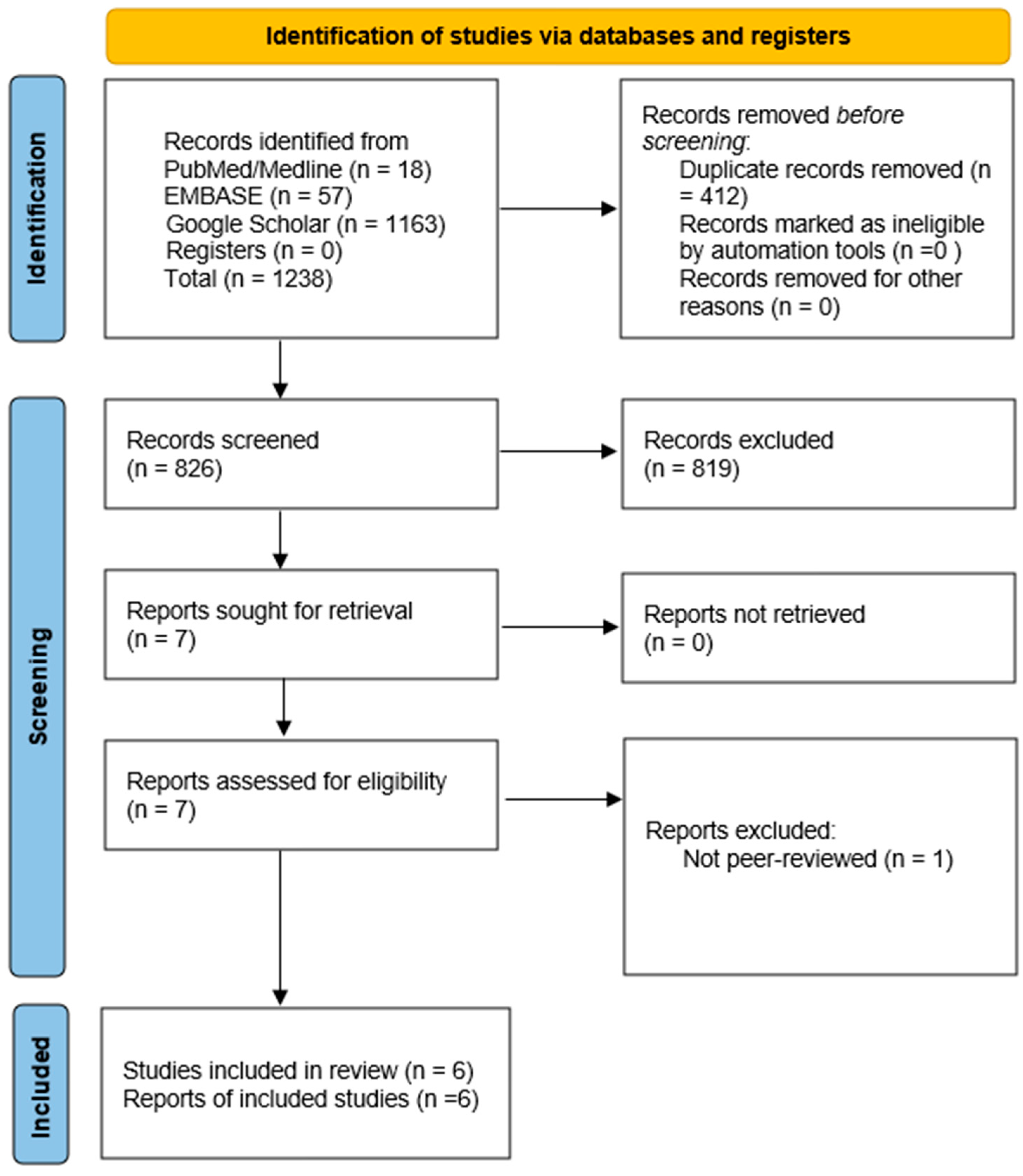
A total of 1238 records were identified (PubMed/MEDLINE n = 18; Embase n = 57; Google Scholar screened n = 1163). After removal of 412 duplicates, 826 records were screened and 819 were excluded at title/abstract screening. Seven full-text reports were assessed for eligibility; one was excluded as non-peer-reviewed (book chapter), and six peer-reviewed studies were included (Figure 1). Overall, the included studies enlisted 66 patients with peritoneal metastases from breast cancer. Out of 66 patients, 30 were treated with CRS combined with HIPEC.
Among the six included studies, five (case reports and small case series) provided sufficient details for extraction of individual-patient data, producing a pooled dataset of 17 patients treated with CRS combined with HIPEC [18,19,20,21,22]. The remaining study is a multicenter retrospective cohort of 49 patients, evaluating curative-intent CRS with or without HIPEC (20 patients) compared with non-curative strategies (29 patients) [23], and was therefore analyzed separately at the cohort level to avoid double counting and methodological overlap. Study-level characteristics are summarized in Table 1.

3.2. Individual-Patient Dataset

3.2.1. Patient Characteristics

Across 17 patients included in the IPD dataset [19,20,21,22,23], the median age at CRS/HIPEC was 56 years (range, 45–77 years; n = 13 with reported age). The interval between primary breast cancer diagnosis and diagnosis of peritoneal metastases varied widely across reports and included synchronous presentations; using available-case patient-level data (n = 15), the median interval was 12 years (IQR 8–15; range 0–30 years) (Table 2).

3.2.2. CRS + HIPEC Characteristics

At the time of CRS and HIPEC, most patients had disease confined to the peritoneal cavity or minimal extra-peritoneal involvement. The median PCI score was 21.5 (range, 7–39; n = 16), and complete cytoreduction (CC-0) was achieved in 9 of 17 patients (Table 2). Across studies reporting these perioperative metrics, the mean operative time was 374.5 min (range, 190–636; n = 11), the mean HIPEC duration was 65.3 min (range, 60–90; n = 17), and reported perfusion temperatures ranged from 40 °C to 43 °C (Table 3).

3.2.3. Postoperative Course

Across studies reporting postoperative course, the mean intensive care unit (ICU) stay was 18.9 h (range, 12–24; n = 7) and the mean postoperative hospital stay was 15.1 days (range, 8–24; n = 12) (Table 3). Major postoperative complications (Clavien–Dindo ≥ III or CTCAE ≥ grade 3, as reported in the primary studies) occurred in 3 of 17 patients (17.6%), while HIPEC-related toxicities were predominantly hematologic and reversible. No in-hospital or 30-day mortality was reported.
Disease-control and survival outcomes were reported heterogeneously across case-based studies and are presented descriptively only. Across the pooled IPD dataset, reported follow-up or survival durations ranged from 10 to 128 months, and four deaths were reported during follow-up. Disease-free survival and progression-free survival were inconsistently defined across reports, with explicit disease-free durations ranging from 13 to 128 months and progression-free survival ranging from 2 to 5 months in the two cases reported by Barakat et al. Because the pooled dataset included only 17 highly selected patients from case reports and small case series, no model-based survival curve or time-point survival estimates were generated.

3.2.4. Histology Data

Histology was reported as invasive ductal carcinoma in 8 of 17 cases, invasive lobular carcinoma in 7 of 17 cases, and mixed ductal–lobular carcinoma in 1 case (1 case not reported). Thus, lobular histology accounted for 7/16 (43.8%) among patients with reported histology. In the multicenter cohort (curative-intent group), lobular histology was also frequent (13/20; 65%) (Table 1). Receptor status and molecular subtype were inconsistently reported across case-based studies; where available, most cases were hormone-receptor-positive (Table 2). These observations are exploratory and intended to inform hypothesis generation rather than confirm histology- or subtype-specific effects.

3.3. Multicenter Cohort

In the multicenter cohort by Cardi et al. [23], 49 patients with peritoneal metastases from breast cancer were included. Of these, 20 patients were selected by a multidisciplinary team for curative-intent surgery, consisting of CRS with or without HIPEC, while 29 patients received non-curative treatments such as palliative surgery, neoadjuvant intraperitoneal chemotherapy (NIPEC), laparoscopic HIPEC for malignant ascites, or pressurized intraperitoneal aerosol chemotherapy (PIPAC). Within the curative-intent cohort, CRS was performed in all 20 patients, while HIPEC was administered in 13 patients, according to institutional protocols and intraoperative assessment.
The authors did not report baseline characteristics separately for these 13 HIPEC-treated patients. Specifically, age, interval from primary breast cancer diagnosis, histology, molecular subtype, PCI score and completeness of cytoreduction were not stratified by HIPEC use. Accordingly, these variables are presented only for the overall curative-intent cohort (CRS ± HIPEC, n = 20) and are not attributed to the CRS + HIPEC subgroup (Table 1, Supplementary Table S1).
For the CRS + HIPEC subgroup (n = 13), the study explicitly reported the HIPEC protocol and toxicity profile. HIPEC was delivered with cisplatin 75 mg/m2 for 60 min at a target intraperitoneal temperature of 43 °C, using either an open or closed technique according to institutional protocol (Table 1). HIPEC-related toxicity occurred in 2/13 patients (15.3%), consisting of one grade 1–2 acute renal failure and one grade 3 leukopenia. Both adverse events were reversible with conservative management (Table 3).
Perioperative outcomes reported specifically for the CRS + HIPEC subgroup were otherwise limited to these perfusion parameters and HIPEC-related toxicities (Table 3). No perioperative mortality was reported.
At the level of the broader curative-intent cohort (n = 20 CRS ± HIPEC), the study reported major postoperative morbidity in approximately 30% of patients and a median postoperative hospital stay of 15 days. However, because these outcomes were not stratified by HIPEC use, they are reported at the cohort level only. From an oncologic standpoint, the curative-intent cohort demonstrated a median overall survival of 61.5 months, measured from the diagnosis of peritoneal metastases, which was markedly longer than the survival observed in patients managed with non-curative approaches (Table 1).

3.4. Risk of Bias and Methodological Quality

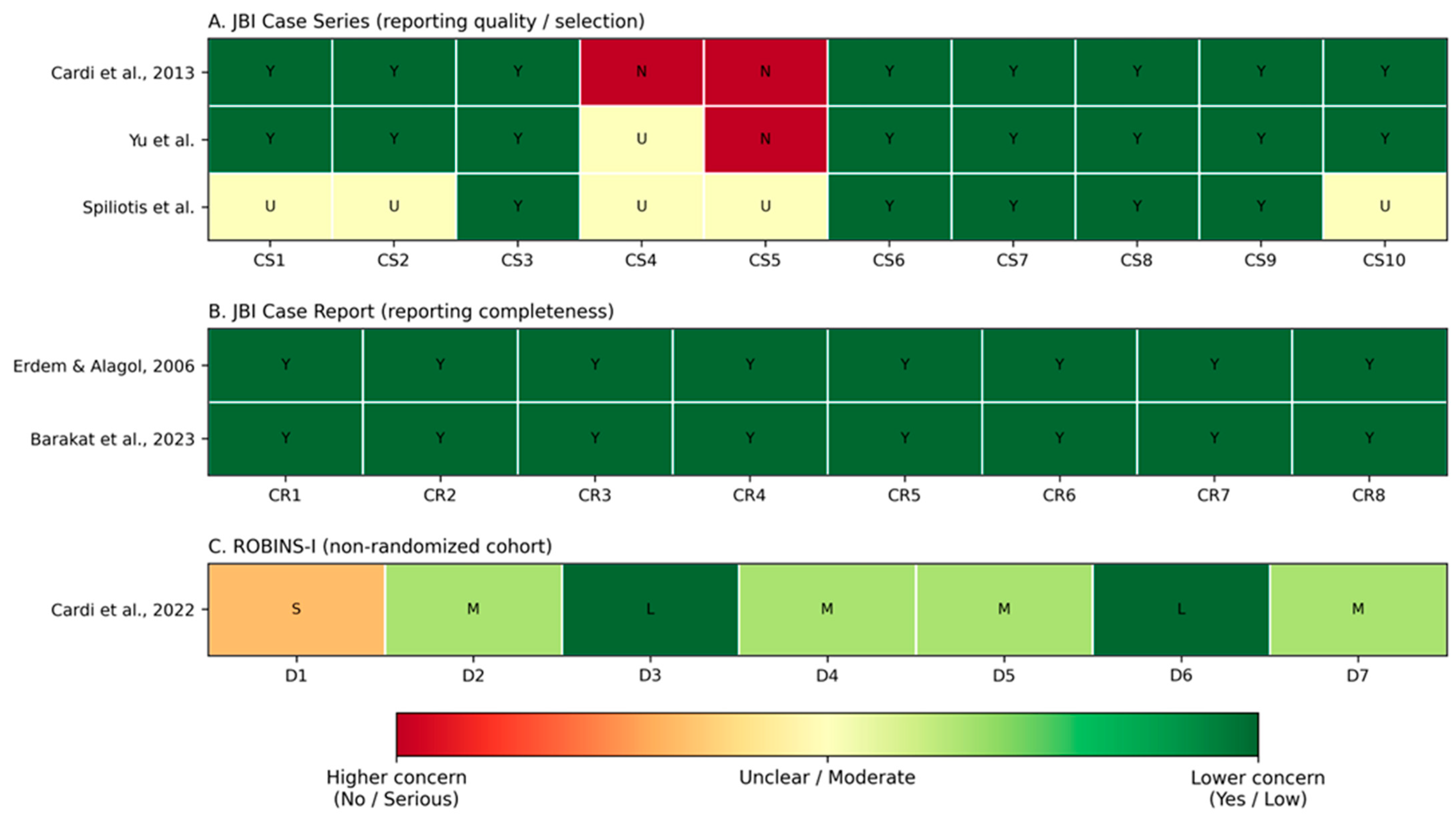
Risk of bias and methodological quality were assessed using design-specific tools, as summarized in Table 4 and visualized in Figure 2.
Case reports and case series included in the IPD dataset were appraised using the Joanna Briggs Institute (JBI) critical appraisal checklists and were found to have moderate to high risk of selection and publication bias, inherent to their observational and non-consecutive nature. Reporting outcomes and perioperative details were generally adequate, but completeness of inclusion and external validity were limited.
The multicenter cohort study [23], assessed using the ROBINS-I tool, demonstrated serious risk of bias, primarily due to confounding by indication and treatment selection by multidisciplinary teams. The use of HIPEC was not uniform across centers, and outcomes were reported at the cohort level, limiting causal inference regarding the incremental benefit of HIPEC.
A detailed item-level risk-of-bias assessment of study designs is provided in Supplementary Table S2.

4. Discussion

4.1. Principal Findings

PMBC is an uncommon and clinically challenging manifestation of metastatic breast cancer, associated with poor outcomes in historical palliative series and without a standardized locoregional treatment pathway [3,4,13,24,25]. The present review identified only six peer-reviewed studies reporting CRS plus HIPEC or curative-intent CRS with or without HIPEC in this setting, confirming that the evidence base remains sparse and dominated by case reports, small case series, and one non-randomized multicenter cohort [18,19,20,21,22,23]. The pooled IPD dataset from case reports and case series suggests that CRS plus HIPEC can be delivered with acceptable perioperative morbidity and no reported perioperative mortality in highly selected patients [18,19,20,21,22]. These findings support feasibility, but they should not be interpreted as proof of oncologic efficacy, because the available data are uncontrolled, heterogeneous, and strongly affected by selection and publication bias, as reflected by the design-specific risk-of-bias assessment [16,17].

4.2. Clinical Interpretation of Feasibility and Safety

The perioperative findings are clinically relevant because CRS and HIPEC are complex interventions that require advanced peritonectomy techniques, careful patient selection, and experienced multidisciplinary teams [5,6,7,8]. In other peritoneal surface malignancies, the value and safety of CRS with intraperitoneal chemotherapy are closely linked to disease distribution, completeness of cytoreduction, and institutional expertise [9,10,11,26]. In the present case-based IPD dataset, complete cytoreduction (CC-0) was achieved in 9 of 17 patients, major postoperative morbidity occurred in 17.6%, and no perioperative mortality was reported [18,19,20,21,22]. The multicenter cohort similarly reported no perioperative mortality, major morbidity in the broader curative-intent cohort, and reversible HIPEC-related toxicity in the CRS plus HIPEC subgroup [23]. Taken together, these observations suggest that morbidity may be acceptable in specialized centers, but they also emphasize that outcomes are likely center-dependent and cannot be generalized to unselected PMBC patients.

4.3. Heterogeneity of Metastatic Phenotype and Treatment Context

A central limitation of the current literature is the heterogeneity of the metastatic phenotype being treated. Included patients differed in synchronous versus metachro-nous PMBC presentation, extent of peritoneal disease, completeness of cytoreduction, presence or control of extra-peritoneal metastases, histologic subtype, receptor profile, and systemic therapy before and after surgery [18,19,20,21,22,23]. This is particularly important in breast cancer, where prognosis and treatment responsiveness are strongly influenced by molecular subtype, hormone-receptor/HER2 status, metastatic burden, and the availability of modern systemic therapy [13,27,28,29]. Population-based data also indicate that peritoneal metastases from extra-abdominal malignancies represent a biologically heterogeneous clinical entity rather than a uniform disease state [24]. In this review, lobular histology was frequent in both the pooled IPD dataset and the multicenter curative-intent cohort, but receptor status and molecular subtype were inconsistently reported in the case-based literature [18,19,20,21,22,23]. These differences confound interpretation because favorable outcomes may reflect tumor biology, indolent disease course, systemic treatment responsiveness, limited metastatic burden, or highly selective surgical referral rather than the independent effect of HIPEC.

4.4. Interpretation of the Multicenter Cohort and the Incremental Role of HIPEC

The multicenter cohort by Cardi et al. provides the most informative comparative context because it evaluated curative-intent CRS with or without HIPEC versus non-curative strategies in PMBC [23]. However, this study cannot isolate the incremental benefit of HIPEC. Allocation to curative-intent treatment was non-randomized and based on multidisciplinary assessment, while HIPEC was administered to only a subset of the curative-intent cohort [23]. Baseline variables and oncologic outcomes were not stratified separately for the HIPEC-treated subgroup; therefore, the longer survival reported for the curative-intent cohort should be interpreted primarily as a signal of patient selection and potential value of aggressive multidisciplinary management, rather than evidence that HIPEC itself improves survival [23]. This distinction is essential and is consistent with the serious risk of bias assigned to the cohort using ROBINS-I, particularly with respect to confounding by indication and selection of participants [17].

4.5. Clinical Implications and Future Research

Based on the available evidence, CRS plus HIPEC should not be considered a standard treatment for PMBC. Current metastatic breast cancer guidance remains centered on systemic therapy, with locoregional approaches considered only in selected clinical contexts [13,30]. Similarly, consensus guidance on peritoneal surface malignancies recognizes the rarity of breast cancer peritoneal metastases and supports individualized, multidisciplinary decision making rather than routine CRS plus HIPEC [25]. At most, CRS plus HIPEC may represent an investigational strategy for carefully selected patients with limited or controllable peritoneal disease, absence or durable control of extra-peritoneal metastases, favorable biology, and a realistic chance of complete cytoreduction. This cautious interpretation is consistent with the broader literature on oligometastatic breast cancer, in which potential benefit from local therapy appears most plausible in carefully selected patients with low-volume disease and favorable prognostic features [30,31,32,33]. Future prospective multicenter registries should use standardized reporting of PCI, CC score, histology, receptor and molecular subtype, performance status, systemic therapy sequence, extra-peritoneal disease status, HIPEC regimen, complication grading, and time-zero definitions for outcomes. Such data are necessary before comparative studies can clarify whether HIPEC provides incremental benefit beyond CRS and modern systemic therapy.

4.6. Strengths and Limitations

This review has several strengths. It used a structured and reproducible search strategy, transparent PRISMA-informed reporting of study selection, design-appropriate risk-of-bias tools, and a deliberately conservative synthesis that separates case-based IPD from the multicenter cohort [14,15,16,17]. The main limitations are those of the underlying literature. The evidence consists of case reports, small case series, and one non-randomized multicenter cohort, with no randomized comparisons, small sample size, selective reporting, and limited external validity [18,19,20,21,22,23]. Important variables such as performance status, systemic therapy timing, PCI, molecular subtype, extra-peritoneal disease, and standardized complication grading were incompletely reported [18,19,20,21,22,23]. There was also substantial heterogeneity in HIPEC agents, perfusion temperature, duration, and technique, as well as inconsistent outcome definitions and follow-up duration [18,19,20,21,22,23]. Consequently, the results should be considered hypothesis-generating only and should not be used to infer the independent oncologic effect of HIPEC.

5. Conclusions

Peritoneal metastases from breast cancer remain a rare and clinically challenging pattern of metastatic disease for which no standardized treatment pathway currently exists. The available evidence suggests that cytoreductive surgery combined with HIPEC is technically feasible in a highly selected subset of patients, particularly when peritoneal disease is limited, complete cytoreduction is achievable, extra-peritoneal disease is absent or well controlled, and treatment is delivered within experienced peritoneal surface malignancy centers as part of a multidisciplinary strategy.
However, these findings should be interpreted with caution. The current evidence base is composed mainly of case reports, small case series, and one non-randomized multicenter cohort, with substantial clinical and methodological heterogeneity. Therefore, CRS plus HIPEC should not be regarded as an established standard of care for peritoneal metastases from breast cancer, but rather as a potentially valuable individualized or investigational approach for carefully selected patients.
Future prospective multicenter registries and collaborative comparative studies are needed to define reproducible selection criteria; clarify the prognostic impact of PCI, completeness of cytoreduction, molecular subtype, systemic therapy sequence, and extra-peritoneal disease status; and determine whether HIPEC provides incremental benefit beyond cytoreductive surgery and modern systemic therapy alone.

Supplementary Materials

The following supporting information can be downloaded at https://www.mdpi.com/article/10.3390/jcm15124511/s1, Supplementary Section S1: Table S1: Tumor biology details explicitly reported in multicenter cohort, Supplementary Section S2: Table S2: Item-level risk of bias and methodological quality appraisal. Supplementary Section S3: Full search strategy and PRISMA counts.

Author Contributions

Conceptualization, D.P. and V.K.; methodology, D.P., V.K. and I.S.; validation, V.P., N.T. and I.K.P.; formal analysis, S.P.; investigation, S.P. and K.P.; resources, I.S.; data curation, V.P. and K.P.; writing—original draft preparation, D.P., V.K., S.P. and I.S.; writing—review and editing, V.P., N.T., K.P. and I.K.P.; supervision, D.P. and I.S. All authors have read and agreed to the published version of the manuscript.

Funding

This research received no external funding.

Institutional Review Board Statement

Not applicable.

Informed Consent Statement

Not applicable.

Data Availability Statement

No new data were created.

Conflicts of Interest

The authors declare no conflicts of interest.

Abbreviations

The following abbreviations are used in this manuscript:
BCBreast cancer
CCCompleteness of cytoreduction (score)
CRSCytoreductive surgery
CTCAECommon Terminology Criteria for Adverse Events
DFSDisease-free survival
EREstrogen receptor
HER2Human epidermal growth factor receptor 2
HIPECHyperthermic intraperitoneal chemotherapy
ICUIntensive care unit
IDCInvasive ductal carcinoma
ILCInvasive lobular carcinoma
IPDIndividual-patient data
IQRInterquartile range
JBIJoanna Briggs Institute
LOSLength of stay
MDTMultidisciplinary team
NRNot reported
OSOverall survival
PCIPeritoneal cancer index
PFSProgression-free survival
PMPeritoneal metastasis
PMBCPeritoneal metastasis from breast cancer
PODPostoperative day
PRProgesterone receptor
PRISMAPreferred Reporting Items for Systematic Reviews and Meta-Analyses
RoBRisk of bias
ROBINS-IRisk Of Bias In Non-randomized Studies of Interventions
SWiMSynthesis without meta-analysis

References

  1. Siegel, R.L.; Miller, K.D. Cancer statistics, 2019. CA Cancer J. Clin. 2019, 69, 7–34. [Google Scholar] [CrossRef] [PubMed]
  2. Sledge, G.W., Jr. Curing metastatic breast cancer. J. Oncol. Pract. 2016, 12, 6–10. [Google Scholar] [CrossRef] [PubMed]
  3. Bertozzi, S.; Londero, A.P.; Cedolini, C.; Uzzau, A.; Seriau, L.; Bernardi, S.; Bacchetti, S.; Pasqual, E.M.; Risaliti, A. Prevalence, risk factors, and prognosis of peritoneal metastasis from breast cancer. SpringerPlus 2015, 4, 688. [Google Scholar] [CrossRef]
  4. Tuthill, M.; Pell, R.; Guiliani, R.; Lim, A.; Gudi, M.; Contractor, K.B.; Lewis, J.S.; Coombes, R.C.; Stebbing, J. Peritoneal disease in breast cancer: A specific entity with an extremely poor prognosis. Eur. J. Cancer 2009, 45, 2146–2149. [Google Scholar] [CrossRef]
  5. Sugarbaker, P.H.; Cunliffe, W.J.; Belliveau, J.; de Bruijn, E.A.; Graves, T.; Mullins, R.E.; Schlag, P. Rationale for integrating early postoperative intraperitoneal chemotherapy into the surgical treatment of gastrointestinal cancer. Semin. Oncol. 1989, 16, 83–97. [Google Scholar] [PubMed]
  6. Kyriazanos, I.; Papageorgiou, D.; Zoulamoglou, M.; Marougkas, M.; Stamos, N.; Ivros, N.; Kalles, V. Total extraperitoneal access for parietal peritonectomy for peritoneal surface malignancy: The “cocoon” technique. Eur. J. Obstet. Gynecol. Reprod. Biol. 2020, 251, 258–262. [Google Scholar] [CrossRef]
  7. Bao, P.; Bartlett, D. Surgical techniques in visceral resection and peritonectomy procedures. Cancer J. 2009, 15, 204–211. [Google Scholar] [CrossRef]
  8. Sugarbaker, P.H. Peritonectomy procedures. Surg. Oncol. Clin. N. Am. 2003, 12, 703–727. [Google Scholar] [CrossRef]
  9. Cardi, M.; Sammartino, P.; Mingarelli, V.; Sibio, S.; Accarpio, F.; Biacchi, D.; Musio, D.; Sollazzo, B.; Di Giorgio, A. Cytoreduction and HIPEC in the treatment of “unconventional” secondary peritoneal carcinomatosis. World J. Surg. Oncol. 2015, 13, 305. [Google Scholar] [CrossRef]
  10. van Driel, W.J.; Koole, S.N.; Sikorska, K.; Schagen van Leeuwen, J.H.; Schreuder, H.W.R.; Hermans, R.H.M.; De Hingh, I.H.; Van Der Velden, J.; Arts, H.J.; Massuger, L.F.; et al. Hyperthermic intraperitoneal chemotherapy in ovarian cancer. N. Engl. J. Med. 2018, 378, 230–240. [Google Scholar] [CrossRef]
  11. Kyang, L.S.; Alzahrani, N.A.; Valle, S.J.; Rahman, M.K.; Arrowaili, A.; Liauw, W.; Morris, D.L. Long-term survival outcomes of cytoreductive surgery and perioperative intraperitoneal chemotherapy: Single-institutional experience with 1225 cases. J. Surg. Oncol. 2019, 120, 794–802. [Google Scholar] [CrossRef]
  12. Papageorgiou, D.; Manatakis, D.K.; Papakonstantinou, K.; Kyriazanos, I.D. A comprehensive review of childbearing after cytoreductive surgery and hyperthermic intraperitoneal chemotherapy. Arch. Gynecol. Obstet. 2020, 302, 793–799. [Google Scholar] [CrossRef]
  13. Gennari, A.; André, F.; Barrios, C.H.; Cortés, J.; Curigliano, G.; de Azambuja, E.; DeMichele, A.; Dent, R.; Fenlon, D.; Gligorov, J.; et al. ESMO clinical practice guideline for the diagnosis, staging and treatment of patients with metastatic breast cancer. Ann. Oncol. 2021, 32, 1475–1495. [Google Scholar] [CrossRef]
  14. Page, M.J.; McKenzie, J.E.; Bossuyt, P.M.; Boutron, I.; Hoffmann, T.C.; Mulrow, C.D.; Shamseer, L.; Tetzlaff, J.M.; Akl, E.A.; Brennan, S.E.; et al. The PRISMA 2020 statement: An updated guideline for reporting systematic reviews. BMJ 2021, 372, n71. [Google Scholar] [CrossRef]
  15. Campbell, M.; McKenzie, J.E.; Sowden, A.; Katikireddi, S.V.; Brennan, S.E.; Ellis, S.; Hartmann-Boyce, J.; Ryan, R.; Shepperd, S.; Thomas, J.; et al. Synthesis without meta-analysis (SWiM) in systematic reviews: Reporting guideline. BMJ 2020, 368, l6890. [Google Scholar] [CrossRef] [PubMed]
  16. Munn, Z.; Barker, T.H.; Moola, S.; Tufanaru, C.; Stern, C.; McArthur, A.; Stephenson, M.; Aromataris, E. Methodological quality of case series studies: An introduction to the JBI critical appraisal tool. JBI Evid. Synth. 2020, 18, 2127–2133. [Google Scholar] [CrossRef] [PubMed]
  17. Sterne, J.A.C.; Hernán, M.A.; Reeves, B.C.; Savović, J.; Berkman, N.D.; Viswanathan, M.; Henry, D.; Altman, D.G.; Ansari, M.T.; Boutron, I.; et al. ROBINS-I: A tool for assessing risk of bias in non-randomised studies of interventions. BMJ 2016, 355, i4919. [Google Scholar] [CrossRef]
  18. Erdem, E.; Alagöl, H. Cytoreductive surgery and intraperitoneal hyperthermic chemoperfusion in the treatment of ovarian and peritoneal metastasis from breast carcinoma—A case report. Eur. Surg. 2006, 38, 76–78. [Google Scholar] [CrossRef]
  19. Cardi, M.; Sammartino, P.; Framarino, M.L.; Biacchi, D.; Cortesi, E.; Sibio, S.; Accarpio, F.; Luciani, C.; Palazzo, A.; di Giorgio, A. Treatment of peritoneal carcinomatosis from breast cancer by maximal cytoreduction and hyperthermic intraperitoneal chemotherapy: A preliminary report on 5 cases. Breast 2013, 22, 845–849. [Google Scholar] [CrossRef] [PubMed]
  20. Yu, J.H.; Feng, Y.; Li, X.B.; Zhang, C.-Y.; Shi, F.; An, S.-L.; Liu, G.; Zhang, Y.-B.; Zhang, K.; Ji, Z.-H.; et al. Cytoreductive surgery and hyperthermic intraperitoneal chemotherapy for peritoneal metastasis from breast cancer: A preliminary report of 4 cases. Gland Surg. 2021, 10, 1315–1324. [Google Scholar] [CrossRef]
  21. Spiliotis, J.; Ntinas, A.; Koustas, P.; Koupanis, C.H.; Stefanopoulou, D.; Dadoudis, G. Breast cancer peritoneal metastasis: Role of cytoreductive surgery and HIPEC. Ann. Surg. Case Rep. 2021, 4, 1047. [Google Scholar]
  22. Barakat, P.; Gushchin, V.; Falla Zuniga, L.F.; King, M.C.; Sardi, A. Achieving intraperitoneal disease control using cytoreductive surgery and hyperthermic intraperitoneal chemotherapy: Two cases of metastatic breast cancer. Cureus 2023, 15, e38767. [Google Scholar] [CrossRef]
  23. Cardi, M.; Pocard, M.; Dico, R.L.; Fiorentini, G.; Valle, M.; Gelmini, R.; Vaira, M.; Pasqual, E.M.; Asero, S.; Baiocchi, G.; et al. Selected patients with peritoneal metastases from breast cancer may benefit from cytoreductive surgery: Results of a multicenter survey. Front. Oncol. 2022, 12, 822550. [Google Scholar] [CrossRef]
  24. Flanagan, M.; Solon, J.; Chang, K.H.; Deady, S.; Moran, B.; Cahill, R.; Shields, C.; Mulsow, J. Peritoneal metastases from extra-abdominal cancer—A population-based study. Eur. J. Surg. Oncol. 2018, 44, 1811–1817. [Google Scholar] [CrossRef] [PubMed]
  25. Chicago Consensus Working Group. The Chicago Consensus on Peritoneal Surface Malignancies: Management of desmoplastic small round cell tumor, breast, and gastrointestinal stromal tumors. Ann. Surg. Oncol. 2020, 27, 1793–1797. [Google Scholar] [CrossRef] [PubMed]
  26. Kaur, H.; Litinas, M.C.; Lauder, C.; Da Silva, N.; Bradshaw, E.L.; Price, T.; Trochsler, M.; Wright, J.; Woods, S.L.; Hewett, P. Long-term survival following cytoreductive surgery and hyperthermic intraperitoneal chemotherapy (HIPEC) for pseudomyxoma peritonei: A 22-year single institution experience. ANZ J. Surg. 2025, 95, 2112–2122. [Google Scholar] [CrossRef] [PubMed]
  27. Gobbini, E.; Ezzalfani, M.; Dieras, V.; Bachelot, T.; Brain, E.; Debled, M.; Jacot, W.; Mouret-Reynier, M.A.; Goncalves, A.; Dalenc, F.; et al. Time trends of overall survival among metastatic breast cancer patients in the real-life ESME cohort. Eur. J. Cancer 2018, 96, 17–24. [Google Scholar] [CrossRef]
  28. Deluche, E.; Antoine, A.; Bachelot, T.; Lardy-Cleaud, A.; Dieras, V.; Brain, E.; Debled, M.; Jacot, W.; Mouret-Reynier, M.A.; Goncalves, A.; et al. Contemporary outcomes of metastatic breast cancer among 22,000 women from the multicentre ESME cohort 2008–2016. Eur. J. Cancer 2020, 129, 60–70. [Google Scholar] [CrossRef]
  29. Cardoso, F.; Senkus, E.; Costa, A.; Papadopoulos, E.; Aapro, M.; André, F.; Harbeck, N.; Aguilar Lopez, B.; Barrios, C.H.; Bergh, J.; et al. 4th ESO-ESMO International Consensus Guidelines for Advanced Breast Cancer (ABC 4). Ann. Oncol. 2018, 29, 1634–1657. [Google Scholar] [CrossRef]
  30. Bartlett, E.K.; Simmons, K.D.; Wachtel, H.; Roses, R.E.; Fraker, D.L.; Kelz, R.R.; Karakousis, G.C. The rise in metastasectomy across cancer types over the past decade. Cancer 2015, 121, 747–757. [Google Scholar] [CrossRef]
  31. Chun, Y.S.; Mizuno, T.; Cloyd, J.M.; Ha, M.J.; Omichi, K.; Tzeng, C.D.; Aloia, T.A.; Ueno, N.T.; Kuerer, H.M.; Barcenas, C.H.; et al. Hepatic resection for breast cancer liver metastases: Impact of intrinsic subtypes. Eur. J. Surg. Oncol. 2020, 46, 1588–1595. [Google Scholar] [CrossRef]
  32. van Ommen-Nijhof, A.; Steenbruggen, T.G.; Schats, W.; Wiersma, T.; Horlings, H.M.; Mann, R.; Koppert, L.; van Werkhoven, E.; Sonke, G.S.; Jager, A. Prognostic factors in patients with oligometastatic breast can-cer—A systematic review. Cancer Treat. Rev. 2020, 91, 102114, Erratum in Cancer Treat. Rev. 2021, 92, 102138. https://doi.org/10.1016/j.ctrv.2020.102138. [Google Scholar] [CrossRef]
  33. Nagasaki, E.; Kudo, R.; Tamura, M.; Hayashi, K.; Uwagawa, T.; Kijima, Y.; Nogi, H.; Takeyama, H.; Suzuki, M.; Nishikawa, M.; et al. Long-term outcomes of oligometastatic breast cancer patients treated with curative intent: An updated report. Breast Cancer 2021, 28, 1051–1061. [Google Scholar] [CrossRef]
Figure 1. PRISMA 2020 flow diagram.
Jcm 15 04511 g001
Figure 2. Risk of bias and methodological quality across included studies. Traffic-light plot summarizing domain-level risk-of-bias judgments using design-specific appraisal tools: Joanna Briggs Institute (JBI) critical appraisal checklists for case reports [18,22] and case series [19,20,21], and ROBINS-I (Risk Of Bias In Non-randomized Studies of Interventions) for the multicenter retrospective cohort [23]. Each cell reflects the judgment for the corresponding item/domain within each study; “Yes/Low risk” indicates adequate methodological reporting, whereas “No/Unclear” (JBI) or “Moderate/Serious” (ROBINS-I) indicates increasing concern. CS1–CS10 refer to the 10 items of the JBI critical appraisal checklist for case series. CR1–CR8 refer to the 8 items of the JBI critical appraisal checklist for case reports. D1–D7 refer to ROBINS-I domains.
Jcm 15 04511 g002
Table 1. Characteristics of included studies and treatment protocols.
Study (Year)DesignPatients with PMBC (n)Peritoneal-Directed StrategyHIPEC Regimen (Agent, Dose)Perfusion Parameters (Time, Temp, Technique)Outcomes Reported (Time-Zero)Key Findings Included in IPD Pooling
Erdem & Alagöl (2006) [18]Case report1CRS + HIPECCisplatin 150 mg in 3 L saline90 min, 40–42 °C, abdomen closed (closed perfusion circuit)Follow-up after CRS + HIPECNo recurrence/metastasis at 40 months. Discharge on POD10. No periop complications reported.Yes
Cardi et al. (2013) [19]Case series5CRS + HIPECCisplatin 75 mg/m260 min, 40 °C, closed technique, flow 500 mL/minOutcomes from CRS + HIPECPCI 15–24. CC: CC0 2/5, CC1 2/5, CC2 1/5. OS: 1 death at 56 mo, 4 alive DF at 13/45/74/128 moYes
Yu et al. (2021) [20]Case series4CRS + HIPECDocetaxel 120 mg + cisplatin 120 mg (each in 3 L)60 min total (30 min/drug), 43 ± 0.5 °C, open abdomen-ColiseumOS from CRS + HIPECPCI 21–39. CC: CC0 2/4, CC3 2/4. No periop complications reported. OS 31/28/15/49 mo (all alive at last FU)Yes
Spiliotis et al. (2021) [21]Case series5CRS + HIPECCisplatin 100 mg/m2 + paclitaxel 175 mg/m260 min, 42.5 °C, closed techniqueSurvival after CRS + HIPECPCI 7–24. CC: CC0 4/5, CC1 1/5. Survival: 78/68/10/54(death)/12 moYes
Barakat et al. (2023) [22]Case report (2 cases)2CRS + HIPECMelphalan 50 mg/m290 min, 41–43 °C, closed techniqueOS and PFS from CRS + HIPEC datePCI exploration 14/29. CC 1 both. ICU 1 day both. LOS 8/13 d. OS 49/38 mo. PFS 5/2 mo. peritoneal recurrence 26 mo in 1 ptYes
Cardi et al. (2022) [23]Multicenter retrospective cohort49Curative
CRS + HIPEC (n = 13),
CRS-HIPEC (n = 7)
Non-curative (n = 29)
Cisplatin 75 mg/m260 min, 43 °C, open/closed per centerOS from PM diagnosisCurative cohort: PCI median 15 (13–20.5). CC0 13/20. major morbidity 6/20 (30%). HIPEC toxicity 2/13 (15.3%)No (cohort-level)
Abbreviations: BC: breast cancer, CC: completeness of cytoreduction, CRS: cytoreductive surgery, DF: disease-free, FU: follow-up, HIPEC: hyperthermic intraperitoneal chemotherapy, ICU: intensive care unit, IPD: individual-patient data, LOS: length of stay, OS: overall survival, PCI: peritoneal cancer index, PM: peritoneal metastasis, PMBC: peritoneal metastasis from breast cancer, POD: postoperative day, PFS: progression-free survival.
Table 2. Individual-patient baseline and disease characteristics in the pooled IPD dataset (n = 17).
Study (Year)CaseAge at CRS/HIPEC (y)Interval Time from BC to PM (y)HistologyER/PR/HER2 at PMPCI ScoreCC Score
Erdem & Alagöl (2006) [18]1552IDCER+/PR+/HER2 NRNR0
Cardi et al. (2013) [19]15811IDCER+++/PR−/HER2−150
25430ILCER+/PR−/HER2++221
35521ILCER++/PR++/HER2−222
47714IDCER−/PR−/HER2−241
55318IDCER++/PR+/HER2−180
Yu et al. (2021) [20]1NR13.3ILCER+/PR+/HER2−393
2NR0IDCER+/PR−/HER2+283
3NR11.2IDCER+/PR−/HER2−210
4NR0IDCER+/PR+/HER2−300
Spiliotis et al. (2021) [21]16315IDCNR80
26812ILCNR140
35510ILCNR241
48217IDCNR100
56512ILCNR70
Barakat et al. (2023) [22]172NRILCER+/PR+/HER2−141
259NRDuctal-lobularER+/PR−/HER2−291
Abbreviations: BC: breast cancer, CC: completeness of cytoreduction, CRS: cytoreductive surgery, ER: estrogen receptor, HER2: human epidermal growth factor receptor 2, HIPEC: hyperthermic intraperitoneal chemotherapy, ILC: invasive lobular carcinoma, IDC: invasive ductal carcinoma, NR: not reported, PCI: peritoneal cancer index, PM: peritoneal metastasis, PR: progesterone receptor.
Table 3. Perioperative/postoperative outcomes and survival metrics: IPD dataset vs. multicenter cohort.
MetricIPD Dataset (n = 17)Multicenter Curative Cohort (CRS ± HIPEC n = 20, CRS + HIPEC Subgroup n = 13)
HIPEC duration (min)Mean of 65.3, median of 60 (range of 60–90), n = 1760, n = 13
Intraperitoneal temperature (°C)Range of 40–4343, n = 13
Operative timeMean of 374.5 min (range of 190–636), n = 11225 min (median, IQR of 200–272.5)
Blood lossMean of 944 mL (range of 400–2000), n = 9550 cc (median, IQR of 300–1100)
ICU stayMean of 18.9 h (range of 12–24), n = 712 h (median, IQR of 9–18)
Postop LOSMean of 15.1 d (range of 8–24), n = 1215.5 d (median, IQR of 13–20.2)
Major morbidity3/17 (17.6%) (CTCAE ≥ 3/NCI grade IV where reported)6/20 (30%) (grade IIIa–IVa)
Perioperative mortality00
HIPEC drug toxicityReported sporadically (e.g., transient renal toxicity in Cardi et al. 2013 [19]; hematologic in Barakat et al. 2023 [22])2/13 (15.3%) (renal failure grade 1–2, leukopenia grade 3, reversible)
OS from CRS/HIPECMedian not reached, OS at 12 and 36 months of 100%, OS at 60 months of ~53%OS from PM diagnosis: median of 61.5 months (curative)
Disease controlDFS/PFS variably reported; explicit DF durations of 13–128 mo; PFS of 2–5 mo in Barakat et al. 2023 [22]Recurrence/progression after CRS: median of 54 months, peritoneal recurrence of 7/20 (35%) after median of 39 months
Abbreviations: CRS: cytoreductive surgery, CTCAE: Common Terminology Criteria for Adverse Events, DFS: disease-free survival, HIPEC: hyperthermic intraperitoneal chemotherapy, ICU: intensive care unit, IQR: interquartile range, LOS: length of stay, NR: not reported, OS: overall survival, PCI: peritoneal cancer index, PFS: progression-free survival, PM: peritoneal metastases.
Table 4. Risk of bias and methodological quality assessment.
Study (Year)DesignTool UsedOverall JudgmentMain Limitations Driving Bias
Erdem & Alagöl (2006) [18]Case reportJBI Case Report ChecklistHigh RoBSingle patient, no comparator, selective reporting, limited generalizability
Cardi et al. (2013) [19]Case seriesJBI Case Series ChecklistModerate–High RoBNon-consecutive, small n, heterogeneous prior therapy, no control, outcomes reported but limited external validity
Yu et al. (2021) [20]Case seriesJBI Case Series ChecklistModerate–High RoBSmall n, short/heterogeneous follow-up, selection bias, limited adverse-event detail
Spiliotis et al. (2021) [21]Case seriesJBI Case Series ChecklistHigh RoBSparse perioperative reporting, short follow-up for some, potential selection/publication bias
Barakat et al. (2023) [22]Case report (2 cases)JBI Case Report ChecklistHigh RoBVery small n, heavy pre-treatment, outcome heterogeneity, publication bias
Cardi et al. (2022) [23]Multicenter retrospective cohortROBINS-ISerious RoBConfounding by indication, non-random HIPEC allocation, baseline/outcomes not stratified for HIPEC subset, heterogeneity across centers
Abbreviations: JBI: Joanna Briggs Institute, ROBINS-I: Risk Of Bias In Non-randomized Studies of Interventions, RoB: risk of bias.
Disclaimer/Publisher’s Note: The statements, opinions and data contained in all publications are solely those of the individual author(s) and contributor(s) and not of MDPI and/or the editor(s). MDPI and/or the editor(s) disclaim responsibility for any injury to people or property resulting from any ideas, methods, instructions or products referred to in the content.