The Effectiveness of Methylene Blue in Adult Shock: A Systematic Review, Meta-Analysis, and Trial Sequential Analysis of Randomized Controlled Trials

 ,
,
Abstract
1. Introduction
2. Materials and Methods
2.1. Study Protocol
2.2. Search Strategy and Eligibility Criteria
2.3. Study Selection and Data Extraction
2.4. Outcomes
2.5. Risk-of-Bias Assessment
2.6. Statistical Analysis
2.7. Trial Sequential Analysis
3. Results
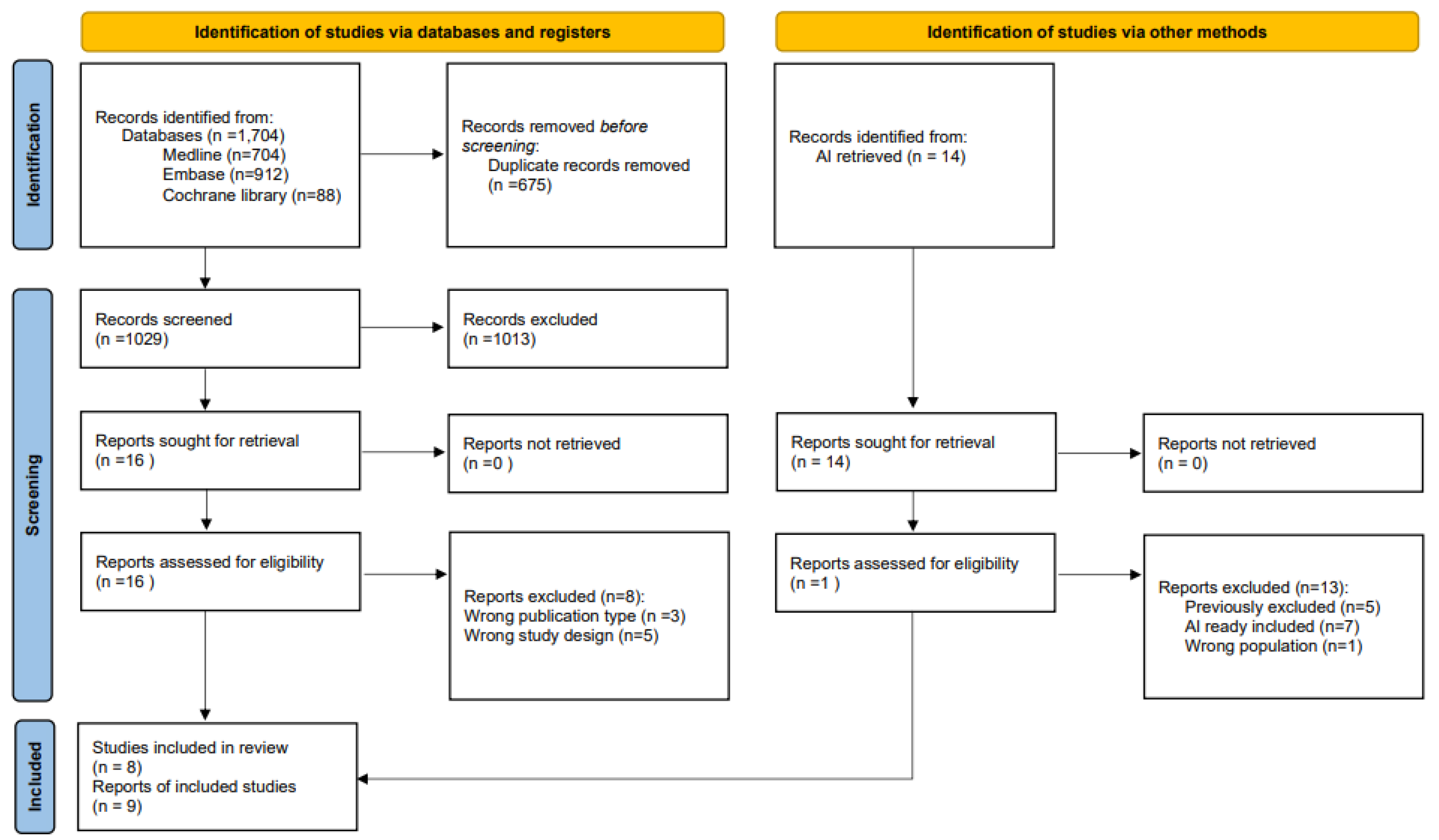
3.1. Study Selection and Characteristics
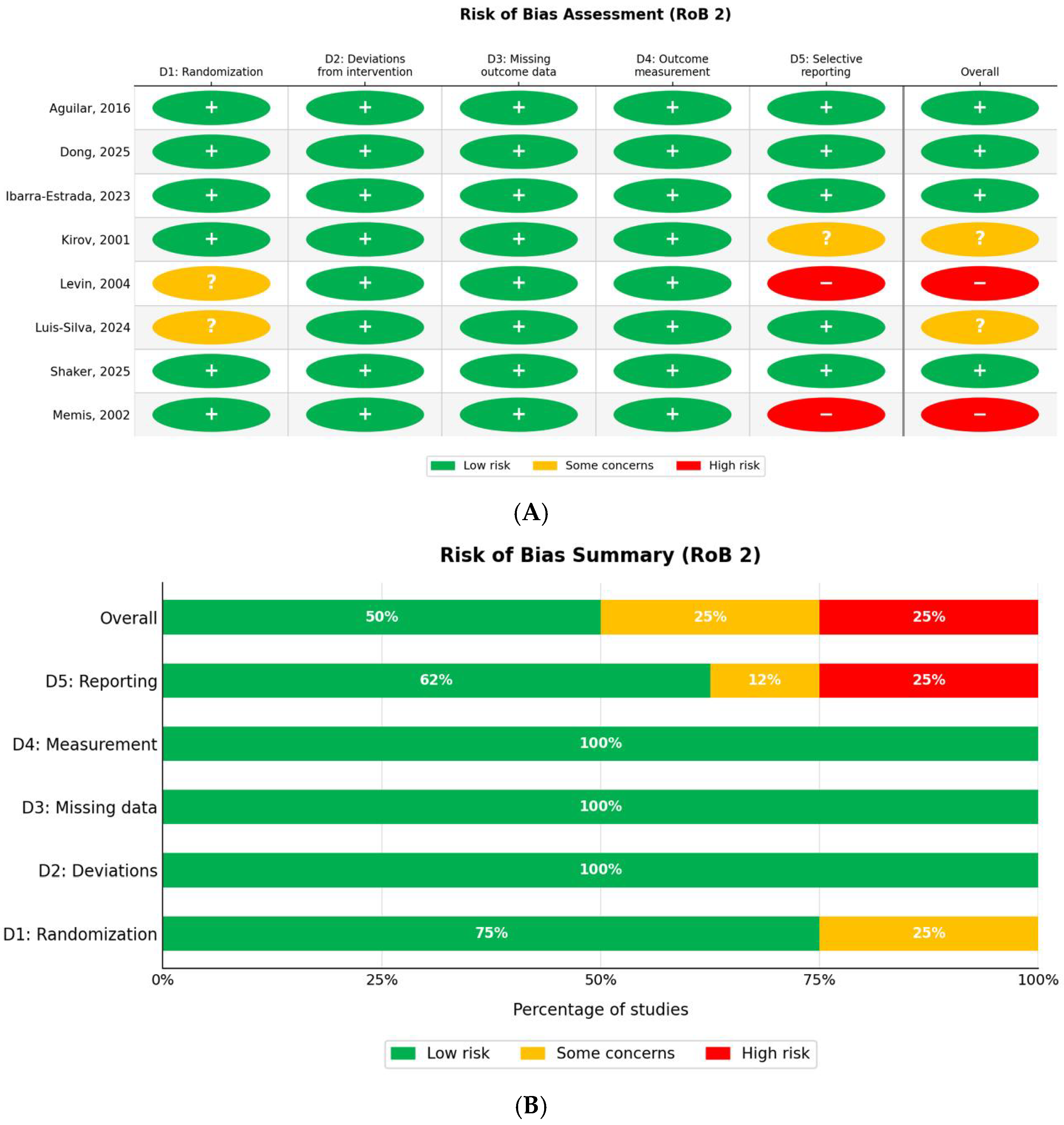
3.2. Risk of Bias
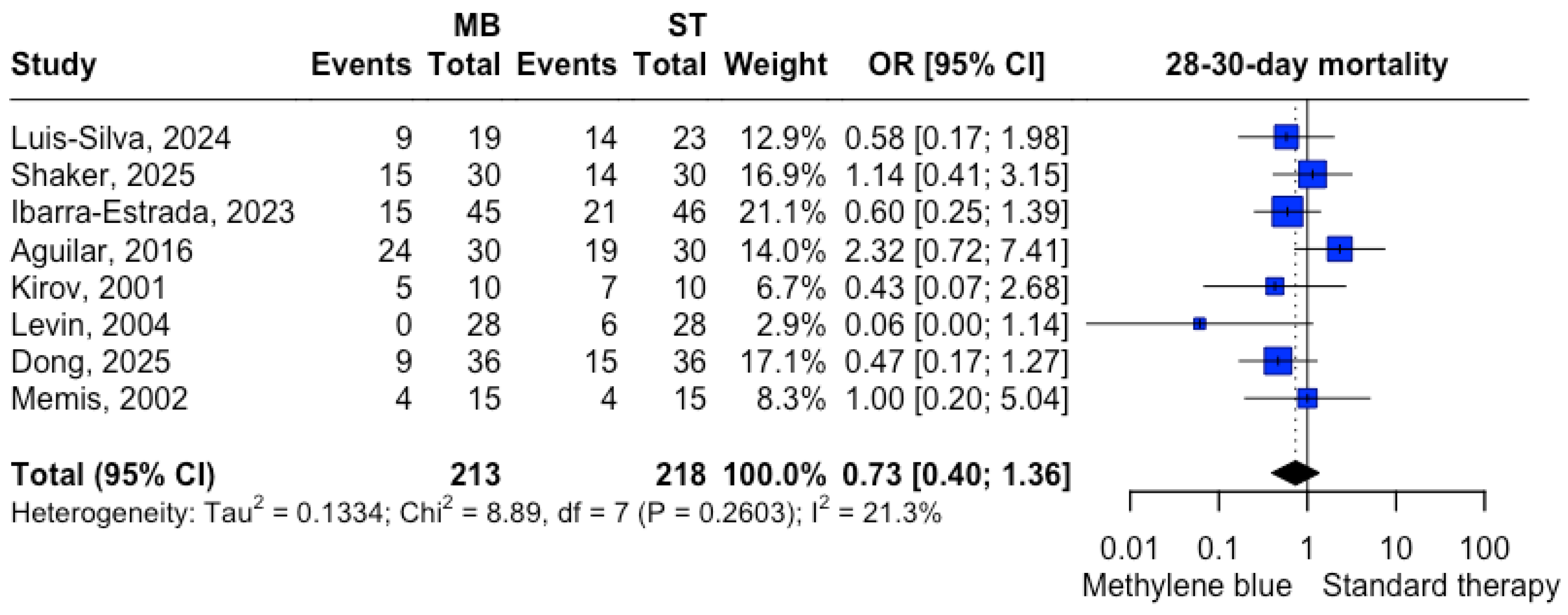
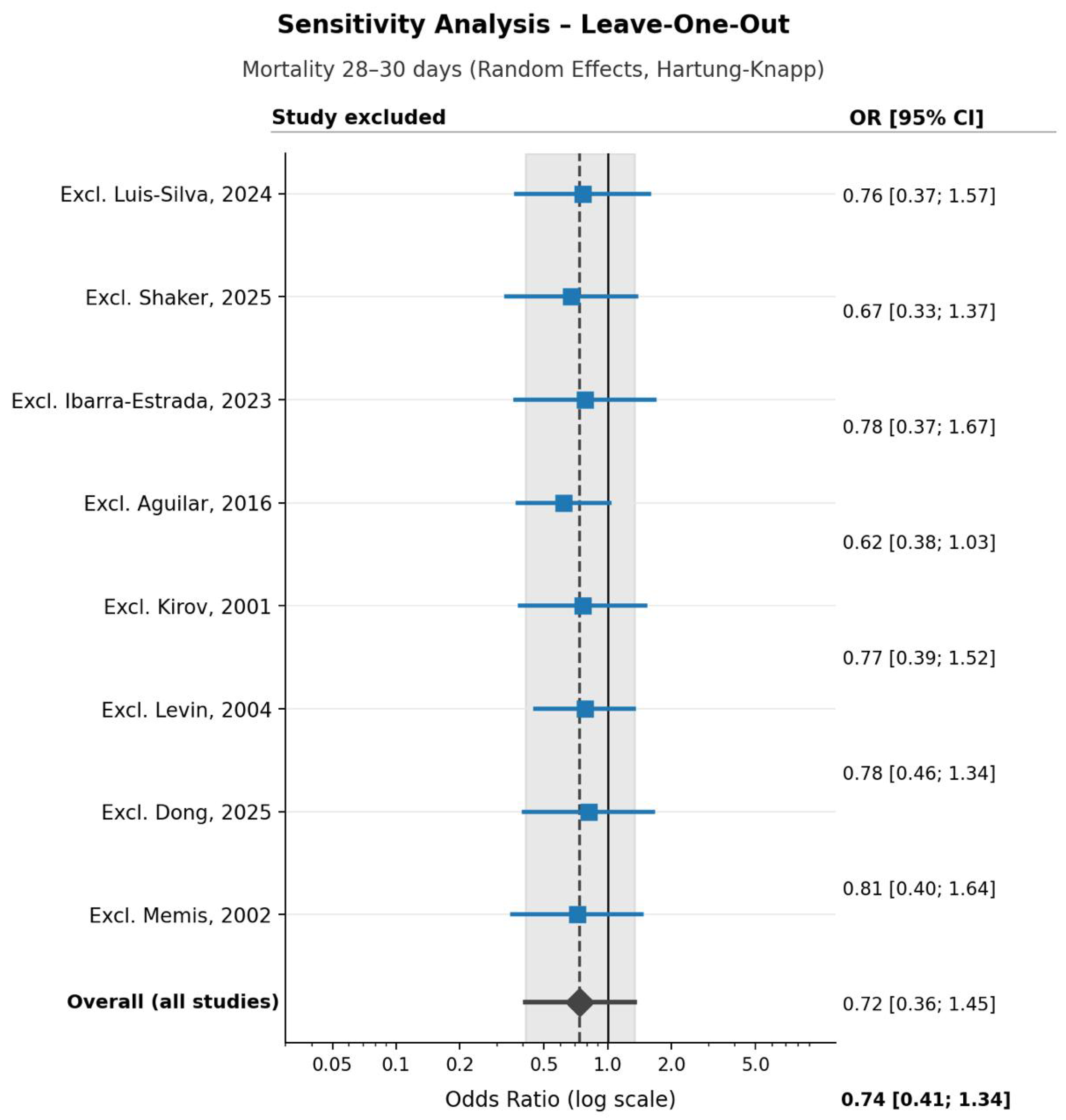
3.3. Primary Outcome: 28–30-Day All-Cause Mortality
3.4. Secondary Outcomes
3.5. Publication Bias and Trial Sequential Analysis
3.6. Certainty of the Evidence
4. Discussion
5. Conclusions
Supplementary Materials
Author Contributions
Funding
Institutional Review Board Statement
Informed Consent Statement
Data Availability Statement
Acknowledgments
Conflicts of Interest
Abbreviations
| CI | confidence interval |
| cGMP | cyclic guanosine monophosphate |
| ICU | intensive care unit |
| MB | methylene blue |
| OR | odds ratio |
| PRISMA | Preferred Reporting Items for Systematic Reviews and Meta-Analyses |
| RCT | randomized controlled trial |
| RRT | renal replacement therapy |
| RoB 2 | revised Cochrane risk-of-bias tool for randomized trials |
| SMD | standardized mean difference |
| TSA | trial sequential analysis |
References
- Vincent, J.L.; De Backer, D. Circulatory shock. N. Engl. J. Med. 2013, 369, 1726–1734. [Google Scholar] [CrossRef] [PubMed]
- Haseer Koya, H.; Paul, M. Shock. In StatPearls; StatPearls Publishing: Treasure Island, FL, USA, 2025. [Google Scholar] [PubMed]
- Sakr, Y.; Reinhart, K.; Vincent, J.-L.; Sprung, C.L.; Moreno, R.; Ranieri, V.M.; De Backer, D.; Payen, D. Does dopamine administration in shock influence outcome? Results of the Sepsis Occurrence in Acutely Ill Patients (SOAP) Study. Crit. Care Med. 2006, 34, 589–597. [Google Scholar] [CrossRef] [PubMed]
- Maluangnon, C.; Joyjumroon, B.; Phawanawichian, C.; Tongyoo, S. Shock epidemiology and outcomes among internal medicine patients. S. Afr. J. Crit. Care 2025, 41, e2453. [Google Scholar] [CrossRef] [PubMed]
- Guido, T.; Giovanni, T.; Elena, G.; Anna, Z.; Michele, Z.; Stefano, F. Cardiogenic shock in general intensive care unit: A nationwide prospective analysis of epidemiology and outcome. Eur. Heart J. Acute Cardiovasc. Care 2024, 13, 768–778. [Google Scholar] [CrossRef] [PubMed]
- Berg, D.D.; Bohula, E.A.; van Diepen, S.; Katz, J.N.; Alviar, C.L.; Baird-Zars, V.M.; Barnett, C.F.; Barsness, G.W.; Burke, J.A.; Cremer, P.C.; et al. Epidemiology of shock in contemporary cardiac intensive care units. Circ. Cardiovasc. Qual. Outcomes 2019, 12, e005618. [Google Scholar] [CrossRef] [PubMed]
- Koch, E.; Lovett, S.; Nghiem, T.; Riggs, R.A.; Rech, M.A. Shock index in the emergency department: Utility and limitations. Open Access Emerg. Med. 2019, 11, 179–199. [Google Scholar] [CrossRef] [PubMed]
- Delaney, A.; Borges-Sa, M.; Chew, M.S.; De Waele, J.J.; Dye, J.; Khanna, A.K.; Hamzaoui, O.; Hammond, N.; Hernandez, G.; Herridge, M.; et al. Current standard of care for septic shock. Intensive Care Med. 2026, 52, 89–103. [Google Scholar] [CrossRef] [PubMed]
- Jha, A.; Zilahi, G.; Rhodes, A. Vasoactive therapy in shock. BJA Educ. 2021, 21, 270–277. [Google Scholar] [CrossRef] [PubMed]
- Porizka, M.; Kopecky, P.; Dvorakova, H.; Kunstyr, J.; Lips, M.; Michalek, P.; Balik, M. Methylene blue administration in patients with refractory distributive shock—A retrospective study. Sci. Rep. 2020, 10, 1828. [Google Scholar] [CrossRef] [PubMed]
- Ballarin, R.S.; Lazzarin, T.; Zornoff, L.; Azevedo, P.S.; Pereira, F.W.L.; Tanni, S.E.; Minicucci, M.F. Methylene blue in sepsis and septic shock: A systematic review and meta-analysis. Front. Med. 2024, 11, 1366062. [Google Scholar] [CrossRef]
- Shanmugam, G. Vasoplegic syndrome—The role of methylene blue. Eur. J. Cardiothorac. Surg. 2005, 28, 705–710. [Google Scholar] [CrossRef] [PubMed]
- Fernando, S.M.; Soliman, K.; Tran, A.; Kanji, S.; Rochwerg, B. What every intensivist should know about…methylene blue in septic shock. J. Crit. Care 2026, 92, 155353. [Google Scholar] [CrossRef] [PubMed]
- Alkazemi, A.; Almoosawy, S.A.; Murad, A.; Alfares, A. Methylene Blue for Septic Shock: A Systematic Review and Meta-analysis of Randomized and Prospective Observational Studies. J. Intensive Care Med. 2026, 41, 108–117. [Google Scholar] [CrossRef] [PubMed]
- Sterne, J.A.C.; Savović, J.; Page, M.J.; Elbers, R.G.; Blencowe, N.S.; Boutron, I.; Cates, C.J.; Cheng, H.Y.; Corbett, M.S.; Eldridge, S.M.; et al. RoB 2: A revised tool for assessing risk of bias in randomised trials. BMJ 2019, 366, l4898. [Google Scholar] [CrossRef] [PubMed]
- Memis, D.; Karamanlioglu, B.; Yuksel, M.; Gemlik, I.; Pamukcu, Z. The influence of methylene blue infusion on cytokine levels during severe sepsis. Anaesth. Intensive Care 2002, 30, 755–762. [Google Scholar] [CrossRef] [PubMed]
- Aguilar Arzápalo, M.F.; López Avendaño, V.G.; Escalante Castillo, A.; Góngora Mukul, J.J.; Franco Herrera, B.; Cetina Cámara, M.A. Methylene blue’s effectiveness as an adjuvant in the treatment of patients with septic shock. Med. Crít. Col. Mex. Med. Crít. 2016, 30, 102–110. [Google Scholar]
- Shaker, E.H.; Soliman, A.M.; Bedewy, A.A.E.; Elrawas, M.M. Comparative study between high and low dose methylene blue infusion in septic cancer patients: A randomized, blinded, controlled study. BMC Anesthesiol. 2025, 25, 15. [Google Scholar] [CrossRef] [PubMed] [PubMed Central]
- Ibarra-Estrada, M.; Kattan, E.; Aguilera-González, P.; Sandoval-Plascencia, L.; Rico-Jauregui, U.; Gómez-Partida, C.A.; Ortiz-Macías, I.X.; López-Pulgarín, J.A.; Chávez-Peña, Q.; Mijangos-Méndez, J.C.; et al. Early adjunctive methylene blue in patients with septic shock: A randomized controlled trial. Crit. Care 2023, 27, 110. [Google Scholar] [CrossRef] [PubMed] [PubMed Central]
- Kuri, H.R.; Sharma, A.; Meshram, T.; Kothari, N.; Goyal, S.; Paliwal, B.; Mohammed, S.; Bhatia, P. Effects of Early Use of Methylene Blue and Vasopressin on Noradrenaline Dose in Septic Shock: A Randomized Controlled Trial. Indian J. Crit. Care Med. Peer-Rev. Off. Publ. Indian Soc. Crit. Care Med. 2025, 29, 108–112. [Google Scholar] [CrossRef] [PubMed] [PubMed Central]
- Kirov, M.Y.; Evgenov, O.V.; Evgenov, N.V.; Egorina, E.M.; Sovershaev, M.A.; Sveinbjørnsson, B.; Nedashkovsky, E.V.; Bjertnaes, L.J. Infusion of methylene blue in human septic shock: A pilot, randomized, controlled study. Crit. Care Med. 2001, 29, 1860–1867. [Google Scholar] [CrossRef] [PubMed]
- Levin, R.L.; Degrange, M.A.; Bruno, G.F.; Del Mazo, C.D.; Taborda, D.J.; Griotti, J.J.; Boullon, F.J. Methylene blue reduces mortality and morbidity in vasoplegic patients after cardiac surgery. Ann. Thorac. Surg. 2004, 77, 496–499. [Google Scholar] [CrossRef] [PubMed]
- Luis-Silva, F.; Menegueti, M.G.; Peres, L.M.; Sepeda, C.d.R.; Jordani, M.C.; Mestriner, F.; Petroski-Moraes, B.C.; Brito-De-Sousa, J.P.; Costa-Rocha, I.A.; Cruz, B.L.; et al. Methylene blue therapy in addition to standard treatment for acute-phase septic shock: A pilot randomized controlled trial. Front. Med. 2024, 11, 1431321. [Google Scholar] [CrossRef] [PubMed] [PubMed Central]
- Dong, C.; Zhu, J.; Ni, H.; Chen, Y.; Chen, B.; Zhang, M.; Cui, K.; Zhang, S.; Jiang, Y.; Xu, Y. The Effect of Methylene Blue on Sublingual Microcirculation in Patients with Septic Shock: A Randomized Controlled Trial. Drug Des. Dev. Ther. 2025, 19, 11629–11640. [Google Scholar] [CrossRef] [PubMed] [PubMed Central]
- Juffermans, N.P.; Vervloet, M.G.; Daemen-Gubbels, C.R.G.; Binnekade, J.M.; de Jong, M.; Groeneveld, A.B.J. A dose-finding study of methylene blue to inhibit nitric oxide actions in the hemodynamics of human septic shock. Nitric Oxide 2010, 22, 275–280. [Google Scholar] [CrossRef] [PubMed]
- Mehaffey, J.H.; Johnston, L.E.; Hawkins, R.B.; Charles, E.J.; Yarboro, L.; Kern, J.A.; Ailawadi, G.; Teman, N.R. Methylene Blue for Vasoplegic Syndrome After Cardiac Operation: Early Administration Improves Survival. Ann. Thorac. Surg. 2017, 104, 36–41. [Google Scholar] [CrossRef] [PubMed]
- Donati, A.; Conti, G.; Loggi, S.; Münch, C.; Coltrinari, R.; Pelaia, P.; Pietropaoli, P.; Preiser, J.C. Does methylene blue administration to septic shock patients affect vascular permeability and blood volume? Crit. Care Med. 2002, 30, 2271–2277. [Google Scholar] [CrossRef] [PubMed]
- Hiruy, A.; Ciapala, S.; Donaldson, C.; Wang, L.; Hohlfelder, B. Hydroxocobalamin Versus Methylene Blue for the Treatment of Vasoplegic Shock Associated With Cardiopulmonary Bypass. J. Cardiothorac. Vasc. Anesth. 2023, 37, 2228–2235. [Google Scholar] [CrossRef] [PubMed]
- Gachot, B.; Bédos, J.P.; Veber, B.; Wolff, M.; Régnier, B. Short-term effects of methylene blue on hemodynamics and gas exchange in humans with septic shock. Intensive Care Med. 1995, 21, 1027–1031. [Google Scholar] [CrossRef] [PubMed]
- Yune, H.; Kim, K.; Jo, Y.H.; Kim, J.; Lee, J.H.; Chung, H.; Hwang, J.E. Infusion of methylene blue in severe sepsis and septic shock: A randomized controlled trial. Crit. Care Med. 2016, 44, 439. [Google Scholar] [CrossRef]
- Delgadillo, N.A.; Ibarra-Estrada, M.; Sandoval-Plascencia, L.; López-Pulgarín, J.A.; Chávez-Peña, Q.; Mijangos-Méndez, J.; Aguirre-Avalos, G. Adjunctive methylene blue for patients in septic shock: The SHOCKEM-BLUE trial. Crit. Care Med. 2023, 51, 22. [Google Scholar] [CrossRef]
- Ponnappan, K.T.; Pandey, C.K.; Maiwall, R.; Saluja, V.; Tandon, M.; Parvez, M.Q.; Dhankhar, M.; Singh, A. Evaluating in cirrhotics with refractory vasoplegia the effect of methylene blue (CRUMBS): A randomized controlled trial. Transplantation 2018, 102, 38–39. [Google Scholar]





| Author-Year | Country | Study Design | Population/Shock Type | N | Intervention (Dosage) | Control | Primary Outcome | Key Results | Follow-Up |
|---|---|---|---|---|---|---|---|---|---|
| SEPTIC SHOCK | |||||||||
| Kirov et al. (2001) [21] | Norway | RCT—Pilot, Open-label | Septic shock (Suspicion of infection, SIRS and end-organ dysfunction) | 20 (10 MB/10 C) | MB 2 mg/kg bolus (15 min) + infusion 0.25, 0.5, 1 up to 2 mg/kg/h × 4 h each (total 5.75 mg/kg) | ISEV + ST (Vasopressor: dopamine or NE + fluid resuscitation guided with PAC + Dobutamine for CI > 3.5) | Hemodynamics & organ function at 24 h | ↓ Vasopressor support ↑ O2 delivery No adverse effects Non-significant mortality difference | 24 h |
| Memis et al. (2002) [16] | Turkey | RCT | Severe sepsis (Confirmed infection and ACCP/SCCM 1992 criteria) | 30 (15 MB/15 C) | MB 3 mg/kg over 6 h (0.5 mg/kg/h × 6 h) | ISEV + fluid resuscitation guided by CVP (No other vasopressors or inotropes) | Cytokine levels at baseline, 24 h and 48 h | No difference in cytokines Transient ↑ MAP No survival benefit | 48 h |
| Aguilar et al. (2016) [17] | Mexico | RCT | Septic shock (Suspicion of infection, SIRS and vasopressor requirement) | 60 (30 MB/30 C) | MB 2 mg/kg bolus over 1 h | ISEV + ST (NE as needed + hydrocortisone 200 mg/24 h) | Hemodynamics, lactate, vasopressor dose, mortality | ↑ Faster MAP improvement ↓ Lactate ↓ Vasopressor support ↓ Mortality | 72 h |
| Ibarra-Estrada et al. (2023) [19] | Mexico | Single-center RCT | Septic shock (Sepsis-3 criteria, NE within 24 h) | 91 (45 MB/46 C) | MB 100 mg/6 h daily × 3 days (~1.2 mg/kg/day) | ISEV + ST (US-guided fluid resuscitation + NE ± vasopressin if NE > 0.25 µg/kg/min + hydrocortisone 200 mg/day) | Time to vasopressor discontinuation at 28 days | ↓ Time to vasopressor d/c (69 h vs. 94 h, p < 0.001) ↑ Vasopressor-free days ↓ ICU & hospital LOS No difference in mortality | 96 h |
| Luis-Silva et al. (2024) [23] | Brazil | Pilot RCT (1:1 allocation) | Septic shock (Infection + MAP < 65 mmHg + lactate > 2 mmol/L + NE > 0.2 µg/kg/min) | 42 (19 MB/23 C) | MB 3 mg/kg loading + 0.5 mg/kg/h × 48 h | ST (NE + vasopressin + hydrocortisone 200 mg/d + fluids + antibiotics) | Hemodynamics and vasopressor dose reduction | ↓ Vasopressor dose Safe: no adverse events Cytokine levels NSD | 72 h |
| Shaker et al. (2025) [18] | Egypt | RCT—Blinded | Septic shock (Sepsis-3 criteria; cancer patients) | 90 (30 MB low/30 MB high/30 C) | High dose: 4 mg/kg bolus Low dose: 1 mg/kg bolus Both + 0.25 mg/kg/h × 72 h | ISEV + ST (Fluid resuscitation by ICOM + NE + hydrocortisone if NE > 0.2 µg/kg/min) | Hemodynamic response by dose | ↓ Vasopressor dose and faster discontinuation ↓ Mortality (dose-dependent response) NSD in organ dysfunction Safety data reported | 72 h |
| Dong et al. (2025) [24] | China | Single-center RCT (1:1) | Septic shock (Sepsis-3 criteria + mechanical ventilation) | 72 (36 MB/36 C) | MB 2 mg/kg bolus (15 min) + 1 mg/kg infusion × 12 h | ISEV + ST | Sublingual microcirculation parameters at 24 h | ↑ Microcirculatory parameters (HVM) No improvement in organ function or survival | 24 h |
| Kuri et al. (2025) [20] | India | RCT | Septic shock (Sepsis-3 criteria, NE ≥ 0.2 µg/kg/min) | 74 (37 MB/37 VA) | MB 1 mg/kg bolus (30 min) + 0.5 mg/kg/h × 6 h | Vasopressin 0.04 units/min × 6 h | NE dose at 6 h, 12 h & 24 h | NSD at 0–6 h VA group: ↓ NE at 12–24 h ↓ Lactate & SOFA at 24 h | 24 h |
| VASOPLEGIC/POST-CARDIAC SURGERY SHOCK | |||||||||
| Levin et al. (2004) [22] | Argentina | RCT | Vasoplegic syndrome post-cardiac surgery (CPB): MAP < 50 mmHg, CVP < 5 mmHg, WCP < 10 mmHg, CI ≥ 2.5 L/min/m2, SVR < 800 dyn·s·cm−5, vasopressor use | 56 (28 MB/28 C) | MB 1.5 mg/kg IV (single dose) | Placebo | Resolution of vasoplegic syndrome | Mortality: 0% MB vs. 21.4% placebo vs. resolved < 2 h No rebound vasoplegia | 96 h |
| Outcome (No. of Studies; Participants) | Risk of Bias | Inconsistency | Indirectness | Imprecision | Certainty (GRADE) | Effect Estimate (95% CI) |
|---|---|---|---|---|---|---|
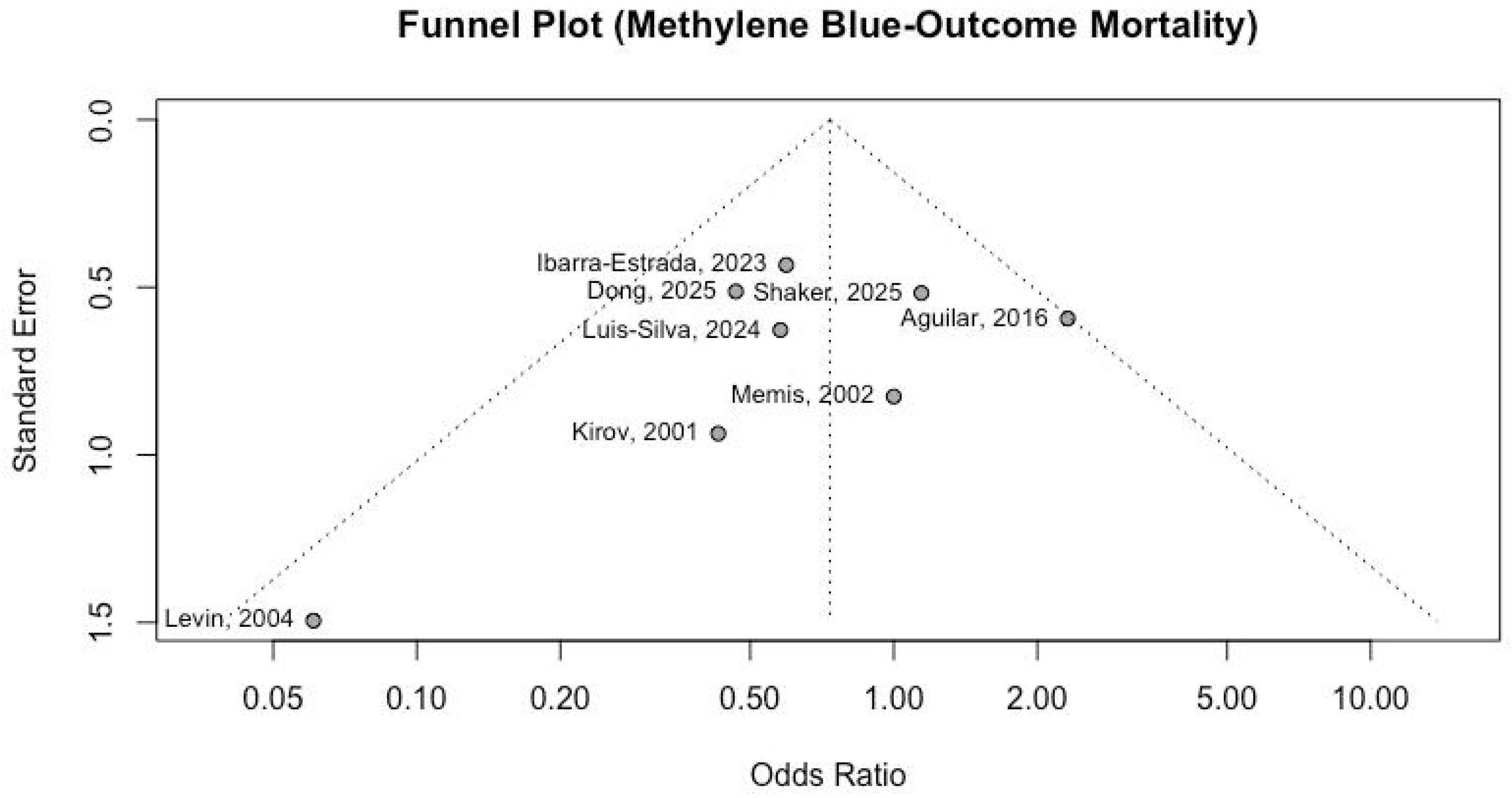
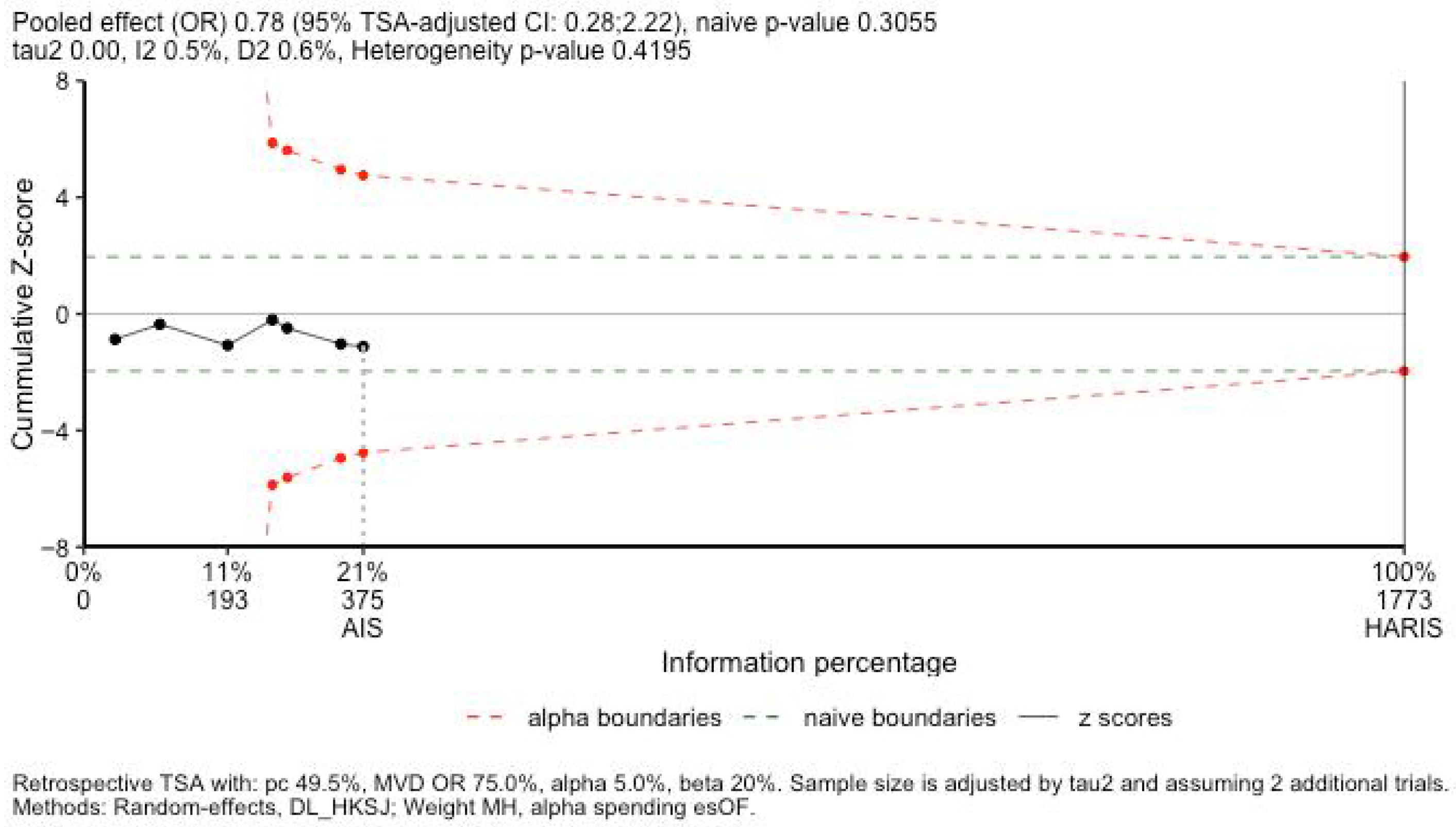
| 28–30-day all-cause mortality (8 studies; n = 479) | Serious a | Not serious (I2 = low) | Serious b | Serious c (CI crosses null; n << RIS 1773) | ⊕○○○ Very Low | OR 0.73 (95% CI 0.40–1.36) |
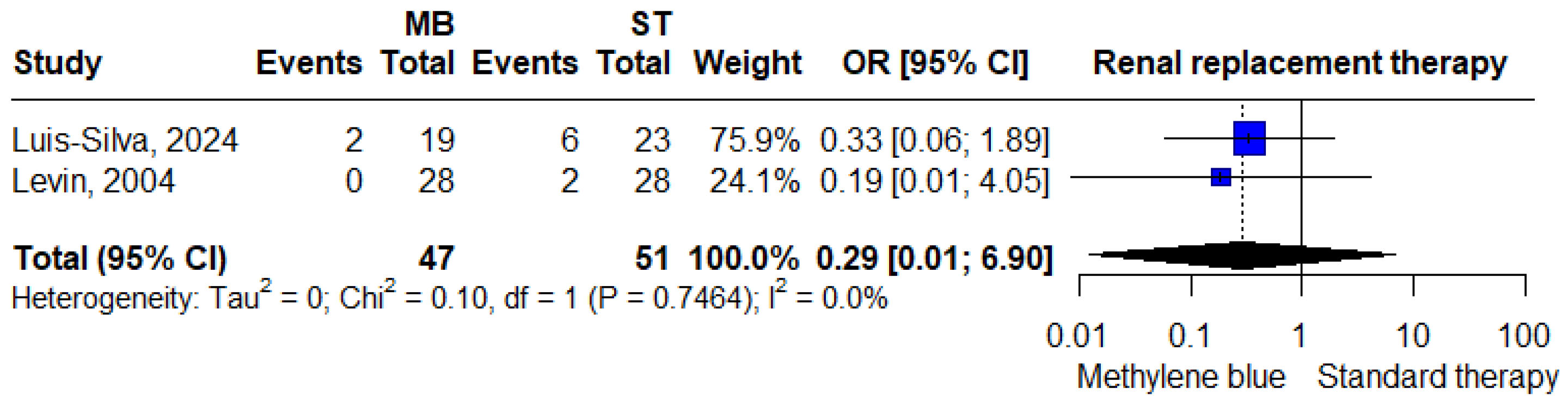
| Renal replacement therapy (2 studies; n = 131) | Serious a | Not assessed (2 studies) | Serious b | Very serious cd (2 studies only; very wide CI) | ⊕○○○ Very Low | OR not estimable with precision |
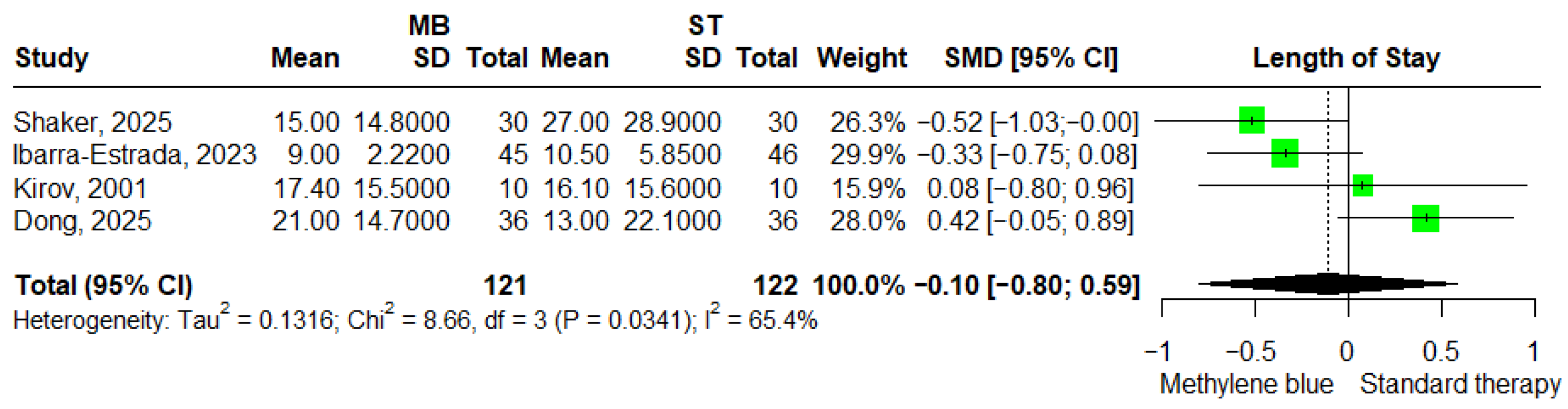
| Hospital length of stay (3 studies; n = 222) | Serious a | Serious b (clinical heterogeneity) | Serious b | Serious c (wide CI; few studies) | ⊕○○○ Very Low | SMD not statistically significant |
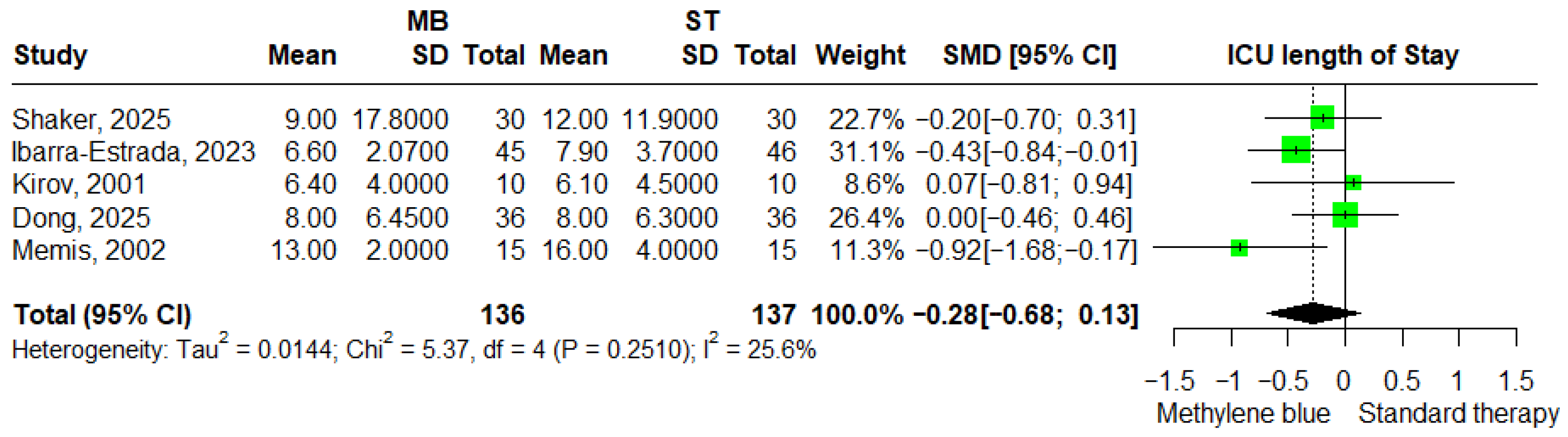
| ICU length of stay (3 studies; n = 222) | Serious a | Serious b (clinical heterogeneity) | Serious b | Serious c (wide CI; few studies) | ⊕○○○ Very Low | SMD not statistically significant |
Disclaimer/Publisher’s Note: The statements, opinions and data contained in all publications are solely those of the individual author(s) and contributor(s) and not of MDPI and/or the editor(s). MDPI and/or the editor(s) disclaim responsibility for any injury to people or property resulting from any ideas, methods, instructions or products referred to in the content. |
© 2026 by the authors. Licensee MDPI, Basel, Switzerland. This article is an open access article distributed under the terms and conditions of the Creative Commons Attribution (CC BY) license.
Share and Cite
Rodríguez-Lima, D.R.; Rodríguez-Villegas, A.; Toro Egas, J.D.; Bautista, E.M.C. The Effectiveness of Methylene Blue in Adult Shock: A Systematic Review, Meta-Analysis, and Trial Sequential Analysis of Randomized Controlled Trials. J. Clin. Med. 2026, 15, 4481. https://doi.org/10.3390/jcm15124481
Rodríguez-Lima DR, Rodríguez-Villegas A, Toro Egas JD, Bautista EMC. The Effectiveness of Methylene Blue in Adult Shock: A Systematic Review, Meta-Analysis, and Trial Sequential Analysis of Randomized Controlled Trials. Journal of Clinical Medicine. 2026; 15(12):4481. https://doi.org/10.3390/jcm15124481
Chicago/Turabian StyleRodríguez-Lima, David Rene, Adelaida Rodríguez-Villegas, Juan Diego Toro Egas, and Esther María Campo Bautista. 2026. "The Effectiveness of Methylene Blue in Adult Shock: A Systematic Review, Meta-Analysis, and Trial Sequential Analysis of Randomized Controlled Trials" Journal of Clinical Medicine 15, no. 12: 4481. https://doi.org/10.3390/jcm15124481
APA StyleRodríguez-Lima, D. R., Rodríguez-Villegas, A., Toro Egas, J. D., & Bautista, E. M. C. (2026). The Effectiveness of Methylene Blue in Adult Shock: A Systematic Review, Meta-Analysis, and Trial Sequential Analysis of Randomized Controlled Trials. Journal of Clinical Medicine, 15(12), 4481. https://doi.org/10.3390/jcm15124481