An Innovative Dendrimer-Based Retinol Delivery System for Xerosis Care: Stability, Tolerance, and Sustained Hydration


Abstract
1. Introduction
2. Methods
2.1. Formulation of the Retinol–PLL_G3 Emulsion
2.2. Participant Characteristics
2.3. Sample Size Calculation
2.3.1. Study Design—Paired, Within-Subject Comparisons
- Short-term hydration assessment (Section 2.7.3): Intra-individual comparison (each participant served as their own control, with simultaneous application of test and control formulations to separate anatomical sites). This paired design substantially increases statistical power compared to parallel-group designs.
- Twenty-eight-day repeated-use study (Section 2.7.4): Pre-post comparison (baseline vs. Day 28 within the same participants).
2.3.2. Power Calculation for Primary Endpoint (Hydration Persistence at 3 Hours)
- Expected within-subject difference (Δ): 30 percentage points in hydration gain at 3 h (PLL_G3 formulation vs. control);
- Standard deviation of within-subject differences: 35 percentage points (conservative estimate accounting for heterogeneous xerotic population);
- Effect size (Cohen’s d): 0.86 (large effect);
- Alpha level (α): 0.05 (two-sided);
- Desired statistical power (1-β): 80%.
- Potential dropouts (~15–20% typical in 28-day dermocosmetic studies);
- Non-normal data distribution requiring nonparametric tests (slightly reduced power);
- Subgroup descriptive analyses (e.g., sensitive vs. non-sensitive skin).
2.4. Characterisation of the Retinol–PLL_G3 Supramolecular Complex
2.5. Physicochemical Stability of Supramolecular Complex of Retinol and Poly-L-Lysine
2.6. Stability of PLL_G3/Retinol in Hydrophilic Emulsion
- All samples were stored in amber-colored glass vials (type III borosilicate glass) to minimize light exposure;
- Vials were additionally wrapped in aluminum foil to ensure complete light exclusion;
- Storage occurred in dedicated climate-controlled chambers (Memmert ICH 256, Schwabach, Germany), maintaining constant temperature (±0.5 °C precision) throughout the study period;
- Temperature was continuously monitored using calibrated digital thermometers with data logging capability (measurements recorded every 30 min);
- For the 25 °C reference condition, samples were stored in a light-tight cabinet within the temperature-controlled chamber;
- For accelerated aging (45 °C) and cold storage (4 °C) conditions, dedicated incubators and refrigerators with light-exclusion capabilities were used.
- UV exposure was performed in a UV chamber (Q-SUN Xe-3, Q-Lab Corporation) equipped with a xenon arc lamp simulating natural daylight spectrum (wavelength range 295–800 nm, with controlled irradiance at 340 nm: 0.51 W/m2/nm);
- The 90 h of UV radiation was applied continuously (not in day/night cycles) at 45 °C chamber temperature to represent an accelerated stress condition;
- Irradiance was monitored continuously throughout the exposure period using calibrated sensors.
2.7. Functional Study Design and Ethical Considerations
2.7.1. Ethics Statement
2.7.2. Data Protection and Confidentiality
2.7.3. Short-Term Skin Hydration Assessment (Corneometry)
2.7.4. Repeated-Use Tolerance and Functional Efficacy in Xerotic Skin
- Score 0: Normal, well-hydrated skin with no visible dryness, smooth texture and intact barrier function.
- Score 1: Slightly dry skin with minimal roughness, barely perceptible scaling and preserved barrier function.
- Score 2: Dry skin with visible roughness, fine scaling and perceptible barrier impairment.
- Score 3: Very dry skin with obvious scaling, rough texture, visible fissures and a compromised barrier.
- Score 4: Extremely dry skin with severe scaling, marked roughness, deep fissures, severely impaired barrier function and potential inflammatory signs.
- A controlled environment with a temperature of 20–22 °C and relative humidity of 40–60%.
- Natural daylight or standardised artificial illumination (D65 illuminant).
- A 20-min acclimatisation period for participants prior to evaluation.
- Examination of five facial zones (forehead, bilateral cheeks, nose and chin).
- Attribution of the overall facial ODS score based on the most affected zone.
- -
- Morning (face): 2 pump actuations, distributed evenly;
- -
- Evening (face): 2 pump actuations, distributed evenly;
- -
- Evening (hands): 1 pump actuation per hand;
- -
- Evening (body xerotic areas, if applicable): 1–2 pump actuations per area.
2.7.5. Statistical Analysis Methods
3. Results
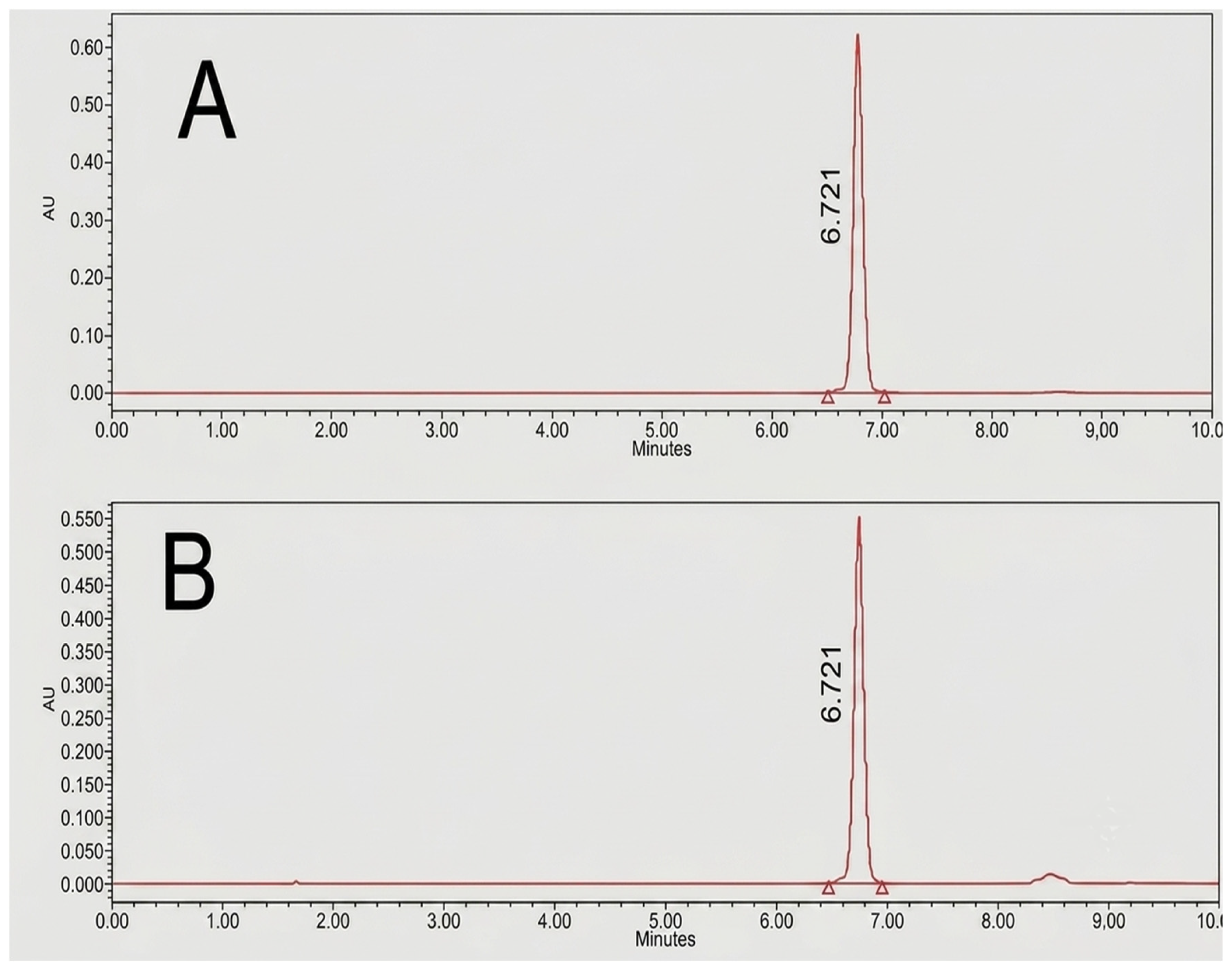
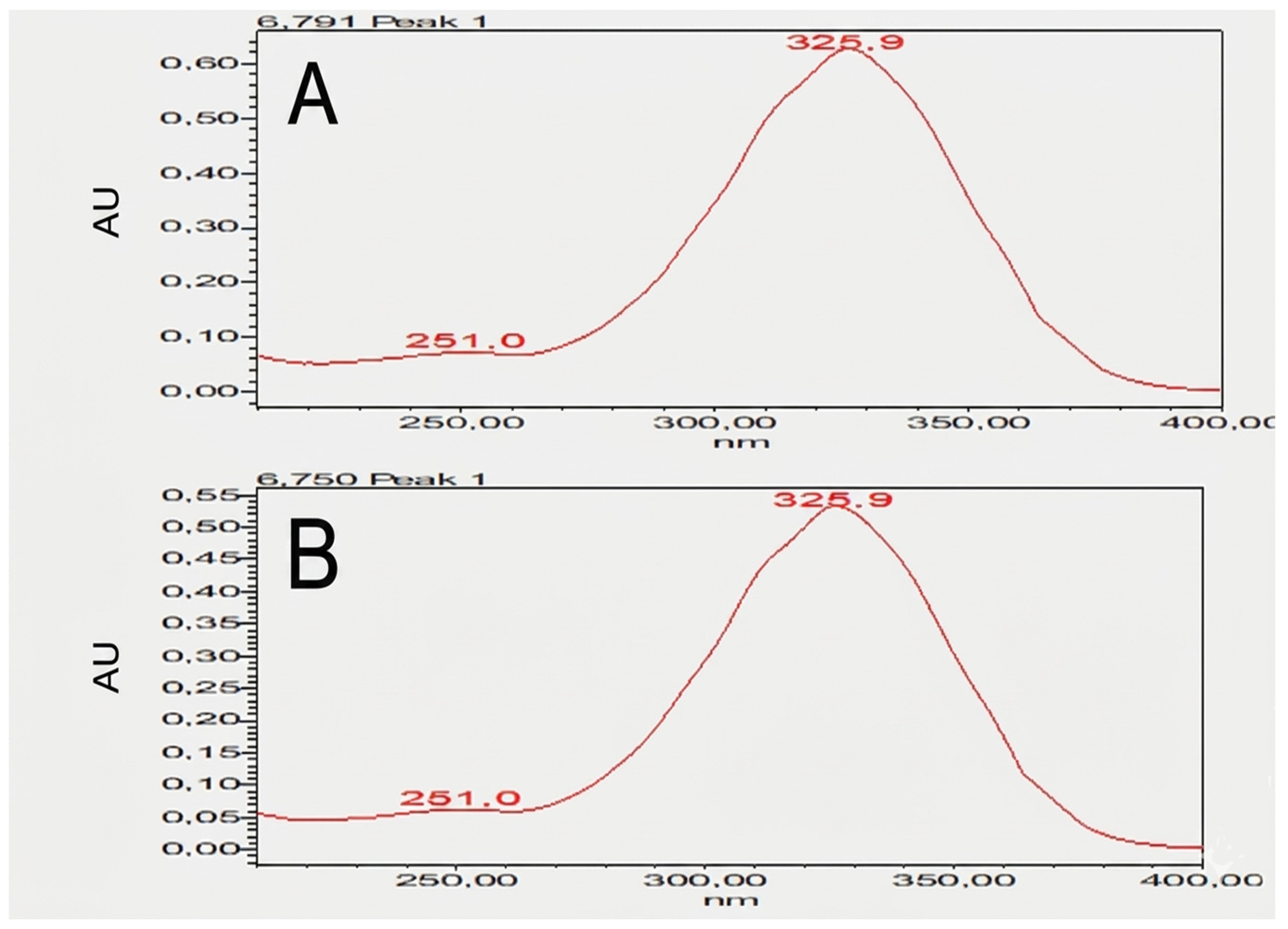
3.1. Stability of Vitamin A
3.2. Emulsion Stability
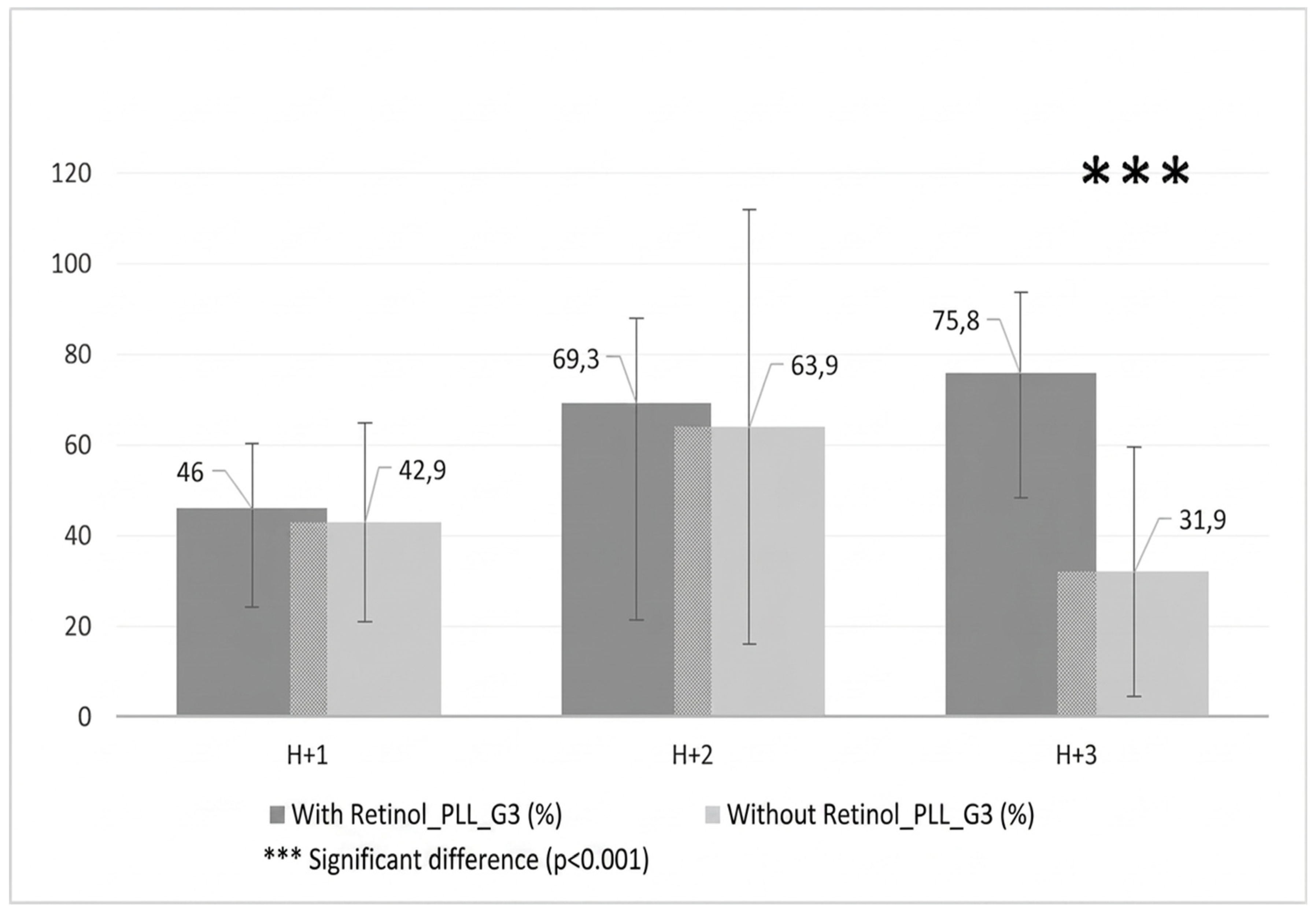
3.3. Skin Hydrating Effects
3.4. Functional Efficacy and Cutaneous Tolerance After Repeated Use over 28 Days
4. Discussion
- Additive effects: The formulation combines humectants (glycerin 3%), emollients (sweet almond oil, isopropyl palmitate), and the PLL_G3–retinol complex. The cationic poly-L-lysine moiety may enhance electrostatic interactions with the negatively charged stratum corneum, promoting water retention [26,27].
5. Conclusions
Supplementary Materials
Author Contributions
Funding
Institutional Review Board Statement
Informed Consent Statement
Data Availability Statement
Conflicts of Interest
References
- Sorg, O.; Antille, C.; Kaya, G.; Saurat, J.H. Retinoids in cosmeceuticals. Dermatol. Ther. 2006, 19, 289–296. [Google Scholar] [CrossRef]
- Gudas, L.J. Emerging roles for retinoids in regeneration and differentiation in normal and disease states. Biochim. Biophys. Acta (BBA)-Mol. Cell Biol. Lipids 2012, 1821, 213–221. [Google Scholar] [CrossRef]
- Szymański, Ł.; Skopek, R.; Palusińska, M.; Schenk, T.; Stengel, S.; Lewicki, S.; Kraj, L.; Kamiński, P.; Zelent, A. Retinoic acid and its derivatives in skin. Cells 2020, 9, 2660. [Google Scholar] [CrossRef] [PubMed]
- Yin, X.; Yan, Y.; Li, J.; Cao, Z.; Shen, S.; Chang, Q.; Zhao, Y.; Wang, X.; Wang, P. Nuclear receptors for epidermal lipid barrier: Advances in mechanisms and applications. Exp. Dermatol. 2024, 33, e15107. [Google Scholar] [CrossRef]
- Mambwe, B.; Mellody, K.T.; Kiss, O.; O’Connor, C.; Bell, M.; Watson, R.E.; Langton, A.K. Cosmetic retinoid use in photoaged skin: A review of the compounds, their use and mechanisms of action. Int. J. Cosmet. Sci. 2025, 47, 45–57. [Google Scholar] [CrossRef]
- Singh, M.; Griffiths, C.E. The use of retinoids in the treatment of photoaging. Dermatol. Ther. 2006, 19, 297–305. [Google Scholar] [CrossRef] [PubMed]
- Stratigos, A.J.; Katsambas, A.D. The role of topical retinoids in the treatment of photoaging. Drugs 2005, 65, 1061–1072. [Google Scholar] [CrossRef]
- Griffiths, C.E. The role of retinoids in the prevention and repair of aged and photoaged skin. Clin. Exp. Dermatol. 2001, 26, 613–618. [Google Scholar] [CrossRef] [PubMed]
- Riahi, R.R.; Bush, A.E.; Cohen, P.R. Topical retinoids: Therapeutic mechanisms in the treatment of photodamaged skin. Am. J. Clin. Dermatol. 2016, 17, 265–276. [Google Scholar] [CrossRef]
- Mukherjee, S.; Date, A.; Patravale, V.; Korting, H.C.; Roeder, A.; Weindl, G. Retinoids in the treatment of skin aging: An overview of clinical efficacy and safety. Clin. Interv. Aging 2006, 1, 327–348. [Google Scholar] [CrossRef]
- Yin, S.; Luo, J.; Qian, A.; Du, J.; Yang, Q.; Zhou, S.; Yu, W.; Du, G.; Clark, R.B.; Walters, E.T.; et al. Retinoids activate the irritant receptor TRPV1 and produce sensory hypersensitivity. J. Clin. Investig. 2013, 123, 3941–3951. [Google Scholar] [CrossRef]
- Tolleson, W.H.; Cherng, S.H.; Xia, Q.; Boudreau, M.; Yin, J.J.; Wamer, W.G.; Howard, P.C.; Yu, H.; Fu, P.P. Photodecomposition and phototoxicity of natural retinoids. Int. J. Environ. Res. Public Health 2005, 2, 147–155. [Google Scholar] [CrossRef]
- Nagao, A. Oxidative conversion of carotenoids to retinoids and other products. J. Nutr. 2004, 134, 237S–240S. [Google Scholar] [CrossRef] [PubMed]
- Zhang, S.; Yin, H.; Yuan, S.; Chen, Z.; Zhang, Q. Study on Photodegradation Mechanism and Kinetics of Vitamin A and Derivatives under Ultraviolet Irradiation. ACS Food Sci. Technol. 2025, 5, 1990–1998. [Google Scholar] [CrossRef]
- Temova Rakuša, Ž.; Škufca, P.; Kristl, A.; Roškar, R. Retinoid stability and degradation kinetics in commercial cosmetic products. J. Cosmet. Dermatol. 2021, 20, 2350–2358. [Google Scholar] [CrossRef] [PubMed]
- Fu, P.P.; Xia, Q.; Yin, J.J.; Cherng, S.H.; Yan, J.; Mei, N.; Chen, T.; Boudreau, M.D.; Howard, P.C.; Wamer, W.G. Photodecomposition of vitamin A and photobiological implications for the skin. Photochem. Photobiol. 2007, 83, 409–424. [Google Scholar] [CrossRef]
- Zhong, J.; Zhao, N.; Song, Q.; Du, Z.; Shu, P. Topical retinoids: Novel derivatives, nano lipid-based carriers, and combinations to improve chemical instability and skin irritation. J. Cosmet. Dermatol. 2024, 23, 3102–3115. [Google Scholar] [CrossRef] [PubMed]
- Augustin, M.; Kirsten, N.; Körber, A.; Wilsmann-Theis, D.; Itschert, G.; Staubach-Renz, P.; Maul, J.T.; Zander, N. Prevalence, predictors and comorbidity of dry skin in the general population. J. Eur. Acad. Dermatol. Venereol. 2019, 33, 147–150. [Google Scholar] [CrossRef]
- Jee, J.P.; Lim, S.J.; Park, J.S.; Kim, C.K. Stabilization of all-trans retinol by loading lipophilic antioxidants in solid lipid nanoparticles. Eur. J. Pharm. Biopharm. 2006, 63, 134–139. [Google Scholar] [CrossRef]
- Shields, I.V.C.W.; White, J.P.; Osta, E.G.; Patel, J.; Rajkumar, S.; Kirby, N.; Therrien, J.P.; Zauscher, S. Encapsulation and controlled release of retinol from silicone particles for topical delivery. J. Control. Release 2018, 278, 37–48. [Google Scholar] [CrossRef]
- Semenova, E.M.; Cooper, A.; Wilson, C.G.; Converse, C.A. Stabilization of all-trans-retinol by cyclodextrins: A comparative study using HPLC and fluorescence spectroscopy. J. Incl. Phenom. Macrocycl. Chem. 2002, 44, 155–158. [Google Scholar] [CrossRef]
- Odrobińska, J.; Niesyto, K.; Erfurt, K.; Siewniak, A.; Mielańczyk, A.; Neugebauer, D. Retinol-containing graft copolymers for delivery of skin-curing agents. Pharmaceutics 2019, 11, 378. [Google Scholar] [CrossRef] [PubMed]
- Thünemann, A.F.; Beyermann, J.; Kukula, H. Poly (ethylene oxide)-b-poly (L-lysine) complexes with retinoic acid. Macromolecules 2000, 33, 5906–5911. [Google Scholar] [CrossRef]
- Bekhradnia, S.; Naz, I.; Lund, R.; Effenberg, C.; Appelhans, D.; Sande, S.A.; Nyström, B. Characterization of oligosaccharide-functionalized hyperbranched poly (ethylene imine) and their complexes with retinol in aqueous solution. J. Colloid Interface Sci. 2015, 458, 178–186. [Google Scholar] [CrossRef] [PubMed]
- Milosheska, D.; Roškar, R. Use of retinoids in topical antiaging treatments: A focused review of clinical evidence for conventional and nanoformulations. Adv. Ther. 2022, 39, 5351–5375. [Google Scholar] [CrossRef] [PubMed]
- Francoia, J.P.; Vial, L. Everything You Always Wanted to Know about Poly-l-lysine Dendrigrafts (But Were Afraid to Ask). Chem.–A Eur. J. 2018, 24, 2806–2814. [Google Scholar] [CrossRef]
- Shi, C.; He, Y.; Feng, X.; Fu, D. ε-Polylysine and next-generation dendrigraft poly-L-lysine: Chemistry, activity, and applications in biopharmaceuticals. J. Biomater. Sci. Polym. Ed. 2015, 26, 1343–1356. [Google Scholar] [CrossRef]
- Belhadj-Tahar, H. Impact of Poly-L-Lysine Dendrimers on the Stability and Effectiveness of Vitamin C in Dermocosmetic Use: Research Article. J. Biochem. Physiol. 2024, 7, 2. [Google Scholar]
- Belhadj-Tahar, H. Actinic Hyperkeratosis Treated with Retinol Combined with A Polylysine Biovector: A Case Report. ARC J. Clin. Case Rep. 2025, 11, 8–11. [Google Scholar] [CrossRef]
- Nassar, B.; Belhadj-Tahar, H.; Jin, W.; Yang, G. A Prospective Open-Label Study of Tolerance and Effectiveness of Sequential Dermocosmetic Treatments Combining Poly-L-Lysine Biovectors with Vitamins A and C. Health Sci. Rep. 2025, 8, e70676. [Google Scholar] [CrossRef]
- Crowther, J.M.; Sieg, A.; Blenkiron, P.; Marcott, C.; Matts, P.J.; Kaczvinsky, J.R.; Rawlings, A.V. Measuring the effects of topical moisturizers on changes in stratum corneum thickness, water gradients and hydration in vivo. Br. J. Dermatol. 2008, 159, 567–577. [Google Scholar]
- Egawa, M.; Hirao, T.; Takahashi, M. In vivo estimation of stratum corneum thickness from water concentration profiles obtained with Raman spectroscopy. Acta Derm. Venereol. 2007, 87, 4–8. [Google Scholar] [CrossRef]
- Choi, M.J.; Maibach, H.I. Role of ceramides in barrier function of healthy and diseased skin. Am. J. Clin. Dermatol. 2005, 6, 215–223. [Google Scholar] [CrossRef]
- Breternitz, M.; Flach, M.; Präßler, J.; Elsner, P.; Fluhr, J.W. Acute barrier disruption by adhesive tapes is influenced by pressure, time and anatomical location: Integrity and cohesion assessed by sequential tape stripping; a randomized, controlled study. Br. J. Dermatol. 2007, 156, 231–240. [Google Scholar] [CrossRef]
- Hurst, S.A. Declaration of Helsinki and protection for vulnerable research participants. JAMA 2014, 311, 1252. [Google Scholar] [CrossRef] [PubMed]
- Kang, S.; Bergfeld, W.; Gottlieb, A.B.; Hickman, J.; Humeniuk, J.; Kempers, S.; Lebwohl, M.; Lowe, N.; McMichael, A.; Milbauer, J.; et al. Long-term efficacy and safety of tretinoin emollient cream 0.05% in the treatment of photodamaged facial skin: A two-year, randomized, placebo-controlled trial. Am. J. Clin. Dermatol. 2005, 6, 245–253. [Google Scholar] [CrossRef] [PubMed]
- Held, E.; Sveinsdottir, S.; Agner, T. Clinical features of dry skin. In Non Invasive Diagnostic Techniques in Clinical Dermatology; Berardesca, E., Maibach, H.I., Wilhelm, K.P., Eds.; Springer: Berlin/Heidelberg, Germany, 2014; pp. 9–17. [Google Scholar]
- Richters, R.; Falcone, D.; Uzunbajakava, N.; Verkruysse, W.; van Erp, P.E.; van de Kerkhof, P.C. What is sensitive skin? A systematic literature review of objective measurements. Skin. Pharmacol. Physiol. 2015, 28, 75–83. [Google Scholar] [CrossRef] [PubMed]
- Proksch, E.; Berardesca, E.; Misery, L.; Engblom, J.; Bouwstra, J. Dry skin management: Practical approach in light of latest research on skin structure and function. J. Dermatol. Treat. 2020, 31, 716–722. [Google Scholar] [CrossRef]
- Sharow, K.A.; Temkin, B.; Asson-Batres, M.A. Retinoic acid stability in stem cell cultures. Int. J. Dev. Biol. 2012, 56, 273–278. [Google Scholar] [CrossRef]
- Marcus, Y. The sizes of molecules—Revisited. J. Phys. Org. Chem. 2003, 16, 398–408. [Google Scholar] [CrossRef]
- Loden, M. Role of topical emollients and moisturizers in the treatment of dry skin barrier disorders. Am. J. Clin. Dermatol. 2003, 4, 771–788. [Google Scholar] [CrossRef]
- Kong, R.; Cui, Y.; Fisher, G.J.; Wang, X.; Chen, Y.; Schneider, L.M.; Majmudar, G. A comparative study of the effects of retinol and retinoic acid on histological, molecular, and clinical properties of human skin. J. Cosmet. Dermatol. 2016, 15, 49–57. [Google Scholar] [CrossRef]



| Characteristic | Value |
|---|---|
| Total enrolled (n) | 22 |
| Completed study (n, %) | 22 (100%) |
| Sex | |
| Female, n (%) | 19 (86.4%) |
| Male, n (%) | 3 (13.6%) |
| Age | |
| Mean ± SD (years) | 63 ± 8.6 |
| Range (years) | 34–70 |
| Median (years) | 66.5 |
| Ethnicity/Race | |
| Caucasian, n (%) | 20 (90.9%) |
| North African, n (%) | 2 (9.1%) |
| Fitzpatrick Skin Type | |
| Type II, n (%) | 8 (36.4%) |
| Type III, n (%) | 12 (54.5%) |
| Type IV, n (%) | 2 (9.1%) |
| Baseline ODS Score | |
| Mean ± SD | 3.2 ± 0.6 |
| Range | 2–4 |
| Self-reported sensitive skin, n (%) | 11 (50%) |
| (a) | |||
| Parameter | Retinol Analysis | Poly-L-Lysine Analysis | |
| Instrumentation | |||
| Pump Module | Waters Alliance e2695 | Waters Alliance e2695 | |
| Detector | Waters 2998 Photodiode Array Detector | Waters 2998 Photodiode Array Detector | |
| Column | Waters XBridge Peptide BEH C18, 300 Å, 3.5 μm, 4.6 × 250 mm | Waters XBridge Peptide BEH C18, 300 Å, 3.5 μm, 4.6 × 250 mm | |
| Mobile Phase | |||
| Eluent A | H2O + 0.1% trifluoroacetic acid | H2O + 0.1% trifluoroacetic acid | |
| Eluent B | Acetonitrile + 0.1% TFA | Acetonitrile + 0.1% TFA | |
| Analytical Method Conditions | |||
| Mode | Isocratic | Gradient Linear | |
| Flow Rate | 0.80 mL/min | 0.80 mL/min | |
| Elution Program | Eluent A: 30%/Eluent B: 70% | Gradient: Table 2 | |
| Detector Range | 210–400 nm (resolution: 1.2 nm) | 210–400 nm (resolution: 1.2 nm) | |
| Chromatogram Wavelength | 326 nm | 210 nm | |
| Column Temperature | Ambient temperature | Ambient temperature | |
| Acquisition Time | 10 min | 25 min | |
| Column Re-equilibration Time | 15 min | 15 min | |
| (b) | |||
| Time (min) | Flow Rate (mL/min) | % Eluent A | % Eluent B |
| 0 | 0.8 | 95 | 5 |
| 2 | 0.8 | 90 | 10 |
| 20 | 0.8 | 50 | 50 |
| 21 | 0.8 | 0 | 100 |
| 25 | 0.8 | 0 | 100 |
| Evaluation Criteria | Criteria | Assessment |
|---|---|---|
| Appearance | The product’s physical form (gel, cream, etc.) should remain consistent throughout the testing period. | Visual inspection at designated intervals (Day 0, Day 15, 1 month, 3 months). |
| Color | The color should remain within acceptable limits, without significant yellowing or discoloration. | Visual comparison against the reference sample stored at 25 °C in the dark. (Day 0, Day 15, 1 month, 3 months). |
| pH Level | The pH should remain within the specified range (e.g., 5.5 ± 0.5) to ensure product stability and skin compatibility. | pH measurement using a calibrated pH meter at designated intervals. (Day 0, Day 15, 1 month, 3 months). |
| Consistency and Viscosity | The consistency and viscosity should remain stable to ensure the product’s application properties are maintained. | Rheological measurements using a viscometer or rheometer at designated intervals. (Day 0, Day 15, 1 month, 3 months). |
| Overall Stability | The product should exhibit stability under accelerated aging conditions (45 °C), extreme cold (4 °C), and UV light exposure. | Evaluation of appearance, color, and pH stability under these conditions to determine any changes. |
| Conditions of Test | Descriptions of Test | Duration |
|---|---|---|
| Reference conditions | This product serves as a reference for all other test samples. It is stored at 25 °C and away from the light. | 3 months |
| Accelerated aging conditions | Incubator at 45 °C in the darkness. | 3 months |
| Extreme conditions | Fridge at 4 °C and in the darkness. | 1 month |
| Extreme conditions | Incubator UV light (45 °C). | 90 h of radiation (or 7 working days) |
| INCLUSION CRITERIA - Healthy male or female volunteers - Age between 18 and 70 years - Clinically assessed dry to very dry facial skin, defined as Overall Dry Skin (ODS) score ≥ 2 (on a 0–4 scale), as evaluated by a dermatologist at screening visit - Normal clinical examination prior to inclusion - No history of severe allergies and no active atopic flare at inclusion - No dermatological lesions on the investigated site(s), other than xerosis - No significant history of allergic reactions to cosmetic or household products - Prior experience with moisturizing skincare products (participants must have previously used facial moisturizers or body lotions within the past 12 months to ensure familiarity with topical application and to minimize novelty effects). - No specific requirement regarding retinoid exposure; both retinoid-naive and retinoid-experienced participants were eligible. - Prior retinoid use, if any, was documented but did not constitute an inclusion or exclusion criterion. - Written, free, informed, and explicit consent obtained - Ability to understand and comply with study requirements - For female participants: non-pregnant, not breastfeeding, and not planning pregnancy during the study |
| NON-INCLUSION CRITERIA - Presence of any general medical condition incomlimitapatible with study participation - Presence of an active or progressive dermatological disease - Current treatment with anti-inflammatory drugs, corticosteroids, antihistamines, or any medication likely to reduce or inhibit inflammatory or allergic reactions - Participation in another clinical study during the exclusion period |
| Test Condition | Parameter | Baseline (T0) | 15 Days | 1 Month | 3 Months | Acceptance Criteria | Assessment |
|---|---|---|---|---|---|---|---|
| 45 °C (accelerated) | Appearance | Homogeneous gel-cream | Homogeneous gel-cream | Homogeneous gel-cream | Homogeneous gel-cream | Physical form unchanged (no phase separation) | Conform |
| 45 °C (accelerated) | Color | White | White | White | Off-white | No significant discoloration vs. 25 °C reference | Conform (minor acceptable change) |
| 45 °C (accelerated) | pH | 5.50 ± 0.15 | 5.48 ± 0.22 | 5.46 ± 0.25 | 5.43 ± 0.15 | 5.5 ± 0.5 | Conform |
| 45 °C (accelerated) | Viscosity (cP) | 40,000 ± 12,000 (M5V2.5) | 38,500 ± 2100 | 37,200 ± 2400 | 35,800 ± 2800 | >10,000 | Conform |
| 4 °C (cold) | pH | 5.50 ± 0.15 | 5.50 ± 0.20 | 5.50 ± 0.17 | 5.47 ± 0.23 | 5.5 ± 0.5 | Conform |
| 25 °C (reference) | pH | 5.50 ± 0.15 | 5.57 ± 0.25 | 5.60 ± 0.30 | 5.73 ± 0.15 | 5.5 ± 0.5 | Conform |
| UV stress | Color | White | Slight yellowing | – | – | Minimal change vs. reference | Conform (stress condition) |
| UV stress | pH | 5.50 ± 0.05 | 5.43 ± 0.06 | – | – | 5.5 ± 0.5 | Conform |
| Parameter | Evaluator | Baseline (J1) | Baseline Range | Day 28 (J28) | Day 28 Range | Change (%) | Statistical Test | p-Value |
|---|---|---|---|---|---|---|---|---|
| Damaged skin | Dermatology expert | 7.2 ± 0.9 | 6–9 | 3.7 ± 0.8 | 2–5 | −48.4% | Wilcoxon signed-rank | <0.0001 |
| Skin dryness | Dermatology expert | 7.7 ± 1.1 | 5–9 | 4.3 ± 1.6 | 2–7 | −43.8% | Wilcoxon signed-rank | <0.0001 |
| Skin suppleness | Dermatology expert | 3.3 ± 0.9 | 2–5 | 6.3 ± 1.1 | 4–8 | +89.0% | Wilcoxon signed-rank | <0.0001 |
| Skin tightness | Volunteers (self-assessment) | 7.3 ± 1.2 | 5–9 | 2.8 ± 1.2 | 1–5 | −62.1% | Wilcoxon signed-rank | <0.0001 |
| Parameter | Value/Assumption | Rationale/Notes | Reference |
|---|---|---|---|
| DGL3 diameter | 7 nm | Experimental data for 22-kDa poly-L-lysine dendrimers | [26,27] |
| Radius (r) | 3.5 nm | Half of diameter | Calculated |
| Total dendrimer volume (V = 4/3 π r3) | ~180 nm3 | Approximated spherical geometry | [41] |
| Percentage of free internal volume | 80% | Typical for dendritic structures of this generation | [26] |
| Free internal volume | ~144 nm3 | 0.8 × 180 nm3 | Calculated |
| Estimated volume of 1 retinol molecule | ~0.5 nm3 | Based on molecular size and density (~0.95 g/cm3) | [41] |
| Theoretical max. retinol molecules per DGL3 | ~300 molecules | 144 ÷ 0.5 | Calculated |
| Experimental loading (this study) | 77 molecules per dendrimer | Determined from encapsulation ratio (3.33 × 10⁶ IU/g) | This study |
| Retinol per lysine residue | ~0.45 | Equivalent to 1 retinol per 2 lysines | Calculated |
| Plausibility vs. literature | Consistent | Dendrimers often load 50–200 hydrophobic molecules depending on generation | [26,27] |
Disclaimer/Publisher’s Note: The statements, opinions and data contained in all publications are solely those of the individual author(s) and contributor(s) and not of MDPI and/or the editor(s). MDPI and/or the editor(s) disclaim responsibility for any injury to people or property resulting from any ideas, methods, instructions or products referred to in the content. |
© 2026 by the authors. Licensee MDPI, Basel, Switzerland. This article is an open access article distributed under the terms and conditions of the Creative Commons Attribution (CC BY) license.
Share and Cite
Belhadj-Tahar, H.; Naidja, L. An Innovative Dendrimer-Based Retinol Delivery System for Xerosis Care: Stability, Tolerance, and Sustained Hydration. J. Clin. Med. 2026, 15, 4435. https://doi.org/10.3390/jcm15124435
Belhadj-Tahar H, Naidja L. An Innovative Dendrimer-Based Retinol Delivery System for Xerosis Care: Stability, Tolerance, and Sustained Hydration. Journal of Clinical Medicine. 2026; 15(12):4435. https://doi.org/10.3390/jcm15124435
Chicago/Turabian StyleBelhadj-Tahar, Hafid, and Lamri Naidja. 2026. "An Innovative Dendrimer-Based Retinol Delivery System for Xerosis Care: Stability, Tolerance, and Sustained Hydration" Journal of Clinical Medicine 15, no. 12: 4435. https://doi.org/10.3390/jcm15124435
APA StyleBelhadj-Tahar, H., & Naidja, L. (2026). An Innovative Dendrimer-Based Retinol Delivery System for Xerosis Care: Stability, Tolerance, and Sustained Hydration. Journal of Clinical Medicine, 15(12), 4435. https://doi.org/10.3390/jcm15124435