Percutaneous Coronary Intervention Without Sustained Return of Spontaneous Circulation Under Extracorporeal Cardiopulmonary Resuscitation: A Phenotype-Oriented Descriptive Systematic Review

Abstract
1. Introduction
2. Methods
2.1. Protocol and Registration
2.2. Search Strategy
- Cardiac arrest: “cardiac arrest,” “heart arrest,” “cardiopulmonary resuscitation,” “CPR,” “refractory cardiac arrest,” “refractory VF,” “refractory VT”;
- ECPR/ECMO: “ECPR,” “extracorporeal CPR,” “E-CPR,” “ECMO,” “extracorporeal membrane oxygenation,” “VA-ECMO,” “extracorporeal life support,” “ECLS”;
- PCI/Angiography: “percutaneous coronary intervention,” “PCI,” “coronary angiography,” “cardiac catheterization,” “angioplasty,” “coronary revascularization”.
2.3. Study Selection
2.3.1. Eligibility Criteria
2.3.2. Phenotype Definition
2.3.3. Phenotype Classification
- DEFINITE: The study explicitly stated that sustained ROSC had not been achieved at the time of coronary intervention, using language such as “no ROSC,” “ongoing CPR at catheterization,” or equivalent documentation.
- PROBABLE: The described clinical workflow strongly implied that sustained ROSC had not been achieved (e.g., “cannulated during CPR → immediate transfer to catheterization laboratory”) without contradictory information, but without an explicit statement regarding ROSC status.
2.3.4. Screening Process
2.4. Data Extraction
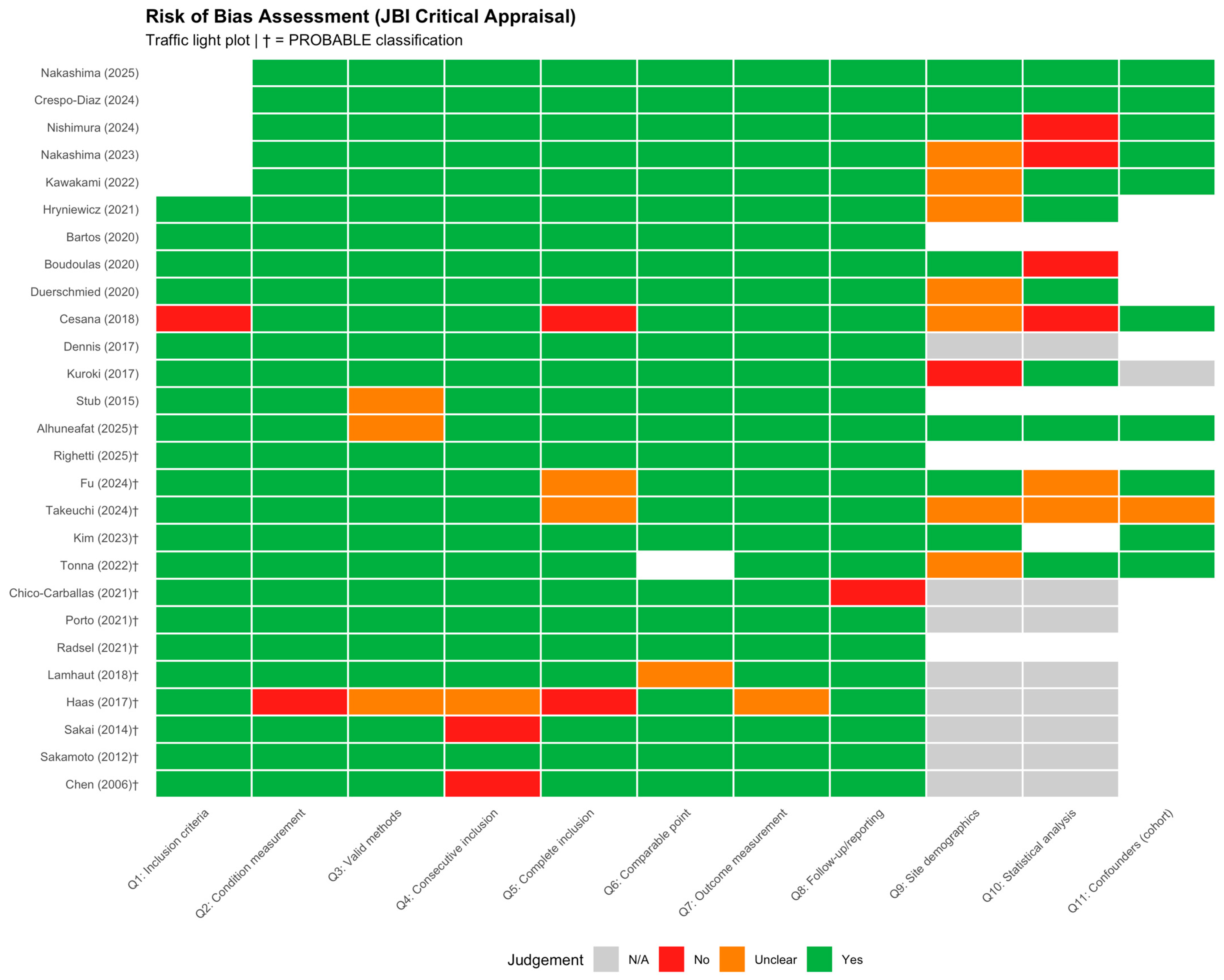
2.5. Quality Assessment
2.6. Data Synthesis
- DEFINITE-only vs. combined. Key outcomes (survival to discharge, favourable neurological outcome, PCI rate, and TIMI 3 flow) were compared between the DEFINITE primary cohort and the combined 27-study set to quantify the influence of phenotype-classification uncertainty.
- Exclude-overlap. To address the acknowledged inter-registry overlap (ELSO, SAVE-J II and their secondary analyses; maximum overlap ≈ 1094 patients, 8.5% of the combined N), we repeated the key-outcome synthesis after excluding studies flagged as having overlapping patient populations. This yields an exclude-overlap subset (n = 19 studies, N = 2741 patients) in which double counting is avoided.
2.7. Deviations from Protocol
3. Results
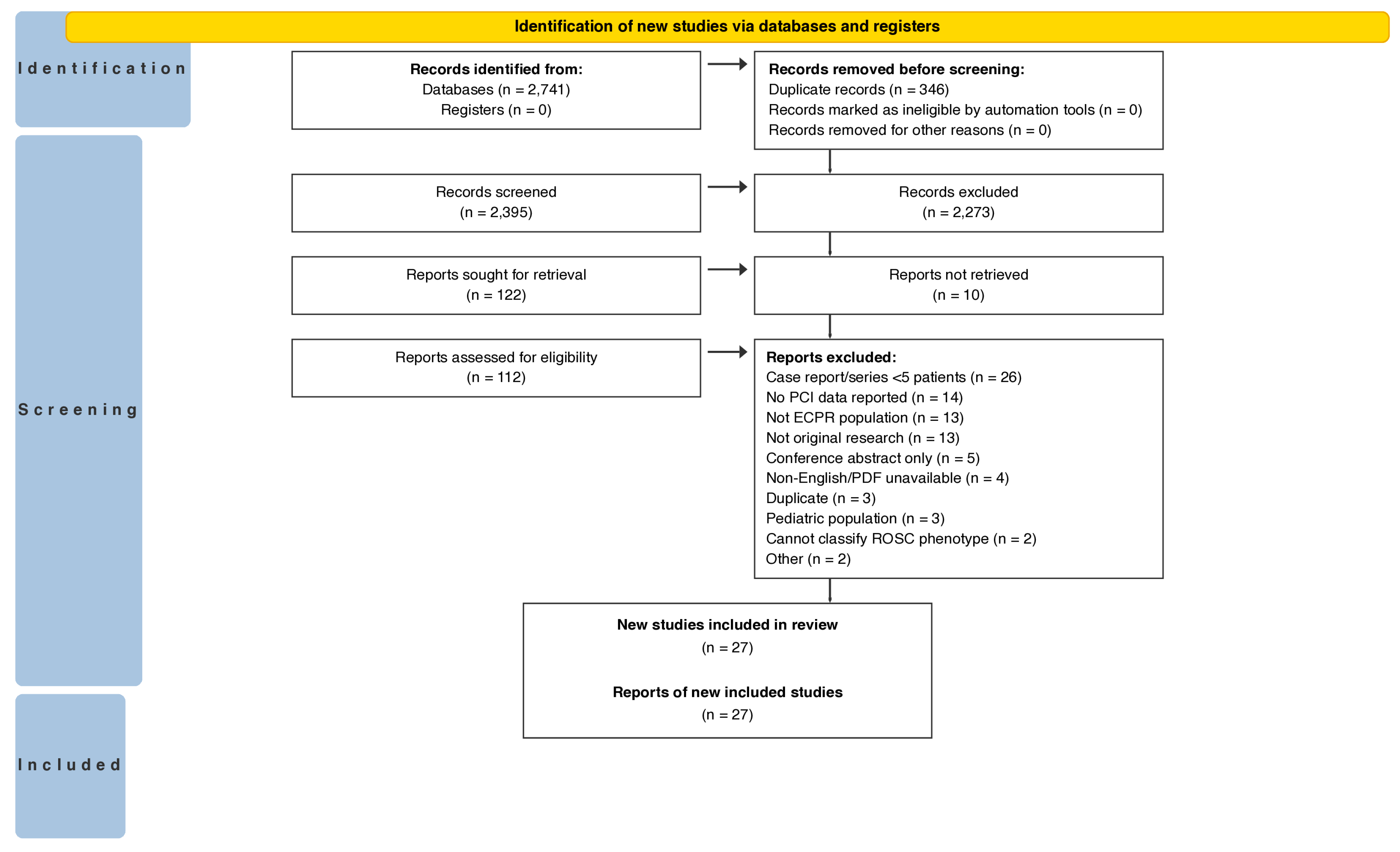
3.1. Study Selection Results
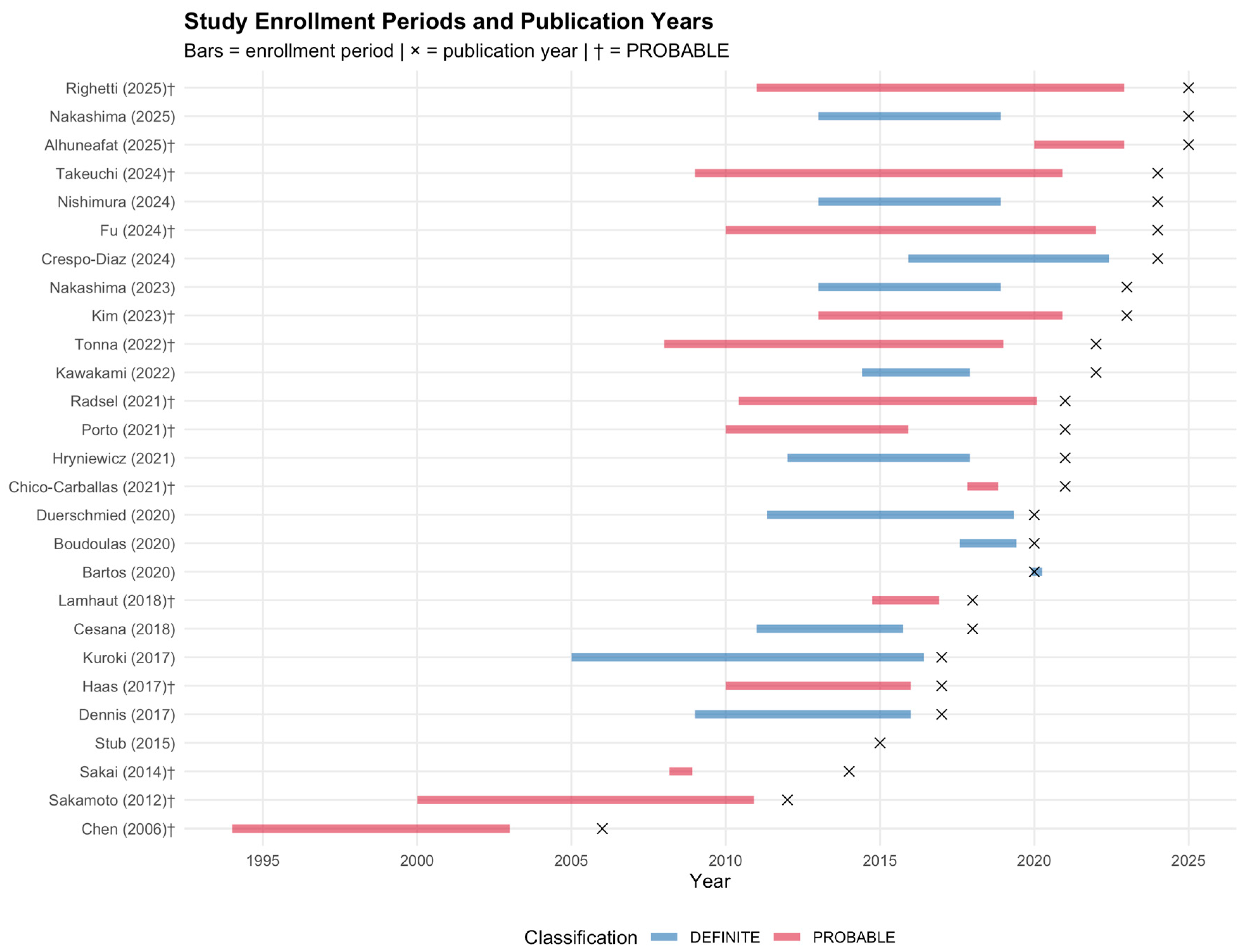
3.2. Study Characteristics
3.2.1. Phenotype Classification and Analytic Cohorts
3.2.2. Methodological Caveats (Read Before Numeric Sections)
- Phenotype-classification uncertainty (PROBABLE cohort). In 14 of 27 studies, ROSC status at PCI was inferred from described clinical workflow rather than explicitly stated; consequently, combined 27-study estimates carry classification uncertainty that the DEFINITE primary cohort does not.
- Overlapping populations across registries. Three groups of overlapping populations were identified. Two studies from the SAVE-J II registry [14,15] and one subsequent analysis [12] shared the same source population (maximum overlap ≈ 877 patients); two ELSO registry studies [30,35] had temporally overlapping enrolment periods (maximum overlap ≈ 217 patients), while a third ELSO study [25] did not overlap temporally; and three studies included mixed cardiac arrest and cardiogenic shock cohorts with only partial subgroup data. The aggregate combined N of 12,882 may therefore include up to approximately 1094 patients (~8.5%) counted more than once across overlapping registries. A pre-specified exclude-overlap sensitivity analysis (Section 3.5.5) assesses the impact.
- Heterogeneous endpoint definitions. Survival definitions varied (hospital discharge, ICU discharge, and 30-day) and favourable neurological outcome was assessed at different timepoints across studies; all numeric ranges below should be interpreted with this heterogeneity in mind.
3.3. Axis 1: Selection Profile
3.3.1. Demographics
3.3.2. Arrest Setting
3.3.3. Initial Cardiac Rhythm
3.3.4. Low-Flow Time
3.3.5. ACS Suspicion
3.4. Axis 2: Procedural Feasibility
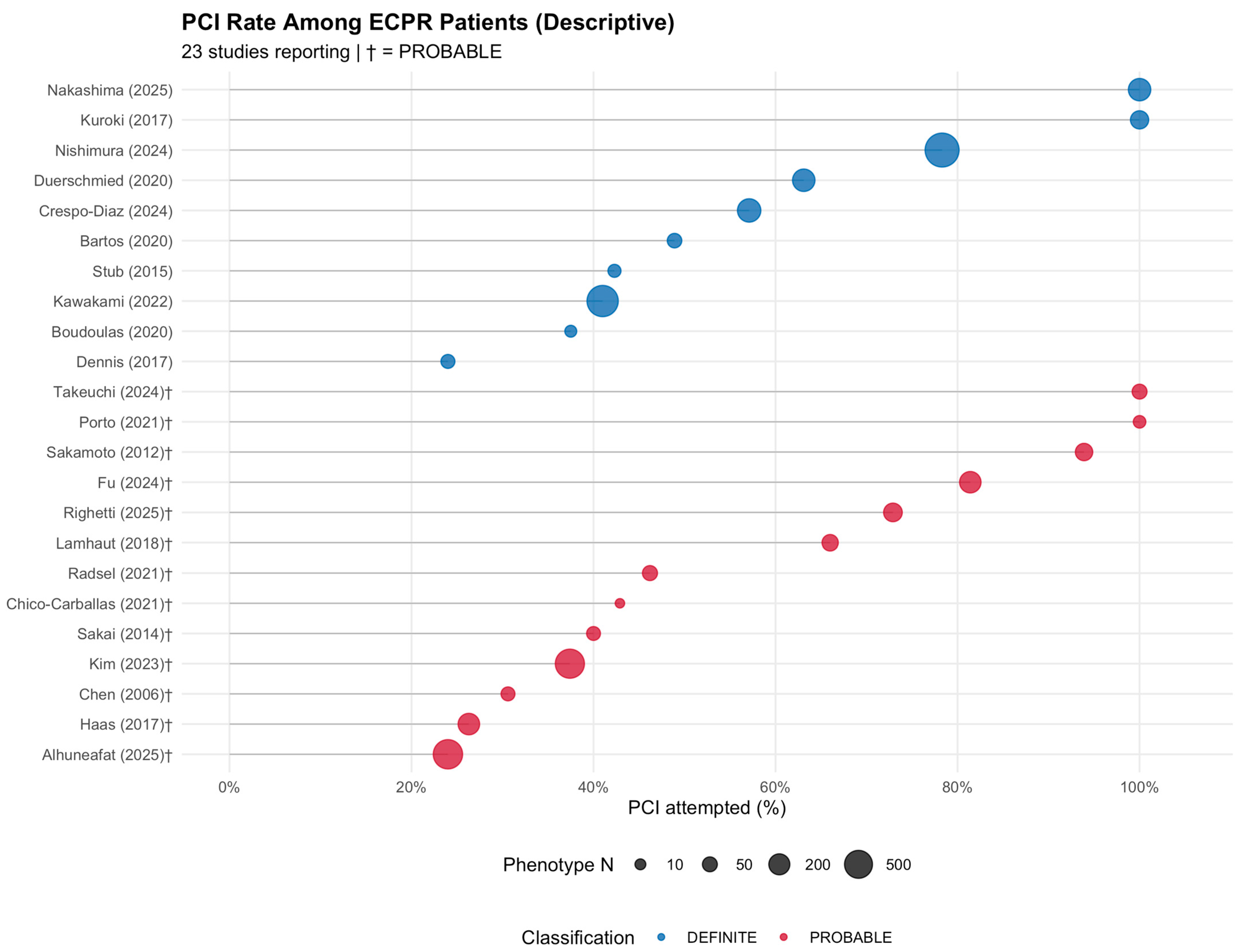
3.4.1. PCI Rates
3.4.2. Reperfusion Success
3.4.3. Culprit Lesion Distribution
3.4.4. Time to Coronary Intervention
3.4.5. Adjunctive Mechanical Support
3.4.6. Procedural Complications
3.5. Axis 3: Outcome Envelope (Exploratory)
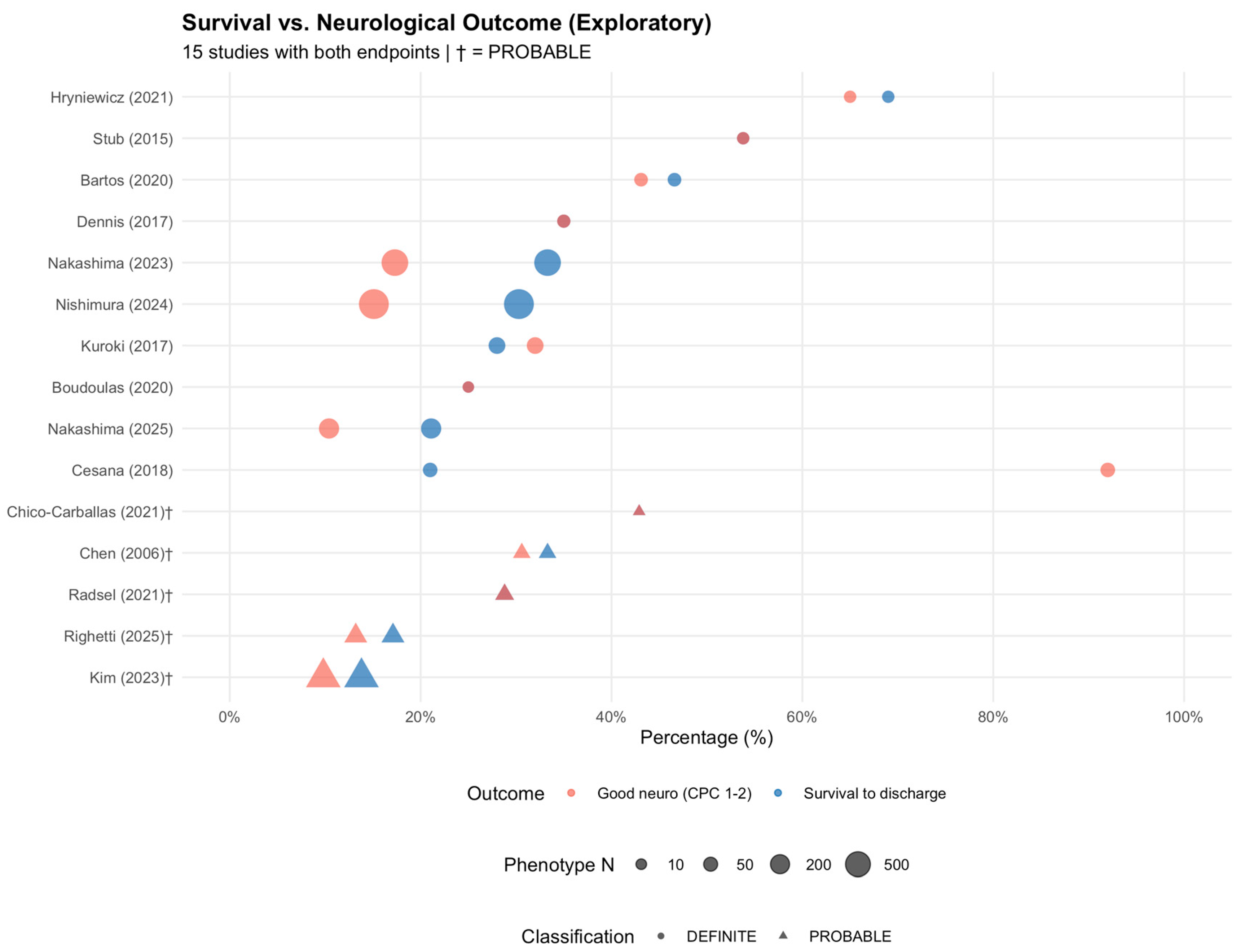
3.5.1. Survival
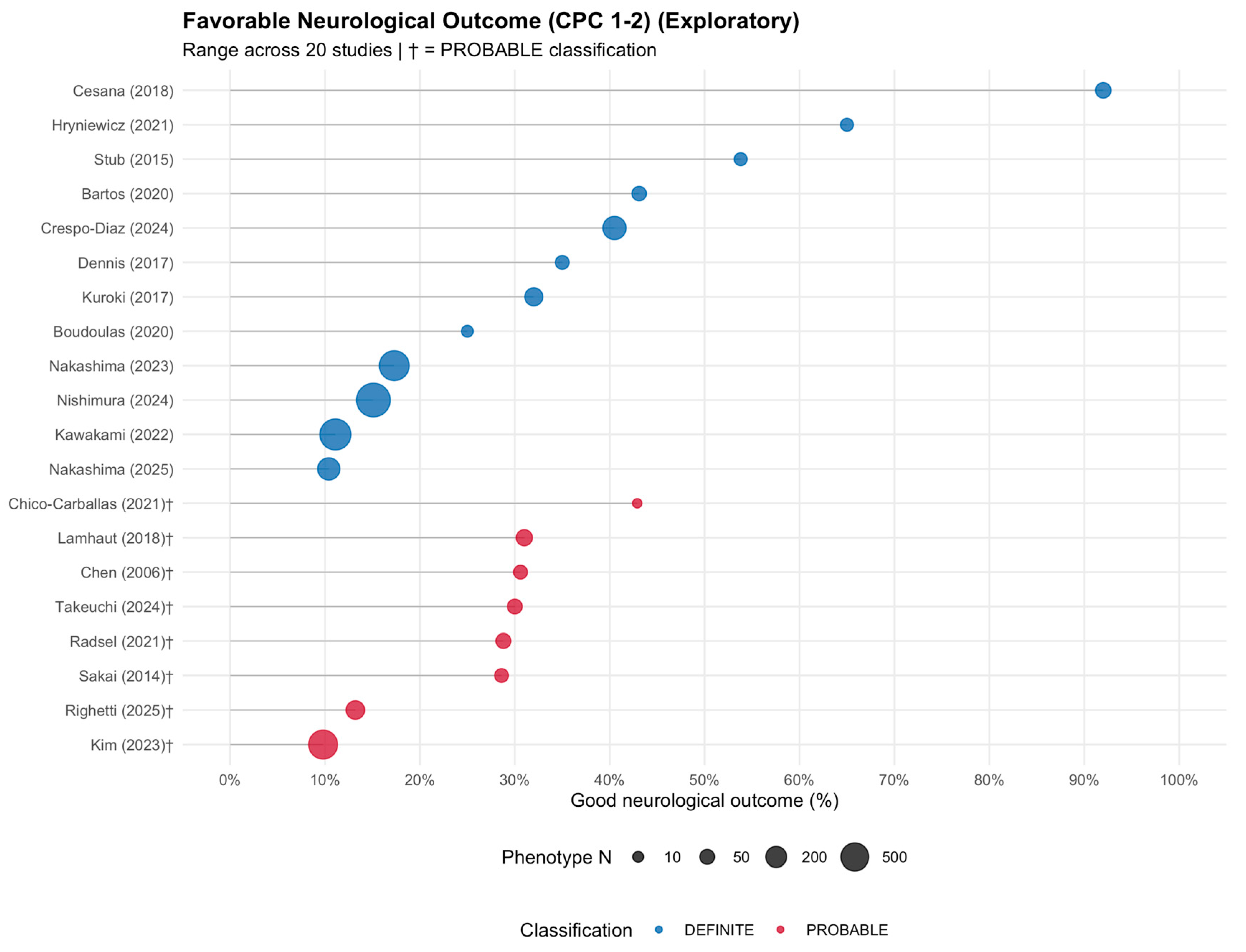
3.5.2. Favourable Neurological Outcome
3.5.3. ECMO Weaning and Duration
3.5.4. Post-PCI ROSC
3.5.5. Sensitivity Analyses
- DEFINITE vs. combined. Central tendency and range for survival and favourable neurological outcome were concordant between the DEFINITE primary cohort and the combined 27-study set: DEFINITE median survival 30.3% (IQR 26.5–40.8) versus combined 29.2% (IQR 23.1–34.2); DEFINITE median favourable neurological outcome 33.5% (IQR 16.8–45.8) versus combined 30.3% (IQR 16.8–41.1). The inclusion of PROBABLE studies did not materially shift the observed outcome envelope.
- Exclude-overlap subset (19 studies, N = 2741). After excluding studies flagged as having overlapping patient populations (ELSO and SAVE-J II-related studies), key outcomes remained concordant with the DEFINITE primary cohort: median survival 31.1% (IQR 27.2–37.0; range 13.8–69.0; n = 12) and median favourable neurological outcome 30.6% (IQR 26.8–37.8; range 9.8–65.0; n = 15). This indicates that the descriptive envelope is not an artefact of patient double-counting across registries.
3.6. Risk of Bias Assessment
3.6.1. ROBINS-I—Primary Assessment (13 DEFINITE Studies)
3.6.2. JBI—Supplementary Assessment (All 27 Studies)
4. Discussion
4.1. Principal Findings
4.2. Interpretation in Context
4.2.1. The Phenotype Is Recognized but Inconsistently Documented
4.2.2. Selection Logic Varies Across Centres
4.2.3. Feasibility Is Supported but Context-Dependent
4.2.4. Outcome Ranges Are Wide and Context-Dependent
4.3. Clinical Implications (Exploratory)
4.3.1. Informing the Decision at the Catheterization Laboratory Door
4.3.2. Standardizing Reporting for Future Research
4.4. Strengths and Limitations
4.4.1. Strengths
4.4.2. Limitations
4.5. Future Directions
4.6. Conclusions
Supplementary Materials
Author Contributions
Funding
Institutional Review Board Statement
Informed Consent Statement
Data Availability Statement
Acknowledgments
Conflicts of Interest
References
- Tsao, C.W.; Aday, A.W.; Almarzooq, Z.I.; Anderson, C.A.M.; Arora, P.; Avery, C.L.; Baker-Smith, C.M.; Beaton, A.Z.; Boehme, A.K.; Buxton, A.E.; et al. Heart Disease and Stroke Statistics—2023 Update: A Report From the American Heart Association. Circulation 2023, 147, e93–e621. [Google Scholar] [CrossRef]
- Yannopoulos, D.; Bartos, J.; Raveendran, G.; Walser, E.; Connett, J.; Murray, T.A.; Collins, G.; Zhang, L.; Kalber, T.L.; Kosmopoulos, M.; et al. Advanced Reperfusion Strategies for Patients with Out-of-Hospital Cardiac Arrest and Refractory Ventricular Fibrillation (ARREST): A Phase 2, Single Centre, Open-Label, Randomised Controlled Trial. Lancet 2020, 396, 1807–1816. [Google Scholar] [CrossRef]
- Belohlavek, J.; Smalcova, J.; Rob, D.; Franek, O.; Smid, O.; Pokorna, M.; Horák, J.; Jankova, H.; Zemanek, D.; Kral, A.; et al. Effect of Intra-arrest Transport, Extracorporeal Cardiopulmonary Resuscitation, and Immediate Invasive Assessment and Treatment on Functional Neurologic Outcome in Refractory Out-of-Hospital Cardiac Arrest: A Randomized Clinical Trial. JAMA 2022, 327, 737–747. [Google Scholar] [CrossRef]
- Suverein, M.M.; Delnoij, T.S.R.; Lorusso, R.; Brandon Bravo Bruinsma, G.J.; Otterspoor, L.; Elzo Kraemer, C.V.; Vlaar, A.P.J.; van der Heijden, J.J.; Scholten, E.; den Uil, C.; et al. Early Extracorporeal CPR for Refractory Out-of-Hospital Cardiac Arrest. N. Engl. J. Med. 2023, 388, 299–309. [Google Scholar] [CrossRef] [PubMed]
- Panchal, A.R.; Bartos, J.A.; Cabañas, J.G.; Donnino, M.W.; Drennan, I.R.; Hirsch, K.G.; Kudenchuk, P.J.; Kurz, M.C.; Lavonas, E.J.; Morley, P.T.; et al. Part 3: Adult Basic and Advanced Life Support: 2020 American Heart Association Guidelines for Cardiopulmonary Resuscitation and Emergency Cardiovascular Care. Circulation 2020, 142, S366–S468. [Google Scholar] [CrossRef]
- Soar, J.; Böttiger, B.W.; Carli, P.; Couper, K.; Deakin, C.D.; Djärv, T.; Lott, C.; Olasveengen, T.; Paal, P.; Pellis, T.; et al. European Resuscitation Council Guidelines 2021: Adult Advanced Life Support. Resuscitation 2021, 161, 115–151. [Google Scholar] [CrossRef]
- Deo, R.; Albert, C.M. Epidemiology and Genetics of Sudden Cardiac Death. Circulation 2012, 125, 620–637. [Google Scholar] [CrossRef] [PubMed]
- Perkins, G.D.; Jacobs, I.G.; Nadkarni, V.M.; Berg, R.A.; Bhanji, F.; Biarent, D.; Bossaert, L.L.; Brett, S.J.; Chamberlain, D.; de Caen, A.R.; et al. Cardiac Arrest and Cardiopulmonary Resuscitation Outcome Reports: Update of the Utstein Resuscitation Registry Templates for Out-of-Hospital Cardiac Arrest. Circulation 2015, 132, 1286–1300. [Google Scholar] [CrossRef]
- Page, M.J.; McKenzie, J.E.; Bossuyt, P.M.; Boutron, I.; Hoffmann, T.C.; Mulrow, C.D.; Shamseer, L.; Tetzlaff, J.M.; Akl, E.A.; Brennan, S.E.; et al. The PRISMA 2020 Statement: An Updated Guideline for Reporting Systematic Reviews. BMJ 2021, 372, n71. [Google Scholar] [CrossRef] [PubMed]
- Sterne, J.A.C.; Hernán, M.A.; Reeves, B.C.; Savović, J.; Berkman, N.D.; Viswanathan, M.; Henry, D.; Altman, D.G.; Ansari, M.T.; Boutron, I.; et al. ROBINS-I: A Tool for Assessing Risk of Bias in Non-Randomised Studies of Interventions. BMJ 2016, 355, i4919. [Google Scholar] [CrossRef]
- Aromataris, E.; Lockwood, C.; Porritt, K.; Pilla, B.; Jordan, Z. (Eds.) JBI Manual for Evidence Synthesis; JBI: Adelaide, Australia, 2024. [Google Scholar] [CrossRef]
- Nakashima, T.; Arai, M.; Inoue, A.; Hifumi, T.; Sakamoto, T.; Kuroda, Y.; Tahara, Y. Revascularization During Cardiac Arrest While Receiving Extracorporeal Life Support in Patients with Acute Myocardial Infarction. JACC Adv. 2025, 4, 101455. [Google Scholar] [CrossRef] [PubMed]
- Crespo-Diaz, R.; Kosmopoulos, M.; Raveendran, G.; Gurevich, S.; Yannopoulos, D.; Bartos, J.A. Effects of Perfusion, Coronary Artery Disease Burden, and Revascularization in Establishing Organized Cardiac Rhythm During Extracorporeal Cardiopulmonary Resuscitation. J. Am. Heart Assoc. 2024, 13, e033907. [Google Scholar] [CrossRef]
- Nishimura, T.; Inoue, A.; Taira, T.; Suga, M.; Ijuin, S.; Hifumi, T.; Sakamoto, T.; Kuroda, Y.; Ishihara, S. Intra-aortic Balloon Pump in Patients with Extracorporeal Cardiopulmonary Resuscitation after Cardiac Arrest Caused by Acute Myocardial Infarction. Resuscitation 2024, 195, 110091. [Google Scholar] [CrossRef]
- Nakashima, T.; Otani, T.; Kato, S.; Arai, M.; Inoue, A.; Hifumi, T.; Sakamoto, T.; Kuroda, Y.; Tahara, Y. Postprocedural Coronary Perfusion and Mortality in Patients with Acute Myocardial Infarction and Extracorporeal Cardiopulmonary Resuscitation. J. Am. Coll. Cardiol. 2023, 82, 85–87. [Google Scholar] [CrossRef]
- Kawakami, S.; Tahara, Y.; Koga, H.; Noguchi, T.; Inoue, S.; Yasuda, S. The Association between Time to Extracorporeal Cardiopulmonary Resuscitation and Outcome in Patients with Out-of-Hospital Cardiac Arrest: A Retrospective Study. Eur. Heart J. Acute Cardiovasc. Care 2022, 11, 279–289. [Google Scholar] [CrossRef]
- Hryniewicz, K.; Hart, M.; Raile, D.; Wang, Y.; Mooney, M.; Mudy, K.; Eckman, P.M.; Samara, M.A.; Truong, H.T.; Sun, B.; et al. Multidisciplinary Shock Team Is Associated with Improved Outcomes in Patients Undergoing ECPR. Int. J. Artif. Organs 2021, 44, 3–10. [Google Scholar] [CrossRef] [PubMed]
- Bartos, J.A.; Frascone, R.J.; Conterato, M.; Wesley, K.; Lick, C.; Sipprell, K.; Vuljaj, N.; Burnett, A.; Peterson, B.K.; Simpson, N.; et al. The Minnesota Mobile Extracorporeal Cardiopulmonary Resuscitation Consortium for Treatment of Out-of-Hospital Refractory Ventricular Fibrillation: Program Description, Performance, and Outcomes. eClinicalMedicine 2020, 29–30, 100632. [Google Scholar] [CrossRef]
- Boudoulas, K.D.; Whitson, B.A.; Keseg, D.P.; Lilly, S.; Baker, C.; Attar, T.; Capers, Q.; Gumina, R.J.; Mast, D.W.; Satyapriya, S.V.; et al. Extracorporeal Cardiopulmonary Resuscitation (ECPR) for Out-of-Hospital Cardiac Arrest due to Pulseless Ventricular Tachycardia/Ventricular Fibrillation. J. Interv. Cardiol. 2020, 2020, 6939315. [Google Scholar] [CrossRef]
- Duerschmied, D.; Zotzmann, V.; Rieder, M.; Bemtgen, X.; Biever, P.M.; Kaier, K.; Trummer, G.; Benk, C.; Busch, H.J.; Bode, C.; et al. Myocardial Infarction Type 1 Is Frequent in Refractory Out-of-Hospital Cardiac Arrest (OHCA) Treated with Extracorporeal Cardiopulmonary Resuscitation (ECPR). Sci. Rep. 2020, 10, 8423. [Google Scholar] [CrossRef] [PubMed]
- Cesana, F.; Avalli, L.; Garatti, L.; Coppo, A.; Righetti, S.; Calchera, I.; Scanziani, E.; Cozzolino, P.; Squadroni, L.; Bentivegna, E.; et al. Effects of Extracorporeal Cardiopulmonary Resuscitation on Neurological and Cardiac Outcome after Ischaemic Refractory Cardiac Arrest. Eur. Heart J. Acute Cardiovasc. Care 2018, 7, 223–232. [Google Scholar] [CrossRef]
- Dennis, M.; McCanny, P.; D’Souza, M.; Forrest, P.; Burns, B.; Lowe, D.A.; Gattas, D.; Scott, S.; Bannon, P.; Granger, E.; et al. Extracorporeal Cardiopulmonary Resuscitation for Refractory Cardiac Arrest: A Multicentre Experience. Int. J. Cardiol. 2017, 230, 542–549. [Google Scholar] [CrossRef]
- Kuroki, N.; Abe, D.; Iwama, T.; Suzuki, K.; Sugiyama, K.; Akashi, A.; Hamabe, Y.; Aonuma, K.; Sato, A. Association between Delay to Coronary Reperfusion and Outcome in Patients with Acute Coronary Syndrome Undergoing Extracorporeal Cardiopulmonary Resuscitation. Resuscitation 2017, 114, 1–6. [Google Scholar] [CrossRef]
- Stub, D.; Bernard, S.; Pellegrino, V.; Smith, K.; Walker, T.; Sheldrake, J.; Hockings, L.; Shaw, J.; Duffy, S.J.; Burrell, A.; et al. Refractory Cardiac Arrest Treated with Mechanical CPR, Hypothermia, ECMO and Early Reperfusion (the CHEER Trial). Resuscitation 2015, 86, 88–94. [Google Scholar] [CrossRef] [PubMed]
- Alhuneafat, L.; Murray, T.A.; Johnson, N.J.; Hsu, C.H.; Grunau, B.; Alexy, T.; Yannopoulos, D.; Bartos, J.; Tonna, J.E. The Effect of Percutaneous Coronary Intervention after Extracorporeal Cardiopulmonary Resuscitation on Survival for Out-of-Hospital Cardiac Arrest. Resusc. Plus 2025, 26, 101103. [Google Scholar] [CrossRef]
- Righetti, S.; Pozzi, M.; Leidi, F.; Giani, M.; Aliverti Piuri, D.; Maggioni, E.; Calchera, I.; Tresoldi, S.; Ballabio, M.; Tassistro, E.; et al. Coronary Angiography Findings in Patients with Refractory Out-of-Hospital Cardiac Arrest Treated with Extracorporeal Cardiopulmonary Resuscitation. Resuscitation 2025, 215, 110717. [Google Scholar] [CrossRef] [PubMed]
- Fu, H.-Y.; Chen, Y.-S.; Yu, H.-Y.; Chi, N.-H.; Wei, L.-Y.; Chen, K.P.-H.; Chou, H.-W.; Chou, N.-K.; Wang, C.-H. Emergent Coronary Revascularization with Percutaneous Coronary Intervention and Coronary Artery Bypass Grafting in Patients Receiving Extracorporeal Cardiopulmonary Resuscitation. Eur. J. Cardiothorac. Surg. 2024, 66, ezae290. [Google Scholar] [CrossRef]
- Takeuchi, T.; Ueda, Y.; Kosugi, S.; Ikeoka, K.; Yamane, H.; Ohashi, T.; Iehara, T.; Ukai, K.; Oozato, K.; Oosaki, S.; et al. The Impact of Door to Extracorporeal Cardiopulmonary Resuscitation Time on Mortality and Neurological Outcomes among Out-of-Hospital Cardiac Arrest Patients. Am. Heart J. Plus Cardiol. Res. Pract. 2024, 47, 100473. [Google Scholar] [CrossRef]
- Kim, Y.; Park, J.H.; Lee, S.Y.; Ro, Y.S.; Hong, K.J.; Song, K.J.; Shin, S.D. Extracorporeal Cardiopulmonary Resuscitation Location, Coronary Angiography and Survival in Out-of-Hospital Cardiac Arrest. Am. J. Emerg. Med. 2023, 64, 142–149. [Google Scholar] [CrossRef] [PubMed]
- Tonna, J.E.; Selzman, C.H.; Bartos, J.A.; Presson, A.P.; Ou, Z.; Jo, Y.; Becker, L.; Youngquist, S.T.; Mallin, M.P.; McMullan, D.M.; et al. The Association of Modifiable Postresuscitation Management and Annual Case Volume with Survival after Extracorporeal Cardiopulmonary Resuscitation. Crit. Care Explor. 2022, 4, e0733. [Google Scholar] [CrossRef]
- Chico-Carballas, J.I.; Touceda-Bravo, A.; Freita-Ramos, S.; Mosquera-Rodriguez, D.; Gómez-Casal, V.; Piñon-Esteban, M. The First Year of Experience with an Extracorporeal Resuscitation Program for Refractory In-Hospital Cardiac Arrest. Med. Intensiv. 2021, 45, e7–e10. [Google Scholar] [CrossRef]
- Porto, I.; Mattesini, A.; D’Amario, D.; Sorini Dini, C.; Della Bona, R.; Scicchitano, M.; Vergallo, R.; Trani, C.; Burzotta, F.; Crea, F.; et al. Blood Lactate Predicts Survival after Percutaneous Implantation of Extracorporeal Life Support for Refractory Cardiac Arrest or Cardiogenic Shock. Intern. Emerg. Med. 2021, 16, 463–470. [Google Scholar] [CrossRef]
- Radsel, P.; Goslar, T.; Bunc, M.; Ksela, J.; Gorjup, V.; Noc, M. Emergency Veno-arterial Extracorporeal Membrane Oxygenation (VA ECMO)–Supported Percutaneous Interventions in Refractory Cardiac Arrest. Resuscitation 2021, 158, 35–42. [Google Scholar] [CrossRef]
- Lamhaut, L.; Tea, V.; Raphalen, J.H.; An, K.; Dagron, C.; Jouffroy, R.; Jouven, X.; Cariou, A.; Baud, F.J.; Megarbane, B.; et al. Coronary Lesions in Refractory Out of Hospital Cardiac Arrest (OHCA) Treated by Extra Corporeal Pulmonary Resuscitation (ECPR). Resuscitation 2018, 126, 154–159. [Google Scholar] [CrossRef]
- Haas, N.L.; Coute, R.A.; Hsu, C.H.; Cranford, J.A.; Neumar, R.W. Descriptive Analysis of Extracorporeal Cardiopulmonary Resuscitation Following Out-of-Hospital Cardiac Arrest—An ELSO Registry Study. Resuscitation 2017, 119, 56–62. [Google Scholar] [CrossRef]
- Sakai, T.; Kitamura, T.; Iwami, T.; Hayashi, Y.; Rinka, H.; Ohishi, Y.; Mohri, T.; Kishimoto, M.; Kawaguchi, R.; Kajino, K.; et al. Actual Treatments for Out-of-Hospital Ventricular Fibrillation at Critical Care Medical Centers in Osaka: A Pilot Descriptive Study. Acute Med. Surg. 2014, 1, 150–158. [Google Scholar] [CrossRef] [PubMed]
- Sakamoto, S.; Taniguchi, N.; Nakajima, S.; Takahashi, A. Extracorporeal Life Support for Cardiogenic Shock or Cardiac Arrest due to Acute Coronary Syndrome. Ann. Thorac. Surg. 2012, 94, 1–7. [Google Scholar] [CrossRef] [PubMed]
- Chen, J.-S.; Ko, W.-J.; Yu, H.-Y.; Lai, L.-P.; Huang, S.-C.; Chi, N.-H.; Tsai, C.-H.; Wang, S.-S.; Lin, F.-Y.; Chen, Y.-S. Analysis of the Outcome for Patients Experiencing Myocardial Infarction and Cardiopulmonary Resuscitation Refractory to Conventional Therapies Necessitating Extracorporeal Life Support Rescue. Crit. Care Med. 2006, 34, 950–957. [Google Scholar] [CrossRef] [PubMed]
- Lemkes, J.J.; Janssens, G.N.; van der Hoeven, N.W.; Jewbali, L.S.D.; Dubois, E.A.; Meuwissen, M.; Rijpstra, T.A.; Bosker, H.A.; Blber, A.; Bleeker, G.B.; et al. Coronary Angiography after Cardiac Arrest without ST-Segment Elevation. N. Engl. J. Med. 2019, 380, 1397–1407. [Google Scholar] [CrossRef]
- Spadafora, L.; Pastena, P.; Cacciatore, S.; Betti, M.; Biondi-Zoccai, G.; Bernardi, M.; Giordano, A.; Mauriello, A.; Ielasi, A.; Cortese, B.; et al. One-Year Prognostic Differences and Management Strategies between ST-Elevation and Non-ST-Elevation Myocardial Infarction: Insights from the PRAISE Registry. Am. J. Cardiovasc. Drugs 2025, 25, 681–691. [Google Scholar] [CrossRef] [PubMed]
- Thiele, H.; Zeymer, U.; Neumann, F.-J.; Ferenc, T.; Olbrich, H.-G.; Hausleiter, J.; Richardt, G.; Hennersdorf, M.; Empen, K.; Fuernau, G.; et al. Intraaortic Balloon Support for Myocardial Infarction with Cardiogenic Shock. N. Engl. J. Med. 2012, 367, 1287–1296. [Google Scholar] [CrossRef]



| Study | Country | Design | Period | N | Age | Male % | OHCA % | Shockable % | Low-Flow (min) | STEMI % |
|---|---|---|---|---|---|---|---|---|---|---|
| Nakashima (2025) [12] | Japan | Reg | January 2013 to December 2018 | 251 | 61 (51, 67) | 89.2 | 100.0 | 76.5 | 56 (47, 68) b | NR |
| Crespo-Diaz (2024) [13] | USA | RC | December 2015 to June 2022 | 289 | 59 ± 16 | 80.0 | 100.0 | 100.0 | 56 ± 19 e | NR |
| Nishimura (2024) [14] | Japan | Reg | January 2013 to December 2018 | 877 | 62 (52, 69) | 89.5 | 100.0 | 73.4 | 54 (45, 65) a | NR |
| Nakashima (2023) [15] | Japan | Reg | January 2013 to December 2018 | 624 | NR | NR | 100.0 | 74.5 | 56 (46, 69) b | NR |
| Kawakami (2022) [16] | Japan | Reg | June 2014 to December 2017 | 695 | 59 (47, 68) | 84.2 | 100.0 | 72.4 | 56 (47, 68) b | NR |
| Hryniewicz (2021) [17] | USA | RC | January 2012 to December 2017 | 26 | 59 ± 11 | 65.0 | 27.0 | 65.0 | 51 (22, 70) | NR |
| Bartos (2020) [18] | USA | PC | December 2019 to April 2020 | 45 | 57 ± 14 | 79.3 | 100.0 | 100.0 | 52.2 ± 17.0 d | NR |
| Boudoulas (2020) [19] | USA | RC | August 2017 to June 2019 | 16 | 56.4 ± 14.1 | 93.8 | 100.0 | 100.0 | 44.2 ± 9.2 | NR |
| Duerschmied (2020) [20] | Germany | Reg | May 2011 to May 2019 | 252 | 59 ± 14.3 | 73.8 | 44.4 | 47.6 | 52 (10–150) a | NR |
| Cesana (2018) [21] | Italy | RC | January 2011 to October 2015 | 63 | 59 ± 10 | 87.0 | 73.0 | 65.0 | 56 ± 24 c | 68.0 |
| Dennis (2017) [22] | Australia | RC | 2009 to 2016 | 37 | 54 (47, 58) | 73.0 | 32.0 | 51.0 | 45 (30, 70) a | NR |
| Kuroki (2017) [23] | Japan | RC | January 2005 to June 2016 | 119 | 63.2 ± 11.8 | 91.0 | 31.0 | 33.0 | 34.2 ± 16.1 a | 61.0 |
| Stub (2015) [24] | Australia | PC | 32-month period | 26 | 52 (38, 60) | 77.0 | 42.3 | 73.0 | 56 (40, 85) a | 34.6 |
| Alhuneafat (2025) † [25] | International | Reg | January 2020 to December 2022 | 576 | 58.6 (49.3–64.5) | 83.3 | 100.0 | 75.4 | 56 (50.0–70.0) c | 34.1 |
| Righetti (2025) † [26] | Italy | RC | January 2011 to December 2022 | 129 | 56 (48–62) | 86.8 | 100.0 | 72.9 | 67 (58.5–75.0) e | NR |
| Fu (2024) † [27] | Taiwan | RC | 2010 to 2022 | 215 | 60.1 (51.3–67.9) | 89.7 | 49.4 | 68.9 | NR | NR |
| Takeuchi (2024) † [28] | Japan | RC | January 2009 to December 2020 | 50 | 57.6 | 90.0 | 100.0 | 86.0 | NR | 92.0 |
| Kim (2023) † [29] | South Korea | Reg | January 2013 to December 2020 | 564 | 56.4 (46–64.5) | 82.1 | 100.0 | 58.5 | 46 (35–63) b | NR |
| Tonna (2022) † [30] | International | Reg | 2008 to 2019 | 7488 | 55 (44–64) | 68.0 | NR | NR | NR | NR |
| Chico-Carballas (2021) † [31] | Spain | CS | November 2017 to November 2018 | 7 | 62 (40–68) | 57.1 | 0.0 | 71.4 | 55 (36–63) a | 57.1 |
| Porto (2021) † [32] | Italy | RC | January 2010 to December 2015 | 21 | NR | NR | NR | NR | NR | 71.0 |
| Radsel (2021) † [33] | Slovenia | RC | June 2010 to February 2020 | 52 | 52 ± 12 | 82.7 | 42.3 | NR | NR | NR |
| Lamhaut (2018) † [34] | France | PC | October 2014 to December 2016 | 74 | 54 ± 12.2 | 81.0 | 100.0 | 66.0 | 78 ± 26 c | NR |
| Haas (2017) † [35] | International | Reg | 2010 to 2016 | 217 | 52 (45–62) | 73.0 | 100.0 | NR | NR | NR |
| Sakai (2014) † [36] | Japan | Reg | March 2008 to December 2008 | 35 | 60.2 ± 13.4 | 85.7 | 100.0 | 100.0 | 31.2 ± 10.5 a | NR |
| Sakamoto (2012) † [37] | Japan | RC | January 2000 to December 2010 | 98 | 72 ± 12 | 66.3 | NR | 23.5 | 25.5 ± 22.4 a | NR |
| Chen (2006) † [38] | Taiwan | RC | 1994 to 2003 | 36 | 57 ± 10 | 91.7 | NR | NR | NR | NR |
| Study | N | N (PCI) | Angio % | PCI % | TIMI 3 % | IABP % | Bleeding n | Limb Isch n |
|---|---|---|---|---|---|---|---|---|
| Nakashima (2025) [12] | 251 | 251 | 100.0 | 100.0 | 69.7 | 89.6 | NR | NR |
| Crespo-Diaz (2024) [13] | 289 | 165 | 100.0 | 57.1 | NR | NR | NR | NR |
| Nishimura (2024) [14] | 877 | 687 | NR | 78.3 | NR | 80.0 | NR | NR |
| Nakashima (2023) [15] | 624 | 624 | NR | NR | 80.0 | NR | NR | NR |
| Kawakami (2022) [16] | 695 | 285 | 71.9 | 41.0 | NR | 59.4 | NR | NR |
| Hryniewicz (2021) [17] | 26 | — | NR | NR | NR | 46.0 | 18 | NR |
| Bartos (2020) [18] | 45 | 22 | 100.0 | 48.9 | NR | NR | 4 | 0 |
| Boudoulas (2020) [19] | 16 | 6 | 93.8 | 37.5 | NR | NR | NR | NR |
| Duerschmied (2020) [20] | 252 | 159 | 74.6 | 63.1 | NR | NR | NR | NR |
| Cesana (2018) [21] | 63 | — | 100.0 | NR | NR | 38.0 | NR | NR |
| Dennis (2017) [22] | 37 | 9 | 54.0 | 24.0 | NR | 5.0 | 14 | 7 |
| Kuroki (2017) [23] | 119 | 119 | 100.0 | 100.0 | 84.0 | 91.0 | NR | NR |
| Stub (2015) [24] | 26 | 11 | 80.8 | 42.3 | NR | NR | 18 | 1 |
| Alhuneafat (2025) † [25] | 576 | 138 | 41.0 | 24.0 | NR | NR | NR | NR |
| Righetti (2025) † [26] | 129 | 94 | 94.6 | 72.9 | 62.4 | NR | NR | NR |
| Fu (2024) † [27] | 215 | 175 | 100.0 | 81.4 | NR | 75.0 | NR | NR |
| Takeuchi (2024) † [28] | 50 | 50 | 100.0 | 100.0 | NR | NR | NR | 7 |
| Kim (2023) † [29] | 564 | 211 | 56.6 | 37.4 | NR | NR | NR | NR |
| Tonna (2022) † [30] | 7488 | — | 6.9 | NR | NR | NR | NR | NR |
| Chico-Carballas (2021) † [31] | 7 | 3 | 71.4 | 42.9 | NR | NR | 1 | 0 |
| Porto (2021) † [32] | 21 | 21 | 100.0 | 100.0 | NR | 86.0 | NR | 4 |
| Radsel (2021) † [33] | 52 | 24 | 73.1 | 46.2 | NR | 42.3 | 7 | 16 |
| Lamhaut (2018) † [34] | 74 | 49 | 100.0 | 66.0 | NR | NR | NR | NR |
| Haas (2017) † [35] | 217 | 57 | NR | 26.3 | NR | 7.4 | 68 | 24 |
| Sakai (2014) † [36] | 35 | 14 | 60.0 | 40.0 | NR | NR | NR | NR |
| Sakamoto (2012) † [37] | 98 | 92 | 99.0 | 93.9 | 70.7 | 95.9 | 23 | 7 |
| Chen (2006) † [38] | 36 | 7 | NR | 30.6 | NR | 100.0 | NR | NR |
| Study | N | Surv % | Endpoint | Neuro Good % | Neuro Timing | Weaning % | ECMO Duration | Post-PCI ROSC % |
|---|---|---|---|---|---|---|---|---|
| Nakashima (2025) [12] | 251 | 21.1 | Hosp | 10.4 | Discharge | 27.1 | NR | 64.9 |
| Crespo-Diaz (2024) [13] | 289 | NR | — | 40.5 | Discharge | NR | NR | NR |
| Nishimura (2024) [14] | 877 | 30.3 | Hosp | 15.1 | 30 d/discharge | NR | 4.0 d [3, 5] | NR |
| Nakashima (2023) [15] | 624 | 33.3 | Hosp | 17.3 | Discharge | NR | NR | NR |
| Kawakami (2022) [16] | 695 | NR | — | 11.1 | 30 d | NR | NR | NR |
| Hryniewicz (2021) [17] | 26 | 69.0 | Hosp | 65.0 | Discharge | NR | 4.5 d [2.9, 6.1] | NR |
| Bartos (2020) [18] | 45 | 46.6 | Hosp | 43.1 | Discharge | NR | 4.2 d ± 1.5 | NR |
| Boudoulas (2020) [19] | 16 | 25.0 | Hosp | 25.0 | Discharge | NR | 3.8 d ± 2.2 | NR |
| Duerschmied (2020) [20] | 252 | 29.4 | Hosp | NR | — | NR | NR | NR |
| Cesana (2018) [21] | 63 | 21.0 | Hosp | 92.0 | Discharge | 33.0 | 6 d ± 4 | NR |
| Dennis (2017) [22] | 37 | 35.0 | Hosp | 35.0 | Discharge | 41.0 | 3 d [1, 6] | NR |
| Kuroki (2017) [23] | 119 | 28.0 | Hosp | 32.0 | 30 d | 43.0 | 3.0 d ± 2.1 | NR |
| Stub (2015) [24] | 26 | 53.8 | Hosp | 53.8 | Discharge | 54.2 | 2 d [1, 5] | NR |
| Alhuneafat (2025) † [25] | 576 | 18.1 | Hosp | NR | — | NR | NR | NR |
| Righetti (2025) † [26] | 129 | 17.1 * | ICU | 13.2 | ICU discharge | NR | NR | NR |
| Fu (2024) † [27] | 215 | NR | — | NR | — | NR | NR | NR |
| Takeuchi (2024) † [28] | 50 | NR | — | 30.0 | 30 d | NR | NR | NR |
| Kim (2023) † [29] | 564 | 13.8 | Hosp | 9.8 | Discharge | NR | 1.0 d [0.2–3.2] | NR |
| Tonna (2022) † [30] | 7488 | 29.0 | Hosp | NR | — | NR | NR | NR |
| Chico-Carballas (2021) † [31] | 7 | 42.9 | Hosp | 42.9 | Discharge | NR | 5 d [1–7,9] | NR |
| Porto (2021) † [32] | 21 | 19.0 | Hosp | NR | — | 38.0 | NR | NR |
| Radsel (2021) † [33] | 52 | 28.8 | Hosp | 28.8 | Discharge | 42.3 | 3.4 d ± 5.7 | NR |
| Lamhaut (2018) † [34] | 74 | NR | — | 31.0 | ICU discharge | NR | NR | NR |
| Haas (2017) † [35] | 217 | 27.6 | Hosp | NR | — | NR | 2.0 d [0.7–3.9] | NR |
| Sakai (2014) † [36] | 35 | NR | — | 28.6 | 1 month | NR | NR | NR |
| Sakamoto (2012) † [37] | 98 | 32.7 | Hosp | NR | — | 55.1 | 2.9 d ± 2.6 | NR |
| Chen (2006) † [38] | 36 | 33.3 | Hosp | 30.6 | Follow-up | 69.4 | 4.5 d ± 3.2 | NR |
| Observed Range | 13.8–69.0 | 9.8–92.0 | 27.1–69.4 | 1.0–6.0 d | 64.9 |
Disclaimer/Publisher’s Note: The statements, opinions and data contained in all publications are solely those of the individual author(s) and contributor(s) and not of MDPI and/or the editor(s). MDPI and/or the editor(s) disclaim responsibility for any injury to people or property resulting from any ideas, methods, instructions or products referred to in the content. |
© 2026 by the authors. Licensee MDPI, Basel, Switzerland. This article is an open access article distributed under the terms and conditions of the Creative Commons Attribution (CC BY) license.
Share and Cite
Chao, Y.-H.; Tay, Z.-H.; Hsieh, C.-C. Percutaneous Coronary Intervention Without Sustained Return of Spontaneous Circulation Under Extracorporeal Cardiopulmonary Resuscitation: A Phenotype-Oriented Descriptive Systematic Review. J. Clin. Med. 2026, 15, 4422. https://doi.org/10.3390/jcm15124422
Chao Y-H, Tay Z-H, Hsieh C-C. Percutaneous Coronary Intervention Without Sustained Return of Spontaneous Circulation Under Extracorporeal Cardiopulmonary Resuscitation: A Phenotype-Oriented Descriptive Systematic Review. Journal of Clinical Medicine. 2026; 15(12):4422. https://doi.org/10.3390/jcm15124422
Chicago/Turabian StyleChao, Yi-Hsiang, Zhi-Hao Tay, and Chong-Chao Hsieh. 2026. "Percutaneous Coronary Intervention Without Sustained Return of Spontaneous Circulation Under Extracorporeal Cardiopulmonary Resuscitation: A Phenotype-Oriented Descriptive Systematic Review" Journal of Clinical Medicine 15, no. 12: 4422. https://doi.org/10.3390/jcm15124422
APA StyleChao, Y.-H., Tay, Z.-H., & Hsieh, C.-C. (2026). Percutaneous Coronary Intervention Without Sustained Return of Spontaneous Circulation Under Extracorporeal Cardiopulmonary Resuscitation: A Phenotype-Oriented Descriptive Systematic Review. Journal of Clinical Medicine, 15(12), 4422. https://doi.org/10.3390/jcm15124422