1. Introduction
Sepsis is a time-critical syndrome and a major driver of preventable in-hospital morbidity and mortality. In everyday acute care, clinicians frequently evaluate patients with suspected infection, yet only a subset will progress to confirmed sepsis or develop organ dysfunction and other severe complications.
In patients presenting with suspected infection, early identification of those at risk of clinical deterioration is crucial, as delayed or inappropriate treatment is associated with worse outcomes. However, distinguishing patients who will progress to confirmed sepsis or develop severe complications remains challenging in the early stages, when clinical signs may be nonspecific [
1,
2,
3,
4].
Coagulation abnormalities represent a central component of sepsis pathophysiology. Sepsis-induced coagulopathy (SIC) reflects early dysregulation of the interaction between inflammation, endothelial activation, and thrombin generation, contributing to microvascular dysfunction and organ failure. These alterations may precede overt clinical deterioration and therefore offer a potential opportunity for early risk stratification [
5,
6,
7,
8,
9].
Several scoring systems have been developed to quantify sepsis-related coagulation disturbances. The International Society on Thrombosis and Haemostasis (ISTH) overt DIC score was designed to diagnose established disseminated intravascular coagulation [
10,
11,
12], whereas the Sepsis-Induced Coagulopathy (SIC) score was proposed to identify earlier, sepsis-specific coagulation abnormalities [
13,
14,
15]. The Japanese Association for Acute Medicine (JAAM-DIC) score has been validated mainly in septic populations, particularly for mortality prediction [
16,
17,
18]. More recently, the Endothelial Activation and Stress Index (EASIX) has emerged as a surrogate marker of endothelial dysfunction and has shown prognostic relevance in critically ill patients [
19,
20,
21].
Most validation studies have focused on selected cohorts with confirmed sepsis, primarily evaluating mortality or organ dysfunction. Data are limited regarding the performance of these coagulation-related scores in unselected patients presenting with suspected sepsis, and their ability to predict progression to sepsis, clinically overt coagulopathy (thrombotic or hemorrhagic events), or in-hospital mortality remains uncertain [
22,
23,
24,
25].
From an antimicrobial stewardship perspective, early risk stratification may help balance timely antibiotic initiation with avoidance of unnecessary escalation and resource overuse [
26]. In this retrospective study, we evaluated consecutive patients presenting with sepsis or suspected sepsis over nine years, excluding those with overt DIC at presentation. We assessed the baseline performance of SIC, JAAM-DIC, ISTH, and EASIX scores in predicting progression to confirmed sepsis, development of symptomatic coagulopathy, and in-hospital mortality using receiver operating characteristic analysis and decision curve analysis.
By clarifying the prognostic and clinical utility of these scores in a real-world population with suspected infection, our study aims to inform early risk-adapted management strategies in acute infectious settings.
2. Methods and Statistical Analysis
2.1. Study Design and Population
This is a monocentric retrospective cohort study of consecutive patients admitted to the Emergency Department between January 2016 and December 2024 with sepsis, suspected sepsis, or clinically suspected infection at initial evaluation. Patients were identified based on emergency department documentation, clinical suspicion of infection prompting diagnostic work-up and/or initiation of antimicrobial therapy, according to routine clinical practice.
A total of 11,672 patients were screened. The study was intentionally designed to evaluate the prognostic and clinical utility of coagulation-related scores in a real-world population undergoing early sepsis assessment, where definitive confirmation of infection is frequently unavailable at presentation and therapeutic decisions must often be made under conditions of diagnostic uncertainty.
Patients with overt disseminated intravascular coagulation (DIC) at admission were excluded. Of the 11,672 screened patients, 398 were excluded because of overt DIC at presentation, yielding a final study population of 11,274 patients without overt DIC for the primary analyses.
To address potential heterogeneity related to the inclusion of patients without subsequently confirmed infection, predefined subgroup analyses were additionally performed in patients with confirmed sepsis.
2.2. Data Collection
Demographic, clinical, and laboratory data were collected retrospectively from electronic medical records. Baseline variables were recorded at admission and included age, comorbidity burden (Charlson Comorbidity Index), major comorbidities, vital signs, oxygenation parameters (PaO2/FiO2), and coagulation-related laboratory tests (platelet count, INR, aPTT, fibrinogen, and D-dimer).
At baseline, the following scores were calculated for each patient using routinely available clinical/laboratory parameters:
Sepsis-Induced Coagulopathy (SIC) score
Japanese Association for Acute Medicine DIC (JAAM-DIC) score
International Society on Thrombosis and Haemostasis (ISTH) score
Endothelial Activation and Stress Index (EASIX)
log2-transformed EASIX (log2-EASIX)
2.3. Outcomes
The main outcomes of interest were:
Progression to confirmed sepsis during hospitalization (among patients without confirmed sepsis at admission), according to Sepsis-3
In-hospital mortality.
Symptomatic coagulopathy, evaluated as:
2.4. Statistical Analysis
Continuous variables are reported as median and interquartile range (IQR) and compared using univariate analysis by the Mann–Whitney U test.
Categorical variables are expressed as numbers and percentages and were compared using Chi-square test (with Fisher’s test if appropriate).
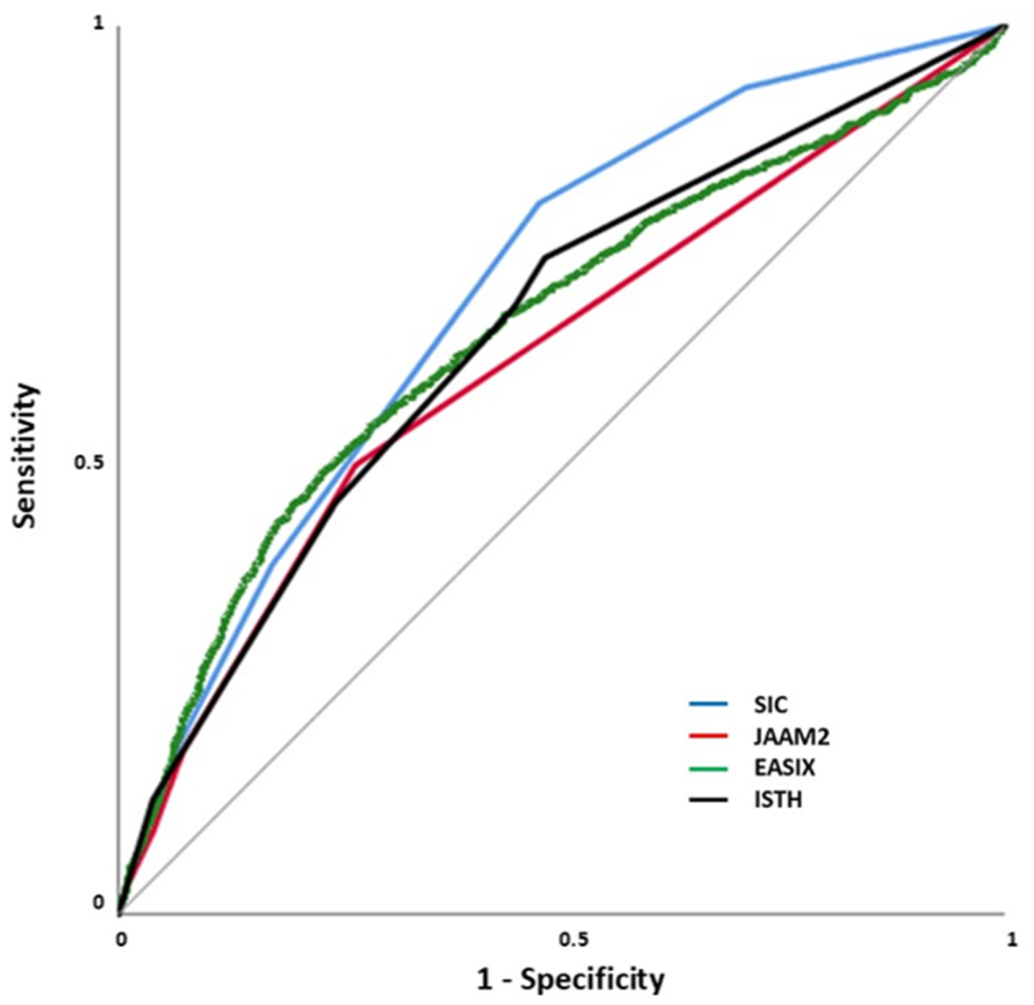
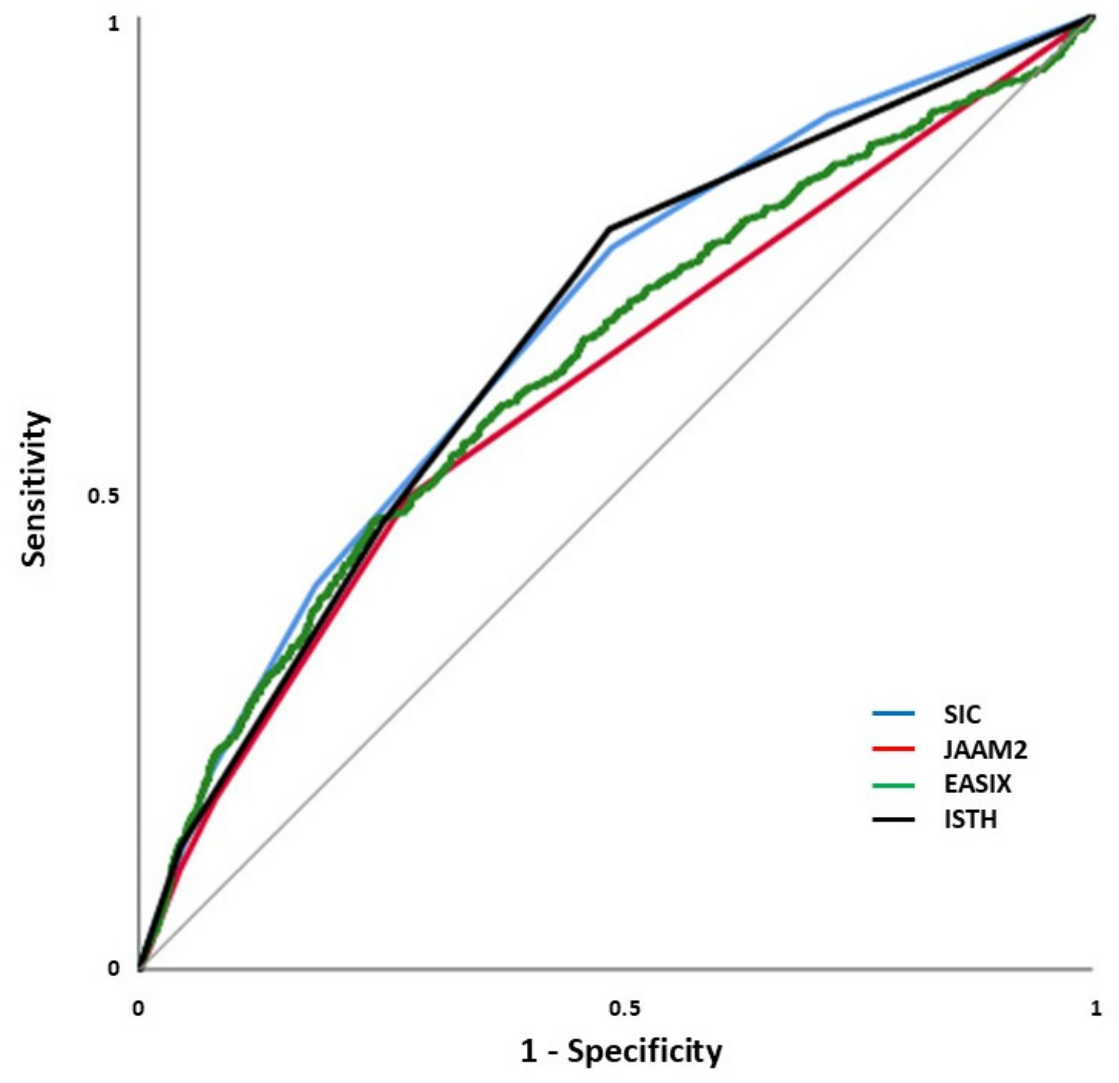
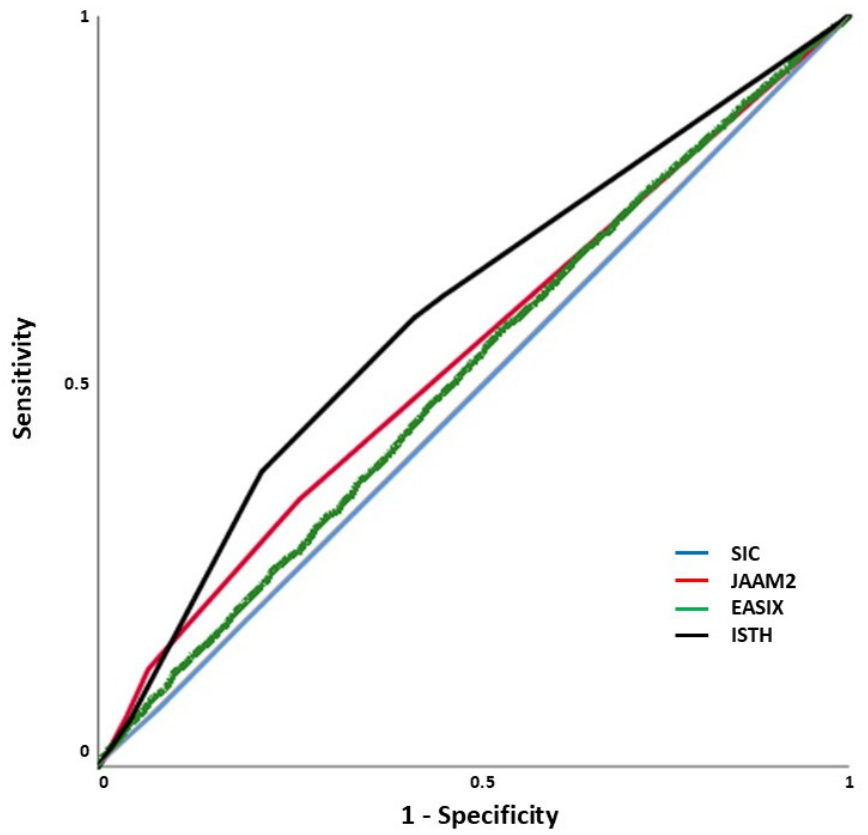
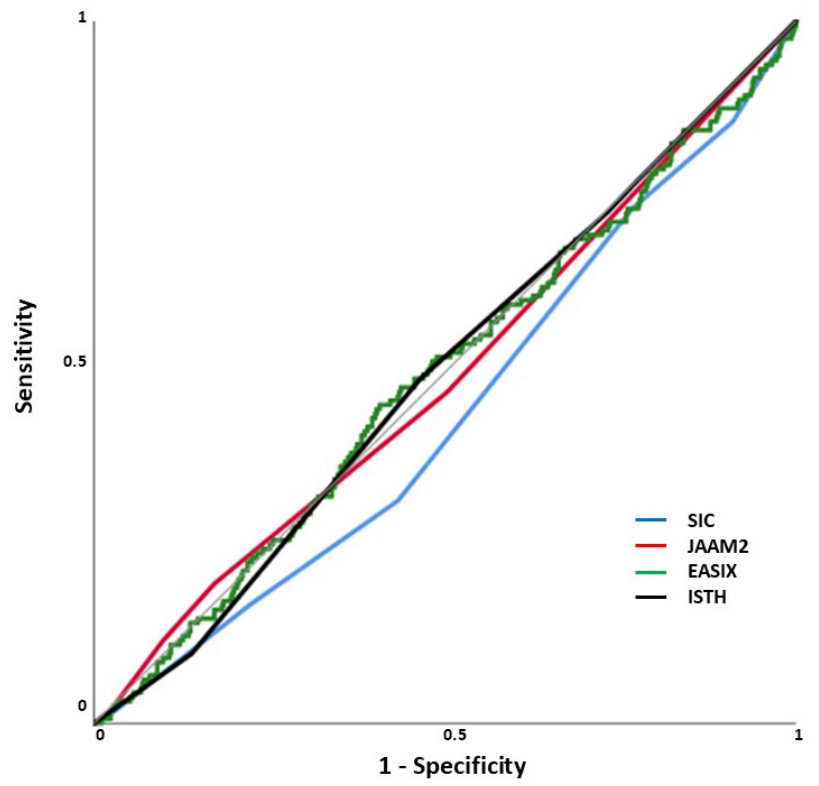
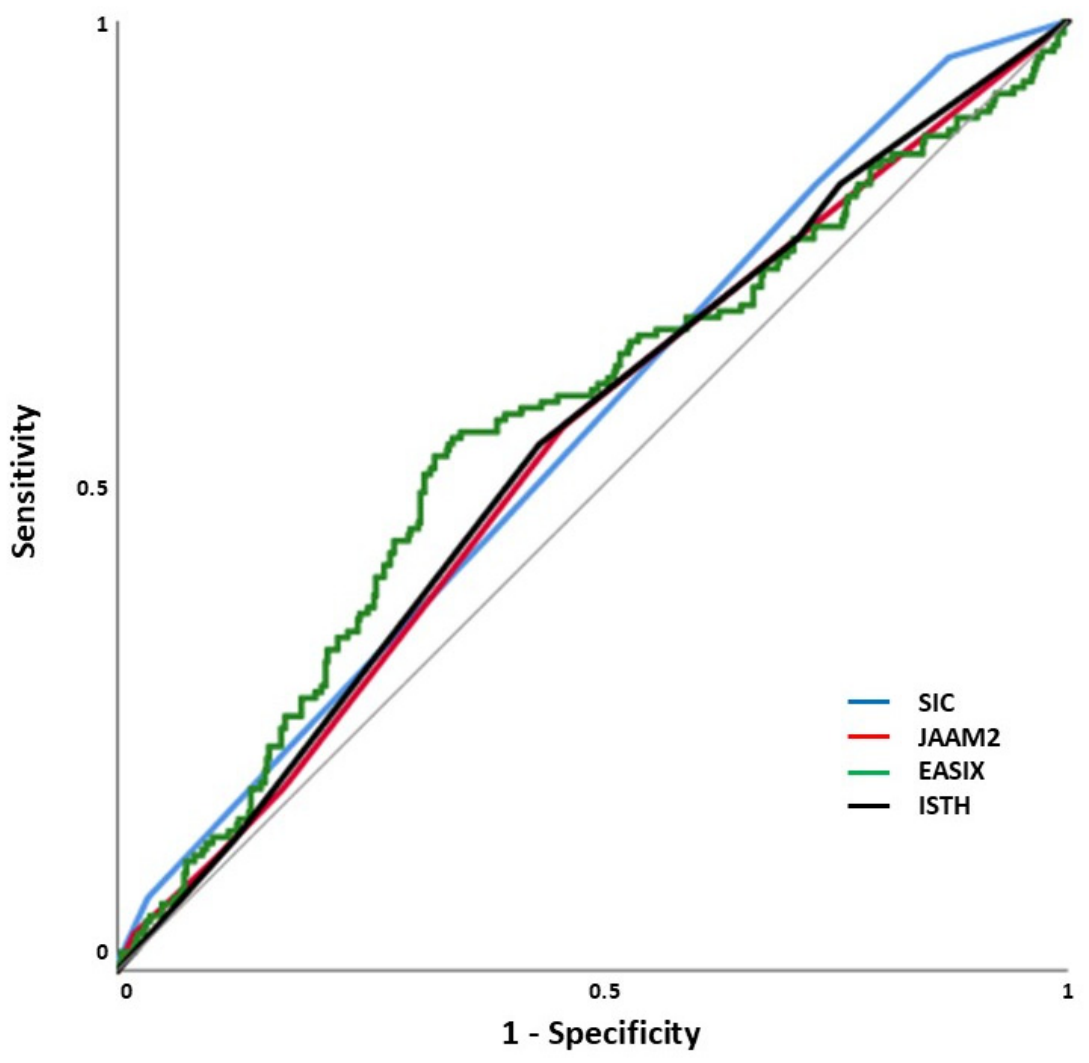
The discriminative performance of SIC, JAAM-DIC, ISTH, EASIX, and log2-EASIX for each clinical outcome was evaluated using receiver operating characteristic (ROC) curve analysis. Area under the ROC curve (AUC) values were calculated with 95% confidence intervals (CIs). Pairwise comparisons between ROC curves were performed using the DeLong method.
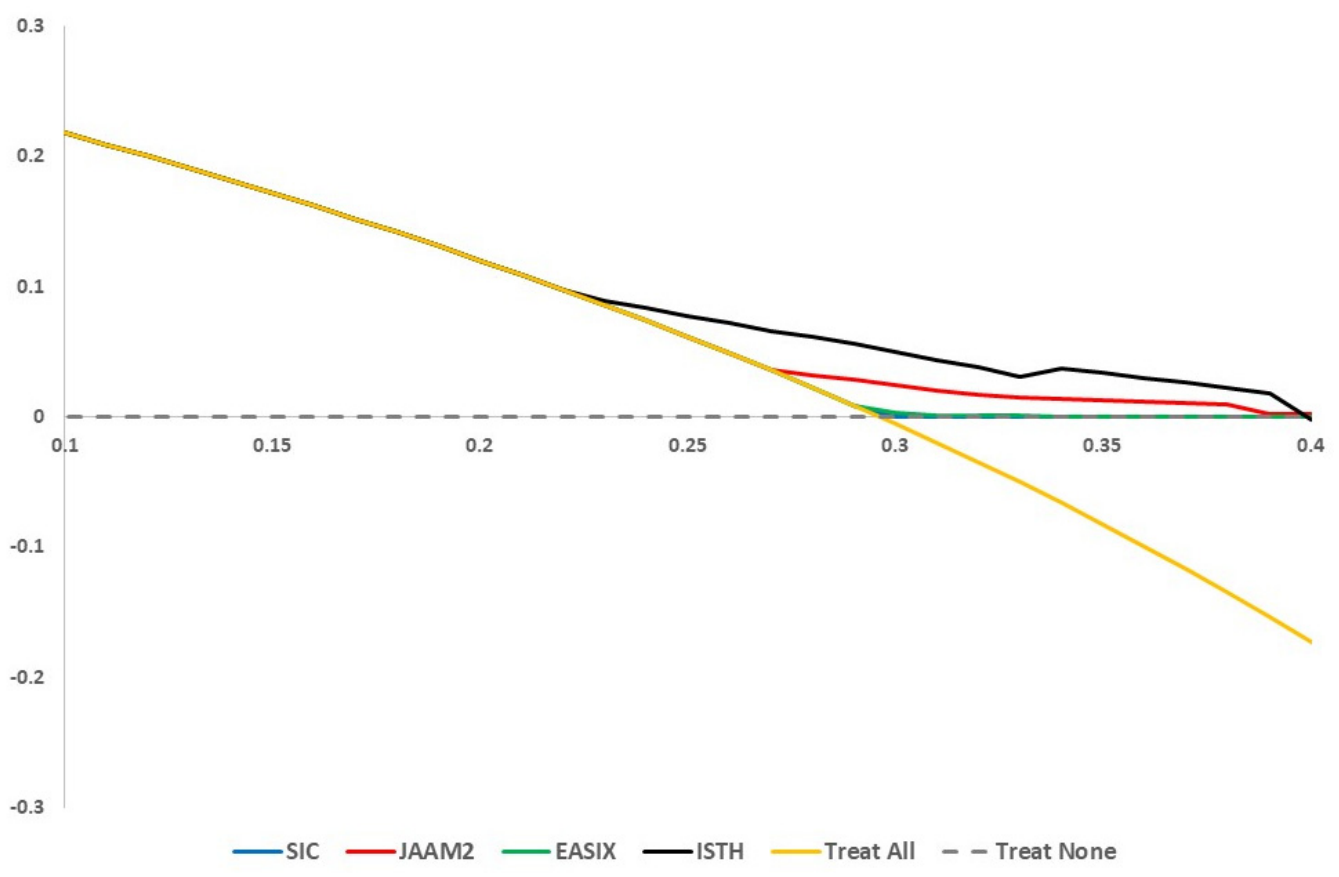
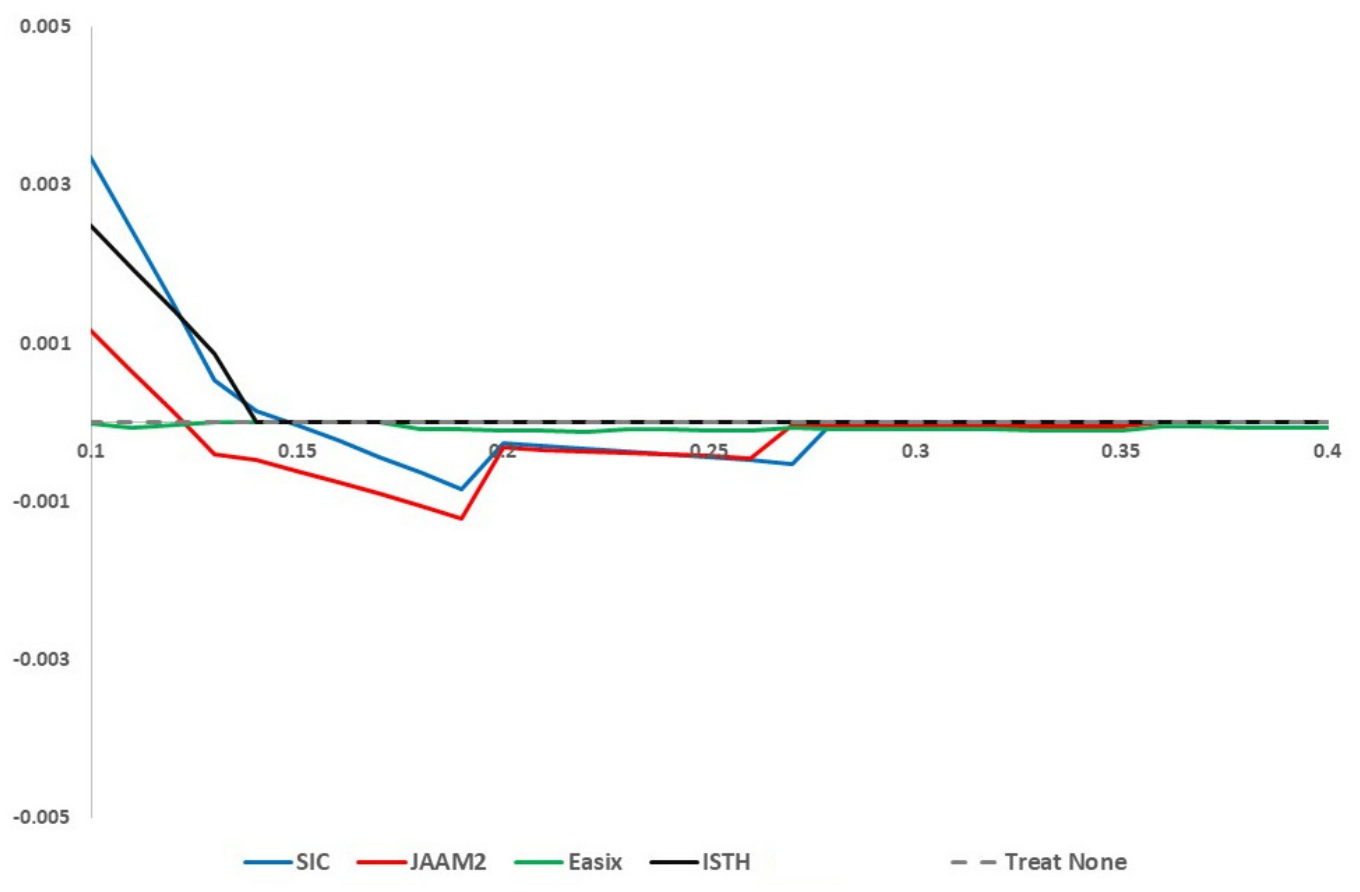
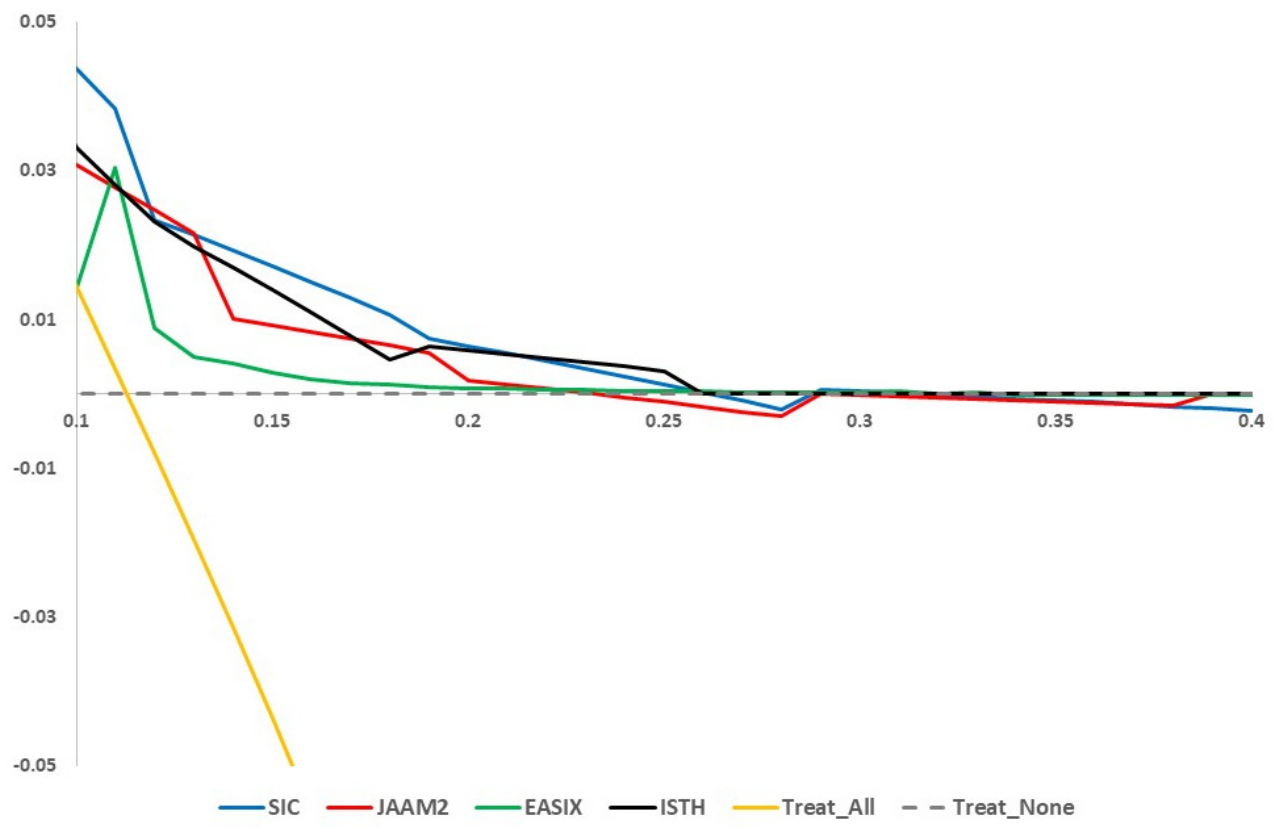
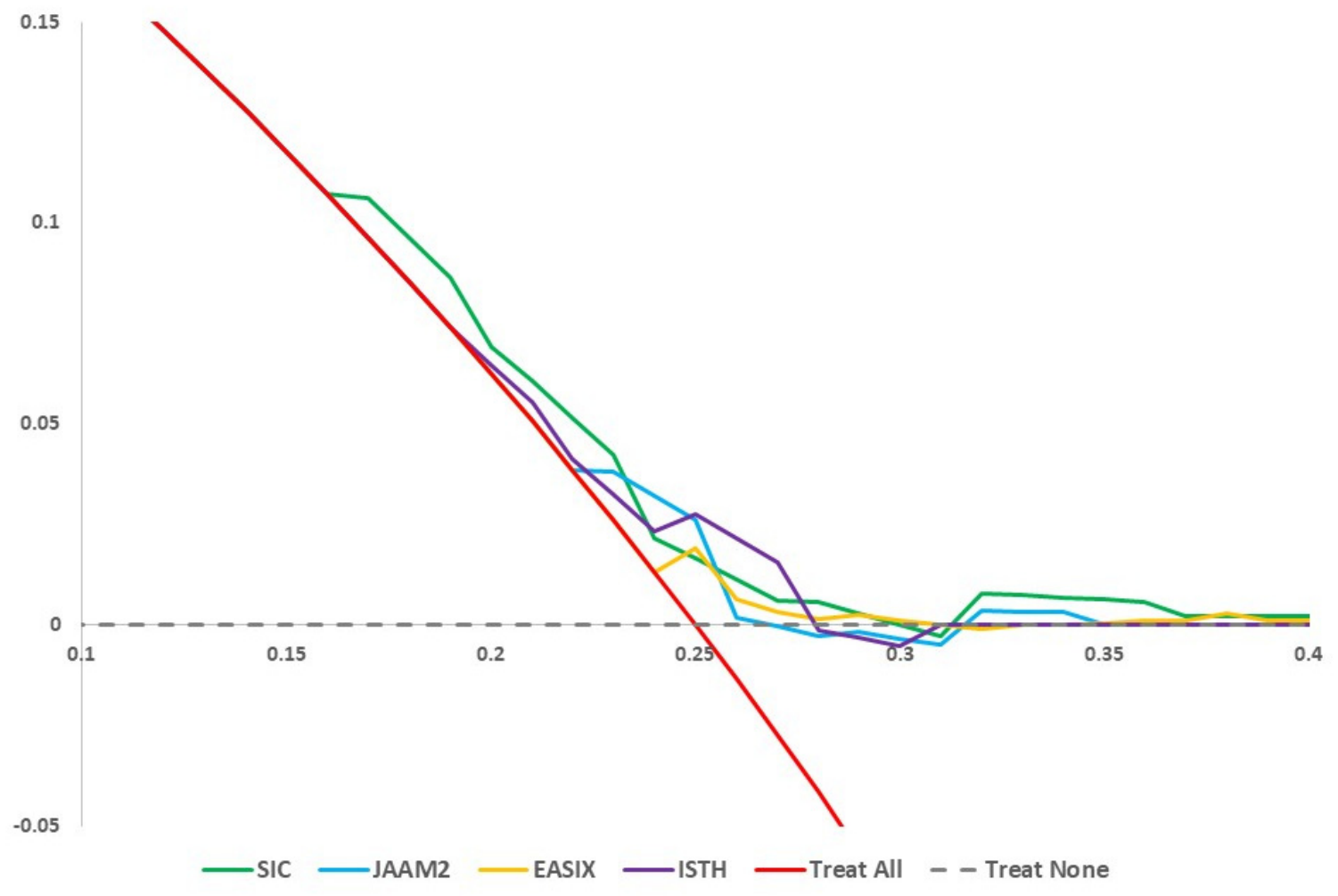
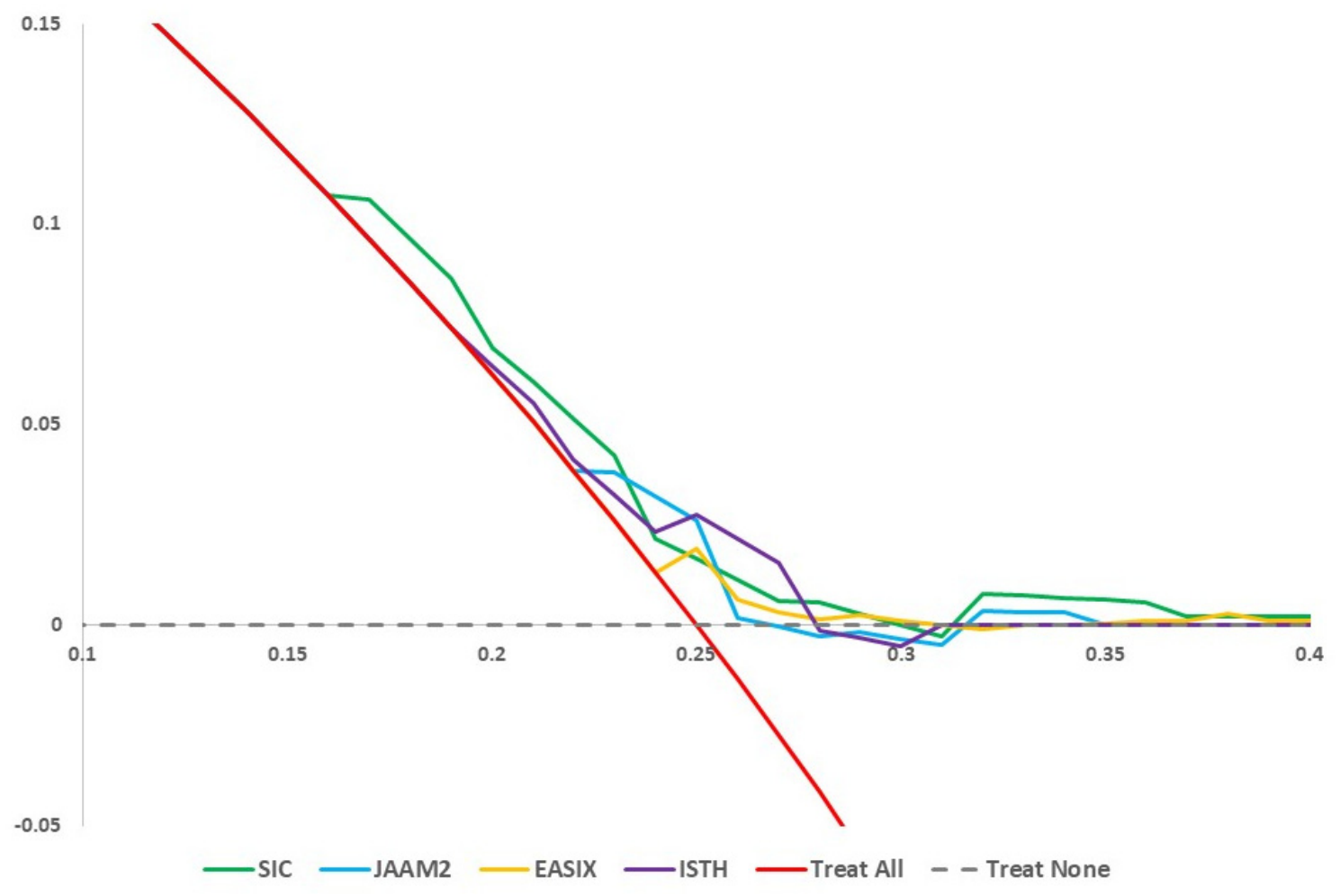
To assess potential clinical usefulness beyond discrimination alone, decision curve analysis (DCA) was performed for progression to sepsis, combined coagulopathy, and in-hospital mortality in the non-overt DIC population, and for mortality and combined coagulopathy in the confirmed sepsis subgroup. Net benefit was examined across clinically relevant threshold probabilities and compared with the default strategies of “treat-all” and “treat-none.”
Multivariable logistic regression analyses were performed to assess the independent association between the best-performing coagulation score (based on ROC analysis and DCA) and each clinical outcome, adjusting for relevant clinical and demographic covariates.
All tests were two-sided, and p values < 0.05 were considered statistically significant. Statistical analyses were performed using IBM SPSS statistics for Windows, Version 25 (IBM Corp., Armonk, NY, USA) and MedCalc Statistical Software version 19.2.1 (MedCalc, Ostend, Belgium).
4. Discussion
In this large, unselected cohort of patients with suspected sepsis and without overt disseminated intravascular coagulation at presentation, we evaluated the performance of several validated sepsis-related coagulopathy scores across a broad spectrum of clinically relevant outcomes. Our results demonstrate that coagulation scores, particularly the Sepsis-Induced Coagulopathy (SIC) score, are effective tools for global risk stratification and prognostic assessment but show limited or no ability to predict clinically overt thrombotic or hemorrhagic complications.
The strongest and most consistent finding of this study is the robust performance of the SIC score for predicting mortality and progression to sepsis, even in patients without overt DIC at baseline. These findings support the concept that sepsis-related coagulopathy represents an early, systemic host response reflecting endothelial dysfunction, inflammation-driven coagulation activation, and microvascular impairment, rather than a direct precursor of clinically apparent hemostatic events [
6,
27].
The SIC score integrates platelet count, coagulation abnormalities, and organ dysfunction, thereby capturing both hemostatic activation and systemic illness severity [
28]. This likely explains its superior prognostic performance compared with JAAM and ISTH scores, which were originally developed to identify overt or advanced DIC rather than early dysregulation of coagulation in sepsis. Because SIC incorporates components of the SOFA score, its prognostic value probably reflects not only coagulation abnormalities but also the overall severity of the septic host response, including endothelial dysfunction, inflammation, and early organ failure. Indeed, evidence from the literature shows that the JAAM-DIC score, proposed by the Japanese Association for Acute Medicine, appears to be more sensitive for the early detection of DIC in sepsis, comparable to the SIC score, whereas the ISTH-DIC score is more specific for advanced stages of the disease and shows a stronger correlation with clinical outcomes [
16,
22,
23].
In contrast to its prognostic performance, the SIC score showed no discriminative ability for thrombotic, hemorrhagic, or combined coagulopathy endpoints, supporting the concept that SIC is primarily a severity and prognostic index rather than a specific predictor of overt hemostatic complications.
In the unselected population of patients with suspected sepsis, decision curve analysis demonstrated that all four scores (SIC, JAAM2, EASIX, and ISTH) provided positive net clinical benefit compared with the “treat-all” and “treat-none” strategies, particularly within low-threshold probabilities (approximately 1–15%), corresponding to the most clinically actionable decision range. For progression to confirmed sepsis, SIC and JAAM2 showed the most consistent and sustained net benefit at low thresholds, supporting their role in early diagnostic stratification. For symptomatic coagulopathy, net benefit extended across a broader range of intermediate thresholds (up to approximately 20–25%), with SIC and JAAM2 again demonstrating the most stable performance, while EASIX and ISTH exhibited earlier attenuation. In contrast, for in-hospital mortality, the curves were more heterogeneous, with SIC maintaining the most consistent net benefit and the other scores showing more modest and less sustained utility as thresholds increased. Overall, despite only moderate discrimination in ROC analyses, these findings indicate that the scores retain meaningful clinical utility for early risk stratification, particularly at low, clinically relevant decision thresholds.
These findings, consistent with recent evidence from the literature, highlight an important conceptual distinction: clinically overt thrombotic and hemorrhagic events are multifactorial phenomena. Their occurrence depends not only on systemic coagulation activation but also on local vascular factors, invasive procedures, immobilization, anticoagulant or antiplatelet therapy, transfusion practices, and individual bleeding risk. Indeed, recent evidence shows that SIC scores are associated with mortality but perform poorly in predicting thrombotic and hemorrhagic events, suggesting that they reflect overall severity of illness rather than specific vascular complications [
29]. Moreover, the complex interplay between inflammation, endothelial dysfunction, and coagulation in sepsis further complicates the relationship between systemic coagulopathy and overt clinical events [
6]. Finally, clinical cohorts have identified multiple independent risk factors for bleeding and thrombosis beyond coagulation activation alone, emphasizing the multifactorial nature of these outcomes in critically ill patients [
30].
Our results are consistent with prior observations showing weak correlations between laboratory-defined coagulopathy and clinically evident thrombosis or bleeding in critically ill patients and underscore the limitations of using sepsis-related coagulation scores as surrogate markers of bleeding or thrombotic risk [
31,
32,
33].
Previous studies validating SIC, JAAM, and ISTH scores primarily focused on mortality and organ dysfunction in selected septic populations. In these settings, SIC has consistently demonstrated superior prognostic performance compared with traditional DIC scores [
22,
24]. Our findings extend these observations by demonstrating that the prognostic value of SIC persists beyond the classic septic population, remaining valid in an unselected cohort of patients with suspected sepsis.
Data on the ability of coagulation scores to predict clinical thrombotic or hemorrhagic events are limited and inconsistent in the literature. Our study addresses this gap by systematically evaluating these outcomes and showing that none of the evaluated scores can reliably identify patients at risk for overt coagulopathy-related complications.
EASIX, originally developed as a marker of endothelial injury and microangiopathy [
19,
20], showed intermediate performance for mortality and sepsis progression but failed to predict bleeding or thrombotic events. This further supports the interpretation that endothelial injury and microvascular dysfunction are central to sepsis severity but are not direct determinants of macroscopic hemostatic complications.
When analyses were restricted to patients with established sepsis, discriminative performance for mortality was markedly attenuated, and differences among scores largely disappeared. This apparent loss of prognostic stratification likely reflects spectrum restriction, as well as the increasing influence of non-coagulation-related determinants of outcome in advanced disease stages.
Importantly, despite modest ROC performance in septic patients, decision curve analyses demonstrated that several scores, most notably SIC and JAAM-DIC, provided meaningful net clinical benefit across low-threshold probabilities. This finding indicates that even limited discrimination may translate into clinical usefulness when scores are applied to support early or empiric decisions, such as intensified monitoring, anticoagulation consideration, or timely specialist consultation.
Our results further reinforce a conceptual distinction between systemic coagulation dysregulation, as captured by laboratory-based scores, and clinically overt thrombotic or hemorrhagic events, which are multifactorial phenomena influenced by local vascular factors, invasive procedures, concomitant therapies, and individual bleeding or thrombotic risk. Consequently, sepsis-related coagulation scores appear better suited for early risk stratification and clinical guidance at low decision thresholds rather than for precise prediction of specific hemostatic events in patients with established sepsis.
From a clinical perspective, the early applicability of the SIC score in the Emergency Department may support timely risk stratification and early sepsis-oriented management, despite its only moderate predictive performance. Future integration of coagulation-based scores with machine learning approaches may further improve individualized prognostic assessment in sepsis.




 ,
,