Nasal Epithelial Organoids as Translational Platforms in Inflammatory, Infectious, and Precision Medicine Applications: A Systematic Review




Abstract
1. Introduction
2. Materials and Methods
2.1. Search Strategy
2.2. Study Selection
2.3. Data Collection Process
2.4. Data Synthesis and Analysis
3. Results
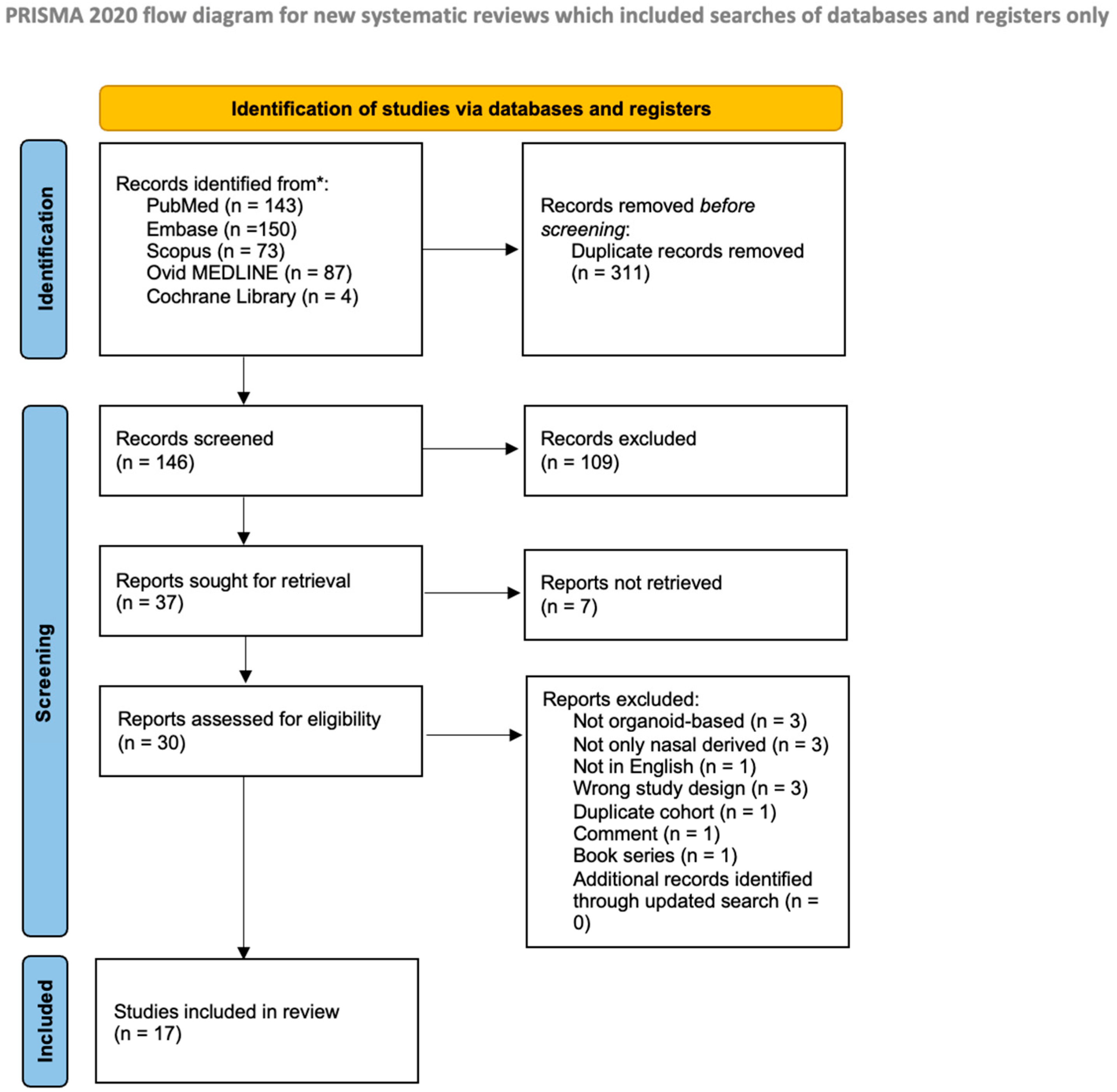
3.1. Study Selection
3.2. Description of the Studies
3.2.1. Mechanistic Infection Models
3.2.2. Inflammatory and Epithelial Remodeling Investigations
3.2.3. Translational Precision Medicine Platforms
3.3. Model Type
3.4. Donor Population
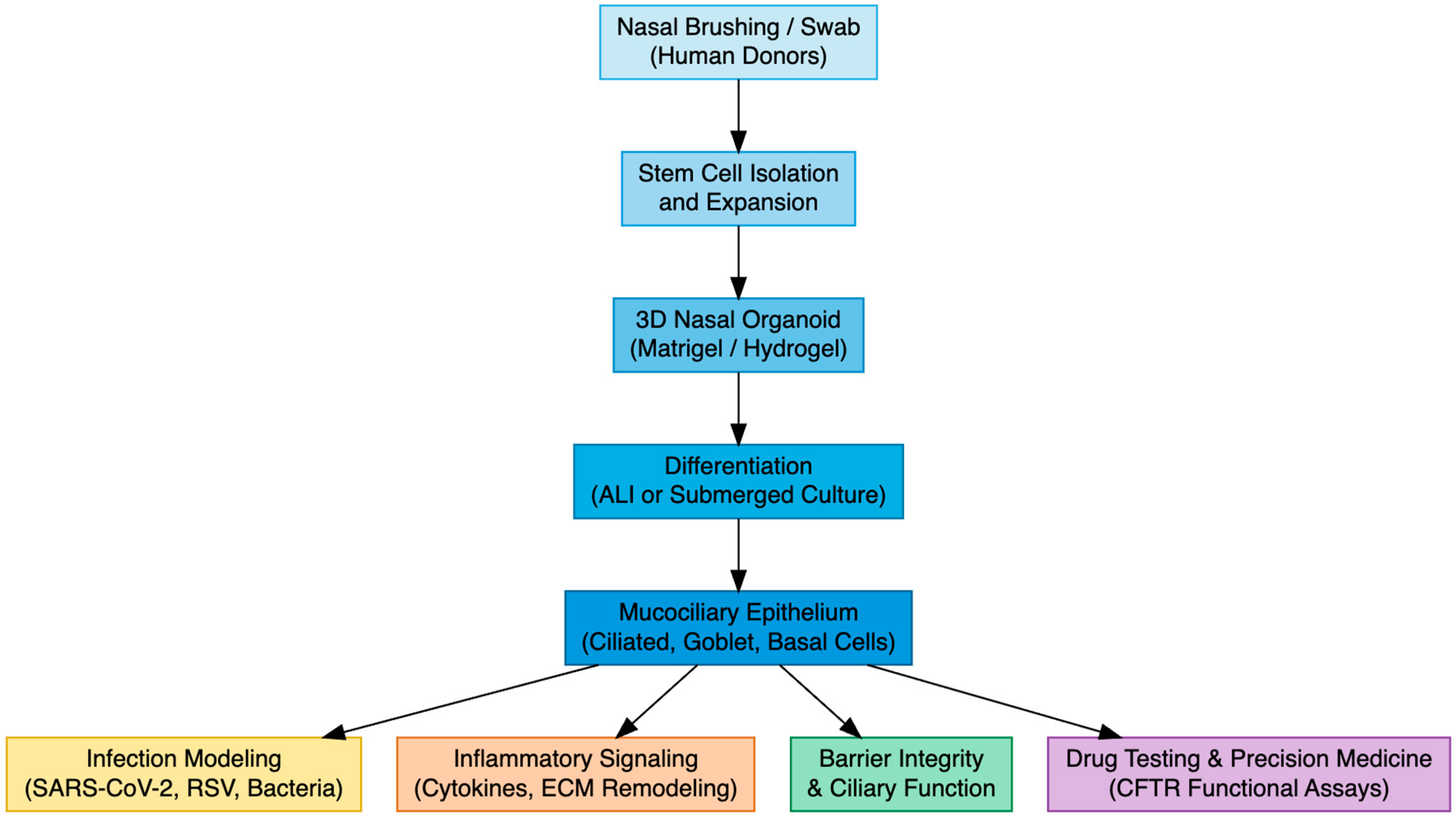
3.5. Organoid Generation
3.6. Differentiation Protocols
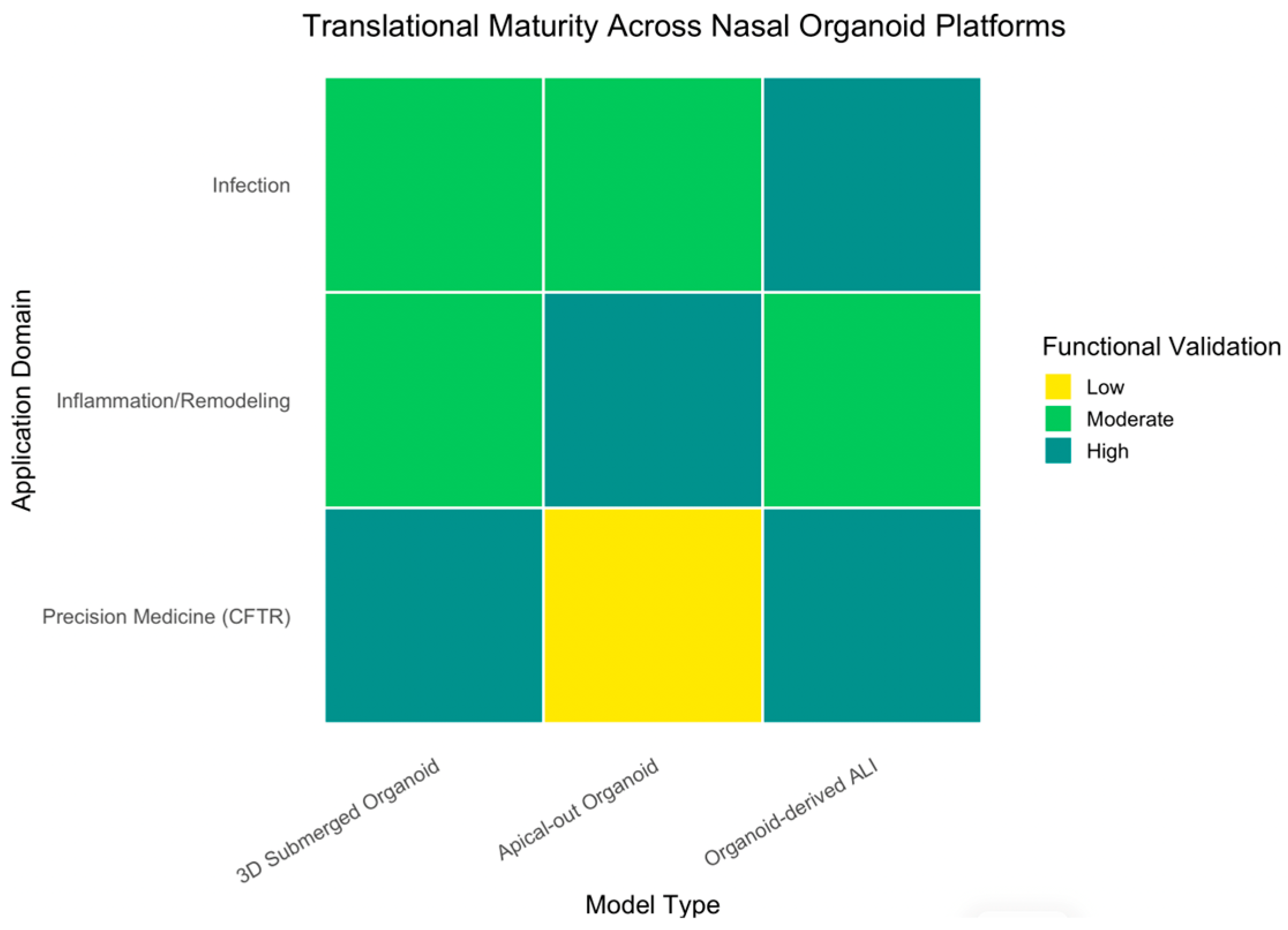
3.7. Translational Relevance
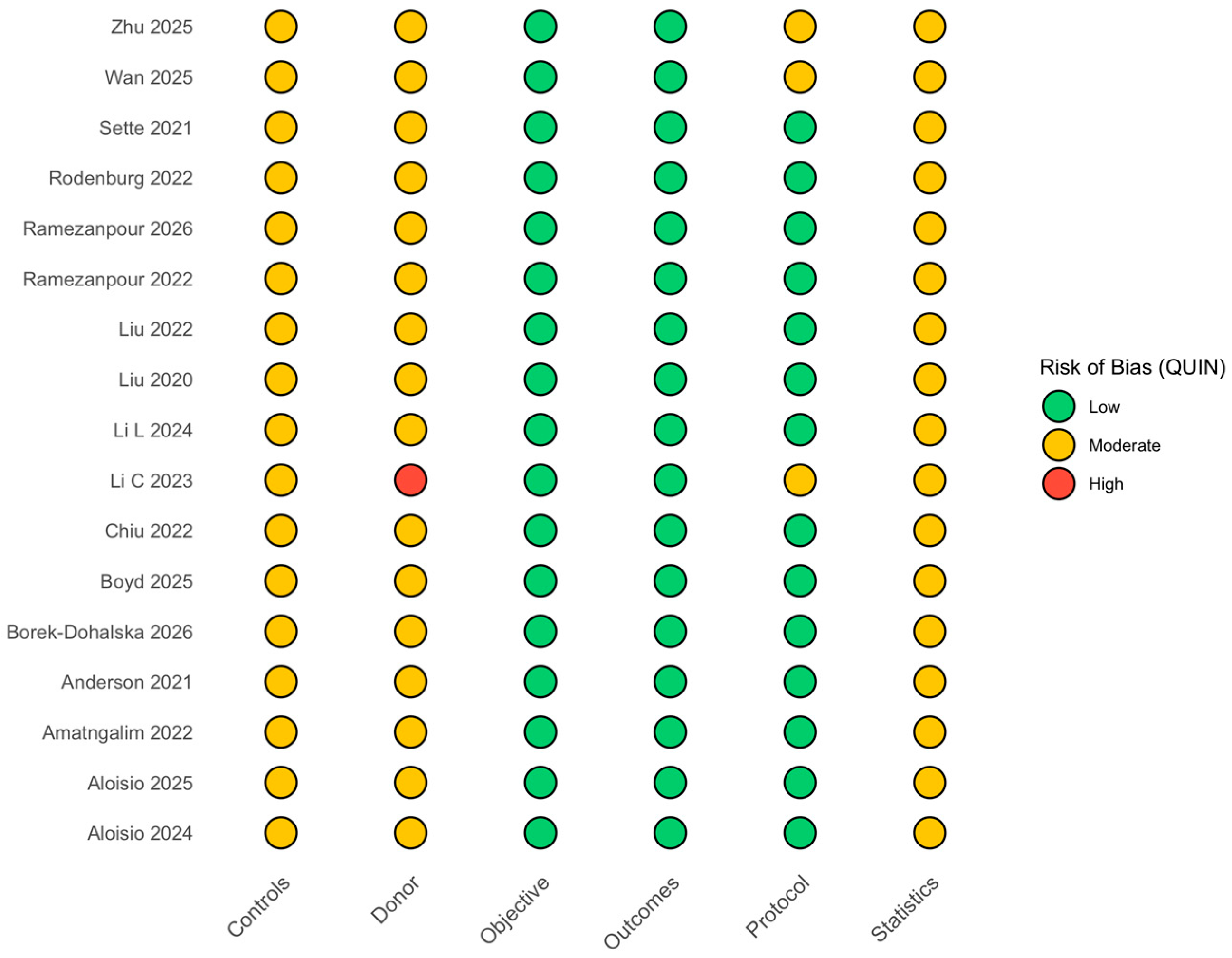
3.8. Risk of Bias Assessment
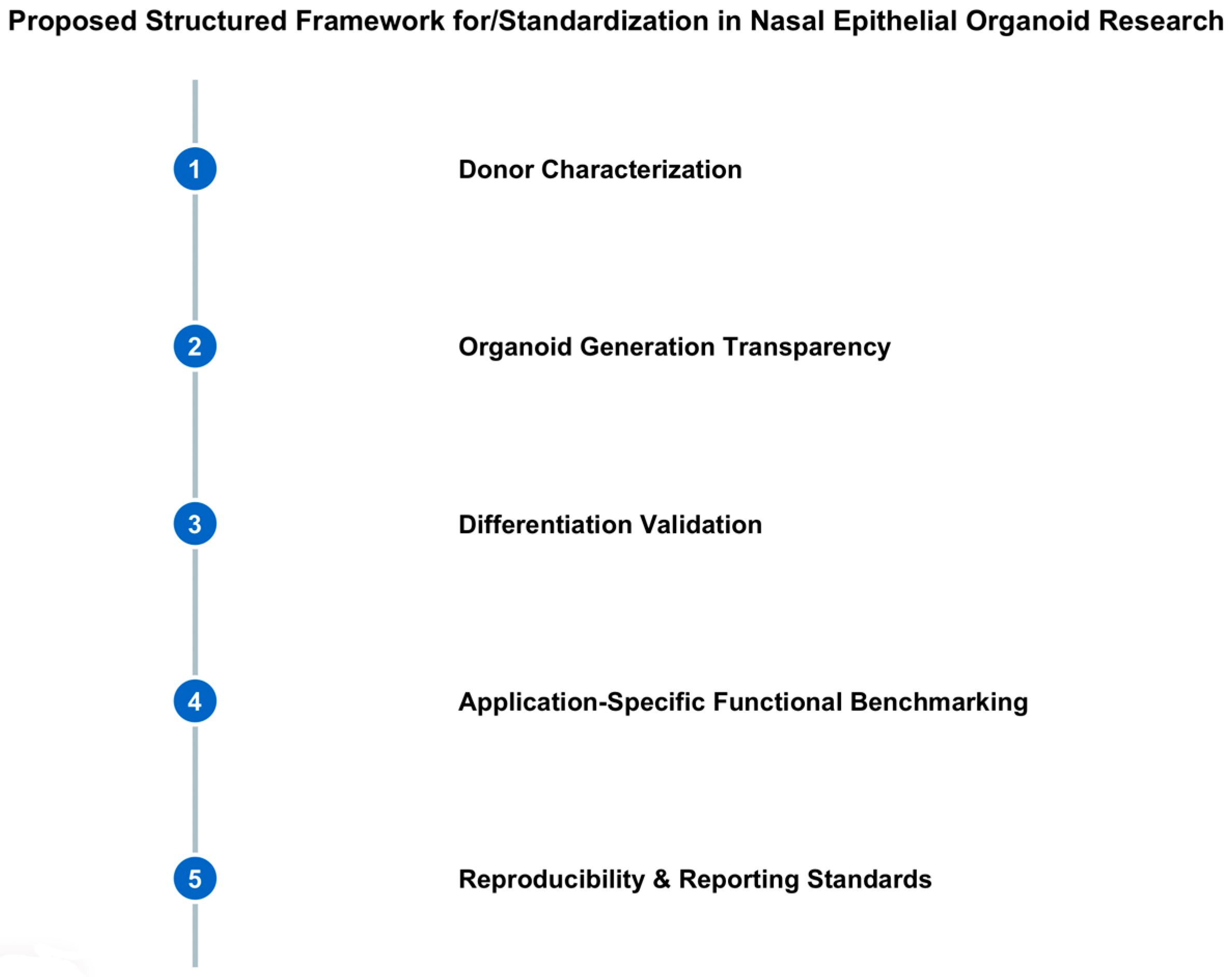
4. Discussion
Limitations
5. Conclusions
Supplementary Materials
Author Contributions
Funding
Institutional Review Board Statement
Informed Consent Statement
Data Availability Statement
Acknowledgments
Conflicts of Interest
Abbreviations
| ALI | Air–Liquid Interface |
| CF | Cystic Fibrosis |
| CFTR | Cystic Fibrosis Transmembrane Conductance Regulator |
| CRC | Conditional Reprogramming Culture |
| CRS | Chronic Rhinosinusitis |
| FIS | Forskolin-Induced Swelling |
| HNO-ALI | Human Nasal Organoid Air–Liquid Interface |
| hNECs | Human Nasal Epithelial Cells |
| MOI | Multiplicity of Infection |
| PRISMA | Preferred Reporting Items for Systematic Reviews and Meta-Analyses |
| QUIN | Quality In Non-randomized Studies |
References
- Ebrahimi, H.; Aryan, Z.; Saeedi Moghaddam, S.; Bisignano, C.; Rezaei, S.; Pishgar, F.; Force, L.M.; Abolhassani, H.; Abu-Gharbieh, E.; Advani, S.M.; et al. Global, Regional, and National Burden of Respiratory Tract Cancers and Associated Risk Factors from 1990 to 2019: A Systematic Analysis for the Global Burden of Disease Study 2019. Lancet Respir. Med. 2021, 9, 1030–1049. [Google Scholar] [CrossRef]
- Momtazmanesh, S.; Moghaddam, S.S.; Ghamari, S.-H.; Rad, E.M.; Rezaei, N.; Shobeiri, P.; Aali, A.; Abbasi-Kangevari, M.; Abbasi-Kangevari, Z.; Abdelmasseh, M.; et al. Global Burden of Chronic Respiratory Diseases and Risk Factors, 1990–2019: An Update from the Global Burden of Disease Study 2019. eClinicalMedicine 2023, 59, 101936. [Google Scholar] [CrossRef]
- Da Costa, V.G.; Saivish, M.V.; Santos, D.E.R.; De Lima Silva, R.F.; Moreli, M.L. Comparative Epidemiology between the 2009 H1N1 Influenza and COVID-19 Pandemics. J. Infect. Public Health 2020, 13, 1797–1804. [Google Scholar] [CrossRef]
- Cao, X.; Coyle, J.P.; Xiong, R.; Wang, Y.; Heflich, R.H.; Ren, B.; Gwinn, W.M.; Hayden, P.; Rojanasakul, L. Invited Review: Human Air-Liquid-Interface Organotypic Airway Tissue Models Derived from Primary Tracheobronchial Epithelial Cells—Overview and Perspectives. Vitr. Cell. Dev. Biol. Anim. 2021, 57, 104–132. [Google Scholar] [CrossRef]
- Ghosh, B.; Park, B.; Bhowmik, D.; Nishida, K.; Lauver, M.; Putcha, N.; Gao, P.; Ramanathan, M.; Hansel, N.; Biswal, S.; et al. Strong Correlation between Air-Liquid Interface Cultures and in Vivo Transcriptomics of Nasal Brush Biopsy. Am. J. Physiol.-Lung Cell. Mol. Physiol. 2020, 318, L1056–L1062. [Google Scholar] [CrossRef]
- Zhong, B.; Liu, J.; Ong, H.H.; Du, J.; Liu, F.; Liu, Y.; Ba, L.; Sun, S.; Wang, D.Y. Hypoxia-reduced YAP Phosphorylation Enhances Expression of MUCIN5AC in Nasal Epithelial Cells of Chronic Rhinosinusitis with Nasal Polyps. Allergy 2025, 80, 1271–1285. [Google Scholar] [CrossRef] [PubMed]
- Paplinska-Goryca, M.; Misiukiewicz-Stepien, P.; Nejman-Gryz, P.; Proboszcz, M.; Mlacki, M.; Gorska, K.; Krenke, R. Epithelial-Macrophage-Dendritic Cell Interactions Impact Alarmins Expression in Asthma and COPD. Clin. Immunol. 2020, 215, 108421. [Google Scholar] [CrossRef]
- Carrera Montoya, J.; Collett, S.; Fernandez Ruiz, D.; Earnest, L.; Edeling, M.A.; Yap, A.H.Y.; Wong, C.Y.; Cooney, J.P.; Davidson, K.C.; Roberts, J.; et al. Human Nasal Epithelium Organoids for Assessing Neutralizing Antibodies to a Protective SARS-CoV-2 Virus-like Particle Vaccine. Organoids 2024, 3, 18–31. [Google Scholar] [CrossRef]
- Otter, C.J.; Fausto, A.; Tan, L.H.; Khosla, A.S.; Cohen, N.A.; Weiss, S.R. Infection of Primary Nasal Epithelial Cells Differentiates among Lethal and Seasonal Human Coronaviruses. Proc. Natl. Acad. Sci. USA 2023, 120, e2218083120. [Google Scholar] [CrossRef]
- Liu, Z.; Anderson, J.D.; Deng, L.; Mackay, S.; Bailey, J.; Kersh, L.; Rowe, S.M.; Guimbellot, J.S. Human Nasal Epithelial Organoids for Therapeutic Development in Cystic Fibrosis. Genes 2020, 11, 603. [Google Scholar] [CrossRef] [PubMed]
- Tran, B.M.; Grimley, S.L.; McAuley, J.L.; Hachani, A.; Earnest, L.; Wong, S.L.; Caly, L.; Druce, J.; Purcell, D.F.J.; Jackson, D.C.; et al. Air-Liquid-Interface Differentiated Human Nose Epithelium: A Robust Primary Tissue Culture Model of SARS-CoV-2 Infection. Int. J. Mol. Sci. 2022, 23, 835. [Google Scholar] [CrossRef]
- Lee, R.E.; Reidel, B.; Nelson, M.R.; Macdonald, J.K.; Kesimer, M.; Randell, S.H. Air-Liquid Interface Cultures to Model Drug Delivery through the Mucociliary Epithelial Barrier. Adv. Drug Deliv. Rev. 2023, 198, 114866. [Google Scholar] [CrossRef]
- Wang, H.; Xu, T.; Han, J.; Zhang, H.; Hu, S.; Wei, S.; Cao, M.; Song, Y.; Yin, D. Three-Dimensional Cultured Human Nasal Epithelial Cell Model for Testing Respiratory Toxicity and Neurotoxicity of Air Pollutants. Environ. Sci. Technol. 2025, 59, 6452–6463. [Google Scholar] [CrossRef] [PubMed]
- Giavina-Bianchi, P.; Aun, M.; Takejima, P.; Kalil, J.; Agondi, R. United Airway Disease: Current Perspectives. J. Asthma Allergy 2016, 9, 93–100. [Google Scholar] [CrossRef]
- Kanda, A.; Kobayashi, Y.; Asako, M.; Tomoda, K.; Kawauchi, H.; Iwai, H. Regulation of Interaction Between the Upper and Lower Airways in United Airway Disease. Med. Sci. 2019, 7, 27. [Google Scholar] [CrossRef]
- Alves, M.P.; Schögler, A.; Ebener, S.; Vielle, N.J.; Casaulta, C.; Jung, A.; Moeller, A.; Geiser, T.; Regamey, N. Comparison of Innate Immune Responses towards Rhinovirus Infection of Primary Nasal and Bronchial Epithelial Cells. Respirology 2016, 21, 304–312. [Google Scholar] [CrossRef]
- Comer, D.M.; Elborn, J.S.; Ennis, M. Comparison of Nasal and Bronchial Epithelial Cells Obtained from Patients with COPD. PLoS ONE 2012, 7, e32924. [Google Scholar] [CrossRef] [PubMed]
- McDougall, C.M.; Blaylock, M.G.; Douglas, J.G.; Brooker, R.J.; Helms, P.J.; Walsh, G.M. Nasal Epithelial Cells as Surrogates for Bronchial Epithelial Cells in Airway Inflammation Studies. Am. J. Respir. Cell Mol. Biol. 2008, 39, 560–568. [Google Scholar] [CrossRef]
- Roberts, N.; Al Mubarak, R.; Francisco, D.; Kraft, M.; Chu, H.W. Comparison of Paired Human Nasal and Bronchial Airway Epithelial Cell Responses to Rhinovirus Infection and IL-13 Treatment. Clin. Transl. Med. 2018, 7, e13. [Google Scholar] [CrossRef] [PubMed]
- Pezzulo, A.A.; Starner, T.D.; Scheetz, T.E.; Traver, G.L.; Tilley, A.E.; Harvey, B.-G.; Crystal, R.G.; McCray, P.B.; Zabner, J. The Air-Liquid Interface and Use of Primary Cell Cultures Are Important to Recapitulate the Transcriptional Profile of In Vivo Airway Epithelia. Am. J. Physiol.-Lung Cell. Mol. Physiol. 2011, 300, L25–L31. [Google Scholar] [CrossRef]
- Baldassi, D.; Gabold, B.; Merkel, O.M. Air−Liquid Interface Cultures of the Healthy and Diseased Human Respiratory Tract: Promises, Challenges, and Future Directions. Adv. NanoBiomed Res. 2021, 1, 2000111. [Google Scholar] [CrossRef] [PubMed]
- Barron, S.L.; Saez, J.; Owens, R.M. In Vitro Models for Studying Respiratory Host–Pathogen Interactions. Adv. Biol. 2021, 5, 2000624. [Google Scholar] [CrossRef]
- Ahookhosh, K.; Pourmehran, O.; Aminfar, H.; Mohammadpourfard, M.; Sarafraz, M.M.; Hamishehkar, H. Development of Human Respiratory Airway Models: A Review. Eur. J. Pharm. Sci. 2020, 145, 105233. [Google Scholar] [CrossRef]
- Bukowy-Bieryłło, Z. Long-Term Differentiating Primary Human Airway Epithelial Cell Cultures: How Far Are We? Cell Commun. Signal. 2021, 19, 63. [Google Scholar] [CrossRef]
- Di Vincenzo, S.; Ninaber, D.K.; Cipollina, C.; Ferraro, M.; Hiemstra, P.S.; Pace, E. Cigarette Smoke Impairs Airway Epithelial Wound Repair: Role of Modulation of Epithelial-Mesenchymal Transition Processes and Notch-1 Signaling. Antioxidants 2022, 11, 2018. [Google Scholar] [CrossRef] [PubMed]
- Huang, Y.-C.; Leyko, B.; Frieri, M. Effects of Omalizumab and Budesonide on Markers of Inflammation in Human Bronchial Epithelial Cells. Ann. Allergy. Asthma. Immunol. 2005, 95, 443–451. [Google Scholar] [CrossRef]
- Aydin, M.; Naumova, E.A.; Paulsen, F.; Zhang, W.; Gopon, F.; Theis, C.; Lutz, S.; Ehrke-Schulz, E.; Arnold, W.H.; Wirth, S.; et al. House Dust Mite Exposure Causes Increased Susceptibility of Nasal Epithelial Cells to Adenovirus Infection. Viruses 2020, 12, 1151. [Google Scholar] [CrossRef] [PubMed]
- Barosova, H.; Meldrum, K.; Karakocak, B.B.; Balog, S.; Doak, S.H.; Petri-Fink, A.; Clift, M.J.D.; Rothen-Rutishauser, B. Inter-Laboratory Variability of A549 Epithelial Cells Grown under Submerged and Air-Liquid Interface Conditions. Toxicol. Vitr. 2021, 75, 105178. [Google Scholar] [CrossRef]
- Sheth, V.H.; Shah, N.P.; Jain, R.; Bhanushali, N.; Bhatnagar, V. Development and Validation of a Risk-of-Bias Tool for Assessing in Vitro Studies Conducted in Dentistry: The QUIN. J. Prosthet. Dent. 2024, 131, 1038–1042. [Google Scholar] [CrossRef]
- Borek-Dohalska, L.; Modrak, M.; Novotna, S.; Furstova, E.; Varenyiova, Z.; Dousova, T.; Drevinek, P. Effect of Vanzacaftor/Tezacaftor/Ivacaftor on Cystic Fibrosis Nasal Epithelial Cells and Intestinal Organoids Compared to Elexacaftor/Tezacaftor/Ivacaftor. Respir. Med. 2026, 254, 108741. [Google Scholar] [CrossRef]
- Ramezanpour, M.; Bouras, G.; Feizi, S.; Fenix, K.A.; Houtak, G.; Chegeni, N.; Aliakbari, K.; Colella, A.; Chataway, T.; Psaltis, A.J.; et al. Nasal Organoids as Optimal Models for Studying Structure and Function of Primary Nasal Epithelial Cell Cultures. Biochim. Biophys. Acta BBA-Gen. Subj. 2026, 1870, 130936. [Google Scholar] [CrossRef] [PubMed]
- Aloisio, G.M.; McBride, T.J.; Aideyan, L.; Schultz, E.M.; Murray, A.M.; Rajan, A.; Nicholson, E.G.; Henke, D.; Ferlic-Stark, L.; Kambal, A.; et al. Strain-Specific Variability in Viral Kinetics, Cytokine Response, and Cellular Damage in Air-Liquid Cultures of Human Nasal Organoids After Infection with SARS-CoV-2. Viruses 2025, 17, 1343. [Google Scholar] [CrossRef] [PubMed]
- Boyd, A.I.; Kafer, L.A.; Escapa, I.F.; Kambal, A.; Tariq, H.; Hilsenbeck, S.G.; Nguyen-Phuc, H.; Rajan, A.; Lensmire, J.M.; Patras, K.A.; et al. Nasal Microbionts Differentially Colonize and Elicit Cytokines in Human Nasal Epithelial Organoids. mSphere 2025, 10, e00493-25. [Google Scholar] [CrossRef]
- Wan, Z.; Li, C.; Zhou, Y.; Yu, Y.; Chiu, M.C.; Huang, J.; Zhang, S.; Zhu, X.; Lan, Q.; Deng, Y.; et al. Organoid-Based Neutralization Assays Reveal a Distinctive Profile of SARS-CoV-2 Antibodies and Recapitulate the Real-World Efficacy. Proc. Natl. Acad. Sci. USA 2025, 122, e2509616122. [Google Scholar] [CrossRef]
- Zhu, L.; Yang, W.; Luo, J.; Lu, D.; Hu, Y.; Zhang, R.; Li, Y.; Qiu, L.; Chen, Z.; Chen, L.; et al. Comparison of Characteristics and Immune Responses between Paired Human Nasal and Bronchial Epithelial Organoids. Cell Biosci. 2025, 15, 18. [Google Scholar] [CrossRef]
- Aloisio, G.M.; Nagaraj, D.; Murray, A.M.; Schultz, E.M.; McBride, T.; Aideyan, L.; Nicholson, E.G.; Henke, D.; Ferlic-Stark, L.; Rajan, A.; et al. Pediatric Human Nose Organoids Demonstrate Greater Susceptibility, Epithelial Responses, and Cytotoxicity than Adults during RSV Infection. bioRxiv 2024, bioRxiv, 2024.02.01.578466. [Google Scholar] [CrossRef]
- Li, L.; Jiao, L.; Feng, D.; Yuan, Y.; Yang, X.; Li, J.; Jiang, D.; Chen, H.; Meng, Q.; Chen, R.; et al. Human Apical-out Nasal Organoids Reveal an Essential Role of Matrix Metalloproteinases in Airway Epithelial Differentiation. Nat. Commun. 2024, 15, 143. [Google Scholar] [CrossRef]
- Li, C.; Huang, J.; Yu, Y.; Wan, Z.; Chiu, M.C.; Liu, X.; Zhang, S.; Cai, J.-P.; Chu, H.; Li, G.; et al. Human Airway and Nasal Organoids Reveal Escalating Replicative Fitness of SARS-CoV-2 Emerging Variants. Proc. Natl. Acad. Sci. USA 2023, 120, e2300376120. [Google Scholar] [CrossRef] [PubMed]
- Amatngalim, G.D.; Rodenburg, L.W.; Aalbers, B.L.; Raeven, H.H.; Aarts, E.M.; Sarhane, D.; Spelier, S.; Lefferts, J.W.; Silva, I.A.; Nijenhuis, W.; et al. Measuring Cystic Fibrosis Drug Responses in Organoids Derived from 2D Differentiated Nasal Epithelia. Life Sci. Alliance 2022, 5, e202101320. [Google Scholar] [CrossRef]
- Chiu, M.C.; Li, C.; Liu, X.; Song, W.; Wan, Z.; Yu, Y.; Huang, J.; Xiao, D.; Chu, H.; Cai, J.-P.; et al. Human Nasal Organoids Model SARS-CoV-2 Upper Respiratory Infection and Recapitulate the Differential Infectivity of Emerging Variants. mBio 2022, 13, e0194422. [Google Scholar] [CrossRef]
- Liu, Z.; Anderson, J.D.; Natt, J.; Guimbellot, J.S. Culture and Imaging of Human Nasal Epithelial Organoids. J. Vis. Exp. 2021, 178, 63064. [Google Scholar] [CrossRef]
- Ramezanpour, M.; Bolt, H.; Hon, K.; Shaghayegh, G.; Rastin, H.; Fenix, K.A.; Psaltis Alkis, J.; Wormald, P.-J.; Vreugde, S. Characterization of Human Nasal Organoids from Chronic Rhinosinusitis Patients. Biol. Open 2022, 11, bio059267. [Google Scholar] [CrossRef]
- Rodenburg, L.W.; Delpiano, L.; Railean, V.; Centeio, R.; Pinto, M.C.; Smits, S.M.A.; van der Windt, I.S.; van Hugten, C.F.J.; van Beuningen, S.F.B.; Rodenburg, R.N.P.; et al. Drug Repurposing for Cystic Fibrosis: Identification of Drugs That Induce CFTR-Independent Fluid Secretion in Nasal Organoids. Int. J. Mol. Sci. 2022, 23, 12657. [Google Scholar] [CrossRef] [PubMed]
- Anderson, J.D.; Liu, Z.; Odom, L.V.; Kersh, L.; Guimbellot, J.S. CFTR Function and Clinical Response to Modulators Parallel Nasal Epithelial Organoid Swelling. Am. J. Physiol. Lung Cell. Mol. Physiol. 2021, 321, L119–L129. [Google Scholar] [CrossRef] [PubMed]
- Sette, G.; Lo Cicero, S.; Blaconà, G.; Pierandrei, S.; Bruno, S.M.; Salvati, V.; Castelli, G.; Falchi, M.; Fabrizzi, B.; Cimino, G.; et al. Theratyping Cystic Fibrosis In Vitro in ALI Culture and Organoid Models Generated from Patient-Derived Nasal Epithelial Conditionally Reprogrammed Stem Cells. Eur. Respir. J. 2021, 58, 2100908. [Google Scholar] [CrossRef]




| Title | First Author, Year | Model Type | Application | Main Outcomes Assessed | Key Findings | Limitations | Translational Relevance |
|---|---|---|---|---|---|---|---|
| Effect of vanzacaftor/tezacaftor/ivacaftor on cystic fibrosis nasal epithelial cells and intestinal organoids compared to elexacaftor/tezacaftor/ivacaftor | Borek-Dohalska L, 2026 [30] | HNO-ALI + PDIOs | Comparison of CFTR functional rescue by ELX/TEZ/IVA vs. VAN/TEZ/IVA using electrophysiology and swelling assays | Short-circuit current (ΔCFTRinh-172 ISC); CFTR activity (% WT); Forskolin-Induced Swelling (AUC) in PDIOs | VAN/TEZ/IVA restored CFTR function to 67% of WT vs. 45% with ELX/TEZ/IVA in HNECs; no significant difference detected in PDIO swelling assays | Small cohort; genotype-restricted (F508del/F508del only); no immune components; in vitro model limitations | Demonstrates superior discriminatory power of nasal epithelial electrophysiology over PDIO swelling for comparing highly effective CFTR modulators |
| Nasal organoids as optimal models for studying structure and function of primary nasal epithelial cell cultures | Ramezanpour M, 2026 [31] | Primary human nasal epithelial cells (HNECs); comparison of: monolayer, ALI culture, Dome organoids (3D), ALI organoids (3D apical-out) | Comparative proteomics (DIA-MS); ultrastructure (TEM); mucociliary function (CBF); evaluation of best in vitro model reflecting in vivo nasal epithelium | Proteomic profiling (1640 proteins identified); differential expression analysis; GO enrichment (GSEA); ultrastructure (TEM); cilia beat frequency (CBF) | Organoids show fewer perturbed proteomic pathways vs. monolayer/ALI. ALI organoids most closely reflect in vivo proteome. ALI organoids show consistent apical cilia and stable CBF (~3.5 Hz). Dome organoids show internal cilia and more variable CBF (~5.8 Hz; p = 0.071 vs. ALI). | Small cohort (n = 8); donor variability; contamination from non-HNEC proteins in brushings; no transcriptomic validation | ALI organoids represent a robust model for CRS research, mucociliary function assessment, disease modeling, and drug screening |
| Strain-Specific Variability in Viral Kinetics, Cytokine Response, and Cellular Damage in Air–Liquid Cultures of Human Nasal Organoids After Infection with SARS-CoV-2 | Alosio GM, 2025 [32] | HNO-ALI | Viral infection studies SARS-CoV-2 (WA1, B.1.2, Alpha, Beta, Delta, Omicron) | Viral gene copy number (qRT-PCR); 24-plex cytokine/chemokine panel (Luminex); immunofluorescence (ciliated, goblet, basal cells); ciliary area quantification; epithelial morphology (H&E) | Strain-specific differences in viral kinetics and cytokine response; Delta variant showed delayed viral replication and dampened innate immune activation; all variants caused ciliary damage (Delta less severe at early timepoints); basal cell expansion observed during infection | Small number of donor lines; absence of immune cells; model limited to upper airway epithelium | Demonstrates suitability of nasal organoids as an ex vivo human infection model; useful for variant-specific pathogenicity assessment and epithelial immune response studies |
| Nasal microbionts differentially colonize and elicit cytokines in human nasal epithelial organoids | Boyd AI, 2025 [33] | HNO-ALI | Bacterial monocolonization model: Staphylococcus aureus (USA300), Streptococcus pneumoniae, Dolosigranulum pigrum | CFU quantification; LDH cytotoxicity; apical/basal cytokines (IL-1α, IL-1β, IL-6, IL-8, CXCL10, CXCL11, etc.); localization to mucus layer | Species-specific colonization kinetics; minimal cytotoxicity; live S. aureus induced IL-1 family cytokines (inflammasome signature); D. pigrum reduced CXCL10; S. pneumoniae increased CXCL11 | Single strain per species; only adult-derived HNOs; no immune cells; short-term colonization (≤48 h) | Novel physiologically relevant model for nasal colonization; enables study of epithelial–microbiota dynamics; bridge between in vitro cell lines and animal models |
| Organoid-based neutralization assays reveal a distinctive profile of SARS-CoV-2 antibodies and recapitulate the real-world efficacy | Wan Z, 2025 [34] | 3D patient-derived airway organoids | Organoid-based neutralization assays for monoclonal antibodies (mAbs) SARS-CoV-2 (including Omicron variants) | Neutralization potency of mAbs; viral infectivity; ACE2/TMPRSS2 relevance | Nasal organoids better predict real-world mAb efficacy vs. cell lines; ACE2 low and TMPRSS2 high expression improve biological relevance | No Fc-effector functions captured; slower growth vs. cell lines | Superior preclinical platform for antibody efficacy testing and antiviral development |
| Comparison of characteristics and immune responses between paired human nasal and bronchial epithelial organoids | Zhu L, 2025 [35] | 3D patient-derived airway organoids | Comparative analysis of upper (nasal) vs. lower (bronchial) airway immune responses; RSV host–pathogen interaction model | Ciliary Beat Frequency Whole Exome Sequencing (SNV overlap) Bulk RNA-seq (baseline & post-RSV) RSV replication (ddPCR) Cytokine profiling | >99% SNV overlap between NO and BO 95% transcriptomic overlap NO showed lower baseline immune pathway activation RSV replication higher in NO NO exhibited increased pro-inflammatory cytokines (IL-6, IL-11, RANTES, MIG) BO showed higher IL-10 and anti-inflammatory response | Small sample size (n = 4); Pediatric population only; In vitro model; No in vivo validation; No post-infection ciliary beat frequency measurement | Demonstrates that nasal organoids can serve as a surrogate airway model, but regional immune differences must be considered in translational respiratory research |
| Pediatric human nose organoids demonstrate greater susceptibility, epithelial responses, and cytotoxicity than adults during RSV infection | Aloisio GM, 2024 [36] | HNO-ALI | Viral infection studies Respiratory Syncytial Virus (RSV) | Viral replication kinetics; epithelial innate immune response (cytokine/chemokine profiling); cytotoxicity assays; epithelial injury and cell composition analysis | Infant-derived HNO-ALIs showed increased viral susceptibility, enhanced epithelial inflammatory responses, and greater cytotoxicity compared to older donor-derived lines | Limited number of donor lines; absence of immune cell components; in vitro upper airway model only | Supports age-dependent differences in RSV susceptibility; useful platform for studying pediatric viral pathogenesis and testing antiviral strategies |
| Human apical-out nasal organoids reveal an essential role of matrix metalloproteinases in airway epithelial differentiation | Li L, 2024 [37] | Primary HNE progenitor cell-derived 3D apical-out nasal organoids cultured in CAH acid hydrogel system | Study of ECM remodeling in airway epithelial differentiation. Investigation of MMP-dependent regulation of ciliogenesis and goblet cell differentiation. | Establishment of CAH gel-based apical-out human nasal organoids (hANOs); ECM degradation dynamics during differentiation; Expression and activity of MMPs (MMP7, MMP9, MMP10, MMP13); Impact of MMP inhibition on epithelial differentiation; Effects on ciliogenesis and goblet cell differentiation; Comparison with conventional ALI and Matrigel-based apical-in organoids | Successful generation of reproducible apical-out nasal organoids from 20 donors; Progressive upregulation of epithelial-derived MMP7, MMP9, MMP10, MMP13 during differentiation; ECM (collagen I) degradation required for apical-out polarity establishment; MMP inhibition suppresses normal ciliogenesis; MMP inhibition increases goblet cell proportion (goblet cell hyperplasia phenotype); MMP9 inhibition specifically associated with increased goblet differentiation; System better mimics ECM–epithelium interactions compared to Matrigel models | Mechanistic pathways linking MMP inhibition to goblet cell differentiation not fully elucidated; No in vivo validation (e.g., epithelial-specific knockout models); Does not comprehensively evaluate other ECM proteases (e.g., ADAMTs); Primarily focused on differentiation biology rather than disease modeling | Provides a physiologically relevant apical-out nasal organoid model Useful for studying airway epithelial remodeling in inflammatory airway diseases; Potential platform to investigate mechanisms underlying goblet cell metaplasia; Enables modeling of ECM–epithelium interactions in health and disease; May support future therapeutic targeting of MMP pathways in airway remodeling disorders |
| Human airway and nasal organoids reveal escalating replicative fitness of SARS-CoV-2 emerging variants | Li C, 2023 [38] | 3D nasal organoids (NsO), airway organoids, alveolar organoids; differentiated 3D organoids and organoid monolayers | Modeling SARS-CoV-2 variant replicative fitness Entry efficiency Syncytium formation Upper vs. lower airway tropism
| Viral replication kinetics in nasal, airway, and alveolar organoid monolayers; Comparative infectivity of SARS-CoV-2 variants (WT, Omicron, BA.4, BA.5, BA.2.12.1); Viral entry efficiency; Syncytium formation and fusogenic activity; Effect of TMPRSS2 and Cathepsin L inhibition on viral growth | Progressive increase in replicative fitness across emerging variants; BA.5 showed enhanced entry efficiency and fusogenic activity in nasal and airway organoids; BA.5 demonstrated attenuated replication in alveolar organoids; Viral spread in upper airway organoids associated with syncytium formation; Evidence of adaptation toward upper respiratory tract epithelium | Number of donors not specified; Differentiation protocol not detailed (referenced previous work); In vitro organoid model (does not fully recapitulate immune system interactions); Limited mechanistic dissection beyond entry and replication assays | Provides physiologically relevant human upper airway model for studying SARS-CoV-2 evolution; Supports concept of viral adaptation toward enhanced transmissibility; Useful platform for testing emerging variants and antiviral strategies; Potential tool for future personalized respiratory infection modeling |
| Measuring cystic fibrosis drug responses in organoids derived from 2D differentiated nasal epithelia | Amatngalim GD, 2022 [39] | HNOs derived from 2D differentiated HNE | CFTR functional testing using Forskolin-Induced Swelling assay; evaluation of CFTR modulator response (including VX-661/VX-445/VX-770) | CFTR function via organoid swelling; genotype-specific drug response; epithelial differentiation markers (β-tubulin IV, MUC5AC, p63, KRT5) | Organoids derived from uniformly differentiated 2D ALI cultures improved consistency and scalability of CFTR functional assays; enabled reliable detection of genotype-specific responses to CFTR modulators | In vitro epithelial model without immune/stromal components; focused exclusively on CFTR functional assessment | Demonstrates scalable, patient-specific nasal organoid platform for precision drug testing in cystic fibrosis |
| Human Nasal Organoids Model SARS-CoV-2 Upper Respiratory Infection and Recapitulate the Differential Infectivity of Emerging Variants | Chiu MC, 2022 [40] | HNO-ALI model | SARS-CoV-2 infection modeling and variant-specific infectivity analysis in differentiated nasal organoid monolayers | Viral replication (qRT-PCR); immunofluorescence for viral proteins; ciliary damage; interferon and cytokine responses | Robust apical viral replication; infection predominantly in ciliated cells; delayed interferon response; epithelial damage and loss of cilia consistent with in vivo upper airway infection | In vitro epithelial-only model; absence of immune cells; limited donor variability | Validates HNO-ALI as physiologically relevant model of early upper respiratory SARS-CoV-2 infection; suitable for antiviral and pathogenesis studies |
| Culture and Imaging of Human Nasal Epithelial Organoids | Liu Z, 2022 [41] | Primary patient-derived 3D HNE organoids (Matrigel-embedded) | Quantification of Baseline Luminal Ratio; Forskolin-Induced Swelling assay; CFTR functional assessment; Imaging-based phenotyping; Preclinical evaluation of CFTR modulators; Platform for gene therapy testing | Total Surface Area (TSA) Luminal Area (LA) BLR (LA/TSA) FIS response (1 h and 8 h) Ciliary beat frequency (µOCT optional) Immunofluorescence markers | Organoids reproducibly form lumen and differentiated airway epithelium BLR correlates with CFTR function 8 h FIS discriminates CFTR functional differences Amenable to automated imaging and high-content analysis | Protocol paper (not powered clinical cohort) Manual luminal measurement described Apical surface not easily accessible No immune component | Minimally invasive sampling Scalable and reproducible platform Suitable for precision medicine and CFTR theratyping Alternative to intestinal organoids |
| Characterization of human nasal organoids from chronic rhinosinusitis patients | Ramezanpour M, 2022 [42] | Primary patient-derived 3D HNE organoids (Matrigel-embedded) | Morphological and molecular characterization; platform for phenotypic high-throughput screening and drug response research in CRS | Organoid morphology and growth; lumen formation; stem cell marker (LGR5); differentiation markers (MUC2, MUC5, Tubulin, ZO-1, E-cadherin); protein expression (WB); FACS; ciliary beat frequency | Successful generation of expandable CRS-derived nasal organoids; stem cell enrichment (↑ LGR5 vs. monolayer); progressive differentiation with functional cilia; cryopreservation feasible | Only CRS patients (no healthy control comparison); no functional inflammatory or infection modeling; relatively small donor number | Provides a physiologically relevant CRS organoid platform suitable for drug screening, host–pathogen interaction studies, and personalized approaches |
| Drug Repurposing for Cystic Fibrosis: Identification of Drugs That Induce 3TR-Independent Fluid Secretion in Nasal Organoids | Rodenburg LW, 2022 [43] | Primary human nasal epithelial organoids derived from minimally invasive nasal brushings | Medium-throughput screening of ~1400 FDA-approved drugs to identify CFTR-independent fluid secretion in CF nasal organoids | Organoid swelling (fluid secretion rate/AUC) Plate-normalized swell rate (384-well screening) Validation swelling in CFTR-null donors Chloride conductance (Ussing chamber, Isc) TMEM16A activity (KO validation, YFP assay) | 12 FDA-approved drugs induced CFTR-independent fluid secretion, independently of CFTR and TMEM16A | In vitro study only Small donor number Mechanism not fully elucidated No in vivo validation Short-term endpoint (2–3 h) | Primary human CF nasal organoids Minimally invasive sampling Drug repurposing potential CFTR-mutation independent approach No clinical validation yet |
| CFTR function and clinical response to modulators parallel nasal epithelial organoid swelling | Anderson JD, 2021 [44] | HNE organoid Swelling Model | CFTR functional testing and correlation with clinical response | Organoid swelling (AUC); correlation with short-circuit current (Isc); correlation with clinical outcomes (Δsweat chloride, ΔppFEV1) | Organoid swelling correlated with CFTR activity in monolayers and with clinical response to CFTR modulators; distinguished incremental responses to different drug combinations | Small sample size; retrospective clinical correlation; no immune/stromal components | Demonstrates nasal organoids as a patient-specific biomarker for precision modulator therapy selection and potential clinical trial surrogate endpoint |
| Theratyping cystic fibrosis in vitro in ALI culture and organoid models generated from patient-derived nasal epithelial conditionally reprogrammed stem cells | Sette G, 2021 [45] | Patient-derived HNE CRC-expanded airway epithelial stem cells | Theratyping Testing CFTR modulators (Ivacaftor, Lumacaftor, Tezacaftor, Elexacaftor) Evaluation of Trikafta efficacy in rare genotypes | CFTR protein maturation (band C, immunoblot) Forskolin-induced swelling (FIS) Fluid re-absorption assay (ALI) CFTR mRNA expression | Trikafta showed highest CFTR rescue Similar response in F508del/F508del and F508del/ins genotypes CRC models reliable for personalized theratyping | In vitro model Limited number of rare genotypes tested No direct clinical outcome correlation | Supports personalized CF treatment selection Potential FDA-aligned theratyping strategy Enables testing of rare/orphan genotypes |
| Human Nasal Epithelial Organoids for Therapeutic Development in Cystic Fibrosis | Liu Z, 2020 [10] | Patient-derived 3D HNE organoid model | Functional assessment of CFTR activity Biomarker of CFTR dysfunction Evaluation of CFTR rescue (CFTR modulators/gene-based therapies) Preclinical testing platform Ex vivo surrogate biomarker for clinical trials Assessment of mucus production, ciliary function, and airway epithelial differentiation | Morphology and differentiation of HNE organoids (lumen formation, epithelial structure, cilia, mucins, tight junctions, CFTR, ionocytes) TSA and LA BLR Correlation between BLR and short-circuit current (ΔIsc) FIS assay (1 h vs. 8 h measurements) Ciliary beat frequency (µOCT) Expression of MUC5AC, MUC5B, ZO-1, CFTR, and FOXI1 | HNE organoids recapitulate differentiated human airway epithelium, including functional cilia, mucus production, tight junctions, CFTR expression, and ionocytes. Significant differences in lumen size were observed among: Non-CF subjects, CF patients with residual function mutations, CF patients with minimal function mutations BLR distinguishes non-CF from CF organoids and differentiates levels of CFTR dysfunction. Strong correlation between BLR and baseline forskolin-stimulated short-circuit current (r = 0.94, p = 0.0005). The 8 h FIS assay significantly distinguishes CFTR functional differences, whereas the 1 h assay does not. Cultures were reproducible regardless of genotype. The model requires few starting cells but allows expansion and multiple replicates. Automated imaging is feasible for functional assessment. | Functional analyses were performed on a limited number of subjects. Baseline luminal ratio measurements were manually performed (not fully automated). The apical surface is not easily accessible. Further validation in larger patient cohorts is needed. Extended FIS protocol requires additional confirmation. | Ex vivo model derived from nasal brush biopsy (minimally invasive and repeatable procedure). Functional biomarker to evaluate:
Practical alternative to intestinal organoids (no rectal biopsy required). Suitable for preclinical drug testing and longitudinal monitoring of genetic repair stability. |
| First Author, Year | Model Type | Donors | Sample Collection | Organoid Generation | ALI Differentiation Protocol | Final Phenotype | MOI | Timepoints |
|---|---|---|---|---|---|---|---|---|
| Borek-Dohalska L, 2026 [30] | HNO-ALI + PDIOs | F508del/F508del CF patients (12); healthy WT donors (10) (HNE); WT donor (1) (intestinal organoids) | Nasal brushing Intestinal biopsy-derived organoids | HNE cells expanded in PneumaCult-Ex Plus medium; collagen-coated flasks; PDIOs mechanically split and cultured in Matrigel | HNE cells differentiated 21–28 days at ALI in PneumaCult-ALI medium; PDIOs pretreated ~20 h with modulators prior to FIS assay | Ciliated cells: Yes Goblet cells: Yes Basal cells: Yes Ionocytes: NR Barrier markers (ZO-1/E-cadherin): NR Functional validation: Electrophysiology | Not applicable | HNE cells: electrophysiology after 48 h pretreatment; PDIOs: 1 h FIS assay |
| Ramezanpour M, 2026 [31] | Primary human nasal epithelial cells (HNECs); comparison of: monolayer, ALI culture, Dome organoids (3D), ALI organoids (3D apical-out) | non-CRS controls (4): 3 males and 1 female, 26–52 yrs CRSwNP patients (4): 3 males and 1 female, 37–64 yrs; one with asthma | Nasal brushings from middle turbinate (controls: septoplasty/skull base surgery; CRSwNP: nasal polyp surface) | Cells expanded as monolayers → embedded in Matrigel.
| Airway Organoid Differentiation Medium; medium changed 3×/week. Differentiation duration: 14 days. ALI monolayer differentiation: PneumaCult-ALI differentiation medium for 14 days. | Ciliated cells: Yes Goblet cells: Yes Basal cells: Yes Ionocytes: NR Barrier markers: NR Functional validation: CBF | Not applicable | Monolayer collected at day 7 (confluence).
|
| Alosio GM, 2025 [32] | HNO-ALI | Healthy donors (2): female, 25–50 years | Nasal washes and swabs | Enzymatic digestion (airway organoid medium + Collagenase + Amphotericin B) → Debris removal and cell pelleting → Embedding in Matrigel® → 3D expansion for 5–7 days | Organoids dissociated into single cells → Seeded on Transwell® inserts (3 × 10⁵ cells/well) → Initial culture in airway organoid medium + EGF + Y-27632 → ALI induction (After 4 days) → Basolateral PneumaCult-ALI medium® → Apical air exposure (37 °C, 5% CO2) → Media change every 4–5 days → Total differentiation time: 21 days | Ciliated cells: Yes Goblet cells: Yes Basal cells: Yes Ionocytes: NR Barrier markers: NR Functional validation: CBF | 0.01 | 1, 3, and 6 days post-infection |
| Boyd AI, 2025 [33] | HNO-ALI | Adult donors; multiple independent HNO lines; long-term expandable stem-cell-derived lines | Nasal wash + midturbinate swab; processed on ice until centrifugation | Tissue-resident stem cells propagated ex vivo as 3D organoids; dispersed and plated as monolayers on Transwells; differentiated at ALI | Differentiated at ALI to form mucociliary epithelium; experiments performed at 34 °C to mimic nasal physiology | Ciliated cells: Yes Goblet cells: Yes Basal cells: Yes Ionocytes: NR Barrier markers: NR Functional validation: None (infection readouts only) | Not expressed as MOI (bacterial colonization model; CFU-based inoculum) | 24 h and 48 h colonization |
| Wan Z, 2025 [34] | 3D patient-derived airway organoids | Healthy donors (N/A) | Noninvasively from nasal mucosa | N/A | Two-phase system (expansion + differentiation); maturation into multicellular nasal epithelium; 96-transwell monolayer format | Ciliated cells: Yes Goblet cells: Yes Basal cells: Yes Ionocytes: NR Barrier markers: NR Functional validation: None (neutralization assays) | Not applicable | N/A |
| Zhu L, 2025 [35] | 3D patient-derived airway organoids | Pediatric donors (4): 5–12 years; suspected PCD, later excluded | Paired inferior turbinate nasal swab + bronchial tissue via bronchoscopy from same patients | Enzymatic digestion → Matrigel embedding → Defined airway organoid medium → Serial passaging | No ALI differentiation; 3D submerged Matrigel organoid culture | Ciliated cells: Yes Goblet cells: Yes Basal cells: Yes Ionocytes: NR Barrier markers: NR Functional validation: CBF | N/A | 24 h and 48 h post-RSV infection |
| Aloisio GM, 2024 [36] | HNO-ALI | Infant-derived nasal epithelial stem cells (4); compared with older donor-derived HNO-ALIs (4) | Nasal washes and swabs | Enzymatic digestion in airway organoid medium + collagenase + amphotericin B → Cell pelleting and debris removal → Embedding in Matrigel® → 3D expansion for 5–7 days in growth medium | Organoids dissociated into single-cell suspension → Seeded on Transwell® inserts (3 × 10⁵ cells/well) → Initial culture in airway organoid medium + EGF + Y-27632 → After 4 days → ALI induction → Basolateral PneumaCult-ALI medium → Apical air exposure (37 °C, 5% CO2) → Media changed every 4–5 days → Total differentiation time: 21 days | Ciliated cells: Yes Goblet cells: Yes Basal cells: Yes Ionocytes: NR Barrier markers: NR Functional validation: CBF | Low MOI (as per standard HNO-ALI viral infection protocol) | Multiple post-infection timepoints (early and late infection phases) |
| Li L, 2024 [37] | Primary HNE progenitor cell-derived 3D apical-out nasal organoids cultured in CAH acid hydrogel system | CRS patients undergoing surgery (N/A): 20 independent donor-derived organoid lines | Human nasal mucosa biopsies | Isolation of HNE cells via mechanical and enzymatic dissociation → Expansion in feeder-based culture system → Embedding in CAH hybrid hydrogel (collagen I-based) → Progressive 3D branching (day 5–10) → Transition to spheroid morphology under differentiation medium | Switch to differentiation medium after expansion phase → Differentiation timeline approx. day 11–24 Emergence of:
| Ciliated cells: Yes Goblet cells: Yes Basal cells: Yes Ionocytes: NR Barrier markers (ZO-1): Yes Functional validation: None | Not applicable | Differentiation monitored from day 5 to day 24. Functional differentiation endpoint ~day 24. |
| Li C, 2023 [38] | 3D nasal organoids (NsO), airway organoids, alveolar organoids; differentiated 3D organoids and organoid monolayers | Healthy donors (N/A) | Inferior turbinate nasal brushings using flocked swab | Adult stem cell-derived → 3D expansion → Passaged every 2–3 weeks → Ratio 1:3–1:10 → Maintained up to 6 months | Organoids dissociated and plated onto Transwell inserts; differentiated under ALI conditions for ~21 days | Ciliated cells: Yes Goblet cells: Yes Basal cells: Yes Ionocytes: NR Barrier markers: NR Functional validation: None (infection kinetics) | MOI 0.1 (alveolar organoids) MOI 1 (flow cytometry experiment) | 2 h adsorption Replication assessed at indicated hours post-infection 24 h.p.i. in inhibitor experiments |
| Amatngalim GD, 2022 [39] | HNOs derived from 2D differentiated HNE | CF patients (N/A) | Nasal brushing | Stepwise approach: 2D expansion of HNECs → 2D ALI differentiation → conversion into 3D airway organoids | HNECs expanded in collagen IV-coated plates with growth factors (FGF7, FGF10, EGF, HGF); differentiated in 2D ALI cultures on transwells; subsequently converted into 3D organoids; optimized culture with neuregulin-1β and IL-1β | Ciliated cells: Yes Goblet cells: Yes Basal cells: Yes Ionocytes: NR Barrier markers: NR Functional validation: FIS | Not applicable | Functional assay time-dependent CFTR swelling |
| Chiu MC, 2022 [40] | HNO-ALI model | 10 lines of human nasal organoids were established using freshly isolated nasal epithelial cells from 9 healthy donors | Nasal brushing | Basal epithelial stem cells expanded and embedded in Matrigel to form 3D HNOs | Organoids dissociated and plated onto Transwell inserts; differentiated under ALI conditions for ~21 days | Ciliated cells: Yes Goblet cells: Yes Basal cells: Yes Ionocytes: NR Barrier markers: NR Functional validation: CBF | 0.1 | 24 h, 48 h, 72 h post-infection |
| Liu Z, 2022 [41] | Primary patient-derived 3D HNE organoids (Matrigel-embedded) | CF and non-CF patients (N/A) | Bilateral nasal brushing | HNE cells expanded using CRC → Feeder layer system with irradiated fibroblasts → Cells embedded in Matrigel (≥9 mg/mL protein concentration) → 500 cells/µL suspension → 2500 cells per replicate well → Cultured in Ultroser-G medium → Media change every other day | Spontaneous differentiation in 3D Matrigel → Functional maturity by day 21 | Ciliated cells: Yes Goblet cells: Yes Basal cells: Yes Ionocytes: Yes (FOXI1+) Barrier markers (ZO-1): Yes Functional validation: FIS | Not applicable | Lumen formation: day 3–7 Functional endpoint (baseline lumen analysis/imaging): day 21 Imaging and fixation: up to day 28–42 |
| Ramezanpour M, 2022 [42] | Primary patient-derived 3D HNE organoids (Matrigel-embedded) | CRS patients (6): 4 males, 2 females; age 30–73 years | Inferior turbinate nasal brushings from CRS patients undergoing endoscopic skull base surgery | HNECs expanded as monolayer → embedded in 40% Matrigel → seeded at 180,000 cells/mL (~50,000 cells/cm2) in airway organoid seeding medium | Airway organoid differentiation medium (STEMCELL Technologies); medium changed 3×/week; differentiation assessed up to 20 days | Ciliated cells: Yes Goblet cells: Yes Basal cells: Yes Ionocytes: NR Barrier markers (ZO-1, E-cadherin): Yes Functional validation: CBF | Not applicable | Morphology assessed from day 2 to day 20; differentiation markers measured up to day 20; ciliary function evident at ~4 weeks |
| Rodenburg LW, 2022 [43] | Primary human nasal epithelial organoids derived from minimally invasive nasal brushings | CF patients (N/A) | Minimally invasive nasal brushings | Epithelial sheets from differentiated ALI cultures mechanically disrupted and embedded in matrix to generate 3D nasal organoids | Basal cells expanded → differentiated at ALI → epithelial sheets embedded to generate 3D nasal organoids | Ciliated cells: Yes Goblet cells: Yes Basal cells: Yes Ionocytes: NR Barrier markers: NR Functional validation: FIS | Not applicable | Screening: 3 h (384-well primary screen) Validation swelling assay: 120 min (AUC over 2 h) |
| Anderson JD, 2021 [44] | HNE organoid Swelling Model | CF patients (18) non-CF controls (5) | Nasal brushing | 3D spherical organoid culture; parallel 2D monolayer cultures for short-circuit current comparison | FIS assay performed using automated imaging; CFTR modulators tested (ivacaftor, tezacaftor, elexacaftor combinations) | Ciliated cells: NR Goblet cells: NR Basal cells: NR Ionocytes: NR Barrier markers: NR Functional validation: FIS, Electrophysiology | Not applicable | 0–8 h forskolin-induced swelling assay (AUC analysis) |
| Sette G, 2021 [45] | Patient-derived HNE CRC-expanded airway epithelial stem cells | CF patients (14): various genotypes Includes F508del homozygous and rare compound heterozygotes | Nasal brushing | CRC expansion with feeder layer + ROCK inhibitor Embedding in Matrigel | ALI transwell differentiation ~3–4 weeks → lumen-forming organoids with beating cilia | Ciliated cells: Yes Goblet cells: Yes Basal cells: Yes Ionocytes: NR Barrier markers: NR Functional validation: FIS, Fluid reabsorption | Not applicable | 48 h drug exposure (biochemical assays) 3 weeks organoid differentiation 3–4 weeks ALI differentiation |
| Liu Z, 2020 [10] | Patient-derived 3D HNE organoid model | Non-CF controls (12): age 16–40 years CF patients (36): age 1–51 years Genotypes included minimal function and residual function mutations | Bilateral nasal brushings | Cells expanded up to passage ≤ 3 Seeded in Matrigel (≥9 mg/mL protein concentration) 500 cells/µL suspension 2500 cells per replicate well Cultured in Ultroser-G medium Lumens visible by day 3–7 Functional evaluation performed at day 21 Fixation and analysis up to 28–42 days | Primary HNE cells expanded using CRC → Cells embedded in ≥9 mg/mL Matrigel → Seeded at 500 cells/µL (2500 cells per well) → Cultured in Ultroser-G medium → Media changed every other day → Differentiation occurred spontaneously in 3D culture → Functional maturity achieved by day 21 | Ciliated cells: Yes Goblet cells: Yes Basal cells: Yes Ionocytes: Yes (FOXI1+) Barrier markers (ZO-1): Yes Functional validation: FIS, Electrophysiology, CBF | Not applicable | Functional assays performed at day 21, with extended FIS evaluation up to 8 h. |
Disclaimer/Publisher’s Note: The statements, opinions and data contained in all publications are solely those of the individual author(s) and contributor(s) and not of MDPI and/or the editor(s). MDPI and/or the editor(s) disclaim responsibility for any injury to people or property resulting from any ideas, methods, instructions or products referred to in the content. |
© 2026 by the authors. Licensee MDPI, Basel, Switzerland. This article is an open access article distributed under the terms and conditions of the Creative Commons Attribution (CC BY) license.
Share and Cite
Scocca, V.; Lauda, L.; Nocini, R.; Dell'Aversana Orabona, G. Nasal Epithelial Organoids as Translational Platforms in Inflammatory, Infectious, and Precision Medicine Applications: A Systematic Review. J. Clin. Med. 2026, 15, 4016. https://doi.org/10.3390/jcm15114016
Scocca V, Lauda L, Nocini R, Dell'Aversana Orabona G. Nasal Epithelial Organoids as Translational Platforms in Inflammatory, Infectious, and Precision Medicine Applications: A Systematic Review. Journal of Clinical Medicine. 2026; 15(11):4016. https://doi.org/10.3390/jcm15114016
Chicago/Turabian StyleScocca, Veronica, Lorenzo Lauda, Riccardo Nocini, and Giovanni Dell'Aversana Orabona. 2026. "Nasal Epithelial Organoids as Translational Platforms in Inflammatory, Infectious, and Precision Medicine Applications: A Systematic Review" Journal of Clinical Medicine 15, no. 11: 4016. https://doi.org/10.3390/jcm15114016
APA StyleScocca, V., Lauda, L., Nocini, R., & Dell'Aversana Orabona, G. (2026). Nasal Epithelial Organoids as Translational Platforms in Inflammatory, Infectious, and Precision Medicine Applications: A Systematic Review. Journal of Clinical Medicine, 15(11), 4016. https://doi.org/10.3390/jcm15114016