Systematic Review

Neonatal Hypoglycemia: A Systematic Review of International and Local Clinical Guidelines with Clinical Implications

1
Department of Medical Disciplines, University of Oradea, 410073 Oradea, Romania
2
Doctoral School of Biomedical Sciences, University of Oradea, 410087 Oradea, Romania
3
Neonatology Department, “Iuliu Hațieganu” University of Medicine and Pharmacy, 400012 Cluj-Napoca, Romania
4
Department of Neonatology, Poznan University of Medical Sciences, Fredry St. 10, 61-701 Poznań, Poland
5
Department of Surgical Disciplines, University of Oradea, 410073 Oradea, Romania
*
Author to whom correspondence should be addressed.
These author contributed equally to this work.
J. Clin. Med. 2026, 15(10), 3921; https://doi.org/10.3390/jcm15103921
Submission received: 15 March 2026 / Revised: 11 May 2026 / Accepted: 15 May 2026 / Published: 19 May 2026
(This article belongs to the Section Clinical Guidelines)

Abstract

Background/Objectives: Neonatal hypoglycemia is one of the most common metabolic disturbances in the first 24–72 h of life. Despite its frequency, international and local guidelines differ regarding screening strategies, operational thresholds, and escalation pathways. This study is a systematic comparative review of international and local clinical guidelines regarding neonatal hypoglycemia management. Methods: We performed a systematic review of major guideline frameworks (AAP, BAPM, PES, CPS, Te Tohu Waihonga New Zealand, and Australian state-based guidance) and compared recommendations for risk factors, screening, treatment thresholds, and NICU admission. Results: All guidelines recommended targeted screening of at-risk neonates and immediate treatment of symptomatic hypoglycemia. However, there was no universal agreement on timing of the first blood glucose (BG) measurement, screening frequency, or minimum blood glucose threshold for initiating therapy during the transitional period. Contemporary guidelines endorse 40% oral dextrose gel as first-line therapy in selected cases. Conclusions: Despite numerical differences, guidelines converge on core management principles. Further comparative studies are required to define standardized intervention thresholds and optimal measurement strategies.

1. Introduction

Neonatal hypoglycemia represents one of the most frequent metabolic disturbances encountered during the early neonatal period, particularly among at-risk newborns such as preterm infants, small-for-gestational-age (SGA) neonates, infants of diabetic mothers, and critically ill neonates. The incidence varies depending on the population studied and the operational threshold applied, but transient low blood glucose concentrations occur in a substantial proportion of healthy newborns during the first hours after birth.
Physiologically, the transition from continuous maternal glucose supply in utero to intermittent enteral feeding after birth requires rapid metabolic adaptation involving glycogenolysis, gluconeogenesis, lipolysis, and ketogenesis. Failure of these adaptive mechanisms, excessive insulin secretion, inadequate substrate availability, or increased metabolic demand may result in clinically significant hypoglycemia.
Although transient neonatal hypoglycemia is often self-limited, prolonged or recurrent episodes have been associated with adverse neurodevelopmental outcomes, including seizures, cognitive impairment, visual dysfunction, and executive dysfunction [1].
Nevertheless, the precise blood glucose concentration associated with neurological injury remains controversial, and no universally accepted diagnostic threshold exists.
International scientific societies have therefore adopted “operational thresholds” intended to guide clinical intervention rather than define a strict biochemical diagnosis. However, substantial variability persists between guideline frameworks regarding screening indications, timing of blood glucose measurements, treatment thresholds, escalation strategies, and criteria for NICU admission.
Given these inconsistencies, a comparative review of current international and local recommendations is clinically relevant. The objective of this systematic review was to compare major neonatal hypoglycemia guideline frameworks regarding screening protocols, operational thresholds, treatment strategies, and recommendations for persistent hypoglycemia, while identifying convergent principles and areas of ongoing controversy.

2. Historical Overview of Diagnosis and Treatment

Neonatal hypoglycemia became widely recognized as a clinical entity in the mid-20th century with the development of biochemical glucose assays. Early reports linked low neonatal glucose levels to severe neurological manifestations, including seizures and brain injury. Bedside glucometers introduced in the 1980s enabled rapid detection and monitoring, supporting the distinction between transitional and persistent hypoglycemia. Management evolved from delayed intravenous glucose administration to preventive, stepwise strategies emphasizing early feeding, risk-based screening, and rapid escalation for severe or symptomatic cases. In the past two decades, adoption of operational thresholds and incorporation of 40% oral dextrose gel have reduced the need for intravenous therapy and NICU admission to selected cases.

3. Materials and Methods

This systematic review was conducted in accordance with the Preferred Reporting Items for Systematic Reviews and Meta-Analyses (PRISMA 2020, Supplementary Materials File S1) guidelines. No laboratory reagents, commercial materials, instruments, or specialized software requiring manufacturer specification were used in this systematic review.

3.1. Search Strategy

A systematic search was performed to identify international and national clinical guidelines on neonatal hypoglycemia. The literature and guideline search was conducted between January and March 2026. Searches included PubMed, Google Scholar, official websites of pediatric and neonatal scientific societies, national health authority publications, and institutional guideline repositories. The search strategy combined the following keywords and Boolean operators: (“neonatal hypoglycemia” OR “newborn hypoglycaemia”) AND (“guideline” OR “recommendation” OR “screening” OR “management” OR “clinical protocol”). Only English-language and Romanian-language documents were included. When multiple versions of the same guidelines existed, the most recent version was selected.
Data synthesis was performed narratively because of the heterogeneity of guideline structures and reported thresholds. The following sources were used: official websites of professional societies and health authorities, including the American Academy of Pediatrics (AAP), British Association of Perinatal Medicine (BAPM), Pediatric Endocrine Society (PES), Canadian Paediatric Society (CPS), Te Tohu Waihonga (New Zealand), and Australian state-based guidance (Queensland Health and Safer Care Victoria), as well as relevant UK and Romanian clinical guidelines (Table 1 and Table 2).
The search covered documents published up to March 2026. Keywords included: “neonatal hypoglycemia”, “guidelines”, “screening”, “blood glucose”, “newborn”, and “management” (Table 3 and Table 4).

3.2. Eligibility Criteria

Inclusion criteria included guidelines that
-
Addressed neonatal hypoglycemia management;
-
Provided recommendation on screening, diagnosis or treatment;
-
Were issued by recognized organization.
Exclusion criteria included
-
Non-guideline documents;
-
Duplicate/outdated versions;
-
Unclear recommendations.

3.3. Study Selection

The selection process was performed by two independent reviewers. Titles and full-text documents were screened for eligibility. Discrepancies were resolved by consensus.

3.4. Data Extraction

Data extracted from each guideline included
-
Target population;
-
Screening timing and frequency;
-
Operational thresholds;
-
Treatment strategies (feeding, oral dextrose gel, or intravenous glucose);
-
Criteria for discontinuation of screening;
-
Recommendations for persistent hypoglycemia.

3.5. Registration

This systematic review was not registered in a prospective database (e.g., PROSPERO).
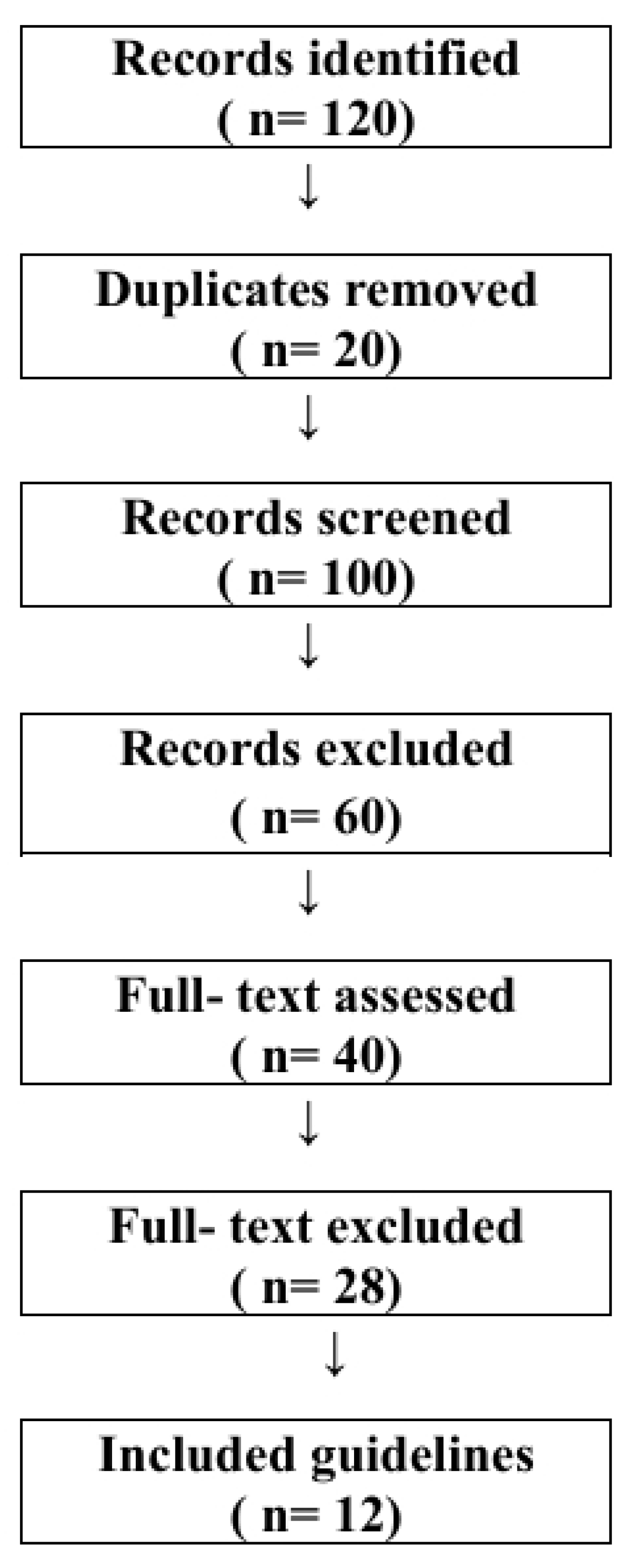
The study selection process is illustrated in Figure 1.

4. Results

The major international and local neonatal hypoglycemia guideline frameworks included in this review are comparatively summarized in Table 1, Table 2, Table 3, Table 4, Table 5, Table 6, Table 7 and Table 8, highlighting differences in screening strategies, operational thresholds, and therapeutic approaches.

5. Integrated Clinical Algorithm for Practice

  • Identification: Symptomatic neonates—measure immediately and treat without delay. Asymptomatic at-risk neonates—screen according to postnatal age and risk factors.
  • Confirmation: Low glucometer values should be confirmed via blood gas analyzer or laboratory testing when diagnostic decisions are required.
  • Transitional Management: Early and frequent feeding; consider 40% oral dextrose gel; re-test at 30–60 min.
  • Escalation: Severe or symptomatic cases require IV glucose infusion and continuous monitoring.
  • Persistent Hypoglycemia (>48–72 h): Obtain critical sample; target higher glucose levels; initiate endocrine–metabolic evaluation (Table 5 and Table 6, Appendix A).

6. Discussion

This review highlights substantial convergence across international and local guidance regarding the core principles of neonatal hypoglycemia management, despite variability in numerical thresholds. Across frameworks, early identification of at-risk neonates, prompt intervention for symptomatic hypoglycemia, and avoidance of prolonged or recurrent hypoglycemia remain central objectives. Operational thresholds reflect pragmatic decisions in the context of uncertain outcome-based cut-offs; neurological risk is influenced by severity, duration, recurrence, and individual vulnerability.
The broad endorsement of 40% oral dextrose gel as first-line therapy for selected asymptomatic or mildly symptomatic neonates has major clinical implications: it may reduce the need for intravenous therapy, decrease NICU admissions, preserve mother–infant bonding, and support breastfeeding. These benefits are particularly relevant in settings with limited NICU capacity. Screening strategies remain heterogeneous; therefore, institutions should implement standardized risk-based screening pathways with clear escalation criteria and reassessment intervals (Table 7 and Table 8).
Persistent or recurrent hypoglycemia beyond the transitional period warrants timely etiologic evaluation, including endocrine and metabolic assessment where appropriate. Delayed recognition may postpone diagnosis of conditions such as congenital hyperinsulinism or inborn errors of metabolism.
A further challenge in neonatal hypoglycemia management is the limited accuracy of point-of-care glucometers at low glucose concentrations. False-positive results may prompt unnecessary NICU admission and mother–infant separation, whereas false-negative results may delay treatment of clinically significant hypoglycemia. Accordingly, most contemporary guidelines recommend confirming low readings with laboratory testing or a blood gas analyzer when feasible—without delaying treatment disproportionately.

7. Limitations

This review has several limitations. First, the included guidelines differed substantially in structure, terminology, operational thresholds, and year of last update, all aspects limiting direct comparability. Second, some local protocols were institution-based rather than nationally standardized. Third, only English-language and Romanian-language documents were included, potentially excluding relevant recommendations from other regions. Finally, because this review focused on guideline comparison rather than patient-level outcomes, no meta-analysis could be performed.

8. Conclusions

There is clear consensus across major clinical guidelines regarding principal risk factors for neonatal hypoglycemia; however, no universal agreement exists concerning the timing of the first postnatal BG measurement in at-risk neonates, the optimal frequency of BG monitoring, or the minimum BG value at which therapy should be initiated during the transitional period. Measurement techniques also vary (portable glucometer, blood gas analyzer, and laboratory confirmation), and each has limitations—particularly at low glucose ranges—which may influence clinical decisions. Further comparative studies are required to define evidence-based intervention thresholds, establish optimal monitoring strategies, identify the most accurate measurement techniques, and clarify long-term neurodevelopmental outcomes. Across guidelines, the overarching objective remains prevention of neuroglycopenia while minimizing unnecessary medicalization and avoidable mother–infant separation.
Nevertheless, important controversies persist regarding optimal intervention thresholds, duration of monitoring, and long-term neurodevelopmental significance of transient low glucose concentrations. Future multicenter comparative studies are needed to establish evidence-based standardized protocols with meaningful outcomes that balance neurological safety with avoidance of unnecessary medicalization.


Supplementary Materials

The following supporting information can be downloaded at: https://www.mdpi.com/article/10.3390/jcm15103921/s1, File S1. PRISMA 2020 Checklist. Reference [12] is cited in the Supplementary materials.

Author Contributions

Conceptualization: C.R., M.M. and B.W.K.; methodology: C.R. and M.M.; writing—original draft preparation: C.R.; writing—review and editing: F.R.D., B.W.K. and A.B. All authors have read and agreed to the published version of the manuscript.

Funding

The APC was funded by University of Oradea, Oradea, Romania.

Institutional Review Board Statement

Not applicable (systematic review of published guidance).

Informed Consent Statement

Not applicable.

Data Availability Statement

No new data were created or analyzed in this study. Data sharing is not applicable to this article.

Conflicts of Interest

The authors declare no conflicts of interest.

Appendix A. Glucose Unit Conversion

1 mmol/L ≈ 18 mg/dL (mg/dL = mmol/L × 18)
mmol/Lmg/dL (Approx.)Clinical Context
1.018Severe threshold (BAPM)
2.036Minimum stabilization threshold
2.647Frequent intervention threshold
3.360Post-48 h target
3.970Target in suspected disorders

References

  1. Diggikar, S.; Trif, P.; Mudura, D.; Prasath, A.; Mazela, J.; Ognean, M.L.; Kramer, B.W.; Galis, R. Neonatal Hypoglycemia and Neurodevelopmental Outcomes-An Updated Systematic Review and Meta-Analysis. Life 2024, 14, 1618. [Google Scholar] [CrossRef] [PubMed]
  2. Adamkin, D.H. Postnatal Glucose Homeostasis in Late-Preterm and Term Infants. Pediatrics 2011, 127, 575–579. [Google Scholar] [CrossRef] [PubMed]
  3. British Association of Perinatal Medicine (BAPM). Identification and Management of Neonatal Hypoglycemia in the Full-Term Infant (Birth to 72 Hours): A Framework for Practice; BAPM: London, UK, 2017. [Google Scholar]
  4. Thornton, P.S.; Stanley, C.A.; De Leon, D.D.; Harris, D.; Haymond, M.W.; Hussain, K.; Levitsky, L.L.; Murad, M.H.; Rozance, P.J.; Simmons, R.A.; et al. Recommendations from the Pediatric Endocrine Society for Evaluation and Management of Persistent Hypoglycemia in Neonates, Infants, and Children. J. Pediatr. 2015, 167, 238–245. [Google Scholar] [CrossRef] [PubMed]
  5. Canadian Paediatric Society (CPS). The Screening and Management of Newborns at Risk for Low Blood Glucose. Paediatr. Child Health 2020, 25, 536–554. [Google Scholar] [CrossRef]
  6. Te Tohu Waihonga—Aotearoa New Zealand Neonatal Hypoglycaemia Guideline; Ministry of Health: Wellington, New Zealand, 2025.
  7. Queensland Health. Hypoglycaemia—Newborn Clinical Guideline; Queensland Government: Brisbane, Australia, 2023.
  8. Safer Care Victoria. Hypoglycaemia in Neonates Clinical Guidance; Department of Health: Victoria, Australia, 2024.
  9. Asociaţia de Neonatologie din România. Diagnosticul şi tratamentul hipoglicemiei neonatale. COLECŢIA GHIDURI CLINICE PENTRU NEONATOLOGIE Ghidul 14/Revizia 0 4.12. 2010. Available online: http://old.ms.ro/documente/14%20diagnosticul%20si%20tratamentul%20hipoglicemiei%20neonatale_9180_7493.pdf (accessed on 13 March 2026).
  10. Prevention and Management of Hypoglycaemia Ashford and St.Peters Hospitals NHS Foundation Trust, United Kingdom, November 2024. Available online: https://ashfordstpeters.net/Guidelines_Neonatal/Hypoglycaemia-Guideline-Nov-2024.pdf (accessed on 13 March 2026).
  11. George, L. Hypoglycaemia Neonatal Clinical Guideline V4.2; Royal Cornwall Hospitals: Truro, UK, October 2025; Available online: https://doclibrary-rcht.cornwall.nhs.uk/DocumentsLibrary/RoyalCornwallHospitalsTrust/Clinical/NewbornCare/HypoglycaemiaNeonatalClinicalGuideline.pdf (accessed on 13 March 2026).
  12. Page, M.J.; McKenzie, J.E.; Bossuyt, P.M.; Boutron, I.; Hoffmann, T.C.; Mulrow, C.D.; Shamseer, L.; Tetzlaff, J.M.; Akl, E.A.; Brennan, S.E.; et al. The PRISMA 2020 statement: An updated guideline for reporting systematic reviews. BMJ 2021, 372, n71. [Google Scholar] [CrossRef] [PubMed]
Figure 1. PRISMA 2020 flow diagram of guideline selection process.
Jcm 15 03921 g001
Table 1. Unified table of included neonatal hypoglycemia guideline frameworks.
Organization/GuidelinesYear/UpdatePopulationTime WindowKey FeaturesReference
American Academy of Pediatrics (AAP)2011Late-preterm and term infants at risk0–24 h (core algorithm)Operational thresholds; feeding first; IV for severe/symptomatic[2]
British Association of Perinatal Medicine (BAPM)2017Full-term infant (birth–72 h)0–72 hIntegrates 40% dextrose gel; defines severe hypoglycemia[3]
Pediatric Endocrine Society (PES)2015Babies with persistent hypoglycemia/at high-risk≥48 h + transitionHigher targets after 48 h; evaluation for persistent disorders[4]
Canadian Paediatric Society (CPS)2025At-risk newborns0–72 h + persistentThreshold centered on 2.6 mmol/L; gel + feeding; escalation to IV[5]
Te Tohu Waihonga (New Zealand)2025All newbornsTransition + persistentDetailed algorithm; repeated gel; clear escalation and reassessment[6]
Australia (Queensland Health; Safer Care Victoria)2023–2024At-risk term and preterm infants0–48 h (transition)Operational thresholds; gel/feeding; IV escalation; NICU triggers[7,8]
COLECŢIA GHIDURI CLINICE PENTRU NEONATOLOGIE Ghidul 142010At-risk term and preterm infantsIf BG 30–45 mg/dL and clinical sign feed, check BG in 30 min If BG is still 30–45 mg/dL, IV treatment[9]
Prevention and Management of Hypoglycaemia
(Ashford and St. Peter s Hospitals) UK
2024All newbornsFirst feed in 1 h (aim 30 min) BG before 2nd feedInitiate feed at 3 h; BG pre 3rd feed; if BG > 36 mg/dL, stop BG; recheck[10]
Hypoglycaemia Neonatal Clinical Guideline (Royal Cornwall Hospitals, UK)2025All newborns2–4 h after birthIV infusion of 10% glucose at 60 mL/kg/d[11]
Note: BG = blood glucose; IV = intravenous. Values are reported as presented in original sources; 1 mmol/L ≈ 18 mg/dL.
Table 2. Screening strategies for neonatal hypoglycemia (all recommendations preserved).
GuidelinesFirst BG CheckRoutine Screening FrequencyAction if BG 36–45 mg/dLAction if BG < 36 mg/dLNICU Admission ThresholdStopping Screening
SCV1 h after birthPre-feed or every 3 hGive dextrose buccal gel/EBM/formula; recheck BG in 30 minGive dextrose gel + feed; recheck in 30 minBG < 21 mg/dLAfter stable values > 47 mg/dL
TWO (NZ)1–2 h after birth or earlier if symptomaticPre-feedBG > 36 mg/dL: no further monitoringPre-feed BG 18–34 mg/dL with clinical signs: oral glucose gel + feedBG < 19 mg/dLAfter 2 normal values
BAPMPre-feed before 2nd feed (2–4 h)Every 3 hBG 36–45 mg/dL: EBM/formula; recheck before 3rd feedBG < 36 mg/dL: give dextrose gel; recheck before 3rd feedBG < 18 mg/dLBG stable > 36 mg/dL
RCHPrior to second feed (2–4 h)Before the 8 h markBG > 36 mg/dL and GA > 37 w: stop monitoringBG < 36 mg/dL: dextrose gel + feedBG < 19 mg/dLAfter stability has been achieved
AAPInitial feed within 1 h; BG 30 min laterBefore each feed (2–3 h)BG 30–45 mg/dL: feed; recheck in 30 minBG < 25 mg/dL: IV glucoseBG < 18 mg/dLTarget BG > 45 mg/dL prior to routine feeds
QCGBefore second feed (<3 h of life)Pre-feedBG 25–40 mg/dL: refeed/IV as neededBG < 27 mg/dL: IV treatmentBG < 27 mg/dLTwo pre-feed BG > 36 mg/dL
ASPH/RGFirst feed in 1 h (aim 30 min)Every 2–3 hBG 27–45 mg/dL: glucose gel + feedBG < 25 mg/dL: IV glucoseBG < 18 mg/dLBG stable > 36 mg/dL
RGNAIf BG 30–45 mg/dL and clinical sign feed, check BG in 30 minIf BG is still 30–45 mg/dL, IV treatmentIf BG < 36 mg/dL, IV treatmentIf BG 18–29 mg/dL, IV treatmentIf BG < 18 mg/dL IV glucose bolus+ IV infusion;
recheck in 30 min
Note: EBM = expressed breast milk; GA = gestational age. Content preserved; thresholds as in source protocols.
Table 3. Risk factors for neonatal hypoglycemia (original wording preserved).
CategoryRisk FactorSCVQCGASPHRCHAAPTWOBAPMRG
Neonatalperinatal acidosisNANANAYES YESYESNA
Neonatalpreterm infantsYESYESYESYESYESYESYESYES
Neonatallow birthweight < 2500 gYESYES YESYESYESNANA
NeonatalSGAYESYES YESYESYESYESYES
NeonatalLGAYESYES NAcontroversialYESNAYES
Neonatalclinical signs of hypoglycemiaYESNA NAYESYESYESYES
Neonatalpoor feedingYESNA NANAYESNANA
Neonatalrespiratory distressYESYES NANAYESNANA
Neonataltemperature instabilityYESNA NANAYESYESNA
Neonatalbirth asphyxiaYESYES YESNA NA
NeonatalsepsisYESYES NANAYESYESNA
NeonatalpolycythemiaYESYES NANA NA
Neonatalpost termNAYES NANA NA
Neonataldelayed or inadequate feedingNAYESYESNANA YESNA
Neonatalcold stressNAYES NANA NA
NeonatalseizuresNAYES NANAYESYESNA
Neonatalheart failureNAYES NANA NA
NeonatalhyperinsulinismNAYES NANA NA
Neonatalinborn errors of metabolismNAYES NAYES NA
NeonatalsyndromesNAYES NANA NA
Maternalbeta blockersYESYESYESYESNAYESYESNA
Maternalbeta agonistsNAYES NANA NA
Maternalbetamethasone after 36 weeksNAYES NANA NA
Maternaloral hypoglycemics in the third trimesterNAYES NANA NA
Maternalmaternal diabetes Type I, II, or gestational DMNAYES YESYESYESYES
MaternalmetforminNANA NAYESNANA
MaternalinsulinNANA NAYESNANA
Maternalsodium valproateNANA NAYESNANA
Note: YES/not applicable and controversial are reported exactly as in source tables without correction, omission, or reinterpretation.
Table 4. Clinical symptoms of neonatal hypoglycemia (all original wording preserved).
SystemSymptomSCVASPHRCHBAPMTWOQCGAAPSTMHRG
NeurologicjitterinessYESNANANANAYESYESNANA
NeurologicirritabilityYESNANANAYESNANANANA
Neurologichigh pitched cryYESYESYESYESNAYESYESYESNA
Respiratorycyanotic episodesYESYESYESYESNANAYESYESNA
RespiratoryapneaYESYESYESYESYESNAYESYESNA
NeurologicseizuresYESYESYESYESYESYESYESYESNA
NeurologiclethargyYESYESYESYESYESYESNAYESNA
GeneralhypothermiaYESYESYESYESYESNANAYESNA
NeurologichypotoniaYESYESYESYESYESYESYESYESNA
Generalaltered/poor feedingYESYESNAYESYESYESYESYESNA
Neurologicaltered level consciousnessNAYESYESYESNAYESNAYESNA
Generalsuspected/confirmed infectionNAYESYESYESYESNAYESNANA
Perinatalperinatal acidosisNANANAYESNANANANANA
Respiratoryrespiratory distressNANANANAYESYESYESNANA
Generalsweating/pallorNANANANANAYESNANANA
Neurologicstupor/comaNANANANANAYESYESNANA
CardiacbradycardiaNANANANANAYESNANANA
Neurologiceye rollingNANANANANANANAYESNA
Note: YES/NA/YES are reported exactly as in source symptom tables without correction.
Table 5. Criteria for admission to NICU in neonatal hypoglycemia (all original wording preserved).
GuidelinesTrigger for NICU AdmissionBlood Glucose ThresholdClinical SignsImmediate ActionIf no IV AccessReassessment
BAPMHypoglycemia and/or clinical signsBG < 18 mg/dL±clinical signsGive IV 10% glucose 2.5 mL/kgGive glucose gel; feed if it is possible; give Glucagon IMRecheck BG in 30 min; repeat cycle if BG < 18 mg/dL or clinical signs
QCGHypoglycemia and/or clinical signsBG < 27 mg/dLclinical signsGive 10% glucose IV at rate 60 mL/kg/d; BG remains low bolus 1–2 mL/kgIf symptomatic glucose 10% IV 80 mL/kg/d; give glucose gel; give Glucagon IMRecheck BG in 30 min; recheck in every 30 min after a change in iv glucose
RCHHypoglycemia with or without clinical signsBG < 18 mg/dL or BG < 45 mg/dL with clinical signsclinical signsGive 2.5 mL glucose 10%; start IV infusion of 10% glucose at 60 mL/kg/dBolus of glucose is NOT necessaryRecheck BG in 30 min; repeat cycle if BG < 18 mg/dL and/or clinical signs
ASPHHypoglycemia before the 3rd feed or if symptomaticBG < 36 mg/dL before the 3rd feed; BG < 18 mg/dLclinical signsGive 2.5 mL glucose 10%; start IV infusion of 10% glucose at 60 mL/kg/dBolus of glucose is NOT necessaryRecheck BG in 30 min; monitor BG for 24 h
TWOSevere, recurrent or persistent hypoglycemiaBG < 21 mg/dL; BG < 36 mg/dL after 1 dextrose gel; BG < 18 mg/dL±clinical signsGive 0.5 mL/kg dextrose gel; give 2.5 mL glucose 10%; start IV infusion of 10% glucose at 60 mL/kg/dNO IV ACCESS give Glucagon IMRecheck BG in 30 min; repeat cycle if BG < 18 mg/dL and/or clinical signs
AAPPost-feed hypoglycemiaBG < 25 mg/dL (0–4 h); BG < 35 mg/dL (4–24 h)Give 2 mL glucose 10%; start IV infusion of 10% glucose at 80–100 mL/kg/dRecheck BG in 30 min; the goal is BG 40–50 mg/dL
SCVHypoglycemia or infant appears unwellBG < 27 mg/dL; BG < 47 mg/dL after treatmentinfant appears unwellGive 2 mL glucose 10%; start IV infusion of 10% glucose at 60 mL/kg/dIncrease feeding at 80 mL/kg/d OR give IV glucose 10%Recheck BG in 30 min; recheck BG in 1 h
RGHypoglycemia or Baby unwellBG 18–29 mg/dL; BG < 18 mg/dLbaby unwellGive 10% glucose IV at rate 60 mL/kg/d; give 2 mL glucose 10%NO IV ACCESS give Glucagon IMRepeat cycle until BG > 46 mg/dL; Recheck BG in 30 min
Note: Wording, thresholds, and instructions are reported verbatim from source NICU admission tables.
Table 6. Comparative Table of Recommended Thresholds (selected).
ContextAAP (mg/dL)CPS (mmol/L)BAPM (mmol/L)PES (mg/dL)
Asymptomatic ‘at risk’ 0–4 hIV if <25; re-feed + retest<2.6General frameworkNot primary focus
Asymptomatic ‘at risk’ 4–24 hIV if <35; target >45<2.6 depending on risk1.0–1.9 gel useNot primary focus
Severe/symptomaticImmediate IV + confirmUrgent treatment ≥2.6<1.0 emergencyMaintain targets
After 48 h (persistent)Evaluate if persistentHigher targetsInvestigate if persistent>60 mg/dL (>48 h); >70 mg/dL disorders
Table 7. Convergence of Core Management Principles
ElementAAPBAPMCPS/NZAustraliaLocal UK
Targeted screeningYesYesYesYesYes
Immediate IV if symptomaticYesYesYesYesYes
Use of 40% gelOptionalYesYesYesYes
Higher targets > 48 hNot detailedSpecialist referralInvestigateNICU referralNICU referral
Table 8. Integrated Characteristics and Key Recommendations
GuidelinesCountryPopulationAge WindowIntervention ThresholdKey Interventions
AAPUSALate-preterm and term0–24 h<25/<35 mg/dLFeeding; IV glucose
BAPMUKTerm newborns0–72 h1.0–1.9 mmol/L40% gel; IV
CPS/NZCanada/NZAt-risk neonates0–72 h<2.6 mmol/LGel + feeding; IV
AustraliaAustralia0–48 h newborns0–48 h<27 mg/dLGel; IV; NICU
UKUKAll newborns0–72 h<18–36 mg/dLBolus + infusion
Disclaimer/Publisher’s Note: The statements, opinions and data contained in all publications are solely those of the individual author(s) and contributor(s) and not of MDPI and/or the editor(s). MDPI and/or the editor(s) disclaim responsibility for any injury to people or property resulting from any ideas, methods, instructions or products referred to in the content.