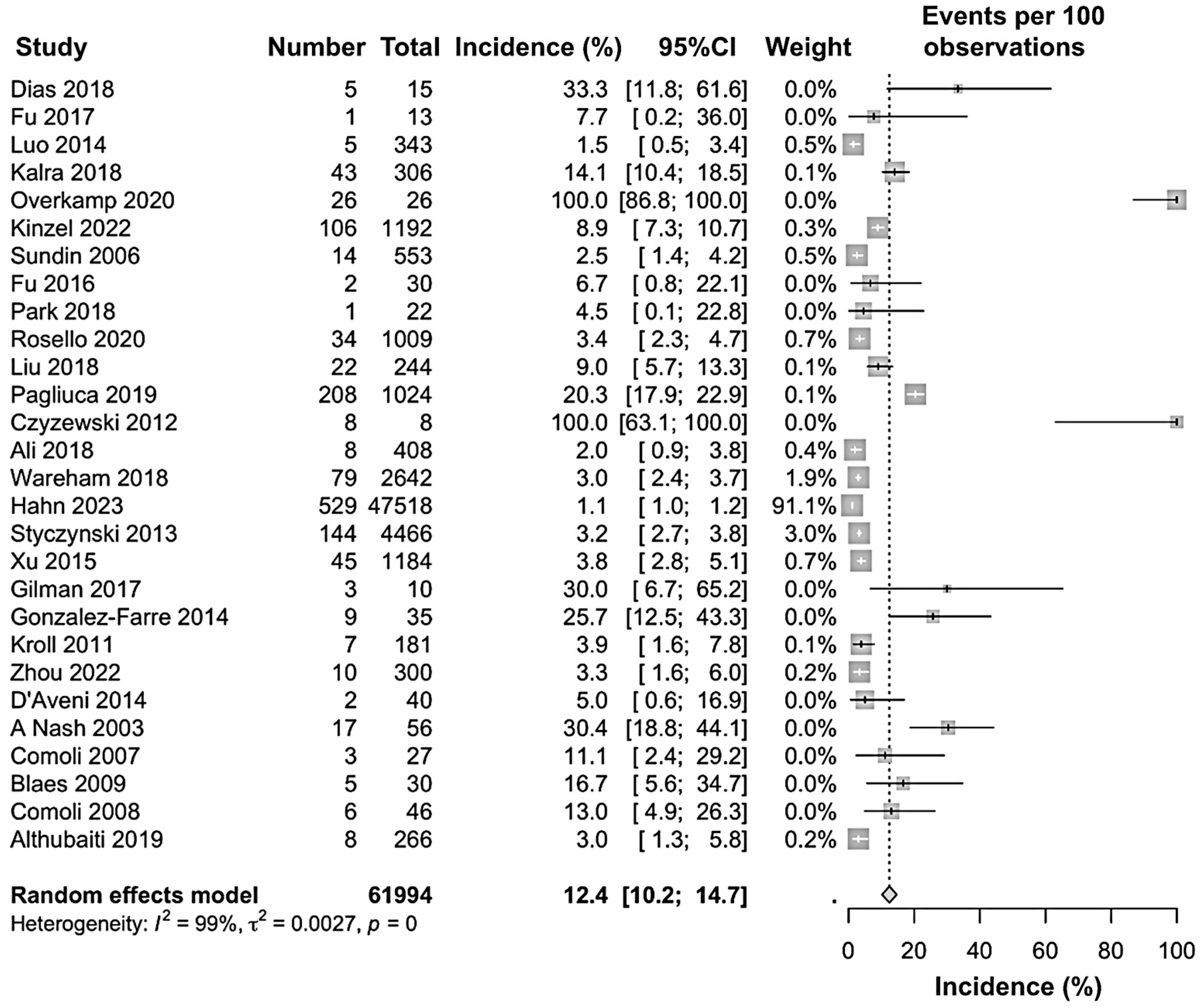
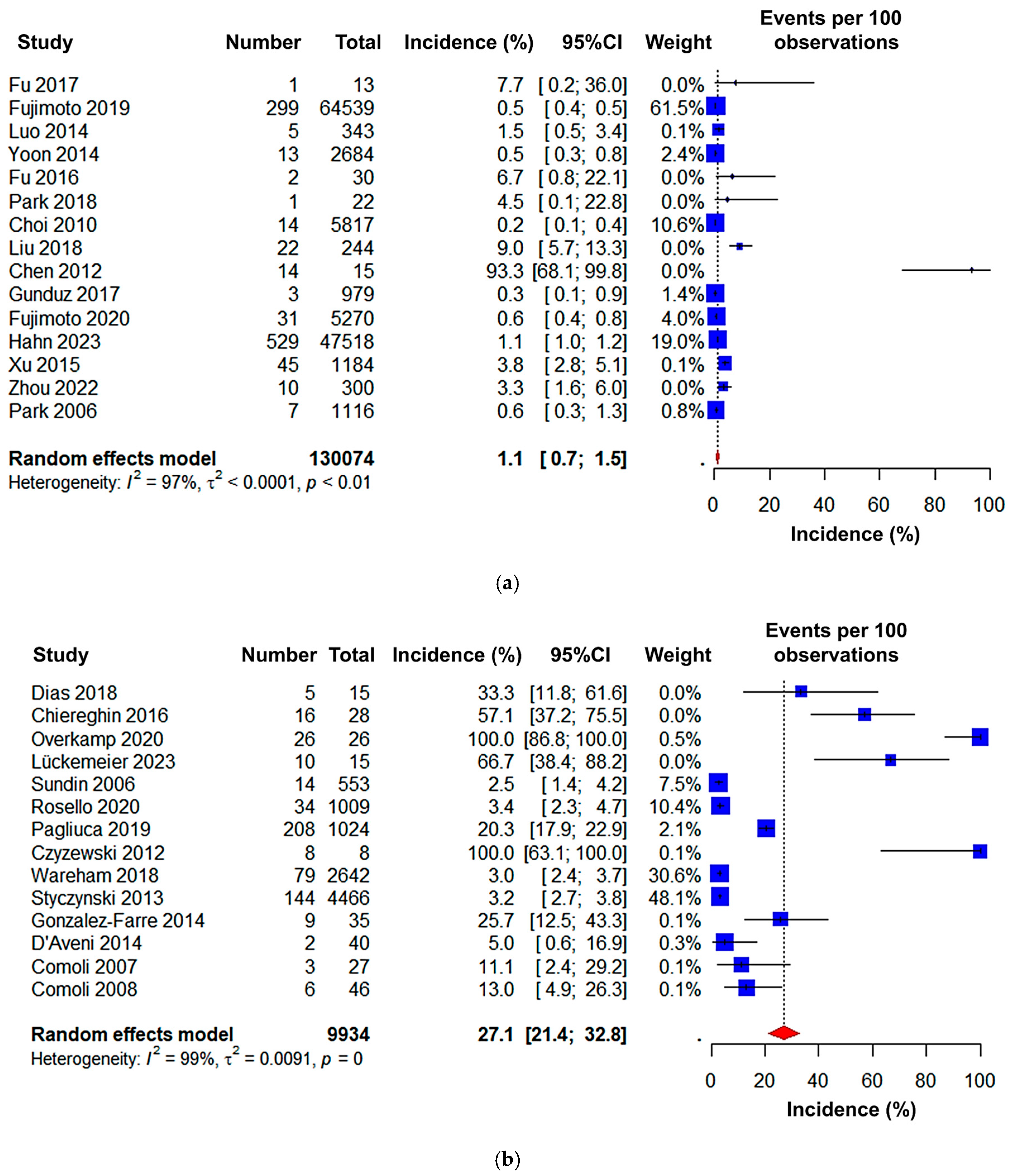
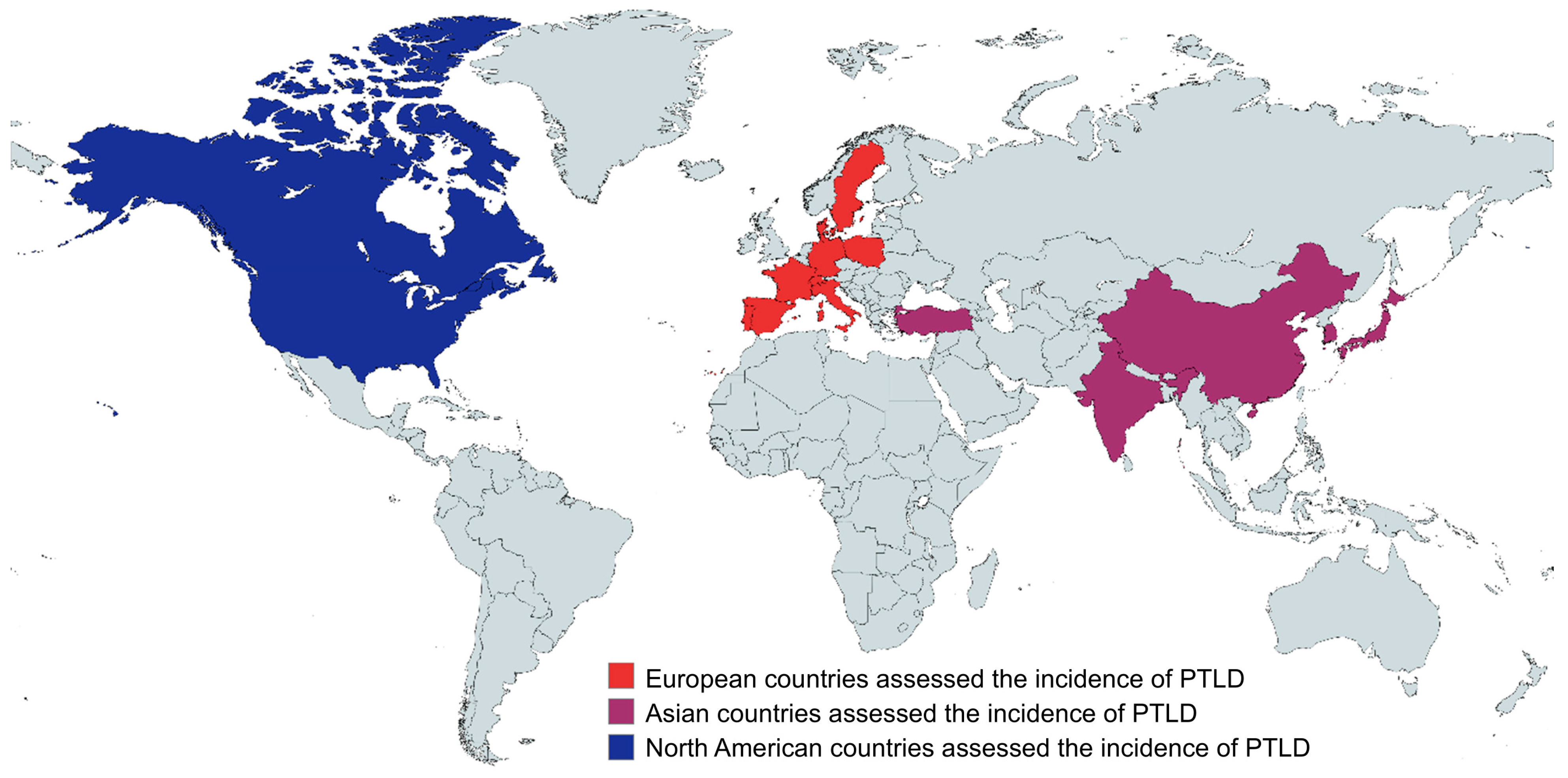
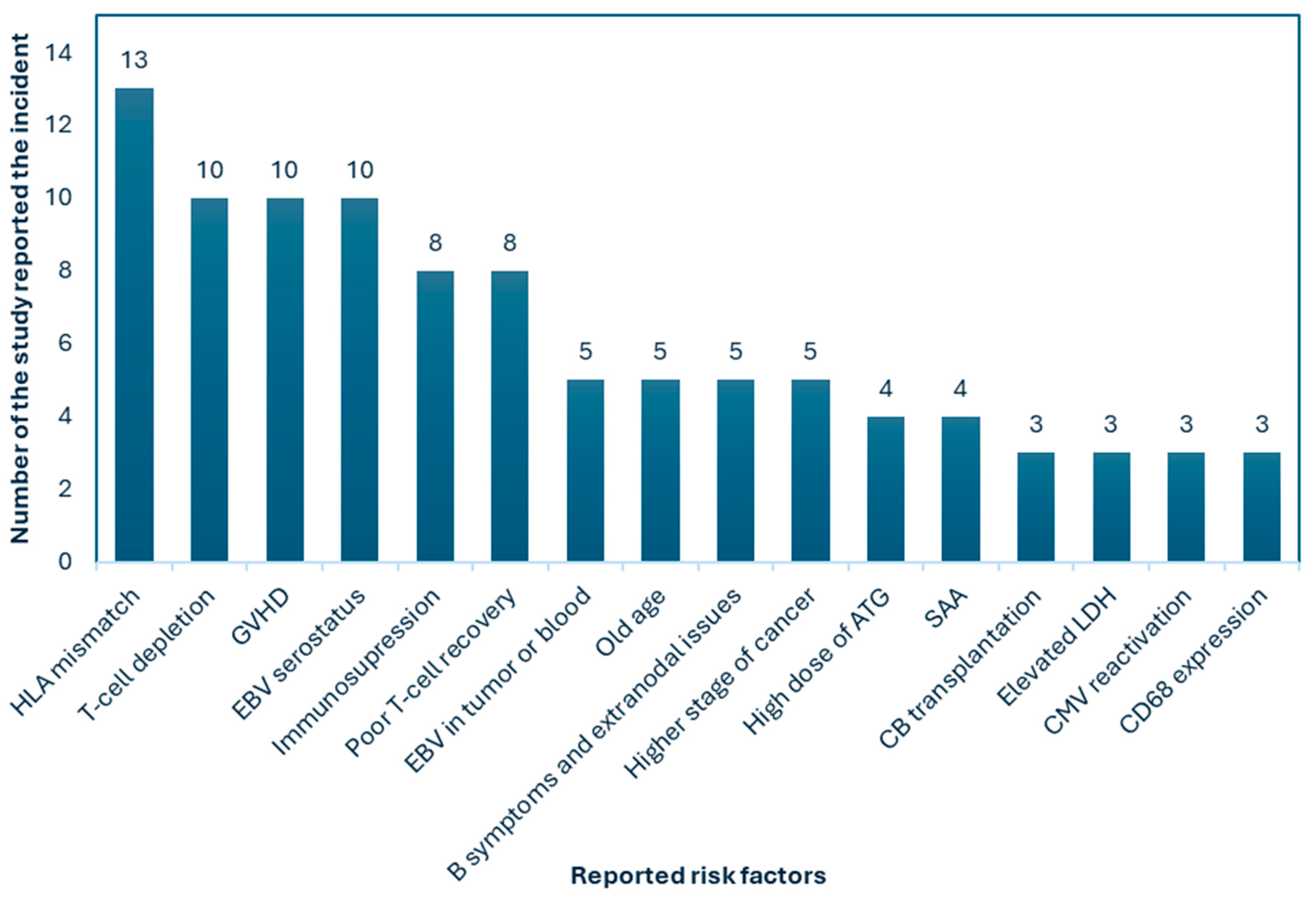
Global Epidemiology of Post-Transplant Lymphoproliferative Disorder (PTLD) in Hematopoietic Stem Cell Transplantation (HSCT): A Systematic Review and Meta-Analysis of Incidence, Subtypes, Risk Factors, and Beyond

 , , , , , and
Abstract
1. Introduction
2. Methodology
2.1. Study Design and Selection of Inclusion–Exclusion Criteria
2.2. Search Strategy and Study Inclusion
2.3. Data Extraction, Meta-Analysis, and Heterogeneity
2.4. Evaluation of Study Quality and Analysis of Bias Risk
2.5. Subgroup Analyses and Risk Factors
3. Results
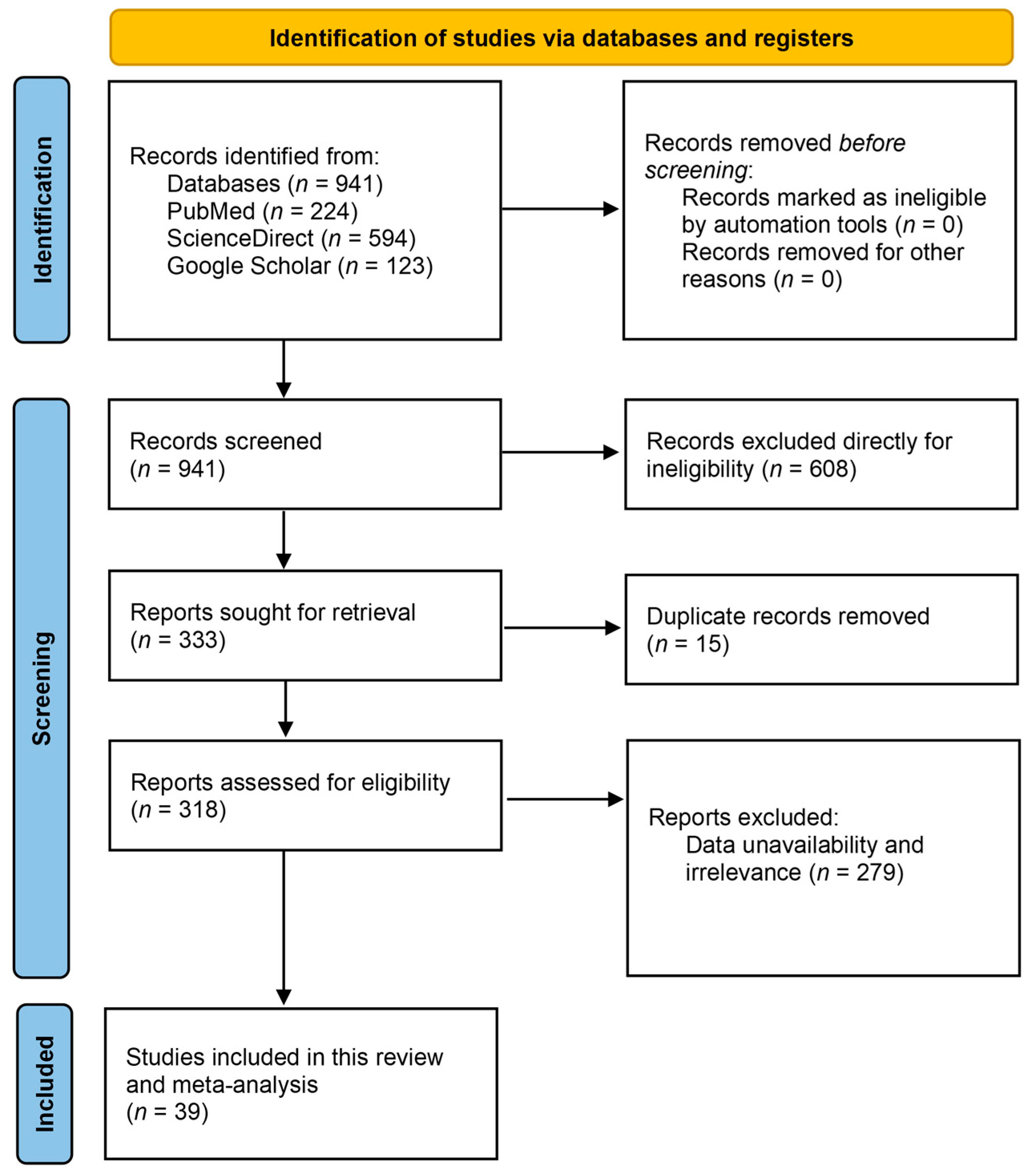
3.1. Search Results and Study Inclusion
3.2. Major Characteristics of the Included Studies
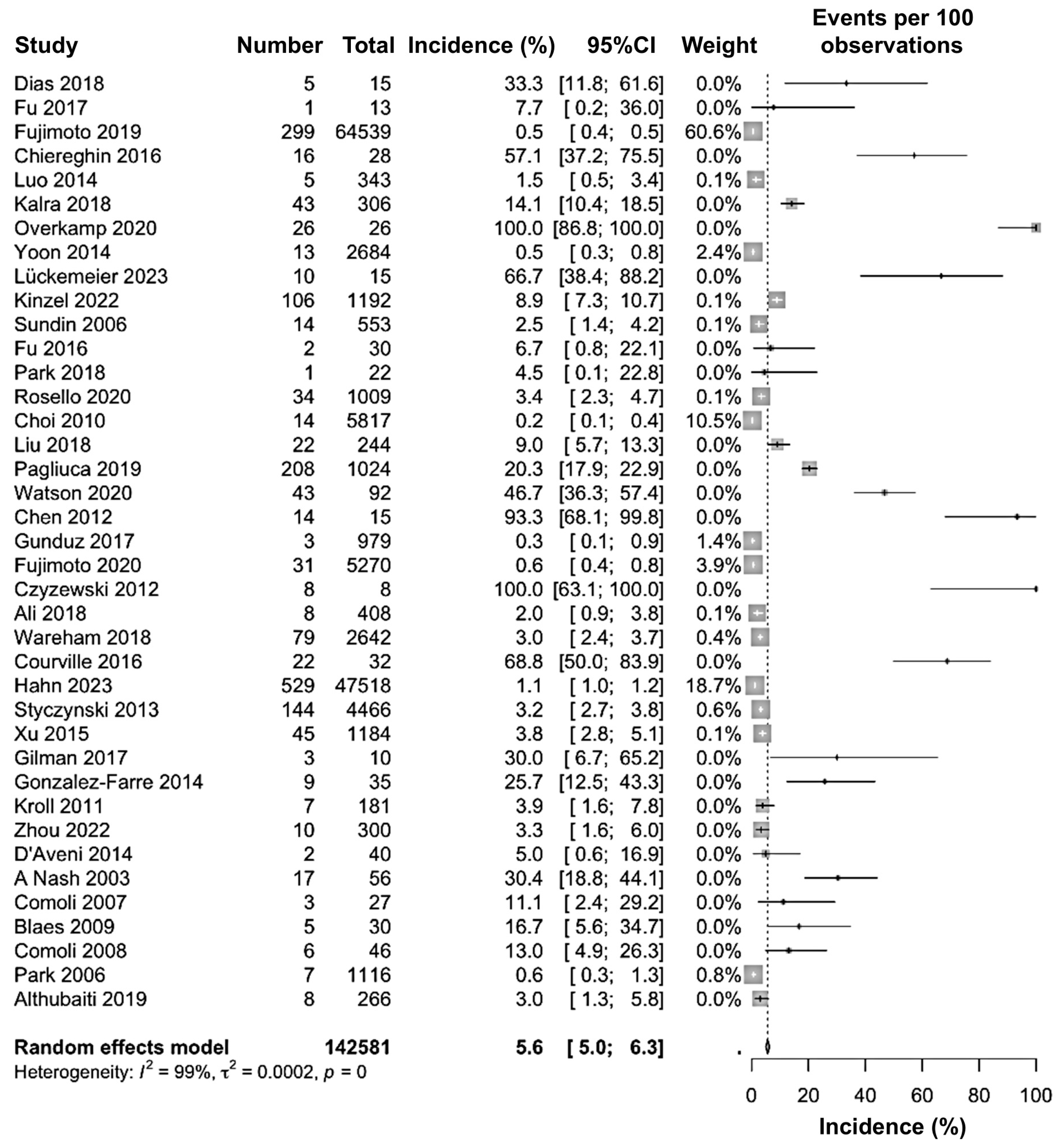
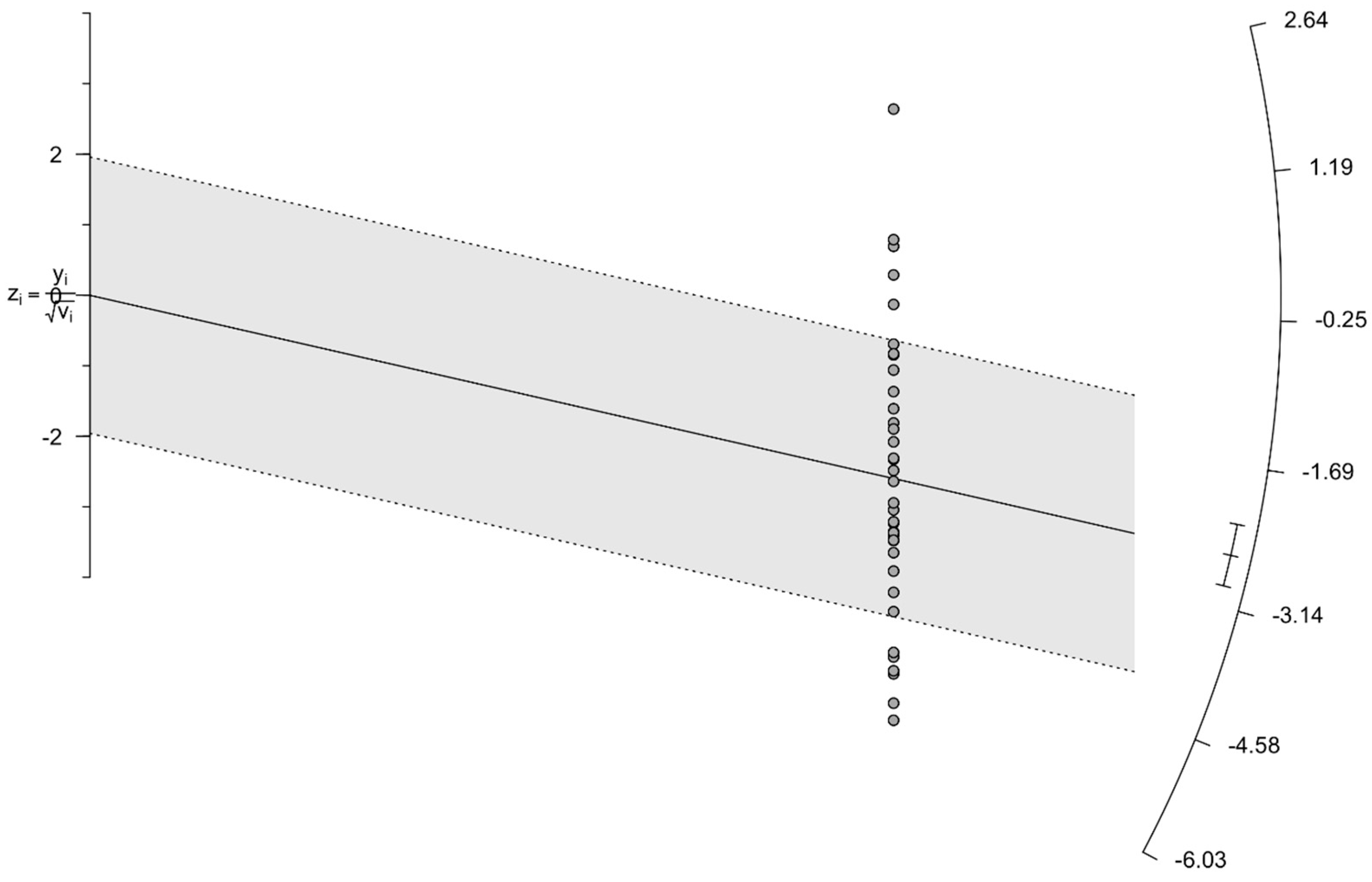
3.3. Primary Meta-Analysis, Heterogeneity, Outliers and Sensitivity
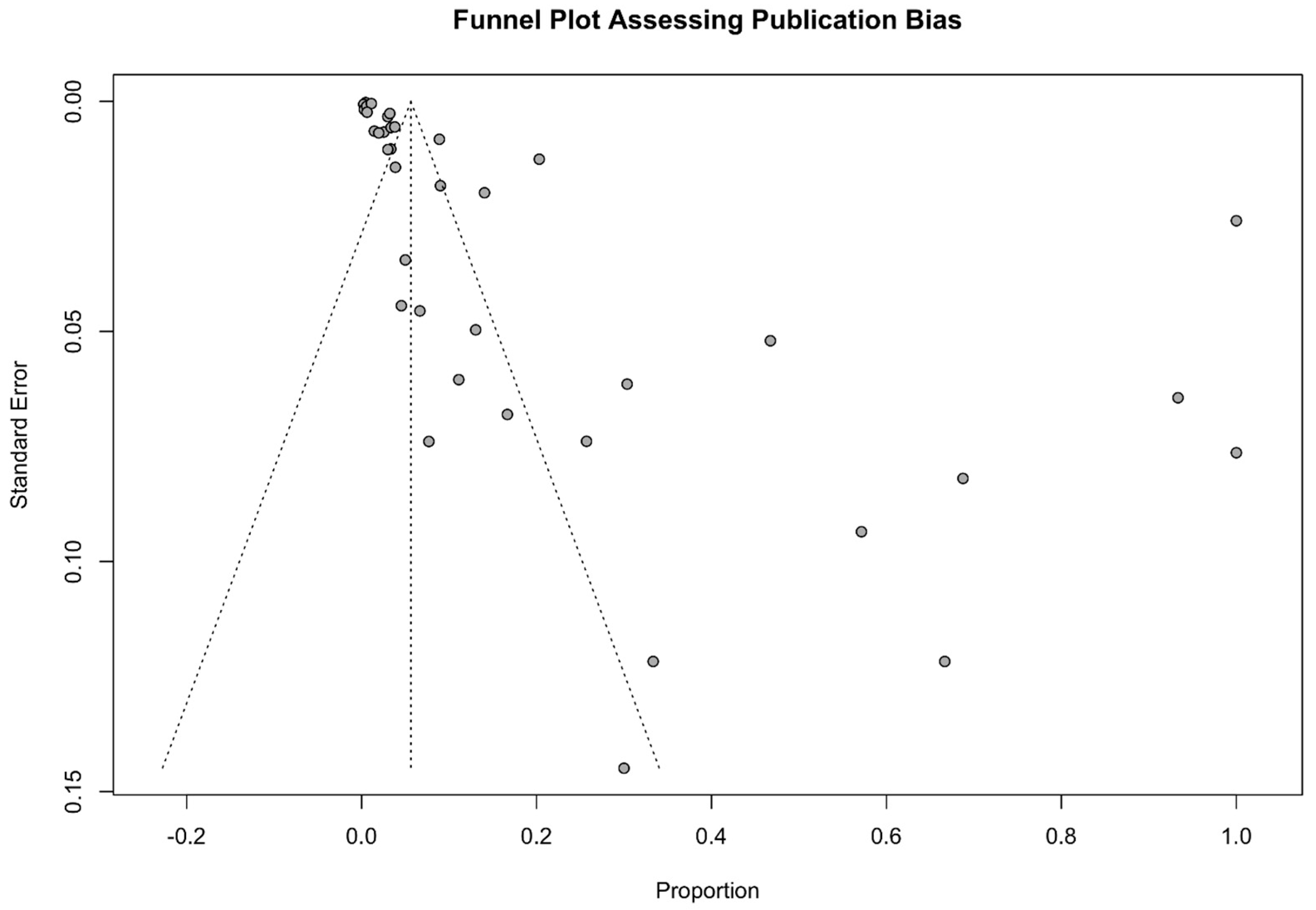
3.4. Assessment of Study Quality and Risk of Bias
3.5. Subgroup Analysis and Risk Factors
4. Discussion
5. Limitations of This Study
6. Conclusions
Supplementary Materials
Author Contributions
Funding
Institutional Review Board Statement
Informed Consent Statement
Data Availability Statement
Conflicts of Interest
References
- Ullah, A.; Lee, K.T.; Malham, K.; Yasinzai, A.Q.K.; Khan, I.; Asif, B.; Waheed, A.; Heneidi, S.; Karki, N.R.; Sidhwa, F. Post-transplant Lymphoproliferative Disorder (PTLD) in the US Population: Demographics, Treatment Characteristics, and Survival Analysis. Cureus 2023, 15, e39777. [Google Scholar] [CrossRef] [PubMed]
- Sullivan, K.M.; Parkman, R.; Walters, M.C. Bone marrow transplantation for non-malignant disease. ASH Educ. Program Book 2000, 2000, 319–338. [Google Scholar]
- Elahimehr, R.; Scheinok, A.T.; McKay, D.B. Hematopoietic stem cells and solid organ transplantation. Transplant. Rev. 2016, 30, 227–234. [Google Scholar] [CrossRef]
- Dierickx, D.; Habermann, T.M. Post-transplantation lymphoproliferative disorders in adults. N. Engl. J. Med. 2018, 378, 549–562. [Google Scholar] [CrossRef] [PubMed]
- Zaffiri, L.; Long, A.; Neely, M.L.; Cherikh, W.S.; Chambers, D.C.; Snyder, L.D. Incidence and outcome of post-transplant lymphoproliferative disorders in lung transplant patients: Analysis of ISHLT Registry. J. Heart Lung Transplant. 2020, 39, 1089–1099. [Google Scholar] [CrossRef] [PubMed]
- Loren, A.; Porter, D.; Stadtmauer, E.; Tsai, D. Post-transplant lymphoproliferative disorder: A review. Bone Marrow Transplant. 2003, 31, 145–155. [Google Scholar] [CrossRef]
- Shroff, R.; Rees, L. The post-transplant lymphoproliferative disorder—A literature review. Pediatr. Nephrol. 2004, 19, 369–377. [Google Scholar] [CrossRef]
- Page, M.J.; McKenzie, J.E.; Bossuyt, P.M.; Boutron, I.; Hoffmann, T.C.; Mulrow, C.D.; Shamseer, L.; Tetzlaff, J.M.; Akl, E.A.; Brennan, S.E. The PRISMA 2020 statement: An updated guideline for reporting systematic reviews. BMJ 2021, 372, n71. [Google Scholar] [CrossRef]
- Pranto, A.H.; Suez, E.; Uddin, M.E.; Tonmoy, H.S.; Meem, M.R.M.; Montasir, F.; Nourin, F.; Ahmed, F.; Abir, S.N.; Islam, D.Z. Global epidemiology of hepatitis B virus infection in dialysis patients: A systematic review and meta-analysis of prevalence, immunity, risk factors, and beyond. Int. Urol. Nephrol. 2026, 1–26. [Google Scholar] [CrossRef]
- Khandker, S.S.; Jahan, S.; Khan, A.A.; Abrittee, B.F.; Nanjiba, R.; Islam, D.Z.; Suez, E.; Rahman, M.H.; Farahim, F.; Ali, T. Global epidemiology of HIV among dialysis patients: A systematic review and meta-analysis. Int. Urol. Nephrol. 2025, 57, 2209–2226. [Google Scholar] [CrossRef]
- Zahra, S.; Saleem, M.K.; Ejaz, K.F.; Akbar, A.; Jadoon, S.K.; Hussain, S.; Ali, A.I.; Ifty, M.; Jannati, S.Z.; Armin, F. Prevalence of nephropathy among diabetic patients in North American region: A systematic review and meta-analysis. Medicine 2024, 103, e39759. [Google Scholar] [CrossRef] [PubMed]
- Shabbir, N.A.; Kant, S.B.; Rashid, K.; Hafeez, U.; Akbar, A.A.; Batool, S.W.; Pranto, A.H.; Zaman, J.; Tonmoy, H.S.; Islam, M.R. Prevalence of HIV/AIDS among pregnant women in North American region: A systematic review and meta-analysis. Medicine 2024, 103, e40339. [Google Scholar] [CrossRef]
- NIH. Study Quality Assessment Tools. 2021. Available online: https://www.nhlbi.nih.gov/health-topics/study-quality-assessment-tools (accessed on 22 November 2024).
- UNC. Systematic Reviews: Step 6: Assess Quality of Included Studies. 2023. Available online: https://guides.lib.unc.edu/systematic-reviews/assess-quality (accessed on 22 November 2024).
- Mughal, H.B.; Majeed, A.I.; Aftab, M.; Ubaid, M.F.; Zahra, S.; Abbasi, M.S.R.; Qadir, M.; Ahmad, M.; Akbar, A.; Tasneem, S. Brain natriuretic peptide in acute heart failure and its association with glomerular filtration rate: A systematic review and meta-analysis. Medicine 2024, 103, e36933. [Google Scholar] [CrossRef]
- Khandker, S.S.; Jannat, N.; Sarkar, D.; Pranto, A.H.; Hoque, I.A.; Zaman, J.; Uddin, M.N.; Suez, E. Association between glomerular filtration rate and β-thalassemia major: A systematic review and meta-analysis. Thalass. Rep. 2023, 13, 195–205. [Google Scholar] [CrossRef]
- Marinho-Dias, J.; Lobo, J.; Henrique, R.; Baldaque, I.; Pinho-Vaz, C.; Regadas, L.; Branca, R.; Campilho, F.; Campos, A., Jr.; Medeiros, R. Post-transplant lymphoproliferative disorder in hematopoietic stem cell transplant patients: A single center retrospective study between 2005 and 2012. Mol. Med. Rep. 2018, 18, 4650–4656. [Google Scholar] [PubMed]
- Fu, L.; Xie, J.; Lin, J.; Wang, J.; Wei, N.; Huang, D.; Wang, T.; Shen, J.; Zhou, X.; Wang, Z. Monomorphic post-transplant lymphoproliferative disorder after kidney transplantation and hematopoietic stem cell transplantation: Clinicopathological characteristics, treatments and prognostic factors. Indian J. Hematol. Blood Transfus. 2017, 33, 492–499. [Google Scholar] [CrossRef]
- Fujimoto, A.; Hiramoto, N.; Yamasaki, S.; Inamoto, Y.; Uchida, N.; Maeda, T.; Mori, T.; Kanda, Y.; Kondo, T.; Shiratori, S. Risk factors and predictive scoring system for post-transplant lymphoproliferative disorder after hematopoietic stem cell transplantation. Biol. Blood Marrow Transplant. 2019, 25, 1441–1449. [Google Scholar] [CrossRef]
- Chiereghin, A.; Prete, A.; Belotti, T.; Gibertoni, D.; Piccirilli, G.; Gabrielli, L.; Pession, A.; Lazzarotto, T. Prospective Epstein–Barr virus-related post-transplant lymphoproliferative disorder prevention program in pediatric allogeneic hematopoietic stem cell transplant: Virological monitoring and first-line treatment. Transpl. Infect. Dis. 2016, 18, 44–54. [Google Scholar]
- Luo, L.; Zhang, L.; Cai, B.; Li, H.; Huang, W.; Jing, Y.; Zhu, H.; Zhao, Y.; Bo, J.; Wang, Q.; et al. Post-transplant lymphoproliferative disease after allogeneic hematopoietic stem cell transplantation: A single-center experience. Ann. Transplant. 2014, 19, 6–12. [Google Scholar] [CrossRef]
- Kalra, A.; Roessner, C.; Jupp, J.; Williamson, T.; Tellier, R.; Chaudhry, A.; Khan, F.; Taparia, M.; Jimenez-Zepeda, V.H.; Stewart, D.A. Epstein-barr virus DNAemia monitoring for the management of post-transplant lymphoproliferative disorder. Cytotherapy 2018, 20, 706–714. [Google Scholar] [PubMed]
- Overkamp, M.; Granai, M.; Bonzheim, I.; Steinhilber, J.; Schittenhelm, J.; Bethge, W.; Quintanilla-Martinez, L.; Fend, F.; Federmann, B. Comparative analysis of post-transplant lymphoproliferative disorders after solid organ and hematopoietic stem cell transplantation reveals differences in the tumor microenvironment. Virchows Arch. 2021, 478, 1135–1148. [Google Scholar] [CrossRef] [PubMed]
- Yoon, J.H.; Lee, S.; Kim, H.J.; Lee, J.W.; Min, W.S.; Chung, B.H.; Yang, C.W.; Kim, Y.S.; Kim, J.I.; Moon, I.S. Comparative analysis of post-transplant lymphoproliferative disorder after kidney transplantation versus hematopoietic stem cell transplantation. Transpl. Int. 2014, 27, 721–732. [Google Scholar] [CrossRef]
- Lückemeier, P.; Radujkovic, A.; Holtick, U.; Kurch, L.; Monecke, A.; Platzbecker, U.; Herling, M.; Kayser, S. Characterization and outcome of post-transplant lymphoproliferative disorders within a collaborative study. Front. Oncol. 2023, 13, 1208028, Erratum in Front. Oncol. 2023, 13, 1290218. [Google Scholar] [CrossRef]
- Kinzel, M.; Dowhan, M.; Kalra, A.; Williamson, T.S.; Dabas, R.; Jamani, K.; Chaudhry, A.; Shafey, M.; Jimenez-Zepeda, V.; Duggan, P. Risk factors for the incidence of and the mortality due to post-transplant lymphoproliferative disorder after hematopoietic cell transplantation. Transplant. Cell. Ther. 2022, 28, 53.e1–53.e10. [Google Scholar] [CrossRef] [PubMed]
- Sundin, M.; Le Blanc, K.; Ringden, O.; Barkholt, L.; Omazic, B.; Lergin, C.; Levitsky, V.; Remberger, M. The role of HLA mismatch, splenectomy and recipient Epstein-Barr virus seronegativity as risk factors in post-transplant lymphoproliferative disorder following allogeneic hematopoietic stem cell transplantation. Haematologica 2006, 91, 1059–1067. [Google Scholar]
- Fu, L.; Wang, J.; Wei, N.; Wu, L.; Wang, Y.; Huang, W.; Zhang, J.; Liu, J.; Wang, Z. Allogeneic hematopoietic stem-cell transplantation for adult and adolescent hemophagocytic lymphohistiocytosis: A single center analysis. Int. J. Hematol. 2016, 104, 628–635. [Google Scholar] [CrossRef]
- Park, B.-K.; Kim, H.-S.; Kim, S.; Lee, J.-W.; Park, Y.S.; Jang, P.-S.; Chung, N.-G.; Jeong, D.-C.; Cho, B. Allogeneic hematopoietic stem cell transplantation in congenital hemoglobinopathies with myeloablative conditioning and rabbit anti-thymocyte globulin. Blood Res. 2018, 53, 145. [Google Scholar] [CrossRef]
- Balaguer-Rosello, A.; Piñana, J.L.; Bataller, L.; Montoro, J.; Romero, S.; Navarro, I.; Lorenzo, I.; Andreu, R.; Guerreiro, M.; Aguilar, C. Central nervous system involvement in Epstein–Barr virus-related post-transplant lymphoproliferative disorders after allogeneic hematopoietic stem cell transplantation. Transplant. Cell. Ther. 2021, 27, 261.e1–261.e7. [Google Scholar] [CrossRef]
- Choi, J.-H.; Park, B.-B.; Suh, C.; Won, J.-H.; Lee, W.-S.; Shin, H.-J. Clinical characteristics of monomorphic post-transplant lymphoproliferative disorders. J. Korean Med. Sci. 2010, 25, 523–526. [Google Scholar] [CrossRef] [PubMed][Green Version]
- Liu, Z.-X.; Huang, W.-R.; Li, M.; Gu, Z.-Y.; Zhu, C.-Y.; Lu, N.; Yao, S.; Wang, S.-H.; Li, F.; Gao, X.-N. Clinical Characteristics, Treatment and Prognosis of PTLD after allogeneic Hematopoietic Stem Cell Transplantation. Zhongguo Shi Yan Xue Ye Xue Za Zhi 2018, 26, 535–540. [Google Scholar]
- Pagliuca, S.; Bommier, C.; Michonneau, D.; Meignin, V.; Salmona, M.; Robin, M.; Prata, P.H.; Xhaard, A.; de Fontbrune, F.S.; Feghoul, L. Epstein-Barr virus-associated post-transplantation lymphoproliferative disease in patients who received anti-CD20 after hematopoietic stem cell transplantation. Biol. Blood Marrow Transplant. 2019, 25, 2490–2500. [Google Scholar] [CrossRef]
- Watson, C.; Xu, H.; Princic, N.; Sruti, I.; Barlev, A. Retrospective database analysis of healthcare resource utilization and costs in patients who develop post-transplant lymphoproliferative disease within the first year following allogeneic hematopoietic stem cell transplants. J. Med. Econ. 2020, 23, 1159–1167. [Google Scholar] [CrossRef]
- Chen, D.; Wang, Y.; Song, Q.; Shen, D. Post-transplant lymphoproliferative disorder: A clinicopathologic study of 15 cases. Zhonghua Bing Li Xue Za Zhi = Chin. J. Pathol. 2012, 41, 607–612. [Google Scholar]
- Gündüz, M.; Özen, M.; Şahin, U.; Toprak, S.K.; Civriz Bozdağ, S.; Kurt Yüksel, M.; Arslan, Ö.; Özcan, M.; Demirer, T.; Beksaç, M. Subsequent malignancies after allogeneic hematopoietic stem cell transplantation. Clin. Transplant. 2017, 31, e12987. [Google Scholar] [CrossRef]
- Fujimoto, A.; Hiramoto, N.; Yamasaki, S.; Inamoto, Y.; Ogata, M.; Sugio, Y.; Fukuda, T.; Uchida, N.; Ikegame, K.; Matsuoka, K.-I. Low incidence of posttransplant lymphoproliferative disorder after allogeneic stem cell transplantation in patients with lymphoma treated with rituximab. Hematol. Oncol. 2020, 38, 146–152. [Google Scholar] [CrossRef]
- Czyzewski, K.; Styczynski, J.; Krenska, A.; Debski, R.; Zajac-Spychala, O.; Wachowiak, J.; Wysocki, M. Intrathecal therapy with rituximab in central nervous system involvement of post-transplant lymphoproliferative disorder. Leuk. Lymphoma 2013, 54, 503–506. [Google Scholar] [CrossRef]
- Ali, S.; AlThubaiti, S.; Renzi, S.; Krueger, J.; Chiang, K.; Naqvi, A.; Schechter, T.; Punnett, A.; Ali, M. Hemophagocytic lymphohistiocytosis is a sign of poor outcome in pediatric Epstein-Barr virus-associated post-transplant lymphoproliferative disease after allogeneic hematopoietic stem cell transplantation. Pediatr. Transplant. 2019, 23, e13319. [Google Scholar] [CrossRef] [PubMed]
- Wareham, N.E.; Mocroft, A.; Sengeløv, H.; Da Cunha-Bang, C.; Gustafsson, F.; Heilmann, C.; Iversen, M.; Kirkby, N.S.; Rasmussen, A.; Sørensen, S.S. The value of EBV DNA in early detection of post-transplant lymphoproliferative disorders among solid organ and hematopoietic stem cell transplant recipients. J. Cancer Res. Clin. Oncol. 2018, 144, 1569–1580. [Google Scholar] [CrossRef] [PubMed]
- Courville, E.L.; Yohe, S.; Chou, D.; Nardi, V.; Lazaryan, A.; Thakral, B.; Nelson, A.C.; Ferry, J.A.; Sohani, A.R. EBV-negative monomorphic B-cell post-transplant lymphoproliferative disorders are pathologically distinct from EBV-positive cases and frequently contain TP53 mutations. Mod. Pathol. 2016, 29, 1200–1211. [Google Scholar] [CrossRef]
- Hahn, S.M.; Lee, M.; Hyun, J.; Lim, S.; Kang, J.-M.; Ahn, J.G.; Joo, D.J.; Jung, I.; Ihn, K. Incidence and Features of Lymphoid Proliferation and Lymphomas after Solid Organ or Hematopoietic Stem Cell Transplantation in a National Database Cohort. Cancer Res. Treat. Off. J. Korean Cancer Assoc. 2023, 56, 305. [Google Scholar] [CrossRef] [PubMed]
- Styczynski, J.; Gil, L.; Tridello, G.; Ljungman, P.; Donnelly, J.P.; van der Velden, W.; Omar, H.; Martino, R.; Halkes, C.; Faraci, M. Response to rituximab-based therapy and risk factor analysis in Epstein Barr virus–related lymphoproliferative disorder after hematopoietic stem cell transplant in children and adults: A study from the Infectious Diseases Working Party of the European Group for Blood and Marrow Transplantation. Clin. Infect. Dis. 2013, 57, 794–802. [Google Scholar]
- Xu, L.P.; Zhang, C.L.; Mo, X.D.; Zhang, X.H.; Chen, H.; Han, W.; Chen, Y.H.; Wang, Y.; Yan, C.H.; Wang, J.Z.; et al. Epstein-Barr Virus-Related Post-Transplantation Lymphoproliferative Disorder after Unmanipulated Human Leukocyte Antigen Haploidentical Hematopoietic Stem Cell Transplantation: Incidence, Risk Factors, Treatment, and Clinical Outcomes. Biol. Blood Marrow Transplant. J. Am. Soc. Blood Marrow Transplant. 2015, 21, 2185–2191. [Google Scholar] [CrossRef]
- Gilman, A.L.; Eckrich, M.J.; Epstein, S.; Barnhart, C.; Cannon, M.; Fukes, T.; Hyland, M.; Shah, K.; Grochowski, D.; Champion, E. Alternative donor hematopoietic stem cell transplantation for sickle cell disease. Blood Adv. 2017, 1, 1215–1223. [Google Scholar] [CrossRef][Green Version]
- Gonzalez-Farre, B.; Rovira, J.; Martinez, D.; Valera, A.; Garcia-Herrera, A.; Marcos, M.A.; Sole, C.; Roue, G.; Colomer, D.; Gonzalvo, E. In vivo intratumoral Epstein–Barr virus replication is associated with XBP1 activation and early-onset post-transplant lymphoproliferative disorders with prognostic implications. Mod. Pathol. 2014, 27, 1599–1611. [Google Scholar] [CrossRef] [PubMed]
- Kroll, J.; Li, S.; Levi, M.; Weinberg, A. Lytic and latent EBV gene expression in transplant recipients with and without post-transplant lymphoproliferative disorder. J. Clin. Virol. 2011, 52, 231–235. [Google Scholar] [CrossRef] [PubMed]
- Zhou, X.; Lu, X.; He, J.; Xu, Z.; Li, Q.; Ye, P.; Zhong, Z.; Shi, W.; Yan, H.; You, Y. Clinical value of plasma and peripheral blood mononuclear cells Epstein–Barr Virus DNA dynamics on prognosis of allogeneic stem cell transplantation. Front. Cell. Infect. Microbiol. 2022, 12, 980113. [Google Scholar] [CrossRef]
- d’Aveni, M.; Aïssi-Rothé, L.; Venard, V.; Salmon, A.; Falenga, A.; Decot, V.; Virion, J.M.; Wang, Y.; Clement, L.; Latger-Cannard, V. The clinical value of concomitant Epstein Barr virus (EBV)-DNA load and specific immune reconstitution monitoring after allogeneic hematopoietic stem cell transplantation. Transpl. Immunol. 2011, 24, 224–232. [Google Scholar] [CrossRef] [PubMed]
- Nash, R.A.; Dansey, R.; Storek, J.; Georges, G.E.; Bowen, J.D.; Holmberg, L.A.; Kraft, G.H.; Mayes, M.D.; McDonagh, K.T.; Chen, C.-S. Epstein-Barr virus-associated posttransplantation lymphoproliferative disorder after high-dose immunosuppressive therapy and autologous CD34-selected hematopoietic stem cell transplantation for severe autoimmune diseases. Biol. Blood Marrow Transplant. 2003, 9, 583–591. [Google Scholar] [CrossRef]
- Comoli, P.; Basso, S.; Labirio, M.; Baldanti, F.; Maccario, R.; Locatelli, F. T cell therapy of Epstein–Barr virus and adenovirus infections after hemopoietic stem cell transplant. Blood Cells Mol. Dis. 2008, 40, 68–70. [Google Scholar] [CrossRef]
- Blaes, A.H.; Cao, Q.; Wagner, J.E.; Young, J.-A.H.; Weisdorf, D.J.; Brunstein, C.G. Monitoring and preemptive rituximab therapy for Epstein-Barr virus reactivation after antithymocyte globulin containing nonmyeloablative conditioning for umbilical cord blood transplantation. Biol. Blood Marrow Transplant. 2010, 16, 287–291. [Google Scholar] [CrossRef]
- Comoli, P.; Basso, S.; Zecca, M.; Pagliara, D.; Baldanti, F.; Bernardo, M.E.; Barberi, W.; Moretta, A.; Labirio, M.; Paulli, M. Preemptive therapy of EBV-related lymphoproliferative disease after pediatric haploidentical stem cell transplantation. Am. J. Transplant. 2007, 7, 1648–1655. [Google Scholar] [CrossRef]
- Park, S.H.; Choi, S.-M.; Lee, D.-G.; Choi, J.-H.; Yoo, J.-H.; Kim, H.-J.; Kim, D.-W.; Lee, J.-W.; Min, W.-S.; Shin, W.-S. Clinical characteristics and outcomes of posttransplant lymphoproliferative disorders following allogeneic hematopoietic stem cell transplantation in Korea. J. Korean Med. Sci. 2006, 21, 259. [Google Scholar] [CrossRef] [PubMed][Green Version]
- Althubaiti, S.; Ali, S.; Renzi, S.; Krueger, J.; Chiang, K.-Y.; Schechter, T.; Punnett, A.; Ali, M. Lymphocyte subset at time of Epstein-Barr viremia post-allogeneic hematopoietic stem cell transplantation in children may predict development of post-transplant lymphoproliferative disease: CD8: CD20 ratio as a sensitive predictor. Pediatr. Transplant. 2019, 23, e13574. [Google Scholar] [CrossRef] [PubMed]
- Stenger, E.; Giver, C.R.; Langston, A.; Kota, D.; Das, P.K.; Chinnadurai, R.; Galipeau, J.; Waller, E.K.; Qayed, M. Safety of autologous freshly expanded mesenchymal stromal cells for the treatment of graft-versus-host disease. Front. Immunol. 2022, 13, 959658. [Google Scholar] [CrossRef] [PubMed]
- Champlin, R. Selection of autologous or allogeneic transplantation. In Holland-Frei Cancer Medicine, 6th ed.; BC Decker: Hamilton, ON, Canada, 2003. [Google Scholar]
- Siapati, E.K.; Roubelakis, M.G.; Vassilopoulos, G. Liver regeneration by hematopoietic stem cells: Have we reached the end of the road? Cells 2022, 11, 2312. [Google Scholar] [CrossRef]
- Niederwieser, D.; Baldomero, H.; Szer, J.; Gratwohl, M.; Aljurf, M.; Atsuta, Y.; Bouzas, L.F.; Confer, D.; Greinix, H.; Horowitz, M. Hematopoietic stem cell transplantation activity worldwide in 2012 and a SWOT analysis of the Worldwide Network for Blood and Marrow Transplantation Group including the global survey. Bone Marrow Transplant. 2016, 51, 778–785. [Google Scholar] [CrossRef]
- Gale, R.P.; Horowitz, M.M.; Ash, R.C.; Champlin, R.E.; Goldman, J.M.; Rimm, A.A.; Ringden, O.; Veum Stone, J.A.; Bortin, M.M. Identical-twin bone marrow transplants for leukemia. Ann. Intern. Med. 1994, 120, 646–652. [Google Scholar] [CrossRef]
- Briggs, J.D. Causes of death after renal transplantation. Nephrol. Dial. Transplant. 2001, 16, 1545–1549. [Google Scholar] [CrossRef]
- Washer, G.F.; Schröter, G.P.; Starzl, T.E.; Weil, R. Causes of death after kidney transplantation. JAMA 1983, 250, 49–54. [Google Scholar] [CrossRef]
- Dew, M.A.; Rosenberger, E.M.; Myaskovsky, L.; DiMartini, A.F.; Dabbs, A.J.D.; Posluszny, D.M.; Steel, J.; Switzer, G.E.; Shellmer, D.A.; Greenhouse, J.B. Depression and anxiety as risk factors for morbidity and mortality after organ transplantation: A systematic review and meta-analysis. Transplantation 2016, 100, 988–1003. [Google Scholar] [CrossRef]
- Winter, J.R.; Jackson, C.; Lewis, J.E.; Taylor, G.S.; Thomas, O.G.; Stagg, H.R. Predictors of Epstein-Barr virus serostatus and implications for vaccine policy: A systematic review of the literature. J. Glob. Health 2020, 10, 010404. [Google Scholar] [CrossRef] [PubMed]
- Samant, H.; Vaitla, P.; Kothadia, J.P. Posttransplant lymphoproliferative disorders. In StatPearls [Internet]; StatPearls Publishing: St. Petersburg, FL, USA, 2023. [Google Scholar]
- Law, N.; Logan, C.; Taplitz, R. EBV reactivation and disease in allogeneic hematopoietic stem cell transplant (HSCT) recipients and its impact on HSCT outcomes. Viruses 2024, 16, 1294. [Google Scholar] [CrossRef]
- Al-Mansour, Z.; Nelson, B.P.; Evens, A.M. Post-transplant lymphoproliferative disease (PTLD): Risk factors, diagnosis, and current treatment strategies. Curr. Hematol. Malig. Rep. 2013, 8, 173–183. [Google Scholar] [CrossRef]
- Cockfield, S. Identifying the patient at risk for post-transplant lymphoproliferative disorder. Transpl. Infect. Dis. 2001, 3, 70–78. [Google Scholar] [CrossRef]
- Landgren, O.; Gilbert, E.S.; Rizzo, J.D.; Socié, G.; Banks, P.M.; Sobocinski, K.A.; Horowitz, M.M.; Jaffe, E.S.; Kingma, D.W.; Travis, L.B. Risk factors for lymphoproliferative disorders after allogeneic hematopoietic cell transplantation. Blood J. Am. Soc. Hematol. 2009, 113, 4992–5001. [Google Scholar] [CrossRef] [PubMed]
- Styczynski, J.; van der Velden, W.; Fox, C.P.; Engelhard, D.; de la Camara, R.; Cordonnier, C.; Ljungman, P. Management of Epstein-Barr Virus infections and post-transplant lymphoproliferative disorders in patients after allogeneic hematopoietic stem cell transplantation: Sixth European Conference on Infections in Leukemia (ECIL-6) guidelines. Haematologica 2016, 101, 803. [Google Scholar] [CrossRef]
- Reshef, R.; Vardhanabhuti, S.; Luskin, M.; Heitjan, D.; Hadjiliadis, D.; Goral, S.; Krok, K.; Goldberg, L.; Porter, D.; Stadtmauer, E. Reduction of immunosuppression as initial therapy for posttransplantation lymphoproliferative disorder★. Am. J. Transplant. 2011, 11, 336–347. [Google Scholar] [CrossRef]
- Mishra, G.; Sarnaik, G.; Samanta, J.; Keche, A.; Negi, S.S. The probable progression of Epstein-Barr virus (EBV) to chronic active EBV/reactivation weakens the immune response and stimulates Cryptococcus neoformans infection, which invariably proves fatal: A case report and review of the literature. Front. Virol. 2025, 4, 1485608. [Google Scholar] [CrossRef]
- Ligeti, K.; Müller, L.P.; Müller-Tidow, C.; Weber, T. Risk factors, diagnosis, and management of posttransplant lymphoproliferative disorder: Improving patient outcomes with a multidisciplinary treatment approach. Transpl. Res. Risk Manag. 2017, 2017, 1–14. [Google Scholar] [CrossRef]
- Faraci, M.; Bertaina, A.; Dalissier, A.; Ifversen, M.; Schulz, A.; Gennery, A.; Burkhardt, B.; Badell Serra, I.; Diaz-de-Heredia, C.; Lanino, E. Solid organ transplantation after hematopoietic stem cell transplantation in childhood: A multicentric retrospective survey. Am. J. Transplant. 2019, 19, 1798–1805. [Google Scholar] [CrossRef]
- Hanif, S.; Zahoor, R.; Pranta, M.M.; Shahjahan, M.; Khandker, S.S. Assessment of gender gap within patients in public-private partnership-based hospital management system: A systematic review and meta-analysis. Humanit. Soc. Sci. Commun. 2026, 13, 413. [Google Scholar] [CrossRef]
- Mustafa, A.; Khandker, S.S.; Farwa, U.; Saeed, M.H.; Sarfraz, M.; Manan, A.; Gillani, H.I.; Akbar, A.; Ejaz, K.F.; Atta, A. Epstein-Barr virus (EBV) infection and associated post transplantation lymphoproliferative disease (PTLD) in hematopoietic stem cell transplantation (HSCT): A prevalence based systematic review and meta-analysis on global epidemiology. Expert Rev. Anticancer Ther. 2026, 26, 105–117. [Google Scholar] [CrossRef]
- Elstrom, R.; Andreadis, C.; Aqui, N.; Ahya, V.; Bloom, R.; Brozena, S.; Olthoff, K.; Schuster, S.; Nasta, S.; Stadtmauer, E. Treatment of PTLD with rituximab or chemotherapy. Am. J. Transplant. 2006, 6, 569–576. [Google Scholar] [CrossRef] [PubMed]
- Cheng, J.; Moore, C.A.; Iasella, C.J.; Glanville, A.R.; Morrell, M.R.; Smith, R.B.; McDyer, J.F.; Ensor, C.R. Systematic review and meta-analysis of post-transplant lymphoproliferative disorder in lung transplant recipients. Clin. Transplant. 2018, 32, e13235. [Google Scholar] [CrossRef] [PubMed]
- Dang, B.N.; Ch’ng, J.; Russell, M.; Cheng, J.C.; Moore, T.B.; Alejos, J.C. Treatment of post-transplant lymphoproliferative disorder (PTLD) in a heart transplant recipient with chimeric antigen receptor T-cell therapy. Pediatr. Transplant. 2021, 25, e13861. [Google Scholar] [CrossRef]


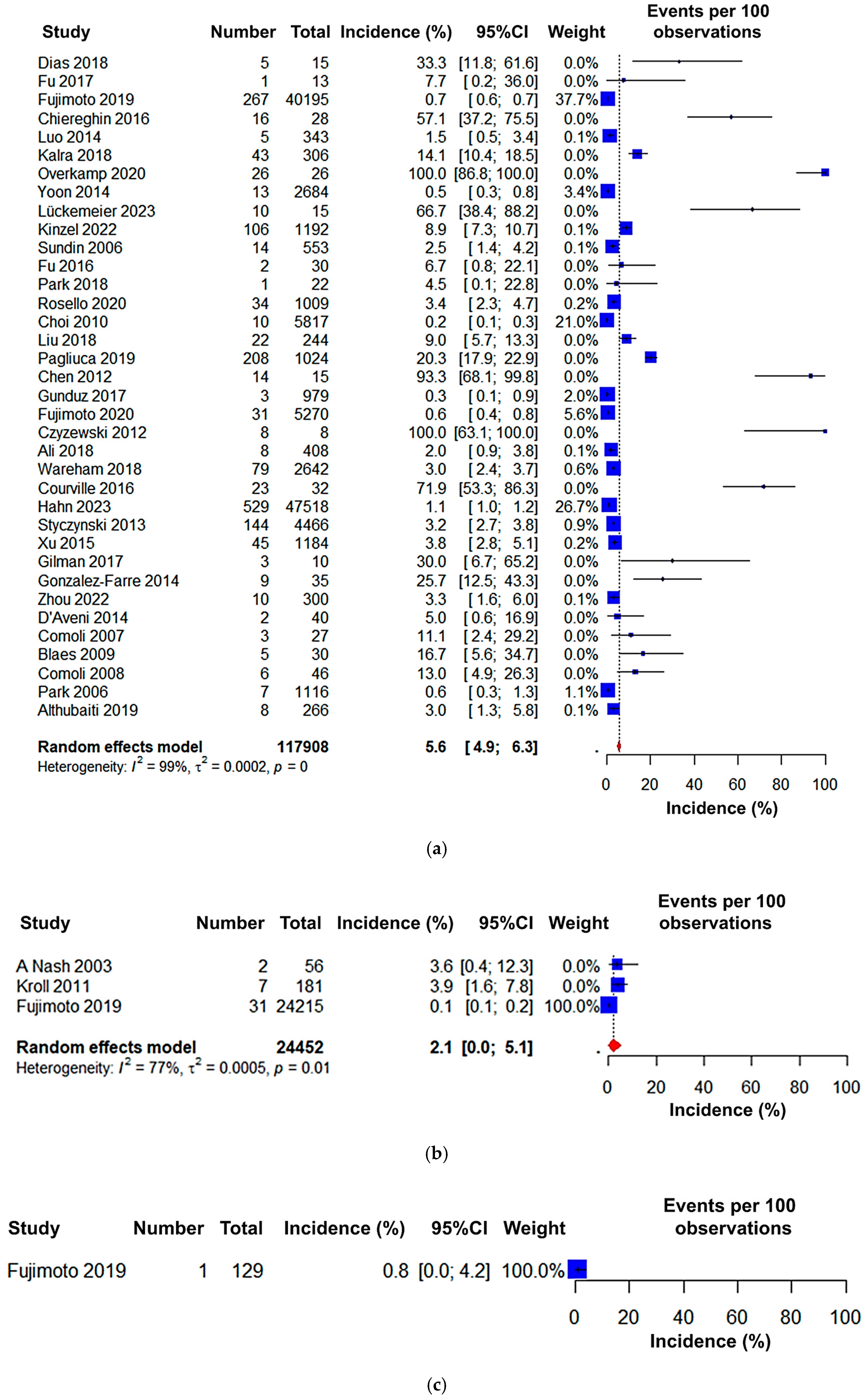

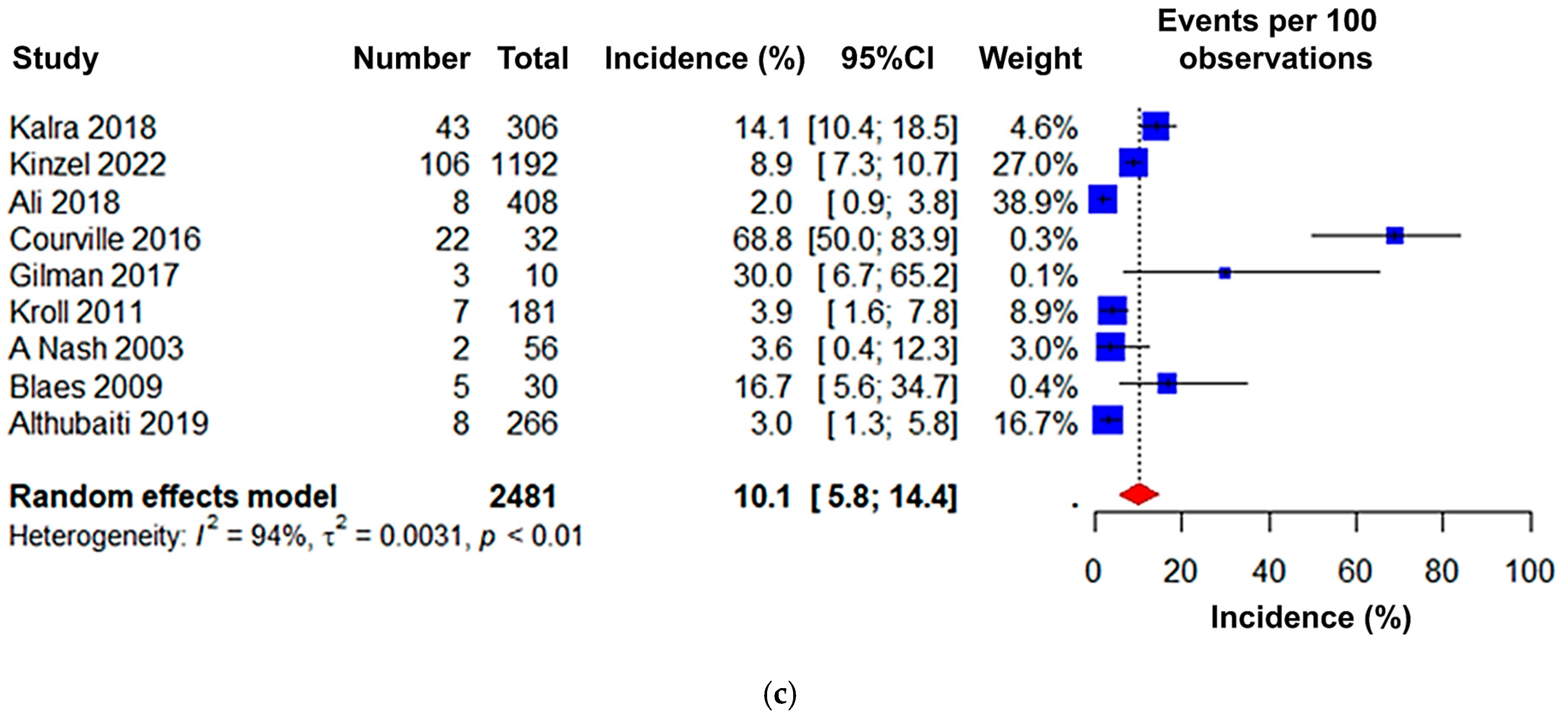



| Study ID | Study Type | HSCT Participants | Male | Female | Patient Age (Y) (Median Range) | HSCT Types | PTLD Types | Region | Reference |
|---|---|---|---|---|---|---|---|---|---|
| Dias 2018 | Cross-sectional study | 15 | 7 | 8 | NR | Allogeneic | M-PTLD, P-PTLD | Portugal | [17] |
| Fu 2017 | Cross-sectional study | 13 | 9 | 4 | NR (18–46) | Allogeneic | M-PTLD | India | [18] |
| Fujimoto 2019 | Cohort study | 64,539 | NR | NR | NR | Autologous, Allogeneic, Syngeneic | NR | Japan | [19] |
| Chiereghin 2016 | Cohort study | 28 | 20 | 8 | NR | Allogeneic | EBV-PTLD | Italy | [20] |
| Luo 2014 | Cross-sectional study | 343 | 260 | 83 | NR | Allogeneic | NR | China | [21] |
| Kalra 2018 | Cross-sectional study | 306 | NR | NR | NR | Allogeneic | NR | Canada | [22] |
| Overkamp 2020 | Cohort study | 26 | NR | NR | NR | Allogeneic | M-PTLD, P-PTLD, CHL-PTLD, | Germany | [23] |
| Yoon 2014 | Cohort study | 2684 | NR | NR | 26 (NR) | Allogeneic | M-PTLD, P-PTLD, PH-PTLD | South Korea | [24] |
| Lückemeier 2023 | Cohort study | 15 | 11 | 4 | NR (32–67) | Allogeneic | M-PTLD, P-PTLD, CHL-PTLD | Switzerland | [25] |
| Kinzel 2022 | Cohort study | 1192 | 674 | 518 | 45 (NR) | Allogeneic | M-PTLD, P-PTLD, | Canada | [26] |
| Sundin 2006 | Cohort study | 553 | NR | NR | NR | Allogeneic | EBV-PTLD | Sweden | [27] |
| Fu 2016 | Cross-sectional study | 30 | 19 | 11 | 23 (14–52) | Allogeneic | M-PTLD, P-PTLD | China | [28] |
| Park 2018 | Cross-sectional study | 22 | 11 | 11 | 9 (1.6–16.9) | Allogeneic | EBV-PTLD | Korea | [29] |
| Rosello 2021 | Cohort study | 1009 | 597 | 412 | 41 (14–70) | Allogeneic | M-PTLD, P-PTLD | Spain | [30] |
| Choi 2010 | Cross-sectional study | 5817 | NR | NR | 42.6 (24–60) | Allogeneic | M-PTLD, P-PTLD | Korea | [31] |
| Liu 2018 | Cross-sectional study | 244 | NR | NR | NR | Allogeneic | NR | China | [32] |
| Pagliuca 2019 | Cross-sectional study | 1024 | NR | NR | 42.5 (8.3–74.7) | Allogeneic | EBV-PTLD, M-PTLD, P-PTLD | France | [33] |
| Watson 2020 | Cohort study | 92 | NR | NR | 47.1 (17–75) | Autologous, Allogeneic | NR | USA | [34] |
| Chen 2012 | Cross-sectional study | 15 | 12 | 3 | 31 (9–60) | Allogeneic | M-PTLD, P-PTLD, PH-PTLD, EL-PTLD | China | [35] |
| Gunduz 2017 | Cohort study | 979 | NR | NR | 33 (5–71) | Allogeneic | CHL-PTLD | Turkey | [36] |
| Fujimoto 2020 | Cohort study | 5270 | 3193 | 2077 | 47 (16–88) | Allogeneic | NR | Japan | [37] |
| Czyzewski 2012 | Cross-sectional study | 8 | NR | NR | 16 (5–19) | Allogeneic | EBV- PTLD, M-PTLD, P-PTLD | Poland | [38] |
| Ali 2018 | Cross-sectional study | 408 | NR | NR | 5.9 (2.3–17.3) | Allogeneic | EBV- PTLD, M-PTLD, P-PTLD | Canada | [39] |
| Wareham 2018 | Cohort study | 2642 | 1581 | 1061 | 42.9 (17–35) | Allogeneic | EBV-PTLD | Denmark | [40] |
| Courville 2016 | Cross-sectional study | 32 | 19 | 13 | 44 (3–72) | Allogeneic | M-PTLD, P-PTLD | USA | [41] |
| Hahn 2023 | Cohort study | 47,518 | 29,528 | 17,990 | 5.32 (10–60) | Allogeneic | NR | Korea | [42] |
| Styczynski 2013 | Cross-sectional study | 4466 | NR | NR | 30 (10–68) | Allogeneic | EBV- PTLD | Poland | [43] |
| Xu 2015 | Cohort study | 1184 | NR | NR | 27 (3–49) | Allogeneic | NR | China | [44] |
| Gilman 2017 | Cross-sectional study | 10 | NR | NR | 47 (19–71) | Allogeneic | EBV- PTLD, M-PTLD, P-PTLD, PH-PTLD | Netherlands | [45] |
| Gonzalez-Farre 2014 | Cross-sectional study | 35 | 26 | 9 | 54 (26–77) | Allogeneic | P-PTLD, PH-PTLD, CHL-PTLD | Spain | [46] |
| Kroll 2011 | Cross-sectional study | 181 | NA | NA | 55 (37–73) | Autologous | EBV-PTLD | USA | [47] |
| Zhou 2022 | Cohort study | 300 | 184 | 116 | 28 (NR) | Allogeneic | EBV-PTLD | China | [48] |
| D’Aveni 2014 | Cohort study | 40 | 20 | 20 | 30 (NR) | Allogeneic | EBV-PTLD | France | [49] |
| A Nash 2003 | Cross-sectional study | 56 | 21 | 35 | 42 (NR) | Autologous | EBV-PTLD | USA | [50] |
| Comoli 2007 | Cross-sectional study | 27 | 15 | 12 | 8 (NR) | Allogeneic | EBV-PTLD | Italy | [51] |
| Blaes 2009 | Cohort study | 30 | NR | NR | 55 (NR) | Allogeneic | EBV-PTLD | USA | [52] |
| Comoli 2007 | Cross-sectional study | 46 | NR | NR | NR | Allogeneic | EBV-PTLD | Italy | [53] |
| Park 2006 | Cohort study | 1116 | NR | NR | NR (17–45) | Allogeneic | EBV-PTLD | Korea | [54] |
| Althubaiti 2019 | Cohort study | 266 | NR | NR | NR | Allogeneic | EBV-PTLD | Canada | [55] |
| SL | Study ID | Reference | 1 | 2 | 3 | 4 | 5 | 6 | 7 | 8 | 9 | Overall Score (%) |
|---|---|---|---|---|---|---|---|---|---|---|---|---|
| 1 | Dias 2018 | [17] | Y | Y | Y | Y | Y | Y | Y | Y | N | 88.89% |
| 2 | Fu 2017 | [18] | Y | Y | Y | Y | Y | Y | Y | Y | Y | 100% |
| 3 | Fujimoto 2019 | [19] | Y | Y | Y | Y | Y | Y | Y | Y | Y | 100% |
| 4 | Chiereghin 2016 | [20] | Y | Y | Y | Y | Y | Y | N | N | Y | 77.78% |
| 5 | Luo 2014 | [21] | Y | Y | Y | Y | Y | Y | Y | Y | Y | 100% |
| 6 | Kalra 2018 | [22] | Y | Y | Y | N | Y | Y | Y | Y | N | 77.78% |
| 7 | Overkamp 2020 | [23] | Y | Y | Y | N | Y | Y | Y | Y | Y | 88.89% |
| 8 | Yoon 2014 | [24] | Y | Y | Y | Y | Y | Y | Y | Y | N | 88.89% |
| 9 | Lückemeier 2023 | [25] | Y | Y | Y | N | Y | Y | Y | Y | N | 77.78% |
| 10 | Kinzel 2022 | [26] | Y | Y | Y | Y | Y | Y | Y | Y | Y | 100% |
| 11 | Sundin 2006 | [27] | Y | Y | Y | Y | Y | Y | Y | Y | Y | 100% |
| 12 | Fu 2016 | [28] | Y | Y | Y | Y | Y | Y | Y | Y | Y | 100% |
| 13 | Park 2018 | [29] | Y | Y | Y | Y | Y | Y | Y | Y | Y | 100% |
| 14 | Rosello 2021 | [30] | Y | Y | Y | Y | Y | Y | Y | Y | Y | 100% |
| 15 | Choi 2010 | [31] | Y | Y | Y | Y | Y | Y | Y | Y | N | 88.89% |
| 16 | Liu 2018 | [32] | Y | Y | Y | Y | Y | Y | Y | Y | Y | 100% |
| 17 | Pagliuca 2019 | [33] | Y | Y | Y | Y | Y | Y | Y | Y | Y | 100% |
| 18 | Watson 2020 | [34] | Y | Y | Y | Y | Y | Y | Y | Y | Y | 100% |
| 19 | Chen 2012 | [35] | Y | Y | Y | N | Y | Y | N | N | Y | 66.67% |
| 20 | Gunduz 2017 | [36] | Y | Y | Y | Y | Y | Y | Y | Y | Y | 100% |
| 21 | Fujimoto 2020 | [37] | Y | Y | Y | Y | Y | Y | Y | Y | Y | 100% |
| 22 | Czyzewski 2012 | [38] | Y | Y | Y | N | Y | Y | N | N | N | 55.55% |
| 23 | Ali 2018 | [39] | Y | Y | Y | Y | Y | Y | Y | Y | N | 88.89% |
| 24 | Wareham 2018 | [40] | Y | Y | Y | Y | Y | Y | Y | Y | N | 88.89% |
| 25 | Courville 2016 | [41] | Y | Y | Y | Y | Y | Y | Y | Y | N | 88.89% |
| 26 | Hahn 2023 | [42] | Y | Y | Y | Y | Y | Y | Y | Y | N | 88.89% |
| 27 | Styczynski 2013 | [43] | Y | Y | Y | Y | Y | Y | Y | Y | Y | 100% |
| 28 | Xu 2015 | [44] | Y | Y | Y | Y | Y | Y | Y | Y | N | 88.89% |
| 29 | Gilman 2017 | [45] | Y | Y | Y | Y | Y | Y | Y | Y | Y | 100% |
| 30 | Gonzalez-Farre 2014 | [46] | Y | Y | Y | Y | Y | Y | Y | Y | N | 88.89% |
| 31 | Kroll 2011 | [47] | Y | Y | Y | Y | Y | Y | Y | Y | N | 88.89% |
| 32 | Zhou 2022 | [48] | Y | Y | Y | Y | Y | Y | Y | Y | Y | 100% |
| 33 | D’Aveni 2014 | [49] | Y | Y | Y | Y | Y | Y | N | N | N | 66.67% |
| 34 | A Nash 2003 | [50] | Y | Y | Y | Y | Y | Y | Y | Y | Y | 100% |
| 35 | Comoli 2007 | [51] | Y | Y | Y | Y | Y | Y | Y | Y | N | 88.89% |
| 36 | Blaes 2009 | [52] | Y | Y | Y | Y | Y | Y | Y | Y | N | 88.89% |
| 37 | Comoli 2007 | [53] | Y | Y | Y | Y | Y | Y | Y | Y | N | 88.89% |
| 38 | Park 2006 | [54] | Y | Y | Y | Y | Y | Y | Y | Y | N | 88.89% |
| 39 | Althubaiti 2019 | [55] | Y | Y | Y | N | Y | Y | Y | Y | Y | 88.89% |
Disclaimer/Publisher’s Note: The statements, opinions and data contained in all publications are solely those of the individual author(s) and contributor(s) and not of MDPI and/or the editor(s). MDPI and/or the editor(s) disclaim responsibility for any injury to people or property resulting from any ideas, methods, instructions or products referred to in the content. |
© 2026 by the authors. Licensee MDPI, Basel, Switzerland. This article is an open access article distributed under the terms and conditions of the Creative Commons Attribution (CC BY) license.
Share and Cite
Khandker, S.S.; Pranto, A.H.; Juthy, A.R.; Zaman, M.; Sarkar, A.; Sen, D.; Islam, D.Z.; Suez, E.; Islam, M.A. Global Epidemiology of Post-Transplant Lymphoproliferative Disorder (PTLD) in Hematopoietic Stem Cell Transplantation (HSCT): A Systematic Review and Meta-Analysis of Incidence, Subtypes, Risk Factors, and Beyond. J. Clin. Med. 2026, 15, 3867. https://doi.org/10.3390/jcm15103867
Khandker SS, Pranto AH, Juthy AR, Zaman M, Sarkar A, Sen D, Islam DZ, Suez E, Islam MA. Global Epidemiology of Post-Transplant Lymphoproliferative Disorder (PTLD) in Hematopoietic Stem Cell Transplantation (HSCT): A Systematic Review and Meta-Analysis of Incidence, Subtypes, Risk Factors, and Beyond. Journal of Clinical Medicine. 2026; 15(10):3867. https://doi.org/10.3390/jcm15103867
Chicago/Turabian StyleKhandker, Shahad Saif, Alif Hasan Pranto, Afrin Rahman Juthy, Mariam Zaman, Argha Sarkar, Druphadi Sen, Dewan Zubaer Islam, Ehsan Suez, and Md Asiful Islam. 2026. "Global Epidemiology of Post-Transplant Lymphoproliferative Disorder (PTLD) in Hematopoietic Stem Cell Transplantation (HSCT): A Systematic Review and Meta-Analysis of Incidence, Subtypes, Risk Factors, and Beyond" Journal of Clinical Medicine 15, no. 10: 3867. https://doi.org/10.3390/jcm15103867
APA StyleKhandker, S. S., Pranto, A. H., Juthy, A. R., Zaman, M., Sarkar, A., Sen, D., Islam, D. Z., Suez, E., & Islam, M. A. (2026). Global Epidemiology of Post-Transplant Lymphoproliferative Disorder (PTLD) in Hematopoietic Stem Cell Transplantation (HSCT): A Systematic Review and Meta-Analysis of Incidence, Subtypes, Risk Factors, and Beyond. Journal of Clinical Medicine, 15(10), 3867. https://doi.org/10.3390/jcm15103867