1. Introduction
Type 1 diabetes mellitus (T1DM) is a chronic autoimmune disease characterized by the destruction of pancreatic β-cells, resulting in absolute insulin deficiency and lifelong dependence on exogenous insulin therapy [
1]. Despite advances in diabetes management, long-term complications remain a major cause of morbidity. Among these, diabetic retinopathy (DR) represents one of the most serious microvascular complications and is a leading cause of visual impairment and blindness in individuals with diabetes. Visual loss related to DR may result from macular edema, vitreous hemorrhage, retinal detachment, and neovascular glaucoma [
2,
3,
4,
5]. The risk of developing DR increases significantly with longer disease duration and poor metabolic control [
6].
Globally, diabetic retinopathy is one of the principal causes of vision loss among adults and continues to pose a substantial public health burden [
2,
3,
4]. In addition, as the incidence of diabetes, including T1DM, continues to rise rapidly, Saudi Arabia is expected to face further healthcare challenges. Given that Saudi Arabia has one of the highest diabetes rates worldwide, diabetes-related complications, particularly diabetic retinopathy, require urgent attention [
7].
Diabetic retinopathy (DR) is a complex multifactorial complication influenced by several systemic and ocular risk factors. A recent Cochrane review evaluated prognostic factors for the development and progression of proliferative diabetic retinopathy (PDR) among individuals with pre-existing DR. The review found that increased glycated hemoglobin (HbA1c) levels and more advanced baseline DR severity were likely associated with a higher risk of progression to PDR in patients with T1DM and type 2 diabetes mellitus (T2DM). Renal impairment in individuals with T1DM or T2DM, as well as younger age at diabetes diagnosis, increased triglyceride levels, and larger retinal venular diameters among individuals with T1DM, may also be associated with an increased risk of progression to PDR [
8]. These findings support the importance of early DR detection, adequate glycemic control, and management of systemic risk factors to reduce the risk of sight-threatening disease.
Similarly, recent T1DM-specific evidence has emphasized the importance of diabetes duration, poor glycemic control, younger age at diabetes onset, and irregular ophthalmologic examinations in the development of proliferative diabetic retinopathy, supporting the need for structured screening and risk stratification in this population [
9]. Moreover, a local study conducted at a diabetes healthcare facility in Saudi Arabia included 502 patients with diabetes mellitus, of whom 174 had T1DM. Logistic regression analysis identified nephropathy, insulin use, longer diabetes duration (>10 years), poor glycemic control, and older age (>60 years) as major risk factors for DR. Long-standing diabetes was the strongest independent predictor of retinopathy development, while nephropathy was strongly associated with disease severity [
10]. More recently, a Saudi systematic review and meta-analysis reported a substantial burden of DR in Saudi Arabia and identified longer diabetes duration, poor glycemic control, obesity, and hypertension as important predictors, further highlighting the need for local evidence to guide screening and prevention strategies [
11]. Overall, these findings emphasize the close relationship between microvascular complications and systemic disease burden in patients with diabetes.
In parallel, recent advances in retinal imaging have expanded opportunities for earlier detection and image-based classification of diabetic retinopathy. Wang et al. demonstrated the potential role of hyperspectral imaging combined with image-processing and principal component analysis techniques in identifying diabetic retinopathy-related retinal vascular changes and distinguishing disease stages [
12]. However, these imaging-based approaches still require integration with clinically relevant and locally validated risk profiles to identify patients who may benefit from intensified surveillance.
Despite the growing body of international and regional research, the available evidence remains partly limited by differences in population characteristics, diabetes type, study design, screening methods, and healthcare settings. Much of the international evidence is derived from non-Saudi populations, mixed diabetes cohorts, or screening-based datasets, which may differ from local patients with T1DM in demographic structure, age at disease onset, systemic comorbidity burden, referral patterns, and access to ophthalmic care. In Saudi Arabia, available studies have mainly reported diabetic retinopathy prevalence and associated risk factors in mixed diabetes populations or type 2 diabetes mellitus-focused cohorts. However, local ophthalmology-focused data specifically evaluating DR incidence, vision-threatening diabetic retinopathy, proliferative diabetic retinopathy severity patterns, and independent clinical predictors among patients with T1DM remain limited.
Region-specific data are therefore essential to better understand disease patterns, support risk stratification, and optimize preventive strategies. Accordingly, the present study aims to determine the incidence of diabetic retinopathy among patients with T1DM and to identify associated demographic and clinical risk factors in a tertiary care center in Riyadh, Saudi Arabia. In addition, this study evaluates clinical and demographic characteristics and their association with the development and progression of DR. By providing locally relevant evidence, this research aims to support early detection strategies, improve patient management, and inform healthcare planning to reduce the burden of diabetic retinopathy in Saudi Arabia.
2. Materials and Methods
2.1. Study Design and Setting
The current study employed a retrospective cohort design to evaluate risk factors associated with the development and progression of diabetic retinopathy (DR) among patients with type 1 diabetes mellitus (T1DM). This study was conducted at the Department of Ophthalmology, King Abdulaziz Medical City (KAMC), Riyadh, Saudi Arabia, a leading tertiary care center serving National Guard Health Affairs (NGHA) beneficiaries. Data were systematically extracted from BESTCare 2.0A, the hospital’s integrated electronic medical record system, including relevant clinical and ophthalmic records. This study included patients who were followed between 2015 and 2025.
2.2. Participants and Selection Criteria
The study population consisted of patients diagnosed with T1DM who received care at KAMC. Using a consecutive non-probability sampling method, participants were included if they were aged 9 years or older, had a confirmed diagnosis of T1DM, and had complete electronic medical records, including at least one documented ophthalmic examination. All included participants had T1DM; therefore, the control group did not consist of healthy individuals. Controls were defined as patients with T1DM who had no documented evidence of diabetic retinopathy, including diabetic macular edema, on ophthalmic examination. Cases were defined as patients with T1DM who had documented diabetic retinopathy, including diabetic macular edema. Patients were excluded if their medical records were incomplete or lacked critical laboratory data, such as HbA1c levels.
2.3. Ethical Approval
This study was approved by the Institutional Review Board of King Abdullah International Medical Research Center (KAIMRC), Ministry of National Guard Health Affairs, Riyadh, Saudi Arabia (protocol code: NRC23R/861/12; approval date: 26 March 2024). This study was conducted in accordance with the Declaration of Helsinki and applicable institutional and national research ethics regulations. The period from 2015 to 2025 refers to the historical timeframe of the clinical records reviewed. All active research procedures, including BESTCare 2.0A data extraction and structured telephone confirmation of selected variables, such as smoking status and family history, were conducted only after IRB approval. The requirement for written informed consent was waived due to the retrospective nature of the study; however, verbal informed consent was obtained from patients before proceeding with the telephone interview. The telephone-based data collection procedures were conducted as part of the IRB-approved study protocol.
2.4. Variables and Measurement
The primary outcome of this study was the development and progression of diabetic retinopathy (DR). All participants underwent complete, standardized ophthalmic examinations at least once per year, with more frequent evaluations for those at high risk of visual decline.
The stages of DR and diabetic macular edema (DME) were determined according to the International Clinical Diabetic Retinopathy Severity Scale [
13]. Participants were categorized into three analytical groups: controls with no DR, non-vision-threatening diabetic retinopathy (NVTDR), and vision-threatening diabetic retinopathy (VTDR). NVTDR was defined as mild or moderate non-proliferative DR (NPDR) or DME distant from the fovea. VTDR was defined by the presence of severe NPDR, corresponding to the 4-2-1 rule, proliferative DR (PDR), or DME with hard exudates approaching or involving the fovea [
13].
Systemic clinical variables and comorbidities were identified using standardized diagnostic cut-offs and verified medical records within the BESTCare 2.0A system. Hypertension was defined as a recorded systolic blood pressure ≥ 130 mmHg or diastolic blood pressure ≥ 80 mmHg on two or more separate clinical visits, concurrent use of antihypertensive medications, or a documented diagnosis in the system notes [
14]. Hyperlipidemia was defined using ATP III lipid classification thresholds as total cholesterol > 5.2 mmol/L (>200 mg/dL), LDL cholesterol > 3.4 mmol/L (>130 mg/dL), triglycerides ≥ 1.7 mmol/L (≥150 mg/dL), or a documented diagnosis requiring lipid-lowering therapy [
15]. Albuminuria was defined as a persistent albumin-to-creatinine ratio (ACR) ≥ 30 mg/g, a 24 h urine albumin level ≥ 30 mg, or a documented diagnosis of diabetic nephropathy [
16]. Body mass index (BMI) was calculated as weight (kg)/height (m
2), with obesity defined as BMI ≥ 30.0 kg/m
2 [
17].
Glycemic status was evaluated using the mean of the latest five consecutive available glycated hemoglobin (HbA1c) readings for controls and five consecutive available HbA1c readings obtained within approximately one year around the date of DR diagnosis for cases, rather than exclusively after diagnosis. Glycemic variability was quantified using the standard deviation (SD) and coefficient of variation (CV) of these readings [
18].
Smoking status was categorized based on self-reported active use at the time of assessment or documented status in the patient’s medical record. Family history of diabetes was defined as a confirmed diagnosis of type 1 diabetes, type 2 diabetes, or both in first-degree relatives, as reported by the patient during the telephone interview or noted in the clinical history.
2.5. Bias and Study Size
The sample size was initially calculated using a standard sample size formula based on a 95% confidence level, a 5% margin of error, and an expected proportion of 50%, yielding a minimum required sample size of 377 participants. The final analysis included a larger cohort of 449 patients, comprising 268 controls and 181 cases, which improved the precision of the estimates and allowed comparison of risk factors between groups.
Several measures were taken to minimize potential sources of bias and support the internal validity of the findings. Selection bias was reduced by using consecutive non-probability sampling and applying predefined inclusion and exclusion criteria based on data available in the BESTCare 2.0A electronic medical record system. To reduce recall bias for subjective variables, such as smoking status and family history, a structured telephone interview protocol was used, and patient responses were cross-verified with existing medical record documentation whenever available. Information bias was minimized by using objective, laboratory-verified data for clinical variables and by calculating the means of several HbA1c readings to reduce the influence of short-term fluctuations. Finally, patients with incomplete ophthalmic examinations or missing core laboratory data were excluded from the final cohort to maintain data completeness and integrity.
2.6. Statistical Analysis
Statistical analysis was performed using the Statistical Package for the Social Sciences (SPSS), version 23.0 (IBM Corp., Armonk, NY, USA). The normality of continuous variables was assessed using the Shapiro–Wilk test. Normally distributed continuous variables were presented as mean ± standard deviation and compared using one-way analysis of variance (ANOVA), whereas non-normally distributed variables were presented as median and interquartile range (IQR) and compared using the Kruskal–Wallis test. Categorical variables were expressed as frequencies and percentages, and group differences were evaluated using the chi-square test or Fisher’s exact test, as appropriate.
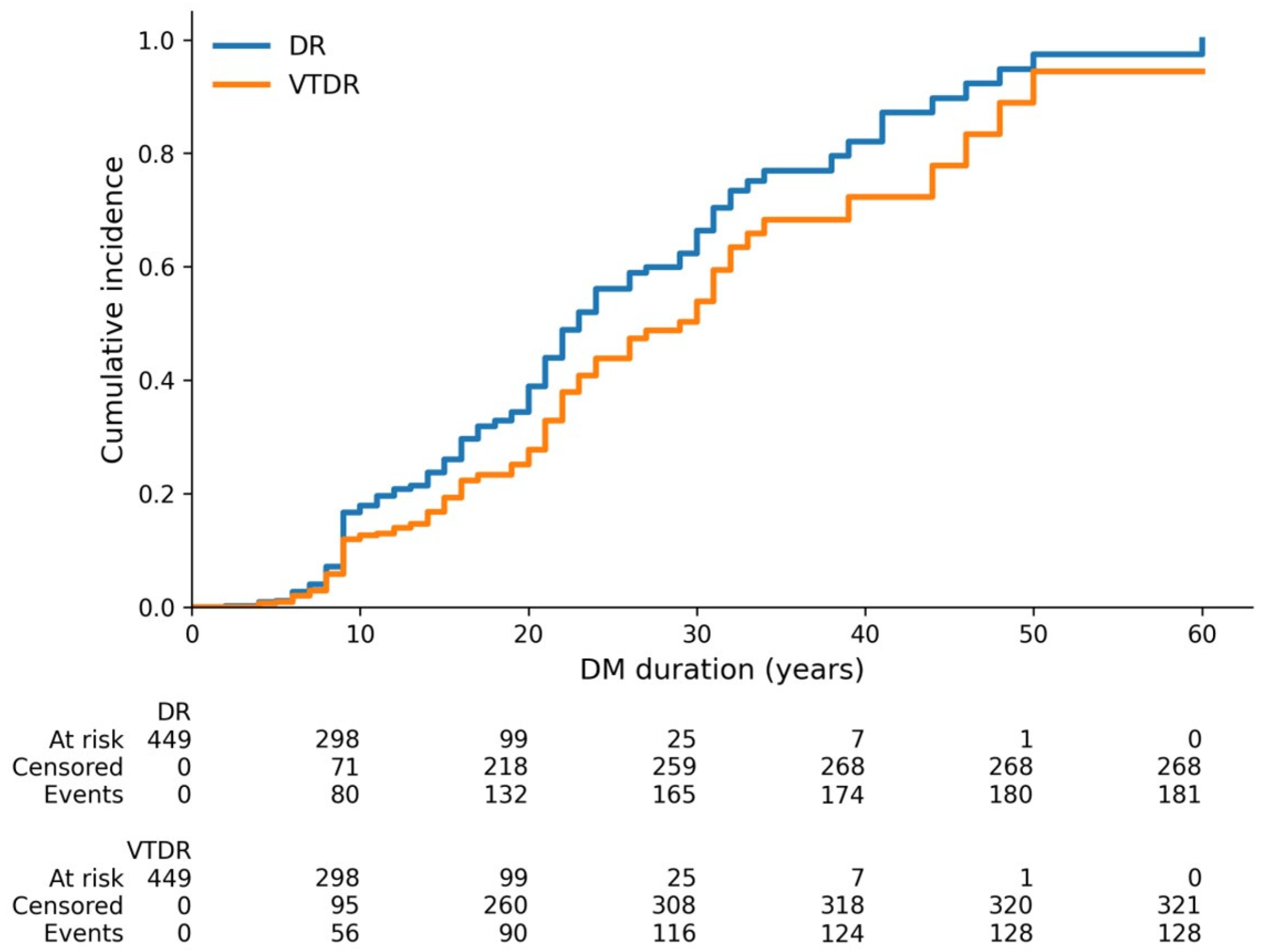
To identify independent risk factors, multivariable logistic regression models were constructed. The primary logistic regression model evaluated factors independently associated with diabetic retinopathy by comparing cases with controls. A secondary logistic regression model evaluated factors associated with vision-threatening diabetic retinopathy compared with non-vision-threatening diabetic retinopathy among cases. Cox proportional hazards models were used as complementary time-to-event analyses to estimate the hazard of developing diabetic retinopathy and vision-threatening diabetic retinopathy from the time of T1DM diagnosis to the first documented ophthalmic outcome, or to the most recent eye examination for patients who did not develop the outcome. Because diabetes duration formed part of the underlying time-to-event structure, it was not included as an independent covariate in the Cox models.
To reduce redundancy in the main manuscript, additional logistic regression models using categorized clinical variables, including glycated hemoglobin and body mass index categories, are presented in
Appendix A,
Table A1. The proliferative diabetic retinopathy versus non-proliferative diabetic retinopathy model was retained in the main manuscript as an exploratory severity analysis among patients with diabetic retinopathy. Complete-case analysis was applied separately for each analysis; therefore, denominators may differ between baseline characteristics, regression models, incidence analyses, and graphical summaries depending on the availability of the required variables. Incidence rates were calculated based on person-years of follow-up, with confidence intervals estimated assuming a Poisson distribution.
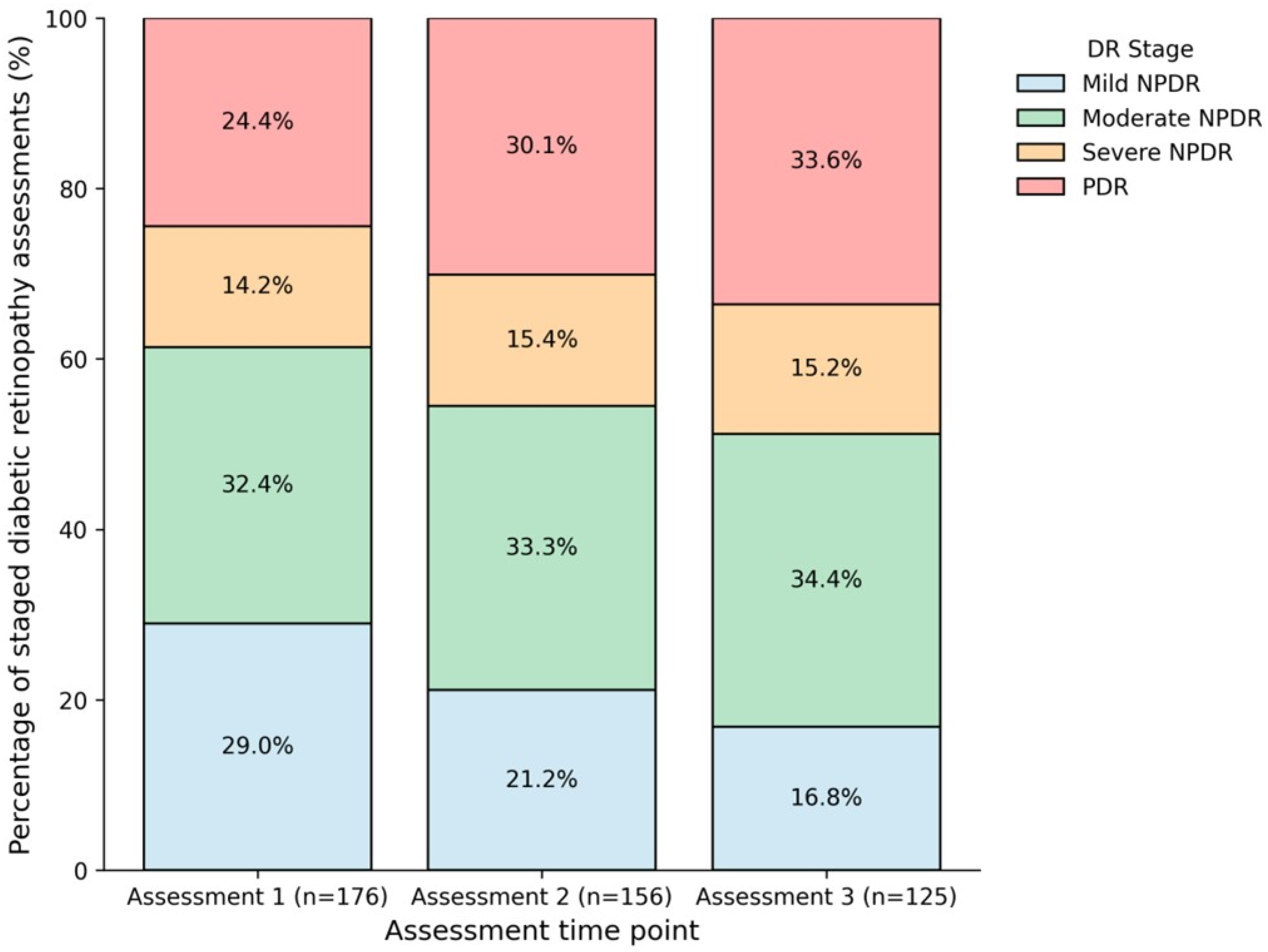
Temporal trend analysis was conducted across three sequential available ophthalmic assessment points. Because not all patients had complete data at each assessment, this analysis was interpreted as an exploratory evaluation of the observed distribution of diabetic retinopathy stages among available records, rather than as a fixed-cohort longitudinal progression analysis. The Cochran–Armitage trend test was applied to assess ordered temporal changes across assessment points, with results interpreted in light of the varying numbers of available staged assessments at each time point. All statistical tests were two-sided, and a p-value < 0.05 was considered statistically significant.
4. Discussion
The incidence and risk factors of diabetic retinopathy (DR) among patients with type 1 diabetes mellitus (T1DM) in a tertiary care facility in Riyadh, Saudi Arabia, provide important region-specific data. The incidence rate of DR was 92.66 per 1000 person-years, with similar rates observed among males and females, suggesting that gender may not have an independent impact on the development of DR in this population. This finding is consistent with previous studies showing that gender differences in DR risk are often minimal after adjustment for metabolic and systemic factors [
8,
19].
One of the key findings of this study was the significant association between older age at T1DM diagnosis and the development of DR. In the multivariable logistic regression model, each one-year increase in age at T1DM diagnosis was independently associated with higher odds of DR (OR = 1.08, 95% CI 1.05–1.11,
p < 0.0001), and this association was further supported by the Cox proportional hazards models for both DR and VTDR. This finding is consistent with Schreur et al., who reported that older age at onset of T1DM was independently associated with faster development of DR. They suggested that this association may be partly explained by age-related retinal vulnerability, whereby physiological aging of the retina may contribute to microvascular damage independently of hyperglycemia. Such age-related changes may include increased retinal vascular leakage, reduced retinal pigment epithelial integrity, and inflammatory changes within the aging retina, potentially making patients diagnosed at an older age more susceptible to diabetic retinal complications [
20].
However, this finding should be distinguished from severity-related analyses. In our exploratory multivariable logistic regression analysis among patients who had already developed DR, younger age at T1DM diagnosis was significantly associated with higher odds of PDR compared with NPDR (OR = 0.96 per year, 95% CI 0.94–0.99,
p = 0.006). This suggests that while older age at diagnosis may be related to the development of any DR in the overall cohort, younger age at diagnosis may be associated with a more advanced proliferative type among affected patients. This distinction is broadly consistent with Hietala et al., who focused specifically on the long-term risk of proliferative retinopathy and found that age at onset significantly modified the risk of PDR, with the highest risk observed among patients diagnosed between 5 and 14 years of age and the lowest risk among those diagnosed between 15 and 40 years [
6]. Therefore, these findings should not be viewed as contradictory, as age at T1DM diagnosis may have different implications depending on whether the outcome is the development of any DR or the presence of advanced proliferative disease. Given the exploratory nature of the PDR analysis, this severity-related association should be interpreted cautiously and considered hypothesis-generating rather than evidence of an independent causal relationship.
The control group was younger than the case group (DR group), which likely reflects the natural history of diabetic retinopathy in T1DM, where retinal complications become more frequent with increasing age and cumulative disease exposure. This age imbalance was not due to intentional selection of younger controls but resulted from the real-world distribution of patients without DR in the retrospective cohort. Because age may influence glycemic, lipid, and systemic risk profiles, age-related and disease duration variables, including age at T1DM diagnosis and diabetes duration, were incorporated into the multivariable models. Nevertheless, residual confounding related to age cannot be fully excluded and should be considered when interpreting the findings.
Another major predictor of DR in our study was diabetes duration. Given the cumulative exposure of the retinal microvasculature to chronic hyperglycemia, logistic regression showed a higher probability of DR with longer diabetes duration, which is biologically plausible. This finding is supported by previous worldwide and regional studies that consistently identified disease duration as one of the main predictors of DR progression [
6,
8,
10,
21].
Hypertension, hyperlipidemia, and albuminuria were identified as significant independent predictors of DR among systemic comorbidities. The strongest association was observed with albuminuria (OR = 3.79), while patients with hypertension had an approximately 3.7-fold higher risk of developing DR. These results highlight the close relationship between systemic vascular dysfunction and retinal microvascular damage. Previous research has repeatedly shown that hypertension and nephropathy significantly increase the likelihood and severity of retinopathy [
8,
10,
22].
Given that both conditions reflect widespread diabetes-related microvascular endothelial damage, the association between albuminuria and DR is biologically plausible and clinically meaningful. A strong parallel progression of diabetic nephropathy and retinopathy has been shown in previous studies [
8,
10]. Our findings support this relationship and suggest that albuminuria may serve as a useful clinical marker for identifying patients at high risk for retinal complications.
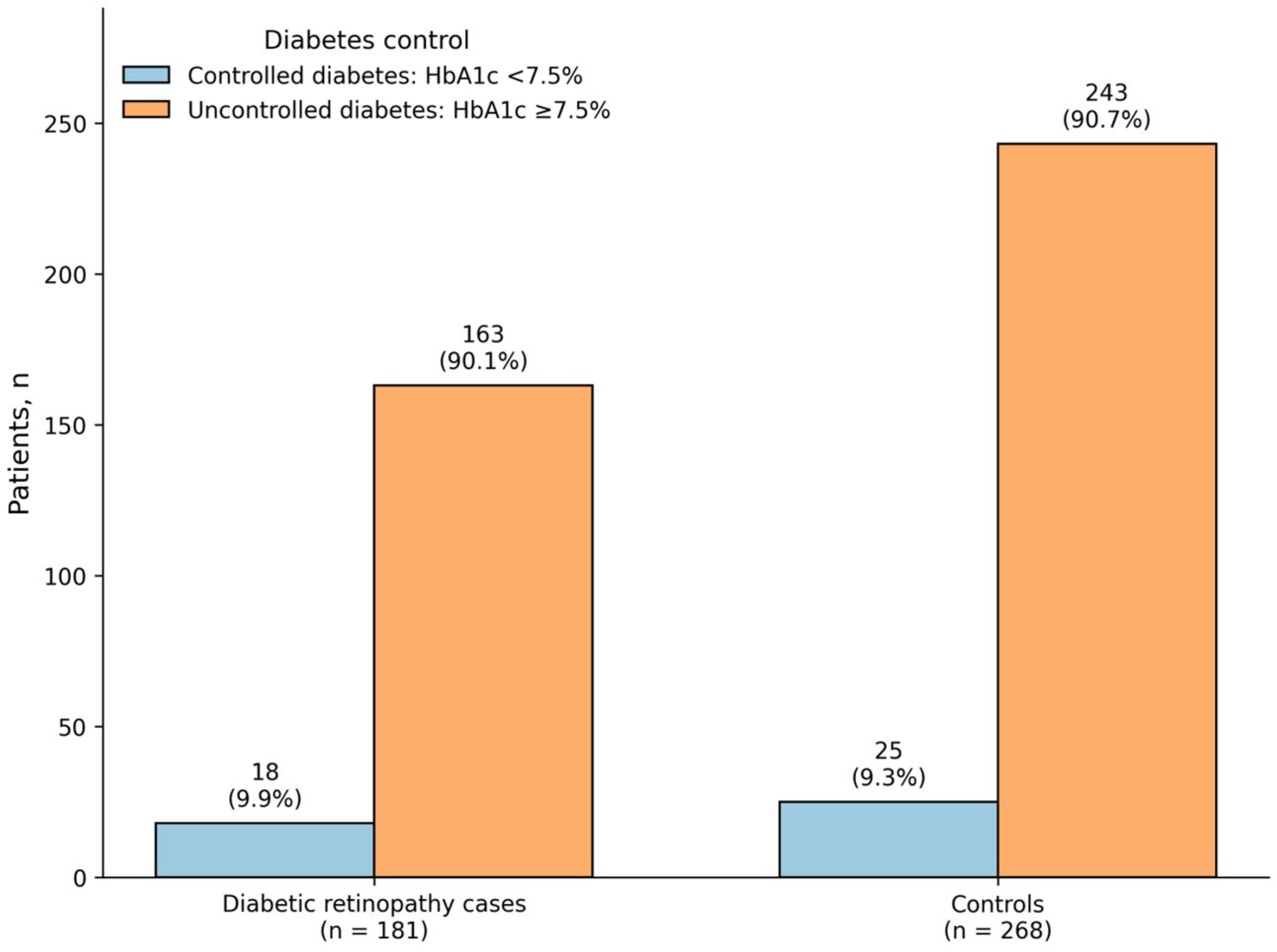
Interestingly, mean HbA1c was not independently associated with DR after multivariable adjustment, despite being a well-established risk factor in landmark studies [
6,
8,
21]. Several factors may explain this finding. First, HbA1c levels were poor in both cases and controls, which may have restricted the range of values and reduced the ability to detect an independent effect. Second, the inclusion of common systemic comorbidities, such as hypertension, hyperlipidemia, and albuminuria, may have attenuated the independent association between mean HbA1c and DR in the adjusted analyses. Third, although HbA1c was summarized using five consecutive available readings, these values may not fully capture cumulative lifetime glycemic exposure, the long-term effects of earlier glycemic exposure, or glycemic fluctuations throughout the entire duration of diabetes. Therefore, the absence of an independent association between mean HbA1c and DR in this study should not be interpreted as evidence that glycemic control is not important. However, HbA1c variability was significantly higher in patients with VTDR at baseline, suggesting a possible association between glycemic instability and more severe retinopathy, although this relationship was not maintained after adjustment. This supports previous evidence suggesting that glycemic fluctuations may contribute to oxidative stress and endothelial injury beyond average glucose burden alone [
18,
23].
The high frequency of obesity and dyslipidemia among patients with DR is another noteworthy observation. Although obesity was not statistically significant after adjustment, its significantly higher frequency among cases raises the possibility that related metabolic syndrome pathways may contribute to disease development. Nevertheless, the role of obesity as an independent risk factor for diabetic retinopathy in T1DM remains uncertain, with prior studies showing conflicting findings [
8,
24].
The temporal trend analysis showed a statistically significant change in the observed distribution of diabetic retinopathy stages across the three sequential available ophthalmic assessments. However, this finding should be interpreted cautiously because the number of patients assessed at each time point was not identical, and the intervals between assessments may have varied. Therefore, the observed pattern may reflect changes in clinical care and screening practices, but it may also have been influenced by follow-up bias, missing ophthalmic examinations, or changes in sample composition over time. For this reason, the temporal trend should be viewed as exploratory rather than as definitive evidence of true longitudinal change within the same individuals. Nevertheless, this favorable observed pattern may have been facilitated by earlier interventions and improved screening techniques [
25].
This study has several strengths. It used a retrospective cohort design with an adequate sample size and prolonged follow-up, allowing reliable incidence estimation and long-term risk factor assessment. The use of BESTCare 2.0A, a comprehensive electronic medical record system, helped reduce missing data and supported systematic data collection. Furthermore, uniform grading of diabetic retinopathy based on the International Clinical Diabetic Retinopathy Severity Scale improved diagnostic consistency and study comparability [
13]. The investigation of both cross-sectional and longitudinal relationships was further strengthened by the incorporation of multiple analytical techniques, including multivariable regression and Cox proportional hazards models, while the assessment of glycemic variability added depth beyond conventional glycemic measures.
From a public health perspective, these findings may help tertiary care facilities in Saudi Arabia develop more targeted DR screening strategies for patients with T1DM. Patients with longer diabetes duration, older age at diagnosis, hypertension, hyperlipidemia, or albuminuria may benefit from closer ophthalmologic surveillance and integrated multidisciplinary follow-up involving endocrinology, ophthalmology, nephrology, and primary care. Incorporating these risk factors into electronic medical record–based alerts may also support earlier referral and improve adherence to annual retinal screening. Future multicenter prospective studies are needed to validate these findings and guide national risk-based screening policies for diabetic retinopathy in Saudi Arabia.
However, several limitations should be considered. In addition to limiting causal inference, the retrospective design may introduce information and selection bias. Furthermore, the single-center tertiary care setting and consecutive non-probability sampling may limit the generalizability of our findings. Because King Abdulaziz Medical City serves National Guard Health Affairs beneficiaries and provides specialized ophthalmology care, the included population may differ from community-based or primary-care populations with T1DM in Saudi Arabia. In particular, patients with more complex systemic diseases or greater access to specialist ophthalmic evaluation may be over-represented. Moreover, certain factors, including smoking and family history, are prone to recall bias because they partially rely on self-report. Additionally, residual confounding from unmeasured variables, such as treatment adherence and socioeconomic status, cannot be ruled out. Although age-stratified analysis may provide further insight into DR risk patterns, subdividing the cohort into multiple age categories would reduce the number of participants and events within some subgroups, particularly for NVTDR and VTDR comparisons. Therefore, age-related effects were addressed through multivariable adjustment for age at T1DM diagnosis and diabetes duration. Future larger regional multicenter studies are needed to further evaluate age-stratified risk patterns among patients with T1DM. Lastly, the observed relationships may have been influenced by the use of averaged HbA1c readings and variations in follow-up time.




 ,
,