Carbon Dioxide Inhalation—Risks for Health or Opportunity for Physical Fitness Development?


Abstract
1. Introduction
2. Materials and Methods
3. Results
3.1. Neuroendocrine Responses to Acute and Chronic Hypercapnia
3.2. Metabolic and Endocrine Adaptations to Hypercapnia
3.3. Cognitive and Psychological Responses to Acute and Chronic Hypercapnia
3.4. Immune System Responses to Acute and Chronic Hypercapnia
3.5. Cardiorespiratory Responses to Acute and Chronic Hypercapnia
4. Applications of CO2 Inhalation in Sports Training
4.1. Respiratory Methods and Devices Provoking Increased CO2 Inhalation
4.1.1. Training with Voluntary Hypoventilation
4.1.2. CO2 Inhalation Using Masks That Increase Dead Space

| Key Findings/Relevance | Intervention (vs. Control) | Sport/Population | Study |
|---|---|---|---|
| ↑ cortisol (~35–40%) and autonomic arousal; strong HPA-axis activation, no performance relevance | 7.5% CO2 inhalation (vs. air) | Healthy adults | Kaye et al., 2004 [11] |
| Reliable induction of panic-like responses; laboratory panic model | 35% CO2 inhalation (vs. air) | Adults (clinical + controls) | Coryell & Arndt, 1999 [22] |
| Dose-dependent ↑ anxiety and negative affect; higher reactivity in older subjects | 7.5% CO2 inhalation (vs. air) | Healthy volunteers | Griez et al., 2007 [21] |
| Impaired cognitive performance; ↑ perceived mental workload | 7.5% CO2 during cognitive tasks (vs. air) | Healthy adults | Diaper et al., 2012 [23] |
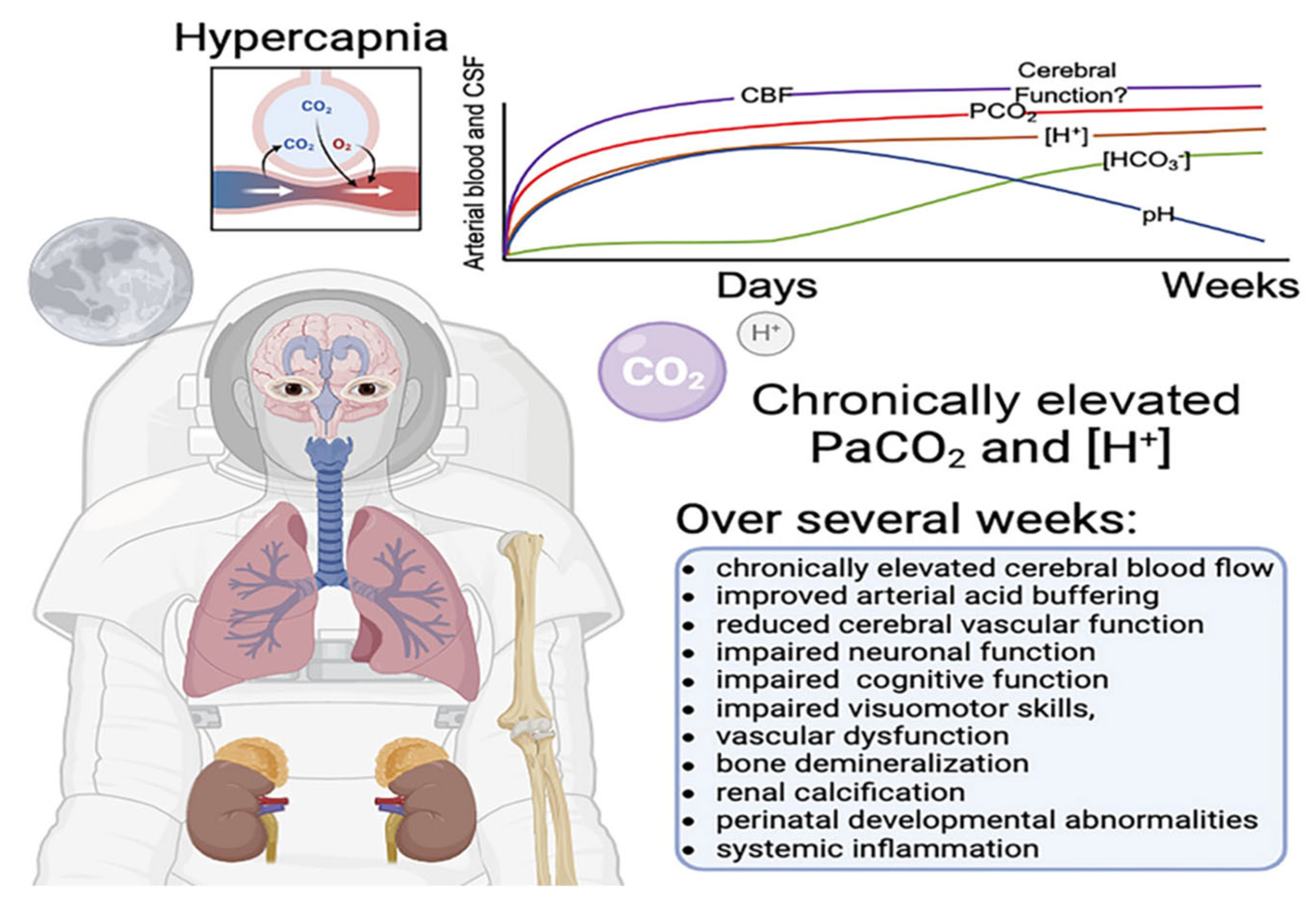
| Possible impairment of cerebrovascular regulation and cognition (review evidence) | Chronic mild hypercapnia (vs. normocapnia) | Confined-environment personnel | Carr et al., 2025 [14] |
| ↑ sleepiness and ↓ cognitive performance at work | Indoor CO2 exposure (vs. lower CO2) | Office workers | Vehviläinen et al., 2016 [34] |
| Metabolic stress and ↓ task performance at 1000–3000 ppm CO2 | Indoor CO2 exposure (vs. ~400 ppm) | Indoor populations | Azuma et al., 2018 [10] |
| ↑ respiratory acidosis, ↓ time to exhaustion despite ↓ lactate | Exercise with 6% CO2 (vs. normocapnia) | Healthy adults | Kato et al., 2005 [44] |
| Altered glycolytic flux; ↓ lactate via acidosis-mediated inhibition | Hypercapnic exercise (vs. normocapnia) | Healthy adults | Ehrsam et al., 1982 [45] |
| ↑ muscle lactate release and glycolytic intermediates | CO2 + exercise (vs. normocapnia) | Healthy adults | Graham et al., 1986 [60] |
| Modified lactate response; no endurance benefit | Hypercapnic incremental exercise (vs. normocapnia) | Healthy adults | McLellan, 1991 [63] |
| ↑ HR, BP and cerebral perfusion during orthostatic stress | 5% CO2 breathing (vs. air) | Healthy adults | Howden et al., 2004 [28] |
| ↑ ventilatory demand; ↓ respiratory performance | Moderate CO2 during exercise (vs. lower CO2) | Healthy adults | Mishra et al., 2021 [29] |
| ↑ cerebral blood flow at rest and exercise onset; no sustained performance gain | Hypercapnia (vs. normocapnia) | Healthy adults | Ogoh et al., 2009 [48] |
| ↑ VE and altered breathing pattern at maximal exercise | Added dead space (vs. none) | Healthy adults | McParland et al., 1991 [54] |
| Altered ventilatory and circulatory responses; no endurance improvement | Dead space during exercise (vs. none) | Healthy adults | Zatoń & Smołka, 2011 [52] |
| Potentiated ventilatory response to exercise | CO2/dead-space loading (vs. normal breathing) | Healthy adults | Poon, 1992 [56] |
| ↑ buffering capacity; no change in VO2max | Voluntary hypoventilation training (vs. normal breathing) | Trained runners/swimmers | Woorons et al., 2008 [84] |
| ↑ repeated-sprint fatigue resistance; no aerobic adaptations | Repeated sprints with VH (vs. normal breathing) | Trained athletes | Woorons et al., 2010 [69] |
| Improved short-distance performance only | VH during running (vs. conventional training) | Runners | Prieur et al., 2006 [86] |
| ↑ total sprint work (~+4.4%) and mean power; RPE unchanged | Sprint intervals + ARDS (vs. no ARDS) | Healthy active men | Danek et al., 2020 [55] |
| Improved sprint-interval performance and buffering | Warm-up + ARDS (vs. standard warm-up) | Trained cyclists | Danek & Zatoń, 2022 [65] |
| Preservation of VO2 and reduced fatigue post warm-up | ARDS during break (vs. passive rest) | Competitive cyclists | Hebisz et al., 2025 [93] |
| ↑ 50 m sprint performance (~1–2%) | Re-warm-up + ARDS (vs. standard) | Sprint swimmers | Danek et al., 2025 [90] |
| Feasible respiratory muscle loading; no major adverse effects | Tube breathing (vs. normal breathing) | Healthy volunteers | Koppers et al., 2006 [88] |
| ↑ CO2 rebreathing; altered ventilatory and metabolic responses | Snorkel rebreathing (vs. normal breathing) | Divers/swimmers | Toklu et al., 2003 [89] |
| ↑ CO2 tolerance; performance effects uncertain | Breath-hold breathing (vs. conventional training) | Adolescent/endurance athletes | Bahenský et al., 2020 [83] |
5. Safety and Contraindications
5.1. Populations in Whom Hypercapnia-Inducing Methods Should Be Avoided
5.2. Warning Symptoms Requiring Immediate Cessation
5.3. General Monitoring and Safety Principles
5.4. Clinical Versus Non-Clinical Exposure
6. Knowledge Gaps and Directions for New Research
7. Conclusions
Funding
Institutional Review Board Statement
Informed Consent Statement
Data Availability Statement
Conflicts of Interest
References
- Patel, N.; Sharma, S. Respiratory Acidosis. In StatPearls; StatPearls Publishing: Treasure Island, FL, USA, 2023; Available online: https://www.ncbi.nlm.nih.gov/books/NBK482430/ (accessed on 3 September 2025).
- Spector, S.; McKhann, C.F. Respiratory acidosis and alkalosis in children. J. Pediatr. 1948, 32, 227–245. [Google Scholar] [CrossRef] [PubMed]
- Ainslie, P.N.; Duffin, J. Integration of cerebrovascular CO2 reactivity and chemoreflex control of breathing: Mechanisms of regulation, measurement, and interpretation. Am. J. Physiol. Regul. Integr. Comp. Physiol. 2009, 296, R1473–R1495. [Google Scholar] [CrossRef]
- Teboul, J.L.; Scheeren, T. Understanding the Haldane effect. Intensive Care Med. 2017, 43, 91–93. [Google Scholar] [CrossRef] [PubMed]
- Cummins, E.P.; Selfridge, A.C.; Sporn, P.H.; Sznajder, J.I.; Taylor, C.T. Carbon dioxide-sensing in organisms and its implications for human disease. Cell. Mol. Life Sci. 2014, 71, 831–845. [Google Scholar] [CrossRef]
- Osorio-Rodríguez, E.; Correa-Guerrero, J.; Rodelo-Barrios, D.; Bonilla-Llanos, M.; Rebolledo-Maldonado, C.; Patiño-Patiño, J.; Viera-Torres, J.; Arias-Gómez, M.; Gracia-Ordoñez, M.; González-Betancur, D.; et al. Hypercapnia as a double-edged modulator of innate immunity and alveolar epithelial repair: A PRISMA-ScR scoping review. Int. J. Mol. Sci. 2025, 26, 9622. [Google Scholar] [CrossRef] [PubMed]
- Nattie, E. CO2, brainstem chemoreceptors and breathing. Prog. Neurobiol. 1999, 59, 299–331. [Google Scholar] [CrossRef] [PubMed]
- Guyenet, P.G. Regulation of breathing and autonomic outflows by chemoreceptors. Compr. Physiol. 2014, 4, 1511–1562. [Google Scholar] [CrossRef]
- Liu, J.J.W.; Ein, N.; Gervasio, J.; Vickers, K. Subjective and physiological responses to the 35% carbon dioxide challenge in healthy and non-clinical control populations: A meta-analysis and systematic review. Anxiety Stress Coping 2019, 32, 216–230. [Google Scholar] [CrossRef]
- Azuma, K.; Kagi, N.; Yanagi, U.; Osawa, H. Effects of low-level inhalation exposure to carbon dioxide in indoor environments: A short review on human health and psychomotor performance. Environ. Int. 2018, 121, 51–56. [Google Scholar] [CrossRef]
- Kaye, J.; Buchanan, F.; Kendrick, A.; Johnson, P.; Lowry, C.; Bailey, J.; Nutt, D.; Lightman, S. Acute carbon dioxide exposure in healthy adults: Evaluation of a novel means of investigating the stress response. J. Neuroendocrinol. 2004, 16, 256–264. [Google Scholar] [CrossRef]
- van Duinen, M.A.; Schruers, K.R.; Maes, M.; Griez, E.J. CO2 challenge induced HPA axis activation in panic. Int. J. Neuropsychopharmacol. 2007, 10, 797–804. [Google Scholar] [CrossRef] [PubMed][Green Version]
- Jacobson, T.A.; Kler, J.S.; Hernke, M.T.; Braun, R.K.; Meyer, K.C.; Funk, W.E. Direct human health risks of increased atmospheric carbon dioxide. Nat. Sustain. 2019, 2, 691–701. [Google Scholar] [CrossRef]
- Carr, J.M.J.R.; Ainslie, P.N.; Day, T. Confined spaces in space: Cerebral implications of chronic elevations of inspired carbon dioxide and implications for long-duration space travel. Exp. Physiol. 2025; Advance online publication. [Google Scholar] [CrossRef]
- Hirotsu, C.; Tufik, S.; Andersen, M.L. Interactions between sleep, stress, and metabolism. Sleep Sci. 2015, 8, 143–152. [Google Scholar] [CrossRef]
- Salcedo-Betancourt, J.D.; Moe, O.W. The effects of acid on calcium and phosphate metabolism. metabolism. Int. J. Mol. Sci. 2024, 25, 2081. [Google Scholar] [CrossRef]
- Van Duinen, M.A.; Schruers, K.R.; Maes, M.; Griez, E.J. CO2 challenge results in hypothalamic-pituitary-adrenal activation in healthy volunteers. J. Psychopharmacol. 2005, 19, 39–45. [Google Scholar] [CrossRef]
- Xu, F.; Uh, J.; Brier, M.R.; Hart, J., Jr.; Lu, H. The influence of carbon dioxide on brain activity and metabolism in conscious humans. J. Cereb. Blood Flow Metab. 2011, 31, 58–67. [Google Scholar] [CrossRef]
- Zhang, Y.; Liu, Z.; Chen, W.; Liang, J.; Wang, J. Magnetic resonance imaging of vascular oxygenation with carbogen (95% O2 5% CO2). Investig. Ophthalmol. Vis. Sci. 2011, 52, 6405–6412. [Google Scholar] [CrossRef]
- Perna, G.; Battaglia, M.; Garberi, A.; Arancio, C.; Bertani, A.; Bellodi, L. Carbon dioxide/oxygen challenge test in panic disorder. Psychiatry Res. 1994, 52, 159–171. [Google Scholar] [CrossRef] [PubMed]
- Griez, E.J.; Colasanti, A.; van Diest, R.; Salamon, E.; Schruers, K. Carbon dioxide inhalation induces dose-dependent and age-related negative affectivity. PLoS ONE 2007, 2, e987. [Google Scholar] [CrossRef]
- Coryell, W.; Arndt, S. The 35% CO2 inhalation procedure: Test-retest reliability. Biol. Psychiatry 1999, 45, 923–927. [Google Scholar] [CrossRef] [PubMed]
- Diaper, A.; Nutt, D.J.; Munafò, M.R.; White, J.L.; Farmer, E.W.; Bailey, J.E. The effects of 7.5% carbon dioxide inhalation on task performance in healthy volunteers. J. Psychopharmacol. 2012, 26, 487–496. [Google Scholar] [CrossRef]
- Schneberger, D.; Cloonan, D.; DeVasure, J.M.; Bailey, K.L.; Romberger, D.J.; Wyatt, T.A. Effect of elevated carbon dioxide on bronchial epithelial innate immune receptor response to organic dust from swine confinement barns. Int. Immunopharmacol. 2015, 27, 340–346. [Google Scholar] [CrossRef]
- Casalino-Matsuda, S.M.; Wang, N.; Ruhoff, P.T.; Matsuda, H.; Nlend, M.C.; Nair, A.; Szleifer, I.; Beitel, G.J.; Sznajder, J.I. Hypercapnia alters expression of immune response genes in airway epithelial cells. Sci. Rep. 2018, 8, 13508. [Google Scholar] [CrossRef]
- Billert, H.; Bednarek, E.; Kusza, K.; Ponichter, M.; Kurpisz, M. Effect of acute isooxic hypercapnia on oxidative activity of systemic neutrophils in endotoxemic rabbits. Cent. Eur. J. Immunol. 2021, 46, 47–53. [Google Scholar] [CrossRef] [PubMed]
- Gałgańska, H.; Jarmuszkiewicz, W.; Gałgański, Ł. Carbon dioxide and MAPK signalling: Towards therapy for inflammation and related processes. Cell. Mol. Biol. Lett. 2023, 28, 5. [Google Scholar] [CrossRef]
- Howden, R.; Roddie, I.C.; Wallace, A.M. The effects of breathing 5% carbon dioxide on human cardiovascular responses and tolerance to orthostatic stress. Exp. Physiol. 2004, 89, 557–565. [Google Scholar] [CrossRef] [PubMed]
- Mishra, A.K.; Schiavon, S.; Wargocki, P.; Tham, K.W. Respiratory performance of humans exposed to moderate levels of carbon dioxide. Indoor Air 2021, 31, 1540–1552. [Google Scholar] [CrossRef]
- Garner, M.; Attwood, A.; Baldwin, D.S.; James, A.; Munafò, M.R. Inhalation of 7.5% carbon dioxide increases threat processing in humans. Neuropsychopharmacology 2011, 36, 1557–1568. [Google Scholar] [CrossRef]
- Bailey, J.E.; Argyropoulos, S.V.; Kendrick, A.H.; Nutt, D.J. Behavioral and cardiovascular effects of 7.5% CO2 in human volunteers. Depress. Anxiety 2005, 21, 18–25. [Google Scholar] [CrossRef] [PubMed]
- Almanza-Hurtado, A.; Polanco Guerra, C.; Martínez-Ávila, M.C.; Borré-Naranjo, D.; Rodríguez-Yanez, T.; Dueñas-Castell, C. Hypercapnia from physiology to practice. Int. J. Clin. Pract. 2022, 2022, 2635616. [Google Scholar] [CrossRef]
- Satish, U.; Mendell, M.J.; Shekhar, K.; Hotchi, T.; Sullivan, D.; Streufert, S.; Fisk, W.J. Is CO2 an indoor pollutant? Direct effects of low-to-moderate carbon dioxide concentrations on human decision-making performance. Environ. Health Perspect. 2012, 120, 1671–1677. [Google Scholar] [CrossRef] [PubMed]
- Vehviläinen, T.; Lindholm, H.; Rintamäki, H.; Pääkkönen, R.; Hirvonen, A.; Niemi, O.; Vinha, J. High indoor CO2 concentrations in an office environment increases the transcutaneous CO2 level and sleepiness during cognitive work. J. Occup. Environ. Hyg. 2016, 13, 19–29. [Google Scholar] [CrossRef] [PubMed]
- Battisti-Charbonney, A.; Fisher, J.; Duffin, J. The cerebrovascular response to carbon dioxide in humans. J. Physiol. 2011, 589, 3039–3048. [Google Scholar] [CrossRef]
- Morales-Quinteros, L.; Camprubí-Rimblas, M.; Bringué, J.; Bos, L.D.; Schultz, M.J.; Artigas, A. The role of hypercapnia in acute respiratory failure. Intensive Care Med. Exp. 2019, 7, 39. [Google Scholar] [CrossRef]
- Bruce, R.M.; White, M.J. The ventilatory response to muscle afferent activation during concurrent hypercapnia in humans: Central and peripheral mechanisms. Exp. Physiol. 2015, 100, 896–904. [Google Scholar] [CrossRef] [PubMed]
- Nattie, E.; Li, A. Central chemoreceptors: Locations and functions. Compr. Physiol. 2012, 2, 221–254. [Google Scholar] [CrossRef]
- Greiner, J.G.; Clegg, M.E.; Walsh, M.L.; White, M.D. No effect of skin temperature on human ventilation response to hypercapnia during light exercise with a normothermic core temperature. Eur. J. Appl. Physiol. 2010, 109, 109–115. [Google Scholar] [CrossRef]
- McGurk, S.P.; Blanksby, B.A.; Anderson, M.J. The relationship between carbon dioxide sensitivity and sprint or endurance performance in young swimmers. Br. J. Sports Med. 1995, 29, 129–133. [Google Scholar] [CrossRef][Green Version]
- Shigemura, M.; Welch, L.C.; Sznajder, J.I. Hypercapnia regulates gene expression and tissue function. Front. Physiol. 2020, 11, 598122. [Google Scholar] [CrossRef]
- Ohkuwa, T.; Fujitsuka, N.; Utsuno, T.; Miyamura, M. Ventilatory response to hypercapnia in sprint and long-distance swimmers. Eur. J. Appl. Physiol. Occup. Physiol. 1980, 43, 235–241. [Google Scholar] [CrossRef]
- Miyamoto, T.; Inagaki, M.; Takaki, H.; Kawada, T.; Shishido, T.; Kamiya, A.; Sugimachi, M. Adaptation of the respiratory controller contributes to the attenuation of exercise hyperpnea in endurance-trained athletes. Eur. J. Appl. Physiol. 2012, 112, 237–251. [Google Scholar] [CrossRef]
- Kato, T.; Tsukanaka, A.; Harada, T.; Kosaka, M.; Matsui, N. Effect of hypercapnia on changes in blood pH, plasma lactate and ammonia due to exercise. Eur. J. Appl. Physiol. 2005, 95, 400–408. [Google Scholar] [CrossRef]
- Ehrsam, R.E.; Heigenhauser, G.J.; Jones, N.L. Effect of respiratory acidosis on metabolism in exercise. J. Appl. Physiol. Respir. Environ. Exerc. Physiol. 1982, 53, 63–69. [Google Scholar] [CrossRef]
- Jones, N.L.; Sutton, J.R.; Taylor, R.; Toews, C.J. Effect of pH on cardiorespiratory and metabolic responses to exercise. J. Appl. Physiol. Respir. Environ. Exerc. Physiol. 1977, 43, 959–964. [Google Scholar] [CrossRef]
- Frydrychowski, A.F.; Wszedybyl-Winklewska, M.; Guminski, W.; Lass, P.; Bandurski, T.; Winklewski, P.J. Effects of acute hypercapnia on the amplitude of cerebrovascular pulsation in humans registered with a non-invasive method. Microvasc. Res. 2012, 83, 229–236. [Google Scholar] [CrossRef]
- Ogoh, S.; Ainslie, P.N.; Miyamoto, T. Onset responses of ventilation and cerebral blood flow to hypercapnia in humans: Rest and exercise. J. Appl. Physiol. 2009, 106, 880–886. [Google Scholar] [CrossRef]
- Wood, H.E.; Mitchell, G.S.; Babb, T.G. Short-term modulation of the exercise ventilatory response in young men. J. Appl. Physiol. 2008, 104, 244–252. [Google Scholar] [CrossRef]
- Kumar, P.; Prabhakar, N.R. Peripheral chemoreceptors: Function and plasticity of the carotid body. Compr. Physiol. 2012, 2, 141–219. [Google Scholar] [CrossRef]
- Kumar, P.; Bin-Jaliah, I. Adequate stimuli of the carotid body: More than an oxygen sensor? Respir. Physiol. Neurobiol. 2007, 157, 12–21. [Google Scholar] [CrossRef]
- Zatoń, M.; Smołka, Ł. Circulatory and respiratory response to exercise with added respiratory dead space. Hum. Mov. 2011, 12, 88–94. [Google Scholar] [CrossRef]
- Wood, H.E.; Mitchell, G.S.; Babb, T.G. Breathing mechanics during exercise with added dead space reflect mechanisms of ventilatory control. Respir. Physiol. Neurobiol. 2009, 168, 210–217. [Google Scholar] [CrossRef] [PubMed]
- McParland, C.; Mink, J.; Gallagher, C.G. Respiratory adaptations to dead space loading during maximal incremental exercise. J. Appl. Physiol. 1991, 70, 55–62. [Google Scholar] [CrossRef]
- Danek, N.; Michalik, K.; Smolarek, M.; Zatoń, M. Acute effects of using added respiratory dead space volume in a cycling sprint interval exercise protocol: A cross-over study. Int. J. Environ. Res. Public Health 2020, 17, 9485. [Google Scholar] [CrossRef]
- Poon, C.S. Potentiation of exercise ventilatory response by airway CO2 and dead space loading. J. Appl. Physiol. 1992, 73, 591–595. [Google Scholar] [CrossRef]
- Goodarzi-Ardakani, V.; Taeibi-Rahni, M.; Salimi, M.R.; Ahmadi, G. Computational simulation of temperature and velocity distribution in human upper respiratory airway during inhalation of hot air. Respir. Physiol. Neurobiol. 2016, 223, 49–58. [Google Scholar] [CrossRef]
- McEntire, S.J.; Smith, J.R.; Ferguson, C.S.; Brown, K.R.; Kurti, S.P.; Harms, C.A. The effect of exercise training with an additional inspiratory load on inspiratory muscle fatigue and time-trial performance. Respir. Physiol. Neurobiol. 2016, 230, 54–59. [Google Scholar] [CrossRef] [PubMed]
- Ostergaard, L.; Kjaer, K.; Jensen, K.; Gladden, L.B.; Martinussen, T.; Pedersen, P.K. Increased steady-state VO2 and larger O2 deficit with CO2 inhalation during exercise. Acta Physiol. 2012, 204, 371–381. [Google Scholar] [CrossRef] [PubMed]
- Graham, T.E.; Barclay, J.K.; Wilson, B.A. Skeletal muscle lactate release and glycolytic intermediates during hypercapnia. J. Appl. Physiol. 1986, 60, 568–575. [Google Scholar] [CrossRef] [PubMed]
- Cabrera, M.E.; Saidel, G.M.; Kalhan, S.C. Lactate metabolism during exercise: Analysis by an integrative systems model. Am. J. Physiol. 1999, 277, R1522–R1536. [Google Scholar] [CrossRef]
- Graham, T.E.; Wilson, B.A.; Sample, M.; Van Dijk, J.; Goslin, B. The effects of hypercapnia on the metabolic response to steady-state exercise. Med. Sci. Sports Exerc. 1982, 14, 286–291. [Google Scholar] [CrossRef]
- McLellan, T.M. The influence of a respiratory acidosis on the exercise blood lactate response. Eur. J. Appl. Physiol. Occup. Physiol. 1991, 63, 6–11. [Google Scholar] [CrossRef]
- Ryan, B.J.; Seeley, A.D.; Pitsas, D.M.; Mayer, T.A.; Caldwell, A.R.; Ceaser, T.G.; Luippold, A.J.; Charkoudian, N.; Salgado, R.M. Influence of graded hypercapnia on endurance exercise performance in healthy humans. Am. J. Physiol. Regul. Integr. Comp. Physiol. 2022, 323, R638–R647. [Google Scholar] [CrossRef]
- Danek, N.; Michalik, K.; Zatoń, M. Warm-up with added respiratory dead space volume mask improves the performance of the cycling sprint interval exercise: Cross-over study. Front. Physiol. 2022, 13, 812221. [Google Scholar] [CrossRef]
- Hollidge-Horvat, M.G.; Parolin, M.L.; Wong, D.; Jones, N.L.; Heigenhauser, G.J.F. Effect of induced metabolic alkalosis on human skeletal muscle metabolism during exercise. Am. J. Physiol. Endocrinol. Metab. 2000, 278, E316–E329. [Google Scholar] [CrossRef] [PubMed]
- Hirche, H.J.; Hombach, V.; Langohr, H.D.; Wacker, U.; Busse, J. Lactic acid permeation rate in working gastrocnemii of dogs during metabolic alkalosis and acidosis. Pflugers Arch. 1975, 356, 209–222. [Google Scholar] [CrossRef]
- Oppersma, E.; Doorduin, J.; van der Hoeven, J.G.; Veltink, P.H.; van Hees, H.W.H.; Heunks, L.M.A. The effect of metabolic alkalosis on the ventilatory response in healthy subjects. Respir. Physiol. Neurobiol. 2018, 249, 47–53. [Google Scholar] [CrossRef] [PubMed]
- Woorons, X.; Gamelin, F.X.; Lamberto, C.; Pichon, A.; Richalet, J.P. Repeated sprint ability with voluntary hypoventilation. Int. J. Sports Physiol. Perform. 2010, 5, 441–445. [Google Scholar]
- Woorons, X.; Mollard, P.; Pichon, A.; Duvallet, A.; Richalet, J.P.; Lamberto, C. Prolonged expiration down to residual volume leads to severe arterial hypoxemia in athletes during submaximal exercise. Respir. Physiol. Neurobiol. 2007, 158, 75–82. [Google Scholar] [CrossRef]
- Woodward, M.; Debold, E.P. Acidosis and phosphate directly reduce myosin’s force-generating capacity through distinct molecular mechanisms. Front. Physiol. 2018, 9, 862. [Google Scholar] [CrossRef] [PubMed]
- Debold, E.P.; Beck, S.E.; Warshaw, D.M. Effect of low pH on single skeletal muscle myosin mechanics and kinetics. Am. J. Physiol. Cell Physiol. 2008, 295, C173–C179. [Google Scholar] [CrossRef]
- Westerblad, H.; Bruton, J.D.; Lännergren, J. The effect of intracellular pH on contractile function of intact, single fibres of mouse muscle declines with increasing temperature. J. Physiol. 1997, 500, 193–204. [Google Scholar] [CrossRef]
- Street, D.; Nielsen, J.J.; Bangsbo, J.; Juel, C. Metabolic alkalosis reduces exercise-induced acidosis and potassium accumulation in human skeletal muscle interstitium. J. Physiol. 2005, 566, 481–489. [Google Scholar] [CrossRef]
- Allen, D.G. Fatigue in working muscles. J. Appl. Physiol. 2009, 106, 358–359. [Google Scholar] [CrossRef]
- Ortenblad, N.; Lunde, P.K.; Levin, K.; Andersen, J.L.; Pedersen, P.K. Enhanced sarcoplasmic reticulum Ca2+ release following intermittent sprint training. Am. J. Physiol. Regul. Integr. Comp. Physiol. 2000, 279, R152–R160. [Google Scholar] [CrossRef]
- Ueno, S.; Yokoyama, K.; Nakagawa, M.; Araki, S. Effects of pH and temperature on force and stiffness of skeletal muscle fibers during contraction and relaxation in relation to musculoskeletal disorders. Ind. Health 2002, 40, 362–369. [Google Scholar] [CrossRef]
- Mador, M.J.; Wendel, T.; Kufel, T.J. Effect of acute hypercapnia on diaphragmatic and limb muscle contractility. Am. J. Respir. Crit. Care Med. 1997, 155, 1590–1595. [Google Scholar] [CrossRef]
- Harms, C.A.; Babcock, M.A.; McClaran, S.R.; Pegelow, D.F.; Nickele, G.A.; Nelson, W.B.; Dempsey, J.A. Respiratory muscle work compromises leg blood flow during maximal exercise. J. Appl. Physiol. 1997, 82, 1573–1583. [Google Scholar] [CrossRef] [PubMed]
- Casey, D.P.; Joyner, M.J. Compensatory vasodilatation during hypoxic exercise: Mechanisms responsible for matching oxygen supply to demand. J. Physiol. 2012, 590, 6321–6326. [Google Scholar] [CrossRef]
- Lemaître, F.; Joulia, F.; Chollet, D. Apnea: A new training method in sport? Med. Hypotheses 2010, 74, 413–415. [Google Scholar] [CrossRef] [PubMed]
- Baković, D.; Valic, Z.; Eterović, D.; Vukovic, I.; Obad, A.; Marinović-Terzić, I.; Dujić, Z. Spleen volume and blood flow response to repeated breath-hold apneas. J. Appl. Physiol. 2003, 95, 1460–1466. [Google Scholar] [CrossRef]
- Bahenský, P.; Bunc, V.; Tlustý, P.; Grosicki, G.J. Effect of an eleven-day altitude training program on aerobic and anaerobic performance in adolescent runners. Medicina 2020, 56, 184. [Google Scholar] [CrossRef]
- Woorons, X.; Mollard, P.; Pichon, A.; Duvallet, A.; Richalet, J.P. Effects of voluntary hypoventilation on blood gases and acid–base balance during exercise. Eur. J. Appl. Physiol. 2008, 103, 243–251. [Google Scholar] [CrossRef]
- Woorons, X.; Pichon, A.; Lamberto, C.; Duvallet, A.; Richalet, J.P. Influence of different voluntary hypoventilation techniques on tolerance to high-intensity exercise. Int. J. Sports Med. 2008, 29, 59–67. [Google Scholar] [CrossRef]
- Prieur, F.; Busso, T.; Castells, J.; Bonnefoy, R. Running performance and respiratory variables in hypoventilation training. Eur. J. Appl. Physiol. 2006, 98, 372–379. [Google Scholar]
- Précart, C.; Bouten, J.; Woorons, X.; Fornasier-Santos, C.; Millet, G.P.; Brocherie, F. Repeated-sprint training in hypoxia induced by voluntary hypoventilation at low lung volume: A meta-analysis. Sports Med. Open 2025, 11, 55. [Google Scholar] [CrossRef]
- Koppers, R.J.; Vos, P.J.; Folgering, H.T. Tube breathing as a new potential method to perform respiratory muscle training: Safety in healthy volunteers. Respir. Med. 2006, 100, 714–720. [Google Scholar] [CrossRef][Green Version]
- Toklu, A.S.; Kayserilioğlu, A.; Unal, M.; Ozer, S.; Aktaş, S. Ventilatory and metabolic response to rebreathing the expired air in the snorkel. Int. J. Sports Med. 2003, 24, 162–165. [Google Scholar] [CrossRef]
- Danek, N.; Szczepan, S.; Wróblewska, Z.; Michalik, K.; Zatoń, M. Hypercapnic warm-up and re-warm-up—A novel experimental approach in swimming sprint. PLoS ONE 2025, 20, e0314089. [Google Scholar] [CrossRef] [PubMed]
- Szczepan, S.; Pożarowszczyk-Kuczko, B.; Michalik, K. Validity of 2-point method for load-velocity profiling in free swimming, with snorkel, and with added respiratory dead space mask. Sci. Rep. 2025, 15, 39916. [Google Scholar] [CrossRef] [PubMed]
- Szczepan, S.; Danek, N.; Michalik, K.; Wróblewska, Z.; Zatoń, M. Influence of a six-week swimming training with added respiratory dead space on respiratory muscle strength and pulmonary function in recreational swimmers. Int. J. Environ. Res. Public Health 2020, 17, 5743. [Google Scholar] [CrossRef] [PubMed]
- Hebisz, P.; Hebisz, R.; Danek, N. Prolonging the warm-up effect by using additional respiratory dead space volume after the cessation of warm-up exercise. J. Clin. Med. 2025, 14, 7049. [Google Scholar] [CrossRef] [PubMed]

Disclaimer/Publisher’s Note: The statements, opinions and data contained in all publications are solely those of the individual author(s) and contributor(s) and not of MDPI and/or the editor(s). MDPI and/or the editor(s) disclaim responsibility for any injury to people or property resulting from any ideas, methods, instructions or products referred to in the content. |
© 2026 by the author. Licensee MDPI, Basel, Switzerland. This article is an open access article distributed under the terms and conditions of the Creative Commons Attribution (CC BY) license.
Share and Cite
Danek, N. Carbon Dioxide Inhalation—Risks for Health or Opportunity for Physical Fitness Development? J. Clin. Med. 2026, 15, 364. https://doi.org/10.3390/jcm15010364
Danek N. Carbon Dioxide Inhalation—Risks for Health or Opportunity for Physical Fitness Development? Journal of Clinical Medicine. 2026; 15(1):364. https://doi.org/10.3390/jcm15010364
Chicago/Turabian StyleDanek, Natalia. 2026. "Carbon Dioxide Inhalation—Risks for Health or Opportunity for Physical Fitness Development?" Journal of Clinical Medicine 15, no. 1: 364. https://doi.org/10.3390/jcm15010364
APA StyleDanek, N. (2026). Carbon Dioxide Inhalation—Risks for Health or Opportunity for Physical Fitness Development? Journal of Clinical Medicine, 15(1), 364. https://doi.org/10.3390/jcm15010364