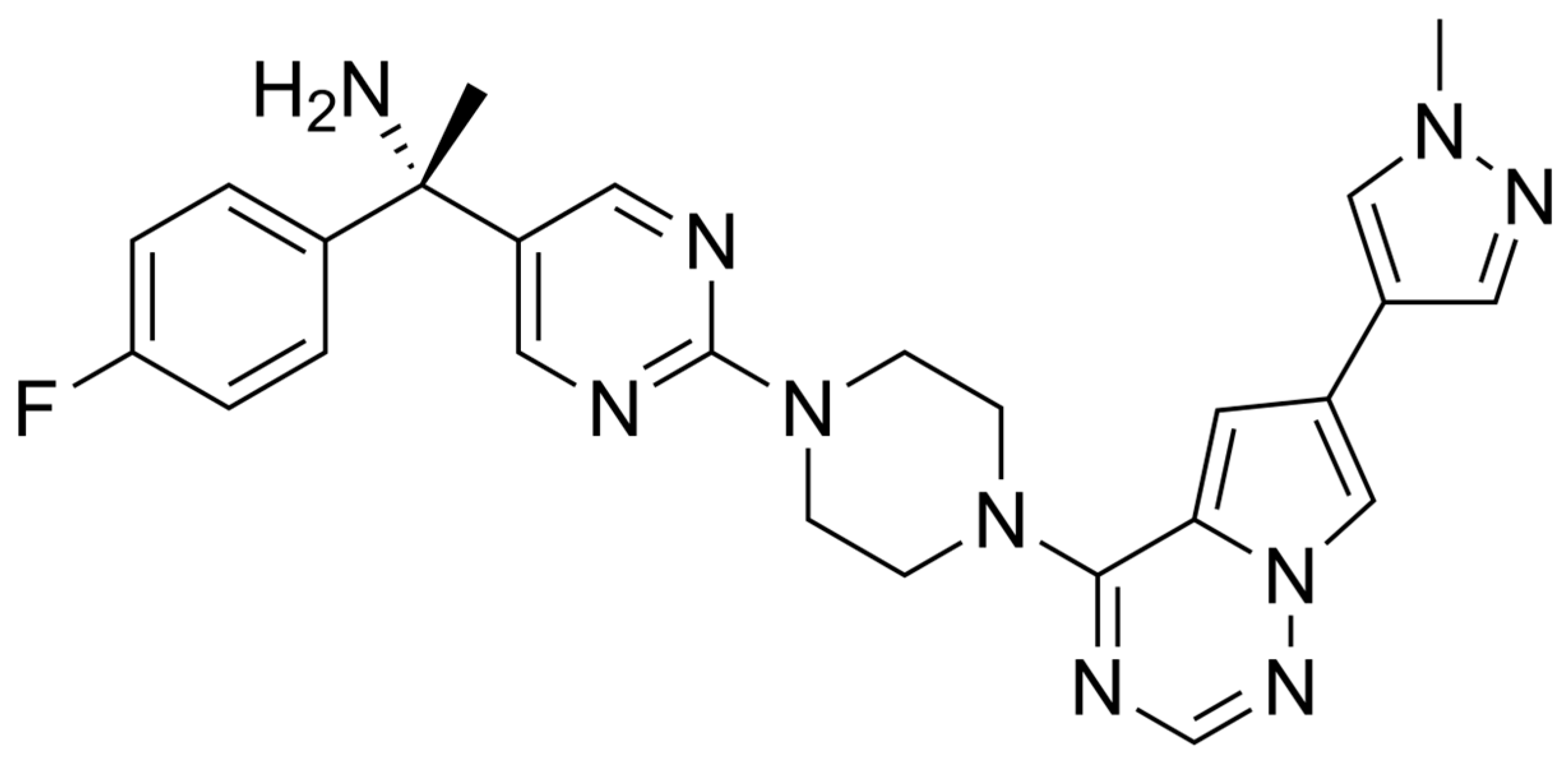
The Evolving Role of Second- and Third-Generation Tyrosine Kinase Inhibitors in Gastrointestinal Malignancies: Advances in Targeted Therapy with Sunitinib, Regorafenib, and Avapritinib

Abstract
1. Introduction
2. Sunitinib
3. Regorafenib
4. Avapritinib
5. Emerging Trends and Opportunities
6. Conclusions
Author Contributions
Funding
Institutional Review Board Statement
Informed Consent Statement
Data Availability Statement
Conflicts of Interest
Abbreviations
| ACE-I | Angiotensin-Converting Enzyme Inhibitor |
| advSM | Advanced Systemic Mastocytosis |
| AE | Adverse Event |
| AKT | Protein Kinase B |
| ARB | Angiotensin Receptor Blocker |
| ALK | Anaplastic Lymphoma Kinase |
| AXL | AXL Receptor Tyrosine Kinase |
| BCR-ABL | Fusion Oncoprotein Driving Chronic Myeloid Leukemia (CML) |
| BP | Blood Pressure |
| B-RAF | Serine/Threonine-Protein Kinase B-RAF |
| CBC | Complete Blood Count |
| C-KIT | Mast/Stem Cell Growth Factor Receptor |
| CML | Chronic Myeloid Leukemia |
| CSF-1R | Colony-Stimulating Factor 1 Receptor |
| CT | Computed Tomography |
| DVT | Deep Venous Thrombosis |
| EAP | Expanded Access Program |
| EGFR | Epidermal Growth Factor Receptor |
| ERK | Extracellular Signal-Regulated Kinase |
| FDA | U.S. Food and Drug Administration |
| FGFR | Fibroblast Growth Factor Receptor |
| FLT3 | FMS-Like Tyrosine Kinase 3 |
| G-CSF | Granulocyte Colony-Stimulating Factor |
| GI | Gastrointestinal |
| GIST | Gastrointestinal Stromal Tumor |
| HCC | Hepatocellular Carcinoma |
| HER | Human Epidermal Growth Factor Receptor |
| HF | Heart Failure |
| HFSR | Hand–Foot Skin Reaction |
| IFN-α | Interferon-Alpha |
| KIT | KIT Receptor Tyrosine Kinase |
| LFT/LFTs | Liver Function Test / Liver Function Tests |
| LVEF | Left Ventricular Ejection Fraction |
| MEK | Mitogen-Activated Protein Kinase |
| MET | MET (HGF) Receptor Tyrosine Kinase |
| mCRC | Metastatic Colorectal Cancer |
| MRI | Magnetic Resonance Imaging |
| mRCC | Metastatic Renal Cell Carcinoma |
| NET | Neuroendocrine Tumor |
| ORR | Objective Response Rate / Overall Response Rate |
| OS | Overall Survival |
| PDGFRα(A)/β(B) | Platelet-Derived Growth Factor Receptors Alpha and Beta |
| PFS | Progression-Free Survival |
| PI3K | Phosphoinositide 3-Kinase |
| PK/PD | Pharmacokinetics/Pharmacodynamics |
| pNET/pNETs | Pancreatic Neuroendocrine Tumor(s) |
| RAS | Rat Sarcoma Protein |
| RAF | Rapidly Accelerated Fibrosarcoma Kinase |
| RCC | Renal Cell Carcinoma |
| RET | RET Receptor Tyrosine Kinase |
| R0 | Complete Resection with Negative Margins |
| RFS | Recurrence-Free Survival |
| ROS1 | Proto-Oncogene Tyrosine-Protein Kinase ROS |
| SDH | Succinate Dehydrogenase |
| TEAE | Treatment-Emergent Adverse Event |
| TIE2 | Angiogenesis Receptor Tyrosine Kinase |
| TKI/TKIs | Tyrosine Kinase Inhibitor(s) |
| TIE2 | Tunica Interna Endothelial Cell Kinase 2 |
| TRKs | Tropomyosin Receptor Tyrosine Kinases |
| TSH | Thyroid-Stimulating Hormone |
| TTP | Time to Progression |
| VEGF | Vascular Endothelial Growth Factor |
| VEGFR1–3 | Vascular Endothelial Growth Factor Receptors 1–3 |
References
- Hirota, S.; Isozaki, K.; Moriyama, Y.; Hashimoto, K.; Nishida, T.; Ishiguro, S.; Kawano, K.; Hanada, M.; Kurata, A.; Takeda, M.; et al. Gain-of-Function Mutations of c-Kit in Human Gastrointestinal Stromal Tumors. Science 1998, 279, 577–580. [Google Scholar] [CrossRef]
- Corless, C.L.; Fletcher, J.A.; Heinrich, M.C. Biology of Gastrointestinal Stromal Tumors. J. Clin. Oncol. 2004, 22, 3813–3825. [Google Scholar] [CrossRef]
- Nishida, T.; Blay, J.Y.; Hirota, S.; Kitagawa, Y.; Kang, Y.K. The Standard Diagnosis, Treatment, and Follow-up of Gastrointestinal Stromal Tumors Based on Guidelines. Gastric Cancer 2016, 19, 3–14. [Google Scholar] [CrossRef]
- Foo, T.; Goldstein, D.; Segelov, E.; Shapiro, J.; Pavlakis, N.; Desai, J.; Yip, D.; Zalcberg, J.; Price, T.J.; Nagrial, A.; et al. The management of unresectable, advanced gastrointestinal stromal tumours. Target Oncol. 2022, 17, 95–110. [Google Scholar] [CrossRef]
- Florou, V.; Trent, J.C.; Wilky, B.A. Precision medicine in gastrointestinal stromal tumors. Discov. Med. 2019, 28, 267–276. [Google Scholar]
- Bauer, S.; George, S.; von Mehren, M.; Heinrich, M.C. Early and next-generation KIT/PDGFRA kinase inhibitors and the future of treatment for advanced gastrointestinal stromal tumor. Front. Oncol. 2021, 11, 672500. [Google Scholar] [CrossRef] [PubMed]
- Nghiem, E.; Friedman, B.; Srivastava, N.; Takchi, A.; Mohammadi, M.; Dedushi, D.; Edelmann, W.; Kuang, C.; Bteich, F. Emerging strategies for targeting angiogenesis and the tumor microenvironment in gastrointestinal malignancies: A comprehensive review. Pharmaceuticals 2025, 18, 1160. [Google Scholar] [CrossRef]
- Al-Share, B.; Alloghbi, A.; Al Hallak, M.N.; Uddin, H.; Azmi, A.; Mohammad, R.M.; Kim, S.H.; Shields, A.F.; Philip, P.A. Gastrointestinal stromal tumor: A review of current and emerging therapies. Cancer Metastasis Rev. 2021, 40, 625–641. [Google Scholar] [CrossRef]
- Serrano, C. New treatments in advanced gastrointestinal stromal tumor. Curr. Opin. Oncol. 2021, 33, 323–328. [Google Scholar] [CrossRef]
- Zhang, Y.; Xiao, X.; Tan, J.; Shan, L.; Song, H. The efficacy of immunotherapy in the treatment of TKI-refractory gastrointestinal stromal tumors: A systematic review and meta-analysis. J. Gastrointest. Surg. 2025, 102307. [Google Scholar] [CrossRef]
- Rolfo, C.; Bronte, G.; Sortino, G.; Papadimitriou, K.; Passiglia, F.; Fiorentino, E.; Marogy, G.; Russo, A.; Peeters, M. The role of targeted therapy for gastrointestinal tumors. Expert Rev. Gastroenterol. Hepatol. 2014, 8, 875–885. [Google Scholar] [CrossRef] [PubMed]
- Rubin, B.P.; Heinrich, M.C.; Corless, C.L. Gastrointestinal Stromal Tumour. Lancet 2007, 369, 1731–1741. [Google Scholar] [CrossRef]
- Joensuu, H. Risk Stratification of Patients Diagnosed with Gastrointestinal Stromal Tumor. Hum. Pathol. 2008, 39, 1411–1419. [Google Scholar] [CrossRef]
- Potapova, O.; Laird, A.D.; Nannini, M.A.; Barone, A.; Li, G.; Moss, K.G.; Cherrington, J.M.; Mendel, D.B. Contribution of individual targets to the antitumor efficacy of the multitargeted receptor tyrosine kinase inhibitor SU11248. Mol. Cancer Ther. 2006, 5, 1280–1289. [Google Scholar] [CrossRef] [PubMed][Green Version]
- Wilhelm, S.M.; Dumas, J.; Adnane, L.; Lynch, M.; Carter, C.A.; Schütz, G.; Thierauch, K.H.; Zopf, D. Regorafenib (BAY 73-4506): A New Oral Multikinase Inhibitor of Angiogenic, Stromal and Oncogenic Receptor Tyrosine Kinases with Potent Preclinical Antitumor Activity. Int. J. Cancer 2011, 129, 245–255. [Google Scholar] [CrossRef] [PubMed]
- Grunewald, S.; Klug, L.R.; Mühlenberg, T.; Lategahn, J.; Falkenhorst, J.; Town, A.; Ehrt, C.; Wardelmann, E.; Hartmann, W.; Schildhaus, H.U.; et al. Resistance to Avapritinib in PDGFRA-Driven GIST Is Caused by Secondary Mutations in the PDGFRA Kinase Domain. Cancer Discov. 2021, 11, 108–125. [Google Scholar] [CrossRef]
- Demetri, G.D.; Heinrich, M.C.; Fletcher, J.A.; Fletcher, C.D.; Van den Abbeele, A.D.; Corless, C.L.; Antonescu, C.R.; George, S.; Morgan, J.A.; Chen, M.H.; et al. Molecular target modulation, imaging, and clinical evaluation of gastrointestinal stromal tumor patients treated with sunitinib malate after imatinib failure. Clin. Cancer Res. 2009, 15, 5902–5909. [Google Scholar] [CrossRef]
- Druker, B.J.; Talpaz, M.; Resta, D.J.; Peng, B.; Buchdunger, E.; Ford, J.M.; Lydon, N.B.; Kantarjian, H.; Capdeville, R.; Ohno-Jones, S.; et al. Efficacy and Safety of a Specific Inhibitor of the BCR-ABL Tyrosine Kinase in Chronic Myeloid Leukemia. N. Engl. J. Med. 2001, 344, 1031–1037. [Google Scholar] [CrossRef]
- Demetri, G.D.; von Mehren, M.; Blanke, C.D.; Van den Abbeele, A.D.; Eisenberg, B.; Roberts, P.J.; Heinrich, M.C.; Tuveson, D.A.; Singer, S.; Janicek, M.; et al. Efficacy and Safety of Imatinib Mesylate in Advanced Gastrointestinal Stromal Tumors. N. Engl. J. Med. 2002, 347, 472–480. [Google Scholar] [CrossRef]
- Kawczak, P.; Bączek, T. Pathway-Specific Therapeutic Modulation of Melanoma: Small-Molecule Inhibition of BRAF–MEK and KIT Signaling in Contemporary Precision Oncology with a Special Focus on Vemurafenib, Trametinib, and Imatinib. J. Clin. Med. 2025, 14, 7906. [Google Scholar] [CrossRef]
- Verweij, J.; Casali, P.G.; Zalcberg, J.; Le Cesne, A.; Reichardt, P.; Blay, J.Y.; Issels, R.; van Oosterom, A.; Hogendoorn, P.C.; Van Glabbeke, M.; et al. Progression-Free Survival in Gastrointestinal Stromal Tumours with High-Dose Imatinib: Randomised Trial. Lancet 2004, 364, 1127–1134. [Google Scholar] [CrossRef]
- Joensuu, H.; Eriksson, M.; Sundby Hall, K.; Hartmann, J.T.; Pink, D.; Schütte, J.; Ramadori, G.; Hohenberger, P.; Duyster, J.; Al-Batran, S.E.; et al. One vs. Three Years of Adjuvant Imatinib for Operable Gastrointestinal Stromal Tumor: A Randomized Trial. JAMA 2012, 307, 1265–1272. [Google Scholar] [CrossRef] [PubMed]
- Joensuu, H.; Reichardt, A.; Eriksson, M.; Hohenberger, P.; Boye, K.; Cameron, S.; Lindner, L.H.; Jost, P.J.; Bauer, S.; Schütte, J.; et al. Survival of Patients with Ruptured Gastrointestinal Stromal Tumour Treated with Adjuvant Imatinib in a Randomised Trial. Br. J. Cancer 2024, 131, 299–304. [Google Scholar] [CrossRef] [PubMed]
- Heinrich, M.C.; Corless, C.L.; Duensing, A.; McGreevey, L.; Chen, C.J.; Joseph, N.; Singer, S.; Griffith, D.J.; Haley, A.; Town, A.; et al. PDGFRA Activating Mutations in Gastrointestinal Stromal Tumors. Science 2003, 299, 708–710. [Google Scholar] [CrossRef]
- Corless, C.L.; Barnett, C.M.; Heinrich, M.C. Gastrointestinal Stromal Tumours: Origin and Molecular Oncology. Nat. Rev. Cancer 2011, 11, 865–878. [Google Scholar] [CrossRef]
- Liegl, B.; Kepten, I.; Le, C.; Zhu, M.; Demetri, G.D.; Heinrich, M.C.; Fletcher, C.D.; Corless, C.L.; Fletcher, J.A. Heterogeneity of Kinase Inhibitor Resistance Mechanisms in GIST. J. Pathol. 2008, 216, 64–74. [Google Scholar] [CrossRef]
- Motzer, R.J.; Hutson, T.E.; Tomczak, P.; Michaelson, M.D.; Bukowski, R.M.; Rixe, O.; Oudard, S.; Negrier, S.; Szczylik, C.; Kim, S.T.; et al. Sunitinib versus Interferon Alfa in Metastatic Renal-Cell Carcinoma. N. Engl. J. Med. 2007, 356, 115–124. [Google Scholar] [CrossRef] [PubMed]
- Grothey, A.; Van Cutsem, E.; Sobrero, A.; Siena, S.; Falcone, A.; Ychou, M.; Humblet, Y.; Bouché, O.; Mineur, L.; Barone, C.; et al. Regorafenib Monotherapy for Previously Treated Metastatic Colorectal Cancer (CORRECT): An International, Multicentre, Randomised, Placebo-Controlled, Phase 3 Trial. Lancet 2013, 381, 303–312. [Google Scholar] [CrossRef]
- Wilhelm, S.M.; Adnane, L.; Newell, P.; Villanueva, A.; Llovet, J.M.; Lynch, M. Preclinical Overview of Sorafenib, a Multikinase Inhibitor That Targets Both Raf and VEGF and PDGF Receptor Tyrosine Kinase Signaling. Mol. Cancer Ther. 2008, 7, 3129–3140. [Google Scholar] [CrossRef]
- Sternberg, C.N.; Davis, I.D.; Mardiak, J.; Szczylik, C.; Lee, E.; Wagstaff, J.; Barrios, C.H.; Salman, P.; Gladkov, O.A.; Kavina, A.; et al. Pazopanib in Locally Advanced or Metastatic Renal Cell Carcinoma: Results of a Randomized Phase III Trial. J. Clin. Oncol. 2010, 28, 1061–1068. [Google Scholar] [CrossRef]
- Choueiri, T.K.; Escudier, B.; Powles, T.; Mainwaring, P.N.; Rini, B.I.; Donskov, F.; Hammers, H.; Hutson, T.E.; Lee, J.L.; Peltola, K.; et al. Cabozantinib versus Everolimus in Advanced Renal-Cell Carcinoma. N. Engl. J. Med. 2015, 373, 1814–1823. [Google Scholar] [CrossRef]
- Rini, B.I.; Escudier, B.; Tomczak, P.; Kaprin, A.; Szczylik, C.; Hutson, T.E.; Michaelson, M.D.; Gorbunova, V.A.; Gore, M.E.; Rusakov, I.G.; et al. Comparative Effectiveness of Axitinib versus Sorafenib in Advanced Renal Cell Carcinoma (AXIS): A Randomised Phase 3 Trial. Lancet 2011, 378, 1931–1939. [Google Scholar] [CrossRef]
- Demetri, G.D.; van Oosterom, A.T.; Garrett, C.R.; Blackstein, M.E.; Shah, M.H.; Verweij, J.; McArthur, G.; Judson, I.R.; Heinrich, M.C.; Morgan, J.A.; et al. Efficacy and Safety of Sunitinib in Patients with Advanced Gastrointestinal Stromal Tumour after Failure of Imatinib: A Randomised Controlled Trial. Lancet 2006, 368, 1329–1338. [Google Scholar] [CrossRef]
- Reichardt, P.; Demetri, G.D.; Gelderblom, H.; Rutkowski, P.; Im, S.A.; Gupta, S.; Kang, Y.K.; Schöffski, P.; Schuette, J.; Soulières, D.; et al. Correlation of KIT and PDGFRA mutational status with clinical benefit in patients with gastrointestinal stromal tumor treated with sunitinib in a worldwide treatment-use trial. BMC Cancer 2016, 16, 22. [Google Scholar] [CrossRef] [PubMed]
- Brzozowska, M.; Wierzba, W.; Szafraniec-Buryło, S.; Czech, M.; Połowinczak-Przybyłek, J.; Potemski, P.; Śliwczyński, A. Real-World Evidence of Patient Outcome Following Treatment of Advanced Gastrointestinal Stromal Tumor (GIST) with Imatinib, Sunitinib, and Sorafenib in Publicly Funded Health Care in Poland. Med. Sci. Monit. 2019, 25, 3846–3853. [Google Scholar] [CrossRef]
- Heinrich, M.C.; Maki, R.G.; Corless, C.L.; Antonescu, C.R.; Harlow, A.; Griffith, D.; Town, A.; McKinley, A.; Ou, W.B.; Fletcher, J.A.; et al. Primary and secondary kinase genotypes correlate with the biological and clinical activity of sunitinib in imatinib-resistant gastrointestinal stromal tumor. J. Clin. Oncol. 2008, 26, 5352–5359. [Google Scholar] [CrossRef]
- Kawabata, K.; Takahashi, T.; Nishida, T.; Kurokawa, Y.; Yamamoto, K.; Saito, T.; Momose, K.; Yamashita, K.; Tanaka, K.; Makino, T.; et al. Clinical impact of primary and secondary KIT mutations on the efficacy of molecular-targeted therapies in gastrointestinal stromal tumors. Gastric Cancer 2025, 28, 899–910. [Google Scholar] [CrossRef] [PubMed]
- Demetri, G.D.; Reichardt, P.; Kang, Y.K.; Blay, J.Y.; Rutkowski, P.; Gelderblom, H.; Hohenberger, P.; Leahy, M.; von Mehren, M.; Joensuu, H.; et al. Efficacy and safety of regorafenib for advanced gastrointestinal stromal tumours after failure of imatinib and sunitinib (GRID): An international, multicentre, randomised, placebo-controlled, phase 3 trial. Lancet 2013, 381, 295–302. [Google Scholar] [CrossRef] [PubMed]
- Grothey, A.; George, S.; van Cutsem, E.; Blay, J.Y.; Sobrero, A.; Demetri, G.D. Optimizing treatment outcomes with regorafenib: Personalized dosing and other strategies to support patient care. Oncologist 2014, 19, 669–680. [Google Scholar] [CrossRef] [PubMed][Green Version]
- Beom, S.H.; Bae, K.B.; Zang, D.Y.; Bae, J.; Hwang, I.G.; Kang, H.J.; Woo, I.S.; Shim, B.Y.; Bae, B.N.; Cheon, J.; et al. Real-world experience of safety and effectiveness of regorafenib for treatment of metastatic colorectal cancer, advanced gastrointestinal stromal tumors, and hepatocellular carcinoma: A post-marketing surveillance study in Korea. J. Cancer 2022, 13, 3396–3403. [Google Scholar] [CrossRef]
- Schvartsman, G.; Wagner, M.J.; Amini, B.; Zobniw, C.M.; Trinh, V.A.; Barbo, A.G.; Lin, H.Y.; Wang, W.L.; Conley, A.P.; Ravi, V.; et al. Treatment patterns, efficacy and toxicity of regorafenib in gastrointestinal stromal tumour patients. Sci. Rep. 2017, 7, 9519. [Google Scholar] [CrossRef] [PubMed]
- Hofheinz, R.D.; Bruix, J.; Demetri, G.D.; Grothey, A.; Marian, M.; Bartsch, J.; Odom, D. Effect of regorafenib in delaying definitive deterioration in health-related quality of life in patients with advanced cancer of three different tumor types. Cancer Manag. Res. 2021, 13, 5523–5533. [Google Scholar] [CrossRef]
- Son, M.K.; Ryu, M.H.; Park, J.O.; Im, S.A.; Kim, T.Y.; Lee, S.J.; Ryoo, B.Y.; Park, S.R.; Kang, Y.K. Efficacy and safety of regorafenib in Korean patients with advanced gastrointestinal stromal tumor after failure of imatinib and sunitinib: A multicenter study based on the management access program. Cancer Res. Treat. 2017, 49, 350–357. [Google Scholar] [CrossRef]
- Lim, K.H.; Huang, M.J.; Chen, L.T.; Wang, T.E.; Liu, C.L.; Chang, C.S.; Liu, M.C.; Hsieh, R.K.; Tzen, C.Y. Molecular analysis of secondary kinase mutations in imatinib-resistant gastrointestinal stromal tumors. Med. Oncol. 2008, 25, 207–213. [Google Scholar] [CrossRef] [PubMed]
- Wardelmann, E.; Thomas, N.; Merkelbach-Bruse, S.; Pauls, K.; Speidel, N.; Büttner, R.; Bihl, H.; Leutner, C.C.; Heinicke, T.; Hohenberger, P.; et al. Acquired resistance to imatinib in gastrointestinal stromal tumours caused by multiple KIT mutations. Lancet Oncol. 2005, 6, 249–251. [Google Scholar] [CrossRef]
- Schneider-Stock, R. BLU-285—The breakthrough in treatment of patients with aggressive systemic mastocytosis and gastrointestinal stromal tumor. Ann. Transl. Med. 2018, 6, 232. [Google Scholar] [CrossRef]
- Heinrich, M.C.; Jones, R.L.; von Mehren, M.; Schöffski, P.; Serrano, C.; Kang, Y.K.; Cassier, P.A.; Mir, O.; Eskens, F.; Tap, W.D.; et al. Avapritinib in Advanced PDGFRA D842V-Mutant Gastrointestinal Stromal Tumour (NAVIGATOR): A Multicentre, Open-Label, Phase 1 Trial. Lancet Oncol. 2020, 21, 935–946. [Google Scholar] [CrossRef]
- Teuber, A.; Schulz, T.; Fletcher, B.S.; Gontla, R.; Mühlenberg, T.; Zischinsky, M.L.; Niggenaber, J.; Weisner, J.; Kleinbölting, S.B.; Lategahn, J.; et al. Avapritinib-based SAR studies unveil a binding pocket in KIT and PDGFRA. Nat. Commun. 2024, 15, 63. [Google Scholar] [CrossRef]
- Wu, C.P.; Lusvarghi, S.; Wang, J.C.; Hsiao, S.H.; Huang, Y.H.; Hung, T.H.; Ambudkar, S.V. Avapritinib: A selective inhibitor of KIT and PDGFRα that reverses ABCB1 and ABCG2-mediated multidrug resistance in cancer cell lines. Mol. Pharm. 2019, 16, 3040–3052. [Google Scholar] [CrossRef]
- Jones, R.L.; Serrano, C.; von Mehren, M.; George, S.; Heinrich, M.C.; Kang, Y.K.; Schöffski, P.; Cassier, P.A.; Mir, O.; Chawla, S.P.; et al. Avapritinib in unresectable or metastatic PDGFRA D842V-mutant gastrointestinal stromal tumours: Long-term efficacy and safety data from the NAVIGATOR phase I trial. Eur. J. Cancer 2021, 145, 132–142. [Google Scholar] [CrossRef]
- Dhillon, S. Avapritinib: First approval. Drugs 2020, 80, 433–439. [Google Scholar] [CrossRef]
- Napolitano, A.; Vincenzi, B. Secondary KIT mutations: The GIST of drug resistance and sensitivity. Br. J. Cancer 2019, 120, 577–578. [Google Scholar] [CrossRef]
- Wang, W.L.; Conley, A.; Reynoso, D.; Nolden, L.; Lazar, A.J.; George, S.; Trent, J.C. Mechanisms of resistance to imatinib and sunitinib in gastrointestinal stromal tumor. Cancer Chemother. Pharmacol. 2011, 67, S15–S24. [Google Scholar] [CrossRef]
- Smith, B.D.; Kaufman, M.D.; Lu, W.P.; Gupta, A.; Leary, C.B.; Wise, S.C.; Rutkoski, T.J.; Ahn, Y.M.; Al-Ani, G.; Bulfer, S.L.; et al. Ripretinib (DCC-2618) is a switch control kinase inhibitor of a broad spectrum of oncogenic and drug-resistant KIT and PDGFRA variants. Cancer Cell 2019, 35, 738–751.e9. [Google Scholar] [CrossRef]
- Blay, J.Y.; Serrano, C.; Heinrich, M.C.; Zalcberg, J.; Bauer, S.; Gelderblom, H.; Schöffski, P.; Jones, R.L.; Attia, S.; D’Amato, G.; et al. Ripretinib in Patients with Advanced Gastrointestinal Stromal Tumours (INVICTUS): A Double-Blind, Randomised, Placebo-Controlled, Phase 3 Trial. Lancet Oncol. 2020, 21, 923–934. [Google Scholar] [CrossRef]
- Zhang, N.; Wu, X.; Xu, W.; Chen, L.; Tu, X. Fourth-line targeted drugs for the long-term treatment of patients with secondary gastrointestinal stromal tumors with multisite mutations: A case report. Ann. Palliat. Med. 2023, 12, 227–235. [Google Scholar] [CrossRef]
- Casali, P.G.; Blay, J.Y.; Abecassis, N.; Bajpai, J.; Bauer, S.; Biagini, R.; Bielack, S.; Bonvalot, S.; Boukovinas, I.; Bovee, J.V.M.G.; et al. Gastrointestinal stromal tumours: ESMO-EURACAN-GENTURIS Clinical Practice Guidelines for diagnosis, treatment and follow-up. Ann. Oncol. 2022, 33, 20–33. [Google Scholar] [CrossRef] [PubMed]
- Blay, J.Y.; Kang, Y.K.; Nishida, T.; von Mehren, M. Gastrointestinal stromal tumours. Nat. Rev. Dis. Primers 2021, 7, 22. [Google Scholar] [CrossRef] [PubMed]
- Batko, S. Present management of gastrointestinal stromal tumors. Klin. Onkol. 2025, 38, 170–176. [Google Scholar] [CrossRef] [PubMed]
- Huang, W.K.; Wu, C.E.; Wang, S.Y.; Chang, C.F.; Chou, W.C.; Chen, J.S.; Yeh, C.N. Systemic Therapy for Gastrointestinal Stromal Tumor: Current Standards and Emerging Challenges. Curr. Treat. Options Oncol. 2022, 23, 1303–1319. [Google Scholar] [CrossRef]
- He, C.; Wang, Z.; Yu, J.; Mao, S.; Xiang, X. Current drug resistance mechanisms and treatment options in gastrointestinal stromal tumors: Summary and update. Curr. Treat. Options Oncol. 2024, 25, 1390–1405. [Google Scholar] [CrossRef] [PubMed]
- Bhullar, K.S.; Lagarón, N.O.; McGowan, E.M.; Parmar, I.; Jha, A.; Hubbard, B.P.; Rupasinghe, H.P.V. Kinase-targeted cancer therapies: Progress, challenges and future directions. Mol. Cancer 2018, 17, 48. [Google Scholar] [CrossRef]
- Antonescu, C. Gastrointestinal stromal tumors. Curr. Top. Microbiol. Immunol. 2012, 355, 41–57. [Google Scholar] [CrossRef]
- Abrams, T.J.; Lee, L.B.; Murray, L.J.; Pryer, N.K.; Cherrington, J.M. SU11248 Inhibits KIT and Platelet-Derived Growth Factor Receptor Beta in Preclinical Models of Human Small Cell Lung Cancer. Mol. Cancer Ther. 2003, 2, 471–478. [Google Scholar] [PubMed]
- Peshin, S.; Modi, S.; Babakhanlou, R.; Arshad, J. Current clinical trial landscape of gastroenteropancreatic neuroendocrine tumors: A new era of landmark trials. J. Clin. Med. 2025, 14, 6522. [Google Scholar] [CrossRef]
- Wang, C.H.; Yao, X.M.; Pan, C.X.; Zhan, H.F.; Zhou, H.F. Highly enriched exosomal lncRNA OIP5-AS1 regulates gastrointestinal stromal tumor (GIST) resistance to sunitinib through miR-145 and SOX9. Cancer Biol. Ther. 2025, 26, 2522543. [Google Scholar] [CrossRef] [PubMed]
- O’Farrell, A.M.; Abrams, T.J.; Yuen, H.A.; Ngai, T.J.; Louie, S.G.; Yee, K.W.; Wong, L.M.; Hong, W.; Lee, L.B.; Town, A.; et al. SU11248 Is a Novel FLT3 Tyrosine Kinase Inhibitor with Potent Activity In Vitro and In Vivo. Blood 2003, 101, 3597–3605. [Google Scholar] [CrossRef] [PubMed]
- Xue, J.S.; Yang, Y.; Huang, Z.; Zhao, H.; Chen, X.; Cai, J.Q. Management of liver metastases from non-functional gastroenteropancreatic neuroendocrine tumors: A systematic review. Front. Endocrinol. 2025, 16, 1601185. [Google Scholar] [CrossRef]
- Han, M.R.; Jang, K.Y.; Jeon, S.Y. Sunitinib and TB lymphadenitis: An unexpected link in oncological therapy: A case report. Medicine 2025, 104, e43158. [Google Scholar] [CrossRef]
- Chow, L.Q.; Eckhardt, S.G. Sunitinib: From Rational Design to Clinical Efficacy. J. Clin. Oncol. 2007, 25, 884–896. [Google Scholar] [CrossRef]
- Bergers, G.; Hanahan, D. Modes of Resistance to Anti-Angiogenic Therapy. Nat. Rev. Cancer 2008, 8, 592–603. [Google Scholar] [CrossRef]
- Faivre, S.; Demetri, G.; Sargent, W.; Raymond, E. Molecular Basis for Sunitinib Efficacy and Future Clinical Development. Nat. Rev. Drug Discov. 2007, 6, 734–745. [Google Scholar] [CrossRef]
- Goodman, V.L.; Rock, E.P.; Dagher, R.; Ramchandani, R.P.; Abraham, S.; Gobburu, J.V.; Booth, B.P.; Verbois, S.L.; Morse, D.E.; Liang, C.Y.; et al. Approval Summary: Sunitinib for the Treatment of Imatinib Refractory or Intolerant Gastrointestinal Stromal Tumors and Advanced Renal Cell Carcinoma. Clin. Cancer Res. 2007, 13, 1367–1373. [Google Scholar] [CrossRef]
- Raymond, E.; Dahan, L.; Raoul, J.L.; Bang, Y.J.; Borbath, I.; Lombard-Bohas, C.; Valle, J.; Metrakos, P.; Smith, D.; Vinik, A.; et al. Sunitinib Malate for the Treatment of Pancreatic Neuroendocrine Tumors. N. Engl. J. Med. 2011, 364, 501–513. [Google Scholar] [CrossRef]
- Nassif, E.; Thibault, C.; Vano, Y.; Fournier, L.; Mauge, L.; Verkarre, V.; Timsit, M.O.; Mejean, A.; Tartour, E.; Oudard, S. Sunitinib in Kidney Cancer: 10 Years of Experience and Development. Expert Rev. Anticancer Ther. 2017, 17, 129–142. [Google Scholar] [CrossRef]
- Jin, J.; Xie, Y.; Zhang, J.S.; Wang, J.Q.; Dai, S.J.; He, W.F.; Li, S.Y.; Ashby, C.R., Jr.; Chen, Z.S.; He, Q.; et al. Sunitinib resistance in renal cell carcinoma: From molecular mechanisms to predictive biomarkers. Drug Resist. Updat. 2023, 67, 100929. [Google Scholar] [CrossRef] [PubMed]
- Grünwald, V.; Voss, M.H.; Rini, B.I.; Powles, T.; Albiges, L.; Giles, R.H.; Jonasch, E. Axitinib Plus Immune Checkpoint Inhibitor: Evidence- and Expert-Based Consensus Recommendation for Treatment Optimisation and Management of Related Adverse Events. Br. J. Cancer 2020, 123, 898–904. [Google Scholar] [CrossRef]
- Chhajlani, S.; Kuiper, J.; Beutels, P.; Borbath, I.; Dercksen, W.; Deroose, C.M.; Heemskerk, S.; Polinder, S.; Roelant, E.; Smits, E.; et al. Somatostatin analogue continuation upon progression in patients with gastroenteropancreatic neuroendocrine tumour (SAUNA trial): A randomised controlled trial protocol. BMJ Open 2025, 15, e099996. [Google Scholar] [CrossRef] [PubMed]
- Motzer, R.J.; Escudier, B.; McDermott, D.F.; George, S.; Hammers, H.J.; Srinivas, S.; Tykodi, S.S.; Sosman, J.A.; Procopio, G.; Plimack, E.R.; et al. Nivolumab versus Everolimus in Advanced Renal-Cell Carcinoma. N. Engl. J. Med. 2015, 373, 1803–1813. [Google Scholar] [CrossRef] [PubMed]
- Rock, E.P.; Goodman, V.; Jiang, J.X.; Mahjoob, K.; Verbois, S.L.; Morse, D.; Dagher, R.; Justice, R.; Pazdur, R. Food and Drug Administration Drug Approval Summary: Sunitinib Malate for the Treatment of Gastrointestinal Stromal Tumor and Advanced Renal Cell Carcinoma. Oncologist 2007, 12, 107–113. [Google Scholar] [CrossRef]
- Wolter, P.; Stefan, C.; Decallonne, B.; Dumez, H.; Bex, M.; Carmeliet, P.; Schöffski, P. The Clinical Implications of Sunitinib-Induced Hypothyroidism: A Prospective Evaluation. Br. J. Cancer 2008, 99, 448–454. [Google Scholar] [CrossRef]
- Chu, T.F.; Rupnick, M.A.; Kerkela, R.; Dallabrida, S.M.; Zurakowski, D.; Nguyen, L.; Woulfe, K.; Pravda, E.; Cassiola, F.; Desai, J.; et al. Cardiotoxicity Associated with Tyrosine Kinase Inhibitor Sunitinib. Lancet 2007, 370, 2011–2019. [Google Scholar] [CrossRef]
- Verheul, H.M.; Pinedo, H.M. Possible Molecular Mechanisms Involved in the Toxicity of Angiogenesis Inhibition. Nat. Rev. Cancer 2007, 7, 475–485. [Google Scholar] [CrossRef]
- Castellano, D.; Maroto, J.P.; Espinosa, E.; Grande, E.; Bolós, M.V.; Llinares, J.; Esteban, E.; González Del Alba, A.; Climent, M.A.; Arranz, J.A.; et al. Experience with Sunitinib in Metastatic Renal Cell Carcinoma (mRCC) Patients: Pooled Analysis from 3 Spanish Observational Prospective Studies. Expert Opin. Drug Saf. 2018, 17, 573–579. [Google Scholar] [CrossRef]
- Rini, B.I.; Tamaskar, I.; Shaheen, P.; Salas, R.; Garcia, J.; Wood, L.; Reddy, S.; Dreicer, R.; Bukowski, R.M. Hypothyroidism in Patients with Metastatic Renal Cell Carcinoma Treated with Sunitinib. J. Natl. Cancer Inst. 2007, 99, 81–83. [Google Scholar] [CrossRef] [PubMed]
- Noda, S.; Otsuji, T.; Baba, M.; Yoshida, T.; Kageyama, S.; Okamoto, K.; Okada, Y.; Kawauchi, A.; Onishi, H.; Hira, D.; et al. Assessment of Sunitinib-Induced Toxicities and Clinical Outcomes Based on Therapeutic Drug Monitoring of Sunitinib for Patients with Renal Cell Carcinoma. Clin. Genitourin. Cancer 2015, 13, 350–358. [Google Scholar] [CrossRef]
- Gore, M.E.; Szczylik, C.; Porta, C.; Bracarda, S.; Bjarnason, G.A.; Oudard, S.; Hariharan, S.; Lee, S.H.; Haanen, J.; Castellano, D.; et al. Safety and Efficacy of Sunitinib for Metastatic Renal-Cell Carcinoma: An Expanded-Access Trial. Lancet Oncol. 2009, 10, 757–763. [Google Scholar] [CrossRef]
- Izzedine, H.; Escudier, B.; Lhomme, C.; Pautier, P.; Rouvier, P.; Gueutin, V.; Baumelou, A.; Derosa, L.; Bahleda, R.; Hollebecque, A.; et al. Kidney Diseases Associated with Anti-Vascular Endothelial Growth Factor (VEGF): An 8-Year Observational Study at a Single Center. Medicine 2014, 93, 333–339. [Google Scholar] [CrossRef] [PubMed]
- Arzuk, E.; Armağan, G. In Vitro Assessment of the Role of Endoplasmic Reticulum Stress in Sunitinib-Induced Liver and Kidney Toxicity. Toxicol. Lett. 2025, 403, 9–16. [Google Scholar] [CrossRef] [PubMed]
- Agostino, N.M.; Chinchilli, V.M.; Lynch, C.J.; Koszyk-Szewczyk, A.; Gingrich, R.; Sivik, J.; Drabick, J.J. Effect of the Tyrosine Kinase Inhibitors (Sunitinib, Sorafenib, Dasatinib, and Imatinib) on Blood Glucose Levels in Diabetic and Nondiabetic Patients in General Clinical Practice. J. Oncol. Pharm. Pract. 2011, 17, 197–202. [Google Scholar] [CrossRef]
- George, S.; Reichardt, P.; Lechner, T.; Li, S.; Cohen, D.P.; Demetri, G.D. Hypertension as a Potential Biomarker of Efficacy in Patients with Gastrointestinal Stromal Tumor Treated with Sunitinib. Ann. Oncol. 2012, 23, 3180–3187. [Google Scholar] [CrossRef]
- Feldt, S.; Schüssel, K.; Quinzler, R.; Franzmann, A.; Czeche, S.; Ludwig, W.D.; Schulz, M. Incidence of Thyroid Hormone Therapy in Patients Treated with Sunitinib or Sorafenib: A Cohort Study. Eur. J. Cancer 2012, 48, 974–981. [Google Scholar] [CrossRef]
- Giraud, E.L.; Krens, S.D.; Böhringer, S.; Desar, I.M.E.; Vermeulen, S.H.; Kiemeney, L.A.; Huitema, A.D.R.; Steeghs, N.; van Erp, N.P.; Swen, J.J.; et al. Exploring the Contribution of Genetic Variants to High Sunitinib Exposure in Patients with Cancer. Br. J. Clin. Pharmacol. 2025, 91, 297–305. [Google Scholar] [CrossRef]
- Bergers, G.; Song, S. The Role of Pericytes in Blood-Vessel Formation and Maintenance. Neuro-Oncol. 2005, 7, 452–464. [Google Scholar] [CrossRef]
- Karaman, M.W.; Herrgard, S.; Treiber, D.K.; Gallant, P.; Atteridge, C.E.; Campbell, B.T.; Chan, K.W.; Ciceri, P.; Davis, M.I.; Edeen, P.T.; et al. A Quantitative Analysis of Kinase Inhibitor Selectivity. Nat. Biotechnol. 2008, 26, 127–132. [Google Scholar] [CrossRef]
- Miyake, H.; Miyazaki, A.; Harada, K.; Fujisawa, M. Assessment of Efficacy, Safety and Quality of Life of 110 Patients Treated with Sunitinib as First-Line Therapy for Metastatic Renal Cell Carcinoma: Experience in Real-World Clinical Practice in Japan. Med. Oncol. 2014, 31, 978. [Google Scholar] [CrossRef]
- Motzer, R.J.; Escudier, B.; Tomczak, P.; Hutson, T.E.; Michaelson, M.D.; Negrier, S.; Oudard, S.; Gore, M.E.; Tarazi, J.; Hariharan, S.; et al. Axitinib versus Sorafenib as Second-Line Treatment for Advanced Renal Cell Carcinoma: Overall Survival Analysis and Updated Results from a Randomised Phase 3 Trial. Lancet Oncol. 2013, 14, 552–562. [Google Scholar] [CrossRef] [PubMed]
- Al Kamzari, K.A.M.; Constantinou, C. Navigating the colorectal cancer maze: Unveiling pathways to diagnosis, management, pathophysiology and prevention. Curr. Oncol. Rep. 2025, 27, 1115–1130. [Google Scholar] [CrossRef] [PubMed]
- Schmieder, R.; Hoffmann, J.; Becker, M.; Bhargava, A.; Müller, T.; Kahmann, N.; Ellinghaus, P.; Adams, R.; Rosenthal, A.; Thierauch, K.H.; et al. Regorafenib (BAY 73-4506): Antitumor and antimetastatic activities in preclinical models of colorectal cancer. Int. J. Cancer 2014, 135, 1487–1496. [Google Scholar] [CrossRef] [PubMed]
- Li, X.; Chen, Z.; Yin, J.; Shen, X.; Li, H. Exploring research frontiers and emerging trends of tyrosine kinase inhibitors in the treatment of colorectal cancer. BMC Cancer 2025, 25, 1235. [Google Scholar] [CrossRef] [PubMed]
- Strumberg, D.; Scheulen, M.E.; Schultheis, B.; Richly, H.; Frost, A.; Büchert, M.; Christensen, O.; Jeffers, M.; Heinig, R.; Boix, O.; et al. Regorafenib (BAY 73-4506) in advanced colorectal cancer: A phase I study. Br. J. Cancer 2012, 106, 1722–1727. [Google Scholar] [CrossRef]
- Ettrich, T.J.; Seufferlein, T. Regorafenib. In Small Molecules in Oncology; Recent Results in Cancer Research; Martens, U., Ed.; Springer: Cham, Switzerland, 2018; Volume 211, pp. 45–56. [Google Scholar] [CrossRef]
- Ebos, J.M.; Lee, C.R.; Cruz-Munoz, W.; Bjarnason, G.A.; Christensen, J.G.; Kerbel, R.S. Accelerated metastasis after short-term treatment with a potent inhibitor of tumor angiogenesis. Cancer Cell 2009, 15, 232–239. [Google Scholar] [CrossRef]
- Lopes, D.D.; Pereira, R.; Couto, E.; Freitas, D.; Marques, A.D. Cerebral metastasis of a gastrointestinal stromal tumor: A case report and literature review. Cureus 2025, 17, e85857. [Google Scholar] [CrossRef]
- Ye, W.L.; Huang, L.; Yang, X.Q.; Wan, S.; Gan, W.J.; Yang, Y.; He, X.S.; Liu, F.; Guo, X.; Liu, Y.X.; et al. TRIM21 induces selective autophagic degradation of c-Myc and sensitizes regorafenib therapy in colorectal cancer. Proc. Natl. Acad. Sci. USA 2024, 121, e2406936121. [Google Scholar] [CrossRef] [PubMed]
- Davis, S.L.; Eckhardt, S.G.; Messersmith, W.A.; Jimeno, A. The development of regorafenib and its current and potential future role in cancer therapy. Drugs Today 2013, 49, 105–115. [Google Scholar] [CrossRef] [PubMed]
- Miura, K.; Satoh, M.; Kinouchi, M.; Yamamoto, K.; Hasegawa, Y.; Philchenkov, A.; Kakugawa, Y.; Fujiya, T. The preclinical development of regorafenib for the treatment of colorectal cancer. Expert Opin. Drug Discov. 2014, 9, 1087–1101. [Google Scholar] [CrossRef] [PubMed]
- Kim, J.J.; Ryu, M.H.; Yoo, C.; Beck, M.Y.; Ma, J.E.; Kang, Y.K. Phase II trial of continuous regorafenib dosing in patients with gastrointestinal stromal tumors after failure of imatinib and sunitinib. Oncologist 2019, 24, e1212–e1218. [Google Scholar] [CrossRef]
- Bruix, J.; Reig, M.; Sherman, M. Evidence-based diagnosis, staging, and treatment of patients with hepatocellular carcinoma. Gastroenterology 2016, 150, 835–853. [Google Scholar] [CrossRef]
- Bruix, J.; Qin, S.; Merle, P.; Granito, A.; Huang, Y.H.; Bodoky, G.; Pracht, M.; Yokosuka, O.; Rosmorduc, O.; Breder, V.; et al. Regorafenib for patients with hepatocellular carcinoma who progressed on sorafenib treatment (RESORCE): A randomised, double-blind, placebo-controlled, phase 3 trial. Lancet 2017, 389, 56–66. [Google Scholar] [CrossRef]
- Pham, H.T.; Nguyen, T.A.; Ba, T.L.; Tran, V.N.M.; Castelino, R.L.; Truong-Nguyen, K.H.; Nguyen, B.K.; Fischer, M.K.; Tran, V.D.; Tran, M.H. Quality of life in patients with metastatic colorectal cancer receiving cytotoxic and cytotoxic plus targeted therapy. BMC Cancer 2025, 25, 957. [Google Scholar] [CrossRef]
- Ciracì, P.; Studiale, V.; Taravella, A.; Antoniotti, C.; Cremolini, C. Late-line options for patients with metastatic colorectal cancer: A review and evidence-based algorithm. Nat. Rev. Clin. Oncol. 2025, 22, 28–45. [Google Scholar] [CrossRef]
- Yoshino, T.; Komatsu, Y.; Yamada, Y.; Yamazaki, K.; Tsuji, A.; Ura, T.; Grothey, A.; Van Cutsem, E.; Wagner, A.; Cihon, F.; et al. Randomized phase III trial of regorafenib in metastatic colorectal cancer: Analysis of the CORRECT Japanese and non-Japanese subpopulations. Invest. New Drugs 2015, 33, 740–750. [Google Scholar] [CrossRef]
- Kim, Y.J.; Merle, P.; Finn, R.S.; Kudo, M.; Klümpen, H.J.; Lim, H.Y.; Ikeda, M.; Granito, A.; Masi, G.; Gerolami, R.; et al. Regorafenib for Hepatocellular Carcinoma in Real-World Practice (REFINE): A Prospective, Observational Study. Liver Cancer 2024, 14, 391–407. [Google Scholar] [CrossRef]
- Khachatryan, V.; Muazzam, A.; Hamal, C.; Velugoti, L.S.D.R.; Tabowei, G.; Gaddipati, G.N.; Mukhtar, M.; Alzubaidee, M.J.; Dwarampudi, R.S.; Mathew, S.; et al. The Role of Regorafenib in the Management of Advanced Gastrointestinal Stromal Tumors: A Systematic Review. Cureus 2022, 14, e28665. [Google Scholar] [CrossRef] [PubMed]
- Komatsu, Y.; Muro, K.; Chosa, M.; Hirano, K.; Sunaya, T.; Ayukawa, K.; Hattori, K.; Nishida, T. Large-Scale, Prospective Observational Study of Regorafenib in Japanese Patients with Advanced Gastrointestinal Stromal Tumors in a Real-World Clinical Setting. Front. Oncol. 2024, 14, 1412144. [Google Scholar] [CrossRef]
- Yeh, C.N.; Chen, M.H.; Chen, Y.Y.; Yang, C.Y.; Yen, C.C.; Tzen, C.Y.; Chen, L.T.; Chen, J.S. A phase II trial of regorafenib in patients with metastatic and/or unresectable gastrointestinal stromal tumor harboring secondary mutations of exon 17. Oncotarget 2017, 8, 44121–44130. [Google Scholar] [CrossRef] [PubMed]
- Jeffers, M.; Kappeler, C.; Kuss, I.; Beckmann, G.; Mehnert, D.H.; Fredebohm, J.; Teufel, M. Broad Spectrum of Regorafenib Activity on Mutant KIT and Absence of Clonal Selection in Gastrointestinal Stromal Tumor (GIST): Correlative Analysis from the GRID Trial. Gastric Cancer 2022, 25, 598–608. [Google Scholar] [CrossRef] [PubMed]
- von Mehren, M.; Kane, J.M.; Agulnik, M.; Bui, M.M.; Carr-Ascher, J.; Choy, E.; Connelly, M.; Dry, S.; Ganjoo, K.N.; Gonzalez, R.J.; et al. Soft Tissue Sarcoma, Version 2.2022, NCCN Clinical Practice Guidelines in Oncology. J. Natl. Compr. Canc. Netw. 2022, 20, 815–833. [Google Scholar] [CrossRef] [PubMed]
- Zhao, Y.; Liu, W.; Zheng, L.; Goyal, S.; Awosika, J.; Wang, H.; Yang, S. Efficacy and Safety of Regorafenib as Second-Line Treatment for Patients with Hepatocellular Carcinoma and Macrovascular Invasion and/or Extrahepatic Metastasis. J. Gastrointest. Oncol. 2023, 14, 2536–2548. [Google Scholar] [CrossRef]
- Weekes, C.; Lockhart, A.C.; Lee, J.J.; Sturm, I.; Cleton, A.; Huang, F.; Lenz, H.J. A Phase 1b Study Evaluating the Safety and Pharmacokinetics of Regorafenib in Combination with Cetuximab in Patients with Advanced Solid Tumors. Int. J. Cancer 2019, 145, 2450–2458. [Google Scholar] [CrossRef]
- Fakih, M.; Sandhu, J.; Lim, D.; Li, X.; Li, S.; Wang, C. Regorafenib, Ipilimumab, and Nivolumab for Patients with Microsatellite Stable Colorectal Cancer and Disease Progression with Prior Chemotherapy: A Phase 1 Nonrandomized Clinical Trial. JAMA Oncol. 2023, 9, 627–634. [Google Scholar] [CrossRef]
- Ferraro, D.; Zalcberg, J. Regorafenib in Gastrointestinal Stromal Tumors: Clinical Evidence and Place in Therapy. Ther. Adv. Med. Oncol. 2014, 6, 222–228. [Google Scholar] [CrossRef]
- Mongiardi, M.P.; Pallini, R.; D’Alessandris, Q.G.; Levi, A.; Falchetti, M.L. Regorafenib and Glioblastoma: A Literature Review of Preclinical Studies, Molecular Mechanisms and Clinical Effectiveness. Expert Rev. Mol. Med. 2024, 26, e5. [Google Scholar] [CrossRef]
- Ducreux, M.; Petersen, L.N.; Öhler, L.; Bergamo, F.; Metges, J.P.; de Groot, J.W.; Wang, J.Y.; García Paredes, B.; Dochy, E.; Fiala-Buskies, S.; et al. Safety and Effectiveness of Regorafenib in Patients with Metastatic Colorectal Cancer in Routine Clinical Practice in the Prospective, Observational CORRELATE Study. Eur. J. Cancer 2019, 123, 146–154. [Google Scholar] [CrossRef]
- Lacouture, M.E.; Reilly, L.M.; Gerami, P.; Guitart, J. Hand Foot Skin Reaction in Cancer Patients Treated with the Multikinase Inhibitors Sorafenib and Sunitinib. Ann. Oncol. 2008, 19, 1955–1961. [Google Scholar] [CrossRef]
- Rizzo, A.; Nannini, M.; Novelli, M.; Dalia Ricci, A.; Scioscio, V.D.; Pantaleo, M.A. Dose Reduction and Discontinuation of Standard-Dose Regorafenib Associated with Adverse Drug Events in Cancer Patients: A Systematic Review and Meta-Analysis. Ther. Adv. Med. Oncol. 2020, 12, 1758835920936932. [Google Scholar] [CrossRef] [PubMed]
- Yoo, C.; Park, J.W.; Kim, Y.J.; Kim, D.Y.; Yu, S.J.; Lim, T.S.; Lee, S.J.; Ryoo, B.Y.; Lim, H.Y. Multicenter Retrospective Analysis of the Safety and Efficacy of Regorafenib after Progression on Sorafenib in Korean Patients with Hepatocellular Carcinoma. Invest. New Drugs 2019, 37, 567–572. [Google Scholar] [CrossRef] [PubMed]
- Røed Skårderud, M.; Polk, A.; Kjeldgaard Vistisen, K.; Larsen, F.O.; Nielsen, D.L. Efficacy and Safety of Regorafenib in the Treatment of Metastatic Colorectal Cancer: A Systematic Review. Cancer Treat. Rev. 2018, 62, 61–73. [Google Scholar] [CrossRef]
- Krishnamoorthy, S.K.; Relias, V.; Sebastian, S.; Jayaraman, V.; Saif, M.W. Management of Regorafenib-Related Toxicities: A Review. Therap. Adv. Gastroenterol. 2015, 8, 285–297. [Google Scholar] [CrossRef] [PubMed]
- Sotoca Rubio, P.; Barrill Corpa, A.M.; Alia Navarro, V.; Pérez de Aguado Rodríguez, P.; Moreno Doval, J.; Calvo Pérez, J.C.; Guerrero Serrano, P.; García Merino, C.; García de Quevedo Suero, C.; Fernández-Fradejas, J.; et al. Efficacy and Safety of Regorafenib for the Treatment of Metastatic Colorectal Cancer in Routine Clinical Practice: Results from a Spanish Hospital. Front. Oncol. 2024, 14, 1446945. [Google Scholar] [CrossRef]
- Loupakis, F.; Antonuzzo, L.; Bachet, J.B.; Kuan, F.C.; Macarulla, T.; Pietrantonio, F.; Xu, R.H.; Taniguchi, H.; Winder, T.; Yuki, S.; et al. Practical Considerations in the Use of Regorafenib in Metastatic Colorectal Cancer. Ther. Adv. Med. Oncol. 2020, 12, 1758835920956862. [Google Scholar] [CrossRef]
- De Wit, M.; Boers-Doets, C.B.; Saettini, A.; Vermeersch, K.; de Juan, C.R.; Ouwerkerk, J.; Raynard, S.S.; Bazin, A.; Cremolini, C. Prevention and Management of Adverse Events Related to Regorafenib. Support Care Cancer 2014, 22, 837–846. [Google Scholar] [CrossRef]
- Elseud, Y.A.; Shaaban, A.; Mohanty, A.; Albarrak, J. Safety and tolerability of regorafenib: A real-life experience. J. Gastrointest. Cancer 2022, 53, 187–191. [Google Scholar] [CrossRef]
- Finn, R.S.; Iyer, R.; Kalman, R.S.; Parikh, N.D.; Cabrera, R.; Babajanyan, S.; Kaseb, A.O. Tolerability and effectiveness of regorafenib treatment in patients with unresectable hepatocellular carcinoma: Real-world data from the United States. J. Hepatocell. Carcinoma 2025, 12, 231–246. [Google Scholar] [CrossRef] [PubMed]
- Suenaga, M.; Mashima, T.; Kawata, N.; Wakatsuki, T.; Horiike, Y.; Matsusaka, S.; Dan, S.; Shinozaki, E.; Seimiya, H.; Mizunuma, N.; et al. Serum VEGF-A and CCL5 Levels as Candidate Biomarkers for Efficacy and Toxicity of Regorafenib in Patients with Metastatic Colorectal Cancer. Oncotarget 2016, 7, 34811–34823. [Google Scholar] [CrossRef] [PubMed]
- Dong, M.; Wang, R.; Sun, P.; Zhang, D.; Zhang, Z.; Zhang, J.; Tse, G.; Zhong, L. Clinical Significance of Hypertension in Patients with Different Types of Cancer Treated with Antiangiogenic Drugs. Oncol. Lett. 2021, 21, 315. [Google Scholar] [CrossRef] [PubMed]
- Quintanilha, J.C.F.; Geyer, S.; Etheridge, A.S.; Racioppi, A.; Hammond, K.; Crona, D.J.; Peña, C.E.; Jacobson, S.B.; Marmorino, F.; Rossini, D.; et al. KDR Genetic Predictor of Toxicities Induced by Sorafenib and Regorafenib. Pharmacogenomics J. 2022, 22, 251–257. [Google Scholar] [CrossRef]
- Dioca, M.; O’Connor, J.M. Optimizing Regorafenib Dosing and Patient Management in Colorectal Cancer in Latin America: Perspectives from Argentina. Oncologist 2021, 26, e992–e995. [Google Scholar] [CrossRef]
- Arai, H.; Battaglin, F.; Wang, J.; Lo, J.H.; Soni, S.; Zhang, W.; Lenz, H.J. Molecular Insight of Regorafenib Treatment for Colorectal Cancer. Cancer Treat. Rev. 2019, 81, 101912. [Google Scholar] [CrossRef]
- Lewis, C.R.; Samhouri, Y.; Sherry, C.; Dadgar, N.; Raj, M.S.; Wagner, P.L. Current and Future Directions in Immunotherapy for Gastrointestinal Malignancies. Int. J. Transl. Med. 2025, 5, 33. [Google Scholar] [CrossRef]
- Li, J.; Qin, S.; Xu, R.; Yau, T.C.; Ma, B.; Pan, H.; Xu, J.; Bai, Y.; Chi, Y.; Wang, L.; et al. Regorafenib plus best supportive care versus placebo plus best supportive care in Asian patients with previously treated metastatic colorectal cancer (CONCUR): A randomised, double-blind, placebo-controlled, phase 3 trial. Lancet Oncol. 2015, 16, 619–629. [Google Scholar] [CrossRef]
- Bekaii-Saab, T.S.; Ou, F.S.; Ahn, D.H.; Boland, P.M.; Ciombor, K.K.; Heying, E.N.; Dockter, T.J.; Jacobs, N.L.; Pasche, B.C.; Cleary, J.M.; et al. Regorafenib dose-optimisation in patients with refractory metastatic colorectal cancer (ReDOS): A randomised, multicentre, open-label, phase 2 study. Lancet Oncol. 2019, 20, 1070–1082. [Google Scholar] [CrossRef]
- Cousin, S.; Cantarel, C.; Guegan, J.-P.; Mazard, T.; Gomez-Roca, C.; Metges, J.-P.; Bellera, C.; Adenis, A.; Korakis, I.; Poureau, P.-G.; et al. Regorafenib–avelumab combination in patients with biliary tract cancer (REGOMUNE): A single-arm, open-label, phase II trial. Eur. J. Cancer 2022, 162, 161–169. [Google Scholar] [CrossRef]
- Kato, T.; Kudo, T.; Kagawa, Y.; Murata, K.; Ota, H.; Noura, S.; Hasegawa, J.; Tamagawa, H.; Ohta, K.; Ikenaga, M.; et al. Phase II Dose Titration Study of Regorafenib in Progressive Unresectable Metastatic Colorectal Cancer. Sci. Rep. 2023, 13, 2331. [Google Scholar] [CrossRef] [PubMed]
- Serrano, C.; Bauer, S. New Tyrosine Kinase Inhibitors for the Treatment of Gastrointestinal Stromal Tumors. Curr. Oncol. Rep. 2022, 24, 151–159. [Google Scholar] [CrossRef]
- Martin-Broto, J.; Moura, D.S. New drugs in gastrointestinal stromal tumors. Curr. Opin. Oncol. 2020, 32, 314–320. [Google Scholar] [CrossRef] [PubMed]
- Serrano, C.; Álvarez, R.; Carrasco, J.A.; Marquina, G.; Martínez-García, J.; Martínez-Marín, V.; Sala, M.Á.; Sebio, A.; Sevilla, I.; Martín-Broto, J. SEOM-GEIS clinical guideline for gastrointestinal stromal tumors (2022). Clin. Transl. Oncol. 2023, 25, 2707–2717. [Google Scholar] [CrossRef]
- Aschenbrenner, D.S. First targeted therapy for rare form of GI stromal tumors. Am. J. Nurs. 2020, 120, 23. [Google Scholar] [CrossRef]
- Pilco-Janeta, D.F.; García-Valverde, A.; Gomez-Peregrina, D.; Serrano, C. Emerging drugs for the treatment of gastrointestinal stromal tumors. Expert Opin. Emerg. Drugs 2021, 26, 53–62. [Google Scholar] [CrossRef] [PubMed]
- Xiao, X.H.; Zhang, Q.S.; Hu, J.Y.; Zhang, Y.X.; Song, H. Tyrosine Kinase Inhibitors for Gastrointestinal Stromal Tumor after Imatinib Resistance. Pharmaceutics 2025, 17, 923. [Google Scholar] [CrossRef]
- Gebreyohannes, Y.K.; Wozniak, A.; Zhai, M.E.; Wellens, J.; Cornillie, J.; Vanleeuw, U.; Evans, E.; Gardino, A.K.; Lengauer, C.; Debiec-Rychter, M.; et al. Robust activity of avapritinib, potent and highly selective inhibitor of mutated KIT, in patient-derived xenograft models of gastrointestinal stromal tumors. Clin. Cancer Res. 2019, 25, 609–618. [Google Scholar] [CrossRef]
- Kelly, C.M.; Gutierrez Sainz, L.; Chi, P. The management of metastatic GIST: Current standard and investigational therapeutics. J. Hematol. Oncol. 2021, 14, 2. [Google Scholar] [CrossRef]
- Nuñez Hernández, I.; Gómez Palmero, C.; Delgado, J.R.; Nuño, A.; Sala González, M.Á.; González Ageitos, A.; Aguilar, H.; Ayala de Miguel, P.; Condori, E.; Díaz Beveridge, R.; et al. Evaluation of the effectiveness and safety of avapritinib in real-world Spanish cases with gastrointestinal stromal tumor and D842V-PDGFRA mutation. Oncologist 2025, 30, oyaf062. [Google Scholar] [CrossRef]
- Zhao, B.; Zhou, Y.; Cheng, N.; Zheng, X.; Chen, G.; Qi, X.; Zhang, X.; Wang, F.; Zhuang, Q.; Assaraf, Y.G.; et al. Targeted inhibition of PDGFRA with avapritinib markedly enhances lenvatinib efficacy in hepatocellular carcinoma in vitro and in vivo: Clinical implications. J. Exp. Clin. Cancer Res. 2025, 44, 139. [Google Scholar] [CrossRef]
- Corti, C.; Conforti, F.; Pala, L.; Catania, C.; Cocorocchio, E.; Ferrucci, P.F.; Curigliano, G.; Queirolo, P.; de Pas, T. Differential activity of avapritinib in patients with metastases from mucosal melanoma and thymic carcinoma harbouring KIT exon 17 mutations: Initial experience from a Compassionate Use Program in Italy. Eur. J. Cancer 2022, 172, 332–339. [Google Scholar] [CrossRef]
- Italiano, A. Next questions for the medical treatment of gastrointestinal stromal tumor. Curr. Opin. Oncol. 2022, 34, 348–353. [Google Scholar] [CrossRef] [PubMed]
- George, S.; Jones, R.L.; Bauer, S.; Kang, Y.K.; Schöffski, P.; Eskens, F.; Mir, O.; Cassier, P.A.; Serrano, C.; Tap, W.D.; et al. Avapritinib in Patients with Advanced Gastrointestinal Stromal Tumors Following at Least Three Prior Lines of Therapy. Oncologist 2021, 26, e639–e649. [Google Scholar] [CrossRef] [PubMed]
- Alzofon, N.; Jimeno, A. Avapritinib for metastatic or unresectable gastrointestinal stromal tumors. Drugs Today 2020, 56, 561–571. [Google Scholar] [CrossRef]
- Li, J.; Zhang, X.; Deng, Y.; Wu, X.; Zheng, Z.; Zhou, Y.; Cai, S.; Zhang, Y.; Zhang, J.; Tao, K.; et al. Efficacy and Safety of Avapritinib in Treating Unresectable or Metastatic Gastrointestinal Stromal Tumors: A Phase I/II, Open-Label, Multicenter Study. Oncologist 2023, 28, 187–e114. [Google Scholar] [CrossRef]
- Serrano, C.; Bauer, S.; Gómez-Peregrina, D.; Kang, Y.K.; Jones, R.L.; Rutkowski, P.; Mir, O.; Heinrich, M.C.; Tap, W.D.; Newberry, K.; et al. Circulating Tumor DNA Analysis of the Phase III VOYAGER Trial: KIT Mutational Landscape and Outcomes in Patients with Advanced Gastrointestinal Stromal Tumor Treated with Avapritinib or Regorafenib. Ann. Oncol. 2023, 34, 615–625. [Google Scholar] [CrossRef] [PubMed]
- Heinrich, M.C.; Zhang, X.; Jones, R.L.; George, S.; Serrano, C.; Deng, Y.; Bauer, S.; Cai, S.; Wu, X.; Zhou, Y.; et al. Clinical Benefit of Avapritinib in KIT-Mutant Gastrointestinal Stromal Tumors: A Post Hoc Analysis of the Phase I NAVIGATOR and Phase I/II CS3007-001 Studies. Clin. Cancer Res. 2024, 30, 719–728. [Google Scholar] [CrossRef]
- Guo, X.; Huang, S.; Shi, Y.; Guan, Z.; Chen, S.; Feng, Y.; Xia, Y.; Zhang, X. Combination of Type I and II tyrosine kinase inhibitors—Avapritinib and sunitinib—In refractory gastrointestinal stromal tumor after failure to multi-line therapy: A case report. Ann. Transl. Med. 2022, 10, 1026. [Google Scholar] [CrossRef] [PubMed]
- Roulleaux Dugage, M.; Jones, R.L.; Trent, J.; Champiat, S.; Dumont, S. Beyond the Driver Mutation: Immunotherapies in Gastrointestinal Stromal Tumors. Front. Immunol. 2021, 12, 715727. [Google Scholar] [CrossRef] [PubMed]
- Farag, S.; Somaiah, N.; Choi, H.; Heeres, B.; Wang, W.L.; van Boven, H.; Nederlof, P.; Benjamin, R.; van der Graaf, W.; Grunhagen, D.; et al. Clinical characteristics and treatment outcome in a large multicentre observational cohort of PDGFRA exon 18 mutated gastrointestinal stromal tumour patients. Eur. J. Cancer 2017, 76, 76–83. [Google Scholar] [CrossRef] [PubMed]
- Mao, W.; Jiang, J.; Xia, Y.; Zhang, L. Analysis of postmarketing neuropsychiatric adverse events of avapritinib based on the FDA adverse event reporting system. Sci. Rep. 2025, 15, 3108. [Google Scholar] [CrossRef]
- Rong, L.; Xie, M.; Jiang, M.; Qiu, H.; Kong, L. A post-marketing pharmacovigilance study of avapritinib: Adverse event data mining and analysis based on the United States Food and Drug Administration Adverse Event Reporting System database. Br. J. Clin. Pharmacol. 2024, 90, 1816–1826. [Google Scholar] [CrossRef]
- Smrke, A.; Gennatas, S.; Huang, P.; Jones, R.L. Avapritinib in the treatment of PDGFRA exon 18 mutated gastrointestinal stromal tumors. Future Oncol. 2020, 16, 1639–1646. [Google Scholar] [CrossRef]
- Ma, Y.; Fan, A.; Wang, Y.; Xu, S.; Liu, X.; Yang, J. Negative Outcomes Associated with Tyrosine Kinase Inhibitors during Management of Gastrointestinal Stromal Tumors: Examination of Data from the FDA Adverse Event Reporting System. Front. Oncol. 2025, 15, 1608451. [Google Scholar] [CrossRef]
- Joseph, C.P.; Abaricia, S.N.; Angelis, M.A.; Polson, K.; Jones, R.L.; Kang, Y.K.; Riedel, R.F.; Schöffski, P.; Serrano, C.; Trent, J.; et al. Optimal Avapritinib Treatment Strategies for Patients with Metastatic or Unresectable Gastrointestinal Stromal Tumors. Oncologist 2021, 26, e622–e631. [Google Scholar] [CrossRef]
- Reiter, A.; Schwaab, J.; DeAngelo, D.J.; Gotlib, J.; Deininger, M.W.; Pettit, K.M.; Alvarez-Twose, I.; Vannucchi, A.M.; Panse, J.; Platzbecker, U.; et al. Efficacy and Safety of Avapritinib in Previously Treated Patients with Advanced Systemic Mastocytosis. Blood Adv. 2022, 6, 5750–5762. [Google Scholar] [CrossRef]
- Kang, Y.K.; George, S.; Jones, R.L.; Rutkowski, P.; Shen, L.; Mir, O.; Patel, S.; Zhou, Y.; von Mehren, M.; Hohenberger, P.; et al. Avapritinib Versus Regorafenib in Locally Advanced Unresectable or Metastatic GI Stromal Tumor: A Randomized, Open-Label Phase III Study. J. Clin. Oncol. 2021, 39, 3128–3139. [Google Scholar] [CrossRef]
- Rossi, F.; Liu, M.; Tieniber, A.; Etherington, M.S.; Hanna, A.; Vitiello, G.A.; Param, N.J.; Do, K.; Wang, L.; Antonescu, C.R.; et al. Myosin Light-Chain Kinase Inhibition Potentiates the Antitumor Effects of Avapritinib in PDGFRA D842V-Mutant Gastrointestinal Stromal Tumor. Clin. Cancer Res. 2023, 29, 2144–2157. [Google Scholar] [CrossRef] [PubMed]
- Bose, P.; Verstovsek, S. Avapritinib for Systemic Mastocytosis. Expert Rev. Hematol. 2021, 14, 687–696. [Google Scholar] [CrossRef] [PubMed]
- Lasota, M.; Jankowski, D.; Wiśniewska, A.; Szeleszczuk, Ł.; Misterka-Kozaka, A.; Kaczor-Kamińska, M.; Zarzycka, M.; Patena, M.; Brzozowski, T. Interaction of Avapritinib with Congo Red in Pancreatic Cancer Cells: Molecular Modeling and Biophysical Studies. Int. J. Mol. Sci. 2025, 26, 1980. [Google Scholar] [CrossRef]
- Farag, S.; Smith, M.J.; Fotiadis, N.; Constantinidou, A.; Jones, R.L. Revolutions in treatment options in gastrointestinal stromal tumours (GISTs): The latest updates. Curr. Treat. Options Oncol. 2020, 21, 55. [Google Scholar] [CrossRef] [PubMed]
- Gotlib, J.; Reiter, A.; Radia, D.H.; Deininger, M.W.; George, T.I.; Panse, J.; Vannucchi, A.M.; Platzbecker, U.; Alvarez-Twose, I.; Mital, A.; et al. Efficacy and Safety of Avapritinib in Advanced Systemic Mastocytosis: Interim Analysis of the Phase 2 PATHFINDER Trial. Nat. Med. 2021, 27, 2192–2199. [Google Scholar] [CrossRef]
- Naito, Y.; Nishida, T.; Doi, T. Current status of and future prospects for the treatment of unresectable or metastatic gastrointestinal stromal tumours. Gastric Cancer 2023, 26, 339–351. [Google Scholar] [CrossRef]
- Vishakha, S.; Navneesh, N.; Kurmi, B.D.; Gupta, G.D.; Verma, S.K.; Jain, A.; Patel, P. An expedition on synthetic methodology of FDA-approved anticancer drugs (2018–2021). Anticancer Agents Med. Chem. 2024, 24, 590–626. [Google Scholar] [CrossRef]
- Sochacka-Ćwikła, A.; Mączyński, M.; Regiec, A. FDA-Approved Small Molecule Compounds as Drugs for Solid Cancers from Early 2011 to the End of 2021. Molecules 2022, 27, 2259. [Google Scholar] [CrossRef]
- Cicala, C.M.; Bauer, S.; Heinrich, M.C.; Serrano, C. Gastrointestinal Stromal Tumor: Current Approaches and Future Directions in the Treatment of Advanced Disease. Hematol. Oncol. Clin. N. Am. 2025, 39, 773–784. [Google Scholar] [CrossRef]
- Muñoz-Mármol, A.M.; Meléndez, B.; Hernandez, A.; Sanz, C.; Domenech, M.; Arpí-Llucia, O.; Gut, M.; Esteve, A.; Esteve-Codina, A.; Parra, G.; et al. Multikinase Treatment of Glioblastoma: Evaluating the Rationale for Regorafenib. Cancers 2025, 17, 375. [Google Scholar] [CrossRef]
- Haeusser, L.A.; Becker, H.; Kuhlburger, L.; Zago, M.; Walter, B.; Tsiami, F.; Erdmann, S.; Trampert, J.; Surender, S.; Stahl, A.; et al. Genome-wide CRISPR-Cas9 Screens Identify BCL Family Members as Modulators of Response to Regorafenib in Experimental Glioma. Neuro. Oncol. 2025, 27, 916–931. [Google Scholar] [CrossRef] [PubMed]
- Mohammadi, M.; Gelderblom, H. Systemic therapy of advanced/metastatic gastrointestinal stromal tumors: An update on progress beyond imatinib, sunitinib, and regorafenib. Expert Opin. Investig. Drugs 2021, 30, 143–152. [Google Scholar] [CrossRef]
- Zhu, L.; Wang, W.; Dong, Y.; Han, X.; Zhang, W.; Zhang, Z.; Guo, W.; Gu, Y. Venetoclax synergizes with regorafenib for colorectal cancer by targeting BCL-2. Mol. Carcinog. 2025, 64, 1683–1696. [Google Scholar] [CrossRef] [PubMed]
- Chen, H.; Chen, B.; Yang, Y.; Li, S.; Cai, H.; Zhuang, Z.; Wu, Y.; Gao, Y.; Chen, Y.; Liu, X.; et al. Personalized neoantigen vaccine plus regorafenib increases Rgs2+CD8+ T cells infiltration and reprograms the tumor microenvironment in microsatellite stable colorectal cancer liver metastases. Adv. Sci. 2025, 12, e08040. [Google Scholar] [CrossRef]
- Blanc, J.F.; Bouattour, M.; Gauthier, L.; Deshayes, E.; Guillemard, S.; Touchefeu, Y.; Portales, F.; Borg, C.; Harguem, L.; Guimbaud, R.; et al. Regorafenib plus modified gemcitabine-oxaliplatin in patients with advanced biliary tract cancer: The randomized phase Ib/II BREGO study. Oncologist 2025, 30, oyaf080. [Google Scholar] [CrossRef]
- Yang, K.; Han, L.; Wu, S.; Qu, X.; Li, Q.; Zhao, C.; Zhou, J.; Jin, X.; Wang, Y.; Yan, D.; et al. Real-World Outcomes of Regorafenib Combined with Immune Checkpoint Inhibitors in Patients with Advanced or Metastatic Microsatellite Stable Colorectal Cancer: A Multicenter Study. Cancer Immunol. Immunother. 2022, 71, 1443–1451. [Google Scholar] [CrossRef]
- McLellan, B.; Ciardiello, F.; Lacouture, M.E.; Segaert, S.; Van Cutsem, E. Regorafenib-Associated Hand-Foot Skin Reaction: Practical Advice on Diagnosis, Prevention, and Management. Ann. Oncol. 2015, 26, 2017–2026. [Google Scholar] [CrossRef]
- Yin, X.; Yin, Y.; Shen, C.; Chen, H.; Wang, J.; Cai, Z.; Chen, Z.; Zhang, B. Adverse Events Risk Associated with Regorafenib in the Treatment of Advanced Solid Tumors: Meta-Analysis of Randomized Controlled Trials. OncoTargets Ther. 2018, 11, 6405–6414. [Google Scholar] [CrossRef] [PubMed]
- Poel, D.; Iyer, K.K.; van Gasteren, B.; Dagniaux, B.B.C.; van den Hombergh, E.; Tauriello, D.V.F.; Verheul, H.M.W.; van Erp, N.P. Elacridar improves sunitinib efficacy in colorectal cancer models. Eur. J. Pharm. Sci. 2025, 212, 107194. [Google Scholar] [CrossRef]
- Liu, Z.N.; Shen, Y.L.; Dong, H.J.; Tan, K.X.; Li, J.; Peng, Y.M.; Cui, H.J. Management of Regorafenib-Induced Hand-Foot Skin Reaction with Topical Chinese Medicine and Urea Ointment: A Case Report and Literature Review. OncoTargets Ther. 2025, 18, 509–519. [Google Scholar] [CrossRef]
- De Mattia, E.; Cecchin, E.; Guardascione, M.; Foltran, L.; Di Raimo, T.; Angelini, F.; D’Andrea, M.; Toffoli, G. Pharmacogenetics of the Systemic Treatment in Advanced Hepatocellular Carcinoma. World J. Gastroenterol. 2019, 25, 3870–3896. [Google Scholar] [CrossRef]
- Bekaii-Saab, T.; Khan, N.; Ostojic, H.; Jiao, X.; Chen, G.; Lin, W.; Bruno, A. Real-World Dosing of Regorafenib and Outcomes among Patients with Metastatic Colorectal Cancer: A Retrospective Analysis Using US Claims Data. BMC Cancer 2024, 24, 939. [Google Scholar] [CrossRef]
- Zopf, D.; Fichtner, I.; Bhargava, A.; Steinke, W.; Thierauch, K.H.; Diefenbach, K.; Wilhelm, S.; Hafner, F.T.; Gerisch, M. Pharmacologic Activity and Pharmacokinetics of Metabolites of Regorafenib in Preclinical Models. Cancer Med. 2016, 5, 3176–3185. [Google Scholar] [CrossRef]
- Sun, Y.; Yue, L.; Xu, P.; Hu, W. An Overview of Agents and Treatments for PDGFRA-Mutated Gastrointestinal Stromal Tumors. Front. Oncol. 2022, 12, 927587. [Google Scholar] [CrossRef]
- Cheng, M.; Tao, X.; Wang, F.; Shen, N.; Xu, Z.; Hu, Y.; Huang, P.; Luo, P.; He, Q.; Zhang, Y.; et al. Underlying Mechanisms and Management Strategies for Regorafenib-Induced Toxicity in Hepatocellular Carcinoma. Expert Opin. Drug Metab. Toxicol. 2024, 20, 907–922. [Google Scholar] [CrossRef] [PubMed]
- Trullas-Jimeno, A.; Delgado, J.; Garcia-Ochoa, B.; Wang, I.; Sancho-Lopez, A.; Payares-Herrera, C.; Dalhus, M.L.; Strøm, B.O.; Egeland, E.J.; Enzmann, H.; et al. The EMA Assessment of Avapritinib in the Treatment of Gastrointestinal Stromal Tumours Harbouring the PDGFRA D842V Mutation. ESMO Open 2021, 6, 100159. [Google Scholar] [CrossRef] [PubMed]
- Le Cesne, A.; Blay, J.Y.; Reichardt, P.; Joensuu, H. Optimizing Tyrosine Kinase Inhibitor Therapy in Gastrointestinal Stromal Tumors: Exploring the Benefits of Continuous Kinase Suppression. Oncologist 2013, 18, 1192–1199. [Google Scholar] [CrossRef][Green Version]
- Lahmouad, M.; Rachid, Z.; Bellemrrabet, R.; Zerrouk, J.; Goh, K.W.; Bouyahya, A.; Aboussalah, Y. Mechanisms and Signaling Pathways of Tyrosine Kinase Inhibitor Resistance in Chronic Myeloid Leukemia: A Comprehensive Review. Leuk. Res. Rep. 2025, 24, 100533. [Google Scholar] [CrossRef]
- Budău, L.V.; Pop, C.; Mogoșan, C. Beyond the Basics: Exploring Pharmacokinetic Interactions and Safety in Tyrosine-Kinase Inhibitor Oral Therapy for Solid Tumors. Pharmaceuticals 2025, 18, 959. [Google Scholar] [CrossRef] [PubMed]
- Ou, X.; Gao, G.; Habaz, I.A.; Wang, Y. Mechanisms of Resistance to Tyrosine Kinase Inhibitor-Targeted Therapy and Overcoming Strategies. MedComm 2024, 5, e694. [Google Scholar] [CrossRef] [PubMed]
- Judson, I.; Jones, R.L.; Wong, N.A.C.S.; Dileo, P.; Bulusu, R.; Smith, M.; Almond, M. Gastrointestinal Stromal Tumour (GIST): British Sarcoma Group Clinical Practice Guidelines. Br. J. Cancer 2025, 132, 1–10. [Google Scholar] [CrossRef] [PubMed]
- Strauss, G.; George, S. Gastrointestinal Stromal Tumors. Curr. Oncol. Rep. 2025, 27, 312–321. [Google Scholar] [CrossRef] [PubMed]
- Iwatsuki, M.; Harada, K.; Iwagami, S.; Eto, K.; Ishimoto, T.; Baba, Y.; Yoshida, N.; Ajani, J.A.; Baba, H. Neoadjuvant and Adjuvant Therapy for Gastrointestinal Stromal Tumors. Ann. Gastroenterol. Surg. 2018, 3, 43–49. [Google Scholar] [CrossRef]


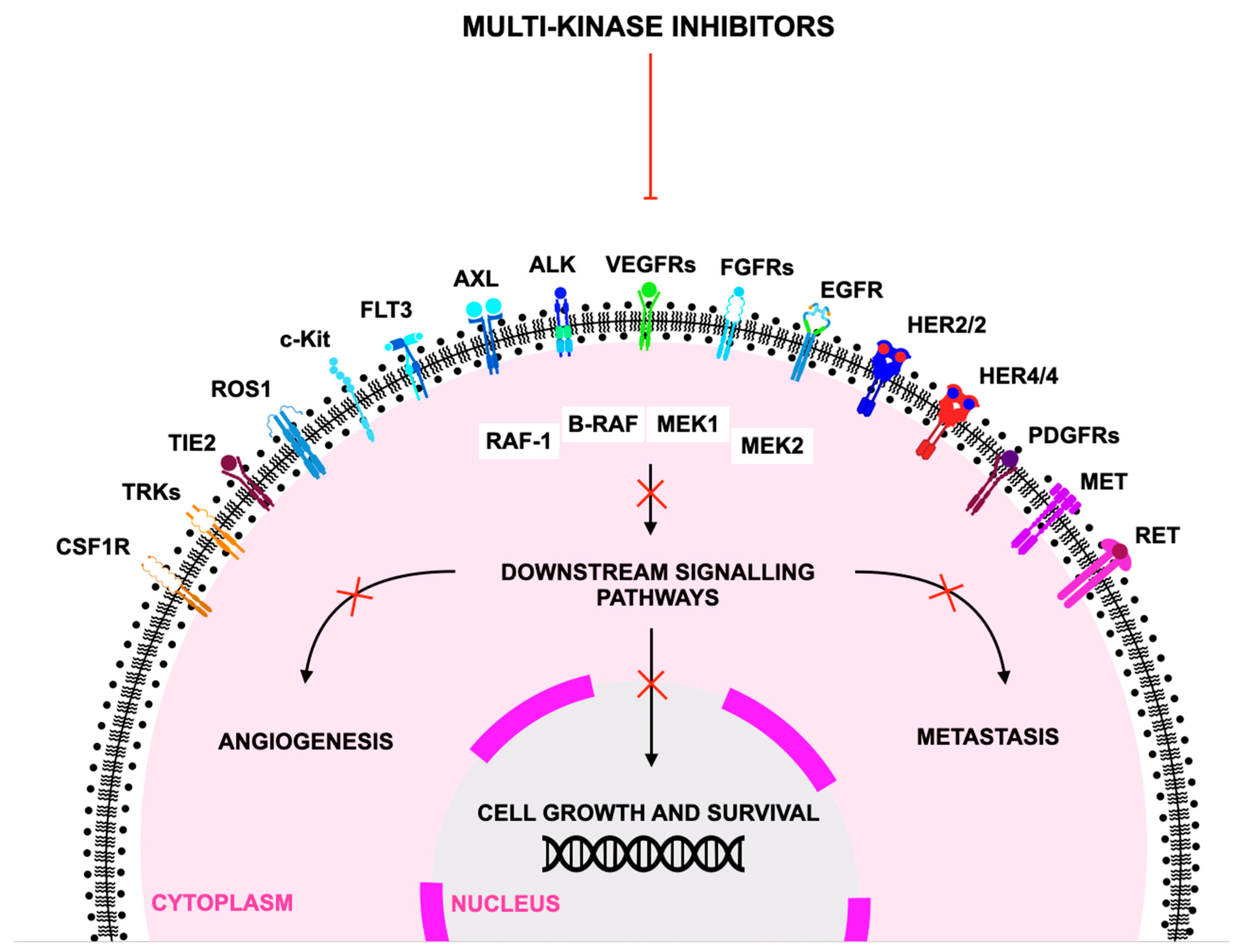

| Generation | Drug Name (Brand Name) | Key Targets | Key Clinical Trial(s)/Registry ID | No. of Patients | Key Efficacy Outcomes | Common Clinically Relevant Adverse Events | Clinical Use |
|---|---|---|---|---|---|---|---|
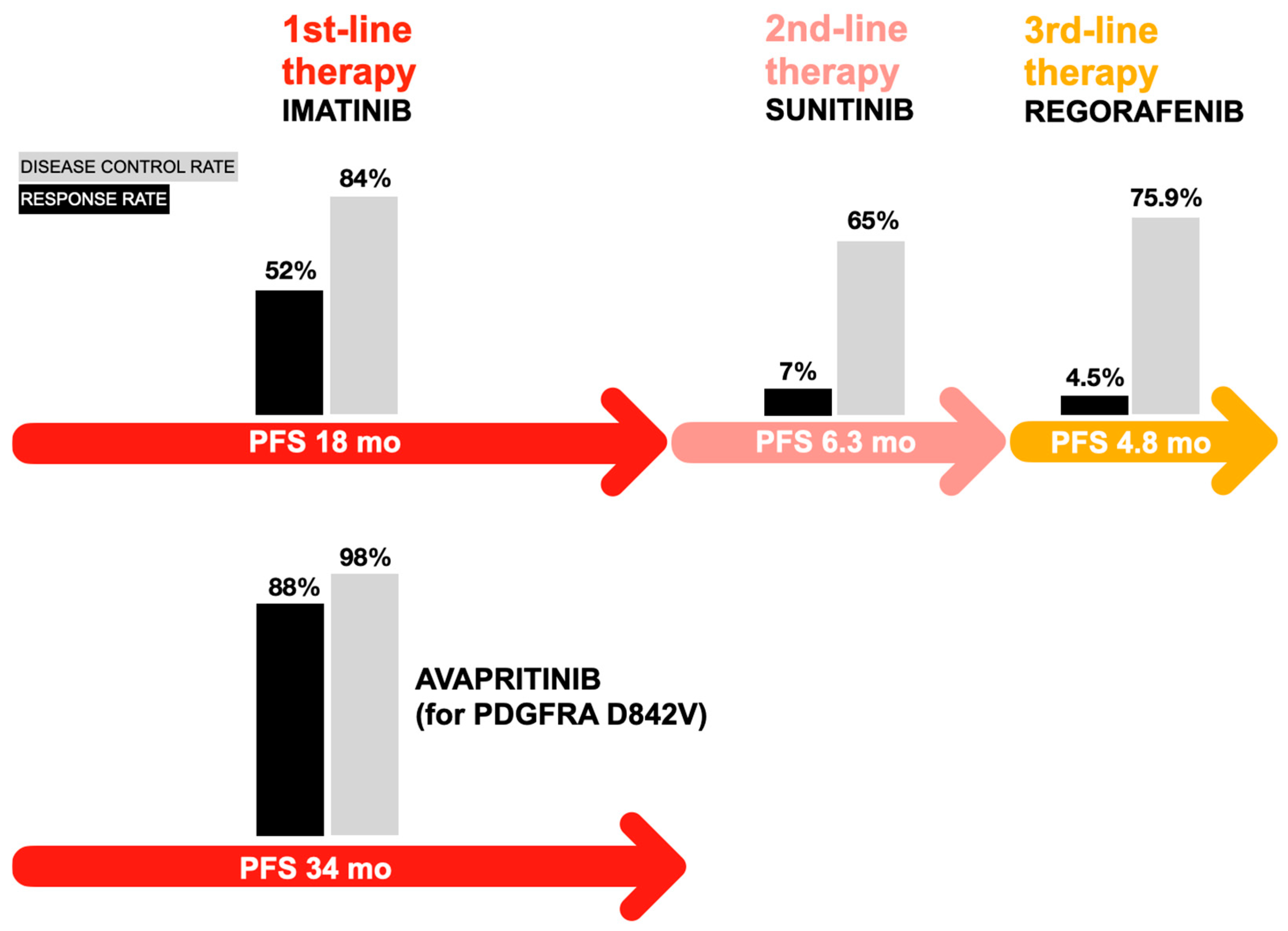
| First | Imatinib (Gleevec®) | KIT, PDGFR, BCR-ABL | B2222 (NCT00004005); S0033 (NCT00009906) | ~147; ~746 | Median PFS: ~18–24 mo; Median OS: >50 mo | Edema, nausea, diarrhea, fatigue, cytopenias | GIST, CML [18,19,20] |
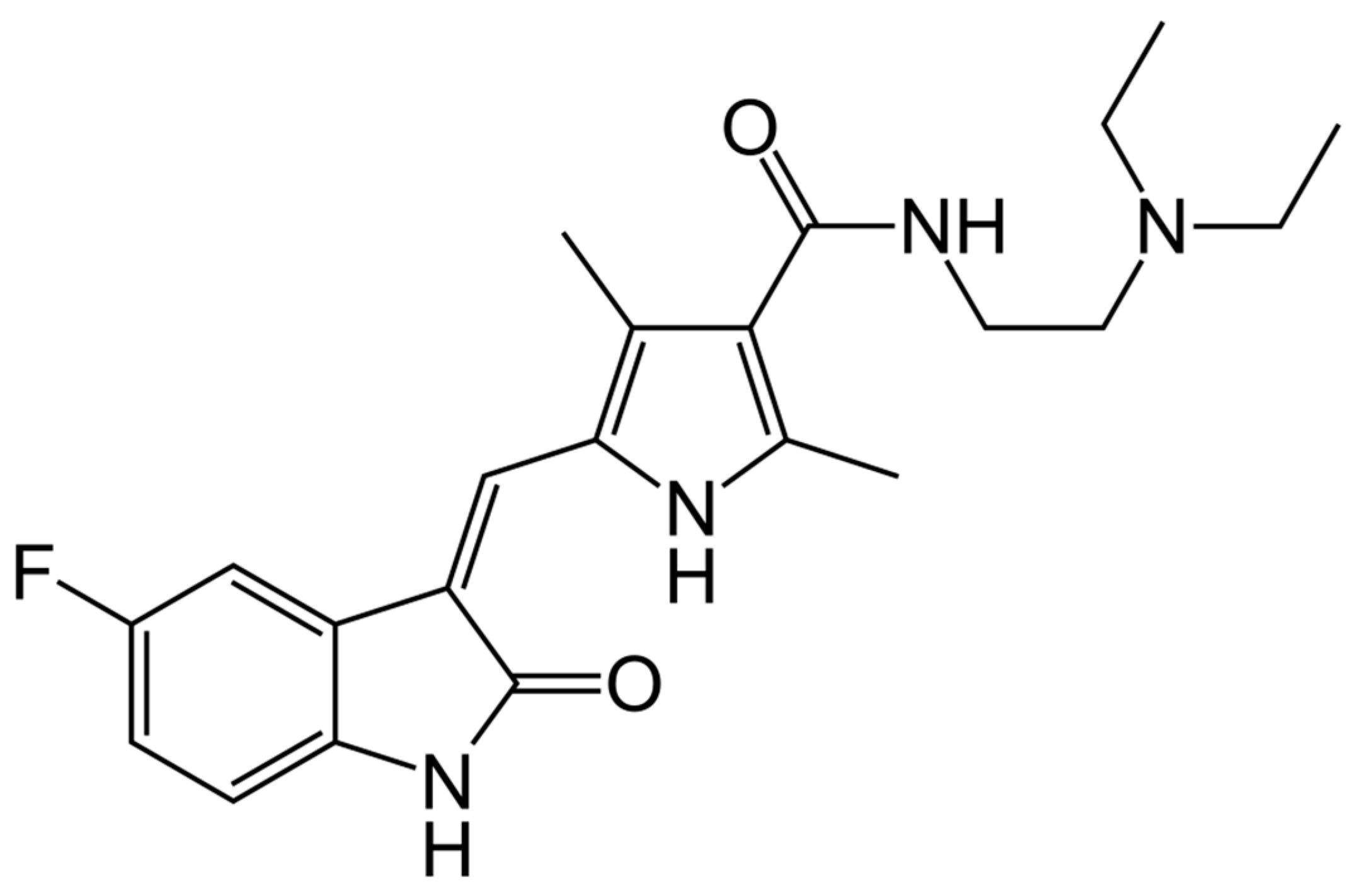
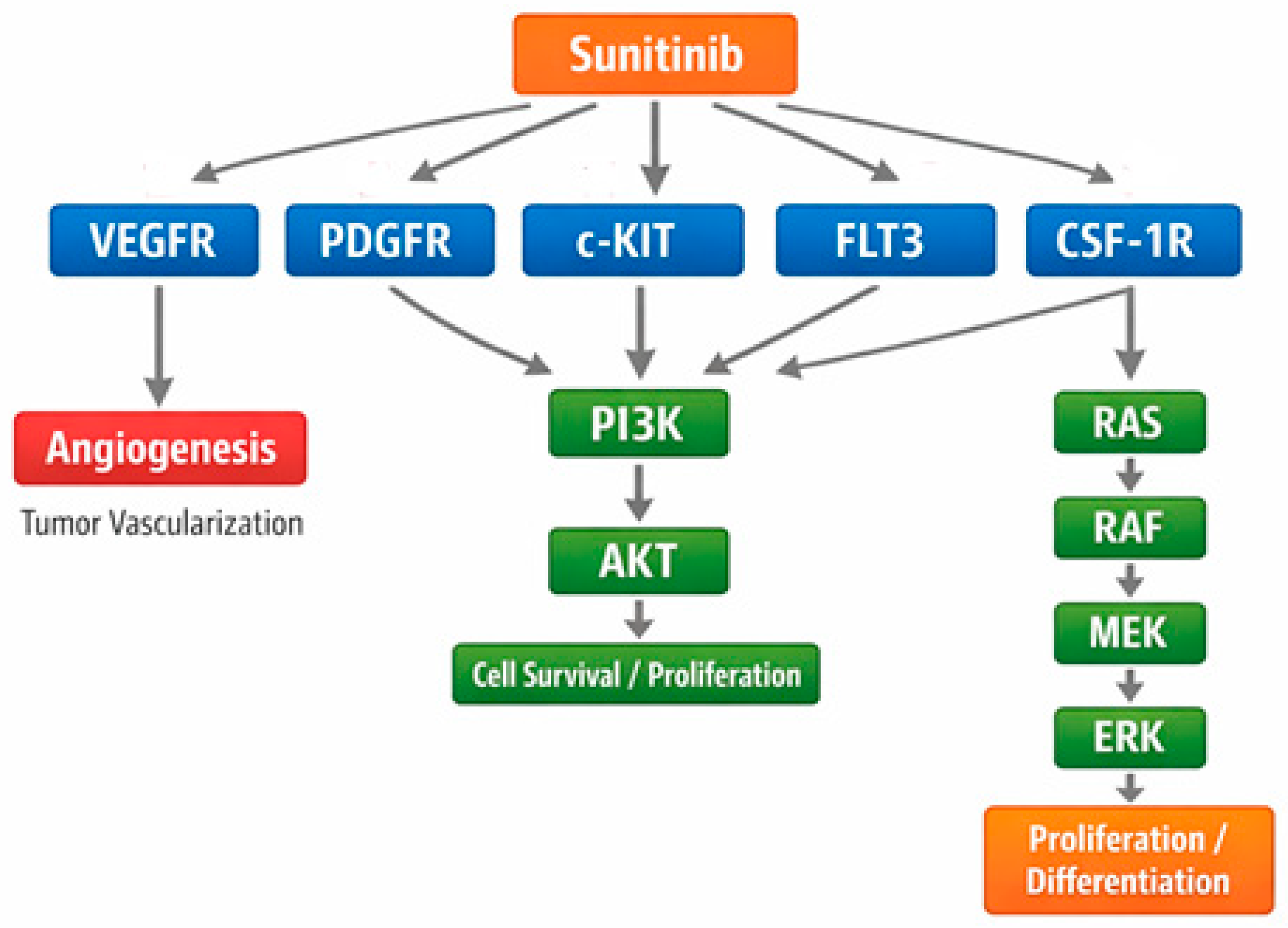
| Second | Sunitinib (Sutent®) | KIT, VEGFR1-3, PDGFRα/β, FLT3, CSF-1R, RET | Phase III trial (NCT00075218) | 312 | Median PFS: 6.3 mo vs. 1.5 mo (placebo) | Hypertension, fatigue, hand–foot syndrome, cytopenias | Imatinib-resistant/intolerant GIST, RCC, pNETs [27] |
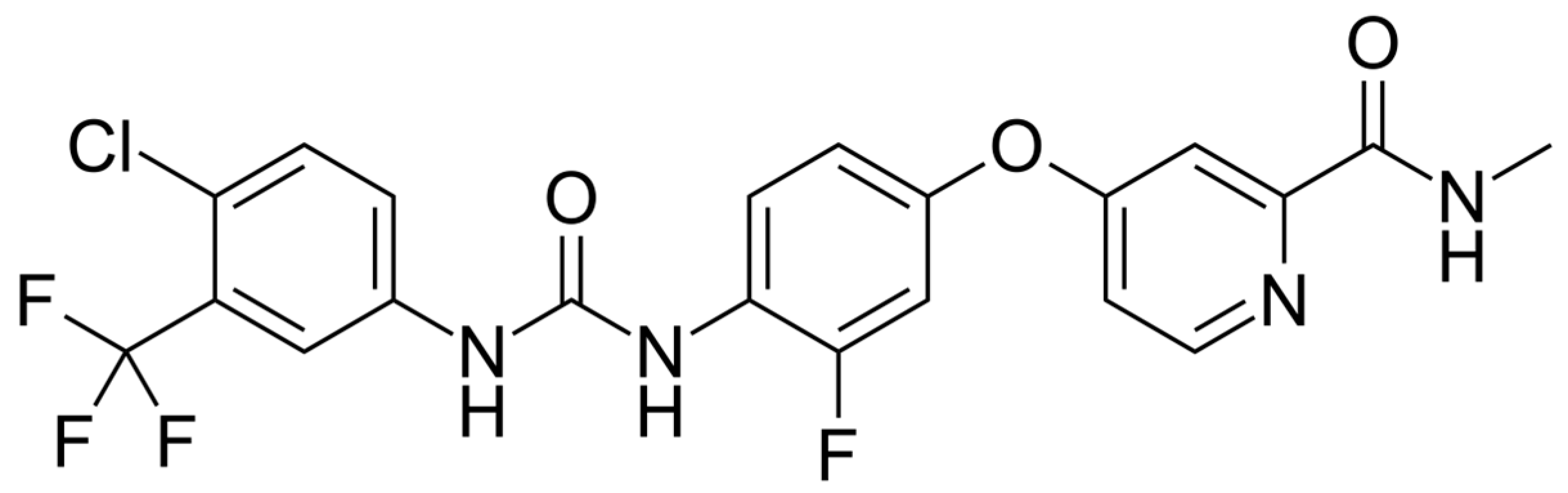
| Second | Regorafenib (Stivarga®) | VEGFR1-3, TIE2, PDGFRβ, FGFR, KIT, RET, RAF | GRID (NCT01271712) | 199 | Median PFS: 4.8 mo vs. 0.9 mo (placebo) | Hand–foot skin reaction, hypertension, diarrhea, fatigue | Refractory mCRC, GIST after imatinib/sunitinib, HCC [28] |
| Second | Sorafenib (Nexavar®) | RAF, VEGFR2-3, PDGFRβ, KIT, FLT3, RET | Phase II studies (NCT00474994) | ~40–50 | Median PFS: ~5–6 mo (off-label) | Rash, diarrhea, hypertension, fatigue | Advanced HCC, RCC, thyroid cancer [29] |
| Second | Pazopanib (Votrient®) | VEGFR1-3, PDGFRα/β, KIT, FGFR | PAZOGIST (NCT01323400) | 81 | Median PFS: 3.4 mo vs. 2.3 mo (BSC) | Hypertension, diarrhea, hepatotoxicity | Soft tissue sarcoma, RCC [30] |
| Second | Cabozantinib (Cabometyx®, Cometriq®) | MET, VEGFR2, RET, AXL, KIT | CaboGIST (NCT02216578) | 50 | Median PFS: 5.5 mo | Diarrhea, fatigue, hypertension, mucositis | RCC, HCC, medullary thyroid carcinoma [31] |
| Second | Axitinib (Inlyta®) | VEGFR1-3, PDGFR, KIT | Phase II trial (NCT01424436) | 30 | Median PFS: ~6 mo | Hypertension, fatigue, diarrhea | RCC [32] |
| Third | Avapritinib (Ayvakit®) | KIT, PDGFRA (highly selective for PDGFRA D842V) | NAVIGATOR (NCT02508532); VOYAGER (NCT03465722) | >250 | ORR: ~88% (PDGFRA D842V); Median PFS: ~24 mo | Cognitive effects, edema, nausea, anemia | PDGFRA D842V-mutant GIST [47] |
| Third | Ripretinib (Qinlock®) | KIT, PDGFRA (activation-loop & gatekeeper mutations) | GRID (NCT03353753) | 129 | Median PFS: 6.3 mo vs. 1.0 mo (placebo) | Alopecia, fatigue, myalgia, hand–foot syndrome | Advanced GIST after ≥3 TKIs [55] |
| Adverse Event | Description/Notes | Dose-Limiting Toxicity (DLT) | Manageable Chronic Effect | Management Strategies |
|---|---|---|---|---|
| Fatigue [70,85] | Very common; may worsen with prolonged therapy | Grade ≥3 limiting daily activities | Mild/moderate, persistent | Evaluate for anemia or thyroid dysfunction Encourage light exercise Treat hypothyroidism if present Dose interruption/reduction for grade ≥ 3 |
| Hypertension [27] | Often appears early due to VEGF pathway inhibition | Uncontrolled grade ≥ 3 | Mild/moderate elevations | Monitor BP closely, weekly during cycle 1 Initiate/adjust antihypertensive therapy Dose interruption/reduction for uncontrolled grade ≥ 3 |
| Hand–Foot Syndrome [86] | Erythema, pain, peeling on palms/soles | Persistent grade ≥ 2 impacting ADLs | Mild redness/tingling | Urea-based emollients, avoid friction Topical corticosteroids and analgesics Interrupt or reduce dose for persistent grade ≥ 2 |
| Mucositis/Stomatitis [86] | Oral soreness, ulceration common | Grade ≥ 3 limiting oral intake | Mild discomfort | Saline/baking soda rinses Avoid irritant foods Topical anesthetics/corticosteroids Dose modification for grade ≥ 3 |
| Diarrhea [27] | Frequent gastrointestinal toxicity | Grade ≥ 3 dehydration or electrolyte imbalance | Mild/moderate loose stools | Loperamide and hydration Dietary modification Dose interruption for grade ≥ 3 |
| Nausea/Vomiting [87] | Usually mild to moderate | Persistent grade ≥ 3 affecting intake | Mild/moderate | Antiemetics Small, frequent meals |
| Anorexia/Weight Loss [87] | Often due to taste changes and GI toxicity | Severe weight loss or malnutrition | Mild decrease in appetite | Nutritional support Manage reversible contributors |
| Hypothyroidism [85] | Very common with chronic sunitinib exposure | Severe symptomatic hypothyroidism | Mild/subclinical | Monitor TSH every 4–6 weeks Start levothyroxine when indicated |
| Hematologic Toxicity [33] | Neutropenia, thrombocytopenia, anemia are dose-related | Grade ≥ 3 cytopenias | Mild/moderate decreases | Regular CBC monitoring G-CSF for severe neutropenia Transfusions if needed Dose adjustment for grade ≥ 3 cytopenias |
| Cardiotoxicity (LVEF decline, HF) [82] | Less common but clinically important | Symptomatic heart failure | Asymptomatic LVEF decline | Baseline and periodic echocardiography Treat with ACE-I and/or β-blockers Discontinue for symptomatic HF |
| Proteinuria/Nephrotic Syndrome [88] | VEGF-related renal toxicity | Nephrotic syndrome | Mild proteinuria | Regular urinalysis Interrupt/stop therapy for nephrotic syndrome |
| Hepatotoxicity [89] | Elevated AST/ALT; rare severe liver injury | Grade ≥ 3 AST/ALT elevation | Mild/moderate LFT elevation | Frequent LFTs Hold or reduce dose for grade ≥ 3 |
| Skin/Hair Pigment Changes [87] | Drug-related; usually benign | Rarely dose-limiting | Cosmetic only | Reassurance; no intervention |
| Hypoglycemia [90] | Observed particularly in diabetics | Severe, symptomatic hypoglycemia | Mild glucose fluctuations | Monitor glucose closely Adjust antidiabetic medications |
| Trial/Study | Indication | Design | Key Outcomes |
|---|---|---|---|
| Phase III Sunitinib vs. IFN-α [27]/NCT00083889 | Metastatic renal cell carcinoma (mRCC) | Randomized, open-label Phase III | Improved PFS (11 vs. 5 months), higher objective response rate |
| Phase III Second-line GIST After Imatinib Failure [33]/NCT00075218 | Gastrointestinal stromal tumor (GIST) | Randomized, double-blind Phase III | Significant improvement in TTP and OS; established second-line standard |
| Expanded Access Program (EAP) in mRCC [87]/NCT00333866 | Metastatic RCC | Global, non-interventional expanded-access cohort | Confirmed efficacy and safety in real-world population |
| Phase II Pancreatic Neuroendocrine Tumor Trial [74]/NCT00428597 | Pancreatic NET (pNET) | Randomized, double-blind, placebo-controlled | Improved PFS (11.4 vs. 5.5 months), ORR 9.3% → FDA approval |
| Dose-Schedule Optimization Study [87]/NCT00112661 | RCC, GIST (safety and PK/PD) | Multicenter safety and dosing study | Identified 4/2 schedule tolerability; described safety profile |
| Long-term Outcomes in mRCC [97]/(pooled analysis, not a standalone trial) | Metastatic RCC | Pooled analysis of Phase II/III trials | Median OS 26–29 months; durable responses |
| Adverse Event | Description | Dose-Limiting Toxicity (DLT) | Manageable Chronic Effect | Recommended Management Strategy |
|---|---|---|---|---|
| Hand–Foot Skin Reaction (HFSR) [28,130] | Palmar–plantar erythema, pain, hyperkeratosis | Persistent grade ≥ 2 limiting daily activities | Mild erythema, tingling, hyperkeratosis | Prophylactic urea-based creams; reduce friction; dose interruption or reduction if grade ≥ 2 |
| Hypertension [131,132] | Early-onset elevation in blood pressure | Uncontrolled grade ≥ 3 | Mild/moderate elevations | Weekly BP monitoring during first cycle; initiate antihypertensives; dose modification if uncontrolled |
| Fatigue [28,133] | Common nonspecific symptom | Grade ≥ 3 limiting daily activities | Mild/moderate, persistent fatigue | Rule out reversible causes; adjust dosing; encourage energy-conservation measures |
| Diarrhea [28,131] | Increased stool frequency; risk of dehydration | Grade ≥ 3 dehydration or electrolyte imbalance | Mild/moderate loose stools | Loperamide; oral hydration; dietary adjustments; dose reduction for grade ≥ 3 |
| Hepatotoxicity [132,134,135] | Elevated liver enzymes or bilirubin | Grade ≥ 3 AST/ALT elevation or bilirubin | Mild/moderate LFT elevations | Baseline and frequent LFT monitoring; hold drug for grade ≥ 3; resume at reduced dose when resolved |
| Mucositis/Stomatitis [130,133] | Oral pain, ulcers | Grade ≥ 3 limiting oral intake | Mild oral soreness | Saline rinses; topical analgesics; avoid irritants; dose reduction if persistent |
| Rash/Desquamation [131,133] | Erythematous or exfoliative eruptions | Severe or symptomatic grade ≥ 3 | Mild erythema, scaling | Emollients; topical corticosteroids; consider dose adjustments |
| Anorexia/Weight Loss [28,134,135] | Reduced appetite and nutritional decline | Severe weight loss or malnutrition | Mild decrease in appetite | Nutritional counseling; treat nausea; consider dose modification |
| Trial | Indication | Study Design | Key Outcomes |
|---|---|---|---|
| CORRECT [28]/NCT01103323 | Metastatic colorectal cancer (mCRC) | Phase III, randomized, placebo-controlled | Improved OS and PFS vs. placebo in previously treated mCRC |
| CONCUR [142]/NCT01584830 | Asian population with mCRC | Phase III, randomized, placebo-controlled | Significant OS benefit; stronger effect size than CORRECT due to less prior therapy |
| GRID [38]/NCT01271712 | Gastrointestinal stromal tumor (GIST) | Phase III, randomized, placebo-controlled | Significant PFS improvement in patients progressing on imatinib and sunitinib |
| RESORCE [110]/NCT01774344 | Hepatocellular carcinoma (HCC) | Phase III, randomized, placebo-controlled | Improved OS in patients previously treated with sorafenib |
| ReDOS [143]/NCT02368886 | mCRC (dose-optimization study) | Phase II, randomized, strategy trial | Weekly dose-escalation strategy improved tolerability and allowed more patients to start cycle 3 |
| REGISTRI [57]/NCT02638766 | GIST (real-world, post-imatinib/sunitinib) | Observational, multicenter | Confirms efficacy and tolerability across diverse populations |
| Ongoing Combination Study [58,144]/NCT04200404, NCT03475953 | GIST, regorafenib ± other agents (CS1001, avelumab) | Phase I/II | Investigating combination/synergistic late-line strategies |
| Other Relevant Non-Combination Ongoing Studies [108,145]/NCT06087263, NCT02889328 | The efficacy of regorafenib as a single agent in specific GIST mutation subsets (KIT Exon 17, 18, or 14 mutation and SDHB-deficient) in the post-imatinib second-line setting. Continuous dosing schedule of regorafenib (100 mg daily) in patients with TKI-refractory GISTs, aiming to prevent disease flare during off-treatment periods of the standard intermittent schedule | Phase II | Investigating late-line strategies |
| Adverse Event | Description | Dose-Limiting Toxicity (DLT) | Manageable Chronic Effect | Recommended Management Strategy |
|---|---|---|---|---|
| Cognitive Effects [16,169] | Memory impairment, confusion, mood changes | Severe impairment affecting daily functioning | Mild memory or attention changes | Baseline cognitive assessment; dose interruption or reduction; consider neurocognitive evaluation if persistent |
| Edema [16] | Periorbital or peripheral swelling | Severe, symptomatic swelling requiring hospitalization or limiting function | Mild peripheral or periorbital edema | Salt restriction; compression garments; diuretics if symptomatic; dose adjustment if severe |
| Fatigue [170] | Generalized tiredness | Grade ≥ 3 limiting daily activities | Mild/moderate, persistent fatigue | Evaluate reversible causes; energy-conservation measures; dose modification for grade ≥ 3 |
| Gastrointestinal Toxicity (Nausea, Vomiting) [169,170] | Common early-onset GI symptoms | Persistent grade ≥ 3 affecting intake or hydration | Mild/moderate nausea or vomiting | Prophylactic or PRN antiemetics; dietary adjustments; consider dose reduction if persistent |
| Hematologic Toxicity [16,171] | Anemia, thrombocytopenia | Grade ≥ 3 cytopenias | Mild/moderate decreases in blood counts | Routine CBC monitoring; transfusions if indicated; dose interruption for grade ≥ 3 |
| Intracranial Bleeding [16] | Rare but serious AE | Symptomatic intracranial hemorrhage | N/A (rare; generally DLT only) | Avoid anticoagulation when possible; monitor neurologic symptoms; immediate drug interruption if suspected |
| Photosensitivity/Rash [169] | Skin erythema or reactions to sunlight | Severe, symptomatic rash or desquamation | Mild erythema | Sun protection; topical corticosteroids; dose modification for grade ≥ 3 |
| Weight Loss/Anorexia [170] | Reduced appetite and weight decline | Severe weight loss or malnutrition | Mild decrease in appetite | Nutritional counseling; treat contributing symptoms; dose modification if significant |
| Trial | Indication | Study Design | Key Outcomes |
|---|---|---|---|
| NAVIGATOR [47]/NCT02508532 | Unresectable or metastatic GIST with PDGFRA exon 18 mutations (incl. D842V) | Phase I, open-label, dose-escalation/expansion | High ORR (notably >80% in PDGFRA D842V); durable responses; manageable safety profile |
| VOYAGER [172]/NCT03465722 | Advanced GIST after ≥2 prior TKIs (imatinib, sunitinib ± regorafenib) | Phase III, randomized, avapritinib vs. regorafenib | Did not meet primary PFS endpoint overall; certain molecular subgroups showed activity |
| CS3007-101, NCT04254939–phase 1/2 (China bridging) trials/Early-phase supporting study [160] | Advanced solid tumors, including GIST (unresectable or metastatic GISTs) | Phase I, dose-finding | Established recommended dose; characterized safety and early antitumor activity |
| PATHFINDER [177]/NCT03580655 | Advanced systemic mastocytosis (advSM) | Phase II, open-label | High response rates across advSM subtypes; marked reductions in mast-cell burden and symptoms |
| Treatment/Strategy | Setting/Indication | Key Evidence/Trial (Summary) | Notes/Practical Considerations |
|---|---|---|---|
| Surgery (complete resection, R0) | Localized, resectable GIST | Standard of care for primary localized GIST—complete resection with negative margins is goal; lymphadenectomy usually not required [203,204]. | Consider tumor rupture risk; refer to sarcoma/GIST center; perioperative planning with mutation results if neoadjuvant considered. |
| Adjuvant imatinib 400 mg daily | High-risk resected GIST (per risk criteria) | SSGXVIII/AIO randomized trial: 36 months > 12 months adjuvant imatinib—improved recurrence-free survival and overall survival in high-risk patients [23,204]. | Recommended for high-risk patients with imatinib-sensitive mutations (KIT exon 11); duration typically 3 years for high-risk patients; assess tolerability and mutational status. |
| Neoadjuvant (preoperative) imatinib | Large primary tumor or borderline resectable disease to enable organ-sparing surgery | Multiple series and prospective studies show tumor downsizing and increased resectability; individualized duration (commonly 6–12 mo) guided by response and operability [204,205]. | Use when resection would be morbid; require early mutation testing to predict sensitivity; monitor response with CT/MRI. |
| Imatinib for advanced/unresectable/metastatic GIST | First-line systemic therapy for advanced disease | Pivotal trials and long-term experience show high response and durable disease control with imatinib (400 mg daily; dose escalation to 800 mg for some KIT exon 9 mutations) [19,204]. | Obtain KIT/PDGFRA mutation testing before or at start; consider dose escalation for KIT exon 9; monitor toxicity and response. |
| Sunitinib (multitargeted TKI) | Second-line therapy after imatinib intolerance/progression | Randomized trials established sunitinib as standard second-line therapy with PFS benefit after imatinib failure [33]. | Active across certain secondary KIT mutations; dose schedule options (e.g., 50 mg 4/2 or continuous lower dose)—tailor to tolerability. |
| Regorafenib | Third-line therapy after imatinib + sunitinib failure | GRID phase 3 trial: regorafenib improved PFS vs. placebo in patients progressing on imatinib and sunitinib [38]. | Consider as standard third-line therapy systemic agent; monitor for hand–foot syndrome, hypertension, hepatic toxicity. |
| Ripretinib | Fourth-line (or later) therapy after ≥3 prior TKIs (including imatinib) | INVICTUS phase 3: ripretinib improved PFS and OS vs. placebo in heavily pretreated patients [55] | Broad-spectrum switch-control TKI with activity against many resistant mutations; approved for later-line therapy. |
| Avapritinib | Advanced/metastatic GIST with PDGFRA exon 18 (including D842V) mutation | NAVIGATOR trial (phase 1/1b and follow-up) demonstrated high response rates in PDGFRA D842V-mutant GIST—led to regulatory approvals for this molecular subgroup [47] | Mandatory mutation testing to identify PDGFRA D842V; avapritinib is preferred for this genotype. Monitor for cognitive and intracranial hemorrhage warnings. |
| Mutation testing (KIT, PDGFRA, SDH, NF1, BRAF, etc.) | All newly diagnosed GIST (ideally before systemic therapy) | Guidelines (ESMO, NCCN, GEIS/SEOM) recommend routine molecular testing because mutation status guides choice/dose of TKI and prognosis [203,204]. | Send tumor (or ctDNA when tissue not available) for exon-level KIT/PDGFRA testing; inform adjuvant/neoadjuvant and systemic therapy decisions. |
| Local therapy for oligoprogression/limited disease | Selected patients on TKI with limited progressing lesions | Surgical metastasectomy or local ablative procedures (radiofrequency ablation, stereotactic radiotherapy) can be considered to control progressing clones while maintaining systemic TKI [203,204]. | Multidisciplinary decision; continue systemic TKI unless contraindicated; reserve for selected pts in specialized centers. |
| Surveillance/follow-up imaging | Post-resection or while on systemic therapy | Guideline-based intervals depend on risk group and therapy—higher-risk patients require more frequent CT/MRI [203,204]. | Use contrast-enhanced CT or MRI; tailor to risk and clinical course; long-term follow-up often required. |
Disclaimer/Publisher’s Note: The statements, opinions and data contained in all publications are solely those of the individual author(s) and contributor(s) and not of MDPI and/or the editor(s). MDPI and/or the editor(s) disclaim responsibility for any injury to people or property resulting from any ideas, methods, instructions or products referred to in the content. |
© 2026 by the authors. Licensee MDPI, Basel, Switzerland. This article is an open access article distributed under the terms and conditions of the Creative Commons Attribution (CC BY) license.
Share and Cite
Kawczak, P.; Bączek, T. The Evolving Role of Second- and Third-Generation Tyrosine Kinase Inhibitors in Gastrointestinal Malignancies: Advances in Targeted Therapy with Sunitinib, Regorafenib, and Avapritinib. J. Clin. Med. 2026, 15, 317. https://doi.org/10.3390/jcm15010317
Kawczak P, Bączek T. The Evolving Role of Second- and Third-Generation Tyrosine Kinase Inhibitors in Gastrointestinal Malignancies: Advances in Targeted Therapy with Sunitinib, Regorafenib, and Avapritinib. Journal of Clinical Medicine. 2026; 15(1):317. https://doi.org/10.3390/jcm15010317
Chicago/Turabian StyleKawczak, Piotr, and Tomasz Bączek. 2026. "The Evolving Role of Second- and Third-Generation Tyrosine Kinase Inhibitors in Gastrointestinal Malignancies: Advances in Targeted Therapy with Sunitinib, Regorafenib, and Avapritinib" Journal of Clinical Medicine 15, no. 1: 317. https://doi.org/10.3390/jcm15010317
APA StyleKawczak, P., & Bączek, T. (2026). The Evolving Role of Second- and Third-Generation Tyrosine Kinase Inhibitors in Gastrointestinal Malignancies: Advances in Targeted Therapy with Sunitinib, Regorafenib, and Avapritinib. Journal of Clinical Medicine, 15(1), 317. https://doi.org/10.3390/jcm15010317