
Assessment of the Degree of Erythema Reduction in Rosacea After Polychromatic Light Treatments
 , , and
Abstract
1. Introduction
2. Materials and Methods
2.1. Study Participants
2.2. Procedure of Erythema Reduction Treatment
2.3. Photographic Documentation
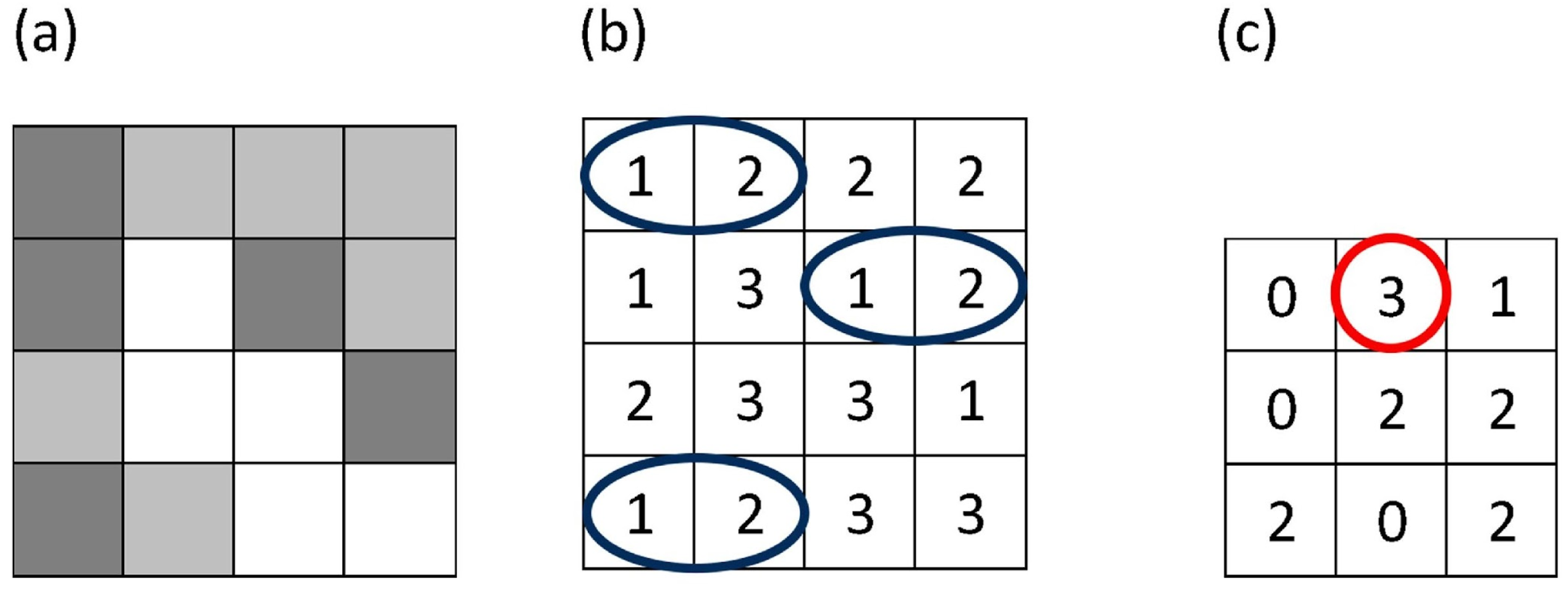
2.4. GLCM Analysis

2.5. Clinician Erythema Assessment (CEA)
2.6. Statistical Analysis
3. Results
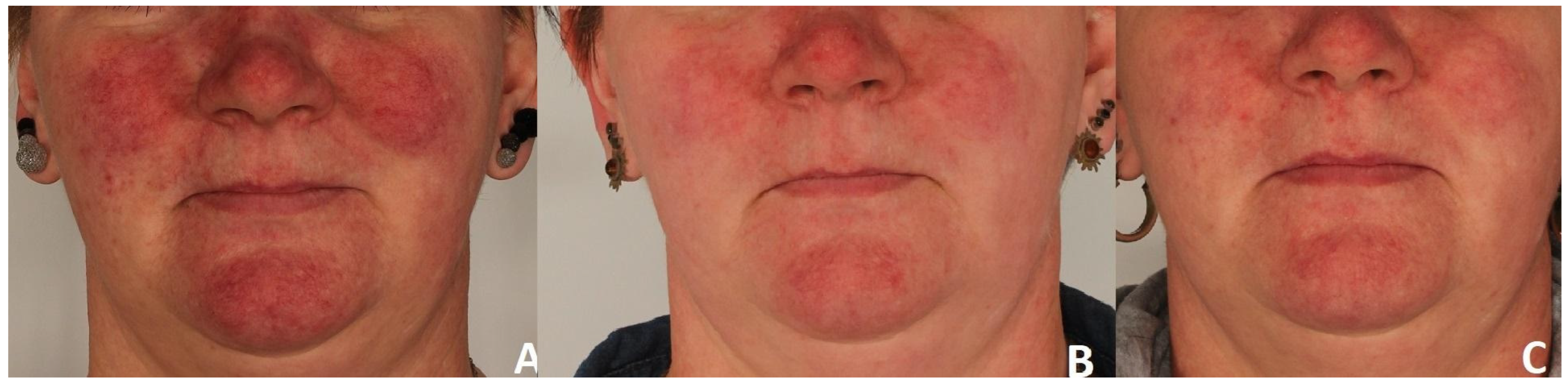
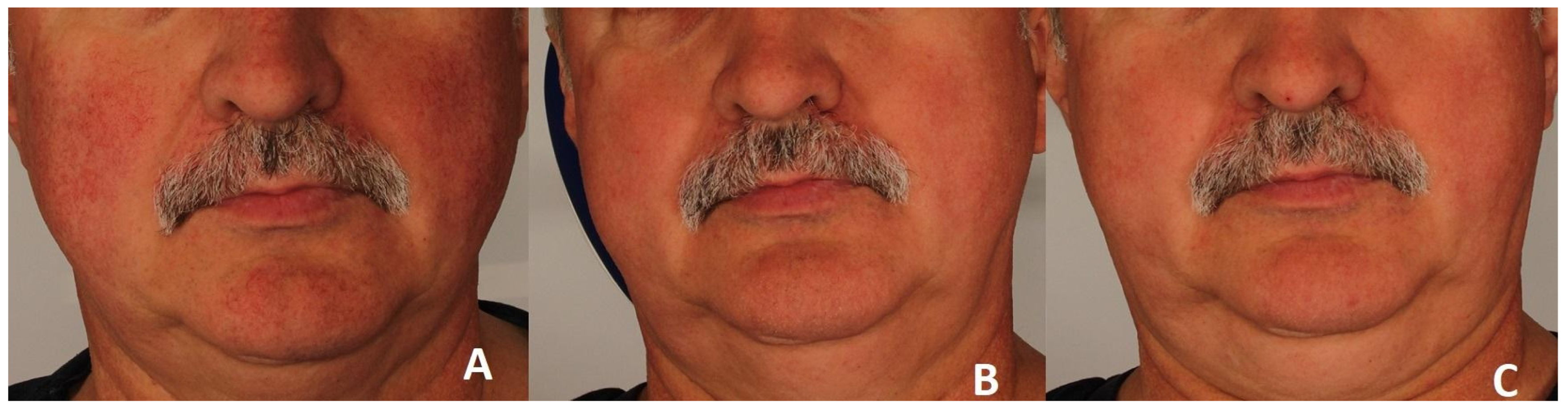
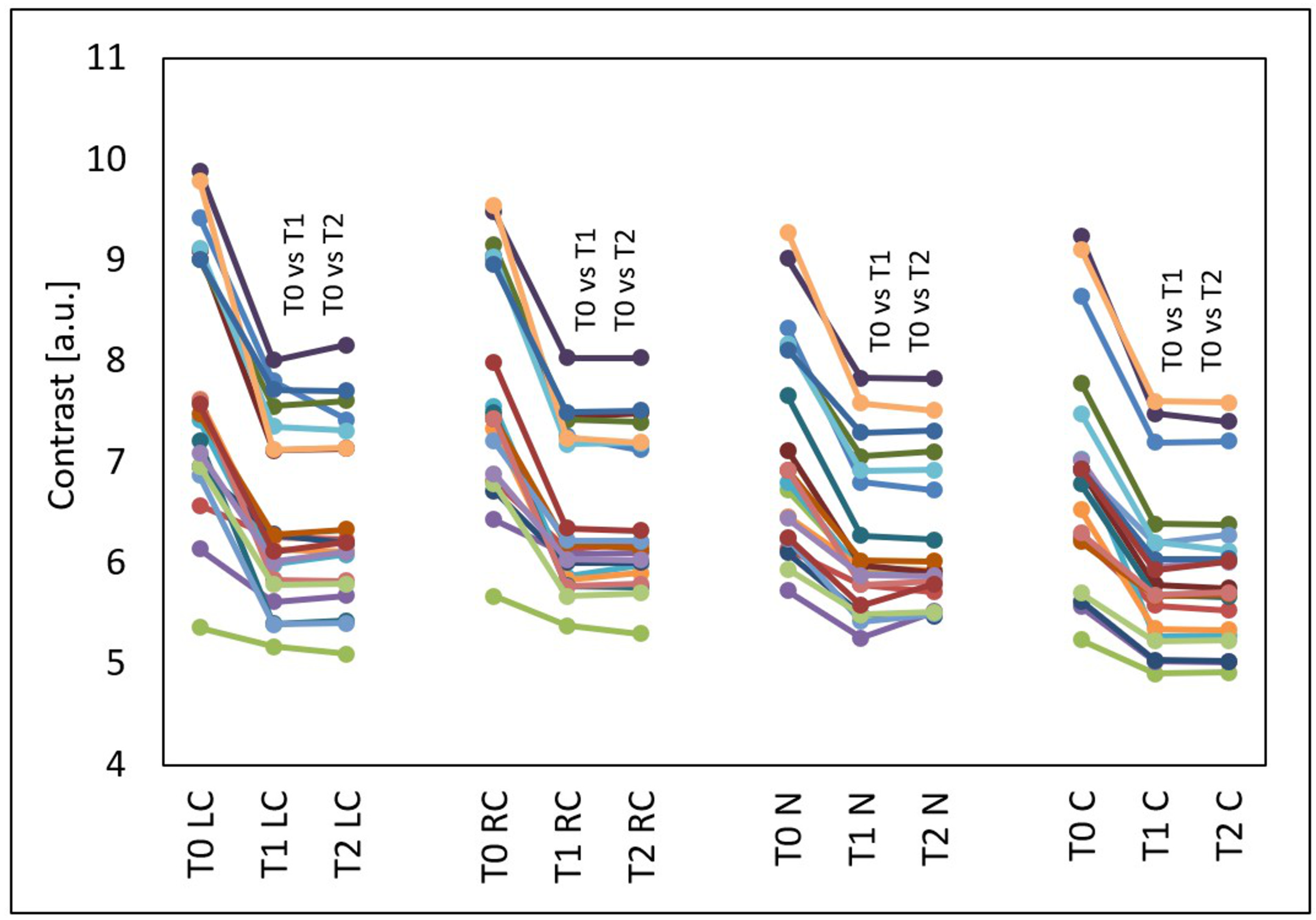
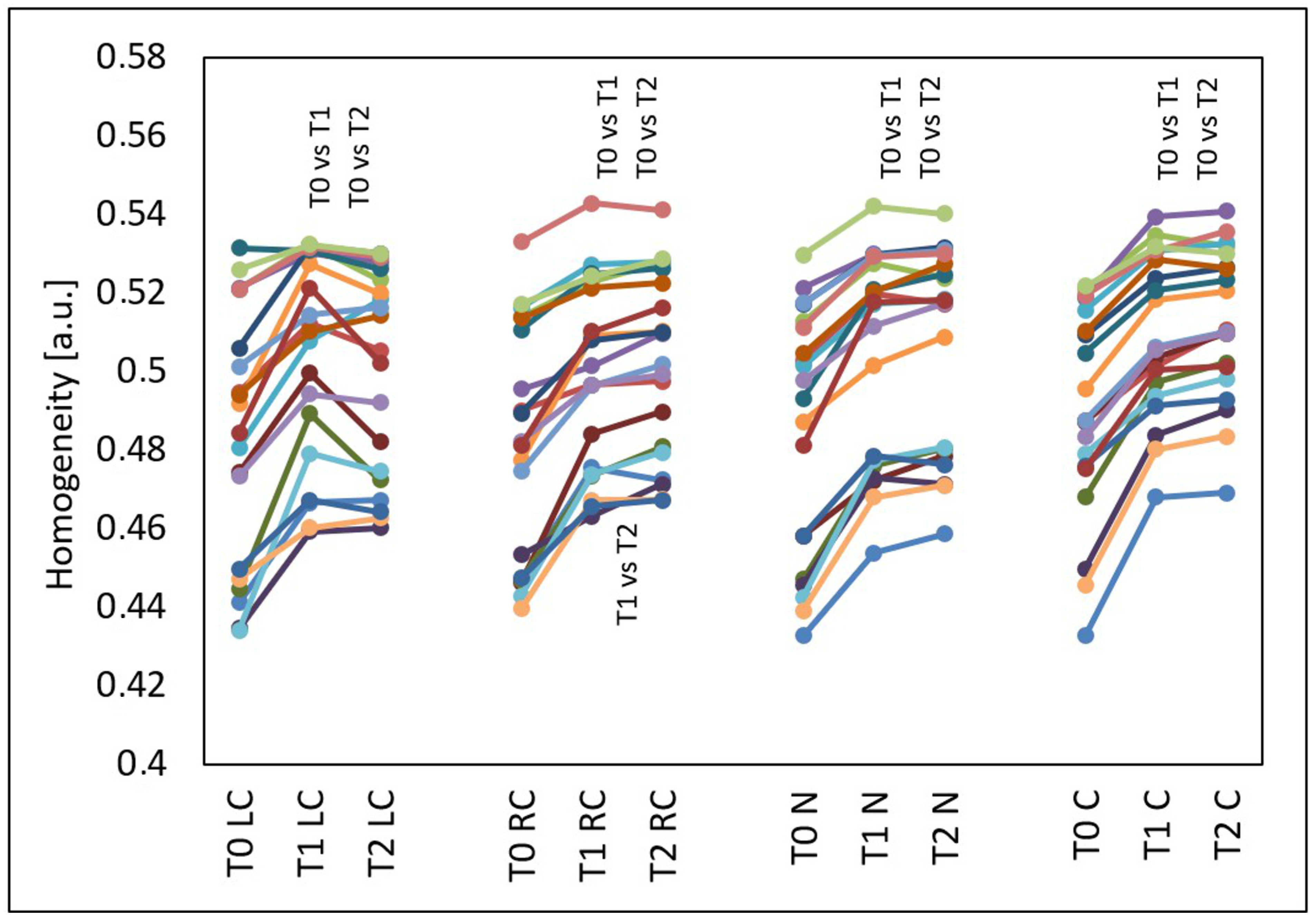
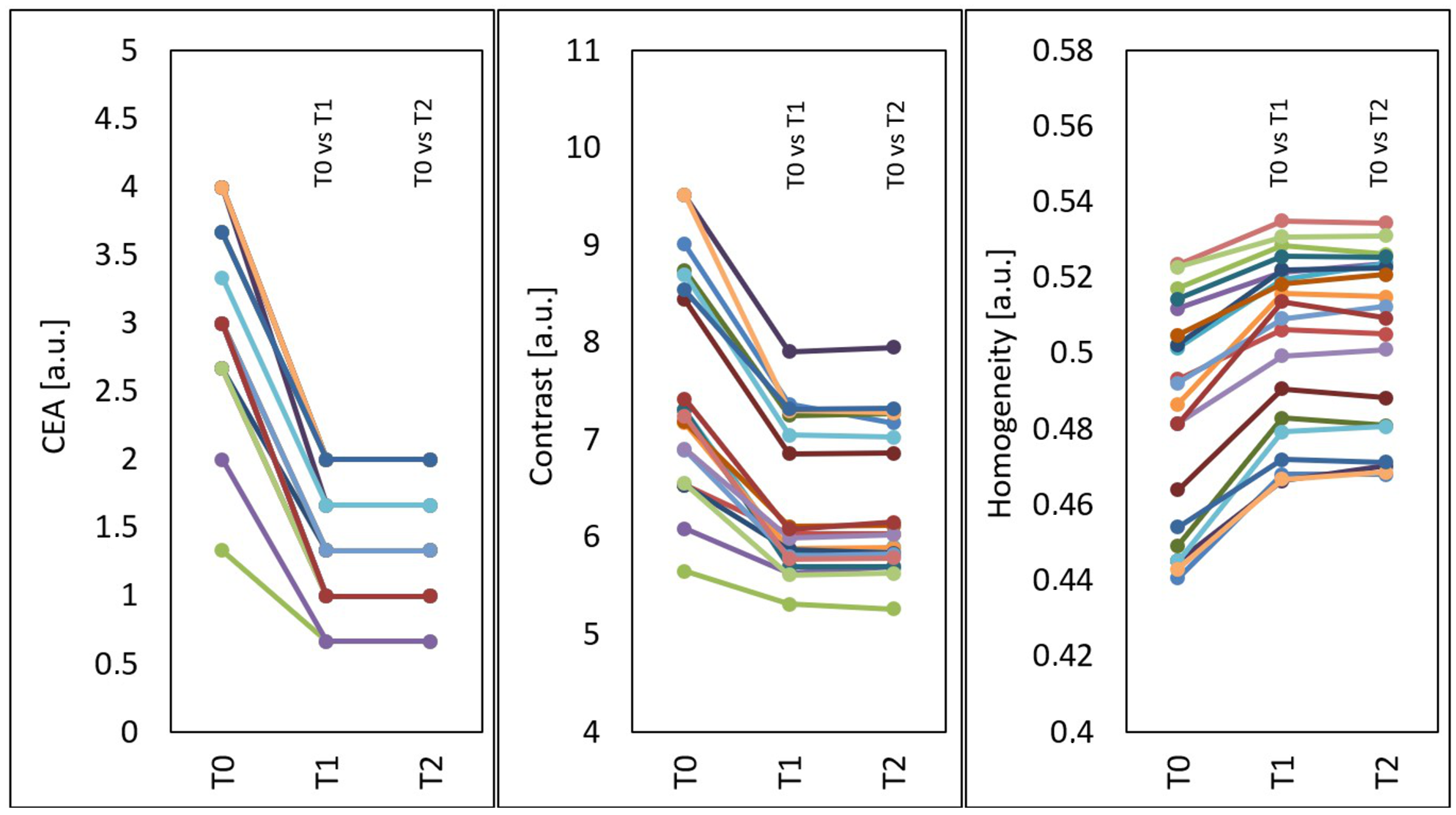
3.1. Treatment Effectiveness
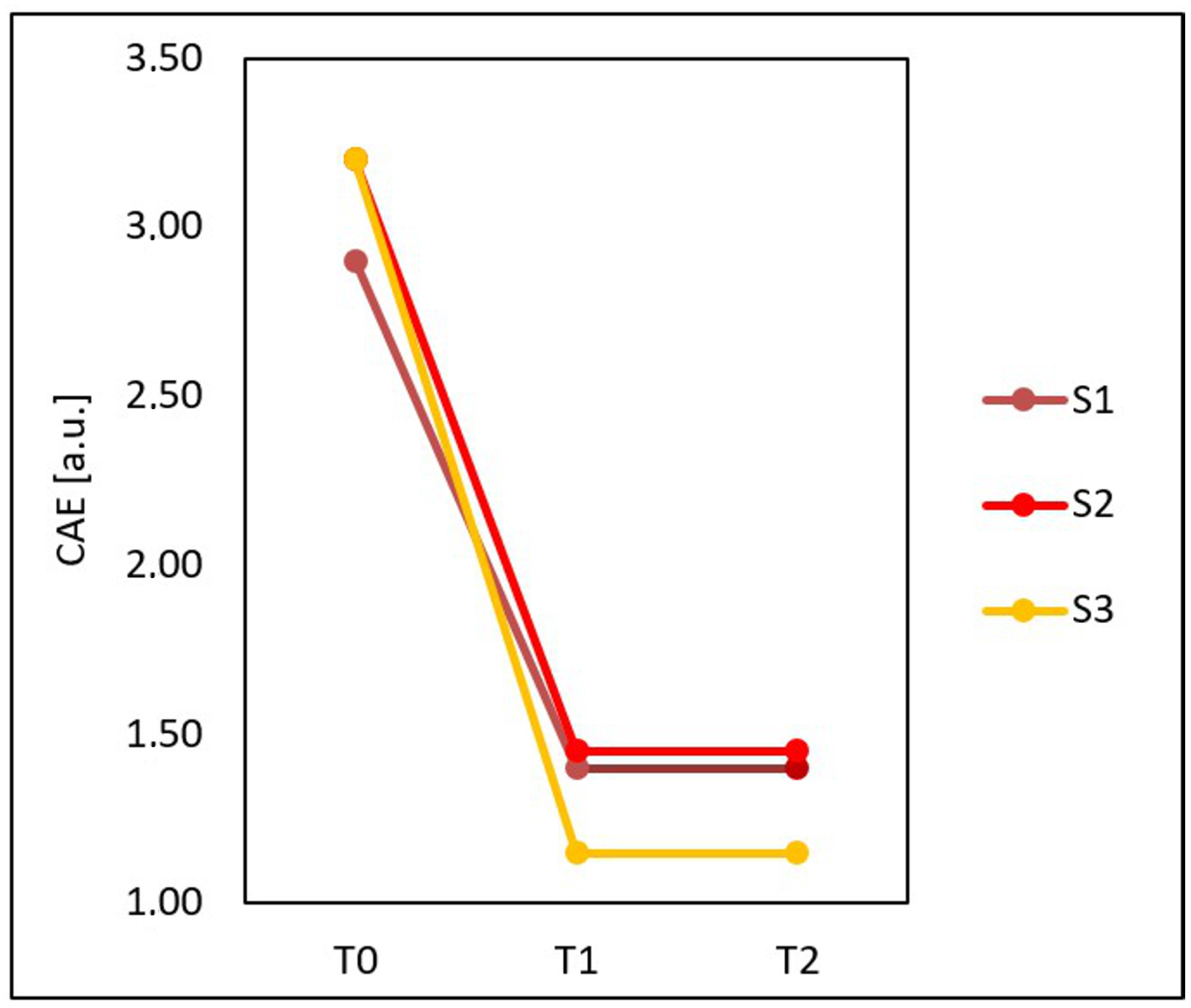
3.2. Comparison of the Results Calculated on the CAE Scale and Obtained from the GLCM Image Analysis
4. Discussion
Limitations
5. Conclusions
Author Contributions
Funding
Institutional Review Board Statement
Informed Consent Statement
Data Availability Statement
Conflicts of Interest
References
- van Zuuren, E.J.; Arents, B.W.M.; van der Linden, M.M.D.; Vermeulen, S.; Fedorowicz, Z.; Tan, J. Rosacea: New Concepts in Classification and Treatment. Am. J. Clin. Dermatol. 2021, 22, 457–465. [Google Scholar] [CrossRef]
- Del Rosso, J.Q. Advances in Understanding and Managing Rosacea: Part 1: Connecting the Dots between Pathophysiological Mechanisms and Common Clinical Features of Rosacea with Emphasis on Vascular Changes and Facial Erythema. J. Clin. Aesthet. Dermatol. 2012, 5, 16–25. [Google Scholar]
- Del Rosso, J.Q. Advances in Understanding and Managing Rosacea: Part 2: The Central Role, Evaluation, and Medical Management of Diffuse and Persistent Facial Erythema of Rosacea. J. Clin. Aesthet. Dermatol. 2012, 5, 26–36. [Google Scholar]
- Zhang, H.; Tang, K.; Wang, Y.; Fang, R.; Sun, Q. Rosacea Treatment: Review and Update. Dermatol. Ther. 2021, 11, 13–24. [Google Scholar] [CrossRef]
- Baldwin, H.E.; Harper, J.; Baradaran, S.; Patel, V. Erythema of Rosacea Affects Health-Related Quality of Life: Results of a Survey Conducted in Collaboration with the National Rosacea Society. Dermatol. Ther. 2019, 9, 725–734. [Google Scholar] [CrossRef]
- Johnson, S.M.; Berg, A.; Barr, C. Managing Rosacea in the Clinic: From Pathophysiology to Treatment-A Review of the Literature. J. Clin. Aesthet. Dermatol. 2020, 13, S17–S22. [Google Scholar]
- Cribier, B. Pathophysiology of Rosacea: Redness, Telangiectasia, and Rosacea. Ann. Dermatol. Venereol. 2011, 138, S184–S191. [Google Scholar] [CrossRef] [PubMed]
- Tan, J.; Leoni, M. Erythema of Rosacea: Validation of Patient’s Self-Assessment Grading Scale. J. Drugs Dermatol. 2015, 14, 841–844. [Google Scholar]
- Geng, R.S.Q.; Bourkas, A.N.; Mufti, A.; Sibbald, R.G. Rosacea: Pathogenesis and Therapeutic Correlates. J. Cutan. Med. Surg. 2024, 28, 178–189. [Google Scholar] [CrossRef] [PubMed]
- Holmes, A.D.; Steinhoff, M. Integrative Concepts of Rosacea Pathophysiology, Clinical Presentation and New Therapeutics. Exp. Dermatol. 2017, 26, 659–667. [Google Scholar] [CrossRef] [PubMed]
- Yang, F.; Wang, L.; Song, D.; Zhang, L.; Wang, X.; Du, D.; Jiang, X. Signaling Pathways and Targeted Therapy for Rosacea. Front. Immunol. 2024, 15, 1367994. [Google Scholar] [CrossRef]
- De Grau-Bassal, G.; Calpena-Campmany, A.C.; Silva-Abreu, M.; Suñer-Carbó, J.; Mallandrich-Miret, M.; Martínez-Ruiz, S.; Cordero, C.; Del Pozo, A.; Febrer, N.B. Emulgel Containing Metronidazole and Clindamycin for the Treatment of Rosacea. Pharmaceutics 2025, 17, 168. [Google Scholar] [CrossRef]
- Steinhoff, M.; Schmelz, M.; Schauber, J. Facial Erythema of Rosacea-Aetiology, Different Pathophysiologies and Treatment Options. Acta Derm. Venereol. 2016, 96, 579–586. [Google Scholar] [CrossRef]
- Liu, J.; Liu, J.; Ren, Y.; Li, B.; Lu, S. Comparative Efficacy of Intense Pulsed Light for Different Erythema Associated with Rosacea. J. Cosmet. Laser Ther. 2014, 16, 324–327. [Google Scholar] [CrossRef] [PubMed]
- Kim, B.Y.; Moon, H.R.; Ryu, H.J. Comparative Efficacy of Short-Pulsed Intense Pulsed Light and Pulsed Dye Laser to Treat Rosacea. J. Cosmet. Laser Ther. 2019, 21, 291–296. [Google Scholar] [CrossRef]
- Ruan, J.; Zheng, Y.; Cai, S. Efficacy and Safety Comparison between Pulsed Dye Laser and Intense Pulsed Light Configured with Different Wavelength Bands in Treating Erythematotelangiectatic Rosacea. Lasers Med. Sci. 2024, 39, 146. [Google Scholar] [CrossRef]
- Zhai, Q.; Cheng, S.; Liu, R.; Xie, J.; Han, X.; Yu, Z. Meta-Analysis of the Efficacy of Intense Pulsed Light and Pulsed-Dye Laser Therapy in the Management of Rosacea. J. Cosmet. Dermatol. 2024, 23, 3821–3827. [Google Scholar] [CrossRef]
- Husein-ElAhmed, H.; Steinhoff, M. Laser and Light-Based Therapies in the Management of Rosacea: An Updated Systematic Review. Lasers Med. Sci. 2021, 36, 1151–1160. [Google Scholar] [CrossRef] [PubMed]
- Babilas, P.; Schreml, S.; Szeimies, R.M.; Landthaler, M. Intense Pulsed Light (IPL): A Review. Lasers Surg. Med. 2010, 42, 93–104. [Google Scholar] [CrossRef] [PubMed]
- Tan, J.; Liu, H.; Leyden, J.J.; Leoni, M.J. Reliability of Clinician Erythema Assessment Grading Scale. J. Am. Acad. Dermatol. 2014, 71, 760–763. [Google Scholar] [CrossRef]
- Hopkinson, D.; Moradi Tuchayi, S.; Alinia, H.; Feldman, S.R. Assessment of Rosacea Severity: A Review of Evaluation Methods Used in Clinical Trials. J. Am. Acad. Dermatol. 2015, 73, 138–143.e4. [Google Scholar] [CrossRef]
- Seo, J.K.; Shin, E.J.; Jeong, K.H.; Shin, M.K. Clinician Severity Assessment Grading Scale on Erythematotelangiectatic Rosacea. Indian J. Dermatol. 2021, 66, 203–205. [Google Scholar] [CrossRef]
- Wawrzyk-Bochenek, I.; Rahnama, M.; Stachura, M.; Wilczyński, S.; Wawrzyk, A. Evaluation of the Reduction of Skin Hyperpigmentation Changes under the Influence of a Preparation Containing Kojic Acid Using Hyperspectral Imaging-Preliminary Study. J. Clin. Med. 2023, 12, 2710. [Google Scholar] [CrossRef]
- Wei, L.S.; Gan, Q.; Ji, T. Skin Disease Recognition Method Based on Image Color and Texture Features. Comput. Math. Methods Med. 2018, 2018, 8145713. [Google Scholar] [CrossRef] [PubMed]
- Almeida, M.A.M.; Santos, I.A.X. Classification Models for Skin Tumor Detection Using Texture Analysis in Medical Images. J. Imaging 2020, 6, 51. [Google Scholar] [CrossRef]
- Fernandez, H.C.; Ortega, O.L.; Félix Castro-Espinozaa, I.; Ponomaryov, V. Intelligent Skin Cancer Diagnostic System Based on Digital Images Obtained by Dermatoscopy. Acta Polytech. Hung. 2017, 14, 169–185. [Google Scholar]
- Odrzywołek, W.; Deda, A.; Zdrada, J.; Wilczyński, S.; Błońska-Fajfrowska, B.; Lipka-Trawińska, A. Quantitative Evaluation of the Effectiveness of Chemical Peelings in Reducing Acne Lesions Based on Gray-Level Co-Occurrence Matrix (GLCM). Clin. Cosmet. Investig. Dermatol. 2022, 15, 1873–1882. [Google Scholar] [CrossRef]
- Ansari, U.B. Skin Cancer Detection Using Image Processing. Int. Res. J. Eng. Technol. 2017, 4, 2875–2881. [Google Scholar]
- Pang, H.; Chen, T.; Wang, X.; Chang, Z.; Shao, S.; Zhao, J. Quantitative Evaluation Methods of Skin Condition Based on Texture Feature Parameters. Saudi J. Biol. Sci. 2017, 24, 514–518. [Google Scholar] [CrossRef] [PubMed]
- Wawrzyk-Bochenek, I.; Rahnama, M.; Wilczyński, S.; Wawrzyk, A. Quantitative Assessment of Hyperpigmentation Changes in Human Skin after Microneedle Mesotherapy Using the Gray-Level Co-Occurrence Matrix (GLCM) Method. J. Clin. Med. 2023, 12, 5249. [Google Scholar] [CrossRef]
- Kikuchi, K.; Masuda, Y.; Yamashita, T.; Kawai, E.; Hirao, T. Image Analysis of Skin Color Heterogeneity Focusing on Skin Chromophores and the Age-Related Changes in Facial Skin. Skin Res. Technol. 2015, 2, 175–183. [Google Scholar] [CrossRef]
- Ou, X.; Pan, W.; Xiao, P. In Vivo Skin Capacitive Imaging Analysis by Using Grey Level Co-Occurrence Matrix (GLCM). Int. J. Pharm. 2014, 460, 28–32. [Google Scholar] [CrossRef] [PubMed]
- Alibabaei, S.; Rahmani, M.; Tahmasbi, M.; Tahmasebi Birgani, M.J.; Razmjoo, S. Evaluating the Gray Level Co-Occurrence Matrix-Based Texture Features of Magnetic Resonance Images for Glioblastoma Multiform Patients’ Treatment Response Assessment. J. Med. Signals Sens. 2023, 13, 261–271. [Google Scholar] [CrossRef]
- Piccolo, D.; Fusco, I.; Zingoni, T.; Conforti, C. Effective Treatment of Rosacea and Other Vascular Lesions Using Intense Pulsed Light System Emitting Vascular Chromophore-Specific Wavelengths: A Clinical and Dermoscopical Analysis. J. Clin. Med. 2024, 13, 1646. [Google Scholar] [CrossRef]
- Tsunoda, K.; Akasaka, K.; Akasaka, T.; Amano, H. Successful Treatment of Erythematotelangiectatic Rosacea with Intense Pulsed Light: Report of 13 Cases. J. Dermatol. 2018, 45, 1113–1116. [Google Scholar] [CrossRef]
- Adabi, S.; Hosseinzadeh, M.; Noei, S.; Conforto, S.; Daveluy, S.; Clayton, A.; Mehregan, D.; Nasiriavanaki, M. Universal in Vivo Textural Model for Human Skin Based on Optical Coherence Tomograms. Sci. Rep. 2017, 7, 17912. [Google Scholar] [CrossRef] [PubMed]
- Abdlaty, R.; Fang, Q. Skin Erythema Assessment Techniques. Clin. Dermatol. 2021, 39, 591–604. [Google Scholar] [CrossRef]
- Saknite, I.; Zavorins, A.; Jakovels, D.; Spigulis, J.; Kisis, J. Comparison of Single-Spot Technique and RGB Imaging for Erythema Index Estimation. Physiol. Meas. 2016, 37, 333–346. [Google Scholar] [CrossRef] [PubMed]



| Volunteer Number | Energy Density J/cm2 | ||
|---|---|---|---|
| Treatment 1 | Treatment 2 | Treatment 3 | |
| 1 | 12 | 14 | 17 |
| 2 | 14 | 16 | 17 |
| 3 | 14 | 15 | 16 |
| 4 | 13 | 15 | 17 |
| 5 | 13 | 14 | 16 |
| 6 | 13 | 15 | 17 |
| 7 | 14 | 16 | 17 |
| 8 | 12 | 14 | 16 |
| 9 | 13 | 15 | 16 |
| 10 | 12 | 14 | 16 |
| 11 | 12 | 14 | 16 |
| 12 | 12 | 13 | 15 |
| 13 | 13 | 15 | 16 |
| 14 | 12 | 14 | 16 |
| 15 | 14 | 15 | 16 |
| 16 | 13 | 15 | 16 |
| 17 | 12 | 14 | 15 |
| 18 | 12 | 14 | 15 |
| 19 | 12 | 14 | 16 |
| 20 | 12 | 14 | 16 |
| N | R | t(N − 2) | p | |
|---|---|---|---|---|
| CEA T0 and T0 Contrast | 20 | 0.943 | 12.057 | <0.001 |
| CEA T1 and T1 Contrast | 20 | 0.839 | 6.547 | <0.001 |
| CEA T2 and T2 Contrast | 20 | 0.814 | 5.947 | <0.001 |
| N | R | t(N − 2) | p | |
| CEA T0 and T0 Homogeneity | 20 | −0.828 | −6.256 | <0.001 |
| CEA T1 and T1 Homogeneity | 20 | −0.769 | −5.097 | <0.001 |
| CEA T2 and T2 Homogeneity | 20 | −0.788 | −5.433 | <0.001 |
Disclaimer/Publisher’s Note: The statements, opinions and data contained in all publications are solely those of the individual author(s) and contributor(s) and not of MDPI and/or the editor(s). MDPI and/or the editor(s) disclaim responsibility for any injury to people or property resulting from any ideas, methods, instructions or products referred to in the content. |
© 2025 by the authors. Licensee MDPI, Basel, Switzerland. This article is an open access article distributed under the terms and conditions of the Creative Commons Attribution (CC BY) license.
Share and Cite
Deda, A.; Lipka-Trawińska, A.; Wcisło-Dziadecka, D.; Miziołek, B.; Hartman-Petrycka, M.; Wilczyński, S. Assessment of the Degree of Erythema Reduction in Rosacea After Polychromatic Light Treatments. J. Clin. Med. 2026, 15, 302. https://doi.org/10.3390/jcm15010302
Deda A, Lipka-Trawińska A, Wcisło-Dziadecka D, Miziołek B, Hartman-Petrycka M, Wilczyński S. Assessment of the Degree of Erythema Reduction in Rosacea After Polychromatic Light Treatments. Journal of Clinical Medicine. 2026; 15(1):302. https://doi.org/10.3390/jcm15010302
Chicago/Turabian StyleDeda, Anna, Aleksandra Lipka-Trawińska, Dominika Wcisło-Dziadecka, Bartosz Miziołek, Magdalena Hartman-Petrycka, and Sławomir Wilczyński. 2026. "Assessment of the Degree of Erythema Reduction in Rosacea After Polychromatic Light Treatments" Journal of Clinical Medicine 15, no. 1: 302. https://doi.org/10.3390/jcm15010302
APA StyleDeda, A., Lipka-Trawińska, A., Wcisło-Dziadecka, D., Miziołek, B., Hartman-Petrycka, M., & Wilczyński, S. (2026). Assessment of the Degree of Erythema Reduction in Rosacea After Polychromatic Light Treatments. Journal of Clinical Medicine, 15(1), 302. https://doi.org/10.3390/jcm15010302