Article

Physical Activity, Physical Fitness and Energy Intake Predict All-Cause Mortality and Age at Death in Extinct Cohorts of Middle-Aged Men Followed-Up for 61 Years


by
Alessandro Menotti
1 and
Paolo Emilio Puddu
1,2,*
1
Association for Cardiac Research, 00182 Rome, Italy
2
EA 4650, Signalisation, Électrophysiologie et Imagerie des Lésions D’ischémie Reperfusion Myocardique, Normandie Université, UNICAEN, 14000 Caen, France
*
Author to whom correspondence should be addressed.
J. Clin. Med. 2025, 14(7), 2178; https://doi.org/10.3390/jcm14072178
Submission received: 12 January 2025 / Revised: 19 March 2025 / Accepted: 20 March 2025 / Published: 22 March 2025
(This article belongs to the Section Epidemiology & Public Health)

Abstract

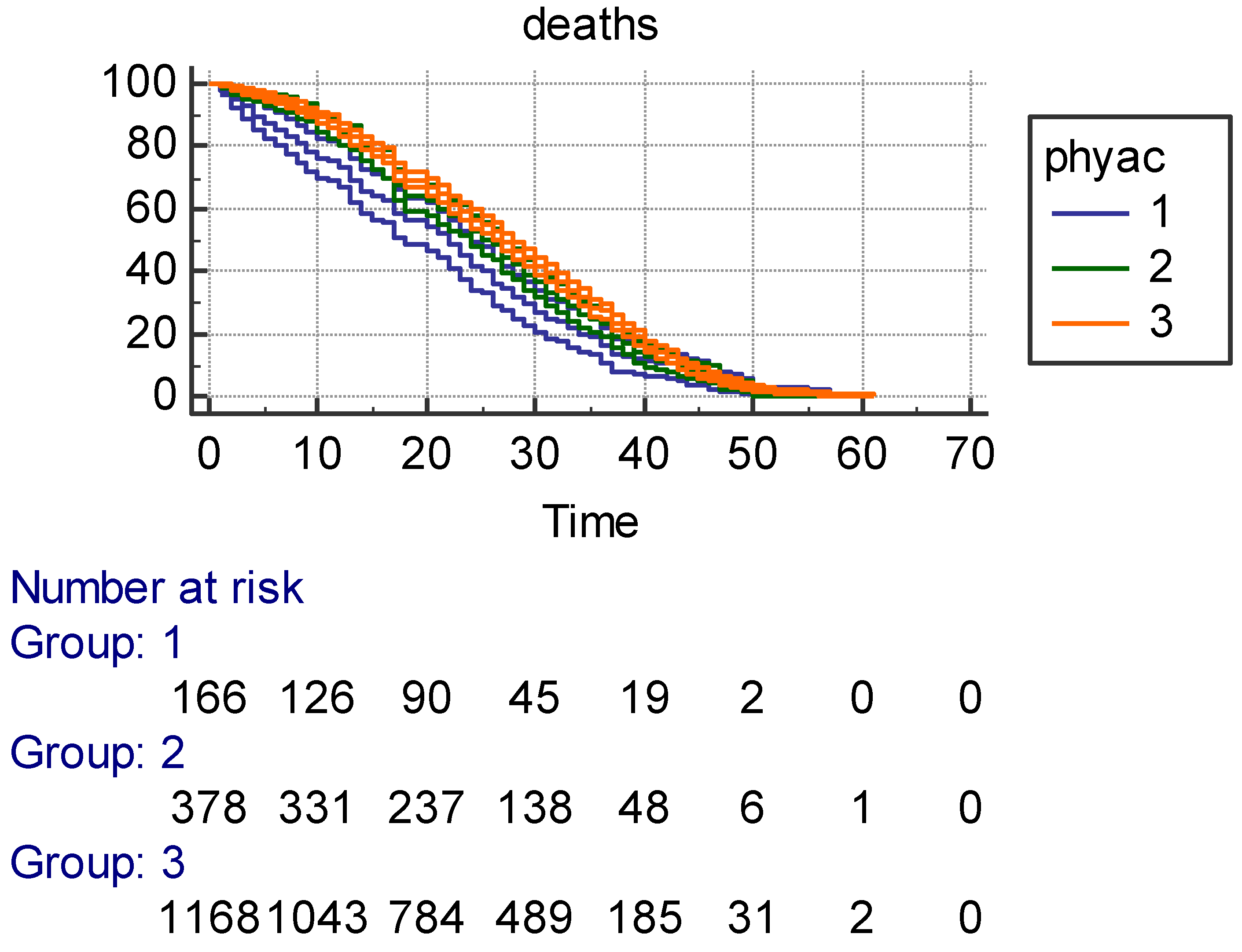
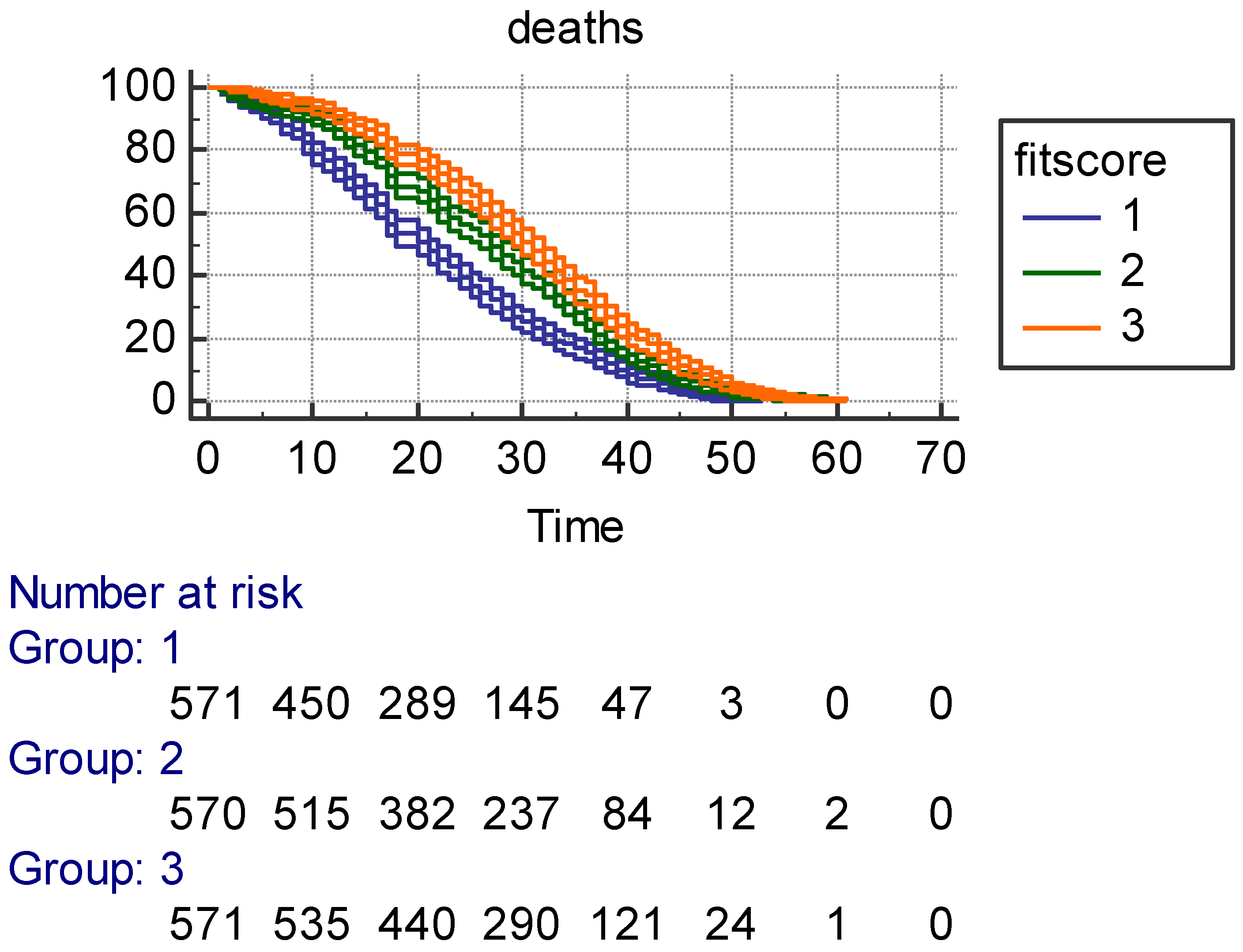
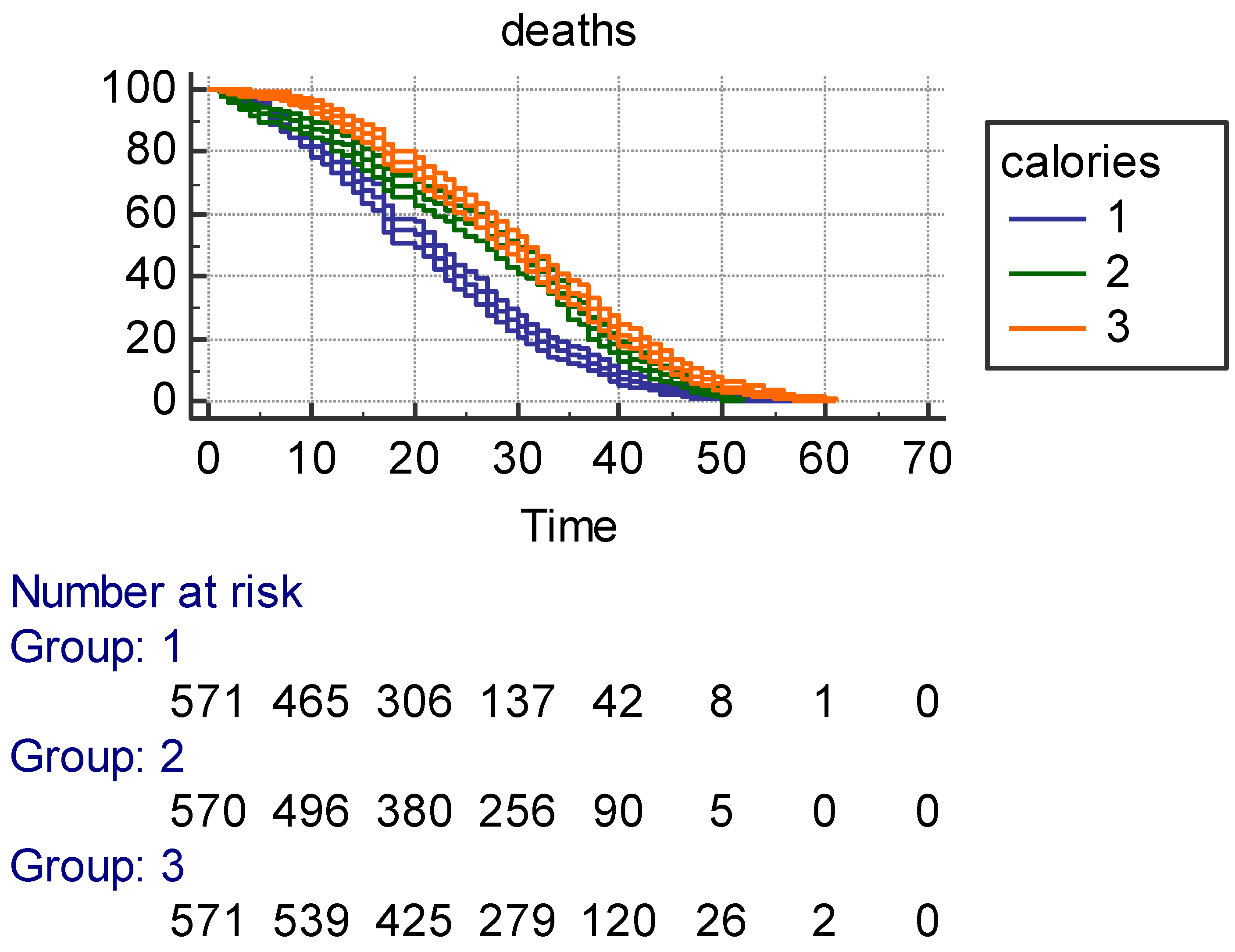
Objective: Working physical activity, physical fitness and energy intake were studied for their effect on all-cause mortality and age at death in residential cohorts followed-up for 61 years. Material and Methods: There were two residential cohorts of middle-aged men examined in 1960 with a total of 1712 subjects, and three indexes were measured, i.e., physical activity by a questionnaire (three classes—sedentary, moderate, vigorous: Phyac), physical fitness, estimated by combining arm circumference, heart rate, and vital capacity by Principal Component Analysis, whose score was divided into three tertile classes (low, intermediate, and high: Fitscore), and energy intake in Kcalories, estimated by dietary history divided into three tertile classes (low, intermediate, high: Calories), plus five traditional cardiovascular risk factors (age, cigarette smoking, body mass index, systolic blood pressure, and serum cholesterol). Cox models were used to predict all-cause mortality as a function of those adjusted indexes. Multiple linear regression models were used to predict age at death as a function of the same co-variates and a larger number of them. At the 61-year follow-up, 1708 men had died. Results: There were large correlations across the three indexes. Prediction of all-cause mortality showed the independent and complementary roles of the three indexes to all be statistically significant and all protective for their highest levels. However, the Fitness score outperformed the role of Phyac, while the role of Calories was unexpectedly strong. The same outcome was found when predicting age at death, even in the presence of 25 covariates representing risk factors, personal characteristics, and prevalent major diseases. Conclusions: Working physical activity, a score of physical fitness and energy intake, seems directly related to lower all-cause mortality and to higher age at death, thus suggesting a large part of independence.
Keywords: physical activity; physical fitness; energy intake; all-cause mortality physical activity; physical fitness; energy intake; all-cause mortality