Perspective

Exaggerated Blood Pressure Response to Exercise Is a Risk of Future Hypertension Even in Healthy, Normotensive Young Individuals—Potential Preventive Strategies for This Phenomenon?

1
Department of Biomedical Engineering, Toyo University, Saitama 351-8510, Japan
2
Faculty of Sport Sciences, Waseda University, Saitama 359-1192, Japan
*
Author to whom correspondence should be addressed.
J. Clin. Med. 2024, 13(19), 5975; https://doi.org/10.3390/jcm13195975
Submission received: 3 September 2024 / Revised: 24 September 2024 / Accepted: 4 October 2024 / Published: 8 October 2024
(This article belongs to the Special Issue Exercise and Sports Cardiology)

Abstract

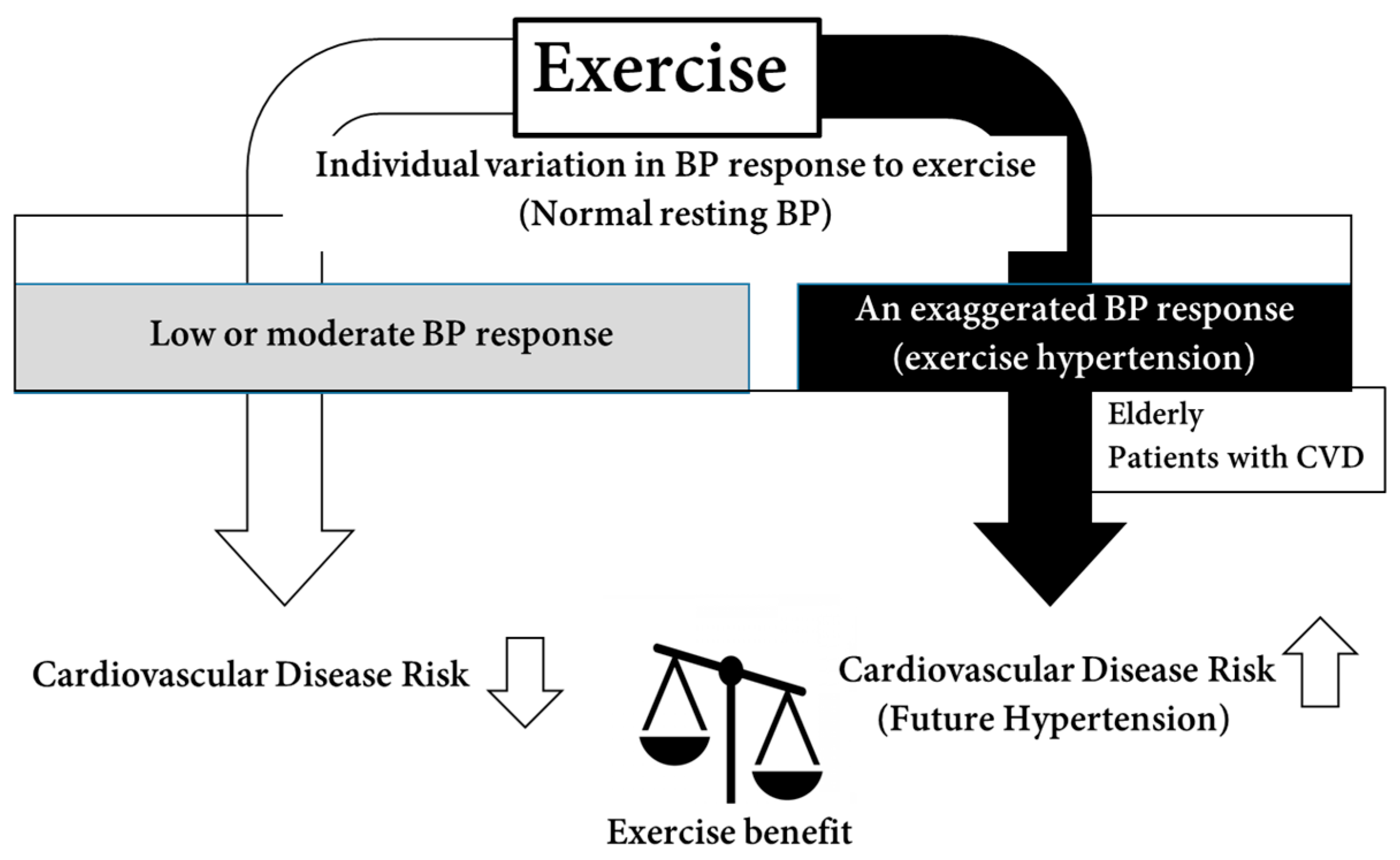
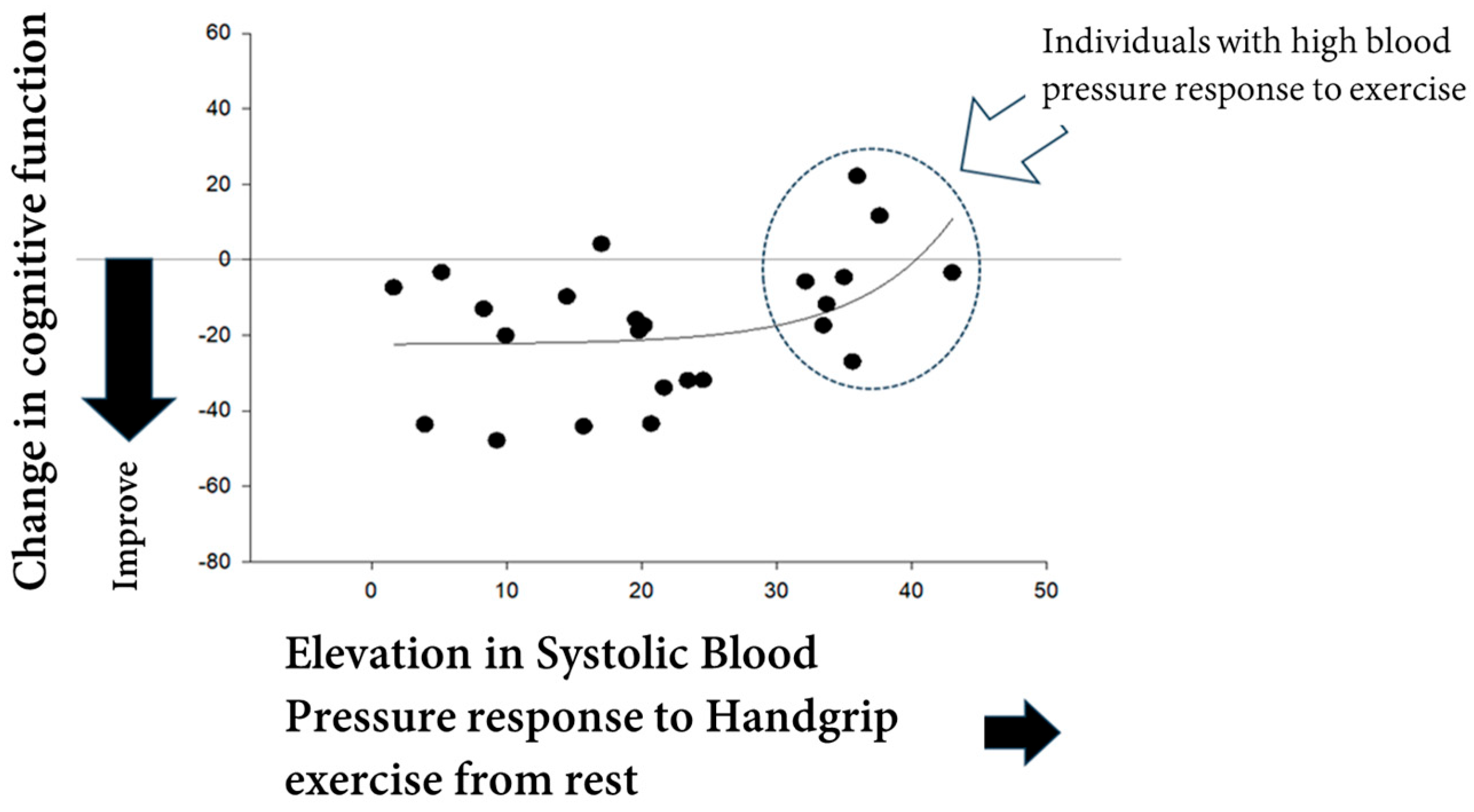
Physical activity and regular exercise are well known to reduce the risks of cerebrovascular and cardiovascular diseases, leading the American College of Sports Medicine to endorse the concept that “exercise is medicine”. However, a single bout of exercise temporarily raises arterial blood pressure (BP) to meet the metabolic demands of working muscle, and this BP response is particularly exaggerated in older adults and patients with cardiovascular conditions, such as hypertension, resulting in an exaggerated BP response during exercise. This presents a paradox: while regular exercise is crucial for preventing these diseases, excessively high BP responses during exercise could increase the risk of vascular damage. The mechanisms underlying this exaggerated BP response during exercise remain unclear, and effective exercise regimens for these populations have yet to be established. Currently, low-intensity exercise is recommended; however, its efficacy in disease prevention is uncertain. Notably, even among healthy individuals, there is significant variation in the BP response to exercise. Some healthy individuals, despite having normal resting BP, exhibit an exaggerated BP response during physical activity. Importantly, these individuals are often unaware that their BP becomes excessively elevated during physical activity. Repeated exposure to these heightened BP responses through regular physical activity may increase their long-term risk of cardiovascular disease. How can we prevent disease development in these individuals while still ensuring the effectiveness of exercise? Some studies have shown that individuals with a family history of hypertension may experience this phenomenon even in children and adolescents. Additionally, left ventricular hypertrophy contributes to an exaggerated BP response to exercise, suggesting a possible genetic influence. Conversely, other reports indicate that factors such as arterial stiffness, obesity, and low exercise capacity also contribute to this exaggerated response. Our recent preliminary data suggest that the cognitive benefits of exercise may be diminished in individuals who exhibit an exaggerated BP response during exercise. This implies that individuals with an exaggerated BP response, despite having normal resting BP, may not fully benefit from exercise. In this perspective paper, we review the physiological aspects of this phenomenon and explore strategies to address it. Additionally, we discuss BP responses in athletes within this content. Our goal is to prevent disease while maximizing the benefits of exercise for healthy individuals with an exaggerated BP response, as well as for elderly and cardiovascular patients.
Keywords: exercise pressor reflex; arterial stiffness; cognitive function; cardiovascular disease; exercise hypertension exercise pressor reflex; arterial stiffness; cognitive function; cardiovascular disease; exercise hypertension