Article

Monoclonal Anti-PCSK9 Antibodies: Real-World Data

1
Department of Experimental and Clinical Medicine, University of Florence, 50134 Florence, Italy
2
Atherothrombotic Diseases, “Careggi” University Hospital, 50134 Florence, Italy
*
Authors to whom correspondence should be addressed.
These authors contributed equally to this work.
J. Clin. Med. 2024, 13(15), 4543; https://doi.org/10.3390/jcm13154543
Submission received: 21 June 2024 / Revised: 31 July 2024 / Accepted: 1 August 2024 / Published: 3 August 2024
(This article belongs to the Section Cardiovascular Medicine)

Abstract

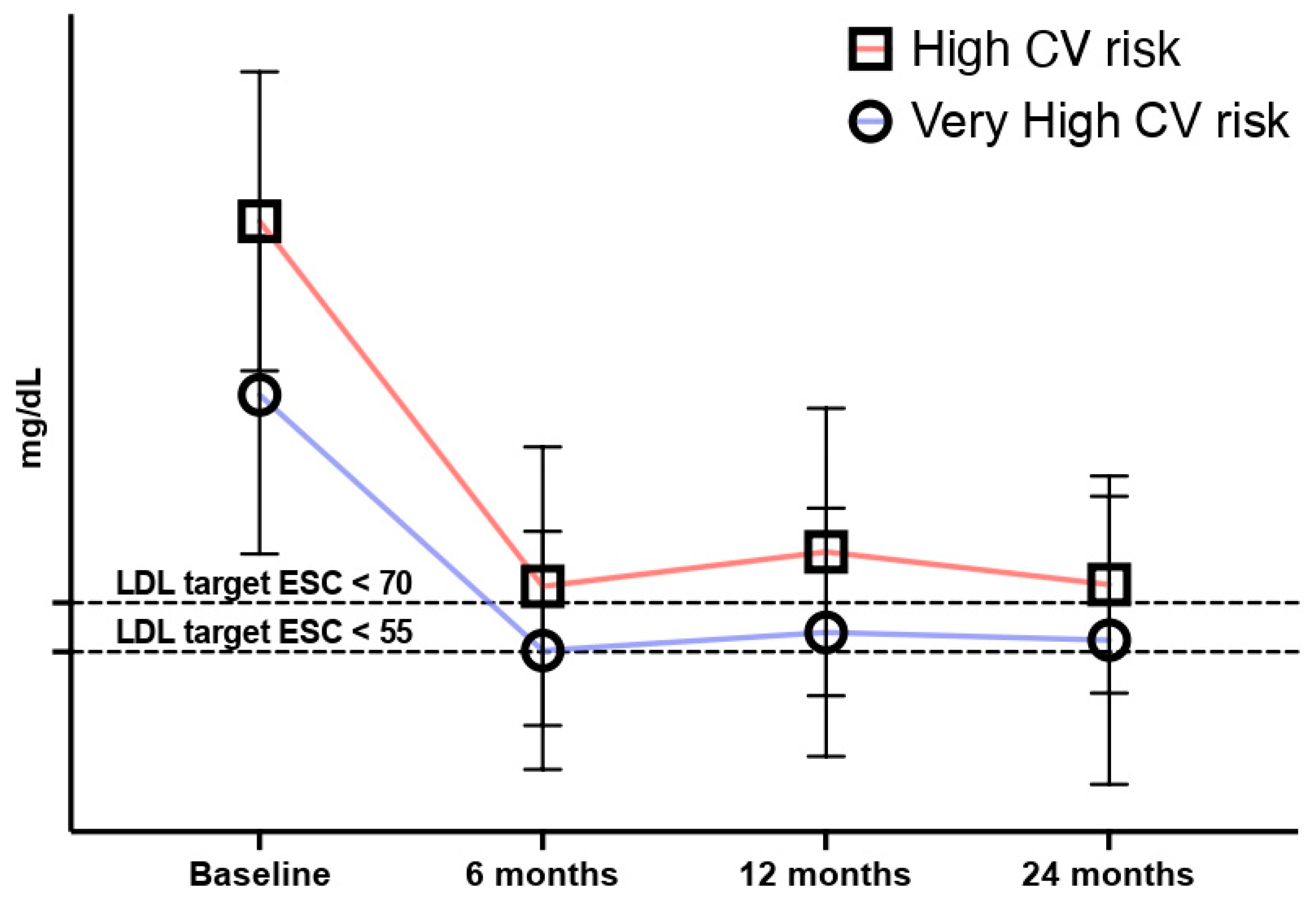
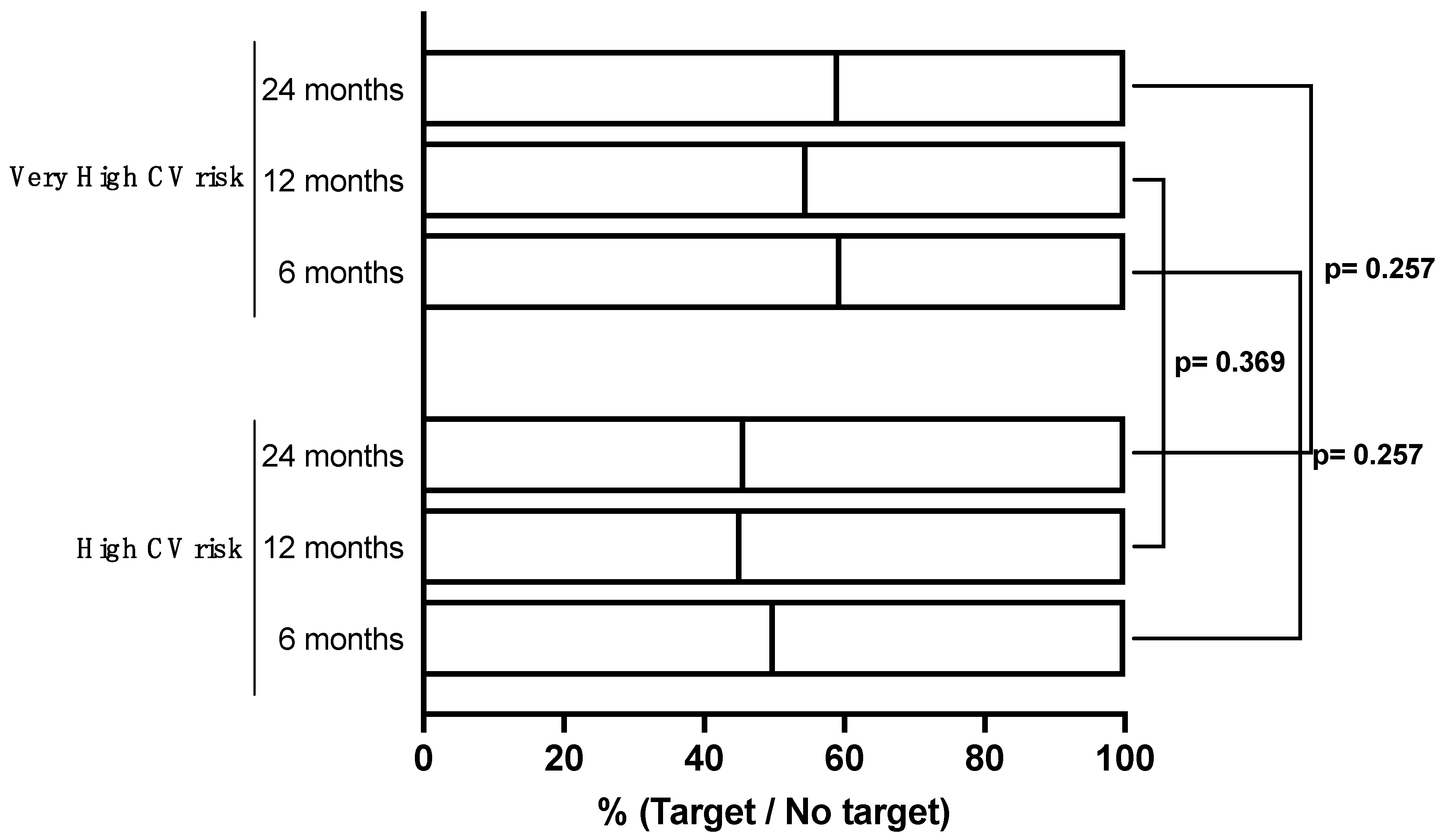
Background: Real-world data on the use of lipid-lowering therapy (LLT) in clinical practice show that about 80% of (very) high-cardiovascular (CV)-risk patients disregard the 2019 European Society of Cardiology (ESC) Guidelines’ recommendations on dyslipidemias. The availability of proprotein convertase subtilisin/kexin type 9 monoclonal antibodies (PCSK9mAb) should reduce this gap. Our aim was to provide data on PCSK9mAb use in clinical practice, investigating the achievement of the ESC Guidelines’ recommendations in the real world. Methods: Between April 2018 and December 2022, patients who started on PCSK9mAb therapy (140 mg of evolocumab or 75 mg or 150 mg of alirocumab, subcutaneous injection every 2 weeks) were included in a prospective registry. Our cohort consisted of 256 patients: 95 (37.1%) were women (mean age: 65.43 ± 11.12 yrs), 53 (20.7%) were at high CV risk, and 203 (79.3%) were at very high CV risk. Results: After one year of PCSK9mAb treatment, nearly 60% of patients demonstrated full adherence to the ESC Guidelines’ recommendations, defined as achieving at least a 50% reduction in low-density lipoprotein cholesterol (LDL-C) levels along with reaching LDL-C target levels (≤55 and ≤70 mg/dL for very high and high risk, respectively). Concomitant high-dose statin therapy emerged as the primary predictor of LDL-C target attainment. Heterozygous familial hypercholesterolemia (HeFH), statin intolerance, and female gender were associated with a significant lower probability of achieving LDL-C target levels. Conclusions: Our analysis confirms that PCSK9mAb treatment is safe and effective, enabling 60% of our cohort to fully achieve the LDL-C guideline recommendations. The use of high-intensity statins emerged as a significant predictor of efficacy. Conversely, familial hypercholesterolemia and female gender were identified as predictors of therapeutic failure. Hence, it is crucial to address disparities in cardiovascular disease prevention between genders and to enhance strategies for managing elevated LDL-C in HeFH patients.
Keywords: PCSK9 monoclonal antibodies; real-world data; hypercholesterolemia; high-risk patients; female gender; HeFH PCSK9 monoclonal antibodies; real-world data; hypercholesterolemia; high-risk patients; female gender; HeFH