Article

Association between Oral Microbiome and Gastroesophageal Reflux Severity

School of Medicine, Western Sydney University, Campbelltown, NSW 2560, Australia
*
Author to whom correspondence should be addressed.
J. Clin. Med. 2024, 13(15), 4479; https://doi.org/10.3390/jcm13154479
Submission received: 1 July 2024 / Revised: 17 July 2024 / Accepted: 30 July 2024 / Published: 31 July 2024
(This article belongs to the Special Issue Clinical Management in Gastroesophageal Reflux)

Abstract

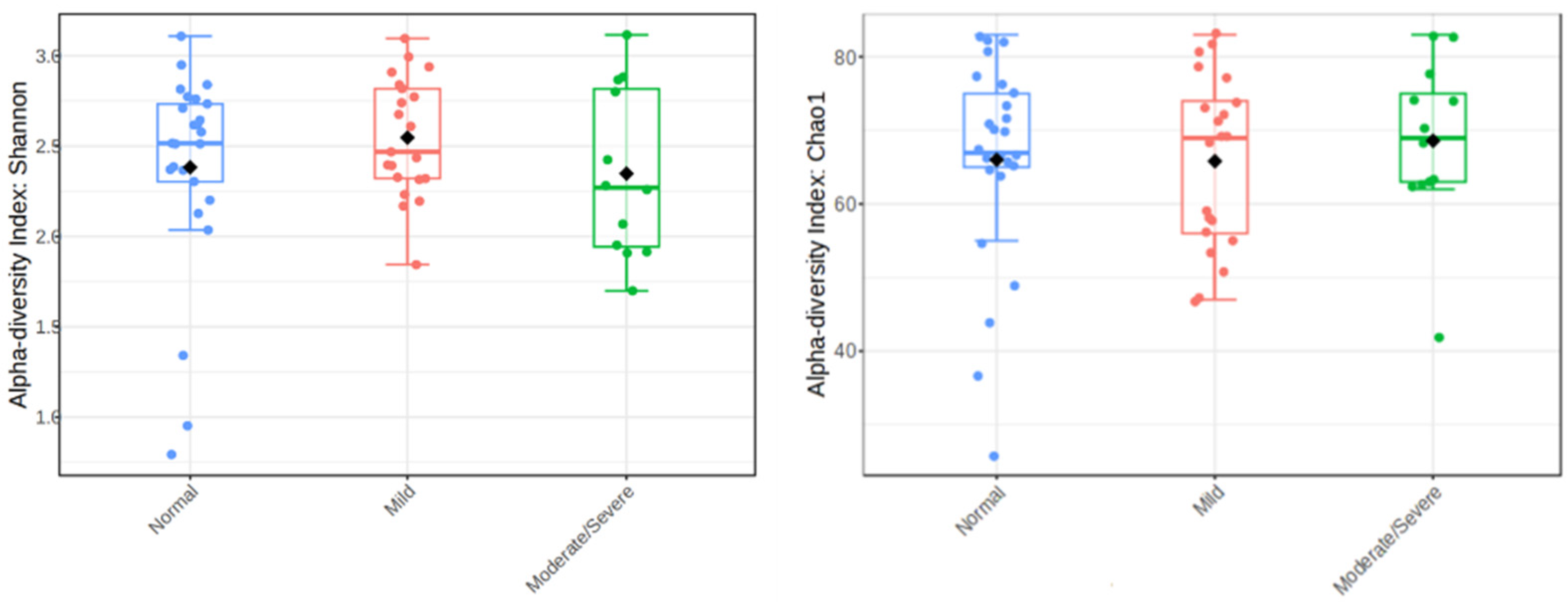
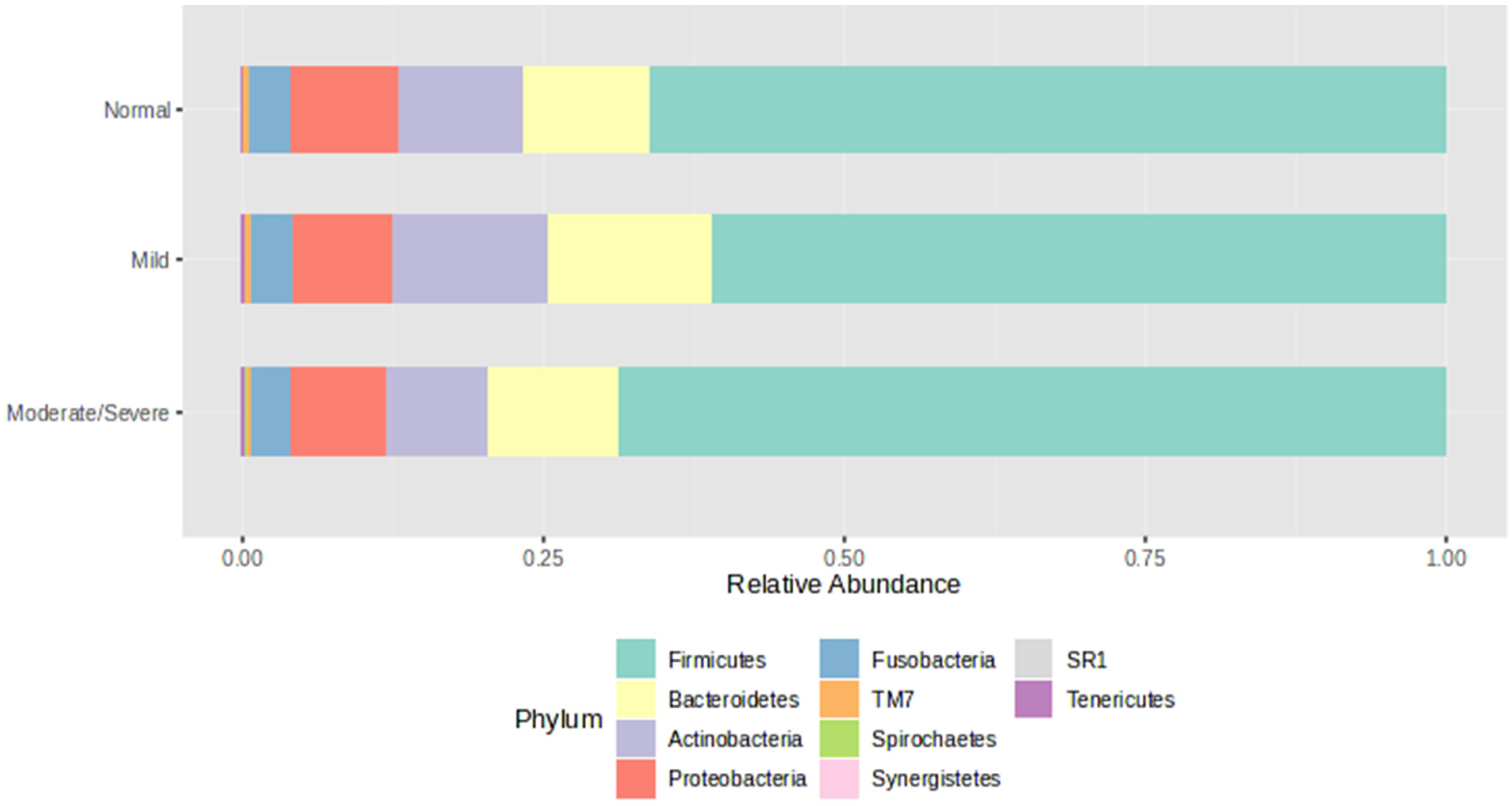
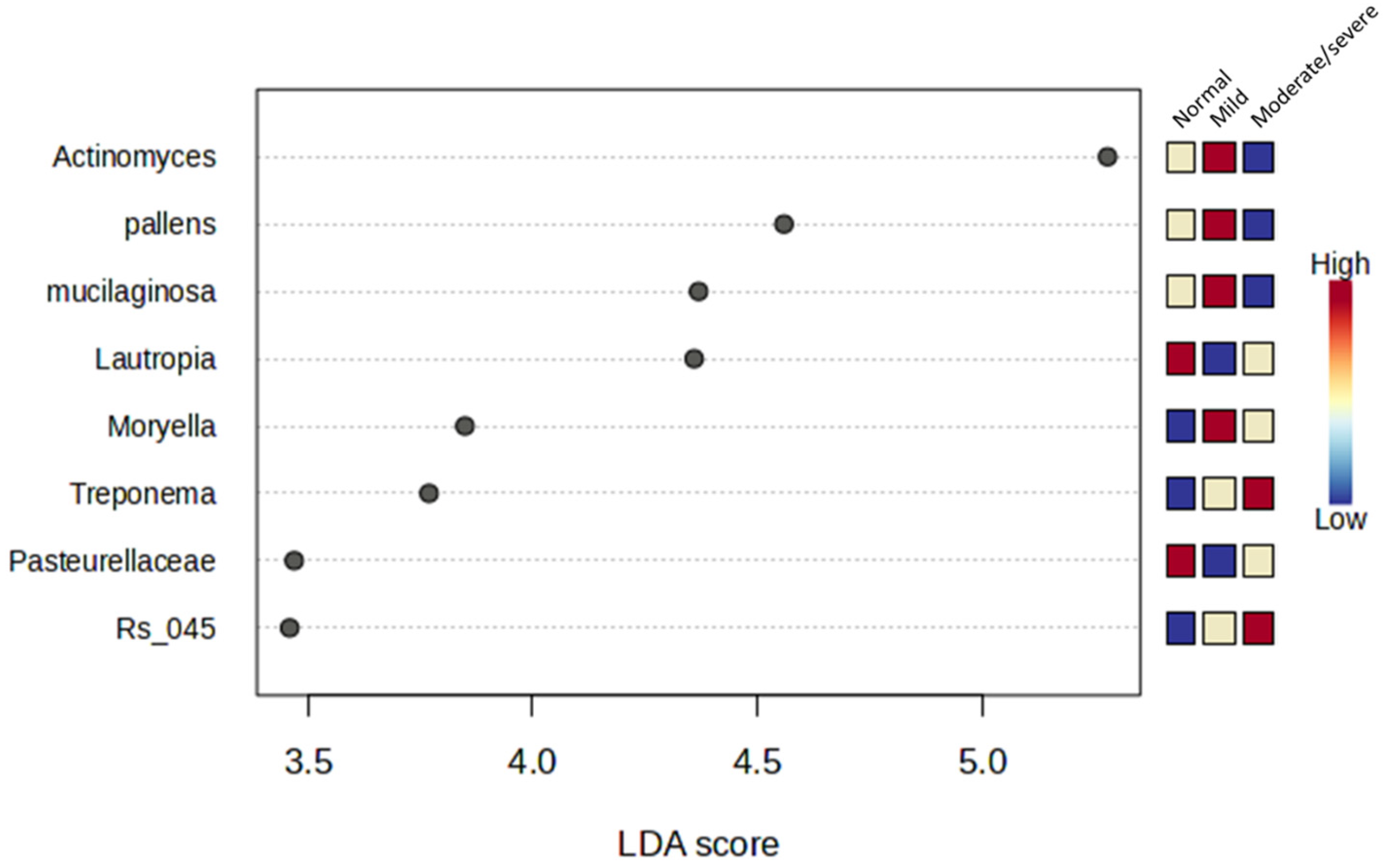
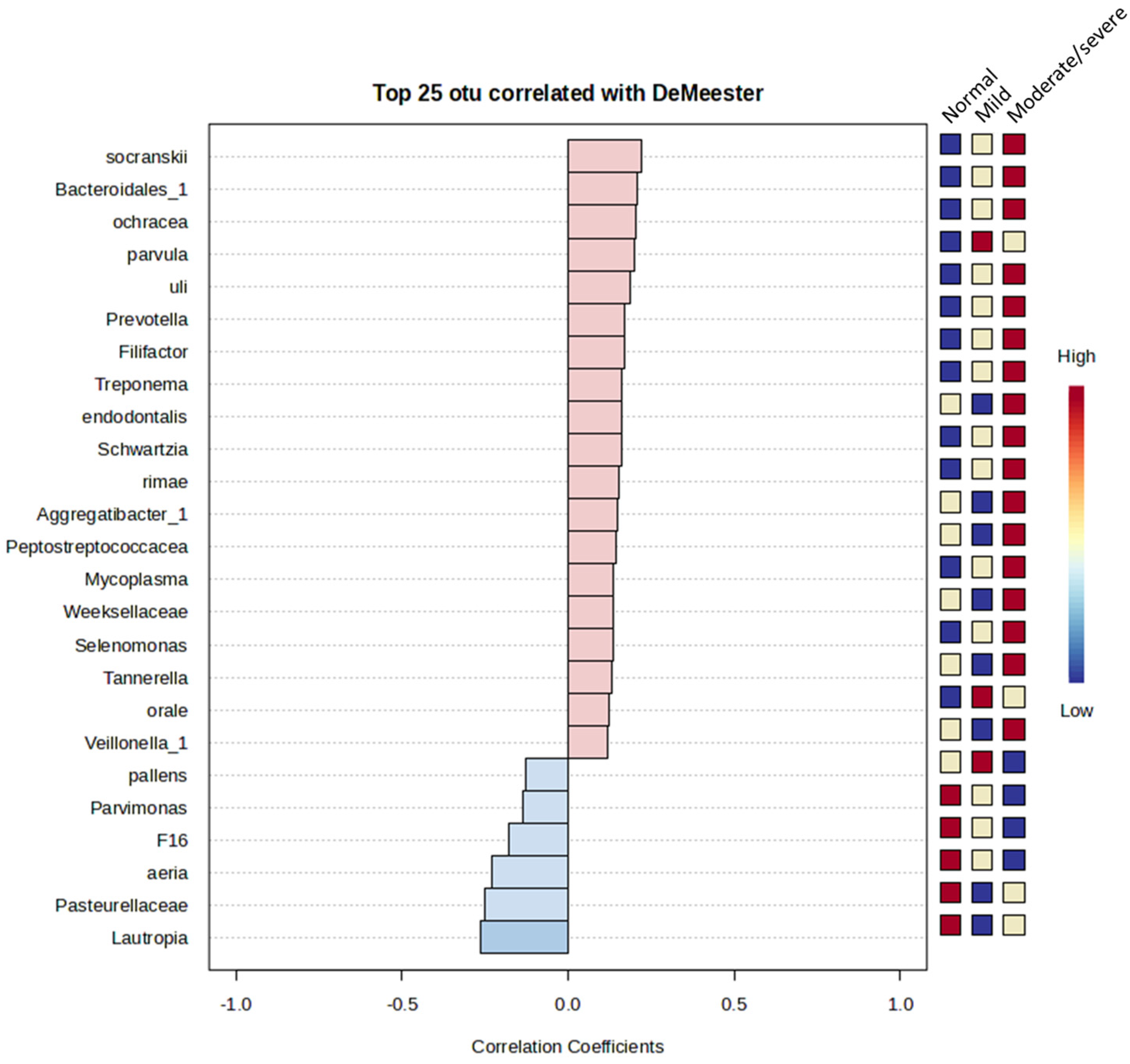
Background/Objectives: Gastroesophageal reflux disease (GORD) is caused by gastric contents refluxing back into the oesophagus and oral cavity. It can lead to injuries to the mucosa in the form of erosion and ulcers. Our past research have shown acid reflux severity and disease progression is associated with alternations in the microbiota of the distal oesophagus. The aim of this study was to explore whether changes in the oral microbiota occurred in GORD patients and establish any associations with reflux severity. Methods: Fresh mouthwash samples were collected from 58 patients experiencing reflux symptoms referred for 24 h pH monitoring. The participants were categorised into three groups based on their DeMeester scores: Normal (<14.72), Mild (14.2–50), and Moderate/severe (>51). Microorganism identity and diversity were generated using hypervariable tag sequencing and analysing the V1–V3 region of the 16S rRNA gene. Results: No differences in microbiota diversity were found in oral microbiota between groups using the Chiao1 diversity index and Shannon diversity index. Microbiota in the Mild group showed reductions in Rothia dentocariosa and Lautropia, while Moryella and Clostridiales_1 were increased compared with the Normal group. In the Moderate/severe group, the abundance of Rothia aeria was reduced compared with the Normal group, while Schwartzia, Rs_045, Paludibacter, S. satelles, Treponema, and T. socranskii all had increased abundance. The abundance of Prevotella pallens was higher in the Mild group compared with Moderate/severe, while S. satelles and Paludibacter abundances were lower. Conclusions: Our study shows the oral microbiome show significant differences between acid reflux severity groups, as categorised by DeMeester score.
Keywords: gastroesophageal reflux diseases; microbiome; acid reflux; oral microbiota; DeMeester score; microorganism gastroesophageal reflux diseases; microbiome; acid reflux; oral microbiota; DeMeester score; microorganism