



The Link between Periodontal Disease and Asthma: How Do These Two Diseases Affect Each Other?


Abstract
1. Introduction
2. Asthma and Periodontal Disease
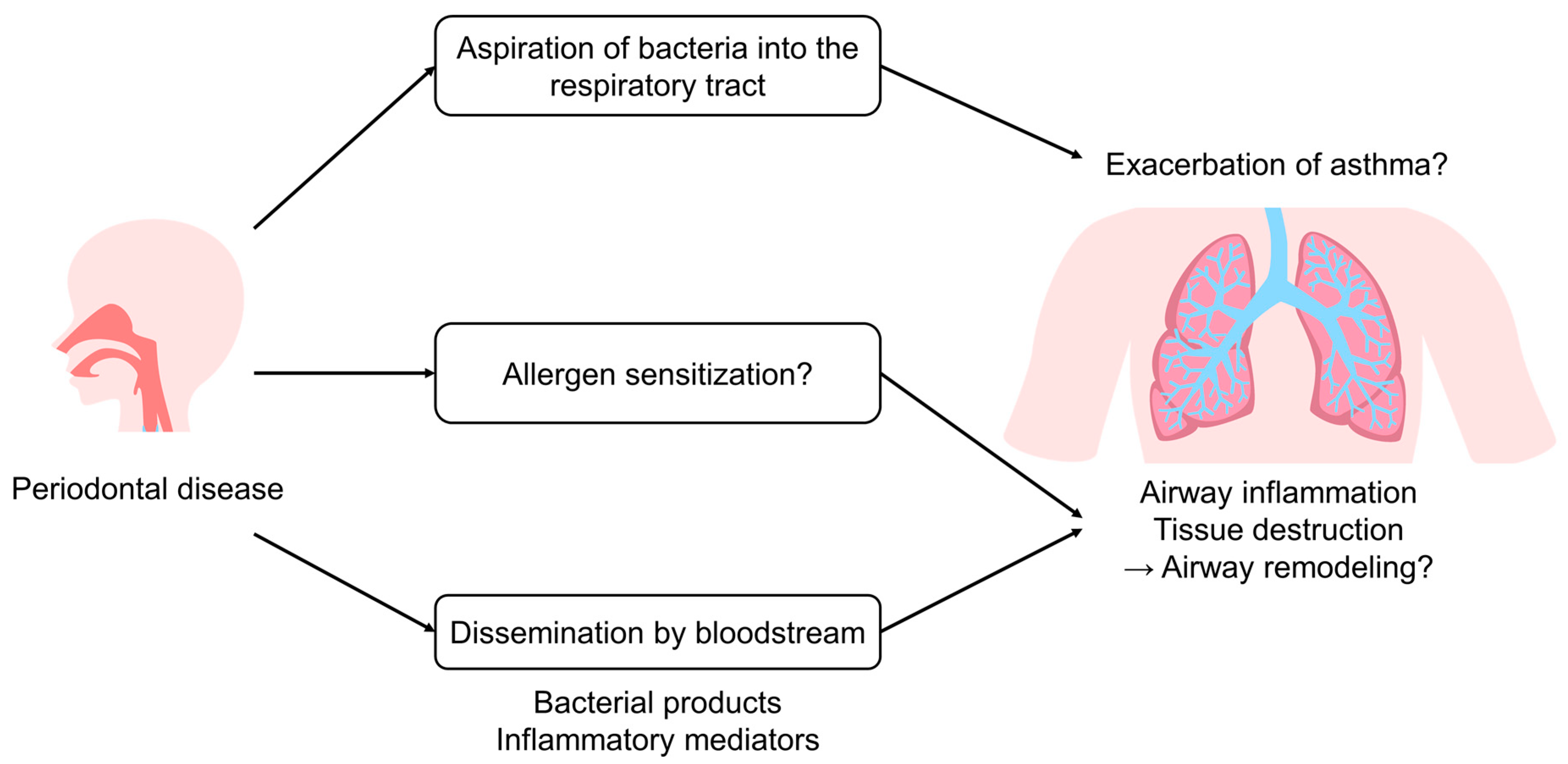
2.1. Periodontal Disease and Its Impact on Asthma
2.2. Effectiveness of Periodontal Interventions
2.3. Discrepancies in the Data
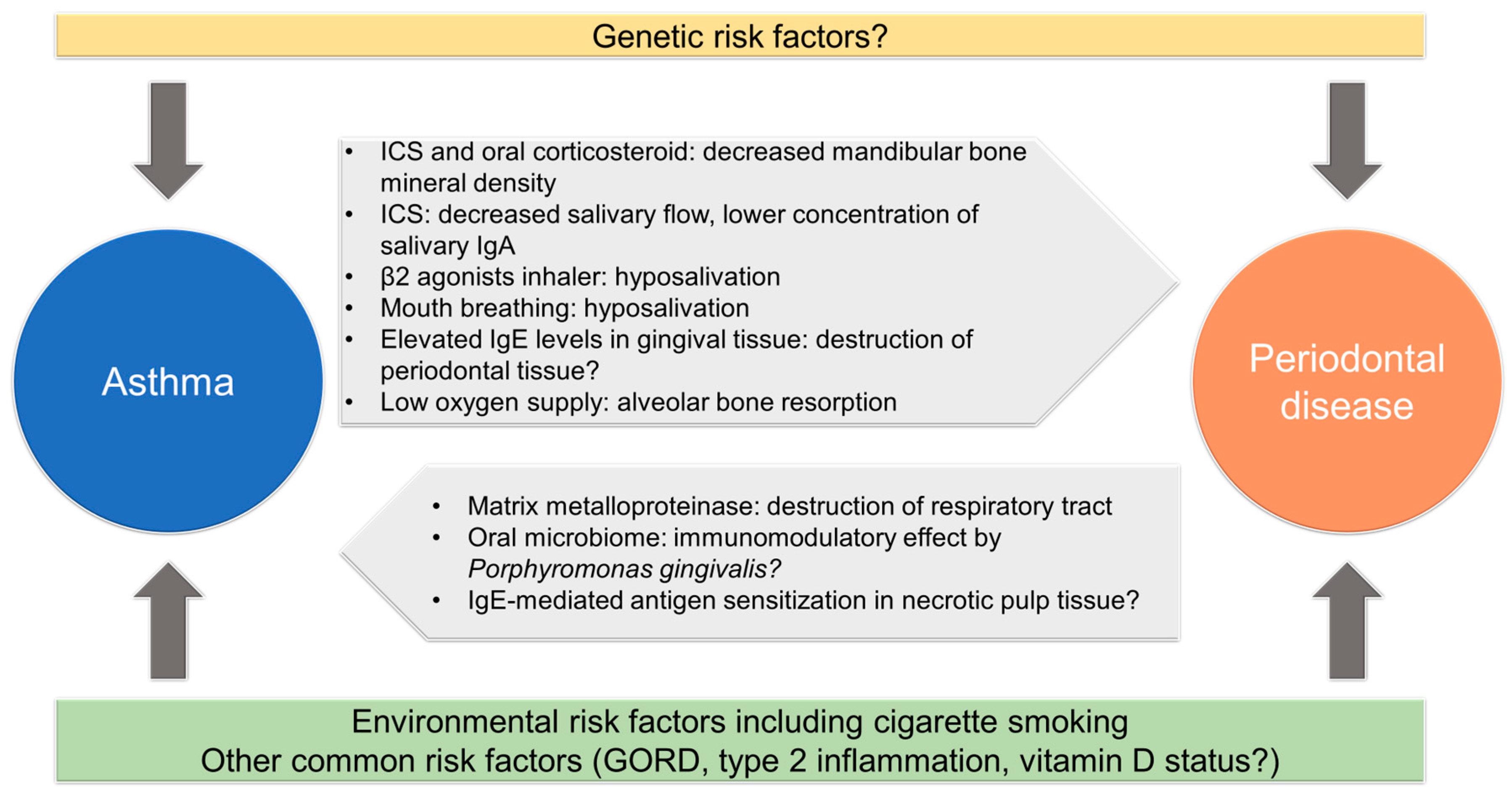
3. How Are Periodontal Diseases and Asthma Related? Biological Evidence
3.1. Common Predisposing Factor
3.2. How Do Asthma Medications Affect Oral Health?
3.2.1. Roles of Saliva and Oral Microbiome
3.2.2. Beta-2 Agonists
3.2.3. Inhaled Corticosteroids
3.2.4. Anticholinergics and Theophylline
3.2.5. Leukotriene-Receptor Antagonist
3.2.6. Discrepancies in the Data
3.3. The Impact of Asthma on Oral Diseases
3.4. Negative Effects of Oral Diseases on Asthma
4. Conclusions and Future Perspective
Author Contributions
Funding
Institutional Review Board Statement
Informed Consent Statement
Data Availability Statement
Conflicts of Interest
References
- Jin, L.J.; Lamster, I.B.; Greenspan, J.S.; Pitts, N.B.; Scully, C.; Warnakulasuriya, S. Global burden of oral diseases: Emerging concepts, management and interplay with systemic health. Oral Dis. 2016, 22, 609–619. [Google Scholar] [CrossRef]
- Gaeckle, N.T.; Pragman, A.A.; Pendleton, K.M.; Baldomero, A.K.; Criner, G.J. The Oral-Lung Axis: The Impact of Oral Health on Lung Health. Respir. Care 2020, 65, 1211–1220. [Google Scholar] [CrossRef] [PubMed]
- Eke, P.I.; Borgnakke, W.S.; Genco, R.J. Recent epidemiologic trends in periodontitis in the USA. Periodontol. 2000 2020, 82, 257–267. [Google Scholar] [CrossRef] [PubMed]
- GBD 2017 Oral Disorders Collaborators; Bernabe, E.; Marcenes, W.; Hernandez, C.R.; Bailey, J.; Abreu, L.G.; Alipour, V.; Amini, S.; Arabloo, J.; Arefi, Z.; et al. Global, Regional, and National Levels and Trends in Burden of Oral Conditions from 1990 to 2017: A Systematic Analysis for the Global Burden of Disease 2017 Study. J. Dent. Res. 2020, 99, 362–373. [Google Scholar] [CrossRef] [PubMed]
- Romandini, M.; Baima, G.; Antonoglou, G.; Bueno, J.; Figuero, E.; Sanz, M. Periodontitis, Edentulism, and Risk of Mortality: A Systematic Review with Meta-analyses. J. Dent. Res. 2021, 100, 37–49. [Google Scholar] [CrossRef]
- 2022 GINA Report, Global Strategy for Asthma Management and Prevention. Available online: https://ginasthma.org/gina-reports/ (accessed on 16 March 2023).
- World Health Organization Fact sheets Asthma. Available online: https://www.who.int/en/news-room/fact-sheets/detail/asthma (accessed on 16 March 2023).
- Gibson, P.G.; McDonald, V.M.; Marks, G.B. Asthma in older adults. Lancet 2010, 376, 803–813. [Google Scholar] [CrossRef]
- Nakamura, Y.; Tamaoki, J.; Nagase, H.; Yamaguchi, M.; Horiguchi, T.; Hozawa, S.; Ichinose, M.; Iwanaga, T.; Kondo, R.; Nagata, M.; et al. Japanese guidelines for adult asthma 2020. Allergol. Int. 2020, 69, 519–548. [Google Scholar] [CrossRef]
- Abe, M.; Mitani, A.; Yao, A.; Zong, L.; Hoshi, K.; Yanagimoto, S. Awareness of Malocclusion Is Closely Associated with Allergic Rhinitis, Asthma, and Arrhythmia in Late Adolescents. Healthcare 2020, 8, 209. [Google Scholar] [CrossRef]
- Abe, M.; Mitani, A.; Yao, A.; Takeshima, H.; Zong, L.; Hoshi, K.; Yanagimoto, S. Close Associations of Gum Bleeding with Systemic Diseases in Late Adolescence. Int. J. Environ. Res. Public Health 2020, 17, 4290. [Google Scholar] [CrossRef]
- Aida, J.; Takeuchi, K.; Furuta, M.; Ito, K.; Kabasawa, Y.; Tsakos, G. Burden of Oral Diseases and Access to Oral Care in an Ageing Society. Int. Dent. J. 2022, 72, S5–S11. [Google Scholar] [CrossRef]
- van der Putten, G.J.; de Baat, C.; De Visschere, L.; Schols, J. Poor oral health, a potential new geriatric syndrome. Gerodontology 2014, 31 (Suppl. S1), 17–24. [Google Scholar] [CrossRef]
- Wee, J.H.; Park, M.W.; Min, C.; Park, I.S.; Park, B.; Choi, H.G. Poor oral health is associated with asthma, allergic rhinitis, and atopic dermatitis in Korean adolescents: A cross-sectional study. Medicine 2020, 99, e21534. [Google Scholar] [CrossRef]
- Lee, S.W.; Lim, H.J.; Lee, E. Association Between Asthma and Periodontitis: Results From the Korean National Health and Nutrition Examination Survey. J. Periodontol. 2017, 88, 575–581. [Google Scholar] [CrossRef] [PubMed]
- Wee, J.H.; Yoo, D.M.; Byun, S.H.; Lee, H.J.; Park, B.; Park, M.W.; Choi, H.G. Subjective oral health status in an adult Korean population with asthma or allergic rhinitis. Medicine 2020, 99, e22967. [Google Scholar] [CrossRef] [PubMed]
- Brasil-Oliveira, R.; Cruz, A.A.; Souza-Machado, A.; Pinheiro, G.P.; Inacio, D.D.S.; Sarmento, V.A.; Lins-Kusterer, L. Oral health-related quality of life in individuals with severe asthma. J. Bras. Pneumol. 2020, 47, e20200117. [Google Scholar] [CrossRef] [PubMed]
- McDerra, E.J.; Pollard, M.A.; Curzon, M.E. The dental status of asthmatic British school children. Pediatr. Dent. 1998, 20, 281–287. [Google Scholar] [PubMed]
- Gomes-Filho, I.S.; Soledade-Marques, K.R.; Seixas da Cruz, S.; de Santana Passos-Soares, J.; Trindade, S.C.; Souza-Machado, A.; Fischer Rubira-Bullen, I.R.; de Moraes Marcilio Cerqueira, E.; Barreto, M.L.; Costa de Santana, T.; et al. Does periodontal infection have an effect on severe asthma in adults? J. Periodontol. 2014, 85, e179–e187. [Google Scholar] [CrossRef]
- Soledade-Marques, K.R.; Gomes-Filho, I.S.; da Cruz, S.S.; Passos-Soares, J.S.; Trindade, S.C.; Cerqueira, E.M.M.; Coelho, J.M.F.; Barreto, M.L.; Costa, M.; Vianna, M.I.P.; et al. Association between periodontitis and severe asthma in adults: A case-control study. Oral Dis. 2018, 24, 442–448. [Google Scholar] [CrossRef]
- Lopes, M.P.; Cruz, A.A.; Xavier, M.T.; Stocker, A.; Carvalho-Filho, P.; Miranda, P.M.; Meyer, R.J.; Soledade, K.R.; Gomes-Filho, I.S.; Trindade, S.C. Prevotella intermedia and periodontitis are associated with severe asthma. J. Periodontol. 2020, 91, 46–54. [Google Scholar] [CrossRef]
- Khassawneh, B.; Alhabashneh, R.; Ibrahim, F. The association between bronchial asthma and periodontitis: A case-control study in Jordan. J. Asthma 2019, 56, 404–410. [Google Scholar] [CrossRef]
- Bhardwaj, V.K.; Fotedar, S.; Sharma, D.; Jhingta, P.; Negi, N.; Thakur, A.S.; Vashisth, S. Association between asthma and chronic periodontitis -A Case–Control Study in Shimla-Himachal Pradesh. J. Indian Assoc. Public Health Dent. 2017, 15, 319–322. [Google Scholar] [CrossRef]
- Mehta, A.; Sequeira, P.S.; Sahoo, R.C.; Kaur, G. Is bronchial asthma a risk factor for gingival diseases? A control study. N. Y. State Dent. J. 2009, 75, 44–46. [Google Scholar] [PubMed]
- Moeintaghavi, A.; Akbari, A.; Rezaeetalab, F. Association between periodontitis and periodontal indices in newly diagnosed bronchial asthma. J. Adv. Periodontol. Implant. Dent. 2022, 14, 97–103. [Google Scholar] [CrossRef] [PubMed]
- Shen, T.C.; Chang, P.Y.; Lin, C.L.; Wei, C.C.; Tu, C.Y.; Hsia, T.C.; Shih, C.M.; Hsu, W.H.; Sung, F.C.; Kao, C.H. Risk of Periodontal Disease in Patients With Asthma: A Nationwide Population-Based Retrospective Cohort Study. J. Periodontol. 2017, 88, 723–730. [Google Scholar] [CrossRef] [PubMed]
- Gomez Real, F.; Perez Barrionuevo, L.; Franklin, K.; Lindberg, E.; Bertelsen, R.J.; Benediktsdottir, B.; Forsberg, B.; Gislason, T.; Jogi, R.; Johannessen, A.; et al. The Association of Gum Bleeding with Respiratory Health in a Population Based Study from Northern Europe. PLoS ONE 2016, 11, e0147518. [Google Scholar] [CrossRef] [PubMed]
- Moraschini, V.; Calasans-Maia, J.A.; Calasans-Maia, M.D. Association between asthma and periodontal disease: A systematic review and meta-analysis. J. Periodontol. 2018, 89, 440–455. [Google Scholar] [CrossRef]
- Ferreira, M.K.M.; Ferreira, R.O.; Castro, M.M.L.; Magno, M.B.; Almeida, A.; Fagundes, N.C.F.; Maia, L.C.; Lima, R.R. Is there an association between asthma and periodontal disease among adults? Systematic review and meta-analysis. Life Sci. 2019, 223, 74–87. [Google Scholar] [CrossRef]
- Gomes-Filho, I.S.; Cruz, S.S.D.; Trindade, S.C.; Passos-Soares, J.S.; Carvalho-Filho, P.C.; Figueiredo, A.; Lyrio, A.O.; Hintz, A.M.; Pereira, M.G.; Scannapieco, F. Periodontitis and respiratory diseases: A systematic review with meta-analysis. Oral Dis. 2020, 26, 439–446. [Google Scholar] [CrossRef]
- Wu, Z.; Xiao, C.; Chen, F.; Wang, Y.; Guo, Z. Pulmonary disease and periodontal health: A meta-analysis. Sleep Breath. 2022, 26, 1857–1868. [Google Scholar] [CrossRef]
- Shen, T.C.; Chang, P.Y.; Lin, C.L.; Wei, C.C.; Tu, C.Y.; Hsia, T.C.; Shih, C.M.; Hsu, W.H.; Sung, F.C.; Kao, C.H. Impact of periodontal treatment on hospitalization for adverse respiratory events in asthmatic adults: A propensity-matched cohort study. Eur. J. Intern. Med. 2017, 46, 56–60. [Google Scholar] [CrossRef]
- Enomoto, A.; Lee, A.D.; Shimoide, T.; Takada, Y.; Kakiuchi, Y.; Tabuchi, T. Is discontinuation of dental treatment related to exacerbation of systemic medical diseases in Japan? Br. Dent. J. 2023. online ahead of print. [Google Scholar] [CrossRef] [PubMed]
- Pambudi, W.; Fabiola, I.; Indrawati, R.; Utomo, H.; Endaryanto, A.; Harsono, A. Changes in bacterial profiles after periodontal treatment associated with respiratory quality of asthmatic children. Paediatr. Indones. 2008, 48, 327–337. [Google Scholar] [CrossRef][Green Version]
- Nelwan, S.C.; Nugraha, R.A.; Endaryanto, A.; Dewi, F.; Nuraini, P.; Tedjosasongko, U.; Utomo, D.H. Effect of scaling and root planing on level of immunoglobulin E and immunoglobulin G(4) in children with gingivitis and house-dust mite allergy: A pilot randomised controlled trial. Singap. Dent. J. 2019, 39, 21–31. [Google Scholar] [CrossRef] [PubMed]
- Shulman, J.D.; Nunn, M.E.; Taylor, S.E.; Rivera-Hidalgo, F. The prevalence of periodontal-related changes in adolescents with asthma: Results of the Third Annual National Health and Nutrition Examination Survey. Pediatr. Dent. 2003, 25, 279–284. [Google Scholar] [PubMed]
- Shah, P.D.; Badner, V.M.; Moss, K.L. Association between asthma and periodontitis in the US adult population: A population-based observational epidemiological study. J. Clin. Periodontol. 2022, 49, 230–239. [Google Scholar] [CrossRef]
- Chatzopoulos, G.S.; Cisneros, A.; Sanchez, M.; Wolff, L.F. Association between Periodontal Disease and Systemic Inflammatory Conditions Using Electronic Health Records: A Pilot Study. Antibiotics 2021, 10, 386. [Google Scholar] [CrossRef]
- Lemmetyinen, R.; Karjalainen, J.; But, A.; Renkonen, R.; Pekkanen, J.; Haukka, J.; Toppila-Salmi, S. Diseases with oral manifestations among adult asthmatics in Finland: A population-based matched cohort study. BMJ Open 2021, 11, e053133. [Google Scholar] [CrossRef]
- Hozawa, S.; Maeda, S.; Kikuchi, A.; Koinuma, M. Exploratory research on asthma exacerbation risk factors using the Japanese claims database and machine learning: A retrospective cohort study. J. Asthma 2022, 59, 1328–1337. [Google Scholar] [CrossRef]
- Ho, S.W.; Lue, K.H.; Ku, M.S. Allergic rhinitis, rather than asthma, might be associated with dental caries, periodontitis, and other oral diseases in adults. PeerJ 2019, 7, e7643. [Google Scholar] [CrossRef]
- Molina, A.; Huck, O.; Herrera, D.; Montero, E. The association between respiratory diseases and periodontitis: A systematic review and meta-analysis. J. Clin. Periodontol. 2023, 50, 842–887. [Google Scholar] [CrossRef]
- Arbes, S.J., Jr.; Matsui, E.C. Can oral pathogens influence allergic disease? J. Allergy Clin. Immunol. 2011, 127, 1119–1127. [Google Scholar] [CrossRef]
- Arbes, S.J., Jr.; Sever, M.L.; Vaughn, B.; Cohen, E.A.; Zeldin, D.C. Oral pathogens and allergic disease: Results from the Third National Health and Nutrition Examination Survey. J. Allergy Clin. Immunol. 2006, 118, 1169–1175. [Google Scholar] [CrossRef] [PubMed][Green Version]
- Du, M.; Xu, S.; Qiu, B.; Hu, S.; Tjakkes, G.E.; Li, A.; Ge, S. Serum antibodies to periodontal pathogens are related to allergic symptoms. J. Periodontol. 2023, 94, 204–216. [Google Scholar] [CrossRef] [PubMed]
- Rivera, R.; Andriankaja, O.M.; Perez, C.M.; Joshipura, K. Relationship between periodontal disease and asthma among overweight/obese adults. J. Clin. Periodontol. 2016, 43, 566–571. [Google Scholar] [CrossRef] [PubMed]
- Friedrich, N.; Volzke, H.; Schwahn, C.; Kramer, A.; Junger, M.; Schafer, T.; John, U.; Kocher, T. Inverse association between periodontitis and respiratory allergies. Clin. Exp. Allergy 2006, 36, 495–502. [Google Scholar] [CrossRef]
- Friedrich, N.; Kocher, T.; Wallaschofski, H.; Schwahn, C.; Ludemann, J.; Kerner, W.; Volzke, H. Inverse association between periodontitis and respiratory allergies in patients with type 1 diabetes mellitus. J. Clin. Periodontol. 2008, 35, 305–310. [Google Scholar] [CrossRef] [PubMed]
- Sperr, M.; Kundi, M.; Tursic, V.; Bristela, M.; Moritz, A.; Andrukhov, O.; Rausch-Fan, X.; Sperr, W.R. Prevalence of comorbidities in periodontitis patients compared with the general Austrian population. J. Periodontol. 2018, 89, 19–27. [Google Scholar] [CrossRef] [PubMed]
- Candeo, L.C.; Rigonato-Oliveira, N.C.; Brito, A.A.; Marcos, R.L.; Franca, C.M.; Fernandes, K.P.S.; Mesquita-Ferrari, R.A.; Bussadori, S.K.; Vieira, R.P.; Lino-Dos-Santos-Franco, A.; et al. Effects of periodontitis on the development of asthma: The role of photodynamic therapy. PLoS ONE 2017, 12, e0187945. [Google Scholar] [CrossRef]
- Jiao, R.; Li, W.; Song, J.; Chen, Z. Causal association between asthma and periodontitis: A two-sample Mendelian randomization analysis. Oral Dis. 2023. online ahead of print. [Google Scholar] [CrossRef]
- Gurkan, A.; Emingil, G.; Saygan, B.H.; Atilla, G.; Kose, T.; Baylas, H.; Berdeli, A. Renin-angiotensin gene polymorphisms in relation to severe chronic periodontitis. J. Clin. Periodontol. 2009, 36, 204–211. [Google Scholar] [CrossRef]
- Loos, B.G.; Fiebig, A.; Nothnagel, M.; Jepsen, S.; Groessner-Schreiber, B.; Franke, A.; Jervoe-Storm, P.M.; Schenck, K.; van der Velden, U.; Schreiber, S. NOD1 gene polymorphisms in relation to aggressive periodontitis. Innate Immun. 2009, 15, 225–232. [Google Scholar] [CrossRef] [PubMed]
- Yoshikawa, H.; Furuta, K.; Ueno, M.; Egawa, M.; Yoshino, A.; Kondo, S.; Nariai, Y.; Ishibashi, H.; Kinoshita, Y.; Sekine, J. Oral symptoms including dental erosion in gastroesophageal reflux disease are associated with decreased salivary flow volume and swallowing function. J. Gastroenterol. 2012, 47, 412–420. [Google Scholar] [CrossRef] [PubMed]
- Watanabe, M.; Nakatani, E.; Yoshikawa, H.; Kanno, T.; Nariai, Y.; Yoshino, A.; Vieth, M.; Kinoshita, Y.; Sekine, J. Oral soft tissue disorders are associated with gastroesophageal reflux disease: Retrospective study. BMC Gastroenterol. 2017, 17, 92. [Google Scholar] [CrossRef]
- Liu, Z.; Gao, X.; Liang, L.; Zhou, X.; Han, X.; Yang, T.; Huang, K.; Lin, Y.; Deng, S.; Wang, Z.; et al. Prevalence, General and Periodontal Risk Factors of Gastroesophageal Reflux Disease in China. J. Inflamm. Res. 2023, 16, 235–244. [Google Scholar] [CrossRef] [PubMed]
- Song, J.Y.; Kim, H.H.; Cho, E.J.; Kim, T.Y. The relationship between gastroesophageal reflux disease and chronic periodontitis. Gut Liver 2014, 8, 35–40. [Google Scholar] [CrossRef] [PubMed]
- Li, X.; Chaouhan, H.S.; Wang, Y.M.; Wang, I.K.; Lin, C.L.; Shen, T.C.; Li, C.Y.; Sun, K.T. Risk of Periodontitis in Patients with Gastroesophageal Reflux Disease: A Nationwide Retrospective Cohort Study. Biomedicines 2022, 10, 2980. [Google Scholar] [CrossRef] [PubMed]
- Jiang, S.; Zheng, L.; Miao, Z. Gastroesophageal reflux disease and oral symptoms: A two-sample Mendelian randomization study. Front. Genet. 2022, 13, 1061550. [Google Scholar] [CrossRef]
- Yang, L.; Lu, X.; Nossa, C.W.; Francois, F.; Peek, R.M.; Pei, Z. Inflammation and intestinal metaplasia of the distal esophagus are associated with alterations in the microbiome. Gastroenterology 2009, 137, 588–597. [Google Scholar] [CrossRef]
- Vakil, N.; van Zanten, S.V.; Kahrilas, P.; Dent, J.; Jones, R.; Global Consensus, G. The Montreal definition and classification of gastroesophageal reflux disease: A global evidence-based consensus. Am. J. Gastroenterol. 2006, 101, 1900–1920, quiz 1943. [Google Scholar] [CrossRef]
- Havemann, B.D.; Henderson, C.A.; El-Serag, H.B. The association between gastro-oesophageal reflux disease and asthma: A systematic review. Gut 2007, 56, 1654–1664. [Google Scholar] [CrossRef]
- Boulet, L.P. Influence of comorbid conditions on asthma. Eur. Respir. J. 2009, 33, 897–906. [Google Scholar] [CrossRef] [PubMed]
- Sigusch, B.; Klinger, G.; Glockmann, E.; Simon, H.U. Early-onset and adult periodontitis associated with abnormal cytokine production by activated T lymphocytes. J. Periodontol. 1998, 69, 1098–1104. [Google Scholar] [CrossRef] [PubMed]
- Qin, X.; Hoda, M.N.; Susin, C.; Wheeler, J.N.; Marshall, B.; Perry, L.; Saad, N.; Yin, L.; Elsayed, R.; Elsalanty, M.; et al. Increased Innate Lymphoid Cells in Periodontal Tissue of the Murine Model of Periodontitis: The Role of AMP-Activated Protein Kinase and Relevance for the Human Condition. Front. Immunol. 2017, 8, 922. [Google Scholar] [CrossRef] [PubMed]
- Kindstedt, E.; Koskinen Holm, C.; Palmqvist, P.; Sjostrom, M.; Lejon, K.; Lundberg, P. Innate lymphoid cells are present in gingivitis and periodontitis. J. Periodontol. 2019, 90, 200–207. [Google Scholar] [CrossRef]
- Li, C.; Liu, J.; Pan, J.; Wang, Y.; Shen, L.; Xu, Y. ILC1s and ILC3s Exhibit Inflammatory Phenotype in Periodontal Ligament of Periodontitis Patients. Front. Immunol. 2021, 12, 708678. [Google Scholar] [CrossRef] [PubMed]
- Hsu, A.T.; Gottschalk, T.A.; Tsantikos, E.; Hibbs, M.L. The Role of Innate Lymphoid Cells in Chronic Respiratory Diseases. Front. Immunol. 2021, 12, 733324. [Google Scholar] [CrossRef]
- Son, G.Y.; Son, A.; Yang, Y.M.; Park, W.; Chang, I.; Lee, J.H.; Shin, D.M. Airborne allergens induce protease activated receptor-2-mediated production of inflammatory cytokines in human gingival epithelium. Arch. Oral Biol. 2016, 61, 138–143. [Google Scholar] [CrossRef]
- Coquet, J.M. A singular role for interleukin-9 in the development of asthma. Sci. Immunol. 2020, 5, eabc4021. [Google Scholar] [CrossRef]
- Huang, S.J.; Li, R.; Xu, S.; Liu, Y.; Li, S.H.; Duan, S.Z. Assessment of bidirectional relationships between circulating cytokines and periodontitis: Insights from a mendelian randomization analysis. Front. Genet. 2023, 14, 1124638. [Google Scholar] [CrossRef]
- Coogan, P.F.; Castro-Webb, N.; Yu, J.; O’Connor, G.T.; Palmer, J.R.; Rosenberg, L. Active and passive smoking and the incidence of asthma in the Black Women’s Health Study. Am. J. Respir. Crit. Care Med. 2015, 191, 168–176. [Google Scholar] [CrossRef]
- Skaaby, T.; Taylor, A.E.; Jacobsen, R.K.; Paternoster, L.; Thuesen, B.H.; Ahluwalia, T.S.; Larsen, S.C.; Zhou, A.; Wong, A.; Gabrielsen, M.E.; et al. Investigating the causal effect of smoking on hay fever and asthma: A Mendelian randomization meta-analysis in the CARTA consortium. Sci. Rep. 2017, 7, 2224. [Google Scholar] [CrossRef] [PubMed]
- Jayes, L.; Haslam, P.L.; Gratziou, C.G.; Powell, P.; Britton, J.; Vardavas, C.; Jimenez-Ruiz, C.; Leonardi-Bee, J.; Tobacco Control Committee of the European Respiratory Society. SmokeHaz: Systematic Reviews and Meta-analyses of the Effects of Smoking on Respiratory Health. Chest 2016, 150, 164–179. [Google Scholar] [CrossRef] [PubMed]
- Thomson, N.C.; Polosa, R.; Sin, D.D. Cigarette Smoking and Asthma. J. Allergy Clin. Immunol. Pract. 2022, 10, 2783–2797. [Google Scholar] [CrossRef] [PubMed]
- Westergaard, C.G.; Porsbjerg, C.; Backer, V. The effect of smoking cessation on airway inflammation in young asthma patients. Clin. Exp. Allergy 2014, 44, 353–361. [Google Scholar] [CrossRef]
- Apatzidou, D.A. The role of cigarette smoking in periodontal disease and treatment outcomes of dental implant therapy. Periodontol. 2000 2022, 90, 45–61. [Google Scholar] [CrossRef]
- SSY, A.L.; Natto, Z.S.; Midle, J.B.; Gyurko, R.; O’Neill, R.; Steffensen, B. Association between time since quitting smoking and periodontitis in former smokers in the National Health and Nutrition Examination Surveys (NHANES) 2009 to 2012. J. Periodontol. 2019, 90, 16–25. [Google Scholar] [CrossRef]
- Huang, C.; Shi, G. Smoking and microbiome in oral, airway, gut and some systemic diseases. J. Transl. Med. 2019, 17, 225. [Google Scholar] [CrossRef]
- Chang, Q.; Zhu, Y.; Zhou, G.; Liang, H.; Li, D.; Cheng, J.; Pan, P.; Zhang, Y. Vitamin D status, sleep patterns, genetic susceptibility, and the risk of incident adult-onset asthma: A large prospective cohort study. Front. Nutr. 2023, 10, 1222499. [Google Scholar] [CrossRef]
- Jolliffe, D.A.; Greenberg, L.; Hooper, R.L.; Griffiths, C.J.; Camargo, C.A., Jr.; Kerley, C.P.; Jensen, M.E.; Mauger, D.; Stelmach, I.; Urashima, M.; et al. Vitamin D supplementation to prevent asthma exacerbations: A systematic review and meta-analysis of individual participant data. Lancet Respir. Med. 2017, 5, 881–890. [Google Scholar] [CrossRef]
- Wang, M.; Liu, M.; Wang, C.; Xiao, Y.; An, T.; Zou, M.; Cheng, G. Association between vitamin D status and asthma control: A meta-analysis of randomized trials. Respir. Med. 2019, 150, 85–94. [Google Scholar] [CrossRef]
- de Groot, J.C.; van Roon, E.N.; Storm, H.; Veeger, N.J.; Zwinderman, A.H.; Hiemstra, P.S.; Bel, E.H.; ten Brinke, A. Vitamin D reduces eosinophilic airway inflammation in nonatopic asthma. J. Allergy Clin. Immunol. 2015, 135, 670–675.e3. [Google Scholar] [CrossRef] [PubMed]
- Machado, V.; Lobo, S.; Proenca, L.; Mendes, J.J.; Botelho, J. Vitamin D and Periodontitis: A Systematic Review and Meta-Analysis. Nutrients 2020, 12, 2177. [Google Scholar] [CrossRef]
- Liang, F.; Zhou, Y.; Zhang, Z.; Zhang, Z.; Shen, J. Association of vitamin D in individuals with periodontitis: An updated systematic review and meta-analysis. BMC Oral Health 2023, 23, 387. [Google Scholar] [CrossRef]
- Grant, W.B.; van Amerongen, B.M.; Boucher, B.J. Periodontal Disease and Other Adverse Health Outcomes Share Risk Factors, including Dietary Factors and Vitamin D Status. Nutrients 2023, 15, 2787. [Google Scholar] [CrossRef] [PubMed]
- van der Putten, G.J.; Vanobbergen, J.; De Visschere, L.; Schols, J.; de Baat, C. Association of some specific nutrient deficiencies with periodontal disease in elderly people: A systematic literature review. Nutrition 2009, 25, 717–722. [Google Scholar] [CrossRef] [PubMed]
- Pinto, J.; Goergen, J.; Muniz, F.; Haas, A.N. Vitamin D levels and risk for periodontal disease: A systematic review. J. Periodontal Res. 2018, 53, 298–305. [Google Scholar] [CrossRef]
- Hu, Z.; Zhou, F.; Xu, H. Circulating vitamin C and D concentrations and risk of dental caries and periodontitis: A Mendelian randomization study. J. Clin. Periodontol. 2022, 49, 335–344. [Google Scholar] [CrossRef]
- Chaffee, B.W.; Weston, S.J. Association between chronic periodontal disease and obesity: A systematic review and meta-analysis. J. Periodontol. 2010, 81, 1708–1724. [Google Scholar] [CrossRef]
- Martinez-Herrera, M.; Silvestre-Rangil, J.; Silvestre, F.J. Association between obesity and periodontal disease. A systematic review of epidemiological studies and controlled clinical trials. Med. Oral Patol. Oral Y Cir. Buccal 2017, 22, e708–e715. [Google Scholar] [CrossRef]
- Kim, C.M.; Lee, S.; Hwang, W.; Son, E.; Kim, T.W.; Kim, K.; Kim, Y.H. Obesity and periodontitis: A systematic review and updated meta-analysis. Front. Endocrinol. 2022, 13, 999455. [Google Scholar] [CrossRef]
- Nascimento, G.G.; Leite, F.R.; Do, L.G.; Peres, K.G.; Correa, M.B.; Demarco, F.F.; Peres, M.A. Is weight gain associated with the incidence of periodontitis? A systematic review and meta-analysis. J. Clin. Periodontol. 2015, 42, 495–505. [Google Scholar] [CrossRef] [PubMed]
- Beuther, D.A.; Sutherland, E.R. Overweight, obesity, and incident asthma: A meta-analysis of prospective epidemiologic studies. Am. J. Respir. Crit. Care Med. 2007, 175, 661–666. [Google Scholar] [CrossRef] [PubMed]
- Winsa-Lindmark, S.; Stridsman, C.; Sahlin, A.; Hedman, L.; Stenfors, N.; Myrberg, T.; Lindberg, A.; Ronmark, E.; Backman, H. Severity of adult onset-asthma-a matter of blood neutrophils and severe obesity. Respir. Med. 2023, 219, 107418. [Google Scholar] [CrossRef] [PubMed]
- Akerman, M.J.; Calacanis, C.M.; Madsen, M.K. Relationship between asthma severity and obesity. J. Asthma 2004, 41, 521–526. [Google Scholar] [CrossRef]
- Miethe, S.; Karsonova, A.; Karaulov, A.; Renz, H. Obesity and asthma. J. Allergy Clin. Immunol. 2020, 146, 685–693. [Google Scholar] [CrossRef]
- Chrystyn, H. Methods to identify drug deposition in the lungs following inhalation. Br. J. Clin. Pharmacol. 2001, 51, 289–299. [Google Scholar] [CrossRef]
- Thomas, M.S.; Parolia, A.; Kundabala, M.; Vikram, M. Asthma and oral health: A review. Aust. Dent. J. 2010, 55, 128–133. [Google Scholar] [CrossRef]
- Widmer, R.P. Oral health of children with respiratory diseases. Paediatr. Respir. Rev. 2010, 11, 226–232. [Google Scholar] [CrossRef]
- Gani, F.; Caminati, M.; Bellavia, F.; Baroso, A.; Faccioni, P.; Pancera, P.; Batani, V.; Senna, G. Oral health in asthmatic patients: A review: Asthma and its therapy may impact on oral health. Clin. Mol. Allergy 2020, 18, 22. [Google Scholar] [CrossRef]
- Bozejac, B.V.; Stojsin, I.; Ethuric, M.; Zvezdin, B.; Brkanic, T.; Budisin, E.; Vukoje, K.; Secen, N. Impact of inhalation therapy on the incidence of carious lesions in patients with asthma and COPD. J. Appl. Oral. Sci. 2017, 25, 506–514. [Google Scholar] [CrossRef]
- Marsh, P.D.; Do, T.; Beighton, D.; Devine, D.A. Influence of saliva on the oral microbiota. Periodontol. 2000 2016, 70, 80–92. [Google Scholar] [CrossRef] [PubMed]
- Aas, J.A.; Paster, B.J.; Stokes, L.N.; Olsen, I.; Dewhirst, F.E. Defining the normal bacterial flora of the oral cavity. J. Clin. Microbiol. 2005, 43, 5721–5732. [Google Scholar] [CrossRef] [PubMed]
- Segata, N.; Haake, S.K.; Mannon, P.; Lemon, K.P.; Waldron, L.; Gevers, D.; Huttenhower, C.; Izard, J. Composition of the adult digestive tract bacterial microbiome based on seven mouth surfaces, tonsils, throat and stool samples. Genome Biol. 2012, 13, R42. [Google Scholar] [CrossRef]
- Espuela-Ortiz, A.; Lorenzo-Diaz, F.; Baez-Ortega, A.; Eng, C.; Hernandez-Pacheco, N.; Oh, S.S.; Lenoir, M.; Burchard, E.G.; Flores, C.; Pino-Yanes, M. Bacterial salivary microbiome associates with asthma among african american children and young adults. Pediatr. Pulmonol. 2019, 54, 1948–1956. [Google Scholar] [CrossRef] [PubMed]
- Ortiz, A.P.; Acosta-Pagan, K.T.; Oramas-Sepulveda, C.; Castaneda-Avila, M.A.; Vilanova-Cuevas, B.; Ramos-Cartagena, J.M.; Vivaldi, J.A.; Perez-Santiago, J.; Perez, C.M.; Godoy-Vitorino, F. Oral microbiota and periodontitis severity among Hispanic adults. Front. Cell Infect. Microbiol. 2022, 12, 965159. [Google Scholar] [CrossRef]
- Arweiler, N.B.; Rahmel, V.; Alhamwe, B.A.; Alhamdan, F.; Zemlin, M.; Boutin, S.; Dalpke, A.; Renz, H. Dental Biofilm and Saliva Microbiome and Its Interplay with Pediatric Allergies. Microorganisms 2021, 9, 1330. [Google Scholar] [CrossRef]
- Stensson, M.; Wendt, L.K.; Koch, G.; Oldaeus, G.; Birkhed, D. Oral health in preschool children with asthma. Int. J. Paediatr. Dent. 2008, 18, 243–250. [Google Scholar] [CrossRef]
- Arafa, A.; Aldahlawi, S.; Fathi, A. Assessment of the oral health status of asthmatic children. Eur. J. Dent. 2017, 11, 357–363. [Google Scholar] [CrossRef]
- Bairappan, S.; Puranik, M.P.; Sowmya, K.R. Impact of asthma and its medication on salivary characteristics and oral health in adolescents: A cross-sectional comparative study. Spec. Care Dent. 2020, 40, 227–237. [Google Scholar] [CrossRef]
- Stensson, M.; Wendt, L.K.; Koch, G.; Oldaeus, G.; Ramberg, P.; Birkhed, D. Oral health in young adults with long-term, controlled asthma. Acta Odontol. Scand. 2011, 69, 158–164. [Google Scholar] [CrossRef]
- Lenander-Lumikari, M.; Laurikainen, K.; Kuusisto, P.; Vilja, P. Stimulated salivary flow rate and composition in asthmatic and non-asthmatic adults. Arch. Oral Biol. 1998, 43, 151–156. [Google Scholar] [CrossRef]
- Laurikainen, K.; Kuusisto, P. Comparison of the oral health status and salivary flow rate of asthmatic patients with those of nonasthmatic adults--results of a pilot study. Allergy 1998, 53, 316–319. [Google Scholar] [CrossRef] [PubMed]
- Hatipoglu, O.; Pertek Hatipoglu, F. Association between asthma and caries-related salivary factors: A meta-analysis. J. Asthma 2022, 59, 38–53. [Google Scholar] [CrossRef] [PubMed]
- Ryberg, M.; Moller, C.; Ericson, T. Effect of beta 2-adrenoceptor agonists on saliva proteins and dental caries in asthmatic children. J. Dent. Res. 1987, 66, 1404–1406. [Google Scholar] [CrossRef] [PubMed]
- Ryberg, M.; Moller, C.; Ericson, T. Saliva composition and caries development in asthmatic patients treated with beta 2-adrenoceptor agonists: A 4-year follow-up study. Scand J. Dent. Res. 1991, 99, 212–218. [Google Scholar] [CrossRef] [PubMed]
- Ryberg, M.; Moller, C.; Ericson, T. Saliva composition in asthmatic patients after treatment with two dose levels of a beta 2-adrenoceptor agonist. Arch. Oral Biol. 1990, 35, 945–948. [Google Scholar] [CrossRef] [PubMed]
- Breivik, T.; Gundersen, Y.; Opstad, P.K.; Fonnum, F. Chemical sympathectomy inhibits periodontal disease in Fischer 344 rats. J. Periodontal Res. 2005, 40, 325–330. [Google Scholar] [CrossRef]
- Wang, T.; Cao, J.; Du, Z.J.; Zhang, Y.B.; Liu, Y.P.; Wang, L.; Lei, D.L. Effects of sympathetic innervation loss on mandibular distraction osteogenesis. J. Craniofacial Surg. 2012, 23, 1524–1528. [Google Scholar] [CrossRef]
- Gruber, R.; Leimer, M.; Fischer, M.B.; Agis, H. Beta2-adrenergic receptor agonists reduce proliferation but not protein synthesis of periodontal fibroblasts stimulated with platelet-derived growth factor-BB. Arch. Oral Biol. 2013, 58, 1812–1817. [Google Scholar] [CrossRef]
- Martins, L.G.; Spreafico, C.S.; Tanobe, P.G.; Tavares, T.A.A.; Castro, M.L.; Franco, G.C.N.; do Prado, R.F.; Anbinder, A.L. Influence of Adrenergic Neuromodulation during Induction of Periodontitis in Rats. J. Int. Acad. Periodontol. 2017, 19, 80–88. [Google Scholar]
- Okada, Y.; Hamada, N.; Kim, Y.; Takahashi, Y.; Sasaguri, K.; Ozono, S.; Sato, S. Blockade of sympathetic b-receptors inhibits Porphyromonas gingivalis-induced alveolar bone loss in an experimental rat periodontitis model. Arch. Oral Biol. 2010, 55, 502–508. [Google Scholar] [CrossRef] [PubMed]
- Rodrigues, W.F.; Madeira, M.F.; da Silva, T.A.; Clemente-Napimoga, J.T.; Miguel, C.B.; Dias-da-Silva, V.J.; Barbosa-Neto, O.; Lopes, A.H.; Napimoga, M.H. Low dose of propranolol down-modulates bone resorption by inhibiting inflammation and osteoclast differentiation. Br. J. Pharmacol. 2012, 165, 2140–2151. [Google Scholar] [CrossRef] [PubMed]
- Hyyppa, T.M.; Koivikko, A.; Paunio, K.U. Studies on periodontal conditions in asthmatic children. Acta Odontol. Scand. 1979, 37, 15–20. [Google Scholar] [CrossRef] [PubMed]
- Bansal, V.; Reddy, K.V.G.; Shrivastava, S.; Dhaded, S.; Noorani, S.M.; Shaikh, M.I. Oral health assessment in children aging 8–15 years with bronchial asthma using inhalation medication. Tzu Chi Med. J. 2022, 34, 239–244. [Google Scholar] [CrossRef]
- Sag, C.; Ozden, F.O.; Acikgoz, G.; Anlar, F.Y. The effects of combination treatment with a long-acting beta2-agonist and a corticosteroid on salivary flow rate, secretory immunoglobulin A, and oral health in children and adolescents with moderate asthma: A 1-month, single-blind clinical study. Clin. Ther. 2007, 29, 2236–2242. [Google Scholar] [CrossRef]
- Han, E.R.; Choi, I.S.; Kim, H.K.; Kang, Y.W.; Park, J.G.; Lim, J.R.; Seo, J.H.; Choi, J.H. Inhaled corticosteroid-related tooth problems in asthmatics. J. Asthma 2009, 46, 160–164. [Google Scholar] [CrossRef]
- Gunen-Yilmaz, S.; Aytekin, Z. Evaluation of jaw bone changes in patients with asthma using inhaled corticosteroids with mandibular radiomorphometric indices on dental panoramic radiographs. Med. Oral Patol. Oral Y Cirugía Bucal 2023, 28, e285–e292. [Google Scholar] [CrossRef]
- Moosavi, M.S.; Hosseinizade, P.S.; Panahi, G.; Shariat, M. Decreased salivary beta-defensin 2 in children with asthma after treatment with corticosteroid inhaler. Eur. Arch. Paediatr. Dent. 2023, 24, 249–254. [Google Scholar] [CrossRef]
- Hagewald, S.; Bernimoulin, J.P.; Kottgen, E.; Kage, A. Salivary IgA subclasses and bacteria-reactive IgA in patients with aggressive periodontitis. J. Periodontal Res. 2002, 37, 333–339. [Google Scholar] [CrossRef]
- Hagewald, S.; Bernimoulin, J.P.; Kottgen, E.; Kage, A. Total IgA and Porphyromonas gingivalis-reactive IgA in the saliva of patients with generalised early-onset periodontitis. Eur. J. Oral Sci. 2000, 108, 147–153. [Google Scholar] [CrossRef]
- Chang, E.; Kobayashi, R.; Fujihashi, K.; Komiya, M.; Kurita-Ochiai, T. Impaired salivary SIgA antibodies elicit oral dysbiosis and subsequent induction of alveolar bone loss. Inflamm. Res. 2021, 70, 151–158. [Google Scholar] [CrossRef] [PubMed]
- Fukushima, C.; Matsuse, H.; Saeki, S.; Kawano, T.; Machida, I.; Kondo, Y.; Kohno, S. Salivary IgA and oral candidiasis in asthmatic patients treated with inhaled corticosteroid. J. Asthma 2005, 42, 601–604. [Google Scholar] [CrossRef] [PubMed]
- Tiisanoja, A.; Syrjala, A.M.; Anttonen, V.; Ylostalo, P. Anticholinergic burden, oral hygiene practices, and oral hygiene status-cross-sectional findings from the Northern Finland Birth Cohort 1966. Clin. Oral Investig. 2021, 25, 1829–1837. [Google Scholar] [CrossRef] [PubMed]
- Batig, V.M.; Kaskova, L.F.; Ostafiichuk, M.A.; Abramchuk, I.I.; Mytchenok, M.P.; Karatintseva, K.P.; Ishkov, M.O.; Batih, I.V.; Sheremet, M.I. Influence of anticholinergic drugs on the development of an experimental periodontitis model. J. Med. Life 2021, 14, 408–412. [Google Scholar] [CrossRef] [PubMed]
- Dahl, R.; Engel, M.; Dusser, D.; Halpin, D.; Kerstjens, H.A.M.; Zaremba-Pechmann, L.; Moroni-Zentgraf, P.; Busse, W.W.; Bateman, E.D. Safety and tolerability of once-daily tiotropium Respimat((R)) as add-on to at least inhaled corticosteroids in adult patients with symptomatic asthma: A pooled safety analysis. Respir. Med. 2016, 118, 102–111. [Google Scholar] [CrossRef] [PubMed]
- Vogelberg, C.; Engel, M.; Laki, I.; Bernstein, J.A.; Schmidt, O.; El Azzi, G.; Moroni-Zentgraf, P.; Sigmund, R.; Hamelmann, E. Tiotropium add-on therapy improves lung function in children with symptomatic moderate asthma. J. Allergy Clin. Immunol. Pract. 2018, 6, 2160–2162.e9. [Google Scholar] [CrossRef] [PubMed]
- Yamasaki, K. The role of cyclic AMP, calcium, and prostaglandins in the induction of osteoclastic bone resorption associated with experimental tooth movement. J. Dent. Res. 1983, 62, 877–881. [Google Scholar] [CrossRef]
- Moro, M.G.; Oliveira, M.D.S.; Santana, M.M.; de Jesus, F.N.; Feitosa, K.; Teixeira, S.A.; Franco, G.C.N.; Spolidorio, L.C.; Muscara, M.N.; Holzhausen, M. Leukotriene receptor antagonist reduces inflammation and alveolar bone loss in a rat model of experimental periodontitis. J. Periodontol. 2021, 92, e84–e93. [Google Scholar] [CrossRef]
- Kang, J.H.; Lim, H.; Lee, D.S.; Yim, M. Montelukast inhibits RANKL-induced osteoclast formation and bone loss via CysLTR1 and P2Y12. Mol. Med. Rep. 2018, 18, 2387–2398. [Google Scholar] [CrossRef]
- Thamban Chandrika, N.; Fosso, M.Y.; Alimova, Y.; May, A.; Gonzalez, O.A.; Garneau-Tsodikova, S. Novel zafirlukast derivatives exhibit selective antibacterial activity against Porphyromonas gingivalis. Medchemcomm 2019, 10, 926–933. [Google Scholar] [CrossRef]
- Howard, K.C.; Gonzalez, O.A.; Garneau-Tsodikova, S. Second Generation of Zafirlukast Derivatives with Improved Activity against the Oral Pathogen Porphyromonas gingivalis. ACS Med. Chem. Lett. 2020, 11, 1905–1912. [Google Scholar] [CrossRef] [PubMed]
- Howard, K.C.; Garneau-Tsodikova, S. Selective Inhibition of the Periodontal Pathogen Porphyromonas gingivalis by Third-Generation Zafirlukast Derivatives. J. Med. Chem. 2022, 65, 14938–14956. [Google Scholar] [CrossRef] [PubMed]
- Eloot, A.K.; Vanobbergen, J.N.; De Baets, F.; Martens, L.C. Oral health and habits in children with asthma related to severity and duration of condition. Eur. J. Paediatr. Dent. 2004, 5, 210–215. [Google Scholar] [PubMed]
- Dogan, M.; Sahiner, U.M.; Atac, A.S.; Ballikaya, E.; Soyer, O.U.; Sekerel, B.E. Oral health status of asthmatic children using inhaled corticosteroids. Turk. J. Pediatr. 2021, 63, 77–85. [Google Scholar] [CrossRef]
- Brigic, A.; Kobaslija, S.; Zukanovic, A. Antiasthmatic Inhaled Medications as Favoring Factors for Increased Concentration of Streptococcus Mutans. Mater. Socio-Medica 2015, 27, 237–240. [Google Scholar] [CrossRef]
- Scarabelot, V.L.; Cavagni, J.; Medeiros, L.F.; Detanico, B.; Rozisky, J.R.; de Souza, A.; Daudt, L.D.; Gaio, E.J.; Ferreira, M.B.; Rosing, C.K.; et al. Periodontal disease and high doses of inhaled corticosteroids alter NTPDase activity in the blood serum of rats. Arch. Oral Biol. 2014, 59, 841–847. [Google Scholar] [CrossRef]
- Sharma, M.; Patterson, L.; Chapman, E.; Flood, P.M. Salmeterol, a Long-Acting beta2-Adrenergic Receptor Agonist, Inhibits Macrophage Activation by Lipopolysaccharide From Porphyromonas gingivalis. J. Periodontol. 2017, 88, 681–692. [Google Scholar] [CrossRef]
- Skold, U.M.; Birkhed, D.; Xu, J.Z.; Lien, K.H.; Stensson, M.; Liu, J.F. Risk factors for and prevention of caries and dental erosion in children and adolescents with asthma. J. Dent. Sci. 2022, 17, 1387–1400. [Google Scholar] [CrossRef]
- Lima, L.R.S.; Pereira, A.S.; de Moura, M.S.; Lima, C.C.B.; Paiva, S.M.; Moura, L.; de Deus Moura de Lima, M. Pre-term birth and asthma is associated with hypomineralized second primary molars in pre-schoolers: A population-based study. Int. J. Paediatr. Dent. 2020, 30, 193–201. [Google Scholar] [CrossRef]
- Motohira, H.; Hayashi, J.; Tatsumi, J.; Tajima, M.; Sakagami, H.; Shin, K. Hypoxia and reoxygenation augment bone-resorbing factor production from human periodontal ligament cells. J. Periodontol. 2007, 78, 1803–1809. [Google Scholar] [CrossRef]
- Li, K.; Dong, S.G.; Zhang, H.X.; Zhou, S.; Ma, L.; Yu, Q.Q.; Jiang, Z.Y.; Hu, Q.F.; Zhou, D. Expression of RUNX2 and MDM21 in rats with periodontitis under chronic intermittent hypoxia. Asian Pac. J. Trop. Med. 2016, 9, 781–785. [Google Scholar] [CrossRef] [PubMed]
- Matsunaga, K.; Hirano, T.; Oka, A.; Ito, K.; Edakuni, N. Persistently high exhaled nitric oxide and loss of lung function in controlled asthma. Allergol. Int. 2016, 65, 266–271. [Google Scholar] [CrossRef] [PubMed]
- Aksit-Bicak, D.; Emekli-Alturfan, E.; Ustundag, U.V.; Akyuz, S. Assessment of dental caries and salivary nitric oxide levels in children with dyspepsia. BMC Oral Health 2019, 19, 11. [Google Scholar] [CrossRef] [PubMed]
- Ambe, K.; Watanabe, H.; Takahashi, S.; Nakagawa, T.; Sasaki, J. Production and physiological role of NO in the oral cavity. Jpn. Dent. Sci. Rev. 2016, 52, 14–21. [Google Scholar] [CrossRef]
- Leitao, R.F.; Ribeiro, R.A.; Chaves, H.V.; Rocha, F.A.; Lima, V.; Brito, G.A. Nitric oxide synthase inhibition prevents alveolar bone resorption in experimental periodontitis in rats. J. Periodontol. 2005, 76, 956–963. [Google Scholar] [CrossRef]
- Kim, Y.S.; Pi, S.H.; Lee, Y.M.; Lee, S.I.; Kim, E.C. The anti-inflammatory role of heme oxygenase-1 in lipopolysaccharide and cytokine-stimulated inducible nitric oxide synthase and nitric oxide production in human periodontal ligament cells. J. Periodontol. 2009, 80, 2045–2055. [Google Scholar] [CrossRef]
- Batista, A.C.; Silva, T.A.; Chun, J.H.; Lara, V.S. Nitric oxide synthesis and severity of human periodontal disease. Oral Dis. 2002, 8, 254–260. [Google Scholar] [CrossRef]
- Reher, V.G.; Zenobio, E.G.; Costa, F.O.; Reher, P.; Soares, R.V. Nitric oxide levels in saliva increase with severity of chronic periodontitis. J. Oral Sci. 2007, 49, 271–276. [Google Scholar] [CrossRef]
- Shibata, K.; Warbington, M.L.; Gordon, B.J.; Kurihara, H.; Van Dyke, T.E. Nitric oxide synthase activity in neutrophils from patients with localized aggressive periodontitis. J. Periodontol. 2001, 72, 1052–1058. [Google Scholar] [CrossRef]
- Lappin, D.F.; Kjeldsen, M.; Sander, L.; Kinane, D.F. Inducible nitric oxide synthase expression in periodontitis. J. Periodontal Res. 2000, 35, 369–373. [Google Scholar] [CrossRef]
- Wadhwa, D.; Bey, A.; Hasija, M.; Moin, S.; Kumar, A.; Aman, S.; Sharma, V.K. Determination of levels of nitric oxide in smoker and nonsmoker patients with chronic periodontitis. J. Periodontal Implant. Sci. 2013, 43, 215–220. [Google Scholar] [CrossRef]
- Wyszyńska, M.; Czelakowska, A.; Rój, R.; Zając, M.; Mielnik, M.; Kasperski, J.; Skucha-Nowak, M. Measurement of the Level of Nitric Oxide in Exhaled Air in Patients Using Acrylic Complete Dentures and with Oral Pathologies. Coatings 2021, 11, 169. [Google Scholar] [CrossRef]
- Chen, M.; Cai, W.; Zhao, S.; Shi, L.; Chen, Y.; Li, X.; Sun, X.; Mao, Y.; He, B.; Hou, Y.; et al. Oxidative stress-related biomarkers in saliva and gingival crevicular fluid associated with chronic periodontitis: A systematic review and meta-analysis. J. Clin. Periodontol. 2019, 46, 608–622. [Google Scholar] [CrossRef] [PubMed]
- Zhao, T.; Thiering, E.; Jorres, R.A.; Standl, M.; Kuhnisch, J.; Heinrich, J. Oral inflammation and exhaled nitric oxide fraction: A cross-sectional study. ERJ Open Res. 2023, 9, 00640-2022. [Google Scholar] [CrossRef] [PubMed]
- Silva, M.J.; Sousa, L.M.; Lara, V.P.; Cardoso, F.P.; Junior, G.M.; Totola, A.H.; Caliari, M.V.; Romero, O.B.; Silva, G.A.; Ribeiro-Sobrinho, A.P.; et al. The role of iNOS and PHOX in periapical bone resorption. J. Dent. Res. 2011, 90, 495–500. [Google Scholar] [CrossRef]
- Fukada, S.Y.; Silva, T.A.; Saconato, I.F.; Garlet, G.P.; Avila-Campos, M.J.; Silva, J.S.; Cunha, F.Q. iNOS-derived nitric oxide modulates infection-stimulated bone loss. J. Dent. Res. 2008, 87, 1155–1159. [Google Scholar] [CrossRef] [PubMed]
- Aurer, A.; Aleksic, J.; Ivic-Kardum, M.; Aurer, J.; Culo, F. Nitric oxide synthesis is decreased in periodontitis. J. Clin. Periodontol. 2001, 28, 565–568. [Google Scholar] [CrossRef] [PubMed]
- Kairaitis, K.; Garlick, S.R.; Wheatley, J.R.; Amis, T.C. Route of breathing in patients with asthma. Chest 1999, 116, 1646–1652. [Google Scholar] [CrossRef]
- Izuhara, Y.; Matsumoto, H.; Nagasaki, T.; Kanemitsu, Y.; Murase, K.; Ito, I.; Oguma, T.; Muro, S.; Asai, K.; Tabara, Y.; et al. Mouth breathing, another risk factor for asthma: The Nagahama Study. Allergy 2016, 71, 1031–1036. [Google Scholar] [CrossRef]
- Steinsvag, S.K.; Skadberg, B.; Bredesen, K. Nasal symptoms and signs in children suffering from asthma. Int. J. Pediatr. Otorhinolaryngol. 2007, 71, 615–621. [Google Scholar] [CrossRef]
- Lee, D.W.; Kim, J.G.; Yang, Y.M. Influence of mouth breathing on atopic dermatitis risk and oral health in children: A population-based cross-sectional study. J. Dent. Sci. 2021, 16, 178–185. [Google Scholar] [CrossRef]
- Togias, A.; Gergen, P.J.; Hu, J.W.; Babineau, D.C.; Wood, R.A.; Cohen, R.T.; Makhija, M.M.; Khurana Hershey, G.K.; Kercsmar, C.M.; Gruchalla, R.S.; et al. Rhinitis in children and adolescents with asthma: Ubiquitous, difficult to control, and associated with asthma outcomes. J. Allergy Clin. Immunol. 2019, 143, 1003–1011.e10. [Google Scholar] [CrossRef]
- Araujo, B.C.L.; de Magalhaes Simoes, S.; de Gois-Santos, V.T.; Martins-Filho, P.R.S. Association Between Mouth Breathing and Asthma: A Systematic Review and Meta-analysis. Curr. Allergy Asthma Rep. 2020, 20, 24. [Google Scholar] [CrossRef] [PubMed]
- Choi, J.E.; Waddell, J.N.; Lyons, K.M.; Kieser, J.A. Intraoral pH and temperature during sleep with and without mouth breathing. J. Oral Rehabil. 2016, 43, 356–363. [Google Scholar] [CrossRef] [PubMed]
- Eliasson, L.; Carlen, A.; Almstahl, A.; Wikstrom, M.; Lingstrom, P. Dental plaque pH and micro-organisms during hyposalivation. J. Dent. Res. 2006, 85, 334–338. [Google Scholar] [CrossRef] [PubMed]
- Wagaiyu, E.G.; Ashley, F.P. Mouthbreathing, lip seal and upper lip coverage and their relationship with gingival inflammation in 11-14 year-old schoolchildren. J. Clin. Periodontol. 1991, 18, 698–702. [Google Scholar] [CrossRef]
- Kaur, M.; Sharma, R.K.; Tewari, S.; Narula, S.C. Influence of mouth breathing on outcome of scaling and root planing in chronic periodontitis. BDJ Open 2018, 4, 17039. [Google Scholar] [CrossRef]
- Bisgaard, H.; Hermansen, M.N.; Buchvald, F.; Loland, L.; Halkjaer, L.B.; Bonnelykke, K.; Brasholt, M.; Heltberg, A.; Vissing, N.H.; Thorsen, S.V.; et al. Childhood asthma after bacterial colonization of the airway in neonates. N. Engl. J. Med. 2007, 357, 1487–1495. [Google Scholar] [CrossRef]
- Zhang, Q.; Illing, R.; Hui, C.K.; Downey, K.; Carr, D.; Stearn, M.; Alshafi, K.; Menzies-Gow, A.; Zhong, N.; Fan Chung, K. Bacteria in sputum of stable severe asthma and increased airway wall thickness. Respir. Res. 2012, 13, 35. [Google Scholar] [CrossRef]
- Atkinson, J.J.; Senior, R.M. Matrix metalloproteinase-9 in lung remodeling. Am. J. Respir. Cell Mol. Biol. 2003, 28, 12–24. [Google Scholar] [CrossRef]
- Grzela, K.; Litwiniuk, M.; Zagorska, W.; Grzela, T. Airway Remodeling in Chronic Obstructive Pulmonary Disease and Asthma: The Role of Matrix Metalloproteinase-9. Arch. Immunol. Ther. Exp. 2016, 64, 47–55. [Google Scholar] [CrossRef] [PubMed]
- Carneiro, E.; Menezes, R.; Garlet, G.P.; Garcia, R.B.; Bramante, C.M.; Figueira, R.; Sogayar, M.; Granjeiro, J.M. Expression analysis of matrix metalloproteinase-9 in epithelialized and nonepithelialized apical periodontitis lesions. Oral Surg. Oral Med. Oral Pathol. Oral Radiol. Endodontology 2009, 107, 127–132. [Google Scholar] [CrossRef] [PubMed]
- Kushlinskii, N.E.; Solovykh, E.A.; Karaoglanova, T.B.; Bayar, U.; Gershtein, E.S.; Troshin, A.A.; Kostyleva, O.I.; Grinin, V.M.; Maksimovskaya, L.N.; Yanushevitch, O.O. Content of matrix metalloproteinase-8 and matrix metalloproteinase-9 in oral fluid of patients with chronic generalized periodontitis. Bull. Exp. Biol. Med. 2011, 152, 240–244. [Google Scholar] [CrossRef] [PubMed]
- Kim, H.D.; Kim, S.; Jeon, S.; Kim, S.J.; Cho, H.J.; Choi, Y.N. Diagnostic and Prognostic ability of salivary MMP-9 and S100A8 for periodontitis. J. Clin. Periodontol. 2020, 47, 1191–1200. [Google Scholar] [CrossRef] [PubMed]
- Yang, S.; Gu, B.; Zhao, L.; Shi, Q.; Xu, J.; Wen, N. Meta-analysis of the association between serum and gingival crevicular fluid matrix metalloproteinase-9 and periodontitis. J. Am. Dent. Assoc. 2019, 150, 34–41. [Google Scholar] [CrossRef] [PubMed]
- Suzuki, R.; Kamio, N.; Sugimoto, K.; Maruoka, S.; Gon, Y.; Kaneko, T.; Yonehara, Y.; Imai, K. Periodontopathic Bacterium Fusobacterium nucleatum Affects Matrix Metalloproteinase-9 Expression in Human Alveolar Epithelial Cells and Mouse Lung. In Vivo 2022, 36, 649–656. [Google Scholar] [CrossRef]
- Zhang, Z.; Yang, X.; Zhang, H.; Liu, X.; Pan, S.; Li, C. The role of extracellular matrix metalloproteinase inducer glycosylation in regulating matrix metalloproteinases in periodontitis. J. Periodontal Res. 2018, 53, 391–402. [Google Scholar] [CrossRef]
- Hammad, H.; Lambrecht, B.N. The basic immunology of asthma. Cell 2021, 184, 1469–1485. [Google Scholar] [CrossRef]
- Hyyppa, T. Gingival IgE and histamine concentrations in patients with asthma and in patients with periodontitis. J. Clin. Periodontol. 1984, 11, 132–137. [Google Scholar] [CrossRef]
- Hara, Y.; Maeda, K.; Akamine, A.; Miyatake, S.; Aono, M. Immunohistological evidence for gingival IgE-bearing cells in human periodontitis. J. Periodontal Res. 1987, 22, 370–374. [Google Scholar] [CrossRef]
- Nevins, A.J.; Levine, S.; Faitlowicz-Gayer, Y.; Svetcov, S. Sensitization via IgE-mediated mechanism in patients with chronic periapical lesions. J. Endod. 1985, 11, 228–230. [Google Scholar] [CrossRef] [PubMed]
- Han, K.; Lee, E.; Park, J.B. Evaluation of the associations between immunoglobulin E levels and the number of natural teeth. J. Formos. Med. Assoc. 2018, 117, 605–612. [Google Scholar] [CrossRef] [PubMed]
- Card, J.W.; Carey, M.A.; Voltz, J.W.; Bradbury, J.A.; Ferguson, C.D.; Cohen, E.A.; Schwartz, S.; Flake, G.P.; Morgan, D.L.; Arbes, S.J., Jr.; et al. Modulation of allergic airway inflammation by the oral pathogen Porphyromonas gingivalis. Infect. Immun. 2010, 78, 2488–2496. [Google Scholar] [CrossRef] [PubMed][Green Version]
- Kato, T.; Kimizuka, R.; Okuda, K. Changes of immunoresponse in BALB/c mice neonatally treated with periodontopathic bacterial endotoxin. FEMS Immunol. Med. Microbiol. 2006, 47, 420–424. [Google Scholar] [CrossRef] [PubMed]
- Wilson, S.R.; Rand, C.S.; Cabana, M.D.; Foggs, M.B.; Halterman, J.S.; Olson, L.; Vollmer, W.M.; Wright, R.J.; Taggart, V. Asthma outcomes: Quality of life. J. Allergy Clin. Immunol. 2012, 129, S88–S123. [Google Scholar] [CrossRef] [PubMed]
- Rodrigues, G.; Wuo, A.D.V.; Klein, S.; de Almeida, P.; Damazo, A.S.; Marcos, R.L.; Horliana, A.; Lino-Dos-Santos-Franco, A. The impact of maternal periodontitis in the development of asthma in the offspring. J. Dev. Orig. Health Dis. 2021, 12, 293–299. [Google Scholar] [CrossRef]

| Author (Year) | Reference | Participants | Age (Years) | Study Design Country | Periodontal Parameters | Covariate Adjustment | Summary of Main Results |
|---|---|---|---|---|---|---|---|
| Abe et al., 2020 | [11] | 9098 University students (1782 females and 7316 males) | 18.3 | Cross-sectional Japan | Self-reported bleeding while brushing their teeth | Sex and comorbidities (pollinosis, food/drug allergy, inhaled antigen allergy, atopic dermatitis, allergic rhinitis, otitis media/externa, sinusitis, respiratory infectious diseases, pneumothorax/mediastinal emphysema, and asthma/cough-variant asthma) | Self-reported gum bleeding was associated with asthma/cough-variant asthma (OR = 1.303, 95% CI = 1.091–1.556, p = 0.003) |
| Wee et al., 2020 | [14] | 136,027 Participants selected from the Korea Youth Risk Behaviour Web-based Survey 2014 to 2015 (66,484 females and 69,543 males) | 15.0 (standard error = 0.02) | Cross-sectional South Korea | Self-reported oral symptoms during the past 12 months | Age, sex, economic level, region of residence, parents’ educational level, obesity, smoking, alcohol intake, physical activity, history of other allergic disease, and dental health-related behaviours | Poor oral health was significantly correlated with the prevalence of asthma (adjusted OR = 1.48, 95% CI = 1.34–1.63, p < 0.001) |
| Lee et al., 2017 | [15] | 5976 Participants selected from the Sixth Korean National Health and Nutrition Examination Survey (KNHANES) in 2014 (3422 females and 2554 males) | 51.4 | Cross-sectional South Korea | CPI | Age, sex, marital status, health insurance type, presence of private health insurance, level of education, and lifestyle factors reflecting the Korean health insurance structure | Current asthma condition was associated with periodontitis (adjusted OR = 5.36, 95% CI = 1.27–22.68, p < 0.05) |
| Wee et al., 2020 | [16] | 227,977 Participants from the Korean Community Health Survey 2015 (125,380 females and 102,597 males) | Range: 19 and older | Cross-sectional South Korea | Self-reported oral health status, periodontal status, frequency of tooth brushing, and scaling history within the past 12 months | Age, sex, economic level, education level, region of residence, smoking, alcohol, obesity, subjective health status, stress level, and physical activity | Poor oral health status was associated with asthma, with an adjusted OR of 1.19 (95% CI = 1.07–1.33, p = 0.002) |
| Brasil-Oliveira et al., 2020 | [17] | 125 Patients with severe asthma, n = 40 (34 females and 6 males); patients with mild-to-moderate asthma, n = 35 (30 females and 5 males); participants without asthma, n = 50 (24 females and 26 males) | Severe asthma group, 51.8 ± 10.8; mild-to-moderate asthma group, 42.5 ± 14.2; no-asthma group, 48.2 ± 12.4 | Cross-sectional Brazil | OHIP-14, SF-36 version 2, and WAI | – | Patients with severe asthma had lower scores on the OHIP-14 domain than patients without asthma (p < 0.001) and those with mild-to-moderate asthma (p = 0.013). SF-36 version 2 physical component summary scores were lower in the individuals in the severe asthma group compared with no asthma groups (p < 0.001) The WAI was also lower among the individuals in the severe asthma group than among those in the mild-to-moderate asthma (p = 0.022) and no asthma groups (p < 0.001) |
| Shen et al., 2017 | [26] | 96,030 Participants selected from the National Health Insurance of Taiwan (48,105 females and 47,925 males) 19,206 patients with newly diagnosed asthma from 2000 through 2010, were included | The asthma cohort, 41.5 ± 25.9; the comparison cohort, 41.3 ± 25.7 | Retrospective cohort Taiwan | Occurrence of periodontal diseases (ICD-9-CM code 523.0 to 523.9) Patients with a history of gingival and periodontal diseases at baseline were excluded | Age, sex, monthly income, urbanization level, allergic rhinitis, atopic dermatitis, chronic sinusitis, GORD, obesity, smoking-related diseases, alcohol-related diseases, diabetes, osteoporosis, depression, anxiety, tooth loss, and caries | The overall incidence of periodontal disease was higher in the asthma group (38.6 per 1000 person-years vs. 32.5 per 1000 person-years), with an adjusted HR of 1.18 (95% CI = 1.14–1.22) Frequent emergency room visits and hospitalisations were associated with a higher risk of developing periodontal diseases The use of ICS resulted in a significantly increased risk of periodontal diseases (adjusted HR = 1.12, 95% CI = 1.03–1.23), while systemic corticosteroid did not (adjusted HR = 1.04, 95% CI = 0.96–1.14) |
| McDerra et al., 1998 | [18] | 249 Case (children with asthma), n = 100; control (children without asthma), n = 149 The control group was matched for age, sex, race, and socioeconomic status | Range: 4–16 | Case-control England | Gingivitis and dental plaque scores | – | Children with asthma had higher gingivitis scores than the control participants (p < 0.01) Children with asthma aged 4–10 years had higher plaque scores than the control participants (p < 0.05) |
| Gomes-Filho et al., 2014 | [19] | 220 Case (patients with asthma), n = 113 (92 females and 21 males); control (participants without asthma), n = 107 (92 females and 15 males) | Case, 46.8 ± 11.2; control, 43.6 ± 14.4 | Case-control Brazil | PD, CAL, BOP, and PI | Age, education level, osteoporosis, smoking habit, and BMI | Periodontitis was associated with severe asthma (adjusted OR = 4.82, 95% CI = 2.66–8,76) |
| Soledade-Marques et al., 2018 | [20] | 260 Case (patients with severe asthma), n = 130 (104 females and 26 males); control (participants without asthma), n = 130 (113 females and 17 males) | 48.2 ± 14 | Case-control Brazil | PD, CAL, BOP, and PI | Age, schooling level, family income, household density, osteoporosis, hypertension, diabetes, smoking habit, and BMI | The association between periodontitis and severe asthma was indicated by logistic regression models adjusted for nine different potential confounding variables (adjusted OR = 3.01–3.25, 95% CI = 1.70–5.76, all p < 0.01) |
| Lopes et al., 2020 | [21] | 457 Case (patients with asthma), n = 220 (180 females and 42 males); control (participants without asthma), n = 237 (206 females and 31 males) | Case, 51 ± 12; control, 45 ± 11 | Case-control Brazil | PD, CAL, BOP, and PI | Age, family income, hypertension, current smoking habits, BMI, and mouth breathing behaviour | There was a statistically significant positive correlation between periodontitis and severe asthma (adjusted OR = 4.00, 95% CI = 2.26–7.10) |
| Khassawneh et al., 2019 | [22] | 260 Case (patients with asthma), n = 130 (74 females and 56 males); control (participants without asthma), n = 130 (77 females and 53 males) | Case, 46.43 ± 12.24; control, 44.18 ± 11.85 | Case-control Jordan | PI, GI, PD, CAL, gingival recession, and BOP | Age, sex, income, highest education, residency, and smoking | Patients with asthma were more likely to have periodontitis than the controls (adjusted OR = 2.91, 95% CI = 1.39–6.11, p = 0.005). Patients on oral corticosteroids had a higher risk of periodontitis and CAL ≥ 3 mm compared with those on ICS |
| Bhardwaj et al., 2017 | [23] | 100 (46 females and 54 males) Case (patients with asthma), n = 50; control (participants without asthma), n = 50 | Females, 41.62; males, 38.7 | Case-control India | PI, GI, PBI, calculus index, and CAL | – | Patients with asthma had worse scores on these parameters than individuals without asthma, suggesting a poorer periodontal condition |
| Mehta et al., 2009 | [24] | 160 Case (patients with asthma), n = 80; control (participants without asthma), n = 80 The control group was matched for age, sex, and socioeconomic status | Case, 17.4 ± 4.3; control, 17.2 ± 4.2 | Case-control India | Modified Quigley–Hein plaque index and modified GI | – | The mean plaque index and gingival index scores were higher in patients with asthma (both p < 0.001), indicating a poorer periodontal status |
| Moeintaghavi et al., 2022 | [25] | 140 Case (newly diagnosed patients with asthma), n = 70 (38 females and 32 males); control (healthy participants), n = 70 (36 females and 34 males) | Case, 37.7 ± 9.0; control, 38.3 ± 9.7 | Case-control Iran | PD, CAL, GI, and PI | – | Patients with asthma had significantly higher PI, GI, PD, and AL scores than healthy individuals (p < 0.001). |
| Gómez Real et al., 2016 | [27] | 13,409 Participants selected from the Respiratory Health in Northern Europe III cohort (female, 53%) | 52 | Population-based cohort Northern European centres (Norway, Sweden, Denmark, Iceland, and Estonia) | Self-reported bleeding while brushing their teeth, CPI in sub-population (n = 261) | Age, sex, smoking, educational level, study centre, cardio-metabolic disease, frequency of tooth brushing, GORD, nasal congestion, early life developmental factors (mother’s age when giving birth to the participants, parental smoking, severe respiratory infections in childhood, and fruit intake in childhood), and asthma medication | Gingival bleeding was significantly associated with three or more asthma symptoms (OR = 2.58, 95% CI = 2.10–3.18), asthma (1.62 [1.23–2.14]), and self-reported COPD (2.02 [1.28–3.18]). A dose–response relationship was found between respiratory outcomes and frequency of gingival bleeding (three or more symptoms: gingival bleeding sometimes 1.42 [1.25–1.60] and often/always 2.58 [2.10–3.18]) |
| Author (Year) | Reference | Study Design Country | Participants | Age (Years) | Periodontal Treatment | Measured Outcome | Summary of Main Results |
|---|---|---|---|---|---|---|---|
| Enomoto et al., 2023 | [33] | Cross-sectional Japan | 27,185 Participants selected from the panellists of a Japanese Internet research company to represent the Japanese population regarding age, sex, and residential prefecture Patients with asthma, n = 677 (male, 49.2%) | Range: 15–79 Patients with asthma: 50.1 ± 17.3 | The impact of the discontinuation of dental treatment during the COVID-19 pandemic on disease exacerbation was investigated | Self-reported exacerbation of asthma | The absence of dental treatment was a significant factor in the exacerbation of asthma (p = 0.0094) after the adjustment of covariates (age, sex, smoking, living situation, homeownership status, educational background, and income) |
| Shen et al., 2017 | [32] | Propensity-matched cohort Taiwan | Participants selected from the National Health Insurance claims data of Taiwan Periodontal treatment group: individuals with asthma comorbid with periodontal disease, n = 4771 Control group: individuals with asthma not complicated by periodontal disease, n = 4771 | Periodontal treatment group: 61.9 ± 16.6 Control group: 62.2 ± 16.6 | Periodontal treatment group: subgingival curettage (scaling and root planning) and periodontal flap surgery | Adverse respiratory events (acute asthma exacerbation, pneumonia, acute respiratory failure, hospitalisation, and ICU admission) | Overall rates of hospitalisation for respiratory adverse events (adjusted IRR = 0.84, 95% CI = 0.78–0.92) and ICU admissions (adjusted IRR = 0.88, 95% CI = 0.79–0.99) were lower in the periodontal treatment group compared with the control group after the adjustment of covariates (age, sex, monthly income, urbanization level, comorbidities, and level of asthma therapy) |
| Pambudi et al., 2008 | [34] | Randomized controlled trial Indonesia | 36 children with asthma Intervention group: n = 18 (female, n = 8; male, n = 10) Control group: n = 18 (female, n = 9; male, n = 9) | Range: 6–12 Intervention group: 9.2 ± 2.3 Control group: 8.9 ± 2.3 | Intervention group: dental plaque removal by oral biology dentist and guide to perform an individual oral health care Control group: observation without intervention | Dental plaque culture, blood eosinophil count, pulmonary function test, and 4-point scale asthma score | Plaque analysis of participants who underwent dental treatment showed a significant reductions in the number of microbial colonies (×108 cfu/mL, mean ± SD: pre = 5.0 ± 2.0; post = 3.2 ± 2.1; p < 0.01) and Gram-negative bacilli, while no significant changes were observed in the control group Decreases in airway reversibility, asthma symptoms, and blood eosinophil counts were also observed in the treatment group |
| Nelwan et al., 2019 | [35] | Randomized controlled trial Indonesia | 10 participants with gingivitis and a positive skin-prick test to house dust mites Intervention group: n = 5 (female, n = 3; male, n = 2) Control group: n = 5 (female, n = 3; male, n = 2) | Range: 6–16 Intervention group: 10.2 ± 3.9 Control group: 9.8 ± 2.4 | Intervention group: SRP and standard allergic treatments Control group: standard allergic treatments only | Serum IgE and IgG4 | The intervention group showed more marked improvements (p < 0.00) in IgE ([pg/mL, mean ± SD]: pre = 99.84 ± 2.16, post = 80.03 ± 1.65) and IgG4 (pre = 28.62 ± 3.88, post = 18.05 ± 2.38) levels than the control group (IgE: pre = 139.42 ± 1.49, post = 138.48 ± 1.45; IgG4: pre = 38.66 ± 1.85, post = 38.75 ± 1.87) |
| Author (Year) | Reference | Participants | Age (Years) | Study Design Country | Periodontal Parameters | Covariate Adjustment | Summary of Main Results |
|---|---|---|---|---|---|---|---|
| Shulman et al., 2003 | [36] | 1596 Participants selected from the Third National Health and Nutrition Examination Survey (NHANES III) 1988–1994 (849 females and 747 males) | Range: 13–17 | Cross-sectional USA | BOP, subgingival calculus, supragingival calculus, PD greater than or equal to 3 mm, and loss of periodontal attachment greater than or equal to 2 mm | Income, sex, race (White/non-White), exposure to potentially xerogenic drugs (antihistamines, corticosteroids, and inhalers), smoking, and dental examination within the past year | Neither asthma nor the cumulative use of anti-asthmatic medication was significantly associated with periodontal indices |
| Shah et al., 2022 | [37] | 10,710 Participants selected from the National Health and Nutritional Examination Survey (NHANES) 2009–2014 (5438 females and 5272 males) | Age group: 30–44, n = 3865 (36.1%); 45–64, n = 4540 (42.4%); ≥65, n = 2305 (21.5%) | Cross-sectional USA | CAL and PD | Age, race/ethnicity, sex, education, income, BMI, diabetes, and smoking | Patients with current asthma had lower odds of severe periodontitis, compared with individuals without asthma (adjusted OR = 0.51, 95% CI = 0.30–0.87). No statistically significant association was found between asthma and other forms of periodontitis |
| Chatzopoulos et al., 2021 | [38] | 4890 Randomly selected patients who had attended the University of Minnesota dental clinic (male, 52.7%) | 54.1 ± 17.9 | Retrospective chart review USA | ABL | Age, sex, smoking, and diabetes | The presence of asthma seemed to be protective against ABL (adjusted OR = 0.695, 95% CI = 0.564–0.857) |
| Lemmetyinen et al., 2021 | [39] | 1394 patients with asthma (identified from the Drug Reimbursement Register of the Finnish Social Insurance Institution) 2398 individuals without asthma (identified from the Population Register) | Asthma group: ≤59, n = 1506 (62.8%); 60–69, n = 699 (29.1%); 70–79, n = 166 (6.9%); ≥80, n = 27 (1.1%) No-asthma group: ≤59, n = 893 (64.1%); 60–69, n = 401 (28.8%); 70–79, n = 84 (6.0%); ≥80, n = 16 (1.1%) | Population-based matched cohort (sex, age, and area of residence matched) Finland | Dental diseases (ICD-10 code: K00–K14, including tooth decay, chronic apical periodontitis, sialadenitis, and diseases of periodontal tissue) | Smoking, education level, and BMI | Dental diseases were not significantly associated with adult asthma (adjusted HR = 1.40, 95% CI = 0.93–2.12) |
| Hozawa et al., 2022 | [40] | 42,685 Participants selected from the Japanese insurance claims database (May 2014–April 2019) Patients with asthma who have experienced exacerbation, n = 5844; patients with asthma who have never experienced an exacerbation, n = 36,841 | Exacerbation group, 44.3 ± 12.4; no-exacerbation group, 43.6 ± 12.8 | Retrospective cohort Japan | Periodontal diseases (ICD-10 code: K053) | Age, sex, frequency of pulmonary tests, use of ICS/SABA/OCS, and other complications (allergic rhinitis, chronic sinusitis, atopic dermatitis, acute airway disease, COPD, chronic bronchitis, GORD, hypertension, diabetes, and dyslipidaemia) | Periodontal disease was associated with a decreased risk of asthma exacerbations (adjusted HR = 0.93, 95% CI = 0.88–0.98, p = 0.006) |
| Ho et al., 2019 | [41] | 51,439 Participants selected from the National Health Insurance Research Database in Taiwan (28,541 females and 22,898 males) | Age group of 21–25 | Population-based research Taiwan | Periodontal diseases (ICD-9-CM code: 523.3 and 523.4) | Sex, socioeconomic status, urbanization, dentofacial anomalies, disease of salivary flow, diabetes mellitus, and oesophageal reflux | After adjusting for allergic rhinitis, the association between asthma and periodontal disease was not statistically significant (RR = 1.02, 95% CI = 0.98–1.06, p = 0.290) |
| Arbes Jr et al., 2006 | [44] | 9385 Participants selected from the third National Health and Nutrition Examination Survey 1988– 1994 (5269 females and 4103 males) | Age group: 12–29, n = 3172 (33.8%); 30–49, n = 2831 (30.2%); 50–90, n = 3369 (35.9%) | Cross-sectional USA | Serum IgG antibody concentrations to periodontopathic bacteria Porphyromonas gingivalis and Actinobacillus actinomycetemcomitans | Age, sex, race–ethnicity, education level of family, census region, urbanization, serum cotinine, and BMI | Higher serum concentrations of IgG antibodies against P. gingivalis and A. actinomycetemcomitans were significantly associated with lower prevalence of asthma and/or wheezing: adjusted ORs were 0.41 (95% CI, 0.20–0.87) for asthma and 0.43 (0.23–0.78) for wheezing in P. gingivalis; 0.39 (0.17–0.86) for wheezing in A. actinomycetemcomitans |
| Du et al., 2006 | [45] | Discovery dataset, n = 3700; validation dataset, n = 4453 Participants selected from the third National Health and Nutrition Examination Survey 1988–1994 (4357 females and 3796 males) | Discovery dataset, 60.86 ± 13.70; validation dataset, 60.69 ± 13.83 | Cross-sectional USA | Serum IgG antibodies against 19 periodontal pathogenic species | Age, sex, race/ethnicity, poverty income ratio, educational attainment, healthy eating index, BMI, smoking, dental visits, and systemic diseases (arthritis, heart disease, stroke, hypertension, diabetes, and cancer) | Lower levels of antibodies to periodontal pathogens were associated with a higher risk of asthma (adjusted OR = 1.820, 95% CI = 1.153–2.873) and wheezing (adjusted OR = 1.550, 95% CI = 1.095–2.194) in the discovery dataset Consistent results were obtained in the validation dataset |
| Friedrich et al., 2006 | [47] | 2837 Participants selected from inhabitants living in Pomerania area (female, 50.6%) | Range: 20–59 Participants without respiratory allergies (mean ± standard error), 39.6 ± 0.2 Participants with hay fever, 35.2 ± 0.6 Participants with a house-dust-mite allergy, 34.5 ± 1.0 Participants with asthma, 37.9 ± 1.0 | Cross-sectional Germany | AL | Age, sex, school education, smoking status, alcohol consumption, family history for allergies or asthma, and number of teeth | A slight inverse association was observed between asthma and AL (severity of AL: mild; OR = 1.10 [95% CI = 0.6–2.0]; moderate; OR = 0.96 [95% CI = 0.5–1.8]; severe; OR = 0.48, [95% CI = 0.2–1.0]; p (trend) = 0.11) |
| Friedrich et al., 2008 | [48] | 170 patients with type-1 diabetes mellitus (female, 45.9%) | Range: 40–65 Participants without respiratory allergies (mean ± standard error), 37.1 ± 1.1 Participants with respiratory allergies, 37.5 ± 2.5 | Cross-sectional Germany | AL | Age, sex, smoking, and duration of diabetes | Compared with individuals with healthy periodontal condition, patients with severe periodontal condition had the lowest risk of respiratory allergies, including asthma (adjusted OR = 0.05, 95% CI = 0.01–0.35), followed by moderate AL (adjusted OR = 0.12, 95% CI = 0.02–0.60) and mild AL (adjusted OR = 0.30, 95% CI = 0.08–1.07) |
| Rivera et al., 2016 | [46] | 1315 Participants selected from San Juan Overweight Adults Longitudinal Study (male, 27.8%) | Range: 40–65 | Cross-sectional Puerto Rico | BOP and PI | Age, sex, smoking status, BMI, family history of asthma, and income level | Patients with severe periodontitis were less likely to have asthma compared with participants with none/mild periodontitis (adjusted OR = 0.44, 95% CI, 0.27–0.70) |
| Sperr et al., 2018 | [49] | 3597 Case (patients seen at the Division of Conservative Dentistry and Periodontology of the University Clinic of Dentistry, Medical University of Vienna), n = 1199 (female, 53.5%); control (general Austrian population as assessed in the Austrian Health Survey 2006/2007, age- and sex-matched and those who were living in the same area), n = 2398 (female, 53.5%) | Case, 49.3 ± 12.3; control, 49.7 ± 13.0 | Case-control Austria | AL, PD, papillary bleeding index, and PI | Age, sex, education, smoking, alcohol consumption, and BMI | Prevalence of asthma was significantly lower in patients with periodontitis compared with the Austrian population (1.5% vs. 5.6%, adjusted OR = 0.169, 95% CI = 0.106–0.270, p < 0.001) |
| Jiao et al., 2023 | [51] | Sample size: asthma data, n = 462,933 (53,598 cases and 409,335 controls); periodontitis data, n = 198,441 (3046 cases and 195,395 controls) Data from the European population (UK Biobank) | Range: 40–73 (UK Biobank) | Two-sample Mendelian randomization analysis | Periodontal diseases (ICD-10 code: K05.30 and K05.31) | Each SNP was searched using the Phenoscanner website to ensure that there were no confounding factors, such as smoking | Asthma may be a protective factor for periodontitis (inverse variance weighted OR = 0.34, 95% CI = 0.132–0.87, p = 0.025). Meanwhile, no evidence was found that periodontitis was causally related to the development of asthma |
| Type of Medication | Significance in the Treatment of Asthma | Possible Impacts on Oral Health |
|---|---|---|
| Beta-2 agonists | Bronchodilation | Decreases salivary flow Reduces the buffering capacity of saliva Inhibits the proliferation of gingival and periodontal ligament fibroblasts Promotes alveolar bone loss in rats |
| Inhaled/oral corticosteroids | Anti-inflammatory effect | Decreases salivary flow Decreases salivary IgA, defensin Reduces bone mineral density in the mandible |
| Muscarinic antagonist | Bronchodilation | Decreases salivary flow |
| Leukotriene-receptor antagonist | Anti-inflammatory effect | Lowers alveolar bone loss and gingival myeloperoxidase in rats Portrays inhibitory effects on osteoclast formation in mice Antibacterial activity against the periodontal pathogen P. gingivalis |
| Theophylline | Bronchodilation Anti-inflammation with low dose | Activates osteoclastic bone resorption in rat teeth |
Disclaimer/Publisher’s Note: The statements, opinions and data contained in all publications are solely those of the individual author(s) and contributor(s) and not of MDPI and/or the editor(s). MDPI and/or the editor(s) disclaim responsibility for any injury to people or property resulting from any ideas, methods, instructions or products referred to in the content. |
© 2023 by the authors. Licensee MDPI, Basel, Switzerland. This article is an open access article distributed under the terms and conditions of the Creative Commons Attribution (CC BY) license (https://creativecommons.org/licenses/by/4.0/).
Share and Cite
Tamiya, H.; Abe, M.; Nagase, T.; Mitani, A. The Link between Periodontal Disease and Asthma: How Do These Two Diseases Affect Each Other? J. Clin. Med. 2023, 12, 6747. https://doi.org/10.3390/jcm12216747
Tamiya H, Abe M, Nagase T, Mitani A. The Link between Periodontal Disease and Asthma: How Do These Two Diseases Affect Each Other? Journal of Clinical Medicine. 2023; 12(21):6747. https://doi.org/10.3390/jcm12216747
Chicago/Turabian StyleTamiya, Hiroyuki, Masanobu Abe, Takahide Nagase, and Akihisa Mitani. 2023. "The Link between Periodontal Disease and Asthma: How Do These Two Diseases Affect Each Other?" Journal of Clinical Medicine 12, no. 21: 6747. https://doi.org/10.3390/jcm12216747
APA StyleTamiya, H., Abe, M., Nagase, T., & Mitani, A. (2023). The Link between Periodontal Disease and Asthma: How Do These Two Diseases Affect Each Other? Journal of Clinical Medicine, 12(21), 6747. https://doi.org/10.3390/jcm12216747

