


Abstract
Several novel treatments for chronic lymphocytic leukemia (CLL) have been recently approved based on the results of randomized clinical trials. However, real-world evidence (RWE) is also requested before and after drug authorization in order to confirm safety and to provide data for health technology assessments. We conducted a scoping review of the available RWE for targeted treatments of CLL, namely ibrutinib, acalabrutinib, idelalisib, and venetoclax, as well as for chemoimmunotherapy (CIT). In particular, we searched studies published since 1 January 2010 and reported outcomes of the above treatments based on health databases, registries, or phase IV studies, including named-patient programs. We included both full papers and abstracts of studies presented at major meetings. Overall, 110 studies were selected and analyzed: 28,880 patients were treated with ibrutinib, 1424 with idelalisib, 751 with venetoclax, 496 with acalabrutinib, and 14,896 with CIT. Reported discontinuation rates were higher than in clinical trials, while effectiveness could not be indirectly compared with clinical trials since a detailed case mix, including cytogenetic risk factors, was partially available and propensity scores rarely applied. RWE on CLL can help to set realistic outcomes with novel treatments, however, real-world studies should be fostered, and available data shared.
1. Introduction
Chronic lymphocytic leukemia (CLL) is an indolent lymphoproliferative neoplasm harbored by 5.6 in 10,000 inhabitants (https://seer.cancer.gov/statfacts/html/clyl.html accessed on 30 December 2021). Clinical practice guidelines formerly recommended frontline chemoimmunotherapy (CIT) for all the patients [1,2,3], but several novel treatments, along with several combinations, have been progressively approved in the last 5 years by FDA and EMA: ibrutinib, idelalisib, venetoclax, obinutuzumab, acalabrutinib. The current therapeutic alternatives are, therefore, more diverse than in the past and several concerns apply on patient selection to a personalized treatment sequence. Moreover, patient selection bias due to severe restrictions of patient eligibility to clinical trials is a major hurdle for evidence-based medicine and health technology assessment of novel drugs [4]. Real-world evidence (RWE) gathered either retrospectively or prospectively from electronic health records, medical claims, databases, registries, or patient-generated data can complement the information reported by experimental studies. The pivotal role of RWE is witnessed by the 21st Century Cures Act requiring the FDA to expand the role of RWE and by the European Medicines Agency (EMA) draft guideline on real-world studies (RWS) developed either in the pre- or post-marketing authorization phase of drugs and devices (Table 1). (EMA draft guideline on real world studies 24 September 2020).
Table 1.
Aims of real-world studies (RWS).
The present scoping review aims at scrutinizing RWE for novel targeted treatments of CLL [5,6], namely ibrutinib, acalabrutinib, idelalisib, and venetoclax, as well as CIT. In particular, we aimed at checking the quality of available registries and named-patient program (NPP)-based studies, patient selection bias (such as age or comorbidities), the quality of available clinical and non-clinical data, and the length of follow-up.
2. Methods
We searched EMBASE, the largest bibliographic database of medical literature, by applying the following mast query: ‘chronic lymphocytic leukemia’ AND (RWD OR ‘real life’ OR ‘real world’ OR EHR OR registry OR register OR registries OR ‘phase IV’ OR post-marketing OR population-based) AND (bendamustine OR fludarabine OR chlorambucil OR venetoclax OR ibrutinib OR idelalisib OR rituximab OR ofatumumab OR obinutuzumab OR acalabrutinib OR rituximab) AND (2010:py OR 2011:py OR 2012:py OR 2013:py OR 2014:py OR 2015:py OR 2016:py OR 2017:py OR 2018:py OR 2019:py OR 2020:py OR 2021:py) AND ‘article’/it. The search was limited to English-language publications reported from 1 January 2010 to 31 December 2020.
Two independent reviewers excluded the inappropriate records and retrieved the data from the selected records. Unspecific reports were deleted. Studies were also excluded if targeted at etiology (familiar lymphoproliferative disorders and exposures), survival, and prognosis (molecular biomarkers and undesirable events).
The following information were retrieved from selected records:
Geographic limits
- (a)
- international,
- (b)
- national extensive,
- (c)
- national multi-site,
- (d)
- regional multi-site,
- (e)
- single-institution
Data source
- (a)
- health databases,
- (b)
- existing registry,
- (c)
- newly developed registry,
- (d)
- retrospective chart review,
- (e)
- phase IV study
Population selection
- (a)
- geographic,
- (b)
- treatment,
- (c)
- sample availability,
- (d)
- frailty,
- (e)
- number of lines
Population size
- (a)
- <50,
- (b)
- ≥50
Outcomes
- (a)
- practice patterns,
- (b)
- survival,
- (c)
- prognostic yield of biomarkers,
- (d)
- prognostic yield of a score,
- (e)
- patient-related outcomes (PRO),
- (f)
- health care resource consumption and costs,
- (g)
- adverse events and discontinuation
3. Results
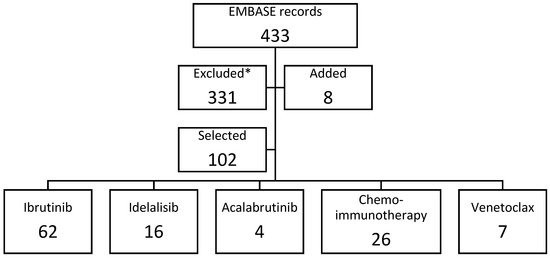
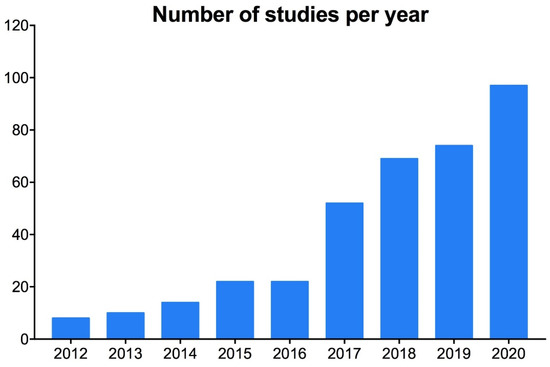
Overall, 433 records were retrieved (Figure 1) and showed that the overall trend of publications addressing RWE of CLL rapidly had increased in the last 10 years (Figure 2). The full reference list is reported in Appendix A. Overall, 102 studies were selected from the list and 8 studies were added from the authors, therefore, the search query proved to be quite sensitive. Five studies were retrieved for more than one treatment. The full list of selected RWS is included in Appendix A. Major study characteristics are reported in Table 1. Most of the studies were from single institutions and size was often lower than 500 patients. Patients were representative of the real-life CLL population according to age. However, collected clinical data were unfortunately sparse in most of the published studies, for example, comorbidities were rarely systematically recorded and response rates were not reported by most of the studies. Moreover, follow-ups were short for most of the studies involving new oral inhibitors.
Figure 1.
PRISMA diagram.* Reasons for exclusion: less than 20 patients (acalabrutinib), less than 50 patients (other series), mixed treatments, missing outcomes, review.
Figure 2.
Publication trends of RWS. Distribution of the 433 retrieved RWS according to the year of publication.
Only 1 phase IV study was reported by Moreno, C. et al. [7]; the study reported the outcomes of 103 patients treated with ofatumumab monotherapy after a median of four prior lines. The study reported a 5-month progression-free survival (PFS) and 11-month overall survival (OS), thus, confirming the data of the published randomized trial comparing ibrutinib versus ofatumumab.
3.1. Ibrutinib
Ibrutinib is an orally administered irreversible inhibitor of bruton tyrosine kinase (BTK), representing the first-in-class of a new family of targeted drugs. Ibrutinib covalently binds to cysteine-481 within the active site of BTK, blocking the signal transduction from the B-cell receptor (BCR) and, thus, impairing CLL cells survival and proliferation (reviewed in [8]). Ibrutinib has changed the therapeutic approach for patients with CLL both in first and subsequent lines of therapy, due to impressive response and survival rates, and acceptable tolerability observed in large, randomized clinical trials [9,10,11,12,13].
Many RWS addressed ibrutinib. Overall, 58 nonduplicated reports enrolled more than 50 CLL patients treated with the drug, mostly in the last 10 years. Enrolled populations were potentially representative of the clinical practice: median age was 69 years and median time from diagnosis was 56 months. Unfortunately, only a few studies were powered enough to detect predictors of safety or effectiveness endpoints in a multivariate analysis, namely large registries in the U.S. or healthcare databases. Moreover, both naive and relapsed/refractory patients were usually included. Many pieces of information were missing from many studies: median doses or median treatment durations, response rates, survival rates, and TP53 mutational status. Several other flaws could be observed in the retrieved studies: limited outcomes were analyzed (i.e., safety or hospitalization rate) and there were no studies that applied propensity-adjusted analyses. Despite the above limitations, the studies provided high discontinuation rates in the short time horizon analyzed.
3.2. Acalabrutinib
Acalabrutinib is a next-generation irreversible BTK inhibitor that was developed to reduce ibrutinib-mediated adverse effects, being more selective and lacking the inhibition towards other kinases (reviewed in [14]). Acalabrutinib has entered clinical practice based on data demonstrating its high efficacy and enhanced tolerability, in both the frontline and relapsed/refractory setting [15].
We retrieved four RWS reporting 496 patients with CLL treated with acalabrutinib; only one RWS was fully reported. A variable preportion of the patients (27–100%) were pretreated with and usually intolerant to ibrutinib. The discontinuation rate reported by two studies ranged from 19% in the first 6 months from treatment initiation to 30% after a median of 19 months. Cardiovascular events occurred in 6% of the largest reported cohort, but led to treatment discontinuation only in half of the cases and corresponded to a rate of 21/1000PY, which was lower than that reported in ibrutinib-treated patients [16].
The overall response rate (ORR) was consistently above 60% in two studies and complete response (CR) was lower than 10%. Survival was documented in two cohorts (median age 64 years); 75% of the patients survived free of progression at three years and 75% were alive after five years, despite a high comorbidity burden, namely mean Charlson comorbidity score 1.4 and 67% of the patients had a prior cardiac history. Patients experiencing a major cardiovascular event reported lower survival rates, namely 50% at 5-year follow-up.
Long-term outcomes such as secondary neoplasms were also investigated in patients exposed to acalabrutinib, however, the increased hazard ratio of 2.2 reported in CLL patients treated with either ibrutinib or acalabrutinib was possibly related to the disease itself, rather than to the treatment. No difference in risk of secondary neoplasms was reported in a multivariate analysis between ibrutinib and acalabrutinib.
A recent retrospective analysis of a large CLL cohort from a single U.S. center specifically investigated the bleeding outcomes [17], however, 85% of the analyzed patients had been enrolled into clinical trials, 18% had prior bleed history, and 51% were on concomitant antiplatelet or anticoagulant medications. Overall, 835 of the patients experienced at least one bleeding event while on acalabrutinib; 98 out of 289 individuals experienced a clinically relevant or major event, but only 6% of the patients had a major bleed and 3% were CTCAE grade 3–5 (2 CNS fatal hemorrhages). Definitive discontinuation of acalabrutinib was decided for 6 patients with clinically relevant/major bleeds, while it was only temporarily held in 44 individuals and concomitant drugs were discontinued in 24 cases. Surgery- or invasive procedure-related bleedings were reported in 28 out of 1263 cases. Concomitant medications and a prior bleeding history were major predictors of bleeding events.
3.3. Venetoclax
Venetoclax is an oral BH3-mimetic drug designed to inhibit the function of the Bcl-2 protein, thus, inducing apoptosis in tumor cells (reviewed in [8]). Venetoclax, alone or in combination with an anti-CD20 monoclonal antibody, has demonstrated efficacy for the treatment of patients with treatment-naïve or relapsed CLL, eventually allowing a fixed-duration treatment [18,19,20].
Seven studies reported RWE on venetoclax in CLL patients; one study reported the French national early-access program and the other studies were retrospective national (n = 1) or multicenter (n = 5) studies. Overall, 751 patients were enrolled into the above studies, most of which were not reported as full papers. Enrolled patients had received a median of from three to four treatment lines, 47% harbored TP53 mutation, and many showed high-risk features, such as complex karyotype (27–61%) or unmutated IGVH status (81–87%). Grade 3–4 adverse events ranged from 23% to 39% and were mainly due to hematologic toxicity. Discontinuation rate was reported only by two studies and was quite low (4–11%); median treatment duration ranged from 12 to 18 months in two other studies. Response rates were quite high: median ORR was 74% and median CR was 25%. Richter transformation occurred in 4–5% of the patients but was reported only by two studies and the median duration of follow-up was shorter than 20 months in the four studies reporting this piece of information. Median PFS and OS were not reached in any study. Multivariate analyses were performed by five studies: survival was predicted by response to therapy, TP53 mutation (in two out of three studies), BCR-inhibitor discontinuation, multiple lines of target therapies, complex karyotype, performance status, and IGVH mutational status.
3.4. Chemoimmunotherapy
Traditionally, CIT was the standard approach in both the frontline and the relapsed/refractory setting of CLL. Common CIT regimens include fludarabine/cyclophosphamide/rituximab (FCR), bendamustine/rituximab (BR), and chlorambucil/rituximab. Older patients or those with comorbidities were recommended to not receive FCR due to the high risk of neutropenic fever and infections, despite very high rates of response in most of the patients [1,2]. More recently, obinutuzumab combination with chlorambucil has progressively replaced chlorambucil/rituximab for the longer median PFS and OS despite similar toxicity, as reported by the CLL14 trial [21,22].
We retrieved 428 studies assessing CIT in real life by health registries (n = 13), electronic record databases (n = 2), or retrospective data collections (n = 11). Most of the studies involved multiple centers (n = 15) and followed a median of 277 patients (IQR 174–817) for a median of 37 months (Table 2 and Table 3). The median patient age was 70 years (IQR 64–71) and most of the studies (n = 18) selectively enrolled naive individuals, but clinical information was often incomplete (Table 4). In particular, Rai stage and TP53 status were reported by 64% and 75% of the studies, respectively, and comorbidity data were missing in 61% of the studies. Response rates were reported by only 13 studies: median ORR rate was 61% and complete response (CR) rate 6%. Discontinuation rate was reported by only five studies: median rate was 20%. Patient survival was described by 75% of the studies (Table 3): median PFS and OS among the studies was 42 and 74 months, respectively.
Table 2.
Real-world studies.
Table 3.
Information reported by real-world studies.
Table 4.
Patient characteristics.
3.5. Idelalisib
Idelalisib is an orally administered, selective, reversible inhibitor of the δ isoform of the phosphatidylinositol- 3-kinase (PI3Kδ). The inhibition of PI3K downstream pathways (i.e., Akt/mTOR) hampers cellular growth, proliferation, and survival (reviewed in [23]). From the clinical standpoint, the efficacy of the combination of idelalisib and rituximab has been demonstrated in the setting of relapsed CLL [8].
Overall, 16 studies reported one or more outcomes of real-world cohorts treated with idelalisib; most of the reported patients were relapsed/refractory and more than one third harbored TP53 disruption.
The largest cohort was reported by Bird et al. [24]; 294 Medicare patients were compared with 89 patients enrolled into clinical trials. Detailed comorbidity profiles of the patients were provided showing that in the two cohorts, 71% versus 30% of the patients reported cardiac comorbidities, respectively. Similarly, 36% versus 7% showed a Charlson comorbidity score of 5 or higher. Median treatment duration in the Medicare cohort was much shorter than in the trial cohort, namely 173 versus 473 days and on-treatment mortality was 9.9% versus 4.5%. Serious infections were not different in the two cohorts, however, fatal infections occurred at a rate of 18.4/100PY in the Medicare population versus 9.8/100PY in the trial population.
RETRO-idel was the highest quality retrospective study selected; it enrolled 110 patients treated with idelalisib in UK or Ireland, and was fully published in 2021 [25]. The study reported high discontinuation rates both in naiive and relapsed/refractory patients, namely 64% and 44%, respectively, but high ORRs (88%). Overall, 46% of the registered deaths were attributed to progressive disease and OS was 56% after 3 years. Median time-to-next treatment after stopping idelalisib was 29 months.
Two studies were specifically designed to patients reporting autoimmune cytopenias before starting idelalisib or receiving such a therapy as a bridge to stem cell transplantation [26,27]. Only one study reported secondary neoplasms in 12.9% of the patients after a median of 21 months from start of idelalisib treatment; the rates were not statistically different to those reported in ibrutinib-treated patients [28].
4. Discussion
CLL is the most frequent leukemia and a large set of modern therapeutic options are available ranging from CIT to oral targeted drugs. These therapeutic options have all reported high rates of responses but also a relevant rate of toxicity in the published clinical trials, which accurately selected candidate patients. We, therefore, aimed at reviewing the available RWE on such therapies in order to test the quality of RWE and to retrieve real-world information for safety and effectiveness.
EMA specifically fostered the development of patient registries, namely data collection systems on an unselected group of people defined by a particular disease or condition, serving a predetermined scientific, clinical. and/or public health purpose. RWE is particularly relevant for validating safety, including cardiovascular events, and especially for reporting rare events, such as SPM, rare infections, or unexpected events. RWE is also necessary for completing drug effectiveness profiles, including rare events, such as Richter transformation and concurrent disorders. Furthermore, treatment outcomes according to heterogeneous adoption of supportive care are fundamental in order to forecast the overall drug safety in the real world and provide management recommendations [29].
The present manuscript systematically reviewed 117 RWS published from 2010 to 2021 and reported 46,447 CLL patients treated with CIT, idelalisib, ibrutinib, venetoclax or acalabrutinib. Unfortunately, 77 studies had been reported only at meetings and only limited data were available. Most of the studies were multicenter retrospective analyses and most of them targeted only a subset of outcomes. A complete clinical dataset, including age, stage and duration of the disease, comorbidity, and biologic risk status was provided only by a few studies, in particular, stage and disease duration were missing in most of the studies, while TP53 status was available in 57% of the studies. Only 26% of the RWS reported treatment discontinuation rates and 40% registered response rates; the median response rates ranged from 61% for acalabrutinib to 79% for idelalisib, and CR rate from 6% for acalabrutinib to 30% for CIT. Survival was also poorly described, since median OS or PFS were usually not reached in the follow-up period, which was usually shorter than 2 years in RWS assessing oral target drugs. Of notice, some research networks devoted to CLL published further high-quality RWS both before [30,31] and after the cutoff date of our review [32,33,34,35,36], thus, demonstrating the effort of the scientific community in ameliorating the RWS quality.
The present systematic review aims at fostering further efforts of the scientific community towards RWE, which may become a very useful tool for both researchers and third-party payers. Institutional databases are major prerequisites for RWE, however, further efforts should be aimed at registering response rates, time-to-next treatment, and comorbidities [37]. Finally, large datasets would allow fine analyses including artificial intelligence algorithms and data mining.
Author Contributions
M.M., A.V. (Alessandra Vasile), M.C., A.C., G.M.R., A.V. (Andrea Visentin), L.S. and C.V. contributed equally to the literature review. M.M. performed literature search and wrote the draft manuscript. M.M., A.V. (Alessandra Vasile), M.C., A.C., G.M.R., A.V. (Andrea Visentin), L.S. and C.V. equally contributed to revise the manuscript. All authors have read and agreed to the published version of the manuscript.
Funding
This research received no external funding.
Institutional Review Board Statement
Not applicable.
Informed Consent Statement
Not applicable.
Conflicts of Interest
No conflict of interest to declare for A.V. M.M. received consultancy fees from Gilead srl and speaker fees from Amgen.
Appendix A
Table A1.
References selected from embase query.
Table A2.
Added references.
References
- Brugiatelli, M.; Bandini, G.; Barosi, G.; Lauria, F.; Liso, V.; Marchetti, M.; Mauro, F.R.; Meloni, G.; Zinzani, P.L.; Tura, S.; et al. Management of chronic lymphocytic leukemia: Practice guidelines from the Italian Society of Hematology, the Italian Society of Experimental Hematology and the Italian Group for Bone Marrow Trans-plantation. Haematologica 2006, 91, 1662–1673. [Google Scholar] [PubMed]
- Mauro, F.R.; Bandini, G.; Barosi, G.; Billio, A.; Brugiatelli, M.; Cuneo, A.; Lauria, F.; Liso, V.; Marchetti, M.; Meloni, G.; et al. SIE, SIES, GITMO updated clinical recommendations for the management of chronic lymphocytic leukemia. Leuk. Res. 2012, 36, 459–466. [Google Scholar] [CrossRef] [Scilit] [PubMed]
- Cuneo, A.; Marchetti, M.; Barosi, G.; Billio, A.; Brugiatelli, M.; Ciolli, S.; Laurenti, L.; Mauro, F.R.; Molica, S.; Montillo, M.; et al. Appropriate use of bendamustine in first-line therapy of chronic lymphocytic leukemia. Recommendations from SIE, SIES, GITMO Group. Leuk. Res. 2014, 38, 1269–1277. [Google Scholar] [CrossRef] [Scilit] [PubMed]
- Collins, R.; Bowman, L.; Landray, M.; Peto, R. The Magic of Randomization versus the Myth of Real-World Evidence. N. Engl. J. Med. 2020, 382, 674–678. [Google Scholar] [CrossRef] [Scilit]
- Mwamburi, M.; Dalal, H.; Gala, S. Trends in Research Using Observational Methodologies in Chronic Lymphocytic Leukemia (CLL): A Systematic Literature Review. Value Health 2016, 19, A760. [Google Scholar] [CrossRef] [Scilit]
- Islam, P.; Mato, A.R. Utilizing Real-World Evidence (RWE) to Improve Care in Chronic Lymphocytic Leukemia: Challenges and Opportunities. Curr. Hematol. Malign-Rep. 2020, 15, 254–260. [Google Scholar] [CrossRef] [Scilit]
- Moreno, C.; Montillo, M.; Panayiotidis, P.; Dimou, M.; Bloor, A.; Dupuis, J.; Schuh, A.; Norin, S.; Geisler, C.; Hillmen, P.; et al. Ofatumumab in poor-prognosis chronic lymphocytic leukemia: A Phase IV, non-interventional, observational study from the European Research Initiative on Chronic Lymphocytic Leukemia. Haematologica 2015, 100, 511–516. [Google Scholar] [CrossRef] [Scilit]
- Vitale, C.; Griggio, V.; Todaro, M.; Salvetti, C.; Boccadoro, M.; Coscia, M. Magic pills: New oral drugs to treat chronic lym-phocytic leukemia. Expert Opin. Pharmacother. 2017, 18, 411–425. [Google Scholar] [CrossRef] [Scilit]
- Munir, T.; Brown, J.R.; O’Brien, S.; Barrientos, J.C.; Barr, P.M.; Reddy, N.M.; Coutre, S.; Tam, C.S.; Mulligan, S.P.; Jaeger, U.; et al. Final analysis from RESONATE: Up to six years of follow-up on ibrutinib in patients with previously treated chronic lymphocytic leukemia or small lymphocytic lymphoma. Am. J. Hematol. 2019, 94, 1353–1363. [Google Scholar] [CrossRef] [Scilit]
- Burger, J.A.; Barr, P.M.; Robak, T.; Owen, C.; Ghia, P.; Tedeschi, A.; Bairey, O.; Hillmen, P.; Coutre, S.E.; Devereux, S.; et al. Long-term efficacy and safety of first-line ibrutinib treatment for patients with CLL/SLL: 5 years of follow-up from the phase 3 RESONATE-2 study. Leukemia 2020, 34, 787–798. [Google Scholar] [CrossRef] [Scilit]
- Moreno, C.; Greil, R.; Demirkan, F.; Tedeschi, A.; Anz, B.; Larratt, L.; Simkovic, M.; Novak, J.; Strugov, V.; Gill, D.; et al. First-line treatment of chronic lymphocytic leukemia with ibrutinib plus obinutuzumab versus chlorambucil plus obinutuzumab: Final analysis of the randomized, phase 3 iLLUMINATE trial. Haematologica 2022. Epub ahead of print. [Google Scholar] [CrossRef] [Scilit]
- Woyach, J.A.; Ruppert, A.S.; Heerema, N.A.; Zhao, W.; Booth, A.M.; Ding, W.; Bartlett, N.; Brander, D.M.; Barr, P.M.; Rogers, K.A.; et al. Ibrutinib Regimens versus Chemoimmunotherapy in Older Patients with Untreated CLL. N. Engl. J. Med. 2018, 379, 2517–2528. [Google Scholar] [CrossRef] [Scilit] [PubMed]
- Shanafelt, T.D.; Wang, X.V.; Kay, N.E.; Hanson, C.A.; O’Brien, S.; Barrientos, J.; Jelinek, D.F.; Braggio, E.; Leis, J.F.; Zhang, C.C.; et al. Ibrutinib-Rituximab or chemoimmunotherapy for chronic lymphocytic leukemia. N. Engl. J. Med. 2019, 381, 432–443. [Google Scholar] [CrossRef] [Scilit] [PubMed]
- Vitale, C.; Gibbons, J.L.; Ferrajoli, A. Targeted Treatment of Chronic Lymphocytic Leukemia: Clinical Utility of Acalabrutinib. OncoTargets Ther. 2021, 14, 5507–5519. [Google Scholar] [CrossRef] [Scilit] [PubMed]
- Byrd, J.C.; Harrington, B.; O’brien, S.; Jones, J.A.; Schuh, A.; Devereux, S.; Chaves, J.; Wierda, W.G.; Awan, F.T.; Brown, J.R.; et al. Acalabrutinib (ACP-196) in Relapsed Chronic Lymphocytic Leukemia. N. Engl. J. Med. 2016, 374, 323–332. [Google Scholar] [CrossRef] [Scilit]
- Dickerson, T.; Wiczer, T.; Waller, A.; Philippon, J.; Porter, K.; Haddad, D.; Guha, A.; Rogers, K.A.; Bhat, S.; Byrd, J.C.; et al. Hypertension and incident cardiovascular events following ibrutinib initiation. Blood 2019, 134, 1919–1928. [Google Scholar] [CrossRef] [Scilit]
- Kumar, P.S.; Wiczer, T.; Rosen, L.; Pollauf, A.J.; Zheng, A.; Palettas, M.; Azali, L.; Bhat, S.A.; Byrd, J.C.; Rogers, K.; et al. Evaluation of the incidence and risk factors associated with bleeding events in pa-tients receiving acalabrutinib therapy. Blood 2021, 138 (Suppl. S1), 3729. [Google Scholar] [CrossRef] [Scilit]
- Roberts, A.W.; Davids, M.S.; Pagel, J.M.; Kahl, B.S.; Puvvada, S.D.; Gerecitano, J.F.; Kipps, T.J.; Anderson, M.A.; Brown, J.R.; Gressick, L.; et al. Targeting BCL2 with Venetoclax in Relapsed Chronic Lymphocytic Leukemia. N. Engl. J. Med. 2016, 374, 311–322. [Google Scholar] [CrossRef] [Scilit]
- Kater, A.P.; Wu, J.Q.; Kipps, T.; Eichhorst, B.; Hillmen, P.; D’rozario, J.; Assouline, S.; Owen, C.; Robak, T.; de la Serna, J.; et al. Venetoclax Plus Rituximab in Relapsed Chronic Lymphocytic Leukemia: 4-Year Results and Evaluation of Impact of Genomic Complexity and Gene Mutations from the MURANO Phase III Study. J. Clin. Oncol. 2020, 38, 4042–4054. [Google Scholar] [CrossRef] [Scilit]
- Al-Sawaf, O.; Zhang, C.; Tandon, M.; Sinha, A.; Fink, A.M.; Robrecht, S.; Samoylova, O.; Liberati, A.M.; Pinilla-Ibarz, J.; Opat, S.; et al. Venetoclax plus obinutuzumab versus chlorambucil plus obinutuzumab for pre-viously untreated chronic lymphocytic leukaemia (CLL14): Follow-up results from a multicentre, open-label, randomised, phase 3 trial. Lancet Oncol. 2020, 21, 1188–1200. [Google Scholar] [CrossRef] [Scilit]
- Goede, V.; Fischer, K.; Busch, R.; Engelke, A.; Eichhorst, B.; Wendtner, C.-M.; Chagorova, T.; DE LA Serna, J.; Dilhuydy, M.-S.; Illmer, T.; et al. Obinutuzumab plus Chlorambucil in Patients with CLL and Coexisting Conditions. N. Engl. J. Med. 2014, 370, 1101–1110. [Google Scholar] [CrossRef] [Scilit]
- Goede, V.; Fischer, K.; Engelke, A.; Schlag, R.; Lepretre, S.; Montero, L.F.C.; Montillo, M.; Fegan, C.; Asikanius, E.; Humphrey, K.; et al. Obinutuzumab as frontline treatment of chronic lymphocytic leukemia: Updated results of the CLL11 study. Leukemia 2015, 29, 1602–1604. [Google Scholar] [CrossRef] [Scilit] [PubMed]
- Sharman, J.P.; Coutre, S.E.; Furman, R.R.; Cheson, B.D.; Pagel, J.M.; Hillmen, P.; Barrientos, J.C.; Zelenetz, A.D.; Kipps, T.J.; Flinn, I.W.; et al. Final Results of a Randomized, Phase III Study of Rituximab with or without Idelalisib Followed by Open-Label Idelalisib in Patients with Relapsed Chronic Lymphocytic Leukemia. J. Clin. Oncol. 2019, 37, 1391–1402. [Google Scholar] [CrossRef] [Scilit] [PubMed]
- Bird, S.T.; Tian, F.; Flowers, N.; Przepiorka, D.; Wang, R.; Jung, T.-H.; Kessler, Z.; Woods, C.; Kim, B.; Miller, B.W.; et al. Idelalisib for treatment of relapsed follicular lymphoma and chronic lymphocytic leuke-mia: A comparison of treatment outcomes in clinical trial participants vs Medicare beneficiaries. JAMA Oncol. 2020, 6, 248–254. [Google Scholar] [CrossRef] [Scilit] [PubMed]
- Eyre, T.A.; Osborne, W.L.; Gallop-Evans, E.; Ardeshna, K.M.; Kassam, S.; Sadullah, S.; Sidra, G.; Culligan, D.; Arumainathan, A.; Shankara, P.; et al. Results of a multicenter UK-wide compassionate use programme evaluating the efficacy of idelalisib monotherapy in relapsed, refractory follicular lymphoma. Br. J. Haematol. 2018, 181, 555–559. [Google Scholar] [CrossRef] [Scilit]
- Schetlelig, J.; Chevallier, P.; van Gelder, M.; Hoek, J.; Hermine, O.; Chakraverty, R.; Browne, P.; Milpied, N.; Malagola, M.; Socié, G.; et al. Idelalisib treatment prior to allogeneic stem cell transplantation for patients with chronic lymphocytic leukemia: A report from the EBMT chronic malignancies working party. Bone Marrow Transplant. 2021, 56, 605–613. [Google Scholar] [CrossRef] [Scilit]
- Vitale, C.; Salvetti, C.; Griggio, V.; Scamuffa, M.C.; Zamprogna, G.; Visentin, A.; Cassin, R.; Laurenti, L.; Murru, R.; Rivela, P.; et al. Pre-existing and treatment-emergent autoimmune cytopenias in patients with chron-ic lymphocytic leukemia treated with targeted drugs. Blood 2021, 137, 3507–3517. [Google Scholar] [CrossRef] [Scilit]
- Pula, B.; Budziszewska, B.K.; Rybka, J.; Gil, L.; Subocz, E.; Długosz-Danecka, M.; Zawirska, D.; Waszczuk-Gajda, A.; Iskierka-Jażdżewska, E.; Kopacz, A.; et al. Comparable efficacy of idelalisib plus rituximab and ibrutinib in relapsed/refractory chronic lymphocytic leukemia: A retrospective case matched study of the Polish Adult Leukemia Group (PALG). Anticancer. Res. 2018, 38, 3025–3030. [Google Scholar]
- Zinzani, P.L.; Rambaldi, A.; Gaidano, G.; Girmenia, C.; Marchetti, M.; Pane, F.; Tura, S.; Barosi, G. Infection control in patients candidate to treatment with ibrutinib or idelalisib in chronic lymphocytic leukemia: Recommendations from Italian Society of Hematology. Leuk. Res. 2019, 81, 88–94. [Google Scholar] [CrossRef] [Scilit]
- Cuneo, A.; Follows, G.; Rigolin, G.M.; Piciocchi, A.; Tedeschi, A.; Trentin, L.; Perez, A.M.; Coscia, M.; Laurenti, L.; Musuraca, G.; et al. GIMEMA, European Research Initiative on CLL (ERIC) and UK CLL forum. Effi-cacy of bendamustine and rituximab as first salvage treatment in chronic lymphocytic leukemia and indirect comparison with ibrutinib: A GIMEMA, ERIC and UK CLL FORUM study. Haematologica 2018, 103, 1209–1217. [Google Scholar] [CrossRef] [Scilit]
- Cuneo, A.; Mato, A.R.; Rigolin, G.M.; Piciocchi, A.; Gentile, M.; Laurenti, L.; Allan, J.N.; Pagel, J.M.; Brander, D.M.; Hill, B.T.; et al. Efficacy of bendamustine and rituximab in unfit patients with previously untreated chronic lymphocytic leukemia. Indirect comparison with ibrutinib in a real-world setting. A GIMEMA-ERIC and US study. Cancer Med. 2020, 9, 8468–8479. [Google Scholar] [CrossRef] [Scilit]
- Rigolin, G.M.; Cavazzini, F.; Piciocchi, A.; Arena, V.; Visentin, A.; Reda, G.; Zamprogna, G.; Cibien, F.; Vitagliano, O.; Coscia, M.; et al. Efficacy of idelalisib and Rituximab in relapsed/refractory chronic lympho-cytic leukemia treated outside of clinical trials. A report of the GIMEMA Working Group. Hematol. Oncol. 2021, 39, 326–335. [Google Scholar] [CrossRef] [Scilit] [PubMed]
- Chatzikonstantinou, T.; Scarfo, L.; Demonsthenous, C.; Kotaskova, J.; Iacoboni, G.; Minga, E.; Chammou, D.; Karakatsoulis, G.; Albi, E.; Alcoceba, M.; et al. Real-world evidence on therapeutic strategies and treatment-sequencing in patients with chronic lymphocytic leukemia: An international study of ERIC, the European Research Initiative on CLL. Blood 2021, 138, 2635. [Google Scholar] [CrossRef] [Scilit]
- Scarfo, L.; Albi, E.; Quaglia, F.M.; Marasca, R.; Sanna, A.; Murru, R.; Laurenti, L.; Gaidano, G.; Mannina, D.; Gentile, M.; et al. An observational study on patients with relapsed/refractory chronic lymphocytic leu-kemia treated with venetoclax-based regimens outside clinical trials in Italy (GIMEMA CLL1920). Blood 2021, 138, 3746. [Google Scholar] [CrossRef] [Scilit]
- Pacheco-Paez, T.; Conte, C.; Rousseau, V.; Chebane, L.; Ysebaert, L.; Levy, V.; Montastruc, J.; Despas, F. Cardiovascular adverse drug reactions of ibrutinib, idelalisib, acalabrutinib, and venetoclax used in chronic lymphocytic leukemia: Systematic review, meta-analysis and Signal detection by dispropor-tionality analysis from VigiBase®. Fundament. Clin. Pharmacol. 2021, 35 (Suppl. S1), 38–39. [Google Scholar]
- Morabito, F.; Tripepi, G.; Del Poeta, G.; Mauro, F.R.; Reda, G.; Sportoletti, P.; Laurenti, L.; Coscia, M.; Herishanu, Y.; Bossio, S.; et al. Comparison of ibrutinib and idelalisib plus rituximab in real-life relapsed/refractory chronic lymphocytic leukemia cases. Eur. J. Haematol. 2021, 106, 493–499. [Google Scholar] [CrossRef] [Scilit]
- Weymann, D.; Costa, S.; Regier, D.A. Validation of a Cyclic Algorithm to Proxy Number of Lines of Systemic Cancer Therapy Using Administrative Data. JCO Clin. Cancer Inform. 2019, 3, 1–10. [Google Scholar] [CrossRef] [Scilit]

Publisher’s Note: MDPI stays neutral with regard to jurisdictional claims in published maps and institutional affiliations. |
© 2022 by the authors. Licensee MDPI, Basel, Switzerland. This article is an open access article distributed under the terms and conditions of the Creative Commons Attribution (CC BY) license (https://creativecommons.org/licenses/by/4.0/).