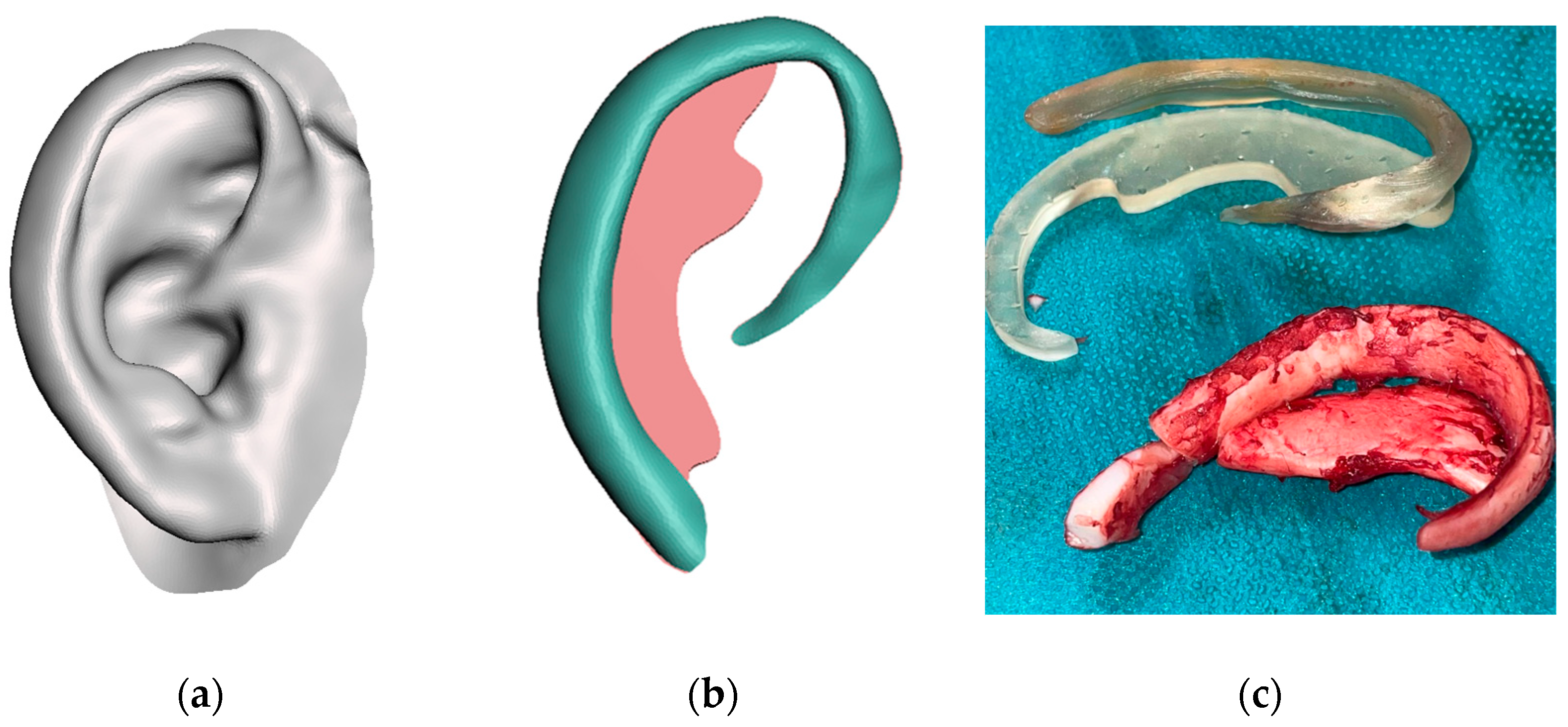
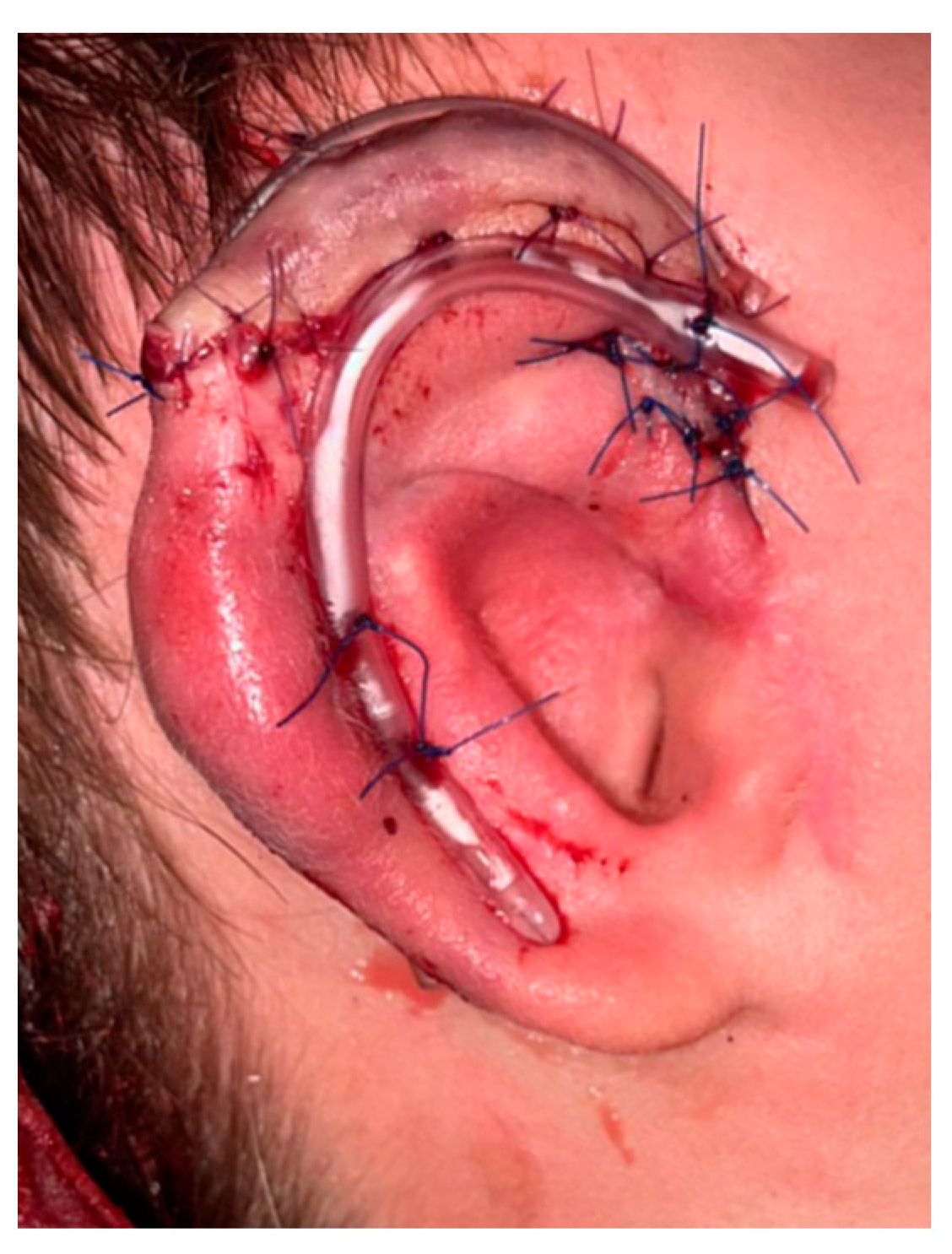
Microtia Ear Reconstruction with Patient-Specific 3D Models—A Segmentation Protocol
 , , , ,
 Abstract
Share and Cite
Rodríguez-Arias, J.P.; Gutiérrez Venturini, A.; Pampín Martínez, M.M.; Gómez García, E.; Muñoz Caro, J.M.; San Basilio, M.; Martín Pérez, M.; Cebrián Carretero, J.L. Microtia Ear Reconstruction with Patient-Specific 3D Models—A Segmentation Protocol. J. Clin. Med. 2022, 11, 3591. https://doi.org/10.3390/jcm11133591
Rodríguez-Arias JP, Gutiérrez Venturini A, Pampín Martínez MM, Gómez García E, Muñoz Caro JM, San Basilio M, Martín Pérez M, Cebrián Carretero JL. Microtia Ear Reconstruction with Patient-Specific 3D Models—A Segmentation Protocol. Journal of Clinical Medicine. 2022; 11(13):3591. https://doi.org/10.3390/jcm11133591
Chicago/Turabian StyleRodríguez-Arias, Juan Pablo, Alessandro Gutiérrez Venturini, Marta María Pampín Martínez, Elena Gómez García, Jesús Manuel Muñoz Caro, Maria San Basilio, Mercedes Martín Pérez, and José Luis Cebrián Carretero. 2022. "Microtia Ear Reconstruction with Patient-Specific 3D Models—A Segmentation Protocol" Journal of Clinical Medicine 11, no. 13: 3591. https://doi.org/10.3390/jcm11133591
APA StyleRodríguez-Arias, J. P., Gutiérrez Venturini, A., Pampín Martínez, M. M., Gómez García, E., Muñoz Caro, J. M., San Basilio, M., Martín Pérez, M., & Cebrián Carretero, J. L. (2022). Microtia Ear Reconstruction with Patient-Specific 3D Models—A Segmentation Protocol. Journal of Clinical Medicine, 11(13), 3591. https://doi.org/10.3390/jcm11133591