


Abstract
Vitamin D is considered to be a crucial factor that influences symptoms of depression, negative emotions, and quality of life, but to date, no systematic review has been conducted with regard to its effect on other domains of mental health. The aim of the study was to evaluate the influence of vitamin D supplementation on mental health in healthy adults. The systematic review was registered in the PROSPERO database (CRD42020155779) and performed according to the PRISMA guidelines. The literature search was conducted in PubMed and Web of Science databases and included intervention studies published until October 2019. The human studies were included if the supplementation regimen involved the administration of a specified dosage of vitamin D to an adult sample. A total of 7613 records were screened and assessed independently by two researchers, based on their title, abstract, and full text sequentially. Finally, 14 studies were included, and their risk of bias was assessed using the Newcastle–Ottawa Scale (NOS). The studies were included if they presented the results of various doses of vitamin D, compared the supplementation results with the placebo effect, compared the outcome with no supplementation, or observed effect of specific dose applied. The assessed mental health outcomes mainly included depressive symptoms, or depression, well-being, quality of life, mood, general mental component, and anxiety, but single studies also included other parameters such as distress, impression of improvement, and fear of falling and flourishing. The results of the majority of studies did not confirm a positive influence of vitamin D supplementation. None of the high-quality studies (assessed using NOS), which evaluated outcomes other than depression, supported the hypothesis that vitamin D supplementation effectively ameliorates mental health issues, while they present conflicting evidence for depression. Some studies indicated that supplementation should be combined with physical activity to provide effective results, and that supplementation is less effective than vitamin D supply from food sources. The included studies were conducted in diverse populations and followed various doses and intervals of administration, so the results may be incomparable, which should be considered as a limitation. The conducted systematic review did not provide strong evidence for a positive effect of vitamin D supplementation on mental health in healthy adults.
1. Introduction
Vitamin D is considered to be a crucial nutrient for calcium absorption and homeostasis, thus influencing bone health and metabolism [1]. However, several investigations in the last few decades have revealed that this vitamin is associated with numerous extra-skeletal effects [2] and that it plays a pivotal role in the prevention and treatment of multiple diseases [3]. Taking this into account, the serious public health problem appeared, as vitamin D insufficiency is estimated to affect about 50% of the global population, and vitamin D deficiency affects 1 billion people, independent of their age and ethnicity [4]. This problem was addressed in a prominent meta-analysis conducted by Garland et al. [5], which demonstrated that low serum levels of 25-hydroxyvitamin D (25(OH)D) are associated with an increased rate of all-cause mortality. This finding prompted other authors to provide recommendations to protect the global population from deficiency by increasing the recommended vitamin D intake levels [6], as well as applying fortified products and through supplementation [7].
The results of prospective clinical trials presenting the effects of vitamin D supplementation are promising, indicating that it is a valuable nutrient, especially for individuals who are unable to meet the recommended dietary intake levels and are unable to receive an adequate amount of sunlight [8]. The most important results indicated that combined supplementation with calcium and vitamin D reduces the risk of total cancer, breast cancer, and colorectal cancer, which was found in Women’s Health Initiative (WHI) [9]. Similarly, a population-based, double-blind, randomized placebo-controlled trial by Lappe et al. [10] reported that combined calcium and vitamin D supplementation reduces all-cancer risk in postmenopausal women. At the same time, a systematic review and meta-analysis of randomized controlled trials by Jolliffe et al. [11] showed that vitamin D supplementation reduces the rate of moderate-to-severe chronic obstructive pulmonary disease (COPD) exacerbations in patients with low baseline 25(OH)D levels. Some studies indicated that vitamin D supplementation may reduce the risk of infection by SARS-CoV-2 and, thus, coronavirus-19 disease (COVID-19) and may also complement the applied treatment, but more studies are necessary to consolidate this theory [12]. Vitamin D supplementation may be needed to obtain and maintain the desirable blood levels of 25(OH)D [13], but the specific doses depend on the target group [14].
Vitamin D is found to be important not only for physical health problems but also to address various mental health issues, as suggested by some meta-analyses conducted mainly for depression. The meta-analyses by Vellekkatt and Menon [15], Shaffer et al. [16], and Spedding [17], concluded that vitamin D supplementation may effectively alleviate the symptoms of depression. However, the results are not consistent, as the meta-analyses by Gowda et al. [18] and Li et al. [19] presented contradictory results and reported that vitamin D does not improve the symptoms of depression, which may be explained by the fact that the studies in this meta-analyses included individuals with low levels of depression symptoms and adequate baseline 25(OH)D levels [18], as well as the publications reviewed were characterized by a high risk of bias [19]. The positive effect of vitamin D supplementation was also associated with a reduction in the occurrence of negative emotions, as indicated in the meta-analysis by Cheng et al. [20], and for improvement of quality of life, as indicated in the systematic review by Hoffmann et al. [21].
Despite the fact that some systematic reviews and meta-analyses evaluated the influence of vitamin D supplementation on some aspects of mental health, namely, symptoms of depression [15,16,17,18,19], negative emotions [20], and quality of life [21], its effect on other mental health problems has not been investigated so far, although some single studies addressed this issue. Therefore, the aim of the present study was to evaluate the influence of vitamin D supplementation on mental health in healthy adults.
2. Materials and Methods
2.1. The Registration and Design
The systematic review was registered in the International Prospective Register of Systematic Reviews (PROSPERO) database (CRD42020155779), within the common registration with the previous studies, which covered the influence of vitamin D on mental health in healthy children [22], as well as in adults with diabetes [23] and in adults with inflammatory bowel diseases and irritable bowel syndrome [24]. The systematic review was based on the Preferred Reporting Items for Systematic Reviews and Meta-Analyses (PRISMA) guidelines [25] for the systematic literature search, screening, inclusion, and reporting. The literature search was conducted based on PubMed and Web of Science databases, and it included intervention studies published until October 2019, as the search procedure was conducted in October 2019.
2.2. The Eligibility and Inclusion
The eligible studies were to present the intervention including vitamin D supplementation and its influence on mental health outcomes. Only studies published in English, in a peer-reviewed journal were allowed.
The inclusion criteria were formulated as follows:
- (1)
- Studied adult population;
- (2)
- Applied vitamin D supplementation of the specified dose;
- (3)
- Outcome including any mental health aspect assessed based on any method (including both subjective questionnaire and medical diagnosis).
The exclusion criteria were formulated as follows:
- (1)
- Studies conducted in animal models;
- (2)
- Studies conducted in a specific populations of individuals with any specific physical health problems (any physical symptom, disease, or disorder defining the studied group);
- (3)
- Studies conducted in subjects with intellectual disabilities;
- (4)
- Studies conducted in subjects with eating disorders;
- (5)
- Studies conducted in subjects with neurological disorders (e.g., Alzheimer’s disease, epilepsy).
- (6)
- Studies assessing influence of combined multiple nutrients supplemented;
- (7)
- Studies assessing influence of maternal vitamin D supplementation on mental health in offspring.
No additional criteria, associated with the country, or population were formulated, and the patient, intervention/exposure, comparator, outcome, and study design (PICOS) criteria for inclusion and exclusion of studies are summarized in Table 1.

Table 1.
Patient, intervention/exposure, comparator, outcome, study design (PICOS) criteria for inclusion and exclusion of studies.
2.3. The Search Strategy
The applied detailed electronic search strategy for databases of PubMed and Web of Science is presented in Supplementary Table S1.
The identified studies were verified to remove duplicates, and they were assessed independently by 2 researchers, based on the title, to screen and assess studies for eligibility. This assessment was followed by the next step, which was conducted based on abstract, to assess studies for eligibility, which was also conducted independently by 2 researchers. If any disagreement appeared at any step, it was discussed with the other researcher. Afterwards, the full texts of the studies indicated as eligible were extracted, and if unavailable, the corresponding author was contacted to obtain full text. The full texts that were gathered were finally assessed by 2 researchers to confirm including them to a systematic review. If any disagreement appeared, it was discussed with the other researcher. The inclusion procedure is presented in Figure 1.
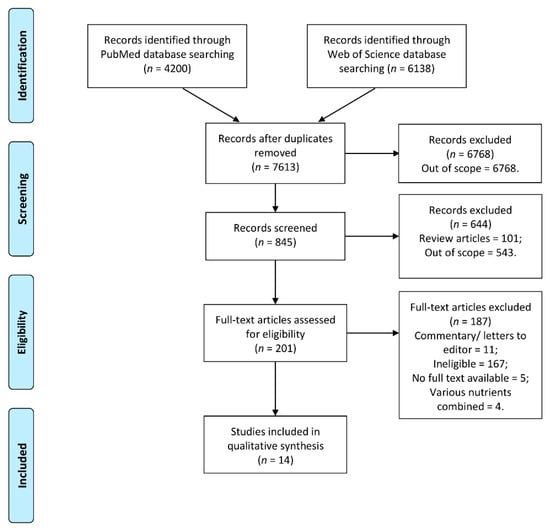
Figure 1.
The inclusion procedure to the systematic review developed based on PRISMA 2009 flow diagram [23].
2.4. Procedure of Data Extraction
The procedure of data extraction was conducted independently by 2 researchers. If any information was unavailable in the article, the corresponding author was contacted to request additional information (referred to in the Results section as data provided on request). If any disagreement appeared, it was discussed with the other researcher. The extracted information included: study design and basic details of the studies included in the systematic review (country/location, studied group, time); characteristics of the groups studied (number of participants and of female participants, age, inclusion criteria/exclusion criteria); characteristics of the exposure and outcome studied (vitamin D measure, applied vitamin D supplementation, mental health outcome, psychological measure), and findings formulated (observations and conclusions as formulated by authors of the study).
According to the procedure recommended for the systematic reviews, the risk of bias resulting from methodological quality [26] was assessed while using the Newcastle–Ottawa Scale (NOS) [27]. The included studies were assessed for the selection (score of 0 to 4), comparability (score of 0 to 2), and exposure/outcome (score of 0 to 3). The final assessment was made within the following categories: very high risk of bias (total score of 0 to 3), high risk of bias (total score of 4 to 6), and low risk of bias (total score of 7 to 9) [28].
3. Results
The study design and basic details of the studies included in the systematic review [29,30,31,32,33,34,35,36,37,38,39,40,41,42] are presented in Table 2. The included studies were conducted mainly in the United States of America [30,31], Norway [33,38], and Poland [40,43], while single studies were conducted also in Canada [29], Australia [32], United Kingdom [34], Finland [35], Iran [36], New Zealand [37], Netherlands [40], and Switzerland [41]. A number of studies were conducted in community-based samples, but some of them included specific groups of outpatients visiting an endocrinology clinic [29], patients with vitamin D deficiency or low 25(OH)D blood levels [30,33], patients with a prior fall [35,41], patients with functional limitations [40], pregnant women under prenatal care [36], marathon runners [39], and participants of a training program [42].
Table 2.
The study design and basic details of the studies included in the systematic review.
The characteristics of the groups studied within the studies included in the systematic review is presented in Table 3. The included intervention studies were conducted mainly in small samples of respondents—less than 100 respondents [29,30,34,39,42]—or medium ones—less than 500 [33,35,36,37,38,40,41]—but two studies were conducted in large samples involving over 2000 [32] and over 80,000 participants [31]. The inclusion criteria mainly included the 25(OH)D blood level [29,30,32,33,38,40,42], but in some studies, history of falls was also taken into account [34,35,41].
Table 3.
The characteristics of the groups studied within the studies included in the systematic review.
The characteristics of the exposure and outcome studied within the studies included in the systematic review are presented in Table 4. The intervention studies included in the present review evaluated the effects of various doses of vitamin D [29,41], compared the supplementation results with the placebo effect [32,33,35,36,37,38,39,40], compared the outcome with no supplementation [31], or observed the effect of a specific dose applied [30,34,42]. In the majority of studies, vitamin D was applied for a period of a few months (6 months or shorter) [29,30,33,34,36,37,38,42], while in some, the supplementation protocol extended for one year [40,41] or even longer [31,32,35]; but, in one study, vitamin D was administered for only 2 weeks [39]. The assessed mental health outcomes included mainly depressive symptoms, or depression [30,31,33,35,36,37,38,40,41,42], well-being [29,32,35], quality of life [35,40,42], mood [29,37,39], general mental component [32,34,41], and anxiety [37,40]. However, single studies also evaluated other parameters such as distress [32], impression of improvement [32], and fear of falling [35] and flourishing [37].
Table 4.
The characteristics of the exposure and outcome studied within the studies included in the systematic review.
The summary of concluded association between vitamin D supplementation and mental health in adults, accompanied by the Newcastle–Ottawa Scale (NOS) total score for the studies included in the systematic review, is presented in Table 5. The findings for the studies included in the systematic review are presented in Supplementary Table S2. Among the included studies, seven were associated with a low risk of bias (NOS score of 7–9) [28], some reported protective effects of vitamin D [31,36], and some found no beneficial effects for this vitamin [32,35,37,38,40]. However, it should be noted that the majority of the studies did not provide strong evidence for a positive influence of vitamin D supplementation. Moreover, none of the high-quality studies (associated with low risk of bias), which assessed outcomes other than depression (mental well-being [32,35], quality of life/health-related quality of life [35,40], anxiety [37], fear of falling [35], flourishing [37], mood [37]) supported positive effects of vitamin D supplementation. On the contrary, high-quality studies provided conflicting evidence for depression/depressive symptoms—either positive influence of vitamin D supplementation [30,36] or no such influence [37,38,40].
Table 5.
The summary of concluded association between vitamin D supplementation and mental health in adults, accompanied by the Newcastle–Ottawa Scale (NOS) total score for the studies included in the systematic review.
4. Discussion
The described inconsistent observations with regard to the effect of vitamin D supplementation on mental health are in agreement with the general controversies associated with the therapeutic use of vitamin D supplementation [43]. They are associated with no consistent recommendations of vitamin D intake [44], which for adults varies from 5 µg in Australia and New Zealand [45] to 20 µg in Germany, Austria, and Switzerland [46]. Similarly, there are also diverse opinions with regard to baseline levels of 25(OH)D in the serum, below which vitamin D deficiency occurs [47]. A threshold level of 30 nmol/L is specified by the United States (US) Institute of Medicine (IoM) [48] and the United Kingdom National Osteoporosis Society [49] and a level of 50 nmol/L by the US Endocrine Society [50] and European Food Safety Authority (EFSA) [51]. In addition, the vitamin D supplementation doses recommended by various authorities for the general population of adults also differ [52], ranging from daily supplementation limit of no more than 15 µg, recommended by IoM [53], to the maximum permissible level of 50 µg, recommended by US Endocrine Society [50].
The above-mentioned results show that little is known about the target 25(OH)D blood level, but also various recommendations of supplementation may be formulated, which in the studies included in the present systematic review ranged from 15 µg per day for at least 2 months [29] to 250 µg per day for 2 weeks [39]. Furthermore, some researchers did not apply daily vitamin D doses, but weekly [33,34,38], monthly [37,41], or even yearly doses [32]. However, the efficacy of vitamin D supplementation is dependent on the applied dosage [54] and time intervals proposed for this supplementation [55], so the results of the included studies may be incomparable. In addition, some countries have their national vitamin D fortification policy, which includes fortification of products such as milk (Finland, Sweden, and Iceland); nondairy milk alternatives, such as soy, rice, and oat drinks (Finland); fat spreads/margarines (Finland and United Kingdom) [56]. These products influence the vitamin D status in these populations and may also contribute to the differences in results between studies. However, if the dietary intake of vitamin D is not recorded within the study, it might not have been taken into account.
Bearing this in mind, it must be emphasized that the studies included in the systematic review were conducted in various populations, as well as various doses and intervals were followed for supplementation, so the results may have been incomparable, which is a limitation of the present analysis. Moreover, only studies published in English, in peer-reviewed journals were included, which means that some interesting results may not have been taken into account. The other issue is associated with the diverse quality of the included studies accompanied by the relatively low number of studies randomized against placebo, which may be associated with the risk of bias. Last but not least, the presented study included articles published until October 2019, while the further ones were not screened, which also should be indicated as one of the limitations.
As described above, the results of the conducted systematic review did not provide explicit evidence to demonstrate a positive effect of vitamin D supplementation on mental health in a population of adults. Not only did the majority of the included studies not support it, but also, many reported inconclusive results. Only 36% of the studies were classified as supporting [29,30,31,36,42], and among them, some suggested that specific conditions need to be met in order to observe the positive influence of vitamin D supplementation. One study confirmed that vitamin D supplementation may be beneficial to overcome depression only when it is combined with physical activity [42], while another study recommended the dietary intake primarily through food sources that provided better results, while for supplementation, less consistent results were documented [31]. Considering these findings, it may be concluded that vitamin D supplementation may be not so effective as dietary intake, but also that it should be an element of a broader treatment program, also including behavioral therapy. In spite of this, it is generally stated that if taking dietary supplements to correct vitamin D deficiency improves mental well-being, it would be a simple and cost-effective solution for patients at risk of depression and possibly other mental disorders [57]. However, the results of the conducted systematic review indicate that this solution may not be as effective as expected.
Although a majority of the high-quality studies indicate that vitamin D supplementation may have a positive impact on depression, other studies do not support the positive influence of vitamin D supplementation on other mental health problems. Therefore, vitamin D supplementation should not be treated as the only dietary intervention to be applied in the prevention and therapy of mental health disorders. The treatment protocol should not only include a broader dietary intervention, to ensure that an adequate amount of the vitamin D is obtained through the food sources, but should also include other dietary modifications. Such a modification should be based on the well-known association between diet and mental health, as indicated in the previous systematic reviews that determined the effects of fruit and vegetable intake [58] and various dietary patterns [59]. Moreover, physical activity should also be promoted as the confirmed factor associated with mental health [60], additionally supporting the positive influence of vitamin D.
5. Conclusions
The conducted systematic review did not confirm a positive influence of vitamin D supplementation on mental health in healthy adults. It was supported only by some studies, which mainly included depression and not other mental health problems. Some studies indicated that this supplementation should be combined with physical activity to produce effective results, while some studies revealed that supplementation is less effective than vitamin D supply from food sources.
Supplementary Materials
The following are available online at https://www.mdpi.com/article/10.3390/jcm10215156/s1. Supplementary Table S1: The applied detailed electronic search strategy for databases of PubMed and Web of Science, Supplementary Table S2: The findings for the studies included in the systematic review.
Author Contributions
Conceptualization, D.G. (Dominika Guzek) and D.G. (Dominika Głąbska); methodology, D.G. (Dominika Guzek) and D.G. (Dominika Głąbska); formal analysis, D.G. (Dominika Guzek), A.K., K.L., D.S., M.S., and D.G. (Dominika Głąbska); investigation, D.G. (Dominika Guzek), A.K., K.L., D.S., M.S., and D.G. (Dominika Głąbska); writing—original draft preparation, D.G. (Dominika Guzek), A.K., K.L., D.S., M.S., and D.G. (Dominika Głąbska); writing—review and editing, D.G. (Dominika Guzek), A.K., K.L., D.S., M.S., and D.G. (Dominika Głąbska). All authors have read and agreed to the published version of the manuscript.
Funding
This research was funded by the Polish Ministry of Science and Higher Education within funds of Institute of Human Nutrition Sciences, Warsaw University of Life Sciences (WULS), for scientific research.
Institutional Review Board Statement
The literature search was conducted according to the guidelines of the Preferred Reporting Items for Systematic Reviews and Meta-Analyses (PRISMA), and the review was registered in the International Prospective Register of Systematic Reviews (PROSPERO) database (CRD42020155779).
Informed Consent Statement
Not applicable.
Conflicts of Interest
The authors declare no conflict of interest.
References
- Hill, T.R.; Aspray, T.J. The role of vitamin D in maintaining bone health in older people. Ther. Adv. Musculoskelet. Dis. 2017, 9, 89–95. [Google Scholar] [CrossRef]
- Umar, M.; Sastry, K.S.; Chouchane, A.I. Role of Vitamin D beyond the Skeletal Function: A Review of the Molecular and Clinical Studies. Int. J. Mol. Sci. 2018, 19, 1618. [Google Scholar] [CrossRef]
- Zmijewski, M.A. Vitamin D and Human Health. Int. J. Mol. Sci. 2019, 20, 145. [Google Scholar] [CrossRef] [PubMed]
- Nair, R.; Maseeh, A. Vitamin D: The “sunshine” vitamin. J. Pharmacol. Pharmacother. 2012, 3, 118–126. [Google Scholar] [CrossRef] [PubMed]
- Garland, C.F.; Kim, J.J.; Mohr, S.B.; Gorham, E.D.; Grant, W.B.; Giovannucci, E.L.; Baggerly, L.; Hofflich, H.; Ramsdell, J.W.; Zeng, K.; et al. Meta-analysis of all-cause mortality according to serum 25-hydroxyvitamin D. Am. J. Public Health 2014, 104, e43–e50. [Google Scholar] [CrossRef] [PubMed]
- Papadimitriou, D.T. The Big Vitamin D Mistake. J. Prev. Med. Public Health 2017, 50, 278–281. [Google Scholar] [CrossRef]
- Holick, M.F. Evidence-based D-bate on health benefits of vitamin D revisited. Dermatoendocrinology 2012, 4, 183–190. [Google Scholar] [CrossRef] [PubMed]
- Haines, S.T.; Park, S.K. Vitamin D supplementation: What’s known, what to do, and what’s needed. Pharmacotherapy 2012, 32, 354–382. [Google Scholar] [CrossRef] [PubMed]
- Bolland, M.J.; Grey, A.; Gamble, G.D.; Reid, I.R. Calcium and vitamin D supplements and health outcomes: A reanalysis of the Women’s Health Initiative (WHI) limited-access data set. Am. J. Clin. Nutr. 2011, 94, 1144–9114. [Google Scholar] [CrossRef]
- Lappe, J.M.; Travers-Gustafson, D.; Davies, K.M.; Recker, R.R.; Heaney, R.P. Vitamin D and calcium supplementation reduces cancer risk: Results of a randomized trial. Am. J. Clin. Nutr. 2007, 85, 1586–1591. [Google Scholar] [CrossRef] [PubMed]
- Jolliffe, D.A.; Greenberg, L.; Hooper, R.L.; Mathyssen, C.; Rafiq, R.; de Jongh, R.T.; Camargo, C.A.; Griffiths, C.J.; Janssens, W.; Martineau, A.R. Vitamin D to prevent exacerbations of COPD: Systematic review and meta-analysis of individual participant data from randomised controlled trials. Thorax 2019, 74, 337–345. [Google Scholar] [CrossRef] [PubMed]
- Grant, W.B.; Lahore, H.; McDonnell, S.L.; Baggerly, C.A.; French, C.B.; Aliano, J.L.; Bhattoa, H.P. Evidence that Vitamin D Supplementation Could Reduce Risk of Influenza and COVID-19 Infections and Deaths. Nutrients 2020, 12, 988. [Google Scholar] [CrossRef] [PubMed]
- Sizar, O.; Khare, S.; Goyal, A.; Bansal, P.; Givler, A. Vitamin D Deficiency. In StatPearls; StatPearls Publishing: Treasure Island, FL, USA, 2021. Available online: https://www.ncbi.nlm.nih.gov/books/NBK532266/#_NBK532266_pubdet_ (accessed on 12 March 2021).
- Chauhan, K.; Shahrokhi, M.; Huecker, M.R. Vitamin D. In StatPearls; StatPearls Publishing: Treasure Island, FL, USA, 2021. Available online: https://www.ncbi.nlm.nih.gov/books/NBK441912/ (accessed on 12 March 2021).
- Vellekkatt, F.; Menon, V. Efficacy of vitamin D supplementation in major depression: A meta-analysis of randomized controlled trials. J. Postgrad. Med. 2019, 65, 74–80. [Google Scholar] [CrossRef]
- Shaffer, J.A.; Edmondson, D.; Taggart Wasson, L.; Falzon, L.; Homma, K.; Ezeokoli, N.; Li, P.; Davidson, K.W. Vitamin D supplementation for depressive symptoms: A systematic review and meta-analysis of randomized controlled trials. Psychosom. Med. 2014, 76, 190–196. [Google Scholar] [CrossRef]
- Spedding, S. Vitamin D and depression: A systematic review and meta-analysis comparing studies with and without biological flaws. Nutrients 2014, 6, 1501–1518. [Google Scholar] [CrossRef]
- Gowda, U.; Mutowo, M.P.; Smith, B.J.; Wluka, A.E.; Renzaho, A.M. Vitamin D supplementation to reduce depression in adults: Meta-analysis of randomized controlled trials. Nutrition 2015, 31, 421–429. [Google Scholar] [CrossRef]
- Li, G.; Mbuagbaw, L.; Samaan, Z.; Falavigna, M.; Zhang, S.; Adachi, J.D.; Cheng, J.; Papaioannou, A.; Thabane, L. Efficacy of vitamin D supplementation in depression in adults: A systematic review. J. Clin. Endocrinol. Metab. 2014, 99, 757–767. [Google Scholar] [CrossRef] [PubMed]
- Cheng, Y.C.; Huang, Y.C.; Huang, W.L. The effect of vitamin D supplement on negative emotions: A systematic review and meta-analysis. Depress. Anxiety 2020, 37, 549–564. [Google Scholar] [CrossRef] [PubMed]
- Hoffmann, M.R.; Senior, P.A.; Mager, D.R. Vitamin D supplementation and health-related quality of life: A systematic review of the literature. J. Acad. Nutr. Diet. 2015, 115, 406–418. [Google Scholar] [CrossRef]
- Głąbska, D.; Kołota, A.; Lachowicz, K.; Skolmowska, D.; Stachoń, M.; Guzek, D. The Influence of Vitamin D Intake and Status on Mental Health in Children: A Systematic Review. Nutrients 2021, 13, 952. [Google Scholar] [CrossRef] [PubMed]
- Guzek, D.; Kołota, A.; Lachowicz, K.; Skolmowska, D.; Stachoń, M.; Głąbska, D. Influence of Vitamin D Supplementation on Mental Health in Diabetic Patients: A Systematic Review. Nutrients 2021, 13, 3678. [Google Scholar] [CrossRef]
- Głąbska, D.; Kołota, A.; Lachowicz, K.; Skolmowska, D.; Stachoń, M.; Guzek, D. Vitamin D Supplementation and Mental Health in Inflammatory Bowel Diseases and Irritable Bowel Syndrome Patients: A Systematic Review. Nutrients 2021, 13, 3662. [Google Scholar] [CrossRef]
- Moher, D.; Liberati, A.; Tetzlaff, J.; Altman, D.G. PRISMA Group. Preferred reporting items for systematic reviews and meta-analyses: The PRISMA statement. PLoS Med. 2009, 6, e1000097. [Google Scholar] [CrossRef] [PubMed]
- Higgins, J.P.T.; Green, S. (Eds.) Assessing Risk of Bias in Non-Randomized Studies. Chapter 13.5.2.3. Available online: http://handbook-5-1.cochrane.org/ (accessed on 28 July 2021).
- Wells, G.A.; Shea, B.; O’Connell, D.; Peterson, J.; Welch, V.; Losos, M.; Tugwell, P. The Newcastle-Ottawa Scale (NOS) for Assessing the Quality of Nonrandomised Studies in Meta-Analyses. Available online: http://www.ohri.ca/programs/clinical_epidemiology/oxford.asp (accessed on 28 July 2021).
- You, S.; Kong, T.H.; Han, W. The Effects of short-term and long-term hearing changes on music exposure: A systematic review and meta-analysis. Int. J. Environ. Res. Public Health 2020, 17, 2091. [Google Scholar] [CrossRef] [PubMed]
- Vieth, R.; Kimball, S.; Hu, A.; Walfish, P.G. Randomized comparison of the effects of the vitamin D3 adequate intake versus 100 mcg (4000 IU) per day on biochemical responses and the wellbeing of patients. Nutr. J. 2004, 19, 8. [Google Scholar] [CrossRef]
- Shipowick, C.D.; Moore, C.B.; Corbett, C.; Bindler, R. Vitamin D and depressive symptoms in women during the winter: A pilot study. Appl. Nurs. Res. 2009, 22, 221–225. [Google Scholar] [CrossRef]
- Bertone-Johnson, E.R.; Powers, S.I.; Spangler, L.; Brunner, R.L.; Michael, Y.L.; Larson, J.C.; Millen, A.E.; Bueche, M.N.; Salmoirago-Blotcher, E.; Liu, S.; et al. Vitamin D intake from foods and supplements and depressive symptoms in a diverse population of older women. Am. J. Clin. Nutr. 2011, 94, 1104–1112. [Google Scholar] [CrossRef]
- Sanders, K.M.; Stuart, A.L.; Williamson, E.J.; Jacka, F.N.; Dodd, S.; Nicholson, G.; Berk, M. Annual high-dose vitamin D3 and mental well-being: Randomised controlled trial. Br. J. Psychiatry 2011, 198, 357–364. [Google Scholar] [CrossRef]
- Kjærgaard, M.; Waterloo, K.; Wang, C.E.; Almås, B.; Figenschau, Y.; Hutchinson, M.S.; Svartberg, J.; Jorde, R. Effect of vitamin D supplement on depression scores in people with low levels of serum 25-hydroxyvitamin D: Nested case-control study and randomised clinical trial. Br. J. Psychiatry 2012, 201, 360–368. [Google Scholar] [CrossRef]
- Cheema, M.R.; Chaudhry, A.Y. Quality-of-life indicators and falls due to vitamin D deficiency. Int. J. Gen. Med. 2016, 22, 21–25. [Google Scholar] [CrossRef][Green Version]
- Patil, R.; Karinkanta, S.; Tokola, K.; Kannus, P.; Sievänen, H.; Uusi-Rasi, K. Effects of Vitamin D and Exercise on the Wellbeing of Older Community-Dwelling Women: A Randomized Controlled Trial. Gerontology 2016, 62, 401–408. [Google Scholar] [CrossRef]
- Vaziri, F.; Nasiri, S.; Tavana, Z.; Dabbaghmanesh, M.H.; Sharif, F.; Jafari, P. A randomized controlled trial of vitamin D supplementation on perinatal depression: In Iranian pregnant mothers. BMC Pregnancy Childbirth 2016, 20, 239. [Google Scholar] [CrossRef] [PubMed]
- Choukri, M.A.; Conner, T.S.; Haszard, J.J.; Harper, M.J.; Houghton, L.A. Effect of vitamin D supplementation on depressive symptoms and psychological wellbeing in healthy adult women: A double-blind randomised controlled clinical trial. J. Nutr. Sci. 2018, 23, 23. [Google Scholar] [CrossRef] [PubMed]
- Jorde, R.; Kubiak, J. No improvement in depressive symptoms by vitamin D supplementation: Results from a randomised controlled trial. J. Nutr. Sci. 2018, 22, e30. [Google Scholar] [CrossRef]
- Krokosz, D.; Lipowski, M.; Aschenbrenner, P.; Ratkowski, W. Personality Traits and Vitamin D3 Supplementation Affect Mood State 12 h Before 100 km Ultramarathon Run. Front. Psychol. 2018, 29, 980. [Google Scholar] [CrossRef]
- De Koning, E.J.; Lips, P.; Penninx, B.W.J.H.; Elders, P.J.M.; Heijboer, A.C.; den Heijer, M.; Bet, P.M.; van Marwijk, H.W.J.; van Schoor, N.M. Vitamin D supplementation for the prevention of depression and poor physical function in older persons: The D-Vitaal study, a randomized clinical trial. Am. J. Clin. Nutr. 2019, 110, 1119–1130. [Google Scholar] [CrossRef] [PubMed]
- Gugger, A.; Marzel, A.; Orav, E.J.; Willett, W.C.; Dawson-Hughes, B.; Theiler, R.; Freystätter, G.; Egli, A.; Bischoff-Ferrari, H.A. Effect of Monthly High-Dose Vitamin D on Mental Health in Older Adults: Secondary Analysis of a RCT. J. Am. Geriatr. Soc. 2019, 67, 1211–1217. [Google Scholar] [CrossRef]
- Lipowski, M.; Walczak-Kozłowska, T.; Lipowska, M.; Kortas, J.; Antosiewicz, J.; Falcioni, G.; Ziemann, E. Improvement of Attention, Executive Functions, and Processing Speed in Elderly Women as a Result of Involvement in the Nordic Walking Training Program and Vitamin D Supplementation. Nutrients 2019, 11, 1311. [Google Scholar] [CrossRef]
- Stokes, C.S.; Lammert, F. Vitamin D supplementation: Less controversy, more guidance needed. F1000Res 2016, 17. [Google Scholar] [CrossRef] [PubMed]
- Utri, Z.; Głąbska, D. Vitamin D Intake in a Population-Based Sample of Young Polish Women, Its Major Sources and the Possibility of Meeting the Recommendations. Foods 2020, 9, 1482. [Google Scholar] [CrossRef]
- Australian Government. National Health and Medical Research Council Vitamin D—Nutrient Reference Values. Available online: https://www.nrv.gov.au/nutrients/vitamin-d (accessed on 25 August 2021).
- Reference Values—DACH-Referenzwerte—Schweizerische Gesellschaft für Ernährung. Available online: http://www.sge-ssn.ch/grundlagen/lebensmittel-und-naehrstoffe/naehrstoffempfehlungen/dachreferenzwerte/ (accessed on 25 August 2021).
- Utri, Z.; Głąbska, D. Salmon Intake Intervention in the Vulnerable Group of Young Polish Women to Maintain Vitamin D Status during the Autumn Season. Sustainability 2020, 12, 2829. [Google Scholar] [CrossRef]
- National Academies Press (US). Institute of Medicine (US) Committee to Review Dietary Reference Intakes for Vitamin D and Calcium. In Dietary Reference Intakes for Calcium and Vitamin D; The National Academies Collection: Reports Funded by National Institutes of Health; Ross, A.C., Taylor, C.L., Yaktine, A.L., Del Valle, H.B., Eds.; National Academies Press: Washington, DC, USA, 2011. [Google Scholar]
- Aspray, T.J.; Bowring, C.; Fraser, W.; Gittoes, N.; Javaid, M.K.; Macdonald, H.; Patl, S.; Selby, P.; Tanna, N.; Francis, R.M. National Osteoporosis Society Vitamin D Guideline Summary. Age Ageing 2014, 43, 592–595. [Google Scholar] [CrossRef] [PubMed]
- Holick, M.F.; Binkley, N.C.; Bischoff-Ferrari, H.A.; Gordon, C.M.; Hanley, D.A.; Heaney, R.P.; Murad, M.H.; Weaver, C.M. Evaluation, Treatment, and Prevention of Vitamin D Deficiency: An Endocrine Society Clinical Practice Guideline. J. Clin. Endocrinol. Metab. 2011, 96, 1911–1930. [Google Scholar] [CrossRef]
- EFSA Panel on Dietetic Products, Nutrition and Allergies (NDA). Dietary reference values for vitamin D. EFSA J. 2016, 14, e04547. [Google Scholar] [CrossRef]
- Pludowski, P.; Holick, M.F.; Grant, W.B.; Konstantynowicz, J.; Mascarenhas, M.R.; Haq, A.; Povoroznyuk, V.; Balatska, N.; Barbosa, A.P.; Karonova, T.; et al. Vitamin D supplementation guidelines. J. Steroid Biochem. Mol. Biol. 2018, 175, 125–135. [Google Scholar] [CrossRef]
- Ross, A.C.; Manson, J.E.; Abrams, S.A.; Aloia, J.F.; Brannon, P.M.; Clinton, S.K.; Durazo-Arvizu, R.A.; Gallagher, J.C.; Gallo, R.L.; Jones, G.; et al. The 2011 report on dietary reference intakes for calcium and vitamin D from the Institute of Medicine: What clinicians need to know. J. Clin. Endocrinol. Metab. 2011, 96, 53–58. [Google Scholar] [CrossRef]
- Gallo, S.; Comeau, K.; Vanstone, C.; Agellon, S.; Sharma, A.; Jones, G.; L’Abbé, M.; Khamessan, A.; Rodd, C.; Weiler, H. Effect of different dosages of oral vitamin D supplementation on vitamin D status in healthy, breastfed infants: A randomized trial. JAMA 2013, 309, 1785–1792. [Google Scholar] [CrossRef]
- Chel, V.; Wijnhoven, H.A.; Smit, J.H.; Ooms, M.; Lips, P. Efficacy of different doses and time intervals of oral vitamin D supplementation with or without calcium in elderly nursing home residents. Osteoporos. Int. 2008, 19, 663–671. [Google Scholar] [CrossRef] [PubMed]
- Spiro, A.; Buttriss, J.L. Vitamin D: An overview of vitamin D status and intake in Europe. Nutr. Bull. 2014, 39, 322–350. [Google Scholar] [CrossRef]
- Penckofer, S.; Kouba, J.; Byrn, M.; Estwing Ferrans, C. Vitamin D and depression: Where is all the sunshine? Issues Ment. Health Nurs. 2010, 31, 385–393. [Google Scholar] [CrossRef]
- Głąbska, D.; Guzek, D.; Groele, B.; Gutkowska, K. Fruit and Vegetable Intake and Mental Health in Adults: A Systematic Review. Nutrients 2020, 12, 115. [Google Scholar] [CrossRef] [PubMed]
- Guzek, D.; Głąbska, D.; Groele, B.; Gutkowska, K. Fruit and Vegetable Dietary Patterns and Mental Health in Women: A Systematic Review. Nutr. Rev. 2021, 26, nuab007. [Google Scholar] [CrossRef] [PubMed]
- Giménez-Meseguer, J.; Tortosa-Martínez, J.; Cortell-Tormo, J.M. The Benefits of Physical Exercise on Mental Disorders and Quality of Life in Substance Use Disorders Patients. Systematic Review and Meta-Analysis. Int. J. Environ. Res. Public Health 2020, 17, 3680. [Google Scholar] [CrossRef] [PubMed]
Publisher’s Note: MDPI stays neutral with regard to jurisdictional claims in published maps and institutional affiliations. |
© 2021 by the authors. Licensee MDPI, Basel, Switzerland. This article is an open access article distributed under the terms and conditions of the Creative Commons Attribution (CC BY) license (https://creativecommons.org/licenses/by/4.0/).