Article

Sinus Augmentation—Expect the Unexpected: Diagnostic Anatomical Study
1
Oral and Maxillofacial Surgery Private Clinic, Herzliya 4672211, Israel
2
Department of Oral and Maxillofacial Surgery, Beilinson Hospital, Rabin Medical Center, Petach Tikva 4941492, Israel
3
Maccabi Dent Clinic, Bnei Brak 5144003, Israel
4
Department of Oral and Maxillofacial Surgery, The Maurice and Gabriela Goldschleger School of Dental Medicine, Tel Aviv University, Tel Aviv 6139001, Israel
*
Author to whom correspondence should be addressed.
J. Clin. Med. 2021, 10(19), 4293; https://doi.org/10.3390/jcm10194293
Submission received: 1 September 2021 / Revised: 16 September 2021 / Accepted: 20 September 2021 / Published: 22 September 2021
(This article belongs to the Section Otolaryngology)

Abstract

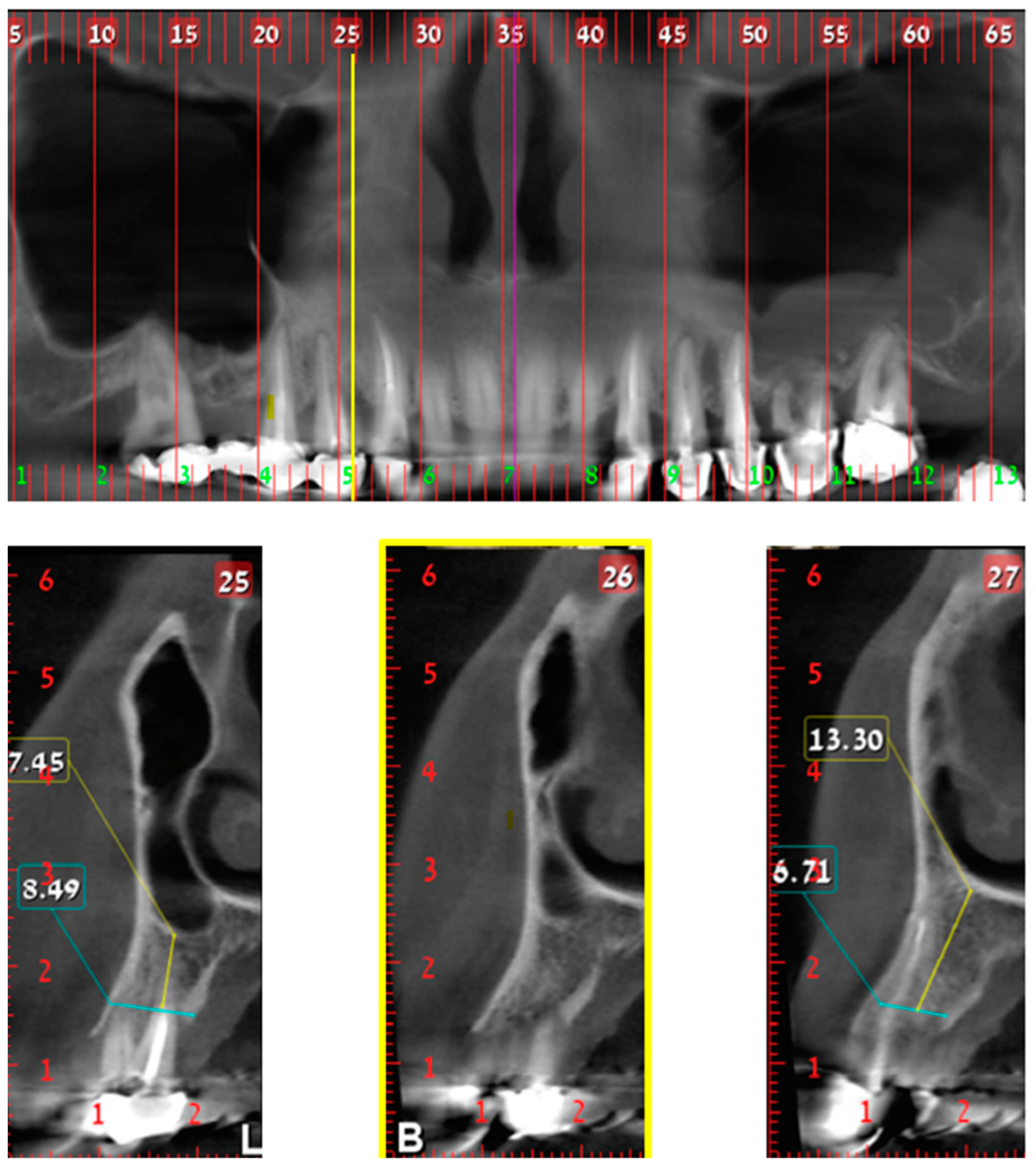
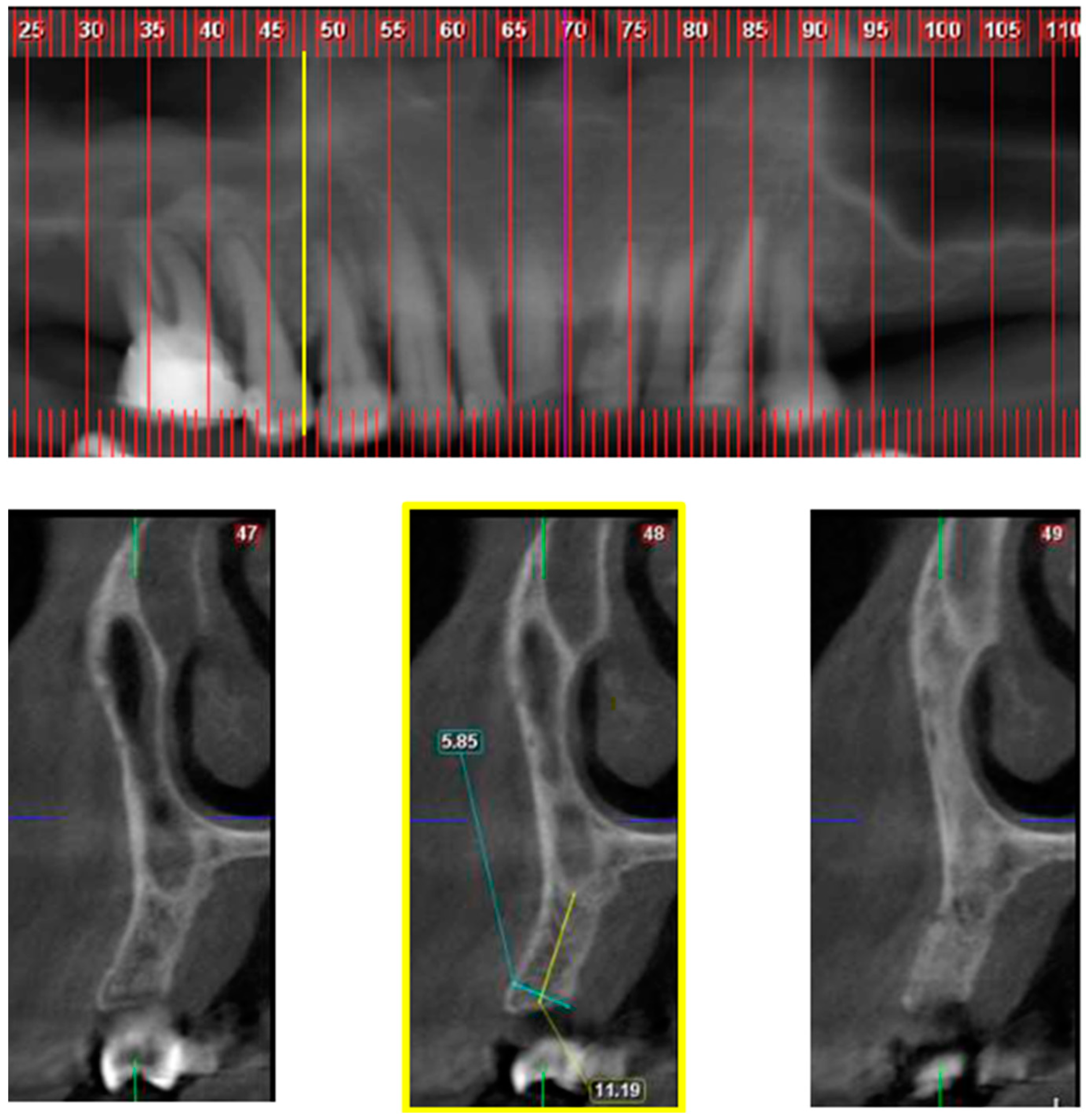
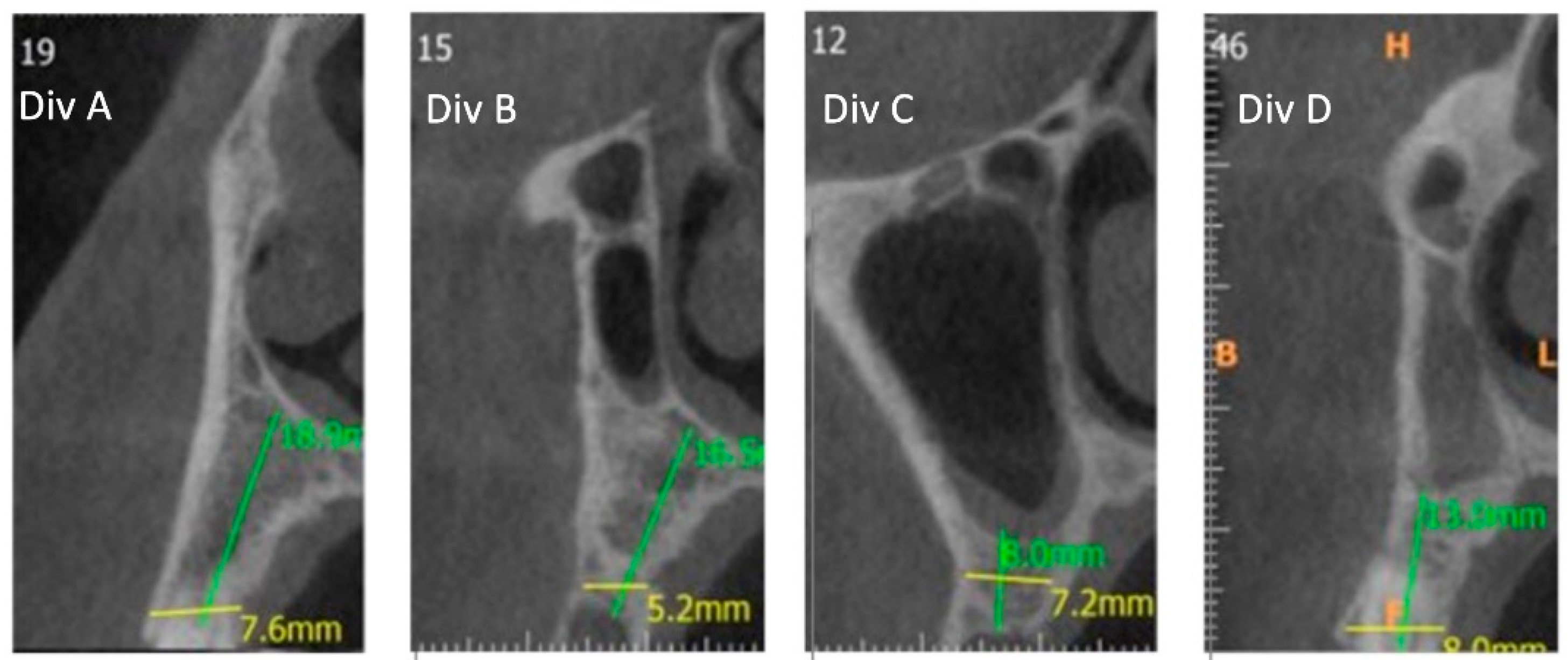
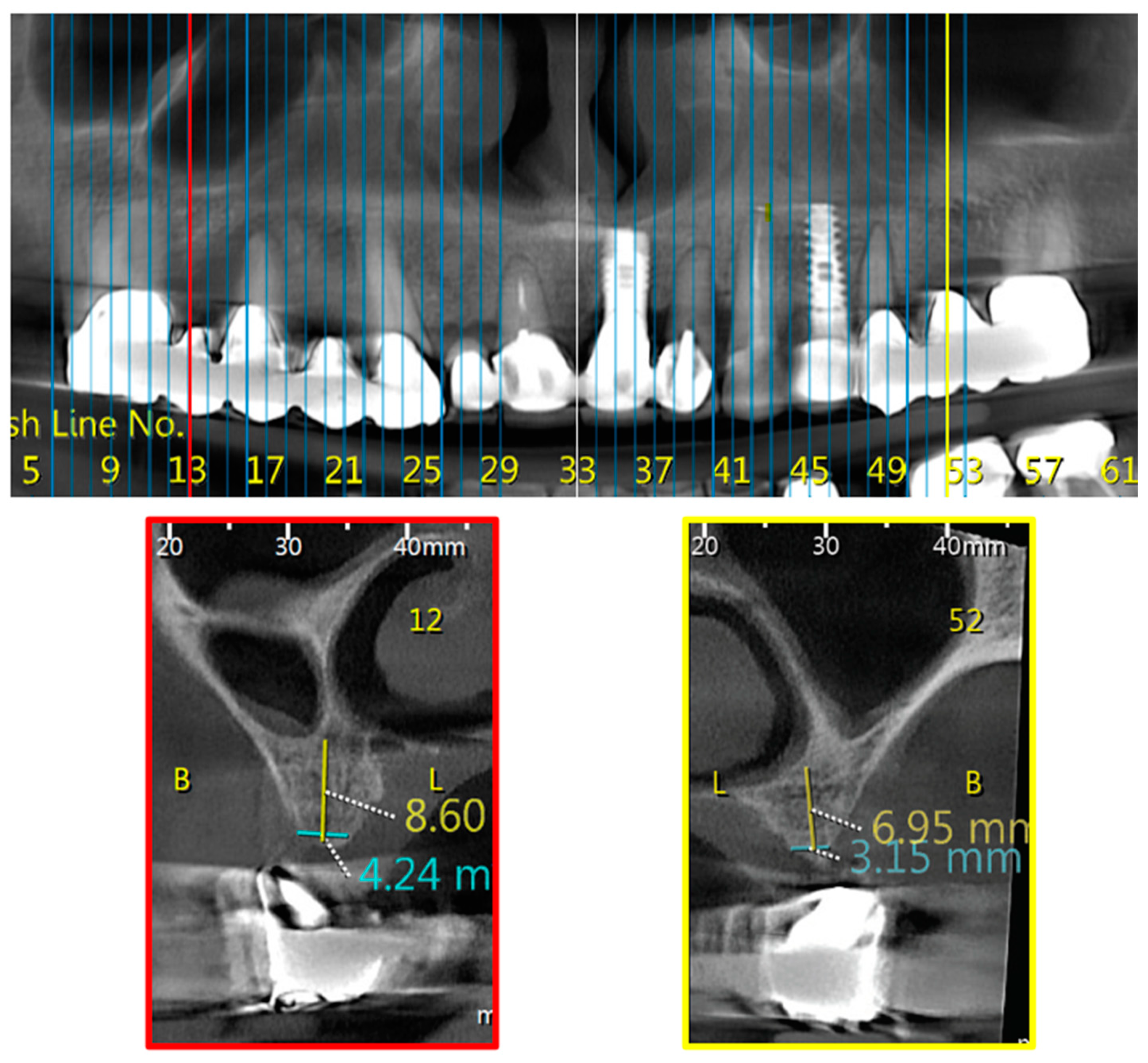
“Big-nose variant” is an anatomical phenomenon defined as the pneumatization of inferior third of the nasal cavity within the alveolar ridge while simultaneously displacing the maxillary sinus laterally. The purpose of the present study was to assess the prevalence of the big-nose variant phenomenon and suggest a morphology classification system. Diagnostic anatomical evaluation was performed in a tertiary medical center on 321 randomly selected maxillary cone beam computerized tomography scans of patients who presented at an oral and maxillofacial department. Two anatomical categories were defined for anatomical identification: classes for horizontal mesiodistal distribution, and divisions for vertical distribution. Class 2, defined as location of the nasal/sinus border between the distal edge of the canine up to the distal edge of second premolar, was found to be the most prevalent (64.6%). Class 3, defined as location of the nasal/sinus border distal to mesial edge of the first molar, was found in 17.9% of cases. Regarding the divisions category, in 96% and 58.2% of teeth examined, nasal cavity alone was found to be superior to the canine and first premolar, respectively, defined as Division A. In 46.9% and 85.6% of teeth examined, maxillary sinus alone was located above the second premolar and first molar, respectively, defined as Division C. Identifying Class 3 on the paraxial reconstruction is the first step in identifying big-nose variant, with further assurance gained from each determining division. The use of the classes and divisions may enable better maxillary treatment planning, alert surgeons for the unexpected, and avoid complications.
Keywords: big-nose variant; maxillary sinus; nasal cavity bone augmentation; dental implant big-nose variant; maxillary sinus; nasal cavity bone augmentation; dental implant