
Assessment of Peptides and Membrane Physico-Chemical Characteristics on Migration Selectivity and Recovery of Antimicrobial Fractions Using Electrodialysis with Ultrafiltration Membrane on a Calf Cruor Hydrolysate


Abstract
1. Introduction
2. Materials and Methods
2.1. Materials
2.1.1. Calf Cruor
2.1.2. Chemicals
2.2. Production of Calf Cruor Hydrolysates
2.2.1. Calf Cruor Hydrolysis
2.2.2. Discoloration of Calf Cruor Hydrolysate
2.3. Separation of Calf Cruor Peptides by EDUF
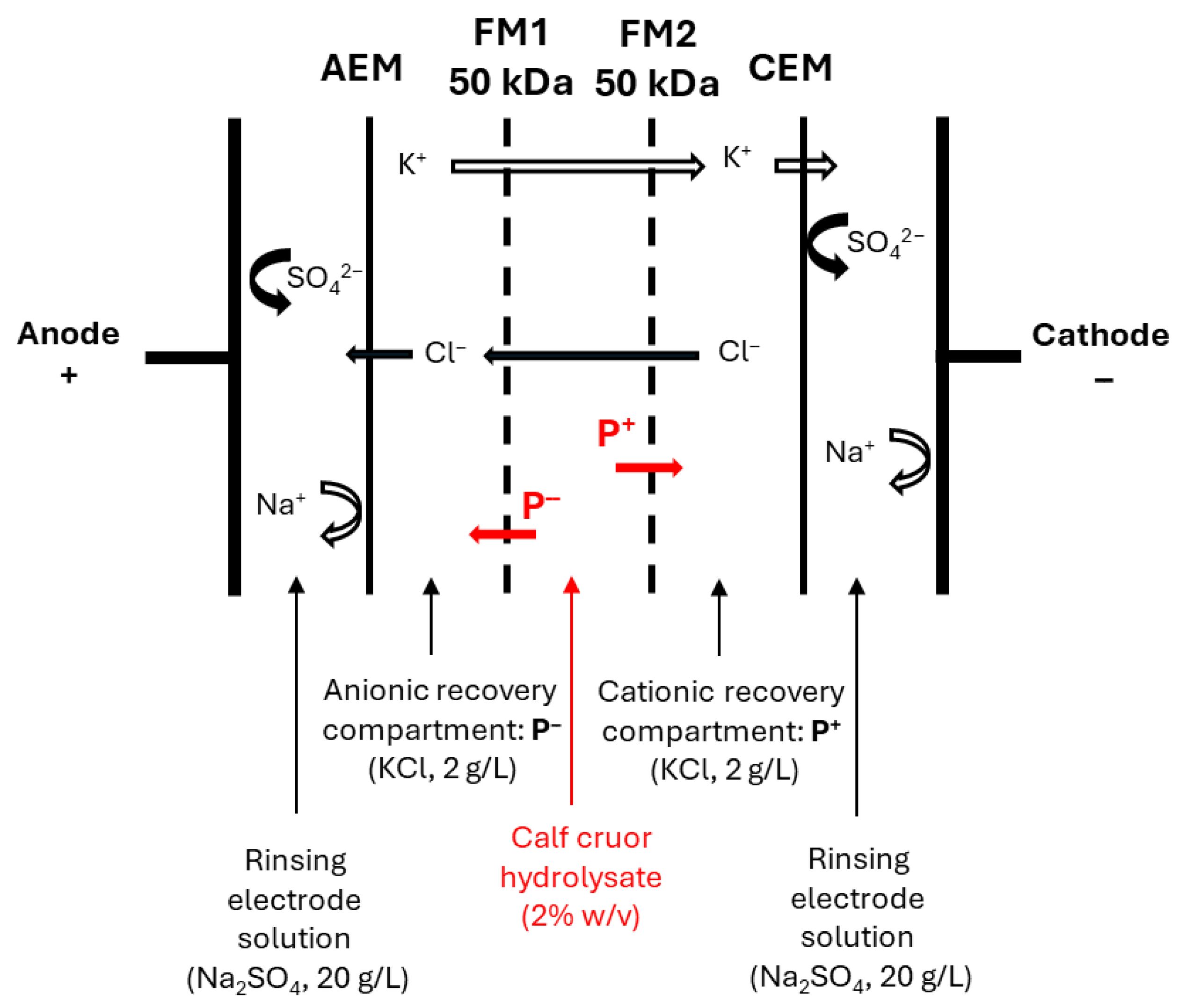
2.3.1. Configuration
2.3.2. Protocol
2.4. Analyses
2.4.1. Protein/Peptide Content
2.4.2. EDUF Process Analyses
- pH and Conductivity
- Mass Transfer: Global Peptide Migration Rate in Recovery Fractions
- Global System Resistance
- Relative Energy Consumption
- Membrane Thickness and Electrical Conductivity
2.4.3. RP-UPLC and Mass Spectrometry Analyses
2.4.4. Antimicrobial Assays
- Strain Collection and Maintenance
- Evaluation of the Antimicrobial Activity
2.4.5. Data Treatment and Statistical Analyses
- UPLC-MS/MS Data Treatment
- Other Statistical Analyses
3. Results and Discussion
3.1. Performance Evaluation of the Electrodialysis Process
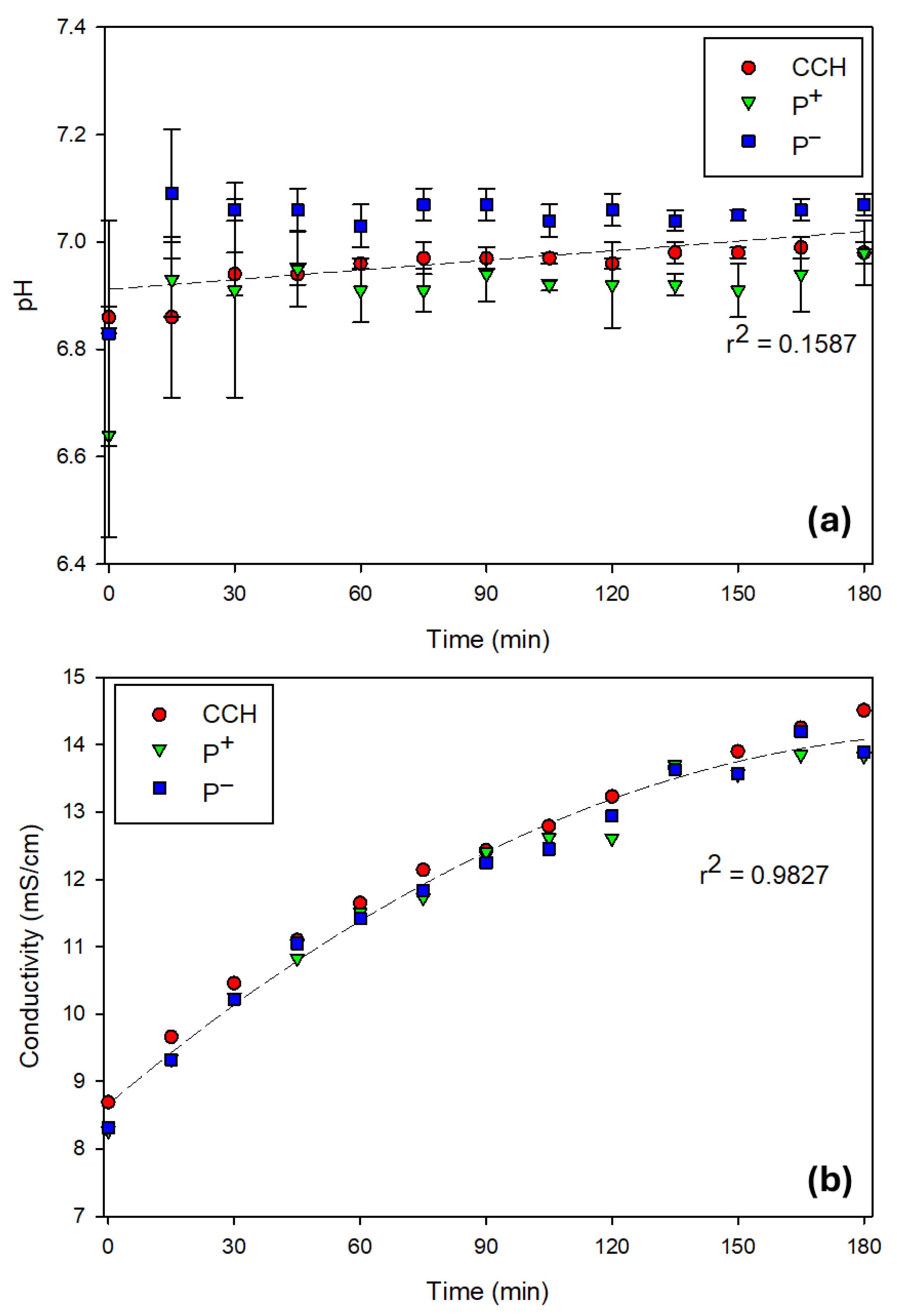
3.1.1. Evolution of pH and Conductivity
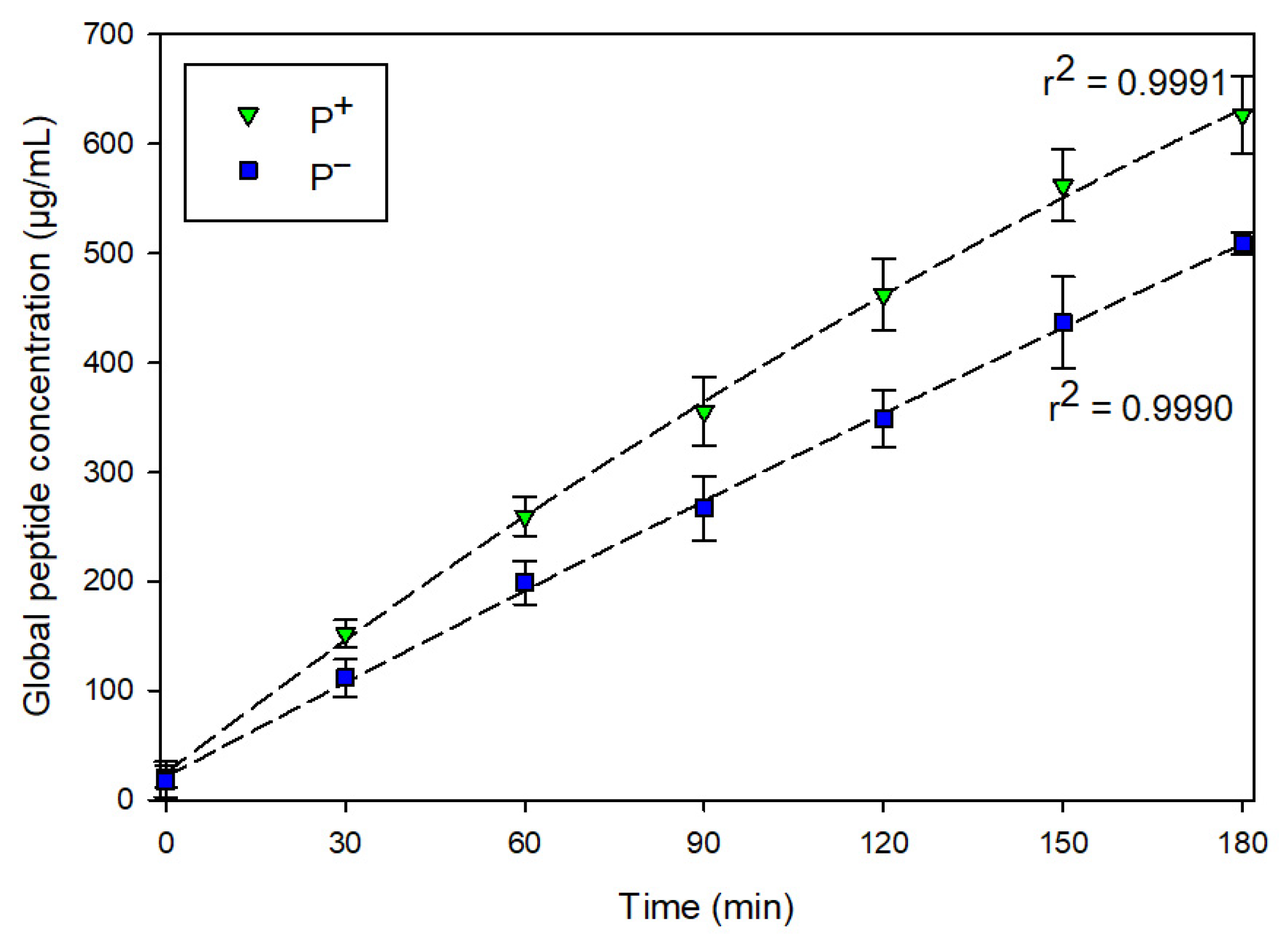
3.1.2. Evolution of Peptide Migration
3.1.3. Global System Resistance and Relative Energy Consumption
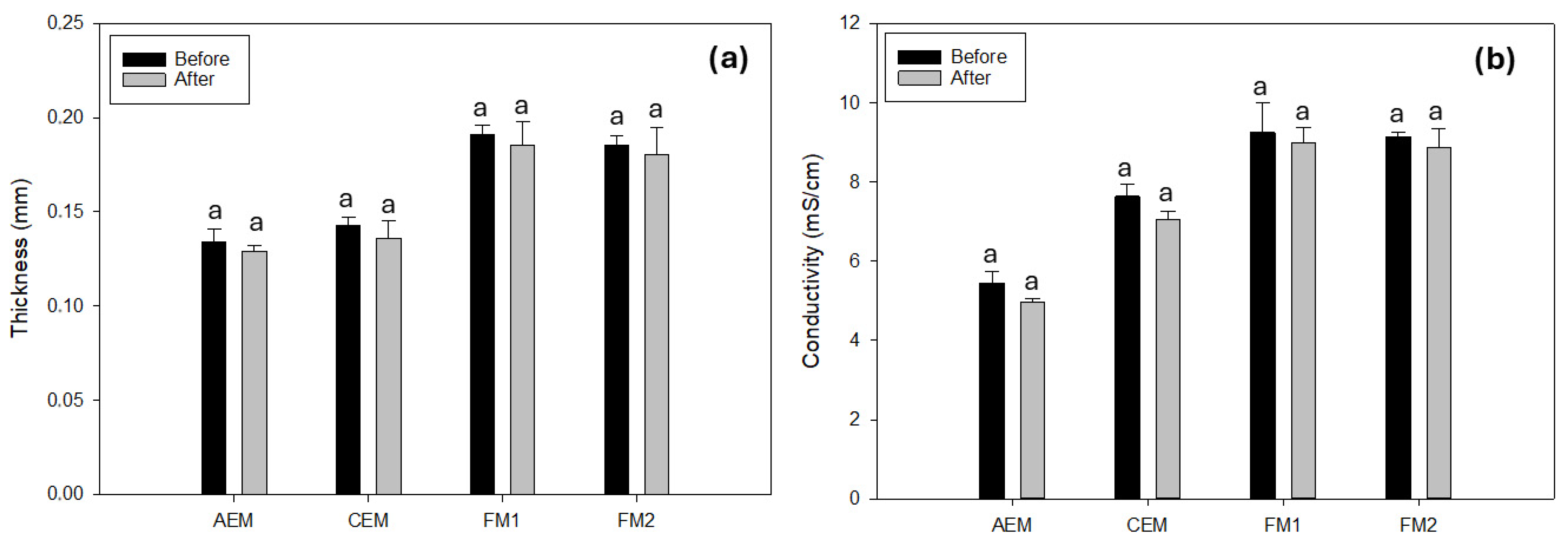
3.1.4. Membrane Characterization
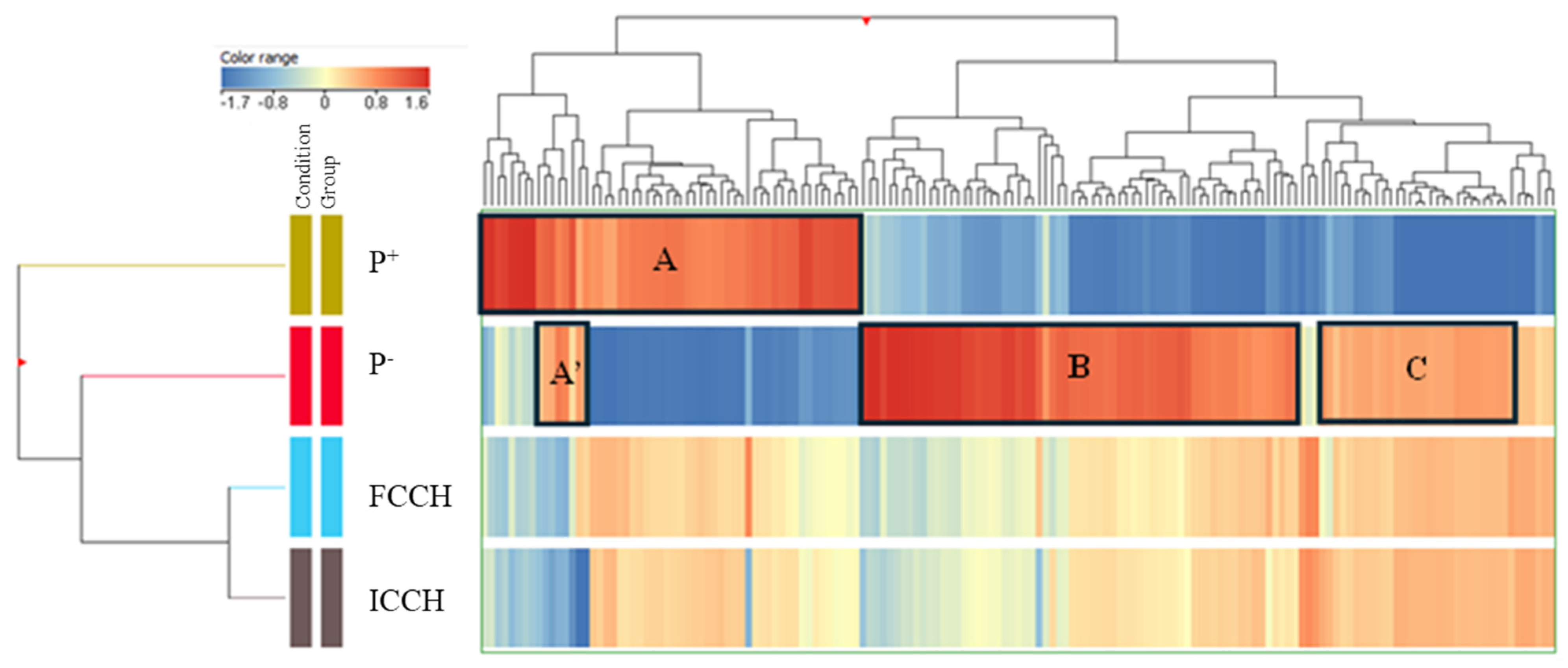
3.2. Hierarchical Clustered Heatmap of Calf Cruor Hydrolysate Fractions
3.3. Antimicrobial Activities
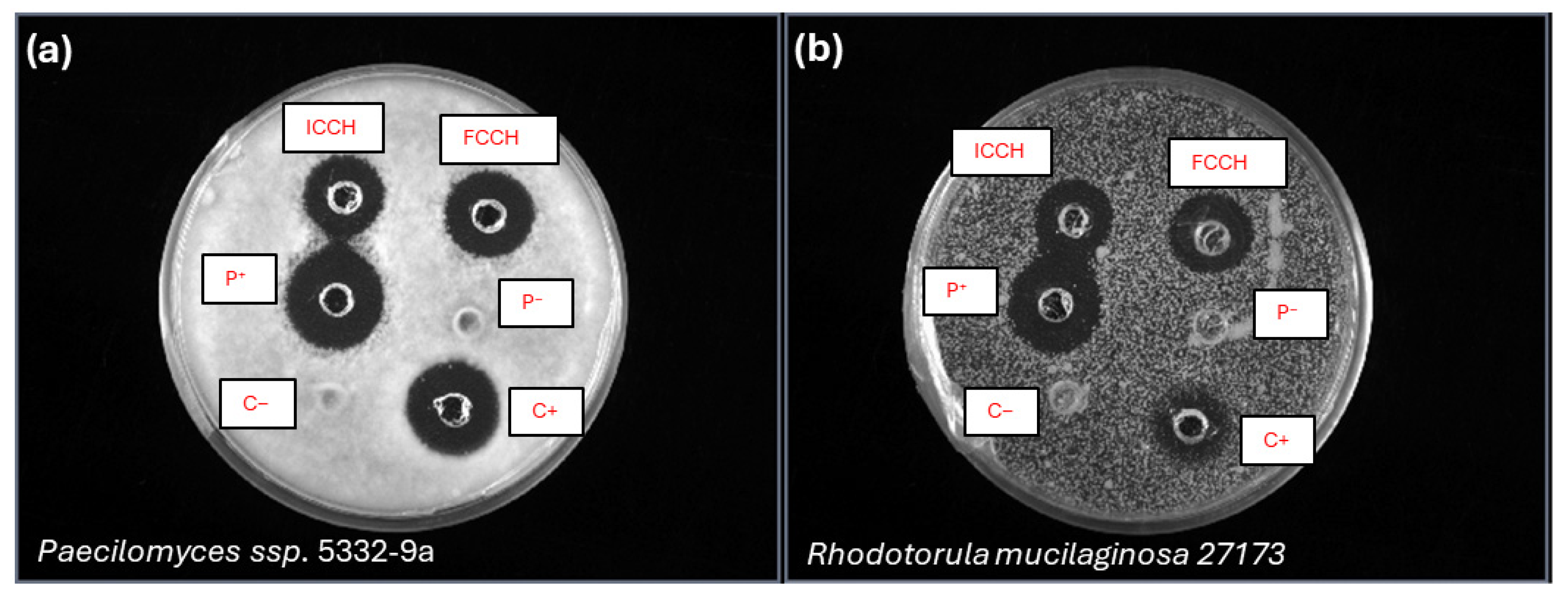
3.3.1. Agar Well Diffusion
3.3.2. MIC and MBC/MFC
4. Conclusions
Supplementary Materials
Author Contributions
Funding
Institutional Review Board Statement
Informed Consent Statement
Data Availability Statement
Acknowledgments
Conflicts of Interest
References
- Despoudi, S.; Bucatariu, C.; Otles, S.; Kartal, C. Food waste management, valorization, and sustainability in the food industry. In Food Waste Recovery; Elsevier: Amsterdam, The Netherlands, 2021; pp. 3–19. [Google Scholar]
- Lynch, S.A.; Mullen, A.M.; O’Neill, E.E.; García, C.Á. Harnessing the potential of blood proteins as functional ingredients: A review of the state of the art in blood processing. Compr. Rev. Food Sci. Food Saf. 2017, 16, 330–344. [Google Scholar] [CrossRef] [PubMed]
- Zouari, O.; Przybylski, R.; Hannioui, M.; Sion, L.; Dhulster, P.; Nedjar-Arroume, N. High added-value co-product: The porcine cruor is an attractive source of active peptides. J. Nutr. Health Food Sci. 2020, 7, 1–9. [Google Scholar]
- Cournoyer, A.; Daigle, G.; Thibodeau, J.; Perreault, V.; Bazinet, L. Effects of applied current modes on the migration selectivity of peptides from a porcine cruor hydrolysate during electrodialysis with ultrafiltration membrane. Sep. Purif. Technol. 2024, 338, 126280. [Google Scholar] [CrossRef]
- Nedjar-Arroume, N.; Dubois-Delval, V.; Miloudi, K.; Daoud, R.; Krier, F.; Kouach, M.; Briand, G.; Guillochon, D. Isolation and characterization of four antibacterial peptides from bovine hemoglobin. Peptides 2006, 27, 2082–2089. [Google Scholar] [CrossRef]
- Madhu, M.; Kumar, D.; Sirohi, R.; Tarafdar, A.; Dhewa, T.; Aluko, R.E.; Badgujar, P.C.; Awasthi, M.K. Bioactive peptides from meat: Current status on production, biological activity, safety, and regulatory framework. Chemosphere 2022, 307, 135650. [Google Scholar] [CrossRef]
- Bechaux, J.; Gatellier, P.; Le Page, J.-F.; Drillet, Y.; Sante-Lhoutellier, V. A comprehensive review of bioactive peptides obtained from animal byproducts and their applications. Food Funct. 2019, 10, 6244–6266. [Google Scholar] [CrossRef] [PubMed]
- Cournoyer, A.; Thibodeau, J.; Ben Said, L.; Sanchez-Reinoso, Z.; Mikhaylin, S.; Fliss, I.; Bazinet, L. How Discoloration of Porcine Cruor Hydrolysate Allowed the Identification of New Antifungal Peptides. Foods 2022, 11, 4035. [Google Scholar] [CrossRef]
- Sanchez-Reinoso, Z.; Thibodeau, J.; de Toro-Martín, J.; García-Vela, S.; Clément, J.-P.; Vohl, M.-C.; Fliss, I.; Bazinet, L. Upcycling calf cruor slaughterhouse by-product by peptic hydrolysis and identification of three novel antifungal peptides following a regression based-machine learning approach. Food Res. Int. 2024, 196, 115045. [Google Scholar] [CrossRef]
- Fliss, H.; Thibodeau, J.; Fliss, I.; Bazinet, L.; Mikhaylin, S. Promising bioactive peptides from Turkey cruor: How hydrolysis duration and pH could affect the antimicrobial activity and peptide population. Food Biosci. 2025, 71, 106983. [Google Scholar] [CrossRef]
- Rahimi, D.; Sanchez-Reinoso, Z.; Thibodeau, J.; Garcia-Vela, S.; de Toro-Martin, J.; Vohl, M.-C.; Fliss, I.; Mikhaylin, S.; Bazinet, L. Exploring novel antifungal peptides from peptic hydrolysis of chicken cruor protein via regression-based machine learning approach. Food Chem. 2025, 471, 142606. [Google Scholar] [CrossRef]
- Lafarga, T.; Hayes, M. Bioactive peptides from meat muscle and by-products: Generation, functionality and application as functional ingredients. Meat Sci. 2014, 98, 227–239. [Google Scholar] [CrossRef] [PubMed]
- Bah, C.S.; Bekhit, A.E.D.A.; Carne, A.; McConnell, M.A. Slaughterhouse blood: An emerging source of bioactive compounds. Compr. Rev. Food Sci. Food Saf. 2013, 12, 314–331. [Google Scholar] [CrossRef]
- Dubois, V.; Nedjar-Arroume, N.; Guillochon, D. Influence of pH on the appearance of active peptides in the course of peptic hydrolysis of bovine haemoglobin. Prep. Biochem. Biotechnol. 2005, 35, 85–102. [Google Scholar] [CrossRef]
- Li, Y.; Yu, J. Research progress in structure-activity relationship of bioactive peptides. J. Med. Food 2015, 18, 147–156. [Google Scholar] [CrossRef]
- Korhonen, H.; Pihlanto, A. Bioactive peptides: Production and functionality. Int. Dairy J. 2006, 16, 945–960. [Google Scholar] [CrossRef]
- López-Expósito, I.; Amigo, L.; Recio, I. A mini-review on health and nutritional aspects of cheese with a focus on bioactive peptides. Dairy Sci. Technol. 2012, 92, 419–438. [Google Scholar] [CrossRef]
- Toldrá, F.; Gallego, M.; Reig, M.; Aristoy, M.-C.; Mora, L. Recent progress in enzymatic release of peptides in foods of animal origin and assessment of bioactivity. J. Agric. Food Chem. 2020, 68, 12842–12855. [Google Scholar] [CrossRef]
- Damen, D.; Thibodeau, J.; Gaaloul, S.; Labrie, S.; Hamoudi, S.; Bazinet, L. Improved Antimicrobial Properties of White Wastewater Protein Hydrolysate Through Electrodialysis with an Ultrafiltration Membrane (EDUF). Membranes 2025, 15, 238. [Google Scholar] [CrossRef]
- Adaile-Perez, V.M.; Thibodeau, J.; Ortiz-Basurto, R.I.; de Lourdes García-Magaña, M.; Bazinet, L. Enhanced antihypertensive chicken by-product hydrolysate fraction after its separation by electrodialysis with ultrafiltration membrane (EDUF). Food Res. Int. 2025, 202, 115595. [Google Scholar] [CrossRef] [PubMed]
- Cournoyer, A.; Bazinet, L. Electrodialysis processes an answer to industrial sustainability: Toward the concept of eco-circular economy?—A review. Membranes 2023, 13, 205. [Google Scholar] [CrossRef]
- Przybylski, R.; Bazinet, L.; Firdaous, L.; Kouach, M.; Goossens, J.-F.; Dhulster, P.; Nedjar, N. Harnessing slaughterhouse by-products: From wastes to high-added value natural food preservative. Food Chem. 2020, 304, 125448. [Google Scholar] [CrossRef]
- Vanhoute, M.; Firdaous, L.; Bazinet, L.; Froidevaux, R.; Lecouturier, D.; Guillochon, D.; Dhulster, P. Effect of haem on the fractionation of bovine haemoglobin peptic hydrolysate by electrodialysis with ultrafiltration membranes. J. Membr. Sci. 2010, 365, 16–24. [Google Scholar] [CrossRef]
- Babin, D.R.; Schroeder, W.; Shelton, J.R.; Shelton, J.B.; Robberson, B. The amino acid sequence of the γ chain of bovine fetal hemoglobin. Biochemistry 1966, 5, 1297–1310. [Google Scholar] [CrossRef] [PubMed]
- Huisman, T. Structural aspects of fetal and adult hemoglobins from nonanemic ruminants. Ann. N. Y. Acad. Sci. 1974, 241, 392–410. [Google Scholar] [CrossRef]
- Agriculture and Agri-Food Canada. Red Meat and Livestock Market Information: Red Meat and Livestock Slaughter and Carcass Weights; Government of Canada: Ottawa, ON, Canada, 2023.
- Sanchez-Reinoso, Z.; Bazinet, M.; Leblanc, B.; Clement, J.-P.; Germain, P.; Bazinet, L. Application of machine learning tools to study the synergistic impact of physicochemical properties of peptides and filtration membranes on peptide migration during electrodialysis with filtration membranes. Sep. Purif. Technol. 2025, 360, 130877. [Google Scholar] [CrossRef]
- Kadel, S.; Daigle, G.; Thibodeau, J.; Perreault, V.; Pellerin, G.; Lainé, C.; Bazinet, L. How physicochemical properties of filtration membranes impact peptide migration and selectivity during electrodialysis with filtration membranes: Development of predictive statistical models and understanding of mechanisms involved. J. Membr. Sci. 2021, 619, 118175. [Google Scholar] [CrossRef]
- Cournoyer, A.; Bazinet, M.; Clement, J.-P.; Plante, P.-L.; Fliss, I.; Bazinet, L. How peptide migration and fraction bioactivity are modulated by applied electrical current conditions during electromembrane process separation: A comprehensive machine learning-based peptidomic approach. Food Res. Int. 2025, 200, 115417. [Google Scholar] [CrossRef] [PubMed]
- Church, F.C.; Swaisgood, H.E.; Porter, D.H.; Catignani, G.L. Spectrophotometric assay using ortho-phtaldialdehyde for determination of proteolysis in milk and isolated milk-proteins. J. Dairy Sci. 1983, 66, 1219–1227. [Google Scholar] [CrossRef]
- Persico, M.; Daigle, G.; Kadel, S.; Perreault, V.; Pellerin, G.; Thibodeau, J.; Bazinet, L. Predictive models for determination of peptide fouling based on the physicochemical characteristics of filtration membranes. Sep. Purif. Technol. 2020, 240, 116602. [Google Scholar] [CrossRef]
- Sun, L.; Chen, Q.; Lu, H.; Wang, J.; Zhao, J.; Li, P. Electrodialysis with porous membrane for bioproduct separation: Technology, features, and progress. Food Res. Int. 2020, 137, 109343. [Google Scholar] [CrossRef]
- Cowan, D.A.; Brown, J.H. Effect of turbulence on limiting current in electrodialysis cells. Ind. Eng. Chem. 1959, 51, 1445–1448. [Google Scholar] [CrossRef]
- Rulence, A.; Perreault, V.; Thibodeau, J.; Firdaous, L.; Fliss, I.; Bazinet, L. One step purification of active nisin by electrodialysis from a commercial product. Chem. Eng. Sci. 2023, 281, 119134. [Google Scholar] [CrossRef]
- Simonne, A.H.; Simonne, E.H.; Eitenmiller, R.R.; Mills, H.A.; Cresman, C.P. Could the dumas method replace the Kjeldahl digestion for nitrogen and crude protein determinations in foods? J. Sci. Food Agric. 1997, 73, 39–45. [Google Scholar] [CrossRef]
- Deboli, F.; Van der Bruggen, B.; Donten, M.L. A novel concept of hierarchical cation exchange membrane fabricated from commodity precursors through an easily scalable process. J. Membr. Sci. 2021, 636, 119594. [Google Scholar] [CrossRef]
- Lteif, R.; Dammak, L.; Larchet, C.; Auclair, B. Conductivité électrique membranaire: étude de l’effet de la concentration, de la nature de l’électrolyte et de la structure membranaire. Eur. Polym. J. 1999, 35, 1187–1195. [Google Scholar] [CrossRef]
- Lebrun, L.; Da Silva, E.; Pourcelly, G.; Metayer, M. Elaboration and characterisation of ion-exchange films used in the fabrication of bipolar membranes. J. Membr. Sci. 2003, 227, 95–111. [Google Scholar] [CrossRef]
- González-Muñoz, A.; Valle, M.; Aluko, R.E.; Bazinet, L.; Enrione, J. Production of antihypertensive and antidiabetic peptide fractions from quinoa (Chenopodium quinoa Willd.) by electrodialysis with ultrafiltration membranes. Food Sci. Hum. Wellness 2022, 11, 1650–1659. [Google Scholar] [CrossRef]
- Farber, J.M.; Peterkin, P. Listeria monocytogenes, a food-borne pathogen. Microbiol. Rev. 1991, 55, 476–511. [Google Scholar] [CrossRef]
- Fleet, G.H. Yeast spoilage of foods and beverages. In The Yeasts; Elsevier: Amsterdam, The Netherlands, 2011; pp. 53–63. [Google Scholar]
- Moreira, D.C.; Oliveira, M.M.; Borba, C.M. Human pathogenic Paecilomyces from food. Microorganisms 2018, 6, 64. [Google Scholar] [CrossRef]
- García-Vela, S.; Cournoyer, A.; Sánchez-Reinoso, Z.; Bazinet, L. Antimicrobial peptides from porcine blood cruor hydrolysates as a promising source of antifungal activity. Foods 2024, 14, 8. [Google Scholar] [CrossRef]
- Balouiri, M.; Sadiki, M.; Ibnsouda, S.K. Methods for in vitro evaluating antimicrobial activity: A review. J. Pharm. Anal. 2016, 6, 71–79. [Google Scholar] [CrossRef]
- Wiegand, I.; Hilpert, K.; Hancock, R.E. Agar and broth dilution methods to determine the minimal inhibitory concentration (MIC) of antimicrobial substances. Nat. Protoc. 2008, 3, 163–175. [Google Scholar] [CrossRef]
- Pankey, G.A.; Sabath, L. Clinical relevance of bacteriostatic versus bactericidal mechanisms of action in the treatment of Gram-positive bacterial infections. Clin. Infect. Dis. 2004, 38, 864–870. [Google Scholar] [CrossRef] [PubMed]
- Poulin, J.-F.; Amiot, J.; Bazinet, L. Simultaneous separation of acid and basic bioactive peptides by electrodialysis with ultrafiltration membrane. J. Biotechnol. 2006, 123, 314–328. [Google Scholar] [CrossRef]
- Frolov, A.I.; Chankeshwara, S.V.; Abdulkarim, Z.; Ghiandoni, G.M. pIChemiSt–Free tool for the calculation of isoelectric points of modified peptides. J. Chem. Inf. Model. 2022, 63, 187–196. [Google Scholar] [CrossRef] [PubMed]
- Dlask, O.; Václavíková, N. Electrodialysis with ultrafiltration membranes for peptide separation. Chem. Pap. 2018, 72, 261–271. [Google Scholar] [CrossRef]
- Suwal, S.; Roblet, C.; Amiot, J.; Doyen, A.; Beaulieu, L.; Legault, J.; Bazinet, L. Recovery of valuable peptides from marine protein hydrolysate by electrodialysis with ultrafiltration membrane: Impact of ionic strength. Food Res. Int. 2014, 65, 407–415. [Google Scholar] [CrossRef]
- Cerrillo-Gonzalez, M.d.M.; Villen-Guzman, M.; Rodriguez-Maroto, J.M.; Paz-Garcia, J.M. Metal recovery from wastewater using electrodialysis separation. Metals 2023, 14, 38. [Google Scholar] [CrossRef]
- Thibodeau, J.; Benoit, N.; Perreault, V.; Bazinet, L. Scale-up and long-term study of electrodialysis with ultrafiltration membrane for the separation of a herring milt hydrolysate. Membranes 2021, 11, 558. [Google Scholar] [CrossRef]
- Suwal, S.; Roblet, C.; Doyen, A.; Amiot, J.; Beaulieu, L.; Legault, J.; Bazinet, L. Electrodialytic separation of peptides from snow crab by-product hydrolysate: Effect of cell configuration on peptide selectivity and local electric field. Sep. Purif. Technol. 2014, 127, 29–38. [Google Scholar] [CrossRef]
- Villeneuve, W.; Perreault, V.; Chevallier, P.; Mikhaylin, S.; Bazinet, L. Use of cation-coated filtration membranes for demineralization by electrodialysis. Sep. Purif. Technol. 2019, 218, 70–80. [Google Scholar] [CrossRef]
- Li, F.; Guo, Y.; Wang, S. Pilot-scale selective electrodialysis for the separation of chloride and sulphate from high-salinity wastewater. Membranes 2022, 12, 610. [Google Scholar] [CrossRef] [PubMed]
- Bargeman, G.; Houwing, J.; Recio, I.; Koops, G.H.; van der Horst, C. Electro-membrane filtration for the selective isolation of bioactive peptides from an αs2-casein hydrolysate. Biotechnol. Bioeng. 2002, 80, 599–609. [Google Scholar] [CrossRef]
- Bargeman, G.; Koops, G.-H.; Houwing, J.; Breebaart, I.; Van Der Horst, H.; Wessling, M. The development of electro-membrane filtration for the isolation of bioactive peptides: The effect of membrane selection and operating parameters on the transport rate. Desalination 2002, 149, 369–374. [Google Scholar] [CrossRef]
- Firdaous, L.; Malériat, J.P.; Schlumpf, J.P.; Quéméneur, F. Transfer of monovalent and divalent cations in salt solutions by electrodialysis. Sep. Sci. Technol. 2007, 42, 931–948. [Google Scholar] [CrossRef]
- Galizia, M.; Benedetti, F.M.; Paul, D.R.; Freeman, B.D. Monovalent and divalent ion sorption in a cation exchange membrane based on cross-linked poly (p-styrene sulfonate-co-divinylbenzene). J. Membr. Sci. 2017, 535, 132–142. [Google Scholar] [CrossRef]
- Geoffroy, T.; Bernier, M.; Thibodeau, J.; Francezon, N.; Beaulieu, L.; Mikhaylin, S.; Langevin, M.; Lutin, F.; Bazinet, L. Semi-industrial scale-up of EDUF technology for the electroseparation of bioactive cationic peptides: Impact of process parameters and cell configurations on eco-efficiency. J. Membr. Sci. 2022, 641, 119856. [Google Scholar] [CrossRef]
- Betts, M.J.; Russell, R.B. Amino acid properties and consequences of substitutions. In Bioinformatics for Geneticists; John Wiley and Sons: Hoboken, NJ, USA, 2003; pp. 289–316. [Google Scholar]
- Henaux, L.; Thibodeau, J.; Pilon, G.; Gill, T.; Marette, A.; Bazinet, L. How charge and triple size-selective membrane separation of peptides from salmon protein hydrolysate orientate their biological response on glucose uptake. Int. J. Mol. Sci. 2019, 20, 1939. [Google Scholar] [CrossRef] [PubMed]
- Susanto, H.; Feng, Y.; Ulbricht, M. Fouling behavior of aqueous solutions of polyphenolic compounds during ultrafiltration. J. Food Eng. 2009, 91, 333–340. [Google Scholar] [CrossRef]
- Kadel, S.; Pellerin, G.; Thibodeau, J.; Perreault, V.; Lainé, C.; Bazinet, L. How molecular weight cut-offs and physicochemical properties of polyether sulfone membranes affect peptide migration and selectivity during electrodialysis with filtration membranes. Membranes 2019, 9, 153. [Google Scholar] [CrossRef]
- Chorhirankul, N.; Janssen, A.E.; Boom, R.M. Impact of feed properties on membrane performance for ultrafiltration of charged solutes. Sep. Purif. Technol. 2025, 362, 131726. [Google Scholar] [CrossRef]
- Antonilli, M.; Bottari, E.; Rosa Festa, M.; Gentile, L. Complex formation between arginine and calcium (II) and magnesium (II). Chem. Speciat. Bioavailab. 2009, 21, 33–40. [Google Scholar] [CrossRef]
- Pitt, J.I.; Hocking, A.D. Fungi and Food Spoilage; Springer: Berlin/Heidelberg, Germany, 2009; Volume 519. [Google Scholar]
- Snyder, A.B.; Worobo, R.W. Fungal spoilage in food processing. J. Food Prot. 2018, 81, 1035–1040. [Google Scholar] [CrossRef]
- Pleadin, J.; Frece, J.; Markov, K. Mycotoxins in food and feed. Adv. Food Nutr. Res. 2019, 89, 297–345. [Google Scholar] [PubMed]
- Novais, C.; Molina, A.K.; Abreu, R.M.; Santo-Buelga, C.; Ferreira, I.C.; Pereira, C.; Barros, L. Natural food colorants and preservatives: A review, a demand, and a challenge. J. Agric. Food Chem. 2022, 70, 2789–2805. [Google Scholar] [CrossRef]
- Akhavan-Bahabadi, M.; Paknejad, H.; Hedayati, A.; Habibi-Rezaei, M. Fractionation of the Caspian sand goby epidermal exudates using membrane ultrafiltration and reversed-phase chromatography: An investigation on bioactivities. Sci. Rep. 2024, 14, 1716. [Google Scholar] [CrossRef]
- Gálvez, A.; Maqueda, M.; Martínez-Bueno, M.; Valdivia, E. Permeation of bacterial cells, permeation of cytoplasmic and artificial membrane vesicles, and channel formation on lipid bilayers by peptide antibiotic AS-48. J. Bacteriol. 1991, 173, 886–892. [Google Scholar] [CrossRef]
- Hirano, M.; Yokoo, H.; Ohoka, N.; Ito, T.; Misawa, T.; Oba, M.; Inoue, T.; Demizu, Y. Rational design of amphipathic antimicrobial peptides with alternating L-/D-Amino acids that form helical structures. Chem. Pharm. Bull. 2024, 72, 149–154. [Google Scholar] [CrossRef] [PubMed]
- Souza e Silva, P.; Ferreira, M.A.; de Moraes, L.F.R.; de Barros, E.; Preza, S.L.E.; Cardoso, M.H.; Franco, O.L.; Migliolo, L. Synthetic peptides bioinspired in temporin-PTa with antibacterial and antibiofilm activity. Chem. Biol. Drug Des. 2022, 100, 51–63. [Google Scholar] [CrossRef]
- Sanchez-Reinoso, Z.; Garcia-Vela, S.; Clement, J.-P.; Bazinet, L. Combining statistical, machine learning and experimental approaches for screening of novel antimicrobial peptides of calf cruor hydrolysates. Food Biosci. 2025, 65, 105734. [Google Scholar] [CrossRef]
- León-Buitimea, A.; Garza-Cárdenas, C.R.; Garza-Cervantes, J.A.; Lerma-Escalera, J.A.; Morones-Ramírez, J.R. The demand for new antibiotics: Antimicrobial peptides, nanoparticles, and combinatorial therapies as future strategies in antibacterial agent design. Front. Microbiol. 2020, 11, 1669. [Google Scholar] [CrossRef]
- Dadgostar, P. Antimicrobial resistance: Implications and costs. Infect. Drug Resist. 2019, 12, 3903–3910. [Google Scholar] [CrossRef]



| Box | Molecular Weight (Da) | Isoelectric Point | GRAVY | %L | %Y |
|---|---|---|---|---|---|
| A | 867.06 | 7.96 | −0.21 | 13.1 | 4.6 |
| A’ | 591.29 | 6.25 | −0.08 | 18.5 | 4.9 |
| B | 658.80 | 5.19 | 1.06 | 22.4 | 0.8 |
| C | 739.74 | 4.98 | −0.17 | 10.4 | 2.1 |
 .
.| Paecilomyces spp. 5332-9a | R. mucilaginosa 27,173 | |||||
|---|---|---|---|---|---|---|
| MIC (mg/mL) | MFC (mg/mL) | MFC/MIC | MIC (mg/mL) | MFC (mg/mL) | MFC/MIC | |
| ICCH | 0.312 ± 0.000 | 0.312 ± 0.000 | 1 | 0.312 ± 0.000 | 0.615 ± 0.000 | 2 |
| FCCH | 0.312 ± 0.000 | 0.615 ± 0.000 | 2 | 0.312 ± 0.000 | 0.615 ± 0.000 | 2 |
| P+ | 0.312 ± 0.000 | 0.615 ± 0.000 | 2 | 0.615 ± 0.000 | 1.250 ± 0.000 | 2 |
| P− | >20 | >20 | ND | >20 | >20 | ND |
| Anionic Compartment | ||||||
|---|---|---|---|---|---|---|
| Sequence | Molecular Weight (Da) | Isoelectric Point | GRAVY | Net Charge at pH 7 | Potential Bioactivity | Database |
| LSF | 365.430 | 5.525 | 1.933 | −0.002 | Multifunctional peptides | DFBP |
| VVL | 329.441 | 5.495 | 4.067 | −0.002 | ACE inhibitor | BioPep |
| VVV | 315.414 | 5.495 | 4.200 | −0.002 | Anticancer | BioPep |
| Cationic compartment | ||||||
| FQKVVA | 690.843 | 8.750 | 0.933 | 0.992 | ACE inhibitor | BioPep |
| KLLSHSL | 796.968 | 8.757 | 0.386 | 1.087 | Anti-Gram+, Anti-Gram− | DBAASP |
| KLLSHSLL | 910.128 | 8.757 | 0.812 | 1.087 | Anti-Gram+, Anti-Gram− | DBAASP |
| KYR | 465.555 | 9.994 | −3.233 | 1.988 | Anti-Gram+, Anti-Gram− | DBAASP |
| LAHRYH | 795.903 | 8.762 | −1.100 | 1.194 | Anti-Gram+, Anti-Gram− | DBAASP |
| PHF | 399.451 | 7.171 | −0.667 | 0.098 | Antioxidative | BioPep |
| PTTKTYFPHF | 1238.411 | 9.007 | −0.810 | 1.097 | Anti-Gram+, Anti-Gram− | DBAASP |
| SKYR | 552.633 | 9.992 | −2.625 | 1.992 | Anti-Gram+, Anti-Gram− | DBAASP |
| TSKYR | 653.738 | 9.992 | −2.240 | 1.991 | Anti-Gram−, Anti-Gram+/ Opioid peptides | dbAMP/DFBP |
| VVYPWTQRF | 1195.390 | 8.718 | −0.144 | 0.997 | Opioid, ACE inhibitor | BioPep |
| Sequence | Molecular Weight (Da) | Isoelectric Point | GRAVY | Net Charge at pH 7 | Bioactivity | MIC Value (mg/mL) |
|---|---|---|---|---|---|---|
| R. mucilaginosa (27,173) | 0.16 ± 0.00 | |||||
| HAHKLRVDPVNF | 1432.654 | 8.762 | −0.550 | 1.191 | M. racemosus | 1.25 ± 0.00 |
| R. mucilaginosa (27,173) | 0.08 ± 0.00 | |||||
| Paecilomyces spp. (5332-9a) | 0.02 ± 0.00 | |||||
| QKVVAGVANALAHRYH | 1734.001 | 9.994 | 0.006 | 2.189 | M. racemosus | 0.31 ± 0.00 |
Disclaimer/Publisher’s Note: The statements, opinions and data contained in all publications are solely those of the individual author(s) and contributor(s) and not of MDPI and/or the editor(s). MDPI and/or the editor(s) disclaim responsibility for any injury to people or property resulting from any ideas, methods, instructions or products referred to in the content. |
© 2026 by the authors. Licensee MDPI, Basel, Switzerland. This article is an open access article distributed under the terms and conditions of the Creative Commons Attribution (CC BY) license.
Share and Cite
Perreault, V.; Thibodeau, J.; García-Vela, S.; Bazinet, L. Assessment of Peptides and Membrane Physico-Chemical Characteristics on Migration Selectivity and Recovery of Antimicrobial Fractions Using Electrodialysis with Ultrafiltration Membrane on a Calf Cruor Hydrolysate. Membranes 2026, 16, 202. https://doi.org/10.3390/membranes16060202
Perreault V, Thibodeau J, García-Vela S, Bazinet L. Assessment of Peptides and Membrane Physico-Chemical Characteristics on Migration Selectivity and Recovery of Antimicrobial Fractions Using Electrodialysis with Ultrafiltration Membrane on a Calf Cruor Hydrolysate. Membranes. 2026; 16(6):202. https://doi.org/10.3390/membranes16060202
Chicago/Turabian StylePerreault, Véronique, Jacinthe Thibodeau, Sara García-Vela, and Laurent Bazinet. 2026. "Assessment of Peptides and Membrane Physico-Chemical Characteristics on Migration Selectivity and Recovery of Antimicrobial Fractions Using Electrodialysis with Ultrafiltration Membrane on a Calf Cruor Hydrolysate" Membranes 16, no. 6: 202. https://doi.org/10.3390/membranes16060202
APA StylePerreault, V., Thibodeau, J., García-Vela, S., & Bazinet, L. (2026). Assessment of Peptides and Membrane Physico-Chemical Characteristics on Migration Selectivity and Recovery of Antimicrobial Fractions Using Electrodialysis with Ultrafiltration Membrane on a Calf Cruor Hydrolysate. Membranes, 16(6), 202. https://doi.org/10.3390/membranes16060202