
Membrane Technologies for Microplastics Removal from Wastewater: Recent Progress, Fouling Mechanisms, and Future Perspectives



 ,
,
Abstract
1. Introduction
2. Membrane Processes for Microplastic Removal
2.1. Microfiltration (MF)
2.2. Ultrafiltration (NF)
2.3. Nanofiltration (NF) and Reverse Osmosis (RO)
2.4. Hybrid and Integrated Systems
3. Membrane Fouling Induced by Microplastics
3.1. Interaction Between MPs and Organic/Inorganic Foulants
3.2. Impact on Membrane Permeability and Selectivity
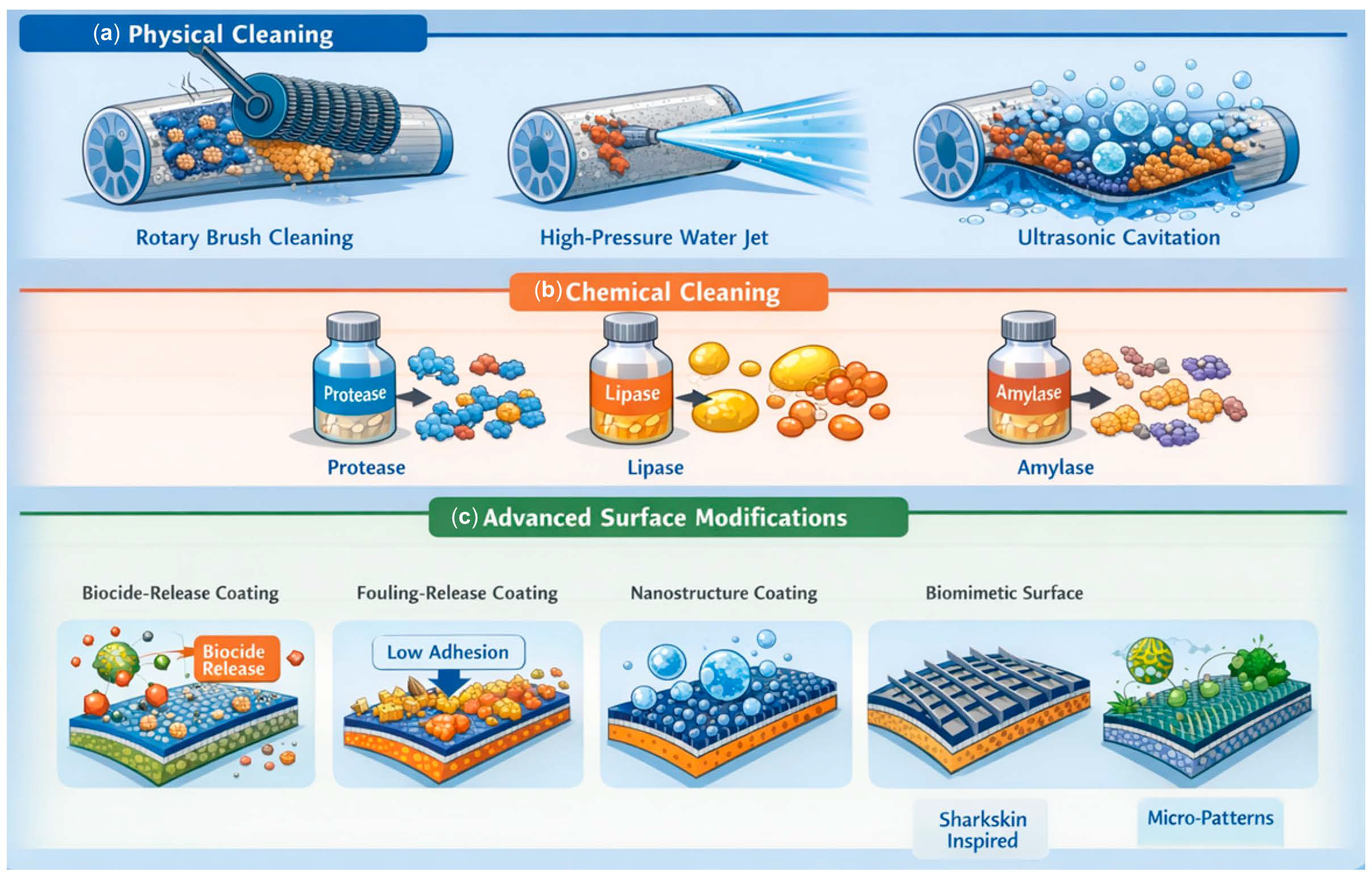
3.3. Cleaning and Antifouling Strategies
3.4. Long-Term Operational Implications
4. Advanced Approaches and Innovations
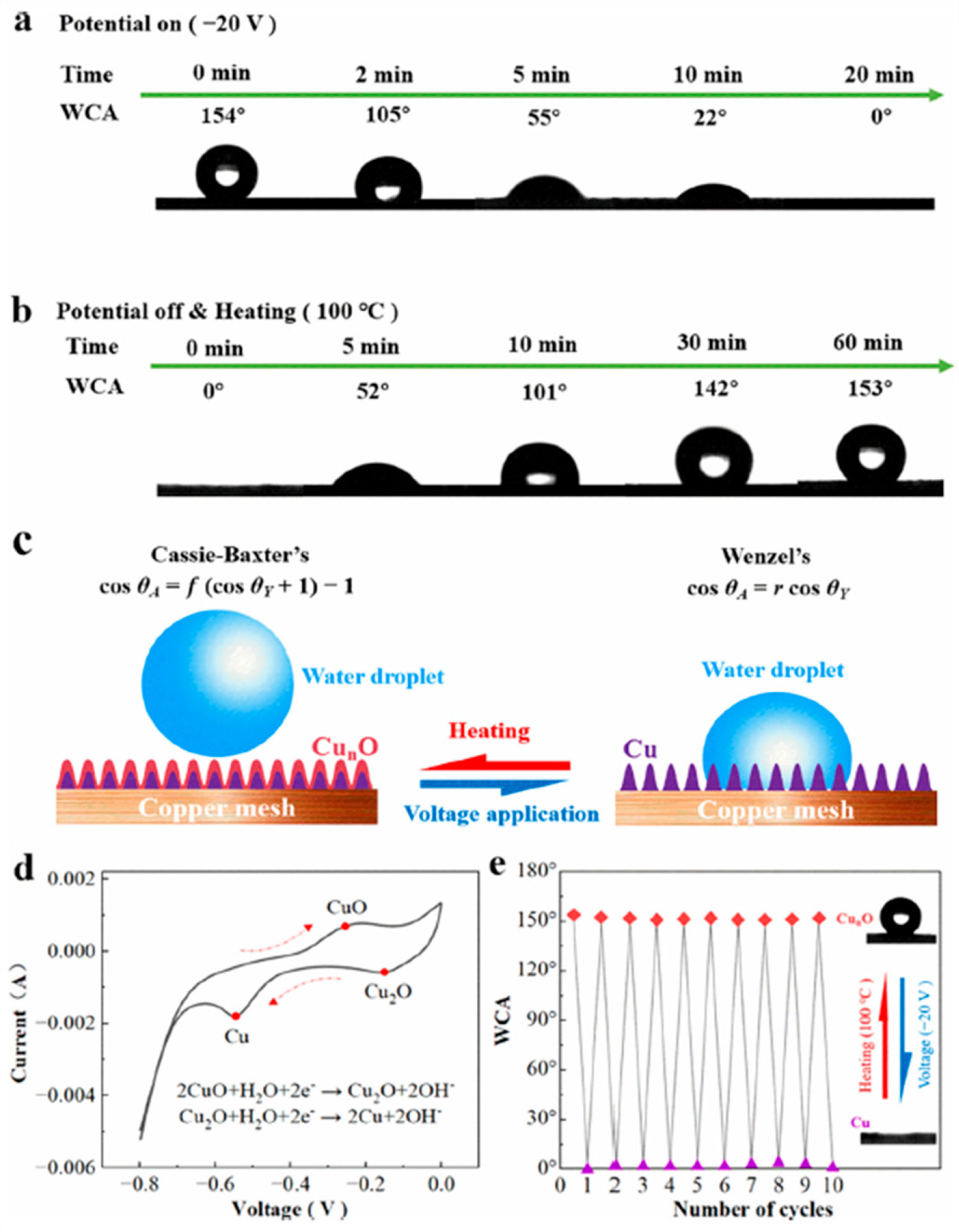
4.1. Functionalized and Smart Membranes for Selective Plastic Retention
4.2. Photocatalytic and Reactive Membranes for Degradation of MPs
4.3. Coupling Membranes with Advanced Oxidation Processes (AOPs)
4.3.1. Catalytic Membranes and Pore Confinement
4.3.2. Electrified Membrane Systems
4.3.3. Performance, Fouling, and Economic Perspectives
4.4. Green Chemistry Approaches in Sustainable Membrane Fabrication for Microplastic Removal
4.5. Emerging Materials: Nanocomposites, Biomimetic, and Electro-Membranes
4.6. Comparative Performance of Advanced Membrane Materials for Microplastic Removal
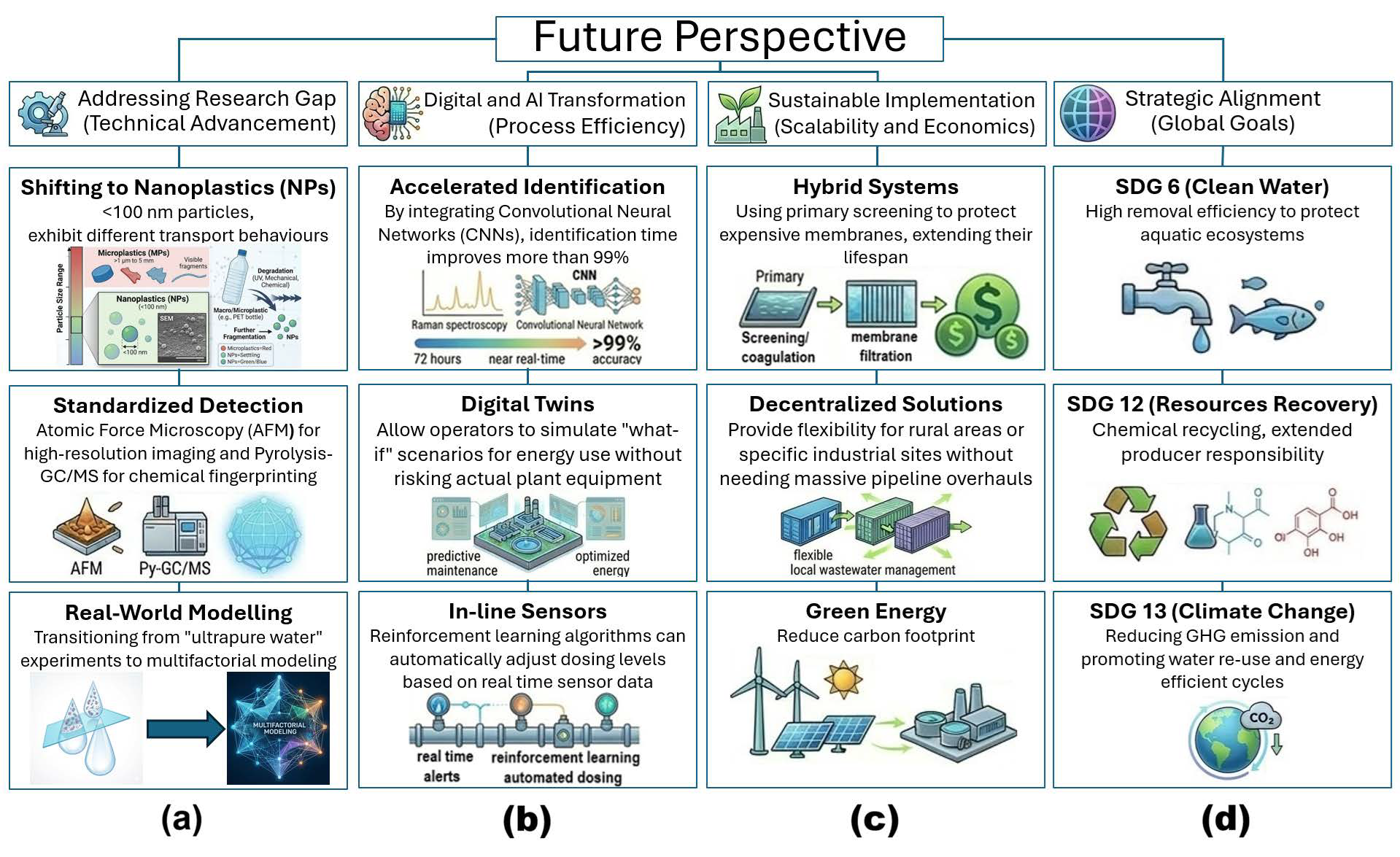
5. Future Perspectives
5.1. Research Gaps in MP/NP Removal Mechanisms
5.2. Integration with Digital Monitoring and AI-Assisted Process Optimization
5.3. Pathways Toward Sustainable Implementation in Full-Scale Plants
5.4. Alignment with UN Sustainable Development Goals
5.4.1. SDG 6 (Clean Water and Sanitation)
5.4.2. SDG 12 (Responsible Consumption and Production)
5.4.3. SDG 13 (Climate Action)
5.4.4. Cross-Cutting Synergies

6. Conclusions
Author Contributions
Funding
Institutional Review Board Statement
Informed Consent Statement
Data Availability Statement
Acknowledgments
Conflicts of Interest
References
- Dube, E.; Okuthe, G.E. Plastics and Micro/Nano-Plastics (MNPs) in the Environment: Occurrence, Impact, and Toxicity. Int. J. Environ. Res. Public Health 2023, 20, 6667. [Google Scholar] [CrossRef]
- Kochanek, A.; Grąz, K.; Potok, H.; Gronba-Chyła, A.; Kwaśny, J.; Wiewiórska, I.; Ciuła, J.; Basta, E.; Łapiński, J. Micro- and Nanoplastics in the Environment: Current State of Research, Sources of Origin, Health Risks, and Regulations—A Comprehensive Review. Toxics 2025, 13, 564. [Google Scholar] [CrossRef]
- Junaid, M.; Wang, J. Microplastics Contamination in Receiving Water Systems. In Microplastic Contamination in Aquatic Environments; Ganat, T., Ed.; Wiley: Hoboken, NJ, USA, 2022; pp. 223–262. [Google Scholar] [CrossRef]
- Mohanty, J.; Dey, S.; Bala, K.; Das, A.P. Recent Advances in Microplastic Pollution and Sustainable Management. In Microplastics and Nanoplastics: Environmental and Biomedical Toxicity; Rathoure, A.K., Ed.; CRC Press: Boca Raton, FL, USA, 2024; pp. 45–65. [Google Scholar] [CrossRef]
- Salomón, Y.L.; Georgin, J.; Allasia, D.G.P.; Netto, M.S.; Aniagor, C.O.; Ighalo, J.O.; Franco, D.S.P. A Comprehensive Review on Atrazine Adsorption: From Environmental Contamination to Efficient Removal Technologies. Sustainability 2025, 17, 10455. [Google Scholar] [CrossRef]
- Amparán, M.A.A.; Palacios, A.; Flores, G.M.; Olivera, P.M.C. Review and future outlook for the removal of microplastics by physical, biological and chemical methods in water bodies and wastewaters. Environ. Monit. Assess. 2025, 197, 429. [Google Scholar] [CrossRef]
- Galvão, A.; Aleixo, M.; De Pablo, H.; Lopes, C.; Raimundo, J. Microplastics in wastewater: Microfiber emissions from common household laundry. Environ. Sci. Pollut. Res. 2020, 27, 26643–26649. [Google Scholar] [CrossRef] [PubMed]
- Samavi, M.; Kosamia, N.M.; Vieira, E.C.S.; Mahal, Z.; Rakshit, S.K. Occurrence of MPs and NPs in freshwater environment. In Current Developments in Biotechnology and Bioengineering: Microplastics and Nanoplastics: Occurrence, Environmental Impacts and Treatment Processes; Tyagi, R.D., Pandey, A., Drogui, P., Yadav, B., Pilli, S., Eds.; Elsevier: Amsterdam, The Netherlands, 2022; pp. 119–147. [Google Scholar] [CrossRef]
- Fontes, B.L.M.; Souza, L.C.S.E.; Oliveira, A.P.S.S.D.; Fonseca, R.N.D.; Cavalcanti Neto, M.P.; Pinheiro, C.R. The possible impacts of nano and microplastics on human health: Lessons from experimental models across multiple organs. J. Toxicol. Environ. Health B 2024, 27, 305–344. [Google Scholar] [CrossRef] [PubMed]
- Rathour, A.; Dhar, A.; Pathania, S. Impact of microplastics pollution on human health and aquatic life: A review. Polym. Int. 2025. early view. [Google Scholar] [CrossRef]
- Persiani, E.; Cecchettini, A.; Ceccherini, E.; Gisone, I.; Morales, M.A.; Vozzi, F. Microplastics: A Matter of the Heart (and Vascular System). Biomedicines 2023, 11, 264. [Google Scholar] [CrossRef]
- Pinto, P.E.; Giacobbo, A.; Almeida, G.M.d.; Rodrigues, M.A.S.; Bernardes, A.M. Pressure-Driven Membrane Processes for Removing Microplastics. Membranes 2025, 15, 81. [Google Scholar] [CrossRef]
- Khan, N.A.; Singh, S.; López-Maldonado, E.A.; Pavithra, N.; Méndez-Herrera, P.F.; López-López, J.R.; Baig, U.; Ramamurthy, P.C.; Mubarak, N.M.; Karri, R.R.; et al. Emerging membrane technology and hybrid treatment systems for the removal of micropollutants from wastewater. Desalination 2023, 565, 116873. [Google Scholar] [CrossRef]
- Zhang, H.; Zhu, S.; Yang, J.; Ma, A. Advancing Strategies of Biofouling Control in Water-Treated Polymeric Membranes. Polymers 2022, 14, 1167. [Google Scholar] [CrossRef]
- Xue, Q.; Lim, Y.J.; Zhang, K. Recent advances in MXene-polymer hybrid membranes for water purification: From interface design to functional regulation and transport mechanisms. Coord. Chem. Rev. 2026, 557, 217723. [Google Scholar] [CrossRef]
- Xue, Q.; Lim, Y.J.; Zhang, K. Engineering multi-channel water transport in surface-porous MXene nanosheets for high-performance thin-film nanocomposite membranes. J. Membr. Sci. 2025, 728, 124151. [Google Scholar] [CrossRef]
- Gao, W.; Zhang, Y.; Mo, A.; Jiang, J.; Liang, Y.; Cao, X.; He, D. Removal of microplastics in water: Technology progress and green strategies. Green Anal. Chem. 2022, 3, 100042. [Google Scholar] [CrossRef]
- Lares, M.; Ncibi, M.C.; Sillanpää, M.; Sillanpää, M. Occurrence, identification and removal of microplastic particles and fibers in conventional activated sludge process and advanced MBR technology. Water Res. 2018, 133, 236–246. [Google Scholar] [CrossRef]
- Enfrin, M.; Dumée, L.F.; Lee, J. Nano/microplastics in water and wastewater treatment processes: Origin, impact and potential solutions. Water Res. 2019, 161, 621–638. [Google Scholar] [CrossRef]
- Acarer, S. A review of microplastic removal from water and wastewater by membrane technologies. Water Sci. Technol. 2023, 88, 199–219. [Google Scholar] [CrossRef]
- Kook, H.; Park, C. Engineered Approaches to Facile Identification of Tiny Microplastics in Polymeric and Ceramic Membrane Filtrations for Wastewater Treatment. Membranes 2022, 12, 565. [Google Scholar] [CrossRef] [PubMed]
- El Messaoudi, N.; Miyah, Y.; Georgin, J.; Franco, D.S.P.; Amenaghawon, A.N.; Sardi, B.; Al-Msiedeen, A.M.; Harja, M. Removal of Kerosene from Wastewater: Current Trends and Emerging Perspectives for Environmental Remediation. Sustainability 2026, 18, 277. [Google Scholar] [CrossRef]
- Pizzichetti, A.R.P.; Pablos, C.; Álvarez-Fernández, C.; Reynolds, K.; Stanley, S.; Marugán, J. Kinetic and mechanistic analysis of membrane fouling in microplastics removal from water by dead-end microfiltration. J. Environ. Chem. Eng. 2023, 11, 109338. [Google Scholar] [CrossRef]
- Ladeia Ramos, R.; Rodrigues dos Santos, C.; Pinheiro Drumond, G.; de Souza Santos, L.V.; Amaral, M.C.S. Critical review of microplastic in membrane treatment plant: Removal efficiency, environmental risk assessment, membrane fouling, and MP release. Chem. Eng. J. 2024, 480, 148052. [Google Scholar] [CrossRef]
- Otoo, E.; Mohammadian, A. High-density microplastics in wastewater treatment plants and aquatic environment: Review, challenges, and future prospects. Environ. Rev. 2025, 33, 1–21. [Google Scholar] [CrossRef]
- Keskin, B.; Koyuncu, I. Influence of membrane composition and stripping phase on the treatment of gilding wastewater using polymer inclusion membranes. Next Res. 2026, 5, 101366. [Google Scholar] [CrossRef]
- Jo, S.; Kadam, R.; Jang, H.; Seo, D.; Park, J. Recent Advances in Wastewater Electrocoagulation Technologies: Beyond Chemical Coagulation. Energies 2024, 17, 5863. [Google Scholar] [CrossRef]
- Lin, Z.; Hu, X.; Lin, H.; Yu, G.; Shen, L.; Yu, W.; Li, B.; Zhao, L.; Ying, M. Membrane technology for microplastic removal: Microplastic occurrence, challenges, and innovations of process and materials. Chem. Eng. J. 2025, 520, 166183. [Google Scholar] [CrossRef]
- Sun, J.; Dai, X.; Wang, Q.; van Loosdrecht, M.C.M.; Ni, B.J. Microplastics in wastewater treatment plants: Detection, occurrence and removal. Water Res. 2019, 152, 21–37. [Google Scholar] [CrossRef]
- Lin, K.; Wu, N.; Liu, S.; Yao, J.; You, H.; Heng, S.; Wang, X.; Huang, J.; Pullammanappallil, P.; Yang, S. Advanced Treatment and Disinfection of Hospital Wastewater: Progress, Monitoring Gaps, and Trends. Water 2026, 18, 605. [Google Scholar] [CrossRef]
- Ahmed, N.; Vione, D.; Rivoira, L.; Carena, L.; Castiglioni, M.; Bruzzoniti, M.C. A Review on the Degradation of Pollutants by Fenton-Like Systems Based on Zero-Valent Iron and Persulfate: Effects of Reduction Potentials, pH, and Anions Occurring in Waste Waters. Molecules 2021, 26, 4584. [Google Scholar] [CrossRef]
- Khatkar, S.K.; Dudi, K.; Lonkar, S.A.; Sidhu, K.S.; Khatkar, A.B.; Chandla, N.K.; Panghal, A. An Overview of Membrane Technology in Dairy & Food Industry. In Membrane Technology in the Food Industry; Chhikara, N., Panghal, A., Chaudhary, G., Eds.; Wiley: Hoboken, NJ, USA, 2022; pp. 49–74. [Google Scholar] [CrossRef]
- Tanudjaja, H.J.; Anantharaman, A.; Ng, A.Q.Q.; Ma, Y.; Tanis-Kanbur, M.B.; Zydney, A.L.; Chew, J.W. A review of membrane fouling by proteins in ultrafiltration and microfiltration. J. Water Process Eng. 2022, 50, 103294. [Google Scholar] [CrossRef]
- Guo, Y.; Bai, L.; Tang, X.; Huang, Q.; Xie, B.; Wang, T.; Wang, J.; Li, G.; Liang, H. Coupling continuous sand filtration to ultrafiltration for drinking water treatment: Improved performance and membrane fouling control. J. Membr. Sci. 2018, 567, 18–27. [Google Scholar] [CrossRef]
- Pazol, J.; Cruz-Tato, P.; Nicolau, E. Characterization of a Model Bioreactive Membrane for the Simultaneous Separation and Hydrolysis of Lipopolysaccharides. ACS Appl. Eng. Mater. 2023, 1, 1684–1697. [Google Scholar] [CrossRef]
- Rajendran, D.S.; Devi, E.G.; Subikshaa, V.S.; Sethi, P.; Patil, A.; Chakraborty, A.; Venkataraman, S.; Kumar, V.V. Recent advances in various cleaning strategies to control membrane fouling: A comprehensive review. Clean Technol. Environ. Policy 2025, 27, 649–664. [Google Scholar] [CrossRef]
- Fouda-Mbanga, B.G.; Nyoni, B.; Mnyango, J.I.; Phiri, C.; Hlangothi, S.P.; Miracle, A.; Boluwatife, A.; Celestina, O.; Voukeng, S.N.K.; Tsague, C.F.; et al. The nexuses of micro(nano)plastics at environmental interfaces: Challenges in wastewater treatment and sustainable water management. J. Environ. Chem. Eng. 2025, 13, 119952. [Google Scholar] [CrossRef]
- Tayeh, Y.A.; Alazaiza, M.Y.D.; Alzghoul, T.M.; Bashir, M.J. A comprehensive review of RO membrane fouling: Mechanisms, categories, cleaning methods and pretreatment technologies. J. Hazard. Mater. Adv. 2025, 18, 100684. [Google Scholar] [CrossRef]
- Tayeh, Y.A. A comprehensive review of reverse osmosis desalination: Technology, water sources, membrane processes, fouling, and cleaning. Desalin. Water Treat. 2024, 320, 100882. [Google Scholar] [CrossRef]
- Puteri, M.N.; Gew, L.T.; Ong, H.C.; Ming, L.C. Technologies to eliminate microplastic from water: Current approaches and future prospects. Environ. Int. 2025, 199, 109397. [Google Scholar] [CrossRef] [PubMed]
- Di Bella, G.; Corsino, S.F.; De Marines, F.; Lopresti, F.; La Carrubba, V.; Torregrossa, M.; Viviani, G. Occurrence of Microplastics in Waste Sludge of Wastewater Treatment Plants: Comparison between Membrane Bioreactor (MBR) and Conventional Activated Sludge (CAS) Technologies. Membranes 2022, 12, 371. [Google Scholar] [CrossRef]
- Bodzek, M.; Pohl, A.; Rosik-Dulewska, C. Microplastics in Wastewater Treatment Plants: Characteristics, Occurrence and Removal Technologies. Water 2024, 16, 3574. [Google Scholar] [CrossRef]
- Żyłła, R.; Milala, R.; Kamińska, I.; Kudzin, M.; Gmurek, M.; Ledakowicz, S. Impact of Advanced Oxidation Products on Nanofiltration Efficiency. Water 2019, 11, 541. [Google Scholar] [CrossRef]
- Zhan, H.; Ma, L.; Pan, Z.; Liu, S.; Ke, L.; Liu, Y.; Yang, B.; Zhou, Q.; Lai, B. Membrane bioreactor strategies for enhanced microplastic removal in wastewater: A review. J. Environ. Chem. Eng. 2025, 13, 119999. [Google Scholar] [CrossRef]
- Dayal, L.; Yadav, K.; Dey, U.; Das, K.; Kumari, P.; Raj, D.; Mandal, R.R. Recent advancement in microplastic removal process from wastewater—A critical review. J. Hazard. Mater. Adv. 2024, 16, 100460. [Google Scholar] [CrossRef]
- Li, S. Selecting the Front-Runners: Comparative Evaluation of Emerging Technologies for Microplastic Removal from Drinking Water. Processes 2025, 13, 3943. [Google Scholar] [CrossRef]
- Nasir, M.S.; Tahir, I.; Ali, A.; Ayub, I.; Nasir, A.; Abbas, N.; Sajjad, U.; Hamid, K. Innovative technologies for removal of micro plastic: A review of recent advances. Heliyon 2024, 10, e25883. [Google Scholar] [CrossRef]
- Khan, S.; Kalsoom, U.; Kashif, M.; Hussain, S.A.; Gul, M.; Azizi, S.; Maaza, M. Smart and Sustainable Microplastic Removal: Hybrid Systems, Bio-Inspired Technologies, Real-Time Sensing, and Policy Integration. Water Air Soil Pollut. 2025, 236, 900. [Google Scholar] [CrossRef]
- Liang, W.; Wei, S.; Lan, L.; Chen, J.; Zhou, Y.; Zhao, J.; Wang, H.; Gao, R.; Zeng, F. Effect of microplastics on the binding properties of Pb(II) onto dissolved organic matter: Insights from fluorescence spectra and FTIR combined with two-dimensional correlation spectroscopy. RSC Adv. 2023, 13, 24201–24210. [Google Scholar] [CrossRef] [PubMed]
- Song, X.; Zhuang, W.; Cui, H.; Liu, M.; Gao, T.; Li, A.; Gao, Z. Interactions of microplastics with organic, inorganic and bio-pollutants and the ecotoxicological effects on terrestrial and aquatic organisms. Sci. Total Environ. 2022, 838, 156068. [Google Scholar] [CrossRef]
- Xu, H.; Xiao, K.; Wang, X.; Liang, S.; Wei, C.; Wen, X.; Huang, X. Outlining the Roles of Membrane Foulant and Foulant-Foulant Interactions in Organic Fouling During Microfiltration and Ultrafiltration: A Mini-Review. Front. Chem. 2020, 8, 417. [Google Scholar] [CrossRef]
- Chong, K.C.; Lai, S.O.; Thiam, H.S.; Lee, S.S.; Lau, W.J.; Mokhtar, N.M. Reactive Blue Dye Removal by Membrane Distillation using PVDF Membrane. Indian J. Sci. Technol. 2016, 9, 110379. [Google Scholar] [CrossRef]
- Chen, J.; Sun, T.; Yang, P.; Peng, S.; Yu, J.; Wang, D.; Zhang, W. Inhibitory effect of microplastics derived organic matters on humification reaction of organics in sewage sludge under alkali-hydrothermal treatment. Water Res. 2024, 252, 121231. [Google Scholar] [CrossRef] [PubMed]
- Zhong, X.; Zhao, K.; Wu, M.; Zhang, Y.; Ma, C.; Liu, H.; Chang, B.; Lian, X.; Li, Y.; Huang, Z.; et al. Heavy metals trigger distinct molecular transformations in microplastic- versus natural-derived dissolved organic matter. Environ. Sci. Ecotechnol. 2025, 27, 100610. [Google Scholar] [CrossRef]
- Zarean, M.; Dave, S.H.; Brar, S.K.; Kwong, R.W.M. Environmental drivers of antibiotic resistance: Synergistic effects of climate change, co-pollutants, and microplastics. J. Hazard. Mater. Adv. 2025, 19, 100768. [Google Scholar] [CrossRef]
- Azmi, L.S.; Jabit, N.A.; Ismail, S.; Ku Ishak, K.E.H.; Abdullah, T.K. Membrane filtration technologies for sustainable industrial wastewater treatment: A review of heavy metal removal. Desalin. Water Treat. 2025, 323, 101321. [Google Scholar] [CrossRef]
- Tariq, H.; Shi, R.; Shi, X.; Liu, W.; Zeb, A.; Khan, S.; Iqbal, H.; Baig, A.M. Microplastics and Co-Contaminants in Soil: A Review of Combined Ecological Impact and Emerging Remediation Strategies. Land Degrad. Dev. 2025, 37, 3538–3560. [Google Scholar] [CrossRef]
- Golgoli, M.; Khiadani, M.; Shafieian, A.; Sen, T.; Hartanto, Y.; Johns, M.; Zargar, M. Microplastics fouling and interaction with polymeric membranes: A review. Chemosphere 2021, 283, 131185. [Google Scholar] [CrossRef] [PubMed]
- Nthunya, L.N.; Chong, K.C.; Lai, S.O.; Lau, W.J.; López-Maldonado, E.A.; Camacho, L.M.; Shirazi, M.M.A.; Ali, A.; Mamba, B.B.; Osial, M.; et al. Progress in membrane distillation processes for dye wastewater treatment: A review. Chemosphere 2024, 360, 142347. [Google Scholar] [CrossRef]
- Chen, X.; Wang, Z.; Liu, D.; Xiao, K.; Guan, J.; Xie, Y.F.; Wang, X.; Waite, T.D. Role of adsorption in combined membrane fouling by biopolymers coexisting with inorganic particles. Chemosphere 2018, 191, 226–234. [Google Scholar] [CrossRef]
- Ye, T.; Huang, M.; Wang, Y.; Yang, A.; Xu, H. Humic substance mitigated the microplastic-induced inhibition of hydroxyl radical production in riparian sediment. J. Hazard. Mater. 2024, 470, 134246. [Google Scholar] [CrossRef]
- Yao, Y.; Chen, Y.; Wang, J.; Tian, R.; Shen, J.; Lin, Y.; Van der Bruggen, B.; Wang, X.; Gao, C. Organic-fouling inevitable, control achievable: Mitigation strategies in electro-driven membrane systems. Water Res. 2026, 290, 125126. [Google Scholar] [CrossRef]
- Du, X.; Shi, Y.; Jegatheesan, V.; Haq, I.U. A Review on the Mechanism, Impacts and Control Methods of Membrane Fouling in MBR System. Membranes 2020, 10, 24. [Google Scholar] [CrossRef] [PubMed]
- Chuah, J.Y.; Chong, K.C.; Lai, S.O.; Lau, W.J.; Lee, S.S.; Ong, H.M. Industrial Nickel Wastewater Rejection by Polyimide Membrane. Chem. Eng. Trans. 2018, 63, 697–702. [Google Scholar] [CrossRef]
- Malankowska, M.; Echaide-Gorriz, C.; Coronas, J. Microplastics in marine environment: A review on sources, classification, and potential remediation by membrane technology. Environ. Sci. Water Res. Technol. 2021, 7, 243–258. [Google Scholar] [CrossRef]
- El Batouti, M.; Alharby, N.F.; Elewa, M.M. Review of New Approaches for Fouling Mitigation in Membrane Separation Processes in Water Treatment Applications. Separations 2022, 9, 1. [Google Scholar] [CrossRef]
- Zhou, Z.; Zhang, S.; Meng, X.; Song, J.; Yang, N.; Li, C.; Kawi, S.; Liu, S. High CO2-resistance Ag modified La0.8Ca0.2Fe0.94O3-δ hollow fiber membrane with a three-layer sandwich structure for oxygen separation. Sep. Purif. Technol. 2023, 317, 123879. [Google Scholar] [CrossRef]
- Al Otmi, M.; Lively, R.; Colina, C.; Sampath, J. Free volume elements in polymer membranes: Theory, characterization, functional significance, and design strategy. In Computational Methods for the Multiscale Modeling of Soft Matter; Elsevier: Amsterdam, The Netherlands, 2026; pp. 399–425. [Google Scholar] [CrossRef]
- Díez, B.; Rosal, R. A critical review of membrane modification techniques for fouling and biofouling control in pressure-driven membrane processes. Nanotechnol. Environ. Eng. 2020, 5, 15. [Google Scholar] [CrossRef]
- He, J.; Fan, H.; Elimelech, M.; Li, Y. Molecular simulations of organic solvent transport in dense polymer membranes: Solution-diffusion or pore-flow mechanism? J. Membr. Sci. 2024, 708, 123055. [Google Scholar] [CrossRef]
- Wernisch, B.; Al Otmi, M.; Beauvais, E.; Sampath, J. Evolution of free volume elements in amorphous polymers undergoing uniaxial deformation: A molecular dynamics simulations study. Mol. Syst. Des. Eng. 2024, 9, 214–225. [Google Scholar] [CrossRef]
- Cheng, X.; Bae, J. Recent Advancements in Fabrication, Separation, and Purification of Hierarchically Porous Polymer Membranes and Their Applications in Next-Generation Electrochemical Energy Storage Devices. Polymers 2024, 16, 3269. [Google Scholar] [CrossRef] [PubMed]
- Das, A.; Mishra, S. Reimagining biofiltration for sustainable industrial wastewater treatment. Discov. Sustain. 2025, 6, 826. [Google Scholar] [CrossRef]
- Liu, X. Review of protective coatings for corrosion mitigation in chemical machinery: Performance and mechanical aspects. J. Adhes. Sci. Technol. 2026, 40, 1657–1706. [Google Scholar] [CrossRef]
- Khalid, R.; Amin, H.M.A.; Shahid, M.; Kazuya, N.; Xing, R.; Liu, S.; Fujishima, A. Integrated photothermal and photocatalytic degradation of micro-/nanoplastics: A mini-review with mechanistic insights and future perspectives. J. Mater. Chem. A 2025, 13, 26110–26128. [Google Scholar] [CrossRef]
- Hudaib, B.; Abu-Zurayk, R.; Eskhan, A.; Esaifan, M. PVDF/Polypyrrole Composite Ultrafiltration Membrane with Enhanced Hydrophilicity, Permeability, and Antifouling Properties for Efficient Crude Oil Wastewater Separation. Polymers 2025, 17, 2566. [Google Scholar] [CrossRef]
- Lin, S.; Bi, H.; Weinell, C.E.; Azizaddini, S.; Dam-Johansen, K. Systematic cleaning and evaluation of exposed fouling control coating systems using a novel laboratory scale automated underwater cleaning system. Prog. Org. Coat. 2023, 182, 107712. [Google Scholar] [CrossRef]
- Pistone, A.; Scolaro, C.; Visco, A. Mechanical Properties of Protective Coatings against Marine Fouling: A Review. Polymers 2021, 13, 173. [Google Scholar] [CrossRef] [PubMed]
- Chowdhury, M.A.H.; Reem, C.S.A.; Ashrafudoulla, M.; Rahman, M.A.; Shaila, S.; Ha, A.J.; Ha, S.-D. Role of advanced cleaning and sanitation techniques in biofilm prevention on dairy equipment. Compr. Rev. Food Sci. Food Saf. 2025, 24, e70176. [Google Scholar] [CrossRef]
- Frontistis, Z.; Sarmpanis, A.; Lykogiannis, G. Utilizing ultrasonic vibrations to mitigate membrane fouling in domestic wastewater membrane bioreactors: A mini review. J. Chem. Technol. Biotechnol. 2023, 98, 2519–2526. [Google Scholar] [CrossRef]
- Stiefel, P.; Mauerhofer, S.; Schneider, J.; Maniura-Weber, K.; Rosenberg, U.; Ren, Q. Enzymes enhance biofilm removal efficiency of cleaners. Antimicrob. Agents Chemother. 2016, 60, 3647–3652. [Google Scholar] [CrossRef]
- Lin, S.; Bi, H.; Weinell, C.E.; Dam-Johansen, K. Mapping the biofouling activities of aged fouling release coating surfaces undergoing underwater cleaning. Appl. Ocean Res. 2024, 144, 103860. [Google Scholar] [CrossRef]
- Tagg, A.S.; Sperlea, T.; Hassenrück, C.; Kreikemeyer, B.; Fischer, D.; Labrenz, M. Microplastic-antifouling paint particle contamination alters microbial communities in surrounding marine sediment. Sci. Total Environ. 2024, 926, 171863. [Google Scholar] [CrossRef] [PubMed]
- Murthy, P.S.; Anandan, C.; Das, A.; Gouthaman, G.; Venugopalan, V.P. Advancements and Modifications to Polydimethylsiloxane Foul Release Antifouling Coatings. In A Treatise on Corrosion Science, Engineering and Technology; Kamachi Mudali, U., Subba Rao, T., Ningshen, S., Pillai, R.G., George, R.P., Sridhar, T.M., Eds.; Indian Institute of Metals Series; Springer: Singapore, 2022; pp. 581–606. [Google Scholar] [CrossRef]
- Magin, C.M.; Cooper, S.P.; Brennan, A.B. Non-toxic antifouling strategies. Mater. Today 2010, 13, 36–44. [Google Scholar] [CrossRef]
- Ahmed, S.F.; Islam, N.; Tasannum, N.; Mehjabin, A.; Momtahin, A.; Chowdhury, A.A.; Almomani, F.; Mofijur, M. Microplastic removal and management strategies for wastewater treatment plants. Chemosphere 2024, 347, 140648. [Google Scholar] [CrossRef]
- Yi, K.; Huang, J.; Li, X.; Li, S.; Pang, H.; Liu, Z.; Zhang, W.; Liu, S.; Liu, C.; Shu, W. Long-term impacts of polyethylene terephthalate (PET) microplastics in membrane bioreactor. J. Environ. Manag. 2022, 323, 116234. [Google Scholar] [CrossRef]
- Zoumpouli, G.A.; Krapfl, S.; Burkhardt, M.; Chew, Y.J.; Wu, B. Impact of microplastic fibres on direct membrane filtration of low-strength primary wastewater. J. Environ. Chem. Eng. 2025, 13, 118476. [Google Scholar] [CrossRef]
- Wang, Q.; Li, Y.; Liu, Y.; Zhou, Z.; Hu, W.; Lin, L.; Wu, Z. Effects of microplastics accumulation on performance of membrane bioreactor for wastewater treatment. Chemosphere 2022, 287, 131968. [Google Scholar] [CrossRef]
- Sawma, M.J.; Zayyat, R.M.; Ghaddar, R.; Ayoub, G.M. Environmental management of microplastics and additives: A critical review of treatment technologies and their impact. Water Emerg. Contam. Nanoplastics 2024, 3, 26. [Google Scholar] [CrossRef]
- Osman, A.I.; Chen, Z.; Elgarahy, A.M.; Farghali, M.; Mohamed, I.M.A.; Priya, A.K.; Hawash, H.B.; Yap, P.-S. Membrane Technology for Energy Saving: Principles, Techniques, Applications, Challenges, and Prospects. Adv. Energy Sustain. Res. 2024, 5, 2400011. [Google Scholar] [CrossRef]
- Kadac-Czapska, K.; Ośko, J.; Knez, E.; Grembecka, M. Microplastics and Oxidative Stress—Current Problems and Prospects. Antioxidants 2024, 13, 579. [Google Scholar] [CrossRef]
- Pan, Y.; Gao, S.-H.; Ge, C.; Gao, Q.; Huang, S.; Kang, Y.; Luo, G.; Zhang, Z.; Fan, L.; Zhu, Y.; et al. Removing microplastics from aquatic environments: A critical review. Environ. Sci. Ecotechnol. 2023, 13, 100222. [Google Scholar] [CrossRef]
- Al-Qodah, Z.; AL-Rajabi, M.M.; Da’na, E.; Al-Shannag, M.; Bani-Melhem, K.; Assirey, E. Continuous Electrocoagulation Processes for Industrial Inorganic Pollutants Removal: A Critical Review of Performance and Applications. Water 2025, 17, 2639. [Google Scholar] [CrossRef]
- Song, J.; Pashazadeh, A.; Wu, S.; Greene, V.R.; Hallee, K.O.; Tannehill, A.M.; Saxon, T.M.; Potter, M.; Beneke, Z. Advances in Microplastic Detection and Interception: A State-of-the-Art Review. Clean. Water 2025, 4, 100141. [Google Scholar] [CrossRef]
- Liu, X.; Zhang, G.; Al Mohawes, K.B.; Khashab, N.M. Smart membranes for separation and sensing. Chem. Sci. 2024, 15, 18772–18790. [Google Scholar] [CrossRef] [PubMed]
- Shekari, M.; Afshar Taromi, A.; Naderi, G.; Naqvi, M.; Khonakdar, H.A. Recent Innovations in Environmental Applications of Polymer Gels and Networks. Polym. Eng. Sci. 2025, 65, e70201. [Google Scholar] [CrossRef]
- Liu, J.; Peng, M.; Chen, L.; Li, T.; Liu, B.; Zhao, D.; Wang, Z.; Ma, J.; Chu, H.; Tang, C.Y. Smart Membrane with Reversible Superwetting Transition for On-Demand Antifouling and Self-Cleaning. Environ. Sci. Technol. 2025, 59, 16056–16065. [Google Scholar] [CrossRef]
- Celik, N.; Sahin, F.; Ozel, S.S.; Sezer, G.; Gunaltay, N.; Ruzi, M.; Onses, M.S. Self-Healing of Biocompatible Superhydrophobic Coatings: The Interplay of the Size and Loading of Particles. Langmuir 2023, 39, 3194–3203. [Google Scholar] [CrossRef] [PubMed]
- Zheng, B.; Zhou, B.; Hu, J.; Zheng, C.; Chen, K.; Yang, S.; Richtering, W.; Harbottle, D.; Hunter, T.N.; Zhang, H. Bioinspired Microgel-Loaded Smart Membrane Filtration with the Thermo- and Ion-Dual Responsive Water Gate for Selective Lead(II) Separation. ACS Appl. Mater. Interfaces 2024, 16, 45497–45510. [Google Scholar] [CrossRef]
- Nowik-Zając, A.; Sabadash, V. Recent Developments in Polymer Inclusion Membranes: Advances in Selectivity, Structural Integrity, Environmental Applications and Sustainable Fabrication. Membranes 2025, 15, 249. [Google Scholar] [CrossRef]
- Saleem, J.; Moghal, Z.K.B.; McKay, G. Harnessing plastic waste for sustainable membrane filtration with trimodal structure through acid-catalyzed oxidation. Chem. Eng. J. 2024, 486, 150230. [Google Scholar] [CrossRef]
- Wang, Y.; Wei, G. Recent Trends in Polymer Membranes: Fabrication Technique, Characterization, Functionalization, and Applications in Environmental Science (Part I). Polymers 2024, 16, 2889. [Google Scholar] [CrossRef]
- Zhao, B.; Richardson, R.E.; You, F. Advancing microplastic analysis in the era of artificial intelligence: From current applications to the promise of generative AI. Nexus 2024, 1, 100043. [Google Scholar] [CrossRef]
- Poerio, T.; Lavorato, C.; Severino, A.; Russo, B.; Molinari, R.; Argurio, P.; Figoli, A. Combined membrane separation and photocatalysis process for the recovery and decomposition of micro/nanoplastics from polyester fabrics. J. Environ. Chem. Eng. 2024, 12, 113310. [Google Scholar] [CrossRef]
- Stancu, A.G.; Râpă, M.; Popa, C.L.; Dontu, S.I.; Matei, E.; Covaliu-Mirelă, C.I. Degradation of Emerging Plastic Pollutants from Aquatic Environments Using TiO2 and Their Composites in Visible Light Photocatalysis. Molecules 2025, 30, 3186. [Google Scholar] [CrossRef] [PubMed]
- Kaur, K.; Kaur, H. Visible light induced photocatalytic degradation of polyvinyl chloride from water using graphene oxide/nitrogen-doped TiO2 nanocomposite. J. Environ. Chem. Eng. 2025, 13, 115664. [Google Scholar] [CrossRef]
- Thirunavukkarasu, G.K.; Motlochová, M.; Bavol, D.; Vykydalová, A.; Kupčík, J.; Navrátil, M.; Kirakci, K.; Pližingrová, E.; Dvoranová, D.; Šubrt, J. Insights in photocatalytic/Fenton-based degradation of microplastics using iron-modified titanium dioxide aerogel powders. Environ. Sci. Nano 2025, 12, 1515–1530. [Google Scholar] [CrossRef]
- Wu, P.; Guo, M.; Zhang, R.-W.; Huang, Q.; Wang, G.; Lan, Y.-Q. When microplastics/plastics meet metal–organic frameworks: Turning threats into opportunities. Chem. Sci. 2024, 15, 17781–17802. [Google Scholar] [CrossRef]
- Shao, Y.; Li, G.; Lu, N.; Wang, J.; Gao, J.; Lin, H.; Liu, C.; Tang, C.Y.; Tian, G.; Liu, F. Ion-gel constrained single atom catalytic membranes with ultrahigh loading Fe–N3P1 sites for advanced oxidation processes. J. Membr. Sci. 2025, 735, 124574. [Google Scholar] [CrossRef]
- Cui, T.; Chi, J.; Liu, K.; Zhu, J.; Guo, L.; Mao, H.; Liu, X.; Lai, J.; Guo, H.; Wang, L. Manipulating the electron redistribution of Fe3O4 for anion exchange membrane based alkaline seawater electrolysis. Appl. Catal. B Environ. Energy 2024, 357, 124269. [Google Scholar] [CrossRef]
- Gao, P.; Su, Y.; Xie, Y.; Wang, J.; Zeng, G.; Sun, D. A Systematic Review on Persulfate Activation Induced by Functionalized Mesoporous Silica Catalysts for Water Purification. Sustainability 2025, 17, 9199. [Google Scholar] [CrossRef]
- Zhang, M.; Shao, W.; Chen, Z.; Liu, C.; Li, W.; Tian, T.; Wang, J.; Chen, Z.; Qiao, W.; Gu, C. Advanced oxidation processes of persulfate coupled with sequencing batch reactor activated sludge process (AOPs-SBR): Biodegradability and toxicity analysis of degradation intermediates. Sep. Purif. Technol. 2025, 354, 128921. [Google Scholar] [CrossRef]
- Zhang, Y.; Zhang, Z. A sustainable and metal-free advanced oxidation process for efficient water purification by electrified reduced graphene oxide membrane. Chem. Catal. 2024, 4, 101056. [Google Scholar] [CrossRef]
- Pi, Z.; Hou, K.; Yao, F.; He, L.; Chen, S.; Tao, Z.; Zhou, P.; Wang, D.; Li, X.; Yang, Q. In-situ regeneration of tetracycline-saturated hierarchical porous carbon by peroxydisulfate oxidation process: Performance, mechanism and application. Chem. Eng. J. 2022, 427, 131749. [Google Scholar] [CrossRef]
- Liu, P.; Zhang, H.; Chen, Y.; Di, Y.; Li, Z.; Zhu, B.; Liu, Z.; Zhang, Z.; Wang, F. Anthraquinone-catalyzed electrosynthesis coupled with an advanced oxidation process for water treatment. RSC Sustain. 2024, 2, 483–494. [Google Scholar] [CrossRef]
- Núñez-Tafalla, P.; Salmerón, I.; Pérez Rodríguez, J.; Rodríguez-Chueca, J.; Venditti, S.; Hansen, J. Environmental impacts and economic assessment of a large-scale pilot plant for micropollutants removal: Granular activated carbon vs. coupled advanced oxidation process-granular activated carbon treatments. J. Environ. Chem. Eng. 2026, 14, 120644. [Google Scholar] [CrossRef]
- Attanayake, K.; Wickramage, I.; Samarasinghe, U.; Ranmini, Y.; Ehalapitiya, S.; Jayathilaka, R.; Yapa, S. Renewable energy as a solution to climate change: Insights from a comprehensive study across nations. PLoS ONE 2024, 19, e0299807. [Google Scholar] [CrossRef]
- Adewuyi, A.; Campbell, A.J.; Adeyemi, O.G. The Potential Role of Membrane Technology in the Removal of Microplastics from Wastewater. J. Appl. Membr. Sci. Technol. 2021, 25, 31–53. [Google Scholar] [CrossRef]
- Samuel, H.; Makong, F.-D.; Ori, M. Green Chemistry Strategies for Mitigating Microplastic Pollution in Aquatic Environments. Asian J. Environ. Res. 2024, 1, 73–82. [Google Scholar] [CrossRef]
- Rist, M.; Greiner, A. Bio-based electrospun polyamide membrane sustainable multipurpose filter membranes for microplastic filtration. RSC Appl. Polym. 2024, 2, 642–655. [Google Scholar] [CrossRef]
- Cegłowski, M.; Nowicki, M.P.; Ruśkowski, P.; Gadomska-Gajadhur, A. What About These Microplastics? Advantages, Disadvantages, and Sustainability of Filtration Membranes for Removing Microlitter from Wastewater. J. Membr. Sci. Res. 2024, 10, 2019471. [Google Scholar] [CrossRef]
- Makarov, I.S.; Golova, L.K.; Vinogradov, M.I.; Mironova, M.V.; Anokhina, T.S.; Arkharova, N.A. Morphology and transport properties of membranes obtained by coagulation of cellulose solutions in isobutanol. Carbohydr. Polym. 2021, 254, 117472. [Google Scholar] [CrossRef]
- Mironova, M.; Makarov, I.; Palchikova, E.; Makarov, G.; Vinogradov, M.; Orlov, M.; Komarov, I. Control of Precipitation of Cellulose Solutions in N-Methylmorpholine-N-oxide by Introducing Polyacrylonitrile Additives. Polysaccharides 2025, 6, 88. [Google Scholar] [CrossRef]
- Dey, T.; Jamal, M.; Uddin, M. Fabrication and performance analysis of graphene oxide-based composite membrane to separate microplastics from synthetic wastewater. J. Water Process Eng. 2023, 52, 103554. [Google Scholar] [CrossRef]
- Arahman, N.; Azwar, A.; Rosnelly, C.; Haikal, R.; Marom, A.; Mulyati, S.; Maulidayanati, S. Assessment and Removal Strategy of Microplastic Pollution in River Water in the Krueng Aceh River, Indonesia. Int. J. Environ. Impacts 2024, 7, 239–246. [Google Scholar] [CrossRef]
- Sun, J.; Xiong, Y.; Jia, H.; Han, L.; Yin, K. Superb microplastics separation performance of graphene oxide tuned by laser bombardment. J. Hazard. Mater. 2024, 461, 132599. [Google Scholar] [CrossRef] [PubMed]
- Fuwad, A.; Ryu, H.; Han, E.; Lee, J.; Malmstadt, N.; Kim, Y.; Jeon, T. Highly permeable and shelf-stable aquaporin biomimetic membrane based on an anodic aluminum oxide substrate. npj Clean Water 2024, 7, 18. [Google Scholar] [CrossRef]
- Merivaara, A.; Zini, J.; Koivunotko, E.; Valkonen, S.; Korhonen, O.; Fernandes, F.M.; Yliperttula, M. Preservation of biomaterials and cells by freeze-drying: Change of paradigm. J. Control. Release 2021, 336, 480–498. [Google Scholar] [CrossRef] [PubMed]
- Lee, M.; Choi, W.; Lim, G. Electrokinetic-assisted filtration for fast and highly efficient removal of microplastics from water. Chem. Eng. J. 2023, 452, 139152. [Google Scholar] [CrossRef]
- Ouda, M.; Kharraz, J.; Hasan, S. Scalable electro-filtration of nanoplastics using MXene-based composite membranes: Performance and mechanistic insights in real wastewater. J. Water Process Eng. 2025, 77, 108522. [Google Scholar] [CrossRef]
- Dey, T.; Uddin, M.; Jamal, M. Detection and Removal of Microplastics in Wastewater: Evolution and Impact. Environ. Sci. Pollut. Res. 2021, 28, 16925–16947. [Google Scholar] [CrossRef]
- Chaturvedi, S.; Kumar, A.; Liu, M.; Kumar, R. A Perspective on Green Solutions and Future Research Paths for Microplastic and Nanoplastic Contamination in Drinking Water. Clean–Soil Air Water 2024, 53, 202400104. [Google Scholar] [CrossRef]
- Popescu, S.; Mansoor, S.; Wani, O.; Kumar, S.; Sharma, V.; Sharma, A.; Chung, Y. Artificial Intelligence and IoT Driven Technologies for Environmental Pollution Monitoring and Management. Front. Environ. Sci. 2024, 12, 1336088. [Google Scholar] [CrossRef]
- Yuan, X.; Li, J.; Lim, J.; Zolfaghari, A.; Alessi, D.; Wang, Y.; Ok, Y. Machine Learning for Heavy Metal Removal from Water: Recent Advances and Challenges. ACS EST Water 2024, 4, 820–836. [Google Scholar] [CrossRef]
- Drogkoula, M.; Kokkinos, K.; Samaras, N. A Comprehensive Survey of Machine Learning Methodologies with Emphasis in Water Resources Management. Appl. Sci. 2023, 13, 12147. [Google Scholar] [CrossRef]
- Liu, J.; Long, Y.; Zhu, G.; Hursthouse, A. Application of Artificial Intelligence in the Management of Coagulation Treatment Engineering System. Processes 2024, 12, 1824. [Google Scholar] [CrossRef]
- Wei, Y.; Law, A.; Yang, C. Real-Time Data-Processing Framework with Model Updating for Digital Twins of Water Treatment Facilities. Water 2022, 14, 3591. [Google Scholar] [CrossRef]
- Gray, S.; Dow, N.; Orbell, J.; Tran, T.; Bolto, B. The Significance of Interactions between Organic Compounds on Low Pressure Membrane Fouling. Water Sci. Technol. 2011, 64, 632–639. [Google Scholar] [CrossRef] [PubMed]
- Jha, N.; Kiss, Z.; Gorczyca, B. Fouling Mechanisms in Nanofiltration Membranes for the Treatment of High DOC and Varying Hardness Water. Desalin. Water Treat. 2018, 127, 197–212. [Google Scholar] [CrossRef]
- Dubey, K.K.; Shah, M.P.; Yadav, A. Challenges and Sustainable Solutions for the Detection and Bioremediation of Microplastic Pollution. In Challenges and Sustainable Solutions in Bioremediation, Sharma, R., Ed.; 1st ed.; CRC Press: Boca Raton, FL, USA, 2025; pp. 18–35. [Google Scholar] [CrossRef]
- Tang, K.H.D. The Role of Artificial Intelligence in Microplastic Pollution Studies and Management. Recent Prog. Sci. Eng. 2025, 1, 016. [Google Scholar] [CrossRef]
- Venkatapurapu, S.; Gibbs, M.; Kimko, H. Augmented Intelligence in Precision Medicine: Transforming Clinical Decision-Making with AI/ML and/or Quantitative Systems Pharmacology Models. Clin. Transl. Sci. 2024, 17, e70112. [Google Scholar] [CrossRef]
- Royer, S.J.; Wolter, H.; Delorme, A.E.; Lebreton, L.; Poirion, O.B. Computer vision segmentation model—Deep learning for categorizing microplastic debris. Front. Environ. Sci. 2024, 12, 1386292. [Google Scholar] [CrossRef]
- Zimmermann, K. The Water Sector Was Born and Raised with Big-Impact Water Data. ACS EST Water 2024, 4, 764–772. [Google Scholar] [CrossRef]
- Wei, Y.; Law, A.; Yang, C.; Tang, D. Combined Anomaly Detection Framework for Digital Twins of Water Treatment Facilities. Water 2022, 14, 1001. [Google Scholar] [CrossRef]
- Girish, N.; Parashar, N.; Hait, S. Coagulative removal of microplastics from aqueous matrices: Recent progresses and future perspectives. Sci. Total Environ. 2023, 899, 165723. [Google Scholar] [CrossRef]
- Bai, H.; Lin, Y.; Qu, H.; Zhang, J.; Zheng, X.; Tang, Y. Technical and Economic Evaluation of WWTP Renovation Based on Applying Ultrafiltration Membrane. Membranes 2020, 10, 180. [Google Scholar] [CrossRef]
- Saeedikia, H.; Ghanbarzadeh, M.; Mahmoudzadeh, M.; Khorsi, M.; Barani, M.; Bazgir, S.; Tavakoli, O.; Heidarinasab, A.; Lesage, G.; Heran, M.; et al. A Hybrid Treatment System of the Coagulation/Flocculation/Settling Stage Followed by a Membrane Bioreactor (CFS-MBR) for Superior Removal of Cr and Nutrient Pollutants from Tannery Wastewater. Water 2025, 17, 1432. [Google Scholar] [CrossRef]
- Khaki, Q.Z.; Kumar, B.T.; Kumar, P. Recent trends in decentralized wastewater treatment system in developing countries: A critical review of case studies and future perspectives. J. Environ. Manag. 2026, 398, 128467. [Google Scholar] [CrossRef]
- Sulaiman, R.N.R.; Abu Bakar, A.; Ngadi, N.; Shamsul Kahar, I.N.; Nordin, A.H.; Ikram, M.; Nabgan, W. Microplastics in Malaysia’s Aquatic Environment: Current Overview and Future Perspectives. Glob. Chall. 2023, 7, 2300047. [Google Scholar] [CrossRef] [PubMed]
- Duarte, M.; Martins, G.; Oliveira, P.; Fernandes, B.; Ferreira, E.; Alves, M.; Nováis, P. A Review of Computational Modeling in Wastewater Treatment Processes. ACS EST Water 2024, 4, 784–804. [Google Scholar] [CrossRef]
- Seggio, M.; Arcadio, F.; Radicchi, E.; Cennamo, N.; Zeni, L.; Bossi, A. Toward Nano- and Microplastic Sensors: Identification of Nano- and Microplastic Particles via Artificial Intelligence Combined with a Plasmonic Probe Functionalized with an Estrogen Receptor. ACS Omega 2024, 9, 18984–18994. [Google Scholar] [CrossRef]
- Voulvoulis, N. Water reuse from a circular economy perspective and potential risks from an unregulated approach. Curr. Opin. Environ. Sci. Health 2018, 2, 32–45. [Google Scholar] [CrossRef]



| Membrane Process | Pore Size | Primary Removal Mechanisms | MPs/NPs Removal Efficiency | Key Advantages | Major Limitations |
|---|---|---|---|---|---|
| Microfiltration (MF) | 0.1–10 µm | Size exclusion, cake layer formation, hydrodynamic interactions | >90% for particles > 10 µm | Low energy, high flux, excellent pretreatment | Limited NP retention; susceptible to surface fouling |
| Ultrafiltration (UF) | 1–100 nm | Size exclusion, electrostatic interactions | >90% for NPs (<500 nm) | High-quality effluent; removes sub-micron scale particles | Internal pore blocking; requires frequent cleaning |
| Nanofiltration (NF) | 1–10 nm | Size exclusion, electrostatic repulsion | >90% for NPs and dissolved organics | Concurrent removal of ions and nanoplastics | High operating pressure; complex concentrate disposal |
| Reverse Osmosis (RO) | Non-porous | Solution–diffusion | >99% for all plastic size fractions | Highest rejection reliability for potable reuse | High energy consumption; requires intensive pretreatment |
| Fouling Stage | Physical/Chemical Mechanism | Structural Impact on Membrane | Effect on Permeability | Effect on Selectivity | Long-Term Consequence |
|---|---|---|---|---|---|
| Initial Deposition | Microplastic particle adsorption and pore blocking | Surface coverage; partial pore occlusion | ↓ Moderate flux decline | Slight change | Increased hydraulic resistance |
| Cake Layer Formation | Accumulation of microplastics + EPS | Formation of external mass transfer barrier | ↓↓ Significant permeability loss | Possible artificial selectivity increase (temporary sieving effect) | Higher operating pressure required |
| Compaction Under Pressure | Compression of cake layer and polymer matrix | Structural deformation; densification or local pore distortion | Further ↓ flux | Reduced precision in size exclusion | Increased energy consumption |
| Internal Matrix Deformation | Stress-induced alteration of Free Volume Elements (FVEs) | Redistribution/enlargement of FVEs (MD-predicted) | Variable (may ↑ locally) | ↓ Selectivity due to widened transport pathways | Shift toward Robeson trade-off limit |
| Repeated Chemical Cleaning | Polymer chain scission and aging | Permanent FVE instability; microcracks | Gradual irreversible decline | Loss of separation consistency | Shortened membrane lifespan |
| Membrane Material | Surface Charge (Zeta Potential) | Contact Angle (WCA/UOCA) | Surface Roughness (Rq) | Resulting Rejection Rate (%) | Interaction Energy/Mechanism Focus |
|---|---|---|---|---|---|
| Graphene Oxide (GO) [125] | −200 mV | 58.52° | High (Defects and wrinkled) | 98.48% (at 1 μm) | High GEL repulsion against PS/PE particles |
| GO-PVA Composite [125] | −100 mV | 71.28° | High (coarse topography along bumpy surface) | 95% (HDPE) | Acetalization reduces GEL barrier compared to pure GO |
| Laser Modified GO [127] | N/A | 159.5° (UOCA) | High (Wrinkled) | ~99% (PVC/PET) | Super-hydrophilicity creates dominant GAB hydration barrier |
| AAO-Aquaporin (AQP) [128] | N/A | N/A | 9.16 nm | 0.11 gL−1 (SRSF) | Low Rq minimizes physical entrapment and physical fouling |
| Electrified MXene-SPES [131] | Negative | Hydrophilic | High (Discrete circular flocs and scattered deposits) | >90% (NP) | Intermittent voltage disrupts GLW adhesion via bubble turbulence |
| PES-GO Membrane [126] | N/A | 68° | N/A | 91% (River MPs) | Functional groups modify pore structure to reduce GLW adhesion |
Disclaimer/Publisher’s Note: The statements, opinions and data contained in all publications are solely those of the individual author(s) and contributor(s) and not of MDPI and/or the editor(s). MDPI and/or the editor(s) disclaim responsibility for any injury to people or property resulting from any ideas, methods, instructions or products referred to in the content. |
© 2026 by the authors. Licensee MDPI, Basel, Switzerland. This article is an open access article distributed under the terms and conditions of the Creative Commons Attribution (CC BY) license.
Share and Cite
Lai, S.O.; Bashir, M.J.K.; Ng, C.A.; Chong, K.C.; Kam, H.K.; Gumaling, R.P.; Wang, L.-C. Membrane Technologies for Microplastics Removal from Wastewater: Recent Progress, Fouling Mechanisms, and Future Perspectives. Membranes 2026, 16, 190. https://doi.org/10.3390/membranes16060190
Lai SO, Bashir MJK, Ng CA, Chong KC, Kam HK, Gumaling RP, Wang L-C. Membrane Technologies for Microplastics Removal from Wastewater: Recent Progress, Fouling Mechanisms, and Future Perspectives. Membranes. 2026; 16(6):190. https://doi.org/10.3390/membranes16060190
Chicago/Turabian StyleLai, Soon Onn, Mohammed J. K. Bashir, Choon Aun Ng, Kok Chung Chong, Heng Keong Kam, Riza P. Gumaling, and Lin-Chi Wang. 2026. "Membrane Technologies for Microplastics Removal from Wastewater: Recent Progress, Fouling Mechanisms, and Future Perspectives" Membranes 16, no. 6: 190. https://doi.org/10.3390/membranes16060190
APA StyleLai, S. O., Bashir, M. J. K., Ng, C. A., Chong, K. C., Kam, H. K., Gumaling, R. P., & Wang, L.-C. (2026). Membrane Technologies for Microplastics Removal from Wastewater: Recent Progress, Fouling Mechanisms, and Future Perspectives. Membranes, 16(6), 190. https://doi.org/10.3390/membranes16060190