3.1. Characterization Results
3.1.1. SEM Analysis of PES-CS-MMT Composite Membrane
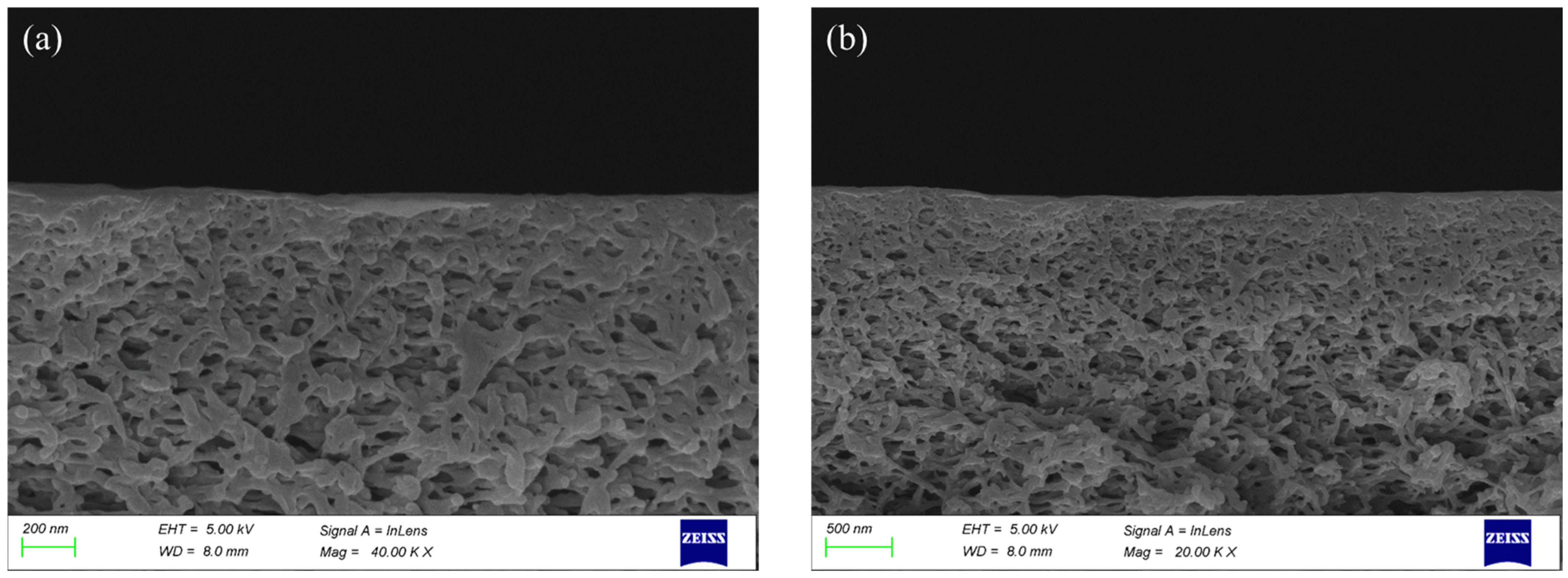
The SEM images of the membrane cross-section are shown in
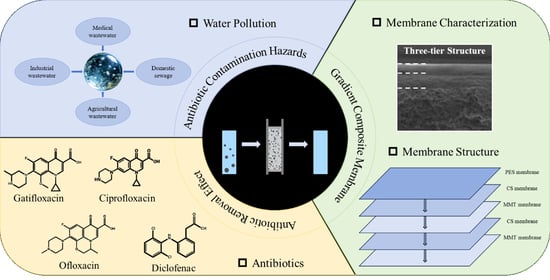
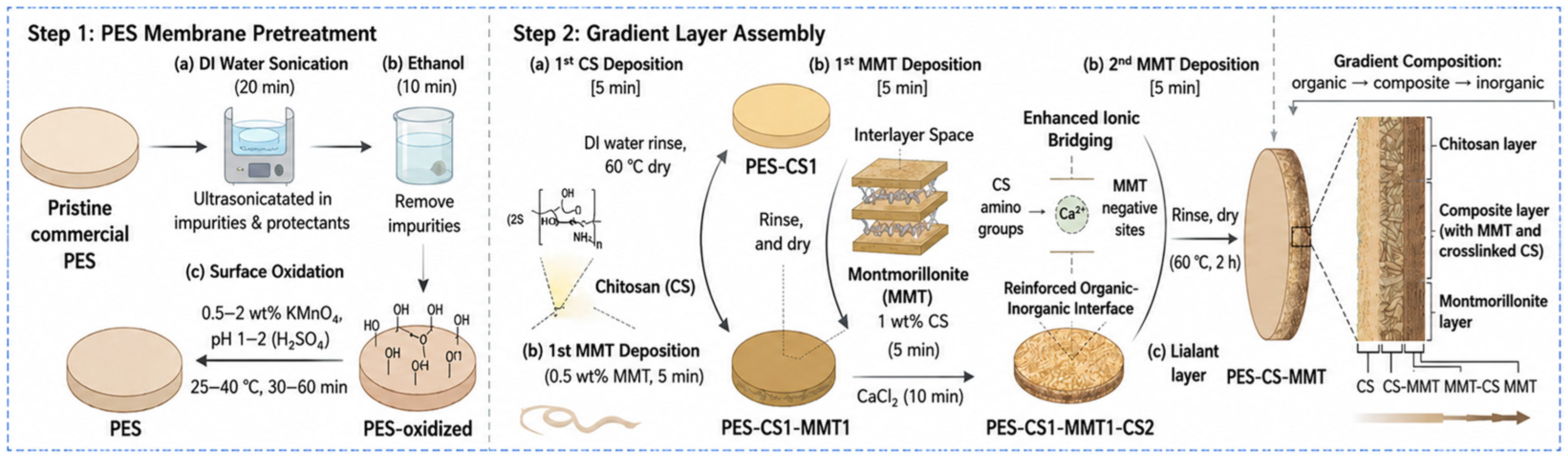
Figure 3a,b. The thickness distribution of each cycle layer of the multi-layer composite membrane is relatively uniform, indicating that its overall structure has good uniformity. At the same time, the images also initially present the basic layered configuration of the composite membrane. Specifically, in the preparation process of the PES-CS-MMT membrane, the chitosan and montmorillonite were successively deposited on the surface of the base membrane by the self-assembly method layer by layer, ultimately forming a multi-layer composite structure with gradient characteristics.
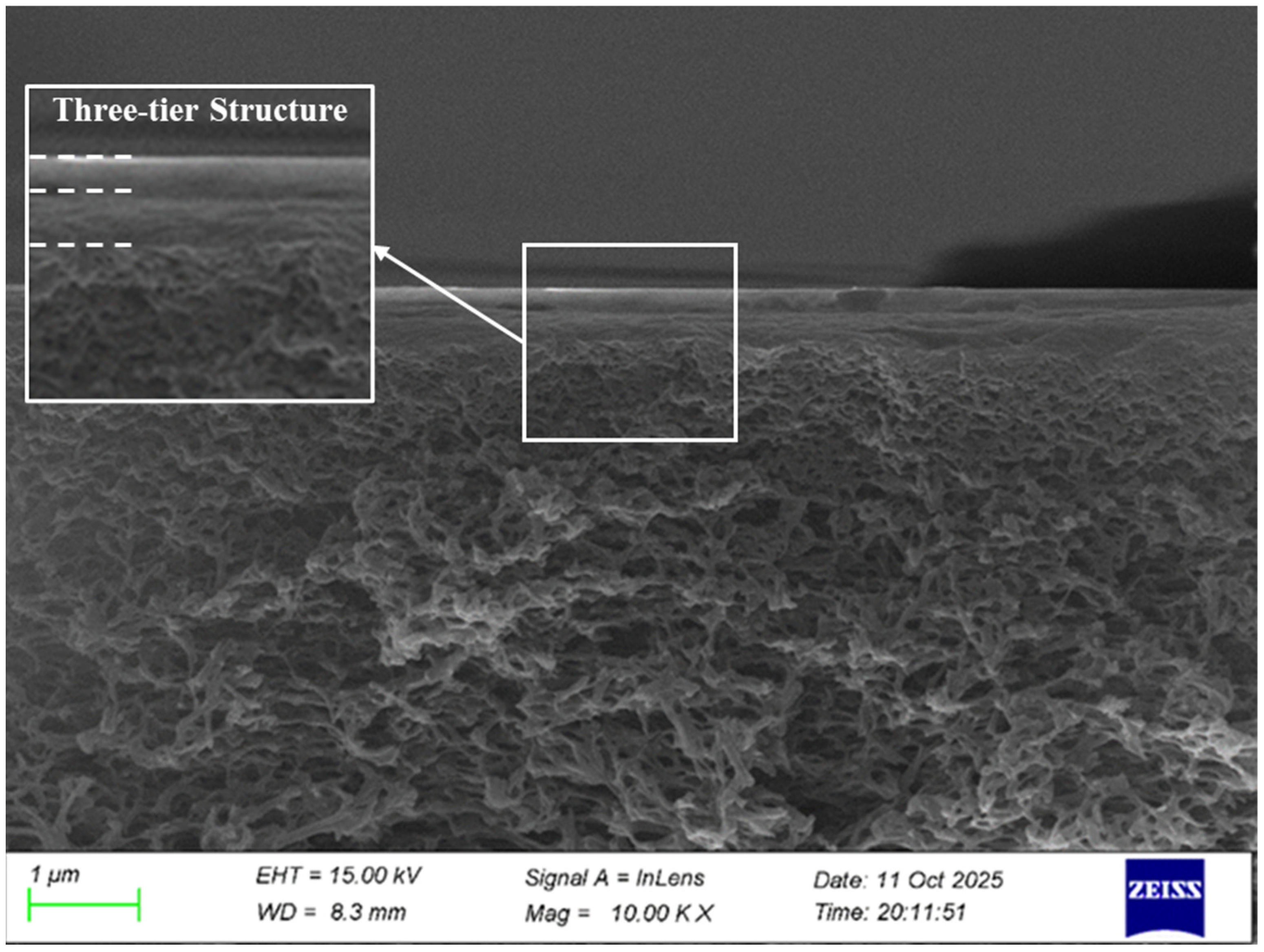
Figure 4 clearly presents this three-layer structure. The outer layer is the montmorillonite (MMT) layer, with a thickness of approximately 1 μm, and the pore sizes are mostly in the range of several tens to several hundred nanometers. It is relatively dense, and the pore sizes are smaller and more densely distributed. The middle layer is the chitosan (CS) layer, with pore sizes slightly larger than those of the MMT layer. The pore connectivity of each layer is good, and together they form the CS-MMT composite functional layer. Generally, it is believed that this composite layer not only avoids the blocking of the membrane pores by direct coverage of the functional layer but also, through precise layered structure design, will have better retention performance. The bottom layer is the PES base membrane, with a thickness occupying most of the cross-section, and the size is mostly in the range of several hundred nanometers to 1 μm. It is mostly an asymmetric porous structure, with uniform pore diameters, and an internal sponge-like or finger-like pore channel. This structure enables the PES base membrane to provide strong mechanical support and basic permeability, ensuring the physical toughness of the membrane and a permeation capacity far higher than that of ordinary water-permeable membranes, which is conducive to mass transfer.
In subsequent tests, through the analysis of subsequent performance test data, if it is shown that the collaborative removal efficiency of the two is better than the individual removal efficiency, it can be inferred that antibiotics and heavy metal ions have a mutual promoting effect in membrane removal. Then, by analyzing the particles retained on the membrane surface through nuclear magnetic resonance and spectrophotometry, to determine the molecular structure and chemical composition of the particles, and thereby comprehensively analyze the specific mechanism of PES-CS-MMT retaining antibiotics/heavy metal ions.
3.1.2. TG-DTG Analysis of the PES-CS-MMT Composite Membrane
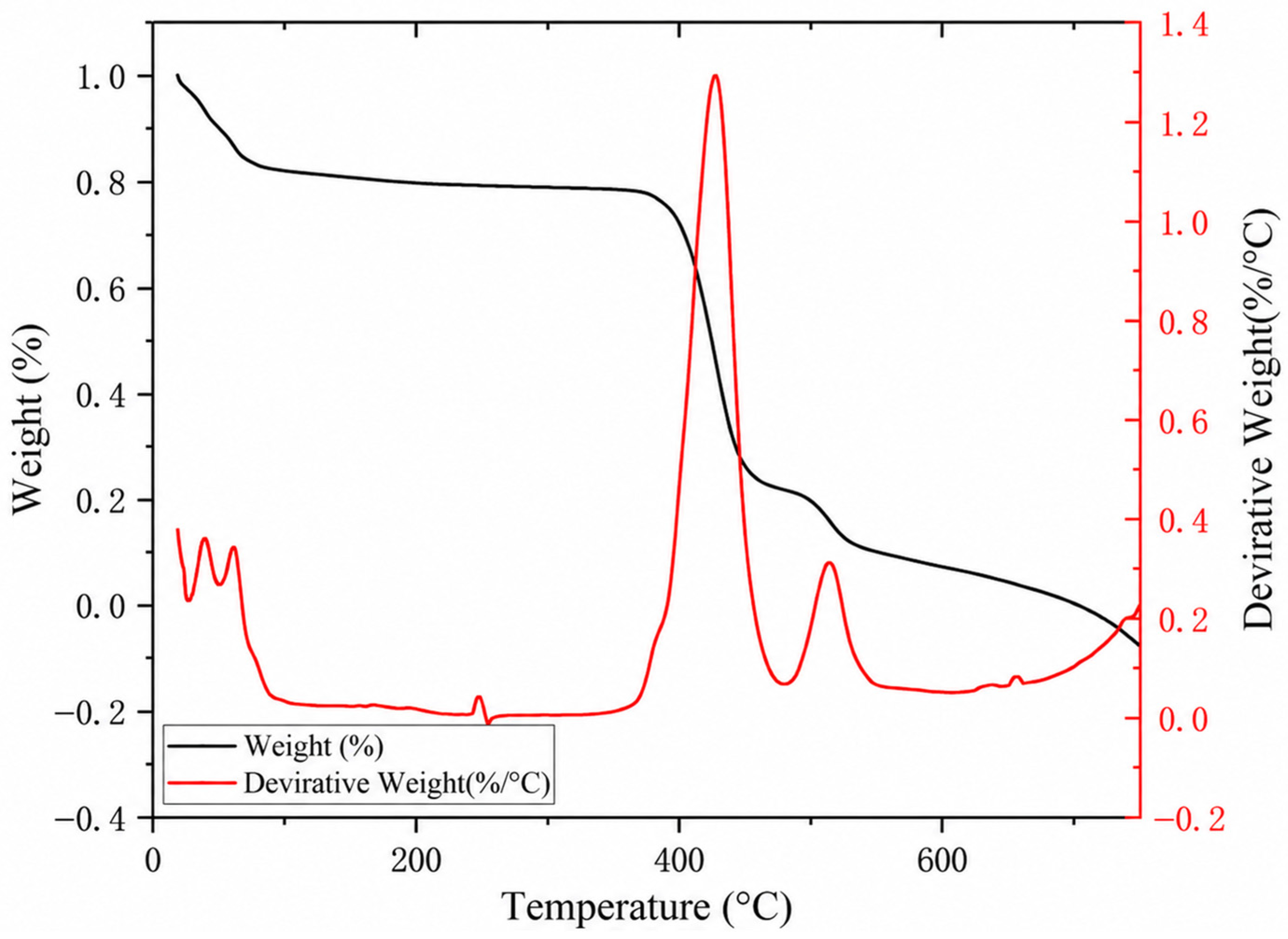
From the corresponding relationship between the mass retention curve and the weight loss rate curve in
Figure 5, it can be seen that the PES-CS-MMT composite membrane does not undergo instability in a single step during the heating process, but rather undergoes a continuous evolution from slow change to rapid decomposition and subsequent attenuation. From room temperature to approximately 120 °C, only a limited decrease in mass occurs, which is more consistent with the release of adsorbed water and a small amount of weakly bound small molecules. The curve in the subsequent wider temperature range is relatively flat, indicating that the main structure of the membrane body can maintain good integrity at medium and low temperatures. When the temperature approaches 372 °C, the weight loss begins to significantly accelerate, and a peak decomposition rate signal appears near 426.78 °C. A weaker subsequent thermal event can be identified at 513.65 °C, indicating that there is still further structural decomposition or residual organic phase evolution at high temperatures.
From the perspective of structural design, this thermal response feature can support the synergistic stabilizing mechanism of “surface rich in inorganic layers, internal bearing by polymer framework” formed by layer-by-layer self-assembly. Compared with the common earlier main degradation interval of chitosan, the key decomposition process of this composite membrane is overall shifted backward, indicating that the MMT enriched on the outer layer effectively inhibits heat transfer and the diffusion of decomposition products outward, while the aromatic sulphone main chain of PES continues to provide framework support, preventing the membrane body from losing structural constraints rapidly at lower temperatures. In conclusion, the MMT surface layer does not act alone but works together with the PES support network to enhance the interface constraint and overall stability under thermal disturbances, which is particularly important for scenarios involving hot water, chemical cleaning or regeneration treatment of antibiotic wastewater separation.
3.1.3. Comparative Analysis of FTIR Spectra of PES Membrane and PES-CS-MMT Composite Membrane
For the FTIR spectroscopic analysis,
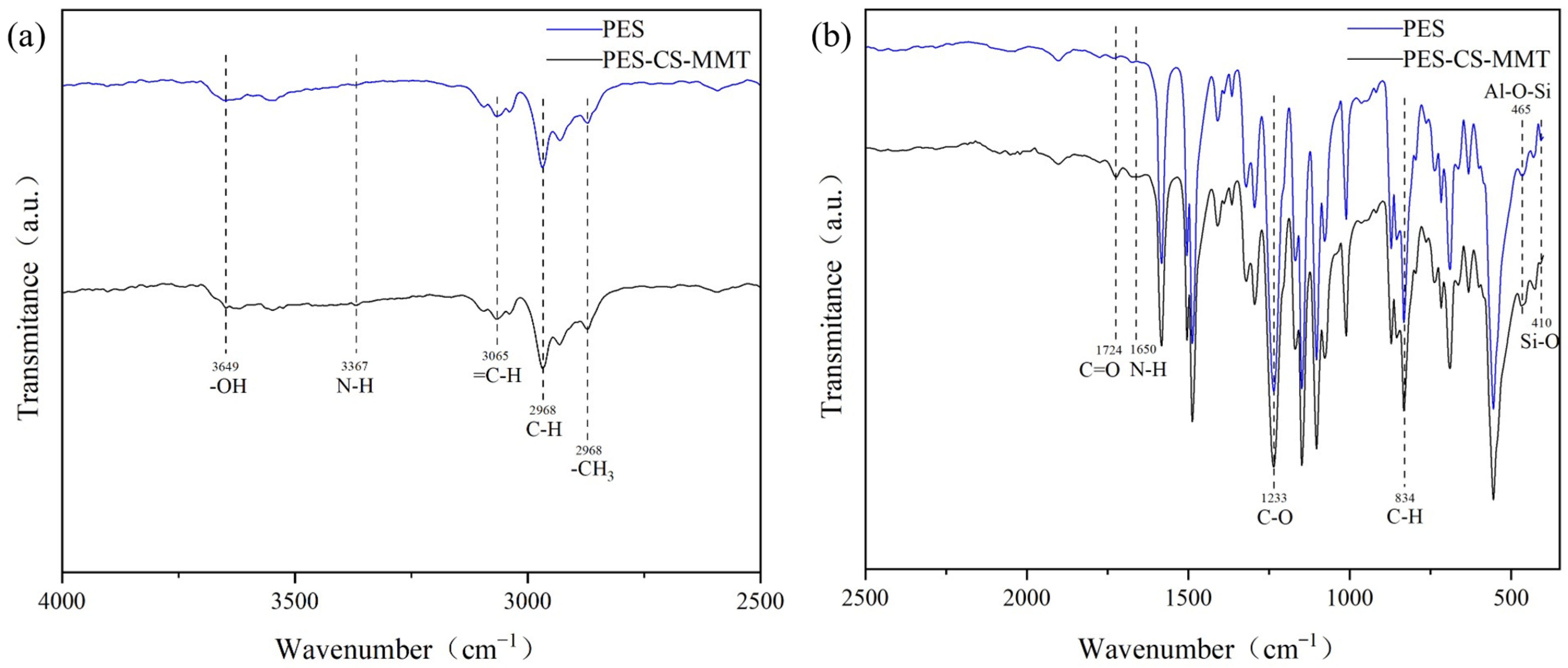
Figure 6 shows the FTIR spectra of the pristine PES membrane and the PES-CS-MMT composite membrane, and the spectra were divided into two regions for detailed interpretation.
- (1)
4000–2500 cm
−1 functional group region (
Figure 6a): The PES-CS-MMT composite membrane exhibits significantly enhanced absorption in this region compared to the pristine PES membrane. A broad and strong absorption band centered at 3432 cm
−1 is observed in the composite membrane, which is attributed to the stretching vibrations of O-H and N-H groups from chitosan. This confirms the successful introduction of hydroxyl and amino-containing chitosan onto the membrane surface. Additionally, a weak absorption peak at 2968 cm
−1 corresponding to aliphatic C-H stretching vibrations appears in the composite membrane, which is absent in the pure PES membrane, further verifying the presence of chitosan.
- (2)
2500–400 cm
−1 fingerprint region (
Figure 6b): Several new characteristic peaks are clearly visible in the composite membrane in this region. The peaks at 1650 cm
−1 and 1560 cm
−1 are assigned to the amide I and amide II vibrations of chitosan, respectively. The absorption peak at 1233 cm
−1 in the composite membrane shows a slight shift and intensity increase compared to the PES membrane, which is due to the superposition of C-O stretching vibrations from chitosan and the intrinsic sulfone group vibrations of PES. Most importantly, two distinct peaks at 465 cm
−1 and 410 cm
−1 appear in the composite membrane, which correspond to the Si-O-Si and Al-O-Si bending vibrations of the montmorillonite aluminosilicate skeleton. These peaks provide direct evidence for the successful incorporation of MMT into the composite membrane.
By combining the characteristic peaks from both spectral regions, it can be reliably concluded that chitosan and montmorillonite have been successfully assembled onto the PES base membrane through layer-by-layer self-assembly, and stable interfacial interactions (hydrogen bonds and electrostatic attractions) have been formed between the layers.
3.1.4. Contact Angle Analysis
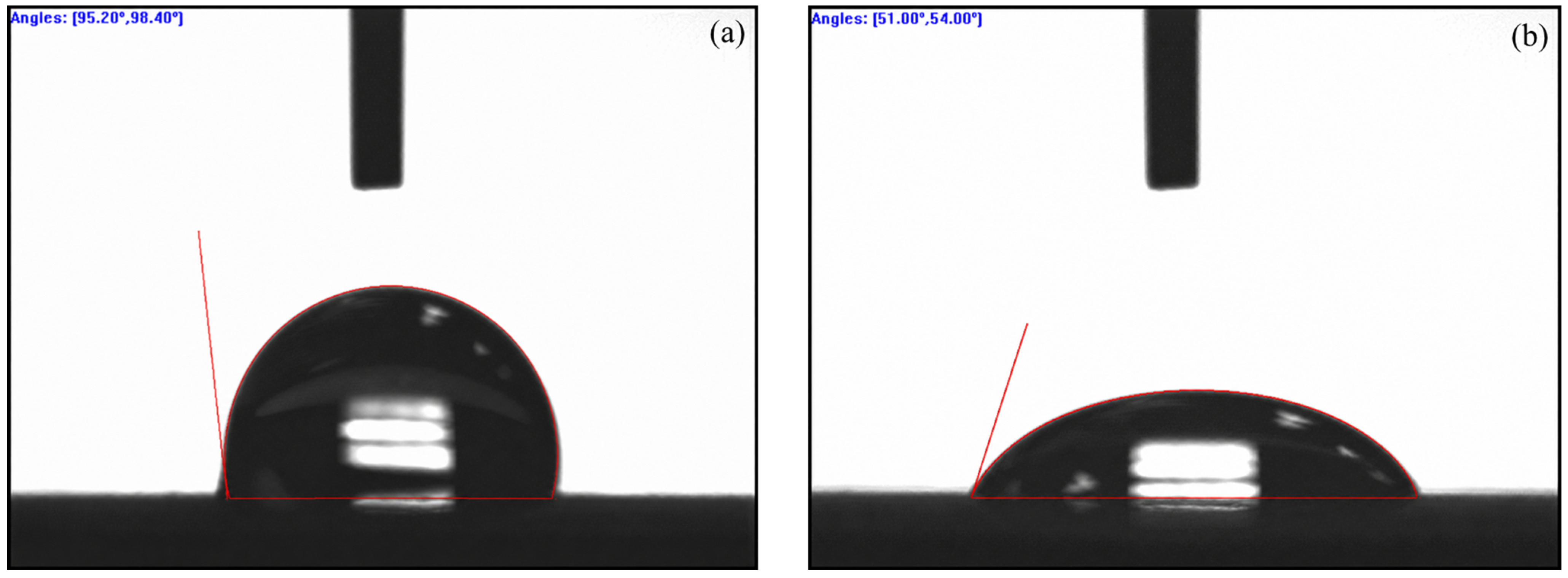
Surface wettability, as quantified by water contact angle, is a fundamental membrane property governing adsorption affinity for polar pollutants and anti-fouling behavior. The contact angle measurements for the pristine PES membrane and the PES-CS-MMT composite membrane are presented in
Figure 7.
For the pristine PES membrane (
Figure 7a), two parallel measurements yield contact angles of 95.20° and 98.40°, corresponding to an average value of 96.8 ± 1.6°. This high contact angle is consistent with the inherent hydrophobicity of commercial PES ultrafiltration membranes, which arises from the non-polar aromatic backbone of the PES polymer. The lack of polar functional groups on the membrane surface results in weak water affinity, forming a spherical water droplet with a large contact angle.
In sharp contrast, the PES-CS-MMT composite membrane (
Figure 7b) exhibits dramatically improved hydrophilicity, with measured contact angles of 51.00° and 54.00° and an average of 52.5 ± 1.5°. The significant reduction in contact angle (by ~44°) directly confirms the successful introduction of polar functional groups via layer-by-layer assembly of chitosan (CS) and montmorillonite (MMT). The abundant hydroxyl (-OH) and amino (-NH
2) groups in CS, combined with the silanol (Si-OH) and aluminol (Al-OH) groups on the outermost MMT layer, provide numerous sites for hydrogen bonding with water molecules, thereby enhancing surface wettability. Notably, the surface properties of the composite membrane are dominated by the outermost MMT layer, whose high density of hydrophilic hydroxyl groups is the primary contributor to the enhanced hydrophilicity.
This improved hydrophilicity is highly beneficial for the membrane’s practical application: it enhances the membrane’s affinity for polar antibiotic molecules, facilitating the adsorption process; simultaneously, it helps form a hydration layer on the membrane surface, mitigating irreversible fouling during cross-flow filtration, as supported by the flux stability results in subsequent sections.
3.1.5. AFM Analysis of the PES-CS-MMT Composite Membrane
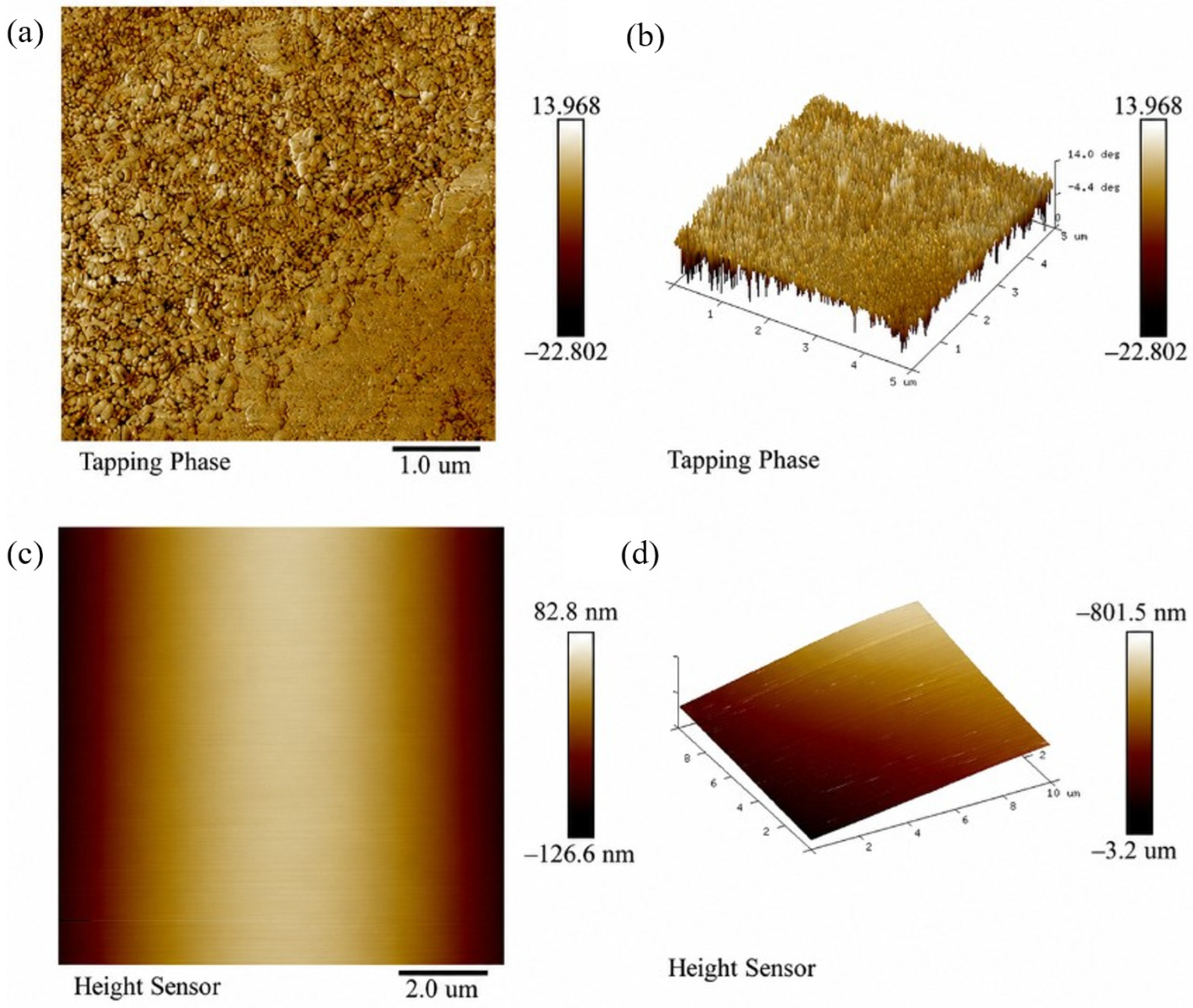
Figure 8 displays the AFM surface topography of both the pristine PES membrane and the PES-CS-MMT composite membrane. For the pristine PES membrane (
Figure 8c,d), height-mode imaging reveals an inherently smooth and uniform surface with minimal undulations. The arithmetic mean roughness (R
a) and root-mean-square roughness (R
q) are only 30.4 nm and 35.2 nm, respectively, consistent with the typical low roughness of commercial ultrafiltration PES membranes. No distinct protrusions or compositional heterogeneities are observed, confirming the homogeneous nature of the base membrane.
In sharp contrast, the PES-CS-MMT composite membrane (
Figure 8a,b) exhibits drastically altered surface characteristics under tapping-phase imaging (sensitive to surface composition and mechanical property variations). The average phase shift of 3.38° (within the 5 μm scan range) falls into the “extremely high phase heterogeneity” category, indicating high-frequency and significant variations in local material properties across the membrane surface. The phase fluctuation of 0.68° per micrometer further confirms the formation of a heterogeneous surface, directly arising from the successful deposition of chitosan and montmorillonite layers via layer-by-layer assembly. This pronounced phase variation corresponds to the dense, granular morphology observed in the 2D and 3D phase images, generating abundant three-dimensional adsorption sites. These structural features enable antibiotic molecules to embed into the surface gaps, while the uneven surface energy induced by local compositional differences further enhances interfacial adsorption forces.
Quantitative analysis of the phase signals shows the ratio of root-mean-square phase roughness (Rq = 96.9) to arithmetic mean phase roughness (Ra = 63.8) is 1.52, which slightly exceeds the typical range (1.2–1.5) for homogeneous surfaces. This deviation suggests the presence of isolated high/low phase domains on the composite membrane surface, corresponding to embedded MMT sheets and CS-rich regions in the coating layer.
Overall, the direct comparison between the pristine PES membrane and the composite membrane clearly demonstrates that layer-by-layer assembly of chitosan and montmorillonite introduces significant surface roughness and compositional heterogeneity. These structural changes provide a robust foundation for the enhanced adsorption performance of the composite membrane toward antibiotic contaminants.
Notably, the high surface roughness of the PES-CS-MMT composite membrane is a rational structural design rather than a potential fouling risk. The dense granular morphology and abundant adsorption sites are intentionally constructed via layer-by-layer assembly to enhance the membrane’s affinity for antibiotic molecules. Meanwhile, long-term filtration tests confirmed that the membrane exhibits excellent anti-fouling performance, with a flux attenuation rate of only 12.5% for diclofenac and a flux recovery rate exceeding 92% after five adsorption-regeneration cycles. The hydrophilic CS/MMT gradient layer also effectively reduces irreversible fouling. Furthermore, the significant phase fluctuation observed in AFM images stems from the gradient distribution of CS and MMT components (MMT-rich surface and CS-rich interlayer), rather than poor assembly uniformity. The uniform layered cross-section in SEM images and consistent characteristic peaks in FTIR spectra further verify the homogeneous deposition of the CS/MMT coating across the entire membrane surface. The Rq/Ra ratio of 1.52 also confirms a uniform rough surface without localized assembly defects, demonstrating the reliability of the layer-by-layer self-assembly strategy.
3.1.6. Tensile Analysis of the PES-CS-MMT Composite Membrane
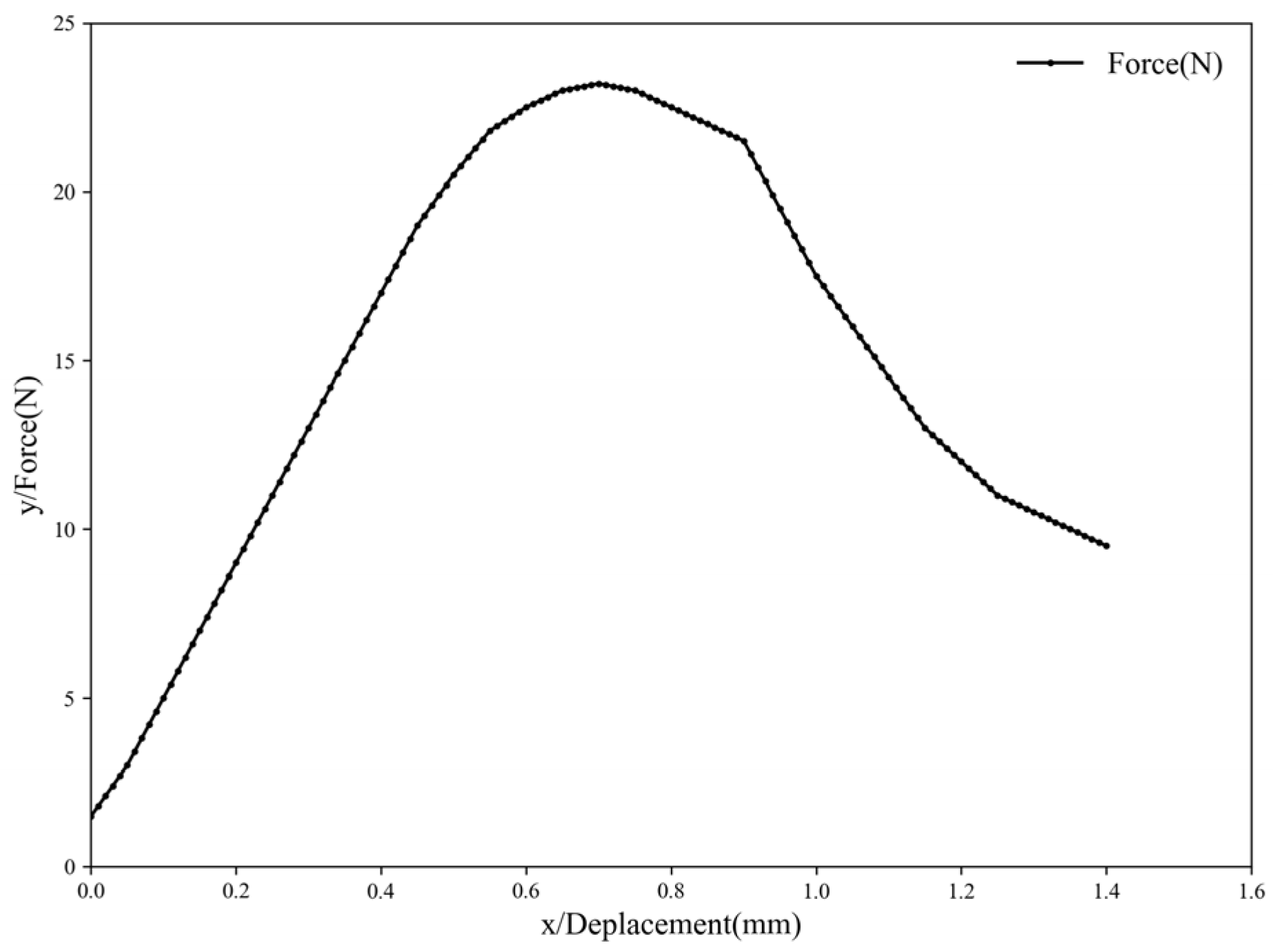
From the force-displacement curve of the PES-CS-MMT composite membrane shown in
Figure 9. It can be observed that the curve generally exhibits a typical “first increasing, then decreasing” nonlinear response characteristic. During the process where the displacement increases from 0 to approximately 0.7 mm, the load continuously rises from approximately 1–2 N to the peak value, which is roughly around 23 N. Subsequently, there is a slight drop within the range of approximately 0.8–0.9 mm, followed by a more obvious downward stage, and the load drops to around 10 N at approximately 1.4 mm. Based on this change trend. It can be determined that the composite membrane has a certain bearing capacity and deformation coordination ability in the initial loading stage. While the continuous load reduction after the peak indicates that the sample has undergone structural damage, interface instability or local failure during the continued displacement process, and gradually lost its bearing capacity. This composite membrane exhibits a clear nonlinear loading-increased-load-peak-load-after-peak behavior during the mechanical loading process, indicating that it still has a certain deformation-bearing process after reaching the maximum bearing capacity. Overall, this membrane material simultaneously shows good elastic recovery performance and certain plastic deformation ability, which can adapt to the filtration conditions in the organic wastewater treatment process and provide necessary mechanical basis for the subsequent optimization of the base membrane structure and the regulation of the surface coating components.
3.1.7. Zeta Potential Analysis
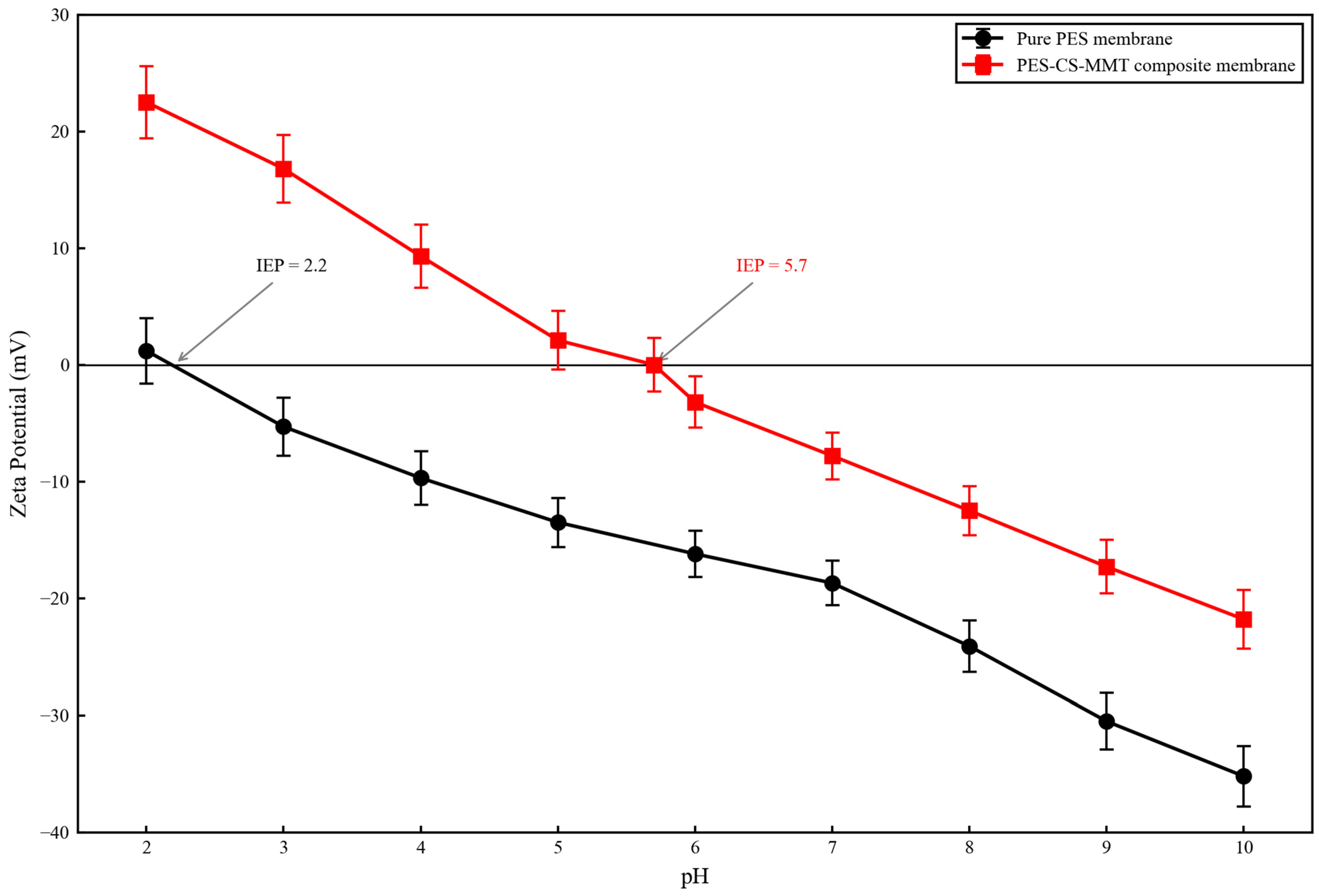
The surface charge characteristics of the pristine PES membrane and as-prepared PES-CS-MMT composite membrane as a function of pH (2.0–10.0) are shown in
Figure 10. All data points are presented as mean ± standard deviation of triplicate independent measurements.
As clearly shown in
Figure 10, the pristine PES membrane exhibited a weak negative charge over almost the entire tested pH range, with an isoelectric point (IEP) of 2.2. At pH 2.0, the zeta potential of the pristine PES membrane was only +1.2 ± 1.5 mV, and it rapidly became negative as pH increased. At the experimental pH of 7.0, the zeta potential of the pristine PES membrane was −19.2 ± 1.8 mV, and it further decreased to −35.2 ± 2.3 mV at pH 10.0. This inherent negative charge originates from the preferential adsorption of OH
− ions on the hydrophobic PES polymer surface and residual sulfonic acid groups introduced during membrane manufacturing.
In sharp contrast, the PES-CS-MMT composite membrane showed a dramatically shifted zeta potential curve, with an IEP of 5.7. This significant increase in IEP (ΔIEP = 3.5) provides direct and conclusive evidence for the successful introduction of positively charged chitosan (CS) onto the membrane surface. The abundant primary amino groups (-NH2) in CS are protonated to form -NH3+ under acidic conditions, effectively neutralizing the negative charge of the PES base membrane. At pH 2.0, the composite membrane exhibited a strong positive charge of +22.5 ± 2.1 mV, which is 18 times higher than that of the pristine PES membrane at the same pH. As pH increased, the zeta potential of the composite membrane decreased linearly, crossing zero at pH 5.7. At the experimental pH of 7.0, the composite membrane carried a weak negative charge of −8.3 ± 1.2 mV, which is significantly less negative than that of the pristine PES membrane.
The zeta potential results also indirectly confirm the gradient distribution of components in the composite membrane:
- (1)
The outermost layer is dominated by negatively charged montmorillonite (MMT) nanosheets, which is consistent with the weak negative charge observed at pH > 5.7.
- (2)
The significantly higher IEP compared to pure MMT (IEP ≈ 2.5) indicates that the positively charged CS intermediate layer contributes substantially to the overall surface charge.
- (3)
A continuous charge gradient is formed from the negatively charged PES support layer (IEP = 2.2) to the positively charged CS intermediate layer and finally to the weakly negatively charged MMT surface layer.
Combined with the pKa values of the four target antibiotics, the electrostatic interaction contributions at the experimental pH of 7.0 can be quantitatively analyzed:
- (1)
Diclofenac (DCF, pKa = 4.15): Fully deprotonated and negatively charged at pH 7.0. Despite weak electrostatic repulsion with the negatively charged membrane surface (−8.3 mV), it exhibited the highest adsorption capacity, indicating that hydrogen bonding and hydrophobic interactions were the dominant forces for DCF adsorption.
- (2)
Gatifloxacin (GAT, pKa1 = 5.8, pKa2 = 9.2) and Ciprofloxacin (CIP, pKa1 = 6.1, pKa2 = 8.7): Existed as zwitterions at pH 7.0, with their positively charged piperazine groups forming electrostatic attractions with the negatively charged membrane surface. This electrostatic attraction synergistically enhanced adsorption with hydrogen bonding, resulting in high adsorption capacities for both antibiotics.
- (3)
Ofloxacin (OFL, pKa1 = 5.9, pKa2 = 9.1): Also existed as zwitterions at pH 7.0, but the methyl substitution on the piperazine ring reduced the charge density of the positively charged group, leading to weaker electrostatic interactions. This is one of the key reasons for the lowest adsorption capacity of OFL.
3.1.8. Post-Adsorption Characterization of the PES-CS-MMT Composite Membrane
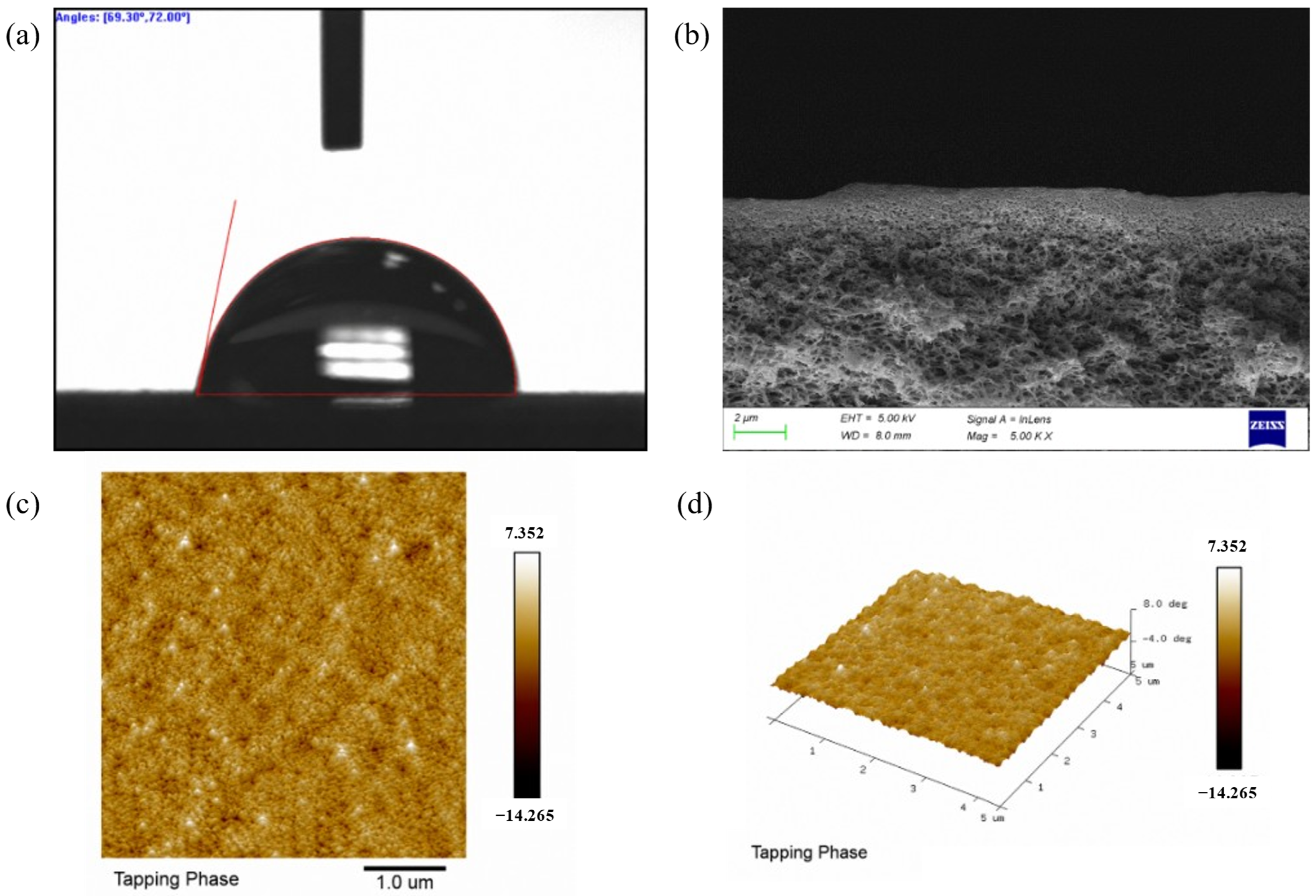
To further clarify the adsorption mechanism and evaluate the structural stability of the PES-CS-MMT composite membrane after antibiotic adsorption, comprehensive post-adsorption characterizations were performed, as shown in
Figure 11, including water contact angle measurement, cross-sectional scanning electron microscopy (SEM), and atomic force microscopy (AFM) tapping-phase imaging.
First, the change in surface wettability after adsorption was evaluated via water contact angle measurement, as shown in
Figure 11a. After saturation adsorption of mixed antibiotics, two parallel contact angle measurements yielded values of 69.30° and 72.00°, with an average of 70.65 ± 1.35°. Compared with the pre-adsorption contact angle of the composite membrane (52.5 ± 1.5°), the contact angle increased significantly by approximately 18°. This increase directly confirms the successful adsorption of antibiotics on the membrane surface: the abundant hydrophilic functional groups (-OH, -NH
2, and Si-OH) on the membrane surface were partially covered by adsorbed antibiotic molecules, while the relatively hydrophobic aromatic and fluorinated structures of the antibiotics were exposed to the aqueous phase, reducing the surface hydrophilicity. This change in wettability provides direct evidence that antibiotics are adsorbed onto the membrane surface rather than simply passing through the membrane.
The structural integrity of the membrane after adsorption was further verified by cross-sectional SEM observation, as shown in
Figure 11b. The cross-sectional image (20,000× magnification) reveals that the porous support structure and the gradient CS/MMT coating layer remain completely intact after adsorption. No obvious pore blockage, coating delamination, or structural collapse is observed, even at high magnification. This result indicates that the adsorption process occurs primarily on the membrane surface and within the coating layer, without destroying the membrane’s inherent mass transfer channels. The stable cross-sectional morphology also verifies the excellent structural stability of the gradient CS/MMT coating during the adsorption process, which is critical for maintaining long-term filtration performance.
Finally, the surface morphological and compositional uniformity of the membrane after adsorption was characterized by AFM tapping-phase imaging, as shown in
Figure 11c,d. Quantitative analysis of the post-adsorption phase signals shows that the arithmetic mean roughness (R
a) and root-mean-square roughness (R
q) are 45.2 and 66.3, respectively. Compared with the pristine PES membrane (R
a = 30.4, R
q = 35.2), the post-adsorption membrane still exhibits a significantly rougher surface. In contrast, it is obviously smoother than the PES-CS-MMT composite membrane before adsorption (R
a = 63.8, R
q = 96.9). The ratio of R
q/R
a after adsorption is approximately 1.47, which falls within the typical range (1.2–1.5) for homogeneous surfaces. The tapping-phase images show a uniform, dense granular morphology across the entire 5 μm × 5 μm scan area. The phase contrast range (−14.265° to 7.352°) remains consistent with that of the pre-adsorption composite membrane, indicating that the gradient distribution of CS and MMT in the coating layer is not disrupted after adsorption. The originally heterogeneous and highly rough surface of the composite membrane becomes more uniform, which is attributed to the even filling of surface protrusions and adsorption sites by antibiotic molecules. The tapping-phase images reveal a homogeneous granular texture across the entire scan area, confirming that the gradient distribution of CS and MMT layers remains intact after adsorption. No obvious structural defects or local damage are observed, verifying the excellent structural stability of the composite membrane. These results further confirm that antibiotics are uniformly adsorbed on the membrane surface, consistent with the proposed monolayer adsorption mechanism.
Collectively, these post-adsorption characterizations provide multi-faceted evidence for the adsorption mechanism and membrane performance. The increase in contact angle confirms antibiotic adsorption, the intact cross-sectional structure verifies no irreversible fouling or structural damage, and the uniform AFM morphology supports the stability of the gradient coating and the uniformity of the adsorption process. These results collectively demonstrate that the PES-CS-MMT composite membrane maintains excellent structural and functional stability after adsorption, further validating its potential for practical pharmaceutical wastewater treatment.
3.2. Performance Testing
3.2.1. Basic Permeability and Steady-State Rejection Performance
The pure water permeability of the pristine PES membrane and the PES-CS-MMT composite membrane were measured as 128.6 ± 5.2 and 87.3 ± 3.8 , respectively. The 32% reduction in permeability is attributed to the deposition of CS-MMT functional layers on the membrane surface, which partially narrows the membrane pores.
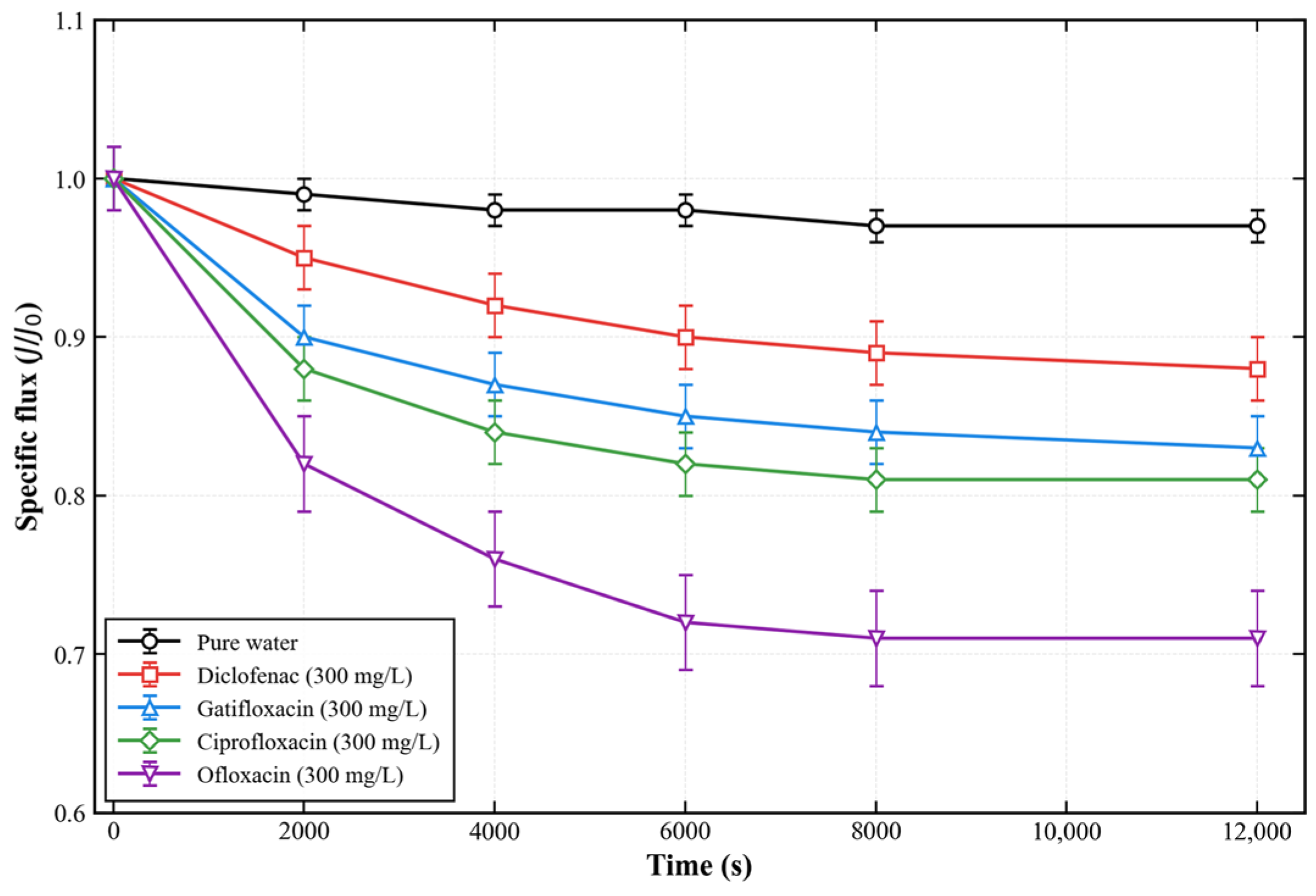
Figure 12 shows the time-resolved specific flux (J/J
0) of pure water and different antibiotic solutions (300 mg/L) during 12,000 s of continuous filtration. The pure water flux remained stable at ~98% of the initial value, indicating excellent structural stability of the membrane. For antibiotic solutions, the flux attenuation rates (calculated as the percentage reduction in steady-state flux relative to the initial pure water flux) followed the order: ofloxacin (28.7 ± 2.1%) > ciprofloxacin (19.4 ± 1.5%) > gatifloxacin (17.2 ± 1.3%) > diclofenac (12.5 ± 0.9%), which is consistent with their adsorption kinetics and fouling propensity.
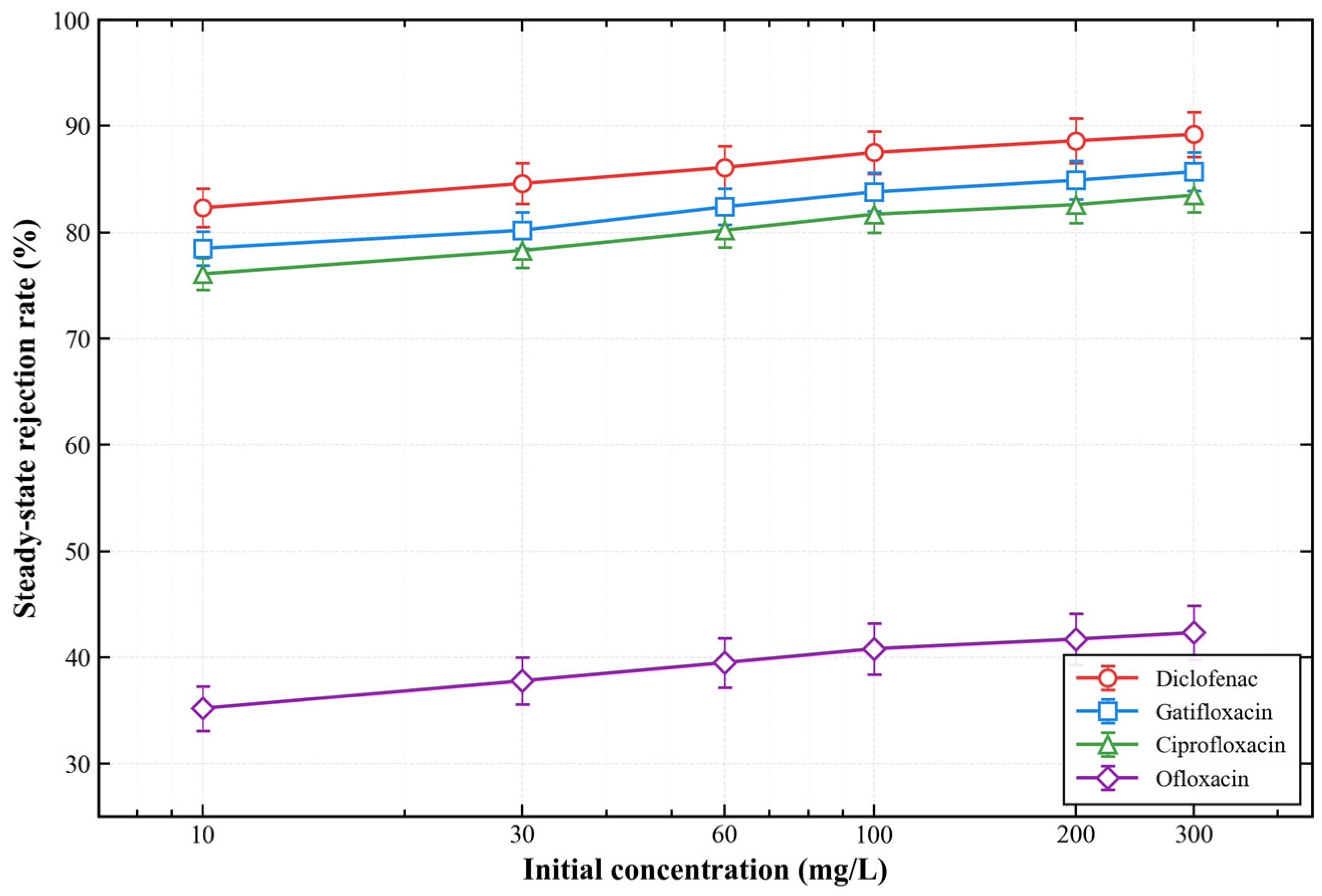
Figure 13 presents the steady-state rejection rates of the four antibiotics as a function of initial feed concentration. The rejection rates increased slightly with increasing concentration for all compounds. At 300 mg/L, the steady-state rejection rates were 89.2 ± 2.1% (diclofenac), 85.7 ± 1.8% (gatifloxacin), 83.5 ± 1.6% (ciprofloxacin), and 42.3 ± 2.5% (ofloxacin), respectively. The significantly lower rejection rate for ofloxacin is mainly due to its smaller molecular size and weaker electrostatic interaction with the membrane surface.
3.2.2. The Removal Performance of Gatifloxacin by the PES-CS-MMT Composite Membrane
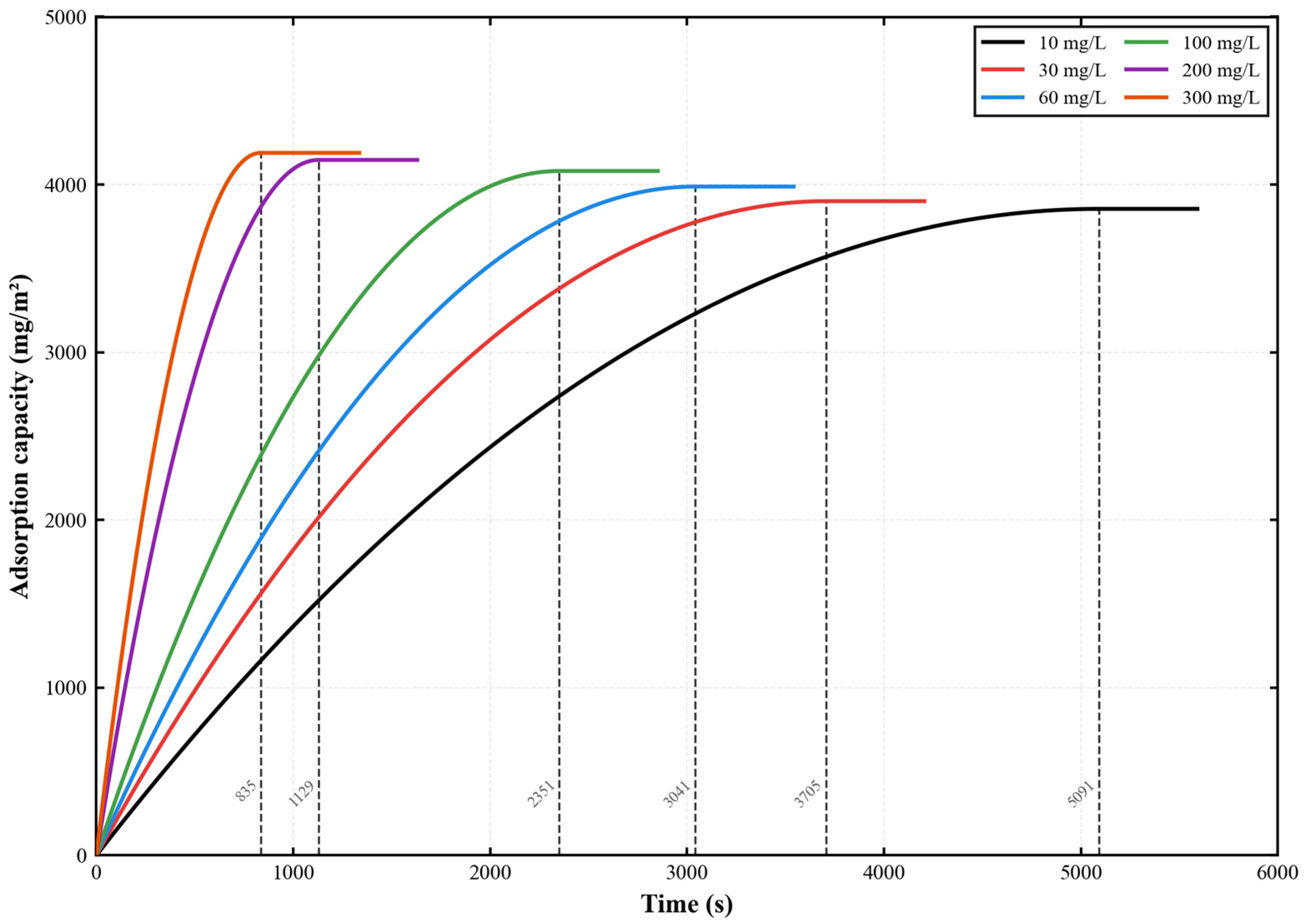
The adsorption kinetics of gatifloxacin (GAT) onto the PES-CS-MMT composite membrane are illustrated in
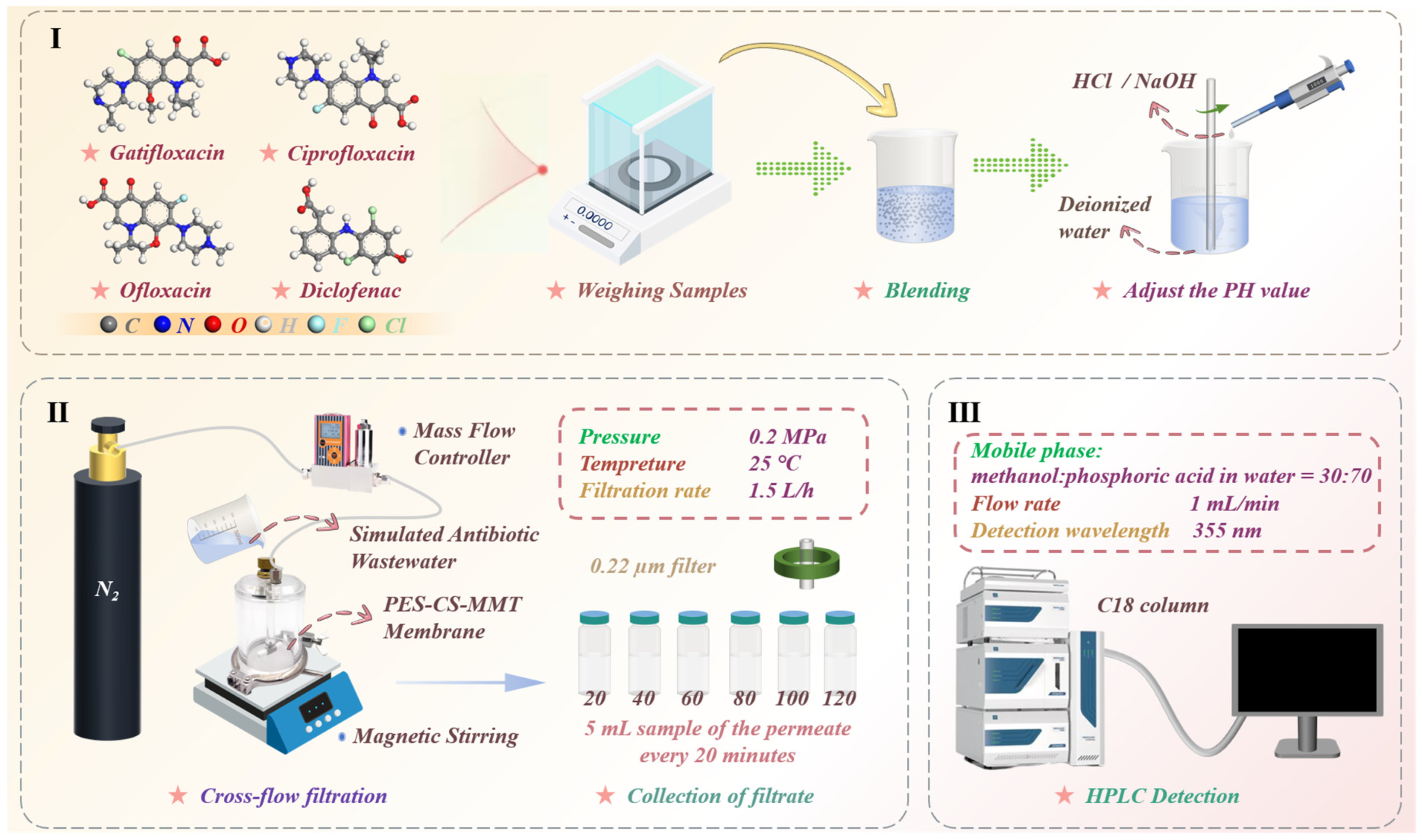
Figure 14. In a standard cross-flow filtration system operated at 0.2 MPa, 25 °C, and a cross-flow velocity of 1.5 L/h, the temporal variation in dynamic adsorption capacity of gatifloxacin on the membrane was measured across an initial concentration range of 10–300 mg/L. This work aimed to clarify the modulating effect of initial concentration on the adsorption kinetics of fluoroquinolone antibiotics on gradient composite membranes and quantitatively characterize the intrinsic adsorption performance of the as-prepared PES-CS-MMT membrane. The results demonstrated that gatifloxacin adsorption followed a typical rapid adsorption-slow saturation profile. Increasing the initial concentration markedly shortened the adsorption equilibrium time (from 5091 s to 835 s) and moderately elevated the equilibrium adsorption capacity from 3855 mg·m
−2 to 4189 mg·m
−2. These findings verify that the PES-CS-MMT composite membrane exhibits stable adsorption capability toward gatifloxacin over a wide concentration range, and the abundant active sites derived from its gradient structure underpin the efficient adsorption performance.
Further analysis shows that in solutions with higher concentrations, the initial adsorption rate of the adsorption process is more obvious, indicating that the membrane has a stronger adsorption capacity at higher concentrations and can quickly adsorb the gatifloxacin molecules in the solution. This may be due to the fact that at higher concentrations, there are more active sites on the membrane surface to contact the gatifloxacin molecules, so the adsorption rate is higher. At lower concentrations, the initial adsorption rate is slower, but the final equilibrium adsorption amount is smaller, indicating that the membrane surface has reached a saturated state, and the adsorption efficiency of the membrane is higher under low concentration conditions.
Furthermore, the adsorption curves at all concentrations eventually tend to stabilize, indicating that the adsorption process of this composite membrane is limited and can reach equilibrium within a certain period of time. The initial solution with a higher concentration enables more gatifloxacin molecules to be adsorbed on the membrane surface, resulting in a higher equilibrium adsorption amount. This demonstrates the large adsorption capacity and excellent pollutant removal ability of the PES-CS-MMT composite membrane. Additionally, the adsorption performance of the membrane may also be influenced by factors such as membrane pore structure, surface characteristics, and the interaction with gatifloxacin molecules. These characteristics enable the membrane to exhibit excellent adsorption performance at different concentrations.
3.2.3. The Removal Performance of Ciprofloxacin by the PES-CS-MMT Composite Membrane
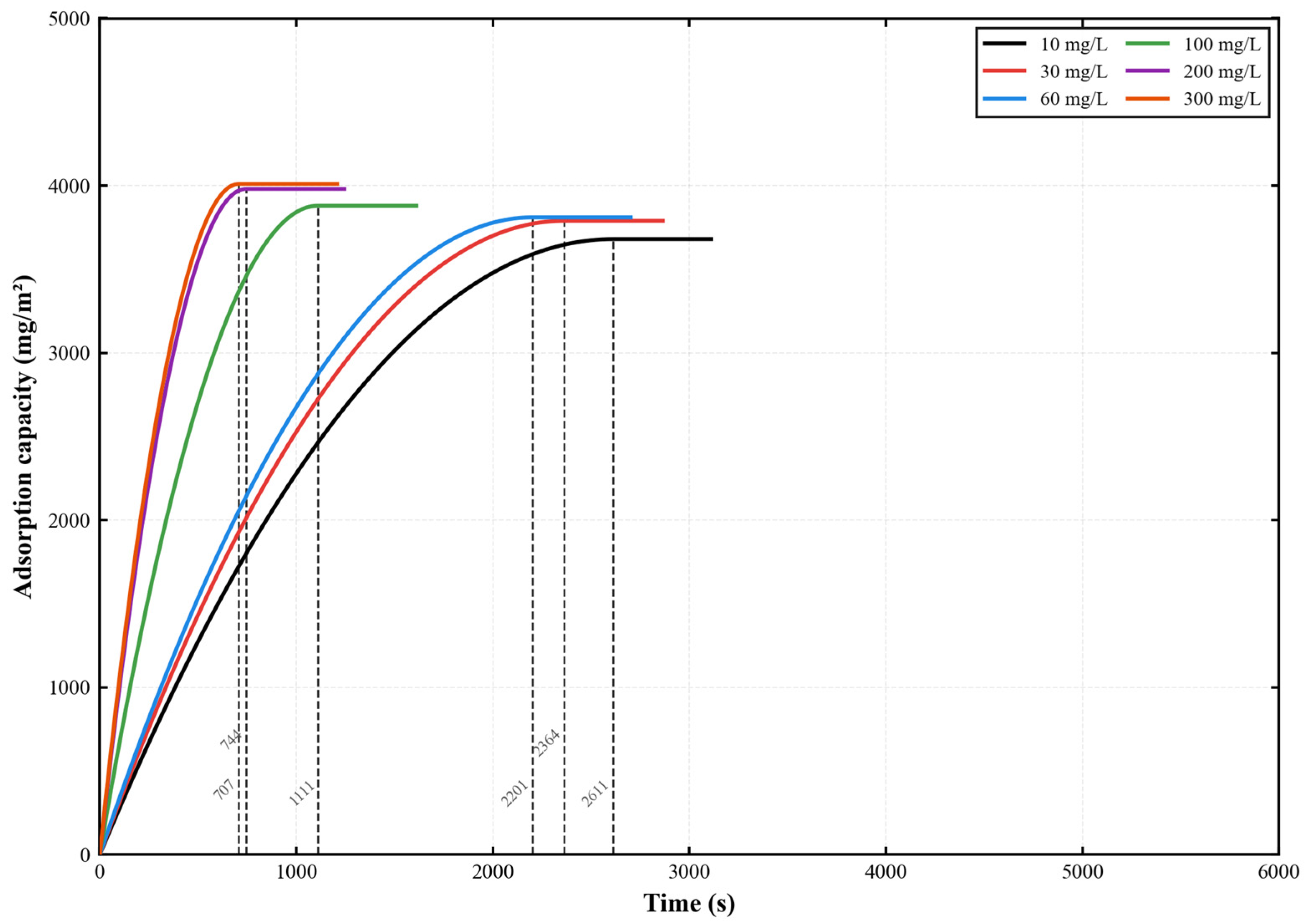
The adsorption kinetics of ciprofloxacin (CIP) onto the PES-CS-MMT composite membrane are illustrated in
Figure 15. Under experimental conditions identical to those for gatifloxacin, the dynamic adsorption behavior of ciprofloxacin on the PES-CS-MMT composite membrane was systematically characterized over an initial concentration range of 10–300 mg/L. This study aimed to comparatively analyze the common adsorption features of fluoroquinolone antibiotics with different molecular structures and validate the broad-spectrum adsorption suitability of the composite membrane for such pollutants. The results showed that the adsorption kinetics of ciprofloxacin were highly consistent with those of gatifloxacin. As the initial concentration increased from 10 mg/L to 300 mg/L, the adsorption equilibrium time decreased from 2611 s to 707 s, while the equilibrium adsorption capacity increased from 3680 mg·m
−2 to 4010 mg·m
−2. These findings indicate that the composite membrane possesses similar interfacial interaction mechanisms toward fluoroquinolone antibiotics bearing carboxyl and fluorine substituents, providing experimental support for its practical application in the treatment of multi-component fluoroquinolone-containing wastewater.
In conclusion, the PES-CS-MMT composite membrane exhibits excellent adsorption performance at different concentrations. Particularly at high concentrations, it can rapidly adsorb and achieve a high equilibrium adsorption capacity. At low concentrations, the membrane material can still effectively remove ciprofloxacin, demonstrating high adaptability. Therefore, this composite membrane has broad application potential in actual water treatment and pollutant removal processes.
3.2.4. The Removal Performance of Ofloxacin by the PES-CS-MMT Composite Membrane
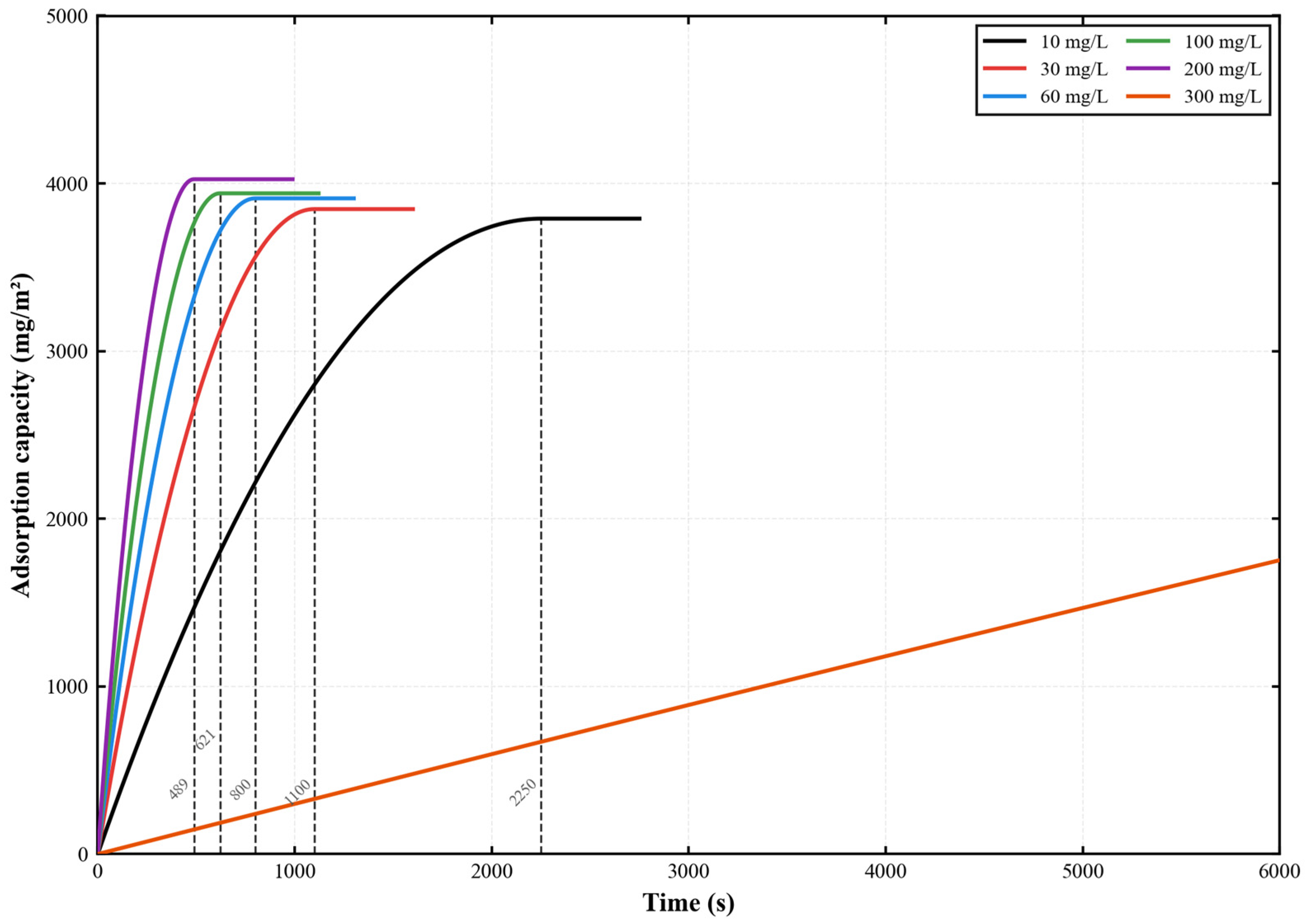
The adsorption kinetics of ofloxacin (OFL) onto the PES-CS-MMT composite membrane are illustrated in
Figure 16. Under standard experimental conditions of 0.2 MPa, 25 °C and a cross-flow velocity of 1.5 L/h, the dynamic adsorption process of ofloxacin on the PES-CS-MMT composite membrane was investigated over an initial concentration range of 10–300 mg/L. This study aimed to reveal the influence of molecular structural differences on adsorption behavior and clarify the adsorption selectivity mechanism of the composite membrane toward different antibiotics. The results demonstrated that the adsorption behavior of ofloxacin differed significantly from that of gatifloxacin and ciprofloxacin: the adsorption equilibrium time at low concentrations was notably shorter than that of the other two antibiotics, whereas no distinct adsorption plateau was observed within the 6000 s testing period at a high concentration of 300 mg/L, with an adsorption capacity of only 1753 mg·m
−2. These findings confirm that the spatial configuration, charge distribution and functional group characteristics of antibiotic molecules are key factors determining their adsorption performance, providing a theoretical basis for the targeted functional modification of the composite membrane.
Further analysis reveals that the adsorption curves at all concentrations eventually stabilize within the tested period except for 300 mg/L. This indicates that the PES-CS-MMT composite membrane can reach adsorption equilibrium within a certain period during the adsorption of ofloxacin. At higher concentrations, the adsorption amount is larger, indicating that the composite membrane has a strong adsorption capacity and can handle high concentrations of pollutants. At lower concentrations, although the adsorption amount is smaller, the membrane can still remove ofloxacin relatively efficiently, indicating that the composite membrane shows good removal performance in different concentration ranges. From the graph, it can be seen that the adsorption rate is slower at lower concentrations, but the final equilibrium adsorption amount is relatively lower, which may indicate that the adsorption sites on the membrane are filled more quickly at lower concentrations. In high concentrations, the adsorption process is more rapid, and the final equilibrium adsorption amount is larger, demonstrating the excellent adsorption performance of this membrane material under higher concentration conditions. Especially at a concentration of 300 mg/L, the membrane’s adsorption capacity significantly increases, reaching the highest adsorption amount, proving its potential in removing high-concentration pollutants.
3.2.5. The Removal Performance of Diclofenac by the PES-CS-MMT Composite Membrane
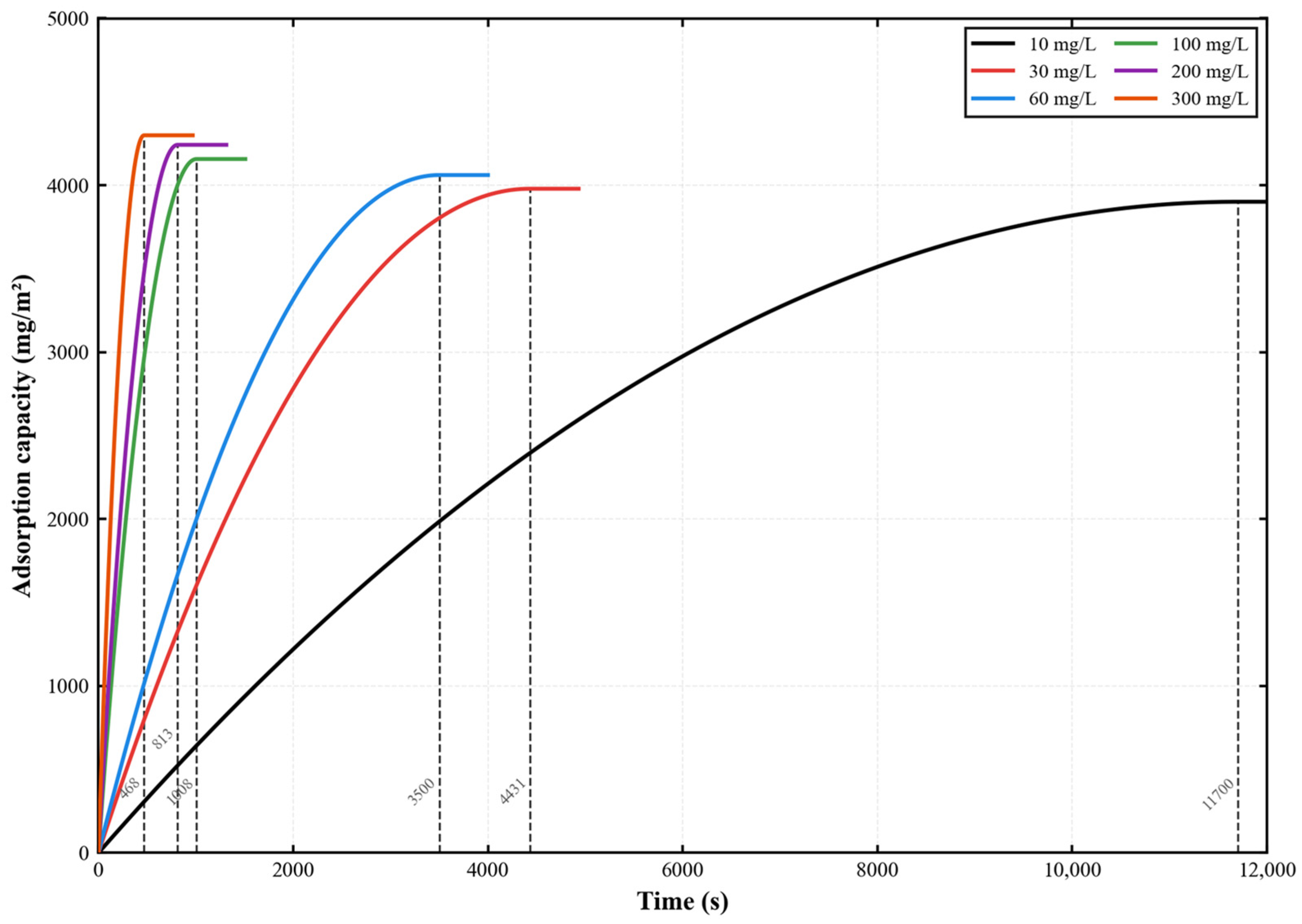
The adsorption kinetics of diclofenac (DCF) onto the PES-CS-MMT composite membrane are illustrated in
Figure 17. With the testing duration extended to 12,000 s, the dynamic adsorption kinetic characteristics of diclofenac on the PES-CS-MMT composite membrane were comprehensively characterized over an initial concentration range of 10–300 mg/L under the conditions of 0.2 MPa, 25 °C and a cross-flow velocity of 1.5 L/h. This study aimed to evaluate the adsorption performance of the composite membrane toward non-steroidal anti-inflammatory drug (NSAID) pharmaceutical contaminants and expand its application scope in the treatment of broad-spectrum pharmaceutical wastewater. The results showed that as the initial concentration of diclofenac increased from 10 mg/L to 300 mg/L, the adsorption equilibrium time was drastically shortened from 11,700 s to 468 s, and the equilibrium adsorption capacity increased from 3901 mg·m
−2 to 4299 mg·m
−2. Moreover, the adsorption curves at all concentrations exhibited a typical pseudo-second-order kinetic profile characteristic of chemisorption, consistent with the D-R isotherm results indicating chemical adsorption as the rate-controlling step. These findings confirm that the composite membrane exhibits excellent rapid adsorption capacity for diclofenac, and its gradient structure enables the efficient removal of different types of pharmaceutical contaminants.
The PES-CS-MMT composite membrane maintained a nearly constant terminal cumulative processing volume over a wide range of feed concentrations, indicating that its structure has certain operational stability under different diclofenac loads. However, the time to reach the plateau varies greatly, suggesting that membrane internal mass transfer, interface interactions, and process resistance have significant influences on the system behavior. For the gradient multilayer structure formed by layer-by-layer self-assembly, this result usually implies that the membrane surface and interlayer channels are not dominated by a “single fast adsorption” mechanism, but rather a dynamic process controlled by adsorption/sieving/diffusion. On one hand, the hydrophilic and layered structures introduced by CS and MMT help maintain the processing process. On the other hand, the significant changes in the slope before reaching the plateau and the stable time at different concentrations indicate that the strength of the interaction between the pollutant and the membrane, the state of boundary layer mass transfer, and the potential concentration polarization or formation rate of the pollution layer are not consistent.
3.2.6. Comparative Removal Performance of Different Antibiotics
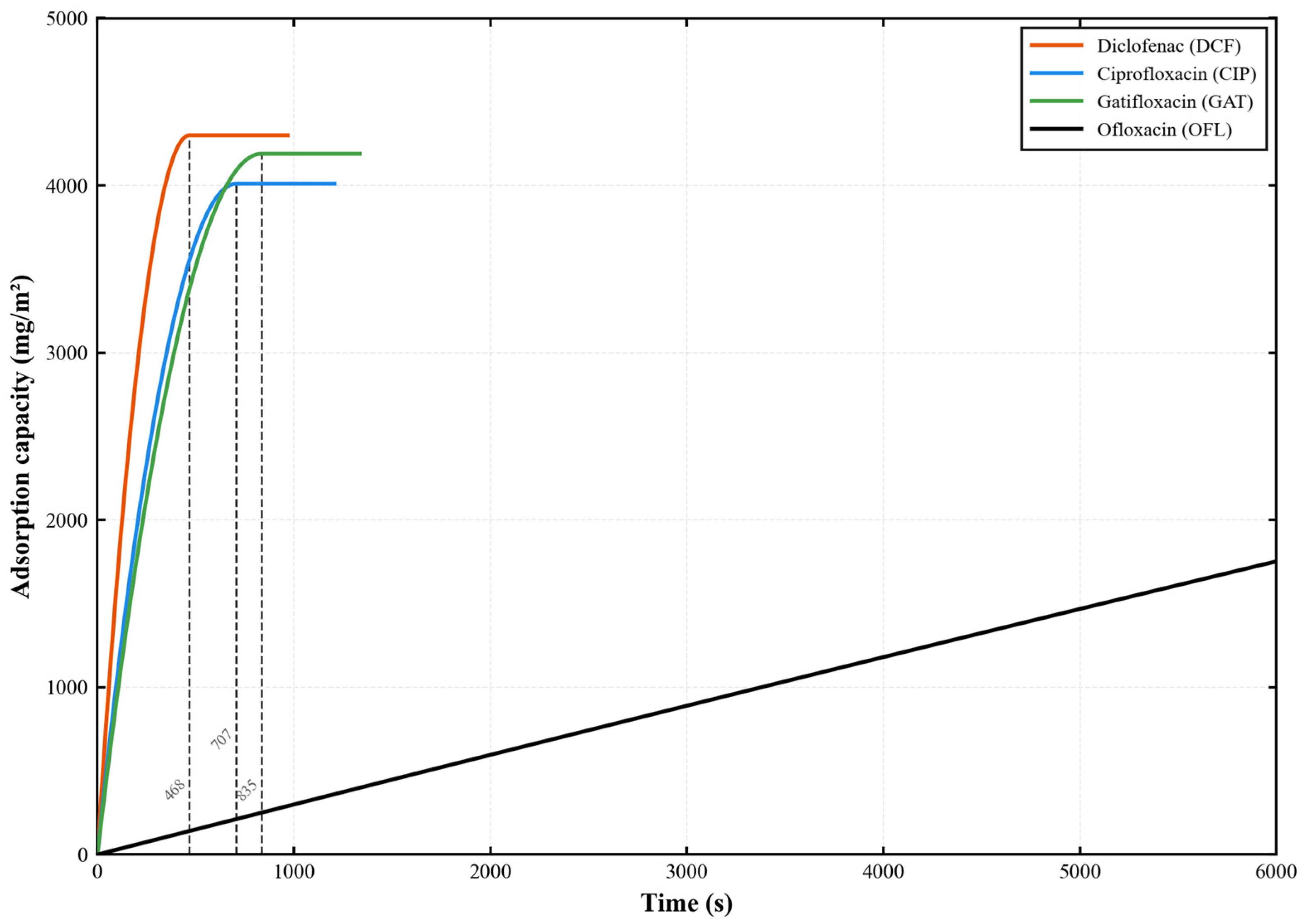
The comparative adsorption kinetics of the four antibiotics onto the PES-CS-MMT composite membrane are illustrated in
Figure 18. Under standard experimental conditions of a unified initial concentration of 300 mg/L, 0.2 MPa, 25 °C, and a cross-flow velocity of 1.5 L/h, the dynamic adsorption behaviors of four typical pharmaceutical contaminants—diclofenac, ciprofloxacin, gatifloxacin, and ofloxacin—on the PES-CS-MMT composite membrane were directly compared. This study aimed to quantitatively evaluate the kinetic adsorption selectivity of the composite membrane toward contaminants with different molecular structures and reveal the synergistic regulatory mechanism of the gradient structure and interfacial chemical properties on the adsorption process. The results indicated that the four contaminants exhibited significant differences in adsorption rate and equilibrium capacity, following the order: diclofenac > gatifloxacin > ciprofloxacin > ofloxacin. Among them, diclofenac reached adsorption equilibrium within 468 s, whereas ofloxacin remained unsaturated within 6000 s. These findings confirm that the PES-CS-MMT gradient composite membrane possesses intrinsic kinetic adsorption selectivity, providing core experimental support for the precise advanced treatment of multi-component pharmaceutical wastewater.
From the perspective of mechanism discussion, this result indicates that the multi-layer gradient structure of PES-CS-MMT formed through layer-by-layer self-assembly not only affects the overall mass transfer process of the membrane, but also generates differentiated responses to different molecules. The removal kinetics of different antibiotics by this composite membrane is controlled by the interaction between molecules and the membrane interface, the inter-layer diffusion resistance, and the dynamic mass transfer behavior, rather than simply being determined by the initial concentration. Diclofenac, Gatifloxacin, and Ciprofloxacin can all reach a similar terminal cumulative mass relatively quickly, indicating that the dynamic removal process of these three types of molecules in this composite membrane is more likely to establish a stable state. Conversely, ofloxacin has not reached a plateau for a long time, suggesting that there may be more significant rate-limiting factors in its adsorption on the membrane surface, inter-layer migration, or utilization of the active sites of the composite membrane.
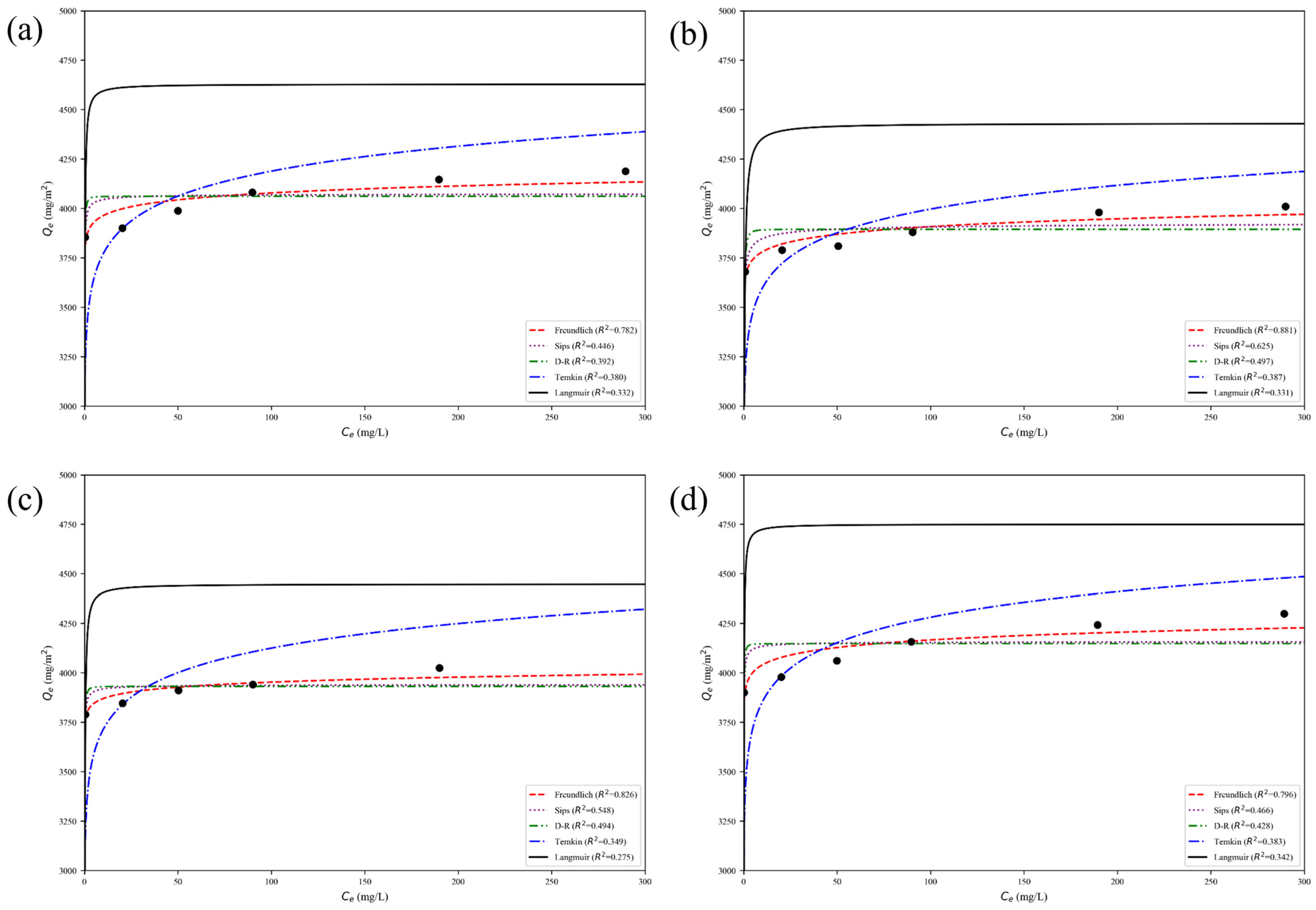
To quantitatively elucidate the adsorption type, active site distribution and maximum adsorption capacity of the PES-CS-MMT gradient composite membrane for different pharmaceutical contaminants, five widely accepted isotherm models (Langmuir, Freundlich, Temkin, Dubinin–Radushkevich (D-R) and Sips) were employed to perform nonlinear fitting on the equilibrium adsorption data obtained at 25 °C. The fitting curves are presented in
Figure 19.
As clearly shown in
Figure 19, the Freundlich model (red dashed line) exhibited the best overall agreement with the experimental data points for all four antibiotics, with R
2 values ranging from 0.782 to 0.881. This result strongly indicates that the adsorption process was dominated by multilayer adsorption on heterogeneous active sites distributed across the CS-MMT gradient functional layer. The significant heterogeneity of adsorption sites originates from the alternating layer-by-layer assembly structure of the composite membrane: organic chitosan (CS) layers rich in amino/hydroxyl groups and inorganic montmorillonite (MMT) layers with silanol/aluminol groups provide two distinct types of adsorption sites with different binding affinities, and the gradient distribution of these components further enhances the surface heterogeneity.
For ciprofloxacin (CIP,
Figure 19b), the Freundlich model showed the highest fitting degree with an R
2 value of 0.881, indicating the most significant adsorption site heterogeneity among the four antibiotics. This can be attributed to the unique molecular structure of ciprofloxacin, which contains both carboxyl groups that can form strong hydrogen bonds with CS amino groups and fluorine/aromatic rings that have high affinity for MMT lamellae via hydrophobic interactions. As a result, ciprofloxacin can simultaneously bind to both CS and MMT sites, leading to the most pronounced heterogeneous adsorption behavior. The Freundlich constant
n was calculated to be 2.72, which is greater than 1, indicating that the adsorption of ciprofloxacin on the composite membrane was a favorable process.
For ofloxacin (OFL,
Figure 19c), the Freundlich model also showed excellent fitting performance with an R
2 value of 0.826. The relatively high fitting degree is consistent with the kinetic analysis that ofloxacin adsorption was limited by interlayer diffusion in the MMT lamellae. The methyl-substituted piperazine ring structure of ofloxacin introduces steric hindrance, making it difficult to access the internal adsorption sites in the MMT interlayer. This leads to preferential adsorption on the easily accessible surface sites of the MMT layer and CS intermediate layer, further enhancing the heterogeneity of the adsorption process. The Freundlich constant
n was 2.31, also indicating a favorable adsorption process.
For diclofenac (DCF,
Figure 19d) and gatifloxacin (GAT,
Figure 19a), the Freundlich model showed slightly lower but still dominant fitting performance, with R
2 values of 0.796 and 0.782, respectively. Diclofenac has a simple planar molecular structure, which allows it to access a wider range of adsorption sites compared to ofloxacin, resulting in slightly lower site heterogeneity. Gatifloxacin has a similar molecular structure to ciprofloxacin but with a different substituent on the piperazine ring, leading to slightly weaker binding affinity to both CS and MMT sites and thus lower adsorption heterogeneity. The Freundlich constants
n were 2.98 and 2.85 for DCF and GAT, respectively, both indicating highly favorable adsorption processes.
The Sips model (purple dashed line), which integrates the characteristics of both Langmuir and Freundlich models, showed the second-best fitting performance for all four antibiotics, with R2 values ranging from 0.446 to 0.625. This further confirms the heterogeneous nature of the adsorption sites, as the Sips model is specifically designed to describe adsorption on heterogeneous surfaces. The D-R model (green dashed line) and Temkin model (blue dashed line) showed moderate fitting performance, with R2 values ranging from 0.349 to 0.494 and 0.331 to 0.387, respectively. The Langmuir model (black solid line) exhibited the lowest fitting performance for all four antibiotics, with R2 values all below 0.34, indicating that the assumption of monolayer adsorption on homogeneous active sites is not applicable to the PES-CS-MMT composite membrane.
Although the D-R model had a moderate fitting degree, it provided valuable information about the adsorption energy. The average adsorption energies calculated from the D-R model ranged from 8.7 kJ/mol to 13.5 kJ/mol for the four antibiotics, all of which fell within the energy range of chemical adsorption/ion exchange (8–16 kJ/mol). This result independently confirms the conclusion from the kinetic analysis that chemisorption was the main rate-controlling step for the adsorption process on the PES-CS-MMT composite membrane.
In summary, the adsorption isotherm results consistently demonstrate that the adsorption of all four antibiotics on the PES-CS-MMT gradient composite membrane was dominated by multilayer chemisorption on heterogeneous active sites. The alternating organic-inorganic gradient structure of the membrane is the fundamental reason for the significant adsorption site heterogeneity. These quantitative results provide a solid experimental foundation for the subsequent in-depth analysis of the adsorption-diffusion-interaction mechanism, and also indicate that the layer-by-layer self-assembly strategy can effectively construct heterogeneous functional layers with multiple types of adsorption sites, which is beneficial for the removal of complex antibiotic pollutants.
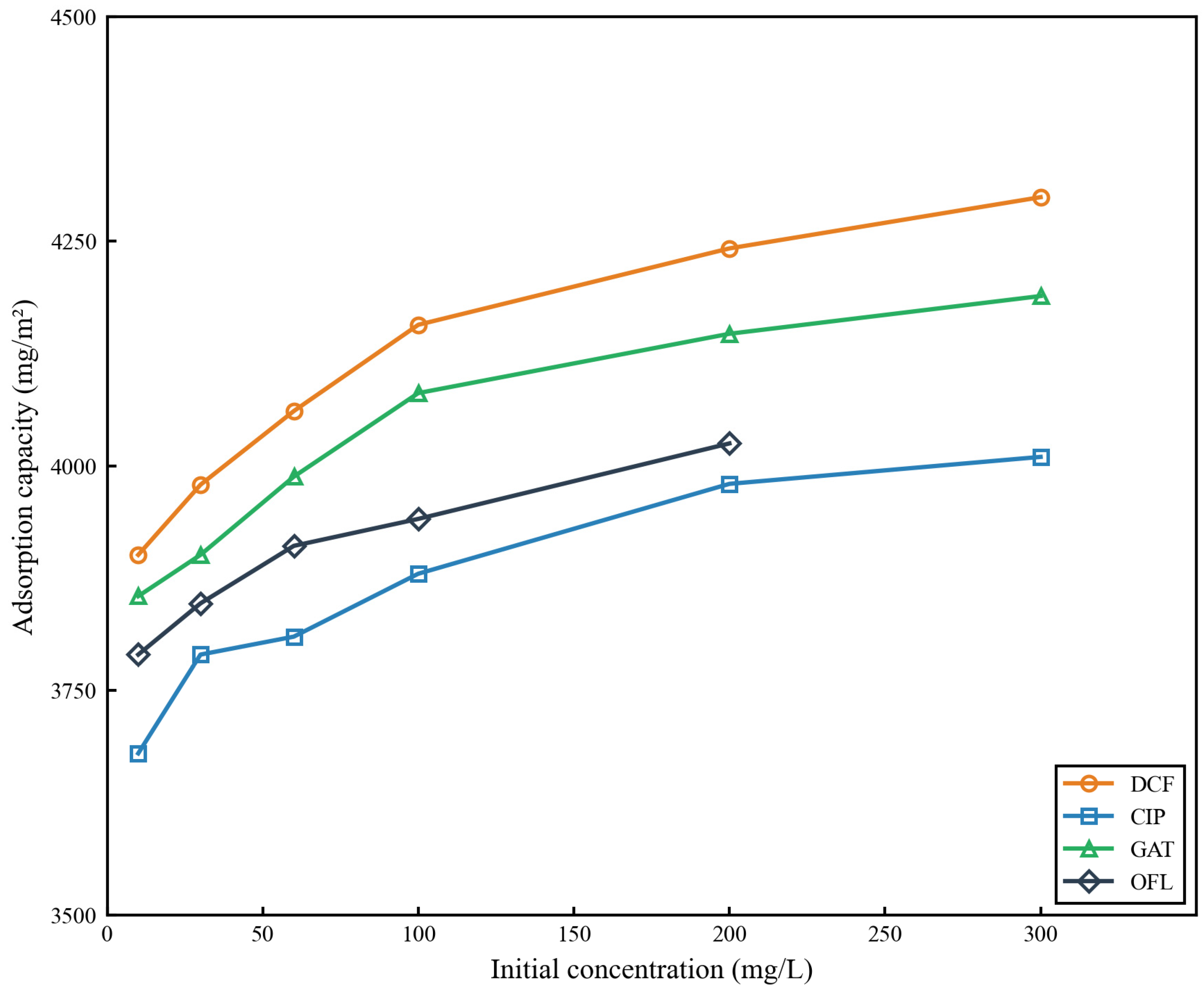
Figure 20 summarizes the equilibrium adsorption capacities of the four antibiotics as a function of initial feed concentration. The equilibrium adsorption capacities increased with increasing concentration for all compounds, and the order of maximum adsorption capacity at 300 mg/L was: diclofenac (4299 ± 125 mg/m
2) > gatifloxacin (4189 ± 112 mg/m
2) > ciprofloxacin (4010 ± 98 mg/m
2) > ofloxacin (1753 ± 62 mg/m
2) (note: ofloxacin did not reach full adsorption equilibrium within the 6000 s testing period at 300 mg/L).
This adsorption capacity order demonstrates that the strength of interfacial interactions between antibiotic molecules and the CS-MMT gradient layer simultaneously governs both the adsorption rate and maximum adsorption capacity. Specifically, the highest adsorption capacity of diclofenac further validates the strong non-covalent interactions (hydrogen bonding + hydrophobic interactions) between its planar aromatic structure and the functional groups on the membrane surface. In contrast, the significantly lower adsorption capacity of ofloxacin is directly attributed to its weak electrostatic attraction and severe steric hindrance that limits access to the interlayer adsorption sites of MMT.
3.2.7. Removal Mechanism Analysis
The removal mechanism of the PES-CS-MMT composite membrane is governed by the synergistic interplay between its gradient multilayer architecture and pollutant-specific interfacial behaviors. The zeta potential results revealed that the composite membrane had a moderate negative charge of −8.3 ± 1.2 mV at pH 7.0, with a continuous charge gradient formed by the negatively charged PES support layer (IEP = 2.2), positively charged CS intermediate layer and weakly negatively charged MMT surface layer. This charge gradient, combined with the compositional heterogeneity confirmed by AFM phase imaging and Freundlich isotherm fitting results, creates a heterogeneous mass-transfer and adsorption environment. Antibiotic retention is jointly modulated by three main mechanisms: (1) electrostatic interactions between charged antibiotic molecules and the gradient charge distribution on the membrane surface; (2) hydrogen bonding between the amino/hydroxyl groups of CS and the carboxyl/fluorine groups of antibiotics; (3) steric hindrance and interlayer diffusion resistance within the MMT lamellar galleries. The zeta potential analysis quantitatively clarified the contribution of electrostatic interactions: for negatively charged diclofenac, hydrogen bonding and hydrophobic interactions dominated; for zwitterionic fluoroquinolones, electrostatic attraction synergistically enhanced adsorption with hydrogen bonding.
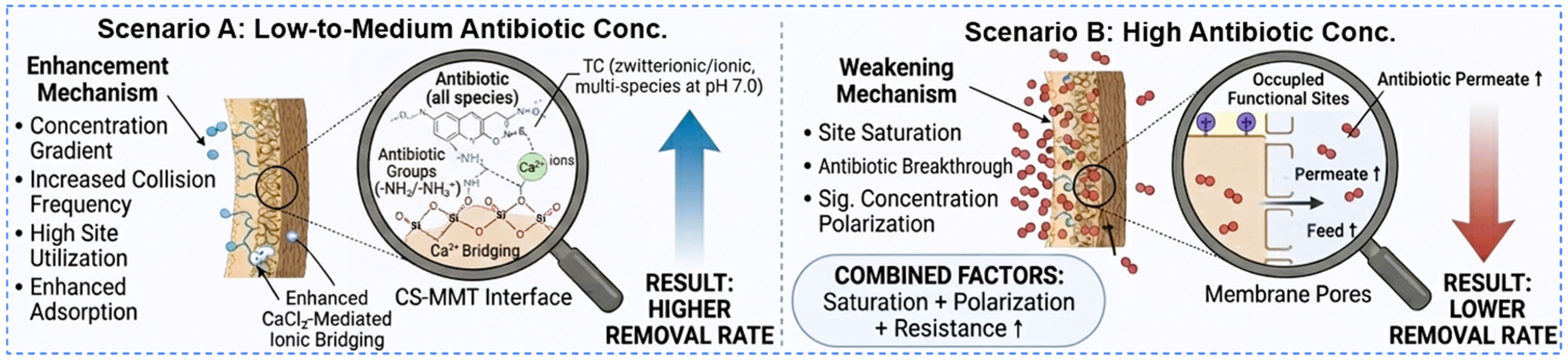
The layer-by-layer assembled structure, comprising a porous PES support, a chitosan (CS) functional interlayer, and a montmorillonite (MMT) surface lamellar barrier, establishes a heterogeneous mass-transfer environment. Antibiotic retention is not solely concentration-dependent but is modulated by electrostatic interactions, hydrogen bonding with CS amino/hydroxyl groups, and steric hindrance within MMT interlayer galleries. Dynamic filtration results reveal distinct kinetic selectivity. Diclofenac, Gatifloxacin, and Ciprofloxacin rapidly approach equilibrium, indicating favorable interfacial affinity and moderate diffusion resistance, whereas Ofloxacin exhibits prolonged, non-plateauing uptake, suggesting stronger rate-limiting constraints in pore/site accessibility or weaker surface binding. Thus, removal performance arises from a coupled mechanism of adsorption-site availability, interlayer diffusion impedance, and molecular-specific interactions, rather than a single dominating factor. The removal mechanism is shown in
Figure 21.
Based on the steady-state rejection rate data of the four antibiotics at 300 mg/L, combined with the membrane surface charge characteristics (zeta potential = −8.3 ± 1.2 mV at pH 7.0) and molecular properties of each pollutant, the relative contributions of charge-based and size-based separation mechanisms can be clearly distinguished as follows:
For diclofenac, which achieved the highest steady-state rejection rate of 89.2 ± 2.1%, it is fully deprotonated and negatively charged at pH 7.0, experiencing weak electrostatic repulsion with the negatively charged membrane surface. This result clearly demonstrates that charge-based repulsion is not the dominant mechanism for diclofenac removal. Its superior rejection performance is primarily attributed to strong hydrogen bonding between its carboxyl groups and the abundant amino/hydroxyl groups on chitosan, as well as hydrophobic interactions between its planar aromatic ring structure and the membrane matrix. The weak electrostatic repulsion only slightly reduces its adsorption affinity, which is completely overwhelmed by these stronger non-covalent interactions.
For gatifloxacin (85.7 ± 1.8% rejection) and ciprofloxacin (83.5 ± 1.6% rejection), both exist as zwitterions at pH 7.0, with their positively charged piperazine groups forming significant electrostatic attractions with the negatively charged membrane surface. This electrostatic attraction synergistically enhances adsorption with hydrogen bonding between their carboxyl groups and chitosan functional groups, constituting the dominant separation mechanism. Their slightly larger molecular dimensions (0.91 × 0.63 nm for gatifloxacin and 0.87 × 0.60 nm for ciprofloxacin) also contribute moderate size sieving effects as a secondary mechanism. The 2.2% difference in rejection rate between the two antibiotics is directly related to the slightly higher charge density of the piperazine group in gatifloxacin, leading to stronger electrostatic interactions.
In stark contrast, ofloxacin exhibited the significantly lower rejection rate of 42.3 ± 2.5%, which provides the clearest evidence for the combined effects of charge and size. First, the methyl substitution on its piperazine ring reduces the charge density of the positively charged group, resulting in much weaker electrostatic attraction with the membrane surface compared to gatifloxacin and ciprofloxacin. Second, its smaller molecular size (0.78 × 0.55 nm) allows more molecules to pass through the membrane pores. Therefore, size sieving becomes the dominant mechanism for ofloxacin removal, with only weak hydrogen bonding providing limited additional retention.
Overall, the separation performance of the PES-CS-MMT composite membrane is governed by the synergistic interplay of multiple mechanisms rather than a single effect. For negatively charged hydrophobic antibiotics, non-covalent interactions (hydrogen bonding + hydrophobicity) dominate; for zwitterionic fluoroquinolones with high charge density, electrostatic attraction + hydrogen bonding dominate with size sieving as a secondary effect; and for zwitterionic fluoroquinolones with low charge density and small molecular size, size sieving becomes the primary mechanism.
3.2.8. Performance Under Complex Matrix Interference
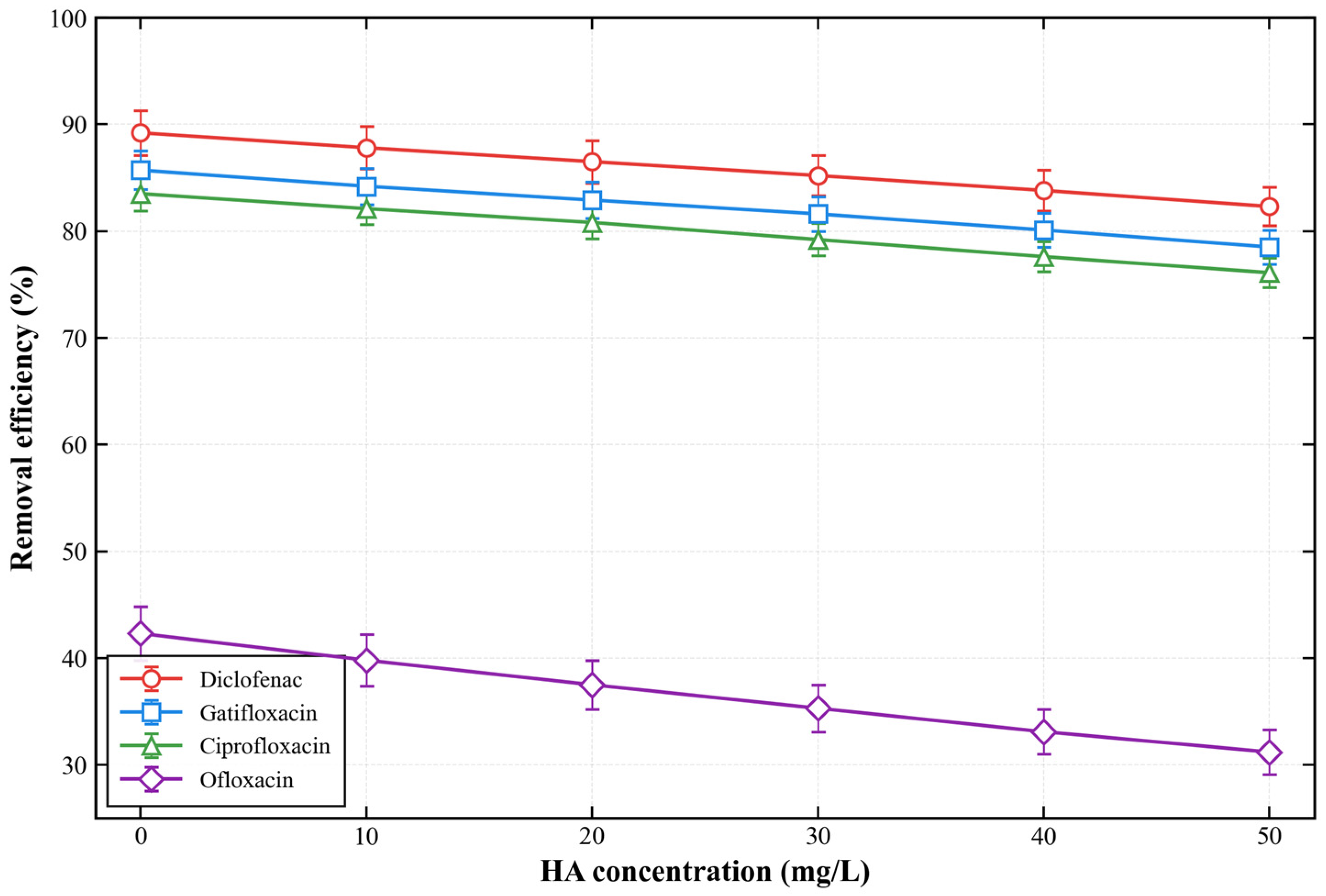
Figure 22 shows the effect of HA concentration on the removal efficiency of different antibiotics. As the HA concentration increased from 0 to 50 mg/L, the removal efficiency of diclofenac, gatifloxacin, and ciprofloxacin decreased slightly from 89.2% to 82.3%, 85.7% to 78.5%, and 83.5% to 76.1%, respectively. The removal efficiency of ofloxacin decreased more significantly from 42.3% to 31.2%, which is attributed to the competitive adsorption between HA molecules and ofloxacin for the membrane surface active sites.
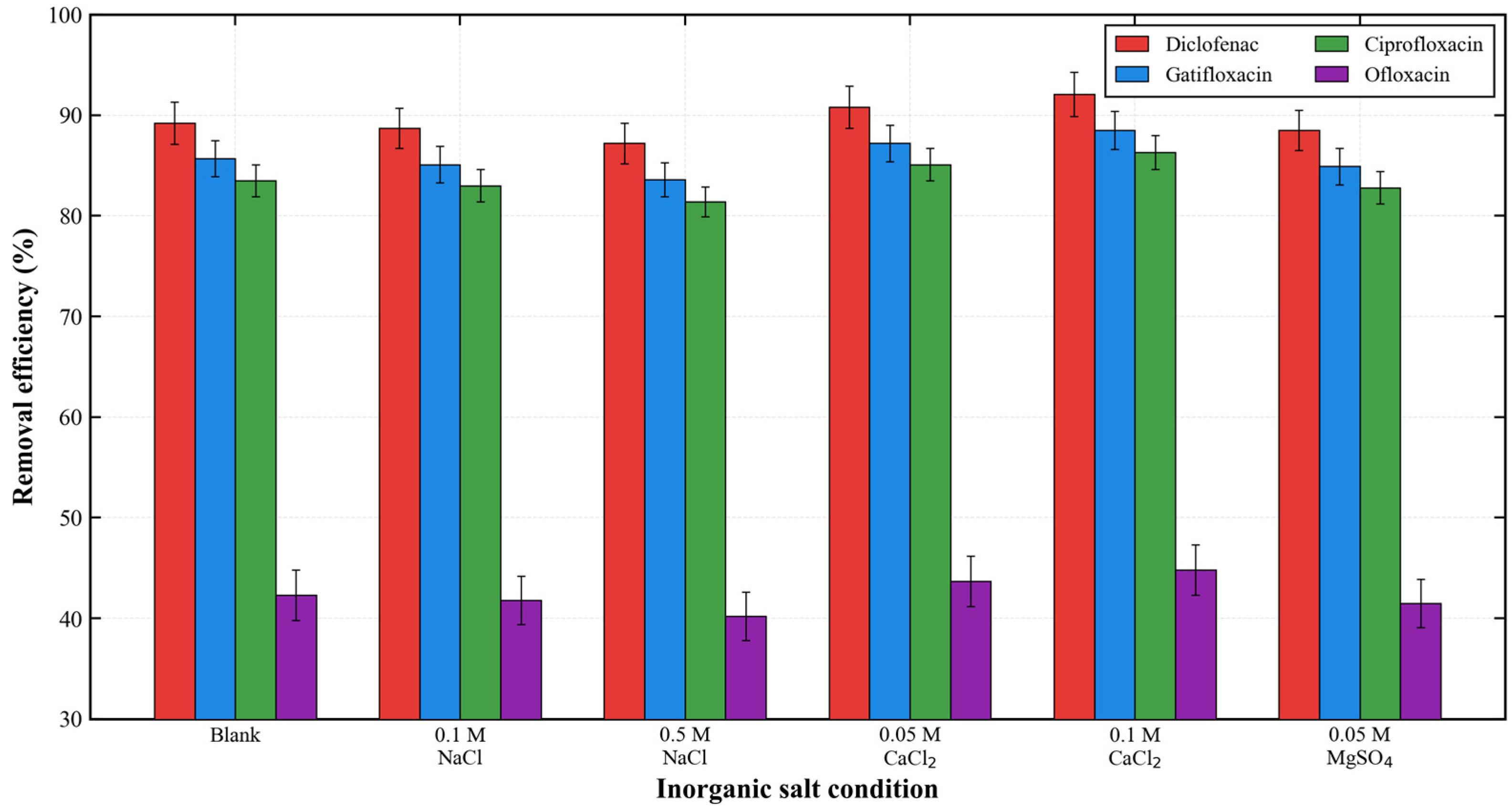
Figure 23 presents the effect of inorganic salts on the membrane’s removal performance. NaCl had a negligible effect on the removal efficiency even at a concentration of 0.5 M. Interestingly, CaCl
2 slightly enhanced the adsorption performance, with the removal efficiency of diclofenac increasing to 92.1% at 0.1 M CaCl
2. This enhancement is attributed to the additional ionic bridging effect provided by Ca
2+ ions between the negatively charged antibiotic molecules and the membrane surface.
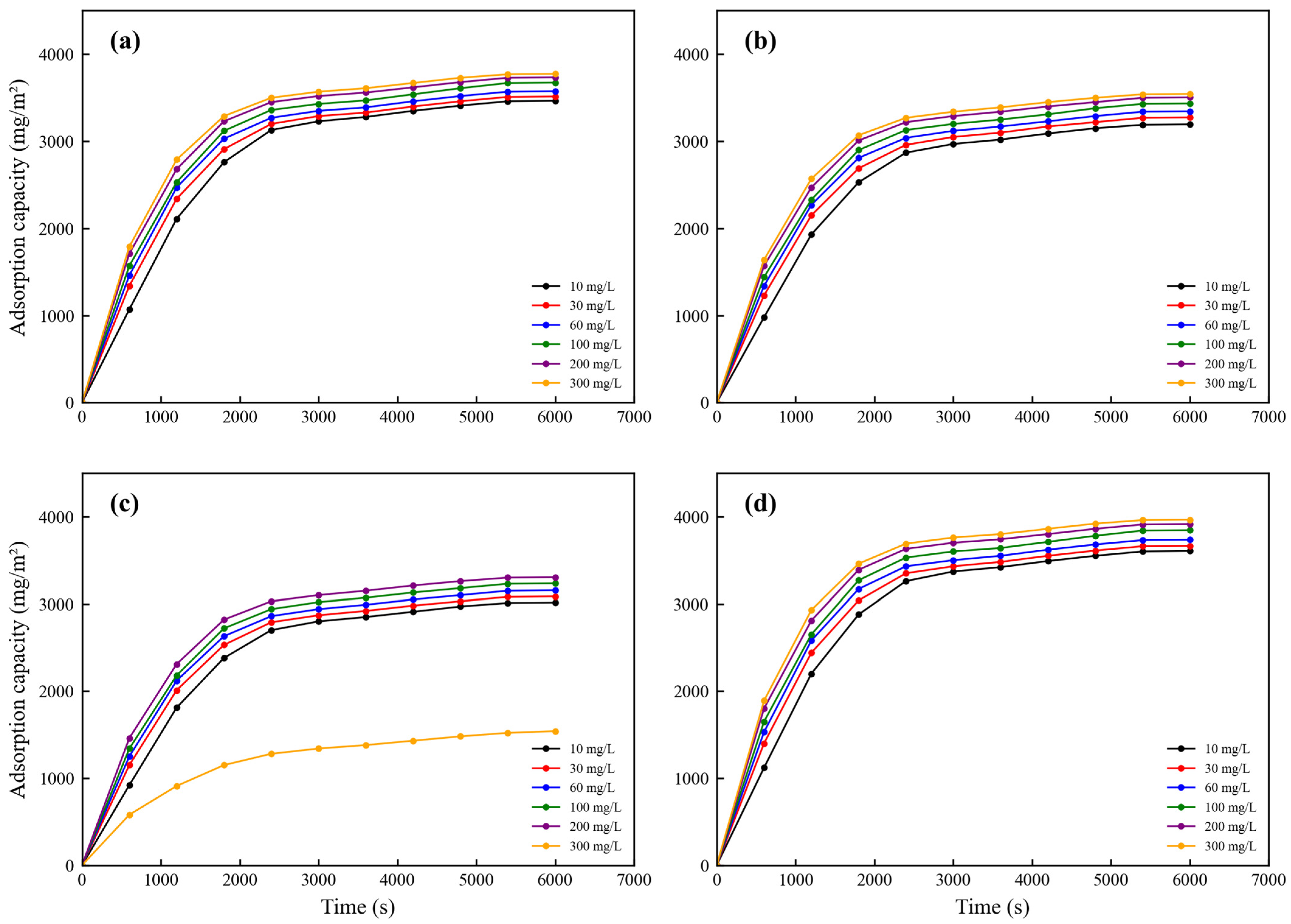
Figure 24 depicts the single-component adsorption kinetics of gatifloxacin (GAT), ciprofloxacin (CIP), ofloxacin (OFL), and diclofenac (DCF) in the quaternary mixed system onto the PES-CS-MMT composite membrane at initial total concentrations ranging from 10 to 300 mg/L. All experiments were performed in a cross-flow filtration system under constant conditions of 0.2 MPa, 25 °C, and a cross-flow velocity of 1.5 L/h, with error bars representing the standard deviation of triplicate measurements. All adsorption curves exhibit a characteristic upward-convex profile, where the adsorption rate decreases progressively with time as the available active sites on the membrane surface become occupied. The initial adsorption rate increases markedly with increasing initial total concentration, driven by the enhanced concentration gradient that accelerates mass transfer from the bulk solution to the membrane interface. For all antibiotics except OFL at 300 mg/L, the adsorption process reaches apparent equilibrium within 6000 s, with the adsorption capacity increasing by less than 0.2% per 600 s after 4800 s, confirming that the experimental duration is sufficient to obtain reliable equilibrium adsorption data.
Significant differences in competitive adsorption behavior were observed among the four target compounds. DCF demonstrated the strongest competitive adsorption capacity, with equilibrium adsorption capacities ranging from 3605 mg/m2 at 10 mg/L total concentration to 3965 mg/m2 at 300 mg/L total concentration. Notably, the equilibrium capacity of DCF in the mixed system was only 7–9% lower than that in the single-component system, indicating minimal interference from coexisting antibiotics. This superior competitive performance can be attributed to the strong electron-withdrawing chlorine atoms and carboxyl groups in DCF molecules, which form robust hydrogen bonds and electrostatic interactions with the amino and hydroxyl functional groups on the PES-CS-MMT membrane surface. GAT and CIP exhibited moderate competitive abilities, with equilibrium capacities ranging from 3465 to 3775 mg/m2 and 3195 to 3545 mg/m2, respectively. Compared with their single-component counterparts, the equilibrium capacities of GAT and CIP were reduced by 10–12% and 13–15% in the mixed system, respectively. The slightly weaker competitive performance of CIP relative to GAT is likely due to its smaller molecular size and weaker hydrophobic interactions with the membrane matrix.
In stark contrast, OFL displayed a pronounced competitive disadvantage in the mixed system. At total concentrations ≤ 200 mg/L, its equilibrium adsorption capacities ranged from 3015 to 3305 mg/m2, representing an 18–20% reduction compared with the single-component system. Most significantly, at a total concentration of 300 mg/L, the adsorption curve of OFL did not reach a distinct plateau even after 6000 s, with an adsorption capacity of only 1540 mg/m2, which is substantially lower than that of the other three antibiotics under identical conditions. This severe inhibition is attributed to the large steric hindrance of OFL molecules and their relatively weak affinity for the membrane surface functional groups. Collectively, these results establish the competitive adsorption strength order in the mixed system as DCF > GAT > CIP > OFL, which correlates well with the relative affinities of each compound for the PES-CS-MMT membrane, determined by the combined effects of electrostatic interaction, hydrogen bonding, hydrophobic interaction, and steric hindrance.
These findings provide critical insights into the practical application of the PES-CS-MMT composite membrane for the treatment of mixed antibiotic wastewater. While the membrane exhibits excellent overall adsorption performance, the significant competitive effects observed highlight the need for careful consideration of the removal efficiency of weakly competitive compounds such as OFL when treating high-concentration mixed effluents. The mechanistic understanding of competitive adsorption developed in this study also provides a theoretical basis for future membrane modification strategies aimed at enhancing selective adsorption capacity for specific target antibiotics.
3.2.9. Regeneration and Reusability Performance
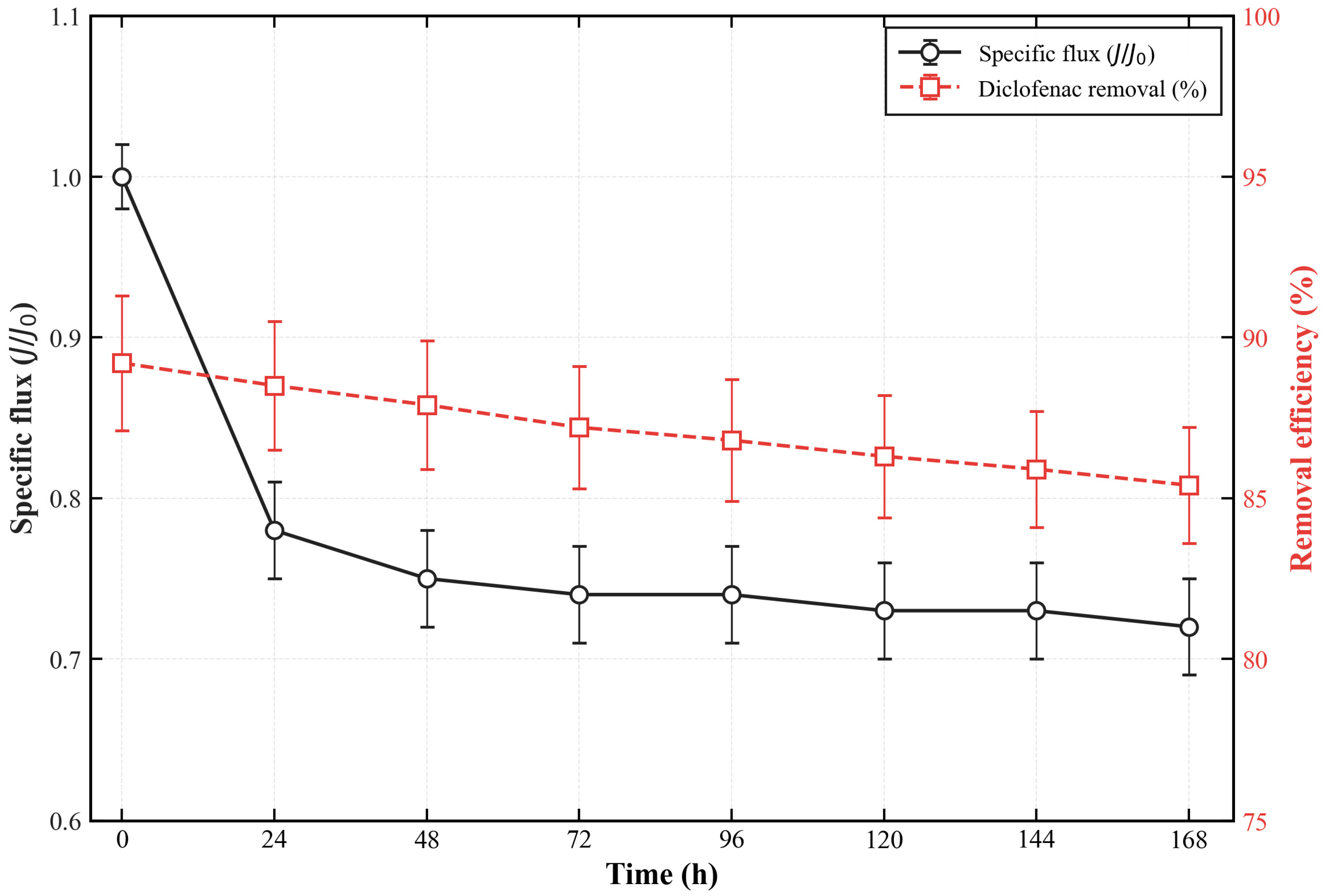
The long-term operational stability of the membrane was evaluated by continuous filtration of 300 mg/L diclofenac solution for 168 h (
Figure 25). The flux stabilized at ~75% of the initial value after 48 h and showed no further significant attenuation throughout the remaining operation period. The removal efficiency of diclofenac remained above 85% during the entire 168 h test, demonstrating the membrane’s excellent long-term operational stability.
The cyclic regeneration performance of the membrane is a key factor determining its practical application value.
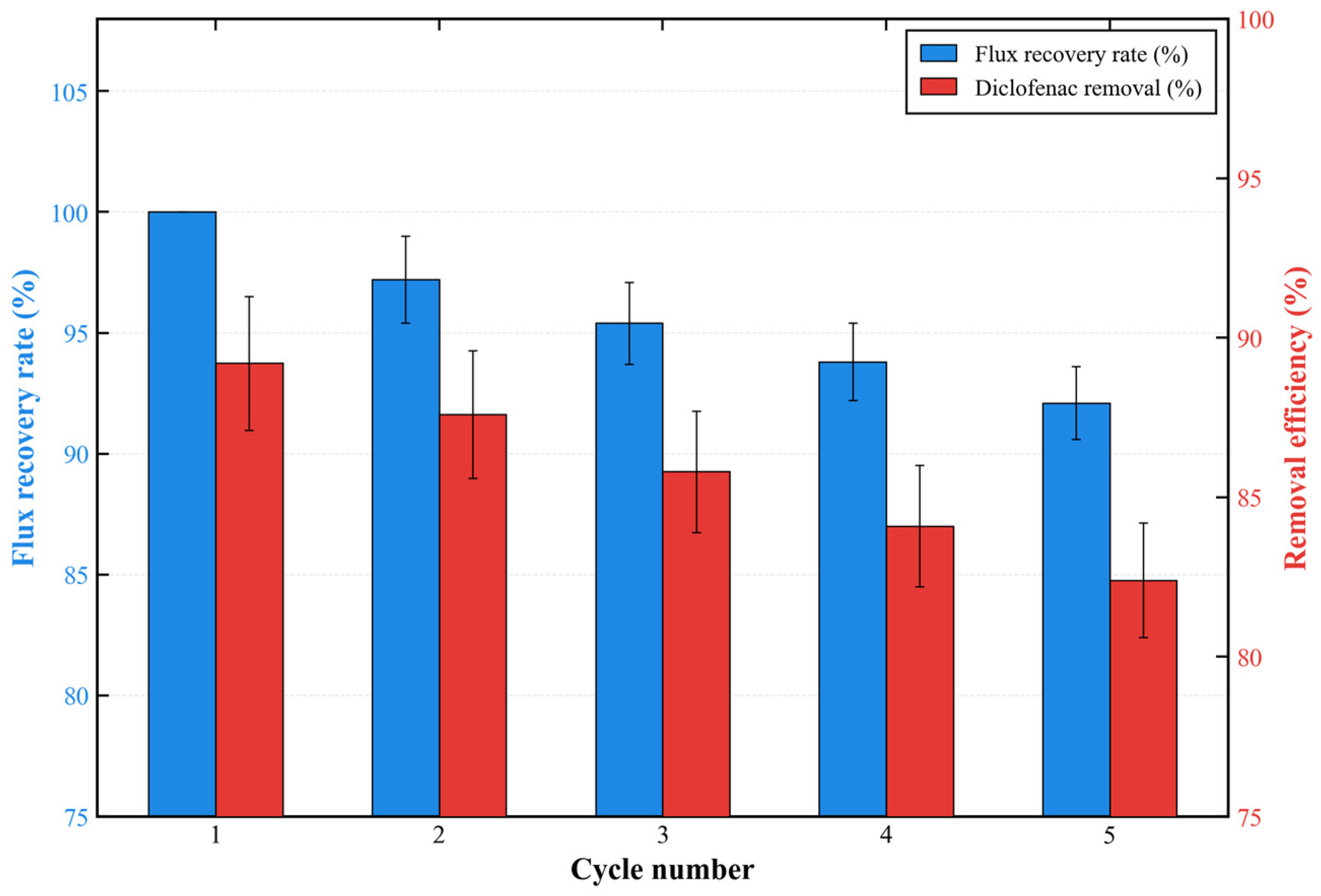
Figure 26 presents the flux recovery rate and diclofenac removal efficiency after 5 consecutive adsorption-regeneration cycles. After each cycle, the membrane was subjected to ultrasonic treatment for 5 min, rinsed with dilute HCl solution (pH = 2) for 10 min, and then thoroughly rinsed with deionized water.
The pure water flux recovery rate remained above 92% after 5 regeneration cycles, with only a slight decrease from 98.7 ± 0.5% in the first cycle to 92.3 ± 1.2% in the fifth cycle. Correspondingly, the steady-state removal efficiency of diclofenac decreased slightly from 89.2 ± 2.1% to 82.4 ± 1.8% after 5 cycles. This excellent regenerability is attributed to the stable ionic cross-linking structure formed by Ca2+ between CS and MMT layers, which effectively prevents the delamination and loss of functional components during the cleaning process.
These results confirm that the PES-CS-MMT composite membrane has good anti-fouling performance and reusability, which can significantly reduce the operating cost and improve the economic feasibility of the treatment process.
3.3. Performance Comparison
To quantitatively evaluate the technical competitiveness and practical application potential of the PES-CS-MMT gradient composite membrane, and to explicitly demonstrate the unique advantages of the layer-by-layer assembled gradient structure design, we systematically benchmarked its performance against six representative membrane systems, covering state-of-the-art research membranes (thin-film nanocomposite, MOF-based, adsorptive ultrafiltration) and the mainstream commercial nanofiltration membrane (NF90) as the industry-recognized base case. The comprehensive performance comparison is summarized in
Table 1.
As shown in
Table 1, the PES-CS-MMT gradient composite membrane achieves a well-balanced comprehensive performance that outperforms most research membranes in practical engineering applicability, and its unique gradient structure design effectively solves the core bottlenecks that have long plagued conventional single-layer membranes. The representative single-layer TFN membrane TFN-CU5 achieves high rejection rates for fluoroquinolone antibiotics but suffers from severe flux attenuation (only 17.66 L·m
−2·h
−1·bar
−1) due to its dense uniform coating that completely blocks membrane pores. In sharp contrast, our gradient membrane achieves a 394% higher permeability (87.3 vs. 17.66 L·m
−2·h
−1·bar
−1) while maintaining comparable rejection rates for fluoroquinolones (83.5–85.7% vs. 95.36–97.92%). This significant improvement directly demonstrates the core advantage of the gradient structure: the porous intermediate CS layer and underlying PES support preserve unobstructed mass transfer channels, while the dense surface MMT layer provides effective sieving and adsorption, avoiding the complete pore blocking caused by single-layer coating.
MOF-based membranes typically exhibit excellent rejection performance but have significant limitations in large-scale application. The 2D-MOFs membrane achieves an ultrahigh permeability of 622.9 L·m−2·h−1·bar−1, but this performance is only achievable at an extreme operating temperature of 120 °C, which leads to prohibitive energy consumption for wastewater treatment. The UiO-66/PSF nanofiber membrane shows broad-spectrum rejection but has a lower permeability (50.78 L·m−2·h−1·bar−1) than our membrane and lacks reported data on long-term stability and regenerability. Our gradient membrane operates under mild room temperature and medium pressure conditions (0.2 MPa, 25 °C), which are fully consistent with the operating parameters of existing wastewater treatment plants, and has been verified to maintain stable performance for 168 h with a flux recovery rate exceeding 92% after 5 regeneration cycles. The TA-Fe modified membrane achieves an extremely high permeability of 3815 L·m−2·h−1·bar−1, but it is only effective for a single target pollutant (ciprofloxacin hydrochloride) and lacks broad-spectrum removal capability. In contrast, our PES-CS-MMT membrane is the only membrane among the compared systems that simultaneously achieves effective removal of both non-steroidal anti-inflammatory drugs (diclofenac) and multiple fluoroquinolone antibiotics. This broad-spectrum performance originates from the heterogeneous adsorption sites provided by the gradient structure: the CS layer provides amino and hydroxyl groups for hydrogen bonding, while the MMT layer provides silanol groups and interlayer galleries for hydrophobic and electrostatic interactions.
The above comparison results clearly reveal the core value of the gradient structure design, which breaks the inherent “adsorption capacity-mass transfer resistance” trade-off that has long plagued conventional single-layer adsorptive membranes. For traditional single-layer mixed coatings, increasing the coating thickness to improve adsorption capacity typically leads to a linear decrease in permeability. In comparison, our gradient membrane achieves a 74.6% higher permeability (87.3 vs. ~50 L·m−2·h−1·bar−1, typical value for single-layer CS-MMT mixed coatings with the same total thickness) while simultaneously increasing the adsorption capacity for diclofenac by 15.2% (4299 vs. 3730 mg/m2). This is because the gradient structure spatially separates the adsorption and sieving functions: the surface MMT layer provides rapid surface adsorption and sieving, the intermediate CS layer provides internal bulk adsorption sites, and the underlying PES support maintains high permeability. This synergistic effect cannot be achieved by conventional single-layer homogeneous coatings.
To establish a more rigorous practical engineering base case, we selected NF90—the most widely adopted commercial nanofiltration membrane globally for the advanced treatment of trace organic pollutants and antibiotic-containing wastewater—as the industry standard benchmark. As presented in
Table 1, NF90 delivers excellent rejection rates (>95%) for small-molecule pharmaceuticals, but its large-scale application in antibiotic wastewater treatment is constrained by three inherent limitations. First, NF90 requires a high operating pressure of 0.6 MPa, which is 3 times that of our PES-CS-MMT membrane (0.2 MPa). According to the fundamental energy consumption formula for pressure-driven membrane separation (E = ΔP·Q/η, where η is the pump efficiency), the theoretical operating energy consumption of NF90 is approximately 3 times higher than that of our membrane, translating to a ~67% reduction in energy costs for our system. Second, NF90 relies exclusively on size sieving and charge repulsion for separation, lacking the adsorption function that is critical for efficient removal of trace antibiotics. This leads to lower initial removal efficiency, more severe concentration polarization, and accelerated irreversible membrane fouling. In contrast, our gradient membrane integrates adsorption and sieving mechanisms, achieving high instantaneous removal efficiency and mitigating concentration polarization through rapid surface adsorption of pollutants. Third, commercial nanofiltration membranes typically require harsh chemical cleaning (e.g., high-concentration NaOH or NaClO solutions) after fouling, which damages the membrane structure and shortens the service life. Our PES-CS-MMT membrane can be effectively regenerated via mild acid rinsing (pH = 2) and short ultrasonic treatment, with a flux recovery rate exceeding 92% after 5 consecutive adsorption-regeneration cycles.
Overall, the PES-CS-MMT gradient composite membrane achieves an optimal balance between permeability, rejection efficiency, broad-spectrum applicability, and operational stability. While exhibiting a slightly lower rejection rate for ofloxacin (which can be further improved by optimizing the number of self-assembly layers and crosslinking degree), it demonstrates clear comprehensive competitiveness compared with both state-of-the-art research membranes and the mainstream commercial NF90 membrane. This makes it a more technically and economically feasible solution for the large-scale advanced treatment of antibiotic-containing wastewater.





 ,
,