
Comparison of Phase Separation and Membrane Formation Behavior of Novel Amphiphilic Block Copolymers for Anti-Fouling Improvement of Ultrafiltration Membranes


Abstract
1. Introduction
2. Materials and Methods
2.1. Chemicals
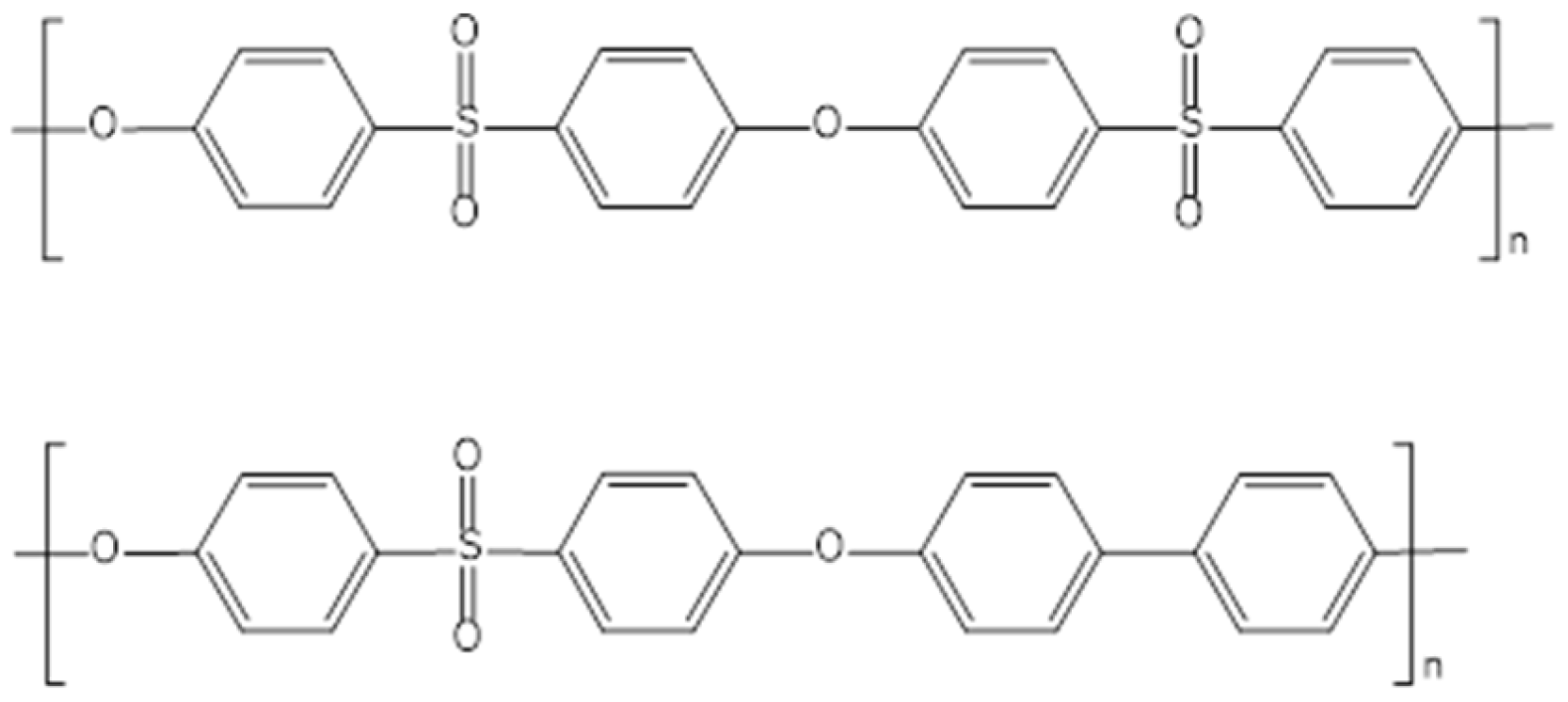
2.2. Membrane Base Polymers
2.3. Block Copolymer Additives
2.4. Dope Solution Preparation
2.5. Determination of Phase Diagram by Cloud Point Titration
2.6. Analysis of Rheological Behavior
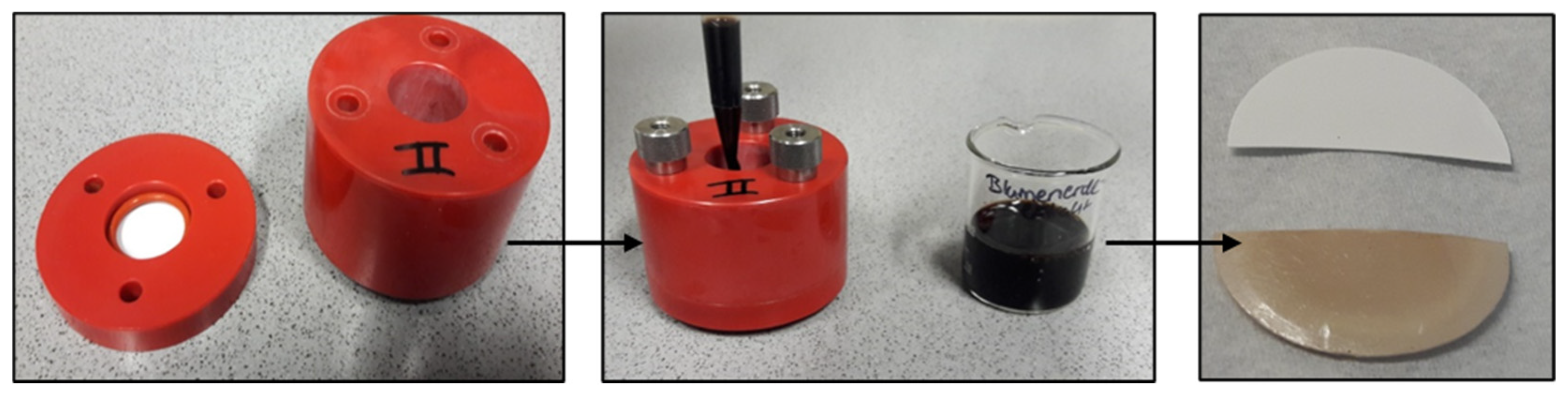
2.7. Membrane Preparation
2.8. Filtration Performance Characterization
2.9. Scanning Electron Microscopy (SEM) Analysis
2.10. Contact Angle Determination
2.11. Zeta Potential Analysis
2.12. Adsorptive Fouling Experiments
3. Results and Discussion
3.1. Casting Solutions
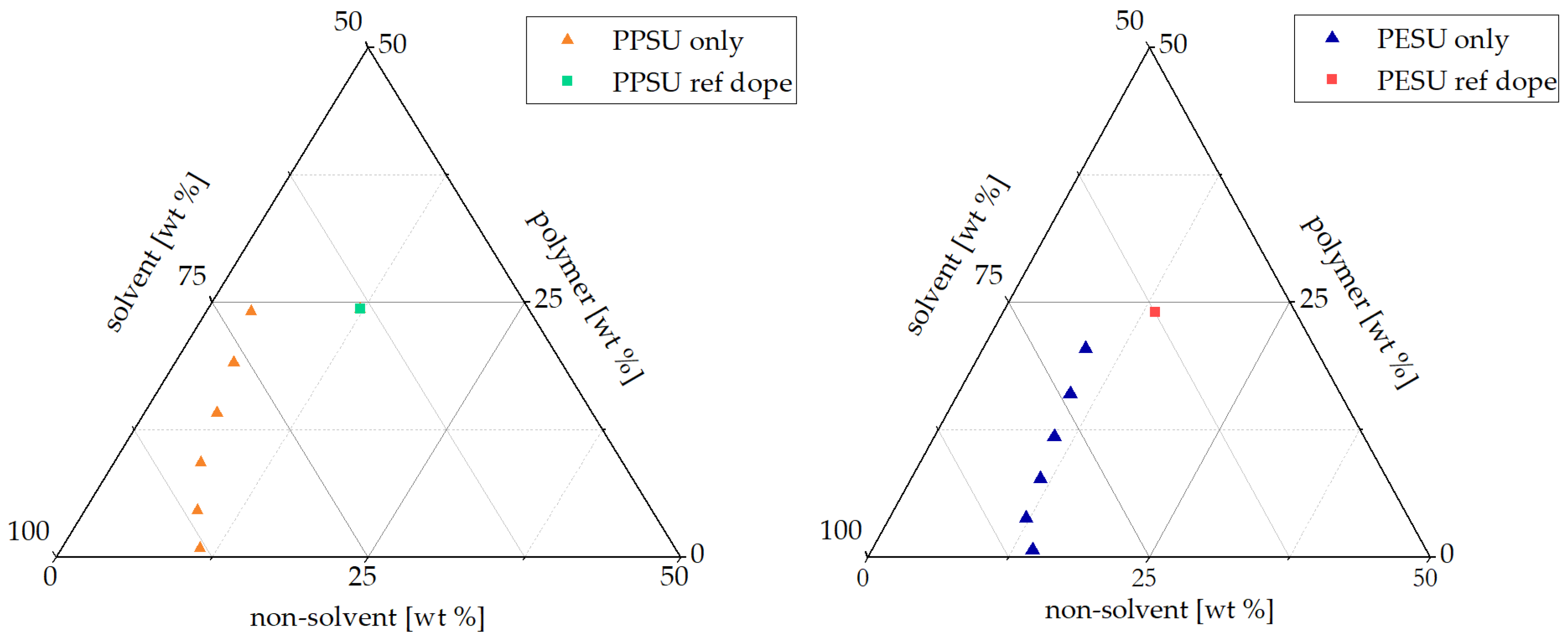
3.1.1. Solubility and Miscibility Effects
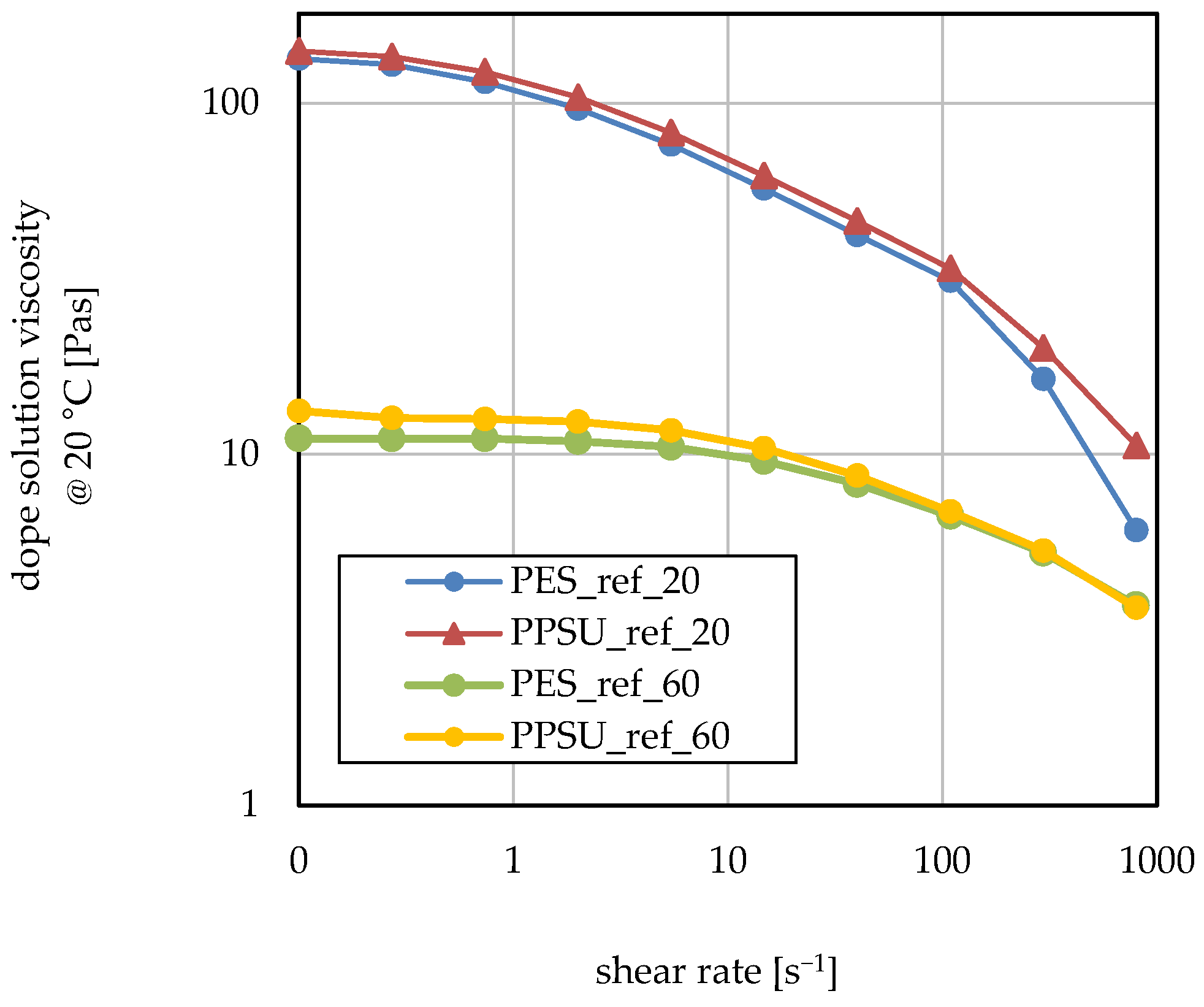
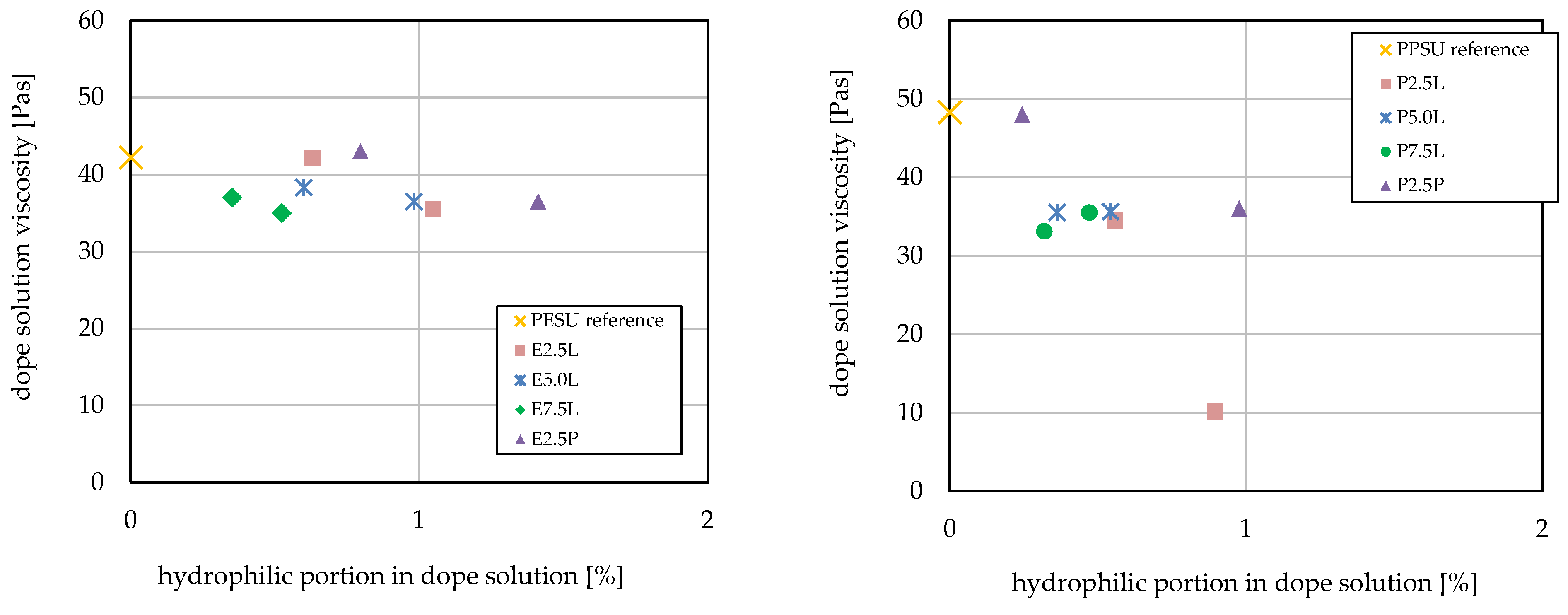
3.1.2. Rheology
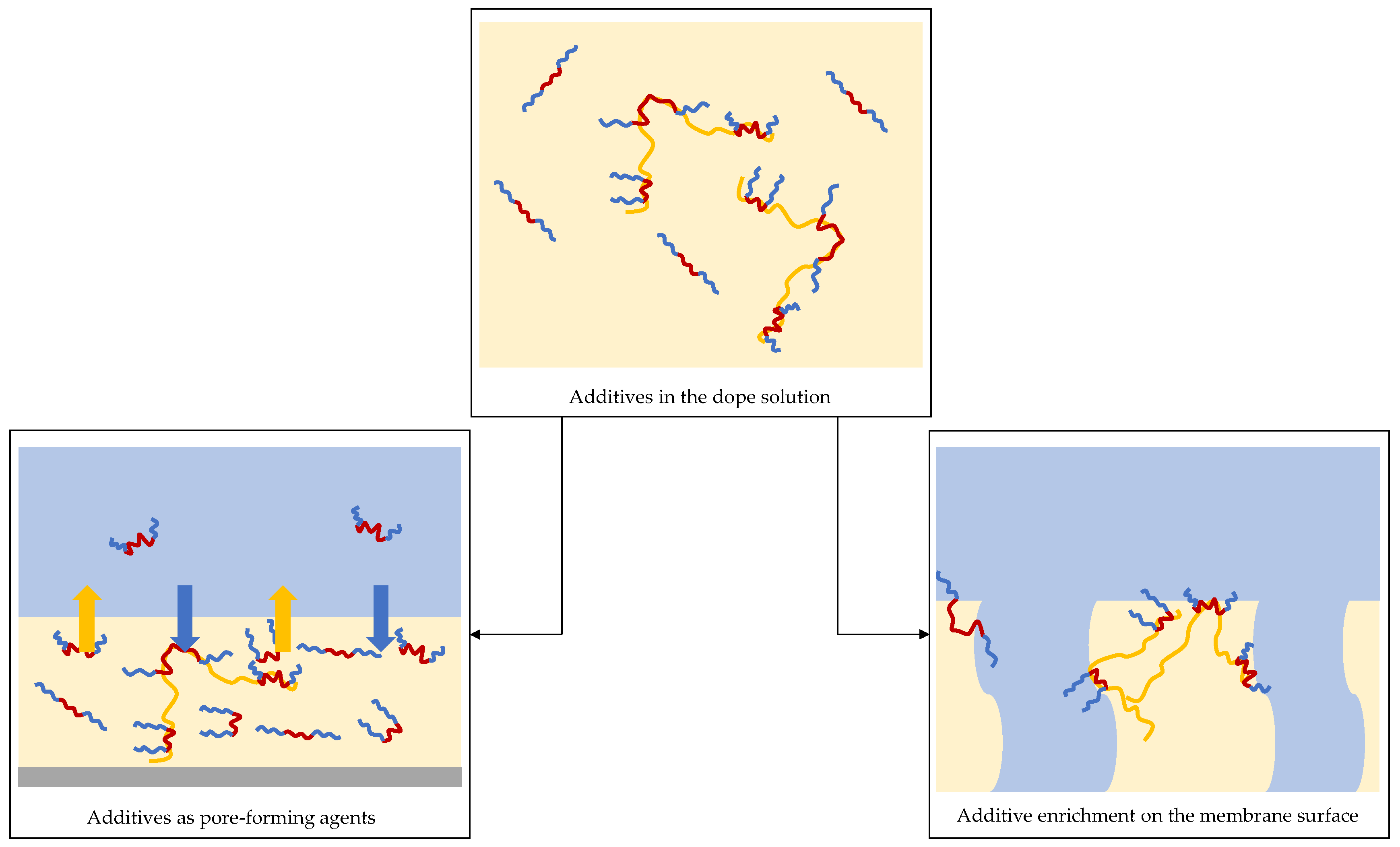
3.1.3. Conclusion: State of the Casting Solutions
- Function as additional pore-formers, thus changing the membrane pore structure;
- Accumulation at the interface, thus changing the membrane surface properties.
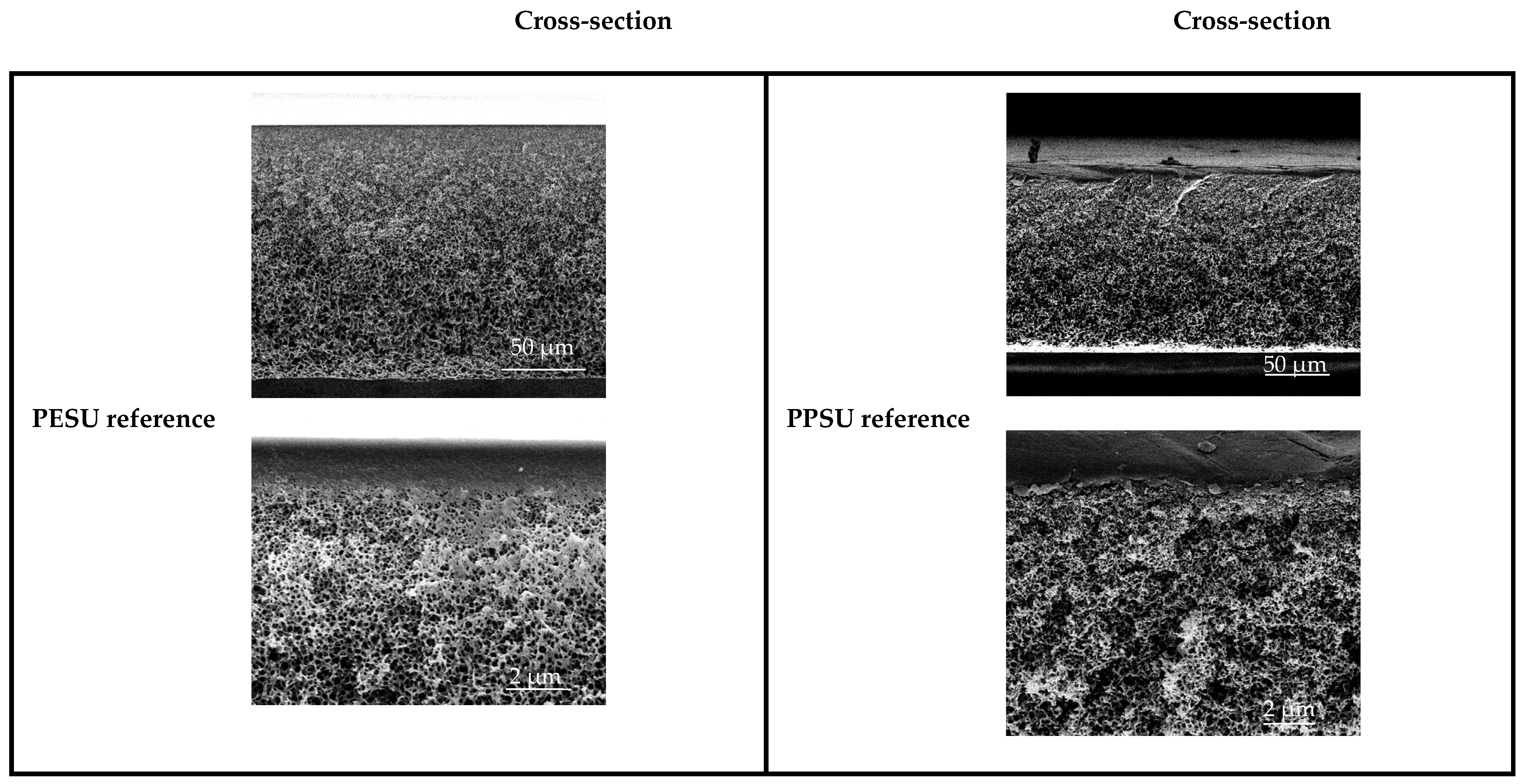
3.2. Membrane Structure
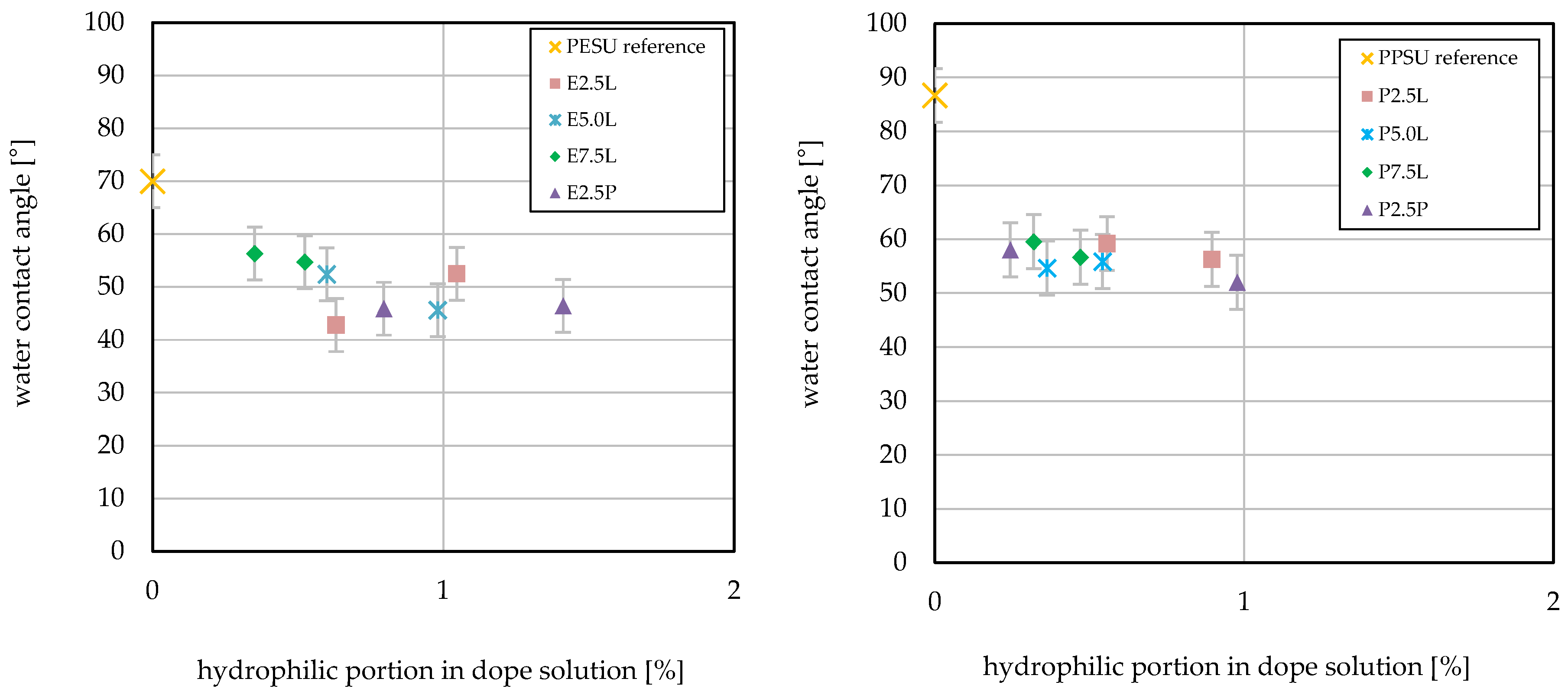
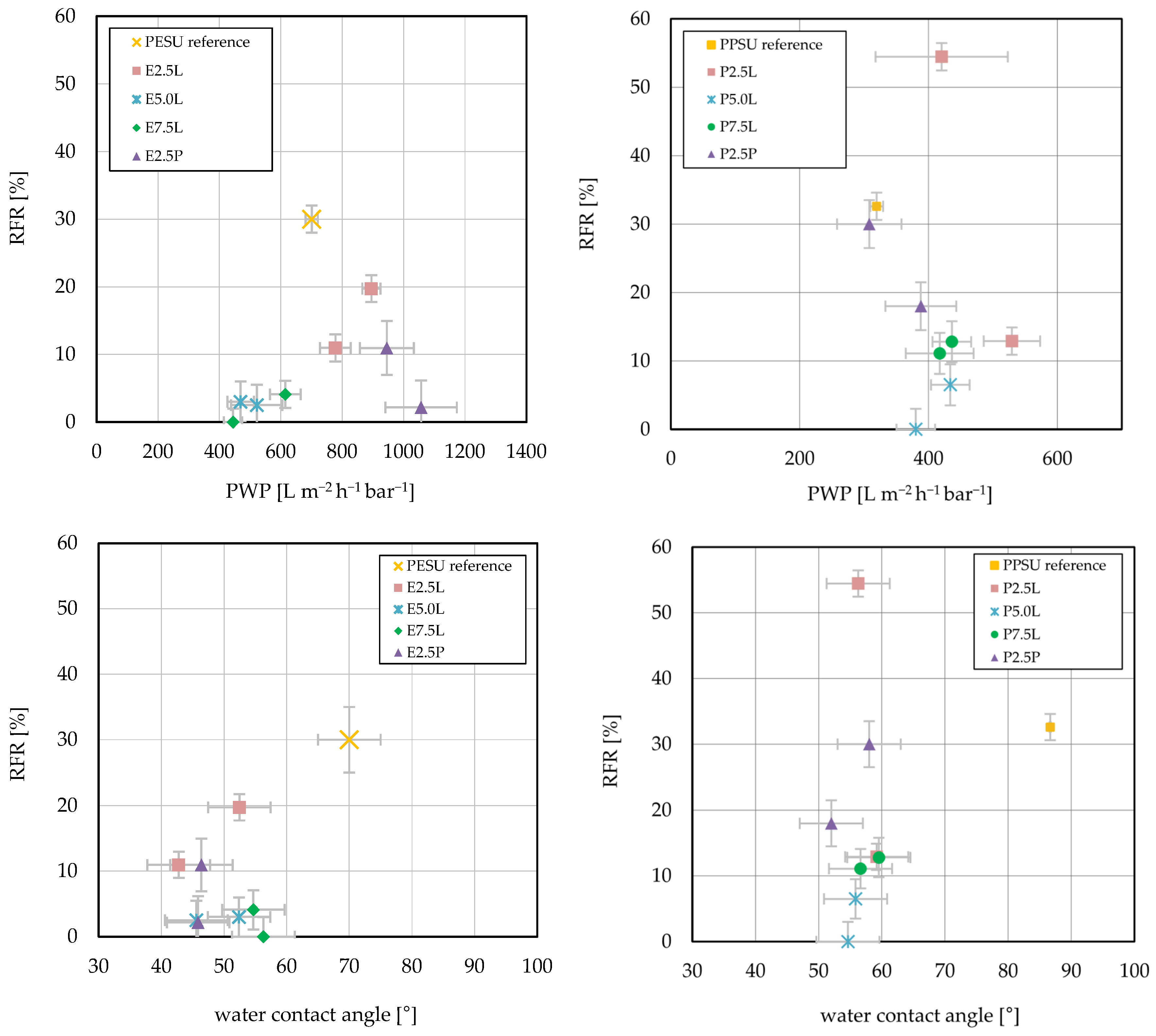
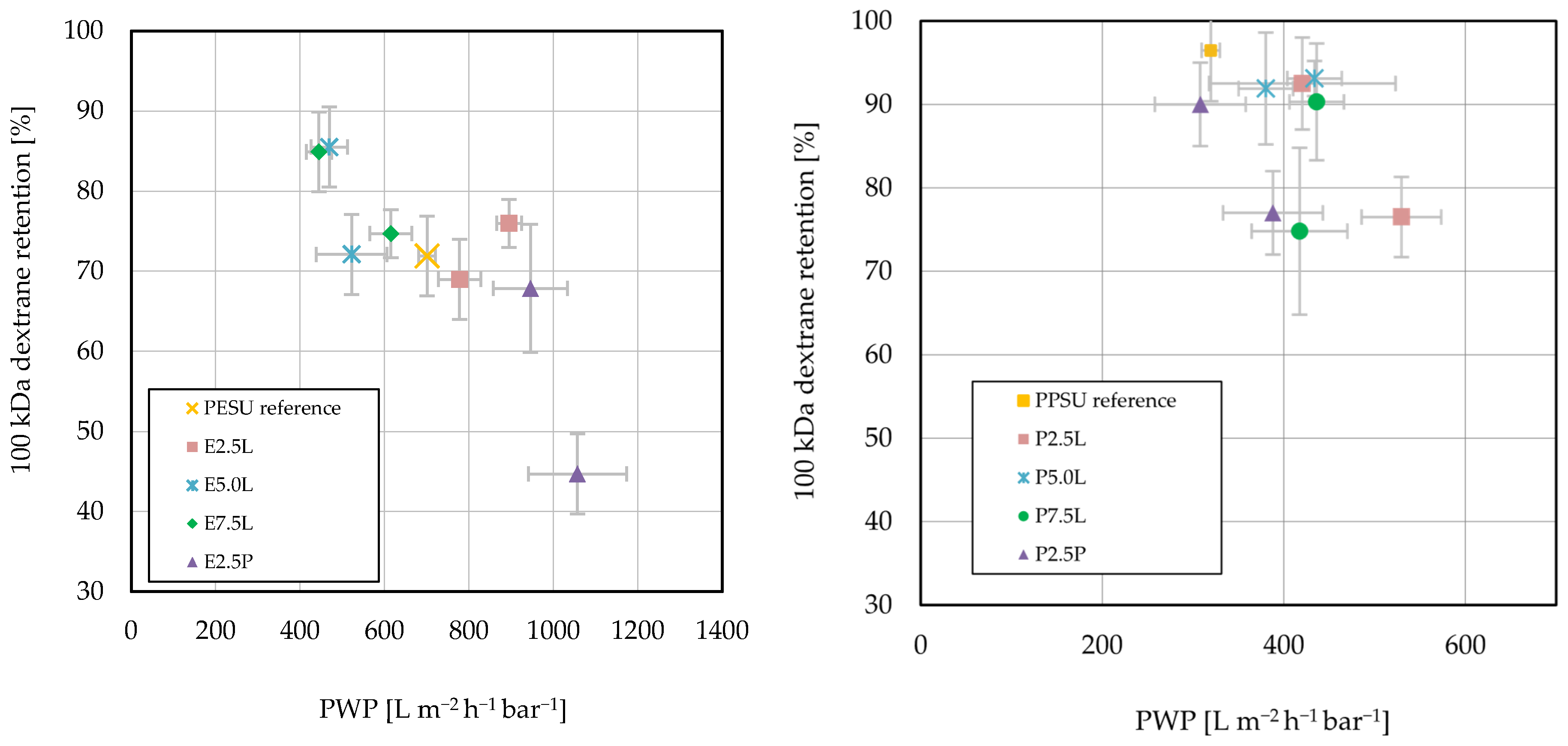
3.3. Ultrafiltration Performance
3.4. Adsorptive NOM Fouling
4. Conclusions
Supplementary Materials
Author Contributions
Funding
Data Availability Statement
Acknowledgments
Conflicts of Interest
Abbreviations
| DI | Deionized |
| HSP | Hansen Solubility Parameter |
| Mw | Average Molecular Weight |
| NIPS | Non-Solvent-Induced Phase Separation |
| NOM | Natural Organic Matter |
| PEO | Poly(ethylene oxide) |
| PESU | Poly(ether sulfone) |
| PPO | Poly(propylene oxide) |
| PPSU | Poly(phenylene sulfone) |
| PVP | Polyvinylpyrrolidone |
| PWP | Pure Water Permeance |
| R | Retention |
| RFR | Relative Flux Reduction |
| RT | Room Temperature |
| SEM | Scanning Electron Microscopy |
| TC | Total Carbon Content |
| TIC | Total Inorganically Bound Carbon |
| TOC | Total Organic Carbon |
| UF | Ultrafiltration |
References
- Werber, J.R.; Osuji, C.O.; Elimelech, M. Materials for Next-Generation Desalination and Water Purification Membranes. Nat. Rev. Mater. 2016, 1, 16018. [Google Scholar] [CrossRef]
- Su, Y.; Gao, W.; Guan, D.; Zuo, T. Achieving Urban Water Security: A Review of Water Management Approach from Technology Perspective. Water Resour. Manag. 2020, 34, 4163–4179. [Google Scholar] [CrossRef]
- He, C.; Liu, Z.; Wu, J.; Pan, X.; Fang, Z.; Li, J.; Bryan, B.A. Future Global Urban Water Scarcity and Potential Solutions. Nat. Commun. 2021, 12, 4667. [Google Scholar] [CrossRef] [PubMed]
- Nunes, S.P.; Culfaz-Emecen, P.Z.; Ramon, G.Z.; Visser, T.; Koops, G.H.; Jin, W.; Ulbricht, M. Thinking the Future of Membranes: Perspectives for Advanced and New Membrane Materials and Manufacturing Processes. J. Membr. Sci. 2020, 598, 117761. [Google Scholar] [CrossRef]
- Ulbricht, M. Advanced Functional Polymer Membranes. Polymer 2006, 47, 2217–2262. [Google Scholar] [CrossRef]
- Shehata, N.; Egirani, D.; Olabi, A.G.; Inayat, A.; Abdelkareem, M.A.; Chae, K.-J.; Sayed, E.T. Membrane-Based Water and Wastewater Treatment Technologies: Issues, Current Trends, Challenges, and Role in Achieving Sustainable Development Goals, and Circular Economy. Chemosphere 2023, 320, 137993. [Google Scholar] [CrossRef]
- Guo, W.; Ngo, H.-H.; Li, J. A Mini-Review on Membrane Fouling. Bioresour. Technol. 2012, 122, 27–34. [Google Scholar] [CrossRef]
- Kimura, K.; Hane, Y.; Watanabe, Y.; Amy, G.; Ohkuma, N. Irreversible Membrane Fouling during Ultrafiltration of Surface Water. Water Res. 2004, 38, 3431–3441. [Google Scholar] [CrossRef]
- Shi, X.; Tal, G.; Hankins, N.P.; Gitis, V. Fouling and Cleaning of Ultrafiltration Membranes: A Review. J. Water Process Eng. 2014, 1, 121–138. [Google Scholar] [CrossRef]
- Arkhangelsky, E.; Kuzmenko, D.; Gitis, V. Impact of Chemical Cleaning on Properties and Functioning of Polyethersulfone Membranes. J. Membr. Sci. 2007, 305, 176–184. [Google Scholar] [CrossRef]
- Maartens, A.; Jacobs, E.P.; Swart, P. UF of Pulp and Paper Effluent: Membrane Fouling-Prevention and Cleaning. J. Membr. Sci. 2002, 209, 81–92. [Google Scholar] [CrossRef]
- Rouaix, S.; Causserand, C.; Aimar, P. Experimental Study of the Effects of Hypochlorite on Polysulfone Membrane Properties. J. Membr. Sci. 2006, 277, 137–147. [Google Scholar] [CrossRef]
- Zhang, Y.; Wang, J.; Gao, F.; Tao, H.; Chen, Y.; Zhang, H. Impact of Sodium Hypochlorite (NaClO) on Polysulfone (PSF) Ultrafiltration Membranes: The Evolution of Membrane Performance and Fouling Behavior. Sep. Purif. Technol. 2017, 175, 238–247. [Google Scholar] [CrossRef]
- Feng, Y.; Han, G.; Zhang, L.; Chen, S.-B.; Chung, T.-S.; Weber, M.; Staudt, C.; Maletzko, C. Rheology and Phase Inversion Behavior of Polyphenylenesulfone (PPSU) and Sulfonated PPSU for Membrane Formation. Polymer 2016, 99, 72–82. [Google Scholar] [CrossRef]
- Miller, D.J.; Dreyer, D.R.; Bielawski, C.W.; Paul, D.R.; Freeman, B.D. Surface Modification of Water Purification Membranes. Angew. Chem. Int. Ed. 2017, 56, 4662–4711. [Google Scholar] [CrossRef]
- Rana, D.; Matsuura, T. Surface Modifications for Antifouling Membranes. Chem. Rev. 2010, 110, 2448–2471. [Google Scholar] [CrossRef] [PubMed]
- Zhao, C.; Xue, J.; Ran, F.; Sun, S. Modification of Polyethersulfone Membranes—A Review of Methods. Progress. Mater. Sci. 2013, 58, 76–150. [Google Scholar] [CrossRef]
- Plisko, T.V.; Penkova, A.V.; Burts, K.S.; Bildyukevich, A.V.; Dmitrenko, M.E.; Melnikova, G.B.; Atta, R.R.; Mazur, A.S.; Zolotarev, A.A.; Missyul, A.B. Effect of Pluronic F127 on Porous and Dense Membrane Structure Formation via Non-Solvent Induced and Evaporation Induced Phase Separation. J. Membr. Sci. 2019, 580, 336–349. [Google Scholar] [CrossRef]
- Susanto, H.; Ulbricht, M. Characteristics, Performance and Stability of Polyethersulfone Ultrafiltration Membranes Prepared by Phase Separation Method Using Different Macromolecular Additives. J. Membr. Sci. 2009, 327, 125–135. [Google Scholar] [CrossRef]
- Zhou, X.; Sun, Y.; Shen, S.; Li, Y.; Bai, R. Highly Effective Anti-Organic Fouling Performance of a Modified PVDF Membrane Using a Triple-Component Copolymer of P(Stx-Co-MAAy)-g-PEGz as the Additive. Membranes 2021, 11, 951. [Google Scholar] [CrossRef]
- Gronwald, O.; Frost, I.; Ulbricht, M.; Kouchaki Shalmani, A.; Panglisch, S.; Grünig, L.; Handge, U.A.; Abetz, V.; Heijnen, M.; Weber, M. Hydrophilic Poly(Phenylene Sulfone) Membranes for Ultrafiltration. Sep. Purif. Technol. 2020, 250, 117107. [Google Scholar] [CrossRef]
- Wienk, I.M.; Meuleman, E.E.B.; Borneman, Z.; Van Den Boomgaard, T.; Smolders, C.A. Chemical Treatment of Membranes of a Polymer Blend: Mechanism of the Reaction of Hypochlorite with Poly(Vinyl Pyrrolidone). J. Polym. Sci. A Polym. Chem. 1995, 33, 49–54. [Google Scholar] [CrossRef]
- Kouchaki Shalmani, A.; ElSherbiny, I.M.A.; Panglisch, S. Application-Oriented Mini-Plant Experiments Using Non-Conventional Model Foulants to Evaluate New Hollow Fiber Membrane Materials. Sep. Purif. Technol. 2020, 251, 117345. [Google Scholar] [CrossRef]
- Susanto, H.; Ulbricht, M. Influence of Ultrafiltration Membrane Characteristics on Adsorptive Fouling with Dextrans. J. Membr. Sci. 2005, 266, 132–142. [Google Scholar] [CrossRef]
- Susanto, H.; Franzka, S.; Ulbricht, M. Dextran Fouling of Polyethersulfone Ultrafiltration Membranes—Causes, Extent and Consequences. J. Membr. Sci. 2007, 296, 147–155. [Google Scholar] [CrossRef]
- Handge, U.A.; Gronwald, O.; Weber, M.; Koll, J.; Abetz, C.; Hankiewicz, B.; Abetz, V. Fabrication of Membranes of Polyethersulfone and Poly(N-vinyl Pyrrolidone): Influence of Glycerol on Processing and Transport Properties. Polym. Int. 2020, 69, 502–512. [Google Scholar] [CrossRef]
- Dehban, A.; Kargari, A.; Ashtiani, F.Z. Preparation and Optimization of Antifouling PPSU/PES/SiO2 Nanocomposite Ultrafiltration Membranes by VIPS-NIPS Technique. J. Ind. Eng. Chem. 2020, 88, 292–311. [Google Scholar] [CrossRef]
- Guillen, G.R.; Pan, Y.; Li, M.; Hoek, E.M.V. Preparation and Characterization of Membranes Formed by Nonsolvent Induced Phase Separation: A Review. Ind. Eng. Chem. Res. 2011, 50, 3798–3817. [Google Scholar] [CrossRef]
- Nair, R.; Nyamweya, N.; Gönen, S.; Martínez-Miranda, L.J.; Hoag, S.W. Influence of Various Drugs on the Glass Transition Temperature of Poly(Vinylpyrrolidone): A Thermodynamic and Spectroscopic Investigation. Int. J. Pharm. 2001, 225, 83–96. [Google Scholar] [CrossRef] [PubMed]
- Rasool, M.A.; Vankelecom, I.F.J. Use of γ-Valerolactone and Glycerol Derivatives as Bio-Based Renewable Solvents for Membrane Preparation. Green Chem. 2019, 21, 1054–1064. [Google Scholar] [CrossRef]
- Zhou, Z.; Fang, L.; Cao, Y.; Wang, W.; Wang, J.; Yang, Y.; Liu, Y. Determination of Hansen Solubility Parameters of Halloysite Nanotubes and Prediction of Its Compatibility with Polyethylene Oxide. Colloids Surf. A Physicochem. Eng. Asp. 2020, 601, 125031. [Google Scholar] [CrossRef]
- van Krevelen, D.W.; te Nijenhuis, K. Properties of Polymers: Their Correlation with Chemical Structure: Their Numerical Estimation and Prediction from Additive Group Contributions, 4th ed.; Elsevier: Amsterdam, The Netherlands, 2009; ISBN 978-0-08-054819-7. [Google Scholar]
- Wang, D.; Li, K.; Sourirajan, S.; Teo, W.K. Phase Separation Phenomena of Polysulfone/Solvent/Organic Nonsolvent and Polyethersulfone/Solvent/Organic Nonsolvent Systems. J. Appl. Polym. Sci. 1993, 50, 1693–1700. [Google Scholar] [CrossRef]
- Xu, Z.-L.; Alsalhy Qusay, F. Polyethersulfone (PES) Hollow Fiber Ultrafiltration Membranes Prepared by PES/Non-Solvent/NMP Solution. J. Membr. Sci. 2004, 233, 101–111. [Google Scholar] [CrossRef]
- Strathmann, H.; Kock, K. The Formation Mechanism of Phase Inversion Membranes. Desalination 1977, 21, 241–255. [Google Scholar] [CrossRef]
- Mezger, T.G. Das Rheologie Handbuch: Für Anwender von Rotations- und Oszillations-Rheometern, 4th ed.; Vincentz Network: Hannover, Germany, 2012; ISBN 978-3-86630-825-1. [Google Scholar]
- Lemon, M.T.; Jones, M.S.; Stansbury, J.W. Hydrogen Bonding Interactions in Methacrylate Monomers and Polymers. J. Biomed. Mater. Res. 2007, 83A, 734–746. [Google Scholar] [CrossRef] [PubMed]
- Timilsena, Y.P.; Adhikari, R.; Kasapis, S.; Adhikari, B. Rheological and Microstructural Properties of the Chia Seed Polysaccharide. Int. J. Biol. Macromol. 2015, 81, 991–999. [Google Scholar] [CrossRef]
- De Vasconcelos, C.L.; Martins, R.R.; Ferreira, M.O.; Pereira, M.R.; Fonseca, J.L.C. Rheology of Polyurethane Solutions with Different Solvents. Polym. Int. 2002, 51, 69–74. [Google Scholar] [CrossRef]
- Lv, C.; Su, Y.; Wang, Y.; Ma, X.; Sun, Q.; Jiang, Z. Enhanced Permeation Performance of Cellulose Acetate Ultrafiltration Membrane by Incorporation of Pluronic F127. J. Membr. Sci. 2007, 294, 68–74. [Google Scholar] [CrossRef]
- Zhao, W.; Su, Y.; Li, C.; Shi, Q.; Ning, X.; Jiang, Z. Fabrication of Antifouling Polyethersulfone Ultrafiltration Membranes Using Pluronic F127 as Both Surface Modifier and Pore-Forming Agent. J. Membr. Sci. 2008, 318, 405–412. [Google Scholar] [CrossRef]
- Szymczyk, A.; Dirir, Y.I.; Picot, M.; Nicolas, I.; Barrière, F. Advanced Electrokinetic Characterization of Composite Porous Membranes. J. Membr. Sci. 2013, 429, 44–51. [Google Scholar] [CrossRef]
- Yaroshchuk, A.; Luxbacher, T. Interpretation of Electrokinetic Measurements with Porous Films: Role of Electric Conductance and Streaming Current within Porous Structure. Langmuir 2010, 26, 10882–10889. [Google Scholar] [CrossRef]
- Salgın, S.; Salgın, U.; Soyer, N. Streaming Potential Measurements of Polyethersulfone Ultrafiltration Membranes to Determine Salt Effects on Membrane Zeta Potential. Int. J. Electrochem. Sci. 2013, 8, 4073–4084. [Google Scholar] [CrossRef]
- Hinke, E.; Staude, E. Streaming Potential of Microporous Membranes Made from Homogeneously Functionalized Polysulfone. J. Appl. Polym. Sci. 1991, 42, 2951–2958. [Google Scholar] [CrossRef]
- Causserand, C.; Pellegrin, B.; Rouch, J.C. Effects of sodium hypochlorite exposure mode on PES/PVP ultrafiltration membrane degradation. Water Res. 2015, 85, 316–326. [Google Scholar] [CrossRef] [PubMed]
- Harder, P.; Grunze, M.; Dahint, R.; Whitesides, G.; Laibinis, P. Molecular conformation in oligo(ethylene glycol)-terminated selfassembled monolayers on gold and silver surfaces determines their ability to resist protein adsorption. J. Phys. Chem. B 1998, 102, 426−436. [Google Scholar] [CrossRef]
- Lieu Le, N.; Ulbricht, M.; Nunes, S.P. How do polyethylene glycol and poly(sulfobetaine)hydrogel layers on ultrafiltration membranes minimize fouling and stay stable in cleaning chemicals? Ind. Eng. Chem. Res. 2017, 56, 6785–6795. [Google Scholar] [CrossRef]
- Van Rijn, P.; Tutus, M.; Kathrein, C.; Zhu, L.; Wessling, M.; Schwaneberg, U.; Böker, A. Challenges and Advances in the Field of Self-Assembled Membranes. Chem. Soc. Rev. 2013, 42, 6578. [Google Scholar] [CrossRef]
- Quilitzsch, M.; Osmond, R.; Krug, M.; Heijnen, M.; Ulbricht, M. Macro-initiator mediated surface selective functionalization of ultrafiltration membranes with anti-fouling hydrogel layers applicable to ready-to-use capillary membrane modules. J. Membr. Sci. 2016, 518, 328–337. [Google Scholar] [CrossRef]






| PEO-Containing Building Block | PESU * | PEO Fraction According to NMR [wt.%] | PPSU * | PEO Fraction According to NMR [wt.%] |
|---|---|---|---|---|
| Lutensol | E2.5L | 56.7 | P2.5L | 52.4 |
| Lutensol | E5.0L | 54.9 | P5.0L | 36.9 |
| Lutensol | E7.5L | 38.1 | P7.5L | 29.1 |
| F127 | E2.5P | 64.9 | P2.5P | 54.8 |
| Fraction [wt.%] | |||
|---|---|---|---|
| Reference | Low Additive Content | High Additive Content | |
| Membrane base polymer (PESU/PPSU) | 19 | 18.4 | 17.4 |
| Additive (block copolymer) | 0 | 0.4 | 1.6 |
| PVP | 6 | 6 | 6 |
| Non-solvent 1 | 10 | 10 | 10 |
| Solvent (NMP) | 65 | 65 | 65 |
| Material | Δδ PESU | Δδ PPSU | ||||
|---|---|---|---|---|---|---|
| PPSU | 18.7 | 17.5 | 7.9 | 26.8 | - | |
| PESU | 19.6 | 10.8 | 9.2 | 24.2 | - | |
| PVP | 16.1 | 12.1 | 8.7 | 21.2 | 3 | 5.6 |
| NMP | 18 | 12.3 | 7.2 | 22.9 | 1.3 | 3.9 |
| Water | 15.5 | 16.0 | 42.3 | 47.8 | −23.6 | −21 |
| Glycerol | 17.4 | 12.4 | 29.3 | 36.3 | −12.1 | −9.5 |
| 1,2-Propanediol | 16.8 | 9.4 | 23.3 | 30.2 | −6 | −3.4 |
| Poly(ethylene oxide) | 17.0 | 10.7 | 8.9 | 22.0 | 2.2 | 4.8 |
Disclaimer/Publisher’s Note: The statements, opinions and data contained in all publications are solely those of the individual author(s) and contributor(s) and not of MDPI and/or the editor(s). MDPI and/or the editor(s) disclaim responsibility for any injury to people or property resulting from any ideas, methods, instructions or products referred to in the content. |
© 2026 by the authors. Licensee MDPI, Basel, Switzerland. This article is an open access article distributed under the terms and conditions of the Creative Commons Attribution (CC BY) license.
Share and Cite
Frost, I.; Gronwald, O.; Ulbricht, M. Comparison of Phase Separation and Membrane Formation Behavior of Novel Amphiphilic Block Copolymers for Anti-Fouling Improvement of Ultrafiltration Membranes. Membranes 2026, 16, 178. https://doi.org/10.3390/membranes16050178
Frost I, Gronwald O, Ulbricht M. Comparison of Phase Separation and Membrane Formation Behavior of Novel Amphiphilic Block Copolymers for Anti-Fouling Improvement of Ultrafiltration Membranes. Membranes. 2026; 16(5):178. https://doi.org/10.3390/membranes16050178
Chicago/Turabian StyleFrost, Inga, Oliver Gronwald, and Mathias Ulbricht. 2026. "Comparison of Phase Separation and Membrane Formation Behavior of Novel Amphiphilic Block Copolymers for Anti-Fouling Improvement of Ultrafiltration Membranes" Membranes 16, no. 5: 178. https://doi.org/10.3390/membranes16050178
APA StyleFrost, I., Gronwald, O., & Ulbricht, M. (2026). Comparison of Phase Separation and Membrane Formation Behavior of Novel Amphiphilic Block Copolymers for Anti-Fouling Improvement of Ultrafiltration Membranes. Membranes, 16(5), 178. https://doi.org/10.3390/membranes16050178