Article

Functional Prediction of AT5G35460 Reveals Its Regulatory Role in Reproductive Development and Lipid Remodeling in Arabidopsis thaliana


1
Department of Plant Pathology, College of Agriculture, University of Sargodha, Sargodha 40100, Pakistan
2
School of Breeding and Multiplication (Sanya Institute of Breeding and Multiplication), College of Tropical Agriculture and Forestry, Hainan University, Sanya 572025, China
3
Department of Plant Pathology, College of Plant Science and Technology, Huazhong Agricultural University, Wuhan 430070, China
4
Department of Agriculture and Food Technology, Karakoram International University, Gilgit 15100, Pakistan
5
Department of Plant Protection, Faculty of Agricultural Sciences and Technology, Sivas University of Science and Technology, Sivas 58140, Türkiye
6
Department of Field Crops, Faculty of Agricultural Sciences and Technologies, Sivas University of Science and Technology, Sivas 58140, Türkiye
7
State Key Laboratory for Development and Utilization of Forest Food Resources, Zhejiang A&F University, Hangzhou 311300, China
8
Department of Biology, College of Science, King Khalid University, Abha 61413, Saudi Arabia
9
Health and Medical Research Centre (HMRC), King Khalid University, Abha 61413, Saudi Arabia
10
Prince Sultan Bin Abdelaziz for Environmental Research and Natural Resources Sustainability Center, King Khalid University, Abha 61421, Saudi Arabia
*
Authors to whom correspondence should be addressed.
These authors contributed equally to this work.
Membranes 2026, 16(3), 88; https://doi.org/10.3390/membranes16030088
Submission received: 28 January 2026 / Revised: 22 February 2026 / Accepted: 26 February 2026 / Published: 28 February 2026

Abstract

Membrane lipid remodeling plays a pivotal role in regulating plant growth, reproductive development, and adaptive responses to environmental stress. However, several lipid-modifying enzymes remain uncharacterized in Arabidopsis thaliana. Here, we provide the first comprehensive in silico functional characterization of the unannotated gene AT5G35460, integrating domain architecture, AlphaFold-supported structural validation, and phylogenetic, expression, and regulatory analyses. Domain architecture and conserved DUF2838 signatures, together with transmembrane topology and validation using AlphaFold-predicted structural data, support its identity as a glycerophosphocholine acyltransferase (GPCAT1). Phylogenetic reconstruction showed that GPCAT1 clustered closely with its orthologs of major angiosperms, suggesting deep evolutionary preservation. Expression profiling revealed over a tenfold higher transcript abundance in mature pollen, detected 6–8 times more than during leaf senescence, indicating strong developmental control. Co-expression network analysis revealed links to the lipid metabolism genes (CDS2, LACS8, and SBH1) as well as factors involved in response to stress, indicating that AT5G35460 may act at the level of phosphatidylcholine remodeling, membrane resistance and stress response. Analysis of the promoter sequences showed AACTAAA, ABRE and G-box elements (pollen-specific, ABA-responsive and stress-inducible motif respectively), suggesting appropriate transcriptional regulation consistent with its expression profile. As a whole, the findings revealed that AT5G35460 is an unexplored membrane-localized acyltransferase involved in lipid maintenance during reproductive development and environmental responses. This study serves as a basis for subsequent functional characterization and identifies AT5G35460 as a potential target for modifying pollen viability, senescence kinetics and stress tolerance in plants.

1. Introduction

The membranes of plants are not rigid structures but rather dynamic and they change their lipid composition to facilitate growth, reproduction and stress resistance. Phosphatidylcholine (PC) is especially prevalent on membranes and plays a crucial role in maintaining bilayer stability and signaling pathways and being the storage pool for fatty acid remodeling during developmental switching or environmental stress [1,2]. These remodeling reactions are primarily mediated by acyltransferases such as lysophosphatidylcholine acyltransferases (LPCATs) and glycerol-3-phosphate acyltransferases (GPATs). LPCAT and GPAT enzymes are important regulators of phosphatidylcholine remodeling and reproductive development in Arabidopsis [2,3,4]. However, glycerophosphocholine acyltransferase (GPCAT) represents an alternative acyl-editing pathway that remains genetically underexplored in plants. These examples highlight how fine-tuned lipid modification is critical for reproductive success. GPCAT reacylates glycerophosphocholine (GPC) to produce lyso-PC and PC instead of the classical CDP-choline pathway. This activity has been demonstrated in yeast, Arabidopsis microsomes and developing oil seeds, where it contributes to membrane lipid remodeling and energy efficiency [5]. Despite its importance, the genetic basis of GPCAT activity in plants remains largely unexplored. The Arabidopsis gene AT5G35460 has attracted interest because public transcriptome datasets show its strong expression in pollen and senescing leaves and under certain stress conditions [6]. Still, its molecular function, evolutionary relationships and regulatory features are unknown. We hypothesize that AT5G35460 encodes a glycerophosphocholine acyltransferase (GPCAT) based on conserved DUF2838 domain architecture and its pollen- and senescence-associated expression patterns. No study has provided a systematic analysis combining structural predictions, phylogenetics, gene expression profiling, promoter motif discovery, and co-expression networks to evaluate its biological role. Understanding such uncharacterized genes is more than an academic exercise. Lipid remodeling pathways are emerging as key targets for improving plant stress resilience and reproductive efficiency in crops [7]. Identifying and prioritizing candidate genes through bioinformatics accelerates experimental research and enables functional validation and translational applications.
In this study, the first comprehensive characterization of AT5G35460 using an integrated bioinformatics approach is being presented. The workflow includes domain architecture analysis, structural validation using AlphaFold-predicted models, subcellular localization prediction, phylogenetic reconstruction, tissue-specific expression profiling, co-expression network analysis and promoter motif identification. Together, these analyses suggest that AT5G35460 encodes a GPCAT-like enzyme involved in phosphatidylcholine remodeling during pollen maturation, leaf senescence and stress responses. This prediction serves to bridge a significant discrepancy within the context of membrane lipid metabolism in Arabidopsis. This study identifies AT5G35460 as a strong candidate for functional verification and offers not only mechanistic information but also a genetic resource to manipulate plant reproduction development and stress response.

2. Materials and Methods

2.1. Sequence Retrieval and Gene Annotation

The nucleotide and protein sequences of AT5G35460 and its two splice variants (AT5G35460-201 and AT5G35460-202) were obtained from The Arabidopsis Information Resource (TAIR10; accessed on in December 2024) [8,9]. TAIR was used because it provides the most authoritative and regularly updated Arabidopsis genome annotations. Gene structure, chromosomal localization on chromosome 5 and exon–intron organization were verified directly from TAIR to ensure downstream analyses relied on a consistent and accurate reference build.

2.2. Conserved Domain Identification and Functional Prediction

Protein domain architecture was analyzed using InterPro 98.0 (accessed in December 2024) [10]. InterPro integrates multiple domain databases to provide consensus annotations. InterPro now integrates Pfam following recent updates. Using this tool minimized false negatives and ensured that even weak or non-canonical motifs were not overlooked. Overlapping predictions from both platforms were cross-validated to confirm motifs consistent with glycerophosphocholine acyltransferase activity.

2.3. Subcellular Localization and Structural Modeling

Subcellular localization was predicted using SUBA4 (release 1.2; accessed in December 2024) [11], which was chosen over generic localization predictors such as TargetP because SUBA4 integrates experimental proteomic evidence specific to Arabidopsis and increases prediction reliability. Transmembrane regions and topology were examined using TMHMM 2.0 and Phobius 1.01. TMHMM [12] detects hydrophobic helices with high precision while Phobius [13] also identifies N-terminal signal peptides, which allows complementary validation of membrane-associated features. Structural assessment of AT5G35460 was performed using the AlphaFold-predicted protein structure available for this gene. SWISS-MODEL was used for structural evaluation and visualization rather than de novo model generation [14], as it was preferred for its automated template selection and quantitative scoring (GMQE and QMEAN) to assess stereochemical quality. Templates with the highest sequence identity and coverage were selected, ensuring that only high-confidence models were interpreted.

2.4. Phylogenetic and Evolutionary Analysis

Homologous protein sequences from diverse plant species were retrieved from NCBI RefSeq (accessed in December 2024) to assess evolutionary conservation. Multiple sequence alignment was performed using Clustal Omega 1.2.4 [15], which was selected for its accuracy in aligning divergent plant sequences. Phylogenetic trees were constructed in MEGA X 12.0.14 [16] using the maximum likelihood method with the Jones–Taylor–Thornton (JTT) substitution model. Bootstrap analysis with 1000 replicates was performed to assess branch support. MEGA 12 was used because it offers a user-controlled pipeline for evolutionary modeling with strong statistical support.

2.5. Expression Profiling and Co-Expression Network Analysis

Tissue-specific and developmental expression patterns of AT5G35460 were analyzed using ATTED-II v11.0 (accessed in December 2024) [17] and Arabidopsis eFP Browser (accessed in December 2024) [18], which provides curated microarray and RNA-seq datasets visualized across organs, developmental stages and experimental treatments. These platforms were chosen because they compile normalized transcriptome datasets and reduce variability between experiments. Co-expression analysis in ATTED-II identified 50 functionally associated genes using mutual rank (MR) scoring [17], providing insight into pathways related to membrane lipid remodeling and stress responses.

2.6. Promoter Motif and Regulatory Element Identification

The 2 kb upstream promoter region of AT5G35460 was retrieved from TAIR and analyzed using PlantCARE (accessed in December 2024) [19] to identify conserved cis-regulatory elements. PlantCARE was selected because it provides curated and plant-specific promoter motifs. The AACTAAA regulatory motif linked to pollen maturation and guard cell activity was highlighted to explain observed tissue-specific expression patterns.

2.7. Gene Ontology (GO) Enrichment Analysis

To predict biological processes associated with genes co-expressed with AT5G35460, AgriGO v2.0 (accessed in December 2024) [20] was used. AgriGO was selected because its FDR-controlled statistical tests (Fisher’s exact test with FDR < 0.05) are optimized for plant datasets to ensure high-confidence functional annotations. Enriched terms revealed involvement in vesicle-mediated transport, phosphatidylinositol biosynthesis and protein targeting pathways. In addition, KEGG pathway enrichment analysis of the co-expressed gene set was performed using ShinyGO v0.85.1 [21] with Arabidopsis thaliana (TAIR10) as the reference background.

3. Results

3.1. Sequence Features and Domain Organization

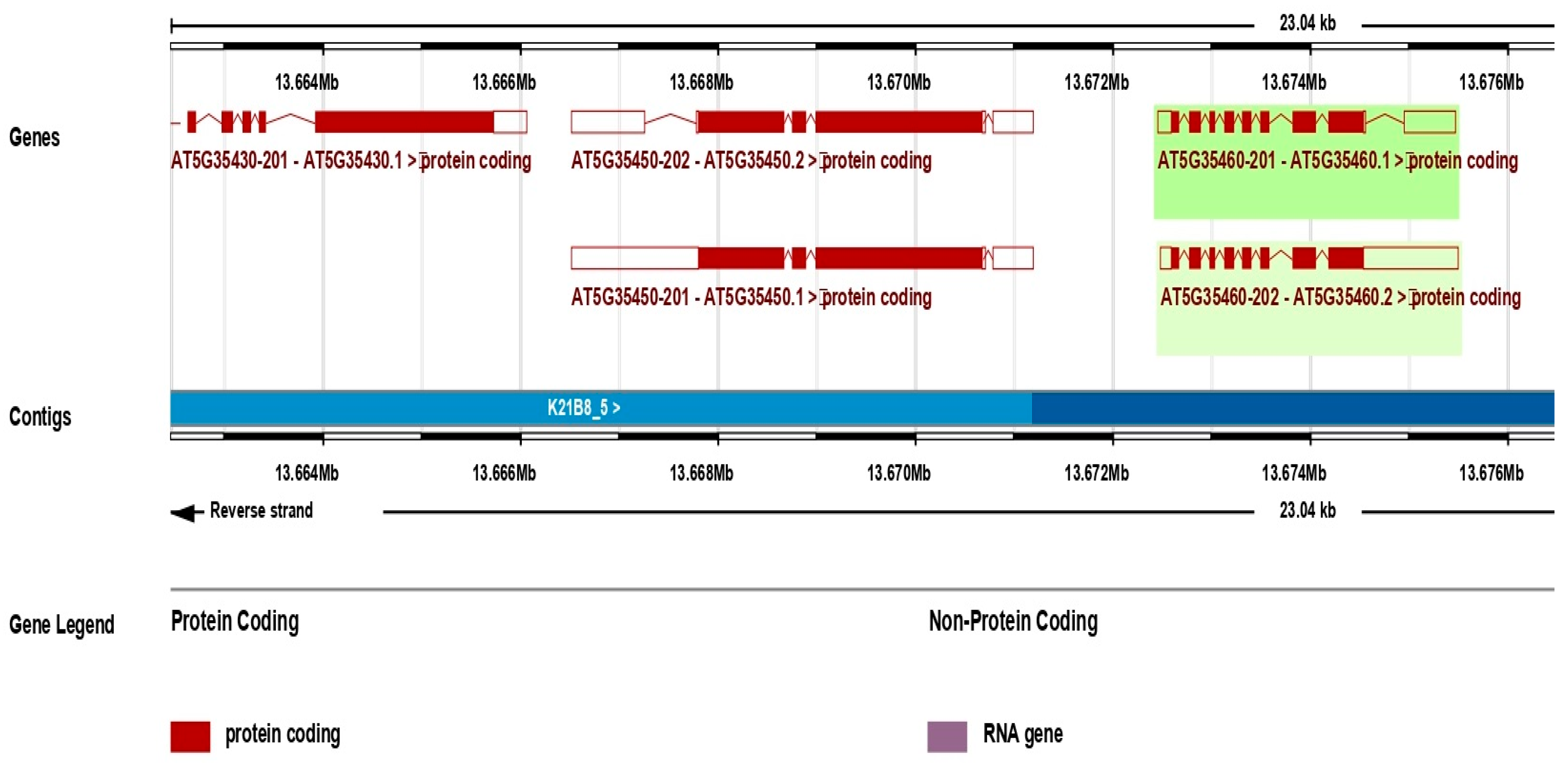
The AT5G35460 gene of Arabidopsis thaliana encodes for glycerophosphocholine acyltransferase 1 (GPCAT1) and it is located on chromosome 5 (13,672,463–13,675,476 bp, forward strand). This protein-coding locus produces two splice variants, AT5G35460.1 and AT5G35460.2, and comprises nine exons separated by eight introns. The coding sequence aligns precisely with the annotated genomic coordinates with exons of ~50–150 bp and introns ranging from several dozen to a few hundred base pairs. Both isoforms retain the DUF2838 domain (IPR021261), which is essential for phospholipid metabolism (Figure 1). Comparison of the two splice variants showed that all four mutants in AT5G35460.1 and AT5G35460.2 maintain the entire DUF2838 domain and therefore, they may still have catalytic activity. There were no substantial variations in their predicted domain architecture between the isoforms. Public expression datasets (Arabidopsis eFP Browser) show that AT5G35460.1 is predominant in all tissues, mature pollen and senescing leaves included, whereas AT5G35460.2 is down-regulated at modest levels and without significant tissue-specific enrichment. This indicates that the main isoform probably mediates functional response. The CDS begins with an ATG start codon and ends with a TGA stop codon and introns display canonical GT–AG splice sites. Alternative splicing likely contributes to functional variation across tissues. Expression data show activity in mature pollen, leaves, cotyledons, roots and floral organs that is consistent with a role in phosphatidylcholine biosynthesis. The defined exon–intron structure provides a basis for investigating transcriptional regulation and functional diversity of its isoforms.

3.2. Conserved Domain Results and Functional Insights

InterPro analysis of the AT5G35460 protein (381 amino acids) identified a single conserved domain, PF10998 (DUF2838), spanning residues 67–176 with a highly significant E-value of 5.5 × 10⁻³⁵. Although it has been reported as a domain of unknown function, cross-referencing with Pfam and PANTHER linked it to glycerophosphocholine acyltransferase 1 activity. The predicted function was further supported by association with multiple MetaCyc pathways, including PWY-3602, PWY-361, PWY-4801, PWY-4922 and PWY-5048, and all pathways are related to glycerophospholipid metabolism. These findings indicate that AT5G35460 encodes a putative membrane-associated acyltransferase involved in phospholipid remodeling, consistent with its conserved domain architecture.

3.3. Subcellular Localization and Structural Results

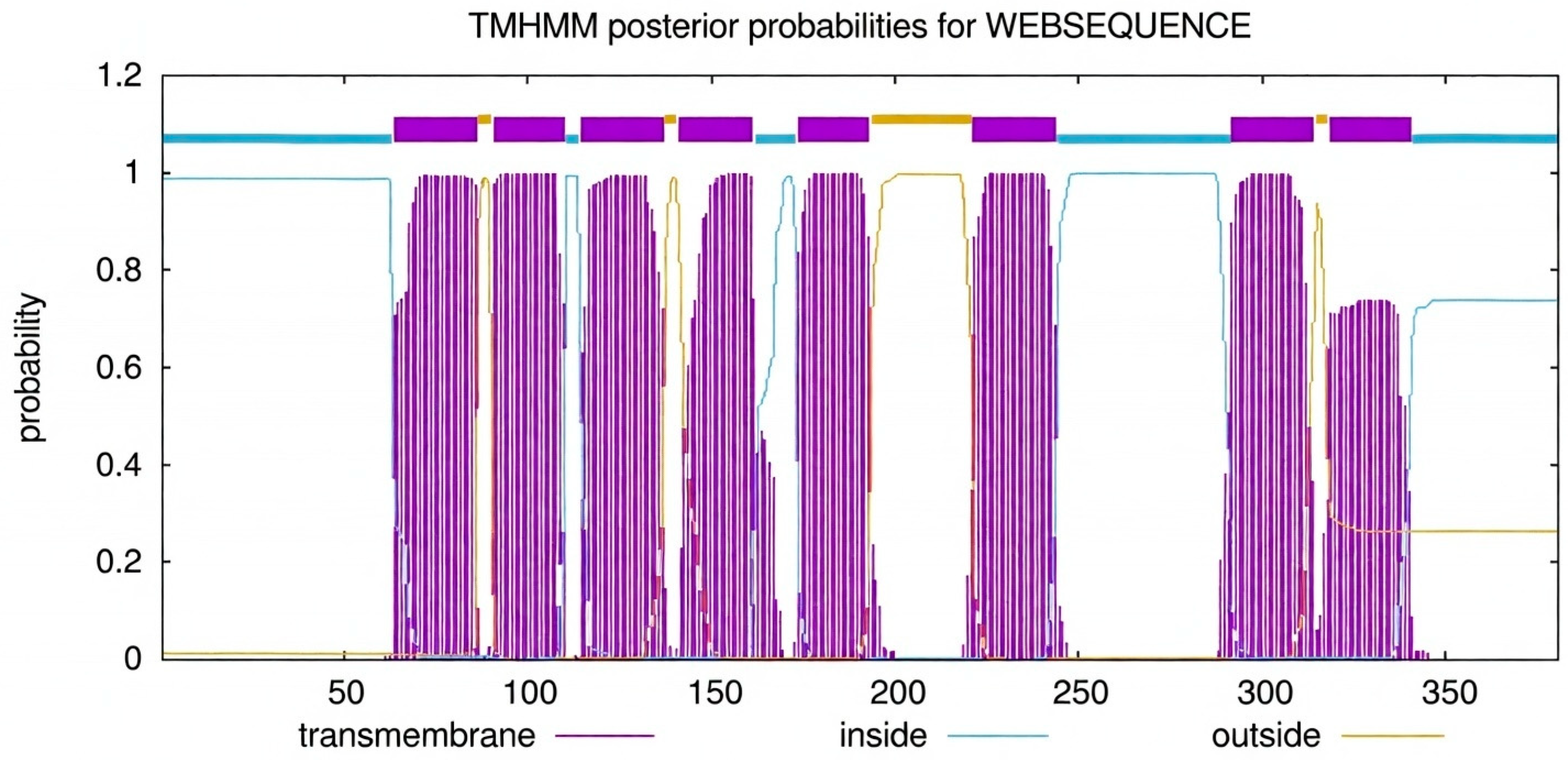
Subcellular topology prediction using TMHMM and Phobius identified multiple hydrophobic segments, indicating that AT5G35460 is a multi-pass integral membrane protein with alternating cytoplasmic and non-cytoplasmic loops (Figure 2). PANTHER classification placed the sequence within family PTHR31201, and no additional conserved motifs or repeats were detected (Figure 2).
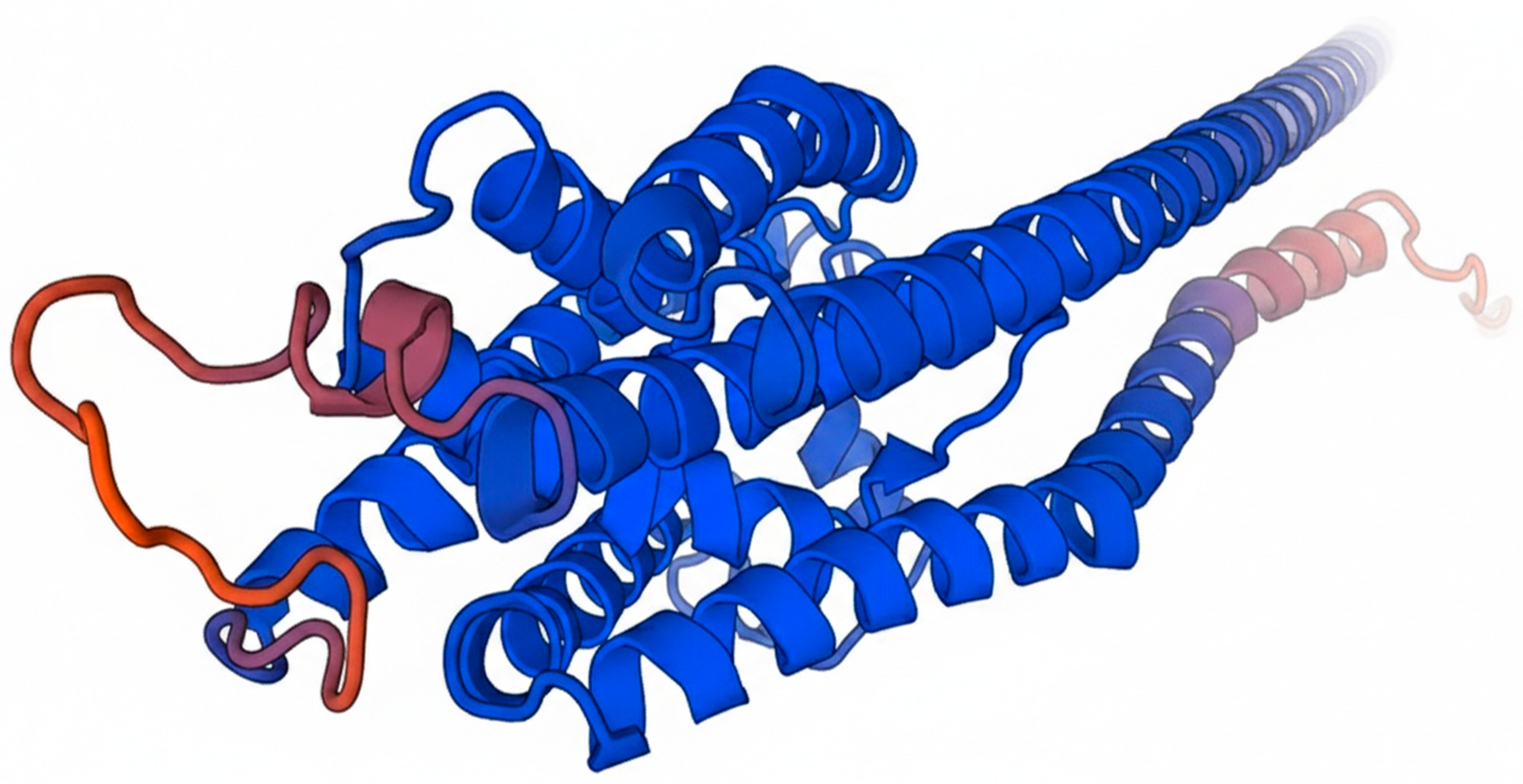
Functional annotation linked the protein to the phosphatidylcholine biosynthetic process (GO:0006656) and multiple lipid metabolism pathways in MetaCyc. The AlphaFold-predicted structure of AT5G35460 was retrieved and assessed using SWISS-MODEL quality metrics (GMQE 0.86), confirming agreement with the predicted transmembrane architecture (Figure 3). Two additional low-identity, partial-coverage models (GMQE 0.04) were generated from unrelated templates but were considered unreliable. The combined topology and structural evidence support the classification of AT5G35460 as a membrane-bound glycerophosphocholine acyltransferase likely to function in phospholipid remodeling.

3.4. Evolutionary Conservation and Phylogenetic Analysis

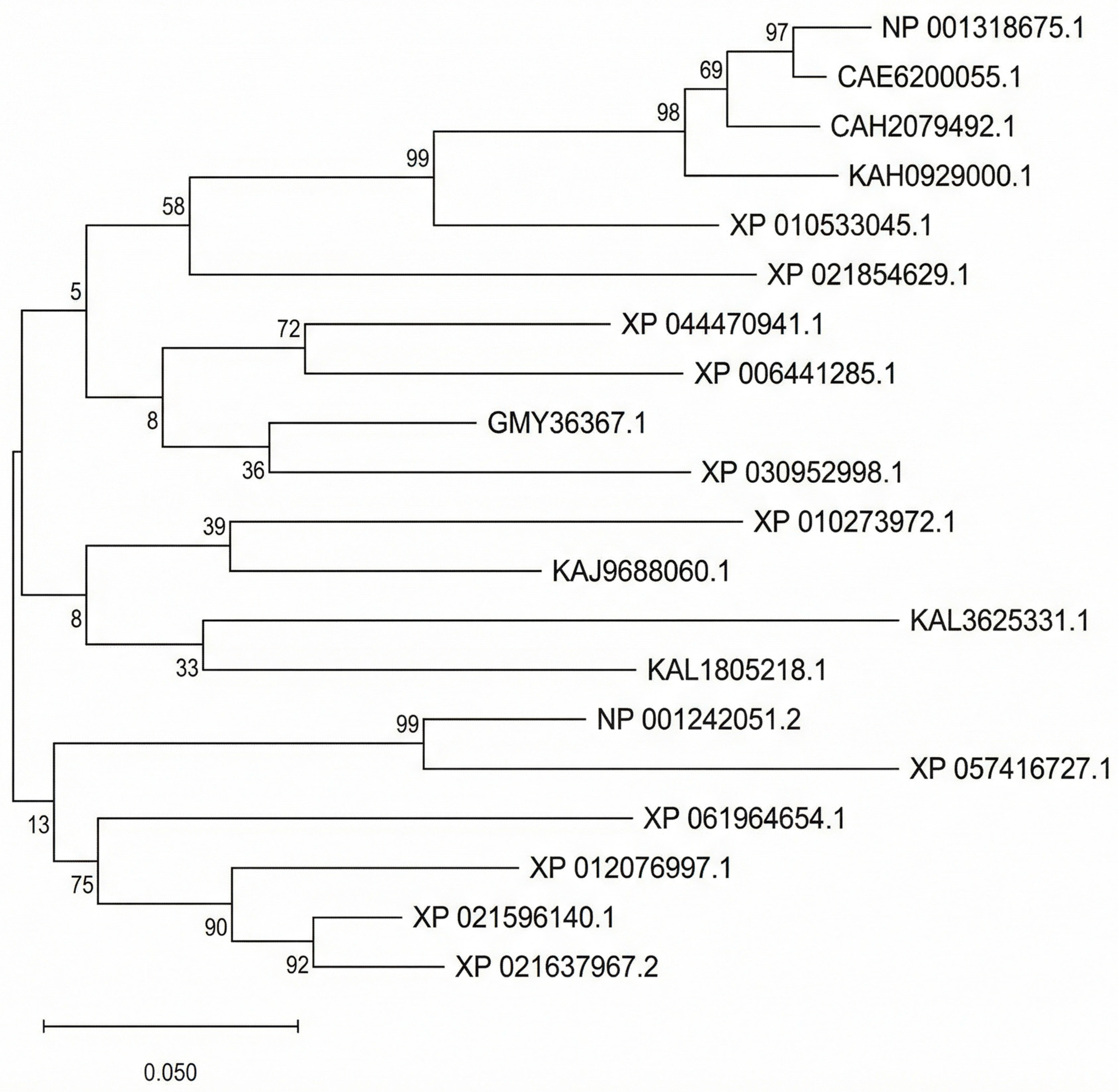
Homologous protein sequences of AT5G35460 were found in different plant species: Brassica napus, Oryza sativa, and Zea mays (Figure 4). The aligned regions are highly conserved, notably in the predicted catalytic domain as visualized by Clustal Omega multiple sequence alignment. Phylogenetic reconstruction based on maximum likelihood in MEGA12X placed AT5G35460 into a clearly defined clade of plant glycerophosphocholine acyltransferase1 (GPCAT1) orthologs. The phylogenetic relationships were supported by moderate to high bootstrap values exceeding 90% across key nodes, which indicated the robust phylogenetic resolution. The close clustering of AT5G35460 with orthologs from both monocot and dicot species suggests that its function has been maintained throughout plant evolution. Phylogenetic conservation also suggests that AT5G35460 may encode a rate-limiting enzyme in glycerophospholipid metabolism, the evolutionary pressure retaining its structural and functional identity.

3.5. Expression Dynamics and Co-Expression Relationships

Tissue-specific and developmental patterns of expression of AT5G35460 were investigated in ATTED-II v11. 0; Arabidopsis eFP Browser and Genevestigator (all accessed in December 2024). These databases offer standardized transcriptome datasets and well curated visualizations, which eliminate the heterogeneity across experiments. The highest expression of AT5G35460 was identified in mature pollen and senescing leaves from Arabidopsis thaliana eFP Browser [18]. Transcript levels were maximal at late pollen development and up-regulated during leaf senescence, both stages with a need for active membrane lipid remodeling. This pattern supports a potential role in maintaining membrane stability and facilitating phosphatidylcholine turnover during developmental transitions. Co-expression analysis using ATTED-II identified 50 genes with strong expression correlation (Mutual Rank < 20). These include genes such as CDS2 (cytidinediphosphate diacylglycerol synthase 2), SBH1 (sphingoid base hydroxylase 1), BI1 (BAX inhibitor 1), LACS8 (long-chain acyl-CoA synthetase 8) and LPPγ (phosphatidic acid phosphatase family protein), which are all involved in lipid biosynthesis, vesicle trafficking and membrane remodeling. Several co-expressed genes (Table 1) also participate in abiotic and biotic stress responses, suggesting that AT5G35460 may be associated with networks involved in lipid metabolism and environmental adaptation (Table S1: Co-expressed genes associated with AT5G35460 (MR < 20).

3.6. Promoter Motif Analysis and Regulatory Insights

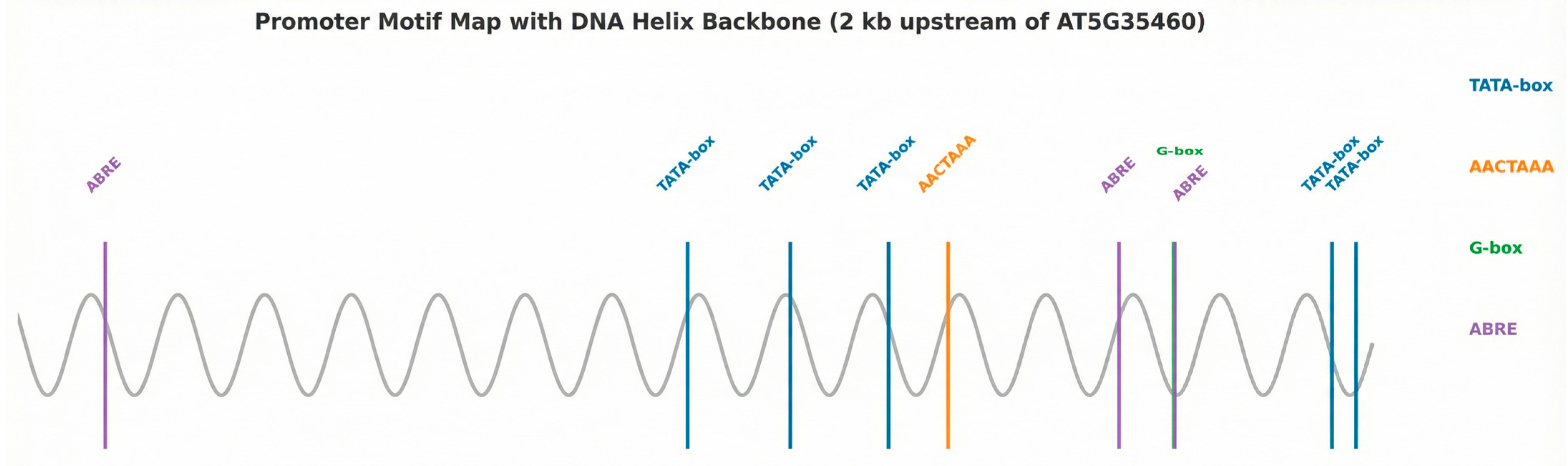
Scanning of the 2 kb upstream promoter region of AT5G35460 (Chr5: 13,671,863–13,676,103; TAIR10) revealed several conserved cis-acting elements. An AACTAAA motif previously associated with pollen-related transcriptional regulation was identified at 490 bp relative to the transcription start site (TSS). Although present as a single occurrence, its co-existence with additional regulatory elements such as ABRE and G-box motifs suggests potential combinatorial transcriptional control. Multiple TATA-box motifs (TATAAA) were detected, including two core promoter-proximal elements at −47 bp and −19 bp likely corresponding to basal transcription machinery binding sites. In addition, a G-box motif (CACGTG) was located at 230 bp and ABRE core motifs (ACGTG) were observed at −293 bp and −229 bp, suggesting potential regulation by bZIP/bHLH transcription factors and abscisic acid or stress signaling pathways. These motif signatures support the hypothesis that AT5G35460 expression is influenced by both tissue-specific transcriptional programs and stress-responsive regulatory networks (Figure 5).

3.7. Gene Ontology (GO) Enrichment Results

Gene Ontology (GO) enrichment of genes co-expressed with AT5G35460 revealed significant associations with vesicle-mediated transport (GO:0016192), protein targeting to membranes (GO:0006612), and phosphatidylinositol biosynthesis (GO:0006661). These enriched categories suggest that AT5G35460 is associated with a broader co-expression network related to membrane lipid homeostasis and intracellular trafficking. KEGG pathway enrichment analysis for the co-expressed gene set indicated statistically significant overrepresentation of metabolic pathways (FDR = 1.7 × 10⁻²), indicating that AT5G35460 may be associated with a wider range of metabolic networks. These results are consistent with GO enrichment results and again support that AT5G35460 is involved in dynamic membrane lipid-related metabolic processes.

4. Discussion

This integrative in silico analysis supports the hypothesis that AT5G35460 (GPCAT1) functions as a glycerophosphocholine acyltransferase, an integral player in phosphatidylcholine (PC) homeostasis and membrane lipid remodeling in Arabidopsis thaliana. This interpretation is supported by domain architecture, structural predictions, phylogenetic conservation and expression dynamics. The identification of the DUF2838 domain consistent with glycerophosphocholine acyltransferase activity aligns AT5G35460 with the biochemical activity of GPCAT as demonstrated in earlier enzymatic studies. GPCAT enzymes use acyl-CoA to acylate glycerophosphocholine (GPC), producing lysophosphatidylcholine (LPC), which is later converted back to PC and contributes to a PC recycling or remodeling pathway [22]. These enzymes exhibit broad acyl specificity and are structurally distinct from other acyltransferases and traits corresponding with our domain analysis. Functional investigations in yeast and plant extracts confirm that GPCAT activity participates in PC biosynthesis and remodeling. For example, labeling studies in yeast confirm that the Gpc1 enzyme (yeast GPCAT) plays a role in PC biosynthesis via GPC reacylation [22]. Moreover, the conservation of this activity in plants underscores its evolutionary importance. Hallström et al. (2022) reported that knockouts of the GPCAT gene in Arabidopsis exhibited altered expression of sphingolipid-related genes under cold stress, suggesting GPCAT’s involvement in lipid regulation during low-temperature stress [23]. These observations complement the co-expression analysis that associates AT5G35460 with lipid metabolism genes such as LACS8 and LPPγ as well as stress-responsive regulators, hinting at a functional role in stress-adaptive membrane remodeling. While the AACTAAA motif was detected as a single instance, its presence alongside ABA-responsive and stress-related elements indicates a likely role in coordinated regulatory activity rather than as an independent determinant of pollen specificity. The Gpc1 enzyme is essential in a post-synthetic PC deacylation/reacylation pathway (PC-DRP) in Saccharomyces cerevisiae, altering the saturation profile of PC species. Loss of Gpc1 induces shifts in PC composition and compromises stationary-phase viability [24], while in Candida albicans, Gpc1 knockout affects PC levels, hyphal growth and long-term viability, emphasizing its functional importance across eukaryotes. These findings support the notion that GPCAT family members, including AT5G35460, may be critical for membrane remodeling, developmental transitions and viability. The presence of two splice variants that both retain the catalytic domain further supports functional conservation of AT5G35460 activity. High levels of AT5G35460 transcripts are observed in mature pollen and senescing leaves, tissues where rapid membrane rearrangement and turnover occurs. This suggests that GPCAT1-generated PC remodeling might fulfill the specific demand for increased membrane dynamics during reproductive development and programmed senescence, both times when acyl-editing and control of membrane fluidity are most critical. Indeed, PC acyl-editing enables the property-maintaining capability under changing physiological conditions of membrane systems, and as an ulterior model, AT5G35460 catalyzes GPC-E2 formation to control pool integrity (acyl chain variety) and the flexible response to developmental cues and environmental stress [25].

5. Conclusions

Bioinformatics-based observations, supported by the scientific literature, expression specificity and evolutionary conservation as well as reported functions of GPCAT enzymes, support the classification of AT5G35460 as an orphan GPCAT1 homolog and its identification as an active GPCAT1 homolog in Arabidopsis thaliana. It is located at a critical branch point for PC acyl-editing, membrane homeostasis and developmental viability. Comparing computations to the available experimental literature serves to illustrate both the validity and importance of functional validation of computational predictions.

Supplementary Materials

The following supporting information can be downloaded at: https://www.mdpi.com/article/10.3390/membranes16030088/s1, Table S1: Co-expressed genes associated with AT5G35460 (MR < 20).

Author Contributions

M.A.S.: Investigation, writing—original draft, and writing—review and editing. M.M.: Conceptualization, methodology, data curation, writing—original draft, software, and writing—review and editing. M.U.: Project administration and writing—review and editing. A.A. (Aqleem Abbas) and M.J.R.: Resources and writing—review and editing. A.A. (Amjad Ali) and S.A.Q.: Validation and writing—review and editing. Y.I.: Supervision and writing—review and editing. E.M.A.: Formal analysis and writing—review and editing. A.E.A.: Visualization and writing—review and editing. All authors have read and agreed to the published version of the manuscript.

Funding

The authors acknowledge the financial support provided King Khalid University (grant number RGP2/715/46).

Institutional Review Board Statement

Ethical review and approval were not required for the study on human participants in accordance with the local legislation and institutional requirements.

Informed Consent Statement

Not applicable.

Data Availability Statement

The raw data supporting the conclusions of this article will be made available by the authors, without undue reservation.

Acknowledgments

The authors extend their appreciation to the Deanship of Scientific Research and Graduate Studies at King Khalid University for funding this work through the Large Research Project under grant number RGP2/715/46.

Conflicts of Interest

The authors declare that the research was conducted in the absence of any commercial or financial relationships that could be construed as potential conflicts of interest.

References

  1. Ischebeck, T. Lipid composition of Arabidopsis thaliana pollen. In Encyclopedia of Lipidomics (Living Reference Work Entry); Wenk, M.R., Ed.; Springer: Berlin/Heidelberg, Germany, 2016; pp. 1–5. [Google Scholar]
  2. Song, J.; Mavraganis, I.; Shen, W.; Yang, H.; Patterson, N.; Wang, L.; Xiang, D.; Cui, Y.; Zou, J. Pistil-derived lipids influence pollen tube growth and male fertility in Arabidopsis thaliana. Plant Physiol. 2024, 196, 763–772. [Google Scholar] [CrossRef]
  3. Zheng, Z.; Xia, Q.; Dauk, M.; Shen, W.; Selvaraj, G.; Zou, J. Arabidopsis AtGPAT1, a member of the membrane-bound glycerol-3-phosphate acyltransferase gene family, is essential for tapetum differentiation and male fertility. Plant Cell 2003, 15, 1872–1887. [Google Scholar] [CrossRef]
  4. Li, X.-C.; Zhu, J.; Yang, J.; Zhang, G.-R.; Xing, W.-F.; Zhang, S.; Yang, Z.-N. Glycerol-3-phosphate acyltransferase 6 (GPAT6) is important for tapetum development in Arabidopsis and plays multiple roles in plant fertility. Mol. Plant 2012, 5, 131–142. [Google Scholar] [CrossRef] [PubMed]
  5. Lager, I.; Glab, B.; Eriksson, L.; Chen, G.; Banas, A.; Stymne, S. Novel reactions in acyl editing of phosphatidylcholine by lysophosphatidylcholine transacylase (LPCT) and acyl-CoA: Glycerophosphocholine acyltransferase (GPCAT) activities in microsomal preparations of plant tissues. Planta 2015, 241, 347–358. [Google Scholar] [CrossRef] [PubMed]
  6. Hamdan, M.F.; Lung, S.-C.; Guo, Z.-H.; Chye, M.-L. Roles of acyl-CoA-binding proteins in plant reproduction. J. Exp. Bot. 2022, 73, 2918–2936. [Google Scholar] [CrossRef] [PubMed]
  7. Serrano, N.; Pejchar, P.; Soukupova, H.; Hubalek, M.; Potocký, M. Comprehensive analysis of glycerolipid dynamics during tobacco pollen germination and pollen tube growth. Front. Plant Sci. 2022, 13, 1028311. [Google Scholar] [CrossRef]
  8. Huala, E.; Dickerman, A.W.; Garcia-Hernandez, M.; Weems, D.; Reiser, L.; LaFond, F.; Hanley, D.; Kiphart, D.; Zhuang, M.; Huang, W.; et al. The Arabidopsis Information Resource (TAIR): A comprehensive database and web-based information retrieval, analysis, and visualization system for a model plant. Nucleic Acids Res. 2001, 29, 102–105. [Google Scholar] [CrossRef]
  9. Lamesch, P.; Berardini, T.Z.; Li, D.; Swarbreck, D.; Wilks, C.; Sasidharan, R.; Muller, R.; Dreher, K.; Alexander, D.L.; Garcia-Hernandez, M.; et al. The Arabidopsis Information Resource (TAIR): Improved gene annotation and new tools. Nucleic Acids Res. 2012, 40, D1202–D1210. [Google Scholar] [CrossRef]
  10. Jones, P.; Binns, D.; Chang, H.-Y.; Fraser, M.; Li, W.; McAnulla, C.; McWilliam, H.; Maslen, J.; Mitchell, A.; Nuka, G.; et al. InterProScan 5: Genome-scale protein function classification. Bioinformatics 2014, 30, 1236–1240. [Google Scholar] [CrossRef]
  11. Hooper, C.M.; Castleden, I.R.; Tanz, S.K.; Aryamanesh, N.; Millar, A.H. SUBA4: The interactive data analysis centre for Arabidopsis subcellular protein locations. Nucleic Acids Res. 2017, 45, D1064–D1074. [Google Scholar] [CrossRef]
  12. Krogh, A.; Larsson, B.; von Heijne, G.; Sonnhammer, E.L. Predicting transmembrane protein topology with a hidden Markov model: Application to complete genomes. J. Mol. Biol. 2001, 305, 567–580. [Google Scholar] [CrossRef]
  13. Käll, L.; Krogh, A.; Sonnhammer, E.L. Advantages of combined transmembrane topology and signal peptide prediction—The Phobius web server. Nucleic Acids Res. 2007, 35, W429–W432. [Google Scholar] [CrossRef]
  14. Waterhouse, A.; Bertoni, M.; Bienert, S.; Studer, G.; Tauriello, G.; Gumienny, R.; Heer, F.T.; De Beer, T.A.P.; Rempfer, C.; Bordoli, L.; et al. SWISS-MODEL: Homology modelling of protein structures and complexes. Nucleic Acids Res. 2018, 46, W296–W303. [Google Scholar] [CrossRef] [PubMed]
  15. Sievers, F.; Wilm, A.; Dineen, D.; Gibson, T.J.; Karplus, K.; Li, W.; Lopez, R.; McWilliam, H.; Remmert, M.; Söding, J.; et al. Fast, scalable generation of high-quality protein multiple sequence alignments using Clustal Omega. Mol. Syst. Biol. 2011, 7, 539. [Google Scholar] [CrossRef] [PubMed]
  16. Kumar, S.; Stecher, G.; Li, M.; Knyaz, C.; Tamura, K. MEGA X: Molecular evolutionary genetics analysis across computing platforms. Mol. Biol. Evol. 2018, 35, 1547–1549. [Google Scholar] [CrossRef]
  17. Obayashi, T.; Hibara, H.; Kagaya, Y.; Aoki, Y.; Kinoshita, K. ATTED-II v11: A plant gene coexpression database using a sample balancing technique by subagging of principal components. Plant Cell Physiol. 2022, 63, 869–881. [Google Scholar] [CrossRef]
  18. Winter, D.; Vinegar, B.; Nahal, H.; Ammar, R.; Wilson, G.V.; Provart, N.J. An “Electronic Fluorescent Pictograph” browser for exploring and analyzing large-scale biological data sets. PLoS ONE 2007, 2, e718. [Google Scholar] [CrossRef] [PubMed]
  19. Lescot, M.; Déhais, P.; Thijs, G.; Marchal, K.; Moreau, Y.; Van de Peer, Y.; Rouzé, P.; Rombauts, S. PlantCARE, a database of plant cis-acting regulatory elements and a portal to tools for in silico analysis of promoter sequences. Nucleic Acids Res. 2002, 30, 325–327. [Google Scholar] [CrossRef]
  20. Tian, T.; Liu, Y.; Yan, H.; You, Q.; Yi, X.; Du, Z.; Xu, W.; Su, Z. agriGO v2. 0: A GO analysis toolkit for the agricultural community, 2017 update. Nucleic Acids Res. 2017, 45, W122–W129. [Google Scholar] [CrossRef]
  21. Ge, S.X.; Jung, D.; Yao, R. ShinyGO: A graphical gene-set enrichment tool for animals and plants. Bioinformatics 2020, 36, 2628–2629. [Google Scholar] [CrossRef]
  22. Głąb, B.; Beganovic, M.; Anaokar, S.; Hao, M.S.; Rasmusson, A.G.; Patton-Vogt, J.; Banaś, A.; Stymne, S.; Lager, I. Cloning of glycerophosphocholine acyltransferase (GPCAT) from fungi and plants: A novel enzyme in phosphatidylcholine synthesis. J. Biol. Chem. 2016, 291, 25066–25076. [Google Scholar] [CrossRef] [PubMed]
  23. Hallström, I. Finding the Physiological Function of the Enzyme GPCAT: A Gene Expression Study Using Arabidopsis Plants with Silenced GPCAT Gene. Bachelor’s Thesis, Swedish University of Agricultural Sciences (SLU), Department of Plant Breeding, Alnarp, Sweden, 2022. Available online: https://stud.epsilon.slu.se/18351/1/hallstroem_i_20220923.pdf (accessed on 1 December 2024).
  24. Anaokar, S.; Kodali, R.; Jonik, B.; Renne, M.F.; Brouwers, J.F.; Lager, I.; de Kroon, A.I.; Patton-Vogt, J. The glycerophosphocholine acyltransferase Gpc1 is part of a phosphatidylcholine (PC)-remodeling pathway that alters PC species in yeast. J. Biol. Chem. 2019, 294, 1189–1201. [Google Scholar] [CrossRef] [PubMed]
  25. Stålberg, K.; Neal, A.C.; Ronne, H.; Ståhl, U. Identification of a novel GPCAT activity and a new pathway for phosphatidylcholine biosynthesis in S. cerevisiae. J. Lipid Res. 2008, 49, 1794–1806. [Google Scholar] [CrossRef] [PubMed]
Figure 1. Exon–intron organization of AT5G35460 (GPCAT1) splice variants in Arabidopsis thaliana.
Membranes 16 00088 g001
Figure 2. SWISS-MODEL 3D homology model of AT5G35460 highlighting catalytic domain orientation and membrane-anchoring helices. Colors represent the confidence level of the predicted structure, with blue indicating high confidence and warmer colors (yellow to red) indicating lower confidence regions.
Membranes 16 00088 g002
Figure 3. TMHMM posterior probability plot showing predicted transmembrane helices and orientation of AT5G35460 within the membrane.
Membranes 16 00088 g003
Figure 4. Maximum likelihood phylogenetic tree of AT5G35460 and GPCAT1 homologs from diverse plant species constructed using the JTT substitution model. Bootstrap support values (1000 replicates) are shown at the nodes.
Membranes 16 00088 g004
Figure 5. Cis-regulatory elements in the 2 kb promoter region of AT5G35460, with the pollen-related AACTAAA motif highlighted.
Membranes 16 00088 g005
Table 1. Top 50 co-expressed genes with AT5G35460 identified by ATTED-II (Mutual Rank < 20) related to lipid remodeling and stress responses.
RankGene SymbolLocus IDAnnotationMRFunctional Category
1AT4G13010At4g13010Zinc-binding dehydrogenase6.6Redox metabolism
2SBH1At1g69640Sphingoid base hydroxylase6.2Sphingolipid metabolism
3LACS8At2g04350Acyl-CoA synthetase5.7Lipid metabolism
4BI1At5g47120BAX inhibitor5.6Stress response
5AT5G64170At5g64170DSP-like protein5.5Unknown/membrane-associated
6BTI2At4g11220VirB2 interacting protein5.5Vesicle trafficking
7REFAt1g67360Rubber elongation factor5.5Lipid storage/metabolism
8CRL1At2g33590Rossmann-fold protein5.3Enzyme activity
9MIPS2At2g22240Myo-inositol synthase5.3Membrane precursor synthesis
10TRX-like1At1g07700Thioredoxin protein5.2Redox regulation
11AT1G22750At1g22750Unknown protein5.2Unknown
12NAC069At4g01550NAC transcription factor5.0Developmental regulation
13AGP21-likeAt5g11680Arabinogalactan protein4.9Cell wall/reproduction
14BTI1At4g23630VirB2 interacting protein4.8Vesicle trafficking
15AT4G10430At4g10430TMPIT-like protein4.8Unknown
16ARD4At5g43850Cupin protein4.6Stress metabolism
17AT2G38740At2g38740HAD hydrolase4.6Metabolism
18AT5G67140At5g67140F-box protein4.5Protein turnover
19ECT8At1g79270RNA-binding protein4.5Gene regulation
20HISRSAt3g10250Histidine tRNA ligase4.5Protein synthesis
21SBT-likeAt2g33585Subtilisin protease4.4Protein processing
22AT4G11570At4g11570HAD hydrolase4.3Metabolism
23AT5G57610At5g57610Kinase domain protein4.3Signal transduction
24RING-likeAt3g61180RING protein4.3Ubiquitination
25GR1At3g24170Glutathione reductase4.3Stress tolerance
26AT1G73480At1g73480Hydrolase4.2Metabolism
27AT5G46170At5g46170F-box protein4.2Protein turnover
28AT5G65480At5g65480Unknown protein4.2Unknown
29SK1At2g21940Shikimate kinase4.2Secondary metabolism
30CLPB3At5g15450Caseinolytic protease4.1Protein folding
31LPPγAt5g03080Lipid phosphatase4.1Lipid metabolism
32AT5G15910At5g15910Rossmann protein4.0Metabolism
33ABA1At5g67030ABA biosynthesis enzyme4.0Stress hormone pathway
34AT5G51740At5g51740Peptidase4.0Protein turnover
35AT3G17800At3g17800tRNA ligase-like4.0Translation
36RER1BAt2g18240ER retention protein4.0Protein trafficking
37AT1G13360At1g13360Unknown protein3.9Unknown
38CCR1At1g15950Cinnamoyl-CoA reductase3.9Phenylpropanoid pathway
39AT1G66900At1g66900Hydrolase3.9Metabolism
40AT2G23780At2g23780RING protein3.9Ubiquitination
41PP2-A15At3g53000Phloem protein3.8Transport
42DJA-likeAt1g21660Chaperone protein3.8Protein folding
43AT3G07090At3g07090Thiol peptidase3.8Protein processing
44RKD-likeAt1g20640Transcription regulator3.8Development
45APRL7At5g18120Sulfur metabolism3.8Stress metabolism
46AT1G02270At1g02270Endonuclease3.8DNA repair
47AT4G28480At4g28480Heat shock protein3.8Stress response
48CDS2At4g22340CDP-DAG synthase3.7Lipid biosynthesis
49TPR4At1g04530TPR protein3.7Protein interaction
50GRP-likeAt4g22740Glycine-rich protein3.7Cell wall/stress
Disclaimer/Publisher’s Note: The statements, opinions and data contained in all publications are solely those of the individual author(s) and contributor(s) and not of MDPI and/or the editor(s). MDPI and/or the editor(s) disclaim responsibility for any injury to people or property resulting from any ideas, methods, instructions or products referred to in the content.