

Antiparasitic Veterinary Drugs—In Silico Studies of Membrane Permeability, Distribution in the Environment, Human Oral Absorption and Transport Across the Blood–Brain Barrier


Abstract
1. Introduction
2. Materials and Methods
2.1. Experimental Data
2.2. Calculated Molecular Descriptors and Membrane Permeability Data
2.3. Multiple Linear Regression (MLR) Models of log Koc, log BCF and Kp,uu,br
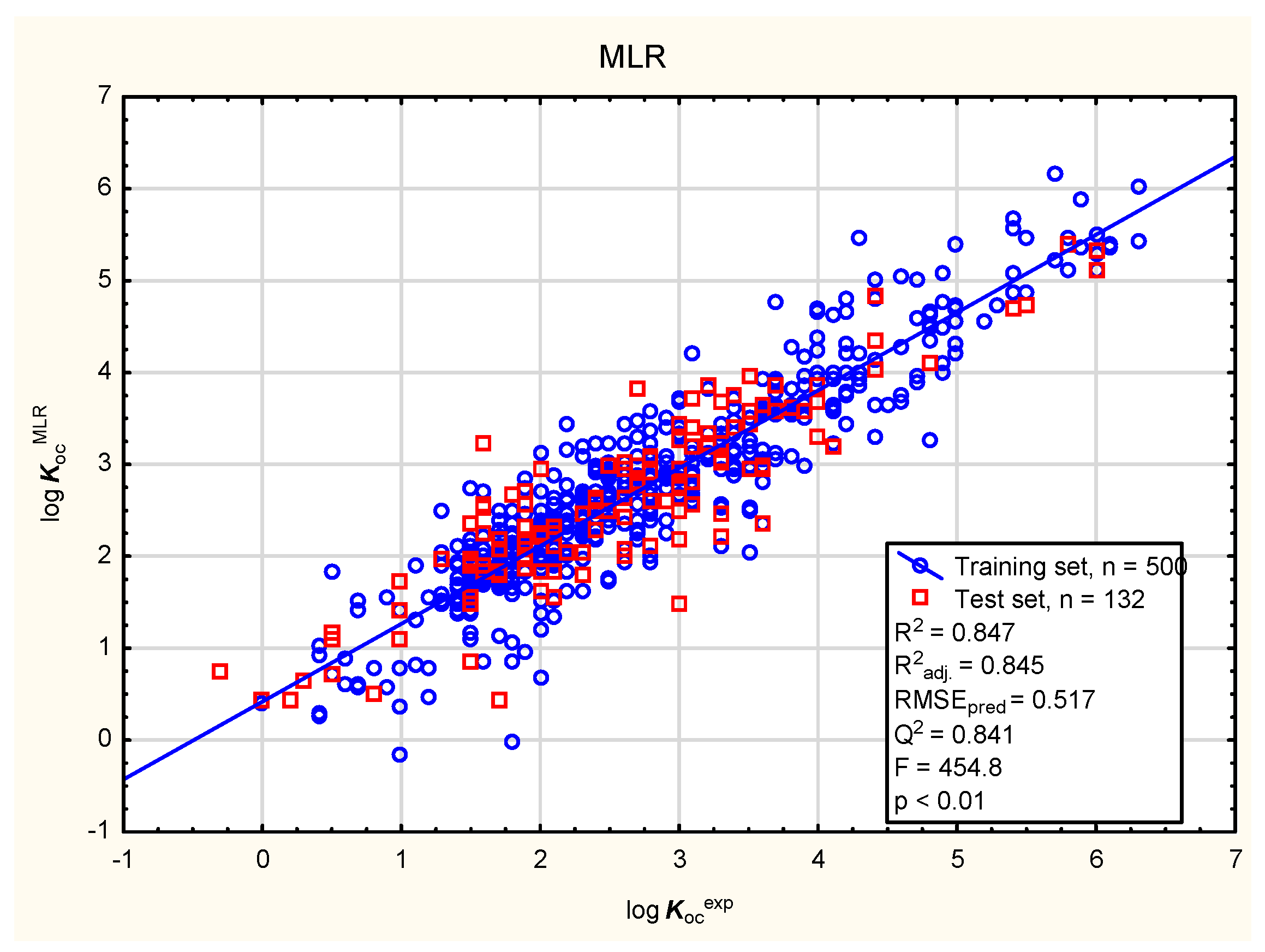
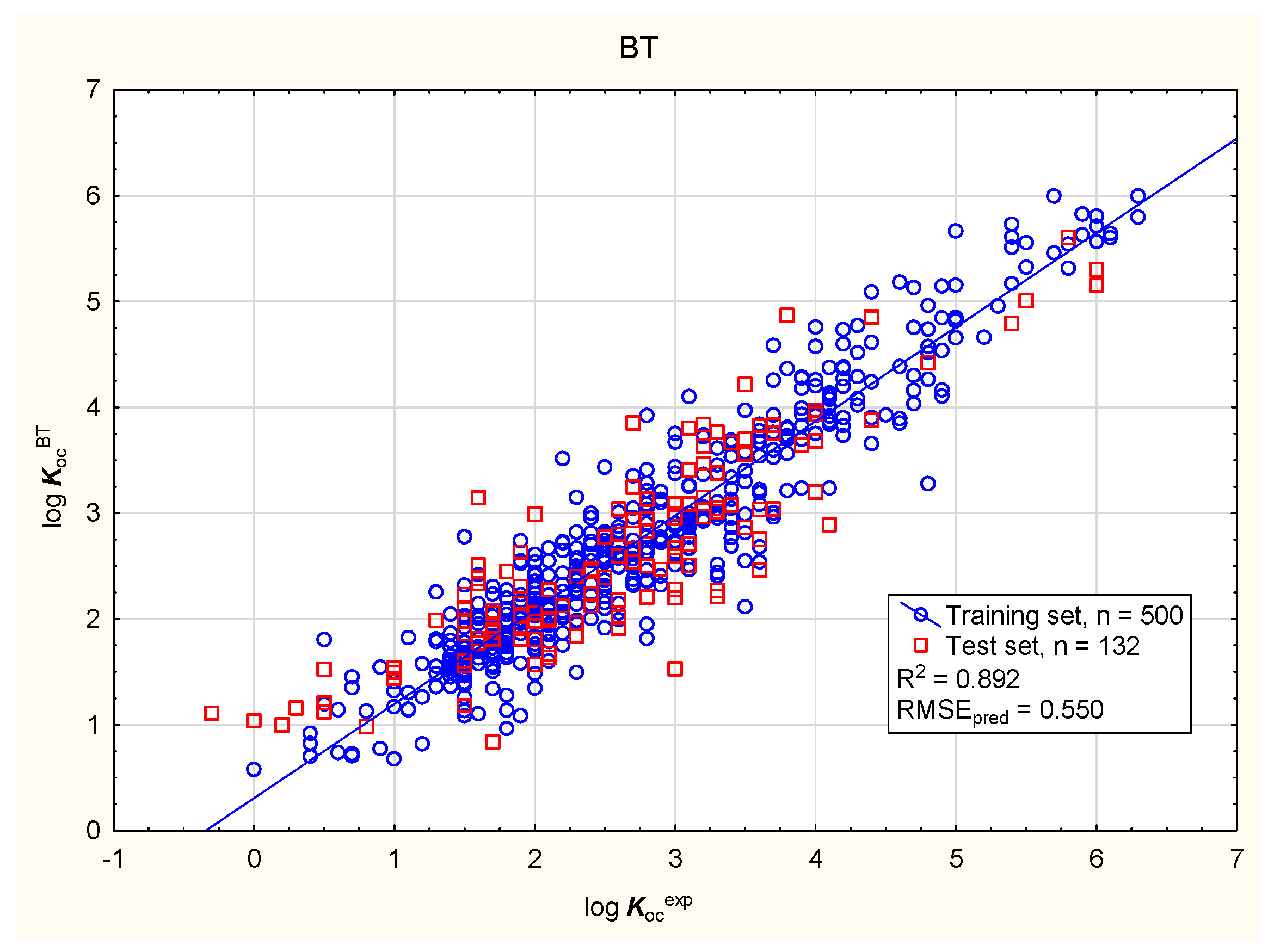
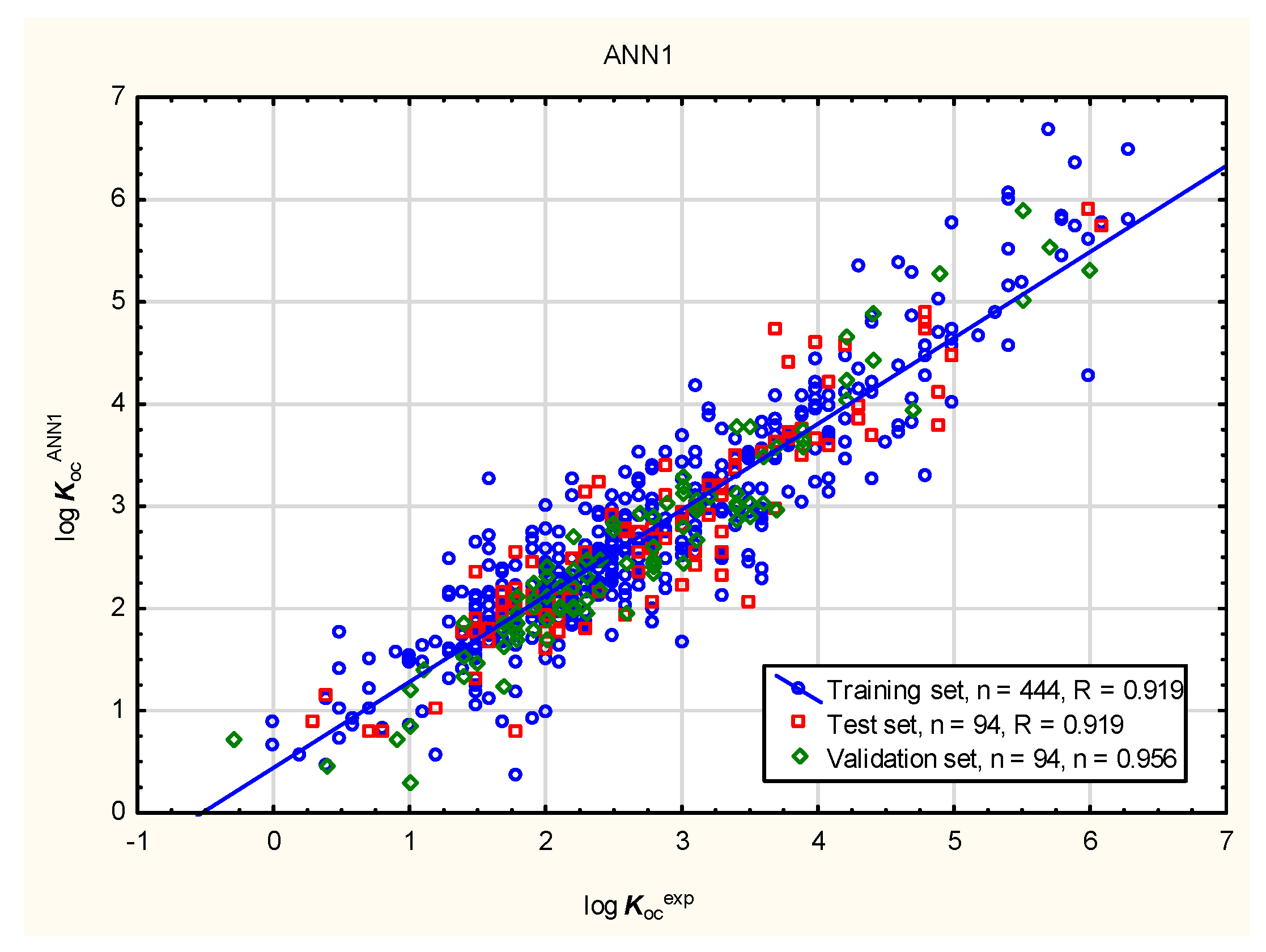
- Log Koc: training set—500; test set—132;
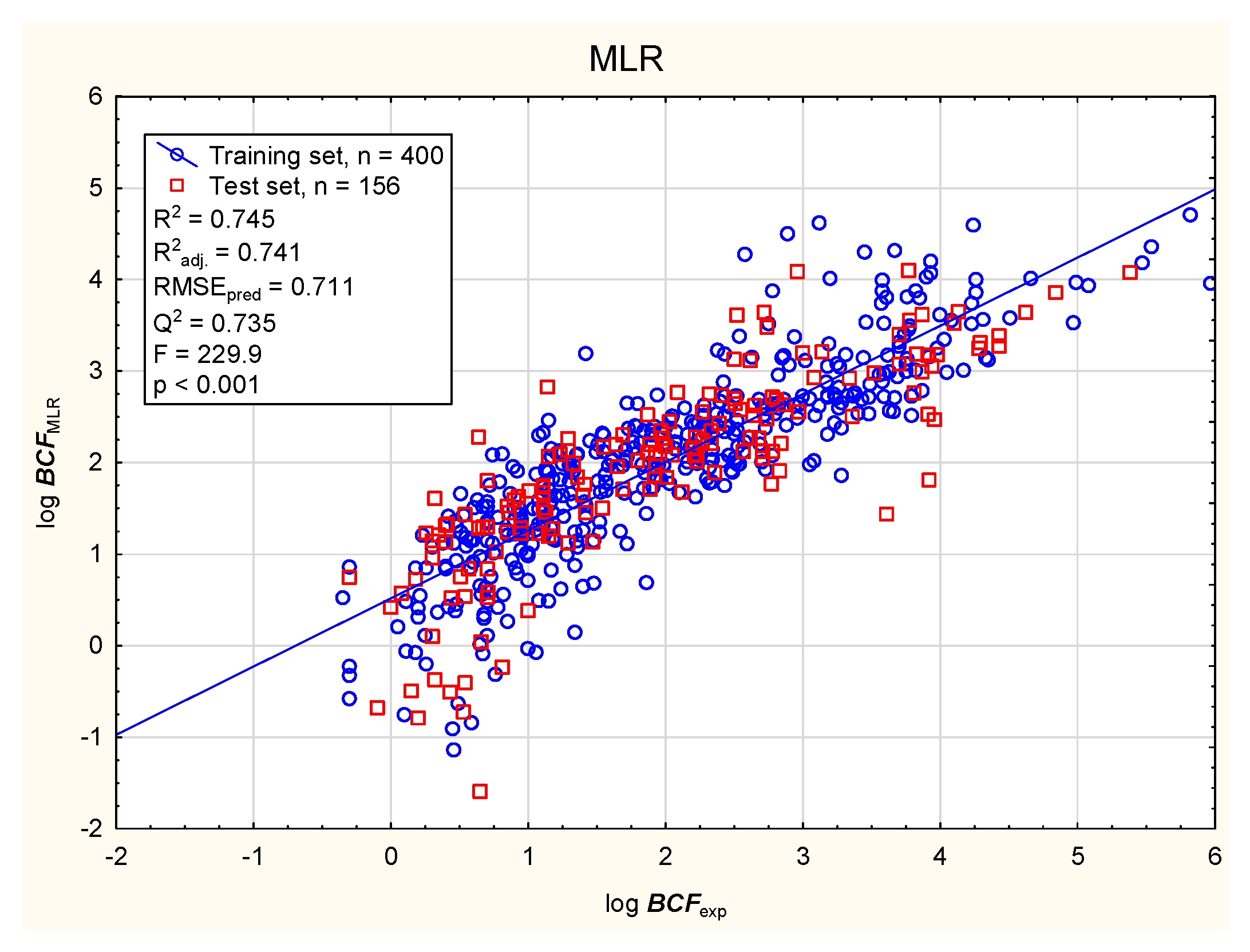
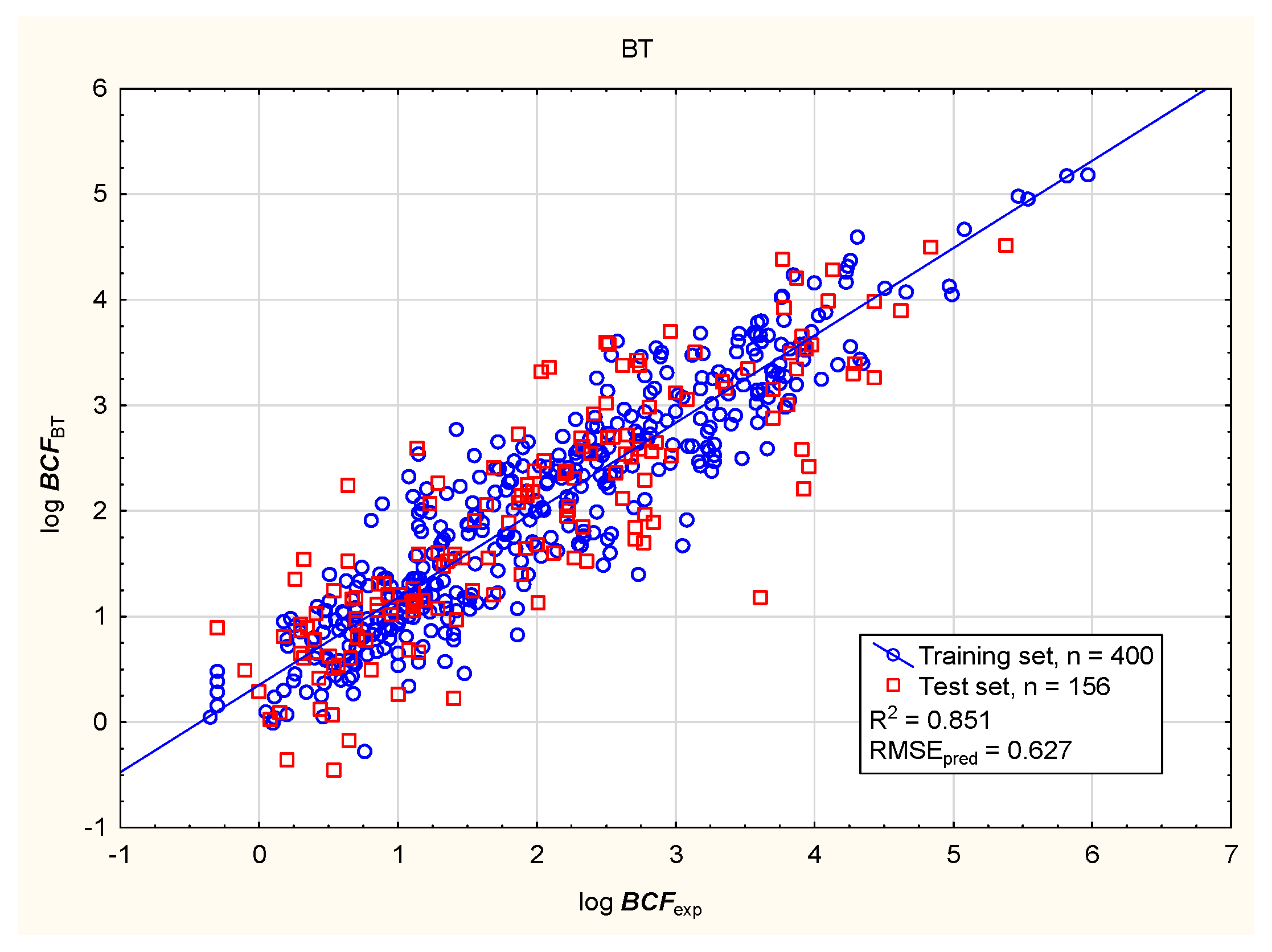
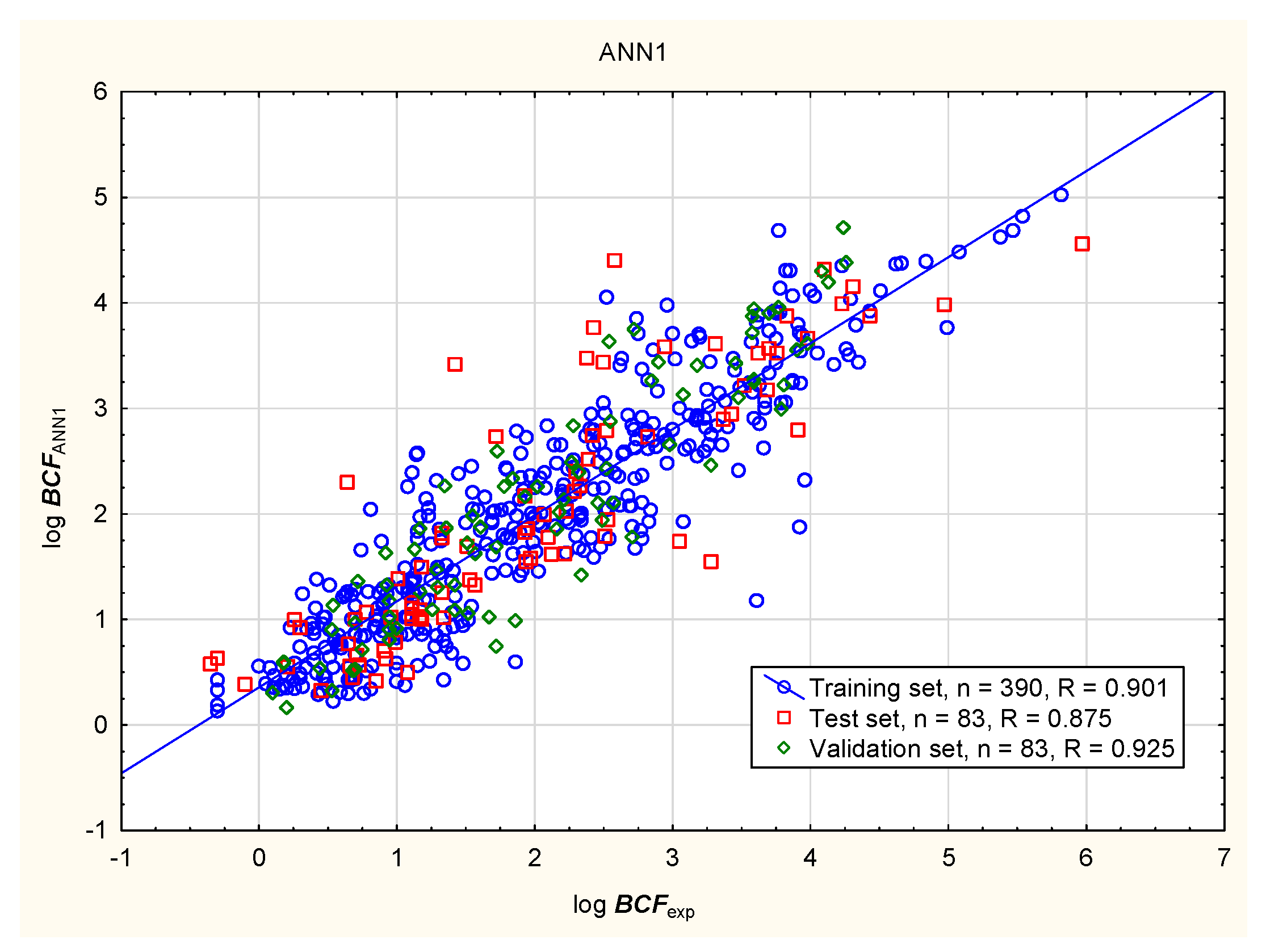
- Log BCF: training set—400; test set—156;
- Log Kp,uu: training set—60; test set—14.
2.4. Artificial Neural Network (ANN) Models of log Koc, log BCF, and Kp,uu,br
2.5. Boosted Tree (BT) Models of log Koc, log BCF, and Kp,uu,br
3. Results
3.1. Prediction of Mobility in Soil
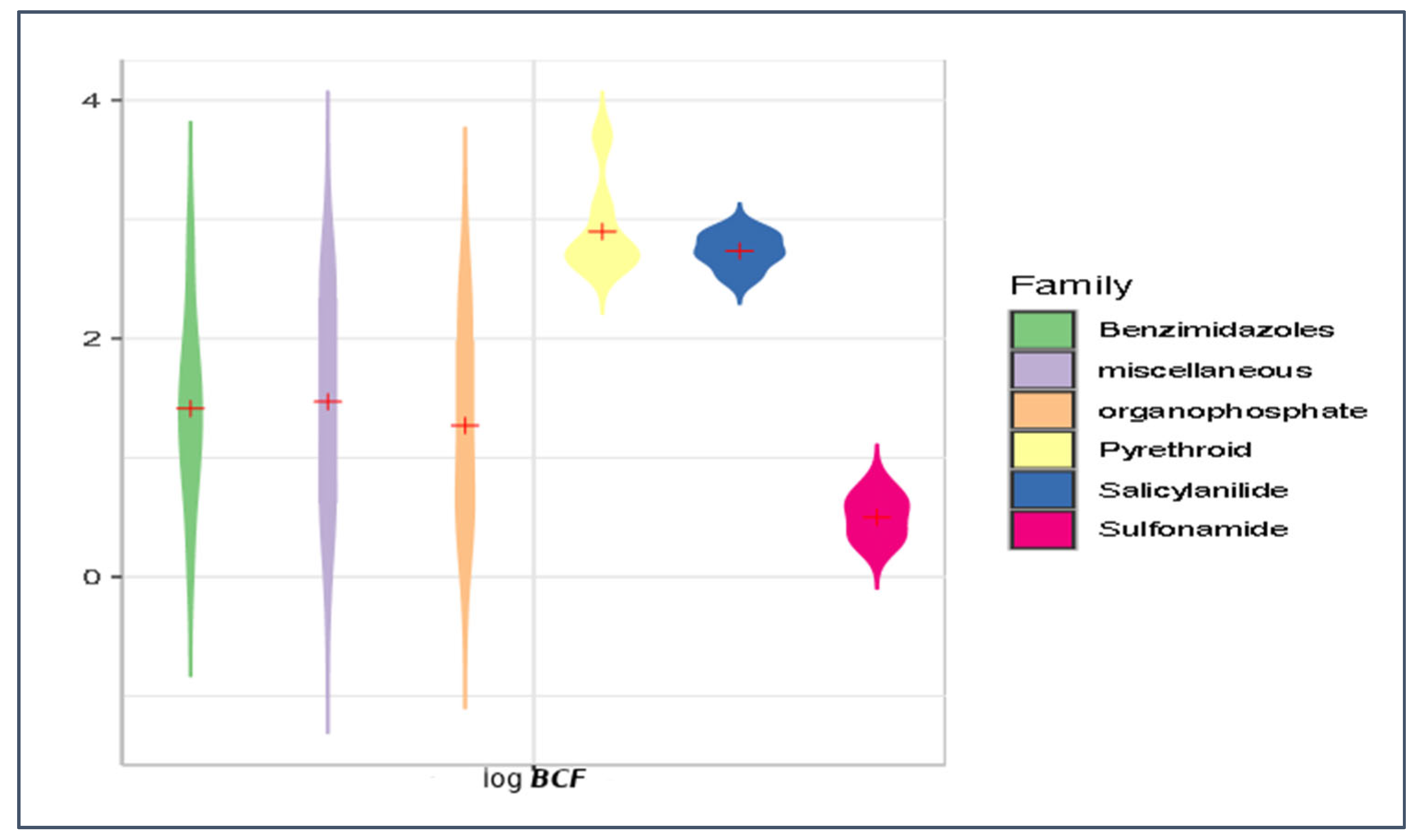
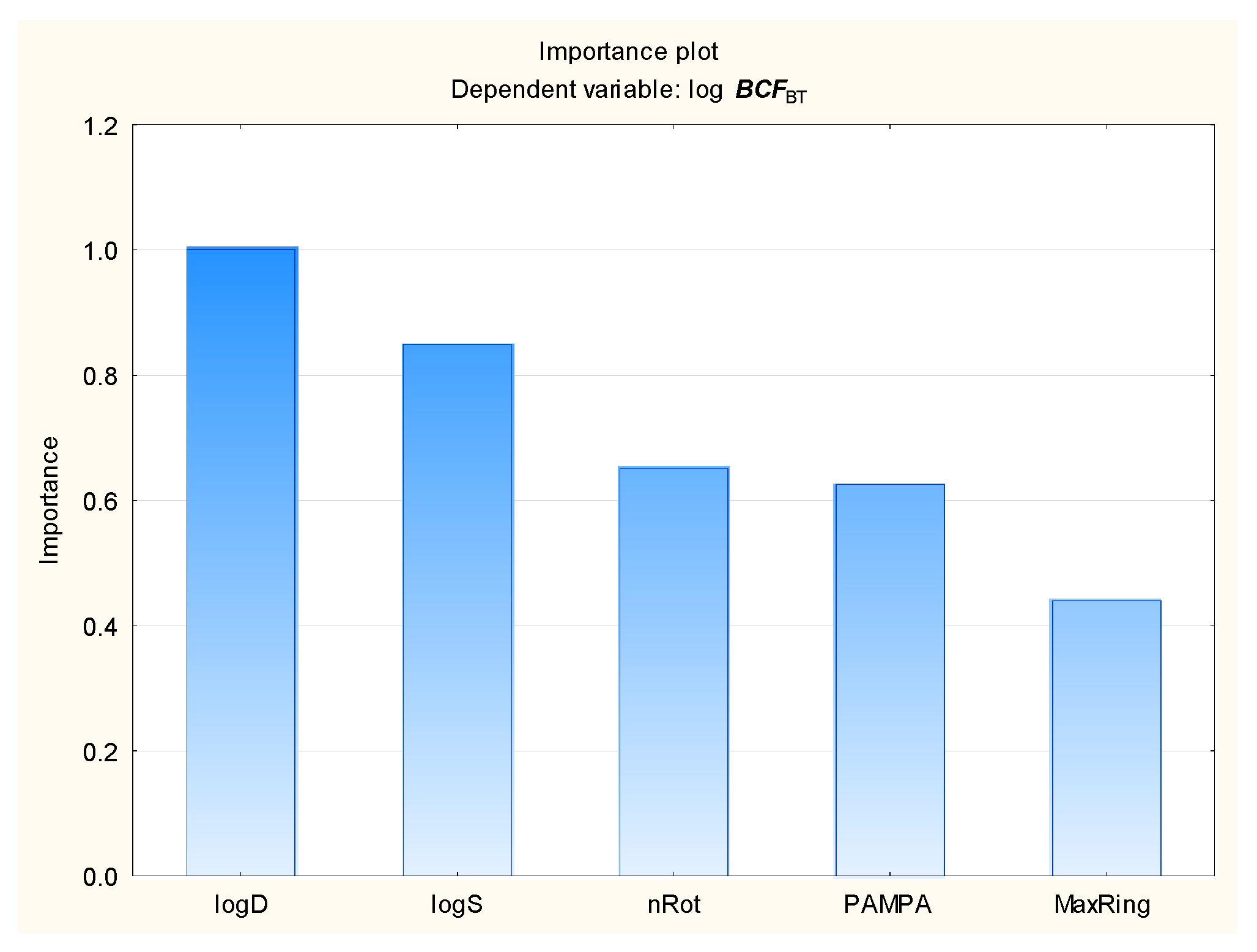
3.2. Prediction of Bioconcentration in Aquatic Organisms
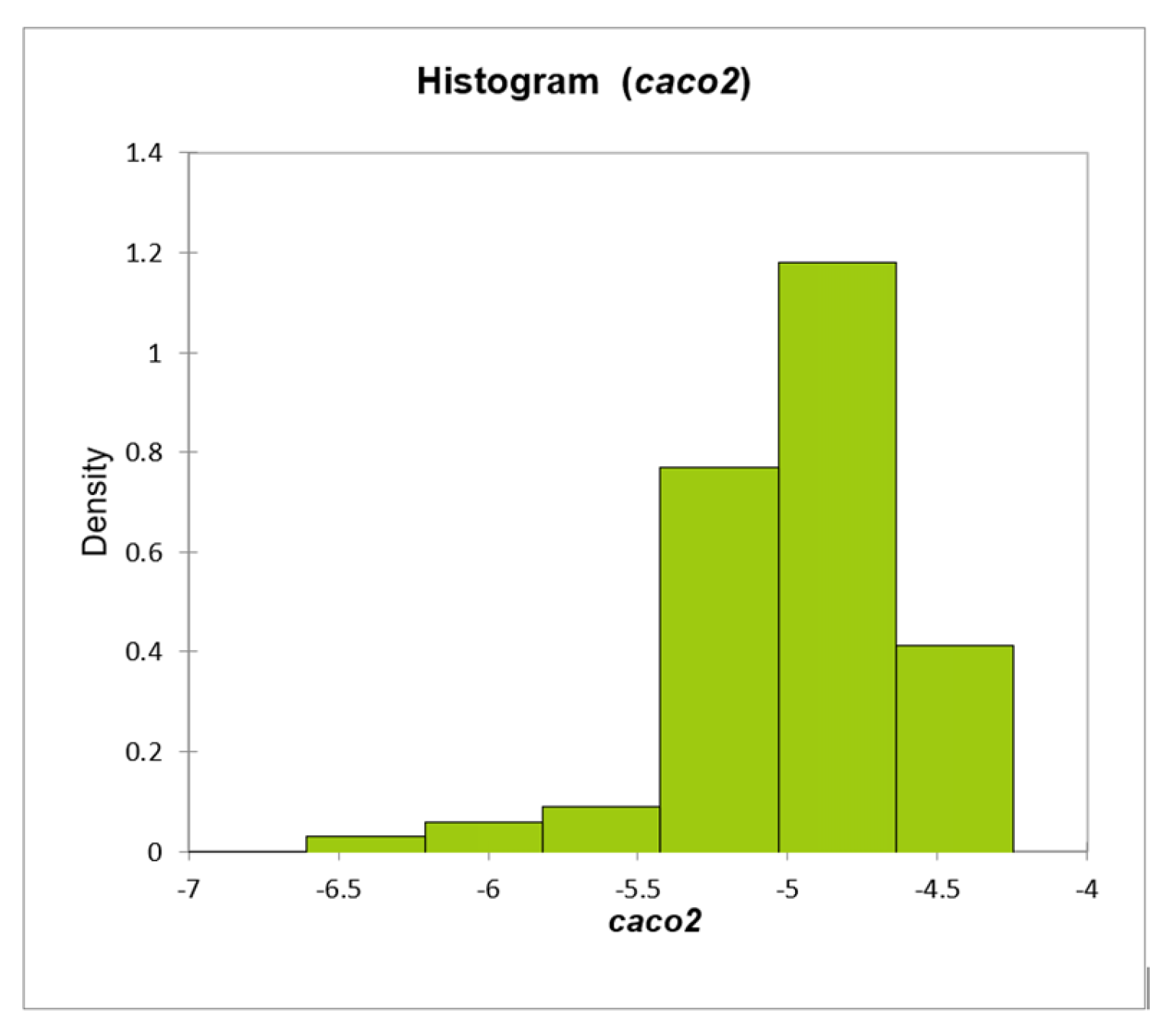
3.3. Prediction of Absorption from the Gastro-Intestinal Tract in Humans
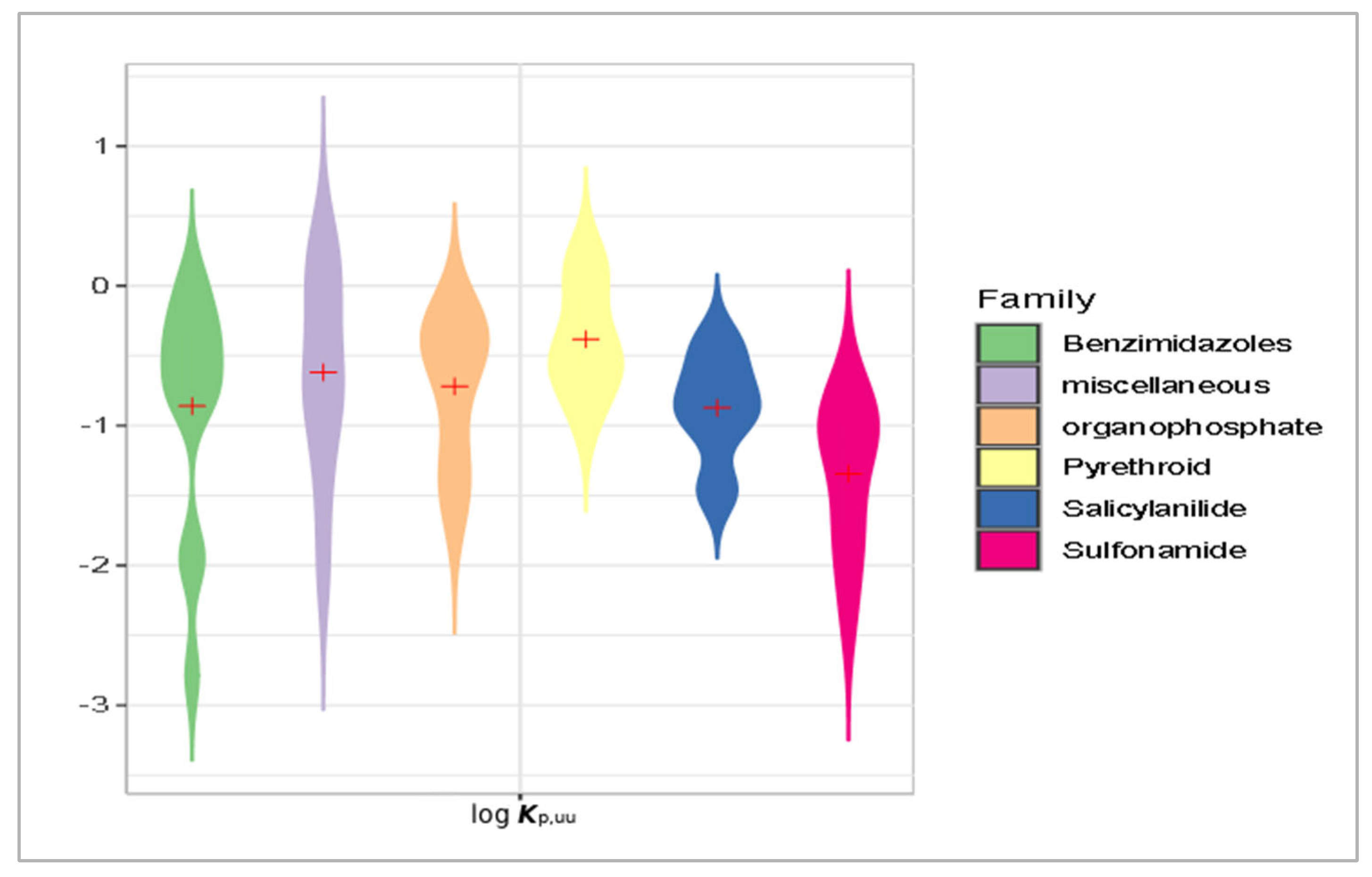
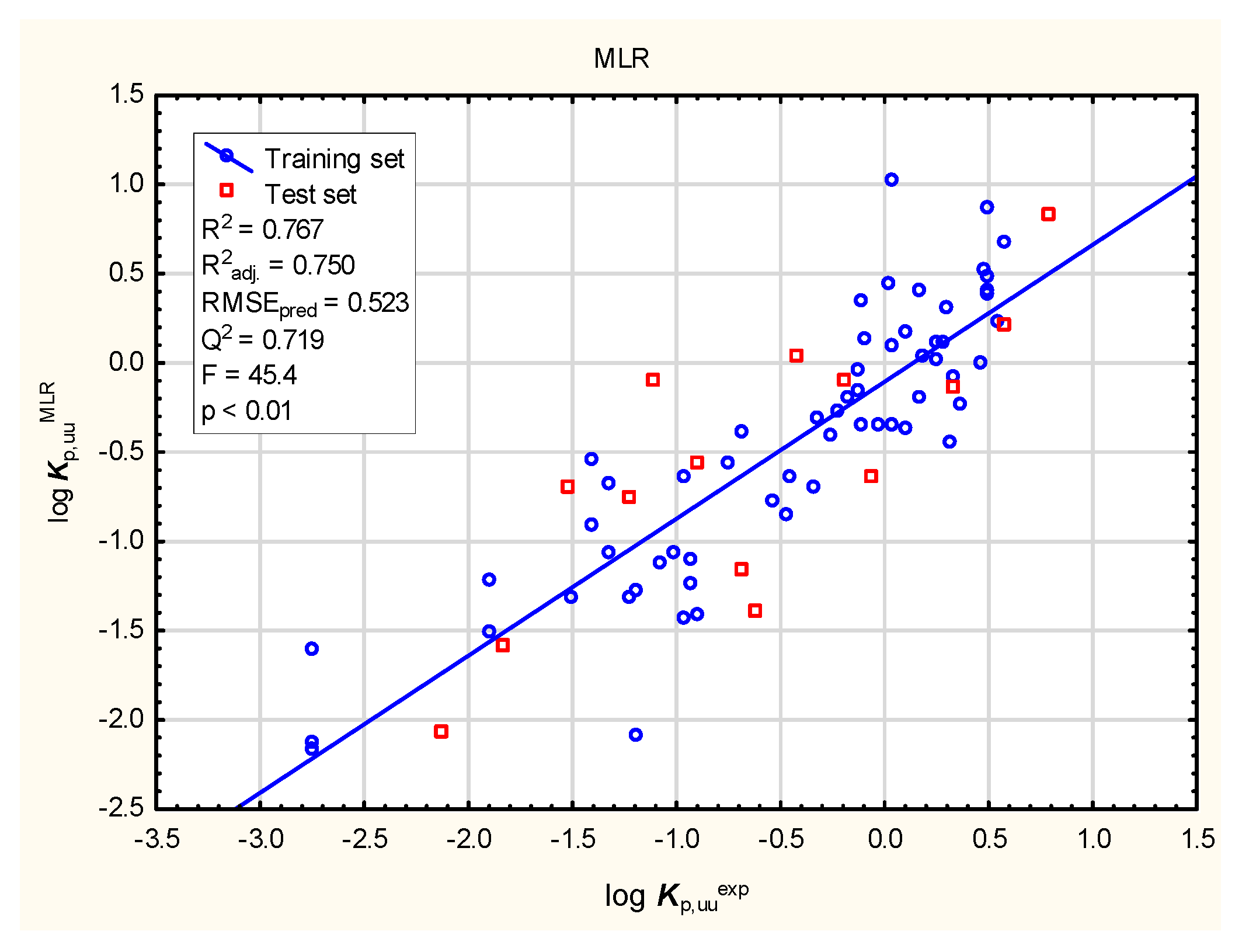
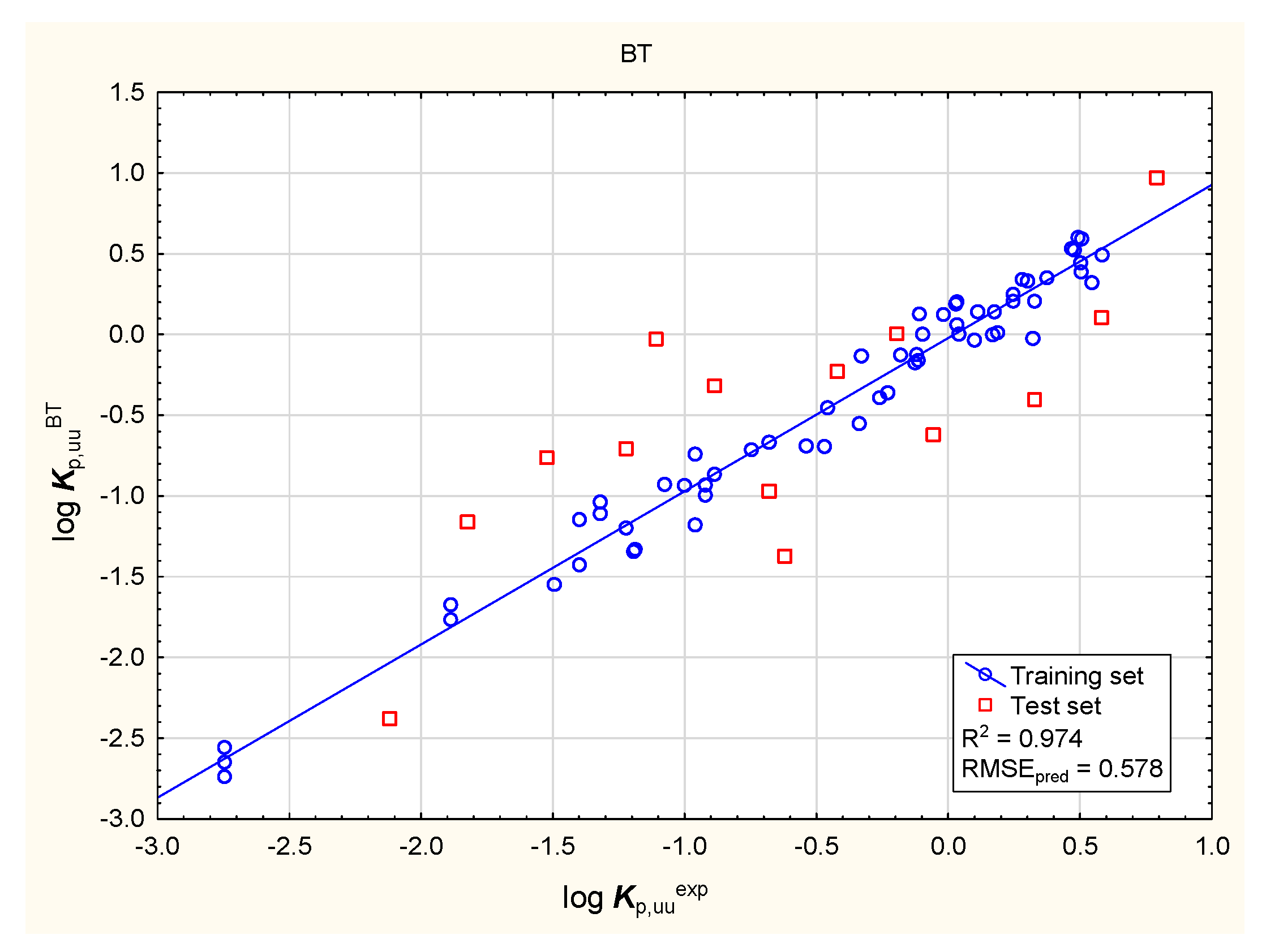
3.4. Prediction of the Blood–Brain Barrier Permeability
4. Discussion
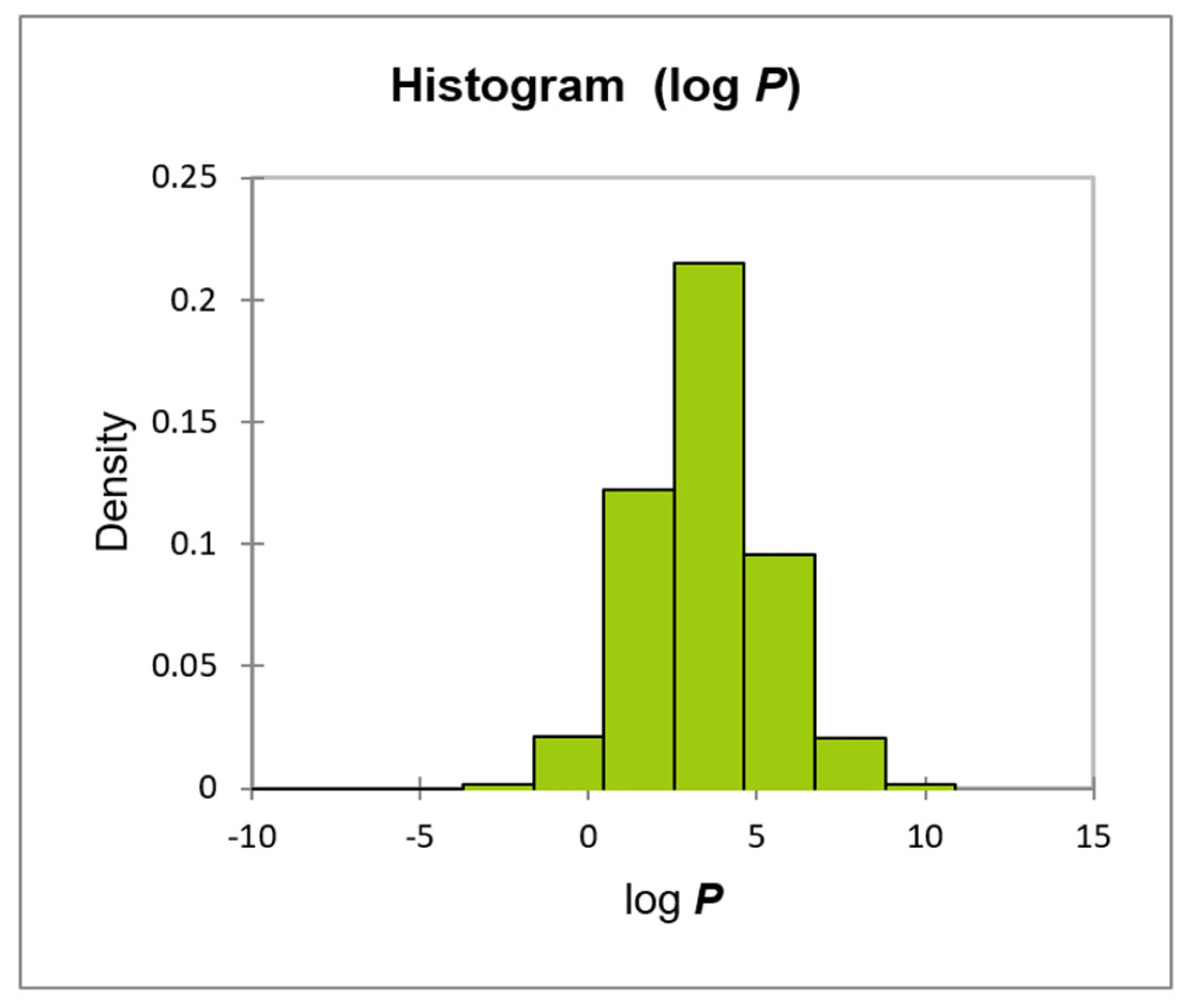
4.1. Model Applicability
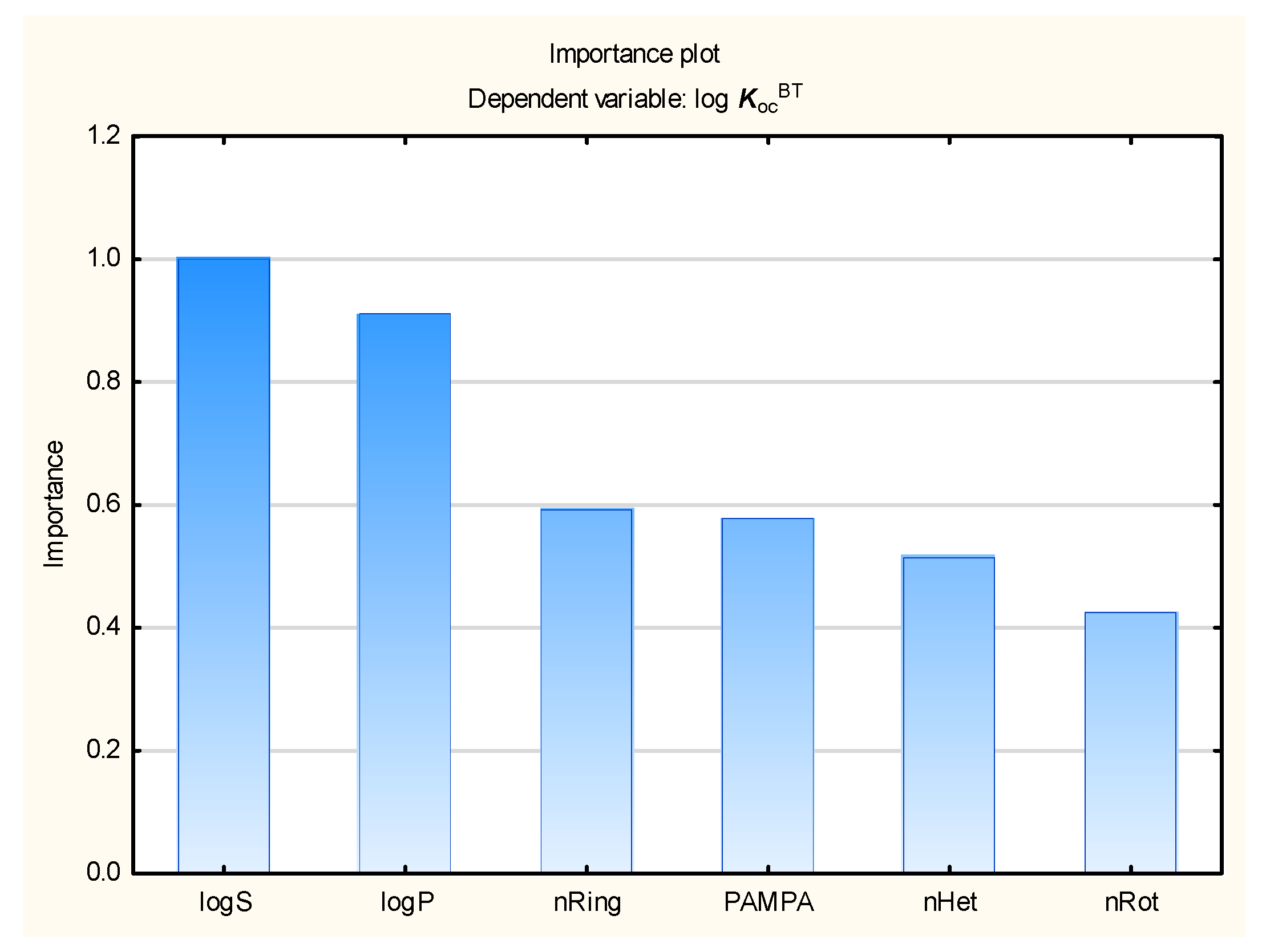
- Log Koc: nRot, nHet, nRing, PAMPA, log S and log P;
- Log BCF: log D, log S, nRot, PAMPA, MaxRing;
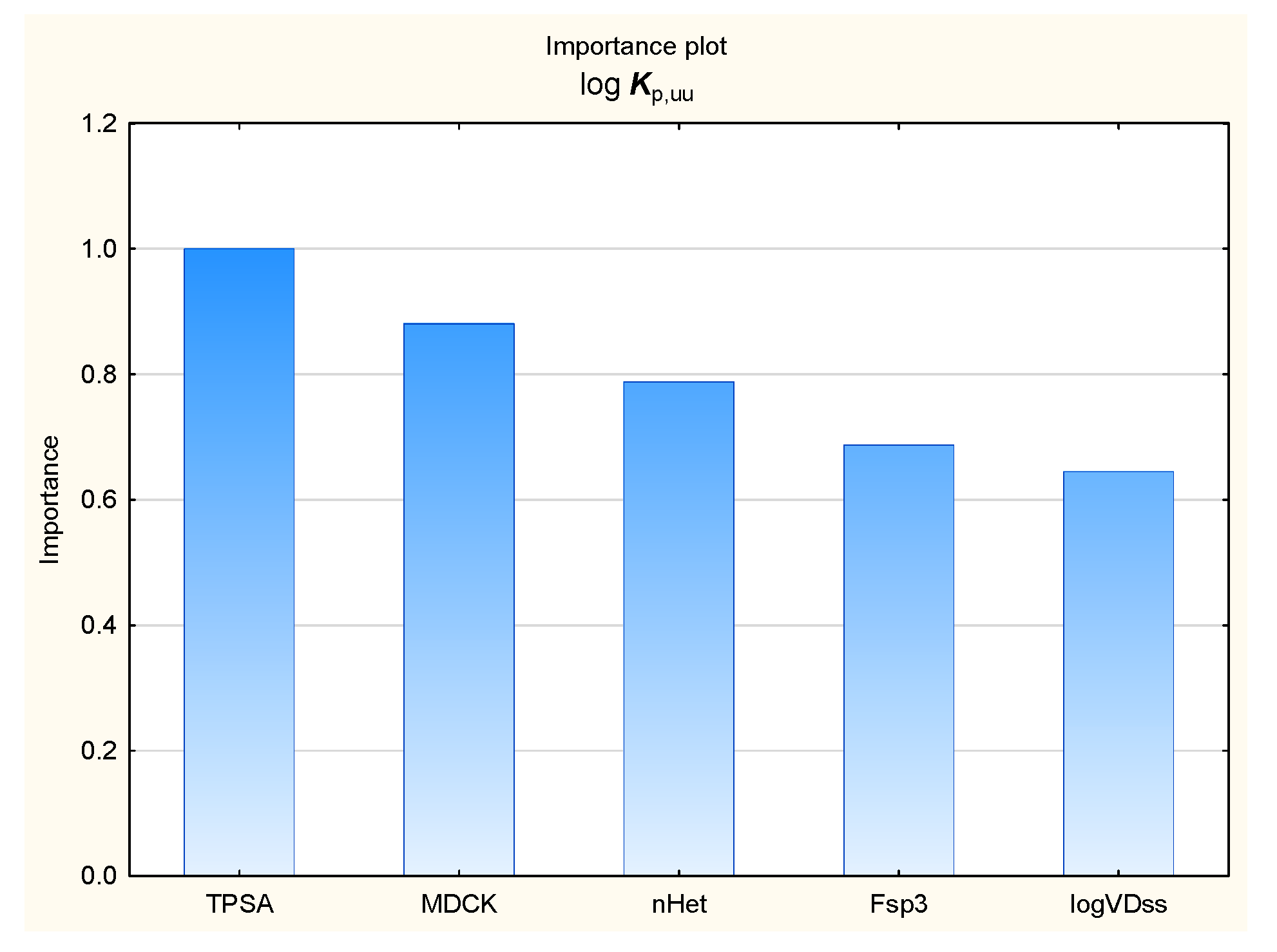
- Log Kp,uu: TPSA, MDCK, nHet, Fsp3, logVDss.
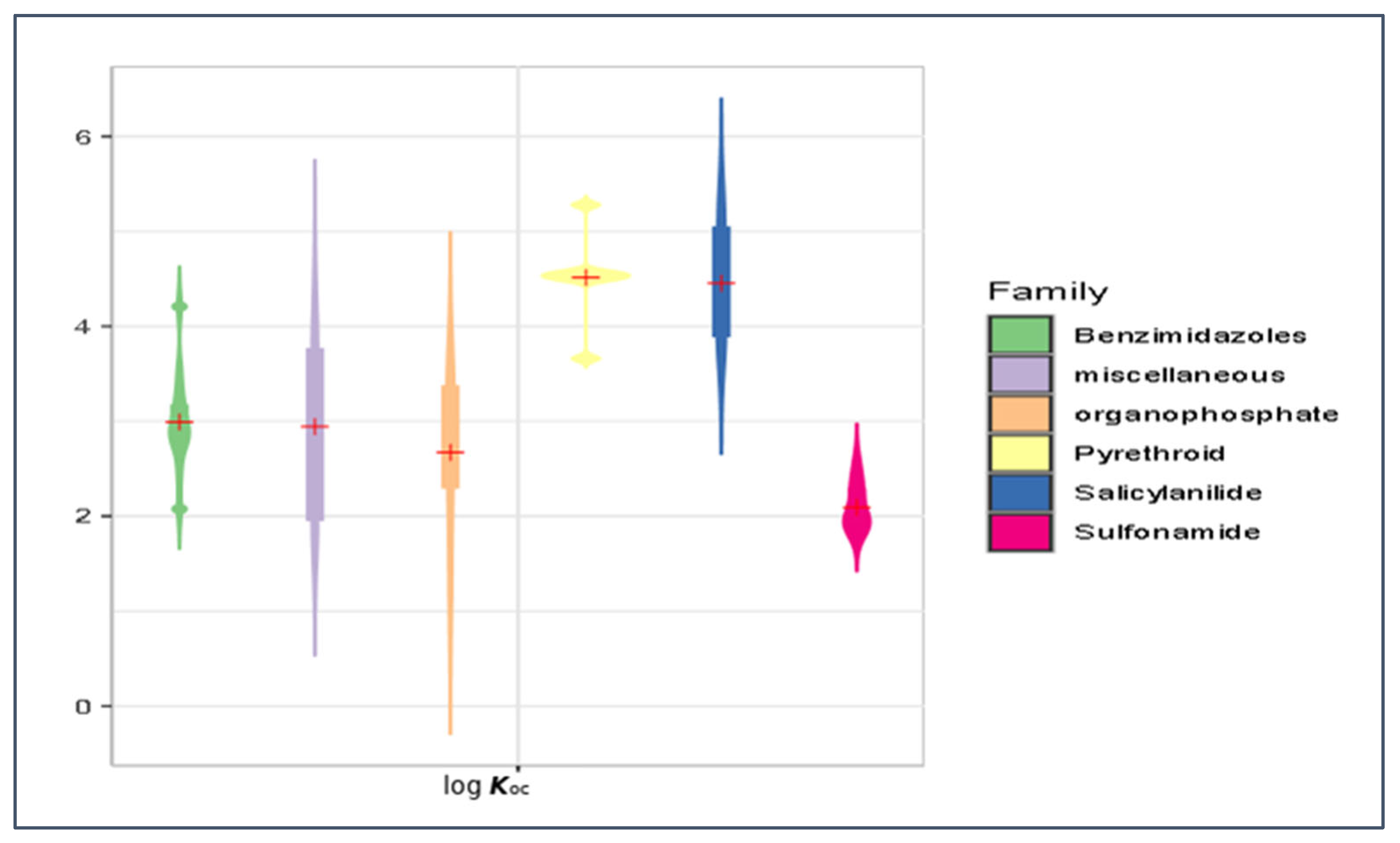
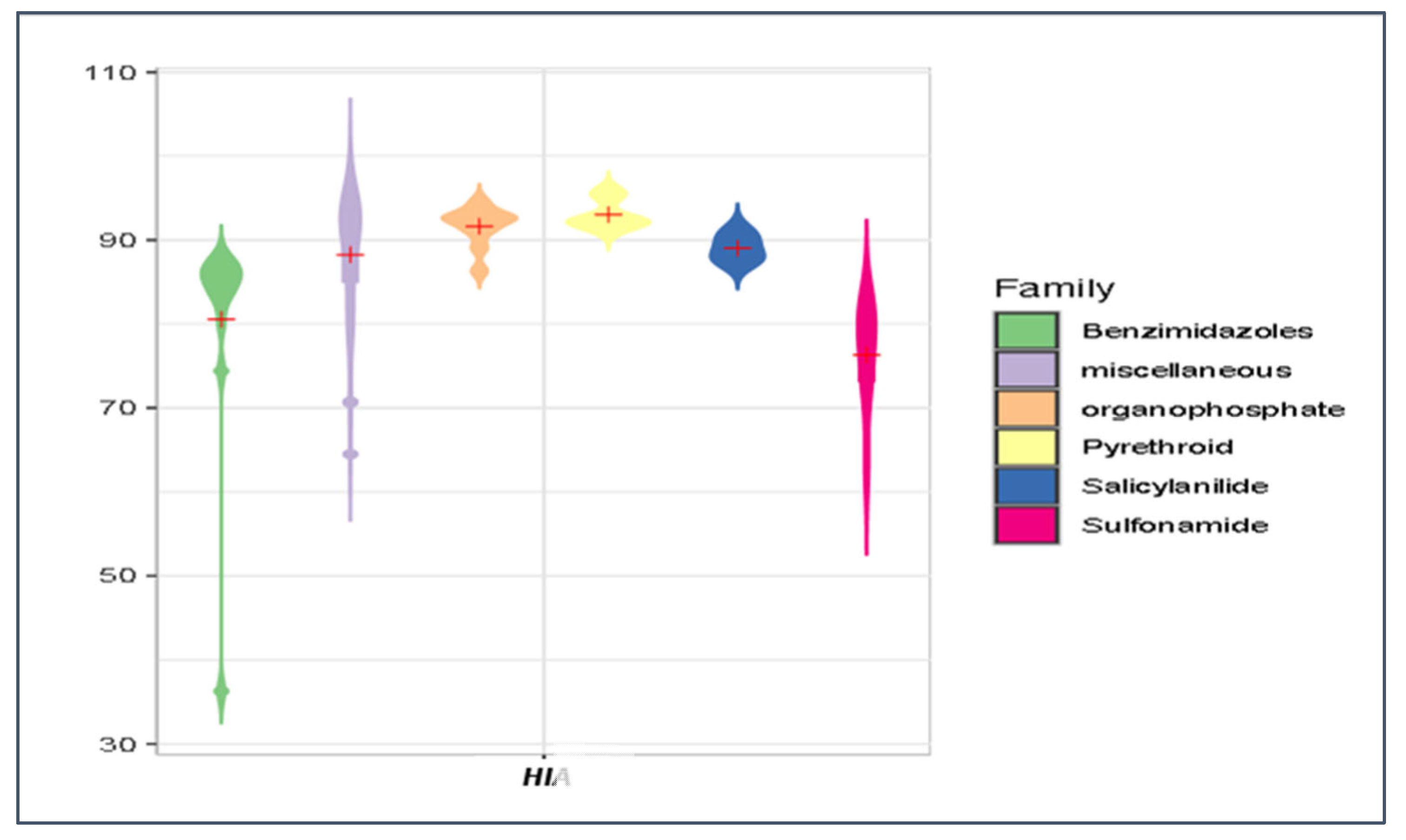
4.2. Analysis of the Predicted Properties in Different Chemical Families of Antiparasitics
4.3. Comparison of Different Predictive Models
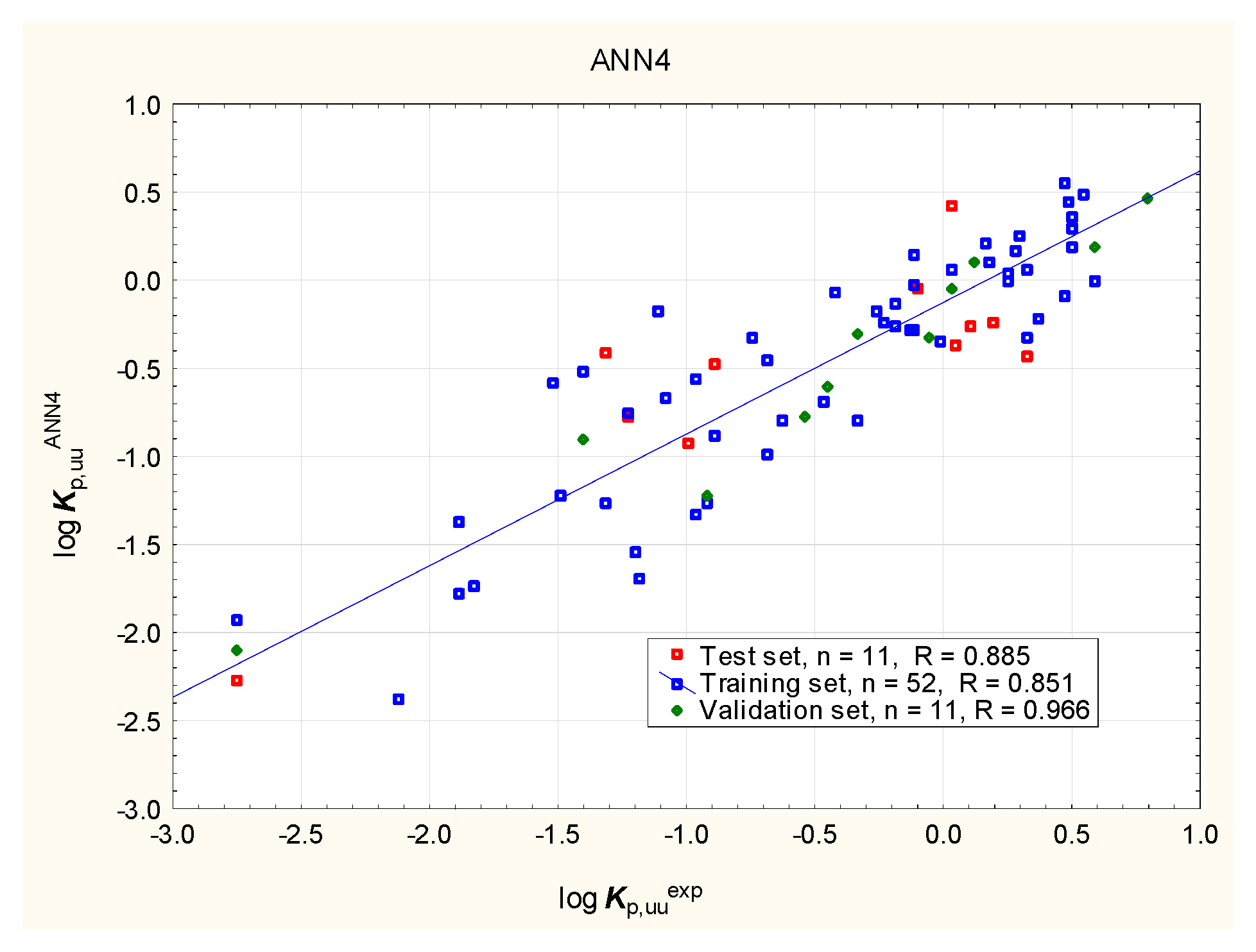
4.4. Calculated vs. Experimental Values
4.5. Drugs of Particular Concern
5. Conclusions
Supplementary Materials
Author Contributions
Funding
Institutional Review Board Statement
Informed Consent Statement
Data Availability Statement
Conflicts of Interest
References
- Boxall, A.B.A.; Fogg, L.A.; Blackwell, P.A.; Kay, P. Fate of Veterinary Medicines Applied to Soils. In Pharmaceuticals in the Environment, Sources, Fate, Effects and Risks; Kummerer, K., Ed.; Springer: Berlin/Heidelberg, Germany, 2004; pp. 165–180. ISBN 978-3-662-09259-0. [Google Scholar]
- Rico, A.; Vighi, M.; Van den Brink, P.J.; ter Horst, M.; Macken, A.; Lillicrap, A.; Falconer, L.; Telfer, T.C. Use of Models for the Environmental Risk Assessment of Veterinary Medicines in European Aquaculture: Current Situation and Future Perspectives. Rev. Aquac. 2019, 11, 969–988. [Google Scholar] [CrossRef]
- Liu, S.-S.; Li, Y.-F.; Ning, J.-J.; Xu, L.; Wang, L.-G.; Huang, D.-L.; Wang, X.-H.; Tang, Q.-H.; Du, F.-Y. Occurrence, Bioaccumulation, and Potential Risks of Steroid Hormones in Freshwater Aquaculture Ponds in South China. Water 2024, 16, 2872. [Google Scholar] [CrossRef]
- de la Casa-Resino, I.; Empl, M.T.; Villa, S.; Kolar, B.; Fabrega, J.; Lillicrap, A.D.; Karamanlis, X.N.; Carapeto-García, R. Environmental Risk Assessment of Veterinary Medicinal Products Intended for Use in Aquaculture in Europe: The Need for Developing a Harmonised Approach. Environ. Sci. Eur. 2021, 33, 84. [Google Scholar] [CrossRef]
- Wychodnik, K.; Gałęzowska, G.; Rogowska, J.; Potrykus, M.; Plenis, A.; Wolska, L. Poultry Farms as a Potential Source of Environmental Pollution by Pharmaceuticals. Molecules 2020, 25, 1031. [Google Scholar] [CrossRef]
- Wei, R.; Ge, F.; Zhang, L.; Hou, X.; Cao, Y.; Gong, L.; Chen, M.; Wang, R.; Bao, E. Occurrence of 13 Veterinary Drugs in Animal Manure-Amended Soils in Eastern China. Chemosphere 2016, 144, 2377–2383. [Google Scholar] [CrossRef]
- Wohde, M.; Berkner, S.; Junker, T.; Konradi, S.; Schwarz, L.; Düring, R.A. Occurrence and Transformation of Veterinary Pharmaceuticals and Biocides in Manure: A Literature Review. Environ. Sci. Eur. 2016, 28, 23. [Google Scholar] [CrossRef]
- Kwon, J.W. Mobility of Veterinary Drugs in Soil with Application of Manure Compost. Bull. Environ. Contam. Toxicol. 2011, 87, 40–44. [Google Scholar] [CrossRef]
- Toxic Pet Flea and Tick Treatments Are Polluting UK Freshwaters. Imperial News. Imperial College London. Available online: https://www.imperial.ac.uk/news/243875/toxic-flea-%20tick-treatments-polluting-uk/ (accessed on 5 October 2025).
- Joachim, A.; Robertson, L.J.; Ferroglio, E.; Bäumer, W.; Leschnik, M. Antiparasitics against Ectoparasites in Small Animals-Important Pharmaceutical Substances or Underestimated Environmental Hazards? Vet. Parasitol. 2025, 339, 110557. [Google Scholar] [CrossRef]
- Bártíková, H.; Podlipná, R.; Skálová, L. Veterinary Drugs in the Environment and Their Toxicity to Plants. Chemosphere 2016, 144, 2290–2301. [Google Scholar] [CrossRef]
- Kaczala, F.; Blum, S.E. The Occurrence of Veterinary Pharmaceuticals in the Environment: A Review. Curr. Anal. Chem. 2016, 12, 169–182. [Google Scholar] [CrossRef]
- Albarano, L.; Padilla Suarez, E.G.; Maggio, C.; Marca, A.L.; Iovine, R.; Lofrano, G.; Guida, M.; Vaiano, V.; Carotenuto, M.; Libralato, G. Assessment of Ecological Risks Posed by Veterinary Antibiotics in European Aquatic Environments: A Comprehensive Review and Analysis. Sci. Total Environ. 2024, 954, 176280. [Google Scholar] [CrossRef] [PubMed]
- Hamscher, G.; Mohring, S.A.I. Tierarzneimittel in Böden Und in Der Aquatischen Umwelt. Chem. Ing. Tech. 2012, 84, 1052–1061. [Google Scholar] [CrossRef]
- Baffoni, L.; Alberoni, D.; Gaggìa, F.; Braglia, C.; Stanton, C.; Ross, P.R.; Di Gioia, D. Honeybee Exposure to Veterinary Drugs: How Is the Gut Microbiota Affected? Microbiol. Spectr. 2021, 9, e0017621. [Google Scholar] [CrossRef] [PubMed]
- Economou, V.; Gousia, P. Agriculture and Food Animals as a Source of Antimicrobial-Resistant Bacteria. Infect. Drug Resist. 2015, 8, 49–61. [Google Scholar] [CrossRef]
- Marshall, B.M.; Levy, S.B. Food Animals and Antimicrobials: Impacts on Human Health. Clin. Microbiol. Rev. 2011, 24, 718–733. [Google Scholar] [CrossRef]
- Toutain, P.L.; Ferran, A.A.; Bousquet-Melou, A.; Pelligand, L.; Lees, P. Veterinary Medicine Needs New Green Antimicrobial Drugs. Front. Microbiol. 2016, 7, 1196. [Google Scholar] [CrossRef]
- Pomba, C.; Rantala, M.; Greko, C.; Baptiste, K.E.; Catry, B.; van Duijkeren, E.; Mateus, A.; Moreno, M.A.; Pyörälä, S.; Ružauskas, M.; et al. Public Health Risk of Antimicrobial Resistance Transfer from Companion Animals. J. Antimicrob. Chemother. 2017, 72, 957–968. [Google Scholar] [CrossRef]
- Caneschi, A.; Bardhi, A.; Barbarossa, A.; Zaghini, A. The Use of Antibiotics and Antimicrobial Resistance in Veterinary Medicine, a Complex Phenomenon: A Narrative Review. Antibiotics 2023, 12, 487. [Google Scholar] [CrossRef]
- Vincze, S.; Stamm, I.; Kopp, P.A.; Hermes, J.; Adlhoch, C.; Semmler, T.; Wieler, L.H.; Lübke-Becker, A.; Walther, B. Alarming Proportions of Methicillin-Resistant Staphylococcus Aureus (MRSA) in Wound Samples from Companion Animals, Germany 2010–2012. PLoS ONE 2014, 9, e85656. [Google Scholar] [CrossRef]
- Zhou, H.; Jiao, X.; Li, Y. Exploring the Toxicity of Oxytetracycline in Earthworms (Eisenia fetida) Based on the Integrated Biomarker Response Method. Toxics 2024, 12, 310. [Google Scholar] [CrossRef]
- Revellin, C.; Hartmann, A.; Solanas, S.; Topp, E. Long-Term Exposure of Agricultural Soil to Veterinary Antibiotics Changes the Population Structure of Symbiotic Nitrogen-Fixing Rhizobacteria Occupying Nodules of Soybeans (Glycine max). Appl. Environ. Microbiol. 2018, 84, e00109-18. [Google Scholar] [CrossRef] [PubMed]
- Selzer, P.M.; Epe, C. Antiparasitics in Animal Health: Quo Vadis? Trends Parasitol. 2021, 37, 77–89. [Google Scholar] [CrossRef] [PubMed]
- Stando, K.; Korzeniewska, E.; Felis, E.; Harnisz, M.; Bajkacz, S. Uptake of Pharmaceutical Pollutants and Their Metabolites from Soil Fertilized with Manure to Parsley Tissues. Molecules 2022, 27, 4378. [Google Scholar] [CrossRef]
- van Dongen, K.C.W.; de Lange, E.; van Asseldonk, L.L.M.; Zoet, L.; van der Fels-Klerx, H.J. Safety and Transfer of Veterinary Drugs from Substrate to Black Soldier Fly Larvae. Animal 2024, 18, 101214. [Google Scholar] [CrossRef] [PubMed]
- Iglesias, L.E.; Saumell, C.A.; Junco, M.; Sallovitz, J.M.; Lifschitz, A.L. Bioaccumulation and Elimination of Ivermectin by Eisenia Foetida (Savigny 1826) Earthworms. Am. J. Environ. Stud. 2023, 6, 41–58. [Google Scholar] [CrossRef]
- de Souza, R.B.; Guimarães, J.R. Effects of Avermectins on the Environment Based on Its Toxicity to Plants and Soil Invertebrates—A Review. Water Air Soil Pollut. 2022, 233, 259. [Google Scholar] [CrossRef]
- Tinkov, O.V.; Grigorev, V.Y.; Grigoreva, L.D. QSAR Analysis of the Acute Toxicity of Avermectins towards Tetrahymena Pyriformis. SAR QSAR Environ. Res. 2021, 32, 541–571. [Google Scholar] [CrossRef]
- Bianchinotti, V.; Gonzalez-Vainer, P.; Suarez, G. Model Breeding and Ecotoxicity Study of Eprinomectin on the Reproductive Performance of Onthophagus hircus (Coleoptera: Scarabaeidae). Chemoecology 2025, 35, 183–192. [Google Scholar] [CrossRef]
- Jörg, R.; Duis, K.; Egeler, P.; Gilberg, D.; Schuh, C.; Herrchen, M.; Hennecke, D.; Hölzle, L.E.; Heilmann-Thudium, B.; Wohde, M.; et al. Comparison of the Environmental Properties of Parasiticides and Harmonisation of the Basis for Environmental Assessment at the EU Level; European Chemicals Agency: Helsinki, Finland, 2019. [Google Scholar]
- Gao, Y.; Li, X.; Guo, J.; Sun, X.; Sun, Z. Reproductive Responses of the Earthworm (Eisenia fetida) to Antiparasitic Albendazole Exposure. Chemosphere 2015, 120, 1–7. [Google Scholar] [CrossRef]
- Gkimprixi, E.; Lagos, S.; Nikolaou, C.N.; Karpouzas, D.G.; Tsikou, D. Veterinary Drug Albendazole Inhibits Root Colonization and Symbiotic Function of the Arbuscular Mycorrhizal Fungus Rhizophagus irregularis. FEMS Microbiol. Ecol. 2023, 99, fiad048. [Google Scholar] [CrossRef]
- He, J.; Zhu, X.; Xu, K.; Li, Y.; Zhou, J. Network Toxicological and Molecular Docking to Investigate the Mechanisms of Toxicity of Agricultural Chemical Thiabendazole. Chemosphere 2024, 363, 142711. [Google Scholar] [CrossRef] [PubMed]
- Haseler, C.J.; Shrubb, J.L.; Davies, H.G.D.; Rendle, D.I.; Rathbone, P.C.; Mair, T.S. Environmental Impacts of Equine Parasiticide Treatment: The UK Perspective. Equine Vet. Educ. 2024, 36, 381–392. [Google Scholar] [CrossRef]
- Yoshimura, H.; Endoh, Y.S. Acute Toxicity to Freshwater Organisms of Antiparasitic Drugs for Veterinary Use. Environ. Toxicol. 2005, 20, 60–66. [Google Scholar] [CrossRef] [PubMed]
- Jonsson, C.M.; de Queiroz, S.C.d.N. Concepts on Accumulation of Pesticides and Veterinary Drugs in Fish: A Review with Emphasis in Tilapia. Animals 2023, 13, 2748. [Google Scholar] [CrossRef]
- Zhang, H.; Zhang, M.; Zhang, H.; Shen, X.; Lv, W.; Wang, X.; Zhang, J.; Guo, X. Bioaccumulation, Transformation and Toxicity of Imidacloprid and Dinotefuran in Eisenia fetida under Single and Binary Exposure Scenarios. Environ. Toxicol. Pharmacol. 2024, 111, 104570. [Google Scholar] [CrossRef]
- Alves, P.R.L.; Cardoso, E.J.B.N.; Martines, A.M.; Sousa, J.P.; Pasini, A. Earthworm Ecotoxicological Assessments of Pesticides Used to Treat Seeds under Tropical Conditions. Chemosphere 2013, 90, 2674–2682. [Google Scholar] [CrossRef]
- Wells, C.; Collins, C.M.T. A Rapid Evidence Assessment of the Potential Risk to the Environment Presented by Active Ingredients in the UK’s Most Commonly Sold Companion Animal Parasiticides. Environ. Sci. Pollut. Res. 2022, 29, 45070–45088. [Google Scholar] [CrossRef]
- Ma, Z.; Zhu, W.; Kang, J.; Ma, X.; Jiang, G. A Comprehensive Study on the Ecotoxicity of Ivermectin to Earthworms (Eisenia fetida). Ecotoxicol. Environ. Saf. 2023, 268, 115709. [Google Scholar] [CrossRef]
- Jensen, J.; Diao, X.; Scott-fordsmand, J.J. Sub-Lethal Toxicity of the Antiparasitic Abamectin on Earthworms and the Application of Neutral Red Retention Time as a Biomarker. Chemosphere 2007, 68, 744–750. [Google Scholar] [CrossRef]
- Mahefarisoa, K.L.; Simon Delso, N.; Zaninotto, V.; Colin, M.E.; Bonmatin, J.M. The Threat of Veterinary Medicinal Products and Biocides on Pollinators: A One Health Perspective. One Health 2021, 12, 100237. [Google Scholar] [CrossRef]
- Wilmart, O.; Legrève, A.; Scippo, M.-L.; Reybroeck, W.; Urbain, B.; De Graaf, D.C.; Spanoghe, P.; Delahaut, P.; Saegerman, C. Honey Bee Exposure Scenarios to Selected Residues through Contaminated Beeswax. Sci. Total Environ. 2021, 772, 145533. [Google Scholar] [CrossRef] [PubMed]
- Obregon, D.; Guerrero, O.; Sossa, D.; Stashenko, E.; Prada, F.; Ramirez, B.; Duplais, C.; Poveda, K. Route of Exposure to Veterinary Products in Bees: Unraveling Pasture’s Impact on Avermectin Exposure and Tolerance in Stingless Bees. PNAS Nexus 2024, 3, pgae068. [Google Scholar] [CrossRef] [PubMed]
- Gregorc, A.; Alburaki, M.; Sampson, B.; Knight, P.R.; Adamczyk, J. Toxicity of Selected Acaricides to Honey Bees (Apis mellifera) and Varroa (Varroa destructor Anderson and Trueman) and Their Use in Controlling Varroa within Honey Bee Colonies. Insects 2018, 9, 55. [Google Scholar] [CrossRef] [PubMed]
- Hawthorne, D.J.; Dively, G.P. Killing Them with Kindness? In-Hive Medications May Inhibit Xenobiotic Efflux Transporters and Endanger Honey Bees. PLoS ONE 2011, 6, e26796. [Google Scholar] [CrossRef]
- Bahreini, R.; Nasr, M.; Docherty, C.; de Herdt, O.; Muirhead, S.; Feindel, D. Evaluation of Potential Miticide Toxicity to Varroa Destructor and Honey Bees, Apis Mellifera, under Laboratory Conditions. Sci. Rep. 2020, 10, 21529. [Google Scholar] [CrossRef]
- Bundschuh, M.; Hahn, T.; Ehrlich, B.; Höltge, S.; Kreuzig, R.; Schulz, R. Acute Toxicity and Environmental Risks of Five Veterinary Pharmaceuticals for Aquatic Macroinvertebrates. Bull. Environ. Contam. Toxicol. 2016, 96, 139–143. [Google Scholar] [CrossRef]
- Blomberg, M. Veterinary Antiparasitic Pharmaceuticals-Effects on Behaviour in Fish Larvae. Master’s Thesis, Swedish Univerity of Agricultural Sciences, Uppsala, Sweden, 2017. [Google Scholar]
- Gameiro, B.G.; Brito, R.S.; Valle, A.D.A.; Tominaga, F.K.; Kummrow, F.; Giannocco, G.; Dimitrius, A.; Pitol, L.; Dsouki, N.A.; De, R.M.; et al. Acute Toxicity and Histopathological Effects of Pyriproxyfen in Adult Male and Female Zebrafish (Danio rerio). Environ. Sci. Adv. 2025, 4, 1117–1128. [Google Scholar] [CrossRef]
- Tominaga, F.K.; Brito, R.S.; Oliveira do Nascimento, J.; Giannocco, G.; Monteiro de Barros Maciel, R.; Kummrow, F.; Pereira, B.F. Pyriproxyfen Toxicity to Fish and Crustaceans: A Literature Review. Environ. Res. 2025, 274, 121295. [Google Scholar] [CrossRef]
- Al-Najmawi, T.K.; Al-Zubaidy, M.H. Acute Toxicity Events of Ivermectin in Chicks’ Model. Iraqi J. Vet. Sci. 2022, 36, 1119–1124. [Google Scholar] [CrossRef]
- Tassin De Montaigu, C.; Glauser, G.; Guinchard, S.; Goulson, D. High Prevalence of Veterinary Drugs in Bird’s Nests. Sci. Total Environ. 2025, 964, 178439. [Google Scholar] [CrossRef]
- Herrero-Villar, M.; Taggart, M.A.; Mateo, R. Pharmaceuticals in Avian Scavengers and Other Birds of Prey: A Toxicological Perspective to Improve Risk Assessments. Sci. Total Environ. 2024, 948, 174425. [Google Scholar] [CrossRef] [PubMed]
- Imperiale, F.; Lanusse, C. The Pattern of Blood–Milk Exchange for Antiparasitic Drugs in Dairy Ruminants. Animals 2021, 11, 2758. [Google Scholar] [CrossRef] [PubMed]
- Paucar-Quishpe, V.; Cepeda-Bastidas, D.; Rodríguez-Hidalgo, R.; Pérez-Otáñez, X.; Perez, C.; Enríquez, S.; Guzman, E.; Ulcuango, F.; Grijalva, J.; Vanwambeke, S.O.; et al. Evaluating the Human Risks of Consumption of Foods of Bovine Origin with Ivermectin Residues in Ecuador. Foods 2024, 13, 3470. [Google Scholar] [CrossRef] [PubMed]
- Utemuratova, D.; Konuspayeva, G.; Kabdullina, Z.; Akhmetsadykov, N.; Amutova, F. Assessment of Milk Biosafety for the Content of Antiparasitic Drugs Used for Human Consumption in Different Countries: Review. BIO Web Conf. 2024, 100, 02034. [Google Scholar] [CrossRef]
- Zakaria, A.; Mohamed, R.; H, R.; Ombarak, R. Occurrence of Ivermectin Residues in Egyptian Retail Market Milk and the Effect of Some Processing Treatments on Reduction of Its Concentration. Alex. J. Vet. Sci. 2019, 63, 1–5. [Google Scholar] [CrossRef]
- Abdallah, M.; Bethäuser, J.; Tettenborn, F.; Hein, A.; Hamann, M. Pharmaceutical Consumption in Human and Veterinary Medicine in Germany: Potential Environmental Challenges. Front. Environ. Sci. 2024, 12, 1443935. [Google Scholar] [CrossRef]
- O’Flaherty, J.; De Waal, T.; Beechinor, G.; Garvan, C.; Keane, O.; Moody, A.; O’Shaughnessy, J. Report of the Task Force on the Method of Supply of Antiparasitic Veterinary Medicinal Products That Are Intended for Food-Producing Species; Department of Agriculture, Food and the Marine: Dublin, Ireland, 2019. [Google Scholar]
- Crump, A. Ivermectin: Enigmatic Multifaceted “wonder” Drug Continues to Surprise and Exceed Expectations. J. Antibiot. 2017, 70, 495–505. [Google Scholar] [CrossRef]
- Sjakste, N.; Dinter, D.; Gajski, G. A Review of the Genotoxic Effects of Antiparasitic Drugs on Parasites and Their Hosts. Regul. Toxicol. Pharmacol. 2025, 158, 105797. [Google Scholar] [CrossRef]
- Shinoda, W. Permeability across Lipid Membranes. Biochim. Biophys. Acta 2016, 1858, 2254–2265. [Google Scholar] [CrossRef]
- Zhang, S.; Thompson, J.P.; Xia, J.; Bogetti, A.T.; York, F.; Skillman, A.G.; Chong, L.T.; LeBard, D.N. Mechanistic Insights into Passive Membrane Permeability of Drug-like Molecules from a Weighted Ensemble of Trajectories. J. Chem. Inf. Model. 2022, 62, 1891–1904. [Google Scholar] [CrossRef]
- Li, A. In Vitro Approaches to Evaluate ADMET Drug Properties. Curr. Top. Med. Chem. 2005, 4, 701–706. [Google Scholar] [CrossRef]
- Menichetti, R.; Kanekal, K.H.; Bereau, T. Drug-Membrane Permeability across Chemical Space. ACS Cent. Sci. 2019, 5, 290–298. [Google Scholar] [CrossRef] [PubMed]
- Yang, N.J.; Hinner, M.J. Getting Across the Cell Membrane: An Overview for Small Molecules, Peptides, and Proteins. Methods Mol. Biol. 2015, 1266, 29–53. [Google Scholar] [CrossRef] [PubMed]
- Artursson, P.; Palm, K.; Luthman, K. Caco-2 Monolayers in Experimental and Theoretical Predictions of Drug Transport. Adv. Drug Deliv. Rev. 1996, 22, 67–84. [Google Scholar] [CrossRef]
- Press, B. Optimization of the Caco-2 Permeability Assay to Screen Drug Compounds for Intestinal Absorption and Efflux. Methods Mol. Biol. 2011, 763, 139–154. [Google Scholar] [CrossRef]
- Duffy, K.R.; Pardridge, W.M. Blood-Brain Barrier Transcytosis of Insulin in Developing Rabbits. Brain Res. 1987, 420, 32–38. [Google Scholar] [CrossRef]
- Pantzar, N.; Lundins, S.; Westromt, B.R. Different Properties of the Paracellular Pathway Account for the Regional Small Intestinal Permeability to the Peptide Desmopressin. J. Pharm. Sci. 1995, 84, 1245–1248. [Google Scholar] [CrossRef]
- Hubatsch, I.; Ragnarsson, E.G.E.; Artursson, P. Determination of Drug Permeability and Prediction of Drug Absorption in Caco-2 Monolayers. Nat. Protoc. 2007, 2, 2111–2119. [Google Scholar] [CrossRef]
- Sugano, K.; Kansy, M.; Artursson, P.; Avdeef, A.; Bendels, S.; Di, L.; Ecker, G.F.; Faller, B.; Fischer, H.; Gerebtzoff, G.; et al. Coexistence of Passive and Carrier-Mediated Processes in Drug Transport. Nat. Rev. Drug Discov. 2010, 9, 597–614. [Google Scholar] [CrossRef]
- Lin, J.H.; Yamazaki, M. Role of P-Glycoprotein in Pharmacokinetics Clinical Implications. Clin. Pharmacokinet. 2003, 42, 59–98. [Google Scholar] [CrossRef]
- van Breemen, R.B.; Li, Y. Caco-2 Cell Permeability Assays to Measure Drug Absorption. Expert Opin. Drug Metab. Toxicol. 2005, 1, 175–185. [Google Scholar] [CrossRef]
- Irvine, J.D.; Takahashi, L.; Lockhar, K.; Cheong, J.; Tolan, J.W.; SelickK, H.E.; Grove, J.R. MDCK (Madin-Darby Canine Kidney) Cells: A Tool for Membrane Permeability Screening. J. Pharm. Sci. 1999, 88, 28–33. [Google Scholar] [CrossRef] [PubMed]
- Kansy, M.; Senner, F.; Gubernator, K. Physicochemical High Throughput Screening: Parallel Artificial Membrane Permeation Assay in the Description of Passive Absorption Processes. J. Med. Chem. 1998, 47, 1007–1010. [Google Scholar] [CrossRef]
- Press, B.; Di Grandi, D. Permeability for Intestinal Absorption: Caco-2 Assay and Related Issues. Curr. Drug Metab. 2008, 9, 893–900. [Google Scholar] [CrossRef] [PubMed]
- Caco-2 Permeability. Evotec. Available online: https://www.evotec.com/solutions/drug-discovery-preclinical-development/cyprotex-adme-tox-solutions/adme-pk/drug-permeability-and-transporters/caco-2-permeability (accessed on 28 November 2025).
- PAMPA. Evotec. Available online: https://www.evotec.com/solutions/drug-discovery-preclinical-development/cyprotex-adme-tox-solutions/adme-pk/drug-permeability-and-transporters/pampa (accessed on 28 November 2025).
- Teksin, Z.S.; Seo, P.R.; Polli, J.E. Comparison of Drug Permeabilities and BCS Classification: Three Lipid-Component PAMPA System Method versus Caco-2 Monolayers. AAPS J. 2010, 12, 238–241. [Google Scholar] [CrossRef] [PubMed]
- Chen, X.; Murawski, A.; Patel, K.; Crespi, C.L.; Balimane, P.V. A Novel Design of Artificial Membrane for Improving the PAMPA Model. Pharm. Res. 2008, 25, 1511–1520. [Google Scholar] [CrossRef]
- Ottaviani, G.; Martel, S.; Carrupt, P.-A. Parallel Artificial Membrane Permeability Assay: A New Membrane for the Fast Prediction of Passive Human Skin Permeability. J. Med. Chem. 2006, 49, 3948–3954. [Google Scholar] [CrossRef]
- Grumetto, L.; Russo, G.; Barbato, F. Immobilized Artificial Membrane HPLC Derived Parameters vs PAMPA-BBB Data in Estimating in Situ Measured Blood-Brain Barrier Permeation of Drugs. Mol. Pharm. 2016, 13, 2808–2816. [Google Scholar] [CrossRef]
- Dargó, G.; Vincze, A.; Müller, J.; Kiss, H.J.; Nagy, Z.Z.; Balogh, G.T. Corneal-PAMPA: A Novel, Non-Cell-Based Assay for Prediction of Corneal Drug Permeability. Eur. J. Pharm. Sci. 2019, 128, 232–239. [Google Scholar] [CrossRef]
- Vincze, A.; Dargó, G.; Rácz, A.; Balogh, G.T. A Corneal-PAMPA-Based in Silico Model for Predicting Corneal Permeability. J. Pharm. Biomed. Anal. 2021, 203, 114218. [Google Scholar] [CrossRef]
- Soriano-Meseguer, S.; Fuguet, E.; Port, A.; Rosés, M. Evaluation of the Ability of PAMPA Membranes to Emulate Biological Processes through the Abraham Solvation Parameter Model. Membranes 2023, 13, 640. [Google Scholar] [CrossRef] [PubMed]
- Williams, J.; Siramshetty, V.; Nguyễn, Ð.-T.; Carvalho Padilha, E.; Yu, K.-R.; Wang, A.Q.; Zhao, T.; Itkin, M.; Shinn, P.; Mathé, E.A.; et al. Using in Vitro ADME Data for Lead Compound Selection: An Emphasis on PAMPA PH 5 Permeability and Oral Bioavailability. Bioorg. Med. Chem. 2022, 56, 116588. [Google Scholar] [CrossRef] [PubMed]
- Diukendjieva, A.; Tsakovska, I.; Alov, P.; Pencheva, T.; Pajeva, I.; Worth, A.P.; Madden, J.C.; Cronin, M.T.D. Advances in the Prediction of Gastrointestinal Absorption: Quantitative Structure-Activity Relationship (QSAR) Modelling of PAMPA Permeability. Comput. Toxicol. 2019, 10, 51–59. [Google Scholar] [CrossRef]
- Arnot, J.A.; Gobas, F.A.P.C. A Review of Bioconcentration Factor (BCF) and Bioaccumulation Factor (BAF) Assessments for Organic Chemicals in Aquatic Organisms. Environ. Rev. 2006, 14, 257–297. [Google Scholar] [CrossRef]
- US EPA. EPI SuiteTM-Estimation Program Interface; EPIWEB 4.1; US EPA: Washington, DC, USA, 2015.
- Aranda, J.F.; Garro Martinez, J.C.; Castro, E.A.; Duchowicz, P.R. Conformation-Independent QSPR Approach for the Soil Sorption Coefficient of Heterogeneous Compounds. Int. J. Mol. Sci. 2016, 17, 1247. [Google Scholar] [CrossRef]
- Gramatica, P.; Giani, E.; Papa, E. Statistical External Validation and Consensus Modeling: A QSPR Case Study for K Oc Prediction. J. Mol. Graph. Model. 2007, 25, 755–766. [Google Scholar] [CrossRef]
- Lawrenz, M.; Svensson, M.; Kato, M.; Dingley, K.H.; Chief Elk, J.; Nie, Z.; Zou, Y.; Kaplan, Z.; Lagiakos, H.R.; Igawa, H.; et al. A Computational Physics-Based Approach to Predict Unbound Brain-to-Plasma Partition Coefficient, Kp,uu. J. Chem. Inf. Model. 2023, 63, 3786–3798. [Google Scholar] [CrossRef]
- Langthaler, K.; Jones, C.R.; Brodin, B.; Bundgaard, C. Assessing Extent of Brain Penetration in Vivo (Kp,uu,Brain) in Göttingen Minipig Using a Diverse Set of Reference Drugs. Eur. J. Pharm. Sci. 2023, 190, 106554. [Google Scholar] [CrossRef]
- Ma, Y.; Jiang, M.; Javeria, H.; Tian, D.; Du, Z. Accurate Prediction of Kp,uu,Brain Based on Experimental Measurement of Kp,Brain and Computed Physicochemical Properties of Candidate Compounds in CNS Drug Discovery. Heliyon 2024, 10, e24304. [Google Scholar] [CrossRef]
- Daina, A.; Michielin, O.; Zoete, V. SwissADME: A Free Web Tool to Evaluate Pharmacokinetics, Drug-Likeness and Medicinal Chemistry Friendliness of Small Molecules. Sci. Rep. 2017, 7, 42717. [Google Scholar] [CrossRef]
- Pires, D.E.V.; Blundell, T.L.; Ascher, D.B. PkCSM: Predicting Small-Molecule Pharmacokinetic and Toxicity Properties Using Graph-Based Signatures. J. Med. Chem. 2015, 58, 4066–4072. [Google Scholar] [CrossRef] [PubMed]
- Daoud, J.I. Multicollinearity and Regression Analysis. J. Phys. Conf. Ser. 2018, 949, 012009. [Google Scholar] [CrossRef]
- Gramatica, P. On the Development and Validation of QSAR Models. Methods Mol. Biol. 2013, 930, 499–526. [Google Scholar] [CrossRef] [PubMed]
- Gworek, B.; Kijeńska, M.; Wrzosek, J.; Graniewska, M. Pharmaceuticals in the Soil and Plant Environment: A Review. Water Air Soil Pollut. 2021, 232, 145. [Google Scholar] [CrossRef]
- Alhalabi, A.M.; Meetani, M.A.; Shabib, A.; Maraqa, M.A. Sorption of Pharmaceutically Active Compounds to Soils: A Review. Environ. Sci. Eur. 2024, 36, 161. [Google Scholar] [CrossRef]
- Mobility Classification of Chemicals in Soil. Available online: https://www.chemsafetypro.com/Topics/CRA/Mobility_Classification_of_Chemicals_in_Soil.html (accessed on 26 October 2025).
- Loryan, I.; Reichel, A.; Feng, B.; Bundgaard, C.; Shaffer, C.; Kalvass, C.; Bednarczyk, D.; Morrison, D.; Lesuisse, D.; Hoppe, E.; et al. Unbound Brain-to-Plasma Partition Coefficient, Kp,uu,Brain—A Game Changing Parameter for CNS Drug Discovery and Development. Pharm. Res. 2022, 39, 1321–1341. [Google Scholar] [CrossRef]
- Dolgikh, E.; Watson, I.A.; Desai, P.V.; Sawada, G.A.; Morton, S.; Jones, T.M.; Raub, T.J. QSAR Model of Unbound Brain-to-Plasma Partition Coefficient, Kp,uu,Brain: Incorporating P-Glycoprotein Efflux as a Variable. J. Chem. Inf. Model. 2016, 56, 2225–2233. [Google Scholar] [CrossRef]
- Clark, D.E. Rapid Calculation of Polar Molecular Surface Area and Its Application to the Prediction of Transport Phenomena. 2. Prediction of Blood-Brain Barrier Penetration. J. Pharm. Sci. 1999, 88, 815–821. [Google Scholar] [CrossRef]
- Sobańska, A.W. Affinity of Compounds for Phosphatydylcholine-Based Immobilized Artificial Membrane—A Measure of Their Bioconcentration in Aquatic Organisms. Membranes 2022, 12, 1130. [Google Scholar] [CrossRef]
- Sobańska, A.W.; Orlikowska, A.; Famulska, K.; Bošnjak, L.; Bosiljevac, D.; Rasztawicka, A.; Sobański, A.M. Systematic Study of Steroid Drugs’ Ability to Cross Biomembranes—The Possible Environmental Impact and Health Risks Associated with Exposure During Pregnancy. Membranes 2025, 15, 4. [Google Scholar] [CrossRef]
- Meylan, W.M.; Howard, P.H.; Boethling, R.S.; Aronson, D.; Printup, H.; Gouchie, S. Improved Method for Estimating Bioconcentration/Bioaccumulation Factor from Octanol/Water Partition Coefficient. Environ. Toxicol. Chem. 1999, 18, 664–672. [Google Scholar] [CrossRef]
- Meylan, W.; Howard, P.H.; Boethling, R.S. Molecular Topology/Fragment Contribution Method for Predicting Soil Sorption Coefficients. Environ. Sci. Technol. 1992, 26, 1560–1567. [Google Scholar] [CrossRef]
- Lipinski, C.A.; Lombardo, F.; Dominy, B.W.; Feeney, P.J. Experimental and Computational Approaches to Estimate Solubility and Permeability in Drug Discovery and Development Settings. Adv. Drug Deliv. Rev. 2001, 46, 3–26. [Google Scholar] [CrossRef]






| Species | Drug | Refs. |
|---|---|---|
| Earthworms | Imidacloprid and dinotefuran | [38] |
| Avermectins | [41,42] | |
| Bees/pollinators | Pyrethroids | [43,44] |
| Avermectins | [45] | |
| Selected acaricides used against Varroa | [46,47,48] | |
| Aquatic invertebrates, e.g., Daphnia magna, Brachionus calyciflorus | Amprolium, bithionol, levamisole, and pyrimethamine | [36] |
| Aquatic macroinvertebrates | Flubendazole, fenbendazole, and ivermectin | [49] |
| Fish | Amprolium, bithionol, levamisole, and pyrimethamine | [36] |
| Doramectin and flumethrin | [50] | |
| Pyriproxyfen | [51,52] | |
| Birds | Ivermectin | [53] |
| Fipronil, imidacloprid, and permethrin | [54] | |
| Toxicity to avian scavengers | [55] | |
| Crustaceans | Pyriproxyfen | [52] |
| Range of log Koc | Mobility Class |
|---|---|
| <1 | Very mobile |
| 1–2 | Mobile |
| 2–3 | Moderately mobile |
| 3–4 | Slightly mobile |
| 4–5 | Hardly mobile |
| >5 | Immobile |
| n = 86 | MLR | BT | ANN1 | ANN2 | ANN3 | ANN4 | ANN5 | log KocEPI |
| MLR | 1.000 | 0.984 | 0.987 | 0.981 | 0.981 | 0.976 | 0.966 | 0.891 |
| BT | 0.984 | 1.000 | 0.970 | 0.966 | 0.963 | 0.956 | 0.952 | 0.870 |
| ANN1 | 0.987 | 0.970 | 1.000 | 0.993 | 0.991 | 0.993 | 0.982 | 0.887 |
| ANN2 | 0.981 | 0.966 | 0.993 | 1.000 | 0.989 | 0.993 | 0.975 | 0.877 |
| ANN3 | 0.981 | 0.963 | 0.991 | 0.989 | 1.000 | 0.992 | 0.987 | 0.872 |
| ANN4 | 0.976 | 0.956 | 0.993 | 0.993 | 0.992 | 1.000 | 0.981 | 0.880 |
| ANN5 | 0.966 | 0.952 | 0.982 | 0.975 | 0.987 | 0.981 | 1.000 | 0.854 |
| log KocEPI | 0.891 | 0.870 | 0.887 | 0.877 | 0.872 | 0.880 | 0.854 | 1.000 |
| n = 86 | MLR | BT | ANN1 | ANN2 | ANN3 | ANN4 | ANN5 | log BCFEPI |
| MLR | 1.000 | 0.953 | 0.978 | 0.962 | 0.976 | 0.973 | 0.974 | 0.822 |
| BT | 0.953 | 1.000 | 0.966 | 0.962 | 0.956 | 0.963 | 0.965 | 0.814 |
| ANN1 | 0.978 | 0.966 | 1.000 | 0.990 | 0.995 | 0.995 | 0.996 | 0.837 |
| ANN2 | 0.962 | 0.962 | 0.990 | 1.000 | 0.987 | 0.994 | 0.990 | 0.836 |
| ANN3 | 0.976 | 0.956 | 0.995 | 0.987 | 1.000 | 0.997 | 0.996 | 0.828 |
| ANN4 | 0.973 | 0.963 | 0.995 | 0.994 | 0.997 | 1.000 | 0.997 | 0.838 |
| ANN5 | 0.974 | 0.965 | 0.996 | 0.990 | 0.996 | 0.997 | 1.000 | 0.833 |
| log BCFEPI | 0.822 | 0.814 | 0.837 | 0.836 | 0.828 | 0.838 | 0.833 | 1.000 |
| n = 86 | MLR | BT | ANN1 | ANN2 | ANN3 | ANN4 | ANN5 | log Kp,uu(4) |
| MLR | 1.000 | 0.856 | 0.913 | 0.955 | 0.948 | 0.841 | 0.910 | 0.870 |
| BT | 0.856 | 1.000 | 0.830 | 0.864 | 0.863 | 0.772 | 0.814 | 0.825 |
| ANN1 | 0.913 | 0.830 | 1.000 | 0.981 | 0.983 | 0.978 | 0.961 | 0.777 |
| ANN2 | 0.955 | 0.864 | 0.981 | 1.000 | 0.998 | 0.931 | 0.955 | 0.809 |
| ANN3 | 0.948 | 0.863 | 0.983 | 0.998 | 1.000 | 0.932 | 0.943 | 0.807 |
| ANN4 | 0.841 | 0.772 | 0.978 | 0.931 | 0.932 | 1.000 | 0.950 | 0.713 |
| ANN5 | 0.910 | 0.814 | 0.961 | 0.955 | 0.943 | 0.950 | 1.000 | 0.768 |
| log Kp,uu(4) | 0.870 | 0.825 | 0.777 | 0.809 | 0.807 | 0.713 | 0.768 | 1.000 |
| n = 11 | MLR | BT | ANN1 | log BCFEPI | log BCFexp | n = 15 | MLR | BT | ANN1 | log KocEPI | log Kocexp |
| MLR | 1.000 | 0.974 | 0.966 | 0.843 | 0.912 | MLR | 1.000 | 0.990 | 0.995 | 0.954 | 0.956 |
| BT | 0.974 | 1.000 | 0.943 | 0.892 | 0.905 | BT | 0.990 | 1.000 | 0.975 | 0.924 | 0.932 |
| ANN1 | 0.966 | 0.943 | 1.000 | 0.855 | 0.882 | ANN1 | 0.995 | 0.975 | 1.000 | 0.956 | 0.970 |
| log BCFEPI | 0.843 | 0.892 | 0.855 | 1.000 | 0.845 | log KocEPI | 0.954 | 0.924 | 0.956 | 1.000 | 0.944 |
| log BCFexp | 0.912 | 0.905 | 0.882 | 0.845 | 1.000 | log Kocexp | 0.956 | 0.932 | 0.970 | 0.944 | 1.000 |
Disclaimer/Publisher’s Note: The statements, opinions and data contained in all publications are solely those of the individual author(s) and contributor(s) and not of MDPI and/or the editor(s). MDPI and/or the editor(s) disclaim responsibility for any injury to people or property resulting from any ideas, methods, instructions or products referred to in the content. |
© 2026 by the authors. Licensee MDPI, Basel, Switzerland. This article is an open access article distributed under the terms and conditions of the Creative Commons Attribution (CC BY) license.
Share and Cite
Sobańska, A.W.; Sobański, A.M.; Brzezińska, E. Antiparasitic Veterinary Drugs—In Silico Studies of Membrane Permeability, Distribution in the Environment, Human Oral Absorption and Transport Across the Blood–Brain Barrier. Membranes 2026, 16, 39. https://doi.org/10.3390/membranes16010039
Sobańska AW, Sobański AM, Brzezińska E. Antiparasitic Veterinary Drugs—In Silico Studies of Membrane Permeability, Distribution in the Environment, Human Oral Absorption and Transport Across the Blood–Brain Barrier. Membranes. 2026; 16(1):39. https://doi.org/10.3390/membranes16010039
Chicago/Turabian StyleSobańska, Anna W., Andrzej M. Sobański, and Elżbieta Brzezińska. 2026. "Antiparasitic Veterinary Drugs—In Silico Studies of Membrane Permeability, Distribution in the Environment, Human Oral Absorption and Transport Across the Blood–Brain Barrier" Membranes 16, no. 1: 39. https://doi.org/10.3390/membranes16010039
APA StyleSobańska, A. W., Sobański, A. M., & Brzezińska, E. (2026). Antiparasitic Veterinary Drugs—In Silico Studies of Membrane Permeability, Distribution in the Environment, Human Oral Absorption and Transport Across the Blood–Brain Barrier. Membranes, 16(1), 39. https://doi.org/10.3390/membranes16010039