Article

Performance of rGO/TiO2 Photocatalytic Membranes for Hydrogen Production


Department of Chemical and Biomolecular Engineering, ETSIIT, University of Cantabria, Avda. de los Castros s/n, 39005 Santander, Spain
*
Author to whom correspondence should be addressed.
Membranes 2020, 10(9), 218; https://doi.org/10.3390/membranes10090218

Submission received: 11 August 2020 / Revised: 27 August 2020 / Accepted: 30 August 2020 / Published: 1 September 2020

Abstract

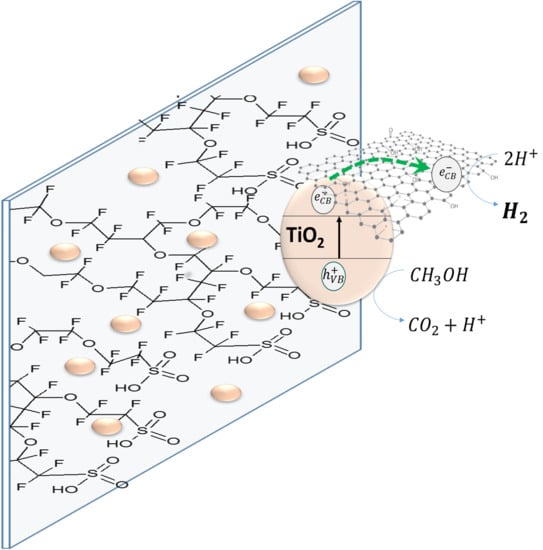
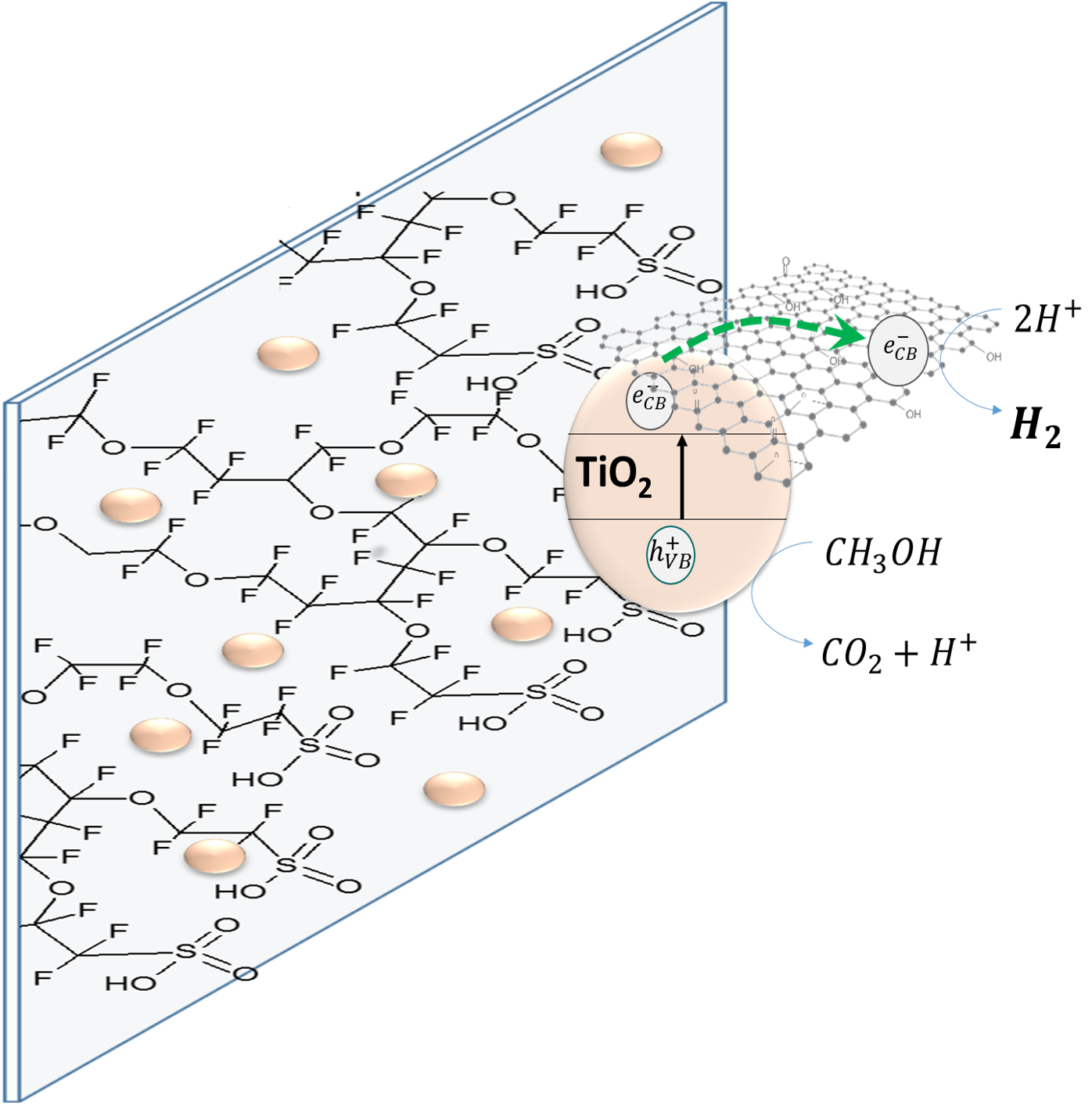
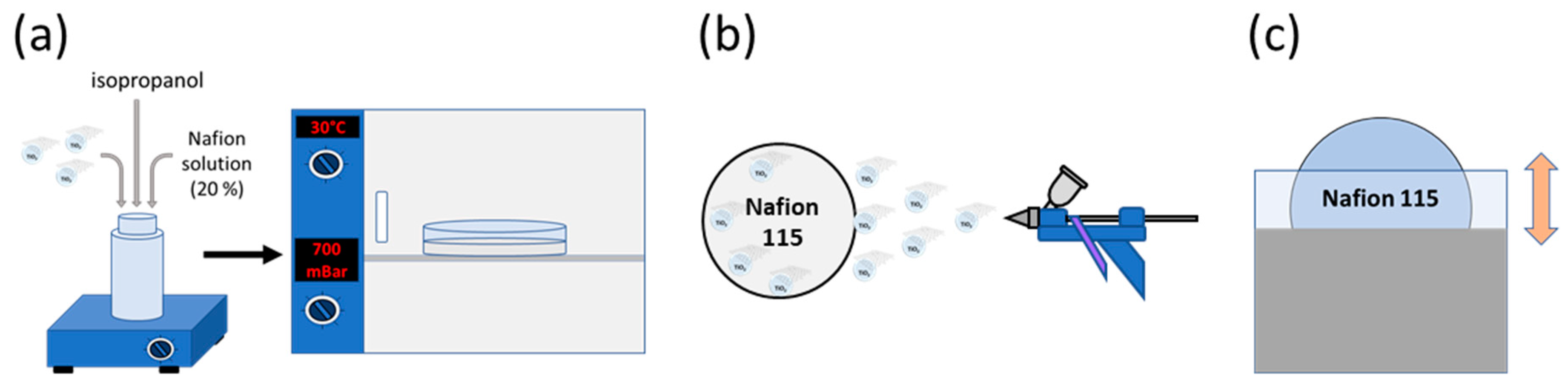
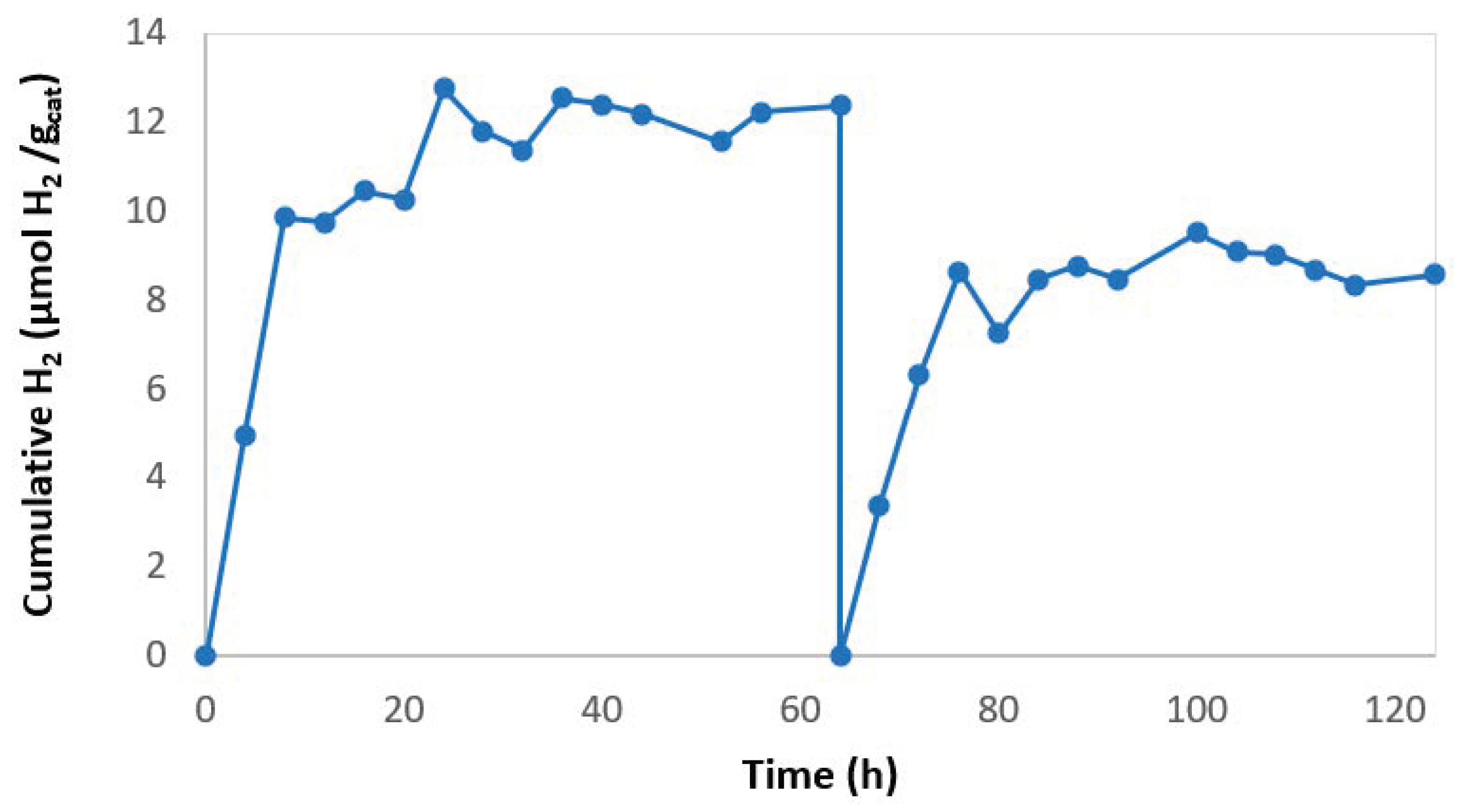
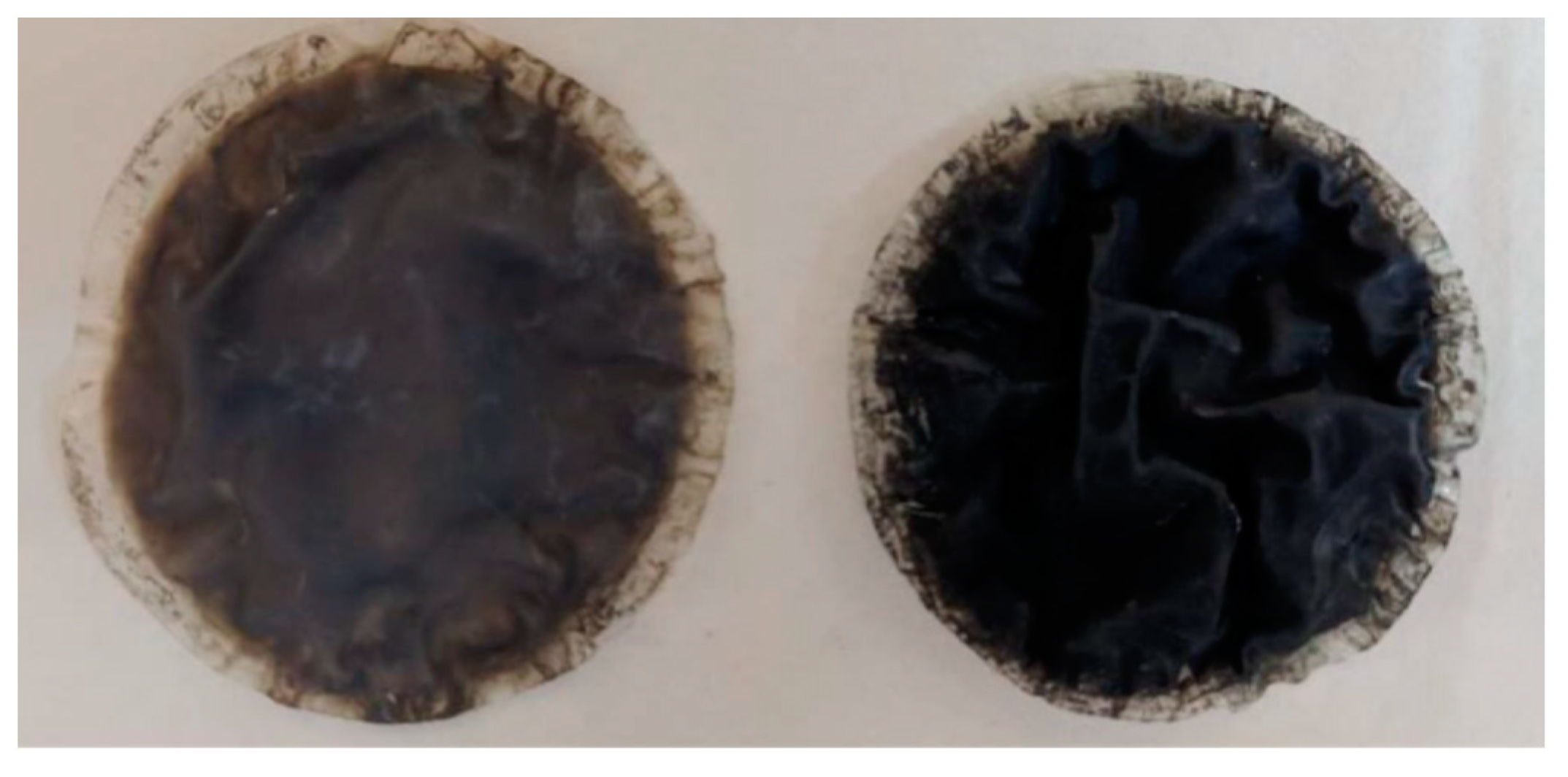
Although there are promising environmental and energy characteristics for the photocatalytic production of hydrogen, two main drawbacks must be overcome before the large- scale deployment of the technology becomes a reality, (i) the low efficiency reported by state of the art photocatalysts and, (ii) the short life time and difficult recovery of the photocatalyst, issues that need research and development for new high performance catalysts. In this work 2% rGO/TiO2 composite photocatalysts were supported over Nafion membranes and the performance of the photocatalytic membrane was tested for hydrogen production from a 20% vol. methanol solution. Immobilization of the composite on Nafion membranes followed three different simple methods which preserve the photocatalyst structure: solvent-casting (SC), spraying (SP), and dip-coating (DP). The photocatalyst was included in the matrix membrane using the SC method, while it was located on the membrane surface in the SP and DP membranes showing less mass transfer limitations. The performance of the synthesized photocatalytic membranes for hydrogen production under UVA light irradiation was compared. Leaching of the catalytic membranes was tested by measuring the turbidity of the solution. With respect to catalyst leaching, both the SC and SP membranes provided very good results, the leaching being lower with the SC membrane. The best results in terms of initial hydrogen production rate (HPR) were obtained with the SP and DP membrane. The SP was selected as the most suitable method for photocatalytic hydrogen production due to the high HPR and the negligible photocatalyst leaching. Moreover, the stability of this membrane was studied for longer operation times. This work helps to improve the knowledge on the application of photocatalytic membranes for hydrogen production and contributes in facilitating the large-scale application of this process.
Keywords: rGO/TiO2; Nafion; hydrogen production; photocatalysis; photocatalytic membrane rGO/TiO2; Nafion; hydrogen production; photocatalysis; photocatalytic membrane
Graphical Abstract