


Abstract
While COVID-19 continues raging worldwide, effective vaccines are highly anticipated. However, vaccine hesitancy is widespread. Survey results on uptake intentions vary and continue to change. This review compared trends and synthesized findings in vaccination receptivity over time across US and international polls, assessing survey design influences and evaluating context to inform policies and practices. Data sources included academic literature (PubMed, Embase, and PsycINFO following PRISMA guidelines), news and official reports published by 20 October 2020. Two researchers independently screened potential peer-reviewed articles and syndicated polls for eligibility; 126 studies and surveys were selected. Declining vaccine acceptance (from >70% in March to <50% in October) with demographic, socioeconomic, and partisan divides was observed. Perceived risk, concerns over vaccine safety and effectiveness, doctors’ recommendations, and inoculation history were common factors. Impacts of regional infection rates, gender, and personal COVID-19 experience were inconclusive. Unique COVID-19 factors included political party orientation, doubts toward expedited development/approval process, and perceived political interference. Many receptive participants preferred to wait until others have taken the vaccine; mandates could increase resistance. Survey wording and answer options showed influence on responses. To achieve herd immunity, communication campaigns are immediately needed, focusing on transparency and restoring trust in health authorities.
1. Introduction
The COVID-19 pandemic persists with resurgent waves while debates intensify about reinstituting lockdowns, civil liberties, and societal livelihood. Vaccines have become the hopeful savior to end the worst global health and economic crisis of living memory. Beyond the complex logistics of developing and testing, mass manufacturing, and distribution, the public’s confidence and acceptance for the vaccines are unclear and changing [1,2], rendering achieving herd immunity challenging.
Vaccine hesitancy can be dated back to the 1800s [3]. Well before the pandemic, the World Health Organization in 2019 identified it as a top global health threat [4]. Studies regarding intention to get vaccinated against COVID-19 have been published since early 2020 with great variations in question formats and results [5,6,7,8,9,10]. Many reported a pattern of increasing doubts about vaccine safety and declining receptivity [11,12,13]. However, differences in their findings and factors associated with vaccine hesitancy unique to COVID-19 have not been systematically examined.
A comprehensive understanding of the current vaccine sentiment and potential determinants of people’s behavior is critical for planning effective health communications to encourage uptake and successfully implementing population immunization. The objectives of this rapid review are to (a) compare the trends of the public’s reception and rejection of COVID-19 vaccines over time across national and international polls; (b) assess the impact of survey design, particularly the wording of the questions and framing of the answer choices, on responses; and (c) analyze factors pertaining to vaccine perceptions, concerns, and intention during the pandemic.
2. Materials and Methods
The research questions for this review are: (1) how have confidence and receptiveness for COVID-19 vaccines changed; (2) does survey design affect responses; and (3) what factors are associated with vaccination decision, unique to COVID-19. To help inform policy makers, health departments, and healthcare professionals in a timely manner, we streamlined the systematic review process for a rapid review [14]. The attenuated process included limiting searches to publications in English and not posting protocol to a systematic review registry.
2.1. Data Sources and Searches
Two searches were performed to identify studies published between 1 January and 20 October 2020 surveying people’s willingness to get a COVID-19 vaccine. The first literature search followed the systematic review procedure on PubMed, Embase, and PsycInfo with search terms: (COVID-19 OR coronavirus OR SARS-CoV-2) AND (vaccine OR immunization) AND (survey OR questionnaire OR poll). The search strategy included MeSH terms and free-text word variations adjusted for each database (details in Appendix A Table A1, Table A2 and Table A3).
The second search was conducted on Google using iterating combinations of key words including “COVID-19,” “coronavirus,” “vaccine,” “survey,” “poll,” “hesitancy,” and “willingness.” COVID-19-related news, web posts, and polls were scanned for the survey item of interest. Auxiliary key words (e.g., Gallup, The Economist) were used to locate affiliated questionnaires in series. When a potential survey was cited in an article, the original press release or official report was sought. If a report provided insufficient information, the respective organization was contacted.
2.2. Study Selection
Peer-reviewed studies were selected according to the Preferred Reporting Items for Systematic Reviews and Meta-Analyses (PRISMA) guidelines from the three databases [15]. The inclusion criteria were primary research that included at least one survey question on willingness, confidence, or intention of getting a COVID-19 vaccine if/when available, conducted in any country, and published in English. Titles and abstracts of the search results were screened, followed by full-text reviews by two researchers to determine eligibility; disagreements were resolved through consensus.
News articles and official reports (preferred, if available) from online searches and organization websites were included if they presented the question and responses to the survey item of interest. Surveys not explicitly asking about the receptiveness of COVID-19 vaccines or only discussing reasons for objecting vaccinations were excluded.
2.3. Data Extraction, Analysis, and Quality Assessment
Two researchers independently extracted data, verified by another researcher. The details summarized included surveying dates and authors or organizations, whether it was a one-time or longitudinal study, sampling size and method, key question(s), answer choices and responses, relevant factors and their effects. Findings were synthesized narratively and presented both in a summary table and graphs to illustrate the trends over time. The wording of questions and answer options were analyzed for response differences across surveys. To facilitate a rapid review and address limitations posed by the observational nature of surveys, study quality was assessed by survey administration, sampling method, size, and representativeness in lieu of utilizing a formal measure. Small, informal surveys were excluded.
3. Results
3.1. Search Results and Survey Characteristics
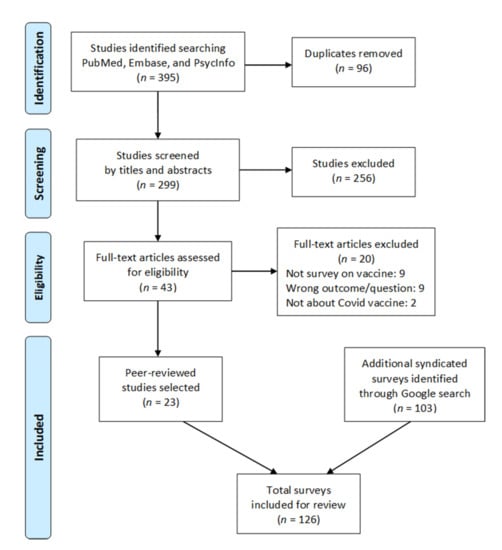
A total of 126 surveys was selected for this review, including 23 academic studies that passed the multi-level screening originating from 299 results from PubMed, Embase, and PsycInfo searches (Figure 1). All included surveys were conducted as either self-reported online questionnaires or phone interviews.
Figure 1.
PRISMA flow diagram of study search and selection.
Overall, the research design and data collection procedures of the included studies were deemed appropriate, conducted mostly by reputable pollsters (e.g., Ipsos, Pew Research, USA Today). Common quality issues included unreported non-response rates and not explicitly describing whether the percentage tabulations included missing data. A large majority of the surveys polled 1000–3000 participants and five polled over 10,000. All except seven had national/state representative samples through random selection from the targeted population (e.g., via voter registration or phone numbers) or large national/international opt-in panels, many stratified by demographics. The other seven were convenience samples utilizing social media [2,7,16,17,18] or recruiting posters [19,20].
The majority of the surveys were US-based; 16 (12.7%) international surveys covered a total of 31 countries, predominately conducted in the earlier study period. Eighty-seven of the surveys were among 15 series of recurring polls. Two major longitudinal surveys were conducted by Morning Consult with 33 surveys starting late February and YouGov (partnering with The Economist and Yahoo News) with 17 surveys since May. The summary table in Appendix A Table A4 described each survey’s dates, country (if non-US), sample size, question wording, answer options, responses, key findings, and relevant factors.
3.2. Trends in Vaccine Acceptance, Hesitancy, and Refusal
There have been substantial variations in COVID-19 vaccine receptivity between countries [8,20,21,22], states within the US [9,23,24,25,26], and subgroups. Among America surveys, the highest intended acceptance of 72% was reported by Morning Consult in early April [27]. In mid-October, the propensity dropped to its lowest at 48% (men 55%, women 42%) [11]. Regionally, acceptance ranged from 38% in the Northeast to 49% in the West [28]. Internationally, some Asian countries had higher acceptance: 88.6–91.3% in China and 79.8% in South Korea—both also reported higher trust in central governments [21,29]. Other highly receptive countries included Brazil (85.36%), South Africa (81.58%), Denmark (80%), and the UK (79%); Russia had the lowest (54.9%), followed by France (58.9–62%), which also reported the largest rate of “unsure” responses (28%) [21,22].
3.2.1. Demographics Variables
Demographic characteristics were common subgroup variables cross-tabulated with vaccination intention. Of note is the growing gap between those without and with college degrees [5,10,24,30]; one survey recorded 42% and 62%, respectively, with 73% for post-graduates [31]. Individuals with lower income [24,32,33,34], uninsured [2,32], living in rural areas [1,35,36] or larger households [1] were less likely to get vaccinated.
People over 55 or 65 (depending on each survey’s categorization) remain the most receptive among age groups [21,22,30,36,37,38], often followed by the youngest, 18–24 or –34 groups [6,16,24,39,40], while other polls found younger age had lower acceptance [1,31,41]. A majority of the US-based surveys reported lower intentions among women than men [1,24,30,37,42], while some international polls found the opposite [10,21,34]. A multi-country study reported that women’s vaccine refusal was more than double men’s [22].
White Americans consistently expressed higher receptivity [33,35] and Blacks showed more suspicion and lower confidence in the vaccine [2,30,32,33,43]. One study found Blacks were 40% more likely than Whites to reject due to lack of trust in vaccine safety, efficacy, and resources [42]. Divergent results were reported among Hispanics—some reported higher [1,24,33,39,44,45] or similar [30] acceptance as Whites, though others found lower [31,46]. Asian Americans were included in a few surveys for subgroup analysis, and they expressed greater acceptance [24,30,47] (e.g., 81% of Asian Americans vs. 68% of Whites and Hispanics, 40% of Blacks [9]).
3.2.2. Vaccine Attributes and Individual Factors
Some surveys queried factors relevant to vaccination decisions. Vaccine attributes posed prevalent concerns, particularly due to the newness of COVID-19 vaccines [22,48]. The most commonly cited reasons for hesitation or refusal were fear of side effects [1,22,47,49,50], safety [5,34,37,51], and effectiveness [2,5,24,52,53,54]. Belief that vaccines are unnecessary [43,50,52,55], inadequate information [34,47,50], unknown/short duration of immunity [2,5,50,53], and a general anti-vaccine stand [1,10,55] were associated with lower acceptance.
Less frequently discussed were cost [47], willingness to pay [2,34,56], and country of vaccine origin. Cost ranked low as a concern for Americans [5]. One survey reported that 17.1% would get the vaccine only if covered by insurance [54] and another found 49% expected it to be free (paid by insurance or government) [56]. In America, US-made vaccines were more trusted than China-made [53,57] or foreign-developed [5,53]. Most Chinese (64%) expressed no preference for domestic or foreign-made [34].
National (but not necessarily state) coronavirus infection and mortality rates [9,21,23,58], perceived risk of infection [2,7,42] and disease severity [2,53] were predictors of vaccination intentions. The impacts of having been infected oneself or knowing a friend/family who had and the desire to protect oneself or others were also cited but less conclusive. Some studies indicated positive association [19,53], while others found no correlation [21]. One study reported only 55% of those worrying about themselves or family members getting infected would get vaccinated [49].
A top facilitator of confidence is doctors’ recommendation [2,19,32,59], motivating 80% of Chinese [29] and 62% of Americans [13] (compared to 54% if the FDA endorsed the vaccine safety [56]). Opinion of families and friends also played a role [2]. Past inoculation history, including influenzas [1,5,7,9,48] and MMR (Measles, Mumps, and Rubella) vaccines [60], was another proven indicator. Conversely, 40–42% said they are more likely to get a flu shot because of COVID-19 [54,61].
Three international studies investigated healthcare professionals’ attitudes and found similar concerns about vaccine safety and effectiveness and receptivity predictors including previous vaccination history, perceived risk or exposure, and being older, male, or a doctor [7,55,62]. Healthcare workers in Indonesia had greater acceptance than the public (OR: 1.57, 95% CI: 1.12–2.20) [63] while nurses in Hong Kong indicated low intention (40%) [7]. Israeli doctors reported slightly higher self-acceptance (78% vs. 75%), but were less likely to vaccinate their children than the public (60% vs. 70%) [62].
3.3. Assessing the Impact of Survey Design
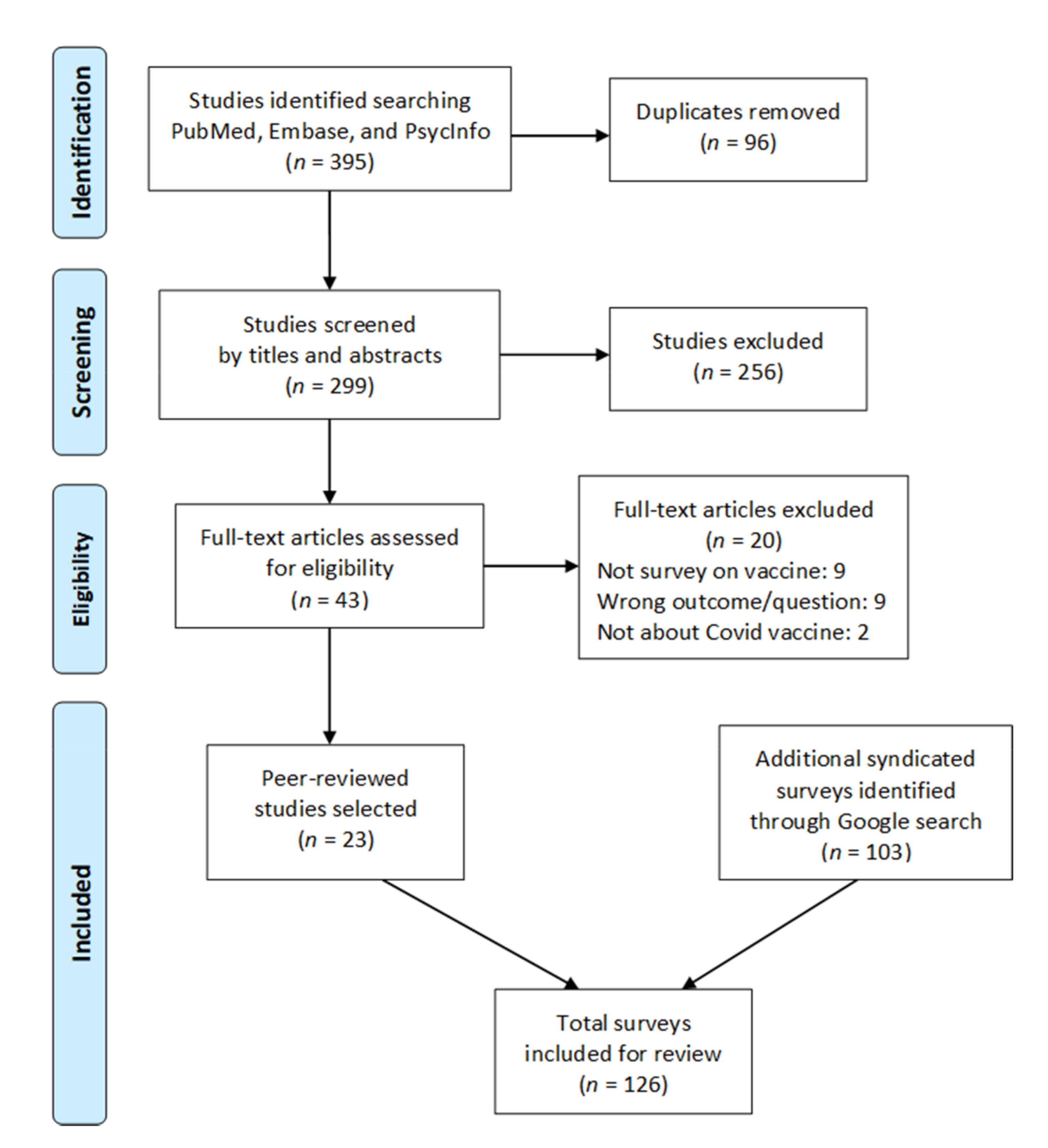
To examine the influence of question framing, Figure 2 plotted the rates of affirmative responses to COVID-19 vaccine intention questions across the past eight months, differentiated US-based and international surveys for comparison. Data from Morning Consult and YouGov series provided strong evidence of the declining receptivity based on consistent questioning. Other surveys, though using varied question wording, showed a similar pattern with few but some exceptions.
Figure 2.
Rates of affirmative responses to a COVID-19 vaccine intention question.
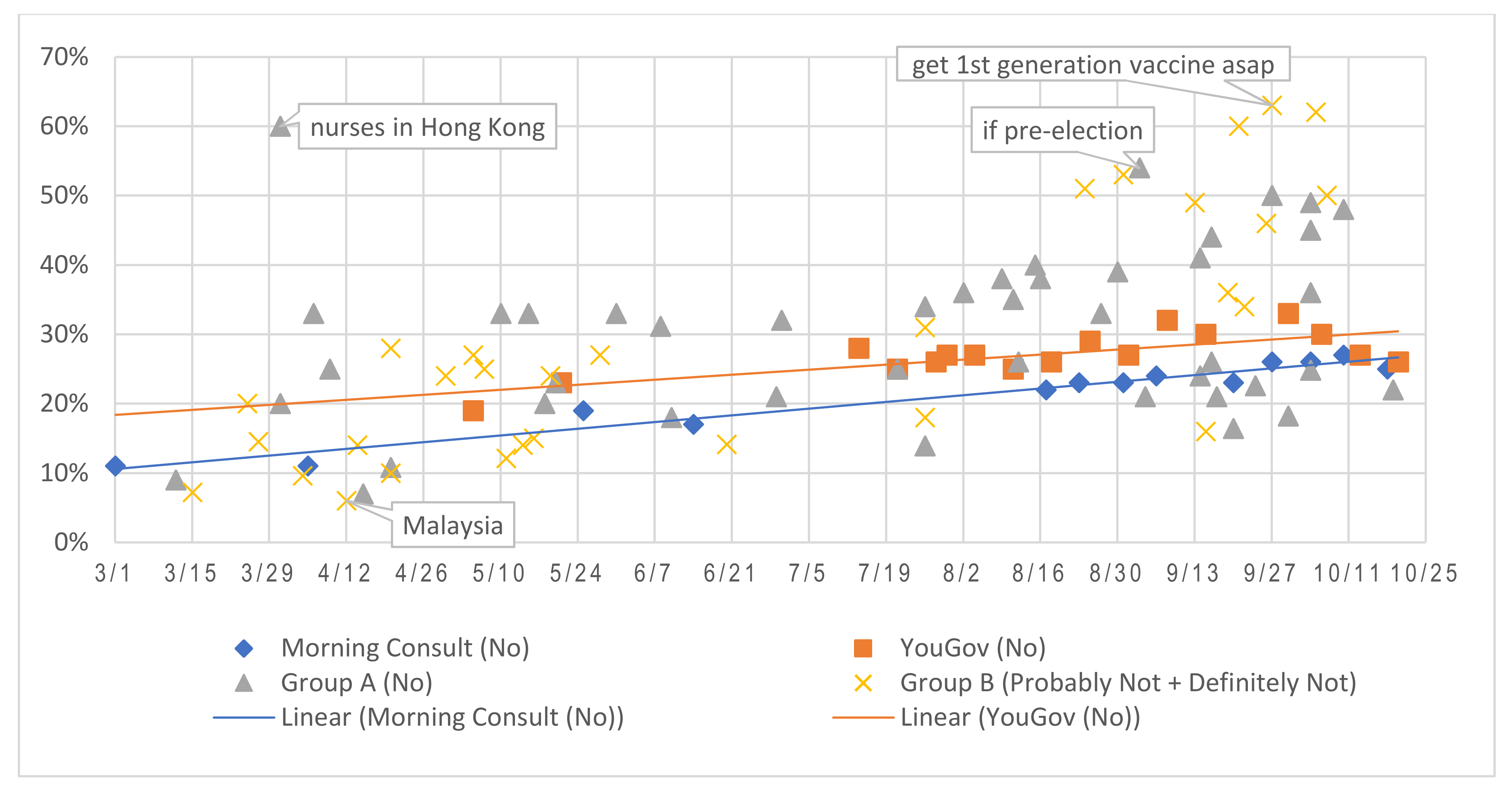
Declines in the two longitudinal surveys were almost parallel over the study period, with YouGov’s findings consistently 9–18% lower than Morning Consult’s. YouGov posed the question neutrally as “if and when a coronavirus vaccine becomes available, will you get vaccinated?” Morning Consult worded it slightly differently, “if a vaccine that protects from the coronavirus became available, would you get vaccinated or not?” Similarly, other surveys that reported higher receptivity often framed the question in a more positive way or provided some assurance: e.g., “FDA approved” [40,64], “prevent” [6,65] or “against coronavirus” [18,34,49], “safe and effective” [16,66], “successfully developed” [29], and “recommended for me” [9]. Some surveys tagged additional conditions that triggered higher interest, such as “free” or “at no cost” [6,40,67] and “US-developed” [57]; other conditions heightened hesitancy, including “first generation of vaccine” [45], “as soon as possible” [68,69], and “approved or released before the US election” [70,71,72]. Examples of such effects and outliers were illustrated with annotated speech bubbles in the following graphs.
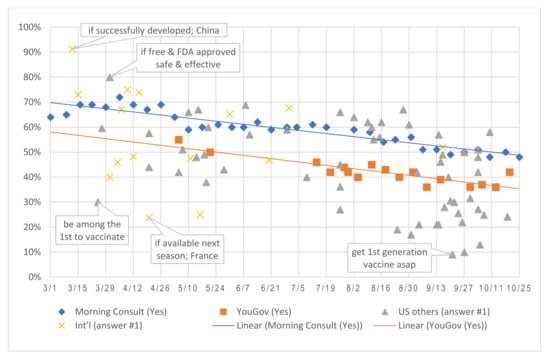
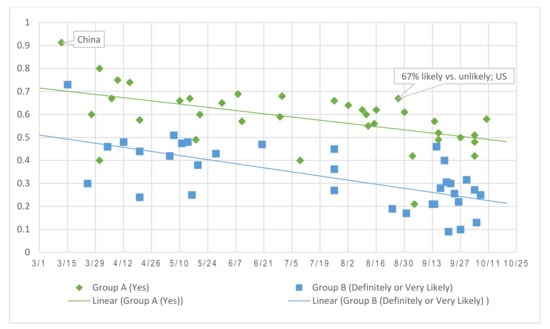
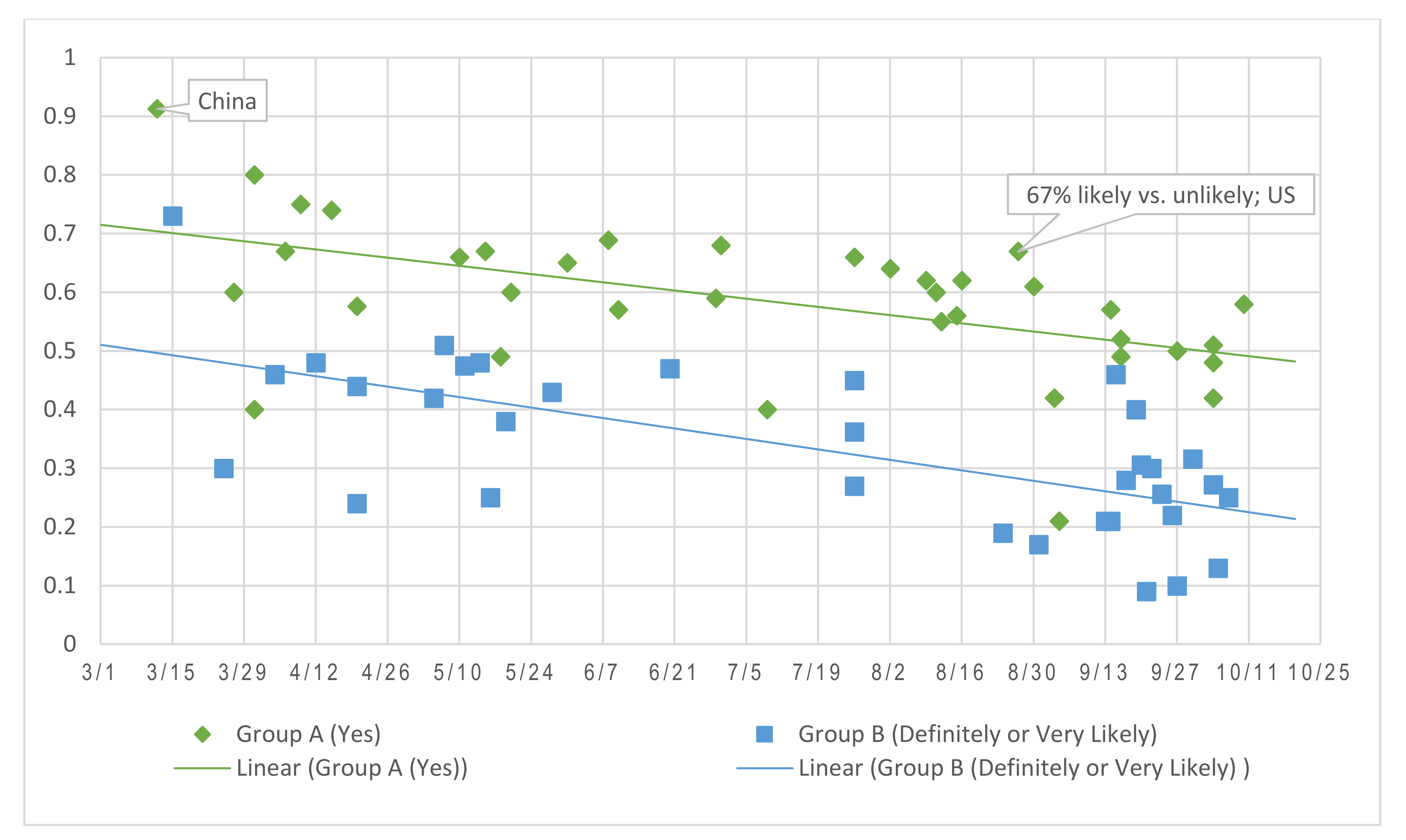
Assessing answer choice influence, we separated surveys into Group A with two or three answer options (yes/no/not sure or don’t know) and Group B with four or five options (e.g., very likely/somewhat likely/neutral/somewhat unlikely/very unlikely, definitely/probably/probably not/definitely not). Figure 3 plotted the percentages of participants who picked the first answer in each of the two groups and demonstrated the differences between the two survey designs. Responses were more spread out when there were more options (as in Group B) and thus produced seemingly lower percentages of affirmative answers. Pollsters often combine the results of the first or last two answer categories in writing news articles for more eye-catching headlines, such as “Two in three Americans likely to get coronavirus vaccine [73].” In such case, attention is needed to distinguish and accurately interpret the results.
Figure 3.
Comparing response differences due to answer option design (percentages of participants chose Yes vs. Definitely/Very Likely to a vaccine intention question) *. * Data points do not include Morning Consults and YouGov to simplify the visual presentation.
Further, simply looking at the ratio of people answering yes or likely does not tell the whole story. When answer options included different timings for vaccination, more people chose to wait than get it as soon as possible [54] (e.g., 45% vs. 28% [74]). One survey asked “How likely are you to get a COVID-19 vaccine as soon as it becomes available?” with only two answer choices—likely or unlikely, which by comparison received relatively high (67%) affirmatives [75].
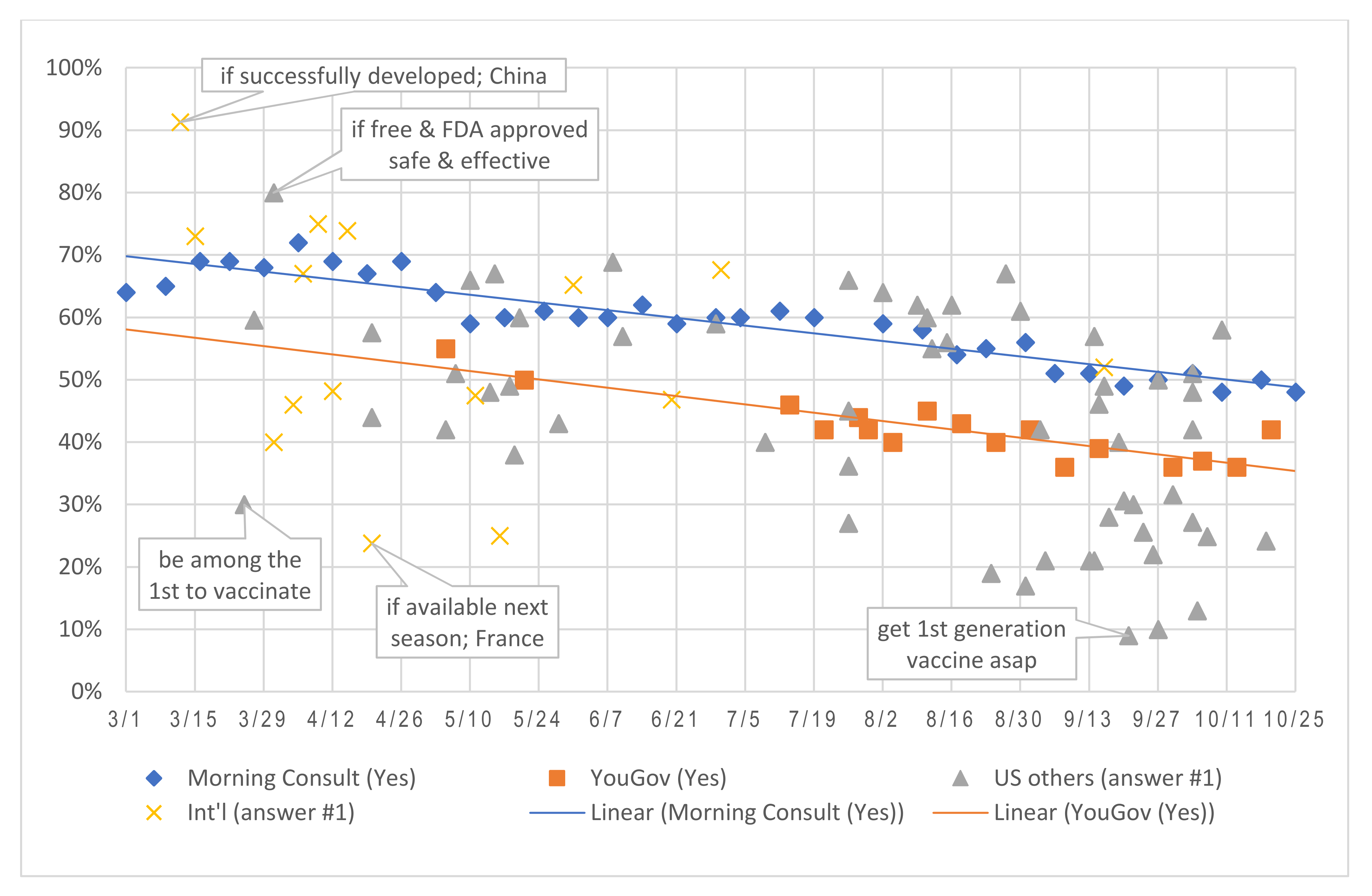
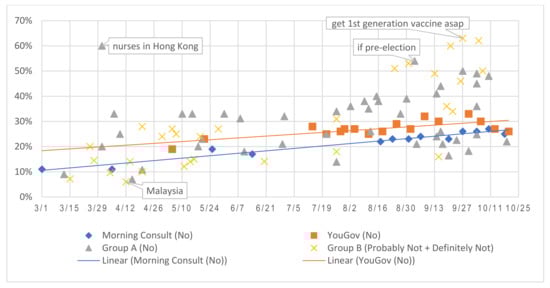
It is equally important to assess trends of vaccine hesitancy and refusal. Figure 4 illustrated the increasing ratio of respondents indicating low or no intention to vaccinate and the summary table (Appendix A Table A4) documented each answer choice frequency.
Figure 4.
Percentages of expressed refusal or hesitancy to a vaccine intention question.
3.4. Contextual and COVID-19 Factors
Several factors are unique to this pandemic due to the novelties and magnitude of COVID-19 and current highly polarized partisan environment [13,19,76,77,78]. The expedited vaccine development has caused apprehension and distrust [5,10,30,60,79], particularly the Emergency Use Authorization process [53]. While 33% were confident that the FDA will only approve the vaccine if it is safe [51], 41% believed the vaccine will be made available before proven safe and effective [26]. Seventy-five percent worried about the safety of fast-tracking [28]; 11% would be more likely to take a vaccine if Operation Warp Speed suggested it [80].
Hesitancy was manifested in the preference to wait [54]: 60% were unlikely to get the first generation of vaccine [56]; 64% endorsed prioritizing full testing even if delaying availability [57]. Among individual states, 41.6–51% would wait until others have taken it [23,25,58,74,81,82,83]. In China, while 91.3% showed intention to accept, 47.8% would delay until confirmed safe [29]. On the other hand, one international survey found 43% willing to accept less stringent standards [20]; an American survey reported that 59% agreed that providing more people access outweighs the risks of an accelerated process [30].
Three studies analyzed the prevalence and impact of conspiracy theories [84,85,86]; 33% of respondents in the US and 50% in England showed some conspiracy thinking [84,85]. Respondents with higher skepticism had lower perceived risk and trust in government or professionals, and thus higher doubts and objections to vaccination [85,86]. Mainstream news could counter misinformation and utilizing politically conservative outlets and doctor’s communications were suggested for accurate messaging [84,86].
Coinciding with the timing of the US presidential election, many polls included politically oriented questions. Partisan influences were evident, with persistent vaccine attitude gaps between Democrats and Republicans [27,50,76] (80% vs. 48% acceptance [40]; 74% vs. 54% belief in clinical trial importance [42]). The chasm extended to risk perceptions; 42% vs. 19% believed coronavirus is a severe health threat [76]. Conversely, in France, the Far Right parties had higher willingness to vaccinate [10]. Declining trust of information sources and authorities was also observed [24,56,60,87,88]: 50% thought President Trump had influence over FDA decisions [89]; 82% of Democrats and 72% of Republicans worried vaccine approval was driven more by politics than science [75].
In a large multi-national survey, 71.5% would likely get vaccinated and 61.4% would comply if employers suggested doing so [21]. In the US, 65% believed parents should be required to vaccinate [90]; but the rate of refusal grew from 24% to 42.2% in North Carolina and 16.4% to 35.4% in Maine, if it was mandated by the federal government [23,83]. Views varied concerning children: 51% of Americans believed K-12 schools (kindergarten through grade 12) should require COVD-19 vaccines, while 75% of Texans thought the government should require child vaccination for infectious diseases [54,91]. Parents may have different considerations for vaccinating their children than themselves. One survey reported 76.02% vs. 74.38% receptivity and another 45% vs. 36.2% [5,54]; 58% would do so as soon as possible [51], though having chronic illness was a deterrence [19]. Those who indicated refusal for themselves also would not vaccinate their children [48].
4. Discussion
This review is the first examining trends of over 100 surveys capturing COVID-19 vaccine receptivity. Although there appear to be consistent declining trends, there have been differences in survey presentations and findings. The deep fissures in American society by income, race, and political affiliation revealed by the pandemic are reflected in vaccine attitudes. Our results showed that vaccine hesitancy is universal across countries, states, and subgroups (including healthcare providers and parents), so are its determinants—perceived disease or outbreak severity, infection risk, and vaccine safety, effectiveness, and necessity. Influenza vaccination history, trust in government, and doctor’s recommendations are important facilitators for vaccine confidence and acceptance. These findings align with previous research on other vaccines [92,93,94,95]. Nonetheless, increasing daily cases and deaths did not prevent double-digit declines in vaccination intention since its highest point in early April [27].
Socioeconomic and racial issues pertaining to health disparity during regular times and other epidemics persist here [96,97]. Minorities, lower income, and less educated individuals are disproportionally more susceptible to COVID-19 [98,99]. Their considerably lower vaccine acceptance requires special attention, including acknowledging the source and addressing the effect of their chronic distrust of health authorities in order to confront the vicious cycle of skepticism and inferior health outcomes. Much of minorities’ reservation or resistance toward medical research and the healthcare system originated from historical events (e.g., unethical experimentation among Blacks in the Tuskegee syphilis study) as well as ongoing perceived bias in clinical interactions and treatments [97,100,101]. Vaccine distribution prioritization should consider these disadvantaged groups as part of the high-risk population, considering their work or underlying health conditions, to improve equity [102].
Men in general are more receptive of COVID-19 vaccines and, as evident in the literature, more inclined to adopt pharmaceutical interventions [103], including vaccination [104,105,106]. Women are more likely to worry about catching coronavirus, concerned about side effects [107], and take protective measures (e.g., masking, handwashing, and social distancing) [108,109]. Such prevention-orientation variance, not limited to gender difference, calls for tailored communications and appeals. Future research could explore whether people perceive higher risk in taking a new vaccine than getting infected with a novel disease.
Often dominating the vaccine discussion in this pandemic are unique expedited development, perceived political interference, and ubiquitous misinformation that have dampened confidence in the rigor of the approval process and the use of the vaccine itself. Trust in authorities has fallen, greater in federal than state or local governments (53% in mid-March to 34% in October) [72]. Major news media believed President Trump’s repeated pre-election promises of a vaccine “within weeks” or by November often “fueled fears” and “heightened concerns” of a rushed process [110,111]. Our polarized electorate mirrors that of the population with large differences across groups. The devastating economic consequences of the pandemic and the heated US presidential election filled with clashing rhetoric have further divided the society along the party line, partitioning people’s opinions in the reality of COVID-19 and the life-saving measure against it. Moreover, the proliferation of conspiracy theories surrounding coronavirus and the vaccines, combined with existing anti-vaccine movement adds another uncertain dimension to vaccine decisions [86,112,113]. Detected misinformation or the spread of “fake news” must be quickly denounced and sources isolated.
Emphasizing transparency and adherence to scientific standards throughout the vaccine development, approval, and distribution processes could restore confidence. In early September, the pharmaceutical industry’s joint pledge to file for emergency authorization only when they have evidence proving the safety and effectiveness in clinical trials [114] boosted pharma’s reputation to 49% positive view in a national poll [115], compared to 32% pre-COVID-19 [116]. The FDA advisory committee’s public meetings with independent experts also provided some reassurance [110]. Second to doctors, Centers for Disease Control and Prevention (CDC) and national public health officials remain the most trusted sources for accurate information (71% and 69%, respectively, though decreased since mid-March) [72]; these figures are significant influencers of people’s health behavior and should be the main communicators in vaccine campaigns to encourage acceptance [117].
The impact of framing and wording choices demonstrated in the comparative analyses offers lessons to guide the urgent development of a critically needed national vaccine campaign and improve future study design supporting continued vaccine hesitancy surveillance [118,119]. For example, posing a question such as, “Would you be willing to get the vaccine to protect yourself and your family?” casts a more positive mindset than asking “how risky do you think it would be to get vaccinated?” Yet, the latter could be turned into an educational opportunity to correct misconception. Though a vaccine could not be distributed without FDA approval, from the surveys many people do not seem to equate a vaccine becoming available to having been approved with proper safety protocols in place. Delineations on such issues could debunk confusion and doubts.
Subgroups with different characteristics and opinions require customized messages, presentations, and channels [120]. It is essential to ensure that intention translates into actual uptake [121]. Furthermore, hesitancy when compared to avoidance or refusal, is a dynamic state that opens the door for persuasion [22,118]. Campaigns targeting those who responded “likely,” “probably,” or “not sure” regarding vaccine intention would be more fruitful than trying to convert those who stated “no” or “definitely not.” People need to believe that a behavior is beneficial, even vital, in order to adopt it [122]. Messages should focus on the safety and efficacy of vaccines as well as clarify the value and necessity of immunization in people’s belief system (e.g., stressing that many vaccines have helped eradiate or control deadly diseases that we are no longer aware of or concerned about because vaccines worked).
Learning from the delayed and conflicting communications about mask wearing and the protest against it, messages tailored to individuals’ disposition (e.g., protecting self or others and family, freedom of choice vs. civic responsibility) would be more effective. Though not explicitly covered in the surveys reviewed, the intricate balance between preserving individual rights and securing population health has generated discords throughout the pandemic, from mask requirement, lockdowns or curfews, to mass vaccination. Several studies underscored the likely resistance mandates may elicit, even among originally receptive groups [23,25,81,83]. Framing vaccination as a smart, purposeful personal decision, emphasizing individual’s autonomy could yield greater results. In addition to traditional media and official websites for disseminating current and accurate information, since social media is a popular source of news as well as misinformation for many [123,124], it should be a key channel in messaging and combating anti-vaccine or conspiracy theories.
Communication strategies could utilize positive cues to action, including encouragement from loved ones and trusted figures such as physicians and religious leaders, sharing personal stories, and peer pressure [125]. Studies also have shown social expectation and portraying anticipated regret from inaction to be potential motivators for vaccination [104,126]. Furthermore, accompanying the rollouts of vaccines with short supply and complex delivery requirements (e.g., low-temperature storage and double dosage), campaign objectives should instill confidence not just in the safety of the medical intervention but also in the manufacturing, transportation, access, and equitable distribution to alleviate concerns or distrust.
This review is subject to limitations. Studies retrieved from the scholarly databases may not provide the most up-to-date public opinions due to the review and publication processes. Though Google search is less customary for systematic reviews, research guides suggested it as a gray literature source and suitable in locating surveys for this review [127,128,129]. The inclusion of studies was not exhaustive (with mostly US-based surveys), but covered a large number of major polls and important factors for a comprehensive picture of the trends. Future research would benefit from qualitative inquiries to allow for elaborations on non-pre-defined factors. Longitudinal studies could re-poll the same participants to detect triggers for attitude changes.
Caution should be taken in interpreting and using the results since intention or survey responses may not directly predict future behavior [130]. Moreover, opinions may change, especially amid the raging pandemic. Continued vaccine receptivity tracking could reveal whether the reported clinical trials incidents or outcomes and subsequent introductions of vaccines or new treatments would further change people’s minds about getting vaccinated.
5. Conclusions
Vaccine hesitancy is an imminent threat in the battle against COVID-19 because achieving herd immunity depends on the efficacy of the vaccine itself and the population’s willingness to accept it. This review offered a sweeping examination of the evolving vaccine attitudes since the early stage of the pandemic to inform policy makers and public health professionals in campaign planning and communications. Consistent with the literature, demographic and socioeconomic divides in receptivity are present in these surveys and the partisan nature of some indicators is unprecedented. Multiple factors, including perceived disease risk and vaccine safety concern as well as question presentation, could influence responses and ultimately actions. The power of words and framing illustrated in this review helps shed light on strategic communication for motivating positive, collective pandemic response.
On-going campaign content adjustments and monitoring responses should not be overlooked. Once vaccination starts, the likely decrease in new COVID-19 cases needs to be accurately highlighted as the outcome of vaccine uptake rather than being interpreted as lessened risk, something that could reduce the perceived need for vaccination.
Author Contributions
Conceptualization, C.L., P.T. and L.M.B.; methodology and analysis, C.L. and P.T.; visualization, C.L.; writing—original draft preparation, C.L.; writing—review and editing, C.L., P.T. and L.M.B. All authors have read and agreed to the published version of the manuscript.
Funding
This research received no external funding.
Acknowledgments
The authors would like to thank Brooke Bier for her assistance in collecting and compiling data.
Conflicts of Interest
The authors declare no conflict of interest.
Appendix A. Literature Search Strategy
Table A1.
Database: PubMed (Search Date: 20 October 2020).
Table A2.
Database: Embase (Search Date: 20 October 2020).
Table A3.
Database: PsycINFO * (Search Date: 20 October 2020).
Table A4.
Summary Table of Survey Design and Findings of Selected Studies on COVID-19 Vaccine Receptiveness *.
References
- Fisher, K.A.; Bloomstone, S.J.; Walder, J.; Crawford, S.; Fouayzi, H.; Mazor, K.M. Attitudes Toward a Potential SARS-CoV-2 Vaccine: A Survey of U.S. Adults. Ann. Intern. Med. 2020. [Google Scholar] [CrossRef] [Scilit] [PubMed]
- Reiter, P.; Pennell, M.; Katz, M. Acceptability of a COVID-19 vaccine among adults in the United States: How many people would get vaccinated? Vaccine 2020, 38, 6500–6507. [Google Scholar] [CrossRef] [Scilit] [PubMed]
- Stern, A.M.; Markel, H. The History Of Vaccines And Immunization: Familiar Patterns, New Challenges. Health Aff. 2005, 24, 611–621. [Google Scholar] [CrossRef] [Scilit] [PubMed]
- World Health Orgnization. Ten Threats to Global Health in 2019; WHO: Geneva, Switzerland, 2019. [Google Scholar]
- Pogue, K.; Jensen, J.L.; Stancil, C.K.; Ferguson, D.G.; Hughes, S.J.; Mello, E.J.; Burgess, R.; Berges, B.K.; Quaye, A.; Poole, B.D. Influences on Attitudes Regarding Potential COVID-19 Vaccination in the United States. Vaccines 2020, 8, 582. [Google Scholar] [CrossRef] [Scilit] [PubMed]
- Bowman, K.; Goldstein, S. Giving Vaccines a Shot? American Enterprise Institute (AEI): Washington, DC, USA, 2020. [Google Scholar]
- Wang, K.; Wong, E.L.Y.; Ho, K.F.; Cheung, A.W.L.; Chan, E.Y.Y.; Yeoh, E.K.; Wong, S.Y.S. Intention of nurses to accept coronavirus disease 2019 vaccination and change of intention to accept seasonal influenza vaccination during the coronavirus disease 2019 pandemic: A cross-sectional survey. Vaccine 2020, 38, 7049–7056. [Google Scholar] [CrossRef] [Scilit]
- Graffigna, G.; Palamenghi, L.; Boccia, S.; Barello, S. Relationship between Citizens’ Health Engagement and Intention to Take the COVID-19 Vaccine in Italy: A Mediation Analysis. Vaccines 2020, 8, 576. [Google Scholar] [CrossRef] [Scilit]
- Malik, A.A.; McFadden, S.M.; Elharake, J.; Omer, S.B. Determinants of COVID-19 vaccine acceptance in the US. EClinical Med. 2020, 26, 100495. [Google Scholar] [CrossRef] [Scilit]
- Ward, J.K.; Alleaume, C.; Peretti-Watel, P.; Peretti-Watel, P.; Seror, V.; Cortaredona, S.; Launay, O.; Raude, J.; Verger, P.; Beck, F.; et al. The French public’s attitudes to a future COVID-19 vaccine: The politicization of a public health issue. Soc. Sci. Med. 2020, 265, 113414. [Google Scholar] [CrossRef] [Scilit]
- Galvin, G. 48% of U.S Adults Now Say They’d Get a COVID-19 Vaccine, a New Low; Morning Consult: Washington, DC, USA, 2020. [Google Scholar]
- Saad, L. Americans’ Readiness to Get COVID-19 Vaccine Falls to 50%. Gallup, 12 October 2020.
- Axios. Axios-Ipsos Poll: Americans won’t Take Trump’s Word on Vaccine. Axios, 29 September 2020.
- Garritty, C.; Gartlehner, G.; Nussbaumer-Streit, B.; King, V.J.; Hamel, C.; Kamel, C.; Affengruber, L.; Stevens, A. Cochrane Rapid Reviews Methods Group offers evidence-informedguidance to conduct rapid reviews. J. Clin. Epidemol. 2020, 130, 13–22. [Google Scholar] [CrossRef] [Scilit]
- Liberati, A.; Altman, D.G.; Tetzlaff, J.; Mulrow, C.; Gøtzsche, P.C.; Ioannidis, J.P.A.; Clarke, M.; Devereaux, P.J.; Kleijnen, J.; Moher, D. The PRISMA statement for reporting systematic reviews and meta-analyses of studies that evaluate healthcare interventions: Explanation and elaboration. BMJ 2009, 339. [Google Scholar] [CrossRef] [Scilit]
- Ali, K.F.; Whitebridge, S.; Jamal, M.H.; Alsafy, M.; Atkin, S.L. Perceptions, Knowledge, and Behaviors Related to COVID-19 Among Social Media Users: Cross-Sectional Study. J. Med. Internet Res. 2020, 22, e19913. [Google Scholar] [CrossRef] [Scilit] [PubMed]
- Abdelhafiz, A.S.; Mohammed, Z.; Ibrahim, M.E.; Ziady, H.H.; Alorabi, M.; Ayyad, M.; Sultan, E.A. Knowledge, Perceptions, and Attitude of Egyptians Towards the Novel Coronavirus Disease (COVID-19). J. Community Health 2020, 45, 881–890. [Google Scholar] [CrossRef] [Scilit] [PubMed]
- Detoc, M.; Bruel, S.; Frappe, P.; Tardy, B.; Botelho-Nevers, E.; Gagneux-Brunon, A. Intention to participate in a COVID-19 vaccine clinical trial and to get vaccinated against COVID-19 in France during the pandemic. Vaccine 2020, 38, 7002–7006. [Google Scholar] [CrossRef] [Scilit] [PubMed]
- Goldman, R.D.; Yan, T.D.; Seiler, M.; Parra Cotanda, C.; Brown, J.C.; Klein, E.J.; Hoeffe, J.; Gelernter, R.; Hall, J.E.; Davis, A.L.; et al. Caregiver willingness to vaccinate their children against COVID-19: Cross sectional survey. Vaccine 2020, 38, 7668–7673. [Google Scholar] [CrossRef] [Scilit]
- Goldman, R.D.; Marneni, S.R.; Seiler, M.; Brown, J.C.; Klein, E.J.; Cotanda, C.P.; Gelernter, R.; Yan, T.D.; Hoeffe, J.; Davis, A.L.; et al. Caregivers’ Willingness to Accept Expedited Vaccine Research During the COVID-19 Pandemic: A Cross-Sectional Survey. Clin. Ther. 2020, 42, 2124–2133. [Google Scholar] [CrossRef] [Scilit]
- Lazarus, J.V.; Ratzan, S.C.; Palayew, A.; Gostin, L.O.; Larson, H.J.; Rabin, K.; Kimball, S.; El-Mohandes, A. A global survey of potential acceptance of a COVID-19 vaccine. Nat. Med. 2020. [Google Scholar] [CrossRef] [Scilit]
- Neumann-Böhme, S.; Varghese, N.E.; Sabat, I.; Barros, P.P.; Brouwer, W.; van Exel, J.; Schreyögg, J.; Stargardt, T. Once we have it, will we use it? A European survey on willingness to be vaccinated against COVID-19. Eur J. Health Econ. 2020, 21, 977–982. [Google Scholar] [CrossRef] [Scilit]
- Suffolk University. Suffolk University/USA Today Poll—North Carolina; Suffolk University: Boston, MA, USA, 2020; p. 7. [Google Scholar]
- Perlis, R.H.; Lazer, D.; Ognyanova, K.; Baum, M.; Santillana, M.; Druckman, J.; Volpe, J.D.; Quintana, A.; Chwe, H.; Simonson, M. The State of the Nation: A 50-State Covid-19 Survey Report #9: Will Americans Vaccinate Themselves and Their Children against Covid-19? Open Science Framework: Charlottesville, VA, USA, 2020. [Google Scholar]
- Suffolk University. Suffolk Univeristy/USA Today Poll—Arizona; Suffolk University: Boston, MA, USA, 2020. [Google Scholar]
- University of Texas. University of Texas/Texas Tribune Poll—October 2020; University of Texas: Austin, TX, USA, 2020; pp. 1–46. [Google Scholar]
- Morning Consult. National Tracking Poll #200409; Morning Consult: Washington, DC, USA, 2020. [Google Scholar]
- YouGov. The Economist/YouGov Poll—20 October. YouGov, 20 October 2020.
- Wang, J.; Jing, R.; Lai, X.; Zhang, H.; Lyu, Y.; Knoll, M.D.; Fang, H. Acceptance of COVID-19 Vaccination during the COVID-19 Pandemic in China. Vaccines 2020, 8, 482. [Google Scholar] [CrossRef] [Scilit]
- Thigpen, C.; Funk, C. Most Americans expect a COVID-19 vaccine within a year; 72% say they would get vaccinated. Pew Research Center, 21 May 2020.
- Morning Consult. National Tracking Poll #201087; Morning Consult: Washington, DC, USA, 2020. [Google Scholar]
- Crane, M. Seven in 10 Americans Willing to Get COVID-19 Vaccine, Survey Finds; Medical Xpress: Douglas, Isle of Man, 2020. [Google Scholar]
- Tufts University’s Research Group on Equity in Health, Wealth and Civic Engagement. Only 57 Percent of Americans Say They Would Get COVID-19; Tufts University: Medford, MA, USA, 2020. [Google Scholar]
- Wong, L.P.; Alias, H.; Wong, P.-F.; Lee, H.Y.; AbuBakar, S. The use of the health belief model to assess predictors of intent to receive the COVID-19 vaccine and willingness to pay. Hum. Vaccines Immunother. 2020, 16, 2204–2214. [Google Scholar] [CrossRef] [Scilit]
- O’Keefe, S. One in Three Americans Would Not Get COVID-19 Vaccine; Gallup: Washington, DC, USA, 2020. [Google Scholar]
- Bracken, M. A Trend That Worries Health Experts: As U.S. Gets Closer to COVID-19 Vaccine, Fewer People Say They’d Get One; Morning Consult: Washington, DC, USA, 2020. [Google Scholar]
- Ognyanova, K.; Lazer, D.; Baum, M. The State of the Nation: A 50-State Covid-19 Survey, Report #13: Public Trust in Institutions and Vaccine Acceptance; Northwestern University: Evanston, IL, USA, 2020; p. 23. [Google Scholar]
- Morning Consult. National Tracking Poll #2009146; Morning Consult: Washington, DC, USA, 2020; pp. 1–460. [Google Scholar]
- YouGov. Yahoo! News Coronavirus. YouGov, 6 May 2020; pp. 1–152.
- Gallup. Coronavirus Pandemic. Available online: https://news.gallup.com/poll/308222/coronavirus-pandemic.aspx (accessed on 20 October 2020).
- YouGov. The Economist/YouGov Poll 29 July; YouGov: London, UK, 2020; pp. 1–288. [Google Scholar]
- Callaghan, T.; Moghtaderi, A.; Lueck, J.A.; Hotez, P.J.; Strych, U.; Dor, A.; Franklin Fowler, E.; Motta, M. Correlates and Disparities of COVID-19 Vaccine Hesitancy; Social Science Research Network: Rochester, NY, USA, 2020; p. 20, ID 3667971. [Google Scholar]
- O’Neill, M. Poll: Half of Marylanders say they wouldn’t get COVID-19 vaccine. Herald Mail Media, 13 October 2020.
- Morning Consult. National Tracking Poll #200572; Morning Consult: Washington, DC, USA, 2020; pp. 1–643. [Google Scholar]
- Ipsos. Axios/Ipsos Poll—Wave 22. Ipsos, 24 August 2020.
- YouGov. The Economist/YouGov Poll 25 August; YouGov: London, UK, 2020; pp. 1–339. [Google Scholar]
- Tyson, A.; Johnson, C.; Funk, C. U.S. Public Now Divided Over Whether To Get COVID-19 Vaccine. Pew Research, 17 September 2020.
- Thunstrom, L.; Ashworth, M.; Finnoff, D.; Newbold, S. Hesitancy Towards a COVID-19 Vaccine and Prospects for Herd Immunity. SSRN J. 2020. [Google Scholar] [CrossRef] [Scilit]
- Expectations for a COVID-19 Vaccine. AP-NORC; University of Chicago: Chicago, IL, USA, 2020. [Google Scholar]
- Jaimungal, C. Concerns over fast-tracked COVID-19 vaccine has Americans unsure about vaccination. YouGov, 15 September 2020.
- The Harris Poll. The Harris Poll—Wave 31, 26 September 2020, p. 262. Available online: https://mailchi.mp/1cf34288e711/the-insight-latest-trends-from-the-harris-poll-304510 (accessed on 1 October 2020).
- Bean, M. 71% of Americans would likely get COVID-19 vaccine, survey finds. Becker’s Hospital Review, 1 June 2020. Available online: https://www.beckershospitalreview.com/public-health/57-of-americans-say-controlling-virus-is-more-important-than-reopening-economy.html (accessed on 26 September 2020).
- Kreps, S.; Prasad, S.; Brownstein, J.S.; Hswen, Y.; Garibaldi, B.T.; Zhang, B.; Kriner, D.L. Factors Associated With US Adults’ Likelihood of Accepting COVID-19 Vaccination. JAMA Netw. Open 2020, 3, e2025594. [Google Scholar] [CrossRef] [Scilit] [PubMed]
- Price, S. 79% of Americans Considering Getting Coronavirus Vaccine—With Some Strings Attached. ValuePenguin, 10 August 2020.
- Grech, V.; Gauci, C.; Agius, S. Vaccine hesitancy among Maltese healthcare workers toward influenza and novel COVID-19 vaccination. Early Hum. Dev. 2020, 105213. [Google Scholar] [CrossRef] [Scilit] [PubMed]
- Ipsos. Coronavirus misinformation and reckless behavior linked. Ipsos, 20 October 2020.
- Morning Consult. National Tracking Poll #200797. Morning Consult, 29 July 2020; pp. 1–23.
- Suffolk University. Suffolk University/USA Today Poll—Florida. Suffolk University/USA Today, 6 October 2020.
- Ipsos. A survey of the American general population. Ipsos, 25 September 2020.
- Ax, J.; Steenhuysen, J. Exclusive: A quarter of Americans are hesitant about a coronavirus vaccine—Reuters/Ipsos poll. Reuters, 21 May 2020.
- Galvin, G. Nearly 2 in 5 Adults Say They’ve Gotten a Flu Shot, and Another 1 in 4 Plan to Get One. Morning Consult, 27 October 2020.
- Dror, A.A.; Eisenbach, N.; Taiber, S.; Morozov, N.G.; Mizrachi, M.; Zigron, A.; Srouji, S.; Sela, E. Vaccine hesitancy: The next challenge in the fight against COVID-19. Eur. J. Epidemiol. 2020, 35, 775–779. [Google Scholar] [CrossRef] [Scilit] [PubMed]
- Harapan, H.; Wagner, A.L.; Yufika, A.; Winardi, W.; Anwar, S.; Gan, A.K.; Setiawan, A.M.; Rajamoorthy, Y.; Sofyan, H.; Mudatsir, M. Acceptance of a COVID-19 Vaccine in Southeast Asia: A Cross-Sectional Study in Indonesia. Front. Public Health 2020, 8, 381. [Google Scholar] [CrossRef] [Scilit]
- Ipsos. Newsy/Ipsos Poll—25 Septmeber 2020. Ipsos, 25 September 2020; pp. 1–12.
- CNN. A CNN-SSRS poll—5 October 2020. CNN/SSRS Research, 5 October 2020; pp. 1–23.
- Ipsos. ABC News/Ipsos Poll—7 May 2020. Scribd, 7 May 2020.
- Washington Post. Washington Post-ABC News poll—1 June 2020. Washington Post, 1 June 2020; p. 13.
- YouGov. CBS News Battleground Tracker—2–4 September 2020. YouGov, 2–4 September 2020; pp. 1–101.
- Ipsos. Axios/Ipsos Poll—Wave 26. Ipsos, 27 September 2020; p. 47.
- Newsroom, K.F.F. Poll: Most Americans Worry Political Pressure Will Lead to Premature Approval of a COVID-19 Vaccine. Half Say They Would Not Get a Free Vaccine Approved Before Election Day. In KFF; Kaiser Family Foundation: San Francisco, CA, USA, 2020. [Google Scholar]
- Ipsos. Trump COVID diagnosis does little to change Americans’ behavior around the virus. Ipsos, 6 October 2020. Available online: https://www.ipsos.com/en-us/news-polls/axios-ipsos-coronavirus-index (accessed on 20 October 2020).
- Ipsos. Axios/Ipsos Poll wave 27 (Oct 5)-Topline and Methodology. Ipsos. 2020. Available online: https://www.ipsos.com/sites/default/files/ct/news/documents/2020-10/topline-axios-wave-27.pdf (accessed on 10 October 2020).
- Ipsos. Two in three Americans likely to get coronavirus vaccine. Ipsos. 2020. Available online: https://www.ipsos.com/en-us/news-polls/abc-coronavirus-vaccine-2020 (accessed on 1 October 2020).
- Leys, T. Iowa Poll: Iowans are wearing masks more often to ward off the coronavirus, especially if they’re Democrats. Des. Moines Register, 26 September 2020.
- Ed, S. Poll: Most Americans believe the Covid-19 vaccine approval process is driven by politics, not science. STAT News, 31 August 2020.
- Morning Consult. How the Coronavirus Outbreak Is Impacting Public Opinion; Morning Consult: Washington, DC, USA, 2020. [Google Scholar]
- Morning Consult. National Tracking Poll #2008107; Morning Consult: Washington, DC, USA, 2020; pp. 1–721. [Google Scholar]
- YouGov. The Economist/YouGov Poll—12 October 2020. YouGov, 12 October 2020; pp. 1–36.
- Pransky, N. Poll: Less Than a Third of America Will Rush to Get Coronavirus Vaccine. NBC San Diego, 2 April 2020.
- Galvin, G. Anthony Fauci’s Vaccine Guidance Most Likely to Encourage Voters to Get Vaccinated; Morning Consult: Washington, DC, USA, 2020. [Google Scholar]
- Suffolk University. Suffolk University/USA Today Poll—Minnesota. Suffolk University, 24 September 2020; p. 8.
- Suffolk University. Suffolk University/USA Today Poll—Pennsylvania. Suffolk University, 19 October 2020; p. 7.
- Suffolk University. Suffolk University/Boston Globe Poll—Maine. Boston Globe, 21 September 2020; p. 7.
- Earnshaw, V.A.; Eaton, L.A.; Kalichman, S.C.; Brousseau, N.M.; Hill, E.C.; Fox, A.B. COVID-19 conspiracy beliefs, health behaviors, and policy support. Transl. Behav. Med. 2020, 10, 850–856. [Google Scholar] [CrossRef] [Scilit]
- Freeman, D.; Waite, F.; Rosebrock, L.; Petit, A.; Causier, C.; East, A.; Jenner, L.; Teale, A.-L.; Carr, L.; Mulhall, S.; et al. Coronavirus conspiracy beliefs, mistrust, and compliance with government guidelines in England. Psychol Med. 2020, 1–13. [Google Scholar] [CrossRef] [Scilit]
- Romer, D.; Jamieson, K.H. Conspiracy theories as barriers to controlling the spread of COVID-19 in the U.S. Soc. Sci. Med. 2020, 263, 113356. [Google Scholar] [CrossRef] [Scilit]
- ABC News. Reopening the country seen as greater risk among most Americans: POLL. ABC News, 8 May 2020.
- YouGov. Yahoo! News Coronavirus—14 July 2020. YouGov, 14 July 2020, pp. 1–15. Available online: https://docs.cdn.yougov.com/1k48xabxox/20200714_yahoo_coronavirus_toplines.pdf (accessed on 20 September 2020).
- Galvin, G. Over 1 in 4 Adults Say FDA’s COVID-19 Decisions Are Politically Influenced as Agency Faces Scrutiny; Morning Consult: Washintong, DC, USA, 2020. [Google Scholar]
- YouGov. Yahoo! News Coronavirus—30 July 2020. YouGov, 30 July 2020, pp. 1–185. Available online: https://docs.cdn.yougov.com/l9txxcxdi3/20200730_yahoo_coronavirus_crosstabs.pdf (accessed on 20 September 2020).
- Tribune, P. University of Texas/Texas Tribune Poll—June 2020; University of Texas: Austin, TX, USA, 2020; pp. 1–40. [Google Scholar]
- Larson, H.J.; de Figueiredo, A.; Xiahong, Z.; Schulz, W.S.; Verger, P.; Johnston, I.G.; Cook, A.R.; Jones, N.S. The State of Vaccine Confidence 2016: Global Insights Through a 67-Country Survey. EBioMedicine 2016, 12, 295–301. [Google Scholar] [CrossRef] [Scilit]
- Brewer, N.T.; Chapman, G.B.; Gibbons, F.X.; Gerrard, M.; McCaul, K.D.; Weinstein, N.D. Meta-analysis of the relationship between risk perception and health behavior: The example of vaccination. Health Psychol. 2007, 26, 136–145. [Google Scholar] [CrossRef] [Scilit]
- Prematunge, C.; Corace, K.; McCarthy, A.; Nair, R.C.; Pugsley, R.; Garber, G. Factors influencing pandemic influenza vaccination of healthcare workers—A systematic review. Vaccine 2012, 30, 4733–4743. [Google Scholar] [CrossRef] [Scilit]
- Domnich, A.; Cambiaggi, M.; Vasco, A.; Maraniello, L.; Ansaldi, F.; Baldo, V.; Bonanni, P.; Calabrò, G.E.; Costantino, C.; de Waure, C.; et al. Attitudes and Beliefs on Influenza Vaccination during the COVID-19 Pandemic: Results from a Representative Italian Survey. Vaccines 2020, 8, 711. [Google Scholar] [CrossRef] [Scilit] [PubMed]
- Krishnan, L.; Ogunwole, S.M.; Cooper, L.A. Historical Insights on Coronavirus Disease 2019 (COVID-19), the 1918 Influenza Pandemic, and Racial Disparities: Illuminating a Path Forward. Ann. Intern. Med. 2020, 173, 474–481. [Google Scholar] [CrossRef] [Scilit] [PubMed]
- Bibbins-Domingo, K. This Time Must Be Different: Disparities During the COVID-19 Pandemic. Ann. Intern. Med. 2020, 173, 233–234. [Google Scholar] [CrossRef] [Scilit] [PubMed]
- CDC. COVID-19 hospitalization and death by race/ethnicity. In Centers for Disease Control. and Prevention; CDC: Atlanta, GA, USA, 2020. [Google Scholar]
- Hawkins, R.B.; Charles, E.J.; Mehaffey, J.H. Socioeconomic Status and Coronavirus Disease 2019 (COVID-19) Related Cases and Fatalities. Public Health 2020, 189, 129–134. [Google Scholar] [CrossRef] [Scilit]
- Freimuth, V.S.; Quinn, S.C.; Thomas, S.B.; Cole, G.; Zook, E.; Duncan, T. African Americans’ views on research and the Tuskegee Syphilis study. Soc. Sci. Med. 2001, 52, 797–808. [Google Scholar] [CrossRef] [Scilit]
- Kennedy, B.R.; Mathis, C.C.; Woods, A.K. African Americans and their distrust of the health care system: Healthcare for diverse populations. J. Cult. Divers. 2007, 14, 56–60. [Google Scholar]
- Schmidt, H.; Gostin, L.O.; Williams, M.A. Is It Lawful and Ethical to Prioritize Racial Minorities for COVID-19 Vaccines? JAMA 2020, 324, 2023. [Google Scholar] [CrossRef] [Scilit]
- Moran, K.R.; Valle, S.Y.D. A Meta-Analysis of the Association between Gender and Protective Behaviors in Response to Respiratory Epidemics and Pandemics. PLoS ONE 2016, 11, e0164541. [Google Scholar] [CrossRef] [Scilit]
- Bish, A.; Yardley, L.; Nicoll, A.; Michie, S. Factors associated with uptake of vaccination against pandemic influenza: A systematic review. Vaccine 2011, 29, 6472–6484. [Google Scholar] [CrossRef] [Scilit]
- Brien, S.; Kwong, J.C.; Buckeridge, D.L. The determinants of 2009 pandemic A/H1N1 influenza vaccination: A systematic review. Vaccine 2012, 30, 1255–1264. [Google Scholar] [CrossRef] [Scilit]
- Baumgaertner, B.; Ridenhour, B.J.; Justwan, F.; Carlisle, J.E.; Miller, C.R. Risk of disease and willingness to vaccinate in the United States: A population-based survey. PLoS Med. 2020, 17, e1003354. [Google Scholar] [CrossRef] [Scilit] [PubMed]
- Freed, G.L.; Clark, S.J.; Butchart, A.T.; Singer, D.C.; Davis, M.M. Parental vaccine safety concerns in 2009. Pediatrics 2010, 125, 654–659. [Google Scholar] [CrossRef] [Scilit] [PubMed]
- Brooks, D.J.; Saad, L. The COVID-19 Responses of Men vs. Women. Gallup, 7 October 2020.
- Bish, A.; Michie, S. Demographic and attitudinal determinants of protective behaviours during a pandemic: A review. Br. J. Health Psychol 2010, 15, 797–824. [Google Scholar] [CrossRef] [Scilit] [PubMed]
- Martin, R. FDA COVID-19 Vaccine Process Is ‘Thoughtful And Deliberate,’ Says Former FDA Head. NPR, 23 October 2020.
- Kaplan, S.; Wu, K.J.; Thomas, K. Tells States How to Prepare for Covid-19 Vaccine by Early November. The New York Times, 3 November 2020.
- Cornwall, W. Officials gird for a war on vaccine misinformation. Science 2020, 369, 14–15. [Google Scholar] [CrossRef] [Scilit] [PubMed]
- Ball, P. Anti-vaccine movement could undermine efforts to end coronavirus pandemic, researchers warn. Nature 2020, 581, 251. [Google Scholar] [CrossRef] [Scilit]
- Thomas, K.; Weiland, N.; LaFraniere, S. Pharma Companies Plan Joint Pledge on Vaccine Safety. The New York Times, 4 September 2020.
- Bulik, B.S. Pharma’s reputation gains persist through pandemic, bolstered by vaccine makers’ pledge: Harris Poll. FiercePharma, 24 September 2020.
- Liu, A. GlaxoSmithKline CEO Walmsley: COVID-19 is pharma’s chance for redemption. FiercePharma, 30 September 2020.
- Laine, C.; Cotton, D.; Moyer, D.V. COVID-19 Vaccine: What Physicians Need to Know. Ann. Intern. Med. 2020. [Google Scholar] [CrossRef] [Scilit]
- McAteer, J.; Yildirim, I.; Chahroudi, A. The VACCINES Act: Deciphering Vaccine Hesitancy in the Time of COVID-19. Clin. Infect. Dis 2020, 71, 703–705. [Google Scholar] [CrossRef] [Scilit]
- Cohen, C.; Vigue, D. US government slow to act as anti-vaxxers spread lies on social media about coronavirus vaccine. CNN, 13 August 2020.
- Olson, O.; Berry, C.; Kumar, N. Addressing Parental Vaccine Hesitancy towards Childhood Vaccines in the United States: A Systematic Literature Review of Communication Interventions and Strategies. Vaccines 2020, 8, 590. [Google Scholar] [CrossRef] [Scilit]
- Buttenheim, A.M. SARS-CoV-2 Vaccine Acceptance: We May Need to Choose Our Battles. Ann. Intern. Med. 2020. [Google Scholar] [CrossRef] [Scilit]
- Liu, X.-J.; Mesch, G.S. The Adoption of Preventive Behaviors during the COVID-19 Pandemic in China and Israel. Int J. Environ. Res. Public Health 2020, 17, 7990. [Google Scholar] [CrossRef] [Scilit]
- Puri, N.; Coomes, E.A.; Haghbayan, H.; Gunaratne, K. Social media and vaccine hesitancy: New updates for the era of COVID-19 and globalized infectious diseases. Human Vaccines Immunother. 2020, 1–8. [Google Scholar] [CrossRef] [Scilit]
- Schaffer DeRoo, S.; Pudalov, N.J.; Fu, L.Y. Planning for a COVID-19 Vaccination Program. JAMA 2020, 323, 2458–2459. [Google Scholar] [CrossRef] [Scilit] [PubMed]
- Hostler, T.J.; Wood, C.; Armitage, C.J. The influence of emotional cues on prospective memory: A systematic review with meta-analyses. Cogn. Emot. 2018, 32, 1578–1596. [Google Scholar] [CrossRef] [Scilit] [PubMed]
- Kim, J. The Impact of Narrative Strategy on Promoting HPV Vaccination among College Students in Korea: The Role of Anticipated Regret. Vaccines 2020, 8, 176. [Google Scholar] [CrossRef] [Scilit]
- The University of British Columbia. Research Guides: Grey Literature for Health Sciences: Google and Google Scholar. Available online: https://guides.library.ubc.ca/greylitforhealth/greyliterature/advancedgoogle (accessed on 20 September 2020).
- Freeman, C. Library Guides: Grey Literature: Finding Grey Literature. Monash University. Available online: https://guides.lib.monash.edu/grey-literature/findinggreyliterature (accessed on 20 September 2020).
- Es, M.v. LibGuides: Grey Literature: Using Google to Get Started. University of Otago. Available online: https://otago-med.libguides.com/greylit/google (accessed on 20 September 2020).
- Wieber, F.; Thürmer, J.L.; Gollwitzer, P.M. Promoting the translation of intentions into action by implementation intentions: Behavioral effects and physiological correlates. Front. Hum. Neurosci. 2015, 9, 395. [Google Scholar] [CrossRef] [Scilit]
- Morning Consult. National Tracking Poll #200271; Morning Consult: Washington, DC, USA, 2020; pp. 1–353. [Google Scholar]
- Morning Consult. National Tracking Poll #200395; Morning Consult: Washington, DC, USA, 2020; pp. 1–38. [Google Scholar]
- 133. Harris Poll. Harris Poll Covid-19 Survey Wave 8. Harris Poll, 20 April 2020; pp. 1–257.
- CNN. A CNN-SSRS poll—12 May 2020. SSRS, 12 May 2020; pp. 1–41.
- Reuters/Ipsos. Reuters/Ipsos Core Political: Coronavirus Tracker. Ipsos, 22 March 2020; pp. 1–13.
- Rambaran, V. 6 in 10 voters say they’ll get a coronavirus vaccine shot when it’s available, Fox News Poll finds. Fox News, 27 May 2020.
- Ipsos. Axios/Ipsos Poll wave 18—Topline and Methodology. Ipsos, 27 July 2020; p. 33.
- 138. NPR/PBS NewsHour. NPR/PBS NewsHour/Marist Poll: 3–11 August. The Marist Poll, 14 October 2020; pp. 1–63.
- Fox News. Fox News Poll—13 August 2020. Fox News, 13 August 2020.
- CNN. A CNN-SSRS poll—19 August 2020. CNN, 19 August 2020; pp. 1–33.
- KFF. KFF Health Tracking Poll—September 2020. KFF, 10 September 2020; pp. 1–28.
- The University of Chicago Harris Public Policy. Americans Split on U.S. Role in Combatting Coronavirus and Relationship with Russia; The Associated Press: New York, NY, USA, 2020; pp. 1–15. [Google Scholar]
- NPR/PBS NewsHour. NPR/PBS NewsHour/Marist Poll Results: Election 2020 & President Trump—11–16 September. NPR/PBS NewsHour, 18 September 2020; pp. 1–35.
- Ipsos. ABC News/Ipsos Poll-Topline & Methodology, 19 September. Ipsos, 19 September 2020.
- Goucher College. Goucher College Poll results: Maryland residents divided on taking a coronavirus vaccine; Majority support pace of reopening, but concerns over contracting virus remain. Goucher College, 13 October 2020; pp. 1–11.
- Rogers, S.; Warren, K.; Rhinesmith, E. Top. Line Results for October 2020 SLU/YouGov Poll; Saint Louis University: St. Louis, MO, USA, 2020. [Google Scholar]
- Silverman, E. STAT-Harris Poll: The share of Americans interested in getting COVID-19 vaccine as soon as possible is dropping. STAT News, 19 October 2020.
Publisher’s Note: MDPI stays neutral with regard to jurisdictional claims in published maps and institutional affiliations. |
© 2020 by the authors. Licensee MDPI, Basel, Switzerland. This article is an open access article distributed under the terms and conditions of the Creative Commons Attribution (CC BY) license (http://creativecommons.org/licenses/by/4.0/).