Article

Development of High-Throughput Serum Bactericidal Assays for Bordetella pertussis to Evaluate BPZE1


1
ILiAD Biotechnologies, Inc., Weston, FL 33331, USA
2
Department of Biomedical Engineering, University of Miami, Miami, FL 33146, USA
3
IQVIA Laboratories, Laval, QC H7V 3S8, Canada
4
CNRS, Inserm, CHU Lille, Institut Pasteur de Lille, U1019-UMR9017–CIIL—Centre for Infection and Immunity of Lille, University of Lille, F-59000 Lille, France
5
UK Health Security Agency, Porton Down SP4 0JG, UK
*
Author to whom correspondence should be addressed.
Vaccines 2026, 14(6), 492; https://doi.org/10.3390/vaccines14060492
Submission received: 24 April 2026 / Revised: 25 May 2026 / Accepted: 25 May 2026 / Published: 30 May 2026
(This article belongs to the Special Issue Vaccine Advancement, Efficacy and Safety: Feature Papers)

Abstract

Background/Objectives: Pertussis, caused by Bordetella pertussis, remains a global health problem, despite high vaccine coverage. In countries with high acellular pertussis vaccine (aPV) coverage, pertactin-negative B. pertussis strains emerged due to vaccine pressure on the sole bactericidal target of aPVs. In contrast, the live attenuated intranasal vaccine BPZE1 induces bactericidal antibodies to multiple antigenic targets that kill pertactin-positive and pertactin-negative B. pertussis strains. Here, we developed two high-throughput human complement-mediated serum bactericidal assays (SBA) using clinical samples to demonstrate bactericidal activity against B. pertussis. Methods: Assay accuracy, precision, linearity, range and robustness of the SBAs against pertactin-positive and pertactin-negative B. pertussis strain B1917 were determined using a panel of commercial and clinical trial samples. The assay was used to analyze a cohort of BPZE1 and tetanus–diphtheria–acellular pertussis (Tdap) vaccinee samples at baseline and 28 days post-vaccination from a phase 2b clinical trial. Results: Inter- and intra-assay variability of both assays had coefficients of variation for repeatability < 20% and for intermediate precision of <30%. The assays measured titers ranging from ~8 to ~20,000 and showed high linearity (R2 > 0.98) between bactericidal titers and serum dilutions. On clinical samples, BPZE1 induced similar bactericidal activity as Tdap against pertactin-positive B. pertussis, despite inducing lower anti-aP antigen IgG concentrations than Tdap. Additionally, BPZE1 induced serum bactericidal activity against pertactin-negative B. pertussis, while Tdap did not. Conclusions: High-throughput SBAs were developed and qualified against pertactin-positive and pertactin-negative B. pertussis, enabling measurement of 120 samples per day per analyst. These assays will support clinical development of next-generation pertussis vaccines, including BPZE1.

1. Introduction

Bordetella pertussis, an aerobic Gram-negative bacterium, is the main causative agent of whooping cough or pertussis, a highly contagious respiratory disease and one of the least controlled vaccine-preventable childhood diseases [1]. Pertussis is considered endemic throughout the world, with 1–5% of the population experiencing sub-clinical B. pertussis colonization each year [2,3] representing a large bacterial reservoir to spread to those without adequate immunity, including the young, elderly and immunocompromised. After the SARS-CoV-2 pandemic, large outbreaks of pertussis were reported around the world. In the US and UK cases tripled from 2023 to 2024 with >40,000 cases reported in the US and >15,000 in the UK [4]. In the EU, cases increased by more than 10 times that of any year in the prior decade in many countries, including France, the Czech Republic, and Finland, with similar trends observed in Australia [4]. In China over 130,000 cases were reported between February and April 2024 alone, more than any year since 1985 [5].
Two types of injected pertussis vaccines are currently approved for use in the world, acellular pertussis vaccines (aPVs) and whole-cell pertussis vaccines (wPV). aPVs consist of one to five of the following protein antigens, pertussis toxin (PT), filamentous hemagglutinin (FHA), pertactin (PRN), and serotypes 2 and 3 fimbriae (FIM2/3), adsorbed onto aluminum hydroxide adjuvant, while wPVs comprise a suspension of inactivated B. pertussis. In the 1990s and early 2000s, high-income countries switched from wPVs to aPVs [6], due to concerns of vaccine side effects from wPVs. Soon after the transition to aPVs, pertussis frequencies increased, although rates of severe disease remained stable [2,7].
One reason for this increase was the fact that injected aPVs do not prevent infection (i.e., nasopharyngeal colonization), and consequently do not prevent human-to-human transmission of B. pertussis [3]. Additionally, aPV-induced immunity wanes faster than immunity induced by wPVs [8,9,10,11]. Finally, aPV pressure has driven evolution of new strains, capable of evading vaccine-induced immunity [12,13,14]. In particular, strains lacking PRN (PRN−), the only antigen present in aPVs shown to induce bactericidal antibodies [15], have emerged, representing up to 80% of the circulating strains in countries using aPVs [14,16,17]. These observations suggest that, although aPVs do not prevent infection, they induce enough PRN-specific bactericidal activity to enable PRN-deficient escape mutants to pervade, and that serum bactericidal activity against B. pertussis may indicate occurrence of bactericidal activity in the lung or respiratory mucosa [18]. As B. pertussis is a strictly mucosal pathogen, it may be hypothesized that bactericidal antibodies exudate from the serum to mucosal sites [19,20] to initiate the classical antibody-mediated complement killing pathway. Since levels of antibodies in mucosal fluids are typically much less than those found in serum, demonstrating mucosal bactericidal activity in vitro using nasal fluid samples is still elusive. Increases in complement components, including the membrane attack complex C5-b9, have been shown to become elevated in mucosal inflammatory conditions [21,22] further supporting the potential for this mechanism. However, currently the only specimens available to demonstrate complement-mediated bactericidal activity are from blood.
Given the importance of bactericidal antibodies against B. pertussis, as suggested by the emergence of PRN-deficient escape mutants, demonstrating the ability of human serum to induce bactericidal antibodies to both pertactin-positive (PRN+) and PRN− strains after vaccination may provide support for the efficacy of novel pertussis vaccines against the prevalent circulating strains of B. pertussis.
BPZE1 is a live attenuated intranasal pertussis vaccine candidate, demonstrated to be safe and capable of inducing mucosal and serum antibodies in six clinical trials [23,24,25,26,27]. BPZE1 has demonstrated protection against B. pertussis infection in baboons [28] and humans in challenge studies [23,27].
In a Phase 2b clinical study comparing BPZE1 with tetanus-reduced diphtheria–acellular pertussis vaccine (Tdap), serum bactericidal antibody responses were evaluated in a small cohort of 30 participants, utilizing a tilt-plate serum bactericidal assay (SBA) [15]. In this cohort, BPZE1 demonstrated the ability to induce complement-mediated bactericidal activity against both PRN+ and PRN− variants of B. pertussis strain B1917, while Tdap only induced bactericidal activity against the PRN+ strain [27].
To monitor bactericidal activities in large studies, we developed and qualified robust high-throughput SBAs against PRN+ and PRN− B1917 using a clear agar-overlay method, which enabled automated imaging of multiple samples tested in a 96-well plate format. This method enables handling of far more samples per day than the tilt-plate method, reducing the amount of reagents, incubator space, and hands-on time of analysts. We then re-tested the set of serum samples previously analyzed [27] to ensure the assay performed similarly to the tilt-plate method to support further development.

2. Materials and Methods

2.1. Strains, Complement, Critical Reagents

B. pertussis strain B1917 [29], a representative circulating PRN+ strain, was kindly provided by the RIVM (Bilthoven, The Netherlands). The PRN− B. pertussis B1917 derivative was described earlier [15]. Pooled IgG/IgM-depleted human serum (Code# 34010) was obtained from Pel-Freeze Biologicals (Rogers, AR, USA). The WHO 1st International Standard Antiserum (06/140) was obtained from the National Institute for Biological Standards and Control (NIBSC, Hertfordshire, UK) and used as a positive control.

2.2. Vaccines

Two vaccines were used in the clinical trial [27]: BPZE1 (ILiAD Biotechnologies, Inc., Weston, FL, USA) and Tdap, containing PT, FHA, and PRN (BoostrixTM, GlaxoSmithKline, London, UK).

2.3. Serum Samples

For method development and qualification, commercial serum samples (Catalog #: HUMANSRM-0101228, BioIVT, Woodbury, NY, USA) with a range of bactericidal titers (0 to ~20,000) were evaluated, along with clinical trial samples [27].
Serum samples obtained at baseline and 28 days after vaccination during the study [27] were analyzed using an electrochemiluminescent assay to quantify serum IgG antibodies against PRN (Meso Scale Diagnostics, Rockville, MD, USA) to evaluate the relation of SBA titer to anti-PRN IgG concentration.

2.4. Agar-Overlay SBA with PRN+ and PRN− B. pertussis

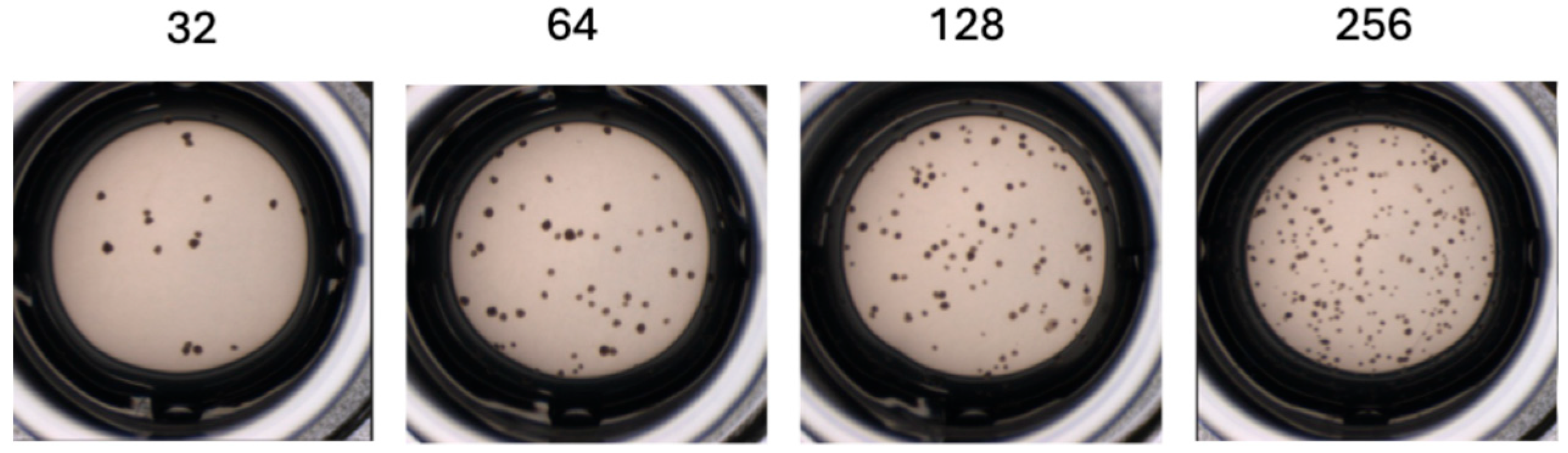
The high-throughput SBA was developed to evaluate the functional activity of vaccine-induced antibodies in the presence of human complement (IgG/IgM-depleted) to kill both PRN+ and PRN− B. pertussis strain B1917. Bactericidal measurements were conducted on thawed serum samples, which were subsequently heat-inactivated at 56 ± 2 °C for 30 ± 5 min. Two-fold serial dilutions of the heat-inactivated serum samples from 1:8 to 1:4096 were prepared in 96-well plates yielding a final volume of 25 ul per well. A standardized target of ~150–400 colony-forming units (CFUs) of B. pertussis strain B1917 or its PRN− derivative together with purified IgG/IgM-depleted human complement (Pel-Freeze, Rogers, AR, USA) at a final percentage of 15% were then added, and the plates were incubated for 120 ± 5 min at 37 ± 2 °C with 5% CO2, shaking and 65% humidity to allow binding of the antibodies to the bacteria and induction of the complement cascade resulting in bacterial cell death. The complement–antibody–bacteria mixture was then overlaid with 100 ul of an agar preparation of Bordet–Gengou media modified without blood products containing 0.9% agar (Becton Dickenson, Ontario, Canada) prewarmed to 48 °C, and incubated for 4 days at the same conditions above. The lack of blood products enables the automated image analysis equipment to count all colonies growing throughout the media in each well of the 96-well plate as the agar is clear rather than dark red (Figure 1).
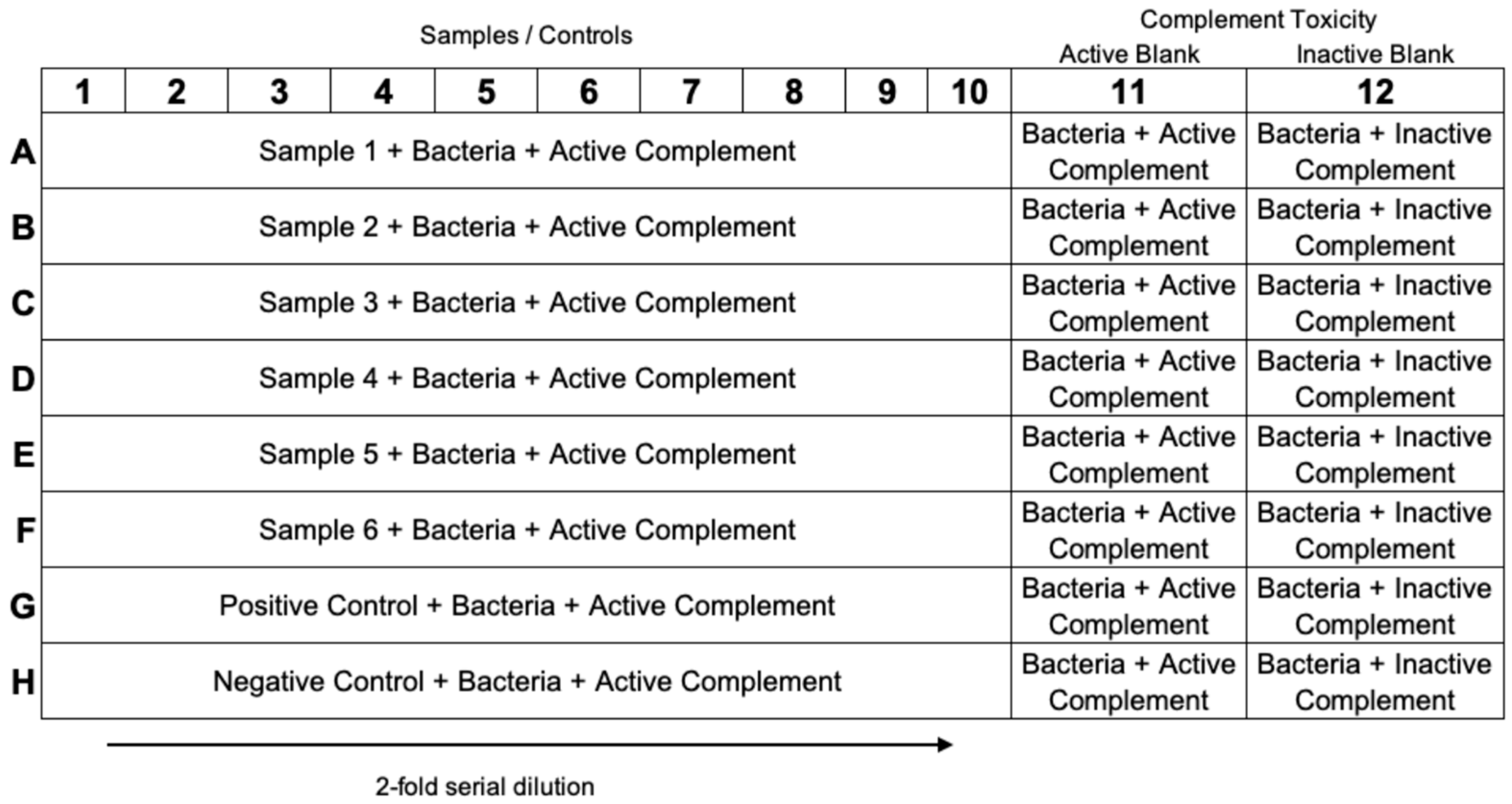
The bacterial colonies were then imaged with a Zeiss AxioLab, and counted using an automated image analysis system (AxioVision version 4.8.2 with ICARUS version 1.2.3). The bactericidal titer for each serum sample was calculated by dividing the geometric mean CFU count of the 8 samples in the control wells containing active complement + bacteria (Figure 2, column 11) by the CFUs in the wells with dilutions of heat-inactivated human serum samples. The reciprocal serum dilution generating 50% killing using a continuous titer calculation was reported as the SBA titer.

2.4.1. High-Throughput Assay Workflow

Each assay run is designed to process up to twenty plates, totaling 120 test samples in addition to quality controls (six samples and two quality controls per plate). With each plate containing 96 wells, a single assay run involves counting colonies in 1920 wells.
Automated image acquisition and colony enumeration for all plates in one run are completed in approximately three hours. This automated workflow significantly reduces operator involvement and analysis time compared to conventional manual counting methods. Furthermore, this approach reduces operator-dependent bias, enhancing consistency and reproducibility of colony enumeration.

2.4.2. Colony Counting: Automation and Supervision

Colony enumeration is performed using a semi-automated image analysis workflow. Test plates are loaded into the automated imaging system, and images of each well are acquired using the Zeiss AxioLab automated system, where the colonies appear black on a white background (Figure 1). Identification and counting of colonies are conducted automatically using either AxioVision v4.8.2 or ICARUS v1.2.3 software, based on pre-defined segmentation parameters such as colony size/morphology. Hence, the software is trained to identify and classify colonies based on pre-defined morphological characteristics, including size and shape.
To ensure the accuracy and robustness of the data, automated counts can be subject to manual verification (visual verification of the image of each well). If colony-forming unit (CFU) count adjustment is required, a manual counting tool is used to add missing or remove incorrect CFU counts for a given well. This is especially important when colony clustering, irregular morphology, or background artifacts could impact segmentation performance. This approach allows the assay to maintain high throughput without compromising data quality.

2.4.3. Image Analysis Software and Alternatives

Image analysis is performed using the AxioLab, which integrates image acquisition and colony counting in conjunction with the AxioVision version 4.8.2 or ICARUS version 1.2.3 software programs.
Comparable data acquisition can also be achieved using alternative automated imaging systems such as the Cytation 7. This alternative provides flexibility and accessibility and may be suitable depending on laboratory infrastructure and user expertise.

2.5. Plate Layout

The plate layout allowed for simultaneous testing of 6 samples, with ten 2-fold serial dilutions (Figure 2, in rows A through F, columns 1–10). Columns 11 and 12 served as controls. Column 11 contained bacteria and active complement and is used to determine the bactericidal titer of each sample, while column 12 contained bacteria + inactive complement and is used to assess intrinsic bactericidal activity of the complement source. Rows G and H served as additional positive and negative controls, respectively, to ensure the assay performs consistently. If either of the controls failed, the entire plate was re-tested. Additionally, the 1st International Pertussis Standard [30] 06-140 was included as a sample in precision tests, and was included as one sample in every batch of plates tested during clinical testing (~20 plates per batch) for trending.

2.6. Assay Qualification

Assay qualification studies were performed to demonstrate precision, dilution linearity, limits of quantitation, specificity, matrix interference, freeze–thaw stability, and robustness using a panel of 20 serum samples spanning the assay range. Each assay plate included two quality control human serum samples (one mid-positive control and one negative control). The mid-positive control was composed of commercial human serum samples (BioIVT, Woodbury, NY, USA) and the negative control was composed of commercial IgG/IgM-depleted human serum (Pel-Freeze Biologicals, Rogers, AR, USA). The serum samples (individual and pooled heat-inactivated samples) were stored at −80 °C (−60 to −90 °C) in aliquots and thawed prior to use on the day of testing by placing them at room temperature (RT) until completely thawed.

2.6.1. Precision

Precision was determined by evaluating repeatability (intra-assay variation) and the intermediate precision (intra- and inter-assay variation) using a panel of 20 individual and pooled human serum samples with titers covering the analytical range of the assay (high, mid, low and negative). The WHO International Standard Pertussis Antiserum (Human) 1st IS NIBSC 06/140 was used as a sample for the precision assessment in order to calibrate the assay. Samples were assessed in duplicate (independent preparations loaded on the same assay plate) over 3 days by 2 analysts (in parallel) to generate a total of 12 measurements per sample.
Goemetric mean titers (GMTs) and a coefficient of variation (CV) for each sample were calculated using the formulas:
G M T y ¯ =   y 1   y 2 y 3 y n n  
and
C V ( % ) = 100 % · 10 ln 10 σ 2 1
where:
  • y is an obtained value (titer);
  • n is the number of values obtained;
  • σ2 is the overall variability of the values in log10 scale (calculated for each parameter being assessed).
Intra-assay CV, overall CV, lower limit of precision (LLP) and upper limit of precision (ULP) were determined. The latter corresponded respectively to the lowest and highest GMT that could be measured with acceptable precision.

2.6.2. Dilutional Linearity/Relative Accuracy

Dilutional linearity testing was performed on 5 positive human serum samples diluted to target titers covering the analytical range of the assay (high, mid and low). For each dilution and corresponding neat sample, 3 independent preparations were produced. The dilutional linearity (and relative accuracy) was calculated as the ratio between the geometric mean of the triplicate measured values (multiplied by the corresponding dilution factor) to the expected value. Each independent preparation was tested at the optimal starting dilution in parallel with the corresponding neat sample.

2.6.3. Lower and Upper Limits of Quantitation (LLOQ and ULOQ)

LLOQ and ULOQ were determined based on the precision and linearity profiles obtained with the panel of human serum samples used to assess the precision and the dilutional linearity. The maximum lower limit of either precision or linearity was selected to be the LLOQ, and the minimum upper limit of precision or linearity was selected to be the ULOQ.

2.6.4. Specificity

Five positive human serum samples (15 ul) with titers covering the analytical range were competed against an equal volume of 25.0 µg/mL of B. pertussis whole-cell extract (WCE) (Item # BA120VS8, Serion Immunologics, Würzburg, Germany) as a homologous antigen, while 25.0 ug/mL of diphtheria toxoid or tetanus toxoid (products DAG2689, DAG2692, Creative Diagnostics, Shirley, NY, USA) were used as heterologous antigens. The serum samples were pre-treated for 60 min at RT with an equal volume of homologous or heterologous competitor or without competitor (mock). The competed samples and the mock treated samples were then tested in the same assay run.
Specificity was determined by calculating the change in the observed titer of each sample pre-treated with competitor compared to the corresponding untreated sample using the following formula.
%inhibition = (1 − (titer of competed sample/titer of mock sample)) × 100

2.6.5. Matrix Interference

Matrix interference was evaluated according to the CLSI-C56A guidelines [31] by testing 6 human serum samples with titers covering the analytical range, including 1 negative sample. Briefly, serum samples were diluted with assay diluent (GibcoTM HBSS [ThermoFisher, Canada] + 1% BSA [MilliporeSigma Canada Ltd., Ontario, Canada]) or treated with high levels of interferent (250 mg/dL hemoglobin [BioIVT, Woodvury, NY, USA], 250 mg/dL lipid [Item # I141, MilliporeSigma Canada Ltd., Ontario, Canada] or 16 mg/dL bilirubin [Item # 201102, Calbiochem®, MilliporeSigma Canada Ltd., Ontario, Canada]). Before testing in the SBA, samples treated with hemoglobin were incubated for 60 min on ice while mock treated samples and samples treated with lipid and bilirubin were incubated for 60 min at RT. Untreated and corresponding treated samples spiked with interferent were measured on the same plate.
The percentage recovery was determined by comparing the titer obtained for the treated sample compared to the titer of the corresponding untreated sample using the following formula:
%Recovery = (titer of treated sample/titer of untreated sample) × 100

2.6.6. Freeze/Thaw and Bench Top Stability

A set of six human serum samples with titers covering the analytical range of the assay (high, mid, and low) were divided into 4 aliquots and stored frozen at −80 °C. One aliquot was thawed once on the day of testing and was considered as the reference (1 freeze/thaw cycle on the day of testing). The second aliquot was thawed once on the day before testing and was used to test bench top stability. The 2 remaining aliquots underwent 5 and 10 freeze/thaw cycles where each sample was frozen at −80 °C for at least 12 h before thawing at RT (15 to 30 °C) for 4 ± 1 h. The stability sample aliquots were frozen again at −80 °C for at least 12 h before the next freeze/thaw cycle. The last freeze/thaw cycle was completed on the day of the run, and samples were loaded in the assay plate when completely thawed.
For each condition a geometric mean ratio (GMR) of the measured value to the reference value was calculated using the following formula:
G M R y ¯ =   y 1   y 2 y 3 y n n  
where:
  • y is an obtained value (ratio of measured value to reference condition);
  • n is the number of values obtained.

2.6.7. Robustness

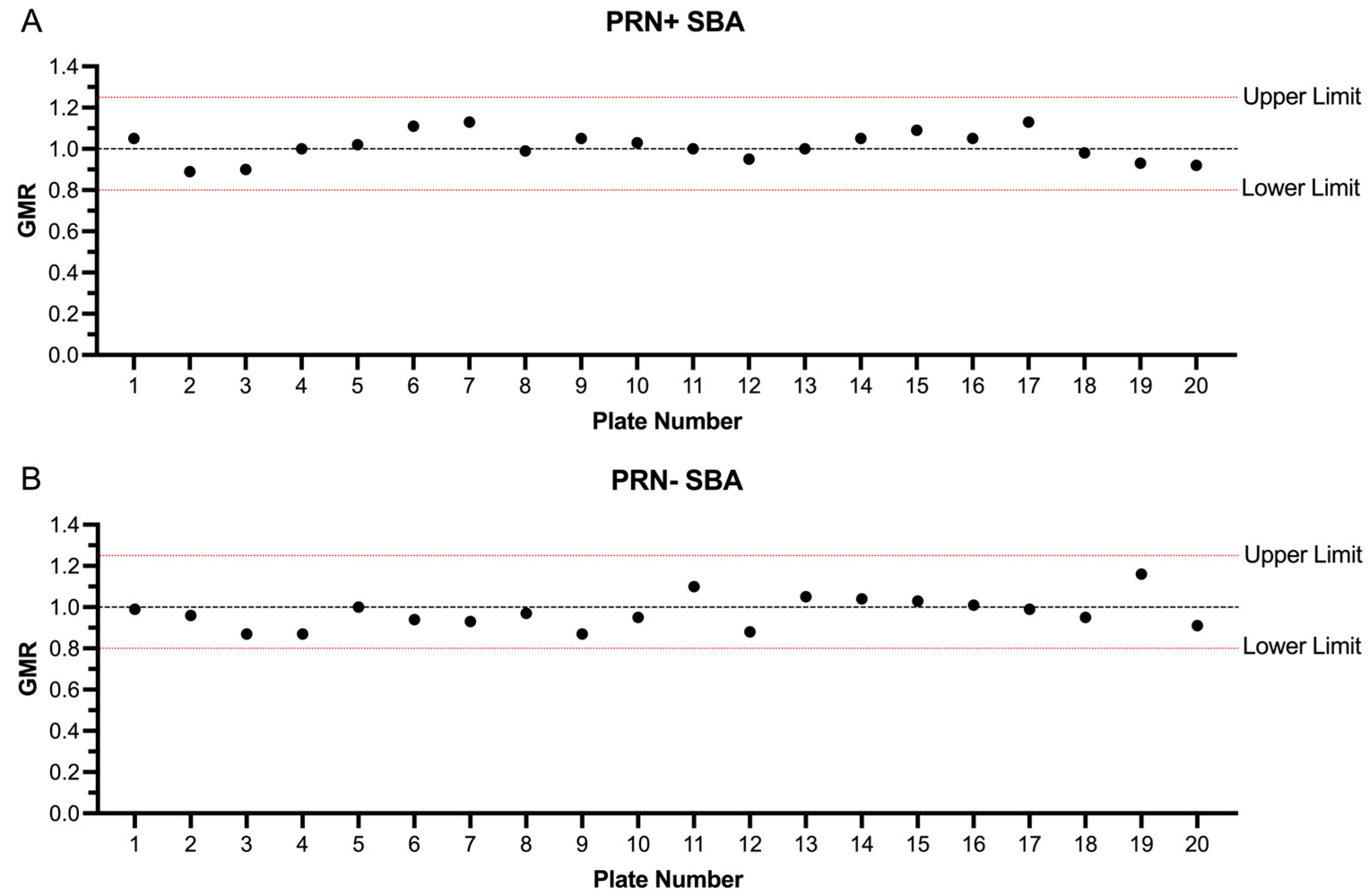
To understand the plating time effect corresponding to handling 20 plates in one assay run, the maximum batch size for one operator in a day, a set of 7 or 8 human sera covering the analytical range for the PRN+ and PRN− SBAs, respectively, were tested on 20 plates by one analyst. The same set of samples and controls was tested on all plates of a run at the same starting dilution, which included 4 positive serum samples, 1 positive control, 1 negative sample and 1 negative control. The GMT of each sample’s results on the last 5 plates was considered its reference titer. The ratios of each sample titer to its reference titer on each of the 20 plates were determined, and the GMR of each set of ratios for each plate was calculated.
To assess the stability of the readings over time, additional image acquisitions were performed 6 and 10 days following the end of the first reading. Forty samples from one of the precision runs were used and assigned a value T0. After initial analysis the plates were sealed and stored at 4 °C for the additional incubation time until being read again.
To analyze extended reading time, the ratios of 40 analyzed samples to their reference condition (T0) were evaluated. Each sample was tested in duplicate during two runs of the precision assessment. The GMRs were calculated by comparing the extended condition to the reference condition (T0) (Supplementary Tables S9 and S10).

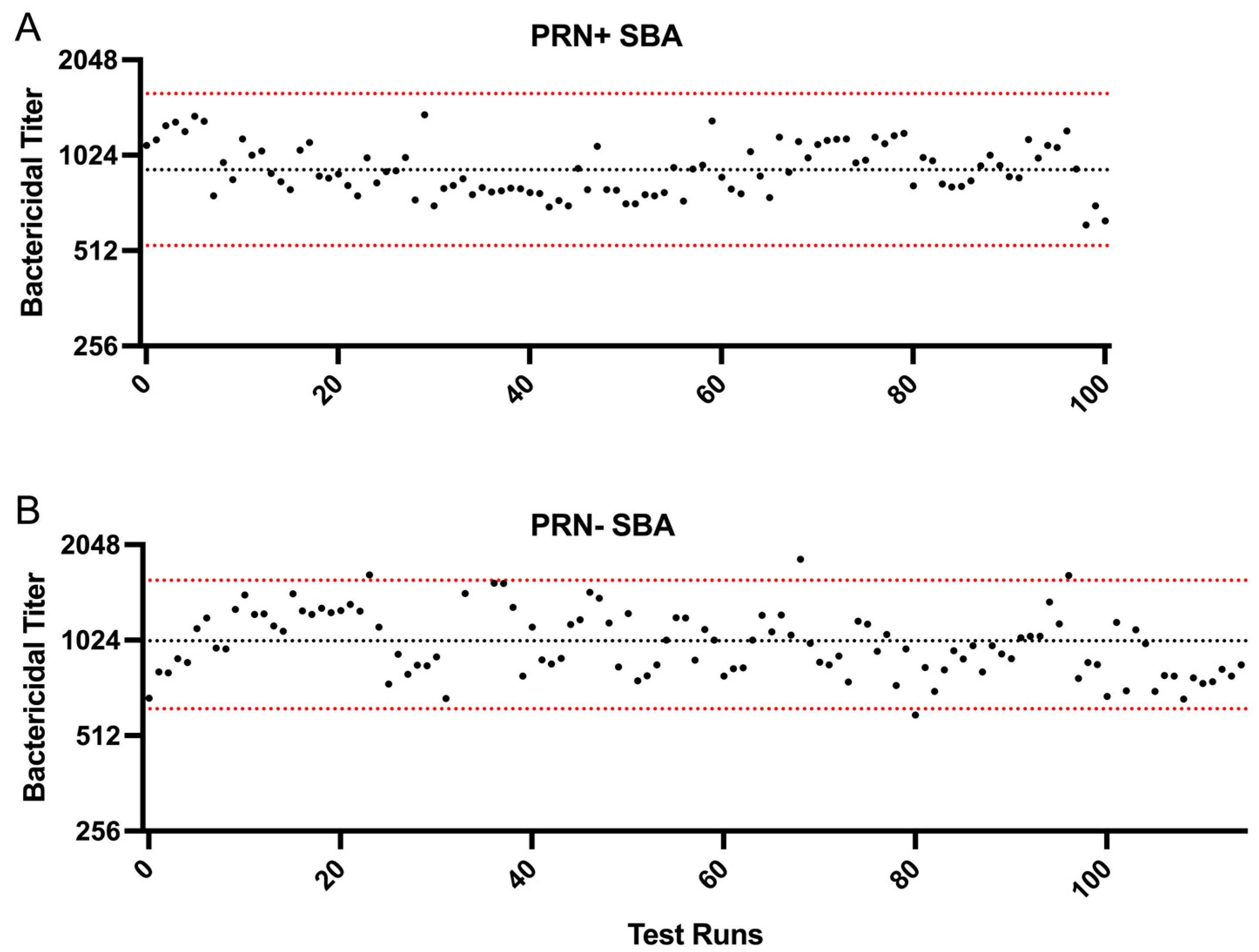
2.6.8. Quality Control Range Determination

To monitor the consistency of the assay results over time, a mid-positive quality control (QC) sample and a negative QC sample previously determined to have a bactericidal titer < 8 were prepared by pooling human serum samples. Both QCs were run in parallel with the measurement of unknown samples to evaluate whether the SBA operated within pre-defined target acceptance limits. Assay performance and trend data were compiled. For the PRN+ SBA, 101 data points were compared from two analysts testing 13 separate SBA runs over 6 calendar weeks. For the PRN− SBA, 115 data points from three analysts testing 14 separate assay runs over 5 weeks were compared. The GMT and lower and upper limits of the QC samples were calculated from these results. All calculations were performed on the log10 transformed titers, then back transformed for use in the assay. The range for the mid-positive QC set used ±3SD for the PRN+ sample set, and ±2SD for the PRN− sample set. Although the PRN− assay data was accumulated with a similar number of runs and over a similar timeframe as the PRN+ assay, data were generated by three analysts, which enhances the robustness/variability of the control limits compared to PRN+ SBA resulting in a range based on ±2SD rather than ±3SD.
PRN+ QC Range = 10 mean±3SD
PRN− QC Range = 10 mean±2SD

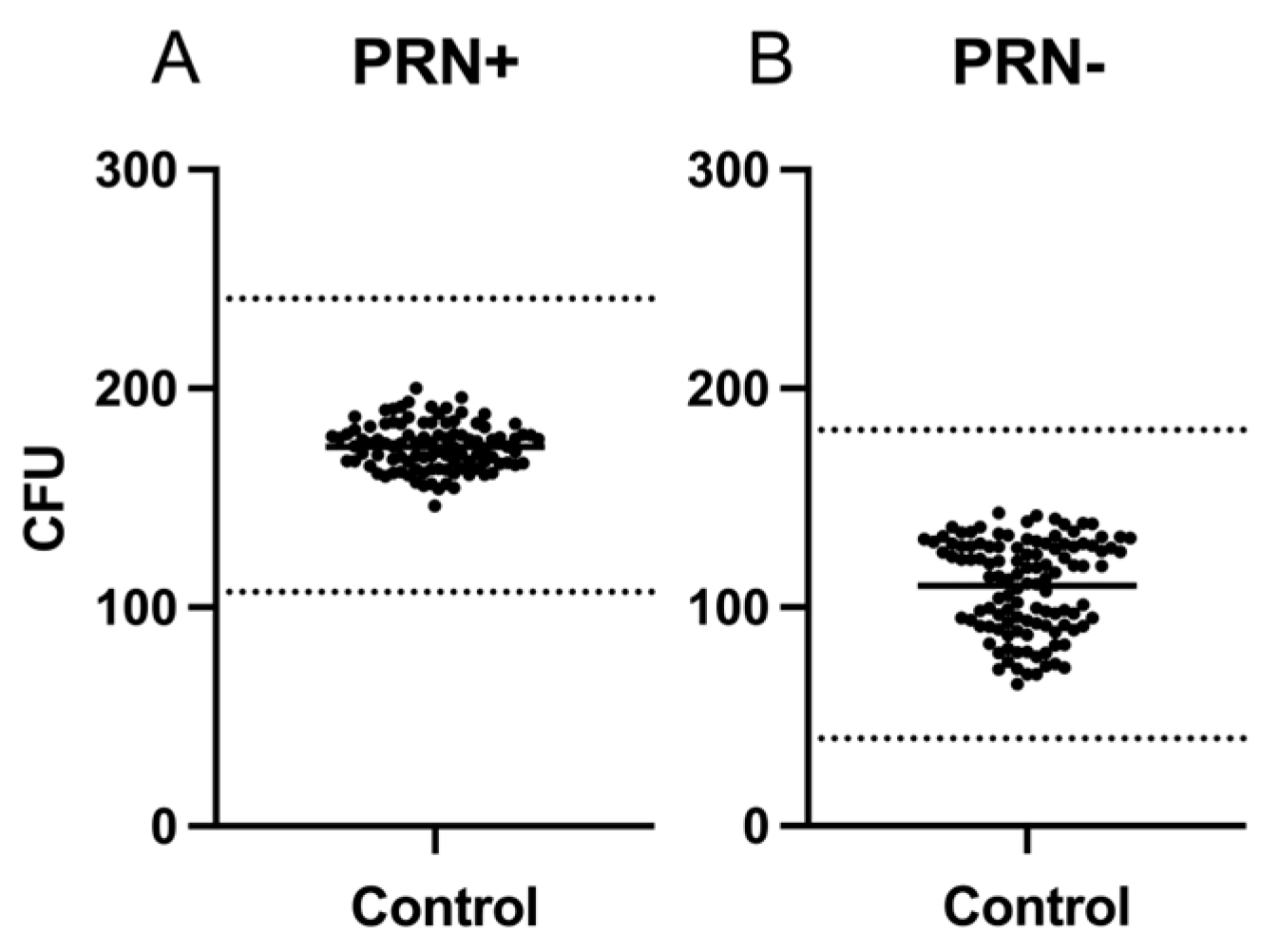
2.6.9. Bacteria Control with Active Human Complement Range Determination

The bacteria with active human complement control is an important measure, as it is used to calculate the % bactericidal activity of each sample tested on each plate and can be used to monitor assay performance. This control consists of the bacterial preparation in assay diluent and active complement (loaded 8 times per plate in column 11).

2.6.10. Statistical Methods

Paired or independent t-tests on log transformed data were used to assess bactericidal titers and anti-PRN IgG concentrations within or between treatment groups using Graphpad Prism 10. One-, two-, and three-way ANOVA analysis in SAS v9.4 was used to assess CV associated with precision measurements on log transformed titers, evaluating factors of operator, day, and sample. For precision assessment, samples with at least 6 out of 12 (i.e., 50%) valid results (reportable titers) obtained were included in the statistical analysis.

2.6.11. Quality Assurance and Regulatory Compliance

All aspects of the qualification studies were performed in accordance with International Conference for Harmonisation—Good Clinical Practices (ICH-GCLP) guidelines, and internal procedures with oversight from the Quality Assurance department of IQVIA Laboratories Canada.

2.6.12. Clinical Sample Analysis

The qualified high-throughput PRN+ and PRN− SBAs were used to analyze samples from the BPZE1 Phase 2b study [27]. Serum samples from baseline and day 29 post-vaccination from 30 participants, either BPZE1- or Tdap-vaccinated, as described [27], were analyzed. GMTs were calculated for each vaccine group and statistical comparisons between baseline and/or day-29 titers for PRN+ SBA and for PRN− SBA were conducted using paired and unpaired t-tests on log transformed titers.

3. Results

3.1. PRN+ and PRN− B. pertussis SBA Qualification

3.1.1. Precision

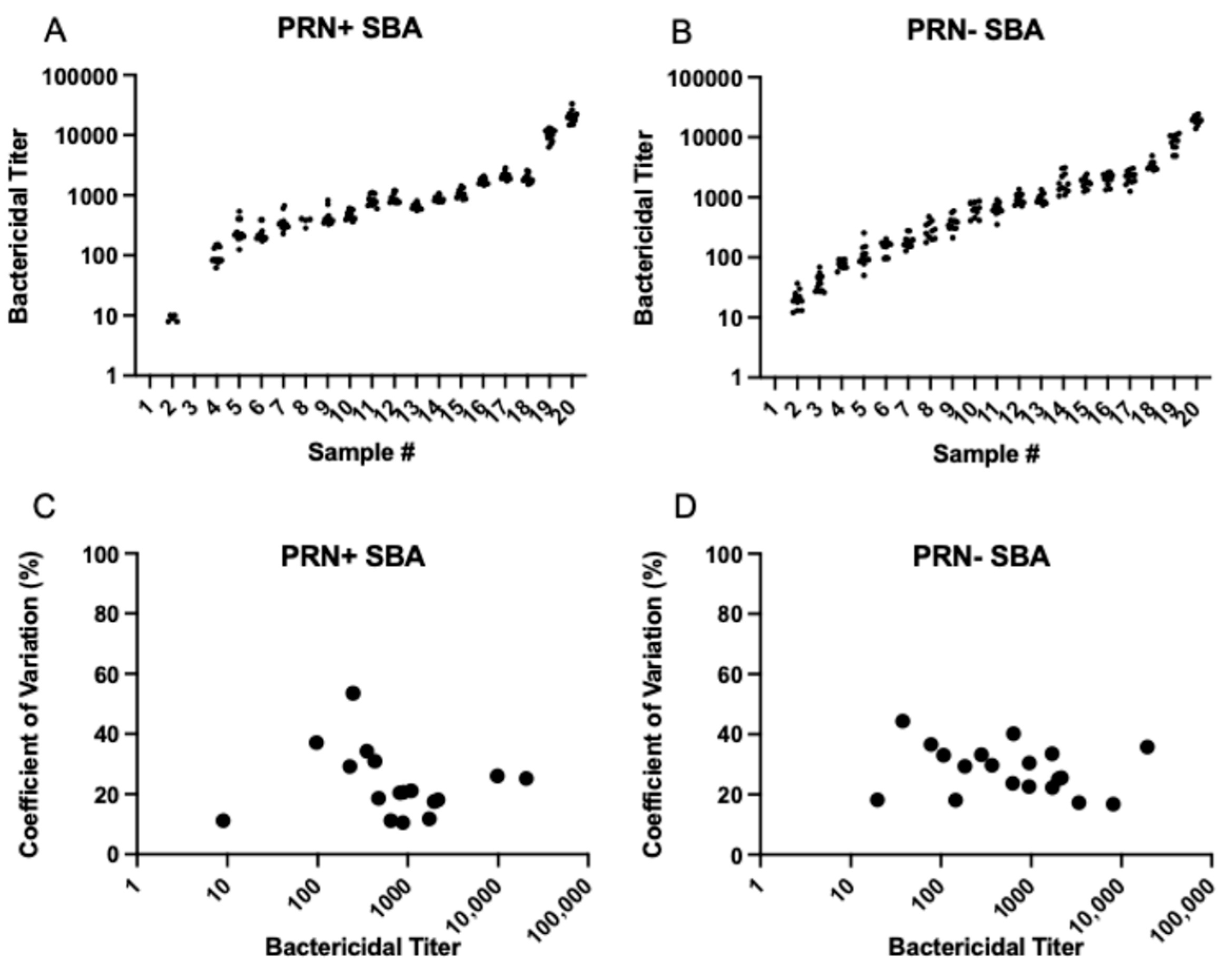
For the Repeatability and Reproducibility (R&R) analysis, 193 and 217 datapoints were evaluated for the PRN+ and PRN− SBAs respectively (Figure 3, Supplementary Tables S1 and S2). For the PRN+ SBA, the intra-assay precision CV of samples tested on the same plate by the same operator was determined to be 10.8%. The CV of day-to-day variability with the same operator and CV of inter-operator variability were 21.7% and 25%, respectively. The overall CV associated with the intermediate precision was 25.5% (Table 1). Based on a three-way ANOVA, the titers associated with the LLP and ULP were 9 (based on Sample 2) and 20,515 (based on Sample 20), respectively. Sample 2 was used to establish the LLP for this early-stage qualification despite having 5 of 12 reportable titers. Sample 1 remained below the limit of quantitation for all samples tested (<8) and thus was unable to support the LLP. The LLP will be further assessed during assay validation with a more complete panel of samples.
For the PRN− SBA, the intra-assay precision CV of samples tested on the same plate by the same operator was 19.3%. The CV of day-to-day variability with the same operator and CV of inter-operator variability were 28.4% and 27.8%, respectively. As seen in the PRN+ SBA, Sample 1 also remained below the limit of quantitation for all samples tested in the PRN− SBA (<8) and thus was unable to support the LLP. The overall CV of intermediate precision was 28.4% (Table 1). Based on a three-way ANOVA, the LLP and ULP were 20 (based on Sample 4) and 19,387 (based on Sample 18), respectively.

3.1.2. Dilutional Linearity and Relative Accuracy

For the PRN+ SBA, four dilutions (1/2, 1/4, 1/8 and 1/16) for one sample, five dilutions (1/2, 1/4, 1/8, 1/16 and 1/32) for three samples and six dilutions (1/2, 1/4, 1/8, 1/16, 1/32 and 1/64) for one sample were prepared in human serum previously shown to have no bactericidal activity, so that it would not affect the results. For the PRN− SBA, five dilutions (1/2, 1/4, 1/8, 1/16 and 1/32) for two samples, six dilutions (1/2, 1/4, 1/8, 1/16, 1/32 and 1/64) for two samples, and seven dilutions (1/2, 1/4, 1/8, 1/16, 1/32, 1/64 and 1/128) for one sample were prepared in assay diluent.
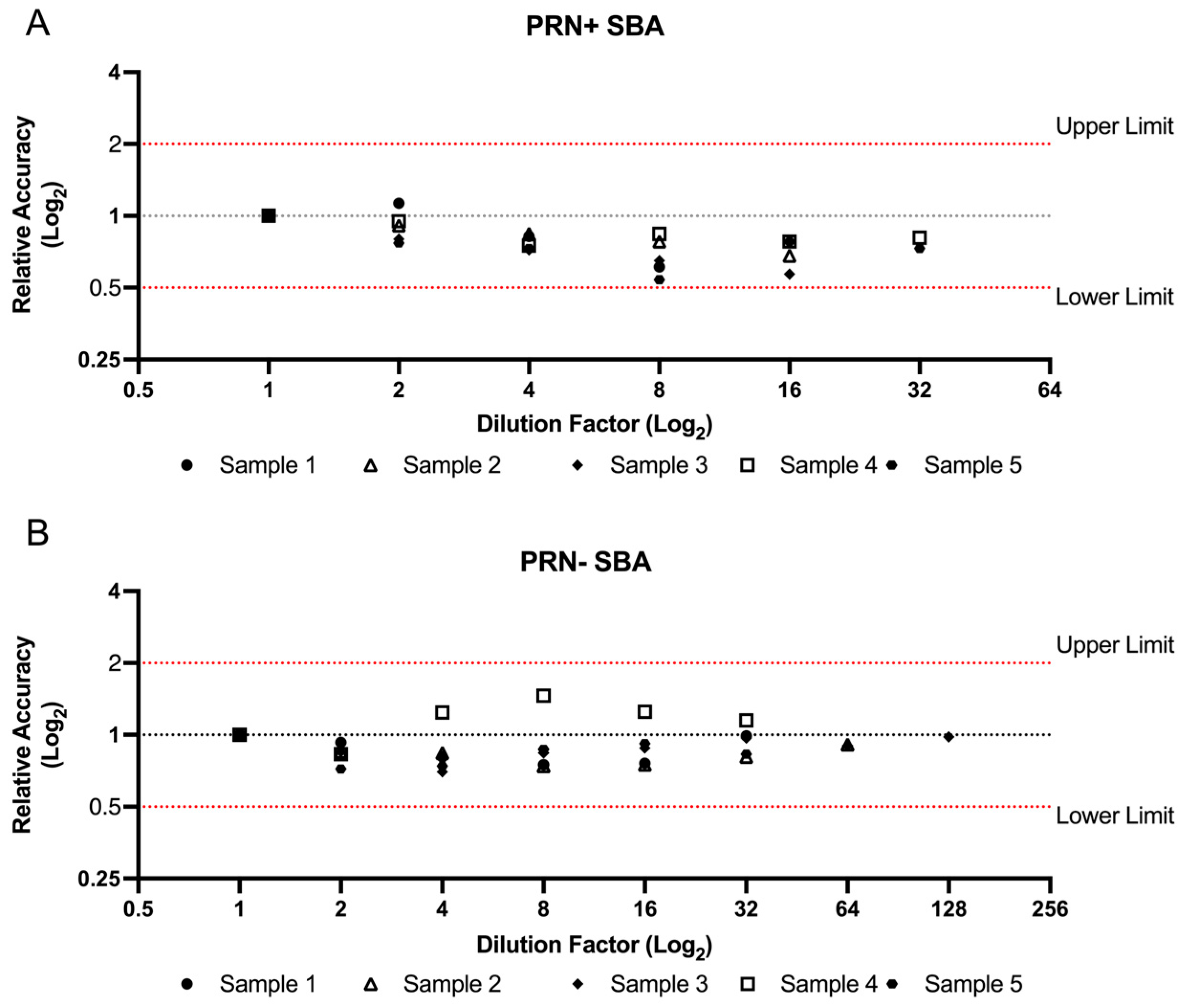
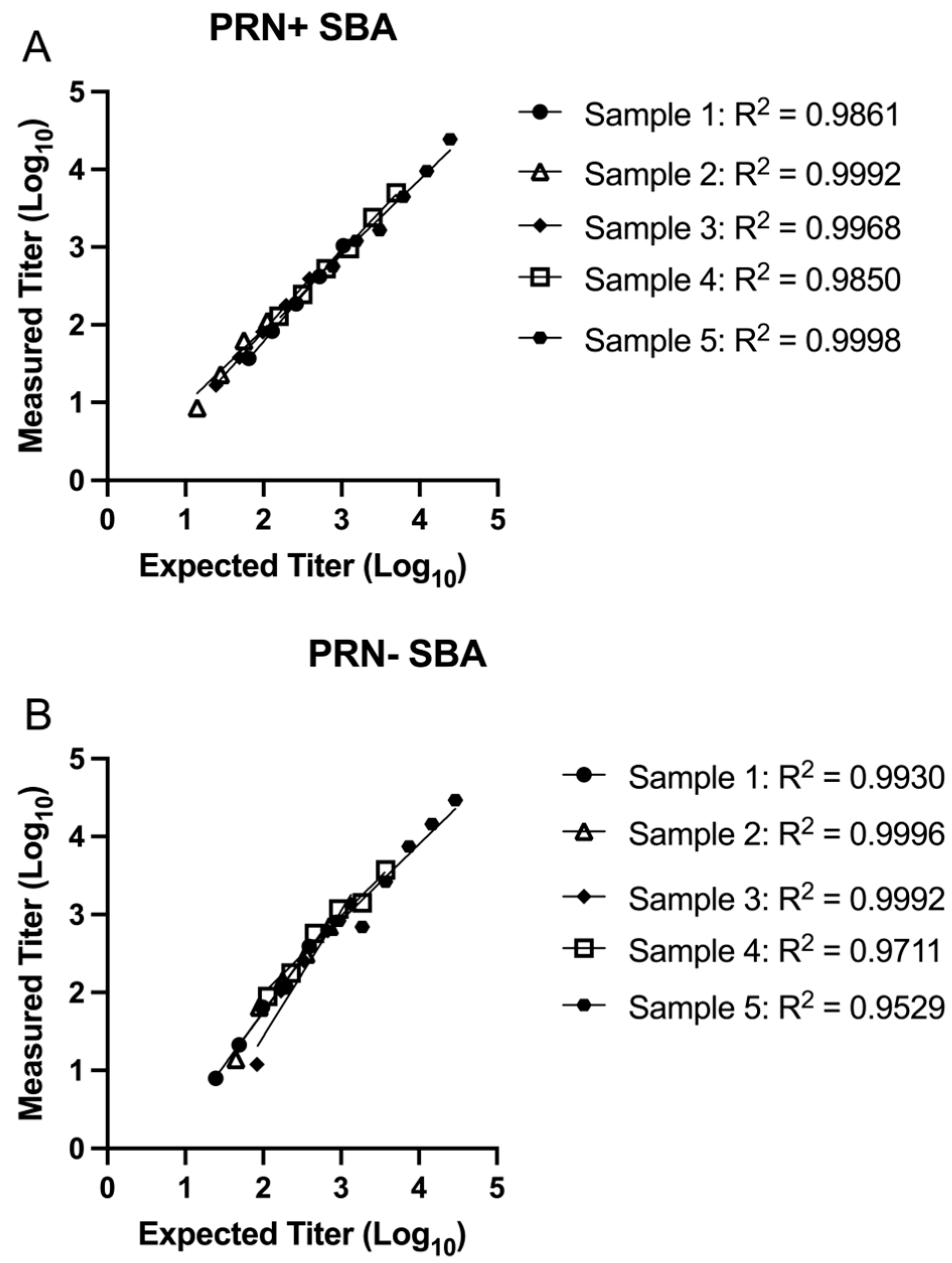
For the PRN+ SBA, the relative accuracies for all samples fell within the target acceptance limits of [0.5–2.0] (Figure 4A) from a GMT of 9 up to a maximum GMT of 24,692, the LLL and ULL respectively. For each sample the log10 transformed measured titers were plotted against log10 of the expected titers for each dilution of each sample as shown (Figure 5A). A fitted regression line was calculated using the least-squares method for each sample. All five serum samples individually had an R2 ≥ 0.95 and slope within the range of −1.33 to −0.67, demonstrating acceptable dilutional linearity across the range of the assay.
For the PRN− SBA, the initial experiments included samples diluted in negative matrix and met the target criteria for relative accuracy; however, dilutional linearity could not be demonstrated at the lower end of the assay (titers < 64), in particular for low titer samples. Two serum samples were then tested in parallel in either negative matrix or assay diluent starting at a 1/8 dilution. Both samples demonstrated dilutional linearity in assay diluent, while only one demonstrated dilutional linearity in negative serum matrix. Subsequently, the studies were repeated using assay diluent to dilute the samples rather than low-titer human serum. Five to seven dilutions were prepared in assay diluent, with three independent preparations each. All five serum samples had an R2 ≥ 0.95 and slope within the range of −1.33 to −0.67, demonstrating acceptable dilutional linearity (Figure 4B). The relative accuracies for 100% of the samples fell within the target acceptance limits of [0.5–2.0] (Figure 4B) from a GMT of 9 up to a maximum GMT of 18,907, which were assigned as the LLL and ULL for PRN− SBA.

3.1.3. Lower and Upper Limits of Quantification (LLOQ and ULOQ)

For the PRN+ SBA, the LLOQ was determined to be 9, based on the lower limit of precision and the lower limit of linearity, while the ULOQ was determined to be 20,515, based on the lesser value of the upper limits of precision and linearity.
For the PRN− SBA, the LLOQ was determined to be 20, based on the lower limit of precision and the lower limit of linearity, while the ULOQ was determined to be 18,907, based on the lesser value of the upper limits of precision and linearity. The LLOQ of both assays will be further evaluated using additional samples at the lower end of the titer range during assay validation.

3.1.4. Specificity

For the PRN+ SBA, for all five samples, the inhibition observed was ≥75% for the B. pertussis WCE, the homologous competitor, and ≤50% for diphtheria toxoid, the heterologous competitor (Supplementary Table S3). Similarly, for the PRN− SBA, for all five samples, the inhibition observed was ≥75% for the WCE, and ≤50% for the diphtheria and tetanus toxoids in ≥80% of samples (Supplementary Table S4). Thus, the descriptive target criteria were reached for specificity in both PRN+ and PRN− SBAs in human serum samples, demonstrating that both assays are specific to B. pertussis, and not affected by heterologous competition.

3.1.5. Matrix Interference

For both the PRN+ and PRN− SBAs, the presence of hemoglobin, bilirubin, or lipid at high levels in serum samples did not interfere with the SBA for B. pertussis PRN+ B1917, confirming the lack of matrix interference of this assay. For all samples spiked with each interferent, the recovery was within 50% and 200%, and the negative sample remained negative (Supplementary Tables S5 and S6).

3.1.6. Freeze–Thaw Assessment

For the PRN+ SBA, the GMRs of the bench top condition (up to 24 h and 34 min), and of five and 10 freeze/thaw cycle conditions in comparison to the reference condition were 0.95, 1.15 and 1.04, respectively (Supplementary Table S7). For the PRN− SBA, the GMRs of the bench top condition (up to 24 h), and of five and 10 freeze/thaw cycle conditions in comparison to the reference condition were 0.99, 1.15 and 1.16, respectively (Supplementary Table S8). These values were within the pre-defined target acceptance criterion of 0.80 to 1.25 and were considered acceptable, indicating bench top stability time of at least 24 h and that samples can undergo up to 10 freeze thaws without affecting results, enabling repeat analyses if required.

3.1.7. Robustness

For both the PRN+ and PRN− SBAs, when assessing the maximum plates per run, the plate GMRs were between 0.80 and 1.25 for all samples tested, supporting a maximum plate run of 120 samples prepared on 20 plates with six samples each (Figure 6). Additionally, for the extended stability test, all GMRs were within a range of 0.94 to 1.15 after 10 days of incubation at 4 °C, enabling flexibility during analysis of large numbers of samples (Supplementary Table S9).

3.1.8. Quality Control Range Determination

For the PRN+ SBA, the mid-positive QC sample was tested 101 times by two analysts over 3 weeks and 12 separate assay runs. The GMT of the sample set was 921, with lower and upper range limits determined to be 531 and 1602, respectively (Figure 7A). Additionally, the negative control was negative in 100 out of 101 instances, deeming it fit to use as a negative control for plate acceptance criteria during clinical analyses.
For the PRN− SBA, the mid-positive QC sample was tested 115 times by three analysts over 5 weeks and 14 separate assay runs. The GMT of the sample set was 991, with lower and upper range limits determined to be 622 and 1581 respectively (Figure 7B). Additionally, the negative control was negative 100% of the time (115 out of 115 instances), and was also incorporated as a plate acceptance criteria.

3.1.9. Bacteria Control with Active Human Complement Range Determination

For the PRN+ SBA, this control was evaluated by analyzing 807 data points (column 11, 8 wells per plate) generated by two analysts conducting 13 runs over 6 weeks. For the PRN− SBA, 918 datapoints were reported by three analysts conducting 15 runs over 5 weeks. For the PRN+ and PRN− SBAs, the CFU values were distributed from the average CFU with CVs of 9.7 and 21.2, respectively. For the PRN+ SBA, the mean CFU was determined to be 174 with an SD of 17. The range was determined to be 107 CFUs to 241 CFUs (Figure 8A). For the PRN− SBA, the mean CFUs was determined to be 110 with an SD of 23. Thus, the range was determined to be 40 CFUs to 181 CFUs (Figure 8B).

3.2. Analysis of Clinical Samples from Phase 2B Clinical Study

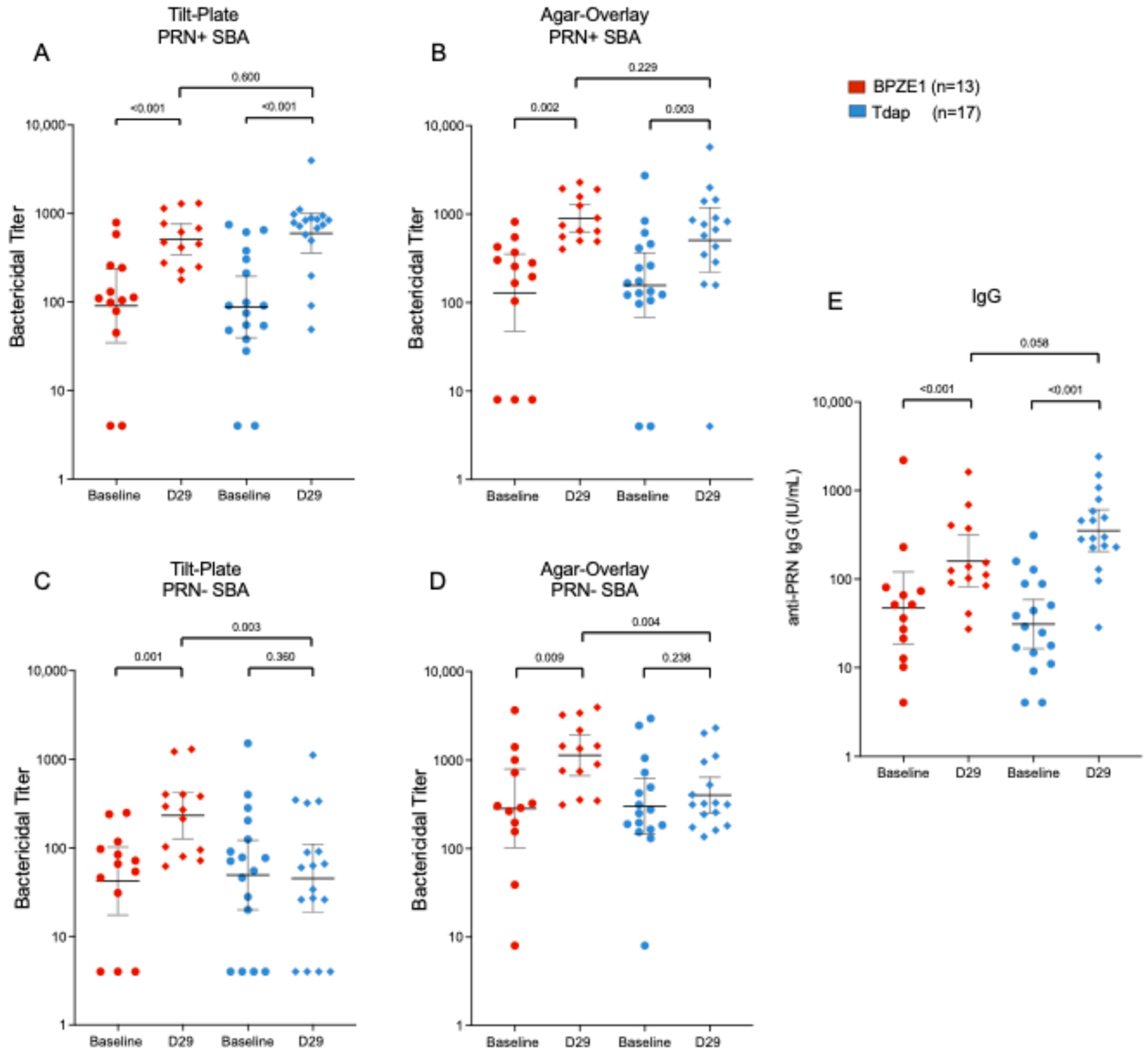
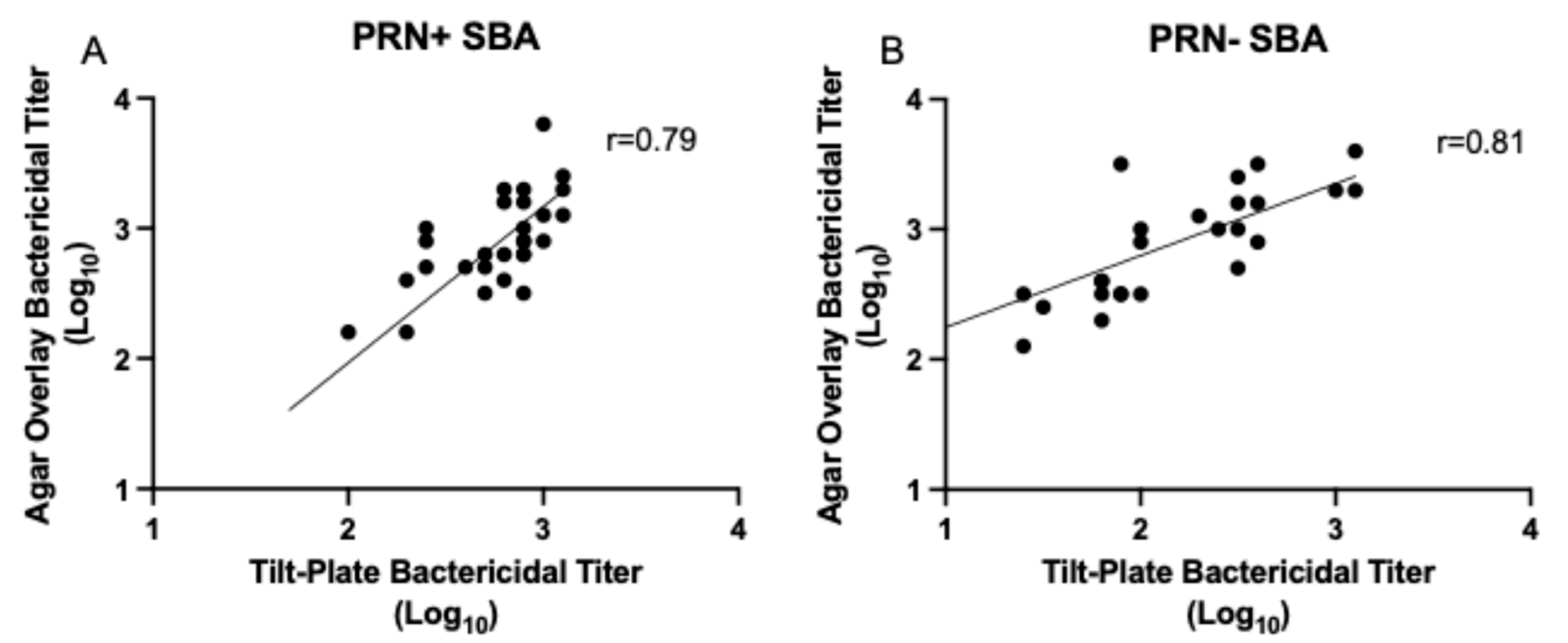
Previously published bactericidal titers obtained using the tilt-plate method from 30 participants from a Phase 2b clinical trial of BPZE1 (Figure 9A,C) were compared with titers obtained using the new agar-overlay method (Figure 9B,D). Both methods show concordant results. Additionally, baseline GMTs for both PRN+ and PRN− SBAs were similar between the vaccine groups within in each assay. With the PRN+ SBA, BPZE1 and Tdap induced similar titers on day 29 post-vaccination despite Tdap participants having higher anti-PRN IgG concentrations (Figure 9E), demonstrating that BPZE1 induces more bactericidal antibodies than are represented solely by anti-PRN IgG. This is further reinforced because only BPZE1 induced bactericidal antibodies against PRN− B. pertussis, showing a difference in GMT at day 29 post-vaccination compared with baseline GMTs (p = 0.009), while Tdap did not induce an increase at day 29 compared to baseline (p = 0.238). Additionally, when comparing bactericidal titers from the same samples between the tilt-plate and high-throughput agar-overlay methods, a strong correlation was observed for both PRN+ and PRN− SBAs, with Pearson’s r values of 0.81 and 0.79 respectively (Figure 10), further supporting the concordance of the assay methods.

4. Discussion

Vaccine pressure from anti-PRN antibodies induced by currently approved aPVs has resulted in higher incidences of B. pertussis infections from PRN− B. pertussis strains [16,17]. In fact, the majority of circulating strains in many countries using aPVs prior to the COVID-19 pandemic were PRN− strains [14,16,32,33]. Despite recent increases in PRN+ B. pertussis strains after the COVID-19 pandemic, suggested to be caused by reduced boosting of anti-PRN immunity following circulation of PRN− strains during the pandemic combined with importation of PRN+ strains from WPV countries [34], PRN− strains still continue to circulate [4,35]. Therefore, utilizing SBAs with PRN+ and PRN− strains remain of importance when developing new pertussis vaccines to illustrate breadth of bactericidal capability.
The tilt-plate SBA for B. pertussis was initially developed to support research questions and early-phase clinical development. The method has proven to be accurate and reproducible. One advantage of the tilt-plate assay is that it can be run without the need for automated equipment, as each sample is manually plated onto standard 100 mm agar plates. While this is feasible for studies supporting research questions and early-phase clinical development, the resources add up quickly, considering raw material use, incubator space, as well as the time to process many samples. Thus, a need remained for a method that could support the larger studies required for late-stage clinical development with the evaluation of many hundreds if not thousands of samples in a relatively compressed timeframe. Additional considerations for a more streamlined method include practical handling and disposal of thousands of agar plates. By removing the secondary plating step, using the agar-overlay method, large volumes of reagents are spared, and environmental, health and safety resources are reduced substantially as well.
In this study, we successfully developed high-throughput agar-overlay SBAs against both PRN+ and PRN− B. pertussis that are precise, accurate, linear, specific, robust, and stable, which will enable further characterization of the functional immune response induced by pertussis vaccines, including BPZE1. To develop these assays, IgG- and IgM-depleted human serum was combined with heat-treated serum samples and bacteria to induce antibody and complement-dependent bactericidal activity. Others have previously demonstrated bactericidal activity against B. pertussis using guinea pig [36] or pre-colostral calf serum [37] as complement sources. However, utilizing human complement provides a direct link to the relevant target population for pertussis vaccines and has been demonstrated as a preferred source for other bacterial vaccines, such as those targeting Neisseria meningitidis [38,39].
While assessing precision, it is worth noting that for the PRN+ assay, the LLP was established using Sample 2, which had 5 of 12 reportable titers, not 6 of 12 as specified a priori as a target criterion. We found this to be acceptable for this stage of development; however, the LLP will be fully established during method validation (before Phase 3 clinical analysis) where we will use a larger panel of samples, including multiple samples with low titers.
Initially, we attempted to develop the high-throughput SBAs using the Tohama-1 streptomycin- and nalidixic acid-resistant derivative strain BPSM [40], and a PRN− derivative of BPSM [41], since BPSM is the parental strain of the live attenuated vaccine BPZE1. Although the Tohama-1 strain had previously been investigated along with other B. pertussis strains for interactions with human complement [42,43], and was shown to be sensitive to non-specific, antibody-independent killing mediated by complement, the behavior of the BPSM strains in the agar-overlay SBA was unknown. After extensive testing, BPSM was found to be too susceptible to non-specific complement-mediated killing, with up to 80% killing observed when using only 2% complement. We therefore evaluated B. pertussis strain B1917, since it was more representative of current isolates. In addition, we have previously shown bactericidal activity from serum samples collected during a BPZE1 Phase 2b study on both PRN+ and PRN− B1917 strains using the tilt-plate SBA method [27]. Furthermore, B1917 was selected for use in human challenge studies to investigate colonization of virulent B. pertussis [44,45] and to test the protective efficacy of BPZE1 [23], where a 98.7% reduction in bacterial burden in BPZE1 vaccinees was demonstrated compared to placebo controls.
While BPZE1 protected mice against B. pertussis strains, including antibiotic-resistant PRN− variants [46], a human challenge model for PRN− B. pertussis has not yet been established. Thus, SBAs utilizing human serum and complement serve as a valuable proxy to demonstrate the induction of potentially protective antibodies for vaccine candidates. Using the tilt-plate pertussis SBA, sera from convalescent pertussis patients successfully killed multiple knock-out strains, including PRN− B1917, demonstrating a broad repertoire of bactericidal antibodies, whereas following aP vaccination only PRN induced bactericidal antibodies [15]. Like wild-type B. pertussis, the live attenuated BPZE1 vaccine also contains thousands of proteins, induces broad humoral and cellular immune responses including serum bactericidal activity against both PRN+ and PRN− strains, and provides comprehensive protection in animal models. These combined findings suggest that BPZE1 will effectively protect humans against diverse B. pertussis strains as well.
When comparing results of test samples on the new high-throughput agar-overlay SBAs and the established tilt-plate SBAs, both assays correlated well to one another with regard to bactericidal titer, showing Pearson’s r of ~0.80 between the assays. Similar observations were made between the two types of assays when serum from BPZE1 vaccinees was used. Both assays demonstrated BPZE1-induced bactericidal activity to both PRN+ and PRN− B. pertussis, while serum from Tdap vaccinees only induced bactericidal activity to PRN+ B. pertussis. This gives further confidence that the antibody-dependent complement-mediated killing mechanisms performed consistently between the assay methods. It is worth noting that the tilt-plate and agar-overlay SBAs differ with respect to the agar type, method of incubation, complement source (prepared in-house [47] vs. commercially), and the numbers of bacteria added to each well, likely accounting for numeric differences in titers between the assays. Despite these differences, the SBA methods yielded comparable results. Therefore, we conclude that both PRN+ and PRN− high-throughput assays are suitable for their intended use, i.e., to measure functional serum antibody responses in clinical studies of BPZE1 and other pertussis vaccines.

5. Conclusions

In this study we describe the development and qualification of SBAs capable of testing hundreds of clinical samples per day using a semi-automated high-throughput assay. For Phase 3 studies, the newly developed agar-overlay SBAs will undergo validation, repeating similar studies with a larger number of samples across the range of expected titers, increasing replicates, analysts, and days of testing to build a robust dataset ensuring accurate, reliable, and reproducible data compliant with global regulatory agency requirements, to further demonstrate broad functional immune responses induced by vaccination with BPZE1.

Supplementary Materials

The following supporting information can be downloaded at: https://www.mdpi.com/article/10.3390/vaccines14060492/s1, Table S1: Precision assessment of PRN+ SBA; Table S2: Precision assessment of PRN− SBA; Table S3: Specificity assessment of PRN+ SBA; Table S4: Specificity assessment of PRN− SBA; Table S5: Matrix interference for PRN+ SBA; Table S6: Matrix interference for PRN− SBA; Table S7: Freeze–thaw analysis of PRN+ SBA; Table S8 Freeze–thaw analysis of PRN− SBA; Table S9: Extended reading time for PRN+ SBA; Table S10: Extended reading time for PRN− SBA.

Author Contributions

Conceptualization, P.G., T.G., L.G. and S.N.; methodology, P.G., T.G., B.C. and A.G.; qualification, T.G. and L.G.; investigation, T.G., L.G., P.G., K.R., S.H. and T.M.G.; writing—original draft preparation, P.G., S.N. and C.L.; writing—review and editing, S.N., C.L., A.G., K.R., T.G., L.G., S.H., T.M.G. and P.G.; visualization, P.G., T.G., T.M.G. and S.H. All authors have read and agreed to the published version of the manuscript.

Funding

This research was funded by ILiAD Biotechnologies.

Institutional Review Board Statement

The study was conducted in accordance with the Declaration of Helsinki, and approved by the Institutional Review Board of Advarra IRB, Columbia, MD (Protocol IB-200P, 4 January 2018).

Informed Consent Statement

Informed consent was obtained from all participants involved in the study.

Data Availability Statement

The original contributions presented in this study are included in the article/Supplementary Materials. Further inquiries can be directed to the corresponding author.

Acknowledgments

The authors acknowledge the valuable contributions of Julien Audry, Valérie Bédard, Natalie St-Amant, and Jade-Eva Potvin (IQVIA Laboratories) to the development and qualification of the serum bactericidal assays (SBAs). Their scientific expertise, technical rigor, and sustained commitment were instrumental in establishing the robust and high-throughput assay platform. The authors would like thank Ann Thanawastien (ILiAD) and Alice Tomei (University of Miami Biomedical Engineering) for considerate discussions and review of this paper. The authors also thank Cheryl Keech for initiating the foundational work to explore the functional antibody responses to BPZE1. We also thank BioLyo Technologies BV for providing key reagents for this work.

Conflicts of Interest

PG, KR, and SN are employees of ILiAD Biotechnologies and hold equity interests in the company. TMG consults for ILiAD Biotechnologies and owns stock in Merck. SH consults for ILiAD Biotechnologies and Scandinavian Biopharma. CL holds patents on the BPZE1 vaccine (licensed to ILiAD Biotechnologies) and reports consulting fees from, and holds equity in, ILiAD Biotechnologies. The authors declare that the research was conducted independently and that these relationships did not influence the study design, data collection, analysis, interpretation, or the conclusions presented in this manuscript. All other authors declare no conflicts of interest. The funder had a role in the design of the study and in the writing of the manuscript.

Abbreviations

The following abbreviations are used in this manuscript:
aPAcellular pertussis
aPVAcellular pertussis vaccine
ANOVAAnalysis of variance
B1917Bordetella pertussis strain B1917
BGBordet–Gengou
BPSMBordetella pertussis streptomycin- and nalidixic acid-resistant derivative of Tohama-1
BPZE1Live attenuated intranasal Bordetella pertussis vaccine candidate
BSABovine serum albumin
C’Complement
CFUColony-forming unit
CIConfidence interval
CLSIClinical and Laboratory Standards Institute
CO2Carbon dioxide
CVCoefficient of variation
D29Day 29 post-vaccination
ECLElectrochemiluminescence
FHAFilamentous hemagglutinin
FIMFimbriae
GCLPGood Clinical Laboratory Practice
GMTGeometric mean titer
GMRGeometric mean ratio
HBSSHanks’ balanced salt solution
ICHInternational Conference for Harmonisation
IgGImmunoglobulin G
IgMImmunoglobulin M
IUInternational unit
LLOQLower limit of quantitation
LLLLower limit of linearity
LLPLower limit of precision
MACMembrane attack complex
NIBSCNational Institute for Biological Standards and Control
PRNPertactin
PRN+Pertactin-positive
PRN−Pertactin-negative
QCQuality control
R2Coefficient of determination
RIVMNational Institute for Public Health and the Environment (The Netherlands)
RTRoom temperature
SBASerum bactericidal assay
SDStandard deviation
SISupplementary Information
TdapTetanus–diphtheria–acellular pertussis vaccine
ULOQUpper limit of quantitation
ULLUpper limit of linearity
ULPUpper limit of precision
WCEWhole-cell extract
wPVWhole-cell pertussis vaccine
WHOWorld Health Organization

References

  1. Yeung, K.H.T.; Duclos, P.; Nelson, E.A.S.; Hutubessy, R.C.W. An Update of the Global Burden of Pertussis in Children Younger than 5 Years: A Modelling Study. Lancet Infect. Dis. 2017, 17, 974–980. [Google Scholar] [CrossRef]
  2. WHO. Pertussis Vaccines: WHO Position Paper—September 2015. Releve Epidemiol. Hebd. 2015, 90, 433–458. [Google Scholar]
  3. Althouse, B.M.; Scarpino, S.V. Asymptomatic Transmission and the Resurgence of Bordetella pertussis. BMC Med. 2015, 13, 146. [Google Scholar] [CrossRef] [PubMed]
  4. Gorringe, A.; Cavell, B.; Beard, F.; Tsukada, K.; Otsuka, N.; Fu, P.; Moosa, F.; Fabianova, K.; Rodrigues, C.; Bouchez, V.; et al. Global Incidence of Pertussis After the COVID-19 Pandemic. JAMA Netw. Open 2025, 8, e2545963. [Google Scholar] [CrossRef]
  5. Murphy, F. Whooping Cough: Doctors Urge Chinese Authorities to Review Vaccine Strategy as Cases Surge. BMJ 2024, 385, q1274. [Google Scholar] [CrossRef]
  6. Gustafsson, L.; Hallander, H.O.; Olin, P.; Reizenstein, E.; Storsaeter, J. A Controlled Trial of a Two-Component Acellular, a Five-Component Acellular, and a Whole-Cell Pertussis Vaccine. N. Engl. J. Med. 1996, 334, 349–356. [Google Scholar] [CrossRef]
  7. Locht, C. Pertussis: Acellular, Whole-Cell, New Vaccines, What to Choose? Expert Rev. Vaccines 2016, 15, 671–673. [Google Scholar] [CrossRef]
  8. Witt, M.A.; Katz, P.H.; Witt, D.J. Unexpectedly Limited Durability of Immunity Following Acellular Pertussis Vaccination in Preadolescents in a North American Outbreak. Clin. Infect. Dis. 2012, 54, 1730–1735. [Google Scholar] [CrossRef] [PubMed]
  9. Mooi, F.R.; Van Der Maas, N.A.T.; De Melker, H.E. Pertussis Resurgence: Waning Immunity and Pathogen Adaptation—Two Sides of the Same Coin. Epidemiol. Infect. 2014, 142, 685–694. [Google Scholar] [CrossRef]
  10. Klein, N.P. Licensed Pertussis Vaccines in the United States: History and Current State. Hum. Vaccines Immunother. 2014, 10, 2684–2690. [Google Scholar] [CrossRef] [PubMed]
  11. Burdin, N.; Handy, L.K.; Plotkin, S.A. What Is Wrong with Pertussis Vaccine Immunity?: The Problem of Waning Effectiveness of Pertussis Vaccines. Cold Spring Harb. Perspect. Biol. 2017, 9, a029454. [Google Scholar] [CrossRef]
  12. Belcher, T.; Preston, A. Bordetella pertussis Evolution in the (Functional) Genomics Era. Pathog. Dis. 2015, 73, ftv064. [Google Scholar] [CrossRef]
  13. Caulfield, A.D.; Callender, M.; Harvill, E.T. Generating Enhanced Mucosal Immunity against Bordetella pertussis: Current Challenges and New Directions. Front. Immunol. 2023, 14, 1126107. [Google Scholar] [CrossRef]
  14. Ma, L.; Caulfield, A.; Dewan, K.K.; Harvill, E.T. Pertactin-Deficient Bordetella pertussis, Vaccine-Driven Evolution, and Reemergence of Pertussis. Emerg. Infect. Dis. 2021, 27, 1561–1566. [Google Scholar] [CrossRef]
  15. Lesne, E.; Cavell, B.E.; Freire-Martin, I.; Persaud, R.; Alexander, F.; Taylor, S.; Matheson, M.; van Els, C.A.C.M.; Gorringe, A. Acellular Pertussis Vaccines Induce Anti-Pertactin Bactericidal Antibodies Which Drives the Emergence of Pertactin-Negative Strains. Front. Microbiol. 2020, 11, 2108. [Google Scholar] [CrossRef]
  16. Barkoff, A.-M.; Mertsola, J.; Pierard, D.; Dalby, T.; Hoegh, S.V.; Guillot, S.; Stefanelli, P.; van Gent, M.; Berbers, G.; Vestrheim, D.; et al. Pertactin-Deficient Bordetella pertussis Isolates: Evidence of Increased Circulation in Europe, 1998 to 2015. Eurosurveillance 2019, 24, 1700832. [Google Scholar] [CrossRef] [PubMed]
  17. Hegerle, N.; Guiso, N. Bordetella pertussis and Pertactin-Deficient Clinical Isolates: Lessons for Pertussis Vaccines. Expert Rev. Vaccines 2014, 13, 1135–1146. [Google Scholar] [CrossRef]
  18. Blanc, P.; Liu, Y.; Reveneau, N.; Cavell, B.; Gorringe, A.; Renauld-Mongénie, G. The Role of Bactericidal and Opsonic Activity in Immunity against Bordetella pertussis. Expert Rev. Vaccines 2022, 21, 1727–1738. [Google Scholar] [CrossRef] [PubMed]
  19. Persson, C.G.A.; Erjefält, I.; Alkner, U.; Baumgarten, C.; Greiff, L.; Gustafsson, B.; Luts, A.; Pipkorn, U.; Sundler, F.; Svensson, C.; et al. Plasma Exudation as a First Line Respiratory Mucosal Defence. Clin. Exp. Allergy 1991, 21, 17–24. [Google Scholar] [CrossRef]
  20. Persson, C. Early Humoral Defence: Contributing to Confining COVID-19 to Conducting Airways? Scand. J. Immunol. 2021, 93, e13024. [Google Scholar] [CrossRef] [PubMed]
  21. Persson, C. Humoral First-Line Mucosal Innate Defence in Vivo. J. Innate Immun. 2020, 12, 373–386. [Google Scholar] [CrossRef] [PubMed]
  22. Mezei, G.; Varga, L.; Veres, A.; Füst, G.; Cserháti, E. Complement Activation in the Nasal Mucosa Following Nasal Ragweed-allergen Challenge. Pediatr. Allergy Immunol. 2001, 12, 201–207. [Google Scholar] [CrossRef] [PubMed]
  23. Gbesemete, D.; Ramasamy, M.N.; Ibrahim, M.; Hill, A.R.; Raud, L.; Ferreira, D.M.; Guy, J.; Dale, A.P.; Laver, J.R.; Coutinho, T.; et al. Efficacy, Immunogenicity, and Safety of the Live Attenuated Nasal Pertussis Vaccine, BPZE1, in the UK: A Randomised, Placebo-Controlled, Phase 2b Trial Using a Controlled Human Infection Model with Virulent Bordetella pertussis. Lancet Microbe 2025, 6, 101211. [Google Scholar] [CrossRef]
  24. Creech, B.; Jimenez-Truque, N.; Kown, N.; Sokolow, K.; Brady, E.J.; Yoder, S.; Solovay, K.; Rubin, K.; Noviello, S.; Hensel, E.; et al. Safety and Immunogenicity of Live, Attenuated Intranasal Bordetella pertussis Vaccine (BPZE1) in Healthy Adults. Vaccine 2022, 40, 6740–6746. [Google Scholar] [CrossRef]
  25. Jahnmatz, M.; Richert, L.; al-Tawil, N.; Storsaeter, J.; Colin, C.; Bauduin, C.; Thalen, M.; Solovay, K.; Rubin, K.; Mielcarek, N.; et al. Safety and Immunogenicity of the Live Attenuated Intranasal Pertussis Vaccine BPZE1: A Phase 1b, Double-Blind, Randomised, Placebo-Controlled Dose-Escalation Study. Lancet Infect. Dis. 2020, 20, 1290–1301. [Google Scholar] [CrossRef] [PubMed]
  26. Thorstensson, R.; Trollfors, B.; Al-Tawil, N.; Jahnmatz, M.; Bergström, J.; Ljungman, M.; Törner, A.; Wehlin, L.; Van Broekhoven, A.; Bosman, F.; et al. A Phase I Clinical Study of a Live Attenuated Bordetella pertussis Vaccine—BPZE1; A Single Centre, Double-Blind, Placebo-Controlled, Dose-Escalating Study of BPZE1 Given Intranasally to Healthy Adult Male Volunteers. PLoS ONE 2014, 9, e83449. [Google Scholar] [CrossRef]
  27. Keech, C.; Miller, V.E.; Rizzardi, B.; Hoyle, C.; Pryor, M.J.; Ferrand, J.; Solovay, K.; Thalen, M.; Noviello, S.; Goldstein, P.; et al. Immunogenicity and Safety of BPZE1, an Intranasal Live Attenuated Pertussis Vaccine, versus Tetanus–Diphtheria–Acellular Pertussis Vaccine: A Randomised, Double-Blind, Phase 2b Trial. Lancet 2023, 401, 843–855. [Google Scholar] [CrossRef]
  28. Locht, C.; Papin, J.F.; Lecher, S.; Debrie, A.-S.; Thalen, M.; Solovay, K.; Rubin, K.; Mielcarek, N. Live Attenuated Pertussis Vaccine BPZE1 Protects Baboons Against Bordetella pertussis Disease and Infection. J. Infect. Dis. 2017, 216, 117–124. [Google Scholar] [CrossRef]
  29. Bart, M.J.; Zeddeman, A.; van der Heide, H.G.J.; Heuvelman, K.; van Gent, M.; Mooi, F.R. Complete Genome Sequences of Bordetella pertussis Isolates B1917 and B1920, Representing Two Predominant Global Lineages. Genome Announc. 2014, 2, e01301-14. [Google Scholar] [CrossRef]
  30. Xing, D.; Wirsing von König, C.H.; Newland, P.; Riffelmann, M.; Meade, B.D.; Corbel, M.; Gaines-Das, R. Characterization of Reference Materials for Human Antiserum to Pertussis Antigens by an International Collaborative Study. Clin. Vaccine Immunol. 2009, 16, 303–311. [Google Scholar] [CrossRef][Green Version]
  31. Clinical and Laboratory Standards Institute (CLSI). Hemolysis, Icterus, and Lipemia/Turbidity Indices as Indicators of Interference in Clinical Laboratory Analysis; Approved Guideline; CLSI Document C56-A; Clinical and Laboratory Standards Institute: Wayne, PA, USA, 2012. [Google Scholar]
  32. Martin, S.W.; Pawloski, L.; Williams, M.; Weening, K.; DeBolt, C.; Qin, X.; Reynolds, L.; Kenyon, C.; Giambrone, G.; Kudish, K.; et al. Pertactin-Negative Bordetella pertussis Strains: Evidence for a Possible Selective Advantage. Clin. Infect. Dis. 2015, 60, 223–227. [Google Scholar] [CrossRef]
  33. Lam, C.; Octavia, S.; Ricafort, L.; Sintchenko, V.; Gilbert, G.L.; Wood, N.; McIntyre, P.; Marshall, H.; Guiso, N.; Keil, A.D.; et al. Rapid Increase in Pertactin-Deficient Bordetella pertussis Isolates, Australia. Emerg. Infect. Dis. 2014, 20, 626–633. [Google Scholar] [CrossRef]
  34. Cameron, S.K.; Preston, A. A Role for Genomics-Based Studies of Bordetella pertussis Adaptation. Curr. Opin. Infect. Dis. 2025, 38, 201–207. [Google Scholar] [CrossRef]
  35. Locht, C. Pertussis before, during and after Covid-19. EMBO Mol. Med. 2025, 17, 594–598. [Google Scholar] [CrossRef]
  36. Weingart, C.L.; Keitel, W.A.; Edwards, K.M.; Weiss, A.A. Characterization of Bactericidal Immune Responses Following Vaccination with Acellular Pertussis Vaccines in Adults. Infect. Immun. 2000, 68, 7175–7179. [Google Scholar] [CrossRef][Green Version]
  37. Gotto, J.W.; Eckhardt, T.; Reilly, P.A.; Scott, J.V.; Cowell, J.L.; Metcalf, T.N.; Mountzouros, K.; Gibbons, J.J.; Siegel, M. Biochemical and Immunological Properties of Two Forms of Pertactin, the 69,000-Molecular-Weight Outer Membrane Protein of Bordetella pertussis. Infect. Immun. 1993, 61, 2211–2215. [Google Scholar] [CrossRef] [PubMed]
  38. Findlow, J.; Balmer, P.; Borrow, R. A Review of Complement Sources Used in Serum Bactericidal Assays for Evaluating Immune Responses to Meningococcal ACWY Conjugate Vaccines. Hum. Vaccines Immunother. 2019, 15, 2491–2500. [Google Scholar] [CrossRef] [PubMed]
  39. Santos, G.F.; Deck, R.R.; Donnelly, J.; Blackwelder, W.; Granoff, D.M. Importance of Complement Source in Measuring Meningococcal Bactericidal Titers. Clin. Diagn. Lab. Immunol. 2001, 8, 616–623. [Google Scholar] [CrossRef]
  40. Antoine, R.; Locht, C. Roles of the Disulfide Bond and the Carboxy-Terminal Region of the SI Subunit in the Assembly and Biosynthesis of Pertussis Toxin. Infect. Immun. 1990, 58, 1518–1526. [Google Scholar] [CrossRef]
  41. Hovingh, E.S.; Mariman, R.; Solans, L.; Hijdra, D.; Hamstra, H.-J.; Jongerius, I.; Van Gent, M.; Mooi, F.; Locht, C.; Pinelli, E. Bordetella pertussis Pertactin Knock-out Strains Reveal Immunomodulatory Properties of This Virulence Factor. Emerg. Microbes Infect. 2018, 7, 1–13. [Google Scholar] [CrossRef] [PubMed]
  42. Brookes, C.; Freire-Martin, I.; Cavell, B.; Alexander, F.; Taylor, S.; Persaud, R.; Fry, N.; Preston, A.; Diavatopoulos, D.; Gorringe, A. Bordetella pertussis Isolates Vary in Their Interactions with Human Complement Components. Emerg. Microbes Infect. 2018, 7, 1–11. [Google Scholar] [CrossRef]
  43. Thiriard, A.; Raze, D.; Locht, C. Development and Standardization of a High-Throughput Bordetella pertussis Growth-Inhibition Assay. Front. Microbiol. 2020, 11, 777. [Google Scholar] [CrossRef] [PubMed]
  44. de Graaf, H.; Gbesemete, D.; Gorringe, A.R.; Diavatopoulos, D.A.; Kester, K.E.; Faust, S.N.; Read, R.C. Investigating Bordetella pertussis Colonisation and Immunity: Protocol for an Inpatient Controlled Human Infection Model. BMJ Open 2017, 7, e018594. [Google Scholar] [CrossRef]
  45. de Graaf, H.; Ibrahim, M.; Hill, A.R.; Gbesemete, D.; Vaughan, A.T.; Gorringe, A.; Preston, A.; Buisman, A.M.; Faust, S.N.; Kester, K.E.; et al. Controlled Human Infection with Bordetella pertussis Induces Asymptomatic, Immunizing Colonization. Clin. Infect. Dis. 2020, 71, 403–411. [Google Scholar] [CrossRef] [PubMed]
  46. Solans, L.; Debrie, A.-S.; Coutte, L.; Locht, C. Construction and Evaluation of a Pertactin-Deficient Live Attenuated Pertussis Vaccine Candidate BPZE1 Derivative. Vaccine 2021, 39, 2843–2849. [Google Scholar] [CrossRef] [PubMed]
  47. Brookes, C.; Kuisma, E.; Alexander, F.; Allen, L.; Tipton, T.; Ram, S.; Gorringe, A.; Taylor, S. Development of a Large Scale Human Complement Source for Use in Bacterial Immunoassays. J. Immunol. Methods 2013, 391, 39–49. [Google Scholar] [CrossRef]
Figure 1. Example image of agar-overlay SBA showing an increase in CFUs (black spots) as the test serum concentration decreased via 2-fold serial dilutions. Reciprocal dilution values listed above.
Vaccines 14 00492 g001
Figure 2. Plate layout of the SBA. Individual samples are tested on rows A–F and two-fold serially diluted from column 1 to column 10. Rows G and F contain pre-defined positive and negative controls diluted in the same manner. The CFU count in each sample is divided by the GMT of the CFU counts of column 11 to generate the bactericidal titer. Column 12 reports the average CFUs of bacteria + heat-inactivated complement and is used to assess intrinsic complement toxicity.
Vaccines 14 00492 g002
Figure 3. Distribution of precision panel samples (A,B) and coefficients of variation for PRN+ SBA and PRN− SBA (C,D). Panels (A,B): the reportable bactericidal titers are plotted for each sample. Sample 1 was <8 for all replicates and thus did not have reportable titers for either SBA. Sample 3 did not have reportable bactericidal titers for the PRN+ SBA. Panels (C,D): the CV of each reportable sample’s replicates are plotted on the y-axis with bactericidal titers plotted on the x-axis.
Vaccines 14 00492 g003
Figure 4. Relative accuracy for (A) PRN+ SBA and (B) PRN− SBA. The ratios of measured values vs. theoretical values for 5 samples were plotted on the y-axis vs. dilution factor ranging from 1/2 to 1/32 on the x-axis for the PRN+ SBA, and 1/2 to 1/128 for the PRN− SBA. Red dashed lines represent the upper and lower limits of the target acceptance criteria from 0.5 to 2.0.
Vaccines 14 00492 g004
Figure 5. Linear relationship between expected and measured titers across multiple dilutions for (A) PRN+ SBA and (B) PRN− SBA. Linear regression of log10 measured titer vs. log10 of the expected titer at each dilution demonstrated both assays are linear in nature spanning the range of the assay with each set of five samples demonstrating R2 value > 0.95.
Vaccines 14 00492 g005
Figure 6. Robustness for (A) PRN+ SBA and (B) PRN− SBA. Assessment plotting the GMR of SBA titers for 6 samples on each plate over 20 runs to their reference titers (the GMT of the last 5 plates), represented by black dots. All GMRs for both assays were within the target acceptance criteria limits of 0.8 to 1.25.
Vaccines 14 00492 g006
Figure 7. Quality control range determination and trend over time for (A) PRN+ SBA and (B) PRN− SBA. For PRN+ SBA, GMT (black dotted line, titer = 921) and upper and lower limits (red dashed lines, titers 1602 and 531 respectively). For PRN− SBA, GMT (black dotted line, titer = 991) and upper and lower limits (red dashed lines, titers 1581 and 622 respectively).
Vaccines 14 00492 g007
Figure 8. CFU count for the bacteria with active complement control for (A) PRN+ SBA and (B) PRN− SBA. Black dotted lines represent the upper and lower range for each assay. Solid black lines represent mean CFU count.
Vaccines 14 00492 g008
Figure 9. Serum bactericidal titers (AD) and anti-PRN IgG (E) at baseline (circles) and day 29 (diamonds) post-vaccination against PRN+ B. pertussis (A,B) and PRN− B. pertussis (C,D), utilizing the reference tilt-plate method (A,C), or the new high-throughput agar-overlay SBA (B,D). GMT ± 95% CIs; p-values were calculated with paired or independent t-test on a logarithmic scale. D29 = day 29; Tdap = tetanus–diphtheria–acellular pertussis vaccine. Values less than the LLOQ were interpreted as LLOQ for each assay. Panels (A,C) reproduced from [27]. BPZE1 (n = 13) is red, Tdap (n = 17) is blue. IU, international units.
Vaccines 14 00492 g009
Figure 10. Correlation of serum bactericidal titers from the tilt-plate method (x-axis) and the high-throughput agar-overlay method (y-axis) for (A) PRN+ SBA and (B) PRN− SBA. Thirty samples were analyzed from a Phase 2b clinical trial with 13 subjects receiving BPZE1 and 17 received Tdap. Black dots represent individual sample titers. Black line is the linear regression.
Vaccines 14 00492 g010
Table 1. Precision analysis of PRN+ and PRN− SBA.
AssayN *CV Intra-Assay
Precision (%)
CV Intermediate Precision (%)
PRN+ SBA19310.825.5
PRN− SBA21619.328.4
* N represents the number of evaluable samples used in the precision analysis for each assay.
Disclaimer/Publisher’s Note: The statements, opinions and data contained in all publications are solely those of the individual author(s) and contributor(s) and not of MDPI and/or the editor(s). MDPI and/or the editor(s) disclaim responsibility for any injury to people or property resulting from any ideas, methods, instructions or products referred to in the content.