
CTLA-4 Antisense Oligonucleotide Contributes to Enhanced Immunogenicity of an Adjuvanted Recombinant Sporothrix spp. Enolase Antigen
 , , , and
Abstract
1. Introduction
2. Materials and Methods
2.1. Oligonucleotides (ONs)
2.2. Animals
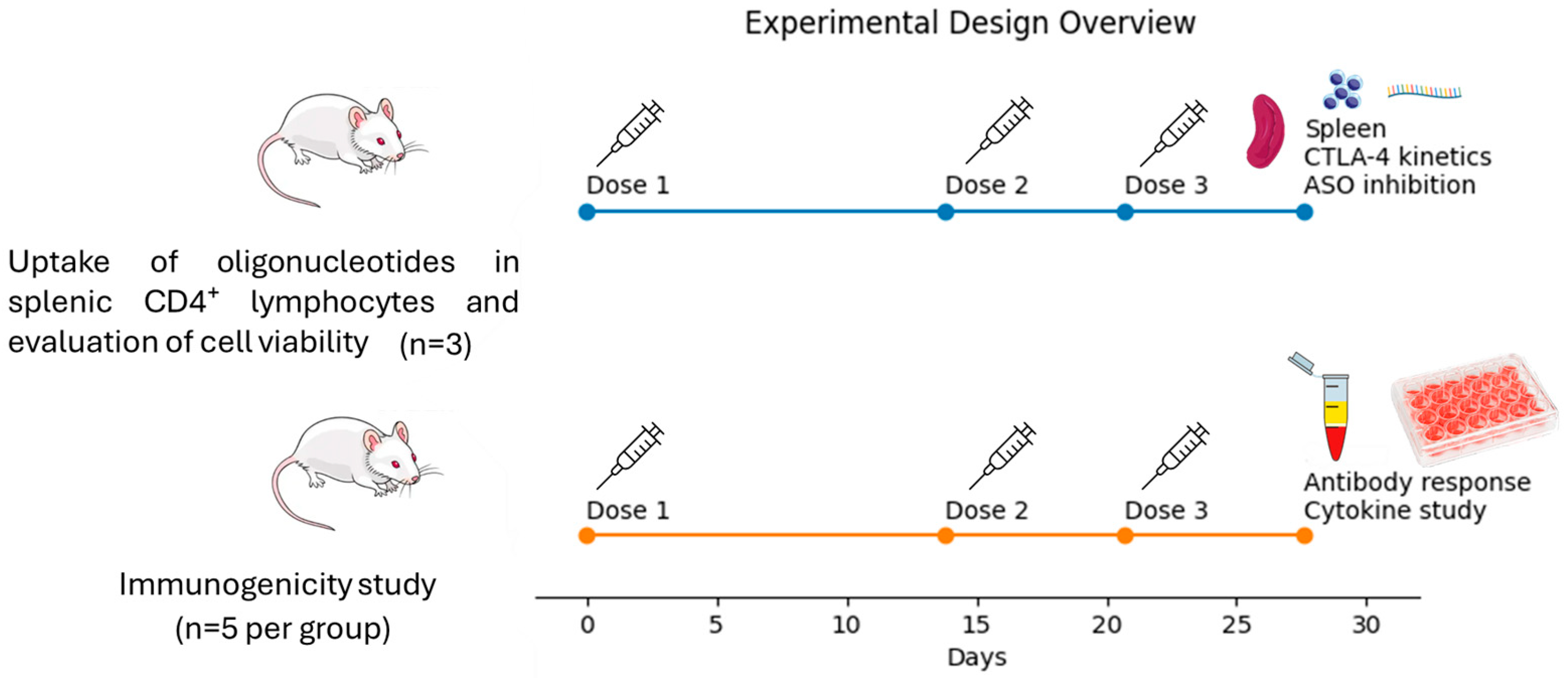
2.3. Immunization Scheme
2.4. Uptake of Oligonucleotides in Splenic CD4+ Lymphocytes
2.5. Cellular Viability
2.6. Determination of Peak CTLA-4 Expression
2.7. In Vitro Evaluation of CTLA-4 ASO Inhibitory Activity
2.8. Immunogenicity Study in BALB/c Mice
2.8.1. Antigen-Specific IgG and IgG2b Antibody Responses
2.8.2. Cytokine Quantification
2.9. Statistical Analyses
3. Results
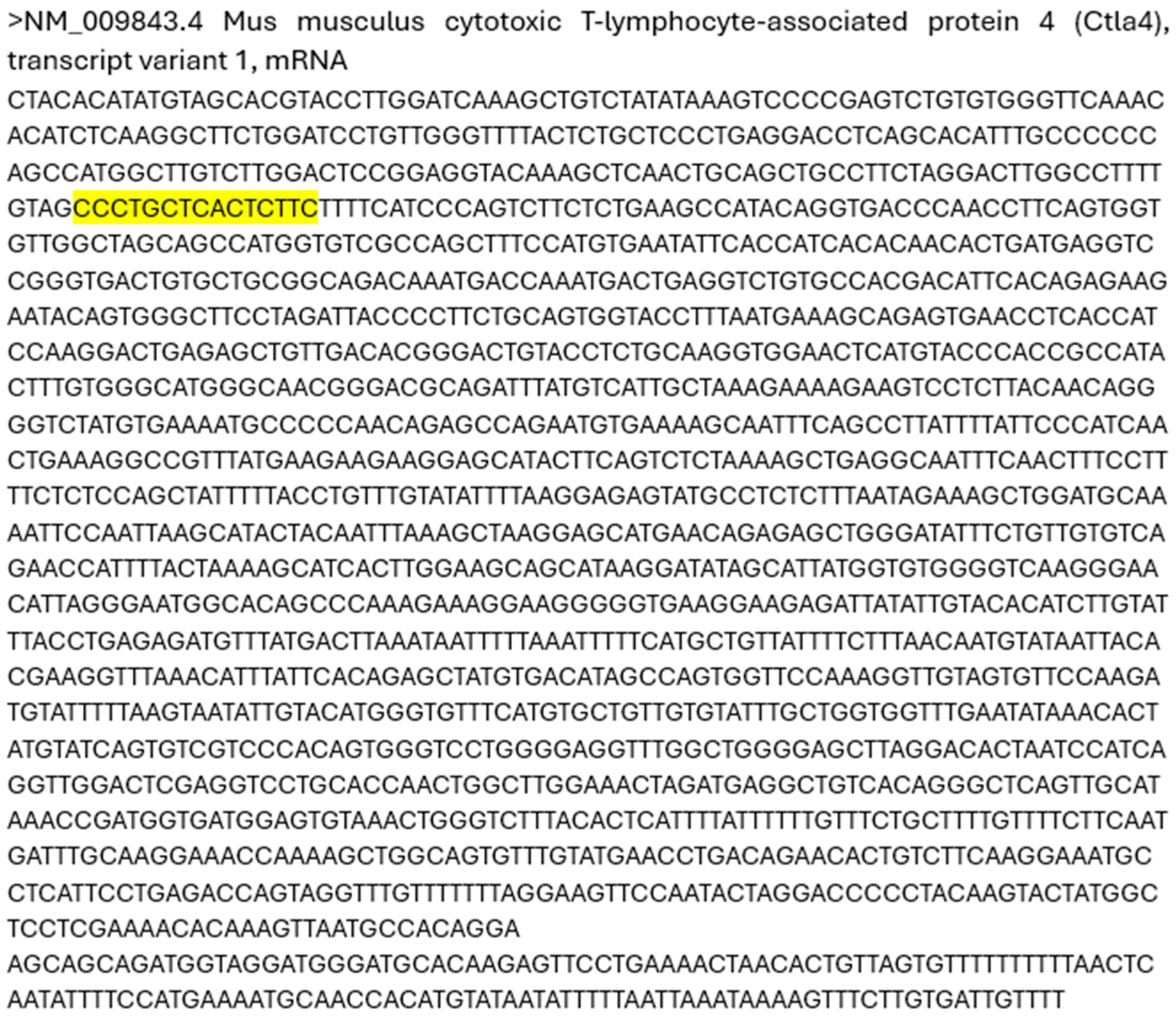
3.1. Primary Sequence of the CTLA-4 Gene in FASTA Format and Target Region for CTLA-4 Silencing
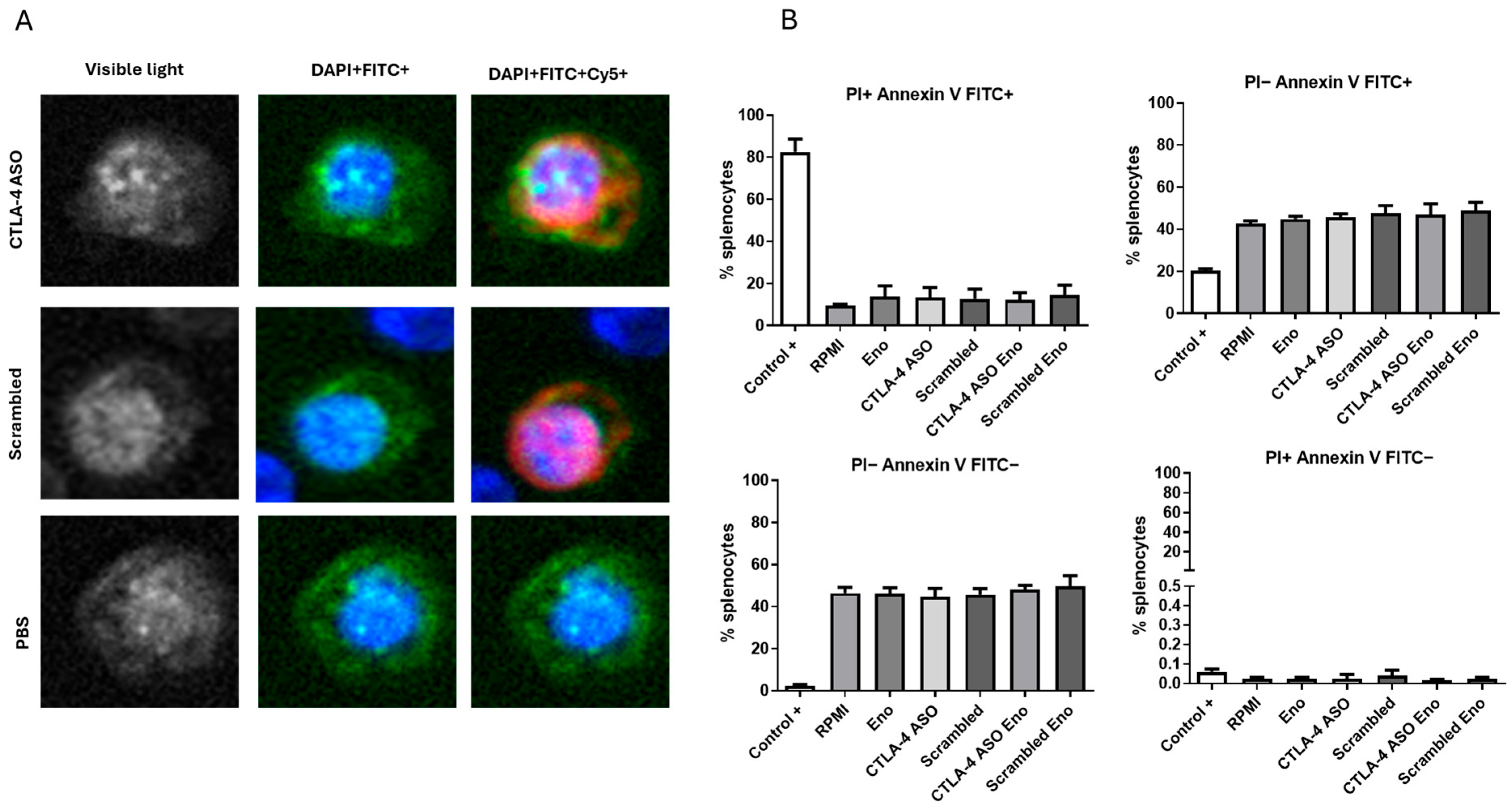
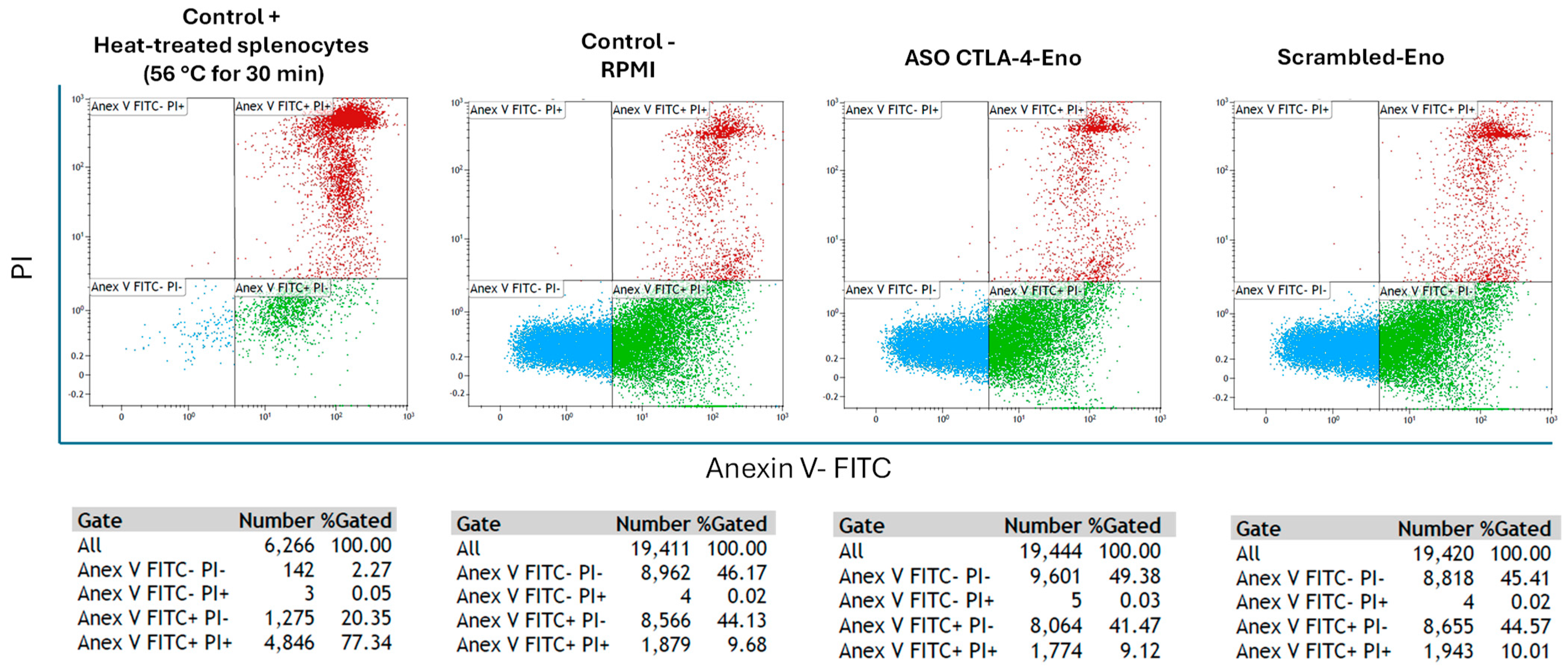
3.2. Uptake of Oligonucleotides in Splenic CD4+ Lymphocytes and Cell Viability
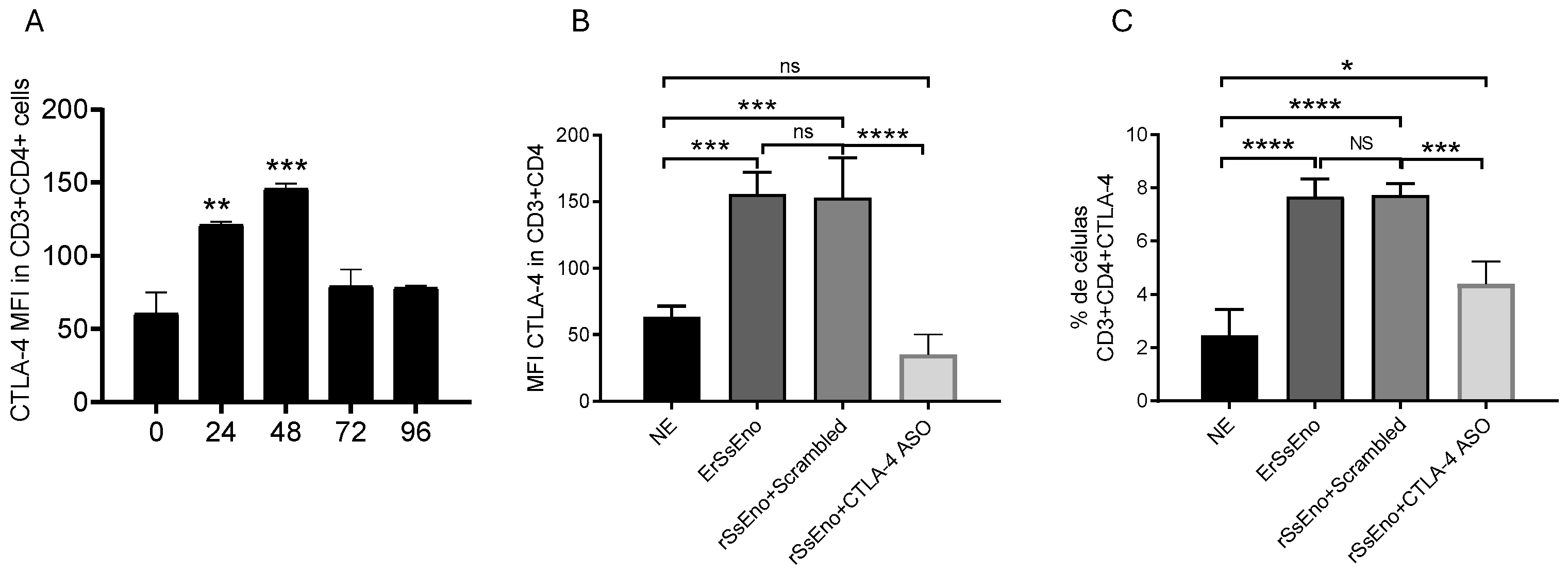
3.3. CTLA-4 Expression Kinetics and In Vitro Inhibition by CTLA-4 ASO
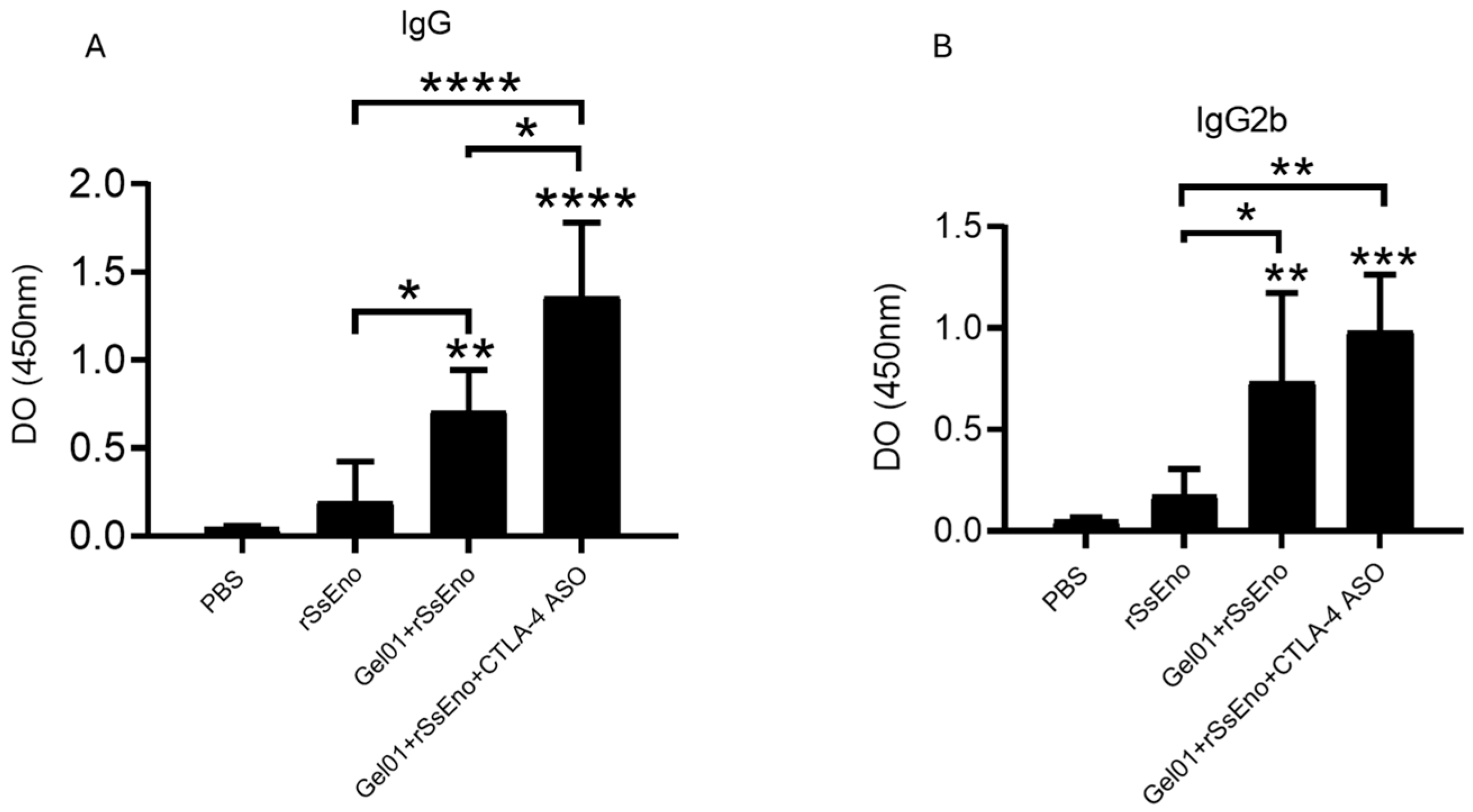
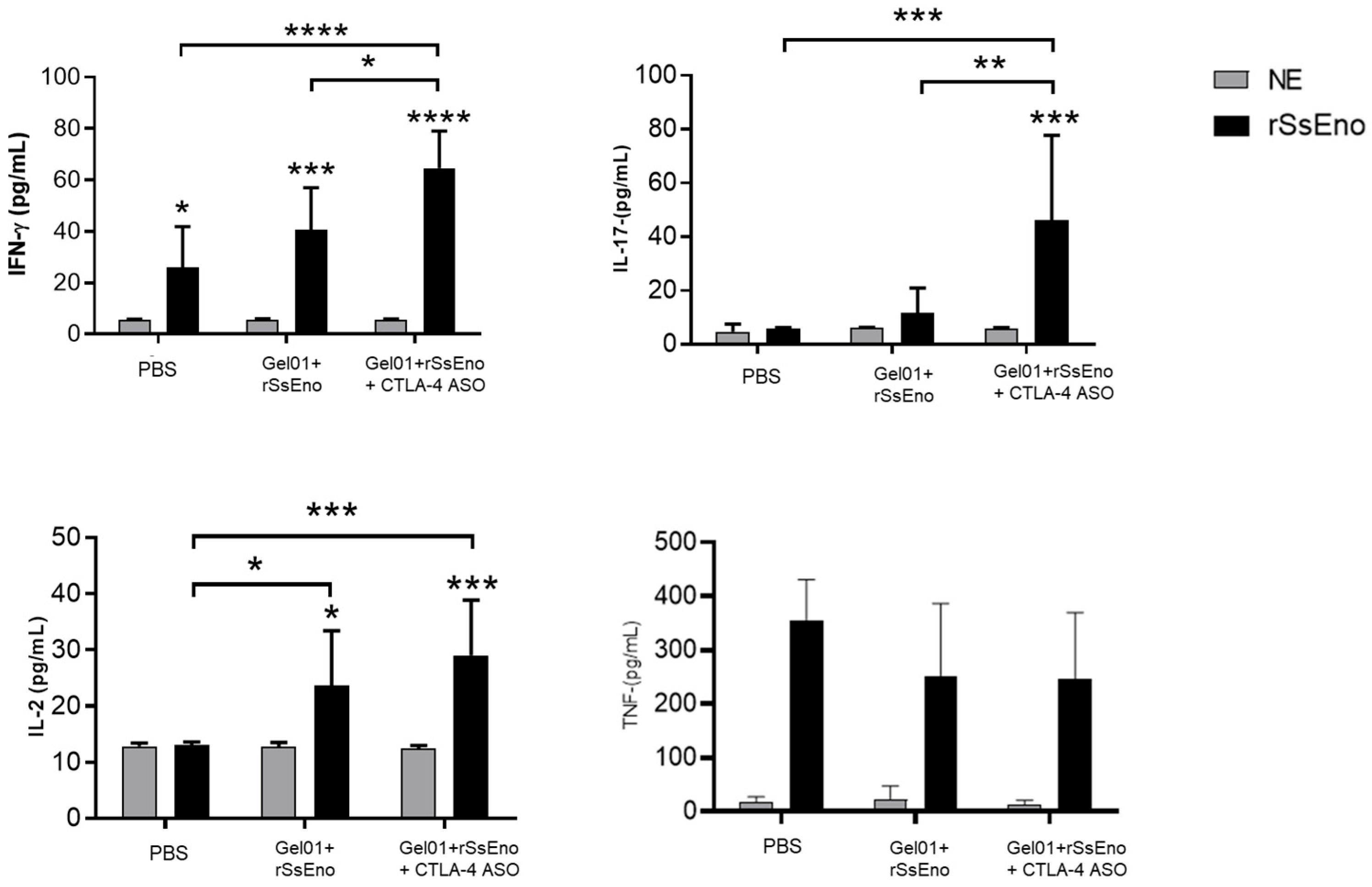
3.4. Immunogenicity Study
4. Discussion
5. Conclusions
Author Contributions
Funding
Institutional Review Board Statement
Data Availability Statement
Acknowledgments
Conflicts of Interest
Abbreviations
| ANOVA | Analysis of Variance |
| APC | Allophycocyanin |
| ASO | Antisense Oligonucleotide |
| BSA | Bovine Serum Albumin |
| CTLA-4 | Cytotoxic T-Lymphocyte-associated Protein 4 |
| CBA | Cytometric Bead Array |
| ELISA | Enzyme-Linked Immunosorbent Assay |
| FBS | Fetal Bovine Serum |
| FITC | Fluorescein Isothiocyanate |
| FOXP3 | Forkhead Box P3 |
| FSC | Forward Scatter |
| HRP | Horseradish Peroxidase |
| IDO | Indoleamine 2,3-Dioxygenase |
| IFN-γ | Interferon Gamma |
| IgG | Immunoglobulin G |
| IL | Interleukin |
| mAb | Monoclonal Antibody |
| MFI | Mean Fluorescence Intensity |
| NCBI | National Center for Biotechnology Information |
| OD | Optical Density |
| ON | Oligonucleotide |
| PBS | Phosphate-Buffered Saline |
| PBS-T | Phosphate-Buffered Saline with Tween 20 |
| PE | Phycoerythrin |
| PI | Propidium Iodide |
| rSsEno | Recombinant Sporothrix sp. Enolase |
| RNAi | RNA Interference |
| RPMI | Roswell Park Memorial Institute Medium |
| SD | Standard Deviation |
| SSC | Side Scatter |
| TCR | T-Cell Receptor |
| TGF-β | Transforming Growth Factor Beta |
| Th | T Helper |
| TLR9 | Toll-Like Receptor 9 |
| TNF-α | Tumor Necrosis Factor Alpha |
| TMB | 3,3′,5,5′-Tetramethylbenzidine |
| Treg | Regulatory T Cell |
Appendix A

Appendix B

References
- Rowshanravan, B.; Halliday, N.; Sansom, D.M. CTLA-4: A moving target in immunotherapy. Blood 2018, 131, 58–67. [Google Scholar] [CrossRef] [PubMed]
- Hossen, M.M.; Ma, Y.; Yin, Z.; Xia, Y.; Du, J.; Huang, J.Y.; Huang, J.J.; Zou, L.; Ye, Z.; Huang, Z. Current understanding of CTLA-4: From mechanism to autoimmune diseases. Front. Immunol. 2023, 14, 1198365. [Google Scholar] [CrossRef]
- Burke, K.P.; Chaudhri, A.; Freeman, G.J.; Sharpe, A.H. The B7:CD28 family and friends: Unraveling coinhibitory interactions. Immunity 2024, 57, 223–244. [Google Scholar] [CrossRef]
- Batista-Duharte, A.; Téllez-Martínez, D.; Fuentes, D.L.P.; Carlos, I.Z. Molecular adjuvants that modulate regulatory T cell function in vaccination: A critical appraisal. Pharmacol. Res. 2018, 129, 237–250. [Google Scholar] [CrossRef]
- Batista-Duharte, A.; Hassouneh, F.; Alvarez-Heredia, P.; Pera, A.; Solana, R. Immune Checkpoint Inhibitors for Vaccine Improvements: Current Status and New Approaches. Pharmaceutics 2022, 14, 1721. [Google Scholar] [CrossRef]
- Qu, K.; Zhu, M.; Lu, F.; Zhu, T.; Wang, T.; Wang, L.; Yu, Y. Enhancement of antitumor immunity by CTLA-4 antisense oligonucleotides with CpG motif in mice. Int. Immunopharmacol. 2025, 167, 115648. [Google Scholar] [CrossRef]
- Lewis, P.E.; Poteet, E.C.; Liu, D.; Chen, C.; LaBranche, C.C.; Stanfield-Oakley, S.A.; Montefiori, D.C.; Ferrari, G.; Yao, Q. CTLA-4 Blockade, during HIV Virus-Like Particles Immunization, Alters HIV-Specific B-Cell Responses. Vaccines 2020, 8, 284. [Google Scholar] [CrossRef]
- Yang, W.; Pang, Y.; Wang, X.; Lai, Z.; Lu, Y.; Zheng, S.; Wang, W. A novel CTLA-4 blocking strategy based on nanobody enhances the activity of dendritic cell vaccine-stimulated antitumor cytotoxic T lymphocytes. Cell Death Dis. 2023, 14, 406. [Google Scholar] [CrossRef] [PubMed]
- Monfaredan, A.; Şen, S.; Fathi, N.K.; Taştekin, D.; Hosseininasab, A.; Bozbey, H.U.; Öncül, O. Enhancing Antitumor Efficacy of MUC1 mRNA Nano-Vaccine by CTLA-4 siRNA-Mediated Immune Checkpoint Modulation in Triple Negative Breast Cancer Mice Model. Int. J. Mol. Sci. 2025, 26, 8448. [Google Scholar] [CrossRef]
- Arra, A.; Pech, M.; Fu, H.; Lingel, H.; Braun, F.; Beyer, C.; Spiliopoulou, M.; Bröker, B.M.; Lampe, K.; Arens, C.; et al. Immune-checkpoint blockade of CTLA-4 (CD152) in antigen-specific human T-cell responses differs profoundly between neonates, children, and adults. OncoImmunology 2021, 10, 1938475. [Google Scholar] [CrossRef] [PubMed]
- Li, X.; Yang, L.; Zhao, P.; Yao, Y.; Lu, F.; Tu, L.; Liu, J.; Li, Z.; Yu, Y.; Wang, L. Adjuvanticity of a CTLA-4 3′ UTR complementary oligonucleotide for emulsion-formulated recombinant subunit and inactivated vaccines. Vaccine 2017, 35, 2379–2389. [Google Scholar] [CrossRef] [PubMed]
- Jayashankar, L.; Hafner, R. Adjunct Strategies for Tuberculosis Vaccines: Modulating Key Immune Cell Regulatory Mechanisms to Potentiate Vaccination. Front. Immunol. 2016, 7, 577. [Google Scholar] [CrossRef]
- D’Alise, A.M.; Nocchi, L.; Garzia, I.; Seclì, L.; Infante, L.; Troise, F.; Cotugno, G.; Allocca, S.; Romano, G.; Lahm, A.; et al. Adenovirus Encoded Adjuvant (AdEnA) anti-CTLA-4, a novel strategy to improve Adenovirus based vaccines against infectious diseases and cancer. Front. Immunol. 2023, 14, 1156714. [Google Scholar] [CrossRef]
- Miguel, A.; Sendra, L.; Noé, V.; Ciudad, C.J.; Dasí, F.; Hervas, D.; Herrero, M.J.; Aliño, S.F. Silencing of Foxp3 enhances the antitumor efficacy of GM -CSF genetically modified tumor cell vaccine against B16 melanoma. OncoTargets Ther. 2017, 10, 503–514. [Google Scholar] [CrossRef]
- Batista-Duharte, A.; Sendra, L.; Herrero, M.J.; Portuondo, D.L.; Téllez-Martínez, D.; Olivera, G.; Fernández-Delgado, M.; Javega, B.; Herrera, G.; Martínez, A.; et al. Foxp3 Silencing with Antisense Oligonucleotide Improves Immunogenicity of an Adjuvanted Recombinant Vaccine against Sporothrix schenckii. Int. J. Mol. Sci. 2021, 22, 3470. [Google Scholar] [CrossRef]
- de Andrade Galliano Daros Bastos, F.; de Farias, M.R.; Gremião, I.D.F.; Bridi Cavassin, F.; Dos Santos Monti, F.; Vilas Boas, R.R.; Lustosa, B.P.R.; Razzolini, E.; Vicente, V.A.; Queiroz-Telles, F. Cat-transmitted sporotrichosis by Sporothrix brasiliensis: Focus on its potential transmission routes and epidemiological profile. Med. Mycol. 2025, 6, myaf051. [Google Scholar] [CrossRef]
- Santos, M.T.; Nascimento, L.F.J.; Barbosa, A.A.T.; Martins, M.P.; Tunon, G.I.L.; Santos, P.O.M.; Dantas-Torres, F.; Dolabella, S.S. The rising incidence of feline and cat-transmitted sporotrichosis in Latin America. Zoonoses Public Health 2024, 71, 609–619. [Google Scholar] [CrossRef]
- Arrillaga-Moncrieff, I.; Capilla, J.; Mayayo, E.; Marimon, R.; Mariné, M.; Gené, J.; Cano, J.; Guarro, J. Different virulence levels of the species of Sporothrix in a murine model. Clin. Microbiol. Infect. 2009, 15, 651–655. [Google Scholar] [CrossRef]
- Della Terra, P.P.; Rodrigues, A.M.; Fernandes, G.F.; Nishikaku, A.S.; Burger, E.; de Camargo, Z.P. Exploring virulence and immunogenicity in the emerging pathogen Sporothrix brasiliensis. PLoS Negl. Trop. Dis. 2017, 11, e0005903. [Google Scholar] [CrossRef] [PubMed]
- Batista-Duharte, A.; Téllez-Martínez, D.; Roberto de Andrade, C.; Portuondo, D.L.; Jellmayer, J.A.; Polesi, M.C.; Carlos, I.Z. Sporothrix brasiliensis induces a more severe disease associated with sustained Th17 and regulatory T cells responses than Sporothrix schenckii sensu stricto in mice. Fungal Biol. 2018, 122, 1163–1170. [Google Scholar] [CrossRef]
- Queiroz-Telles, F.; Buccheri, R.; Benard, G. Sporotrichosis In Immunocompromised Hosts. J. Fungi 2019, 5, 8. [Google Scholar] [CrossRef]
- Lyra, M.R.; Sokoloski, V.; de Macedo, P.M.; Azevedo, A.C.P. Sporotrichosis refractory to conventional treatment: Therapeutic success with potassium iodide. An. Bras. Dermatol. 2021, 96, 231–233. [Google Scholar] [CrossRef]
- Gremião, I.D.F.; Miranda, L.H.M.; Pereira-Oliveira, G.R.; Menezes, R.C.; Machado, A.C.S.; Rodrigues, A.M.; Pereira, S.A. Advances and challenges in the management of feline sporotrichosis. Rev. Iberoam. Micol. 2022, 39, 61–67. [Google Scholar] [CrossRef] [PubMed]
- Alvarez, C.M.; Oliveira, M.M.E.; Pires, R.H. Sporotrichosis: A Review of a Neglected Disease in the Last 50 Years in Brazil. Microorganisms 2022, 10, 2152. [Google Scholar] [CrossRef] [PubMed]
- Portuondo, D.L.; Dores-Silva, P.R.; Ferreira, L.S.; de Oliveira, C.S.; Téllez-Martínez, D.; Marcos, C.M.; de Aguiar Loesch, M.L.; Guzmán, F.; Gava, L.M.; Borges, J.C.; et al. Immunization with recombinant enolase of Sporothrix spp. (rSsEno) confers effective protection against sporotrichosis in mice. Sci. Rep. 2019, 9, 17179. [Google Scholar] [CrossRef]
- Batista-Duharte, A.; Sendra, L.; Herrero, M.J.; Téllez-Martínez, D.; Carlos, I.Z.; Aliño, S.F. Progress in the Use of Antisense Oligonucleotides for Vaccine Improvement. Biomolecules 2020, 10, 316. [Google Scholar] [CrossRef]
- Ripple, M.J.; You, D.; Honnegowda, S.; Giaimo, J.D.; Sewell, A.B.; Becnel, D.M.; Cormier, S.A. Immunomodulation with IL-4Rα antisense oligonucleotide prevents respiratory syncytial virus-mediated pulmonary disease. J. Immunol. 2010, 185, 4804–4811. [Google Scholar] [CrossRef]
- Zhang, J.; Liu, N.; Lu, Y.; Huang, Z.; Zang, Y.; Chen, J.; Zhang, J.; Ding, Z. Phosphorothioated antisense oligodeoxynucleotide suppressing interleukin-10 is a safe and potent vaccine adjuvant. Vaccine 2019, 37, 4081–4088. [Google Scholar] [CrossRef]
- Li, Z.; Song, Y.; Cui, C.; Lan, Y.; Li, X.; Liu, Y.; Lu, F.; Zhang, Y.; Yu, Y.; Wang, L. A LAG3-interfering oligonucleotide acts as an adjuvant to enhance antibody responses induced by recombinant protein vaccines and inactivated influenza virus vaccines. Appl. Microbiol. Biotechnol. 2019, 103, 6543–6557. [Google Scholar] [CrossRef]
- Liu, Y.; Xu, P.; Liu, H.; Fang, C.; Guo, H.; Chen, X.; Tan, M.; Zhang, Y.; Min, W. Silencing IDO2 in dendritic cells: A novel strategy to strengthen cancer immunotherapy in a murine lung cancer model. Int. J. Oncol. 2020, 57, 587–597. [Google Scholar] [CrossRef]
- Bennett, C.F.; Swayze, E.E. RNA targeting therapeutics: Molecular mechanisms of antisense oligonucleotides as a therapeutic platform. Annu. Rev. Pharmacol. Toxicol. 2010, 50, 259–293. [Google Scholar] [CrossRef]
- Crooke, S.T. Molecular mechanisms of antisense oligonucleotides. Nucleic Acid Ther. 2017, 27, 70–77. [Google Scholar] [CrossRef]
- Juliano, R.L. The delivery of therapeutic oligonucleotides. Nucleic Acids Res. 2016, 44, 6518–6548. [Google Scholar] [CrossRef]
- Crooke, S.T.; Wang, S.; Vickers, T.A.; Shen, W.; Liang, X.H. Cellular uptake and trafficking of antisense oligonucleotides. Nat. Biotechnol. 2017, 35, 230–237. [Google Scholar] [CrossRef]
- Wang, S.; Allen, N.; Vickers, T.A.; Revenko, A.S.; Sun, H.; Liang, X.H.; Crooke, S.T. Cellular uptake mediated by epidermal growth factor receptor facilitates the intracellular activity of phosphorothioate-modified antisense oligonucleotides. Nucleic Acids Res. 2018, 46, 3579–3594. [Google Scholar] [CrossRef]
- Hagedorn, P.H.; Pontoppidan, M.; Bisgaard, T.S.; Berrera, M.; Dieckmann, A.; Ebeling, M.; Møller, M.R.; Hudlebusch, H.; Jensen, M.L.; Hansen, H.F.; et al. Identifying and avoiding off-target effects of RNase H-dependent antisense oligonucleotides in mice. Nucleic Acids Res. 2018, 46, 5366–5380. [Google Scholar] [CrossRef]
- Shen, X.; Corey, D.R. Chemistry, mechanism and clinical status of antisense oligonucleotides and duplex RNAs. Nucleic Acids Res. 2018, 46, 1584–1600. [Google Scholar] [CrossRef] [PubMed]
- Goyenvalle, A.; Jimenez-Mallebrera, C.; van Roon, W.; Sewing, S.; Krieg, A.M.; Arechavala-Gomeza, V.; Andersson, P. Considerations in the Preclinical Assessment of the Safety of Antisense Oligonucleotides. Nucleic Acid Ther. 2022, 33, 1–16. [Google Scholar] [CrossRef] [PubMed]
- Waters, E.; Williams, C.; Kennedy, A.; Sansom, D.M. In Vitro Analysis of CTLA-4-Mediated Transendocytosis by Regulatory T Cells. Methods Mol. Biol. 2023, 2559, 171–187. [Google Scholar] [CrossRef] [PubMed]
- Krummel, M.F.; Allison, J.P. CD28 and CTLA-4 have opposing effects on the response of T cells to stimulation. J. Exp. Med. 1995, 182, 459–465. [Google Scholar] [CrossRef]
- Krieg, A.M. CpG motifs in bacterial DNA and their immune effects. Annu. Rev. Immunol. 2002, 20, 709–760. [Google Scholar] [CrossRef] [PubMed]
- Robbins, M.; Judge, A.; Liang, L.; McClintock, K.; Yaworski, E.; MacLachlan, I. 2′-O-methyl-modified RNAs act as TLR7 antagonists. Mol. Ther. 2007, 15, 1663–1669. [Google Scholar] [CrossRef] [PubMed]
- Judge, A.D.; Bola, G.; Lee, A.C.; MacLachlan, I. Design of noninflammatory synthetic siRNA mediating potent gene silencing in vivo. Mol. Ther. 2006, 13, 494–505. [Google Scholar] [CrossRef] [PubMed]
- Schlee, M.; Roth, A.; Hornung, V.; Hagmann, C.A.; Wimmenauer, V.; Barchet, W.; Coch, C.; Janke, M.; Mihailovic, A.; Wardle, G.; et al. Recognition of 5′ triphosphate by RIG-I helicase requires short blunt double-stranded RNA as contained in panhandle of negative-strand virus. Immunity 2009, 31, 25–34. [Google Scholar] [CrossRef]
- Anchisi, S.; Guerra, J.; Garcin, D. RIG-I ATPase activity and discrimination of self-RNA versus non-self-RNA. mBio 2015, 6, e02349. [Google Scholar] [CrossRef]
- Rehwinkel, J.; Gack, M.U. RIG-I-like receptors: Their regulation and roles in RNA sensing. Nat. Rev. Immunol. 2020, 20, 537–551. [Google Scholar] [CrossRef]
- Jellmayer, J.A.; Deus, A.F.; Curti Gonçalves, M.R.; Souza Ferreira, L.; Manente, F.A.; Pinho Caetano, L.S.; Piccineli, F.L.; Zamberço Dos Reis Genari, T.; Saçaki, B.D.C.; Pavicic Catalan de Oliveira Campos, T.; et al. Dendritic Cell-Based Therapeutic Immunization Induces Th1/Th17 Responses and Reduces Fungal Burden in Experimental Sporotrichosis. Microorganisms 2025, 13, 2351. [Google Scholar] [CrossRef]
- Yan, T.; Li, F.; Chen, F. Imbalance of Th1, Th17, and Treg cells in peripheral blood of patients with lymphocutaneous sporotrichosis: A comparative study. Eur. J. Dermatol. 2020, 30, 345–351. [Google Scholar] [CrossRef]


Disclaimer/Publisher’s Note: The statements, opinions and data contained in all publications are solely those of the individual author(s) and contributor(s) and not of MDPI and/or the editor(s). MDPI and/or the editor(s) disclaim responsibility for any injury to people or property resulting from any ideas, methods, instructions or products referred to in the content. |
© 2026 by the authors. Licensee MDPI, Basel, Switzerland. This article is an open access article distributed under the terms and conditions of the Creative Commons Attribution (CC BY) license.
Share and Cite
Momente, G.J.; Portuondo, D.L.; Deus, A.F.d.; Curti Gonçalves, M.R.; Piccineli, F.L.; de Oliveira Campos, T.P.C.; Téllez-Martínez, D.; Carlos, I.Z.; Batista-Duharte, A. CTLA-4 Antisense Oligonucleotide Contributes to Enhanced Immunogenicity of an Adjuvanted Recombinant Sporothrix spp. Enolase Antigen. Vaccines 2026, 14, 334. https://doi.org/10.3390/vaccines14040334
Momente GJ, Portuondo DL, Deus AFd, Curti Gonçalves MR, Piccineli FL, de Oliveira Campos TPC, Téllez-Martínez D, Carlos IZ, Batista-Duharte A. CTLA-4 Antisense Oligonucleotide Contributes to Enhanced Immunogenicity of an Adjuvanted Recombinant Sporothrix spp. Enolase Antigen. Vaccines. 2026; 14(4):334. https://doi.org/10.3390/vaccines14040334
Chicago/Turabian StyleMomente, Giovanna Justino, Deivys Leandro Portuondo, Adriana Fernandes de Deus, Matheus Ricardo Curti Gonçalves, Fernanda Luiza Piccineli, Tarcila Pavicic Catalan de Oliveira Campos, Damiana Téllez-Martínez, Iracilda Zeppone Carlos, and Alexander Batista-Duharte. 2026. "CTLA-4 Antisense Oligonucleotide Contributes to Enhanced Immunogenicity of an Adjuvanted Recombinant Sporothrix spp. Enolase Antigen" Vaccines 14, no. 4: 334. https://doi.org/10.3390/vaccines14040334
APA StyleMomente, G. J., Portuondo, D. L., Deus, A. F. d., Curti Gonçalves, M. R., Piccineli, F. L., de Oliveira Campos, T. P. C., Téllez-Martínez, D., Carlos, I. Z., & Batista-Duharte, A. (2026). CTLA-4 Antisense Oligonucleotide Contributes to Enhanced Immunogenicity of an Adjuvanted Recombinant Sporothrix spp. Enolase Antigen. Vaccines, 14(4), 334. https://doi.org/10.3390/vaccines14040334